

Hypnotics' association with mortality or cancer: a matched cohort study
Open accessThe DOI matches its Crossref record; 39 of the 39 references it cites were found in a registry or an index.
Abstract
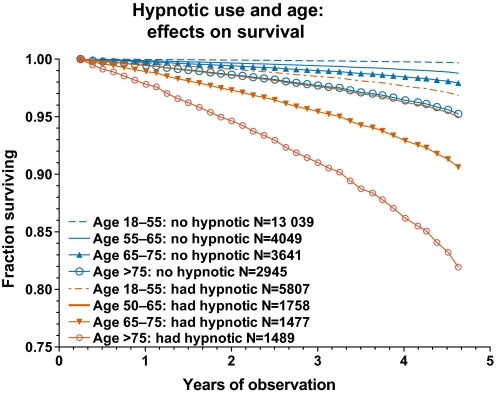
Objectives: An estimated 6%–10% of US adults took a hypnotic drug for poor sleep in 2010. This study extends previous reports associating hypnotics with excess mortality. Setting: A large integrated health system in the USA. Design: Longitudinal electronic medical records were extracted for a one-to-two matched cohort survival analysis. Subjects: Subjects (mean age 54 years) were 10 529 patients who received hypnotic prescriptions and 23 676 matched controls with no hypnotic prescriptions, followed for an average of 2.5 years between January 2002 and January 2007. Main outcome measures: Data were adjusted for age, gender, smoking, body mass index, ethnicity, marital status, alcohol use and prior cancer. Hazard ratios (HRs) for death were computed from Cox proportional hazards models controlled for risk factors and using up to 116 strata, which exactly matched cases and controls by 12 classes of comorbidity. Results: As predicted, patients prescribed any hypnotic had substantially elevated hazards of dying compared to those prescribed no hypnotics. For groups prescribed 0.4–18, 18–132 and >132 doses/year, HRs (95% CIs) were 3.60 (2.92 to 4.44), 4.43 (3.67 to 5.36) and 5.32 (4.50 to 6.30), respectively, demonstrating a dose–response association. HRs were elevated in separate analyses for several common hypnotics, including zolpidem, temazepam, eszopiclone, zaleplon, other benzodiazepines, barbiturates and sedative antihistamines. Hypnotic use in the upper third was associated with a significant elevation of incident cancer; HR=1.35 (95% CI 1.18 to 1.55). Results were robust within groups suffering each comorbidity, indicating that the death and cancer hazards associated with hypnotic drugs were not attributable to pre-existing disease. Conclusions: Receiving hypnotic prescriptions was associated with greater than threefold increased hazards of death even when prescribed <18 pills/year. This association held in separate analyses for several commonly used hypnotics and for newer shorter-acting drugs. Control of selective prescription of hypnotics for patients in poor health did not explain the observed excess mortality.
Overview
The claims and statistics of this paper haven’t been checked yet.
Free: it reads the open-access text and checks the first 5 claims that cite a source we can check. Create a free account to check every claim.
Integrity signals
Registry
Cites
Statistics
Figures
Verification
Claims the paper makes
The claims and statistics of this paper haven’t been checked yet.
Free: it reads the open-access text and checks the first 5 claims that cite a source we can check. Create a free account to check every claim.
Claims other papers make about this one
Each is checked against this paper’s own text: does it say what the citing paper says it does?
The source backs part of the claim, not all of it — or backs it for a different population, condition or comparison.
In the citing paper
“They found that the hazard of death was doubled in patients prescribed BZD compared to control patients [47].”
From Benzodiazepines: Uses, Dangers, and Clinical Considerations (2021) · cites this paper as [47]
Experimental — accuracy not yet measuredThe source backs part of the claim, not all of it — or backs it for a different population, condition or comparison.
In the citing paper
“There was an association between the prescription of anxiolytic drugs and mortality, resulting in 4 excess deaths in the anxiolytic drug group within an average of 7.6 years [47].”
From Benzodiazepines: Uses, Dangers, and Clinical Considerations (2021) · cites this paper as [47]
Experimental — accuracy not yet measuredThe source backs part of the claim, not all of it — or backs it for a different population, condition or comparison.
In the citing paper
“One study further showed that the risk of dying is doubled in patients prescribed BZD compared with controls [47].”
From Benzodiazepines: Uses, Dangers, and Clinical Considerations (2021) · cites this paper as [47]
Experimental — accuracy not yet measuredIn the citing paper
“All of these interventions resulted in higher discontinuation rates than usual care. 37,38”
From Comparative efficacy of two interventions to discontinue long-term benzodiazepine use: cluster randomised controlled trial in primary care (2014) · cites this paper as [38]
Self-check
Percentages, sums and reported differences re-computed from the paper’s own numbers.
The self-check needs the paper’s full text.
Citations
Cites
Risk Factors for Falls among Elderly Persons Living in the Community
Tinetti, M. E., Speechley, M., & Ginter, S. F. (1988) · New England Journal of Medicine · doi:10.1056/nejm198812293192604 · Cited by 6,509
The global health burden of infection‐associated cancers in the year 2002
Parkin, D. M. (2006) · International Journal of Cancer · doi:10.1002/ijc.21731 · Cited by 2,932
Mortality Associated With Sleep Duration and Insomnia
Kripke, D. F., Garfinkel, L., Wingard, D. L., Klauber, M. R., & Marler, M. R. (2002) · Archives of General Psychiatry · doi:10.1001/archpsyc.59.2.131 · Cited by 1,614
Self-citationSedative hypnotics in older people with insomnia: meta-analysis of risks and benefits
Glass, J., Lanctôt, K. L., Herrmann, N., Sproule, B. A., & Busto, U. E. (2005) · BMJ · doi:10.1136/bmj.38623.768588.47 · Cited by 1,161 · cited 2×
“21 30 Zolpidem has been shown to increase gastroesophageal regurgitation.”
BackgroundSmith, G. C. S., & Pell, J. P. (2003) · BMJ · doi:10.1136/bmj.327.7429.1459 · Cited by 1,157
Excess mortality in depression: a meta-analysis of community studies
Cuijpers, P., & Smit, F. (2002) · Journal of Affective Disorders · doi:10.1016/s0165-0327(01)00413-x · Cited by 775
Short and Long Sleep and Sleeping Pills: Is Increased Mortality Associated?
Kripke, D. F. (1979) · Archives of General Psychiatry · doi:10.1001/archpsyc.1979.01780010109014 · Cited by 660
Self-citationSmoking in relation to the death rates of one million men and women.
Ec, H. (1966) · PubMed · Cited by 648
Jacobs, G. D., Pace-Schott, E. F., Stickgold, R., & Otto, M. W. (2004) · Archives of Internal Medicine · doi:10.1001/archinte.164.17.1888 · Cited by 579
Bronstein, A. C., Spyker, D. A., Cantilena, L. R., Green, J. L., Rumack, B. H., & Giffin, S. L. (2009) · Clinical Toxicology · doi:10.3109/15563650903438566 · Cited by 485
Research works printed but not linked: 1
- National Institute for Clinical Excellence Guidance of the use of zaleplon, zolpidem and zopiclone for the short-term management of insomnia. Technol Appraisal 2004; 77: 1– 27
Cited by
Qaseem, A., Kansagara, D., Forciea, M. A., Cooke, M., Denberg, T. D., & for the Clinical Guidelines Committee of the American College of Physicians* (2016) · Annals of Internal Medicine · doi:10.7326/m15-2175 · Cited by 1,965
Depression in sleep disturbance: A review on a bidirectional relationship, mechanisms and treatment
Fang, H., Tu, S., Sheng, J., & Shao, A. (2019) · Journal of Cellular and Molecular Medicine · doi:10.1111/jcmm.14170 · Cited by 1,141
Cognitive Behavioral Therapy for Chronic Insomnia: A Systematic Review and Meta-analysis
Trauer, J. M., Qian, M. Y., Doyle, J. S., Rajaratnam, S. M. W., & Cunnington, D. (2015) · Annals of Internal Medicine · doi:10.7326/m14-2841 · Cited by 1,053
“adults using hypnotics in 2010 (18) and 27 daily doses of such drugs being taken per 1000 U.”
BackgroundBuysse, D. J. (2013) · JAMA · doi:10.1001/jama.2013.193 · Cited by 965
When the entire population is the sample: strengths and limitations in register-based epidemiology
Thygesen, L. C., & Ersbøll, A. K. (2014) · European Journal of Epidemiology · doi:10.1007/s10654-013-9873-0 · Cited by 570
“Kripke illustrates this bias [54].”
Sleep physiology, pathophysiology, and sleep hygiene
Baranwal, N., Yu, P. K., & Siegel, N. S. (2023) · Progress in Cardiovascular Diseases · doi:10.1016/j.pcad.2023.02.005 · Cited by 540
Review of Safety and Efficacy of Sleep Medicines in Older Adults
Schroeck, J. L., Ford, J., Conway, E. L., Kurtzhalts, K. E., Gee, M. E., Vollmer, K. A., & Mergenhagen, K. A. (2016) · Clinical Therapeutics · doi:10.1016/j.clinthera.2016.09.010 · Cited by 373
Benzodiazepine harm: how can it be reduced?
Lader, M. (2014) · British Journal of Clinical Pharmacology · doi:10.1111/j.1365-2125.2012.04418.x · Cited by 359
Brandt, J., & Leong, C. (2017) · Drugs in R&D · doi:10.1007/s40268-017-0207-7 · Cited by 356
Benzodiazepines: Uses, Dangers, and Clinical Considerations
Edinoff, A. N., Nix, C. A., Hollier, J., Sagrera, C. E., Delacroix, B. M., Abubakar, T., Cornett, E. M., Kaye, A. M., & Kaye, A. D. (2021) · Neurology International · doi:10.3390/neurolint13040059 · Cited by 340
“They found that the hazard of death was doubled in patients prescribed BZD compared to control patients [47].”
BackgroundInfluentialThe links between sleep duration, obesity and type 2 diabetes mellitus
Antza, C., Kostopoulos, G., Mostafa, S., Nirantharakumar, K., & Tahrani, A. (2022) · Journal of Endocrinology · doi:10.1530/joe-21-0155 · Cited by 279
Huedo-Medina, T. B., Kirsch, I., Middlemass, J., Klonizakis, M., & Siriwardena, A. N. (2012) · BMJ · doi:10.1136/bmj.e8343 · Cited by 313
Wilt, T. J., MacDonald, R., Brasure, M., Olson, C. M., Carlyle, M., Fuchs, E., Khawaja, I. S., Diem, S., Koffel, E., Ouellette, J., et al. (2016) · Annals of Internal Medicine · doi:10.7326/m15-1781 · Cited by 275
Sleep Disorders and Associated Medical Comorbidities in Active Duty Military Personnel
Mysliwiec, V., McGraw, L., Pierce, R., Smith, P., Trapp, B., & Roth, B. J. (2013) · Sleep · doi:10.5665/sleep.2364 · Cited by 264
Persistent Insomnia is Associated with Mortality Risk
Parthasarathy, S., Vasquez, M. M., Halonen, M., Bootzin, R., Quan, S. F., Martinez, F. D., & Guerra, S. (2015) · The American Journal of Medicine · doi:10.1016/j.amjmed.2014.10.015 · Cited by 260
“Some investigators have noted that increased mortality risk from insomnia was attributable to the related use of hypnotic medications rather than insomnia per se.(37,38) However, others have shown that insomnia may be associated with increased mortality after adjusting for hypnotic intake.”
BackgroundWeich, S., Pearce, H. L., Croft, P., Singh, S., Crome, I., Bashford, J., & Frisher, M. (2014) · BMJ · doi:10.1136/bmj.g1996 · Cited by 259
Bueno, H., Deaton, C., Farrero, M., Forsyth, F., Braunschweig, F., Buccheri, S., Dragan, S., Gevaert, S., Held, C., Kurpas, D., et al. (2025) · European Heart Journal · doi:10.1093/eurheartj/ehaf191 · Cited by 178
The effect of resistance exercise on sleep: A systematic review of randomized controlled trials
Kovacevic, A., Mavros, Y., Heisz, J. J., & Fiatarone Singh, M. A. (2018) · Sleep Medicine Reviews · doi:10.1016/j.smrv.2017.07.002 · Cited by 242
Kyle, S. D., Miller, C. B., Rogers, Z., Siriwardena, A. N., MacMahon, K. M., & Espie, C. A. (2014) · Sleep · doi:10.5665/sleep.3386 · Cited by 208
Malik, S., Kanwar, A., Sim, L. A., Prokop, L. J., Wang, Z., Benkhadra, K., & Murad, M. H. (2014) · Systematic Reviews · doi:10.1186/2046-4053-3-18 · Cited by 206
Advances in the management of chronic insomnia
Kay-Stacey, M., & Attarian, H. (2016) · BMJ · doi:10.1136/bmj.i2123 · Cited by 164
Theorell-Haglöw, J., Miller, C. B., Bartlett, D. J., Yee, B. J., Openshaw, H. D., & Grunstein, R. R. (2018) · Sleep Medicine Reviews · doi:10.1016/j.smrv.2017.03.003 · Cited by 161
Walk to a better night of sleep: testing the relationship between physical activity and sleep
Bisson, A., Robinson, S. A., & Lachman, M. E. (2019) · Sleep Health · doi:10.1016/j.sleh.2019.06.003 · Cited by 187
Jespersen, K. V., Koenig, J., Jennum, P., & Vuust, P. (2015) · Cochrane Database of Systematic Reviews · doi:10.1002/14651858.cd010459.pub2 · Cited by 83
Zolpidem is independently associated with increased risk of inpatient falls
Kolla, B. P., Lovely, J. K., Mansukhani, M. P., & Morgenthaler, T. I. (2012) · Journal of Hospital Medicine · doi:10.1002/jhm.1985 · Cited by 155
“A receptor complex, is the most commonly prescribed hypnotic agent in the United States.5,6 It is also extremely commonly used in inpatient settings.”
Insomnia and menopause: a narrative review on mechanisms and treatments
Proserpio, P., Marra, S., Campana, C., Agostoni, E. C., Palagini, L., Nobili, L., & Nappi, R. E. (2020) · Climacteric · doi:10.1080/13697137.2020.1799973 · Cited by 154
Fang, H.-F., Miao, N.-F., Chen, C.-D., Sithole, T., & Chung, M.-H. (2015) · Journal of Cancer · doi:10.7150/jca.12490 · Cited by 139
“Sleep disorders are common in various societies worldwide, particularly in adult populations, and are related to distinct pathologies such as cardiovascular diseases (4), diabetes mellitus (5), total mortality (6), and cancer (7-9).”
BackgroundSleep duration and incidence of colorectal cancer in postmenopausal women
Jiao, L., Duan, Z., Sangi-Haghpeykar, H., Hale, L., White, D. L., & El-Serag, H. B. (2013) · British Journal of Cancer · doi:10.1038/bjc.2012.561 · Cited by 137
“Compared with 7 h of sleep, the HRs were 1.36 (95% CI 1.06–1.74) and 1.47 (95% CI 1.10–1.96) for short (p5 h) and long (X9 h) sleep duration, respectively, after adjusting for age, ethnicity, fatigue, hormone replacement therapy (HRT), physical activity, and waist to hip ratio.”
BackgroundInfluentialThe Effect of Exercise on Sleep and Fatigue in Rheumatoid Arthritis: A Randomized Controlled Study
Durcan, L., Wilson, F., & Cunnane, G. (2014) · The Journal of Rheumatology · doi:10.3899/jrheum.131282 · Cited by 149
Pharmacological interventions for benzodiazepine discontinuation in chronic benzodiazepine users
Baandrup, L., Ebdrup, B. H., Rasmussen, J. Ø., Lindschou, J., Gluud, C., & Glenthøj, B. Y. (2018) · Cochrane Database of Systematic Reviews · doi:10.1002/14651858.cd011481.pub2 · Cited by 128
Insomnia and mortality: A meta-analysis
Lovato, N., & Lack, L. (2019) · Sleep Medicine Reviews · doi:10.1016/j.smrv.2018.10.004 · Cited by 112
Vicens, C., Bejarano, F., Sempere, E., Mateu, C., Fiol, F., Socias, I., Aragonès, E., Palop, V., Beltran, J. L., Piñol, J. L., et al. (2014) · British Journal of Psychiatry · doi:10.1192/bjp.bp.113.134650 · Cited by 122
“6,7 8–10 Although international clinical guidelines and medical authorities in many countries recommend limiting the duration of benzodiazepine treatment to only a few weeks, 1 the prevalence of long-term use remains widespread.”
Scheer, F. A. J. L., Morris, C. J., Garcia, J. I., Smales, C., Kelly, E. E., Marks, J., Malhotra, A., & Shea, S. A. (2012) · Sleep · doi:10.5665/sleep.2122 · Cited by 119
(2013) · PubMed · Cited by 115
Grassi, L., Caruso, R., Hammelef, K., Nanni, M. G., & Riba, M. (2014) · International Review of Psychiatry · doi:10.3109/09540261.2013.842542 · Cited by 101
“Among non-BDZ, some agents, such as zolpidem, zopiclone, and zaleplon (also known as Z-drugs) have raised attention as possible drugs for the treatment of insomnia, since they are more selective agonists of the GABA-A by acting on the alpha-1 subclass of the receptors and thus have hypnotic but not anxiolytic properti…”
BackgroundCourneya, K. S., Segal, R. J., Mackey, J. R., Gelmon, K., Friedenreich, C. M., Yasui, Y., Reid, R. D., Jespersen, D., Cook, D., Proulx, C., et al. (2014) · Breast Cancer Research and Treatment · doi:10.1007/s10549-014-2883-0 · Cited by 108
Gnjidic, D., Hilmer, S. N., Hartikainen, S., Tolppanen, A.-M., Taipale, H., Koponen, M., & Bell, J. S. (2014) · PLoS ONE · doi:10.1371/journal.pone.0083224 · Cited by 103
“Exposure to anticholinergic and sedative drug classes has been associated with adverse outcomes in older people [9,10].”
BackgroundBenzodiazepines and risk of all cause mortality in adults: cohort study
Patorno, E., Glynn, R. J., Levin, R., Lee, M. P., & Huybrechts, K. F. (2017) · BMJ · doi:10.1136/bmj.j2941 · Cited by 98
Hypnotic drug risks of mortality, infection, depression, and cancer: but lack of benefit
Kripke, D. F. (2016) · F1000Research · doi:10.12688/f1000research.8729.1 · Cited by 106
Self-citationJung, K.-I., Song, C.-H., Ancoli-Israel, S., & Barrett-Connor, E. (2013) · Sleep Medicine · doi:10.1016/j.sleep.2012.06.004 · Cited by 95
“Some have reported that hypnotics increase mortality [5,42– 44], although another study reported otherwise [45].”
BackgroundMortality associated with anxiolytic and hypnotic drugs—A systematic review and meta-analysis
Parsaik, A. K., Mascarenhas, S. S., Khosh-Chashm, D., Hashmi, A., John, V., Okusaga, O., & Singh, B. (2016) · Australian & New Zealand Journal of Psychiatry · doi:10.1177/0004867415616695 · Cited by 91
“After removing six studies causing heterogeneity, HA users had 21% higher risk of mortality compared with non-users and results were homogenous (Figure 3) (Ahmad and Bath, 2005; Kripke et al., 2012; Mallon et al., 2002, 2009; Vinkers et al., 2003; Weich et al., 2014).”
BackgroundResultSleep and Sickness Absence: A Nationally Representative Register-Based Follow-Up Study
Lallukka, T., Kaikkonen, R., Härkänen, T., Kronholm, E., Partonen, T., Rahkonen, O., & Koskinen, S. (2014) · Sleep · doi:10.5665/sleep.3986 · Cited by 88
Kroll, D. S., Nieva, H. R., Barsky, A. J., & Linder, J. A. (2016) · Journal of General Internal Medicine · doi:10.1007/s11606-016-3740-0 · Cited by 94
“84) 30 (15–90) Other 375 (4) 1603 (3) 0.”
Chen, H.-C., Su, T.-P., & Chou, P. (2013) · Sleep · doi:10.5665/sleep.2884 · Cited by 93
Xu, K. Y., Hartz, S. M., Borodovsky, J. T., Bierut, L. J., & Grucza, R. A. (2020) · JAMA Network Open · doi:10.1001/jamanetworkopen.2020.28557 · Cited by 95
Benzodiazepines and Related Drugs as a Risk Factor in Alzheimer's Disease Dementia
Ettcheto, M., Olloquequi, J., Sánchez‐López, E., Busquets, O., Cano, A. C., Manzine, P. R., Beas‐Zárate, C., Castro-Torres, R. D., García, M. L., Bulló, M., et al. (2020) · Frontiers in Aging Neuroscience · doi:10.3389/fnagi.2019.00344 · Cited by 95
“reported that the adverse effects of hypnotics outweigh the benefit they achieve in the population older than 60 years, going so far as to increase mortality risk in some patients (Glass et al., 2005; Kripke et al., 2012; Hammond and Esclapez, 2015).”
BackgroundTreatment of chronic insomnia disorder in menopause: evaluation of literature
Attarian, H., Hachul, H., Guttuso, T., & Phillips, B. (2015) · Menopause · doi:10.1097/gme.0000000000000348 · Cited by 82
“Summary: Ramelteon, zolpidem, and eszopiclone should be used with caution because of adverse health associations with long-term use of sedative hypnotics.(52,53) It is also unclear how much of the impact of sedative hypnotics is specific for menopausal insomnia.”
BackgroundRoussin, A., Annabelle, B., Pouché, L., Pourcel, L., & Lapeyre‐Mestre, M. (2013) · PLoS ONE · doi:10.1371/journal.pone.0076499 · Cited by 90
“Use of sedative H1 antihistamines was recently associated with an increased risk of mortality in comparison to non-users (HR (95% C.I.) = 4.57 (3.01 to 6.94)) in a matched cohort survival analysis performed in Pennsylvania, USA [30].”
BackgroundInfluentialBenzodiazepines and risk of death: Results from two large cohort studies in France and UK
Palmaro, A., Dupouy, J., & Lapeyre‐Mestre, M. (2015) · European Neuropsychopharmacology · doi:10.1016/j.euroneuro.2015.07.006 · Cited by 99
“These results are more in line with a short-term effect rather than with a cumulative effect, by contrast with results of 2 recent studies (Kripke et al., 2012; Weich et al., 2014).”
BackgroundResultInfluentialImpact of musculoskeletal pain on insomnia onset: a prospective cohort study
Tang, N. K. Y., McBeth, J., Jordan, K. P., Bucknall, M., Croft, P. R., & Wilkie, R. (2014) · Rheumatology · doi:10.1093/rheumatology/keu283 · Cited by 94
Sleep Loss and Circadian Rhythm Disruption in the Intensive Care Unit
Knauert, M. P., Haspel, J. A., & Pisani, M. A. (2015) · Clinics in Chest Medicine · doi:10.1016/j.ccm.2015.05.008 · Cited by 87
Listening to music for insomnia in adults
Jespersen, K. V., Pando‐Naude, V., Koenig, J., Jennum, P., & Vuust, P. (2022) · Cochrane Database of Systematic Reviews · doi:10.1002/14651858.cd010459.pub3 · Cited by 109
Hypnotics and mortality in an elderly general population: a 12-year prospective study
Jaussent, I., Ancelin, M.-L., Berr, C., Pérès, K., Scali, J., Besset, A., Ritchie, K., & Dauvilliers, Y. (2013) · BMC Medicine · doi:10.1186/1741-7015-11-212 · Cited by 74
Reece, A. S., & Hulse, G. K. (2016) · Mutation research. Fundamental and molecular mechanisms of mutagenesis · doi:10.1016/j.mrfmmm.2016.05.002 · Cited by 81
Association Between Zolpidem and Suicide: A Nationwide Population-Based Case-Control Study
Sun, Y., Lin, C.-C., Lu, C.-J., Hsu, C. Y., & Kao, C. (2016) · Mayo Clinic Proceedings · doi:10.1016/j.mayocp.2015.10.022 · Cited by 74
“Furthermore, a study found that receiving zolpidem prescriptions was associated with a greater than 3-fold increased hazard of death.(8) The US Food and Drug Administration (FDA) stated that patients”
BackgroundHypnotic drug risks of mortality, infection, depression, and cancer: but lack of benefit
Kripke, D. F. (2018) · F1000Research · doi:10.12688/f1000research.8729.3 · Cited by 76
Self-citationZisapel, N. (2012) · Expert Opinion on Emerging Drugs · doi:10.1517/14728214.2012.690735 · Cited by 70
“A matched cohort study in the USA reported on BZD hypnotics’ association with mortality and cancer [70].”
BackgroundResultChung, K., Li, C., Kuo, S., Sithole, T., Liu, W.-W., & Chung, M. (2015) · Journal of Clinical Sleep Medicine · doi:10.5664/jcsm.4700 · Cited by 74
“20 Moreover, a randomized placebo-controlled study using data released by the United States Food and Drug Administration suggested that hypnotic drugs are more likely to cause depression than to prevent it.”
Sleep and Sedative States Induced by Targeting the Histamine and Noradrenergic Systems
Yu, X., Franks, N. P., & Wisden, W. (2018) · Frontiers in Neural Circuits · doi:10.3389/fncir.2018.00004 · Cited by 75
“There is a claim that hypnotics increase the risk of death by 3–6-fold in otherwise healthy people, possibly by increasing the susceptibility to infection (Kripke et al., 2012).”
BackgroundMidlife insomnia and subsequent mortality: the Hordaland health study
Sivertsen, B., Pallesen, S., Glozier, N., Bjorvatn, B., Salo, P., Tell, G. S., Ursin, R., & Øverland, S. (2014) · BMC Public Health · doi:10.1186/1471-2458-14-720 · Cited by 70
The Cost of Insomnia and the Benefit of Increased Access to Evidence-Based Treatment
Reynolds, S. A., & Ebben, M. R. (2017) · Sleep Medicine Clinics · doi:10.1016/j.jsmc.2016.10.011 · Cited by 75
“Use of sleep medication has also been associated with increased risk for infections and cancer.(24,32)”
BackgroundSedative Hypnotic Medication Use and the Risk of Motor Vehicle Crash
Hansen, R. N., Boudreau, D. M., Ebel, B. E., Grossman, D. C., & Sullivan, S. D. (2015) · American Journal of Public Health · doi:10.2105/ajph.2015.302723 · Cited by 74
Mortality Risk of Hypnotics: Strengths and Limits of Evidence
Kripke, D. F. (2015) · Drug Safety · doi:10.1007/s40264-015-0362-0 · Cited by 72
“examined mortality among patients of a large rural US managed-care organization using electronic medical records of medical diagnoses, a cancer registry, and prescriptions [10].”
BackgroundResultInfluentialSelf-citationTang, N. K. Y., Fiecas, M. J. A., Afolalu, E. F., & Wolke, D. (2017) · SLEEP · doi:10.1093/sleep/zsw079 · Cited by 75
Pharmacological Treatment of Insomnia
Schweitzer, P. K., & Feren, S. D. (2016) · Springer eBooks · doi:10.1007/978-3-319-41400-3_7 · Cited by 72
Sanabria, F. C., Bruno, S., Crippa, A., Frumento, P., Scarselli, M., Skene, D. J., & Faraguna, U. (2024) · Journal of Pineal Research · doi:10.1111/jpi.12985 · Cited by 75
Thakkar, K. B., Jain, M. M., Billa, G., Joshi, A., & Khobragade, A. (2013) · JOURNAL OF CLINICAL AND DIAGNOSTIC RESEARCH · doi:10.7860/jcdr/2013/6760.3885 · Cited by 77
“There have been reports of increased mortality among those patients prescribed these medications [35].”
BackgroundInsomnia and Multimorbidity in the Community Elderly in China
Wang, Y., Song, M., Wang, R., Shi, L., He, J., Fan, T., Chen, W., Wang, L., Yu, L., Gao, Y., et al. (2017) · Journal of Clinical Sleep Medicine · doi:10.5664/jcsm.6550 · Cited by 70
“Receiving hypnotic prescriptions was associated with greater than threefold increased hazards of death even when prescribed fewer than 18 pills/y. 37,38 However, other prospective studies did not find an association between hypnotic pre - scriptions and mortality.”
Neuroscience-driven discovery and development of sleep therapeutics
Dresler, M., Spoormaker, V. I., Beitinger, P., Czisch, M., Kimura, M., Steiger, A., & Holsboer, F. (2014) · Pharmacology & Therapeutics · doi:10.1016/j.pharmthera.2013.10.012 · Cited by 63
Is Long-term Use of Benzodiazepine a Risk for Cancer?
Iqbal, U., Nguyen, P., Syed-Abdul, S., Yang, H., Huang, C., Jian, W., Hsu, M., Yen, Y., & Li, Y. (2015) · Medicine · doi:10.1097/md.0000000000000483 · Cited by 62
Rybarczyk, B. D., Lund, H. G., Shamaskin‐Garroway, A., & Mack, L. (2012) · Clinical Gerontologist · doi:10.1080/07317115.2012.731478 · Cited by 62
Taylor, L., Chrismas, B. C. R., Dascombe, B., Chamari, K., & Fowler, P. M. (2016) · Frontiers in Physiology · doi:10.3389/fphys.2016.00083 · Cited by 53
“…other health concerns within the clinical literature (though typically related to older members of society) are suggestive of an increased cancer risk (Kripke et al., 2012), accidental over-dose, and dangerous drug interactions particularly when opioid based analgesia is in use (Park et al., 2015).”
BackgroundParthasarathy, S., Carskadon, M. A., Jean-Louis, G., Owens, J., Bramoweth, A., Combs, D., Hale, L., Harrison, E., Hart, C. N., Hasler, B. P., et al. (2016) · Sleep · doi:10.5665/sleep.6300 · Cited by 57
Brief Behavioral Treatment of Insomnia
Gunn, H. E., Tutek, J., & Buysse, D. J. (2019) · Sleep Medicine Clinics · doi:10.1016/j.jsmc.2019.02.003 · Cited by 64
Long-term use of zolpidem increases the risk of major injury: a population-based cohort study
Lai, M.-M., Lin, C.-C., Lin, C.-C., Liu, C.-S., Li, T.-C., & Kao, C.-H. (2014) · Mayo Clinic Proceedings · doi:10.1016/j.mayocp.2014.01.021 · Cited by 58
Courneya, K. S., Sellar, C. M., Trinh, L., Forbes, C. C., Stevinson, C., McNeely, M. L., Peddle-McIntyre, C. J., Friedenreich, C. M., & Reiman, T. (2012) · Cancer Epidemiology, Biomarkers & Prevention · doi:10.1158/1055-9965.epi-12-0075 · Cited by 52
Sutton, J. A., & Clauss, R. P. (2017) · Brain Injury · doi:10.1080/02699052.2017.1300836 · Cited by 56
“In general, an increased mortality risk, similar to smoking, has been reported in patients who use hypnotics including zolpidem [39], but it is not known if this is due to the sedation itself, the population that uses sedatives or whether it applies to patients who have suffered brain damage.”
BackgroundMetabolic profile of oxazepam and related benzodiazepines: clinical and forensic aspects
Dinis‐Oliveira, R. J. (2017) · Drug Metabolism Reviews · doi:10.1080/03602532.2017.1377223 · Cited by 56
“The association between the use of BZD and risk for cancer is also unclear and has been investigated in several animal models and claimed to be at least in part related to metabolism (Halapy et al. 2006; Kripke et al. 2012; Iqbal et al. 2015).”
BackgroundRusscher, M., Koch, B. C. P., Nagtegaal, J. E., van Ittersum, F. J., Jong, P. C. M. P.-D., Hagen, E. C., van Dorp, W. T., Gabreëls, B. A. T. F., Wildbergh, T. X., van der Westerlaken, M. M. L., et al. (2013) · British Journal of Clinical Pharmacology · doi:10.1111/bcp.12093 · Cited by 63
Self-reported and actigraphic short sleep duration in older adults
Miner, B., Stone, K. L., Zeitzer, J. M., Han, L., Doyle, M., Blackwell, T., Gill, T. M., Redeker, N. S., Hajduk, A. M., & Yaggi, H. K. (2021) · Journal of Clinical Sleep Medicine · doi:10.5664/jcsm.9584 · Cited by 59
Tal, J. Z., Suh, S. A., Dowdle, C. L., & Nowakowski, S. (2014) · Current Psychiatry Reviews · doi:10.2174/1573400510666140929194848 · Cited by 58
“Although the long-term effects of hypnotics are unknown, increased mortality has been linked with hypnotic use [65, 66].”
BackgroundSitting and Television Viewing
Buman, M. P., Kline, C. E., Youngstedt, S. D., Phillips, B. A., de Mello, M. T., & Hirshkowitz, M. (2015) · CHEST Journal · doi:10.1378/chest.14-1187 · Cited by 55
Jennum, P., Baandrup, L., Ibsen, R., & Kjellberg, J. (2015) · European Neuropsychopharmacology · doi:10.1016/j.euroneuro.2015.08.014 · Cited by 55
“Studies of large groups of patients with chronic insomnia have raised concerns about increased mortality rates in benzodiazepine-treated patients, especially when used in combination with other psychotropic drugs (Kripke et al., 2012; Kripke, 2009; Mallon et al., 2009).”
Wang, L., Chen, Y., Chen, C.-K., Chou, W., & Chou, M. (2013) · Psychiatric Services · doi:10.1176/appi.ps.201300066 · Cited by 51
Matthews, K. A., Everson-Rose, S. A., Kravitz, H. M., Lee, L., Janssen, I., & Sutton-Tyrrell, K. (2013) · Sleep Medicine · doi:10.1016/j.sleep.2012.11.016 · Cited by 49
“Our finding fits with results of the mortality literature showing that hypnotic use increases risk for early mortality [36], perhaps because participants used them for treatment of sleep disturbance.”
ResultMayer, G., Frohnhofen, H., Jokisch, M., Hermann, D. M., & Gronewold, J. (2024) · Frontiers in Neuroscience · doi:10.3389/fnins.2024.1372326 · Cited by 52
Vicens, C., Sempere, E., Bejarano‐Romero, F., Socias, I. M., Mateu, C., Fiol, F., Palop, V., Mengual, M., Folch, S., Calatayud, G. L., et al. (2016) · British Journal of General Practice · doi:10.3399/bjgp16x683485 · Cited by 58
Amerio, A., Gálvez, J. F., Odone, A., Dalley, S., & Ghaemi, S. N. (2015) · Australian & New Zealand Journal of Psychiatry · doi:10.1177/0004867415582231 · Cited by 50
“However, clinical studies are heterogeneous and rarely control for potential confounding factors (Kripke et al., 2012; Pottegard et al., 2013).”
BackgroundMortality Following Nonfatal Opioid and Sedative/Hypnotic Drug Overdose
Goldman-Mellor, S. J., Olfson, M., Lidón‐Moyano, C., & Schoenbaum, M. (2020) · American Journal of Preventive Medicine · doi:10.1016/j.amepre.2020.02.012 · Cited by 47
Frandsen, R. A. V., Baandrup, L., Kjellberg, J., Ibsen, R., & Jennum, P. (2014) · Parkinsonism & Related Disorders · doi:10.1016/j.parkreldis.2014.07.012 · Cited by 52
“For example, this is the case for benzodiazepines used to treat primary insomnia [3] and for the use of polypharmacy with antipsychotics and benzodiazepines to treat patients with schizophrenia [4,5].”
BackgroundThe Impact of Sleep on Soldier Performance
Williams, S. G., Collen, J. F., Wickwire, E. M., Lettieri, C. J., & Mysliwiec, V. (2014) · Current Psychiatry Reports · doi:10.1007/s11920-014-0459-7 · Cited by 51
Pottegård, A., Friis, S., Andersen, M., & Hallas, J. (2013) · British Journal of Clinical Pharmacology · doi:10.1111/bcp.12001 · Cited by 46
Gender Differences in Prescribing Among Veterans Diagnosed with Posttraumatic Stress Disorder
Bernardy, N. C., Lund, B. C., Alexander, B., Jenkyn, A. B., Schnurr, P. P., & Friedman, M. J. (2013) · Journal of General Internal Medicine · doi:10.1007/s11606-012-2260-9 · Cited by 44
“Safety concerns in nonbenzodiazepine hypnotics have been noted with elevated hazards of dying compared to those prescribed no hypnotics.(19) It is imperative that if these patterns reflect an attempt to assist with sleep symptom management that different treatment approaches be considered that include cognitive behavi…”
BackgroundPrescriptions and proscriptions: moralising sleep medicines
Gabe, J., Coveney, C. M., & Williams, S. J. (2015) · Sociology of Health & Illness · doi:10.1111/1467-9566.12383 · Cited by 48
Baandrup, L., Glenthoj, B. Y., & Jennum, P. (2016) · Psychiatry Research · doi:10.1016/j.psychres.2016.04.031 · Cited by 48
“Numerous observational studies have indicated increased mortality associated with the use of anxiolytic and hypnotic drugs (Mallon et al., 2009; Kripke et al., 2012; Weich et al., 2014), whereas studies controlling for underlying psychiatric disorders have not replicated this association (Jaussent…”
BackgroundUse of benzodiazepine and risk of cancer: A meta-analysis of observational studies
Kim, H.-B., Myung, S.-K., Park, Y. C., & Park, B. (2017) · International Journal of Cancer · doi:10.1002/ijc.30443 · Cited by 43
“Eight studies(6,7,13,23,26-28) investigated breast cancer, three studies involved ovarian cancer(14,19,21), two studies looked into colon cancer(16,18), and five studies involved all types of cancer.(8,26-29) They were conducted in the following countries: US (n = 12) (6,7,13-15,18,19,21-25), Canada (n = 2) (13,23), S…”
BackgroundZolpidem use and risk of suicide: A systematic review and meta-analysis
Khan, H., Garg, A., Yasmeen, Agarwal, N. B., YADAV, D. K., Khan, M. A., & Hussain, S. (2022) · Psychiatry Research · doi:10.1016/j.psychres.2022.114777 · Cited by 48
Duffy, J. F., Wang, W., Ronda, J. M., & Czeisler, C. A. (2022) · Journal of Pineal Research · doi:10.1111/jpi.12801 · Cited by 43
“8,9 Unfortunately, epidemiologic studies have also revealed that older adults who chronically take prescription hypnotics to help their sleep also have higher levels of incident dementia 7,10,11 as well as higher mortality, 7,12 although the direction of causality is not known.”
Cornwell, A. C., Tisdale, A. A., Venkat, S., Maraszek, K. E., Alahmari, A. A., George, A. M., Attwood, K. M., George, M., Rempinski, D., Franco‐Barraza, J., et al. (2023) · Clinical Cancer Research · doi:10.1158/1078-0432.ccr-23-0547 · Cited by 45
“High usage of BZDs is concerning because many epidemi-ologicstudieshavefoundthatBZDsincreasetheriskofcancer(47 – 52).”
Garde, A. H., Hansen, Å. M., Holtermann, A., Gyntelberg, F., & Suadicani, P. (2013) · Scandinavian Journal of Work, Environment & Health · doi:10.5271/sjweh.3372 · Cited by 42
“Use of hypnotics alone has been found to be associated with an increased mortality risk in previous studies, even among infrequent users of these drugs (8, 38, 39).”
Result
Metadata
- Authors
- Kripke, D. F., Langer, R. D., & Kline, L. E.
- Affiliations
- Scripps Clinic (US)
- Corresponding author
- Kripke, Daniel F
- Venue
- BMJ Open
- Publisher
- BMJ
- Published
- 2012
- Volume
- 2
- Issue
- 1
- Pages
- e000850
- ISSN
- 2044-6055 (ISSN-L)
- PMC
- PMC3293137
- OpenAlex
- W2163579301
- Cited by
- 408
- References
- 39
- Citations by year
- 2026: 15 · 2025: 12 · 2024: 9 · 2023: 17 · 2022: 23 · 2021: 28 · 2020: 21 · 2019: 18 · 2018: 20 · 2017: 40 · 2016: 43 · 2015: 45 · 2014: 49 · 2013: 36 · 2012: 30
- FWCI
- 68.68
- Type
- journal article
- Language
- en
- Open access
- gold
- doi.org
- Licence
- cc-by-nc
- Locations
- BMJ Open (publishedVersion, cc-by-nc)
- PubMed Central (publishedVersion, cc-by-nc)
- PubMed (publishedVersion)
- DOAJ (DOAJ: Directory of Open Access Journals) (submittedVersion)
- eScholarship (California Digital Library) (submittedVersion)
- Funders
- University of California, San Diego
- Topics
- Social Sciences › Psychology › Experimental and Cognitive Psychology › Sleep and related disorders
- Health Sciences › Medicine › Geriatrics and Gerontology › Pharmaceutical Practices and Patient Outcomes
- Health Sciences › Medicine › Public Health, Environmental and Occupational Health › Opioid Use Disorder Treatment
- Keywords
- hypnotics, sleep aids, excess mortality, cancer incidence, benzodiazepines, barbiturates, zolpidem, temazepam, eszopiclone, zaleplon, dose-response relationship, prescribing patterns, comorbidities
About these checks
Registry, retraction, Cites and statistics results are computed, not judged, with one exception: a printed reference that no index lists is read once by a model before it counts as a citation error. Claims are extracted by a model and kept only when their quote appears verbatim in the text; each cited source is then checked, with a model’s help, for whether it says what the claim relies on. Those verdicts can be wrong — read the claim’s quote and the cited source before relying on one.
Statistics and arithmetic are recomputed, not judged.
Confidence bands are shown only for fields calibrated on our annotated test set. None is calibrated yet, so no band is shown.
What counts as a claim ›How we measure confidence ›How we check this ›
Are you an author, or do you see a problem with this page? Request a review
Data sources
Bibliographic data: Semantic Scholar, OpenAlex, Crossref.
Contains information from the Semantic Scholar Academic Graph Datasets, made available under the ODC Attribution License (ODC-BY 1.0).
Semantic Scholar’s data is described in: Kinney, R., et al. (2023). The Semantic Scholar Open Data Platform. arXiv:2301.10140.
