

A journey into a Mediterranean diet and type 2 diabetes: a systematic review with meta-analyses
Open accessThe DOI matches its Crossref record; 59 of the 60 references it cites were found in a registry or an index.
Abstract
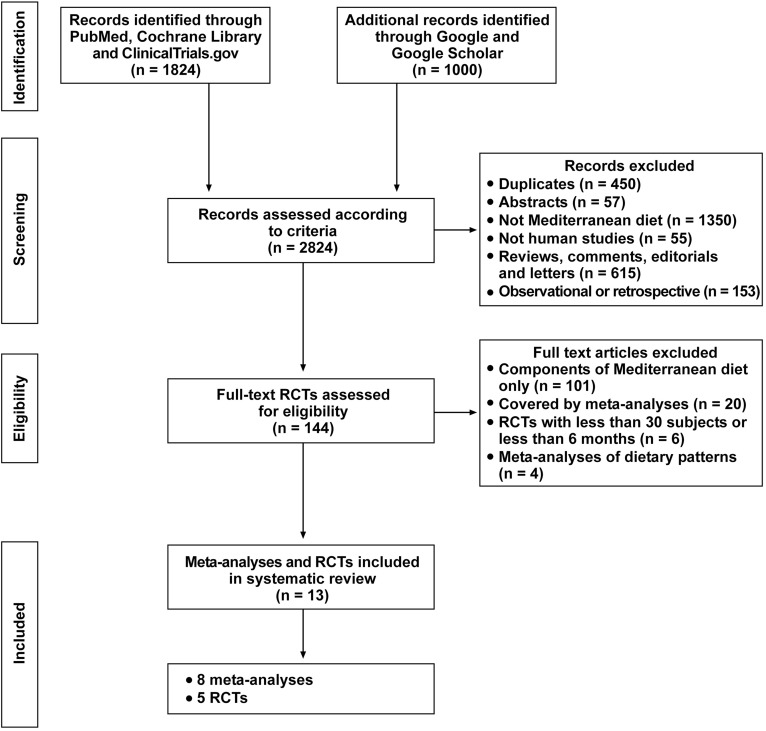
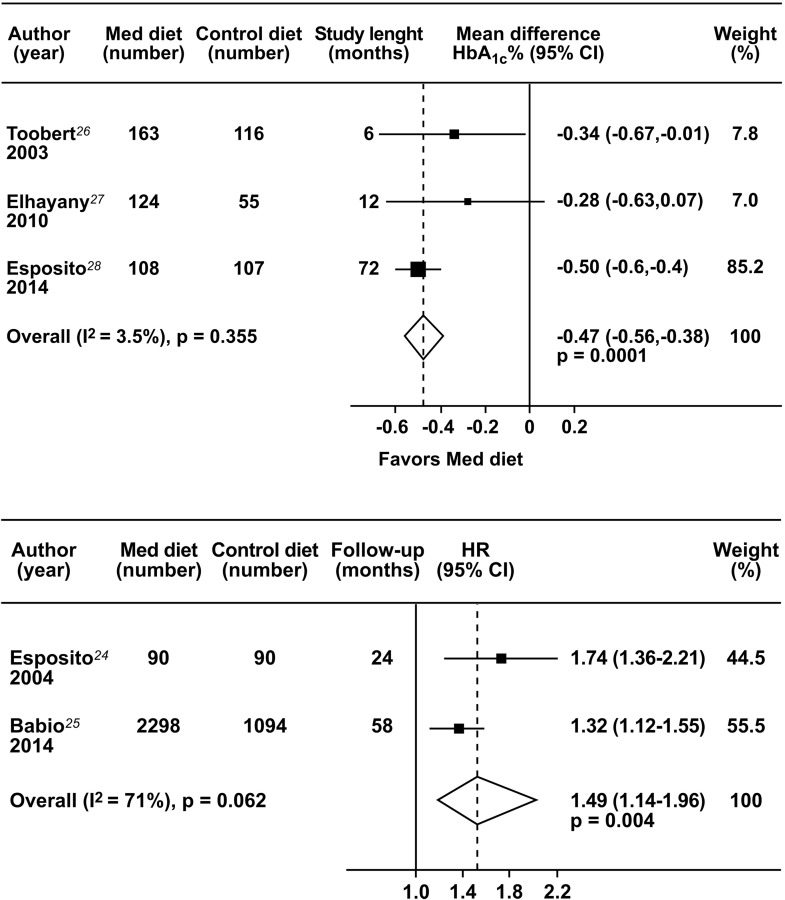
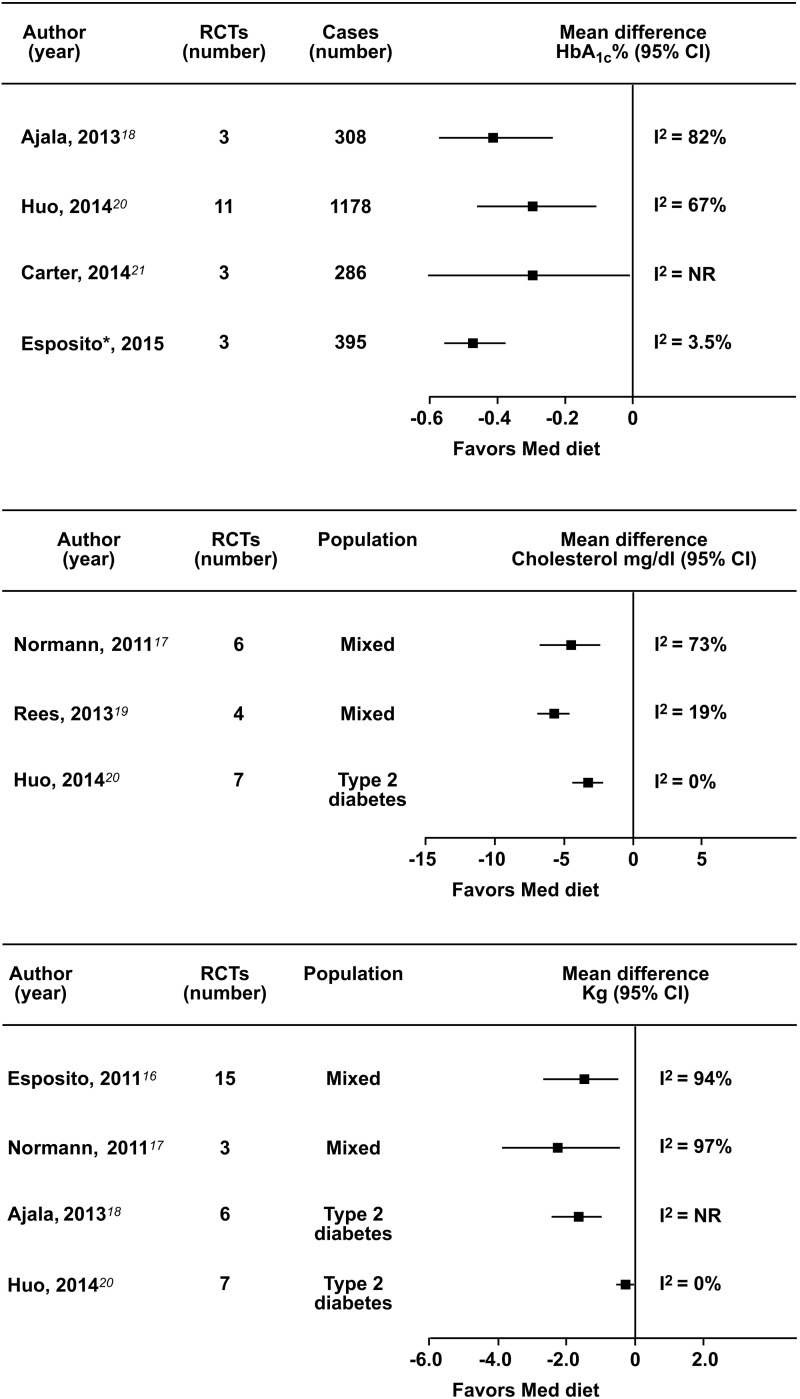
Objectives: To summarise the evidence about the efficacy of a Mediterranean diet on the management of type 2 diabetes and prediabetic states. Design: A systematic review of all meta-analyses and randomised controlled trials (RCTs) that compared the Mediterranean diet with a control diet on the treatment of type 2 diabetes and prediabetic states was conducted. Electronic searches were carried out up to January 2015. Trials were included for meta-analyses if they had a control group treated with another diet, if they were of sufficient duration (at least 6 months), and if they had at least 30 participants in each arm. A random-effect model was used to pool data. Participants: Adults with or at risk for type 2 diabetes. Interventions: Dietary patterns that described themselves as using a ‘Mediterranean’ dietary pattern. Outcome measures: The outcomes were glycaemic control, cardiovascular risk factors and remission from the metabolic syndrome. Results: From 2824 studies, 8 meta-analyses and 5 RCTs were eligible. A ‘de novo’ meta-analysis of 3 long-term (>6 months) RCTs of the Mediterranean diet and glycaemic control of diabetes favoured the Mediterranean diet as compared with lower fat diets. Another ‘de novo’ meta-analysis of two long-term RCTs showed a 49% increased probability of remission from the metabolic syndrome. 5 meta-analyses showed a favourable effect of the Mediterranean diet, as compared with other diets, on body weight, total cholesterol and high-density lipoprotein cholesterol. 2 meta-analyses demonstrated that higher adherence to the Mediterranean diet reduced the risk of future diabetes by 19–23%. Conclusions: The Mediterranean diet was associated with better glycaemic control and cardiovascular risk factors than control diets, including a lower fat diet, suggesting that it is suitable for the overall management of type 2 diabetes.
Overview
The claims and statistics of this paper haven’t been checked yet.
Free: it reads the open-access text and checks the first 5 claims that cite a source we can check. Create a free account to check every claim.
Integrity signals
Registry
Cites
Statistics
Figures
Verification
Claims the paper makes
The claims and statistics of this paper haven’t been checked yet.
Free: it reads the open-access text and checks the first 5 claims that cite a source we can check. Create a free account to check every claim.
Claims other papers make about this one
Each is checked against this paper’s own text: does it say what the citing paper says it does?
In the citing paper
“There is also evidence that diets rich in low-carbohydrate and low-glycemic-index foods may improve both glycemic control and cardiovascular risk factors.146,147”
From Clinical management of stable coronary artery disease in patients with type 2 diabetes mellitus: a scientific statement from the American Heart Association (2020) · cites this paper as [146]
In the citing paper
“Our findings corroborate previous evidence indicating that HbA1c levels can be significantly reduced on both a ketogenic diet (35–38) and a Mediterranean diet (39–44), especially if the diet is restricted in added sugars and refined carbohydrates (2).”
Self-check
Percentages, sums and reported differences re-computed from the paper’s own numbers.
The self-check needs the paper’s full text.
Citations
Cites
2 retracted
RETRACTED: Primary Prevention of Cardiovascular Disease with a Mediterranean Diet
Estruch, R., Ros, E., Salas-Salvadó, J., Covas, M.-I., Corella, D., Arós, F., Gómez-Gracia, E., Ruiz-Gutiérrez, V., Fiol, M., Lapetra, J., et al. (2013) · New England Journal of Medicine · doi:10.1056/nejmoa1200303 · Cited by 4,257
RetractedEstruch, R., Ros, E., Salas-Salvadó, J., Covas, M.-I., Corella, D., Arós, F., Gómez-Gracia, E., Ruiz-Gutiérrez, V., Fiol, M., Lapetra, J., et al. (2018) · New England Journal of Medicine · doi:10.1056/nejmc1806491 · Cited by 1,008
RetractedPreferred Reporting Items for Systematic Reviews and Meta-Analyses: the PRISMA statement
Moher, D., Liberati, A., Tetzlaff, J., Altman, D. G., & for the PRISMA Group (2009) · BMJ · doi:10.1136/bmj.b2535 · Cited by 83,823
Preferred reporting items for systematic reviews and meta-analyses: The PRISMA statement
Moher, D., Liberati, A., Tetzlaff, J., Altman, D. G., & the PRISMA Group* (2009) · Annals of Internal Medicine · doi:10.7326/0003-4819-151-4-200908180-00135 · Cited by 37,554
The Cochrane Collaboration's tool for assessing risk of bias in randomised trials
Higgins, J. P. T., Altman, D. G., Gotzsche, P. C., Juni, P., Moher, D., Oxman, A. D., Savovic, J., Schulz, K. F., Weeks, L., Sterne, J. A. C., et al. (2011) · BMJ · doi:10.1136/bmj.d5928 · Cited by 33,817
Dermyshi, E., Wang, Y., Yan, C., Hong, W., Qiu, G., Gong, X., & Zhang, T. (2017) · Neonatology · doi:10.1159/000454668 · Cited by 24,451
Reduction in the incidence of type 2 diabetes with lifestyle intervention or metformin
(2002) · New England Journal of Medicine · doi:10.1056/nejmoa012512 · Cited by 19,011
International Diabetes Federation 2017
Carracher, A. M., Marathe, P. H., & Close, K. L. (2018) · Journal of Diabetes · doi:10.1111/1753-0407.12644 · Cited by 13,418
GRADE guidelines: 3. Rating the quality of evidence
Balshem, H., Helfand, M., Schünemann, H. J., Oxman, A. D., Kunz, R., Brozek, J., Vist, G. E., Falck-Ytter, Y., Meerpohl, J., & Norris, S. (2011) · Journal of Clinical Epidemiology · doi:10.1016/j.jclinepi.2010.07.015 · Cited by 8,285 · cited 1×
“quality of the body of evidence of each meta-analysis was assessed by the GRADE approach.(13) Each evaluated factor was rated as high, moderate, low or very low.”
MethodPan, X.-R., Li, G.-W., Hu, Y.-H., Wang, J.-X., Yang, W.-Y., An, Z.-X., Hu, Z.-X., Juan-Lin, Xiao, J.-Z., Cao, H.-B., et al. (1997) · Diabetes Care · doi:10.2337/diacare.20.4.537 · Cited by 4,320
Cited by
Age and Age-Related Diseases: Role of Inflammation Triggers and Cytokines
Rea, I. M., Gibson, D. S., McGilligan, V., McNerlan, S. E., Alexander, H. D., & Ross, O. A. (2018) · Frontiers in Immunology · doi:10.3389/fimmu.2018.00586 · Cited by 1,267
“Could life-style factors play a role in the epidemic of noncommunicable and age-related diseases and the associated pro-inflammatory phenotype? Evidence exists that suggests that the Mediterranean diet which includes olive oil and some omega-3 lipids, can ameliorate RA (38), may give some protection from atrial fibril…”
BackgroundCena, H., & Calder, P. C. (2020) · Nutrients · doi:10.3390/nu12020334 · Cited by 1,130
“Since that time, research has revealed beneficial effects of the Mediterranean diet on a number of NCDs and related health measures, including cardiovascular and cerebrovascular disease [54], cancer [55], glycemic control [56], and cognitive function [57,58].”
BackgroundDinu, M., Pagliai, G., Casini, A., & Sofi, F. (2018) · European Journal of Clinical Nutrition · doi:10.1038/ejcn.2017.58 · Cited by 1,016
The Mediterranean diet and health: a comprehensive overview
Guasch‐Ferré, M., & Willett, W. C. (2021) · Journal of Internal Medicine · doi:10.1111/joim.13333 · Cited by 940
Joseph, J. J., Deedwania, P., Acharya, T., Aguilar, D., Bhatt, D. L., Chyun, D. A., Di Palo, K. E., Golden, S. H., Sperling, L. S., & on behalf of the American Heart Association Diabetes Committee of the Council on Lifestyle and Cardiometabolic Health; Council on Arteriosclerosis, T. A. V. B. C. O. C. C. A. C. O. H. (2022) · Circulation · doi:10.1161/cir.0000000000001040 · Cited by 660
Japanese clinical practice guideline for diabetes 2019
Araki, E., Goto, A., Kondo, T., Noda, M., Noto, H., Origasa, H., Osawa, H., Taguchi, A., Tanizawa, Y., Tobe, K., et al. (2020) · Diabetology International · doi:10.1007/s13340-020-00439-5 · Cited by 545
Functional Foods and Lifestyle Approaches for Diabetes Prevention and Management
Alkhatib, A., Tsang, C., Tiss, A., Bahorun, T., Arefanian, H., Barake, R., Khadir, A., & Tuomilehto, J. (2017) · Nutrients · doi:10.3390/nu9121310 · Cited by 376
“Indeed, MD is not a calorically-restricting diet, since some of its central elements are high in energy, especially olive oil and nuts [11,30,31].”
BackgroundJapanese Clinical Practice Guideline for Diabetes 2019
Araki, E., Goto, A., Kondo, T., Noda, M., Noto, H., Origasa, H., Osawa, H., Taguchi, A., Tanizawa, Y., Tobe, K., et al. (2020) · Journal of Diabetes Investigation · doi:10.1111/jdi.13306 · Cited by 341
Martín-Peláez, S., Fito, M., & Castaner, O. (2020) · Nutrients · doi:10.3390/nu12082236 · Cited by 330
Mijatovic-Vukas, J., Capling, L., Cheng, S., Stamatakis, E., Louie, J., Cheung, N. W., Markovic, T., Ross, G., Senior, A., Brand-Miller, J. C., et al. (2018) · Nutrients · doi:10.3390/nu10060698 · Cited by 315
“The protective association may extend to reducing future risk of type 2 diabetes (by 19–23%), increasing chance of remission (by 49%) [74] and protection against cardiovascular diseases with extra virgin olive oil and plant-based dietary components in the diet [65].”
BackgroundArnold, S. V., Bhatt, D. L., Barsness, G. W., Beatty, A. L., Deedwania, P. C., Inzucchi, S. E., Kosiborod, M., Leiter, L. A., Lipska, K. J., Newman, J. D., et al. (2020) · Circulation · doi:10.1161/cir.0000000000000766 · Cited by 304
High fat diet-triggered non-alcoholic fatty liver disease: A review of proposed mechanisms
Lian, C.-Y., Zhai, Z.-Z., Li, Z.-F., & Wang, L. (2020) · Chemico-Biological Interactions · doi:10.1016/j.cbi.2020.109199 · Cited by 302
The Mediterranean Diet: From an Environment-Driven Food Culture to an Emerging Medical Prescription
Lăcătușu, C.-M., Grigorescu, E.-D., Floria, M., Onofriescu, A., & Mihai, B.-M. (2019) · International Journal of Environmental Research and Public Health · doi:10.3390/ijerph16060942 · Cited by 297
Prediabetes and Cardiovascular Disease
Brannick, B., & Dagogo-Jack, S. (2018) · Endocrinology and Metabolism Clinics of North America · doi:10.1016/j.ecl.2017.10.001 · Cited by 293
Freire, R. (2020) · Nutrition · doi:10.1016/j.nut.2019.07.001 · Cited by 262
“Studies have demonstrated that the Mediterranean diet improves outcomes for glycemic control in patients with type 2 diabetes [102,103].”
BackgroundEvidence-based European recommendations for the dietary management of diabetes
The Diabetes and Nutrition Study Group (DNSG) of the European Association for the Study of Diabetes (EASD), Aas, A.-M., Axelsen, M., Churuangsuk, C., Hermansen, K., Kendall, C. W. C., Kahleova, H., Khan, T., Lean, M. E. J., Mann, J. I., et al. (2023) · Diabetologia · doi:10.1007/s00125-023-05894-8 · Cited by 262
“Results from RCTs indicate reductions in fasting plasma glucose, body weight, LDL-cholesterol, triacylglycerols, blood pressure [142, 148] and reduced need for antihyperglycaemic medications [151, 152].”
Mediterranean diet and 3-year Alzheimer brain biomarker changes in middle-aged adults
Berti, V., Walters, M., Sterling, J., Quinn, C. G., Logue, M., Andrews, R., Matthews, D. C., Osorio, R. S., Pupi, A., Vallabhajosula, S., et al. (2018) · Neurology · doi:10.1212/wnl.0000000000005527 · Cited by 246
Low-Carb and Ketogenic Diets in Type 1 and Type 2 Diabetes
Bolla, A. M., Caretto, A., Laurenzi, A., Scavini, M., & Piemonti, L. (2019) · Nutrients · doi:10.3390/nu11050962 · Cited by 226
“We know that, for example, a Mediterranean diet is safe, can be maintained for a life-time and has durable effects on glycemic control when compared to a standard diet [59,60], in addition to reducing post-prandial lipemia [61].”
BackgroundThe Effects of the Mediterranean Diet on Health and Gut Microbiota
Barber, T. M., Kabisch, S., Pfeiffer, A. F. H., & Weickert, M. O. (2023) · Nutrients · doi:10.3390/nu15092150 · Cited by 213
“In a meta-analysis that included the PREDIMED trial and others (with follow-up of 2–5 years), participants with MS who had been allocated to the MD had a 49% increased probability of remission from MS [5,14].”
MethodVancells Lujan, P., Viñas Esmel, E., & Sacanella Meseguer, E. (2021) · Nutrients · doi:10.3390/nu13051442 · Cited by 209
“As mentioned before, its incidence is growing worldwide in parallel with overweight, obesity, T2DM, and MetS [5,13,16].”
BackgroundInfluentialPrimary Prevention of Cardiovascular Disease in Diabetes Mellitus
Newman, J. D., Schwartzbard, A. Z., Weintraub, H. S., Goldberg, I. J., & Berger, J. S. (2017) · Journal of the American College of Cardiology · doi:10.1016/j.jacc.2017.07.001 · Cited by 205
“There is also additional evidence that diets with low carbohydrate and low glycemic index foods may improve glycemic control and CVD risk factors (17,18), and may lower future diabetes risk (16).”
BackgroundGaforio, J. J., Visioli, F., Alarcón-de-la-Lastra, C., Castañer, O., Delgado-Rodríguez, M., Fitó, M., Hernández, A. F., Huertas, J. R., Martínez-González, M. A., Menendez, J. A., et al. (2019) · Nutrients · doi:10.3390/nu11092039 · Cited by 187
“Two meta-analyses showed that a higher adherence to MedDiet was linked to a reduction in the risk of future diabetes by 19–23% [86].”
BackgroundMediterranean diet in the management and prevention of obesity
Dominguez, L. J., Veronese, N., Di Bella, G., Cusumano, C., Parisi, A., Tagliaferri, F., Ciriminna, S., & Barbagallo, M. (2023) · Experimental Gerontology · doi:10.1016/j.exger.2023.112121 · Cited by 182
Calcaterra, V., Verduci, E., Cena, H., Magenes, V. C., Todisco, C. F., Tenuta, E., Gregorio, C., De Giuseppe, R., Bosetti, A., Di Profio, E., et al. (2021) · Nutrients · doi:10.3390/nu13061848 · Cited by 183
“Women with PCOS and excessive body weight who performed physical activity consistently for at least 12 weeks experienced a significant reduction in central adiposity and insulin sensitivity [151], revealing further beneficial effects on a number of health measures, including glycemic control [152].”
BackgroundPapamichou, D., Panagiotakos, D. B., & Itsiopoulos, C. (2019) · Nutrition, Metabolism and Cardiovascular Diseases · doi:10.1016/j.numecd.2019.02.004 · Cited by 182
Self-citationThe Role of Dietary Inflammatory Index in Cardiovascular Disease, Metabolic Syndrome and Mortality
Ruiz-Canela, M., Bes-Rastrollo, M., & Martínez-González, M. (2016) · International Journal of Molecular Sciences · doi:10.3390/ijms17081265 · Cited by 178
Diets and drugs for weight loss and health in obesity – An update
Aaseth, J., Ellefsen, S., Alehagen, U., Sundfør, T. M., & Alexander, J. (2021) · Biomedicine & Pharmacotherapy · doi:10.1016/j.biopha.2021.111789 · Cited by 174
“It has been shown that Mediterranean diet with its low glycemic load improves glycemic control in patients with T2DM [79], and it has also been associated with a reduction of inflammatory biomarkers, and reduction of other markers for CVD risk [80].”
BackgroundObeid, C. A., Gubbels, J. S., Jaalouk, D., Kremers, S. P. J., & Oenema, A. (2022) · European Journal of Nutrition · doi:10.1007/s00394-022-02885-0 · Cited by 169
Dietary strategies implicated in the prevention and treatment of metabolic syndrome
De la Iglesia, R., Loria-Kohen, V., Zulet, M., Martinez, J., Reglero, G., & Ramirez de Molina, A. (2016) · International Journal of Molecular Sciences · doi:10.3390/ijms17111877 · Cited by 168
“Moreover, recent meta-analysis concluded that the MedDiet is associated with less risk of developing type 2 diabetes and with a better glycemic control in people with this metabolic disorder [107,109,110].”
BackgroundDinu, M., Pagliai, G., Angelino, D., Rosi, A., Dall'Asta, M., Bresciani, L., Ferraris, C., Guglielmetti, M., Godos, J., Del Bo', C., et al. (2020) · Advances in Nutrition · doi:10.1093/advances/nmaa006 · Cited by 164
Bloomfield, H. E., Koeller, E., Greer, N., MacDonald, R., Kane, R., & Wilt, T. J. (2016) · Annals of Internal Medicine · doi:10.7326/m16-0361 · Cited by 159
Gardner, C. D., Landry, M. J., Perelman, D., Petlura, C., Durand, L. R., Aronica, L., Crimarco, A., Cunanan, K. M., Chang, A., Dant, C. C., et al. (2022) · The American Journal of Clinical Nutrition · doi:10.1093/ajcn/nqac154 · Cited by 151
Antonopoulou, M., Mantzorou, M., Serdari, A., Bonotis, K. S., Vasios, G., Pavlidou, E., Trifonos, C., Vadikolias, Κ., Petridis, D., & Giaginis, C. (2019) · The International Journal of Health Planning and Management · doi:10.1002/hpm.2881 · Cited by 190
The role of the Mediterranean diet on weight loss and obesity-related diseases
Estruch, R., & Ros, E. (2020) · Reviews in Endocrine and Metabolic Disorders · doi:10.1007/s11154-020-09579-0 · Cited by 175
“There is also meta-analytical evidence from prospective studies and clinical trials that the MedDiet is associated with lower rates of incident diabetes and better glycemic control in diabetic patients compared with control diets [81].”
BackgroundAn integrative collaborative care model for people with mental illness and physical comorbidities
Ee, C., Lake, J., Firth, J., Hargraves, F., de Manincor, M., Meade, T., Marx, W., & Sarris, J. J. (2020) · International Journal of Mental Health Systems · doi:10.1186/s13033-020-00410-6 · Cited by 196
Sánchez-Sánchez, M. L., García-Vigara, A., Hidalgo-Mora, J. J., García-Pérez, M.-Á., Tarín, J., & Cano, A. (2020) · Maturitas · doi:10.1016/j.maturitas.2020.03.008 · Cited by 137
Mediterranean diet for type 2 diabetes: cardiometabolic benefits
Esposito, K., Maiorino, M. I., Bellastella, G., Panagiotakos, D. B., & Giugliano, D. (2016) · Endocrine · doi:10.1007/s12020-016-1018-2 · Cited by 164
Self-citationCaprara, G. (2021) · Nutrients · doi:10.3390/nu13020429 · Cited by 163
INTERDISCIPLINARY CLINICAL PRACTICE GUIDELINES "MANAGEMENT OF OBESITY AND ITS COMORBIDITIES"
Dedov, I. I., Shestakova, M. V., Mel'nichenko, G. A., Mazurina, N. V., Andreeva, E. N., Bondarenko, I. Z., Руслановна, Г. З., Dzgoeva, F. K., Елисеев, М. С., Ershova, E. V., et al. (2021) · Obesity and metabolism · doi:10.14341/omet12714 · Cited by 205
Kawaguchi, T., Charlton, M., Kawaguchi, A., Yamamura, S., Nakano, D., Tsutsumi, T., Zafer, M., & Torimura, T. (2021) · Seminars in Liver Disease · doi:10.1055/s-0041-1723751 · Cited by 122
Van Horn, L., Lenders, C. M., Pratt, C. A., Beech, B., Carney, P. A., Dietz, W., DiMaria-Ghalili, R., Harlan, T., Hash, R., Kohlmeier, M., et al. (2019) · Advances in Nutrition · doi:10.1093/advances/nmz083 · Cited by 120
Korsmo‐Haugen, H., Brurberg, K. G., Mann, J., & Aas, A. (2019) · Diabetes, Obesity and Metabolism · doi:10.1111/dom.13499 · Cited by 115
Franquesa, M., Pujol-Busquets, G., García-Fernández, E., Rico, L., Shamirian-Pulido, L., Aguilar-Martínez, A., Medina, F. X., Serra-Majem, L., & Bach-Faig, A. (2019) · Nutrients · doi:10.3390/nu11030655 · Cited by 117
“, 2015 [43] Systematic review and meta-analysis Several Men and women (age not specified) N total = 1266 Overweight or obesity with T2DM >0.”
InfluentialThe Mediterranean diet: A historical perspective on food for health
Hidalgo-Mora, J. J., García-Vigara, A., Sánchez-Sánchez, M. L., García-Pérez, M.-Á., Tarín, J., & Cano, A. (2020) · Maturitas · doi:10.1016/j.maturitas.2019.12.002 · Cited by 116
Gut microbiota-derived metabolites as key actors in type 2 diabetes mellitus
Du, L., Li, Q., Yi, H., Kuang, T., Tang, Y. P., & Fan, G. (2022) · Biomedicine & Pharmacotherapy · doi:10.1016/j.biopha.2022.112839 · Cited by 131
McDonald, C. M., Alvarez, J. A., Bailey, J., Bowser, E. K., Farnham, K., Mangus, M., Padula, L., Porco, K., & Rozga, M. (2020) · Journal of the Academy of Nutrition and Dietetics · doi:10.1016/j.jand.2020.03.015 · Cited by 129
Association between Mediterranean diet and hand grip strength in older adult women
Barrea, L., Muscogiuri, G., Di Somma, C., Tramontano, G., De Luca, V., Illario, M., Colao, A., & Savastano, S. (2019) · Clinical Nutrition · doi:10.1016/j.clnu.2018.03.012 · Cited by 114
A narrative review of diabetic bone disease: Characteristics, pathogenesis, and treatment
Wu, B., Fu, Z., Wang, X., Zhou, P., Yang, Q., Jiang, Y., & Zhu, D. (2022) · Frontiers in Endocrinology · doi:10.3389/fendo.2022.1052592 · Cited by 124
Archero, F., Ricotti, R., Solito, A., Carrera, D., Civello, F., Di Bella, R., Bellone, S., & Prodam, F. (2018) · Nutrients · doi:10.3390/nu10091322 · Cited by 105
Fu, J., Tan, L., Lee, J. E., & Shin, S. (2022) · Frontiers in Nutrition · doi:10.3389/fnut.2022.946361 · Cited by 126
Anti-Inflammatory Strategies Targeting Metaflammation in Type 2 Diabetes
Kuryłowicz, A., & Koźniewski, K. (2020) · Molecules · doi:10.3390/molecules25092224 · Cited by 99
“Moreover, MD reduces the incidence of T2DM irrespectively of BMI since it is not a calorically-restricting [90].”
BackgroundPan, B., Wu, Y., Yang, Q., Ge, L., Gao, C., Xun, Y., Tian, J., & Ding, G. (2019) · Journal of Evidence-Based Medicine · doi:10.1111/jebm.12312 · Cited by 99
Medication adherence among patients with Type 2 diabetes: A mixed methods study
Aloudah, N. M., SCOTT, N. W., Aljadhey, H. S., Araújo‐Soares, V., Al-Rubeaan, K. A., & Watson, M. C. (2018) · PLoS ONE · doi:10.1371/journal.pone.0207583 · Cited by 122
From Mediterranean diet to Mediterranean lifestyle: a narrative review
Diolintzi, A., Panagiotakos, D. B., & Sidossis, L. S. (2019) · Public Health Nutrition · doi:10.1017/s1368980019000612 · Cited by 94
“Also, regarding MetS, another well-established cardiometabolic risk factor, compliance with the MD has been shown to improve the abnormalities typical of this intricate entirety, leading to substantial remission of the syndrome(25).”
BackgroundSelf-citationLifestyle Changes After a Diagnosis of Type 2 Diabetes
Chong, S., Ding, D., Byun, R., Comino, E. J., Bauman, A. E., & Jalaludin, B. B. (2017) · Diabetes Spectrum · doi:10.2337/ds15-0044 · Cited by 118
“Weight management (11) and dietary modification such as adoption of a Mediterranean or low– glycemic index eating pattern (12,13) have been shown to be effective in improving markers of cardiovascular disease (CVD) risk.”
BackgroundNutrition and Healthy Aging: A Review
Bojang, K. P., & Manchana, V. (2023) · Current Nutrition Reports · doi:10.1007/s13668-023-00473-0 · Cited by 123
Suárez, M., Boqué, N., Del Bas, J., Mayneris-Perxachs, J., Arola, L., & Caimari, A. (2017) · Nutrients · doi:10.3390/nu9101052 · Cited by 93
“Alterations in the composition of the gut microbiome that lead to a reduction in beneficial bacteria, also known as dysbiosis, may contribute to the pathogenesis of different disorders, such as obesity and T2D [106].”
BackgroundPocovi-Gerardino, G., Correa‐Rodríguez, M., Callejas-Rubio, J. L., Ríos-Fernández, R., Martín-Amada, M., Cruz-Caparrós, M.-G., Rueda‐Medina, B., & Ortego‐Centeno, N. (2020) · Rheumatology · doi:10.1093/rheumatology/keaa210 · Cited by 107
Sotos‐Prieto, M., Ortolá, R., Ruiz‐Canela, M., García‐Esquinas, E., Martínez‐Gómez, D., López‐García, E., Martínez‐González, M. Á., & Rodríguez‐Artalejo, F. (2021) · Cardiovascular Diabetology · doi:10.1186/s12933-020-01195-1 · Cited by 98
Mesinovic, J., Fyfe, J. J., Talevski, J., Wheeler, M. J., Leung, G. K. W., George, E. S., Hunegnaw, M. T., Glavas, C., Jansons, P., Daly, R. M., et al. (2023) · Diabetes & Metabolism Journal · doi:10.4093/dmj.2023.0112 · Cited by 114
Sun, L., Ni, C., Zhao, J., Wang, G., & Chen, W. (2022) · Critical Reviews in Food Science and Nutrition · doi:10.1080/10408398.2022.2119934 · Cited by 93
“In addition, studies have shown that the Mediterranean diet also helps to prevent cardio-vascular disease, type 2 diabetes, heart disease and Alzheimer’s disease (Esposito et al. 2015; Harper and Jacobson 2003; Tyrovolas and Panagiotakos 2010).”
BackgroundThe Mediterranean diet and menopausal health: An EMAS position statement
Cano, A., Marshall, S., Zolfaroli, I., Bitzer, J., Ceauşu, I., Chedraui, P. A., Durmuşoğlu, F., Erkkola, R. U., Goulis, D. G., Hirschberg, A. L., et al. (2020) · Maturitas · doi:10.1016/j.maturitas.2020.07.001 · Cited by 96
“A systematic review of all meta-analyses and RCTs with electronic searches up to January 2015 concluded that the MedDiet was associated with better glycemic control and cardiovascular risk factors than control diets, including lower-fat diets, suggesting that it is suitable for the overall management of type 2 diabete…”
BackgroundMosconi, L., Walters, M., Sterling, J., Quinn, C., McHugh, P., Andrews, R. E., Matthews, D. C., Ganzer, C., Osorio, R. S., Isaacson, R. S., et al. (2018) · BMJ Open · doi:10.1136/bmjopen-2017-019362 · Cited by 81
“Indeed, besides being linked with lower risk of dementia, the MeDi was shown to support healthier insulin regulation and cardiovascular health.(38) Given the known increased AD risk associated with prediabetes and type 2 diabetes,(39) our findings fit with increased cardiovascular risk being a driver of increased brai…”
BackgroundSalas‐Salvadó, J., Becerra‐Tomás, N., Papandreou, C., & Bulló, M. (2018) · Advances in Nutrition · doi:10.1093/advances/nmy102 · Cited by 91
Komleva, Y. K., Chernykh, A., Lopatina, O. L., Gorina, Y. V., Lokteva, I., Salmina, A. B., & Gollasch, M. (2021) · Frontiers in Neuroscience · doi:10.3389/fnins.2020.618395 · Cited by 88
Maiorino, M. I., Bellastella, G., Caputo, M., Castaldo, F., Improta, M. R., Giugliano, D., & Esposito, K. (2016) · Journal of Diabetes and its Complications · doi:10.1016/j.jdiacomp.2016.08.007 · Cited by 84
“…general sense, Mediterranean diet is associated with better glycemic control and cardiovascular risk factors than control diets, suggesting that it is suitable for the overall management of type 2 diabetes (Esposito, Maiorino, Bellastella, Panagiotakos, & Giugliano, 2016; Esposito et al., 2015).”
BackgroundSelf-citationMaiorino, M. I., Bellastella, G., Petrizzo, M., Gicchino, M., Caputo, M., Giugliano, D., & Esposito, K. (2017) · European Journal of Preventive Cardiology · doi:10.1177/2047487316676133 · Cited by 77
“Several meta-analyses of randomized controlled trials showed a favourable effect of a Mediterranean diet, compared with other diets, on body weight, total cholesterol and HDL cholesterol.(21,22) A secondary outcome analysis of the PREDIMED trial(23) reported benefits of a Mediterranean diet enriched with olive oil com…”
ResultSelf-citationNutrition Knowledge as a Driver of Adherence to the Mediterranean Diet in Italy
Aureli, V., & Rossi, L. (2022) · Frontiers in Nutrition · doi:10.3389/fnut.2022.804865 · Cited by 91
Zhou, M., Zhu, L., Cui, X., Feng, L., Zhao, X., He, S., Ping, F., Li, W., & Li, Y. (2015) · Nutrition Journal · doi:10.1186/s12937-016-0157-x · Cited by 80
“The pattern of Mediterranean diet mainly containing vegetables, legumes, fruits, grains, fish, single unsaturated fatty acids, dairy products, had a protective effect on telomere length [17, 18].”
BackgroundMilenković, T., Bozhinovska, N., Μacut, D., Bjekić-Macut, J., Rahelić, D., Velija-Ašimi, Z., & Bureković, A. (2021) · Nutrients · doi:10.3390/nu13041307 · Cited by 119
“Mingyue Zeng et al. authored a review of six RCTs, which concentrated on the Mediterranean diet and its effects on the prevention of type 2 diabetes amongst overweight patients.”
BackgroundInfluentialThe Association between the Atherogenic Index of Plasma and Cardiometabolic Risk Factors: A Review
Lioy, B., Webb, R. J., & Amirabdollahian, F. (2023) · Healthcare · doi:10.3390/healthcare11070966 · Cited by 96
“Studies found a 14–25% reduction in the odds of developing MetS when following this dietary pattern [86,88,95], and a meta-analysis showed a 49% increased probability of remission from the metabolic syndrome [96].”
BackgroundEffect of the Mediterranean diet on gingivitis: A randomized controlled trial
Bartha, V., Exner, L., Schweikert, D., Woelber, J. P., Vach, K., Meyer, A., Basrai, M., Bischoff, S. C., Meller, C., & Wolff, D. (2021) · Journal Of Clinical Periodontology · doi:10.1111/jcpe.13576 · Cited by 81
Monlezun, D. J., Leong, B., Joo, E., Birkhead, A. G., Sarris, L., & Harlan, T. S. (2015) · Advances in Preventive Medicine · doi:10.1155/2015/656780 · Cited by 68
Ismael, S., Silvestre, M. P., Vasques, M., Araújo, J. R., Morais, J., Duarte, M. I., Pestana, D., Faria, A., Pereira‐Leal, J. B., Vaz, J., et al. (2021) · Nutrients · doi:10.3390/nu13041228 · Cited by 83
Metabolic Syndrome, Cognitive Impairment and the Role of Diet: A Narrative Review
Kouvari, M., D'Cunha, N. M., Travica, N., Sergi, D., Zec, M. M., Marx, W., & Naumovski, N. (2022) · Nutrients · doi:10.3390/nu14020333 · Cited by 88
Osté, M. C. J., Corpeleijn, E., Navis, G. J., Velde‐Keyzer, C. A. T., Soedamah‐Muthu, S. S., van den Berg, E., Postmus, D., de Borst, M. H., Kromhout, D., & Bakker, S. J. L. (2017) · BMJ Open Diabetes Research & Care · doi:10.1136/bmjdrc-2016-000283 · Cited by 68
“A meta-analysis of the adherence to the Mediterranean Style diet showed a 25% lower incidence of diabetes mellitus among prospective cohort studies.(15) Table 2 Median intake of the components of the Mediterranean Diet Score”
MethodValero-Velló, M., Peris‐Martínez, C., García‐Medina, J. J., Sanz-Gonzalez, S. M., Ramirez, A. I., Fernández‐Albarral, J. A., Galarreta, D., Zanón‐Moreno, V., Casaroli-Marano, R. P., & Pinazo-Duran, M. D. (2021) · Foods · doi:10.3390/foods10061231 · Cited by 73
Mediterranean diet and risk of frailty syndrome among women with type 2 diabetes
López‐García, E., Hagan, K. A., Fung, T. T., Hu, F. B., & Rodríguez‐Artalejo, F. (2018) · American Journal of Clinical Nutrition · doi:10.1093/ajcn/nqy026 · Cited by 70
The effects of popular diets on type 2 diabetes management
Chester, B., Babu, J. R., Greene, M. W., & Geetha, T. (2019) · Diabetes/Metabolism Research and Reviews · doi:10.1002/dmrr.3188 · Cited by 63
Poulimeneas, D., Anastasiou, C. A., Santos, I., Hill, J. O., Panagiotakos, D. B., & Yannakoulia, M. (2020) · British Journal of Nutrition · doi:10.1017/s0007114520001798 · Cited by 62
“Strong evidence supports that higher adherence to this traditional dietary pattern is associated with greater longevity(3) and acts both as a preventive and therapeutic target for many prevailing non-communicable diseases(4-6).”
BackgroundSelf-citationMigraine, Brain Glucose Metabolism and the “Neuroenergetic” Hypothesis: A Scoping Review
Moro, L. D., Rota, E., Pirovano, E., & Rainero, I. (2022) · Journal of Pain · doi:10.1016/j.jpain.2022.02.006 · Cited by 73
Mediterranean Diet and Its Association with Cardiovascular Disease Risk Factors: A Scoping Review
Richardson, L. A., Izuora, K. E., & Basu, A. (2022) · International Journal of Environmental Research and Public Health · doi:10.3390/ijerph191912762 · Cited by 72
“The MedDiet has been associated with prevention of progression from pre-diabetes mellitus to T2D; identified as a tool for primary prevention of T2D; and improved overall management of T2D and lessened CVD risk [32,38,39].”
BackgroundSantangelo, C., Zicari, A., Mandosi, E., Scazzocchio, B., Mari, E., Morano, S., & Masella, R. (2016) · British Journal Of Nutrition · doi:10.1017/s0007114516000222 · Cited by 65
Okada, E., Nakamura, K., Ukawa, S., Wakai, K., Date, C., Iso, H., & Tamakoshi, A. (2018) · British Journal Of Nutrition · doi:10.1017/s000711451800154x · Cited by 65
Nutrition and Nonalcoholic Fatty Liver Disease
Chakravarthy, M. V., Waddell, T. K., Banerjee, R., & Guess, N. D. (2019) · Gastroenterology Clinics of North America · doi:10.1016/j.gtc.2019.09.003 · Cited by 77
Effects of a Low-Carbohydrate Dietary Intervention on Hemoglobin A1c: A Randomized Clinical Trial
Dorans, K. S., Bazzano, L. A., Qi, L., He, H., Chen, J., Appel, L. J., Chen, C.-S., Hsieh, M.-H., Hu, F. B., Mills, K. T., et al. (2022) · JAMA Network Open · doi:10.1001/jamanetworkopen.2022.38645 · Cited by 58
“Added sugars, median (IQR), g 64 (28-80) 43 (24-80) 9 (4-18) 40 (23-59) 11 (5-31) 45 (22-66) Sugar-sweetened beverages, median (IQR), servings 0.”
Bergia, R. E., Giacco, R., Hjorth, T., Biskup, I., Zhu, W., Costabile, G., Vitale, M., Campbell, W. W., Landberg, R., & Riccardi, G. (2022) · Nutrients · doi:10.3390/nu14030706 · Cited by 63
“Consuming a Mediterranean-style (MED) HEP is supported by considerable evidence suggestive of a reduced risk of type 2 diabetes development [13,14].”
BackgroundAttaye, I., Warmbrunn, M. V., Boot, A. N. A. F., van der Wolk, S. C., Hutten, B. A., Daams, J. G., Herrema, H., & Nieuwdorp, M. (2022) · Gastroenterology · doi:10.1053/j.gastro.2022.02.011 · Cited by 60
Di Renzo, L., Cioccoloni, G., Falco, S., Abenavoli, L., Moia, A., Sinibaldi Salimei, P., & De Lorenzo, A. (2018) · Journal of Translational Medicine · doi:10.1186/s12967-018-1680-7 · Cited by 54
Παπανδρέου, Π., Gioxari, A., Daskalou, E., Grammatikopoulou, M. G., Skouroliakou, M., & Bogdanos, D. P. (2023) · Nutrients · doi:10.3390/nu15030676 · Cited by 74
“Additionally, the serum glucose levels were significantly lower among patients receiving personalized MD intervention compared with the controls, an observation that also implies the well-documented favorable effects of MD on glucoregulation [64].”
Oleoylethanolamide: A fat ally in the fight against obesity
Brown, J. D., Azari, E. K., & Ayala, J. E. (2017) · Physiology & Behavior · doi:10.1016/j.physbeh.2017.02.034 · Cited by 62
Mayr, H. L., Itsiopoulos, C., Tierney, A. C., Ruiz‐Canela, M., Hébert, J. R., Shivappa, N., & Thomas, C. J. (2018) · Nutrition Research · doi:10.1016/j.nutres.2018.04.007 · Cited by 58
“DII, Dietary inflammatory index CHD; coronary heart disease IL; interleukin AMI; acute myocardial infarction CRP; C-reactive protein MedDiet; Mediterranean diet MetS; Metabolic syndrome BMI; body mass index CONSORT, Consolidated Standards of Reporting Trials MUFA; monounsaturated fatty acids PUFA; polyunsaturated fatt…”
BackgroundInfluentialFortin, A., RABASA-LHORET, R. P. R., Lemieux, S., Labonté, M., & Gingras, V. (2018) · Nutrition Metabolism and Cardiovascular Diseases · doi:10.1016/j.numecd.2018.08.005 · Cited by 55
Hallberg, S. J., Dockter, N. E., Kushner, J. A., & Athinarayanan, S. J. (2019) · Diabetes Obesity and Metabolism · doi:10.1111/dom.13736 · Cited by 55
AlAufi, N. S., Chan, Y. M., Waly, M. I., Chin, Y. S., Yusof, B. N. M., & Ahmad, N. (2022) · Nutrients · doi:10.3390/nu14132777 · Cited by 58
“The American Diabetes Association recommends MedDiet for its beneficial effects on cardiovascular risk factors and glycemic control [13].”
BackgroundInfluentialTrends in Adherence to the Mediterranean Diet in Spanish Children and Adolescents across Two Decades
Herrera-Ramos, E., Tomaino, L., Sánchez-Villegas, A., Ribas-Barba, L., Gómez, S. F., Wärnberg, J., Osés, M., González-Gross, M., Gusi, N., Aznar, S., et al. (2023) · Nutrients · doi:10.3390/nu15102348 · Cited by 49
“Robust evidence shows that high adherence to the Mediterranean dietary pattern is associated with a reduced risk of cardiovascular events [5], type 2 diabetes [6], cancer [7], and other non-communicable diseases.”
BackgroundVeček, N. N., Mucalo, L., Dragun, R., Miličević, T., Relja, A., Patarčić, I., Hayward, C., Polašek, O., & Kolčić, I. (2020) · Nutrients · doi:10.3390/nu12041164 · Cited by 60
“These trends are very misfortunate and represent a double missed opportunity, because Mediterranean diet was shown to have the capacity for preventing the development of metabolic syndrome, as well as the ability to reverse it in people with or without type 2 diabetes [19,20].”
BackgroundEfficacy of Dietary and Supplementation Interventions for Individuals with Type 2 Diabetes
Lewgood, J., Oliveira, B., Korzepa, M., Forbes, S. C., Little, J. P., Breen, L., Bailie, R., & Candow, D. G. (2021) · Nutrients · doi:10.3390/nu13072378 · Cited by 57
“Collectively, research findings indicate that MedDiet has positive effects on several outcome measures associated with metabolic health [31], is a viable dietary strategy for the management of T2D [16] and may reduce the risk of pre-mature mortality for individuals with T2D [32].”
BackgroundFilippatos, T. D., ATTICA Study Group, Panagiotakos, D. B., Georgousopoulou, E. N., Pitaraki, E., Kouli, G.-M., Chrysohoou, C. A., Tousoulis, D. M., Stefanadis, C., & Pitsavos, C. E. (2016) · The Review of Diabetic Studies · doi:10.1900/rds.2016.13.226 · Cited by 58
“The protective effect of the Mediterranean diet against the development of diabetes has been consistently demonstrated and various mechanisms have been implicated, including improvement of insulin sensitivity, reduction of endothelial dysfunction and inflammatory markers, and increase in antioxidant markers [5, 16].”
BackgroundSelf-citationPleiotropic effects of polyphenols on glucose and lipid metabolism: Focus on clinical trials
Matacchione, G., Gurău, F., Baldoni, S., Prattichizzo, F., Silvestrini, A., Giuliani, A., Pugnaloni, A., Espinosa, E., Amenta, F., Bonafè, M., et al. (2020) · Ageing Research Reviews · doi:10.1016/j.arr.2020.101074 · Cited by 49
Metadata
- Authors
- Esposito, K., Maiorino, M. I., Bellastella, G., Chiodini, P., Panagiotakos, D., & Giugliano, D.
- Affiliations
- University of Campania "Luigi Vanvitelli" (IT)
- Harokopio University of Athens (GR)
- Corresponding author
- Esposito, Katherine
- ORCID
- Venue
- BMJ Open
- Publisher
- BMJ
- Published
- 2015-08
- Volume
- 5
- Issue
- 8
- Pages
- e008222
- ISSN
- 2044-6055 (ISSN-L)
- PMC
- PMC4538272
- OpenAlex
- W1860042119
- Cited by
- 501
- References
- 60
- Citations by year
- 2026: 26 · 2025: 41 · 2024: 44 · 2023: 51 · 2022: 66 · 2021: 60 · 2020: 100 · 2019: 34 · 2018: 33 · 2017: 24 · 2016: 18 · 2015: 3
- FWCI
- 3.77
- Type
- journal article
- Language
- en
- Open access
- gold
- doi.org
- Licence
- cc-by-nc
- Locations
- BMJ Open (publishedVersion, cc-by-nc)
- Europe PMC (PubMed Central) (publishedVersion, cc-by-nc)
- PubMed Central (publishedVersion, cc-by-nc)
- PubMed (publishedVersion)
- Archivio Istituzionale della Ricerca - Università degli Studi della Campania "Luigi Vanvitelli" (submittedVersion, cc-by-nc)
- DOAJ (DOAJ: Directory of Open Access Journals) (submittedVersion)
- Funders
- Università degli Studi di Napoli Federico II
- Seconda Università degli Studi di Napoli
- Topics
- Health Sciences › Medicine › Public Health, Environmental and Occupational Health › Nutritional Studies and Diet
- Health Sciences › Medicine › Physiology (medical) › Diet and metabolism studies
- Health Sciences › Medicine › Physiology (medical) › Dietary Effects on Health
- Keywords
- Mediterranean diet, type 2 diabetes, prediabetes, glycemic control, cardiovascular risk factors, dietary fat, body weight, cholesterol, HDL cholesterol, diabetes prevention, dietary adherence
- MeSH terms
- Adult, Blood Glucose, Cardiovascular Diseases, Diabetes Mellitus, Type 2, Humans, Cholesterol, HDL, Risk Factors, Weight Loss, Randomized Controlled Trials as Topic, Diet, Fat-Restricted, Diet, Mediterranean
About these checks
Registry, retraction, Cites and statistics results are computed, not judged, with one exception: a printed reference that no index lists is read once by a model before it counts as a citation error. Claims are extracted by a model and kept only when their quote appears verbatim in the text; each cited source is then checked, with a model’s help, for whether it says what the claim relies on. Those verdicts can be wrong — read the claim’s quote and the cited source before relying on one.
Statistics and arithmetic are recomputed, not judged.
Confidence bands are shown only for fields calibrated on our annotated test set. None is calibrated yet, so no band is shown.
What counts as a claim ›How we measure confidence ›How we check this ›
Are you an author, or do you see a problem with this page? Request a review
Data sources
Bibliographic data: Semantic Scholar, OpenAlex, Crossref.
Contains information from the Semantic Scholar Academic Graph Datasets, made available under the ODC Attribution License (ODC-BY 1.0).
Semantic Scholar’s data is described in: Kinney, R., et al. (2023). The Semantic Scholar Open Data Platform. arXiv:2301.10140.
