

Is self-monitoring of blood glucose effective in improving glycaemic control in type 2 diabetes without insulin treatment: a meta-analysis of randomised controlled trials
Open accessThe DOI matches its Crossref record; 39 of the 42 references it cites were found in a registry or an index.
Abstract
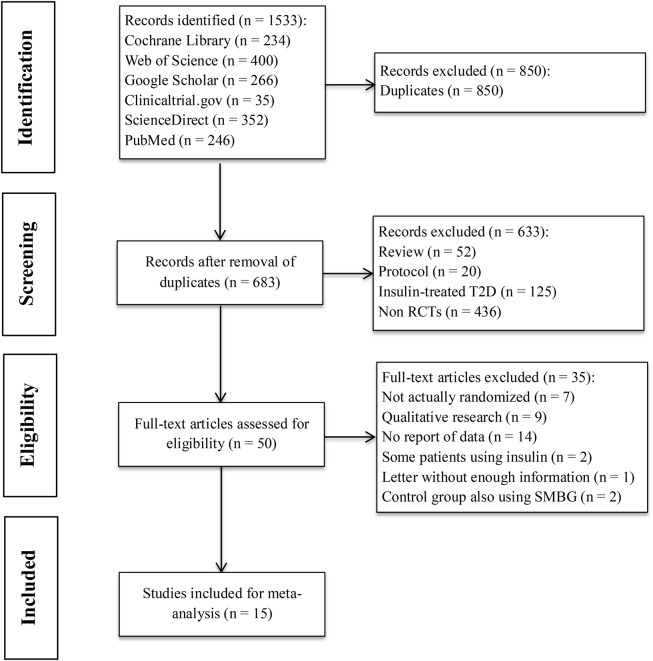
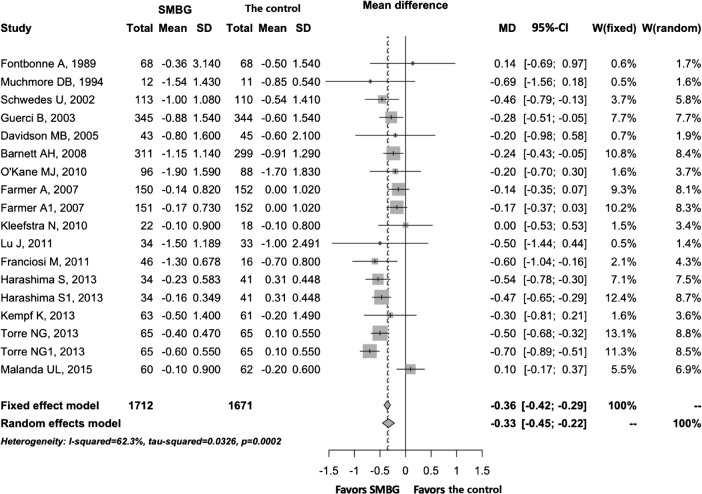
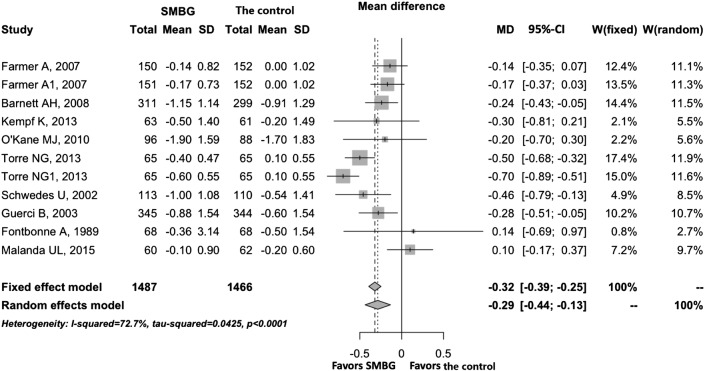
OBJECTIVE: The present study aimed to verify the effectiveness of self-monitoring of blood glucose (SMBG) in patients with non-insulin-treated type 2 diabetes (T2D). METHODS: A comprehensive literature search was conducted in PubMed, Cochrane Library, Web of Science, ScienceDirect and ClinicalTrials.gov from their respective inception dates to 26 October 2015. Eligible randomised controlled trials (RCTs) were included according to prespecified criteria. The quality of the included RCTs was evaluated according to the Cochrane risk of bias tool, and the evidence quality of meta-analyses was assessed by the Grading of Recommendation, Assessment, Development, and Evaluation (GRADE) criteria. A meta-analysis of primary and secondary outcome measures was performed. Sensitivity and subgroup analyses were carried out to evaluate the robustness and heterogeneity of the findings. Begg's and Egger's tests were used to quantify publication biases. RESULTS: A total of 15 RCTs, comprising 3383 patients with non-insulin-treated T2D, met the inclusion criteria. The SMBG intervention improved glycated haemoglobin (HbA1c) (mean difference -0.33; 95% CI -0.45 to -0.22; p=3.0730e-8; n=18), body mass index (BMI; -0.65; -1.18 to -0.12; p=0.0164; n=9) and total cholesterol (TC; -0.12; -0.20 to -0.04; p=0.0034; n=8) more effectively than the control in overall effect. The sensitivity analysis revealed little difference in overall effect, indicating the robustness of the results. SMBG moderated HbA1c levels better than the control in all subgroup analyses. Most of the RCTs had high risk of bias in blinding, while the overall quality of evidence for HbA1c was moderate according to the GRADE criteria. Publication bias was moderate for BMI. CONCLUSIONS: SMBG improved HbA1c levels in the short term (≤6-month follow-up) and long term (≥12-month follow-up) in patients with T2D who were not using insulin. TRIAL REGISTRATION NUMBER: CRD42015019099.
Overview
The claims and statistics of this paper haven’t been checked yet.
Free: it reads the open-access text and checks the first 5 claims that cite a source we can check. Create a free account to check every claim.
Integrity signals
Registry
Cites
Statistics
Figures
Verification
Claims the paper makes
The claims and statistics of this paper haven’t been checked yet.
Free: it reads the open-access text and checks the first 5 claims that cite a source we can check. Create a free account to check every claim.
Claims other papers make about this one
Each is checked against this paper’s own text: does it say what the citing paper says it does?
The cited source says what the claim attributes to it.
In the citing paper
“A meta-analysis including people with non–insulin-treated type 2 diabetes showed that blood glucose monitoring is associated with a reduction in glycated haemoglobin by 0.3%,5”
From Blood glucose monitoring devices: current considerations (2023) · cites this paper as [5]
The cited source says what the claim attributes to it.
In the citing paper
“In comparison to three major meta-analyses of SMBG RCTs published in the past decade (17, 29, 31), the current review identified six studies not previously incorporated ( Supplementary Table S5 ).”
The check wasn’t confident either way, so it gives no verdict — never disputed.
In the citing paper
“Furthermore, previous reviews have paid little attention to the impact of sSMBG on treatment modification, behavioral outcomes (i.e. self-care) or psychosocial outcomes (e.g. self-efficacy, treatment satisfaction, well-being, quality of life) (17, 29, 31).”
From The impact of structured self-monitoring of blood glucose on clinical, behavioral, and psychosocial outcomes among adults with non-insulin-treated type 2 diabetes: a systematic review and meta-analysis (2023) · cites this paper as [31]
Experimental — accuracy not yet measured
Self-check
Percentages, sums and reported differences re-computed from the paper’s own numbers.
The self-check needs the paper’s full text.
Citations
Cites
Bias in meta-analysis detected by a simple, graphical test
Egger, M., Smith, G. D., Schneider, M., & Minder, C. (1997) · BMJ · doi:10.1136/bmj.315.7109.629 · Cited by 56,722
The Cochrane Collaboration's tool for assessing risk of bias in randomised trials
Higgins, J. P. T., Altman, D. G., Gotzsche, P. C., Juni, P., Moher, D., Oxman, A. D., Savovic, J., Schulz, K. F., Weeks, L., Sterne, J. A. C., et al. (2011) · BMJ · doi:10.1136/bmj.d5928 · Cited by 33,817
(1993) · New England Journal of Medicine · doi:10.1056/nejm199309303291401 · Cited by 24,667
Dermyshi, E., Wang, Y., Yan, C., Hong, W., Qiu, G., Gong, X., & Zhang, T. (2017) · Neonatology · doi:10.1159/000454668 · Cited by 24,451
Conducting Meta-Analyses in R with the metafor Package
Viechtbauer, W. (2010) · Journal of Statistical Software · doi:10.18637/jss.v036.i03 · Cited by 20,464
Operating characteristics of a rank correlation test for publication bias
Begg, C. B., & Mazumdar, M. (1994) · Biometrics · doi:10.2307/2533446 · Cited by 16,955
PROSPERO: an international prospective register of systematic reviews
Wright, K. E. (2014) · Cited by 568
Farmer, A., Wade, A., Goyder, E., Yudkin, P., French, D., Craven, A., Holman, R., Kinmonth, A.-L., & Neil, A. (2007) · BMJ · doi:10.1136/bmj.39247.447431.be · Cited by 407
Self-monitoring of blood glucose in patients with type 2 diabetes mellitus who are not using insulin
Malanda, U. L., Welschen, L. M., Riphagen, I. I., Dekker, J. M., Nijpels, G., & Bot, S. D. (2012) · Cochrane Database of Systematic Reviews · doi:10.1002/14651858.cd005060.pub3 · Cited by 358
Cummins, E., Royle, P., Snaith, A., Greene, A., Robertson, L., McIntyre, L., & Waugh, N. (2010) · Health Technology Assessment · doi:10.3310/hta14110 · Cited by 335
Cited by
Hennessy, E. A., Johnson, B. T., Acabchuk, R. L., McCloskey, K., & Stewart-James, J. (2020) · Health Psychology Review · doi:10.1080/17437199.2019.1679654 · Cited by 239
“…and cholesterol, had mixed results, with one meta-analysis of eight studies indicating a significant reduction in total cholesterol (Zhu et al., 2016) and two meta-analyses indicating that benefits did not translate to systolic or diastolic blood pressure (Farmer et al., 2012; Zhu et al., 2016).”
ResultSendekie, A. K., Netere, A. K., Kasahun, A. E., & Belachew, E. A. (2022) · PLoS ONE · doi:10.1371/journal.pone.0274971 · Cited by 151
Mannucci, E., Antenore, A., Giorgino, F., & Scavini, M. (2018) · Journal of Diabetes Science and Technology · doi:10.1177/1932296817719290 · Cited by 90
“4% in patients using SMBG compared with control groups not using SMBG.(6-12) The reported size of HbA1c reduction may be perceived as small and may be influenced by some characteristics of the study participants, including baseline HbA1c and type of prescribed diabetes medications.”
BackgroundGlycemic control among diabetic patients in Ethiopia: A systematic review and meta-analysis
Gebreyohannes, E. A., Netere, A. K., & Belachew, S. A. (2019) · PLOS ONE · doi:10.1371/journal.pone.0221790 · Cited by 84
Efficacy of telemedicine on glycaemic control in patients with type 2 diabetes: A meta-analysis
De Groot, J., Wu, D., Flynn, D., Robertson, D., Grant, G., & Sun, J. (2021) · World Journal of Diabetes · doi:10.4239/wjd.v12.i2.170 · Cited by 77
Goh, L. H., Siah, C. J. R., Tam, W., Tai, E. S., & Young, D. Y. L. (2022) · Systematic Reviews · doi:10.1186/s13643-022-02117-w · Cited by 90
“Those who are able to perform their glucose or blood pressure measurement readily at home to enable selfmonitoring would gain better control of their condition [87, 88].”
BackgroundAlcántara, C., Diaz, S. V., Cosenzo, L. G., Loucks, E. B., Penedo, F. J., & Williams, N. J. (2020) · Health Psychology Review · doi:10.1080/17437199.2020.1718527 · Cited by 84
“While Zhu, Zhu, and Leung (2016) did not find that studies in Asia vs. America-Europe differed in the effectiveness of self-monitoring of blood glucose on HbA1c levels, Bolen et al. (2014) found larger group differences in A1C in study locations outside of the US, Europe, or Canada (Bolen et al.,…”
BackgroundBlood Sugar Regulation for Cardiovascular Health Promotion and Disease Prevention
Schwarz, P. E. H., Timpel, P., Harst, L., Greaves, C. J., Ali, M. K., Lambert, J., Weber, M. B., Almedawar, M. M., & Morawietz, H. (2018) · Journal of the American College of Cardiology · doi:10.1016/j.jacc.2018.07.081 · Cited by 60
Lee, J. Y., Chan, C. K. Y., Chua, S. S., Paraidathathu, T., Lee, K. K.-C., Tan, C. S. S., Nasir, N., & Lee, S. W. H. (2019) · BMJ Open · doi:10.1136/bmjopen-2018-026575 · Cited by 60
Leite, R. G. O. F., Banzato, L. R., Galendi, J. S. C., Mendes, A. L., Bolfi, F., Veroniki, A. A., Thabane, L., & Nogueira, V. D. S. N. (2020) · BMJ Open · doi:10.1136/bmjopen-2019-034481 · Cited by 62
Machry, R. V., Rados, D. V., Gregório, G. R. D., & Rodrigues, T. C. (2018) · Diabetes Research and Clinical Practice · doi:10.1016/j.diabres.2018.05.037 · Cited by 55
Rahman, M., Nakamura, K., Hasan, S. M. M., Seino, K., & Mostofa, G. (2020) · Scientific Reports · doi:10.1038/s41598-020-63253-8 · Cited by 59
Umphonsathien, M., Prutanopajai, P., Aiam‐O‐Ran, J., Thararoop, T., Karin, A., Kanjanapha, C., Jiamjarasrangsi, W., & Khovidhunkit, W. (2019) · Food Science & Nutrition · doi:10.1002/fsn3.956 · Cited by 44
Adapting Medication for Type 2 Diabetes to a Low Carbohydrate Diet
Cucuzzella, M. T., Riley, K., & Isaacs, D. M. (2021) · Frontiers in Nutrition · doi:10.3389/fnut.2021.688540 · Cited by 47
Parsons, S. N., Luzio, S. D., Harvey, J. N., Bain, S. C., Cheung, W. Y., Watkins, A., & Owens, D. R. (2019) · Diabetic Medicine · doi:10.1111/dme.13899 · Cited by 39
Sampling of fluid through skin with magnetohydrodynamics for noninvasive glucose monitoring
Hakala, T. A., García Pérez, A., Wardale, M., Ruuth, I. A., Vänskä, R. T., Nurminen, T. A., Kemp, E., Boeva, Z. A., Alakoskela, J.-M., Pettersson-Fernholm, K., et al. (2021) · Scientific Reports · doi:10.1038/s41598-021-86931-7 · Cited by 32
Johnston, A. R., Poll, J. B., Hays, E., & Jones, C. W. (2022) · Diabetes Epidemiology and Management · doi:10.1016/j.deman.2022.100068 · Cited by 41
Systematic review of self-monitoring of blood glucose in patients with type 2 diabetes
Chircop, J., Sheffield, D., & Kotera, Y. (2021) · Nursing Research · doi:10.1097/nnr.0000000000000542 · Cited by 34
“Two early meta-analyses (Malanda et al., 2012; Zhu et al., 2016) supported this result; however, both warned that reductions in HbA 1c didnot achieve clinical significance, calling for further evidence.”
MethodResultInfluentialSia, H.-K., Kor, C.-T., Tu, S.-T., Liao, P.-Y., & Wang, J.-Y. (2021) · Scientific Reports · doi:10.1038/s41598-021-81024-x · Cited by 33
Hellmund, R., Weitgasser, R., & Blissett, D. B. (2018) · Diabetes Research and Clinical Practice · doi:10.1016/j.diabres.2018.01.028 · Cited by 36
Xu, Y., Tan, D. H. Y., & Lee, J. Y. (2019) · International Journal of Clinical Practice · doi:10.1111/ijcp.13357 · Cited by 26
Zou, Y. L., Zhao, S., Li, G., & Zhang, C. (2022) · Journal of General Internal Medicine · doi:10.1007/s11606-022-07864-z · Cited by 27
Chen, C., Hung, L., Chen, Y., & Yeh, M. C. (2017) · Journal of Clinical Nursing · doi:10.1111/jocn.14227 · Cited by 22
Williams, D. M., Parsons, S. N., Dunseath, G. J., Stephens, J. W., Luzio, S. D., & Owens, D. R. (2020) · Diabetes & Metabolic Syndrome Clinical Research & Reviews · doi:10.1016/j.dsx.2020.01.006 · Cited by 20
Zeng, Y., Wu, J., Han, Y., Chen, F., Chen, L., Yang, S., & Fang, Y. (2018) · Journal of Diabetes · doi:10.1111/1753-0407.12651 · Cited by 19
“A meta-analysis of 15 randomized controlled trials (RCTs) that compared no SMBG with SMBG in patients with non-insulin-treated T2DM clearly showed that SMBG could improve HbA1c levels in both the short term (≤6 months follow-up) and long term (≥1 year follow-up).(15) Further, to assess the effects of a diabetes manage…”
Holmes-Truscott, E., Baptista, S., Ling, M., Collins, E., Ekinci, E. I., Furler, J., Hagger, V., Manski-Nankervis, J.-A., Wells, C., & Speight, J. (2023) · Frontiers in Clinical Diabetes and Healthcare · doi:10.3389/fcdhc.2023.1177030 · Cited by 17
Letta, S., Aga, F., Yadeta, T. A., Geda, B., & Dessie, Y. (2022) · SAGE Open Medicine · doi:10.1177/20503121221107337 · Cited by 21
Hellmund, R., Weitgasser, R., & Blissett, D. (2018) · European Endocrinology · doi:10.17925/ee.2018.14.2.86 · Cited by 17
“In 2011, the UK NHS spent £158 million on SMBG, which accounted for 21% of prescription costs associated with diabetes.(13) DOI: https://doi.”
BackgroundLai, Y.-C., Chen, Y.-D., Jiang, Y., Wang, C.-S., Wang, I.-C., Huang, H.-F., Peng, H.-Y., Chen, H.-C., Chang, T., & Chuang, L. (2023) · Journal of the Formosan Medical Association · doi:10.1016/j.jfma.2023.09.010 · Cited by 18
Self-Monitoring of Blood Glucose in Youth-Onset Type 2 Diabetes: Results From the TODAY Study
Weinstock, R. S., Braffett, B. H., McGuigan, P., Larkin, M., Grover, N., Walders‐Abramson, N., Laffel, L. M., Chan, C. L., CHANG, N. T., Schwartzman, B., et al. (2019) · Diabetes Care · doi:10.2337/dc18-1854 · Cited by 17
Selvan, C., Thukral, A., Dutta, D., Ghosh, S. K., & Chowdhury, S. (2017) · Indian Journal of Endocrinology and Metabolism · doi:10.4103/ijem.ijem_342_16 · Cited by 18
Effect of family-oriented diabetes programs on glycemic control: A meta-analysis
Kodama, S., Morikawa, S. Y., Horikawa, C., Ishii, D., Fujihara, K., Yamamoto, M., OSAWA, T., Kitazawa, M., Yamada, T., Kato, K., et al. (2018) · Family Practice · doi:10.1093/fampra/cmy112 · Cited by 18
THE RELATIONSHIP BETWEEN SELF-EFICACY AND SELF-CARE IN TYPE 2 DIABETES MELLITUS PATIENTS
Wahyuni, A., & Ramayani, D. (2020) · The Malaysian Journal of Nursing · doi:10.31674/mjn.2020.v11i03.011 · Cited by 15
Chang, Y.-T., Tu, Y.-Z., Chiou, H., Lai, K., & Yu, N. C. (2022) · JMIR mhealth and uhealth · doi:10.2196/31764 · Cited by 15
Initial experience in self-monitoring of intraocular pressure
McGarva, E., Farr, J., Dabasia, P. L., Lawrenson, J. G., & Murdoch, I. (2020) · European Journal of Ophthalmology · doi:10.1177/1120672120920217 · Cited by 13
Alkhatatbeh, M. J., Abdul‐Razzak, K. K., Khasawneh, L. Q., & Saadeh, N. A. (2018) · Biomedical Reports · doi:10.3892/br.2018.1093 · Cited by 15
Point-of-care testing to promote cardiovascular disease risk assessment: A proof of concept study
Karmali, K. N., Brown, T., Sanchez, T., Long, T., & Persell, S. D. (2017) · Preventive Medicine Reports · doi:10.1016/j.pmedr.2017.05.016 · Cited by 12
“Within primary care, POCT have been incorporated into chronic disease selfmanagement programs to improve glycemic control in type-2 diabetes mellitus and therapeutic anticoagulation for those on warfarin (Heneghan et al., 2016; Zhu et al., 2016).”
BackgroundBlood glucose monitoring devices: current considerations
Sly, B., & Taylor, J. (2023) · Australian Prescriber · doi:10.18773/austprescr.2023.013 · Cited by 11
Is Continuous Glucose Monitoring a Tool, an Intervention, or Both?
Wright, E. E., & Subramanian, S. (2023) · Diabetes Technology & Therapeutics · doi:10.1089/dia.2023.0025 · Cited by 13
Yi, W. M., Jones, E. M. V. W., Hansen, B. K., & Vora, J. (2019) · PubMed Central · Cited by 15
Fithria, F., Husna, C., Ahyana, A., Nurhidayah, I., & Jannah, S. R. (2022) · Open Access Macedonian Journal of Medical Sciences · doi:10.3889/oamjms.2022.9634 · Cited by 9
“Especially for patients with diabetes who receive intensive insulin therapy, it provides therapeutic benefits from structured blood glucose measurements, such as postprandial glucose detection, identification of glucose patterns, and increased HbA1c values and associated complications [19], [20], [21].”
BackgroundInfluentialButāne, L., Šmite, D., Šablinskis, M., & Skride, A. (2019) · Cor et Vasa · doi:10.33678/cor.2019.037 · Cited by 9
Polhuis, K. C. M. M., Bouwman, L. I., Vaandrager, L., Soedamah‐Muthu, S. S., & Koelen, M. A. (2019) · Patient Education and Counseling · doi:10.1016/j.pec.2019.10.017 · Cited by 11
A Practical Guide to Delivering Nutritional Advice to People with Diabetes
Dyson, P. A. (2019) · Diabetes Therapy · doi:10.1007/s13300-018-0556-4 · Cited by 9
Teng, C. L., Lee, V. K. M., Ganeson, M., Sulaiman, L. H., & Bujang, M. A. (2023) · Malaysian Journal of Medical Sciences · doi:10.21315/mjms2023.30.1.14 · Cited by 8
Continuous and Intermittent Glucose Monitoring in 2019
Battelino, T., Dovč, K., & Bode, B. W. (2020) · Diabetes Technology & Therapeutics · doi:10.1089/dia.2020.2501 · Cited by 7
Xu, Y.-Q., Lim, J. H., Ramaya, H., & Lee, Y.-C. J. (2019) · Diabetes Research and Clinical Practice · doi:10.1016/j.diabres.2019.107873 · Cited by 10
Gode, M., Aga, F., & Hailu, A. (2021) · Canadian Journal of Nursing Research · doi:10.1177/08445621211020653 · Cited by 7
Yuliet, Y., Khaerati, K., Ririen, R., & Atirah, A. (2022) · Dedication Jurnal Pengabdian Masyarakat · doi:10.31537/dedication.v6i2.819 · Cited by 5
Macalalad-Josue, A. A., Palileo‐Villanueva, L. M., Sandoval, M. A., & Panuda, J. P. (2019) · Journal of the ASEAN Federation of Endocrine Societies · doi:10.15605/jafes.034.01.08 · Cited by 7
Mobile technology for self-monitoring of blood glucose among patients with type 2 diabetes mellitus
Coughlin, S. S. (2017) · mHealth · doi:10.21037/mhealth.2017.10.03 · Cited by 5
“(10) conducted a metaanalysis of 15 randomized controlled trials of the use of self-monitoring of blood glucose in patients with noninsulin-treated type 2 diabetes (3,383 patients).”
BackgroundYang, S. J., Lim, S., Choi, Y., Lee, J., & Yoon, K. (2024) · Endocrinology and Metabolism · doi:10.3803/enm.2023.1878 · Cited by 4
Blood Glucose Meter Buying Behavior of Diabetic Patients: Factors Influencing Purchase
Pan, B.-L., Pan, Y.-T., Gao, Z., & Tung, T. (2022) · Frontiers in Public Health · doi:10.3389/fpubh.2022.880088 · Cited by 4
“Standard selfmonitoring was an essential means of achieving blood glucose goals for diabetic patients, which provided effective control of blood glucose and helped to improve glycosylated hemoglobin levels in people with type 2 diabetes who were not on insulin therapy (14, 15).”
BackgroundCharles, O., Woods, H., Ally, M. Z., Manns, B., Shah, B. R., Wang, R., & Persaud, N. (2021) · BMJ Open · doi:10.1136/bmjopen-2020-042046 · Cited by 5
van den Berg, L., Mokhehle, M., & Raubenheimer, J. (2019) · Journal of Endocrinology Metabolism and Diabetes of South Africa · doi:10.1080/16089677.2019.1649341 · Cited by 4
Electronic blood glucose monitoring impacts on provider and patient behavior
Root, A., Connolly, C., Majors, S., Ahmed, H. A.-E.-H., & Toma, M. (2022) · Journal of the American Medical Informatics Association · doi:10.1093/jamia/ocac069 · Cited by 4
Schweiger, D. Š., & Battelino, T. (2020) · Elsevier eBooks · doi:10.1016/b978-0-12-816714-4.00001-6 · Cited by 3
Perceived value of self-monitoring blood glucose by primary care physicians and endocrinologists
Hay, H., Hernández‐Muñoz, J. J., & Joshaghani, M. (2022) · Baylor University Medical Center Proceedings · doi:10.1080/08998280.2022.2057056 · Cited by 2
Hives, L., Georgiou, R. F., Spencer, J., Benedetto, V., Clegg, A., Rutter, P. M., Watkins, C. L., Williams, N. H., & Bray, E. P. (2023) · BMJ Open · doi:10.1136/bmjopen-2023-072225 · Cited by 3
Kim, S., Kang, M., Park, D., Kim, G., & Kim, J. H. (2025) · BMC Public Health · doi:10.1186/s12889-025-24617-9 · Cited by 1
Lim, P. C., Lim, A. L. Y., Lim, Y. L., Ooi, Y. H., Symons, C., Zamri, N. N., Ting, S. W. W., Chong, Y.-W., & Zainal, H. (2026) · Journal of Medical Systems · doi:10.1007/s10916-025-02330-9 · Cited by 1
Reprint of: Blood Sugar Regulation for Cardiovascular Health Promotion and Disease Prevention
Schwarz, P. E. H., Timpel, P., Harst, L., Greaves, C. J., Ali, M. K., Lambert, J. D., Weber, M. B., Almedawar, M. M., & Morawietz, H. (2018) · Journal of the American College of Cardiology · doi:10.1016/j.jacc.2018.10.026 · Cited by 2
Efeitos de instrução e de automonitoramento no seguimento de regras ao tratamento do diabetes Tipo 1
Moreira, A. D. A., Ferreira, E. A. P., & Gomes, D. L. (2021) · Acta comportamentalia. · doi:10.32870/ac.v29i3.80292 · Cited by 1
Metabolic and endocrine diseases - is our approach always rational?
Brunerová, L., Urbanová, J., & Brož, J. (2021) · Vnitřní lékařství · doi:10.36290/vnl.2021.107 · Cited by 1
Blutzucker-Selbstmessung als Diabeteskompass
Meißner, T. (2017) · CME · doi:10.1007/s11298-017-6266-9
Chen, J., Chen, Y., Ji, L., Zhang, P., Zhu, D., Li, X., Ji, J.-C., Zhao, F., & Zhang, H. (2018) · Endokrynologia Polska · doi:10.5603/ep.a2018.0037
“Some studies [13, 19, 20] have assessed the effect of SMBG control on HbA1C in type-1 and type-2 diabetes patients.”
Devarajooh, C. (2018) · University of Malaya Students Repository
Staff Education Program on Diabetes Using Self-Care Behaviors
Ogot, R. A. (2019) · ScholarWorks (Walden University) · Cited by 2
Does glucose self-monitoring improve outcomes in patients with type 2 diabetes?
Sheridan, E. P., Sinkhorn, C. H., Rosenwinkel, J. K., & Tupas, K. D. (2019) · Evidence-Based Practice · doi:10.1097/ebp.0000000000000452
“A2016 meta-analysis of 15 randomized controlled trials (RCTs) (N53,383) reviewed the effect of selfmonitoring of blood glucose (SMBG) on hemoglobin A1c levels, fasting plasma glucose levels, body mass index (BMI), blood pressure, cholesterol (HDL, LDL, triglyceride, and total cholesterol), waist circumference, and wei…”
BackgroundType 2 diabetes: glycaemic control
FRCP, D. L. M. (2017) · Wiley eBooks · doi:10.1002/9781119052210.ch10
Дмитриевич, З. В., & Mustafina, V. R. (2022) · Medical Herald of the South of Russia · doi:10.21886/2219-8075-2022-13-1-43-51
Cywes, R., Kajee, H., Wellington, N., Cucuzzella, M. T., Riley, K., Isaacs, D. M., Pataguana, N., Lake, I., Rauch, L., McKelvey, S., et al. (2023) · Elsevier eBooks · doi:10.1016/b978-0-12-821617-0.00010-3
Nooseisai, M. (2018) · Chula Digiverse · doi:10.58837/chula.the.2018.474
Goh, L. H., Siah, C. J. R., Tam, W. W. S., Tai, E. S., & Young, D. Y. L. (2023) · Figshare · doi:10.6084/m9.figshare.22600528
Goh, L. H., Siah, C. J. R., Tam, W., Tai, E. S., & Young, D. Y. L. (2023) · Figshare · doi:10.6084/m9.figshare.22600534
Goh, L. H., Siah, C. J. R., Tam, W. W. S., Tai, E. S., & Young, D. Y. L. (2023) · Figshare · doi:10.6084/m9.figshare.22600537
Goh, L. H., Siah, C. J. R., Tam, W., Tai, E. S., & Young, D. Y. L. (2023) · Figshare · doi:10.6084/m9.figshare.22600522
Goh, L. H., Siah, C. J. R., Tam, W., Tai, E. S., & Young, D. Y. L. (2023) · Figshare · doi:10.6084/m9.figshare.22600519
Goh, L. H., Siah, C. J. R., Tam, W., Tai, E. S., & Young, D. Y. L. (2023) · Figshare · doi:10.6084/m9.figshare.22600525
Goh, L. H., Siah, C. J. R., Tam, W., Tai, E. S., & Young, D. Y. L. (2023) · Figshare · doi:10.6084/m9.figshare.22600543
Goh, L. H., Siah, C. J. R., Tam, W., Tai, E. S., & Young, D. Y. L. (2023) · Figshare · doi:10.6084/m9.figshare.22600540
Goh, L. H., Siah, C. J. R., Tam, W., Tai, E. S., & Young, D. Y. L. (2023) · Figshare · doi:10.6084/m9.figshare.22600531
Foo, N., Chodapaneedi, S., Gibson, B. N., Koh, H. J. W., Gašević, D., Hamblin, P. S., Trin, C., Cataldo-Miranda, P., Zomer, E., Russell, A. W., et al. (2025) · Diabetes Obesity and Metabolism · doi:10.1111/dom.70401
“18,20,23,27,29 Results were heterogeneous and effect sizes were generally small or non-significant.”
Willingness to Pay for Blood Pressure Self‐Monitoring in People With Prehypertension
Benedetto, V., Clegg, A., Bray, E. P., Heyworth, P., Hives, L., Spencer, J., Watkins, C. L., Williams, N. H., & The REVERSE study group (2026) · Journal of Clinical Hypertension · doi:10.1111/jch.70247
“Self-monitoring interventions have been shown to be effective in reducing the risk of developing CVD in people with hypertension [ 8 ] and diabetes [ 9 ].”
Agrawal, P., Maheshwari, A., Tewari, A., Verma, N., Kumar, D., Srivastava, R. K., Chandra, K. P., Srivastava, A., Gulati, P., Jain, S., et al. (2026) · International journal of clinical metabolism and diabetes. · doi:10.1177/30502071261446099
Lim, M., Lee, J., Seo, J. A., & Ko, S.-Y. (2026) · Diagnostics · doi:10.3390/diagnostics16111700
“…this study are consistent with the hypothesis that reducing sampling burden may improve user acceptance and adherence to regular glucose monitoring [19–22], it should be emphasized that the present study did not directly assess pain, local tissue effects, or longitudinal adherence; therefore,…”
Fachruddin, I. I., & Lubis, A. (2026) · Jurnal Gizi dan Pangan Soedirman · doi:10.20884/1.jgipas.2026.10.1.14255
Balaji, R. S., Vinith, V., Kannan, R., Ramadurai, M., & Murugan, P. (2026) · Obesity Medicine · doi:10.1016/j.obmed.2026.100724 · Cited by 1
Metadata
- Authors
- Zhu, H., Zhu, Y., & Leung, S.-W.
- Affiliations
- University of Macau (MO)
- Corresponding author
- Leung, Siu-wai
- Venue
- BMJ Open
- Publisher
- BMJ
- Published
- 2016-09
- Volume
- 6
- Issue
- 9
- Pages
- e010524
- ISSN
- 2044-6055 (ISSN-L)
- PMC
- PMC5020874
- OpenAlex
- W2510638245
- Cited by
- 84
- References
- 42
- Citations by year
- 2026: 4 · 2025: 2 · 2024: 1 · 2023: 16 · 2022: 13 · 2021: 8 · 2020: 8 · 2019: 15 · 2018: 10 · 2017: 7
- FWCI
- 1.57
- Type
- journal article
- Language
- en
- Open access
- gold
- doi.org
- Licence
- cc-by-nc
- Locations
- BMJ Open (publishedVersion, cc-by-nc)
- Europe PMC (PubMed Central) (publishedVersion, cc-by-nc)
- PubMed Central (publishedVersion, cc-by-nc)
- PubMed (publishedVersion)
- HighWire Press Open Archive (submittedVersion)
- Funders
- Universidade de Macau (MYRG2014-00117-ICMS-QRCM)
- Topics
- Health Sciences › Medicine › Endocrinology, Diabetes and Metabolism › Diabetes Management and Research
- Health Sciences › Medicine › Endocrinology, Diabetes and Metabolism › Diabetes Treatment and Management
- Health Sciences › Medicine › Endocrinology, Diabetes and Metabolism › Diabetes Management and Education
- Keywords
- self-monitoring of blood glucose, type 2 diabetes, non-insulin-treated diabetes, glycemic control, HbA1c, body mass index, total cholesterol, patient self-management, lifestyle intervention, risk of bias, publication bias, subgroup analysis, quality of evidence, GRADE
- MeSH terms
- Adult, Aged, Blood Glucose, Diabetes Mellitus, Type 2, Glycated Hemoglobin, Humans, Insulin, Middle Aged, Blood Glucose Self-Monitoring, Treatment Outcome
About these checks
Registry, retraction, Cites and statistics results are computed, not judged, with one exception: a printed reference that no index lists is read once by a model before it counts as a citation error. Claims are extracted by a model and kept only when their quote appears verbatim in the text; each cited source is then checked, with a model’s help, for whether it says what the claim relies on. Those verdicts can be wrong — read the claim’s quote and the cited source before relying on one.
Statistics and arithmetic are recomputed, not judged.
Confidence bands are shown only for fields calibrated on our annotated test set. None is calibrated yet, so no band is shown.
What counts as a claim ›How we measure confidence ›How we check this ›
Are you an author, or do you see a problem with this page? Request a review
Data sources
Bibliographic data: Semantic Scholar, OpenAlex, Crossref.
Contains information from the Semantic Scholar Academic Graph Datasets, made available under the ODC Attribution License (ODC-BY 1.0).
Semantic Scholar’s data is described in: Kinney, R., et al. (2023). The Semantic Scholar Open Data Platform. arXiv:2301.10140.
