

The DOI matches its Crossref record; 12 of the 12 references it cites were found in a registry or an index.
Prevalence and determinants of depressive and anxiety symptoms in adults with type 2 diabetes in China: a cross-sectional study
Open accessAbstract
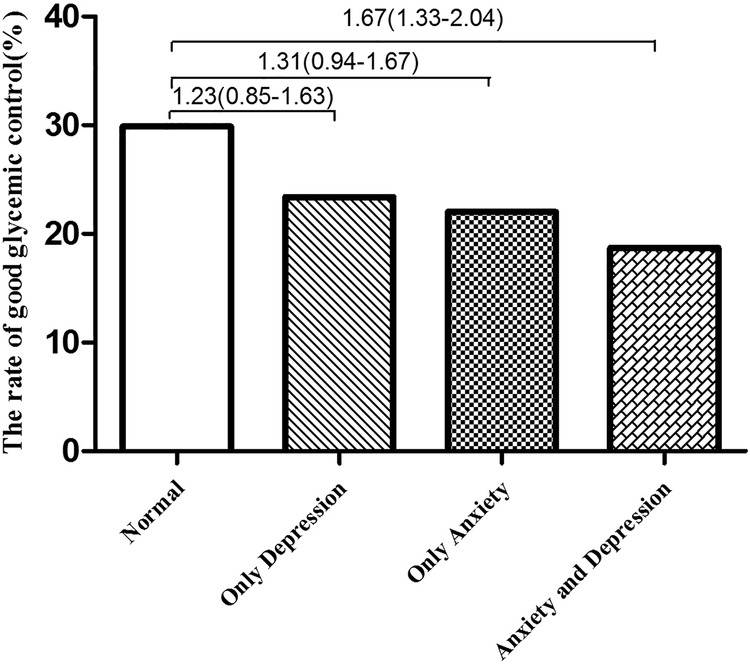
Objectives: To evaluate the prevalence and determinants of anxiety and depression and to assess their impact on glycaemic control in participants with type 2 diabetes mellitus. Design: A cross-sectional study. Setting: Community-based investigation in Xuzhou, China. Participants: 893 Chinese men and women aged 18–84 years who fulfilled the inclusion criteria. Methods: People with type 2 diabetes completed the Pittsburgh Sleep Quality Index and the Zung Self-Rating Anxiety and Depression Scales. Demographic and physiological characteristics were recorded. Multiple logistic regression was used to evaluate the combined effect of factors associated with anxiety and depression and to assess the effects of anxiety and depression on glycaemic control. Results: The prevalence of depressive symptoms and anxiety symptoms was 56.1% and 43.6%, respectively. Multivariate logistic regression analysis indicated that anxiety symptoms were associated with being woman, low income, chronic disease, depressive symptoms and poor sleep quality. Depressive symptoms were associated with being woman, older age, low education level, being single, diabetes complications, anxiety symptoms and poor sleep quality. Glycaemic control was not related to anxiety symptoms (OR=1.31, 95% CIs 0.94 to 1.67) or depressive symptoms (OR=1.23, 95% CI 0.85 to 1.63). A combination of depressive symptoms and anxiety symptoms was associated with poor glycaemic control (relative excess risk due to interaction: 4.93, 95% CI 2.09 to 7.87; attributable proportion due to interaction: 0.27, 95% CI 0.12 to 0.45). Conclusions: There was a high prevalence of depressive and anxiety symptoms in this Chinese sample of participants, although depression and anxiety were not singly associated with glycaemic control. However, a combination of depressive and anxiety symptoms was negatively correlated with glycaemic control in participants with type 2 diabetes.
Overview
The claims and statistics of this paper haven’t been checked yet.
Run the check — free, no account needed. It reads the open-access text and checks the sources it cites.
Integrity signals
Registry
Cites
Statistics
Figures
Verification
Claims the paper makes
The claims and statistics of this paper haven’t been checked yet.
Run the check — free, no account needed. It reads the open-access text and checks the sources it cites.
Claims other papers make about this one
Each is checked against this paper’s own text: does it say what the citing paper says it does?
The source backs part of the claim, not all of it — or backs it for a different population, condition or comparison.
In the citing paper
“Approximately 10%-40% of patients with diabetes experience depression, anxiety, or psychological distress due to worry when complications progress, self-care tasks become demanding, and frustration grows regarding uncontrolled blood glucose (IDF, 2021;Sun et al., 2016).”
From Effectiveness of acceptance and commitment therapy in people with type 2 diabetes mellitus: A systematic review and meta‐analysis. (2024) · cites this paper as Sun et al., 2016
Experimental — accuracy not yet measured
Self-check
Percentages, sums and reported differences re-computed from the paper’s own numbers.
The self-check needs the paper’s full text.
Citations
Cites
A self-rating depression scale
ZUNG, W. W. K. (1965) · Archives of General Psychiatry · doi:10.1001/archpsyc.1965.01720310065008 · Cited by 9,813
Global estimates of diabetes prevalence for 2013 and projections for 2035
Guariguata, L., Whiting, D. R., Hambleton, I., Beagley, J., Linnenkamp, U., & Shaw, J. E. (2014) · Diabetes Research and Clinical Practice · doi:10.1016/j.diabres.2013.11.002 · Cited by 4,642
Association of depression and diabetes complications: a meta-analysis
de Groot, M., Anderson, R., Freedland, K. E., Clouse, R. E., & Lustman, P. J. (2001) · Psychosomatic Medicine · doi:10.1097/00006842-200107000-00015 · Cited by 1,799 · cited 1×
“Diabetes complications such as sexual dysfunction, painful peripheral neuropathy, neuropathy and nephropathy may increase susceptibility to depression.(50) 51 Previous cross-sectional and longitudinal studies are inconclusive regarding the associations between anxiety or depressive symptoms and glycaemic control.”
BackgroundCalculating measures of biological interaction
Andersson, T., Alfredsson, L., Källberg, H., Zdravkovic, S., & Ahlbom, A. (2005) · European Journal of Epidemiology · doi:10.1007/s10654-005-7835-x · Cited by 1,498
Chronic Insomnia as a Risk Factor for Developing Anxiety and Depression
Neckelmann, D., Mykletun, A., & Dahl, A. A. (2007) · Sleep · doi:10.1093/sleep/30.7.873 · Cited by 665
Estrogen and cognitive functioning in women
Sherwin, B. B. (2003) · Endocrine Reviews · doi:10.1210/er.2001-0016 · Cited by 560
Diabetes, Major Depression, and Functional Disability Among U.S. Adults
Egede, L. E. (2004) · Diabetes Care · doi:10.2337/diacare.27.2.421 · Cited by 422
Depression and risk of mortality in individuals with diabetes: a meta-analysis and systematic review
Park, M., Katon, W. J., & Wolf, F. M. (2013) · General Hospital Psychiatry · doi:10.1016/j.genhosppsych.2013.01.006 · Cited by 355
The role of depression and anxiety in onset of diabetes in a large population-based study
Engum, A. (2007) · Journal of Psychosomatic Research · doi:10.1016/j.jpsychores.2006.07.009 · Cited by 330
Prevalence of Depression and Anxiety in Patients with COPD
Light, R. W., Merrill, E. J., Despars, J. A., Gordon, G. H., & Mutalipassi, L. R. (1985) · Chest · doi:10.1378/chest.87.1.35 · Cited by 262
Research works printed but not linked: 48
- National Diabetes Prevention and Control Cooperative Group, 1981, A mass survey of diabetes mellitus in a population of 300,000 in 14 provinces and municipalities in China, Zhonghua Nei Ke Za Zhi, 20, 678
- 10.1001/jama.2013.168118 · DOI
- 2014, Diabetes in China: mapping the road ahead, Lancet Diabetes Endocrinol, 2, 923, 10.1016/S2213-8587(14)70189-5 · DOI
- 10.1111/j.1464-5491.2009.02896.x · DOI · Paper page
- 10.1016/S0165-0327(12)70004-6 · DOI · Paper page
- 10.1371/journal.pone.0009971 · DOI
- Oztürk, 2015, Association of depression and sleep quality with complications of type 2 diabetes in geriatric patients, Aging Clin Exp Res, 27, 533, 10.1007/s40520-014-0293-0 · DOI
- Wang, 2015, Prevalence of depressive symptoms and factors associated with it in type 2 diabetic patients: a cross-sectional study in China, BMC Public Health, 15, 188, 10.1186/s12889-015-1567-y · DOI
- Mikaliūkštienė, 2014, Prevalence and determinants of anxiety and depression symptoms in patients with type 2 diabetes in Lithuania, Med Sci Monit, 20, 182, 10.12659/MSM.890019 · DOI
- Santos, 2014, Anxiety disorders are associated with quality of life impairment in patients with insulin-dependent type 2 diabetes: a case-control study, Rev Bras Psiquiat, 36, 298, 10.1590/1516-4446-2013-1230 · DOI
- 10.1023/A:1008817812520 · DOI
- Verma, 2010, Impact of depression on health related quality of life in patients with diabetes, Ann Acad Med Singapore, 39, 913, 10.47102/annals-acadmedsg.V39N12p913 · DOI
- Lee, 2006, Treatment-related stresses and anxiety-depressive symptoms among Chinese outpatients with type 2 diabetes mellitus in Hong Kong, Diabetes Res Clin Pract, 74, 282, 10.1016/j.diabres.2006.03.026 · DOI
- Zhang, 2008, Association of psychosocial factors with anxiety and depressive symptoms in Chinese patients with type 2 diabetes, Diabetes Res Clin Pract, 79, 523, 10.1016/j.diabres.2007.10.014 · DOI
- Zhang, 2015, Depression in Chinese patients with type 2 diabetes: associations with hyperglycemia, hypoglycemia, and poor treatment adherence, J Diabetes, 76, 800, 10.1111/1753-0407.12238 · DOI
- Lou, 2015, Association of sleep quality and quality of life in type 2 diabetes mellitus: a cross-sectional study in China, Diabetes Res Clin Pract, 107, 69, 10.1016/j.diabres.2014.09.060 · DOI
- Chinese Medical Association Diabetes Branch, 2012, Chinese Type 2 diabetes prevention and control guidelines (2010 edition), Chin J Diabetes, 201, s1
- 10.1176/appi.psy.12.6.371 · DOI
- Zhang, 2013, Comparative study of the influence of diabetes distress and depression on treatment adherence in Chinese patients with type 2 diabetes: a cross-sectional survey in the People's Republic of China, Neuropsychiatr Dis Treat, 9, 1289
- Cooperative Meta-analysis Group of China Obesity Task Force, 2002, Predictive values of body mass index and waist circumference to risk factors of related disease in Chinese adult population, Zhonghua Liu Xing Bing Xue Za Zhi, 23, 5
- 10.1016/0165-1781(89)90047-4 · DOI · Paper page
- Liu, 1996, Reliability and validity of the Pittsburgh sleep quality index, Chin J Psychiatry, 29, 103
- 10.1007/s10654-005-4410-4 · DOI
- 10.1007/s10654-011-9554-9 · DOI · Paper page
- 10.1186/1758-5996-2-72 · DOI
- 10.1111/jocn.12010 · DOI
- Mezuk, 2013, Depression, anxiety, and prevalent diabetes in the Chinese population: findings from the China Kadoorie Biobank of 0.5 million people, J Psychosom Res, 75, 511, 10.1016/j.jpsychores.2013.09.008 · DOI
- Jiang, 2014, Evaluation on the status quo of self monitoring of blood glucose and self-efficacy of diabetes patients in community, Zhonghua Yu Fang Yi Xue Za Zhi, 48, 710
- 10.1186/ar4054 · DOI
- Trento, 2014, Depression, anxiety, cognitive impairment and their association with clinical and demographic variables in people with type 2 diabetes: a 4-year prospective study, J Endocrinol Invest, 37, 79, 10.1007/s40618-013-0028-7 · DOI
- Al-Tuwijri, 2007, Quality of life of people with diabetes attending primary care health centres in Riyadh: bad control good quality?, Qual Prim Care, 15, 307
- 10.1016/j.neurobiolaging.2006.09.001 · DOI
- Ryu, 2010, Prevalence of depression and anxiety in outpatients with chronic airway lung disease, Korean J Intern Med, 25, 51, 10.3904/kjim.2010.25.1.51 · DOI
- 10.1136/bmj.328.7443.794 · DOI
- Khowaja, 2007, Cost of diabetes care in out-patient clinics of Karachi, Pakistan, BMC Health Serv Res, 7, 189, 10.1186/1472-6963-7-189 · DOI
- 10.1371/journal.pone.0036887 · DOI
- Almawi, 2008, Association of comorbid depression, anxiety and stress disorders with type 2 diabetes in Bahrain, a country with a very high prevalence of type 2 diabetes, J Endocrinol Invest, 31, 1020, 10.1007/BF03345642 · DOI
- Ganatra, 2008, Prevalence and predictors of depression among an elderly population of Pakistan, Aging Ment Health, 12, 349, 10.1080/13607860802121068 · DOI
- Bensbaa, 2014, Clinical assessment of depression and type 2 diabetes in Morocco: economical and social components, J Neurosci Rural Pract, 5, 250, 10.1055/s-0039-1700322 · DOI
- 10.1111/j.1464-5491.2010.03125.x · DOI
- 10.1111/j.1464-5491.2008.02533.x · DOI · Paper page
- Bot, 2013, Differential associations between depressive symptoms and glycaemic control in outpatients with diabetes, Diabetes Med, 30, e115, 10.1111/dme.12082 · DOI
- 10.1007/s10865-014-9604-3 · DOI
- 10.1016/j.jpsychores.2004.03.006 · DOI
- Alonso-Morán, 2014, Prevalence of depression in adults with type 2 diabetes in the Basque Country: relationship with glycaemic control and health care costs, BMC Public Health, 14, 769, 10.1186/1471-2458-14-769 · DOI
- 10.1073/pnas.0509184103 · DOI
- 10.1016/S0031-9384(98)00322-9 · DOI
- Sanchez-Villegas, 2006, Mediterranean diet and depression, Public Health Nutr, 9, 1104, 10.1017/S1368980007668578 · DOI
Cited by
Sorted by citations
Khaledi, M., Haghighatdoost, F., Feizi, A., & Aminorroaya, A. (2019) · Acta Diabetologica · doi:10.1007/s00592-019-01295-9 · Cited by 359
Relationship between chronic diseases and depression: the mediating effect of pain
Ma, Y., Xiang, Q., Yan, C., Liao, H., & Wang, J. (2021) · BMC Psychiatry · doi:10.1186/s12888-021-03428-3 · Cited by 221
Self-citationAlzahrani, A., Alghamdi, A. E., Alqarni, T., Alshareef, R., & Alzahrani, A. M. (2019) · International Journal of Mental Health Systems · doi:10.1186/s13033-019-0307-6 · Cited by 116
Guerrero Fernández de Alba, I., Gimeno-Miguel, A., Poblador-Plou, B., Gimeno-Feliu, L. A., Ioakeim-Skoufa, I., Rojo-Martínez, G., Forjaz, M. J., & Prados-Torres, A. (2020) · Scientific Reports · doi:10.1038/s41598-020-76546-9 · Cited by 84
Koopman, A. D. M., Beulens, J. W. J., Dijkstra, T., Pouwer, F., Bremmer, M. A., van Straten, A., & Rutters, F. (2019) · The Journal of Clinical Endocrinology & Metabolism · doi:10.1210/clinem/dgz065 · Cited by 97
“insomnia and insomnia symptoms in the same population [27-29], only the most recent [28]”
BackgroundLiu, X., Haagsma, J. A., Sijbrands, E. J. G., Buijks, H., Boogaard, L. H., Mackenbach, J. P., Erasmus, V., & Polinder, S. (2020) · Scientific Reports · doi:10.1038/s41598-020-57647-x · Cited by 86
Woon, L. S.-C., Sidi, H. B., Ravindran, A., Gosse, P. J., Mainland, R. L., Kaunismaa, E. S., Hatta, N. H., Arnawati, P., Zulkifli, A. Y., Mustafa, N., et al. (2020) · BMC Psychiatry · doi:10.1186/s12888-020-02615-y · Cited by 63
Neuromodulatory effects of anti-diabetes medications: A mechanistic review
Yaribeygi, H., Ashrafizadeh, M., Henney, N. C., Sathyapalan, T., Jamialahmadi, T., & Sahebkar, A. (2019) · Pharmacological Research · doi:10.1016/j.phrs.2019.104611 · Cited by 71
Nefs, G., Hendrieckx, C., Reddy, P., Browne, J. L., Bot, M., Dixon, J., Kyrios, M., Speight, J., & Pouwer, F. (2019) · Journal of Diabetes and its Complications · doi:10.1016/j.jdiacomp.2019.04.013 · Cited by 56
“anxiety alone (8% and 18% respectively), but lower rates of elevated symptoms of depression alone (5%) (13; 26).”
BackgroundPharmacological Management of Anxiety Disorders in the Elderly
Crocco, E. A., Jaramillo, S., Cruz-Ortiz, C., & Camfield, K. (2017) · Current Treatment Options in Psychiatry · doi:10.1007/s40501-017-0102-4 · Cited by 52
Dong, D., Lou, P., Wang, J., Zhang, P., Sun, J., Chang, G., & Xu, C. (2020) · Health and Quality of Life Outcomes · doi:10.1186/s12955-020-01406-z · Cited by 54
Self-citationLiu, X., Li, Y., Guan, L., He, X., Zhang, H., Zhang, J., Li, J., Zhong, D., & Jin, R. (2022) · Frontiers in Medicine · doi:10.3389/fmed.2022.759499 · Cited by 48
Zhang, A., Wang, Q.-C., Huang, K., Huang, J.-G., Zhou, C., Sun, F., Wang, S.-W., & Wu, F. (2016) · World Journal of Gastroenterology · doi:10.3748/wjg.v22.i42.9437 · Cited by 41
Pashaki, M. S., Mezel, J. A., Mokhtari, Z., Gheshlagh, R. G., Hesabi, P. S., Nematifard, T., & Khaki, S. (2019) · Diabetes & Metabolic Syndrome Clinical Research & Reviews · doi:10.1016/j.dsx.2019.11.003 · Cited by 47
Min, Y., & Li, J. (2019) · Psychology Health & Medicine · doi:10.1080/13548506.2019.1595686 · Cited by 38
“We defined ‘anxiety symptoms’ for total score 40 according to with Chinese norm (Sun et al., 2016).”
BackgroundXu, C., Dong, Z., Zhang, P., Chang, G., Xiang, Q., Zhang, M., Zhou, J., Qiao, C., Yang, Q., Qin, Y., et al. (2021) · Diabetic Medicine · doi:10.1111/dme.14491 · Cited by 27
Self-citationNigussie, K., Sertsu, A., Ayana, G., Dessie, Y., Bete, T., Abdisa, L., Debele, G. R., Wadaje, D., & Negash, A. (2023) · BMC Psychiatry · doi:10.1186/s12888-022-04494-x · Cited by 27
“The possible reason for the discrepancy might be due to the assessment tools for depression, Hospital Anxiety and Depression Scale (HADS) was used in this study but the study done in Nepal was used the Patient Health Questionnaire-9 (PHQ- 9) [35], Beck Depression Inventory in southern Iran [36], Depression Anxiety and…”
BackgroundMethodResultInfluentialXu, L., Chen, S., Xu, K., Wang, Y., Zhang, H., Wang, L., & He, W. (2022) · PLoS ONE · doi:10.1371/journal.pone.0267848 · Cited by 27
“However, another study found that the prevalence of depression and anxiety in patients with diabetes was higher than that in our study [41].”
ResultAlkhormi, A. H., Mahfouz, M. S., Alshahrani, N. Z., Hummadi, A. A., Hakami, W. A., Alattas, D. H., Alhafaf, H., Kardly, L. E., & Mashhoor, M. A. (2022) · Medicina · doi:10.3390/medicina58050675 · Cited by 51
Matinfar, P., Peeri, M., & Azarbayjani, M. A. (2021) · Physiology & Behavior · doi:10.1016/j.physbeh.2021.113449 · Cited by 28
Galectin-3 as a prognostic biomarker for diabetic nephropathy
Hodeib, H., Hagras, M. M., Abdelhai, D., Watany, M. M., Selim, A. A. E., Tawfik, M. A., Elsebaey, M. A., & Elshweikh, S. A. R. (2019) · Diabetes Metabolic Syndrome and Obesity · doi:10.2147/dmso.s194410 · Cited by 32
Astutik, E., Hidajah, A. C., Tama, T. D., Efendi, F., & Li, C.-Y. (2020) · Nursing Forum · doi:10.1111/nuf.12508 · Cited by 25
Diabetes and depression in Lebanon and association with glycemic control: a cross-sectional study
Ahmadieh, H., Itani, H., Itani, S., Sidani, K., Kassem, M., Farhat, K., Jbeily, M., & Itani, A. (2018) · Diabetes, Metabolic Syndrome and Obesity : Targets and Therapy · doi:10.2147/dmso.s179153 · Cited by 23
Zhao, F., Suhonen, R., Katajisto, J., & Leino‐Kilpi, H. (2018) · Patient Preference and Adherence · doi:10.2147/ppa.s169826 · Cited by 27
“43,52 The score index of DRSCA in the study was similar to the results of some other studies.”
InfluentialShen, Y. F., Chen, Y., Huang, S., Yao, X., Kanwar, Y. S., & Zhan, M. (2022) · International Journal of Environmental Research and Public Health · doi:10.3390/ijerph20010475 · Cited by 27
“Less-educated individuals may lack the accessibility to reliable information about diabetes and its complications, and this may cause them to worry about their disease status, thereby increasing the risk of developing depression [9].”
BackgroundResultLaverty, B., Jayanandan, S. P., & Smyth, S. (2023) · Journal of Health Psychology · doi:10.1177/13591053221140805 · Cited by 23
“More recent research has demonstrated a marked increase in the frequency, with between 48.27 and 57.9% suffering from anxiety and between 43.5 and 56.1% suffering with depression (Khuwaja et al., 2010; Sun et al., 2016; Tovilla-Zarate et al., 2012).”
BackgroundInfluentialZhao, F., Suhonen, R., Katajisto, J., Stolt, M., & Leino‐Kilpi, H. (2019) · BMJ Open · doi:10.1136/bmjopen-2018-023878 · Cited by 24
“The prevalence of such illnesses is high among patients with diabetes.(28) Moreover, resilience has been regarded as an essential factor contributing to longevity and well-being.”
BackgroundWang, F., Meng, L.-R., Zhang, Q., Li, L., Nogueira, B. O. C. L., Ng, C., Ungvari, G., Liu, L.-Q., Zhao, W., Jia, F., et al. (2019) · Perspectives in psychiatric care · doi:10.1111/ppc.12363 · Cited by 20
Jafari, A., Moshki, M., Ghelichi-Ghojogh, M., & Nejatian, M. (2024) · Scientific Reports · doi:10.1038/s41598-024-51245-x · Cited by 19
Paudel, S., Khanal, S. P., Gautam, S., Chalise, A., Koirala, T. N., & Marahatta, S. B. (2023) · BMJ Open · doi:10.1136/bmjopen-2022-064490 · Cited by 22
Jin, H., Peng, X., & Zhang, C. (2019) · International Journal of Surgery · doi:10.1016/j.ijsu.2019.07.027 · Cited by 22
Xin, M., Chan, V. W. Y., Kong, A. P. S., Lau, J. T. F., Cameron, L. D., Mak, W. W. S., & Mo, P. K. H. (2022) · Patient Education and Counseling · doi:10.1016/j.pec.2022.107581 · Cited by 16
Wang, X., Shen, B., Zhuang, X., Wang, X., & Weng, W. (2017) · Journal of Diabetes Research · doi:10.1155/2017/1769897 · Cited by 16
“[39] found an association between being woman and depressive symptoms.”
BackgroundSong, X., Chen, L., Zhang, T., Xiang, Y.-Y., Yang, X.-X., Qiu, X.-H., Qiao, Z.-X., Yang, Y.-J., & Pan, H. (2020) · Psychology, Health & Medicine · doi:10.1080/13548506.2020.1799042 · Cited by 15
“*,P < 0.05 **,P < 0.01. increase tissue sensitivity to insulin action and help glucose control(Dominic, 2010; Timar et al., 2016).”
BackgroundInfluentialJiang, R., Ta, X., Xu, M. Q., Luo, Z., Du, Y., Zhong, X., Pan, T., & Cao, X. (2023) · Psychology Research and Behavior Management · doi:10.2147/prbm.s396916 · Cited by 19
“21 Some of studies suggested that depression has a direct impact on the index of diabetes self-care behavior, 22,23 especially diet, exercise and glucose self-testing.”
BackgroundNguyen, K. A., Daniel, M., Zhao, Y. W., Sekgala, M. D., Kallakuri, S., Hill, J., Joshi, R., Kengne, A. P., & Peer, N. (2025) · BMJ Global Health · doi:10.1136/bmjgh-2025-018939 · Cited by 17
Depression and anxiety in patients with diabetes in a Moroccan region.
Benmaamar, S., Lazar, N., Harch, I. E., Maiouak, M., Qarmiche, N., Otmani, N., Salhi, H., Tachfouti, N., Ouahabi, H. E., & Fakir, S. E. (2021) · L'Encephale · doi:10.1016/j.encep.2021.06.014 · Cited by 13
Prevalence and Predictors of Anxiety and Depression in Indian Patients with Type 2 Diabetes
Tripathi, P., Sharma, B., KADAM, N. S., Biswas, M. D., Tiwari, D., VYAWAHARE, A. R., Kathrikolly, T., Kuppusamy, M., & Vijayakumar, V. (2024) · Annals of Neurosciences · doi:10.1177/09727531241244569 · Cited by 8
“These findings align with previous research by Trento et al. and Sun et al. 38,39 In the current study, occupation and education status did not show any significant association with depression and anxiety.”
Wang, M., Liu, Q., Zhu, Z., Guo, X., Hu, X., & Cheng, L. (2024) · Worldviews on Evidence-Based Nursing · doi:10.1111/wvn.12719 · Cited by 12
Cárdenas, L., Cabezas, M., Muñoz, A., Proaño, J. L., Miño, C., & Aguirre, N. G. (2022) · Medicine · doi:10.1097/md.0000000000030697 · Cited by 23
“Some studies showed that female gender constituted a major risk factor for depression, anxiety and stress with a percentage of approximately 50%–60% in comparison with our study, in which we found a greater predominance.[16,18,27] Likewise, primary level of education was considered a significant risk factor for the th…”
ResultRahimi, M., Jalali, M., Nouri, R., & Rahimi, M. (2020) · Journal of Community Health Research · doi:10.18502/jchr.v9i2.3404 · Cited by 11
“108 Introduction According to a national survey, about 592 million people worldwide will be affected by diabetes mellitus by 2035 (1).”
BackgroundResultPath Analysis of Influencing Factors of Depression in Middle-Aged and Elderly Patients with Diabetes
Yang, J., Li, X.-J., Mao, L., Dong, J., Fan, R., & Zhang, L. (2023) · Patient Preference and Adherence · doi:10.2147/ppa.s392508 · Cited by 10
Anxiety prevalence in type 2 diabetes patients in Taif Saudi Arabia
Alharithy, M. K., Abdalgader, O. R., Alobaylan, M. M., Alsugair, Z. O., & Alswat, K. (2019) · Saudi Journal for Health Sciences · doi:10.4103/sjhs.sjhs_133_18 · Cited by 10
“However, the data we reviewed were scarce, and all of them were consistent with our findings[19,22,26,29] except for two studies from Tunisia and Guinea.”
BackgroundResultInfluentialSaetung, S., Nimitphong, H., Siwasaranond, N., Manodpitipong, A., Crowley, S., Hood, M. M., & Reutrakul, S. (2019) · Behavioural Sleep Medicine · doi:10.1080/15402002.2017.1342169 · Cited by 10
“Moreover, poor sleep quality is commonly found in diabetes patients and has been shown to be related to depressive symptoms (Sun et al., 2016).”
BackgroundLiu, D.-L., Yu, Z.-Z., Liu, L., Li, G.-H., Li, X.-M., Ruan, C.-Y., Golden, A. R., Wang, G.-Y., & Cai, L. (2025) · BMC Public Health · doi:10.1186/s12889-025-21837-x · Cited by 11
Decroli, E., Kam, A., & Dillasamola, D. (2019) · Journal of Research in Pharmacy · doi:10.12991/jrp.2019.136 · Cited by 12
“[10,11] In this study, longer diabetes duration was associated with higher depressive symptoms.”
BackgroundThe Diabetes Remission in India (DiRemI) study: Protocol for a prospective matched-control trial
TRIPATHI, P., KADAM, N. S., Tiwari, D., Kathrikolly, T., VYAWAHARE, A. R., Sharma, B., GANLA, M. H., & Saboo, B. (2024) · PLoS ONE · doi:10.1371/journal.pone.0306394 · Cited by 8
Khoramipour, K., Rezaei, M. H., Moslemizadeh, A., Hosseini, M. S., Ebrahimnezhad, N., & Bashiri, H. (2024) · Behavioral and Brain Functions · doi:10.1186/s12993-024-00235-0 · Cited by 8
Wang, Q., Li, Y., Ren, H., Huang, Q., Wang, X., Zhou, Y., Wu, Q., Liu, Y., Li, M., Wang, Y., et al. (2022) · Journal of Affective Disorders · doi:10.1016/j.jad.2022.12.096 · Cited by 10
Liu, X., Dong, C., Jiang, H., Zhong, D., Li, Y., Zhang, H., Zhang, J., Fan, J., Li, J., Guan, L., et al. (2021) · Systematic Reviews · doi:10.1186/s13643-021-01855-7 · Cited by 11
“Numerous cross-sectional surveys of prevalence of depression in Chinese T2DM patients have been conducted [24, 25].”
BackgroundGao, S., & Liu, X. (2024) · World Journal of Psychiatry · doi:10.5498/wjp.v14.i12.1905 · Cited by 10
Anxiety and Depression Among Patients with Diabetes in Saudi Arabia and Egypt
Mahmoud, M. R., Aljadani, A., Mahmood, A. A. R., Alshammari, R. F., Shahien, M. M., Ibrahim, S., Khalik, A. A., Alenazi, F., Alreshidi, F. S., Nasr, F. M., et al. (2024) · Healthcare · doi:10.3390/healthcare12212159 · Cited by 6
“In Malaysian and Chinese patients with diabetes, the likelihood of anxiety was considerably increased by the presence of depression [34,45].”
BackgroundMohamed, N. A., Mohamud, R. Y. H., Hilowle, F. H., Mohamed, Y. A., & Mohamed, H. N. (2024) · Diabetes Metabolic Syndrome and Obesity · doi:10.2147/dmso.s479583 · Cited by 8
“45 On the other hand, the findings of the current study were higher than those of the studies performed in southwest Ethiopia, 46 Bangladesh, 32 China, 47 and Sudan.”
ResultChireh, B., Essien, S. K., D’Arcy, C., Gyan, C., & Ankrah, M. (2024) · Journal of Affective Disorders Reports · doi:10.1016/j.jadr.2024.100720 · Cited by 6
Shi, Q., Ding, J., Su, H., Du, Y., Pan, T., & Zhong, X. (2023) · Psychology Research and Behavior Management · doi:10.2147/prbm.s441058 · Cited by 10
Translation and localization the Persian version of diabetes distress scale among type 2 diabetes
Jafari, A., Tehrani, H., Mansourian, M., Nejatian, M., & Gholian‐Aval, M. (2023) · Diabetology & Metabolic Syndrome · doi:10.1186/s13098-023-01173-z · Cited by 6
“Introduction Diabetes has significant clinical concerns due to its high prevalence and its clinical relationship with disease management, drug adherence, blood sugar control and quality of life, and diabetes is associated with an increased risk of mental disorders [1, 2].”
BackgroundMaimaitituerxun, R., Chen, W.-H., Xiang, J., Xie, Y., Kaminga, A., Wu, X.-Y., Chen, L.-T., Yang, J.-Z., Liu, A.-Z., & Dai, W. (2023) · Psychiatric quarterly · doi:10.1007/s11126-023-10040-z · Cited by 6
“For example, in a study in China, the Zung Self-Rating Anxiety and Depression Scale were used to assess anxiety [21], while in studies of Kerman and Mexican, the Hamilton Anxiety Rating Scale was used to assess anxiety [32, 35].”
BackgroundMethodCampos, S., Araya, S. B., Masalán, P., Tobar, V. G., Arias-Ortiz, N. E., & Bobadilla-Beiza, L. (2022) · Enfermería Clínica (English Edition) · doi:10.1016/j.enfcle.2021.03.004 · Cited by 11
Tang, Y., Zhang, Y., Su, H., Lv, Y., Sun, M., & Yu, L. (2025) · Behavioral Sciences · doi:10.3390/bs16010015 · Cited by 5
“For instance, a cross-sectional study of Chinese patients with T2DM reported that 56.1% exhibited anxiety symptoms, while 43.6% presented with depressive symptoms (Sun et al., 2016).”
InfluentialKhiro, M. A. K., Alshahrani, A., Jabali, S. H., Alyahya, Y. A., & Alamri, M. (2024) · Journal of Family Medicine and Primary Care · doi:10.4103/jfmpc.jfmpc_1174_23 · Cited by 5
Majeed, M., Gupta, R., Kumari, R., Langer, B., Mir, M. T., Mahajan, R., Gupta, R., Bala, J., Manhas, S., & Sumaira (2023) · Journal of Family Medicine and Primary Care · doi:10.4103/jfmpc.jfmpc_2178_22 · Cited by 5
“These results are in agreement with Sun N, et al.[10] and Mirzaei Table 2: Association of personal history with depression, anxiety and stress among the study population”
ResultCampos, S., Araya, S. B., Masalán, P., Tobar, V. G., Arias-Ortiz, N. E., & Bobadilla-Beiza, L. (2021) · Enfermería Clínica · doi:10.1016/j.enfcli.2021.03.002 · Cited by 7
Factors related to depressive symptoms in older adult patients with type 2 Diabetes Mellitus
Filho, B. F. D. L., Dias, V. D. N., Carlos, A. G., Fontes, F. P., de Sousa, A. G. P., & Gazzola, J. M. (2018) · Experimental Gerontology · doi:10.1016/j.exger.2018.11.006 · Cited by 7
“The association of DM2 with depressive symptoms may affect the quality of life of older adults and increase their risk of morbidity and deterioration in functional activities (Sun et al., 2016).”
Bagheri, S., Mosallanezhad, M., Barzgar, F., & Amiri, A. (2021) · Family Medicine & Primary Care Review · doi:10.5114/fmpcr.2021.108190 · Cited by 7
“The results of the studies indicate an increased risk of depression and anxiety in diabetic patients [7].”
BackgroundZu, W., Li, F., Ma, X., Zhang, S., Nie, W., & Wang, L. (2024) · Journal of Contextual Behavioral Science · doi:10.1016/j.jcbs.2024.100843 · Cited by 4
Patarathipakorn, O., Ruchiwit, M., & Smith, M. C. (2021) · The Open Public Health Journal · doi:10.2174/1874944502114010104 · Cited by 5
Ilori, H. T., & Ajetunmobi, O. (2019) · Journal of Advances in Medicine and Medical Research · doi:10.9734/jammr/2019/v29i230060 · Cited by 4
“1% [18,19] but higher than that observed previously among Nigerian with type 2 DM by Agbir et al (19.”
Predictors of Depressive Symptoms Among Mid-Aged and Older Men With Diabetes in China
He, P., Hu, Y., Li, C.-W., Wu, D.-M., Ge, S., & Liu, T. (2019) · Research and Theory for Nursing Practice · doi:10.1891/1541-6577.33.1.6 · Cited by 4
“Keywords: China; depression; diabetes; men China is now home to the world’s largest number of people with diabetes,and this diabetes epidemic will continue to increase (International DiabetesFederation, 2017).”
BackgroundInfluentialNiu, S.-L., Li, R., Yuan, L., & Huang, D. (2025) · Journal of Diabetes Research · doi:10.1155/jdr/9142949 · Cited by 3
“It may be attributed to the significant increase in the risk of complications associated with chronic disease, coupled with the burden of healthcare expenditure, treatment, societal judgment, and self-blame, all of which can profoundly impact the emotional well-being of patients [28 – 30].”
Effects of glycemic control on frailty: a multidimensional perspective
Abdelhafiz, A. H. (2023) · Hospital Practice · doi:10.1080/21548331.2023.2203622 · Cited by 3
“In addition, the cross-sectional design of both studies may have limited their conclusion of a causal relationship [80,85].”
BackgroundLiu, Y., Chen, L., Zhou, H.-W., Guan, H., Feng, Y.-Q., yangji, B., Liu, Q., Liu, X., Xia, J., Li, J.-Z., et al. (2022) · Journal of Affective Disorders · doi:10.2139/ssrn.4000669 · Cited by 3
Tip 2 diyabet hastalarında anksiyete ve depresyon riski ve ilişkili faktörler
Sayın, S., Sayın, S., Bursalı, B., & İpek, H. B. (2019) · Cukurova Medical Journal · doi:10.17826/cumj.463589 · Cited by 3
Liu, P., Zeng, T., Cai, L., Wang, J., & Xue, L. (2021) · Indian Journal of Pharmaceutical Sciences · doi:10.36468/pharmaceutical-sciences.spl.180 · Cited by 3
Self-citationMental Disorders in Subjects with Diabetes: A Systematic Review
Acc, O., Vm, A., Mg, C., Nardi, A., & Kinrys, G. (2017) · Health Care Current Reviews · doi:10.4172/2375-4273.1000216 · Cited by 3
“[32] studied 893 participants and found 56.”
BackgroundInfluentialBusili, A., Kumar, K., Kudrna, L., & Rabbani, U. (2025) · Medicine · doi:10.1097/md.0000000000043112 · Cited by 2
Xiao, W.-H., Yang, X., Xu, S., Bian, Y., & Zou, G.-Y. (2025) · World Journal of Diabetes · doi:10.4239/wjd.v16.i4.100638 · Cited by 2
Jiang, L., Yan, J., Yao, J., Xi, J., Chen, Y., Deng, Y., Zhang, W., Yuan, Y., & Yang, X. (2024) · Medicine · doi:10.1097/md.0000000000038094 · Cited by 2
Shang, W., Yan, L., Sun, Y., Pan, R., Dang, Y., Wen, J., & Wang, L. (2024) · PeerJ · doi:10.7717/peerj.16954 · Cited by 1
Sala-Cîrtog, M., & Sîrbu, I. O. (2024) · International Journal of Molecular Sciences · doi:10.3390/ijms25021114 · Cited by 5
“Depression increases the risk of suicide but also of chronic disorders such as cardiovascular diseases, diabetes, or cancer [2–5].”
BackgroundGriffin, M. M., Mitchell-Gillespie, B., Hashim, H., & AlHeresh, R. (2021) · Disabilities · doi:10.3390/disabilities1040031 · Cited by 2
Heriningsih, W. P., Agustin, R., Badriyah, F. L., Priyono, D., Desriva, N., Rosyad, Y. S., & Rias, Y. A. (2021) · Jurnal Aisyah Jurnal Ilmu Kesehatan · doi:10.30604/jika.v6i2.478 · Cited by 1
“…well known that being female is significantly correlated within general populations (Biswas Gender Differences and White Blood Cells on Anxiety Symptoms in Type 2 Diabetes Mellitus: A Community-Based Study et al., 2020) and also among individulas with T2DM (Dehesh et al., 2020; Sun et al., 2016).”
BackgroundMethodInfluentialEarly Combination Therapy for Type 2 Diabetes Mellitus and Common Comorbid Mental Disorders
Bailey, R. K., Sharpe, D. K., Ringel, M., & Zeeshan, A. (2018) · FOCUS The Journal of Lifelong Learning in Psychiatry · doi:10.1176/appi.focus.20160048 · Cited by 2
Tamene, F. B., Moges, T. A., Tarekegn, G. Y., Dagnew, S. B., Zerihun, T. E., Kassaw, A. T., Mussie, D. A., Bekalu, A. F., Zewdu, W. S., & Wondm, S. A. (2026) · Journal of Affective Disorders Reports · doi:10.1016/j.jadr.2026.101097 · Cited by 1
Upaphong, P., Choovuthayakorn, J., Choovuthayakorn, J., Phinyo, P., Patikulsila, D., Nanegrungsunk, O., Chaikitmongkol, V., Kunavisarut, P., Apivatthakakul, A., Wongpakaran, N., et al. (2025) · Clinical ophthalmology · doi:10.2147/opth.s524850 · Cited by 3
Ji, Y., He, P., Zhou, Y., Yao, H., Xue, Y., Jing, R., Zhang, T., Sun, W., Lu, P., Cui, B., et al. (2025) · Diabetes Epidemiology and Management · doi:10.1016/j.deman.2025.100259 · Cited by 1
Shevkunova, N., Butyugin, I., Bulycheva, E., Trezubov, V., & Valeev, E. (2024) · The actual problems in dentistry · doi:10.18481/2077-7566-2024-20-3-86-90 · Cited by 1
Rinaldi, M. R., & Yuniarti, K. W. (2023) · Proceedings of International Conference on Psychological Studies (ICPsyche) · doi:10.58959/icpsyche.v4i1.43
“Furthermore, specifically in several countries, such as 15.8% in Thailand (Veerabenjapol et al., 2010), 15.9% in Malaysia (Muthana et al., 2022), 25.9%-56.1% in China (Liu et al., 2022; Sun et al., 2016), and 19.9% in the Philippines (Victoria & Dampil, 2019).”
BackgroundInfluentialHà, H. X., Nguyễn, P. T. N., Nguyễn, D. K., & Thái, T. (2023) · Tạp chí Y Dược học Cần Thơ · doi:10.58490/ctump.2023i59.1678 · Cited by 1
Validity and reliability of an Emotional Thermometer tool: an exploratory cross-sectional study
Cheng, C., Yang, C.-Y., Zhou, M., Bai, J., Inder, K., & Chan, S. (2023) · Contemporary Nurse: health care across the lifespan · doi:10.1080/10376178.2023.2217952 · Cited by 1
“Considering the high prevalence of psychological symptoms among Chinese people with chronic diseases (Chen et al., 2015; Sun et al., 2016), a validated and convenient Chinese version of a screening instrument such as the ET is required for future healthcare.”
BackgroundHu, M.-Y., Shi, J., Wu, H., & Wang, Z.-Y. (2023) · Highlights in Science Engineering and Technology · doi:10.54097/hset.v45i.7329 · Cited by 1
Bakır, B., & Çalapkorur, S. (2023) · International Journal of Psychiatry in Medicine · doi:10.1177/00912174231164289 · Cited by 1
“There are inconsistent data in the literature about the relationship of glycemic control with anxiety and depression in diabetes.(14,16,25) Besides, patients with exercise habits had significantly lower anxiety/depression scores, but the physical activity level of participants could not be assessed with a more precise…”
BackgroundAnsiedade e/ou depressão em pessoas com diabetes mellitus tipo 2
Moreira, J. C., de Aguiar, A. S. C., Borges, C. B. C. S., Leite, P. A. R., Barros, K. V., & Lopes, T. S. D. S. (2022) · Revista Enfermagem Atual In Derme · doi:10.31011/reaid-2022-v.96-n.38-art.1318 · Cited by 2
“Em um estudo envolvendo 893 participantes com DM2, a taxa de bom controle glicêmico foi de 19,8% (99/501) em pacientes com sintomas de ansiedade e de 19,3% (75/389) em pacientes com sintomas de depressão, demonstrando um risco maior de controle glicêmico deficiente em comparação com pacientes sem sintomas depressivos…”
BackgroundInfluentialÇiçek, S. C., Coşkun, H., Ozdemir, S., Acikgoz, A., & Isko, S. (2021) · doi:10.5455/annalsmedres.2020.07.779 · Cited by 1
“In the literature, there have been different studies describing psychosocial problems seen in individuals with diabetes (6, 9-11, 17, 20).”
BackgroundThe Prevalence of Psychological Disorders among Diabetic Patients in Al-Madinah, Saudi Arabia
Aljohani, A., Al-Namlah, S. S., Fallatah, A., Sharif, S. A., Khayat, F. M., & Almaghrabi, R. Y. (2022) · Pharmacophore · doi:10.51847/jxdyxjdhwe · Cited by 1
The Adaptation of a Perceived Walkability Questionnaire for Adults Living in Northern Climates
Takacs, T. (2017) · doi:10.20381/ruor-21327 · Cited by 1
“However, with crosssectional studies, it is difficult to determine the direction of causality (Levin, 2006; Sun et al., 2016).”
BackgroundSilva, R. R., da Costa, M. S., Almeida, L. A. L., Cruz, P. P., Silva, R. R., Alves, A. C., de Sousa, R. D., & Cassilhas, R. C. (2026) · Journal of Diabetes and Metabolic Disorders · doi:10.1007/s40200-026-02079-z
“In another study, the analysis found that disease duration exceeding 10 years increased the odds of depression by 2.18 times compared with those with a duration of less than 5 years (adjusted OR = 2.18; 95% CI: 1.16–4.11) [42].”
InfluentialLatent profiles of diabetes distress and determinants in type 2 diabetes patients
Li, S.-Y., Zheng, P., Gao, J., Xia, L.-H., Liu, M., Zhang, Y.-H., & Di, Z. (2026) · BMC Psychology · doi:10.1186/s40359-026-05210-0
“For instance, research has revealed that among a cohort of 893 Chinese community-dwelling individuals with T2D, the rates of depressive symptoms and anxiety are markedly elevated, at 56.1% and 43.6%, respectively [8].”
InfluentialCai, S., Gu, H., Zhao, L.-H., & Chen, H. (2026) · World Journal of Psychiatry · doi:10.5498/wjp.v16.i4.115233
Amsah, N., Isa, Z., Ahmad, N., Kassim, Z., & Mohamad, S. N. A. (2026) · The Pan African Medical Journal · doi:10.11604/pamj.2026.53.116.47001
“Similar trends have been observed in studies from China and Pakistan, where older age was identified as a risk factor for depression among individuals with T2DM [19,20].”
Health risk behaviours, mental health and HbA1c: an overview of reviews of observational studies
Mazumdar, S., Almeda, N., Bagheri, N., Daniel, M., Tabatabaei‐Jafari, H., Leigh, G., Díaz-Milanés, D., & Salvador‐Carulla, L. (2025) · BMJ Open · doi:10.1136/bmjopen-2024-092657
“30 36 These factors were chosen based on previous research on the taxonomy of health-related habits and lifestyles (eVITAL), 31 37 and analysis of the relationships between local characteristics and cardiometabolic health.”
Metadata
- Authors
- Sun, N., Lou, P., Shang, Y., Zhang, P., Wang, J., Chang, G., & Shi, C.
- Affiliations
- Xuzhou Cancer Hospital (CN)
- Xuzhou Medical College (CN)
- Corresponding author
- Lou, Peian
- ORCID
- Venue
- BMJ Open
- Publisher
- BMJ
- Published
- 2016-08
- Volume
- 6
- Issue
- 8
- Pages
- e012540
- ISSN
- 2044-6055 (ISSN-L)
- PMC
- PMC5013513
- OpenAlex
- W2511420167
- Cited by
- 132
- References
- 62
- Citations by year
- 2026: 4 · 2025: 9 · 2024: 23 · 2023: 19 · 2022: 17 · 2021: 15 · 2020: 11 · 2019: 19 · 2018: 6 · 2017: 8 · 2016: 1
- FWCI
- 11.39
- Type
- journal article
- Language
- en
- Open access
- gold
- doi.org
- Licence
- cc-by-nc
- Locations
- BMJ Open (publishedVersion, cc-by-nc)
- Europe PMC (PubMed Central) (publishedVersion, cc-by-nc)
- PubMed Central (publishedVersion, cc-by-nc)
- PubMed (publishedVersion)
- HighWire Press Open Archive (submittedVersion)
- Funders
- Government of Jiangsu Province
- Topics
- Health Sciences › Medicine › Endocrinology, Diabetes and Metabolism › Diabetes Management and Education
- Health Sciences › Medicine › Psychiatry and Mental health › Mental Health Treatment and Access
- Social Sciences › Psychology › Experimental and Cognitive Psychology › Anxiety, Depression, Psychometrics, Treatment, Cognitive Processes
- Keywords
- type 2 diabetes, depressive symptoms, anxiety symptoms, comorbid depression and anxiety, glycemic control, sleep quality, socioeconomic factors, diabetes complications, prevalence, Chinese adults
- MeSH terms
- Aged, Anxiety, China, Chronic Disease, Cross-Sectional Studies, Depression, Diabetes Mellitus, Type 2, Educational Status, Female, Glycated Hemoglobin, Humans, Income, Male, Middle Aged, Surveys and Questionnaires, Risk Factors, Sex Factors, Sleep, Sleep Wake Disorders, Prevalence, Multivariate Analysis, Logistic Models, Marital Status
About these checks
Registry, retraction, Cites and statistics results are computed, not judged, with one exception: a printed reference that no index lists is read once by a model before it counts as a citation error. Claims are extracted by a model and kept only when their quote appears verbatim in the text; each cited source is then checked, with a model’s help, for whether it says what the claim relies on. Those verdicts can be wrong — read the claim’s quote and the cited source before relying on one.
Statistics and arithmetic are recomputed, not judged.
Confidence bands are shown only for fields calibrated on our annotated test set. None is calibrated yet, so no band is shown.
What counts as a claim ›How we measure confidence ›How we check this ›
Are you an author, or do you see a problem with this page? Request a review
