

Incidence and outcomes of acute mesenteric ischaemia: a systematic review and meta-analysis
Open accessThe DOI matches its Crossref record; 185 of the 209 references it cites were found in a registry or an index; 13 of the 60 sources its claims cite were checked for support.
Abstract
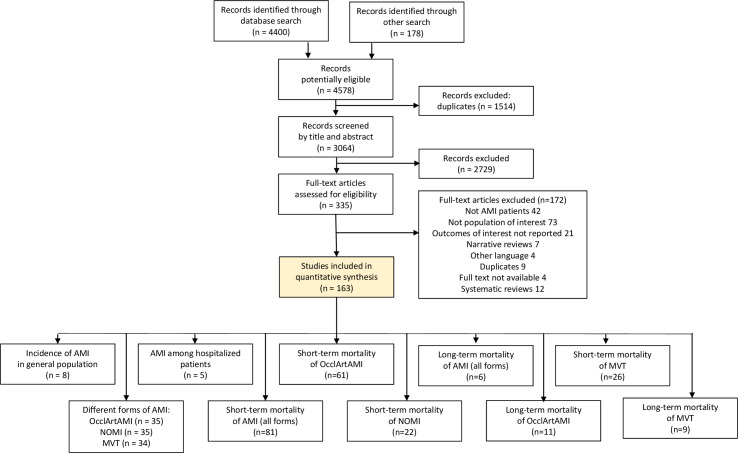
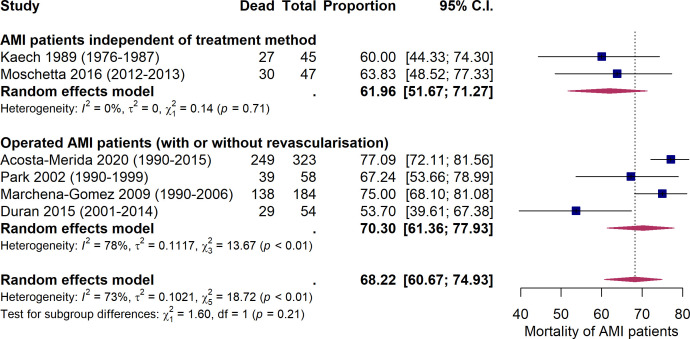
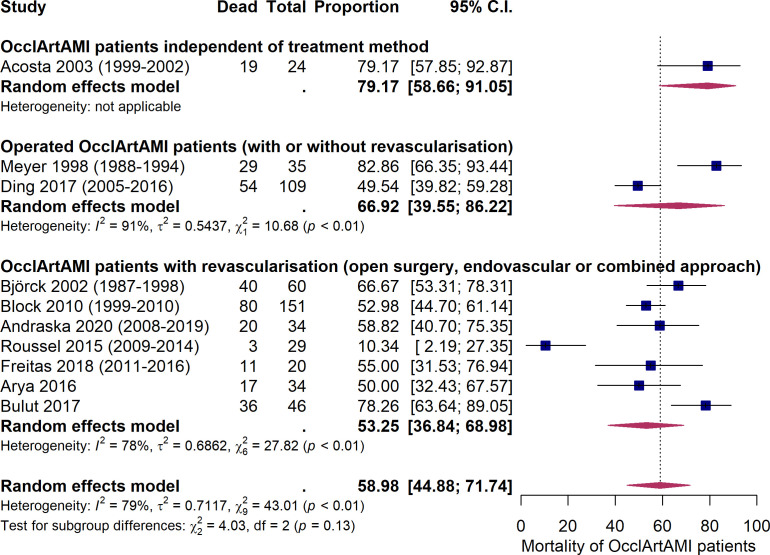
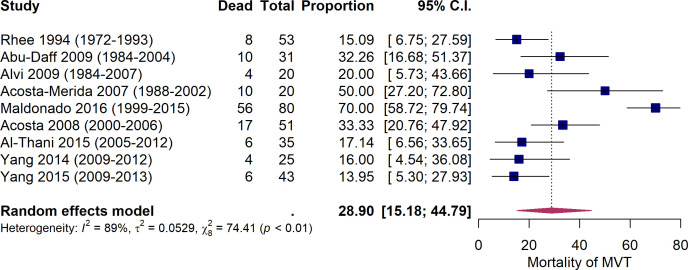
Objective: To estimate the incidence of acute mesenteric ischaemia (AMI), proportions of its different forms and short-term and long-term mortality. Design: Systematic review and meta-analysis. Data sources: MEDLINE (Ovid), Web of Science, Scopus and Cochrane Library were searched until 26 July 2022. Eligibility criteria: Studies reporting data on the incidence and outcomes of AMI in adult populations. Data extraction and synthesis: Data extraction and quality assessment with modified Newcastle-Ottawa scale were performed using predeveloped standard forms. The outcomes were the incidence of AMI and its different forms in the general population and in patients admitted to hospital, and the mortality of AMI in its different forms. Results: From 3064 records, 335 full texts were reviewed and 163 included in the quantitative analysis. The mean incidence of AMI was 6.2 (95% CI 1.9 to 12.9) per 100 000 person years. On average 5.0 (95% CI 3.3 to 7.1) of 10 000 hospital admissions were due to AMI. Occlusive arterial AMI was the most common form constituting 68.6% (95% CI 63.7 to 73.2) of all AMI cases, with similar proportions of embolism and thrombosis. Overall short-term mortality (in-hospital or within 30 days) of AMI was 59.6% (95% CI 55.5 to 63.6), being 68.7% (95% CI 60.8 to 74.9) in patients treated before the year 2000 and 55.0% (95% CI 45.5 to 64.1) in patients treated from 2000 onwards (p<0.05). The mid/long-term mortality of AMI was 68.2% (95% CI 60.7 to 74.9). Mortality due to mesenteric venous thrombosis was 24.6% (95% CI 17.0 to 32.9) and of non-occlusive mesenteric ischaemia 58.4% (95% CI 48.6 to 67.7). The short-term mortality of revascularised occlusive arterial AMI was 33.9% (95% CI 30.7 to 37.4). Conclusions: In adult patients, AMI is a rarely diagnosed condition with high mortality, although with improvement of treatment results over the last decades. Two thirds of AMI cases are of occlusive arterial origin with potential for better survival if revascularised. PROSPERO registration number: CRD42021247148.
Overview
CoChat Summary
TL;DR
This systematic review and meta-analysis estimates that acute mesenteric ischaemia (AMI) is rare but highly lethal, with an incidence of 6.2 per 100 000 person years and short-term mortality of 59.6%. Occlusive arterial AMI is the most common form, and revascularised occlusive arterial AMI has substantially lower short-term mortality.
Key findings
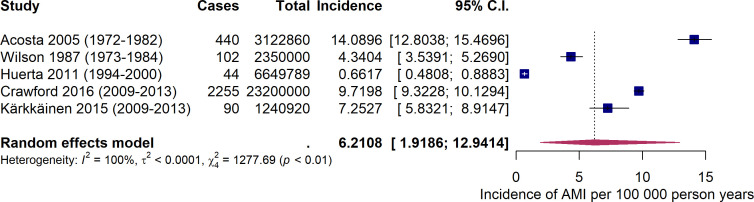
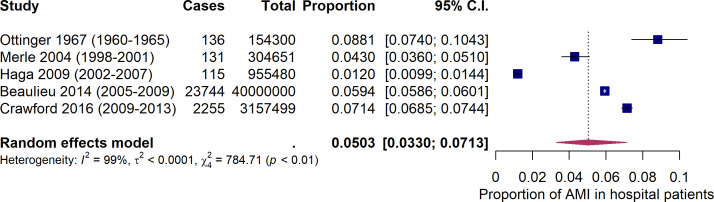
- Mean AMI incidence was 6.2 (95% CI 1.9 to 12.9) per 100 000 person years, and 5.0 (95% CI 3.3 to 7.1) of 10 000 hospital admissions were due to AMI.
- Occlusive arterial AMI constituted 68.6% (95% CI 63.7 to 73.2) of cases; NOMI accounted for 15.1% (95% CI 11.8 to 18.7) and MVT for 11.5% (95% CI 9.1 to 14.2).
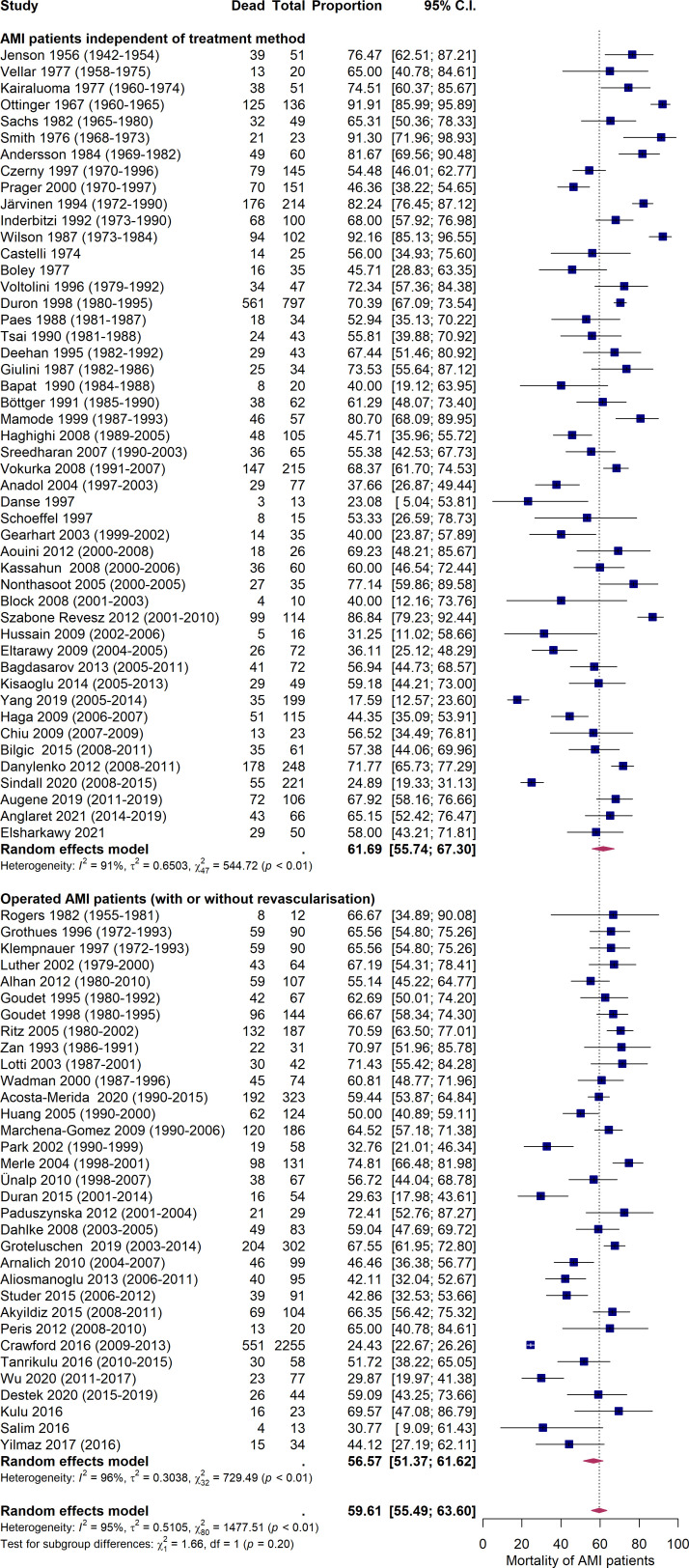
- Overall short-term mortality was 59.6% (95% CI 55.5 to 63.6), improving from 68.7% (95% CI 60.8 to 74.9) before 2000 to 55.0% (95% CI 45.5 to 64.1) from 2000 onwards (p<0.05).
- Short-term mortality was 33.9% (95% CI 30.7 to 37.4) in revascularised occlusive arterial AMI, 58.4% (95% CI 48.6 to 67.7) in NOMI, and 24.6% (95% CI 17.0 to 32.9) in MVT; mid/long-term mortality for all AMI was 68.2% (95% CI 60.7 to 74.9).
Methods
- Systematic review and meta-analysis of studies reporting incidence and outcomes of AMI in adult populations, searched in MEDLINE (Ovid), Web of Science, Scopus and Cochrane Library until 26 July 2022.
- From 3064 records, 335 full texts were reviewed and 163 studies were included in quantitative analysis (152 retrospective, 11 prospective); quality was assessed with a modified Newcastle-Ottawa Scale.
- Random-effects meta-analyses pooled incidence per 100 000 person years and proportions for mortality and AMI subtypes; random-effects meta-regression compared estimates.
Limitations
- The authors state that excluding “colonic ischaemia” and “ischaemic colitis” from the search may have missed some AMI studies; most included studies were retrospective, single-centre, and covered long time periods; pooling involved somewhat different definitions and management algorithms; and publication and assessment biases were possible.
- The paper also notes that meta-analyses on mortality by age group or gender, and assessment of other outcomes, were not possible, and that four Chinese-language articles were excluded because no team member had command of Chinese.
- The text makes evident that incidence is likely underestimated because many AMI cases are diagnosed only at autopsy and autopsy rates are generally low; the included incidence studies were exclusively from high-income countries and covered 1970–2013.
Model-written summary. Check it against the paper before relying on it.
Integrity signals
Registry
Cites
Statistics
Figures
Verification
Claims the paper makes
4 Valid · 3 Not valid · 32 Not checked · 32 Own results and interpretations
Some cited sources support this claim and some don’t — read each source’s verdict below.
In the paper
“The mean incidence of AMI was 6.2 (95% CI 1.9 to 12.9) per 100 000 person years.”
- Also stated in: § Incidence of AMI and proportions of its different forms · plain
“On average 6.2 (95% CI 1.9 to 12.9), new cases of AMI were diagnosed annually per 100 000 inhabitants.”
§ Incidence and outcomes of acute mesenteric ischaemia: a systematic review and meta-analysis > Abstract > Results
What the sources say
- Not checked — no full text of the sourcecites [13] Acosta S, Ögren M, Sternby N-H, et al. Fatal colonic ischemia: a population-based study. Scand J Gastroenterol 2006; 41: 1312– 9. 10.1080/00365520600670042 17060125 source
- Could not verifycites [14] Acosta S, Ögren M, Sternby N-H, et al. Fatal nonocclusive mesenteric ischaemia: population-based incidence and risk factors. J Intern Med 2006; 259: 305– 13. 10.1111/j.1365-2796.2006.01613.x 16476108 sourceExperimental — accuracy not yet measured
Our copy of Acosta et al. (2006) reports only the incidence of autopsy-verified fatal NOMI: 'The overall incidence of autopsy-verified fatal NOMI was 2/100 000 person-years' (Epidemiology) and 'Mean incidence of autopsy-verified fatal NOMI was estimated to 2/100 000 person-years' (Conclusion); the Discussion (referencing refs [11] and [12]) quotes 8.6/100 000 for acute thromboembolic SMA occlusion and 1.8/100 000 for mesenteric venous thrombosis in the same Malmo population. No passage gives a mean incidence of all acute mesenteric ischaemia of 6.2 per 100 000 person-years with 95% CI 1.9-12.9 (searched: '6.2 per 100 000 person-years incidence of acute mesenteric ischaemia', 'confidence interval 1.9 to 12.9 mean incidence', 'all forms of acute mesenteric ischaemia combined'); the only 6.2 in our copy is an odds ratio for death at a surgical ward in Table 4 (6.2, 3.4-11.3). Since the paper neither states nor contradicts a combined AMI incidence figure, the claim cannot be checked against this source; our copy is complete (not truncated). (LLM, conf=0.72)
- Not checked — no full text of the sourcecites [15] Acosta S, Ögren M, Sternby N-H, et al. Incidence of acute thrombo-embolic occlusion of the superior mesenteric artery--a population-based study. Eur J Vasc Endovasc Surg 2004; 27: 145– 50. 10.1016/j.ejvs.2003.11.003 14718895 source
- Partly supportedcites [16] Acosta S, Ögren M, Sternby N-H, et al. Mesenteric venous thrombosis with transmural intestinal infarction: a population-based study. J Vasc Surg 2005; 41: 59– 63. 10.1016/j.jvs.2004.10.011 15696045 sourceExperimental — accuracy not yet measured
Our copy is a population-based incidence study, but of one AMI subtype only: it reports 'The estimated overall incidence of MVT was 1.8 /100,000 person years (95% CI, 1.3 to 2.2)' (Epidemiology) and states its aim as 'to investigate the overall incidence of MVT with intestinal infarction' (Abstract), in Malmö 1970-1982 (Methods). No passage gives a mean incidence of acute mesenteric ischaemia of 6.2 per 100,000 person years with 95% CI 1.9 to 12.9; searches for '6.2', '1.9 to 12.9', overall/all-subtype AMI incidence returned nothing, and the Discussion only quotes other authors' figures (ruptured AAA 5.6, ref 16; acute superior mesenteric artery occlusion 8.6, ref 14). So the source supports the population-based-incidence-per-100,000-person-years element for MVT, but not the AMI-wide scope or the magnitude/CI attributed to it. (LLM, conf=0.68)
- Could not verifycites [17] Wilson C, Gupta R, Gilmour DG, et al. Acute superior mesenteric ischaemia. Br J Surg 1987; 74: 279– 81. 10.1002/bjs.1800740417 3580801 sourceExperimental — accuracy not yet measured
Patients and methods (page unavailable) reports 102 cases during January 1973–August 1984 in a catchment population averaging around 200,000. The Discussion (page unavailable) suggests incidence increased, but neither passage reports a mean incidence of 6.2 per 100,000 person-years or the stated 95% confidence interval; searches for those figures found no matching passage. (LLM, conf=0.76)
- Disputedcites [18] Huerta C, Rivero E, Montoro MA, et al. Risk factors for intestinal ischaemia among patients registered in a UK primary care database: a nested case-control study. Aliment Pharmacol Ther 2011; 33: 969– 78. 10.1111/j.1365-2036.2011.04614.x 21366637 sourceExperimental — accuracy not yet measured
Our copy of Huerta et al. (2011) reports the incidence of acute mesenteric ischaemia in the general-population GPRD cohort as 0.63 per 100,000 person-years (95% CI 0.47-0.86; Table 1, and Results p. ~209-216), with overall intestinal ischaemia at 1.09 (0.87-1.38) and ischaemic colitis at 0.43 (0.30-0.62); no figure of 6.2 (1.9-12.9) appears anywhere, and searches for 'mean incidence 6.2 per 100 000 person years' returned only these tables. The Discussion (p. ~265-266) further states 'To the best of our knowledge, there is no population-based data on the incidence of AMI', and the only wide incidence range it quotes (4.5-44 per 100,000 person-years, citing reviews refs 5,19,20) concerns ischaemic colitis, not AMI. Thus the attributed magnitude and interval contradict what this source reports; no alternative work is named in our copy for the 6.2 figure. (LLM, conf=0.78)
Checked by a reasoning model — may be wrong.
- Disputedcites [19] Crawford RS, Harris DG, Klyushnenkova EN, et al. A statewide analysis of the incidence and outcomes of acute mesenteric ischemia in Maryland from 2009 to 2013. Front Surg 2016; 3: 22. 10.3389/fsurg.2016.00022 27148538 PMC4830818 sourceExperimental — accuracy not yet measured
The Results report an annual admission rate of 10 per 100,000 Maryland adults, not 6.2 per 100,000 person-years. The Discussion cautions that this admission rate only approximates incidence; the paper does not report the claimed 95% confidence interval. (LLM, conf=0.87)
Checked by a reasoning model — may be wrong.
- Not checked — no full text of the sourcecites [20] Kärkkäinen JM, Lehtimäki TT, Manninen H, et al. Acute mesenteric ischemia is a more common cause than expected of acute abdomen in the elderly. J Gastrointest Surg 2015; 19: 1407– 14. 10.1007/s11605-015-2830-3 25917534 source
plain- Asserted: passes — The authors put it forward as true.
- Checkable: passes — It can be checked against evidence.
- Load-bearing: unclear — It is unclear whether the paper’s conclusions depend on it.
- Based: passes — The paper gives a reason why it holds.
- Rests on an assumption not shown here.
- Also stated in: § Incidence of AMI and proportions of its different forms · plain
The cited sources support only part of this claim — read each source’s verdict below.
In the paper
“The studies included in our analysis of the incidence in the general population, indicate a significantly higher proportion of women, at 58.3% (95% CI 56.5 to 60.2).”
§ Incidence and outcomes of acute mesenteric ischaemia: a systematic review and meta-analysis > Results > Incidence of AMI and proportions of its different forms
What the sources say
- Not checked — no full text of the sourcecites [13] Acosta S, Ögren M, Sternby N-H, et al. Fatal colonic ischemia: a population-based study. Scand J Gastroenterol 2006; 41: 1312– 9. 10.1080/00365520600670042 17060125 source
- Partly supportedcites [14] Acosta S, Ögren M, Sternby N-H, et al. Fatal nonocclusive mesenteric ischaemia: population-based incidence and risk factors. J Intern Med 2006; 259: 305– 13. 10.1111/j.1365-2796.2006.01613.x 16476108 sourceExperimental — accuracy not yet measured
Our copy confirms that this is a population-based (Malmo, 1970-1982) incidence study of an acute mesenteric ischaemia subgroup with a female majority among cases: 'Patient characteristics in the autopsy cohort' states median age 82 (45-95) years and that 61% were women, and Table 2 lists 38 female of 62 cases (incidence 2.3 vs 1.6 per 100 000 person-years). However, the paper nowhere reports 58.3% or a 95% CI of 56.5-60.2; that figure is the citing authors' pooled estimate across several general-population studies, so attributing that magnitude and interval to this source is not supported. Note also that the 'Epidology' section reports cause-specific mortality ratios 'without gender differences when adjusting for population at risk', and the study covers fatal NOMI only, not all aetiologies of acute mesenteric ischaemia. (LLM, conf=0.72)
- Not checked — no full text of the sourcecites [15] Acosta S, Ögren M, Sternby N-H, et al. Incidence of acute thrombo-embolic occlusion of the superior mesenteric artery--a population-based study. Eur J Vasc Endovasc Surg 2004; 27: 145– 50. 10.1016/j.ejvs.2003.11.003 14718895 source
- Partly supportedcites [16] Acosta S, Ögren M, Sternby N-H, et al. Mesenteric venous thrombosis with transmural intestinal infarction: a population-based study. J Vasc Surg 2005; 41: 59– 63. 10.1016/j.jvs.2004.10.011 15696045 sourceExperimental — accuracy not yet measured
In the Epidemiology section our copy reports 27 autopsy-verified fatal MVT cases with transmural infarction in Malmö 1970-1982, 'The median age was 73 years (range, 17 to 89), and 59% were women' (Table I: 11 men, 16 women), i.e. a female majority in a defined population — so the direction of the claim is supported. However, the specific magnitude attributed here, 58.3% with 95% CI 56.5 to 60.2, appears nowhere in the paper: its only confidence intervals are Poisson-based for cause-specific mortality (0.9/1000 autopsies, 95% CI 0.6-1.2) and overall incidence (1.8/100,000 person-years, 95% CI 1.3-2.2), and a CI that narrow could not arise from 27 cases — it is the citing authors' pooled estimate. The paper's population is also fatal mesenteric venous thrombosis with transmural intestinal infarction, not acute mesenteric ischaemia as a whole, so the generalisation to 'AMI cases' is not this source's finding. (LLM, conf=0.75)
- Partly supportedcites [17] Wilson C, Gupta R, Gilmour DG, et al. Acute superior mesenteric ischaemia. Br J Surg 1987; 74: 279– 81. 10.1002/bjs.1800740417 3580801 sourceExperimental — accuracy not yet measured
Table 2 (page unavailable) reports 56 women and 46 men among 102 cases, supporting a higher proportion of women in this study. The paper does not report the citing authors’ pooled estimate of 58.3% or its 95% confidence interval; its own female proportion is approximately 54.9%. (LLM, conf=0.88)
- Partly supportedcites [18] Huerta C, Rivero E, Montoro MA, et al. Risk factors for intestinal ischaemia among patients registered in a UK primary care database: a nested case-control study. Aliment Pharmacol Ther 2011; 33: 969– 78. 10.1111/j.1365-2036.2011.04614.x 21366637 sourceExperimental — accuracy not yet measured
Our copy of Huerta et al. (Risk factor information, p. ~lines 202-205) reports only that, among 78 confirmed intestinal ischaemia cases (71 from the general population cohort, 44 AMI), 'More than 50% of both AMI and IC cases were women' — a qualitative female predominance, which supports the direction of the claim. The specific magnitude 58.3% with a 95% CI of 56.5 to 60.2 appears nowhere in our copy (searched: 'proportion of women among acute mesenteric ischaemia cases 58.3%', '58.3% female sex distribution confidence interval', 'women 26 AMI cases 44 percentage'), and the very tight CI is incompatible with this single GPRD study of 44 AMI cases; the CI 56.5-60.2 corresponds to the citing paper's own pooled analysis of multiple general-population studies, not to this source. Table 1 (p. ~lines 209-217) gives case counts and incidence rates by cohort but no sex-specific proportion of AMI cases. (LLM, conf=0.72)
- Partly supportedcites [19] Crawford RS, Harris DG, Klyushnenkova EN, et al. A statewide analysis of the incidence and outcomes of acute mesenteric ischemia in Maryland from 2009 to 2013. Front Surg 2016; 3: 22. 10.3389/fsurg.2016.00022 27148538 PMC4830818 sourceExperimental — accuracy not yet measured
Table 1 (Results; page unavailable) reports that 1,321 of 2,255 Maryland patients with acute mesenteric ischemia were women, approximately 59%, supporting a female majority in this study. It does not report the cited 58.3% estimate or its 95% confidence interval, and this single-state study does not establish the pooled result attributed to general-population studies. (LLM, conf=0.87)
- Not checked — no full text of the sourcecites [20] Kärkkäinen JM, Lehtimäki TT, Manninen H, et al. Acute mesenteric ischemia is a more common cause than expected of acute abdomen in the elderly. J Gastrointest Surg 2015; 19: 1407– 14. 10.1007/s11605-015-2830-3 25917534 source
hedged- Asserted: passes — The authors put it forward as true.
- Checkable: passes — It can be checked against evidence.
- Load-bearing: unclear — It is unclear whether the paper’s conclusions depend on it.
- Based: passes — The paper gives a reason why it holds.
- Rests on an assumption not shown here.
The cited sources support only part of this claim — read each source’s verdict below.
In the paper
“This explanation is supported by two studies using data from a large nationwide database, reporting attempted revascularisation rates of only 2.9–4.2%.”
§ Incidence and outcomes of acute mesenteric ischaemia: a systematic review and meta-analysis > Discussion > Incidence of AMI
What the sources say
- Not checked — no full text of the sourcecites [59] Beaulieu RJ, Arnaoutakis KD, Abularrage CJ, et al. Comparison of open and endovascular treatment of acute mesenteric ischemia. J Vasc Surg 2014; 59: 159– 64. 10.1016/j.jvs.2013.06.084 24199769 source
- Partly supportedcites [136] Zettervall SL, Lo RC, Soden PA, et al. Trends in treatment and mortality for mesenteric ischemia in the United States from 2000 to 2012. Ann Vasc Surg 2017; 42: 111– 9. 10.1016/j.avsg.2017.01.007 28359796 PMC5502755 sourceExperimental — accuracy not yet measured
The Methods identify the Nationwide Inpatient Sample, and Results > Trends in Treatment (page unavailable) reports revascularization rates for acute mesenteric ischemia of 2.6 to 4.0 per million people. The cited paper therefore supports the nationwide-database and revascularization aspects, but it does not report attempted revascularisation rates of 2.9–4.2%; its figures have a different denominator. (LLM, conf=0.85)
plain- Asserted: passes — The authors put it forward as true.
- Checkable: passes — It can be checked against evidence.
- Load-bearing: passes — The paper’s conclusions depend on it.
- Based: passes — The paper gives a reason why it holds.
In the paper
“and of non-occlusive mesenteric ischaemia 58.4% (95% CI 48.6 to 67.7).”
- Also stated in: § Outcomes of AMI and its different forms · plain
“The overall mortality of NOMI independent of treatment was 58.4% (95% CI 48.6 to 67.7)”
§ Incidence and outcomes of acute mesenteric ischaemia: a systematic review and meta-analysis > Abstract > Results
What the sources say
- Not matchedcites 22 25 27 31–33 35 38 39 42 48 49 93 154–162
This doesn’t read as a citation we can look up.
plain- Asserted: passes — The authors put it forward as true.
- Checkable: passes — It can be checked against evidence.
- Load-bearing: passes — The paper’s conclusions depend on it.
- Based: passes — The paper gives a reason why it holds.
- Rests on an assumption not shown here.
- Also stated in: § Outcomes of AMI and its different forms · plain
In the paper
“Arterial occlusion was roughly equally thrombotic and embolic (30.0% (95% CI 24.4 to 36.3) and 33.3% (95% CI 27.3 to 39.9) of all AMI cases, respectively)”
§ Incidence and outcomes of acute mesenteric ischaemia: a systematic review and meta-analysis > Results > Incidence of AMI and proportions of its different forms
What the sources say
- Not matchedcites 14 17 21–56
This doesn’t read as a citation we can look up.
plain- Asserted: passes — The authors put it forward as true.
- Checkable: passes — It can be checked against evidence.
- Load-bearing: unclear — It is unclear whether the paper’s conclusions depend on it.
- Based: passes — The paper gives a reason why it holds.
- Rests on an assumption not shown here.
- Not matched
42 more claims
Create a free account to see all 71 claims and every source verdict.
- Probably not a substantial claim. 5
- It may state two separate claims as one. 21
Claims other papers make about this one
Each is checked against this paper’s own text: does it say what the citing paper says it does?
The source backs part of the claim, not all of it — or backs it for a different population, condition or comparison.
In the citing paper
“Regardless of the specific approaches to diagnosis and management for different subtypes of AMI, all subtypes ultimately lead to severe consequences and high mortality [1, 2].”
From Incidence, diagnosis, management and outcome of acute mesenteric ischaemia: a prospective, multicentre observational study (AMESI Study) (2024) · cites this paper as [1]
Experimental — accuracy not yet measuredThe source backs part of the claim, not all of it — or backs it for a different population, condition or comparison.
In the citing paper
“The overall occurrence rate of confirmed AMI was lower than anticipated based on previous analyses [1, 2].”
From Incidence, diagnosis, management and outcome of acute mesenteric ischaemia: a prospective, multicentre observational study (AMESI Study) (2024) · cites this paper as [1]
Experimental — accuracy not yet measuredThe source backs part of the claim, not all of it — or backs it for a different population, condition or comparison.
In the citing paper
“Based on previous studies [1, 2], it was estimated that the proportion of the least frequent form of AMI is around 10% of all AMI cases.”
From Incidence, diagnosis, management and outcome of acute mesenteric ischaemia: a prospective, multicentre observational study (AMESI Study) (2024) · cites this paper as [1]
Experimental — accuracy not yet measuredThe source backs part of the claim, not all of it — or backs it for a different population, condition or comparison.
In the citing paper
“We estimated that 0.06% (0.05–0.07) of all adult patients hospitalized in acute care hospitals have AMI [1, 2].”
From Incidence, diagnosis, management and outcome of acute mesenteric ischaemia: a prospective, multicentre observational study (AMESI Study) (2024) · cites this paper as [1]
Experimental — accuracy not yet measuredThe source backs part of the claim, not all of it — or backs it for a different population, condition or comparison.
In the citing paper
“hospital mortality of venous occlusive AMI was lower (14 vs. 26%) and of NOMI was higher (73 vs 58%).”
From Incidence, diagnosis, management and outcome of acute mesenteric ischaemia: a prospective, multicentre observational study (AMESI Study) (2024) · cites this paper as [1]
Experimental — accuracy not yet measured
14 more claims about this paper
Create a free account to see every claim other papers make about this one.
Self-check
Percentages, sums and reported differences re-computed from the paper’s own numbers.
Rated minor: it would not touch a result — a value no result rests on, a p-value that stays on the same side of the significance level, or a conflict that is clerical, resolved elsewhere in the paper, or outside its own findings.
In the paper
“| Patients treated before 2000 | Vellar and Doyle63 | 1958–1975 | 13 | 20 | 72.83 |”
§ Incidence and outcomes of acute mesenteric ischaemia: a systematic review and meta-analysis > Results > Outcomes of AMI and its different forms
Reported 72.83 · recomputed 65
Rated minor: it would not touch a result — a value no result rests on, a p-value that stays on the same side of the significance level, or a conflict that is clerical, resolved elsewhere in the paper, or outside its own findings.
In the paper
“After removal of duplicates, 2591 records were obtained from the initial search, and an additional 178 records were identified through other sources, making 3064 potentially eligible articles (figure 1).”
§ Incidence and outcomes of acute mesenteric ischaemia: a systematic review and meta-analysis > Results > Literature search and quality assessment
Reported 3064 · recomputed 2769
Rated minor: it would not touch a result — a value no result rests on, a p-value that stays on the same side of the significance level, or a conflict that is clerical, resolved elsewhere in the paper, or outside its own findings.
In the paper
“| Patients treated after 2000 | Danylenko et al89 | 2008–2011 | 178 | 248 | 51.90 |”
§ Incidence and outcomes of acute mesenteric ischaemia: a systematic review and meta-analysis > Results > Outcomes of AMI and its different forms
Reported 51.9 · recomputed 71.774194
Citations
Cites
The PRISMA 2020 statement: An updated guideline for reporting systematic reviews
Page, M. J., McKenzie, J. E., Bossuyt, P. M., Boutron, I., Hoffmann, T. C., Mulrow, C. D., Shamseer, L., Tetzlaff, J. M., Akl, E. A., Brennan, S. E., et al. (2021) · BMJ · doi:10.1136/bmj.n71 · Cited by 108,283
(2014) · Medical Entomology and Zoology · Cited by 17,633
Statistical Methods in Medical Research.
Armitage, P. (1972) · Biometrics · doi:10.2307/2556182 · Cited by 4,029
Acute Mesenteric Ischemia: A Clinical Review
Oldenburg, W. A., Lau, L. L., Rodenberg, T. J., Edmonds, H. J., & Burger, C. D. (2004) · Archives of Internal Medicine · doi:10.1001/archinte.164.10.1054 · Cited by 714
Editor's Choice – Management of the Diseases of Mesenteric Arteries and Veins
Björck, M., Koelemay, M., Acosta, S., Bastos Goncalves, F., Kölbel, T., Kolkman, J. J., Lees, T., Lefevre, J. H., Menyhei, G., Oderich, G., et al. (2017) · European Journal of Vascular and Endovascular Surgery · doi:10.1016/j.ejvs.2017.01.010 · Cited by 658
Self-citationThe Global Incidence of Appendicitis: A Systematic Review of Population-based Studies
Ferris, M., Quan, S., Kaplan, B. S., Molodecky, N., Ball, C. G., Chernoff, G. W., Bhala, N., Ghosh, S., Dixon, E., Ng, S., et al. (2017) · Annals of Surgery · doi:10.1097/sla.0000000000002188 · Cited by 580
Acute mesenteric ischemia: guidelines of the World Society of Emergency Surgery
Bala, M., Kashuk, J., Moore, E. E., Kluger, Y., Biffl, W., Gomes, C. A., Ben-Ishay, O., Rubinstein, C., Balogh, Z. J., Civil, I., et al. (2017) · World Journal of Emergency Surgery · doi:10.1186/s13017-017-0150-5 · Cited by 574
Systematic review of survival after acute mesenteric ischaemia according to disease aetiology
Schoots, I. G., Koffeman, G. I., Legemate, D. A., Levi, M., & van Gulik, T. M. (2004) · Journal of British Surgery · doi:10.1002/bjs.4459 · Cited by 502
Contemporary management of acute mesenteric ischemia: Factors associated with survival
Park, W. M., Gloviczki, P., Cherry, K. J., Hallett, J. W., Bower, T. C., Panneton, J. M., Schleck, C., Ilstrup, D., Harmsen, W. S., & Noel, A. A. (2002) · Journal of Vascular Surgery · doi:10.1067/mva.2002.120373 · Cited by 463
Epidemiology of Mesenteric Vascular Disease: Clinical Implications
Acosta, S. (2010) · Seminars in Vascular Surgery · doi:10.1053/j.semvascsurg.2009.12.001 · Cited by 340
Self-citation
Research works printed but not linked: 1
- Lotti R, Perri G, Nardi M. La procedura "second-look” nella terapia chirurgica dell’infarto intestinale [“Second-look” in the surgical therapy of mesenteric infarction]. Chirurgia 2003; 16: 163– 6.
Cited by
Items 101–108 of 108
Reintam Blaser, A., Starkopf, J., Björck, M., Forbes, A., Kase, K., Kiisk, E., Laisaar, K.-T., Mihnovitš, V., Murruste, M., Mändul, M., et al. (2024) · Figshare · doi:10.6084/m9.figshare.26614438
Self-citationTamme, K., Acosta, S., Biloslavo, A., Björck, M., Casian, D., Damaskos, D., Forbes, A., Kase, K., Kisand, K., Lakbar, I., et al. (2024) · Figshare · doi:10.6084/m9.figshare.26742584
Self-citationTamme, K., Acosta, S., Biloslavo, A., Björck, M., Casian, D., Damaskos, D., Forbes, A., Kase, K., Kisand, K., Lakbar, I., et al. (2024) · Figshare · doi:10.6084/m9.figshare.26742587
Self-citationBette, S. J., Habeeballah, O., Luitjens, J. H., Kroencke, T., Scheurig‐Muenkler, C., & Decker, J. A. (2023) · Figshare · doi:10.6084/m9.figshare.24098322
Reintam Blaser, A., Starkopf, J., Björck, M., Forbes, A., Kase, K., Kiisk, E., Laisaar, K.-T., Mihnovitš, V., Murruste, M., Mändul, M., et al. (2024) · Figshare · doi:10.6084/m9.figshare.26614441
Self-citationReintam Blaser, A., Mändul, M., Björck, M., Acosta, S., Bala, M., Bodnár, Z., Casian, D., Demetrashvili, Z., D’Oria, M., Muñoz-Cruzado, V. M. D., et al. (2024) · Figshare · doi:10.6084/m9.figshare.26671935
Self-citationBette, S. J., Habeeballah, O., Luitjens, J. H., Kroencke, T., Scheurig‐Muenkler, C., & Decker, J. A. (2023) · Figshare · doi:10.6084/m9.figshare.24098319
Reintam Blaser, A., Starkopf, J., Björck, M., Forbes, A., Kase, K., Kiisk, E., Laisaar, K.-T., Mihnovitš, V., Murruste, M., Mändul, M., et al. (2024) · Figshare · doi:10.6084/m9.figshare.26614435
Self-citation
Metadata
- Authors
- Tamme, K., Reintam Blaser, A., Laisaar, K.-T., Mändul, M., Kals, J., Forbes, A., Kiss, O., Acosta, S., Bjørck, M., & Starkopf, J.
- Affiliations
- Tartu University Hospital (EE)
- Department of Anaesthesiology and Intensive Care, Institute of Clinical Medicine, University of Tartu, Tartu, Estonia
- University of Tartu (EE)
- Lund University (SE)
- Department of Surgery, Institute of Clinical Medicine, University of Tartu, Tartu, Estonia
- Corresponding author
- Tamme, Kadri
- ORCID
- Venue
- BMJ Open
- Publisher
- BMJ
- Published
- 2022-10
- Volume
- 12
- Issue
- 10
- Pages
- e062846
- ISSN
- 2044-6055 (ISSN-L)
- PMC
- PMC9608543
- OpenAlex
- W4307690455
- Cited by
- 112
- References
- 209
- Citations by year
- 2026: 33 · 2025: 33 · 2024: 28 · 2023: 17 · 2022: 1
- FWCI
- 4.75
- Type
- journal article
- Language
- en
- Open access
- gold
- doi.org
- Licence
- Locations
- BMJ Open (publishedVersion, cc-by-nc)
- PubMed Central (publishedVersion, cc-by-nc)
- PubMed (publishedVersion)
- Uppsala University Publications (Uppsala University) (submittedVersion, other-oa)
- DOAJ (DOAJ: Directory of Open Access Journals) (submittedVersion, cc-by-sa)
- Lund University Publications (Lund University) (submittedVersion)
- Funders
- Eesti Teadusagentuur (PRG1255)
- Topics
- Health Sciences › Medicine › Surgery › Abdominal vascular conditions and treatments
- Health Sciences › Medicine › Cardiology and Cardiovascular Medicine › Aortic Thrombus and Embolism
- Health Sciences › Medicine › Emergency Medicine › Appendicitis Diagnosis and Management
- Keywords
- acute mesenteric ischemia, incidence, mortality, mesenteric vein thrombosis, nonocclusive mesenteric ischemia, embolism, thrombosis, hospitalization, treatment trends, long-term outcomes, adults, case definition, diagnostic criteria, risk factors, prognosis, prognostic score, risk stratification
- MeSH terms
- Acute Disease, Adult, Humans, Ischemia, Thrombosis, Incidence, Treatment Outcome, Mesenteric Ischemia
About these checks
Registry, retraction, Cites and statistics results are computed, not judged, with one exception: a printed reference that no index lists is read once by a model before it counts as a citation error. Claims are extracted by a model and kept only when their quote appears verbatim in the text; each cited source is then checked, with a model’s help, for whether it says what the claim relies on. Those verdicts can be wrong — read the claim’s quote and the cited source before relying on one.
The claim verdicts this report counts are experimental: their accuracy is not yet measured.
A language model drew the claims from the paper on 2026-10-10, under version 3 of the claim definition (model deepseek-v4.1-flash, prompt extract-v3).
A second model labelled each claim on 2026-10-10 (model jev-1.13-20260917, definition revision gold-guideline-v0.2).
Cited sources are checked with a language model’s help (qwen3.8-omni-flash and gpt-6-sol).
Statistics and arithmetic are recomputed, not judged.
Confidence bands are shown only for fields calibrated on our annotated test set. None is calibrated yet, so no band is shown.
What counts as a claim ›How we measure confidence ›How we check this ›
Are you an author, or do you see a problem with this page? Request a review
Data sources
Bibliographic data: Semantic Scholar, OpenAlex, Crossref.
Contains information from the Semantic Scholar Academic Graph Datasets, made available under the ODC Attribution License (ODC-BY 1.0).
Semantic Scholar’s data is described in: Kinney, R., et al. (2023). The Semantic Scholar Open Data Platform. arXiv:2301.10140.
