

The DOI matches its Crossref record; 65 of the 66 references it cites were found in a registry or an index, and 1 are not checked yet.
Coproduction of healthcare service
Open accessAbstract
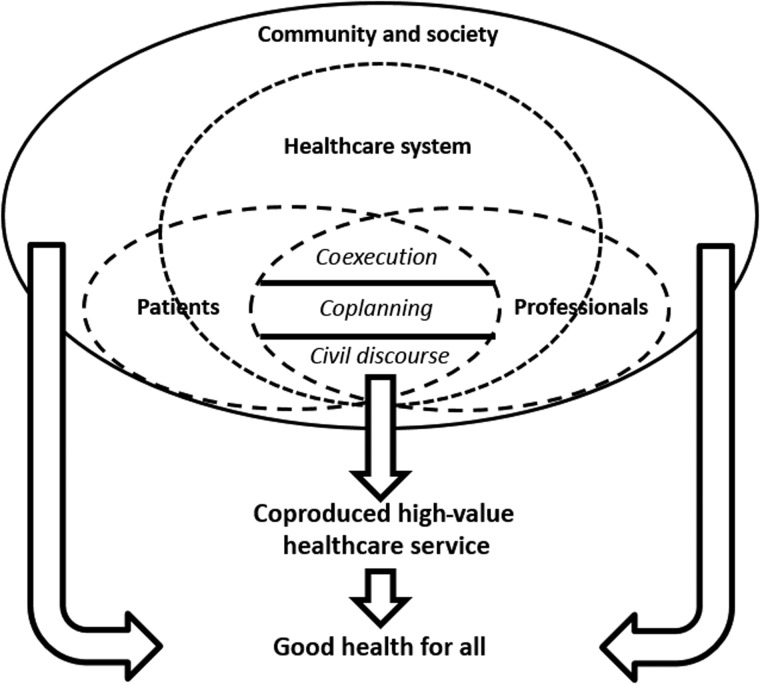
Efforts to ensure effective participation of patients in healthcare are called by many names—patient centredness, patient engagement, patient experience. Improvement initiatives in this domain often resemble the efforts of manufacturers to engage consumers in designing and marketing products. Services, however, are fundamentally different than products; unlike goods, services are always ‘coproduced’. Failure to recognise this unique character of a service and its implications may limit our success in partnering with patients to improve health care. We trace a partial history of the coproduction concept, present a model of healthcare service coproduction and explore its application as a design principle in three healthcare service delivery innovations. We use the principle to examine the roles, relationships and aims of this interdependent work. We explore the principle's implications and challenges for health professional development, for service delivery system design and for understanding and measuring benefit in healthcare services.
Overview
The claims and statistics of this paper haven’t been checked yet.
Run the check — free, no account needed. It reads the open-access text and checks the sources it cites.
Integrity signals
Registry
Cites
Statistics
Figures
Verification
Claims the paper makes
The claims and statistics of this paper haven’t been checked yet.
Run the check — free, no account needed. It reads the open-access text and checks the sources it cites.
Claims other papers make about this one
Each is checked against this paper’s own text: does it say what the citing paper says it does?
The source backs part of the claim, not all of it — or backs it for a different population, condition or comparison.
In the citing paper
“When developing interventions, involving diverse stakeholders (e.g., patients, healthcare staff and their managers, researchers, and policy makers) has been recommended to enhance accuracy, fit, and sense of ownership within the specific setting [15, 16].”
From Developing a primary care-based cognitive behavioral intervention for anxiety in children through a participatory approach: a qualitative study. (2026) · cites this paper as [15]
Experimental — accuracy not yet measured
Self-check
Percentages, sums and reported differences re-computed from the paper’s own numbers.
The self-check needs the paper’s full text.
Citations
Cites
Crossing the Quality Chasm: A New Health System for the 21st Century
Baker, A. (2001) · BMJ · doi:10.1136/bmj.323.7322.1192 · Cited by 10,779
Crossing the Quality Chasm: A New Health System for the 21st Century
Bloom, B. S. (2002) · JAMA · doi:10.1001/jama.287.5.646-a · Cited by 3,733
Improving chronic illness care: translating evidence into action
Wagner, E. H., Austin, B. T., Davis, C., Hindmarsh, M., Schaefer, J., & Bonomi, A. (2001) · Health Affairs · doi:10.1377/hlthaff.20.6.64 · Cited by 3,446
Shared decision making — The pinnacle of patient-centered care
Barry, M. J., & Edgman-Levitan, S. (2012) · New England Journal of Medicine · doi:10.1056/nejmp1109283 · Cited by 3,433 · cited 1×
“’ 55 It is difficult for the NHS to calculate the long-term return on investment in evaluating these paradigm-shifting trainings.”
BackgroundCrossing the great divide: Coproduction, synergy, and development
Elinor Ostrom, B. (1996) · World Development · doi:10.1016/0305-750x(96)00023-x · Cited by 2,838
Hibbard, J. H., Stockard, J., Mahoney, E. R., & Tusler, M. (2004) · Health Services Research · doi:10.1111/j.1475-6773.2004.00269.x · Cited by 2,748
Lorig, K. R., Sobel, D. S., Stewart, A. L., Brown, B. W., Bandura, A., Ritter, P., Gonzalez, V. M., Laurent, D. D., & Holman, H. R. (1999) · Medical Care · doi:10.1097/00005650-199901000-00003 · Cited by 2,261
Chronic disease management: what will it take to improve care for chronic illness?
Eh, W. (1998) · PubMed · Cited by 2,095
Beyond Engagement and Participation: User and Community Coproduction of Public Services
Bovaird, T. (2007) · Public Administration Review · doi:10.1111/j.1540-6210.2007.00773.x · Cited by 2,061
Leavitt, M. (2001) · PubMed · Cited by 1,835
Research works printed but not linked: 2
- Sandström P . A toolbox for co-production of knowledge and improved land use dialogues: the perspective of reindeer husbandry [PhD Thesis]. Umeå, Sweden: Department of Forest Resource Management, Swedish University of Agricultural Sciences, 2015:20.
- Flood S . Enhancing adaptive capacity through co-production of knowledge in New Zealand. Proceedings of the Resilient Cities 2014 congress; 5th Global Forum on Urban Resilience and Adaptation; Bonn, Germany, 29–31 May, 2014.
Cited by
Sorted by citations
Items 601–700 of 1,000
Developing the tissue viability seating guidelines
Stephens, M., Bartley, C., Betteridge, R., & Samuriwo, R. (2017) · Journal of Tissue Viability · doi:10.1016/j.jtv.2017.09.006 · Cited by 5
Invited Commentary: Baby Steps to a Learning Mental Health–Care System—Can We Do the Work?
Shiner, B. R., & Watts, B. V. (2020) · American Journal of Epidemiology · doi:10.1093/aje/kwaa261 · Cited by 5
“Group, a consortium of hospitals that decreased morbidity and mortality by standardizing cardiovascular surgery practice,(2) and the Cincinnati Children’s Hospital, where “coproduction of healthcare” includes patients and families in generating knowledge to improve chronic disease management.(3) Within mental health c…”
Lachman, P. I., & Nelson, E. C. (2021) · International Journal for Quality in Health Care · doi:10.1093/intqhc/mzab065 · Cited by 5
Quality improvement development in Swedish healthcare and welfare services
Andersson, A. (2024) · International Journal of Lean Six Sigma · doi:10.1108/ijlss-12-2023-0233 · Cited by 4
Racial and ethnic differences in patient psychological safety: A qualitative patient narrative study
Rathert, C., Simmons, D. R., Mittler, J., Enard, K. R., & Brooks, J. V. (2024) · SSM - Qualitative Research in Health · doi:10.1016/j.ssmqr.2024.100491 · Cited by 4
Martínez‐Zamora, M. Á., Feixas, G., Palou, E., Flo, E., Mallorquí, A., Gràcia, M., Gresle, A.-S., Escarrabill, J., & Carmona, F. (2025) · Journal of Clinical Medicine · doi:10.3390/jcm14103504 · Cited by 4
“From the point of view of organizations, there is little knowledge about the methods of participatory processes, or the promotion of patient participation is simply symbolic [5,7].”
Purchase, T., McFadzean, I. J., Donovan, L., Beggs, J., Rees, P., & Carson‐Stevens, A. (2025) · British Journal of General Practice · doi:10.3399/bjgp.2024.0786 · Cited by 4
Value co-creation as a service element in the context of health: a systematic review
da Silva, W. A., Dantas, Í. J. D. M., & Curth, M. (2025) · International Journal of Pharmaceutical and Healthcare Marketing · doi:10.1108/ijphm-02-2025-0014 · Cited by 4
Illuminating the importance of adding patient knowledge to continual improvement in healthcare
Gustavsson, S., Bergerum, C., Patriksson, A., & Tedsjö, S. (2022) · Integrated Healthcare Journal · doi:10.1136/ihj-2021-000114 · Cited by 4
Young, R. A., Gürses, A. P., Fulda, K. G., Espinoza, A., Daniel, K. M., Hendrix, Z. N., Sutcliffe, K. M., & Xiao, Y. (2023) · BMJ Open Quality · doi:10.1136/bmjoq-2023-002350 · Cited by 4
Karnehed, S., Pejner, M. N., Erlandsson, L., & Petersson, L. (2024) · Scandinavian Journal of Caring Sciences · doi:10.1111/scs.13237 · Cited by 6
Cobianchi, L., Mas, F. D., Hilal, M. A., Adham, M., Alfieri, S., Balzano, G., Barauskas, G., Bassi, C., Besselink, M. G., Bockhorn, M., et al. (2024) · Updates in Surgery · doi:10.1007/s13304-024-01839-x · Cited by 4
“Patients who are fully engaged in their own care record higher levels of satisfaction and adherence to the care plan [29, 30].”
BackgroundTechnology‐enabled patient care in medical radiation sciences: the two sides of the coin
Malamateniou, C. (2024) · Journal of Medical Radiation Sciences · doi:10.1002/jmrs.807 · Cited by 4
Löfgren, M., Gyllenhammar, D., Hange, D., Nordeman, L., Rembeck, G. I., Björkelund, C., Svenningsson, I., & Törnbom, K. (2024) · BMJ Open · doi:10.1136/bmjopen-2024-085826 · Cited by 4
Speaking Stoma: Creating a Communication Guide for People With an Ostomy
Lazenby, B. S., Guidry, A., Donovan, E. E., Dailey, R. M., & Ivatury, S. J. (2024) · Qualitative Health Research · doi:10.1177/10497323241293719 · Cited by 4
“Educational materials for patients often focus health-care production materials on relief of healthcare challenges over enabling patients to have more control over their care and health outcomes (Batalden et al., 2016).”
Operationalising perioperative safety: learning to walk the talk
Chejfec‐Ciociano, J. M., Barach, P. R., & Gelb, A. W. (2025) · British Journal of Anaesthesia · doi:10.1016/j.bja.2025.06.018 · Cited by 4
Bridging fair-aware artificial intelligence and co-creation for equitable mental healthcare
Timmons, A. C., Duong, J. B., Walters, S. N., Carta, K. E., Jumonville, G. A., Carrasco, A. S., Romero, D., Ahle, M. W., Comer, J. S., Khurd, I. P., et al. (2025) · Nature Reviews Psychology · doi:10.1038/s44159-025-00491-5 · Cited by 7
“By relying on community collaborators, co-creation enhances the development of culturally sensitive and inclusive mental health interventions 54–60 that are more relevant and engaging than traditional approaches 56,61–63 .”
Developing an Intervention to Reduce Harm in Hospitalized Patients
Schenk, E. C., Bryant, R. A., Son, C. R. V., & Odom‐Maryon, T. (2018) · Journal of Nursing Care Quality · doi:10.1097/ncq.0000000000000354 · Cited by 4
“for a given situation, diagnosis, or treatment.(12,13) Furthermore, engagement specific to improving patient safety has primarily been composed”
BackgroundQuality and safety in hospital cancer care: A mixed methods study of next of kin involvement
Bergerød, I. J. (2021) · University of Stavanger eBooks · doi:10.31265/usps.79 · Cited by 4
Gao, Y., Abonyi, S., Downe, P. J., Baerg, K., & Ward, H. A. (2022) · Patient Experience Journal · doi:10.35680/2372-0247.1580 · Cited by 4
Coproducing the Learning Environment: Lessons Learned from a Year of Near-Peer Teaching
Humphrey, K. N., Daulton, R., Weber, D., Sall, D. R., & Kelleher, M. (2022) · Journal of Medical Education and Curricular Development · doi:10.1177/23821205221096288 · Cited by 5
“By empowering learners to co-produce their education, educators help to foster the development of lifelong learners through shared decision-making and reflection.(6,7)”
BackgroundZhang, W., He, X., & Liu, Z. (2023) · International Journal of Environmental Research and Public Health · doi:10.3390/ijerph20054638 · Cited by 4
Kirkpatrick, L. A., Goldman, P. N., Bell, L. A., Tyler, C. P., Harrison, E., Russell, M., Syed, T. S., Szoko, N., & Kazmerski, T. M. (2023) · Journal of Medical Education and Curricular Development · doi:10.1177/23821205231190476 · Cited by 4
“There is a large and growing body of literature about engaging patients and other partners in the research process.(13,14) Participatory models in research have been promoted by US agencies such as the Patient-Centered Outcomes Research Institute (PCORI), which prioritizes collaborator involvement in all phases of the…”
BackgroundConfigurations of Care Work: Fragile Partnerships in the Co-Production of Long-Term Care Services
Tingvold, L., & Olsvold, N. (2023) · Societies · doi:10.3390/soc13110234 · Cited by 4
Angeler, D. G., Smith, E., Berk, M., Ibáñez, A. M., & Eyre, H. A. (2023) · Discover Mental Health · doi:10.1007/s44192-023-00051-4 · Cited by 4
“Most importantly the engagement of people with lived experience of mental illness and their loved ones will be crucial for building mental health systems [26].”
BackgroundGoulding, R., Goodwin, J., Saab, M. M., McCarthy, M. J., Happell, B., & O’Donovan, Á. (2024) · International Journal of Transgender Health · doi:10.1080/26895269.2024.2333519 · Cited by 4
“Co-production in healthcare is defined as a collaborative partnership between healthcare providers and patients, involving sharing knowledge, and experience to improve the quality of care (Batalden et al., 2016).”
Clark, K. S. B., Rudell, E., Setiadi, D., Agrawal, T., & Oliver, B. J. (2024) · The Permanente Journal · doi:10.7812/tpp/23.157 · Cited by 4
“5,6,10,11,13 Common barriers to coproduction include production-based delivery approaches that can limit opportunities for practitioner–patient partnership and communication, knowledge deficits about coproduction that require education of both patients and practitioners, as well as education of…”
BackgroundHurtig, C., Årestedt, L., Uhlin, F., & Eldh, A. C. (2024) · Journal of Evaluation in Clinical Practice · doi:10.1111/jep.14099 · Cited by 5
“Our findings support the notion that acknowledging patients' abilities, knowledge, 29 priorities and experiences 30 is essential in facilitating their appreciation and involvement in the process of navigating a long ‐ term health condition.”
Hägglund, S., Andtfolk, M., Rosenberg, S., Wingren, M., Andersson, S., & Nyholm, L. (2024) · Frontiers in Robotics and AI · doi:10.3389/frobt.2024.1332110 · Cited by 4
Blockchain Framework for Precision Medicine, Clinical Trials, and Genomic Biomarkers Discovery
Singh, B., & Kaunert, C. (2024) · Advances in computational intelligence and robotics book series · doi:10.4018/979-8-3693-9158-7.ch010 · Cited by 4
Venuleo, C., Marinaci, T., Cucugliato, C., & Giausa, S. (2024) · International Journal of Environmental Research and Public Health · doi:10.3390/ijerph21101299 · Cited by 6
“The healthcare system (its structure and its functions) and the large-scale social forces at work in the wider community support and constrain these interactions; the ability of professionals and patients to work together to co-produce value shifts across time, setting and circumstance [26].”
BackgroundThe Role of Integrated Care and Population Health
Groene, O., Pimperl, A. F., & Hildebrandt, H. (2017) · Springer eBooks · doi:10.1007/978-3-319-62346-7_14 · Cited by 4
Incorporating patient input into the design of a disease management program for COPD
Paradise, R. K., Dryden, E. M., Elvin, D., Fisher, C. J., Touw, S., Trumble, L., & Batalden, M. (2019) · Healthcare · doi:10.1016/j.hjdsi.2019.05.003 · Cited by 5
Self-citationThulstrup, S. H., Petersen, S., & Morsø, L. (2021) · Journal of Rehabilitation Medicine · doi:10.2340/16501977-2853 · Cited by 4
“To ensure the target group felt ownership and genuine active participation, they were included in the planning process of the physical training from inception, based on principles about co-creating health services (12).”
MethodBeing a personal health budget holder: becoming a ‘professional parent’
Woodthorpe, K. (2021) · Archives of Disease in Childhood · doi:10.1136/archdischild-2021-322128 · Cited by 4
Palliative Care in Chronic Illness and Multimorbidity
Luckett, T., Agar, M. R., & Phillips, J. L. (2018) · Springer eBooks · doi:10.1007/978-3-319-31738-0_64-1 · Cited by 4
Abid, M. H., Lucier, D. J., Hidrue, M. K., & Geisler, B. P. (2022) · Journal of General Internal Medicine · doi:10.1007/s11606-022-07674-3 · Cited by 4
“Exclusion criteria for surveying consisted of patients (1) who were nonEnglish-speaking; (2) with an altered mental status or encephalopathy, including from delirium or dementia; (3) with expressive or receptive speech aphasia; (4) withdrawing from substances or with behavioral dysregulation; (5) receiving end-of-life…”
BackgroundGray, C. P., Azevedo, K. J., Urech, T. H., Lerner, B., Charns, M. P., & Vashi, A. A. (2022) · Quality Management in Health Care · doi:10.1097/qmh.0000000000000371 · Cited by 4
Subbe, C. P., Goodman, A., & Barach, P. R. (2022) · Acute Medicine Journal · doi:10.52964/amja.0922 · Cited by 4
Codesign of remote data collection for chronic management of pediatric home mechanical ventilation
Foster, C. C., Kaat, A. J., Shah, A. V., Hodgson, C. A., Hird‐McCorry, L. P., Janus, A., Swanson, P., Massey, L., Sonia, A. D., Cella, D. F., et al. (2023) · Pediatric Pulmonology · doi:10.1002/ppul.26665 · Cited by 5
“18 The Institutional Review Board approved all study procedures (IRB # 2020 ‐ 3600).”
MethodCo-production of online educational resources for adolescent and young adult females with epilepsy
Parulekar, M., Kazmerski, T. M., Gordon, D., Syed, T. S., Waters, J. F. R., Cott, A. C. V., & Kirkpatrick, L. A. (2023) · Epilepsy & Behavior · doi:10.1016/j.yebeh.2023.109420 · Cited by 4
Empowering Ontario’s long-term care residents to shape the place they call home: a codesign protocol
Lee, C., Tripp, D., McVie, M., Fineczko, J., Ramsden, G., Hothi, S., Langston, J., Gilhuly, J., Collingwood, B., McAiney, C. A., et al. (2024) · BMJ Open · doi:10.1136/bmjopen-2023-077791 · Cited by 4
Meijer, U., Flink, M., Johnson, S. T., Kierkegaard, M., Gottberg, K., & Ytterberg, C. (2024) · Disability and Rehabilitation · doi:10.1080/09638288.2024.2348725 · Cited by 4
“This qualitative study was based on an iterative co-production process [18] that incorporated experiences from PwMS and HCPs working in MS care and rehabilitation.”
Ethnic Minority Inclusion in Well-Being Research: Beyond Widening Participation
Esmene, S., Leyshon, M., & Leyshon, C. (2024) · International Journal of Community Well-Being · doi:10.1007/s42413-024-00221-4 · Cited by 4
“Specifi - cally, personalised relationships with carers and feeling comfortable when receiving support contributes to improved well-being during ill-health (Batalden et al., 2016; Strandås & Bondas, 2017).”
Odrednice stavova i zadovoljstva građana hrvatskim zdravstvenim sustavom
Popović, S. (2017) · Medicina · doi:10.21860/medflum2017_173385 · Cited by 3
Jiang, F., Hu, L., Zhao, R., Zhou, H., Wu, Y., Rakofsky, J. J., Liu, T., Liu, H., Liu, Y., & Tang, Y. (2019) · BMC Psychiatry · doi:10.1186/s12888-019-2362-6 · Cited by 4
Groene, O., & Hildebrandt, H. (2017) · Springer eBooks · doi:10.1007/978-3-319-56103-5_31 · Cited by 4
Intensive care medicine in 2050: preventing harm
Beet, C., Benoît, D., & Bion, J. (2018) · Intensive Care Medicine · doi:10.1007/s00134-018-5353-z · Cited by 4
The Views of Professionals on Patients’ Value Co-creation Activities in Public Healthcare
Bagdonienė, L., Blaževičienė, A., & Valkauskienė, G. (2019) · Translational systems sciences · doi:10.1007/978-981-13-7725-9_7 · Cited by 5
Quality Improvement within Nonprofit Social Service Providers
Neubeck, T. (2016) · Diva portal (Dalarna University Library) · Cited by 4
Owen, J., Gray‐Burrows, K. A., Eskytė, I., Wray, F., Bhatti, A., Zoltie, T., Staples, A., Giles, E., Lintin, E., West, R., et al. (2022) · Research Square · doi:10.21203/rs.3.rs-1715840/v1 · Cited by 4
Virtue ethics, the next step in quality improvement?
Verstegen, P. M. B., Kole, J. J., Groenewoud, S., & van den Hoogen, F. J. A. (2024) · International Journal for Quality in Health Care · doi:10.1093/intqhc/mzae072 · Cited by 4
Singh, B., Malviya, R., Kaunert, C., & Sridhar, S. B. (2025) · Wiley eBooks · doi:10.1002/9781394302444.ch1 · Cited by 4
Savino, A., Marolla, G., & Rosa, A. (2022) · International Business Research · doi:10.5539/ibr.v15n3p46 · Cited by 3
Sommer, I., Assa, S., Bachmann, C., (陈未), W. C., Elçin, M., Funk, E., Kamisli, C., (刘涛), T. L., Maass, A. H., Merse, S., et al. (2024) · Teaching and Learning in Medicine · doi:10.1080/10401334.2024.2322456 · Cited by 3
“62,63 Notes #. Note that, in 2023, the CanMEDS website includes SDM-related ideals in the role of collaborator, too.”
Wells, C., Cross, J., & Saglani, S. (2024) · Design for Health · doi:10.1080/24735132.2024.2401726 · Cited by 3
“Successfully co-designing services may also increase engagement with healthcare, minimize waste and reduce costs (Batalden et al. 2016).”
The power and pain of words: how language matters in responding to patients after harm
Benjamin, E. M., Peterson, A., Schweitzer, L., Calcasola, S., Korn, F., Lodato, P., Bradley, J., & Hemmelgarn, C. (2025) · Frontiers in Health Services · doi:10.3389/frhs.2025.1513670 · Cited by 3
Katz, D., Gooch, D., Price, L., Rauf, I., Pearce, O., & Price, B. A. (2025) · JMIR Human Factors · doi:10.2196/65216 · Cited by 3
“Yet, current clinical systems often fail to consider what occurs outside the boundaries of the health care system [18].”
Carter, J., Knights, F., Ciftci, Y., Mackey, K., Hassan, E., Jusic, A., Al-Sharabi, I., Deal, A., Clemente, N. S., Crawshaw, A. F., et al. (2025) · Research Involvement and Engagement · doi:10.1186/s40900-025-00828-7 · Cited by 3
Nanton, V., Appleton, R., Ahmed, N., Loew, J., Roscoe, J., Muthuswamy, R., Patel, P., Dale, J. R., & Ahmedzai, S. H. (2022) · JMIR Cancer · doi:10.2196/32153 · Cited by 3
“In health care, the concept of coproduction refers to collaborative approaches to intervention development where health care professionals and patients work together, drawing on both their expertise to create “new opportunities for innovation and involvement” [32].”
Liu, S. K., Bourgeois, F. C., Dong, J., Harcourt, K., Lowe, E., Salmi, L., Thomas, E. J., Riblet, N. B. V., & Bell, S. K. (2023) · Diagnosis · doi:10.1515/dx-2023-0075 · Cited by 3
Määttä, S., Petersson, C., Gäre, B. A., Henriks, G., Ånfors, H., Lundberg, C., & Nilsagård, Y. E. (2024) · Research Involvement and Engagement · doi:10.1186/s40900-024-00565-3 · Cited by 3
“Co-production has many applications [6] and is here used as an umbrella term, covering a range of “co”-words, for example co-design and co-creation between patients and healthcare professionals (for a discussion on concepts used, see e.g. [5, 7, 8]).”
MethodA Patient-Driven Mobile Health Innovation in Cystic Fibrosis Care: Comparative Cross-Case Study
Mazzocato, P., Luckhaus, J. L., Castillo, M. M., Burnett, J., Hager, A., Oates, G. R., Wannheden, C., & Savage, C. (2024) · Journal of Medical Internet Research · doi:10.2196/50527 · Cited by 3
“An example of coproduction and prosumerism (where consumers produce what they consume), patient-driven innovations can be seen as the next logical step in health care evolution [1,2] and could fundamentally challenge the essence of what it means to be a professional health care provider.”
BackgroundBrust, L., Schmidt‐Wolf, I. G. H., & Weigl, M. (2024) · PLoS ONE · doi:10.1371/journal.pone.0307831 · Cited by 3
Toft, B. S., Ellegaard, T., Nielsen, B. K., Rossen, C. B., Hørlück, J., Ludvigsen, M. S., Bekker, H., & Rodkjær, L. Ø. (2024) · BMC Health Services Research · doi:10.1186/s12913-024-11904-1 · Cited by 5
“…in its own right or as a means to achieve other clinical and patient reported outcomes [31], b) needing a generic or specific health problem measure [32, 33], and c) the value of patient reported measures over bio-medical or clinical indicators in informing service delivery innovations [34].”
Identifying Flowing Change and Learning Towards Healthy Ageing—An Action Research Study
Persson, J., Svensson, A., Atzori, A. B., Kylén, S. P., & Hägglin, C. (2024) · Journal of Health Management · doi:10.1177/09720634241297449 · Cited by 3
“Figure 1 is inspired by Batalden et al. (2016) and visualises an ecosystem of healthy ageing.”
Gebremeskel, A. T., Udenigwe, O., Etowa, J. B., & Yaya, S. (2025) · PLoS ONE · doi:10.1371/journal.pone.0330159 · Cited by 7
del Río, E. (2025) · Healthcare · doi:10.3390/healthcare13212730 · Cited by 4
“…a transformative future in which the paradigm decisively shifts from the prevalent REPLACE model of mass prosthesis deployment [46] to one that positions patients as empowered, proactive agents in their own care, inaugurating the early dawn of a prosumer-driven preventive era [118,120,128,130].”
InfluentialEmerging personalization elements in health service delivery
Korhonen, O., Mylonopoulou, V., & Giunti, G. (2020) · International Academic Mindtrek Conference (Mindtrek) · doi:10.1145/3377290.3377295 · Cited by 3
“The present paper analyzes and categorizes these elements to provide understanding to the technology-driven field of personalization with a service level perspective [3,5,12].”
BackgroundCase study method to design and evaluate person-centred integrated palliative and end-of-life care
Cruz, G. I., & McGhee, S. M. (2020) · Journal of Integrated Care · doi:10.1108/jica-04-2020-0021 · Cited by 3
Moss, M. E., Grodner, A., Dasanayake, A. P., & Beasley, C. M. (2021) · BMC Health Services Research · doi:10.1186/s12913-021-06060-9 · Cited by 3
“In health care service delivery, this framework expands the traditional doctor-patient dyad with an enhanced model that includes community stakeholders and support systems to add value to the process [29, 30].”
BackgroundReimagining Relationship-Based Health Care in a Post-COVID World
Hutchison, K., Sweeney, J., Bechtel, C., & Park, B. (2021) · Journal of Patient Experience · doi:10.1177/2374373521998622 · Cited by 3
“A relationshipbased system would not only measure health, equity, and relationships (bidirectionally) but just as critically, create venues for patients and community members to cocreate quality indicators that represent outcomes important to them, such as trust, sense of connection, and quality of life (12).”
BackgroundSystem transformation in palliative and end of life care: developing a model for excellence
Hewison, A., Hodges, E., Balasubramanian, S., & Swani, T. (2021) · Journal of Health Organization and Management · doi:10.1108/jhom-06-2020-0232 · Cited by 3
Pushing poverty off limits: quality improvement and the architecture of healthcare values
Mitchell, P., Cribb, A., Entwistle, V. A., & Singh, G. (2021) · BMC Medical Ethics · doi:10.1186/s12910-021-00655-x · Cited by 3
“‘co-production’ of success criteria (as well as improvement processes) [40, 41]; a recognition of the importance of ‘soft intelligence’ and not just quantitative measurement in evaluation [42]; and more fundamental calls for the incorporation of pluralistic thinking within QI cultures [28, 43, 44].”
BackgroundKronsell, L., Svedberg, P., Nygren, J., & Larsson, I. (2021) · International Journal of Environmental Research and Public Health · doi:10.3390/ijerph182010948 · Cited by 3
Integrating Youth Voice in Health Plan Quality Improvement
Thorp, K., Van, C. M., Olin, S.-C. S., & Scholle, S. H. (2022) · Academic Pediatrics · doi:10.1016/j.acap.2021.03.006 · Cited by 3
Implementation of a Novel Pediatric Behavioral Health Integration Initiative
Safon, C. B., Estela, M. G., Rosenberg, J., Feinberg, E., Drainoni, M., Morris, A., Durham, M. P., Bair‐Merritt, M. H., & Sheldrick, R. C. (2022) · The Journal of Behavioral Health Services & Research · doi:10.1007/s11414-022-09803-6 · Cited by 3
Elg, M., & Gremyr, I. (2023) · BMJ Open Quality · doi:10.1136/bmjoq-2022-001981 · Cited by 3
Wajda, K. E., Roesch, E. A., & Gifford, A. H. (2023) · Current Opinion in Pulmonary Medicine · doi:10.1097/mcp.0000000000001006 · Cited by 3
Wong, A. K. C., Wong, F. K. Y., Chow, K. K. S., Kwan, D. K. S., Lau, D. Y. S., & Lau, A. C. K. (2023) · Pilot and Feasibility Studies · doi:10.1186/s40814-023-01412-0 · Cited by 3
“A clear conceptualisation and description of the intervention should be delivered to those delivering the programme to ensure that they are capable of adapting the intervention to their own care settings [18].”
BackgroundKhelladi, I., Castellano, S., & Vinçotte, E. (2023) · International Journal of Entrepreneurial Behaviour & Research · doi:10.1108/ijebr-02-2022-0208 · Cited by 3
Recommendations for patient-centered emergency care
Litwin, S. P., Vaillancourt, S., Labelle, F. K., Mondoux, S. E., Berthelot, S., Clarke, L., Hofstetter, C., VandenBerg, S., Lang, E., & Chartier, L. B. (2024) · Canadian Journal of Emergency Medicine · doi:10.1007/s43678-024-00706-3 · Cited by 3
Hakim, H., Alexander, C. C., Rudell, E., Ingram, M., Agrawal, T., Peterson, P., Davies, M. J., Adelson, K. B., & Oliver, B. J. (2024) · The Permanente Journal · doi:10.7812/tpp/23.152 · Cited by 3
“18 Coproduction relies on a process and/or technology that leverages an end user’s time and skills for improving the convenience, cost, and efficiency of the end product.”
BackgroundJones, U., Hamana, K., Vougioukalou, S. A., Jones, M., & Busse, M. E. (2019) · Med One · doi:10.20900/mo.20190022 · Cited by 3
“Co-production approaches, whereby public and/or patients and healthcare professionals interacting with organisations outside of the healthcare systems [12] may be necessary for promotion and uptake of physical activity, particularly for people with functional limitations.”
BackgroundMethodInfluentialGroene, O., & Hildebrandt, H. (2021) · Springer eBooks · doi:10.1007/978-3-030-69262-9_69 · Cited by 3
Using bandwidths to visualize and improve patient pathways
Williams, S., & Radnor, Z. (2017) · Public Money & Management · doi:10.1080/09540962.2018.1389495 · Cited by 3
“This level of involvement links well to the popular co-production of the healthcare agenda (Batalden et al. , 2015).”
BackgroundWinlaw, D. S., Sholler, G. F., & Barach, P. R. (2018) · Progress in Pediatric Cardiology · doi:10.1016/j.ppedcard.2018.08.004 · Cited by 3
Controlling Versus Supporting in a Sociotechnical System: A Commentary on Falzer (2018)
Xiao, Y., & Gorman, P. (2018) · Journal of Cognitive Engineering and Decision Making · doi:10.1177/1555343418777342 · Cited by 3
“Health care should also be viewed as a service, “coproduced” with patients and their informal caregivers, with the desired outcome and value of health services determined as a result of collaboration between health care professionals and patients (Batalden et al., 2016).”
BackgroundIntegrating the Lived Experience Conditions and Care in the ECHO Model.
Greever-Rice, T., Brandt, L. C., Warne-Griggs, M. D., & Hoffman, K. G. (2020) · PubMed Central · Cited by 3
Sundberg, M., Paul, R. M., & Verghese, G. R. (2017) · Springer eBooks · doi:10.1007/978-3-319-53790-0_4 · Cited by 3
The Application of Salutogenesis in Primary Care
Rojatz, D., Nowak, P., Bahrs, O., & Pelikan, J. M. (2022) · Springer eBooks · doi:10.1007/978-3-030-79515-3_38 · Cited by 3
Holmqvist, M., Johansson, L., Lindenfalk, B., Thor, J., & Ros, A. (2023) · JMIR Aging · doi:10.2196/49154 · Cited by 3
Participatory Social Work: Research, Practice, Education
Granosik, M., Gulczyńska, A., Kostrzyńska, M., Littlechild, B., Dix, G., Hollinrake, S., Spencer, S., Mandrysz, W., Panciroli, C., Corradini, F., et al. (2019) · Wydawnictwo Uniwersytetu Łódzkiego eBooks · doi:10.18778/8142-348-9 · Cited by 4
Bejerholm, U., Håkansson, A., Knutagård, M., & Hillborg, H. (2024) · Trials · doi:10.1186/s13063-024-08007-x · Cited by 2
“It refers to that services need to be built on a knowledge framework where those who receive and deliver them are involved [43–45], which also applies to trial research [46].”
BackgroundFatima, S., Brenisin, K., Doyle, I., Gathii, E., & Breen, K. C. (2024) · International Journal of Health Governance · doi:10.1108/ijhg-12-2023-0124 · Cited by 2
Bouwmeester, J., Dees, M., Bevelander, K. E., Grol, S. M., Brandsen, T., & van den Muijsenbergh, M. E. T. C. (2025) · Discover Public Health · doi:10.1186/s12982-025-00640-4 · Cited by 2
Partnerships to Address Health Needs
Strasser, R. P., & Dharamsi, S. (2025) · Springer eBooks · doi:10.1007/978-3-031-94435-2_3 · Cited by 2
It takes a village: Evolving from learning health system to learning community for health equity
Kraft, S. A., Canavan, C. R., Norman, G. A., Fedrizzi, R., & Foster, T. C. (2025) · Learning Health Systems · doi:10.1002/lrh2.70031 · Cited by 2
Landstrom, G. L., & Beene, M. (2025) · Nursing Administration Quarterly · doi:10.1097/naq.0000000000000703 · Cited by 2
Hill, M. A., Haskell, H. W., Dainty, K. N., Kuluski, K., Shea, C., Heimlich, L., Kazi, S., Sochaniwskyj, M., Priore, A., Mason, T. L. M., et al. (2025) · BMJ Quality & Safety · doi:10.1136/bmjqs-2025-019145 · Cited by 3
Metadata
- Authors
- Batalden, M., Batalden, P., Margolis, P., Seid, M., Armstrong, G., Opipari-Arrigan, L., & Hartung, H.
- Affiliations
- Cambridge Health Alliance (US)
- Dartmouth Institute for Health Policy and Clinical Practice (US)
- Cincinnati Children's Hospital Medical Center (US)
- College of Nursing, University of Colorado, Aurora, Colorado, USA
- Department of Pediatrics, Cincinnati Children's Hospital Medical Center, Cincinnati, Ohio, USA
- University Hospital Crosshouse (GB)
- Corresponding author
- Batalden, Maren
- Venue
- BMJ Quality & Safety
- Publisher
- BMJ
- Published
- 2015-09-16
- Volume
- 25
- Issue
- 7
- Pages
- 509-517
- ISSN
- 1475-3898 (ISSN-L)
- 2044-5415
- 2044-5423
- PMC
- PMC4941163
- OpenAlex
- W2277370197
- Cited by
- 1,078
- References
- 65
- Citations by year
- 2026: 68 · 2025: 84 · 2024: 149 · 2023: 92 · 2022: 130 · 2021: 139 · 2020: 120 · 2019: 91 · 2018: 94 · 2017: 72 · 2016: 38
- FWCI
- 168.93
- Type
- journal article
- Language
- en
- Open access
- hybrid
- doi.org
- Licence
- cc-by-nc
- Locations
- BMJ Quality & Safety (publishedVersion, cc-by-nc)
- PubMed Central (publishedVersion, cc-by-nc)
- PubMed (publishedVersion)
- Diva portal (Dalarna University Library) (submittedVersion, other-oa)
- HighWire Press Open Archive (submittedVersion)
- Funders
- National Institute of Diabetes and Digestive and Kidney Diseases (R01DK085719)
- Topics
- Social Sciences › Business, Management and Accounting › Marketing › Service and Product Innovation
- Health Sciences › Health Professions › General Health Professions › Mental Health and Patient Involvement
- Health Sciences › Health Professions › General Health Professions › Patient Satisfaction in Healthcare
- Keywords
- patient engagement, patient-centered care, service design, service delivery innovation
- MeSH terms
- Delivery of Health Care, Humans, Patient Participation, Quality Assurance, Health Care, Models, Organizational, Quality Improvement
About these checks
Registry, retraction, Cites and statistics results are computed, not judged, with one exception: a printed reference that no index lists is read once by a model before it counts as a citation error. Claims are extracted by a model and kept only when their quote appears verbatim in the text; each cited source is then checked, with a model’s help, for whether it says what the claim relies on. Those verdicts can be wrong — read the claim’s quote and the cited source before relying on one.
Statistics and arithmetic are recomputed, not judged.
Confidence bands are shown only for fields calibrated on our annotated test set. None is calibrated yet, so no band is shown.
What counts as a claim ›How we measure confidence ›How we check this ›
Are you an author, or do you see a problem with this page? Request a review
