

The DOI matches its Crossref record; 65 of the 66 references it cites were found in a registry or an index, and 1 are not checked yet.
Coproduction of healthcare service
Open accessAbstract
Efforts to ensure effective participation of patients in healthcare are called by many names—patient centredness, patient engagement, patient experience. Improvement initiatives in this domain often resemble the efforts of manufacturers to engage consumers in designing and marketing products. Services, however, are fundamentally different than products; unlike goods, services are always ‘coproduced’. Failure to recognise this unique character of a service and its implications may limit our success in partnering with patients to improve health care. We trace a partial history of the coproduction concept, present a model of healthcare service coproduction and explore its application as a design principle in three healthcare service delivery innovations. We use the principle to examine the roles, relationships and aims of this interdependent work. We explore the principle's implications and challenges for health professional development, for service delivery system design and for understanding and measuring benefit in healthcare services.
Overview
The claims and statistics of this paper haven’t been checked yet.
Run the check — free, no account needed. It reads the open-access text and checks the sources it cites.
Integrity signals
Registry
Cites
Statistics
Figures
Verification
Claims the paper makes
The claims and statistics of this paper haven’t been checked yet.
Run the check — free, no account needed. It reads the open-access text and checks the sources it cites.
Claims other papers make about this one
Each is checked against this paper’s own text: does it say what the citing paper says it does?
The source backs part of the claim, not all of it — or backs it for a different population, condition or comparison.
In the citing paper
“When developing interventions, involving diverse stakeholders (e.g., patients, healthcare staff and their managers, researchers, and policy makers) has been recommended to enhance accuracy, fit, and sense of ownership within the specific setting [15, 16].”
From Developing a primary care-based cognitive behavioral intervention for anxiety in children through a participatory approach: a qualitative study. (2026) · cites this paper as [15]
Experimental — accuracy not yet measured
Self-check
Percentages, sums and reported differences re-computed from the paper’s own numbers.
The self-check needs the paper’s full text.
Citations
Cites
Crossing the Quality Chasm: A New Health System for the 21st Century
Baker, A. (2001) · BMJ · doi:10.1136/bmj.323.7322.1192 · Cited by 10,779
Crossing the Quality Chasm: A New Health System for the 21st Century
Bloom, B. S. (2002) · JAMA · doi:10.1001/jama.287.5.646-a · Cited by 3,733
Improving chronic illness care: translating evidence into action
Wagner, E. H., Austin, B. T., Davis, C., Hindmarsh, M., Schaefer, J., & Bonomi, A. (2001) · Health Affairs · doi:10.1377/hlthaff.20.6.64 · Cited by 3,446
Shared decision making — The pinnacle of patient-centered care
Barry, M. J., & Edgman-Levitan, S. (2012) · New England Journal of Medicine · doi:10.1056/nejmp1109283 · Cited by 3,433 · cited 1×
“’ 55 It is difficult for the NHS to calculate the long-term return on investment in evaluating these paradigm-shifting trainings.”
BackgroundCrossing the great divide: Coproduction, synergy, and development
Elinor Ostrom, B. (1996) · World Development · doi:10.1016/0305-750x(96)00023-x · Cited by 2,838
Hibbard, J. H., Stockard, J., Mahoney, E. R., & Tusler, M. (2004) · Health Services Research · doi:10.1111/j.1475-6773.2004.00269.x · Cited by 2,748
Lorig, K. R., Sobel, D. S., Stewart, A. L., Brown, B. W., Bandura, A., Ritter, P., Gonzalez, V. M., Laurent, D. D., & Holman, H. R. (1999) · Medical Care · doi:10.1097/00005650-199901000-00003 · Cited by 2,261
Chronic disease management: what will it take to improve care for chronic illness?
Eh, W. (1998) · PubMed · Cited by 2,095
Beyond Engagement and Participation: User and Community Coproduction of Public Services
Bovaird, T. (2007) · Public Administration Review · doi:10.1111/j.1540-6210.2007.00773.x · Cited by 2,061
Leavitt, M. (2001) · PubMed · Cited by 1,835
Research works printed but not linked: 2
- Sandström P . A toolbox for co-production of knowledge and improved land use dialogues: the perspective of reindeer husbandry [PhD Thesis]. Umeå, Sweden: Department of Forest Resource Management, Swedish University of Agricultural Sciences, 2015:20.
- Flood S . Enhancing adaptive capacity through co-production of knowledge in New Zealand. Proceedings of the Resilient Cities 2014 congress; 5th Global Forum on Urban Resilience and Adaptation; Bonn, Germany, 29–31 May, 2014.
Cited by
Sorted by citations
Items 201–300 of 1,000
Rochette, C., Michallet, A., Malartre-Sapienza, S., & Rodier, S. (2021) · BMC Health Services Research · doi:10.1186/s12913-021-06552-8 · Cited by 28
“The patient could be considered as a health co-provider [32, 45].”
BackgroundPlease mind the gap—about equity and access to care in oncology
Barcellini, A., Mas, F. D., Paoloni, P., Loap, P., Cobianchi, L., Locati, L. D., Luna, M. R. R., & Orlandi, E. M. (2021) · ESMO Open · doi:10.1016/j.esmoop.2021.100335 · Cited by 29
Improving communication with families of patients undergoing pediatric cardiac surgery
Lopez, C., Hanson, C. C., Yorke, D., Johnson, J. K., Mill, M., Brown, K., & Barach, P. R. (2016) · Progress in Pediatric Cardiology · doi:10.1016/j.ppedcard.2016.11.001 · Cited by 28
The Measure of the Family Caregivers’ Experience
Guilabert, M., Amil, P., González-Mestre, A., Gil-Sánchez, E., Vila‐Martí, A., Contel, J. C., Ansotegui, J. C., Solas, O., Bacigalupe, M. T., Fernández-Cano, P., et al. (2018) · International Journal of Environmental Research and Public Health · doi:10.3390/ijerph15092040 · Cited by 27
Moussa, K. C., Mira, J. J., & Orozco‐Beltrán, D. (2020) · JMIR mhealth and uhealth · doi:10.2196/15446 · Cited by 27
“Engagement has been related to the coproduction concept, which describes how patients may individually or collectively engage in the delivery of their treatments and services in partnership with doctors and other health professionals [20].”
BackgroundGeorge, C., Raymond, K. F., Collins, L., Arefy, Z., & Kazmerski, T. M. (2021) · Journal of Patient Experience · doi:10.1177/23743735211014049 · Cited by 27
“Perceptions about barriers to CF care differ between people with CF, caregivers, and care teams, and, when not explored, lead to missed opportunities to improve adherence and CF outcomes (4,5).”
BackgroundA scoping review of person and family engagement in the context of multiple chronic conditions
Vick, J. B., & Wolff, J. L. (2021) · Health Services Research · doi:10.1111/1475-6773.13857 · Cited by 28
Radl-Karimi, C., Nielsen, D. S., Sodemann, M., Batalden, P. B., & von Plessen, C. (2021) · Patient Education and Counseling · doi:10.1016/j.pec.2021.11.009 · Cited by 27
Self-citationGrim, K., Rosenberg, D., Svedberg, P., & Schön, U. (2017) · Psychiatric Rehabilitation Journal · doi:10.1037/prj0000278 · Cited by 27
“Using a participatory design when developing new products in health is helpful for recognizing the contribution of service users as experts with unique experiences and knowledge (Batalden et al., 2015).”
BackgroundLongacre, M. R., Grande, S. W., Hager, A., Montan, M. V., Bergquist, R. P., Mårtensson, M. B., & Kotzbauer, G. (2018) · JMIR Pediatrics and Parenting · doi:10.2196/11080 · Cited by 27
Hedqvist, A., Lindberg, C., Hagerman, H., Svensson, A., & Ekstedt, M. (2024) · BMC Health Services Research · doi:10.1186/s12913-024-11947-4 · Cited by 26
“Involving patients and their families as active participants in the care process aligns with concepts like patient activation and co-creation of care [80–82].”
Boozary, A., & Shojania, K. G. (2018) · BMJ Quality & Safety · doi:10.1136/bmjqs-2017-007552 · Cited by 27
Building patient capacity to participate in care during hospitalisation: a scoping review
Goodridge, D. M., McDonald, M., New, L., Scharf, M., Harrison, E. A., Rotter, T., Watson, E., Henry, C., & Penz, E. D. (2019) · BMJ Open · doi:10.1136/bmjopen-2018-026551 · Cited by 25
“transparency and improving quality(16) 17 and reducing cost and waste.(15) The quality challenges common to healthcare systems include the need to improve patient safety, patient-centred care, coordination of care, effective prevention and treatment, healthy living and care affordability.”
BackgroundWray, F., Clarke, D. J., Cruice, M. N., & Förster, A. (2021) · PLoS ONE · doi:10.1371/journal.pone.0259103 · Cited by 28
“The proposed benefits are that the design of the intervention is driven by the requirements of those who will use it; increasing the likelihood that the intervention will be acceptable and feasible to deliver in practice [32, 33].”
Ong, T., Albon, D. P., Amin, R. S., Bailey, J., Bandla, S., Britto, M. T., Flath, J., Gamel, B., Powers, M., Sabadosa, K. A., et al. (2022) · Learning Health Systems · doi:10.1002/lrh2.10354 · Cited by 26
“The CF Foundation has consistently invested in the adoption and practice of QI methods and promoted PwCF/families as full partners to facilitate the rate of improvement in CF care across care centers.(8,9,11,12) The CF Foundation recognizes that financial systems in health care often do not allocate enough professiona…”
MethodSelf-citationLatif, A., Carter, T., Rychwalska-Brown, L., Wharrad, H. J., & Manning, J. C. (2017) · Journal of Child Health Care · doi:10.1177/1367493517697853 · Cited by 26
“Improvements to the way services are delivered are increasingly being influenced by the philosophy of co-production where health professionals and service users work in partnership to improve the patients’ experience (Batalden et al., 2015; Coulter et al., 2013).”
BackgroundMcAllister, J. W., Keehn, R. M., Rodgers, R., Mpofu, P., Monahan, P. O., & Lock, T. M. (2018) · Journal of Developmental & Behavioral Pediatrics · doi:10.1097/dbp.0000000000000576 · Cited by 27
Grande, S. W., Longacre, M. R., Palmblad, K., Montan, M. V., Bergquist, R. P., Hager, A., & Kotzbauer, G. (2018) · JMIR mhealth and uhealth · doi:10.2196/10401 · Cited by 31
Carney, P. A., Sebok‐Syer, S. S., Pusic, M. V., Gillespie, C. C., Westervelt, M. J., & Goldhamer, M. E. J. (2023) · Medical Education Online · doi:10.1080/10872981.2023.2178913 · Cited by 27
“…determine if intervention is needed at the program or trainee level ● Implement data sharing processes with trainees for co-production of ILPs [28–30] ● Collaborate with GME data management systems (e.g., New Innovations, MedHub,) to develop guides for management and synthesis of all available…”
MethodFoley, T., & Horwitz, L. I. (2025) · Cambridge University Press eBooks · doi:10.1017/9781009325912 · Cited by 25
Bell, S. K., Etchegaray, J. M., Gaufberg, E. H., Lowe, E., Ottosen, M. J., Sands, K., Lee, B. S., Thomas, E. J., Niel, M. B. V., & Kenney, L. K. (2018) · The Joint Commission Journal on Quality and Patient Safety · doi:10.1016/j.jcjq.2018.03.007 · Cited by 25
McDonald, K. M., Rodríguez, H. P., & Shortell, S. M. (2018) · Medical Care · doi:10.1097/mlr.0000000000000974 · Cited by 25
Empowering patients to co‐design Covid‐19 responses: the role of online health communities
Martínez, M. G., Daleske, C. B., León, Á. B., Lalanza, S., Espinosa, R. O., López, P. R., & Aragoneses, V. D. H. (2021) · R and D Management · doi:10.1111/radm.12516 · Cited by 26
Promoting Social Capital for Healthy Aging: Towards an Integrative Framework
Lu, S., CHUI, C. H.-K., & Lum, T. Y. S. (2022) · The Gerontologist · doi:10.1093/geront/gnac062 · Cited by 25
Hedberg, B., Wijk, H., Gäre, B. A., & Petersson, C. (2022) · Zeitschrift für Evidenz Fortbildung und Qualität im Gesundheitswesen · doi:10.1016/j.zefq.2022.04.016 · Cited by 25
Perry, L. M., Morken, V., Peipert, J. D., Yanez, B. R., Garcia, S. F., Barnard, C., Hirschhorn, L. R., Linder, J. A., Jordan, N., Ackermann, R. T., et al. (2022) · JMIR Research Protocols · doi:10.2196/38461 · Cited by 30
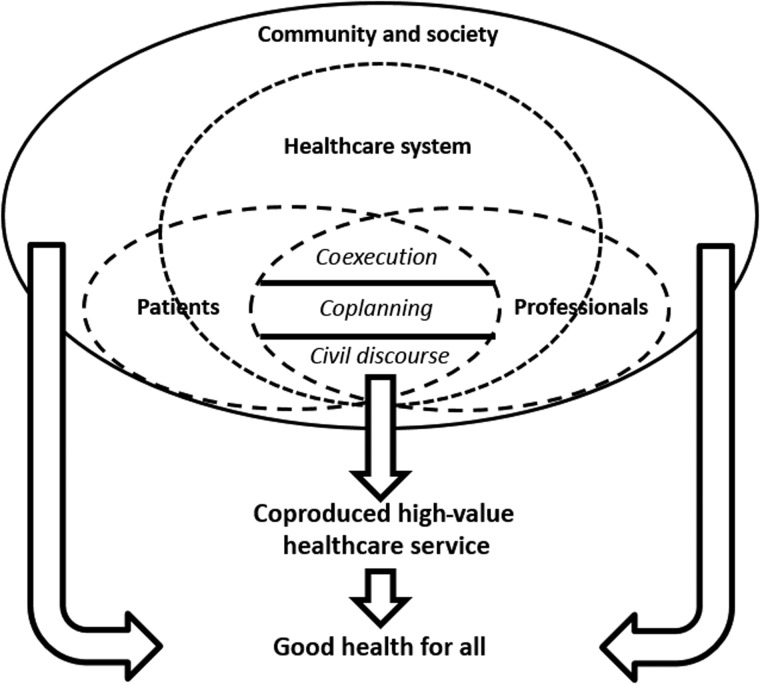
“At the individual level, health care coproduction includes empowering patients and clinicians to coassess health status, coplan health care decisions, co-design acceptable and effective health services, and ultimately co-deliver those services [16,28].”
BackgroundLanzalonga, F., Oppioli, M., Mas, F. D., & Secinaro, S. F. (2023) · Journal of Cleaner Production · doi:10.1016/j.jclepro.2023.138764 · Cited by 25
“Co-production is particularly common in healthcare, where patients are called to co-design, co-design, co-plan, and co-execute their care with their physicians (Batalden et al., 2016).”
Ozkaynak, M., Valdez, R. S., Holden, R. J., & Weiss, J. (2017) · Health Systems · doi:10.1080/20476965.2017.1390060 · Cited by 25
“For example, dietary plans for patients should factor in cultural and social proclivities (Batalden et al., 2015; Denford, Frost, Dieppe, Cooper, & Britten, 2014; Evert et al., 2013).”
BackgroundMaking a Case for Patient-Reported Outcomes in Clinical Inflammatory Bowel Disease Practice
Cohen, E. R., & MELMED, G. Y. (2018) · Clinical Gastroenterology and Hepatology · doi:10.1016/j.cgh.2017.12.027 · Cited by 25
Fostering organizational change through co-production. Insights from an Italian experience
Palumbo, R., Vezzosi, S., Picciolli, P., Landini, A., Annarumma, C., & Manna, R. (2018) · International Review on Public and Nonprofit Marketing · doi:10.1007/s12208-018-0205-7 · Cited by 27
Every patient should be enabled to stop the line
Bell, S. K., & Martínez, W. (2018) · BMJ Quality & Safety · doi:10.1136/bmjqs-2018-008714 · Cited by 25
Gerrard, J. M., Godwin, S. J., Whiteley, K., Charles, J., Sadler, S. G., & Chuter, V. (2025) · International Journal for Equity in Health · doi:10.1186/s12939-024-02358-2 · Cited by 31
Sutton, E., Dixon‐Woods, M., & Tarrant, C. (2016) · BMJ Open · doi:10.1136/bmjopen-2015-010988 · Cited by 24
de Andrade, M., & Angelova, N. (2018) · Critical Public Health · doi:10.1080/09581596.2018.1541229 · Cited by 24
Opipari‐Arrigan, L., Dykes, D. M. H., Saeed, S. A., Thakkar, S., Burns, L., Chini, B. A., McPhail, G. L., Eslick, I. S., Margolis, P. A., & Kaplan, H. C. (2020) · JMIR mhealth and uhealth · doi:10.2196/11968 · Cited by 26
Self-citationGonzalo, J. D., Dekhtyar, M., Caverzagie, K. J., Grant, B., Herrine, S. K., Nussbaum, A. M., Tad‐y, D., White, E. J., & Wolpaw, D. R. (2020) · Learning Health Systems · doi:10.1002/lrh2.10250 · Cited by 24
“delivery and redesign, our results argue for coproduction to be applied “horizontally” across missions, supporting the uncovering and evolution of a unique AHC identity.(51) Educators, researchers, and system leaders need to be equally contributing as colleagues—sharing expertise, respect, and professional investment—…”
BackgroundHager, A., Lindblad, S., Brommels, M., Salomonsson, S., & Wannheden, C. (2020) · Journal of Medical Internet Research · doi:10.2196/16842 · Cited by 24
“A Guide to Gutsy Living”: Patient-Driven Development of a Pediatric Ostomy Toolkit
David, J. G., Jofriet, A., Seid, M., Margolis, P. A., & System, F. T. I. P. I. L. H. (2018) · PEDIATRICS · doi:10.1542/peds.2017-2789 · Cited by 24
Self-citationMcNatt, Z. Z. (2020) · Conflict and Health · doi:10.1186/s13031-020-0255-4 · Cited by 23
Rosis, S. D. (2023) · The International Journal of Health Planning and Management · doi:10.1002/hpm.3732 · Cited by 38
Value co-creation in healthcare through positive deviance
Zanetti, C., & Taylor, N. J. (2016) · Healthcare · doi:10.1016/j.hjdsi.2016.06.003 · Cited by 25
Latif, A., Waring, J. J., Chen, L., Pollock, K., Solomon, J., Gulzar, N., Gulzar, S., Anderson, E., Choudhary, S., Abbasi, N., et al. (2019) · BMJ Open · doi:10.1136/bmjopen-2019-031548 · Cited by 24
“Alongside tailoring to patient preferences, the process also acknowledges the input and expertise of front-line healthcare staff.(18) Involving patients in service improvement has been suggested to help improve the quality of services delivered and helps redress inequities in service accessibility.”
BackgroundMeasuring engagement in a collaborative learning health system: The case of ImproveCareNow
Hartley, D., Keck, C., Havens, M., Margolis, P. A., & Seid, M. (2020) · Learning Health Systems · doi:10.1002/lrh2.10225 · Cited by 23
Self-citationKoldestam, M., Broström, A., Petersson, C., & Knutsson, S. E. M. (2021) · Nurse Education in Practice · doi:10.1016/j.nepr.2021.103144 · Cited by 23
The Academic-Practice Partnership
Robertson, B., McDermott, C., Star, J., & Clevenger, C. K. (2021) · Nursing Administration Quarterly · doi:10.1097/naq.0000000000000487 · Cited by 23
Keutchafo, E. L. W., Kerr, J., & Baloyi, O. B. (2022) · Healthcare · doi:10.3390/healthcare10112119 · Cited by 23
Withers, K. L., Puntoni, S., O'Connell, S. M., Palmer, R. I., & Carolan‐Rees, G. (2018) · Patient Experience Journal · doi:10.35680/2372-0247.1268 · Cited by 23
Contemporary consumer perspectives on prostate cancer survivorship: Fifty voices
Dunn, J. C., Ralph, N., Green, A., Frydenberg, M., & Chambers, S. K. (2020) · Psycho-Oncology · doi:10.1002/pon.5306 · Cited by 23
“approaches that privilege the expertise and knowledge of clinicians and view health care as a “product” to be delivered, to health care as a “service” co-produced by patients and clinicians as contributing partners.(12,26) Traditional forms of encouraging consumer participation through “patient voice” and “patient cho…”
BackgroundThe Transformative Power of Virtual Hospitals for Revolutionising Healthcare Delivery
Vallée, A., & Arutkin, M. (2024) · Public health reviews · doi:10.3389/phrs.2024.1606371 · Cited by 31
“Digital health monitoring plays a pivotal role in empowering patients and fostering co-production dynamics [32 – 34].”
BackgroundMoving a hospital: simulation – a way to co-produce safety healthcare facilities
Gignon, M., Amsallem, C., & Ammirati, C. (2016) · International Journal of Occupational Safety and Ergonomics · doi:10.1080/10803548.2016.1270543 · Cited by 22
“[19], simulation is a way to co-produce a safe and valuable healthcare facility.”
BackgroundRosis, S. D., Pennucci, F., Noto, G., & Nuti, S. (2020) · International Journal of Environmental Research and Public Health · doi:10.3390/ijerph17218007 · Cited by 23
Knowledge Translation in Oncology. A Case Study
Mas, F. D., Biancuzzi, H., Massaro, M., Barcellini, A., Cobianchi, L., & Miceli, L. (2020) · Electronic Journal of Knowledge Management · doi:10.34190/ejkm.18.03.002 · Cited by 22
“…Perlman, and Shukla, 2017; IBM, 2013; Siemens, 2018), where citizens and patients are co-creators of their own wellbeing (Batalden et al., 2016; Bessant, Moeslein, and Kunne, 2012; Biancuzzi et al., 2020b; Dal Mas et al., 2019a; Dal Mas, Paoloni, and Lombardi, 2019; Dal Mas and Paoloni, 2019,…”
BackgroundPatient Safety and the Question of Dignitary Harms
Mitchell, P., Cribb, A., & Entwistle, V. A. (2023) · The Journal of Medicine and Philosophy A Forum for Bioethics and Philosophy of Medicine · doi:10.1093/jmp/jhac035 · Cited by 22
“…involves patients deciding when to approach healthcare services to ask for help, cooperating with questioning, examination, and testing, following treatment plans, attending follow-up appointments, recognizing symptomatic improvement and deterioration, and so on (Batalden et al., 2016).”
BackgroundTransforming Integrated Care Through Co-production: A Systematic Review Using Meta-ethnography
Conquer, S., Iles, R. W., Windle, K., Heathershaw, R., & Ski, C. F. (2024) · International Journal of Integrated Care · doi:10.5334/ijic.7603 · Cited by 23
Bugnon, B., Geissbühler, A., Bischoff, T., Bonnabry, P., & von Plessen, C. (2020) · JMIR Formative Research · doi:10.2196/22319 · Cited by 22
“Today, any service improvements or innovation should acknowledge the coproduction of value by patients and health care professionals together as partners [78].”
Valdez, R. S., Guterbock, T. M., Fitzgibbon, K. S., Williams, I. C., Wellbeloved-Stone, C. A., Bears, J. E., & Menefee, H. K. (2016) · Journal of the American Medical Informatics Association · doi:10.1093/jamia/ocw155 · Cited by 24
“Patient-centeredness and patient and family engagement have been recognized by multiple organizations, including the Institute of Medicine, Centers for Medicare and Medicaid Services, and National eHealth Collaborative, as key to improving health care.(1,2) Patients’ capacity to engage in their care is shaped by multi…”
BackgroundPalmer, V. J., Chondros, P., Furler, J., Herrman, H., Pierce, D., Godbee, K., Densley, K., & Gunn, J. M. (2021) · Health Expectations · doi:10.1111/hex.13334 · Cited by 21
“Currently working 48 (20) 17 (23) 19 (22) 12 (16) 10 (19)”
Mclinden, D. J., Myers, S. K., Seid, M., Busch, M. D., Davis, D., & Murphy, J. (2018) · JMIR Formative Research · doi:10.2196/formative.9858 · Cited by 21
Self-citationInterpersonal complaints regarding cancer care through a gender lens
Olsson, E. M. G. V. S. (2016) · International Journal of Health Care Quality Assurance · doi:10.1108/ijhcqa-03-2014-0032 · Cited by 21
Co-Creating Quality in Health Care Through Learning and Dissemination
Holmboe, E. S., Foster, T. C., & Ogrinc, G. S. (2016) · Journal of Continuing Education in the Health Professions · doi:10.1097/ceh.0000000000000076 · Cited by 21
“Co-creation and production of health care necessitate a service logic that sees the patient as an activated, self-regulated partner working with the health care team to co-plan and execute care through civil discourse.(9) Perhaps it is time formedical education to embrace the same philosophy using co-learning across t…”
BackgroundPerspectives on Patient and Family Engagement With Reduction in Harm
Schenk, E. C., Bryant, R. A., Son, C. R. V., & Odom‐Maryon, T. (2018) · Journal of Nursing Care Quality · doi:10.1097/ncq.0000000000000333 · Cited by 24
“the clinician and the patient to explore concerns, delineate family members’ participation in their health care, clarify clinician roles, and obtain an understanding of the health care system and communication processes.(22) Attention to health system literacy may be more effective in prehospital settings(23) when the…”
BackgroundFrom one-sized to over-individualized? Service logic’s value creation
Eriksson, E. M., & Nordgren, L. (2018) · Journal of Health Organization and Management · doi:10.1108/jhom-02-2018-0059 · Cited by 21
Sadler, E., Sandall, J., Sevdalis, N., & Wilson, D. (2018) · Journal of Integrated Care · doi:10.1108/jica-07-2018-0048 · Cited by 21
Kazmerski, T. M., Nelson, E. B., Newman, L. R., Haviland, M. J., Luff, D. F., Leichtner, A. M., Hayes, M. M., Miller, E. P., Emans, S. J., & Sawicki, G. S. (2019) · Journal of Cystic Fibrosis · doi:10.1016/j.jcf.2019.01.015 · Cited by 21
Singh, H., & Dey, A. K. (2020) · Health Services Management Research · doi:10.1177/0951484820952308 · Cited by 21
“From the data analysis, it has been interpreted that the trust is developed when doctors understand the cultural aspects of communication and spend enough time with patients, listens to the patients, acts to resolve their problems.(5,32) The result, however, goes beyond the literature and demonstrates that during thei…”
BackgroundWhat is the potential of patient shadowing as a patient-centred method?
Liberati, E. G. (2016) · BMJ Quality & Safety · doi:10.1136/bmjqs-2016-005308 · Cited by 21
Protocol of a Pilot Study of Technology-Enabled Coproduction in Pediatric Chronic Illness Care
Kaplan, H. C., Thakkar, S. N., Burns, L., Chini, B., Dykes, D. M., McPhail, G. L., Moore, E., Saeed, S. A., Eslick, I., Margolis, P. A., et al. (2017) · JMIR Research Protocols · doi:10.2196/resprot.7074 · Cited by 18
“In addition, patients and clinicians need support to truly coproduce care, allowing them to collaborate to produce information (eg, clinical data, patient-reported outcomes [PROs]), knowledge (insights), and know-how (expertise) to improve health care and health outcomes [1,3-5].”
Self-citationEngdahl, P., Svedberg, P., & Bejerholm, U. (2021) · BMC Psychiatry · doi:10.1186/s12888-021-03386-w · Cited by 20
“Co-production has been stressed as a main important factor to understand, reach and engage users that are going to use the digital solution in practice [45, 54, 55].”
BackgroundSood, E., Gramszlo, C., Ramirez, A. P., Braley, K. T., Butler, S., Davis, J. A., Divanovic, A. A., Edwards, L. A., Kasparian, N. A., Kelly, S. L., et al. (2022) · Journal of Patient Experience · doi:10.1177/23743735221092488 · Cited by 20
“Input from patients and parents with lived experience is critical to the process of designing and testing healthcare interventions (20).”
The co-development of personalised 10-year breast cancer risk communications: a ‘think-aloud’ study
Gorman, L. S., Ruane, H., Woof, V. G., Southworth, J., Ulph, F., Evans, D., & French, D. (2022) · BMC Cancer · doi:10.1186/s12885-022-10347-3 · Cited by 11
“Involving people in healthcare has also been shown to improve satisfaction and quality [21].”
BackgroundMining concepts of health responsibility using text mining and exploratory graph analysis
Kjellström, S., & Golino, H. F. (2018) · Scandinavian Journal of Occupational Therapy · doi:10.1080/11038128.2018.1455896 · Cited by 20
“of power and responsibility, that should be shared [2].”
BackgroundBoat, T. F., Land, M. L., Leslie, L. K., American Board of Pediatrics, Hoagwood, K., Hawkins‐Walsh, E., McCabe, M. A., Fräser, M. W., Zerden, L. D. S., Lombardi, B. M., et al. (2016) · NAM Perspectives · doi:10.31478/201611b · Cited by 20
“The concept of coproduction of health care (Batalden et al., 2015) involving both health care professionals and patients or family members encapsulates a fundamental tenant of family-focused care: it is especially critical when dealing with children and adolescents given their dependency on their…”
Preliminary effects and acceptability of a co-produced physical activity referral intervention
Buckley, B. J. R., Thijssen, D. H. J., Murphy, R., Graves, L., Whyte, G. P., Gillison, F., Crone, D., Wilson, P. M., Hindley, D., & Watson, P. M. (2019) · Health Education Journal · doi:10.1177/0017896919853322 · Cited by 22
A Pathway to Precision Medicine for Aboriginal Australians: A Study Protocol
Cheng, Y.-Y., Nunn, J., Skinner, J. C., Rambaldini, B., Boughtwood, T. F., Calma, T., Brown, A. D. H., Meldrum, C. J., Dinger, M. E., Byrne, J. A., et al. (2021) · Methods and Protocols · doi:10.3390/mps4020042 · Cited by 20
Corbett, R., Goodlet, G., MacLaren, B., Jolliffe, A., Joseph, A., Lu, C., da Silva, C. C. F., Soni, B., Wicks, M., Brown, E. A., et al. (2020) · Peritoneal Dialysis International · doi:10.1177/0896860820918822 · Cited by 20
“Co-production, “the voluntary or involuntary involvement of public service users in any of the design, management, delivery and/or evaluation of public services,”(5) is increasingly recognized as important in not only research(6) but also in health care.(7) Models of patient-led panels in developing guidelines have be…”
Racine, N., Chow, C., Hamwi, L., Bucsea, O., Cheng, C., Du, H., Fabrizi, L., Jasim, S., Johannsson, L., Jones, L., et al. (2024) · JMIR AI · doi:10.2196/51535 · Cited by 19
Competency-based medical education: The spark to ignite healthcare’s escape fire
Schumacher, D. J., Kinnear, B., Carraccio, C. L., Holmboe, E. S., Busari, J. O., van der Vleuten, C. P. M., & Lingard, L. (2023) · Medical Teacher · doi:10.1080/0142159x.2023.2232097 · Cited by 19
“In medical education, the wildfire is the dysfunctional structure of clinical learning and care that often fails to focus on what patients need – safe, effective, patient-centered, timely, efficient, and equitable care (Baker 2001; Health Affairs 2013; Batalden et al. 2016).”
BackgroundCollaborating internationally on physician leadership development: why now?
Chan, M., Meschino, D. D. C., Dath, D., Busari, J. O., Bohnen, J. D., Samson, L. M., Matlow, A., & Mendiola, M. S. (2016) · Leadership in health services · doi:10.1108/lhs-12-2015-0050 · Cited by 19
Carr, E., Patel, J. N., Ortiz, M., Miller, J., Teare, S., Barber, C. E. H., & Marshall, D. A. (2019) · BMC Health Services Research · doi:10.1186/s12913-019-4196-9 · Cited by 19
Hatlie, M. J., Nahum, A., Leonard, R., Jones, L., Nahum, V., Krevat, S. A., Mayer, D. B., & Smith, K. M. (2020) · The Joint Commission Journal on Quality and Patient Safety · doi:10.1016/j.jcjq.2019.12.001 · Cited by 19
Using co-production to increase activity in acute stroke units: the CREATE mixed-methods study
Jones, F., Gombert, K., Honey, S., CLOUD, G. C., Harris, R. G., Macdonald, A. S., McKevitt, C., Robert, G., & Clarke, D. J. (2020) · Health Services and Delivery Research · doi:10.3310/hsdr08350 · Cited by 23
A multi-stakeholder approach to the co-production of the research agenda for medicines optimisation
Fellenor, J., Britten, N., Courtenay, M., Payne, R., Valderas, J. M., Denholm, R., Duncan, P., McCahon, D., Tatnell, L., Fitzgerald, R., et al. (2021) · BMC Health Services Research · doi:10.1186/s12913-021-06056-5 · Cited by 22
“It emphasises the contribution that all stakeholders can make as initiators or recipients of the service delivery process [11, 12] and is based on egalitarian relationships between experts and lay people, using a process of open exchange and participation [13].”
BackgroundPersson, S., Andersson, A., Kvarnefors, A., Thor, J., & Gäre, B. A. (2021) · International Journal for Quality in Health Care · doi:10.1093/intqhc/mzab060 · Cited by 19
“There is no definitive nomenclature; several terms and concepts associated with co-production include patient participation, patient collaboration, patient involvement, partnership, patient empowerment, personcentered care, co-creation and co-design [4, 6, 7].”
Claessens, F., Castro, E. M., Jans, A., Jacobs, L., Seys, D., Wilder, A. V., Brouwers, J., der Auwera, C. V., Ridder, D. D., & Vanhaecht, K. (2022) · Patient Education and Counseling · doi:10.1016/j.pec.2022.07.007 · Cited by 19
Chapman, K., Dixon, A., Cocks, K., Ehrlich, C., & Kendall, E. A. (2022) · Australian Occupational Therapy Journal · doi:10.1111/1440-1630.12847 · Cited by 19
“Best practice citizen engagement methods include co-design (Robert et al., 2015; Steen et al., 2011), co-production (Batalden et al., 2016; Whitaker, 1908), and co-creation (Frow et al., 2016; Hardyman et al., 2015; Voorberg et al., 2015) and are often centred on principles for inclusive research…”
MethodSexual and Reproductive Health of Young Women With Cystic Fibrosis: A Concept Mapping Study
Kazmerski, T. M., Prushinskaya, O., Hill, K., Nelson, E. B., Leonard, J., Mogren, K., Pitts, S., Roboff, J., Uluer, A., Emans, S. J., et al. (2018) · Academic Pediatrics · doi:10.1016/j.acap.2018.08.011 · Cited by 19
Kayser, L., Nøhr, C., Bertelsen, P., Botin, L., Villumsen, S., Showell, C., & Turner, P. A. (2018) · Informatics · doi:10.3390/informatics5040041 · Cited by 19
Sutton, E., Brewster, L., & Tarrant, C. (2019) · Health Expectations · doi:10.1111/hex.12874 · Cited by 19
“The burden of responsibility for medical and surgical error, for example, must fall disproportionately on healthcare professionals.(3)”
BackgroundGaufberg, E. H., Olmsted, M. W., & Bell, S. K. (2019) · Journal of Medical Humanities · doi:10.1007/s10912-019-09563-z · Cited by 19
Pediatric-to-adult healthcare transitions: Current challenges and recommended practices
Hobart, C. B., & Phan, H. (2019) · American Journal of Health-System Pharmacy · doi:10.1093/ajhp/zxz165 · Cited by 19
Perry, A., Waterman, M. G., House, A. O., Wright-Hughes, A. M., Greenhalgh, J., Farrin, A. J., Richardson, G. A., Hopton, A., & Wright, N. M. J. (2019) · BMJ Open · doi:10.1136/bmjopen-2018-026095 · Cited by 23
“This is a common problem in the design and implementation of complex interventions in organisations other than healthcare.(19) These findings emerged during the implementation phase.”
BackgroundPatient Engagement and Patient Safety: Are We Missing the Patient in the Center?
Abid, M. H., Abid, M. M., Surani, S., & Ratnani, I. (2020) · Cureus · doi:10.7759/cureus.7048 · Cited by 19
Co-production in Healthcare: Moving Patient Engagement Towards a Managerial Approach
Gilardi, S., Guglielmetti, C., Marsilio, M., & Sorrentino, M. (2016) · SpringerBriefs in applied sciences and technology · doi:10.1007/978-3-319-30558-5_6 · Cited by 19
“A relevant condition for improving healthcare services through the co-production approach is to rethink the health professional training/education models, not just the health education of citizens and patients (Dunston et al. 2009; Batalden et al. 2015).”
BackgroundInfluentialHind, D., Parkin, J., Whitworth, V., Rex, S., Young, T. A., Hampson, L. V., Sheehan, J., Maguire, C., Cantrill, H., Scott, E., et al. (2017) · Pilot and Feasibility Studies · doi:10.1186/s40814-017-0132-0 · Cited by 19
Co-Producing Interprofessional Round Work: Designing Spaces for Patient Partnership
Thörne, K. E., Andersson‐Gäre, B., Hult, H., & Dahlgren, M. A. (2017) · Quality Management in Health Care · doi:10.1097/qmh.0000000000000133 · Cited by 19
Rutland, S. B., Bergquist, R. P., Hager, A., Geurs, R., Mims, C., Gutierrez, H. H., & Oates, G. R. (2020) · JMIR Formative Research · doi:10.2196/19413 · Cited by 18
Gheihman, G., Callahan, D. G., Onyango, J., Gooding, H. C., & Hirsh, D. A. (2021) · Medical Teacher · doi:10.1080/0142159x.2021.1935825 · Cited by 18
The Pediatric Inflammatory Bowel Disease Medical Home: A Proposed Model
Michel, H. K., Boyle, B., David, J. G., Donegan, A. M., Drobnic, B., Kren, C., Maltz, R. M., McKillop, H. N., McNicol, M., Oates, M., et al. (2021) · Inflammatory Bowel Diseases · doi:10.1093/ibd/izab238 · Cited by 18
Carlqvist, C., Hagerman, H., Fellesson, M., Ekstedt, M., & Hellström, A. (2021) · BMC Health Services Research · doi:10.1186/s12913-021-07232-3 · Cited by 19
“Although insight within health care regarding the importance of the patient’s role as an active and informed co-producer has increased in recent years [16], patients often lack the means and ability to apply selfcare knowledge.”
BackgroundInfluentialBamidele, O. O., Alexis, O., Ogunsanya, M. E., Greenley, S. L., Worsley, A. J., & Mitchell, E. D. (2022) · Supportive Care in Cancer · doi:10.1007/s00520-021-06716-6 · Cited by 22
Metadata
- Authors
- Batalden, M., Batalden, P., Margolis, P., Seid, M., Armstrong, G., Opipari-Arrigan, L., & Hartung, H.
- Affiliations
- Cambridge Health Alliance (US)
- Dartmouth Institute for Health Policy and Clinical Practice (US)
- Cincinnati Children's Hospital Medical Center (US)
- College of Nursing, University of Colorado, Aurora, Colorado, USA
- Department of Pediatrics, Cincinnati Children's Hospital Medical Center, Cincinnati, Ohio, USA
- University Hospital Crosshouse (GB)
- Corresponding author
- Batalden, Maren
- Venue
- BMJ Quality & Safety
- Publisher
- BMJ
- Published
- 2015-09-16
- Volume
- 25
- Issue
- 7
- Pages
- 509-517
- ISSN
- 1475-3898 (ISSN-L)
- 2044-5415
- 2044-5423
- PMC
- PMC4941163
- OpenAlex
- W2277370197
- Cited by
- 1,078
- References
- 65
- Citations by year
- 2026: 68 · 2025: 84 · 2024: 149 · 2023: 92 · 2022: 130 · 2021: 139 · 2020: 120 · 2019: 91 · 2018: 94 · 2017: 72 · 2016: 38
- FWCI
- 168.93
- Type
- journal article
- Language
- en
- Open access
- hybrid
- doi.org
- Licence
- cc-by-nc
- Locations
- BMJ Quality & Safety (publishedVersion, cc-by-nc)
- PubMed Central (publishedVersion, cc-by-nc)
- PubMed (publishedVersion)
- Diva portal (Dalarna University Library) (submittedVersion, other-oa)
- HighWire Press Open Archive (submittedVersion)
- Funders
- National Institute of Diabetes and Digestive and Kidney Diseases (R01DK085719)
- Topics
- Social Sciences › Business, Management and Accounting › Marketing › Service and Product Innovation
- Health Sciences › Health Professions › General Health Professions › Mental Health and Patient Involvement
- Health Sciences › Health Professions › General Health Professions › Patient Satisfaction in Healthcare
- Keywords
- patient engagement, patient-centered care, service design, service delivery innovation
- MeSH terms
- Delivery of Health Care, Humans, Patient Participation, Quality Assurance, Health Care, Models, Organizational, Quality Improvement
About these checks
Registry, retraction, Cites and statistics results are computed, not judged, with one exception: a printed reference that no index lists is read once by a model before it counts as a citation error. Claims are extracted by a model and kept only when their quote appears verbatim in the text; each cited source is then checked, with a model’s help, for whether it says what the claim relies on. Those verdicts can be wrong — read the claim’s quote and the cited source before relying on one.
Statistics and arithmetic are recomputed, not judged.
Confidence bands are shown only for fields calibrated on our annotated test set. None is calibrated yet, so no band is shown.
What counts as a claim ›How we measure confidence ›How we check this ›
Are you an author, or do you see a problem with this page? Request a review
