

Bacteria penetrate the normally impenetrable inner colon mucus layer in both murine colitis models and patients with ulcerative colitis
Open accessThe DOI matches its Crossref record; 39 of the 40 references it cites were found in a registry or an index.
Abstract
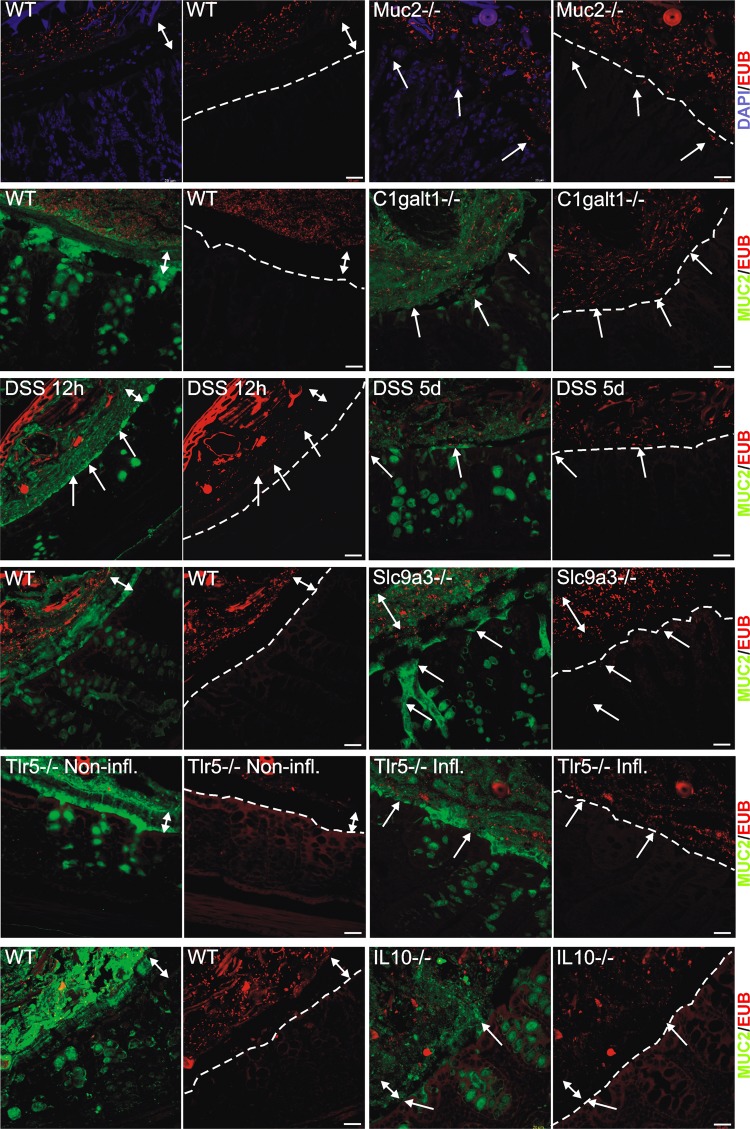
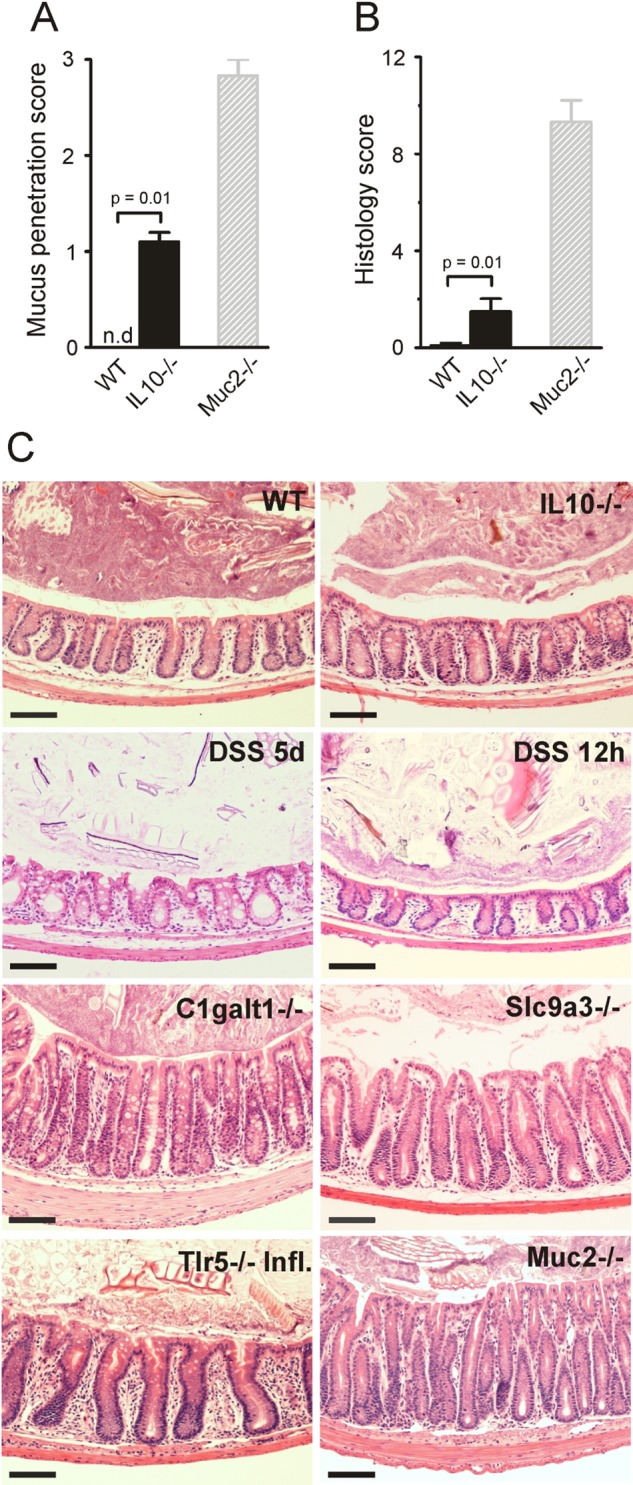
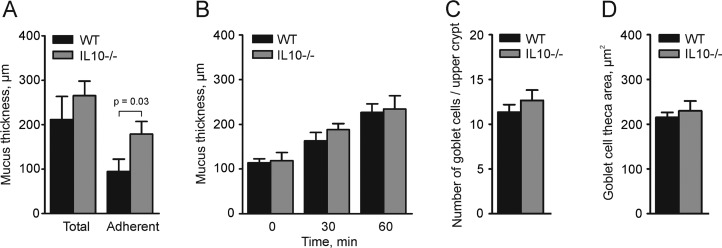
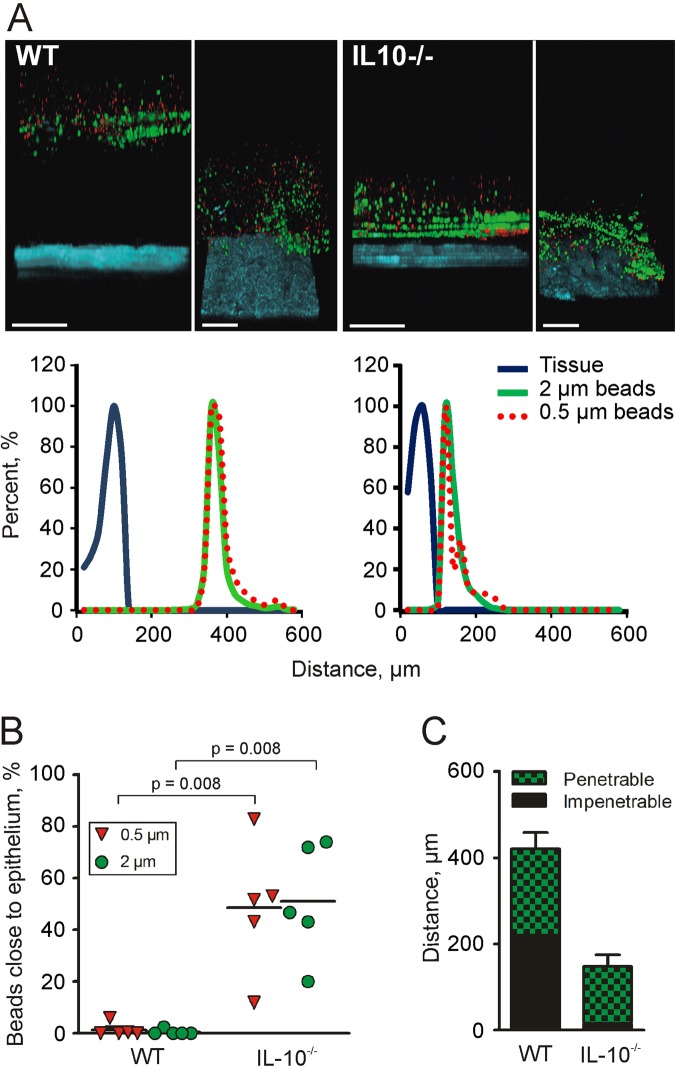
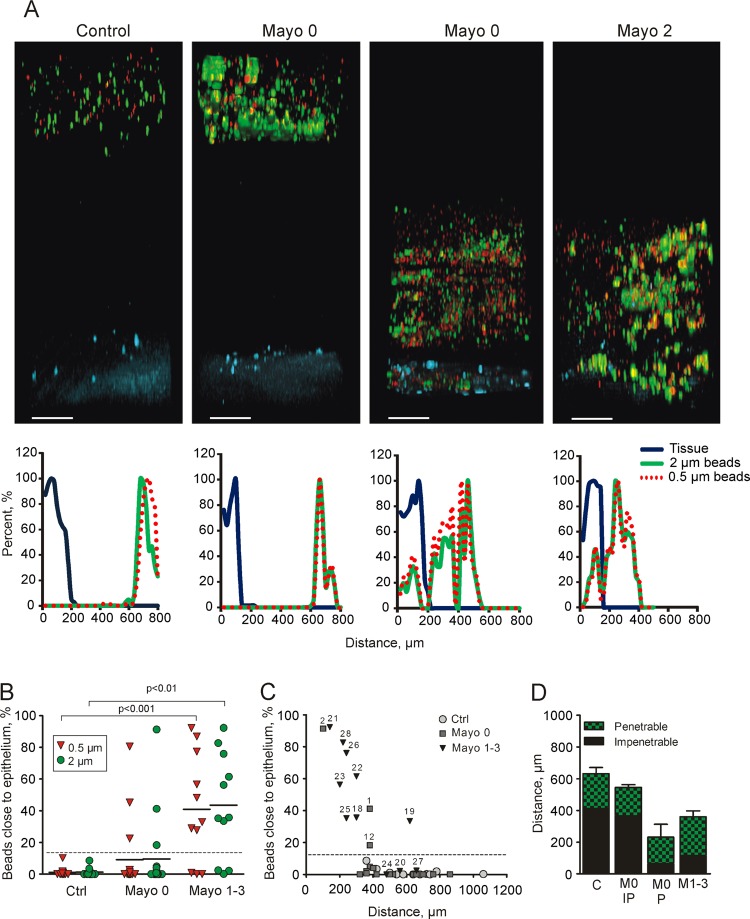
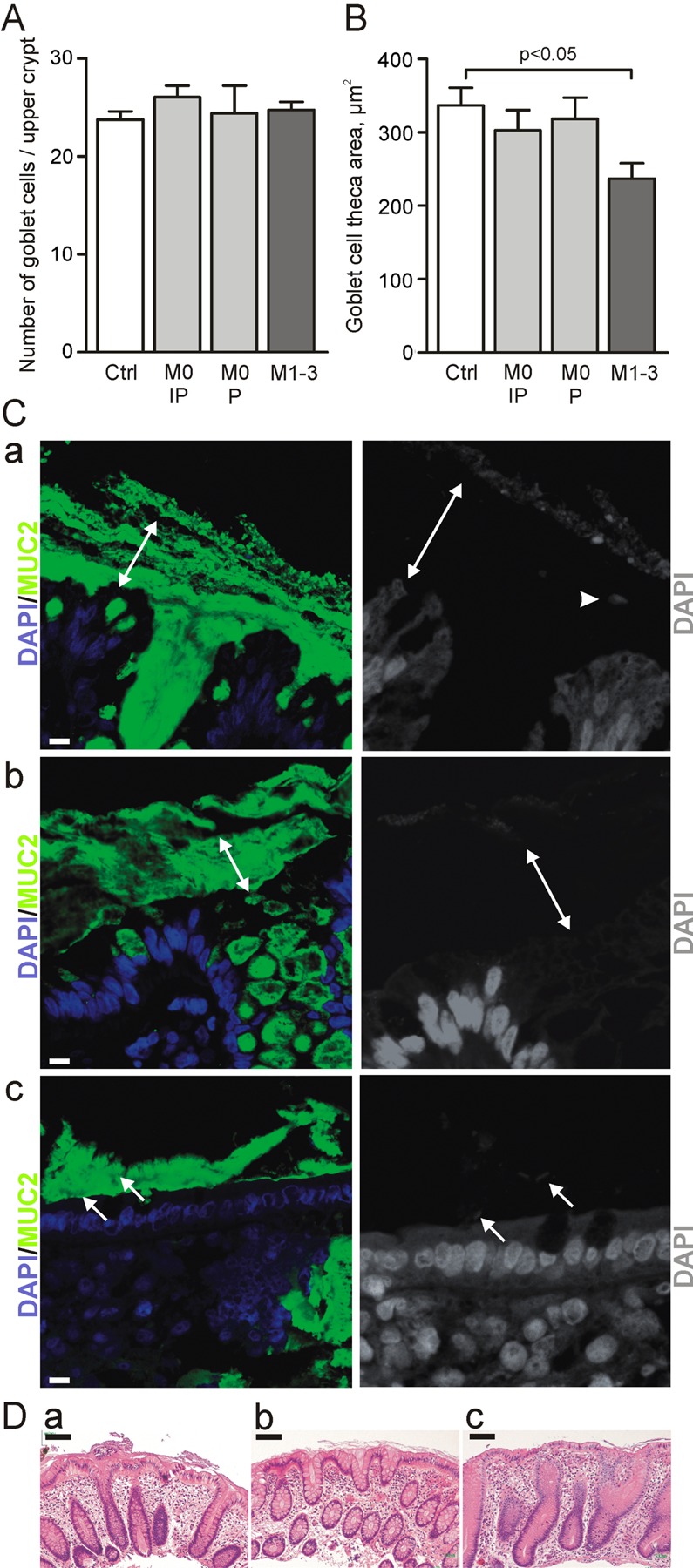
Objective: The inner mucus layer in mouse colon normally separates bacteria from the epithelium. Do humans have a similar inner mucus layer and are defects in this mucus layer a common denominator for spontaneous colitis in mice models and ulcerative colitis (UC)? Methods and results: The colon mucus layer from mice deficient in Muc2 mucin, Core 1 O -glycans, Tlr5, interleukin 10 (IL-10) and Slc9a3 (Nhe3) together with that from dextran sodium sulfate-treated mice was immunostained for Muc2, and bacterial localisation in the mucus was analysed. All murine colitis models revealed bacteria in contact with the epithelium. Additional analysis of the less inflamed IL-10 −/− mice revealed a thicker mucus layer than wild-type, but the properties were different, as the inner mucus layer could be penetrated both by bacteria in vivo and by fluorescent beads the size of bacteria ex vivo. Clear separation between bacteria or fluorescent beads and the epithelium mediated by the inner mucus layer was also evident in normal human sigmoid colon biopsy samples. In contrast, mucus on colon biopsy specimens from patients with UC with acute inflammation was highly penetrable. Most patients with UC in remission had an impenetrable mucus layer similar to that of controls. Conclusions: Normal human sigmoid colon has an inner mucus layer that is impenetrable to bacteria. The colon mucus in animal models that spontaneously develop colitis and in patients with active UC allows bacteria to penetrate and reach the epithelium. Thus colon mucus properties can be modulated, and this suggests a novel model of UC pathophysiology.
Overview
The claims and statistics of this paper haven’t been checked yet.
Free: it reads the open-access text and checks the first 5 claims that cite a source we can check. Create a free account to check every claim.
Integrity signals
Registry
Cites
Statistics
Figures
Verification
Claims the paper makes
The claims and statistics of this paper haven’t been checked yet.
Free: it reads the open-access text and checks the first 5 claims that cite a source we can check. Create a free account to check every claim.
Claims other papers make about this one
Each is checked against this paper’s own text: does it say what the citing paper says it does?
The source backs part of the claim, not all of it — or backs it for a different population, condition or comparison.
In the citing paper
“The mucus layer overlaying the epithelium is a reservoir of antimicrobial peptides and immunoglobulins and provides the first line of defense against gut bacteria85.”
From The gut Microbiome in adult and pediatric functional gastrointestinal disorders (2019) · cites this paper as [85]
Experimental — accuracy not yet measuredThe source backs part of the claim, not all of it — or backs it for a different population, condition or comparison.
In the citing paper
“The secreted mucus in distal colon forms a stratified inner layer of mucus that is able to keep the bacteria at a distance (> 50 μm in mice, > 200 μm in human) from the epithelium 14, 15.”
From The composition of the gut microbiota shapes the colon mucus barrier (2015) · cites this paper as [15]
Experimental — accuracy not yet measuredThe cited source says what the claim attributes to it.
In the citing paper
“Failure of this protective barrier to separate bacteria from the epithelium is observed in a number of murine colitis models 15, 17.”
From The composition of the gut microbiota shapes the colon mucus barrier (2015) · cites this paper as [15]
The cited source says what the claim attributes to it.
In the citing paper
“The mucus protection system observed in mouse is also present in human colon where an even thicker inner mucus layer separates bacteria from the tissue 15.”
From The composition of the gut microbiota shapes the colon mucus barrier (2015) · cites this paper as [15]
The cited source says what the claim attributes to it.
In the citing paper
“Ulcerative colitis (UC) patients with active disease have bacteria in contact with the epithelium, whereas patients with UC in remission show a more mixed picture 15.”
From The composition of the gut microbiota shapes the colon mucus barrier (2015) · cites this paper as [15]
1 more claim about this paper
Create a free account to see every claim other papers make about this one.
Self-check
Percentages, sums and reported differences re-computed from the paper’s own numbers.
The self-check needs the paper’s full text.
Citations
Cites
Unravelling the pathogenesis of inflammatory bowel disease
Xavier, R. J., & Podolsky, D. K. (2007) · Nature · doi:10.1038/nature06005 · Cited by 4,364
Interleukin-10-deficient mice develop chronic enterocolitis
Kühn, R., Löhler, J., Rennick, D., Rajewsky, K., & Müller, W. (1993) · Cell · doi:10.1016/0092-8674(93)80068-p · Cited by 4,274
Ford Alexander, C., Paul, M., Hanauer Steven, B., 谭蓓, & Dong, W. Z. (2001) · Cited by 3,020
Genetics and pathogenesis of inflammatory bowel disease
Khor, B., Gardet, A., & Xavier, R. J. (2011) · Nature · doi:10.1038/nature10209 · Cited by 2,614
Okayasu, I., Hatakeyama, S., Yamada, M., Ohkusa, T., Inagaki, Y., & Nakaya, R. (1990) · Gastroenterology · doi:10.1016/0016-5085(90)90290-h · Cited by 2,401
The inner of the two Muc2 mucin-dependent mucus layers in colon is devoid of bacteria
Johansson, M. E. V., Phillipson, M., Petersson, J., Velcich, A., Holm, L., & Hansson, G. C. (2008) · Proceedings of the National Academy of Sciences · doi:10.1073/pnas.0803124105 · Cited by 2,200
Self-citationInflammatory bowel disease: Etiology and pathogenesis
Fiocchi, C. (1998) · Gastroenterology · doi:10.1016/s0016-5085(98)70381-6 · Cited by 2,059
Van der Sluis, M., De Koning, B. A. E., De Bruijn, A. C. J. M., Velcich, A., Meijerink, J. P. P., Van Goudoever, J. B., Büller, H. A., Dekker, J., Van Seuningen, I., Renes, I. B., et al. (2006) · Gastroenterology · doi:10.1053/j.gastro.2006.04.020 · Cited by 1,684
Sellon, R. K., Tonkonogy, S., Schultz, M., Dieleman, L. A., Grenther, W., Balish, E., Rennick, D. M., & Sartor, R. B. (1998) · Infection and Immunity · doi:10.1128/iai.66.11.5224-5231.1998 · Cited by 1,483 · cited 1×
“Similar to the mice, a strati fi ed mucus layer was observed with bacteria only present at the luminal surface of the mucus.”
Johansson, M. E. V., Larsson, J. M. H., & Hansson, G. C. (2011) · Proceedings of the National Academy of Sciences · doi:10.1073/pnas.1006451107 · Cited by 1,452 · cited 1×
“7”
Self-citation
Cited by
Items 201–300 of 1,001
Gut microbiota as an “invisible organ” that modulates the function of drugs
Li, X., Liu, L., Cao, Z., Li, W., Li, H., Lu, C. C., Yang, X., & Liu, Y. (2019) · Biomedicine & Pharmacotherapy · doi:10.1016/j.biopha.2019.109653 · Cited by 116
Montrose, D. C., Nishiguchi, R., Basu, S., Staab, H. A., Zhou, X. K., Wang, H., Meng, L., Johncilla, M., Cubillos-Ruiz, J. R., Morales, D. K., et al. (2021) · Cellular and Molecular Gastroenterology and Hepatology · doi:10.1016/j.jcmgh.2020.09.008 · Cited by 106
The Role of the Tumor Microenvironment and Treatment Strategies in Colorectal Cancer
Chen, Y., Zheng, X., & Wu, C. (2021) · Frontiers in Immunology · doi:10.3389/fimmu.2021.792691 · Cited by 117
Bacterial biofilms in the human body: prevalence and impacts on health and disease
Perry, E. K., & Tan, M. (2023) · Frontiers in Cellular and Infection Microbiology · doi:10.3389/fcimb.2023.1237164 · Cited by 117
Gut microbiome, surgical complications and probiotics
Stavrou, G., & Kotzampassi, K. (2016) · Annals of Gastroenterology · doi:10.20524/aog.2016.0086 · Cited by 116
Nyström, E. E. L., Birchenough, G. M. H., van der Post, S., Arike, L., Gruber, A. D., Hansson, G. C., & Johansson, M. E. V. (2018) · EBioMedicine · doi:10.1016/j.ebiom.2018.05.031 · Cited by 102
“This is an open access article under with increased mucus secretion to restore its barrier function [7] but prolonged disturbances in the inner mucus layer are linked to colitis [8, 9].”
Self-citationBergstrom, K., & Xia, L. (2022) · Gut Microbes · doi:10.1080/19490976.2022.2052699 · Cited by 113
Self-citationSarbagili Shabat, C., Scaldaferri, F., Zittan, E., Hirsch, A., Mentella, M. C., Musca, T., Cohen, N. A., Ron, Y., Fliss Isakov, N., Pfeffer, J., et al. (2022) · Journal of Crohn s and Colitis · doi:10.1093/ecco-jcc/jjab165 · Cited by 110
Shi, D., Lv, L., Fang, D., Wu, W., Hu, C., Xu, L., Chen, Y., Guo, J., Hu, X., Li, A., et al. (2017) · Scientific Reports · doi:10.1038/s41598-017-07091-1 · Cited by 110
Organoid-based Models to Study the Role of Host-microbiota Interactions in IBD
Poletti, M., Arnauts, K., Ferrante, M., & Korcsmáros, T. (2020) · Journal of Crohn s and Colitis · doi:10.1093/ecco-jcc/jjaa257 · Cited by 110
Bisphenol A increases intestinal permeability through disrupting intestinal barrier function in mice
Feng, L., Chen, S., Zhang, L., Qu, W., & Chen, Z. (2019) · Environmental Pollution · doi:10.1016/j.envpol.2019.112960 · Cited by 110
Therapeutic Potential to Modify the Mucus Barrier in Inflammatory Bowel Disease
Sun, J., Shen, X., Li, Y., Guo, Z., Zhu, W., Zuo, L., Zhao, J., Gu, L., Gong, J., & Li, J. (2016) · Nutrients · doi:10.3390/nu8010044 · Cited by 107
Lactiplantibacillus plantarum 299v (LP299V®): three decades of research
Nordström, E. A., Teixeira, C., Montelius, C., Jeppsson, B. W., & Larsson, N. (2021) · Beneficial Microbes · doi:10.3920/bm2020.0191 · Cited by 110
The Intestinal Microbiota: Impacts of Antibiotics Therapy, Colonization Resistance, and Diseases
Shah, T., Baloch, Z., Shah, Z., Cui, X., & Xia, X. (2021) · International Journal of Molecular Sciences · doi:10.3390/ijms22126597 · Cited by 106
Hemidesmosome integrity protects the colon against colitis and colorectal cancer
Arcangelis, A. D., Hamade, H., Alpy, F., Normand, S., Bruyère, E., Lefèbvre, O., Méchine‐Neuville, A., Siebert, S., Pfister, V., Lepage, P., et al. (2016) · Gut · doi:10.1136/gutjnl-2015-310847 · Cited by 106
Zou, J., Liu, C., Jiang, S., Qian, D., & Duan, J. (2021) · Infection and Immunity · doi:10.1128/iai.00014-21 · Cited by 106
Exploring the influence of the gut microbiota and probiotics on health: a symposium report
Thomas, L. V., Ockhuizen, T., & Suzuki, K. (2014) · British Journal of Nutrition · doi:10.1017/s0007114514001275 · Cited by 89
Human Microbiota Flagellins Drive Adaptive Immune Responses in Crohn’s Disease
Alexander, K. L., Zhao, Q. S., Reif, M. S., Rosenberg, A. F., Mannon, P., Duck, L. W., & Elson, C. O. (2021) · Gastroenterology · doi:10.1053/j.gastro.2021.03.064 · Cited by 103
Restore Intestinal Barrier Integrity: An Approach for Inflammatory Bowel Disease Therapy
Chen, K., Yang, M., Yue, N., Zhang, Y., Tian, C., Wei, D., Shi, R., Yao, J., Wang, L., & Li, D. (2024) · Journal of Inflammation Research · doi:10.2147/jir.s470520 · Cited by 106
Papoutsopoulou, S., Satsangi, J., Campbell, B. J., & Probert, C. S. (2020) · Alimentary Pharmacology & Therapeutics · doi:10.1111/apt.15774 · Cited by 102
Chronic Inflammation in Ulcerative Colitis Causes Long-Term Changes in Goblet Cell Function
Singh, V., Johnson, K. F., Yin, J., Lee, S., Lin, R., Yu, H. M., In, J. G., Foulke-Abel, J. D., Zachos, N. C., Donowitz, M., et al. (2021) · Cellular and Molecular Gastroenterology and Hepatology · doi:10.1016/j.jcmgh.2021.08.010 · Cited by 102
Mucus, commensals, and the immune system
Zhao, Q. S., & Maynard, C. L. (2022) · Gut Microbes · doi:10.1080/19490976.2022.2041342 · Cited by 102
NOX1 loss-of-function genetic variants in patients with inflammatory bowel disease
Schwerd, T., Bryant, R. V., Pandey, S., Capitani, M., Meran, L., Cazier, J., Jung, J., Mondal, K., Parkes, M., Mathew, C. G., et al. (2017) · Mucosal Immunology · doi:10.1038/mi.2017.74 · Cited by 102
Sevrin, G., Massier, S., Chassaing, B., Agus, A., Delmas, J., Denizot, J., Billard, E., & Barnich, N. (2018) · Gut Microbes · doi:10.1080/19490976.2017.1421886 · Cited by 102
Ke, H., Li, F., Deng, W., Li, Z., Wang, S., Lv, P., & Chen, Y. (2021) · Frontiers in Pharmacology · doi:10.3389/fphar.2021.726707 · Cited by 101
Keeping bugs in check: The mucus layer as a critical component in maintaining intestinal homeostasis
Faderl, M., Noti, M., Corazza, N., & Mueller, C. (2015) · IUBMB Life · doi:10.1002/iub.1374 · Cited by 81
Nanoparticles for oral delivery: targeted therapy for inflammatory bowel disease
Li, D., Yang, M., Xu, H., Zhu, M., Zhang, Y., Tian, C., Nie, Y., Wang, J., Liang, Y., Yao, J., et al. (2022) · Journal of Materials Chemistry B · doi:10.1039/d2tb01190e · Cited by 101
Self-citationIntestinal mucus barrier: A potential therapeutic target for IBD
Qiao, Y., He, C., Xia, Y., Ocansey, D. K. W., & Mao, F. (2024) · Autoimmunity Reviews · doi:10.1016/j.autrev.2024.103717 · Cited by 101
Lv, L., Hu, X., Qian, G., Zhang, H., Lu, H., Zheng, B., Jiang, L., & Li, L. (2014) · Applied Microbiology and Biotechnology · doi:10.1007/s00253-014-5638-2 · Cited by 100
Dietary destabilisation of the balance between the microbiota and the colonic mucus barrier
Birchenough, G. M. H., Schroeder, B. O., Bäckhed, F., & Hansson, G. C. (2018) · Gut Microbes · doi:10.1080/19490976.2018.1513765 · Cited by 99
Self-citationWasilewska, E., Zlotkowska, D., & Wroblewska, B. (2019) · Journal of Dairy Science · doi:10.3168/jds.2018-14520 · Cited by 93
AGR2, an Endoplasmic Reticulum Protein, Is Secreted into the Gastrointestinal Mucus
Bergström, J. H., Berg, K. A., Rodríguez-Piñeiro, A. M., Stecher, B., Johansson, M. E. V., & Hansson, G. C. (2014) · PLoS ONE · doi:10.1371/journal.pone.0104186 · Cited by 88
Self-citationEngevik, M. A., Herrmann, B. I., Ruan, W. H., Engevik, A. C., Engevik, K. A., Ihekweazu, F. D., Shi, Z., Luk, B., Chang‐Graham, A. L., Esparza, M., et al. (2021) · Gut Microbes · doi:10.1080/19490976.2021.1902717 · Cited by 99
The Influence of Nutrition on Intestinal Permeability and the Microbiome in Health and Disease
Inczefi, O., Bacsúr, P., Resál, T., Keresztes, C., & Molnár, T. (2022) · Frontiers in Nutrition · doi:10.3389/fnut.2022.718710 · Cited by 100
Oral antimicrobial peptide-EGCG nanomedicines for synergistic treatment of ulcerative colitis
Liu, S., Cao, Y., Ma, L., Sun, J., Ramos‐Mucci, L., Ma, Y., Yang, X. F., Zhu, Z., Zhang, J., & Xiao, B. (2022) · Journal of Controlled Release · doi:10.1016/j.jconrel.2022.05.025 · Cited by 99
Mucin O-glycan-microbiota axis orchestrates gut homeostasis in a diarrheal pig model
Xia, B., Zhong, R., Wu, W., Luo, C., Meng, Q., Gao, Q., Zhao, Y. M., Chen, L., Zhang, S., Zhao, X., et al. (2022) · Microbiome · doi:10.1186/s40168-022-01326-8 · Cited by 98
“Mucus layer degradation was also observed in mice infected with gut pathobiont Citrobacter rodentium [11] and in patients with active ulcerative colitis [43].”
for the AFRIBIOTA Investigators, Vonaesch, P., Randremanana, R. V., Gody, J., Collard, J., Giles‐Vernick, T., Doria, M., Vigan-Womas, I., Rubbo, P., Etienne, A., et al. (2018) · BMC Pediatrics · doi:10.1186/s12887-018-1189-5 · Cited by 98
Maurer, L. H., Cazarin, C. B. B., Quatrin, A., Minuzzi, N. M., Costa, E. L., Morari, J., Velloso, L. A., Leal, R. F., Rodrigues, E., Bochi, V. C., et al. (2019) · Food Research International · doi:10.1016/j.foodres.2019.04.068 · Cited by 97
Spatial disturbances in altered mucosal and luminal gut viromes of diet‐induced obese mice
Kim, M., & Bae, J. (2016) · Environmental Microbiology · doi:10.1111/1462-2920.13182 · Cited by 89
Intestinal barrier homeostasis in inflammatory bowel disease
Goll, R., & Granlund, A. V. B. (2014) · Scandinavian Journal of Gastroenterology · doi:10.3109/00365521.2014.971425 · Cited by 98
Borisova, M. A., Achasova, K. M., Morozova, K. N., Andreyeva, E. N., Litvinova, E. A., Ogienko, A. A., Morozova, M. V., Berkaeva, M. B., Владимировна, К. Е., & Kozhevnikova, E. N. (2020) · Scientific Reports · doi:10.1038/s41598-020-78141-4 · Cited by 96
Yue, B., Luo, X., Yu, Z., Mani, S., Wang, Z., & Dou, W. (2019) · Microorganisms · doi:10.3390/microorganisms7100440 · Cited by 94
Luo, Y., Fu, S., Liu, Y., Kong, S., Liao, Q., Lin, L., & Li, H. (2024) · Journal of Ethnopharmacology · doi:10.1016/j.jep.2024.117990 · Cited by 93
NLRP6 Protects Il10 Mice from Colitis by Limiting Colonization of Akkermansia muciniphila
Seregin, S. S., Golovchenko, N., Schaf, B., Chen, J., Pudlo, N. A., Mitchell, J., Baxter, N. T., Zhao, L., Schloss, P. D., Martens, E. C., et al. (2017) · Cell Reports · doi:10.1016/j.celrep.2017.05.074 · Cited by 90
Reduced colonic microbial diversity is associated with colitis in NHE3-deficient mice
Larmonier, C. B., Laubitz, D., Hill, F. M., Shehab, K. W., Lipiński, L., Midura‐Kiela, M. T., McFadden, R.-M. T., Ramalingam, R., Hassan, K., Gołębiewski, M., et al. (2013) · American Journal of Physiology-Gastrointestinal and Liver Physiology · doi:10.1152/ajpgi.00189.2013 · Cited by 92
Self-citationChen, T., Wang, R., Duan, Z., Yuan, X., Ding, Y., Feng, Z., Bu, F., Liu, L., Wang, Q., Zhou, J., et al. (2021) · Frontiers in Cellular and Infection Microbiology · doi:10.3389/fcimb.2021.723856 · Cited by 92
Dietary Factors in Sulfur Metabolism and Pathogenesis of Ulcerative Colitis
Teigen, L. M., Geng, Z., Sadowsky, M. J., Vaughn, B. P., Hamilton, M. J., & Khoruts, A. (2019) · Nutrients · doi:10.3390/nu11040931 · Cited by 91
Harrison, C. A., Laubitz, D., Ohland, C., Midura‐Kiela, M. T., Patil, K., Besselsen, D. G., Jamwal, D. R., Jobin, C., Ghishan, F. K., & Kiela, P. R. (2018) · Mucosal Immunology · doi:10.1038/s41385-018-0035-2 · Cited by 89
“…maintain their compacted concatenated ring structures 18 , disruption of NHE3 and the ensuing elevated pH of the inner mucus layer is likely responsible for the observed increased penetration and eventually bacterial translocation to the lamina propria, 19 and stimulation of local immune response.”
Self-citationMurine Models of Inflammatory Bowel Disease (IBD): Challenges of Modeling Human Disease
DeVoss, J., & Diehl, L. J. (2013) · Toxicologic Pathology · doi:10.1177/0192623313509729 · Cited by 89
“Upon loss of barrier integrity, bacteria rapidly penetrate the epithelium and mediate both direct and inflammation-associated toxicity (Johansson et al. 2010; Johansson et al. 2013).”
Lebrero‐Fernández, C., Wenzel, U. A., Akéus, P., Wang, Y., Strid, H., Simrén, M., Gustavsson, B. G., Börjesson, L. G., Cardell, S., Öhman, L., et al. (2016) · Immunity Inflammation and Disease · doi:10.1002/iid3.105 · Cited by 89
Rizzato, C., Torres, J., Kasamatsu, E., Camorlinga‐Ponce, M., Bravo, M. M., Canzian, F., & Kato, I. (2019) · Frontiers in Microbiology · doi:10.3389/fmicb.2019.00846 · Cited by 90
Li, P., Wu, M., Xiong, W., Li, J., An, Y., Ren, J., Xie, Y., Xue, H., Yan, D., Li, M., et al. (2020) · International Immunopharmacology · doi:10.1016/j.intimp.2020.106288 · Cited by 89
Wu, Y., Li, Y., Ruan, Z., Li, J. J., Zhang, L., Lu, H., & Xu, Z. Z. (2020) · Journal of Agricultural and Food Chemistry · doi:10.1021/acs.jafc.0c04119 · Cited by 88
Microphysiological Systems to Recapitulate the Gut–Kidney Axis
Giordano, L., Mihaila, S. M., Amirabadi, H. E., & Masereeuw, R. (2021) · Trends in biotechnology · doi:10.1016/j.tibtech.2020.12.001 · Cited by 87
Gut health: The results of microbial and mucosal immune interactions in pigs
Peng, J., Tang, Y., & Huang, Y. (2021) · Animal nutrition · doi:10.1016/j.aninu.2021.01.001 · Cited by 87
Mancini, N. L., Goudie, L. J. L., Xu, W., Sabouny, R., Rajeev, S., Wang, A., Esquerre, N., Rajabi, A. A., Jayme, T. S., Bernardes, E. V. T., et al. (2020) · Cellular and Molecular Gastroenterology and Hepatology · doi:10.1016/j.jcmgh.2020.04.004 · Cited by 86
Gut Microbial Influences on the Mammalian Intestinal Stem Cell Niche
Peck, B. C. E., Shanahan, M. T., Singh, A. P., & Sethupathy, P. (2017) · Stem Cells International · doi:10.1155/2017/5604727 · Cited by 87
Waddell, A., Vallance, J. E., Hummel, A. T., Alenghat, T., & Rosen, M. J. (2019) · The Journal of Immunology · doi:10.4049/jimmunol.1800292 · Cited by 85
Hudson, L. E., Anderson, S. E., Corbett, A. H., & Lamb, T. J. (2016) · Clinical Microbiology Reviews · doi:10.1128/cmr.00049-16 · Cited by 88
Szczubełek, M., Pomorska, K., Korólczyk-Kowalczyk, M., Lewandowski, K., Kaniewska, M. A., & Rydzewska, G. M. (2021) · Nutrients · doi:10.3390/nu13114112 · Cited by 84
The role of extracellular matrix viscoelasticity in development and disease
Courbot, O., & Elósegui-Artola, A. (2025) · npj Biological Physics and Mechanics. · doi:10.1038/s44341-025-00014-6 · Cited by 86
Liao, M., Zhang, Y., Qiu, Y., Wu, Z., Zhong, Z., Zeng, X., Zeng, Y., Xiong, L., Wen, Y., & Liu, R. (2021) · Food & Function · doi:10.1039/d1fo01147b · Cited by 82
Role of Hydrogen Sulfide in Inflammatory Bowel Disease
Stummer, N., Feichtinger, R. G., Weghuber, D., Kofler, B., & Schneider, A.-M. (2023) · Antioxidants · doi:10.3390/antiox12081570 · Cited by 82
Antibiotics damage the colonic mucus barrier in a microbiota-independent manner
Sawaed, J., Zelik, L., Levin, Y., Feeney, R. H., Naama, M., Gordon, A., Zigdon, M., Rubin, E., Telpaz, S., Modilevsky, S., et al. (2024) · Science Advances · doi:10.1126/sciadv.adp4119 · Cited by 81
Epithelial Transport in Inflammatory Bowel Diseases
Ghishan, F. K., & Kiela, P. R. (2014) · Inflammatory Bowel Diseases · doi:10.1097/mib.0000000000000029 · Cited by 70
Self-citationCommensal Bacteria-Specific CD4+ T Cell Responses in Health and Disease
Sorini, C., Cardoso, R. F., Gagliani, N., & Villablanca, E. J. (2018) · Frontiers in Immunology · doi:10.3389/fimmu.2018.02667 · Cited by 80
Ungaro, F., Rubbino, F., Danese, S., & D’Alessio, S. (2017) · Frontiers in Immunology · doi:10.3389/fimmu.2017.01331 · Cited by 81
Arab, J. P., Arrese, M. A., & Shah, V. H. (2020) · Hepatology Research · doi:10.1111/hepr.13473 · Cited by 78
Martín, S. P., Seeberger, P. H., & Silva, D. V. (2019) · Frontiers in Chemistry · doi:10.3389/fchem.2019.00710 · Cited by 79
Hews, C. L., Tran, S.-L., Wegmann, U., Brett, B., Walsham, A. D. S., Kavanaugh, D., Ward, N. J., Juge, N., & Schüller, S. (2017) · Cellular Microbiology · doi:10.1111/cmi.12717 · Cited by 77
Bhattarai, Y., Jie, S., Linden, D. R., Ghatak, S., Mars, R. A. T., Williams, B. B., Pu, M., Sonnenburg, J. L., Fischbach, M. A., Farrugia, G., et al. (2020) · iScience · doi:10.1016/j.isci.2020.101798 · Cited by 78
Mucosal healing and deep remission: What does it mean?
Rogler, G. (2013) · World Journal of Gastroenterology · doi:10.3748/wjg.v19.i43.7552 · Cited by 71
Altered Goblet Cell Differentiation and Surface Mucus Properties in Hirschsprung Disease
Thiagarajah, J. R., Yıldız, H., Carlson, T. L., Thomas, A. R., Steiger, C. E., Pieretti, A. C., Zukerberg, L. R., Carrier, R. L., & Goldstein, A. M. (2014) · PLoS ONE · doi:10.1371/journal.pone.0099944 · Cited by 77
Sünderhauf, A., Skibbe, K., Preisker, S., Ebbert, K., Verschoor, A., Karsten, C. M., Kemper, C., Huber-Lang, M. S., Basic, M., Bleich, A., et al. (2017) · Molecular Immunology · doi:10.1016/j.molimm.2017.08.003 · Cited by 77
das Neves, J., Arzi, R. S., & Sosnik, A. (2020) · Chemical Society Reviews · doi:10.1039/c8cs00948a · Cited by 78
Intestinal Sulfation Is Essential to Protect Against Colitis and Colonic Carcinogenesis
Xu, P., Xi, Y., Zhu, J., Zhang, M., Luka, Z., Stolz, D. B., Cai, X., Xie, Y., Xu, M., Ren, S., et al. (2021) · Gastroenterology · doi:10.1053/j.gastro.2021.03.048 · Cited by 76
Wang, Y., Li, Q.-M., Zha, X., & Luo, J. (2022) · International Journal of Biological Macromolecules · doi:10.1016/j.ijbiomac.2022.04.208 · Cited by 75
Oh, C., Lee, W., Park, J., Choi, J., Lee, S., Li, S., Jung, H. N., Lee, J.-S., Hwang, J.-E., Park, J., et al. (2023) · ACS Nano · doi:10.1021/acsnano.2c08898 · Cited by 76
Sato, H., Yamada, K., Miyake, M., & Onoue, S. (2023) · Pharmaceutics · doi:10.3390/pharmaceutics15122708 · Cited by 75
Prossomariti, A., Scaioli, E., Piazzi, G., Fazio, C., Bellanova, M., Biagi, E., Candela, M., Brigidi, P., Consolandi, C., Balbi, T., et al. (2017) · Scientific Reports · doi:10.1038/s41598-017-07992-1 · Cited by 75
Luo, B., Xiang, D., Nieman, D. C., & Chen, P. (2014) · Brain, Behavior, and Immunity · doi:10.1016/j.bbi.2013.11.013 · Cited by 74
Jädert, C., Phillipson, M., Holm, L., Lundberg, J. O., & Borniquel, S. (2014) · Redox Biology · doi:10.1016/j.redox.2013.12.012 · Cited by 73
Drug Disposition in the Lower Gastrointestinal Tract: Targeting and Monitoring
Lemmens, G., Camp, A. V., Kourula, S., Vanuytsel, T., & Augustijns, P. (2021) · Pharmaceutics · doi:10.3390/pharmaceutics13020161 · Cited by 75
Lennon, G., Balfe, Á., Bambury, N., Lavelle, A., Maguire, A. A., Docherty, N. G., Coffey, J. C., Winter, D. C., Sheahan, K. D., & O’Connell, P. R. (2013) · Colorectal Disease · doi:10.1111/codi.12503 · Cited by 73
Host responses to mucosal biofilms in the lung and gut
Domingue, J. C., Drewes, J. L., Merlo, C. A., Housseau, F., & Sears, C. L. (2020) · Mucosal Immunology · doi:10.1038/s41385-020-0270-1 · Cited by 67
Polymers in the gut compress the colonic mucus hydrogel
Datta, S. S., Steinberg, A. P., & Ismagilov, R. F. (2016) · Proceedings of the National Academy of Sciences · doi:10.1073/pnas.1602789113 · Cited by 72
Harris, K. G., & Chang, E. B. (2018) · Clinical Science · doi:10.1042/cs20171110 · Cited by 73
Haderer, M., Neubert, P., Rinner, E., Scholtis, A., Broncy, L., Gschwendtner, H., Kandulski, A., Pavel, V., Mehrl, A., Brochhausen, C., et al. (2021) · Gut · doi:10.1136/gutjnl-2020-321663 · Cited by 71
The effects of diet and gut microbiota on the regulation of intestinal mucin glycosylation
Qu, D., Wang, G., Yu, L., Tian, F., Chen, W., & Zhai, Q. (2021) · Carbohydrate Polymers · doi:10.1016/j.carbpol.2021.117651 · Cited by 71
Repairing gut barrier by traditional Chinese medicine: roles of gut microbiota
Zhou, Y., Zhang, D., Cheng, H., Wu, J., Liu, J., Feng, W., & Peng, C. Y. (2024) · Frontiers in Cellular and Infection Microbiology · doi:10.3389/fcimb.2024.1389925 · Cited by 70
Is the Intestinal Goblet Cell a Major Immune Cell?
Johansson, M., & Hansson, G. C. (2014) · Cell Host & Microbe · doi:10.1016/j.chom.2014.02.014 · Cited by 70
Self-citationPathophysiology of Intestinal Na+/H+ Exchange
Gurney, M. A., Laubitz, D., Ghishan, F. K., & Kiela, P. R. (2016) · Cellular and Molecular Gastroenterology and Hepatology · doi:10.1016/j.jcmgh.2016.09.010 · Cited by 70
Self-citationWang, Z., Li, R., Tan, J., Peng, L., Wang, P., Liu, J., Xiong, H., Jiang, B., & Chen, Y. (2015) · Inflammatory Bowel Diseases · doi:10.1097/mib.0000000000000421 · Cited by 70
Leon‐Coria, A., Kumar, M., Workentine, M. L., Moreau, F., Surette, M. G., & Chadee, K. (2020) · Cellular and Molecular Gastroenterology and Hepatology · doi:10.1016/j.jcmgh.2020.07.003 · Cited by 69
B cells as a critical node in the microbiota–host immune system network
Slack, E. M. C., Balmer, M. L., & Macpherson, A. J. (2014) · Immunological Reviews · doi:10.1111/imr.12179 · Cited by 70
Li, J.-Y., Wang, L., Zhang, X., Liu, P., Deji, Z., Xing, Y., Zhou, Y., Lin, X., & Huang, Z. (2022) · The Science of The Total Environment · doi:10.1016/j.scitotenv.2022.158362 · Cited by 68
Etiopathogenesis of inflammatory bowel disease: today and tomorrow
de Souza, H. S. P. (2017) · Current Opinion in Gastroenterology · doi:10.1097/mog.0000000000000364 · Cited by 68
Impact of microbiota in colorectal carcinogenesis: lessons from experimental models
Yu, L. C., Wei, S., & Ni, Y. (2018) · Intestinal Research · doi:10.5217/ir.2018.16.3.346 · Cited by 67
Investigating host-microbiome interactions by droplet based microfluidics
Tauzin, A. S., Pereira, M. R., van Vliet, L., Colin, P.-Y., Laville, É., Esque, J., Laguerre, S., Henrissat, B., Terrapon, N., Lombard, V., et al. (2020) · Microbiome · doi:10.1186/s40168-020-00911-z · Cited by 69
The colonic mucus protection depends on the microbiota
Rodríguez-Piñeiro, A. M., & Johansson, M. (2015) · Gut Microbes · doi:10.1080/19490976.2015.1086057 · Cited by 67
Self-citation
Metadata
- Authors
- Johansson, M. E. V., Gustafsson, J. K., Holmén-Larsson, J., Jabbar, K. S., Xia, L., Xu, H., Ghishan, F. K., Carvalho, F. A., Gewirtz, A. T., Sjövall, H., & Hansson, G. C.
- Affiliations
- University of Gothenburg (SE)
- Department of Medical Biochemistry, University of Gothenburg, Gothenburg, Sweden
- Oklahoma Medical Research Foundation (US)
- University of Arizona (US)
- Department of Biology, Georgia State University, Atlanta, Georgia, USA
- Georgia State University (US)
- Corresponding author
- Hansson, Gunnar C
- ORCID
- Venue
- Gut
- Publisher
- BMJ
- Published
- 2013-02-20
- Volume
- 63
- Issue
- 2
- Pages
- 281-291
- ISSN
- 0017-5749 (ISSN-L)
- 1468-3288
- PMC
- PMC3740207
- OpenAlex
- W2126131092
- Cited by
- 1,004
- References
- 40
- Citations by year
- 2026: 59 · 2025: 108 · 2024: 86 · 2023: 82 · 2022: 111 · 2021: 113 · 2020: 80 · 2019: 62 · 2018: 75 · 2017: 61 · 2016: 53 · 2015: 45 · 2014: 48 · 2013: 20
- FWCI
- 36.67
- Type
- journal article
- Language
- en
- Open access
- hybrid
- doi.org
- Licence
- cc-by-nc
- Locations
- Gut (publishedVersion, cc-by-nc)
- Europe PMC (PubMed Central) (publishedVersion, other-oa)
- PubMed Central (publishedVersion, cc-by-nc)
- PubMed (publishedVersion)
- HAL (submittedVersion)
- HighWire Press Open Archive (submittedVersion)
- Funders
- Swedish Cancer Foundation (U01AI095473)
- Stiftelsen för Strategisk Forskning
- Knut och Alice Wallenbergs Stiftelse (U01AI095473)
- Vetenskapsrådet (U01AI095473, 21027)
- National Institutes of Health (4r01dk041274-29)
- Sahlgrenska Akademin (U01AI095473)
- National Institute of Allergy and Infectious Diseases (U01AI095473)
- National Institute of Diabetes and Digestive and Kidney Diseases (R01-DK-041274, R01DK099071, R01DK073638, R01DK083890, R01DK085691)
- Topics
- Health Sciences › Medicine › Gastroenterology › Inflammatory Bowel Disease
- Life Sciences › Biochemistry, Genetics and Molecular Biology › Molecular Biology › Gut microbiota and health
- Life Sciences › Biochemistry, Genetics and Molecular Biology › Molecular Biology › Glycosylation and Glycoproteins Research
- Keywords
- colonic mucus layer, ulcerative colitis, MUC2, core 1 O-glycans, TLR5, IL-10, NHE3, DSS-induced colitis, mucus barrier
- MeSH terms
- Adolescent, Adult, Aged, Animals, Colitis, Colitis, Ulcerative, Colon, Female, Humans, Intestinal Mucosa, Male, Middle Aged, Mucus, In Situ Hybridization, Fluorescence, Mice, Mucin-2, Young Adult
About these checks
Registry, retraction, Cites and statistics results are computed, not judged, with one exception: a printed reference that no index lists is read once by a model before it counts as a citation error. Claims are extracted by a model and kept only when their quote appears verbatim in the text; each cited source is then checked, with a model’s help, for whether it says what the claim relies on. Those verdicts can be wrong — read the claim’s quote and the cited source before relying on one.
Statistics and arithmetic are recomputed, not judged.
Confidence bands are shown only for fields calibrated on our annotated test set. None is calibrated yet, so no band is shown.
What counts as a claim ›How we measure confidence ›How we check this ›
Are you an author, or do you see a problem with this page? Request a review
Data sources
Bibliographic data: Semantic Scholar, OpenAlex, Crossref.
Contains information from the Semantic Scholar Academic Graph Datasets, made available under the ODC Attribution License (ODC-BY 1.0).
Semantic Scholar’s data is described in: Kinney, R., et al. (2023). The Semantic Scholar Open Data Platform. arXiv:2301.10140.
