

Bacteria penetrate the normally impenetrable inner colon mucus layer in both murine colitis models and patients with ulcerative colitis
Open accessThe DOI matches its Crossref record; 39 of the 40 references it cites were found in a registry or an index.
Abstract
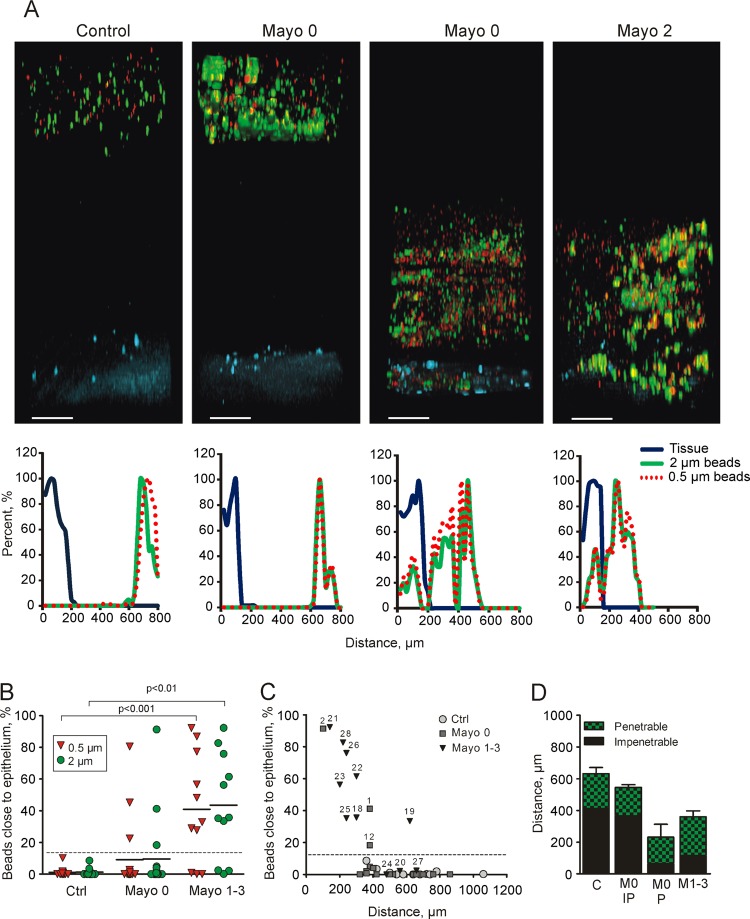
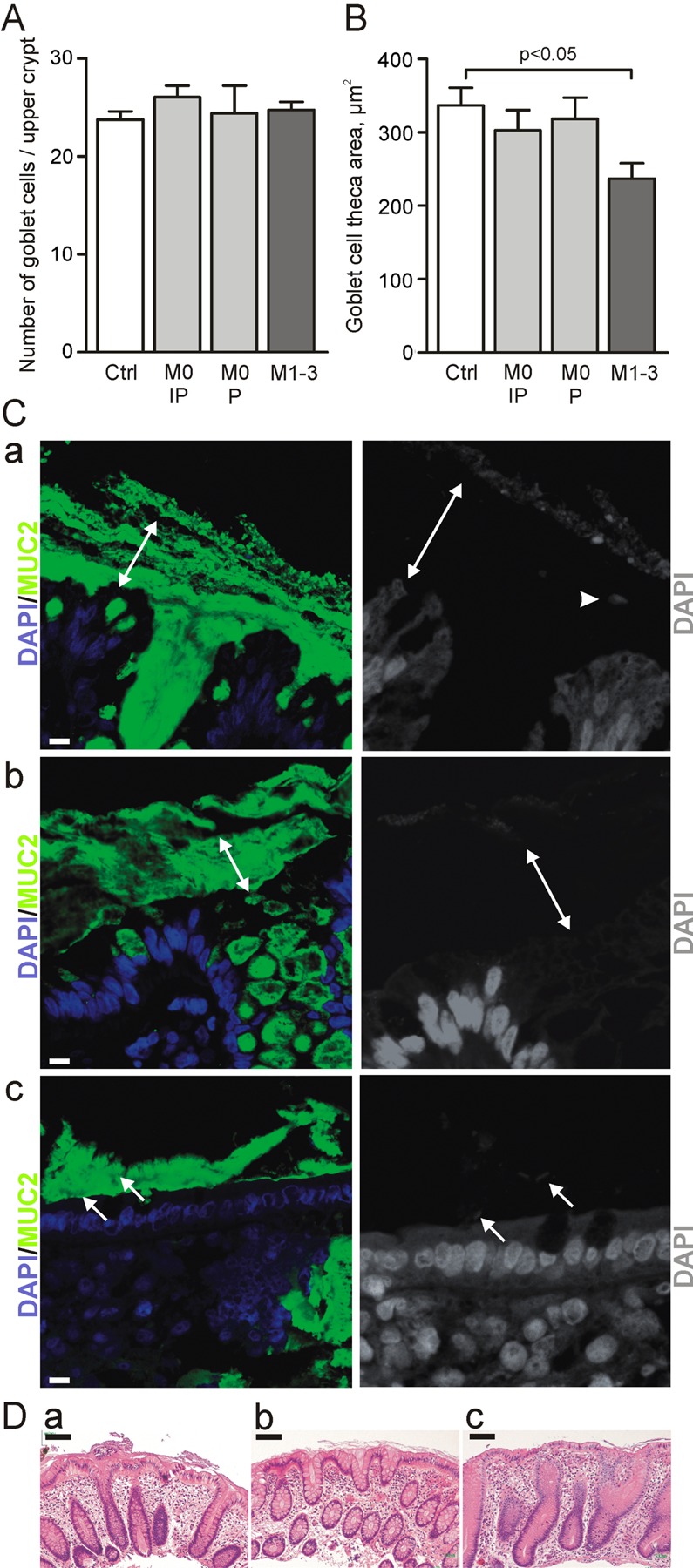
Objective: The inner mucus layer in mouse colon normally separates bacteria from the epithelium. Do humans have a similar inner mucus layer and are defects in this mucus layer a common denominator for spontaneous colitis in mice models and ulcerative colitis (UC)? Methods and results: The colon mucus layer from mice deficient in Muc2 mucin, Core 1 O -glycans, Tlr5, interleukin 10 (IL-10) and Slc9a3 (Nhe3) together with that from dextran sodium sulfate-treated mice was immunostained for Muc2, and bacterial localisation in the mucus was analysed. All murine colitis models revealed bacteria in contact with the epithelium. Additional analysis of the less inflamed IL-10 −/− mice revealed a thicker mucus layer than wild-type, but the properties were different, as the inner mucus layer could be penetrated both by bacteria in vivo and by fluorescent beads the size of bacteria ex vivo. Clear separation between bacteria or fluorescent beads and the epithelium mediated by the inner mucus layer was also evident in normal human sigmoid colon biopsy samples. In contrast, mucus on colon biopsy specimens from patients with UC with acute inflammation was highly penetrable. Most patients with UC in remission had an impenetrable mucus layer similar to that of controls. Conclusions: Normal human sigmoid colon has an inner mucus layer that is impenetrable to bacteria. The colon mucus in animal models that spontaneously develop colitis and in patients with active UC allows bacteria to penetrate and reach the epithelium. Thus colon mucus properties can be modulated, and this suggests a novel model of UC pathophysiology.
Overview
The claims and statistics of this paper haven’t been checked yet.
Free: it reads the open-access text and checks the first 5 claims that cite a source we can check. Create a free account to check every claim.
Integrity signals
Registry
Cites
Statistics
Figures
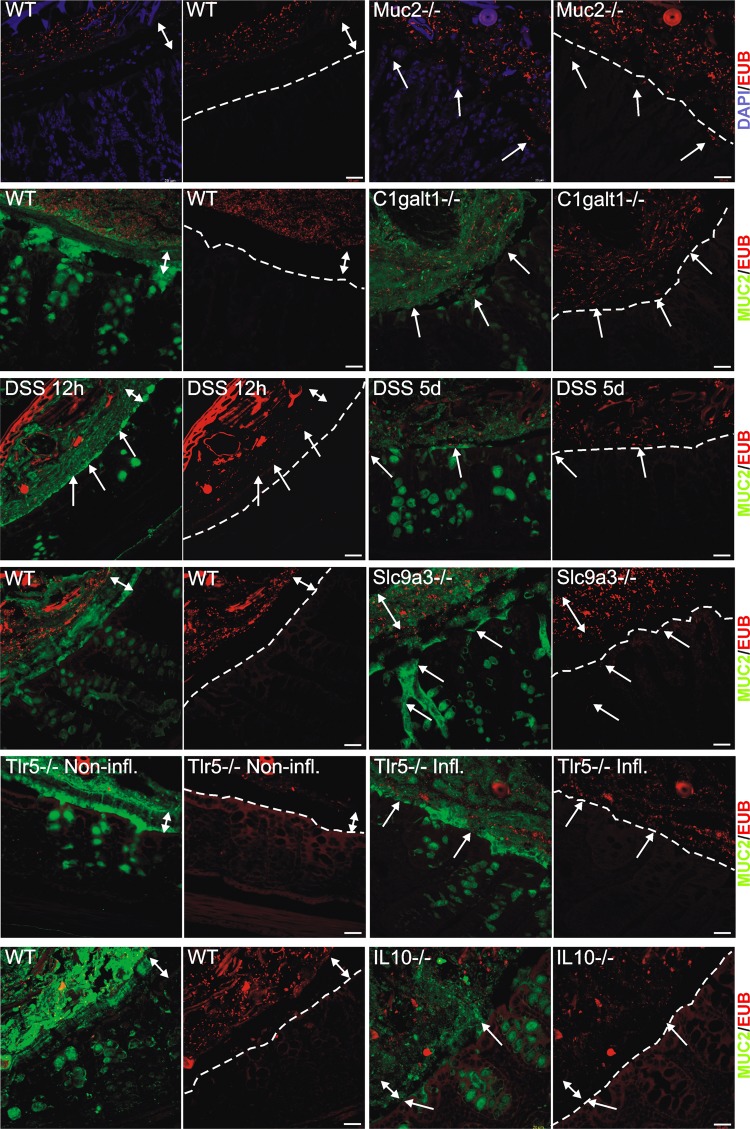
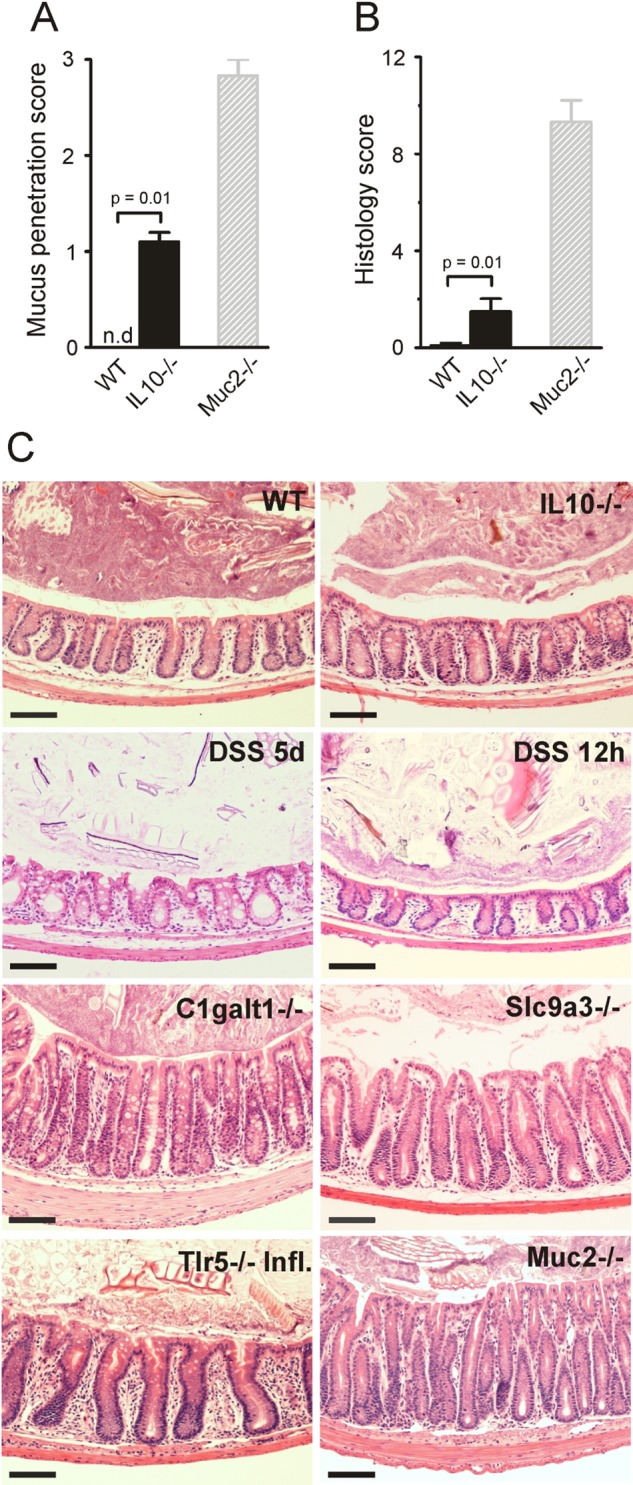
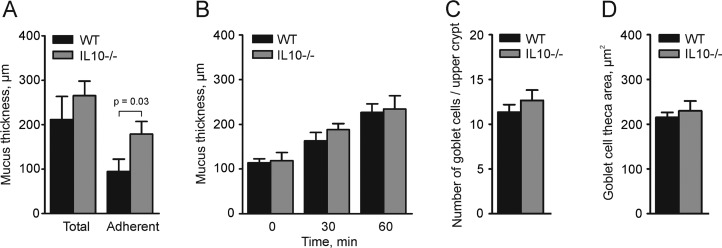
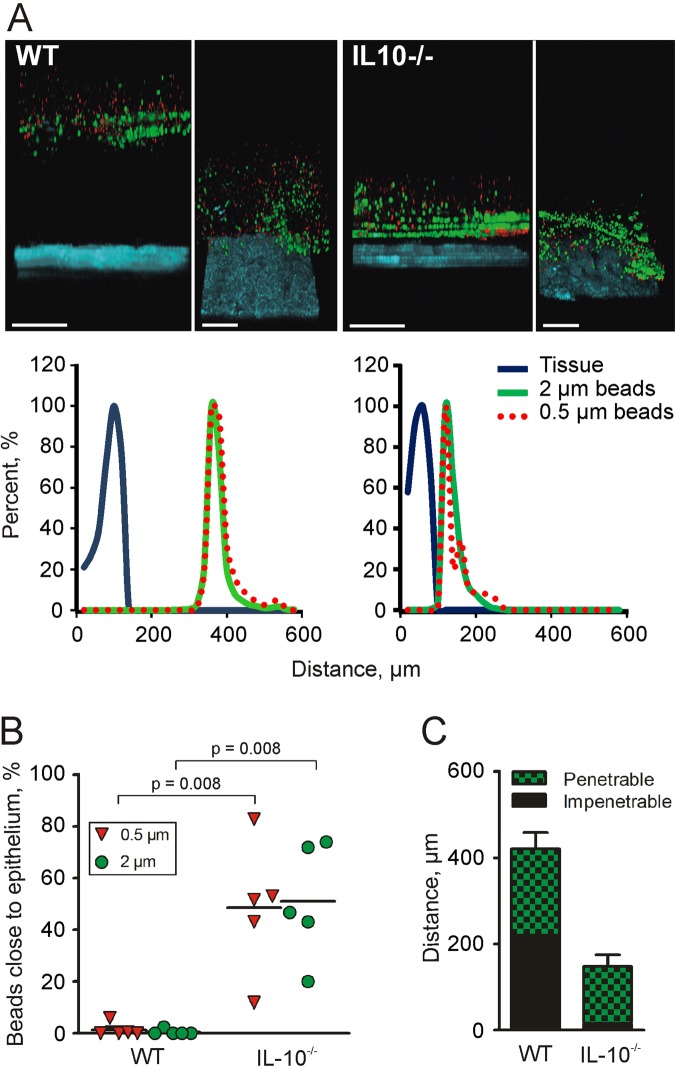
Verification
Claims the paper makes
The claims and statistics of this paper haven’t been checked yet.
Free: it reads the open-access text and checks the first 5 claims that cite a source we can check. Create a free account to check every claim.
Claims other papers make about this one
Each is checked against this paper’s own text: does it say what the citing paper says it does?
The source backs part of the claim, not all of it — or backs it for a different population, condition or comparison.
In the citing paper
“The mucus layer overlaying the epithelium is a reservoir of antimicrobial peptides and immunoglobulins and provides the first line of defense against gut bacteria85.”
From The gut Microbiome in adult and pediatric functional gastrointestinal disorders (2019) · cites this paper as [85]
Experimental — accuracy not yet measuredThe source backs part of the claim, not all of it — or backs it for a different population, condition or comparison.
In the citing paper
“The secreted mucus in distal colon forms a stratified inner layer of mucus that is able to keep the bacteria at a distance (> 50 μm in mice, > 200 μm in human) from the epithelium 14, 15.”
From The composition of the gut microbiota shapes the colon mucus barrier (2015) · cites this paper as [15]
Experimental — accuracy not yet measuredThe cited source says what the claim attributes to it.
In the citing paper
“Failure of this protective barrier to separate bacteria from the epithelium is observed in a number of murine colitis models 15, 17.”
From The composition of the gut microbiota shapes the colon mucus barrier (2015) · cites this paper as [15]
The cited source says what the claim attributes to it.
In the citing paper
“The mucus protection system observed in mouse is also present in human colon where an even thicker inner mucus layer separates bacteria from the tissue 15.”
From The composition of the gut microbiota shapes the colon mucus barrier (2015) · cites this paper as [15]
The cited source says what the claim attributes to it.
In the citing paper
“Ulcerative colitis (UC) patients with active disease have bacteria in contact with the epithelium, whereas patients with UC in remission show a more mixed picture 15.”
From The composition of the gut microbiota shapes the colon mucus barrier (2015) · cites this paper as [15]
1 more claim about this paper
Create a free account to see every claim other papers make about this one.
Self-check
Percentages, sums and reported differences re-computed from the paper’s own numbers.
The self-check needs the paper’s full text.
Citations
Cites
Unravelling the pathogenesis of inflammatory bowel disease
Xavier, R. J., & Podolsky, D. K. (2007) · Nature · doi:10.1038/nature06005 · Cited by 4,364
Interleukin-10-deficient mice develop chronic enterocolitis
Kühn, R., Löhler, J., Rennick, D., Rajewsky, K., & Müller, W. (1993) · Cell · doi:10.1016/0092-8674(93)80068-p · Cited by 4,274
Ford Alexander, C., Paul, M., Hanauer Steven, B., 谭蓓, & Dong, W. Z. (2001) · Cited by 3,020
Genetics and pathogenesis of inflammatory bowel disease
Khor, B., Gardet, A., & Xavier, R. J. (2011) · Nature · doi:10.1038/nature10209 · Cited by 2,614
Okayasu, I., Hatakeyama, S., Yamada, M., Ohkusa, T., Inagaki, Y., & Nakaya, R. (1990) · Gastroenterology · doi:10.1016/0016-5085(90)90290-h · Cited by 2,401
The inner of the two Muc2 mucin-dependent mucus layers in colon is devoid of bacteria
Johansson, M. E. V., Phillipson, M., Petersson, J., Velcich, A., Holm, L., & Hansson, G. C. (2008) · Proceedings of the National Academy of Sciences · doi:10.1073/pnas.0803124105 · Cited by 2,200
Self-citationInflammatory bowel disease: Etiology and pathogenesis
Fiocchi, C. (1998) · Gastroenterology · doi:10.1016/s0016-5085(98)70381-6 · Cited by 2,059
Van der Sluis, M., De Koning, B. A. E., De Bruijn, A. C. J. M., Velcich, A., Meijerink, J. P. P., Van Goudoever, J. B., Büller, H. A., Dekker, J., Van Seuningen, I., Renes, I. B., et al. (2006) · Gastroenterology · doi:10.1053/j.gastro.2006.04.020 · Cited by 1,684
Sellon, R. K., Tonkonogy, S., Schultz, M., Dieleman, L. A., Grenther, W., Balish, E., Rennick, D. M., & Sartor, R. B. (1998) · Infection and Immunity · doi:10.1128/iai.66.11.5224-5231.1998 · Cited by 1,483 · cited 1×
“Similar to the mice, a strati fi ed mucus layer was observed with bacteria only present at the luminal surface of the mucus.”
Johansson, M. E. V., Larsson, J. M. H., & Hansson, G. C. (2011) · Proceedings of the National Academy of Sciences · doi:10.1073/pnas.1006451107 · Cited by 1,452 · cited 1×
“7”
Self-citation
Cited by
Items 101–200 of 1,001
Procedures for Fecal Microbiota Transplantation in Murine Microbiome Studies
Bokoliya, S. C., Dorsett, Y., Panier, H., & Zhou, Y. (2021) · Frontiers in Cellular and Infection Microbiology · doi:10.3389/fcimb.2021.711055 · Cited by 185
Pathophysiology of IBD associated diarrhea
Anbazhagan, A. N., Priyamvada, S., Alrefai, W. A., & Dudeja, P. K. (2018) · Tissue Barriers · doi:10.1080/21688370.2018.1463897 · Cited by 185
Vitamin D Modulates Intestinal Microbiota in Inflammatory Bowel Diseases
Battistini, C., Ballan, R., Herkenhoff, M. E., Saad, S. M. I., & Sun, J. (2020) · International Journal of Molecular Sciences · doi:10.3390/ijms22010362 · Cited by 182
Impact of mycotoxins on the intestine: are mucus and microbiota new targets?
Robert, H., Payros, D., Pinton, P., Théodorou, V., Mercier-Bonin, M., & Oswald, I. P. (2017) · Journal of Toxicology and Environmental Health, Part B · doi:10.1080/10937404.2017.1326071 · Cited by 182
From Hype to Hope: The Gut Microbiota in Enteric Infectious Disease
McKenney, P. T., & Pamer, E. G. (2015) · Cell · doi:10.1016/j.cell.2015.11.032 · Cited by 181
Ahl, D., Liu, H., Schreiber, O., Roos, S., Phillipson, M., & Holm, L. (2016) · Acta Physiologica · doi:10.1111/apha.12695 · Cited by 180
Gut microbiome, endocrine control of gut barrier function and metabolic diseases
Régnier, M., Van Hul, M., Knauf, C., & Cani, P. D. (2021) · Journal of Endocrinology · doi:10.1530/joe-20-0473 · Cited by 179
Mucosal Barrier, Bacteria and Inflammatory Bowel Disease: Possibilities for Therapy
Merga, Y., Campbell, B. J., & Rhodes, J. M. (2014) · Digestive Diseases · doi:10.1159/000358156 · Cited by 179
Experimental models to study intestinal microbes–mucus interactions in health and disease
Etienne-Mesmin, L., Chassaing, B., Desvaux, M., De Paepe, K., Gresse, R., Sauvaitre, T., Forano, E., de Wiele, T. V., Schüller, S., Juge, N., et al. (2019) · FEMS Microbiology Reviews · doi:10.1093/femsre/fuz013 · Cited by 178
A refined palate: Bacterial consumption of host glycans in the gut
Marcobal, A., Southwick, A. M., Earle, K. A., & Sonnenburg, J. L. (2013) · Glycobiology · doi:10.1093/glycob/cwt040 · Cited by 178
Autophagy controls mucus secretion from intestinal goblet cells by alleviating ER stress
Naama, M., Telpaz, S., Awad, A., Ben-Simon, S., Harshuk-Shabso, S., Modilevsky, S., Rubin, E., Sawaed, J., Zelik, L., Zigdon, M., et al. (2023) · Cell Host & Microbe · doi:10.1016/j.chom.2023.01.006 · Cited by 177
Yu, J., Chen, Y., Fu, X., Zhou, X., Peng, Y., Shi, L., Chen, T., & Wu, Y. (2016) · International Journal of Cancer · doi:10.1002/ijc.30168 · Cited by 176
Sommer, F., Adam, N., Johansson, M. E. V., Xia, L., Hansson, G. C., & Bäckhed, F. (2014) · PLoS ONE · doi:10.1371/journal.pone.0085254 · Cited by 150
Self-citationCarlson, T. L., Lock, J. Y., & Carrier, R. L. (2018) · Annual Review of Biomedical Engineering · doi:10.1146/annurev-bioeng-062117-121156 · Cited by 176
Gram-positive bacteria are held at a distance in the colon mucus by the lectin-like protein ZG16
Bergström, J. H., Birchenough, G. M. H., Katona, G., Schroeder, B. O., Schütte, A., Ermund, A., Johansson, M. E. V., & Hansson, G. C. (2016) · Proceedings of the National Academy of Sciences · doi:10.1073/pnas.1611400113 · Cited by 175
Self-citationShigella Diversity and Changing Landscape: Insights for the Twenty-First Century
Anderson, M., Sansonetti, P. J., & Marteyn, B. S. (2016) · Frontiers in Cellular and Infection Microbiology · doi:10.3389/fcimb.2016.00045 · Cited by 174
The gut vascular barrier: a new player in the gut–liver–brain axis
Brescia, P., & Rescigno, M. (2021) · Trends in Molecular Medicine · doi:10.1016/j.molmed.2021.06.007 · Cited by 175
A slippery slope: On the origin, role and physiology of mucus
Taherali, F., Varum, F., & Basit, A. W. (2018) · Advanced Drug Delivery Reviews · doi:10.1016/j.addr.2017.10.014 · Cited by 172
Shi, H., Chang, Y., Gao, Y., Wang, X., Chen, X., Wang, Y., Xue, C., & Tang, Q. (2017) · Food & Function · doi:10.1039/c7fo00932a · Cited by 172
Pathogens, microbiome and the host: emergence of the ecological Koch's postulates
Vonaesch, P., Anderson, M., & Sansonetti, P. J. (2018) · FEMS Microbiology Reviews · doi:10.1093/femsre/fuy003 · Cited by 170
Inflammatory bowel disease: exploring gut pathophysiology for novel therapeutic targets
Yadav, V., Varum, F., Bravo, R., Furrer, E., Bojic, D., & Basit, A. W. (2016) · Translational Research · doi:10.1016/j.trsl.2016.04.009 · Cited by 168
Bacterial Biofilms in Colorectal Cancer Initiation and Progression
Li, S., Konstantinov, S. R., Smits, R., & Peppelenbosch, M. P. (2016) · Trends in Molecular Medicine · doi:10.1016/j.molmed.2016.11.004 · Cited by 168
Microbiota activation and regulation of innate and adaptive immunity
Alexander, K. L., Targan, S. R., & Elson, C. O. (2014) · Immunological Reviews · doi:10.1111/imr.12180 · Cited by 167
Mucus Layers in Inflammatory Bowel Disease
Johansson, M. E. V. (2014) · Inflammatory Bowel Diseases · doi:10.1097/mib.0000000000000117 · Cited by 148
Self-citationMo, J., Ni, J., Zhang, M., Xu, Y., Li, Y., Karim, N., & Chen, W. (2022) · Antioxidants · doi:10.3390/antiox11091674 · Cited by 169
Role of gut microbiota in intestinal wound healing and barrier function
Alam, A., & Neish, A. (2018) · Tissue Barriers · doi:10.1080/21688370.2018.1539595 · Cited by 166
Inflammatory Bowel Disease Associates with Proinflammatory Potential of the Immunoglobulin G Glycome
Trbojević Akmačić, I., Ventham, N. T., Theodoratou, E., Vučković, F., Kennedy, N. A., Krištić, J., Nimmo, E. R., Kalla, R., Drummond, H., Štambuk, J., et al. (2015) · Inflammatory Bowel Diseases · doi:10.1097/mib.0000000000000372 · Cited by 166
The Role of Dietary Nutrients in Inflammatory Bowel Disease
Sugihara, K., Morhardt, T. L., & Kamada, N. (2019) · Frontiers in Immunology · doi:10.3389/fimmu.2018.03183 · Cited by 166
Zhang, X.-J., Yuan, Z.-W., Qu, C., Yu, X.-T., Huang, T., Chen, P. V., Su, Z.-R., Dou, Y.-X., Wu, J.-Z., Zeng, H.-F., et al. (2018) · Pharmacological Research · doi:10.1016/j.phrs.2018.09.010 · Cited by 166
Furter, M., Sellin, M. E., Hansson, G. C., & Hardt, W. (2019) · Cell Reports · doi:10.1016/j.celrep.2019.04.106 · Cited by 167
Self-citationSelective permeability of mucus barriers
Witten, J., Samad, T., & Ribbeck, K. (2018) · Current Opinion in Biotechnology · doi:10.1016/j.copbio.2018.03.010 · Cited by 165
Maturation of the enteric mucosal innate immune system during the postnatal period
Fulde, M., & Hornef, M. W. (2014) · Immunological Reviews · doi:10.1111/imr.12190 · Cited by 145
Rodríguez-Daza, M.-C., Alezandro, M. R., Dudonné, S., Pilon, G., Levy, E. H., Marette, A., Roy, D., & Desjardins, Y. (2020) · Frontiers in Microbiology · doi:10.3389/fmicb.2020.02032 · Cited by 167
The gut Microbiome in adult and pediatric functional gastrointestinal disorders
Shin, A., Preidis, G. A., Shulman, R., & Kashyap, P. C. (2019) · Clinical Gastroenterology and Hepatology · doi:10.1016/j.cgh.2018.08.054 · Cited by 163
Microbial biofilms and the human intestinal microbiome
de Vos, W. M. (2015) · npj Biofilms and Microbiomes · doi:10.1038/npjbiofilms.2015.5 · Cited by 162
The role of glycosylation in IBD
Theodoratou, E., Campbell, H., Ventham, N. T., Kolarich, D., Pučić-Baković, M., Zoldoš, V., Fernandes, D., Pemberton, I. K., Rudan, I., Kennedy, N. A., et al. (2014) · Nature Reviews Gastroenterology & Hepatology · doi:10.1038/nrgastro.2014.78 · Cited by 162
Deoxycholic acid disrupts the intestinal mucosal barrier and promotes intestinal tumorigenesis
Liu, L., Dong, W., Wang, S., Zhang, Y., Liu, T., Xie, R., Wang, B., & Cao, H. (2018) · Food & Function · doi:10.1039/c8fo01143e · Cited by 162
Silva, S. D., Robbe-Masselot, C., Ait-Belgnaoui, A., Mancuso, A., Mercade-Loubière, M., Salvador-Cartier, C., Gillet, M., Ferrier, L., Loubière, P., Dague, E., et al. (2014) · American Journal of Physiology-Gastrointestinal and Liver Physiology · doi:10.1152/ajpgi.00290.2013 · Cited by 147
Wang, L., Cao, H., Liu, L., Wang, B., Walker, W. A., Acra, S. A., & Yan, F. (2014) · Journal of Biological Chemistry · doi:10.1074/jbc.m114.553800 · Cited by 146
Involvement of Reduced Microbial Diversity in Inflammatory Bowel Disease
Gong, D., Gong, X., Wang, L., Yu, X., & Dong, Q. (2016) · Gastroenterology Research and Practice · doi:10.1155/2016/6951091 · Cited by 142
Partridge, D., Lloyd, K., Rhodes, J. M., Walker, A. W., Johnstone, A. M., & Campbell, B. J. (2019) · Nutrition Bulletin · doi:10.1111/nbu.12408 · Cited by 167
Zhu, L., Yu, T., Wang, W., Xu, T., Geng, W., Li, N., & Zan, X. (2024) · Advanced Materials · doi:10.1002/adma.202308728 · Cited by 161
Antimicrobial peptides and the enteric mucus layer act in concert to protect the intestinal mucosa
Dupont, A., Heinbockel, L., Brandenburg, K., & Hornef, M. W. (2014) · Gut Microbes · doi:10.4161/19490976.2014.972238 · Cited by 140
Fiebiger, U., Bereswill, S., & Heimesaat, M. M. (2016) · European Journal of Microbiology and Immunology · doi:10.1556/1886.2016.00036 · Cited by 159
Kanai, T., Mikami, Y., & Hayashi, A. (2015) · Journal of Gastroenterology · doi:10.1007/s00535-015-1084-x · Cited by 159
Microbiota and mucosal defense in IBD: an update
Stange, E. F., & Schroeder, B. O. (2019) · Expert Review of Gastroenterology & Hepatology · doi:10.1080/17474124.2019.1671822 · Cited by 159
Kanwal, S., Joseph, T. P., Aliya, S., Song, S., Saleem, M. Z., Nisar, M. A., Wang, Y., Meyiah, A., Ma, Y., & Xin, Y. (2019) · Journal of Functional Foods · doi:10.1016/j.jff.2019.103641 · Cited by 155
do Nascimento, R. D. P., Machado, A. P. D. F., Gálvez, J., Cazarin, C. B. B., & Maróstica, M. R. (2020) · Life Sciences · doi:10.1016/j.lfs.2020.118129 · Cited by 156
Searching the Evolutionary Origin of Epithelial Mucus Protein Components—Mucins and FCGBP
Lang, T., Klasson, S., Larsson, E., Johansson, M. E. V., Hansson, G. C., & Samuelsson, T. (2016) · Molecular Biology and Evolution · doi:10.1093/molbev/msw066 · Cited by 134
Self-citationIntestinal Barrier Function in Gluten-Related Disorders
da Silva, D. C., Delbue, D., Itzlinger, A., Moerkens, R., Withoff, S., Branchi, F., & Schümann, M. (2019) · Nutrients · doi:10.3390/nu11102325 · Cited by 152
Li, Y., Xiao, H., Hu, D.-D., Fatima, S., Lin, C., Mu, H., Lee, N. P. Y., & Bian, Z. (2016) · Pharmacological Research · doi:10.1016/j.phrs.2016.02.010 · Cited by 151
The Role of Diet in the Pathogenesis and Management of Inflammatory Bowel Disease: A Review
Wark, G., Samocha‐Bonet, D., Ghaly, S., & Danta, M. (2020) · Nutrients · doi:10.3390/nu13010135 · Cited by 153
Deciphering the different phases of preclinical inflammatory bowel disease
Rudbaek, J. J., Agrawal, M., Torres, J., Mehandru, S., Colombel, J., & Jess, T. (2023) · Nature Reviews Gastroenterology & Hepatology · doi:10.1038/s41575-023-00854-4 · Cited by 151
Mechanisms of Pediatric Inflammatory Bowel Disease
Peloquin, J. M., Goel, G., Villablanca, E. J., & Xavier, R. J. (2016) · Annual Review of Immunology · doi:10.1146/annurev-immunol-032414-112151 · Cited by 154
Food, nutrients and nutraceuticals affecting the course of inflammatory bowel disease
Uranga, J. A., López‐Miranda, V., Lombó, F., & Abalo, R. (2016) · Pharmacological Reports · doi:10.1016/j.pharep.2016.05.002 · Cited by 153
The Interaction of the Gut Microbiota with the Mucus Barrier in Health and Disease in Human
Corfield, A. P. (2018) · Microorganisms · doi:10.3390/microorganisms6030078 · Cited by 133
He, C., Yu, T., Shi, Y., Ma, C., Yang, W., Fang, L., Sun, M., Wu, W. H., Xiao, F., Guo, F., et al. (2017) · Gastroenterology · doi:10.1053/j.gastro.2017.01.049 · Cited by 148
Wang, M.-X., Li, L., Chen, Y.-D., Zhong, Y., Lin, Y., Li, P., Tian, X., Han, B. R., Xie, Z., & Liao, Q. (2020) · Pharmacological Research · doi:10.1016/j.phrs.2020.104978 · Cited by 149
Johansson, M., & Hansson, G. C. (2013) · Digestive Diseases · doi:10.1159/000354683 · Cited by 147
Self-citationLaudisi, F., Di Fusco, D., Dinallo, V., Stolfi, C., Di Grazia, A., Marafini, I., Colantoni, A., Ortenzi, A., Alteri, C., Guerrieri, F., et al. (2019) · Cellular and Molecular Gastroenterology and Hepatology · doi:10.1016/j.jcmgh.2018.09.002 · Cited by 122
Wenzel, U. A., Magnusson, M. K., Rydström, A., Jonstrand, C., Hengst, J., Johansson, M., Velcich, A., Öhman, L., Strid, H., Sjövall, H., et al. (2014) · PLoS ONE · doi:10.1371/journal.pone.0100217 · Cited by 146
Self-citationIdentification of an Anti–Integrin αvβ6 Autoantibody in Patients With Ulcerative Colitis
Kuwada, T., Shiokawa, M., Kodama, Y., Ota, S., Kakiuchi, N., Nannya, Y., Yamazaki, H., Yoshida, H., Nakamura, T., Matsumoto, S., et al. (2021) · Gastroenterology · doi:10.1053/j.gastro.2021.02.019 · Cited by 148
Bowel Biofilms: Tipping Points between a Healthy and Compromised Gut?
Tytgat, H. L. P., Nobrega, F. L., van der Oost, J., & de Vos, W. M. (2019) · Trends in Microbiology · doi:10.1016/j.tim.2018.08.009 · Cited by 144
Causal effects of the microbiota on immune-mediated diseases
Round, J. L., & Palm, N. W. (2018) · Science Immunology · doi:10.1126/sciimmunol.aao1603 · Cited by 122
Leaky Gut in IBD: Intestinal Barrier–Gut Microbiota Interaction
Yu, S., Sun, Y., Shao, X., Zhou, Y., Yu, Y., Kuai, X., & Zhou, C. (2022) · Journal of Microbiology and Biotechnology · doi:10.4014/jmb.2203.03022 · Cited by 142
Role of the intestinal microbiome, intestinal barrier and psychobiotics in depression
Trzeciak, P., & Herbet, M. (2021) · Nutrients · doi:10.3390/nu13030927 · Cited by 139
Mucin O-glycans facilitate symbiosynthesis to maintain gut immune homeostasis
Yamada, T., Hino, S., Iijima, H., Genda, T., Aoki, R., Nagata, R., Han, K., Hirota, M., Kinashi, Y., Oguchi, H., et al. (2019) · EBioMedicine · doi:10.1016/j.ebiom.2019.09.008 · Cited by 146
Emerging pharmacotherapy for inflammatory bowel diseases
Luo, H., Cao, G., Luo, C., Tan, D., Vong, C. T., Xu, Y., Wang, S., Lu, H., Wang, Y., & Jing, W. (2022) · Pharmacological Research · doi:10.1016/j.phrs.2022.106146 · Cited by 138
Intestinal Barrier Function in Chronic Kidney Disease
Meijers, B. K. I., Farré, R., Dejongh, S., Vicario, M., & Evenepoel, P. (2018) · Toxins · doi:10.3390/toxins10070298 · Cited by 142
The Nlrp6 inflammasome is not required for baseline colonic inner mucus layer formation or function
Volk, J. K., Nyström, E. E. L., van der Post, S., Abad, B. M., Schroeder, B. O., Johansson, Å., Svensson, F., Jäverfelt, S., Johansson, M. E. V., Hansson, G. C., et al. (2019) · Journal of Experimental Medicine · doi:10.1084/jem.20190679 · Cited by 127
Self-citationZhang, W., Zhu, Y., Zhou, D. B., Wu, Q., Song, D., Dicksved, J., & Wang, J. (2016) · Applied and Environmental Microbiology · doi:10.1128/aem.02747-16 · Cited by 136
Tran, H. Q., Ley, R. E., Gewirtz, A. T., & Chassaing, B. (2019) · Nature Communications · doi:10.1038/s41467-019-13538-y · Cited by 137
Self-citationWang, X., Cai, Z., Wang, Q., Wu, C., Sun, Y., Wang, Z., Xu, X., Xue, W., Cao, Z., Zhang, M., et al. (2023) · Cell Host & Microbe · doi:10.1016/j.chom.2023.11.005 · Cited by 137
Rodríguez-Daza, M.-C., Daoust, L., Boutkrabt, L., Pilon, G., Varin, T. V., Dudonné, S., Levy, E. H., Marette, A., Roy, D., & Desjardins, Y. (2020) · Scientific Reports · doi:10.1038/s41598-020-58863-1 · Cited by 135
Diet, microbiota, and the mucus layer: The guardians of our health
Suriano, F., Nyström, E. E. L., Sergi, D., & Gustafsson, J. K. (2022) · Frontiers in Immunology · doi:10.3389/fimmu.2022.953196 · Cited by 136
Self-citationDeng, J., Zeng, L., Lai, X., Li, J., Liu, L., Lin, Q., & Chen, Y. (2017) · Journal of Cellular and Molecular Medicine · doi:10.1111/jcmm.13342 · Cited by 135
Morampudi, V., Dalwadi, U., Bhinder, G., Sham, H. P., Gill, S. K., Chan, J., Bergstrom, K., Huang, T., Ma, C., Jacobson, K., et al. (2016) · Mucosal Immunology · doi:10.1038/mi.2015.140 · Cited by 136
Mucus organisation is shaped by colonic content; a new view
Kamphuis, J. B. J., Mercier‐Bonin, M., Eutamène, H., & Théodorou, V. (2017) · Scientific Reports · doi:10.1038/s41598-017-08938-3 · Cited by 138
Wang, Y., Li, C., Li, J., Zhang, S., Zhang, Q., Duan, J., & Guo, J. (2024) · Acta Pharmaceutica Sinica B · doi:10.1016/j.apsb.2024.06.002 · Cited by 134
Protective Actions of Epithelial 5-Hydroxytryptamine 4 Receptors in Normal and Inflamed Colon
Spohn, S. N., Bianco, F., Scott, R. B., Keenan, C. M., Linton, A. A., O'Neill, C. H., Bonora, E., Dicay, M., Lavoie, B., Wilcox, R. L., et al. (2016) · Gastroenterology · doi:10.1053/j.gastro.2016.07.032 · Cited by 125
Food Derived Bioactive Peptides and Intestinal Barrier Function
Martínez-Augustin, O., Rivero-Gutiérrez, B., Mascaraque, C., & Sánchez de Medina, F. (2014) · International Journal of Molecular Sciences · doi:10.3390/ijms151222857 · Cited by 114
Hydrogen sulfide: an agent of stability at the microbiome-mucosa interface
Wallace, J. L., Motta, J.-P., & Buret, A. G. (2018) · American Journal of Physiology-Gastrointestinal and Liver Physiology · doi:10.1152/ajpgi.00249.2017 · Cited by 120
Coker, J. K. C., Moyne, O., Rodionov, D. A., & Zengler, K. (2021) · Gut Microbes · doi:10.1080/19490976.2020.1869502 · Cited by 129
Food Additives, a Key Environmental Factor in the Development of IBD through Gut Dysbiosis
Raoul, P. C., Cintoni, M., Palombaro, M., Basso, L., Rinninella, E., Gasbarrini, A., & Mele, M. C. (2022) · Microorganisms · doi:10.3390/microorganisms10010167 · Cited by 131
Orchestration of MUC2 — The key regulatory target of gut barrier and homeostasis: A review
Liu, Y., Yu, Z., Zhu, L., Ma, S., Luo, Y., Liang, H., Liu, Q., Chen, J., Guli, S., & Chen, X. (2023) · International Journal of Biological Macromolecules · doi:10.1016/j.ijbiomac.2023.123862 · Cited by 128
Camilleri, M., Lyle, B. J., Madsen, K. L., Sonnenburg, J. L., Verbeke, K., & Wu, G. D. (2019) · American Journal of Physiology-Gastrointestinal and Liver Physiology · doi:10.1152/ajpgi.00063.2019 · Cited by 128
Wu, H. M., Chen, Q.-Y., Wang, W., Chu, S., Liu, X., Liu, Y., Tan, C., Zhu, F., Deng, S., Dong, Y., et al. (2020) · Biomedicine & Pharmacotherapy · doi:10.1016/j.biopha.2020.110937 · Cited by 126
The gut–brain axis in irritable bowel syndrome and inflammatory bowel disease
Ancona, A., Petito, C., Iavarone, I., Petito, V., Galasso, L., Leonetti, A., Turchini, L., Belella, D., Ferrarese, D., Addolorato, G., et al. (2020) · Digestive and Liver Disease · doi:10.1016/j.dld.2020.11.026 · Cited by 128
Identification of Allobaculum mucolyticum as a novel human intestinal mucin degrader
van Muijlwijk, G. H., van Mierlo, G., Jansen, P. W. T. C., Vermeulen, M., Bleumink‐Pluym, N. M. C., Palm, N. W., van Putten, J. P. M., & de Zoete, M. R. (2021) · Gut Microbes · doi:10.1080/19490976.2021.1966278 · Cited by 123
Xiao, Y., Zou, H., Li, J., Song, T., Lv, W., Wang, W., Wang, Z., & Tao, S. (2022) · Gut Microbes · doi:10.1080/19490976.2022.2039048 · Cited by 125
Hadji, H., & Bouchemal, K. (2022) · Advanced Drug Delivery Reviews · doi:10.1016/j.addr.2021.114101 · Cited by 122
Wang, X., Liu, Y., Dong, X., Duan, T., Wang, C., Wang, L., Yang, X., Tian, H., & Li, T. (2024) · Pharmacological Research · doi:10.1016/j.phrs.2024.107071 · Cited by 121
Priyamvada, S., Gomes, R., Gill, R. K., Saksena, S., Alrefai, W. A., & Dudeja, P. K. (2015) · Inflammatory Bowel Diseases · doi:10.1097/mib.0000000000000504 · Cited by 118
Kumari, M., & Kozyrskyj, A. L. (2017) · Obesity Reviews · doi:10.1111/obr.12484 · Cited by 112
Loktionov, A. S. (2019) · World Journal of Gastroenterology · doi:10.3748/wjg.v25.i27.3503 · Cited by 118
Gibold, L., Garenaux, E., Dalmasso, G., Gallucci, C., Cia, D., Mottet-Auselo, B., Faïs, T., Darfeuille-Michaud, A., Nguyen, H. T. T., Barnich, N., et al. (2016) · Cellular Microbiology · doi:10.1111/cmi.12539 · Cited by 90
Mullaney, J. A., Stephens, J. E., Costello, M.-E., Fong, C., Geeling, B. E., Gavin, P. G., Wright, C. M., Spector, T. D., Brown, M. A., & Hamilton-Williams, E. E. (2018) · Microbiome · doi:10.1186/s40168-018-0417-4 · Cited by 109
Significance of the gut microbiome in multistep colorectal carcinogenesis
Mizutani, S., Yamada, T., & Yachida, S. (2020) · Cancer Science · doi:10.1111/cas.14298 · Cited by 118
Zhang, Y., Wu, Z., Liu, J., Zheng, Z., Li, Q., Wang, H., Chen, Z., & Wang, K. (2020) · Food Research International · doi:10.1016/j.foodres.2020.109641 · Cited by 116
Gut microbiota-gonadal axis: the impact of gut microbiota on reproductive functions
Ashonibare, V. J., Akorede, B. A., Ashonibare, P. J., Akhigbe, T. M., & Akhigbe, R. E. (2024) · Frontiers in Immunology · doi:10.3389/fimmu.2024.1346035 · Cited by 117
Metadata
- Authors
- Johansson, M. E. V., Gustafsson, J. K., Holmén-Larsson, J., Jabbar, K. S., Xia, L., Xu, H., Ghishan, F. K., Carvalho, F. A., Gewirtz, A. T., Sjövall, H., & Hansson, G. C.
- Affiliations
- University of Gothenburg (SE)
- Department of Medical Biochemistry, University of Gothenburg, Gothenburg, Sweden
- Oklahoma Medical Research Foundation (US)
- University of Arizona (US)
- Department of Biology, Georgia State University, Atlanta, Georgia, USA
- Georgia State University (US)
- Corresponding author
- Hansson, Gunnar C
- ORCID
- Venue
- Gut
- Publisher
- BMJ
- Published
- 2013-02-20
- Volume
- 63
- Issue
- 2
- Pages
- 281-291
- ISSN
- 0017-5749 (ISSN-L)
- 1468-3288
- PMC
- PMC3740207
- OpenAlex
- W2126131092
- Cited by
- 1,004
- References
- 40
- Citations by year
- 2026: 59 · 2025: 108 · 2024: 86 · 2023: 82 · 2022: 111 · 2021: 113 · 2020: 80 · 2019: 62 · 2018: 75 · 2017: 61 · 2016: 53 · 2015: 45 · 2014: 48 · 2013: 20
- FWCI
- 36.67
- Type
- journal article
- Language
- en
- Open access
- hybrid
- doi.org
- Licence
- cc-by-nc
- Locations
- Gut (publishedVersion, cc-by-nc)
- Europe PMC (PubMed Central) (publishedVersion, other-oa)
- PubMed Central (publishedVersion, cc-by-nc)
- PubMed (publishedVersion)
- HAL (submittedVersion)
- HighWire Press Open Archive (submittedVersion)
- Funders
- Swedish Cancer Foundation (U01AI095473)
- Stiftelsen för Strategisk Forskning
- Knut och Alice Wallenbergs Stiftelse (U01AI095473)
- Vetenskapsrådet (U01AI095473, 21027)
- National Institutes of Health (4r01dk041274-29)
- Sahlgrenska Akademin (U01AI095473)
- National Institute of Allergy and Infectious Diseases (U01AI095473)
- National Institute of Diabetes and Digestive and Kidney Diseases (R01-DK-041274, R01DK099071, R01DK073638, R01DK083890, R01DK085691)
- Topics
- Health Sciences › Medicine › Gastroenterology › Inflammatory Bowel Disease
- Life Sciences › Biochemistry, Genetics and Molecular Biology › Molecular Biology › Gut microbiota and health
- Life Sciences › Biochemistry, Genetics and Molecular Biology › Molecular Biology › Glycosylation and Glycoproteins Research
- Keywords
- colonic mucus layer, ulcerative colitis, MUC2, core 1 O-glycans, TLR5, IL-10, NHE3, DSS-induced colitis, mucus barrier
- MeSH terms
- Adolescent, Adult, Aged, Animals, Colitis, Colitis, Ulcerative, Colon, Female, Humans, Intestinal Mucosa, Male, Middle Aged, Mucus, In Situ Hybridization, Fluorescence, Mice, Mucin-2, Young Adult
About these checks
Registry, retraction, Cites and statistics results are computed, not judged, with one exception: a printed reference that no index lists is read once by a model before it counts as a citation error. Claims are extracted by a model and kept only when their quote appears verbatim in the text; each cited source is then checked, with a model’s help, for whether it says what the claim relies on. Those verdicts can be wrong — read the claim’s quote and the cited source before relying on one.
Statistics and arithmetic are recomputed, not judged.
Confidence bands are shown only for fields calibrated on our annotated test set. None is calibrated yet, so no band is shown.
What counts as a claim ›How we measure confidence ›How we check this ›
Are you an author, or do you see a problem with this page? Request a review
Data sources
Bibliographic data: Semantic Scholar, OpenAlex, Crossref.
Contains information from the Semantic Scholar Academic Graph Datasets, made available under the ODC Attribution License (ODC-BY 1.0).
Semantic Scholar’s data is described in: Kinney, R., et al. (2023). The Semantic Scholar Open Data Platform. arXiv:2301.10140.
