

The gut microbiota plays a protective role in the host defence against pneumococcal pneumonia
Open accessThe DOI matches its Crossref record; 47 of the 47 references it cites were found in a registry or an index.
Abstract
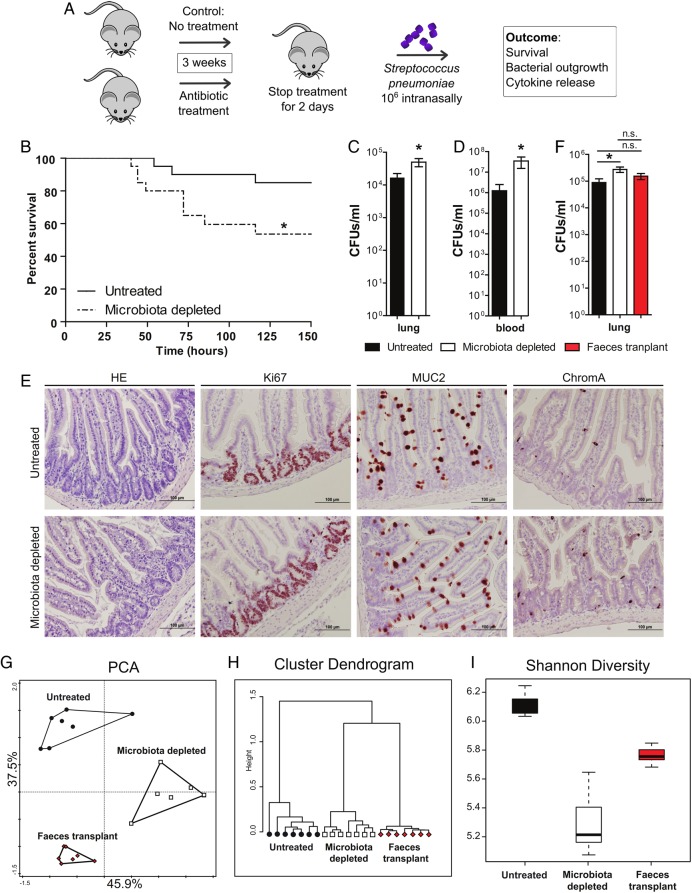
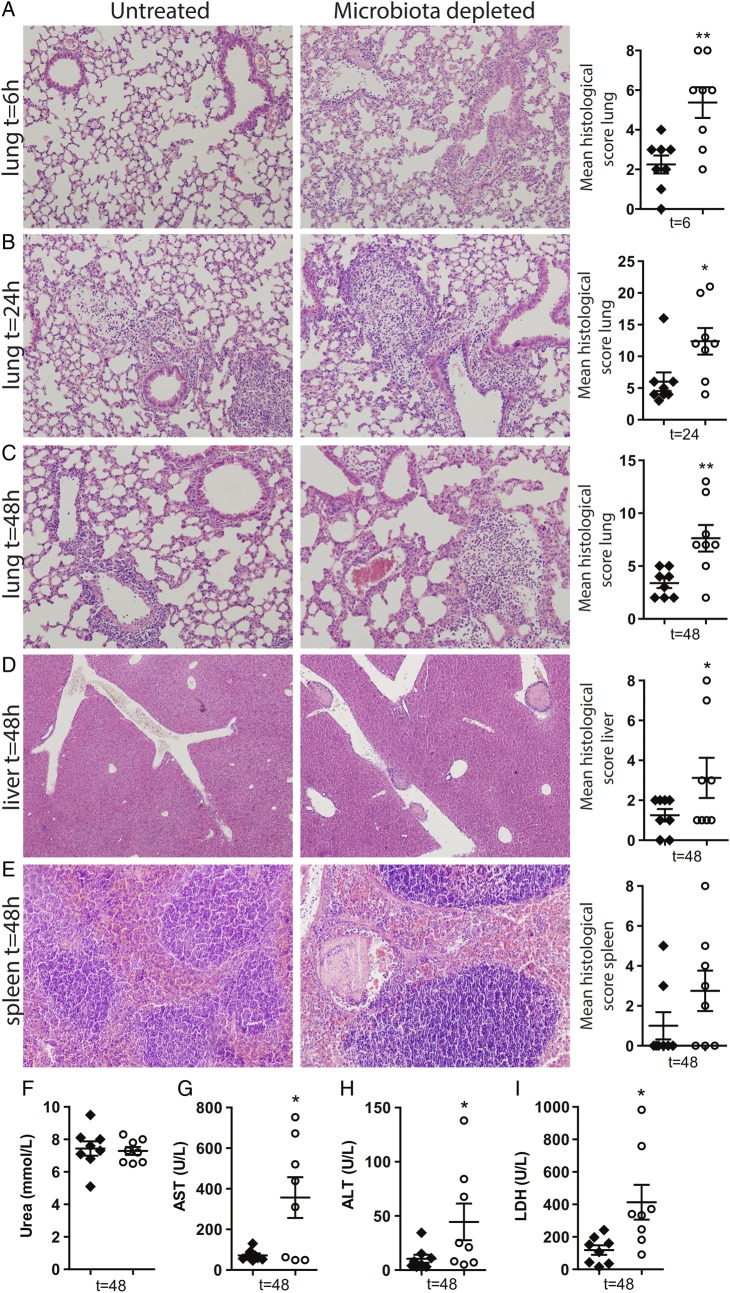
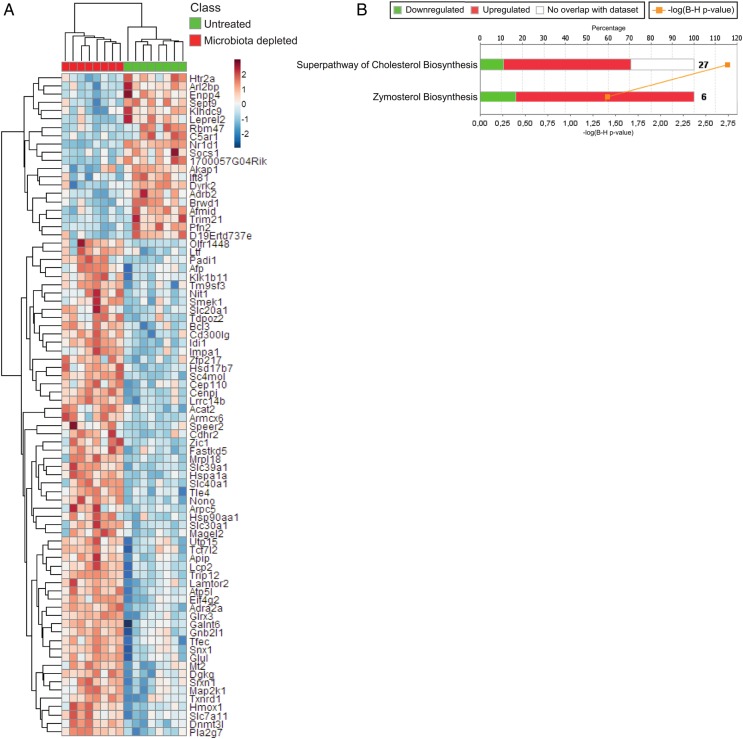
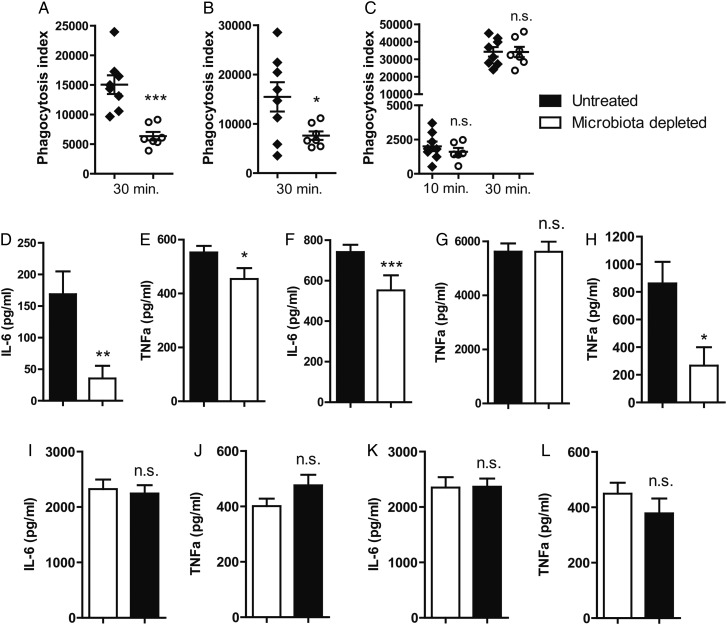
Objective: Pneumonia accounts for more deaths than any other infectious disease worldwide. The intestinal microbiota supports local mucosal immunity and is increasingly recognised as an important modulator of the systemic immune system. The precise role of the gut microbiota in bacterial pneumonia, however, is unknown. Here, we investigate the function of the gut microbiota in the host defence against Streptococcus pneumoniae infections. Design: We depleted the gut microbiota in C57BL/6 mice and subsequently infected them intranasally with S. pneumoniae . We then performed survival and faecal microbiota transplantation (FMT) experiments and measured parameters of inflammation and alveolar macrophage whole-genome responses. Results: We found that the gut microbiota protects the host during pneumococcal pneumonia, as reflected by increased bacterial dissemination, inflammation, organ damage and mortality in microbiota-depleted mice compared with controls. FMT in gut microbiota-depleted mice led to a normalisation of pulmonary bacterial counts and tumour necrosis factor-α and interleukin-10 levels 6 h after pneumococcal infection. Whole-genome mapping of alveolar macrophages showed upregulation of metabolic pathways in the absence of a healthy gut microbiota. This upregulation correlated with an altered cellular responsiveness, reflected by a reduced responsiveness to lipopolysaccharide and lipoteichoic acid. Compared with controls, alveolar macrophages derived from gut microbiota-depleted mice showed a diminished capacity to phagocytose S. pneumoniae . Conclusions: This study identifies the intestinal microbiota as a protective mediator during pneumococcal pneumonia. The gut microbiota enhances primary alveolar macrophage function. Novel therapeutic strategies could exploit the gut–lung axis in bacterial infections.
Overview
The claims and statistics of this paper haven’t been checked yet.
Free: it reads the open-access text and checks the first 5 claims that cite a source we can check. Create a free account to check every claim.
Integrity signals
Registry
Cites
Statistics
Figures
Verification
Claims the paper makes
The claims and statistics of this paper haven’t been checked yet.
Free: it reads the open-access text and checks the first 5 claims that cite a source we can check. Create a free account to check every claim.
Claims other papers make about this one
Each is checked against this paper’s own text: does it say what the citing paper says it does?
The cited source says what the claim attributes to it.
In the citing paper
“Antibiotic-pretreated animals displayed altered cytokine profiles in the lung compared to untreated controls following S. pneumoniae infection, including significantly decreased TNF-α levels at 6 and 24 h after infection.”
From Respiratory viral infection-induced microbiome alterations and secondary bacterial pneumonia. (2018) · cites this paper as [55]
In the citing paper
“but also enhance the resistance and recovery ability of the lung against diseases (29,30).”
From The Role of Gut Microbiota in Lung Cancer: From Carcinogenesis to Immunotherapy (2021) · doi:10.3389/fonc.2021.720842 · cites this paper as [29]
In the citing paper
“microbiota-depleted C57BL/6 mice infected with S. pneumoniae presented with higher bacterial dissemination, inflammation, organ damage and mortality than undepleted C57BL/6 mice.”
From The Role of Gut Microbiota in Lung Cancer: From Carcinogenesis to Immunotherapy (2021) · doi:10.3389/fonc.2021.720842 · cites this paper as [29]
In the citing paper
“FMT to intestinal microbiota-exhausted mice miraculously rebounded lung bacterial counts and IL-10 and TNF-a levels (29).”
From The Role of Gut Microbiota in Lung Cancer: From Carcinogenesis to Immunotherapy (2021) · doi:10.3389/fonc.2021.720842 · cites this paper as [29]
In the citing paper
“microbiome depletion led to decreased survival, increased lung bacterial burden, and increased systemic dissemination of bacteria”
From Respiratory viral infection-induced microbiome alterations and secondary bacterial pneumonia. (2018) · cites this paper as [55]
1 more claim about this paper
Create a free account to see every claim other papers make about this one.
Self-check
Percentages, sums and reported differences re-computed from the paper’s own numbers.
The self-check needs the paper’s full text.
Citations
Cites
Smyth, G. K. (2004) · Statistical Applications in Genetics and Molecular Biology · doi:10.2202/1544-6115.1027 · Cited by 11,829
Enterotypes of the human gut microbiome
MetaHIT Consortium (additional members), Arumugam, M., Raes, J., Pelletier, E., Le Paslier, D., Yamada, T., Mende, D. R., Fernandes, G. R., Tap, J., Bruls, T., et al. (2011) · Nature · doi:10.1038/nature09944 · Cited by 7,548
Severe Sepsis and Septic Shock
Angus, D. C., & van der Poll, T. (2013) · New England Journal of Medicine · doi:10.1056/nejmra1208623 · Cited by 3,961
The impact of the gut microbiota on human health: an integrative view
Clemente, J. C., Ursell, L. K., Parfrey, L. W., & Knight, R. (2012) · Cell · doi:10.1016/j.cell.2012.01.035 · Cited by 3,710 · cited 1×
“5 6 – 13 The intestinal microbiota may be of profound clinical relevance, particularly for intensive care medicine where the majority of patients are treated with antibiotics, which have pervasive and long-term effects on their intestinal microbiota.”
BackgroundGut Microbiota Metabolism of Dietary Fiber Influences Allergic Airway Disease and Hematopoiesis
Trompette, A., Gollwitzer, E. S., Yadava, K., Sichelstiel, A. K., Sprenger, N., Ngom-Bru, C., Blanchard, C., Junt, T., Nicod, L. P., Harris, N. L., et al. (2014) · Nature Medicine · doi:10.1038/nm.3444 · Cited by 2,862
Dethlefsen, L., & Relman, D. A. (2011) · Proceedings of the National Academy of Sciences · doi:10.1073/pnas.1000087107 · Cited by 2,421
Microbiota regulates immune defense against respiratory tract influenza A virus infection
Ichinohe, T., Pang, I. K., Kumamoto, Y., Peaper, D. R., Ho, J. H., Murray, T. S., & Iwasaki, A. (2011) · Proceedings of the National Academy of Sciences · doi:10.1073/pnas.1019378108 · Cited by 1,502
Recognition of peptidoglycan from the microbiota by Nod1 enhances systemic innate immunity
Clarke, T. B., Davis, K. M., Lysenko, E. S., Zhou, A. Y., Yu, Y., & Weiser, J. N. (2010) · Nature Medicine · doi:10.1038/nm.2087 · Cited by 1,154
Diet dominates host genotype in shaping the murine gut microbiota
Carmody, R. N., Gerber, G. K., Luevano, J. M., Gatti, D. M., Somes, L., Svenson, K. L., & Turnbaugh, P. J. (2015) · Cell Host & Microbe · doi:10.1016/j.chom.2014.11.010 · Cited by 1,103 · cited 1×
“In order to deplete the gut microbiota, mice were treated with broad-spectrum antibiotics (ampicillin 1 g/L, Sigma; neomycin sulfate 1 g/L, Sigma; metronidazole 1 g/L, Sano fi -Aventis and vancomycin 0.5 g/L, Sandoz) in drinking water for 3 weeks as described.”
MethodInfluentialUbeda, C., Taur, Y., Jenq, R. R., Equinda, M. J., Son, T., Samstein, M., Viale, A., Socci, N. D., van den Brink, M. R. M., Kamboj, M., et al. (2010) · Journal of Clinical Investigation · doi:10.1172/jci43918 · Cited by 943 · cited 1×
“36 37 Details on the phagocytosis and cell stimulation experiments are provided in the online supplementary fi le.”
Background
Research works printed but not linked: 1
- 10.1172/JCI200215277 · doi:10.1172/jci200215277
Cited by
Items 601–700 of 831
Shi, M., Xue, Q., Xie, J., Yang, Q., Tong, J., Zhu, J., Gao, Y., Ma, X., Wu, D., & Li, Z. (2024) · Frontiers in Microbiology · doi:10.3389/fmicb.2024.1441015 · Cited by 4
Wu, B., Tang, Y., Zhao, L., Gao, Y. M., Shen, X., Xiao, S., Yao, S., Qi, H., & Shen, F. (2025) · European Journal of Pharmaceutical Sciences · doi:10.1016/j.ejps.2025.107030 · Cited by 4
Charting the landscape of intratumoral microbiota in lung cancer: From bench to bedside
Yu, Y., Wu, K., Song, H., & Wang, K. (2025) · Biochimica et Biophysica Acta (BBA) - Reviews on Cancer · doi:10.1016/j.bbcan.2025.189348 · Cited by 4
Chen, G., Jin, Y., Chu, C., Zheng, Y., Yang, C., Chen, Y., & Zhu, X. (2025) · Scientific Reports · doi:10.1038/s41598-025-05290-9 · Cited by 4
Yu, R.-G., Li, X., Zhang, L., Jiang, J., Zhang, B., & Wu, X. (2025) · Microbiology Spectrum · doi:10.1128/spectrum.03035-24 · Cited by 4
“The gut-lung axis, a bidirectional communication network between the gastrointestinal and respiratory systems, has emerged as a critical regulator of immune homeostasis and host defense against infections (7, 8).”
Nasare, D., & Bagade, S. B. (2025) · Microbial Pathogenesis · doi:10.1016/j.micpath.2025.108087 · Cited by 8
Role of the intestinal microbiota in sepsis-associated encephalopathy
Zhang, M. M., Xiao, D., He, T., Guo, L., & Yang, X. (2025) · Burns & Trauma · doi:10.1093/burnst/tkaf070 · Cited by 4
“Fecal microbiota transplantation (FMT) is an effective method to directly supplement the healthy indigenous intestinal flora, thereby reversing the dysbiosis of intestinal microbiota and multiple organ dysfunction syndrome (MODS) in sepsis patients [161, 162].”
Mu, S., Chang, M., Shen, Y., Wu, X., Han, Y., Xiang, H., Luo, Y., Chen, Y., Zheng, H., Song, Z., et al. (2025) · Burns & Trauma · doi:10.1093/burnst/tkaf069 · Cited by 5
“Research has reported that the gut microbiota participates in modulating inflammatory responses, including the function of myeloid cells in bone marrow and extramedullary organs [27, 45].”
Constipation in critically ill adults
Kim, Y., & See, K. C. (2025) · World Journal of Gastrointestinal Pathophysiology · doi:10.4291/wjgp.v16.i4.112019 · Cited by 5
“Critical illness itself may further induce intestinal dysbiosis which is implicated in gut motility disorders and impaired barrier function[40].”
Li, Z., Li, P., Peng, T., Zhou, X., Liu, Y., Ai, C., Xiao, N., Song, S., Lei, X., Liu, J., et al. (2026) · Gut Microbes · doi:10.1080/19490976.2026.2671382 · Cited by 6
“14,15 20-23 As uncontrolled infection is a critical step in initiating excessive inflammation, targeting the gut microbiome represents a potential therapeutic strategy.”
Gautam, H., Ahmed, K. A., Subhasinghe, I., Popowich, S., Matsuyama-Kato, A., Chow-Lockerbie, B., Ayalew, L. E., Tikoo, S. K., Griebel, P. J., & Gomis, S. M. (2024) · Avian Diseases · doi:10.1637/aviandiseases-d-24-00014 · Cited by 4
Intestinal Microbiota in the SARS-CoV-2 Infection: What Is Known?
Rodrigues, P. B., Gomes, A. B. D. S. P., Genaro, L. M., Pascoal, L. B., de Souza, A. P. D., Leal, R. F., & Vinolo, M. A. R. (2021) · Advances in experimental medicine and biology · doi:10.1007/978-3-030-71697-4_7 · Cited by 4
Chebotareva, T. A. (2021) · Meditsinskiy sovet = Medical Council · doi:10.21518/2079-701x-2021-11-156-164 · Cited by 5
Chang, Y., Li, X., Ding, L., Yang, C., Pan, Z., Han, N., Cui, Y., Zhi, F., Yang, R., Gao, H., et al. (2021) · Engineering · doi:10.1016/j.eng.2021.03.028 · Cited by 4
Deng, Q., Wang, Z., Wu, P., Liang, H., Wu, H., Zhang, L., & Jing, Y. (2022) · The Journal of General and Applied Microbiology · doi:10.2323/jgam.2022.05.004 · Cited by 6
Huang, F., Luo, M., Peng, J., Liu, S., & He, J. (2024) · Letters in Applied Microbiology · doi:10.1093/lambio/ovae022 · Cited by 5
Autocrine, Paracrine, and Endocrine Signals That Can Alter Alveolar Macrophages Function
Yang, Y., & Wang, Y. (2022) · Reviews of physiology, biochemistry and pharmacology · doi:10.1007/112_2022_76 · Cited by 7
The direct correlation between microbiota and SARS-CoV-2 infectious disease
Vitiello, A., Ferrara, F., & Zovi, A. (2023) · Inflammopharmacology · doi:10.1007/s10787-023-01145-9 · Cited by 4
Impact of Intensive Care Unit Nutrition on the Microbiome and Patient Outcomes
Serbanescu, M. A., Silva, M. D., & Zaky, A. (2023) · Anesthesiology Clinics · doi:10.1016/j.anclin.2022.10.007 · Cited by 5
Exploring the Pathoprofiles of SARS-COV-2 Infected Human Gut–Lungs Microbiome Crosstalks
Nandi, S., Ahmed, S., Saxena, A., & Saxena, A. K. (2023) · Springer eBooks · doi:10.1007/978-981-99-1463-0_12 · Cited by 7
Zhong, M., Xie, J., Feng, Y., Zhang, S.-H., Xia, J., Tan, L., Chen, N.-X., Su, X.-L., Zhang, Q., Feng, Y., et al. (2023) · Frontiers in Immunology · doi:10.3389/fimmu.2023.1173974 · Cited by 5
“Fecal microbiota transplantation (FMT) experiments in mice with Streptococcus pneumoniae infection depleted of gut microbiome detected normalization of lung bacterial counts and tumor necrosis factor-a and interleukin-10 levels, indicating that the gut microbiome plays a role in protecting the host during Streptococcu…”
BackgroundDas, D. J., Jaikumar, V. S., Suryaletha, K., Paul, M., Shankar, A., Nath, S. R., & Thomas, S. (2025) · Beneficial Microbes · doi:10.1163/18762891-bja00065 · Cited by 3
CAO, J., HE, Q., ZHANG, M., Zhou, R., & FENG, C. (2025) · Polish Journal of Microbiology · doi:10.33073/pjm-2025-011 · Cited by 4
Farsani, A., Thandi, P., & Htway, Z. (2025) · Cureus · doi:10.7759/cureus.90728 · Cited by 6
“Emerging evidence also suggests surrogate parameters, such as Candida species burden or host microbiome composition, may aid in early risk prediction and guide antibiotic reassessment [13,23].”
Alcohol use disorders and pneumonia: susceptibility and severity
Gandapur, A., & Wyatt, T. A. (2025) · Expert Review of Respiratory Medicine · doi:10.1080/17476348.2025.2560201 · Cited by 5
“The phagocytic capacity of alveolar macrophages from gut microbiota-depleted mice was found to be significantly decreased [103].”
Huang, P., Liu, Y., Li, N., Zhang, Q., Luo, Y., Zhang, Y., Zhou, Y., Mu, W., Yuan, M., Liu, Y., et al. (2025) · BMC Pulmonary Medicine · doi:10.1186/s12890-025-03899-0 · Cited by 4
Gut-larynx axis and its contribution to laryngeal immunity
An, R., Xie, E., Binns, J., Rey, F. E., Kendziorski, C. M., & Thibeault, S. L. (2025) · mSystems · doi:10.1128/msystems.01044-25 · Cited by 3
Ni, J., Wang, F., Wu, Y., Shen, J., Zhou, Z., Xu, L., Lou, Z., Shen, Y., Qiu, B., Xiang, Q., et al. (2025) · npj Science of Food · doi:10.1038/s41538-025-00613-6 · Cited by 3
Pan, N., Su, X., Meng, Y., Liang, Y., Chen, X., Zhang, H., & Wang, X. (2026) · Virulence · doi:10.1080/21505594.2026.2629132 · Cited by 4
Xiang, J., Taggart, C. C., & Rodgers, A. M. (2026) · Mucosal Immunology · doi:10.1016/j.mucimm.2026.100364 · Cited by 4
Benlaïfaoui, M., Richard, C., Diop, A., Naimi, S., Belkaïd, W., Bernet, È., Veyrier, F. J., Elkrief, A., Bobay, L., Routy, B., et al. (2023) · FEMS Microbiology Letters · doi:10.1093/femsle/fnad058 · Cited by 3
Das Immunsystem des kritisch Kranken
Vogeler, M., Schenz, J., Müller, E. E., Weigand, M. A., & Fischer, D. P. (2024) · AINS - Anästhesiologie · Intensivmedizin · Notfallmedizin · Schmerztherapie · doi:10.1055/a-2070-3516 · Cited by 3
Vitamin D Improves Klebsiella-Induced Severe Pneumonia in Rats by Regulating Intestinal Microbiota
Hu, J., Lin, Y. E., Zhang, J., & Wang, Y. (2024) · Infection and Drug Resistance · doi:10.2147/idr.s442330 · Cited by 3
“16 It is evident that gut flora is particularly important for lung tissues against bacterial infections.”
BackgroundHe, S., Jin, T., Zang, J., Long, L., Liu, P., Zhang, Y., & Xiao, J. (2024) · The Clinical Respiratory Journal · doi:10.1111/crj.13762 · Cited by 3
Gut microbiome and lung cancer: mechanisms, interactions, and dietary interventions
Chakraborty, J., Singh, N. L., & Das, B. K. (2025) · Gut Microbes Reports · doi:10.1080/29933935.2025.2501313 · Cited by 3
Kikuchi, K. (2016) · Journal of Bacteriology & Mycology Open Access · doi:10.15406/jbmoa.2016.03.00071 · Cited by 3
“There are several reports that the microbiota composition of gut, urogenital tract, or oropharynx plays a protective or inversely promotive role of various infectious diseases [28-31].”
BackgroundThe Emerging Role of the Microbiota in the ICU
Wolff, N. S., Hugenholtz, F., & Wiersinga, W. J. (2018) · Annual update in intensive care and emergency medicine · doi:10.1007/978-3-319-73670-9_47 · Cited by 3
Self-citationGentamicin promoted the production of CD4+CD25+ Tregs via the STAT5 signaling pathway in mice sepsis
Li, J., Xu, F., Li, S., Xie, M., & Li, N. (2022) · BMC Immunology · doi:10.1186/s12865-022-00521-4 · Cited by 3
“Liver and kidney sections were scored on inflammation, necrosis/abscess formation, and thrombus formation using the scale given above with a maximum score of 12 [23, 24].”
MethodSteuart, R. L., Pan, A., Woolums, A. E., Benscoter, D. T., Russell, C. J., Henningfeld, J. K., & Thomson, J. E. (2023) · Pediatric Pulmonology · doi:10.1002/ppul.26746 · Cited by 4
“41 It is furthermore possible that this group of children died of pseudomonal ARIs occurring after pseudomonal colonization; increased frequency of purulent tracheo-bronchitis and pneumonia have been documented among adults with tracheostomies who have tracheobronchial Gram ‐ negative organism…”
BackgroundWhy is it worth remembering the lung microbiome in ICU patients?
Siwicka-Gieroba, D., Barud, M., & Dąbrowski, W. (2021) · Anaesthesiology Intensive Therapy · doi:10.5114/ait.2021.108646 · Cited by 3
Huang, G., Mao, Y., Zhang, W., Luo, Q., Xie, R., Huang, D., & Liang, Y. (2023) · Frontiers in Cellular and Infection Microbiology · doi:10.3389/fcimb.2023.1265028 · Cited by 3
Lung Microbiota and Its Impact on the Mucosal Immune Phenotype
Wu, B. G., & Segal, L. N. (2018) · ASM Press eBooks · doi:10.1128/9781555819705.ch7 · Cited by 3
Santilli, F., Boccatonda, A., & Davı̀, G. (2016) · Respirology · doi:10.1111/resp.12910 · Cited by 3
Wardill, H. R., Bowen, J. M., Sebille, Y. Z. A. V., & Gibson, R. J. (2017) · Gut · doi:10.1136/gutjnl-2016-313486 · Cited by 3
The role of probiotics in COVID-19 treatment: Gut microbiota can help physicians in the outbreak
Şahi̇n, M. (2020) · The Turkish Journal of Gastroenterology · doi:10.5152/tjg.2020.20338 · Cited by 3
“tion after ex vivo stimulation by toll-like receptor ligands such as lipoteichoic acid (7).”
BackgroundThe Effects of Corticosteroids on the Respiratory Microbiome: A Systematic ReviewPreprint
Hartmann, J. E., Albrich, W. C., Dmitrijeva, M., & Kahlert, C. R. (2020) · Research Square · doi:10.21203/rs.3.rs-28779/v1 · Cited by 3
The gut microbiome in ARDS: from the “whether” and “what” to the “how”
Bongers, K. S., Stringer, K. A., & Dickson, R. P. (2023) · European Respiratory Journal · doi:10.1183/13993003.02233-2022 · Cited by 5
Cefepime vs Piperacillin-Tazobactam for Acute Infection in Hospitalized Adults
Chanderraj, R., Dickson, R. P., & Sjoding, M. W. (2024) · JAMA · doi:10.1001/jama.2023.27897 · Cited by 3
Yan, C.-X., Sun, K., Xia Shuang, Z. H. U., Zhang, M., Liu, X., Luan, Y., Wu, X., Zhu, M., Liu, W., & Jin, L. (2024) · Journal of Functional Foods · doi:10.1016/j.jff.2024.106272 · Cited by 2
Wang, X., Yu, Y., Liao, C., Liu, X., Yu, R., & Wang, Y. (2025) · The EPMA Journal · doi:10.1007/s13167-025-00402-x · Cited by 3
“The breakdown of the lung barrier affects the microbial gut-lung axis, exacerbates disease progression, and leads to intestinal dysfunction through the overproduction of cytokine storms [8].”
Stork, S. D. S., Mathias, K., Gava, F., Joaquim, L. D. S., dos Santos, D., Tiscoski, A. D. B., Bonfante, S., Strickert, Y. R., Machado, R. S., Martins, H. M., et al. (2025) · Inflammopharmacology · doi:10.1007/s10787-025-01775-1 · Cited by 3
“Extended author information available on the last page of the article cognitive impairment, and dementia (Schuijt et al. 2016; Evans et al. 2021; Ren et al. 2021).”
Samarasinghe, A. E., Randell, S. H., Kulkarni, H. S., Weiser, J. N., Quinton, L. J., Dickson, R. P., Mizgerd, J. P., Orihuela, C. J., Parker, D., Robinson, K. M., et al. (2025) · American Journal of Respiratory Cell and Molecular Biology · doi:10.1165/rcmb.2025-0322st · Cited by 4
“Transferring wild microbiota into germ-free laboratory mice is suf fi cient to improve pneumonia outcomes (103), consistent with proof-of-principle studies indicating that microbiota-depleted mice are more vulnerable to pneumococci and K. pneumoniae (104, 105).”
The Impact of Obesity on Clostridioides difficile Infection Outcomes: A Retrospective Cohort Study
Atamna, A., Khalaila, M., Babich, T., Zriek, A., Zvi, H. B., Ayada, G., Elis, A., Bishara, J., & Nutman, A. (2025) · Journal of Clinical Medicine · doi:10.3390/jcm14155459 · Cited by 2
“For example, an experimental study in mice identified the intestinal microbiota as a protective mediator in pneumococcal pneumonia by enhancing primary alveolar macrophage function [32].”
Chung, N. H., Pham, V. H., Nguyen-Hoang, T.-P., Ha, T. T. P., Thị, P. H., Vo, C. Q., Nhu, N. T., & Tuấn, N. A. (2025) · Clinical Epidemiology and Global Health · doi:10.1016/j.cegh.2025.102247 · Cited by 2
Zhang, S., Tang, S., Han, H. L., Xu, Y., Liu, D., Wang, H., Zhong, R., Chen, L., & Zhang, H. (2026) · Microbiome · doi:10.1186/s40168-025-02327-z · Cited by 3
“Previous studies have shown that antibiotic preexposure leads to increased mortality and bacterial load in mice attacked by methicillin-resistant Staphylococcus aureus [41], Streptococcus pneumoniae [42], and invasive candidiasis [37].”
Chen, Y., Zhao, J., Zhao, J., Chen, Q., Dong, S., Jia, S., Zhao, Y., Hao, D., Yin, Y., Lin, S., et al. (2026) · Virulence · doi:10.1080/21505594.2026.2668764 · Cited by 2
“For example, the gut microbiota has been reported to play a protective role in the host defense against pneumococcal pneumonia [4].”
Seo, E., Kim, S. H., Kwak, M., Hwang, J. K., Mustafa, G., Chang, Y. S., Hoh, J., Jeon, B., Park, H., & Kim, Y. (2026) · Journal of Translational Medicine · doi:10.1186/s12967-026-08462-x · Cited by 2
“…IgG levels further suggests a probiotic-associated enhancement of systemic immune responses, which, in the context of the gut-lung axis, may represent a pathway through which microbiota-targeted intervention could contribute to immune defense relevant to neonatal respiratory disease [10, 64, 65].”
Intestinal microbiota and critical conditions
Ахмедов, В. А., Kasheva, K. A., & Gaus, O. V. (2021) · Medical alphabet · doi:10.33667/2078-5631-2020-37-16-20 · Cited by 2
Wang, S., Yuan, Z., Gao, X., Wu, J., Ren, Y., Yu, X., Li, J., & Wei, W. (2024) · Frontiers in Cellular and Infection Microbiology · doi:10.3389/fcimb.2024.1414196 · Cited by 3
Gut Microbiome in Human Melioidosis: Composition and Resistome Dynamics from Diagnosis to Discovery
Chowdhury, S., Kullberg, R. F. J., Haak, B. W., Durán, C., Earny, V. A., Eshwara, V. K., Lawley, T. D., Wiersinga, W. J., & Mukhopadhyay, C. (2024) · Open Forum Infectious Diseases · doi:10.1093/ofid/ofae654 · Cited by 4
Self-citationGao, X., Wang, C., Pan, B., Liu, Y., Yuan, S., Zheng, S., Yu, D., Han, L., & Meng, Z. (2025) · BMC Infectious Diseases · doi:10.1186/s12879-025-10758-0 · Cited by 2
The Microbiome in Critical Illness
Werner, M., & Vigani, A. (2025) · Veterinary Clinics of North America Small Animal Practice · doi:10.1016/j.cvsm.2025.01.008 · Cited by 2
Комиссарова, О. Г., Шорохова, В. А., & Абдуллаев, Р. Ю. (2021) · Вестник ЦНИИТ · doi:10.7868/s258766782103002x · Cited by 3
Host tracheal and intestinal microbiomes inhibit Coccidioides growth in vitro
Tejeda-Garibay, S., Zhao, L., Hum, N. R., Pimentel, M., Diep, A. L., Amiri, B., Sindi, S., Weilhammer, D. R., Loots, G. G., & Hoyer, K. K. (2024) · Microbiology Spectrum · doi:10.1128/spectrum.02978-23 · Cited by 2
“Although the lungs are the primary site of Coccidioides infection, the trachea is also part of the lower respiratory system, and the intestine has proven to have an influence on respiratory infections through the gut-lung axis (23, 37, 38).”
BackgroundAltered intestinal microbiota induced by high-fat diets affect cognition differently in mice
Hua, Y., Zhou, C. L., Fan, R., Benazzouz, S., Shen, J., Xiao, R., & Ma, W. (2024) · Nutrition Research · doi:10.1016/j.nutres.2024.09.019 · Cited by 2
Potential use of synbiotics in ENT diseases
Гаращенко, Т. И., & Тарасова, Г. Д. (2020) · Meditsinskiy sovet = Medical Council · doi:10.21518/2079-701x-2020-4-85-92 · Cited by 2
Azagoh-Kouadio, R., Christian, Y. K., Hélène, A.-T. K. A., Christelle, S.-A., Roland, Y. K., Sahi, G. J. L., Romeo, A. L., Iburaima, A., Alexise, A., & Vincent, A. K. (2021) · Open Journal of Pediatrics · doi:10.4236/ojped.2021.111003 · Cited by 2
Immunosenescence Modulation by Vaccination
McElhaney, J. E. (2019) · Springer eBooks · doi:10.1007/978-3-319-99375-1_71 · Cited by 2
“Moreover, the gut microbiota has been shown in the mouse model to have role in the regulation of TNF-α and IL-10 in defense mechanisms against pneumococcal pneumonia (Schuijt et al. 2016) suggesting that the dysregulation of cytokine responses with aging may be more complicated than what can be ascribed to immune sene…”
BackgroundXu, J., Ma, X., Bai, C., Jiang, X., Huang, L., Gao, F., Li, Y., Yu, H., Liu, T., & Gu, X. (2022) · Evidence-based Complementary and Alternative Medicine · doi:10.1155/2022/3034714 · Cited by 3
Gut microbiome and neurocritically ill patients
Dono, A., Esquenazi, Y., & Choi, H. A. (2022) · Journal of Neurocritical Care · doi:10.18700/jnc.220058 · Cited by 2
“In this context, the role of the gut microbiome in the development of pneumonia has been investigated in animal models [73] as well as in the pathogenesis of ICU patients with ventilator-associated pneumonia [74].”
BackgroundThe Omics Era and Host Microbiomes
Singh, R. P., & Kothari, R. K. (2017) · Springer eBooks · doi:10.1007/978-981-10-5050-3_1 · Cited by 3
The early-life microbiome: the key to respiratory health?
de Koff, E. M., Pattaroni, C., Marsland, B. J., & Bogaert, D. (2019) · European Respiratory Society eBooks · doi:10.1183/2312508x.10015818 · Cited by 3
Remodeling gut microbiota by Streptococcus thermophilus 19 attenuates inflammation in septic micePreprint
Han, F., Zhang, Y., Yang, X., Fang, Z., Han, S., Li, X., Cai, W., Xiao, D., Liu, J., Zhang, W., et al. (2019) · bioRxiv (Cold Spring Harbor Laboratory) · doi:10.1101/543967 · Cited by 2
“A strong inflammatory response may then be mounted against microfloral 229 bacteria, leading to a perpetuation of the inflammation and gut barrier dysfunction(17).”
BackgroundReply to: Anti-anaerobic antibiotics: indication is key
Chanderraj, R., Baker, J. M., Kay, S. G., Brown, C. A., Hinkle, K. J., Fergle, D. J., McDonald, R. A., Falkowski, N. R., Metcalf, J. D., Kaye, K. S., et al. (2023) · European Respiratory Journal · doi:10.1183/13993003.00492-2023 · Cited by 2
Weitzman, C. L., Belden, L. K., May, M. A., Langager, M. M., Dalloul, R. A., & Hawley, D. M. (2022) · PeerJ · doi:10.7717/peerj.13559 · Cited by 2
“…immune responses, both in the gut and other tissues (Ichinohe et al., 2011; Hooper, Littman & Macpherson, 2012; Wilks & Golovkina, 2012; Shukla et al., 2017; Lazar et al., 2018; Kogut, Lee & Santin, 2020), making the effects of commensal gut bacteria on host responses to infections…”
BackgroundGypsum alleviates pneumonia via the gut–lung axis by mediating ILC2 compartmental migration
Zhuang, Z., Zhu, H., Xu, J., Lin, L., Chen, F., Jiang, C., & Tang, Q. (2024) · Pharmacological Research - Modern Chinese Medicine · doi:10.1016/j.prmcm.2024.100450 · Cited by 1
Antibiotic-associated dysbiosis: modern strategy for microbiota restoration. A review
Dzottsoeva, E. S., Gorelov, A. V., & Khabibulina, L. R. (2024) · Pediatrics Consilium Medicum · doi:10.26442/26586630.2024.4.203021 · Cited by 1
Lung Microbiota in Acute Respiratory Failure and Acute Respiratory Distress Syndrome
Cutuli, S. L., Tanzarella, E. S., Lombardi, G., Palladini, A., Franchini, E. O., Posteraro, B., Sanguinetti, M., PASCALE, G. D., & Antonelli, M. M. (2025) · Current anesthesiology reports · doi:10.1007/s40140-025-00700-0 · Cited by 1
“Subse-quently, renormalizing their gut microbiota through fecal transplantation improved the control of the infection and restored cytokines’ levels in the lung [51].”
Tang, N., Pan, Y., Jin, Z., & Zhang, G. (2025) · World Journal of Microbiology and Biotechnology · doi:10.1007/s11274-025-04478-5 · Cited by 1
“Depletion and absence of gut microbiota, the protective medium of Spn infection, impairs the immune response, worsens the infection symptoms and increases mortality (Schuijt et al. 2016).”
Hou, N., Zhang, Z., Song, W., Wang, L., Guoxiang, X., Zhang, R., Yang, Y., & Wang, K. (2025) · Journal of Cellular and Molecular Medicine · doi:10.1111/jcmm.70839 · Cited by 1
“Notably, preclinical studies demonstrate that gut microbiome depletion impairs alveolar macrophage function during Streptococcus pneumoniae infection, while SCFA supplementation enhances Klebsiella clearance via histone deacetyl-ase inhibition [9, 10].”
Wikki, I., Palmu, J., Kauko, A., Havulinna, A. S., Jousilahti, P., Lahti, L., Knight, R. D., Salomaa, V. V., & Niiranen, T. (2025) · Respiratory Research · doi:10.1186/s12931-025-03453-w · Cited by 2
Harnessing the lung microbiome for precision management of fibrotic lung disease
Leroy, S., Roméo, B., Belaïd, A., Brest, P., Marquette, C., Vouret‐Craviari, V., Hofman, V., Hofman, P. M., & Mograbi, B. (2026) · Trends in Molecular Medicine · doi:10.1016/j.molmed.2026.02.002 · Cited by 3
Gut microbiome in sepsis: from dysbiotic biomarker to precision and palliative decision-making
Wang, L.-M., Chen, C., Danzheng, J., & Zhao, J. (2026) · Frontiers in Medicine · doi:10.3389/fmed.2026.1811304 · Cited by 2
“As illustrated in Figure 1, microbiome-derived signals may further contribute to identifying patients with limited physiological reserve and a reduced likelihood of recovery (16, 48).”
Mechanistic advances and emerging technologies redefining lung aging research
Wheeler, L. F., Lehmann, M., & Melo-Narváez, M. C. (2026) · American Journal of Physiology-Cell Physiology · doi:10.1152/ajpcell.00912.2025 · Cited by 1
Du, L., Zhang, W., Tang, Z., Chu, S., Gu, X., Ding, X., Jian, T., Gai, Y., Chen, J., & Li, W. (2026) · Food & Function · doi:10.1039/d6fo01106c · Cited by 1
Yuan, H., LI, B. C., Shen, C., Xie, L., & Hou, F. (2026) · Microorganisms · doi:10.3390/microorganisms14081758 · Cited by 1
“In microbiota-depleted mice, these cells show transcriptional and metabolic abnormalities, respond weakly to bacterial ligands, and phagocytose Streptococcus pneumoniae less efficiently [59].”
Probiotics in treatment of respiratory viral infections
Baryshnikova, N. V. (2023) · Medical alphabet · doi:10.33667/2078-5631-2023-11-6-12 · Cited by 1
Metagenomic Analysis of Gut Microbiome of Persistent Pulmonary Hypertension of the Newborn
Han, L., Lin, C., Lan, Y., Hua, Y., Wu, J., Fan, Z., & Li, Y. (2024) · Cardiovascular Toxicology · doi:10.1007/s12012-024-09949-z · Cited by 2
“Severe pneumonia serves as one cause of the secondary PPHN [1], and the gut microbiota could protect the host during pneumococcal pneumonia, loss-microbiota resulting increased bacterial dissemination, inflammation, organ damage and mortality [21].”
Zhou, M., He, X., Xue, Q., Naveed, M., Rui, B., Ye, W., Liu, Y., & Ming, L. (2025) · Food Science and Human Wellness · doi:10.26599/fshw.2024.9250431 · Cited by 1
The Endocannabinoid System as a Target for Ischemic Stroke Therapy
Stork, S. D. S., Mathias, K., dos Santos, D., Lippert, F. W., Machado, R. S., Maragno, V. D. A., Joaquim, L. D. S., Stork, S. S., de Bitencourt, R. M., Bobinski, F., et al. (2025) · Cannabis and Cannabinoid Research · doi:10.1089/can.2024.0017 · Cited by 2
“116 Finally, the susceptibility to infections after a stroke could be due to an impairment of the gut-brain axis.”
Xia, Y.-M., Zhang, M.-X., Ma, X., Tan, L., Li, T., Wu, J., Li, M., Zhao, W., Qiao, C.-M., Jia, X.-B., et al. (2025) · Brain Sciences · doi:10.3390/brainsci15050433 · Cited by 1
“Before use, diluted smear plates (serial dilution factor: 10–10 9 ) were counted using the CDC anaerobic blood agar medium, and the final concentration of the bacterial solution was diluted to 10 8 CFU/mL with PBS, according to the counting results [30].”
Immune Modulation by Microbiota and Its Possible Impact on Polyomavirus Infection
Cianci, G., Maini, G., Ferraresi, M., Pezzi, G., Bortolotti, D., Rizzo, S., Beltrami, S., & Schiuma, G. (2025) · Pathogens · doi:10.3390/pathogens14080747 · Cited by 2
“Healthy commensal microbiota, through both direct antimicrobial effects and modulation of host immunity, serves as a key barrier against a wide range of pathogenic infections, both within and beyond the gastrointestinal tract [134,177,178].”
Wang, Y., Zhang, Q., Luo, Q., Li, H., Li, F., Huang, D., Wu, B., Huang, D. Y., Zhao, X., Zhang, J., et al. (2025) · International Immunopharmacology · doi:10.1016/j.intimp.2025.115730 · Cited by 1
Soczyńska, J., Butyńska, K., Ickiewicz, M., Soczyński, O., Pluta, K., Frątczak, A., Gawełczyk, W., & Woźniak, S. (2026) · Gastroenterology Insights · doi:10.3390/gastroent17010009 · Cited by 2
“The human gut microbiota produces numerous metabolites that contribute to maintaining health and preventing disease [42].”
Zheng, Y., Zhang, L., Tian, J., Li, N., Li, Q., Li, F., Meng, J., Zhang, Z., Yun, X., & Duan, S. (2026) · Journal of Immunotoxicology · doi:10.1080/1547691x.2026.2660647 · Cited by 2
Formononetin: a promising therapeutic agent targeting the gut-lung axis in acute lung injury
Batu, W., Liu, D., Ren, C., Bi, W., Wang, J., & Wang, Y. (2026) · Frontiers in Pharmacology · doi:10.3389/fphar.2026.1761248 · Cited by 1
Zhang, W. M., Lei, Y., Qiu, L., Yan, X., Huang, H., & Zheng, W.-H. (2026) · Frontiers in Nutrition · doi:10.3389/fnut.2026.1795734 · Cited by 1
Wang, Y., Yu, J., Wang, Y., & Li, Y. (2026) · Frontiers in Pediatrics · doi:10.3389/fped.2026.1872906 · Cited by 1
“These activities help maintain immune homeostasis, provide key signals for immune system maturation and function, support mucosal defenses, and may influence systemic immunity (99 – 101).”
Mattioli, R., Risola, D. D., Sivori, F., Franzese, O., Genovese, I., Mastromarino, P., & Mosca, L. (2026) · Microorganisms · doi:10.3390/microorganisms14081771 · Cited by 1
“Mice lacking microbiota (i.e., germ-free) or those orally treated with antibiotics have impaired responses to viral or bacterial respiratory infections [8–12].”
Zhang, J., Fang, L., Ma, C., Hu, Z., Chen, C., Zhu, T., Ying, J., Zhu, W., Huang, G., Ni, J., et al. (2026) · Microbiology Spectrum · doi:10.1128/spectrum.00994-26 · Cited by 1
“…from the gut can enter systemic circulation and affect pulmonary physiology (10); the gut microbiota can modulate the composition of the lung microbiome (11); importantly, these alterations can subsequently affect the function of pulmonary immune cells and anti-lung cancer immunity (12–14).”
Metadata
- Authors
- Schuijt, T. J., Lankelma, J. M., Scicluna, B. P., de Sousa e Melo, F., Roelofs, J. J. T. H., de Boer, J. D., Hoogendijk, A. J., de Beer, R., de Vos, A., Belzer, C., de Vos, W. M., van der Poll, T., & Wiersinga, W. J.
- Affiliations
- Amsterdam UMC Location University of Amsterdam (NL)
- Center for Experimental and Molecular Medicine, Academic Medical Center, University of Amsterdam, Amsterdam, The Netherlands
- Wageningen University & Research (NL)
- Laboratory of Microbiology, Wageningen University, Wageningen, The Netherlands
- Corresponding author
- Wiersinga, W Joost
- Venue
- Gut
- Publisher
- BMJ
- Published
- 2015-10-28
- Volume
- 65
- Issue
- 4
- Pages
- 575-583
- ISSN
- 0017-5749 (ISSN-L)
- 1468-3288
- PMC
- PMC4819612
- OpenAlex
- W2175568660
- Cited by
- 832
- References
- 47
- Citations by year
- 2026: 59 · 2025: 90 · 2024: 90 · 2023: 83 · 2022: 104 · 2021: 93 · 2020: 107 · 2019: 61 · 2018: 59 · 2017: 54 · 2016: 28 · 2015: 3
- FWCI
- 20.72
- Type
- journal article
- Language
- en
- Open access
- hybrid
- doi.org
- Licence
- cc-by-nc
- Locations
- Gut (publishedVersion, cc-by-nc)
- Europe PMC (PubMed Central) (publishedVersion, cc-by-nc)
- PubMed Central (publishedVersion, cc-by-nc)
- PubMed (publishedVersion)
- Socio-Environmental Systems Modeling (acceptedVersion, cc-by-nc)
- Pure Amsterdam UMC (submittedVersion, other-oa)
- OAR@UM (University of Malta) (submittedVersion, other-oa)
- Data Archiving and Networked Services (DANS) (submittedVersion)
- Työväentutkimus Vuosikirja (submittedVersion, other-oa)
- HighWire Press Open Archive (submittedVersion)
- Data Archiving and Networked Services (DANS) (submittedVersion, cc-by-nc)
- Funders
- ZonMw
- Universiteit van Amsterdam
- Nederlandse Organisatie voor Wetenschappelijk Onderzoek
- Topics
- Life Sciences › Biochemistry, Genetics and Molecular Biology › Molecular Biology › Gut microbiota and health
- Health Sciences › Medicine › Epidemiology › Pneumonia and Respiratory Infections
- Health Sciences › Dentistry › Periodontics › Oral microbiology and periodontitis research
- Keywords
- gut microbiota, pneumococcal pneumonia, Streptococcus pneumoniae, alveolar macrophages, gut-lung axis, fecal microbiota transplantation, microbiota depletion, phagocytosis, lipopolysaccharide response, lipoteichoic acid, TNF-α, IL-10, inflammation, bacterial dissemination, host defense
- MeSH terms
- Gastrointestinal Microbiome, Animals, Anti-Bacterial Agents, Feces, Mice, Inbred C57BL, Pneumonia, Pneumococcal, Streptococcus pneumoniae, Tumor Necrosis Factor-alpha, Up-Regulation, Macrophages, Alveolar, Interleukin-10, Sepsis, Immunity, Mucosal, Mice, Bacterial Load, Transcriptome
About these checks
Registry, retraction, Cites and statistics results are computed, not judged, with one exception: a printed reference that no index lists is read once by a model before it counts as a citation error. Claims are extracted by a model and kept only when their quote appears verbatim in the text; each cited source is then checked, with a model’s help, for whether it says what the claim relies on. Those verdicts can be wrong — read the claim’s quote and the cited source before relying on one.
Statistics and arithmetic are recomputed, not judged.
Confidence bands are shown only for fields calibrated on our annotated test set. None is calibrated yet, so no band is shown.
What counts as a claim ›How we measure confidence ›How we check this ›
Are you an author, or do you see a problem with this page? Request a review
Data sources
Bibliographic data: Semantic Scholar, OpenAlex, Crossref.
Contains information from the Semantic Scholar Academic Graph Datasets, made available under the ODC Attribution License (ODC-BY 1.0).
Semantic Scholar’s data is described in: Kinney, R., et al. (2023). The Semantic Scholar Open Data Platform. arXiv:2301.10140.
