

The gut microbiota plays a protective role in the host defence against pneumococcal pneumonia
Open accessThe DOI matches its Crossref record; 47 of the 47 references it cites were found in a registry or an index.
Abstract
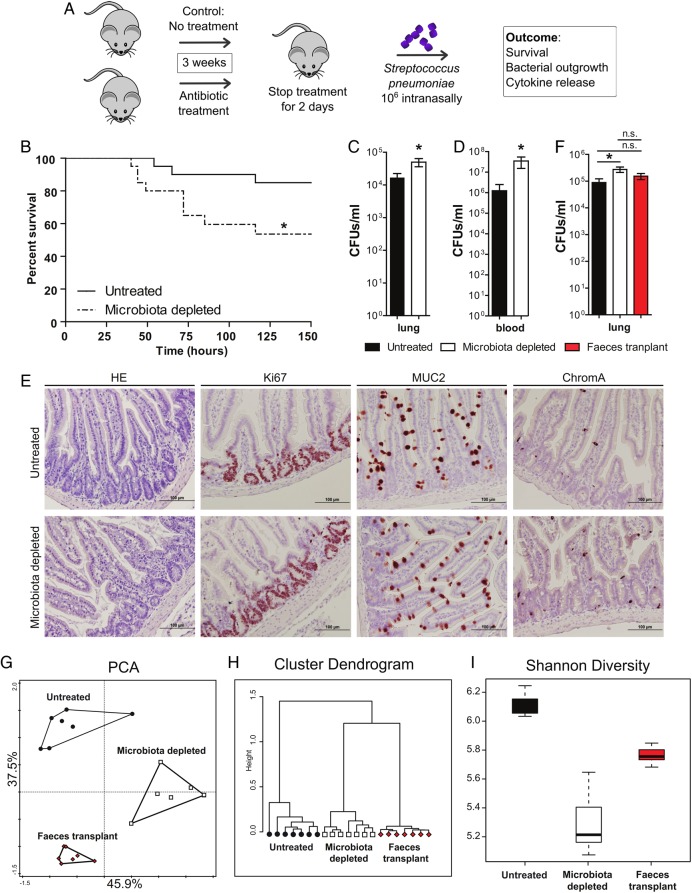
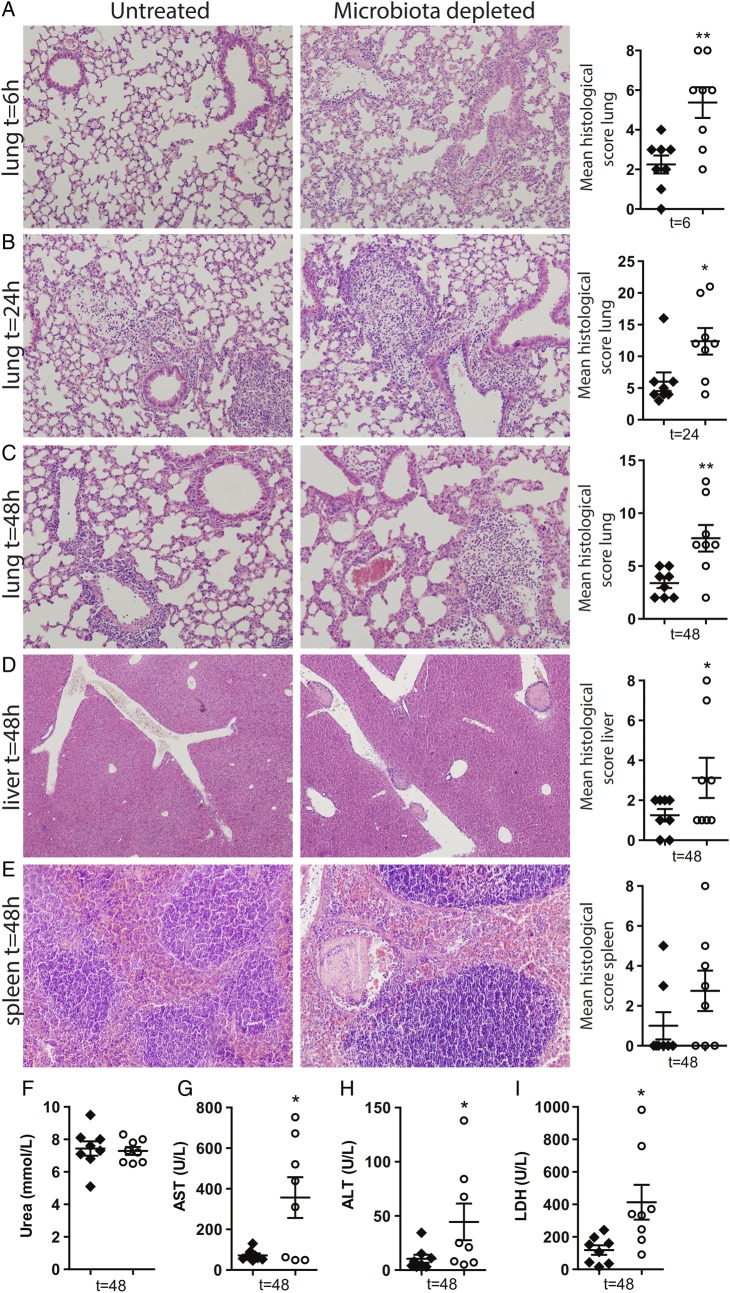
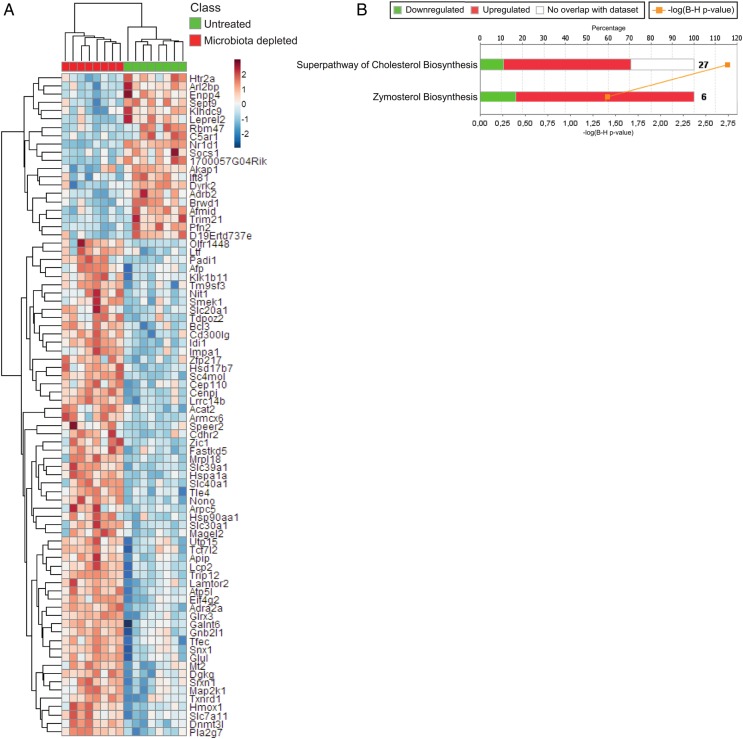
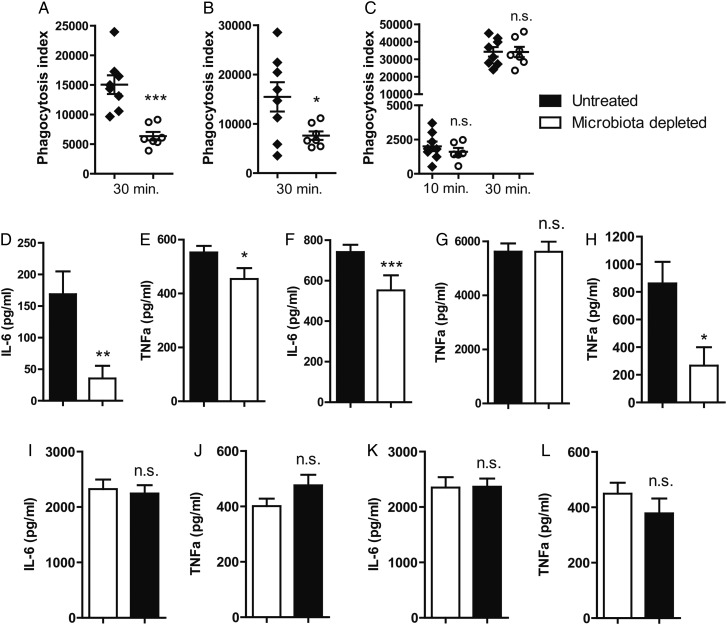
Objective: Pneumonia accounts for more deaths than any other infectious disease worldwide. The intestinal microbiota supports local mucosal immunity and is increasingly recognised as an important modulator of the systemic immune system. The precise role of the gut microbiota in bacterial pneumonia, however, is unknown. Here, we investigate the function of the gut microbiota in the host defence against Streptococcus pneumoniae infections. Design: We depleted the gut microbiota in C57BL/6 mice and subsequently infected them intranasally with S. pneumoniae . We then performed survival and faecal microbiota transplantation (FMT) experiments and measured parameters of inflammation and alveolar macrophage whole-genome responses. Results: We found that the gut microbiota protects the host during pneumococcal pneumonia, as reflected by increased bacterial dissemination, inflammation, organ damage and mortality in microbiota-depleted mice compared with controls. FMT in gut microbiota-depleted mice led to a normalisation of pulmonary bacterial counts and tumour necrosis factor-α and interleukin-10 levels 6 h after pneumococcal infection. Whole-genome mapping of alveolar macrophages showed upregulation of metabolic pathways in the absence of a healthy gut microbiota. This upregulation correlated with an altered cellular responsiveness, reflected by a reduced responsiveness to lipopolysaccharide and lipoteichoic acid. Compared with controls, alveolar macrophages derived from gut microbiota-depleted mice showed a diminished capacity to phagocytose S. pneumoniae . Conclusions: This study identifies the intestinal microbiota as a protective mediator during pneumococcal pneumonia. The gut microbiota enhances primary alveolar macrophage function. Novel therapeutic strategies could exploit the gut–lung axis in bacterial infections.
Overview
The claims and statistics of this paper haven’t been checked yet.
Free: it reads the open-access text and checks the first 5 claims that cite a source we can check. Create a free account to check every claim.
Integrity signals
Registry
Cites
Statistics
Figures
Verification
Claims the paper makes
The claims and statistics of this paper haven’t been checked yet.
Free: it reads the open-access text and checks the first 5 claims that cite a source we can check. Create a free account to check every claim.
Claims other papers make about this one
Each is checked against this paper’s own text: does it say what the citing paper says it does?
The cited source says what the claim attributes to it.
In the citing paper
“Antibiotic-pretreated animals displayed altered cytokine profiles in the lung compared to untreated controls following S. pneumoniae infection, including significantly decreased TNF-α levels at 6 and 24 h after infection.”
From Respiratory viral infection-induced microbiome alterations and secondary bacterial pneumonia. (2018) · cites this paper as [55]
In the citing paper
“but also enhance the resistance and recovery ability of the lung against diseases (29,30).”
From The Role of Gut Microbiota in Lung Cancer: From Carcinogenesis to Immunotherapy (2021) · doi:10.3389/fonc.2021.720842 · cites this paper as [29]
In the citing paper
“microbiota-depleted C57BL/6 mice infected with S. pneumoniae presented with higher bacterial dissemination, inflammation, organ damage and mortality than undepleted C57BL/6 mice.”
From The Role of Gut Microbiota in Lung Cancer: From Carcinogenesis to Immunotherapy (2021) · doi:10.3389/fonc.2021.720842 · cites this paper as [29]
In the citing paper
“FMT to intestinal microbiota-exhausted mice miraculously rebounded lung bacterial counts and IL-10 and TNF-a levels (29).”
From The Role of Gut Microbiota in Lung Cancer: From Carcinogenesis to Immunotherapy (2021) · doi:10.3389/fonc.2021.720842 · cites this paper as [29]
In the citing paper
“microbiome depletion led to decreased survival, increased lung bacterial burden, and increased systemic dissemination of bacteria”
From Respiratory viral infection-induced microbiome alterations and secondary bacterial pneumonia. (2018) · cites this paper as [55]
1 more claim about this paper
Create a free account to see every claim other papers make about this one.
Self-check
Percentages, sums and reported differences re-computed from the paper’s own numbers.
The self-check needs the paper’s full text.
Citations
Cites
Smyth, G. K. (2004) · Statistical Applications in Genetics and Molecular Biology · doi:10.2202/1544-6115.1027 · Cited by 11,829
Enterotypes of the human gut microbiome
MetaHIT Consortium (additional members), Arumugam, M., Raes, J., Pelletier, E., Le Paslier, D., Yamada, T., Mende, D. R., Fernandes, G. R., Tap, J., Bruls, T., et al. (2011) · Nature · doi:10.1038/nature09944 · Cited by 7,548
Severe Sepsis and Septic Shock
Angus, D. C., & van der Poll, T. (2013) · New England Journal of Medicine · doi:10.1056/nejmra1208623 · Cited by 3,961
The impact of the gut microbiota on human health: an integrative view
Clemente, J. C., Ursell, L. K., Parfrey, L. W., & Knight, R. (2012) · Cell · doi:10.1016/j.cell.2012.01.035 · Cited by 3,710 · cited 1×
“5 6 – 13 The intestinal microbiota may be of profound clinical relevance, particularly for intensive care medicine where the majority of patients are treated with antibiotics, which have pervasive and long-term effects on their intestinal microbiota.”
BackgroundGut Microbiota Metabolism of Dietary Fiber Influences Allergic Airway Disease and Hematopoiesis
Trompette, A., Gollwitzer, E. S., Yadava, K., Sichelstiel, A. K., Sprenger, N., Ngom-Bru, C., Blanchard, C., Junt, T., Nicod, L. P., Harris, N. L., et al. (2014) · Nature Medicine · doi:10.1038/nm.3444 · Cited by 2,862
Dethlefsen, L., & Relman, D. A. (2011) · Proceedings of the National Academy of Sciences · doi:10.1073/pnas.1000087107 · Cited by 2,421
Microbiota regulates immune defense against respiratory tract influenza A virus infection
Ichinohe, T., Pang, I. K., Kumamoto, Y., Peaper, D. R., Ho, J. H., Murray, T. S., & Iwasaki, A. (2011) · Proceedings of the National Academy of Sciences · doi:10.1073/pnas.1019378108 · Cited by 1,502
Recognition of peptidoglycan from the microbiota by Nod1 enhances systemic innate immunity
Clarke, T. B., Davis, K. M., Lysenko, E. S., Zhou, A. Y., Yu, Y., & Weiser, J. N. (2010) · Nature Medicine · doi:10.1038/nm.2087 · Cited by 1,154
Diet dominates host genotype in shaping the murine gut microbiota
Carmody, R. N., Gerber, G. K., Luevano, J. M., Gatti, D. M., Somes, L., Svenson, K. L., & Turnbaugh, P. J. (2015) · Cell Host & Microbe · doi:10.1016/j.chom.2014.11.010 · Cited by 1,103 · cited 1×
“In order to deplete the gut microbiota, mice were treated with broad-spectrum antibiotics (ampicillin 1 g/L, Sigma; neomycin sulfate 1 g/L, Sigma; metronidazole 1 g/L, Sano fi -Aventis and vancomycin 0.5 g/L, Sandoz) in drinking water for 3 weeks as described.”
MethodInfluentialUbeda, C., Taur, Y., Jenq, R. R., Equinda, M. J., Son, T., Samstein, M., Viale, A., Socci, N. D., van den Brink, M. R. M., Kamboj, M., et al. (2010) · Journal of Clinical Investigation · doi:10.1172/jci43918 · Cited by 943 · cited 1×
“36 37 Details on the phagocytosis and cell stimulation experiments are provided in the online supplementary fi le.”
Background
Research works printed but not linked: 1
- 10.1172/JCI200215277 · doi:10.1172/jci200215277
Cited by
Items 801–831 of 831
Guern, R. L. (2019) · theses.fr (ABES) · doi:10.70675/df8d5bddz7fd8z4510za8b0z2d2b5dd1b937 · Cited by 1
Jollet, M. (2020) · theses.fr (ABES) · doi:10.70675/ee9d8194z0dd3z46e4z8de0z4e5992bb08a0 · Cited by 1
La mémoire de l’immunité innée des cellules épithéliales bronchiques
Bigot, J. (2021) · theses.fr (ABES) · doi:10.70675/4591a54dzee90z44c3z8e69zc26ac4e4e63a
Impact du microbiote intestinal sur les surinfections bactériennes post-grippales
Sencio, V. (2020) · theses.fr (ABES) · doi:10.70675/15f9ad6cz34d4z4d8azac75zece70c0fd094
Gut Microbiome-Malaria Axis: Mechanism, Clinical Implications and Research Gaps
Kuntal, K., & Singh, N. (2026) · Journal of Clinical Immunology & Microbiology · doi:10.46889/jcim.2026.7109
Yang, W., Ren, Q., & Li, B. (2026) · Frontiers in Pediatrics · doi:10.3389/fped.2026.1809311
Gut Microbiota as a Key Modulator in the Pathophysiology of Sepsis: SURVEIL Project
Bazzano, C., Caramaschi, A., Massa, N., Collani, S., Mellai, M., Barizzone, N., Rocchetti, A., Bottino, P., Caroppo, S., Bonato, V., et al. (2026) · MicrobiologyOpen · doi:10.1002/mbo3.70301
“…muciniphila —while others, including Enterococcus spp., Clostridioides difficile , Escherichia coli , Klebsiella spp., and Staphylococcus aureus , are linked to gut barrier damage and systemic inflammation (Shimizu et al. 2020a; Haak and Wiersinga 2017; Schuijt et al. 2016; Zaborin et al. 2014).”
Omics Approaches to Unraveling the Complexity of the Gut-Lung Axis
Peng, B., & Chang, X. (2026) · Methods in molecular biology · doi:10.1007/978-1-0716-5264-0_8
Jo, E., Jeon, S., Lee, J., Kim, G., Yoo, J.-H., Yu, J. W., 이진용, Kim, S. I., Jung, B., Choi, J.-W., et al. (2026) · Research Square · doi:10.21203/rs.3.rs-9904033/v1
Gut mycobiota alteration contributes to the pathogenesis of Pneumocystis pneumonia
Chen, Y., Kang, H., Yang, B. F., Feng, L., Tong, R., Zhao, Z., Liang, L., Li, X., Liu, X., & Tong, Z. (2026) · Journal of Translational Medicine · doi:10.1186/s12967-026-08153-7
“In addition, animal studies have described the protective role of the intestinal flora in host defense against Streptococcus pneumoniae infection [5].”
Bi, J., Yu, B., Zhang, Y., Zheng, G., Han, Y. Y., Yan, Y., Wang, W., Wu, L., Wang, Y., & Yi, Z. (2026) · Microorganisms · doi:10.3390/microorganisms14061374
“Recent studies have explored the role of microbiota in the development of MPP, highlighting potential associations with the gut, lung, nasopharyngeal (NP), or oropharyngeal (OP) microbiota [9,11,12].”
Bao, Y., Qi, L., Zou, G., Yang, X., Ma, Y., Li, Z., Du, X., & Zhao, P. (2026) · Cell Proliferation · doi:10.1111/cpr.70253 · Cited by 1
“The gut-lung axis represents a crucial immunoregulatory circuit connecting intestinal and pulmonary immunity, providing compelling support for the ‘gut-lymph’ theory of pathological cross-talk [109].”
Alanazi, A. (2026) · Journal of Clinical Laboratory Analysis · doi:10.1002/jcla.70307
Zeng, L., Xue, B., Ren, X., 宫树桐, & Yan, J. (2026) · Frontiers in Cellular and Infection Microbiology · doi:10.3389/fcimb.2026.1781229
“Depletion of the gut microbiota in mice using broad-spectrum antibiotics results in a pronounced escalation of Streptococcus pneumoniae -induced bacterial dissemination, pulmonary in fl am-mation, lung injury, and mortality (Schuijt et al., 2016).”
InfluentialPopović, D., Mirkov, I. I., Tucović, D., Aleksandrov, A. P., Malešević, A., Stanojević, S., Glamočlija, J., Tolinački, M., Živković, M., & Kulaš, J. B. (2026) · Biology · doi:10.3390/biology15141132
“Higher cytokine levels were also noted in antibiotic-treated animals infected with the bacteria E. coli or S. pneumoniae [24,25,27].”
InfluentialThe gut, conductor of our health: putting the microbiota in the spotlight, a symposium report
Suzuki, K., Vidra, N., Kajita, C., & Pot, B. (2026) · Gut Microbiome · doi:10.1017/gmb.2026.10027
“FMT with faeces collected before antibiotic administration normalized their response to infection (Schuijt et al., 2016).”
Tian, L., & Xu, S.-S. (2026) · World Journal of Gastroenterology · doi:10.3748/wjg.123234
Hatakeyama, J., Yamamoto, R., Yoshida, M., Yamada, K., Inoue, K., Irahara, T., Ichimaru, S., Nakanishi, N., Higashibeppu, N., Nakamura, K., et al. (2026) · Annals of Intensive Care · doi:10.1016/j.aicoj.2026.100130
“Subgroup analyses suggested that treatment effects may vary by ICU population, but these findings should be interpreted cautiously because certainty of evidence was not formally assessed and no hierarchy of superiority among biotic classes was established.”
Protecting the Gut Microbiome When Treating Bloodstream Infections: The Price of Anaerobic Coverage
Kolodyazhna, A., & Wiersinga, W. J. (2026) · Clinical Infectious Diseases · doi:10.1093/cid/ciag461
Self-citationStoner, S. N., Fairbanks-Mahnke, A., & Clark, S. E. (2026) · Journal of Bacteriology · doi:10.1128/jb.00228-26
Vu, J. B., Swartzman, I., Pecha, R. L., Crabtree, S. J., Holliday, J., & Rachakonda, V. (2026) · Clinical and Translational Gastroenterology · doi:10.14309/ctg.0000000000001084
“Although less established, this may also re fl ect the signi fi cance of CDC as a marker of a dysregulated intestinal microbiome, which has been shown to play a role in systemic immune responses to nonintestinal infections (49).”
Advances in stroke-associated pneumonia in the era of revascularization therapy
Xu, Y., Zhang, Y., Pan, Y., Liu, L., Ji, R., Wang, Y., & Wang, P. (2026) · Chinese Medical Journal · doi:10.1097/cm9.0000000000004224
“[89] It strengthens respiratory defenses by activating granulocyte–macrophage colony-stimulating factor (GM-CSF) signaling, [89] which stimulates killing of alveolar macrophages and clearance of pathogens through extracellular signal-regulated kinase signaling.”
Saleh, Z. H., El-Enbaawy, M. I., Kamal, M. A., Mahmoud, H., & Hassan, M. (2026) · Veterinary Microbiology · doi:10.1016/j.vetmic.2026.111225
The gut–lung axis in early life: microbiome-associated mechanisms and clinical relevance
Klischke, L., Rahn, A., Fortmann, I., Dammann, M.-T., Ricklefs, I., Sugihara, F., Glaser, K., Klingenberg, C., Härtel, C., & Pirr, S. M. (2026) · European Respiratory Review · doi:10.1183/16000617.0147-2026
“…demonstrate that the gut microbiota enhances resistance to bacterial and viral respiratory infections by modulating alveolar macrophage function, increasing pulmonary granulocyte – macrophage colony-stimulating factor production, and augmenting interferon-β -mediated antiviral immunity [124 – 126].”
Ali, S., Ali, B., Shaukat, A., Alghamdi, S. A., Kabrah, A. M., Ahmed, M., & Zhang, L. (2026) · Veterinary Research Communications · doi:10.1007/s11259-026-11535-3
“…of interferon-gamma ( IFN-γ ), interleukin-12 ( IL-12 ), and inducible nitric oxide synthase (iNOS) remodels the intestinal environment to favor nitrate-respiring facultative anaerobic bacteria, particularly Enterobacteriaceae, while suppressing obligate anaerobic commensals (Schuijt et al. 2016).”
InfluentialALABI, A. K., Ngwese, M. M., Essone, P. N., Mbouna, A. V. N., Kabwende, A. L., Mougeni, F. L., Mahmoudou, S., Kokou, K., Esen, M., Lell, B., et al. (2026) · Infection · doi:10.1007/s15010-026-02906-8
The role of the respiratory microbiome in acute and chronic respiratory diseases
Heinzinger, L. R., Segal, L. N., & Dickson, R. P. (2026) · Nature Reviews Microbiology · doi:10.1038/s41579-026-01377-w · Cited by 3
The lung-gut axis and airway inflammation in COPD
Huang, H., Huang, S., He, X., & Wang, M. (2026) · Immunopharmacology and Immunotoxicology · doi:10.1080/08923973.2026.2746677
Cheng, M., Zhang, M., Wang, W., 贾娴娴, & Cong, B. (2026) · Pharmaceuticals · doi:10.3390/ph19101643
“This pattern is consistent with an association model in which metformin-responsive microbial–metabolic modules accompany reduced lung inflammation [23,26,32,44].”
Guo, T., Cao, W., Sun, M., Hou, F., Zhao, D., Pan, T., Yu, S., Liu, M., Guan, J., Wang, N., et al. (2026) · Probiotics and Antimicrobial Proteins · doi:10.1007/s12602-026-11270-w
Sellmaier, J., Dörner, P., Röwekamp, I., Boillot, L., Tarnowski, B., Pascual-Leone, B. M., Krzanowski, M., Igbokwe, V., Witzenrath, M., Schoonjans, K., et al. (2026) · Research Square · doi:10.21203/rs.3.rs-11243408/v1
Metadata
- Authors
- Schuijt, T. J., Lankelma, J. M., Scicluna, B. P., de Sousa e Melo, F., Roelofs, J. J. T. H., de Boer, J. D., Hoogendijk, A. J., de Beer, R., de Vos, A., Belzer, C., de Vos, W. M., van der Poll, T., & Wiersinga, W. J.
- Affiliations
- Amsterdam UMC Location University of Amsterdam (NL)
- Center for Experimental and Molecular Medicine, Academic Medical Center, University of Amsterdam, Amsterdam, The Netherlands
- Wageningen University & Research (NL)
- Laboratory of Microbiology, Wageningen University, Wageningen, The Netherlands
- Corresponding author
- Wiersinga, W Joost
- Venue
- Gut
- Publisher
- BMJ
- Published
- 2015-10-28
- Volume
- 65
- Issue
- 4
- Pages
- 575-583
- ISSN
- 0017-5749 (ISSN-L)
- 1468-3288
- PMC
- PMC4819612
- OpenAlex
- W2175568660
- Cited by
- 832
- References
- 47
- Citations by year
- 2026: 59 · 2025: 90 · 2024: 90 · 2023: 83 · 2022: 104 · 2021: 93 · 2020: 107 · 2019: 61 · 2018: 59 · 2017: 54 · 2016: 28 · 2015: 3
- FWCI
- 20.72
- Type
- journal article
- Language
- en
- Open access
- hybrid
- doi.org
- Licence
- cc-by-nc
- Locations
- Gut (publishedVersion, cc-by-nc)
- Europe PMC (PubMed Central) (publishedVersion, cc-by-nc)
- PubMed Central (publishedVersion, cc-by-nc)
- PubMed (publishedVersion)
- Socio-Environmental Systems Modeling (acceptedVersion, cc-by-nc)
- Pure Amsterdam UMC (submittedVersion, other-oa)
- OAR@UM (University of Malta) (submittedVersion, other-oa)
- Data Archiving and Networked Services (DANS) (submittedVersion)
- Työväentutkimus Vuosikirja (submittedVersion, other-oa)
- HighWire Press Open Archive (submittedVersion)
- Data Archiving and Networked Services (DANS) (submittedVersion, cc-by-nc)
- Funders
- ZonMw
- Universiteit van Amsterdam
- Nederlandse Organisatie voor Wetenschappelijk Onderzoek
- Topics
- Life Sciences › Biochemistry, Genetics and Molecular Biology › Molecular Biology › Gut microbiota and health
- Health Sciences › Medicine › Epidemiology › Pneumonia and Respiratory Infections
- Health Sciences › Dentistry › Periodontics › Oral microbiology and periodontitis research
- Keywords
- gut microbiota, pneumococcal pneumonia, Streptococcus pneumoniae, alveolar macrophages, gut-lung axis, fecal microbiota transplantation, microbiota depletion, phagocytosis, lipopolysaccharide response, lipoteichoic acid, TNF-α, IL-10, inflammation, bacterial dissemination, host defense
- MeSH terms
- Gastrointestinal Microbiome, Animals, Anti-Bacterial Agents, Feces, Mice, Inbred C57BL, Pneumonia, Pneumococcal, Streptococcus pneumoniae, Tumor Necrosis Factor-alpha, Up-Regulation, Macrophages, Alveolar, Interleukin-10, Sepsis, Immunity, Mucosal, Mice, Bacterial Load, Transcriptome
About these checks
Registry, retraction, Cites and statistics results are computed, not judged, with one exception: a printed reference that no index lists is read once by a model before it counts as a citation error. Claims are extracted by a model and kept only when their quote appears verbatim in the text; each cited source is then checked, with a model’s help, for whether it says what the claim relies on. Those verdicts can be wrong — read the claim’s quote and the cited source before relying on one.
Statistics and arithmetic are recomputed, not judged.
Confidence bands are shown only for fields calibrated on our annotated test set. None is calibrated yet, so no band is shown.
What counts as a claim ›How we measure confidence ›How we check this ›
Are you an author, or do you see a problem with this page? Request a review
Data sources
Bibliographic data: Semantic Scholar, OpenAlex, Crossref.
Contains information from the Semantic Scholar Academic Graph Datasets, made available under the ODC Attribution License (ODC-BY 1.0).
Semantic Scholar’s data is described in: Kinney, R., et al. (2023). The Semantic Scholar Open Data Platform. arXiv:2301.10140.
