

Role of TLR4 in the gut-brain axis in Parkinson's disease: A translational study from men to mice
Open accessThe DOI matches its Crossref record; 59 of the 59 references it cites were found in a registry or an index.
Abstract
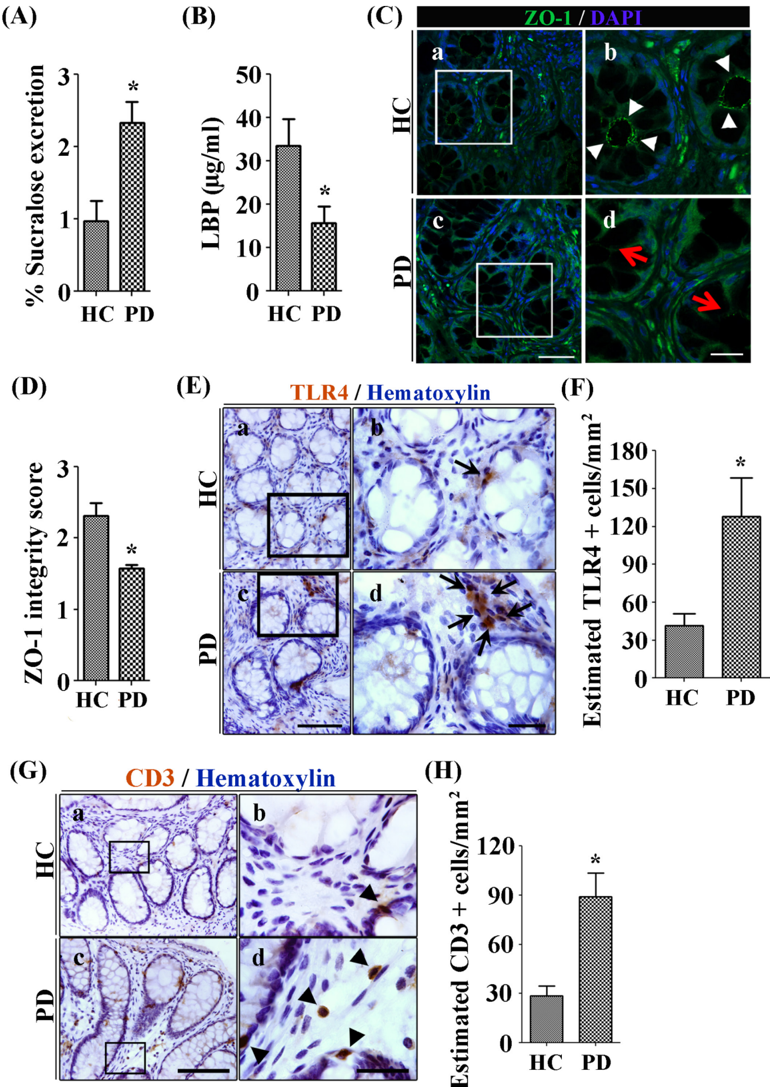
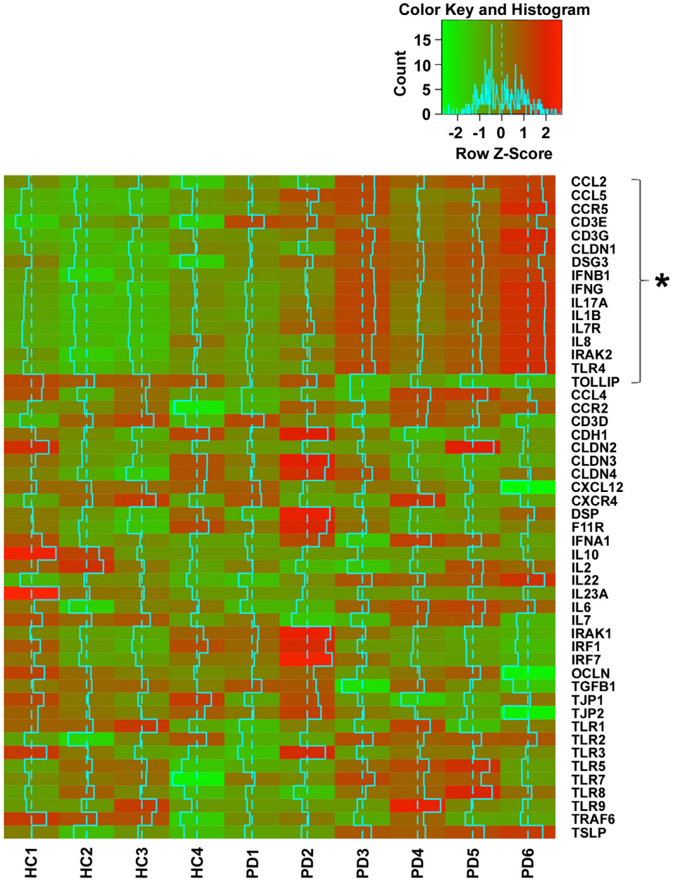
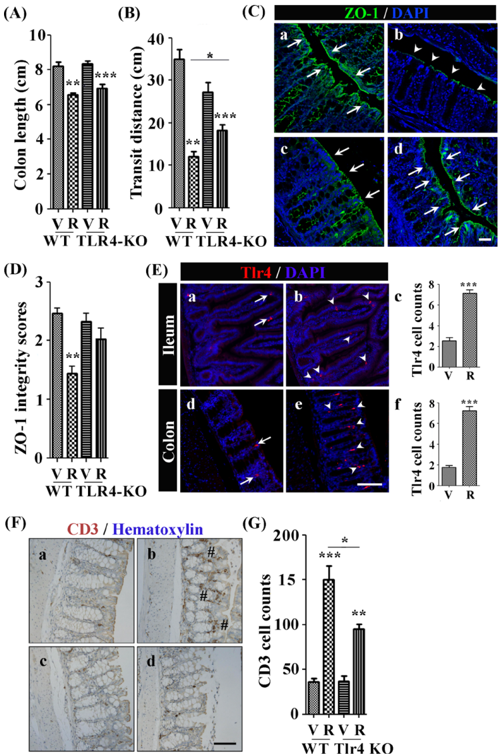
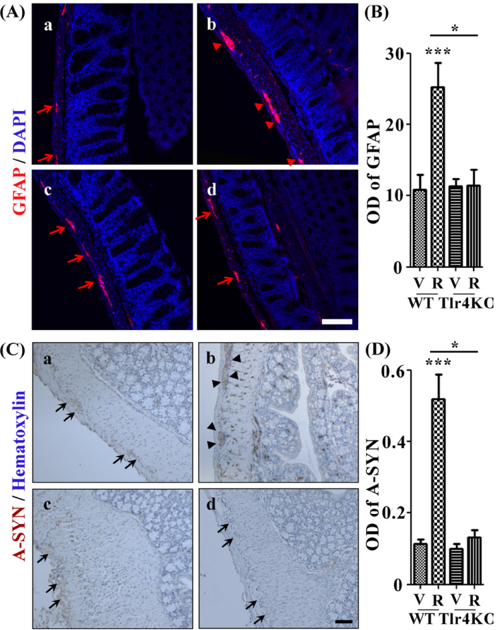
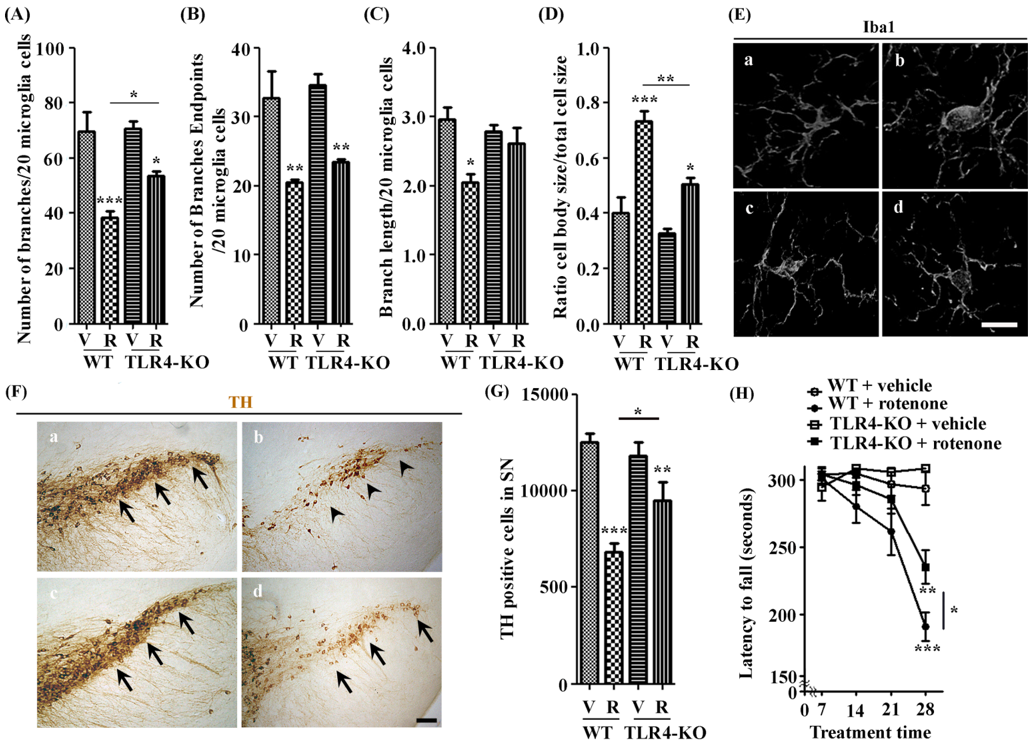
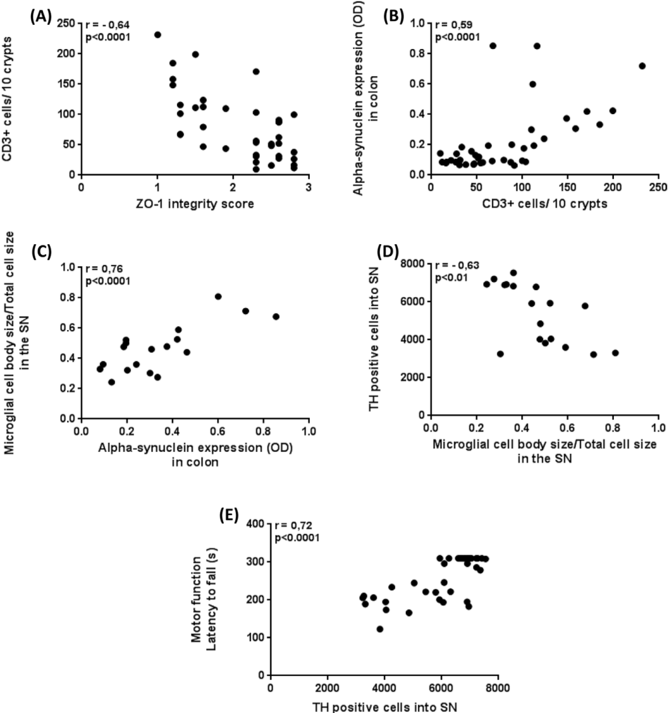
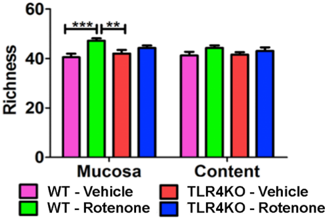
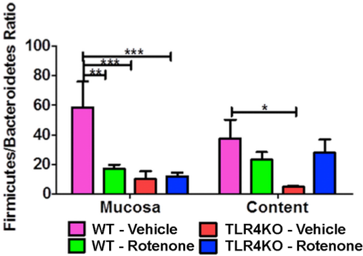
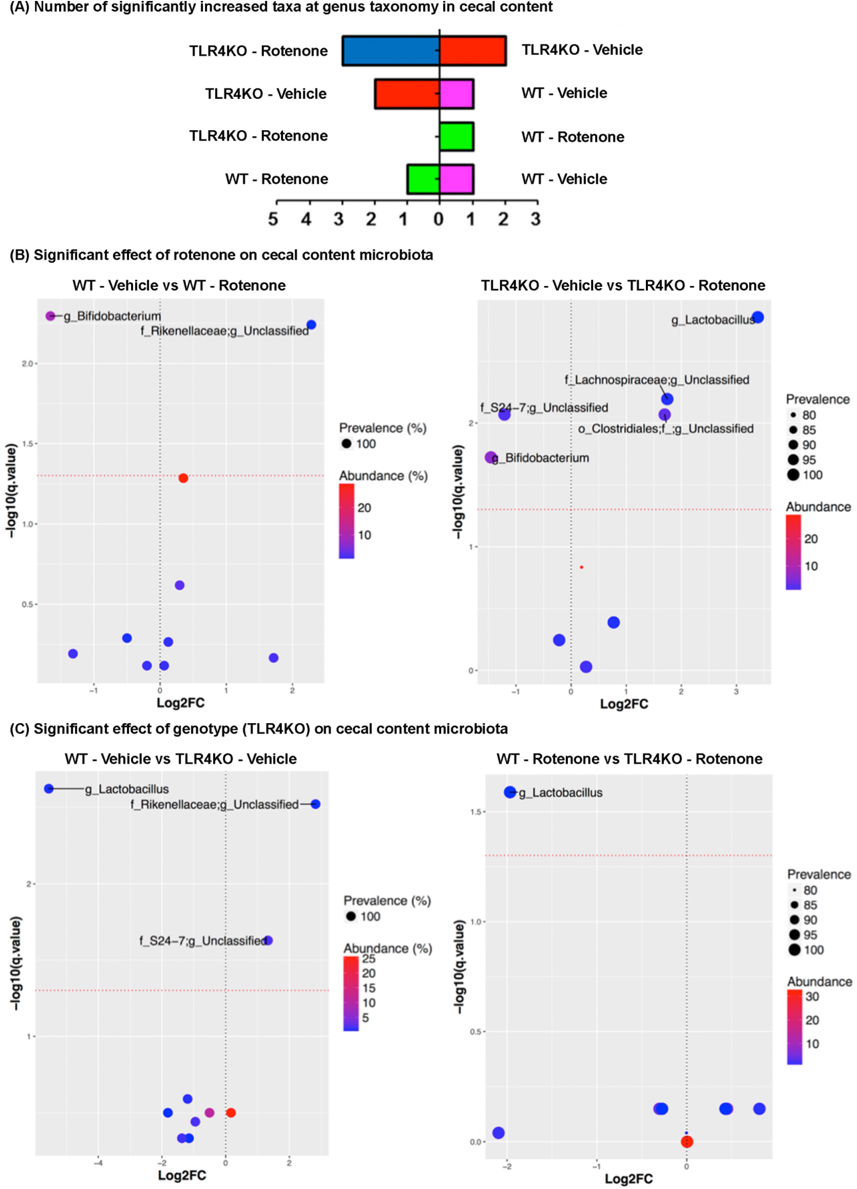
Objective: Recent evidence suggesting an important role of gut-derived inflammation in brain disorders has opened up new directions to explore the possible role of the gut-brain axis in neurodegenerative diseases. Given the prominence of dysbiosis and colonic dysfunction in patients with Parkinson’s disease (PD), we propose that toll-like receptor 4 (TLR4)-mediated intestinal dysfunction could contribute to intestinal and central inflammation in PD-related neurodegeneration. Design: To test this hypothesis we performed studies in both human tissue and a murine model of PD. Inflammation, immune activation and microbiota composition were measured in colonic samples from subjects with PD and healthy controls subjects and rotenone or vehicle-treated mice. To further assess the role of the TLR4 signalling in PD-induced neuroinflammation, we used TLR4-knockout (KO) mice in conjunction with oral rotenone administration to model PD. Results: Patients with PD have intestinal barrier disruption, enhanced markers of microbial translocation and higher pro-inflammatory gene profiles in the colonic biopsy samples compared with controls. In this regard, we found increased expression of the bacterial endotoxin-specific ligand TLR4, CD3+ T cells, cytokine expression in colonic biopsies, dysbiosis characterised by a decrease abundance of SCFA-producing colonic bacteria in subjects with PD. Rotenone treatment in TLR4-KO mice revealed less intestinal inflammation, intestinal and motor dysfunction, neuroinflammation and neurodegeneration, relative to rotenone-treated wild-type animals despite the presence of dysbiotic microbiota in TLR4-KO mice. Conclusion: Taken together, these studies suggest that TLR4-mediated inflammation plays an important role in intestinal and/or brain inflammation, which may be one of the key factors leading to neurodegeneration in PD.
Overview
The claims and statistics of this paper haven’t been checked yet.
Free: it reads the open-access text and checks the first 5 claims that cite a source we can check. Create a free account to check every claim.
Integrity signals
Registry
Cites
Statistics
Figures
Verification
Claims the paper makes
The claims and statistics of this paper haven’t been checked yet.
Free: it reads the open-access text and checks the first 5 claims that cite a source we can check. Create a free account to check every claim.
Claims other papers make about this one
Each is checked against this paper’s own text: does it say what the citing paper says it does?
The source backs part of the claim, not all of it — or backs it for a different population, condition or comparison.
In the citing paper
“These findings are in concordance with a substantial body of literature that consistently reports diminished SCFAs-producing species and SCFA levels in prodromal stage of PD and PD patients compared to healthy controls, which may be correlated with the clinical severity of PD.52,322–331”
From Microbiota–gut–brain axis and its therapeutic applications in neurodegenerative diseases (2024) · cites this paper as [326]
Experimental — accuracy not yet measuredThe source backs part of the claim, not all of it — or backs it for a different population, condition or comparison.
In the citing paper
“Gut microbiome alterations and intestinal barrier impairment have been observed in patients with MCI, AD, PD, and ALS patients.”
From Microbiota–gut–brain axis and its therapeutic applications in neurodegenerative diseases (2024) · cites this paper as [326]
Experimental — accuracy not yet measuredThe source backs part of the claim, not all of it — or backs it for a different population, condition or comparison.
In the citing paper
“Follow-up targeted assays revealed that these effects were mediated by suppressing neuroinflammation and reducing toll-like receptor 4 and tumor necrosis-α signaling [203].”
From The gut–brain axis in early Parkinson’s disease: from prodrome to prevention (2025) · cites this paper as [203]
Experimental — accuracy not yet measuredThe source backs part of the claim, not all of it — or backs it for a different population, condition or comparison.
In the citing paper
“Intestinal barrier dysfunction and increased intestinal permeability caused by inflammation in patients with Parkinson's disease provide conditions for the circulation of inflammatory factors and the exposure of the enteric nervous system to the microbiota and their harmful products.77”
From The role of gut dysbiosis in Parkinson’s disease: mechanistic insights and therapeutic options (2021) · cites this paper as [77]
Experimental — accuracy not yet measuredThe source backs part of the claim, not all of it — or backs it for a different population, condition or comparison.
In the citing paper
“The faecal microbiota of patients with Parkinson's disease shows a decrease in the production of SCFAs or their producing microbiota in most clinical studies.28,30,37,77,182”
From The role of gut dysbiosis in Parkinson’s disease: mechanistic insights and therapeutic options (2021) · cites this paper as [77]
Experimental — accuracy not yet measured
8 more claims about this paper
Create a free account to see every claim other papers make about this one.
Self-check
Percentages, sums and reported differences re-computed from the paper’s own numbers.
The self-check needs the paper’s full text.
Citations
Cites
Gut microbiota regulate motor deficits and neuroinflammation in a model of Parkinson's disease
Sampson, T. R., Debelius, J. W., Thron, T., Janssen, S., Shastri, G. G., Ilhan, Z. E., Challis, C., Schretter, C. E., Rocha, S., Gradinaru, V., et al. (2016) · Cell · doi:10.1016/j.cell.2016.11.018 · Cited by 3,622
Self-citationMechanisms underlying inflammation in neurodegeneration
Glass, C. K., Saijo, K., Winner, B., Marchetto, M. C., & Gage, F. H. (2010) · Cell · doi:10.1016/j.cell.2010.02.016 · Cited by 3,580
Host microbiota constantly control maturation and function of microglia in the CNS
Erny, D., Hrabě de Angelis, A. L., Jaitin, D., Wieghofer, P., Staszewski, O., David, E., Keren-Shaul, H., Mahlakoiv, T., Jakobshagen, K., Buch, T., et al. (2015) · Nature Neuroscience · doi:10.1038/nn.4030 · Cited by 3,569
Inflammasome-mediated dysbiosis regulates progression of NAFLD and obesity
Henao-Mejia, J., Elinav, E., Jin, C., Hao, L., Mehal, W. Z., Strowig, T., Thaiss, C. A., Kau, A. L., Eisenbarth, S. C., Jurczak, M. J., et al. (2012) · Nature · doi:10.1038/nature10809 · Cited by 2,435
Goetz, C. G., Poewe, W., Rascol, O., Sampaio, C., Stebbins, G. T., Counsell, C., Giladi, N., Holloway, R. G., Moore, C. G., Wenning, G. K., et al. (2004) · Movement Disorders · doi:10.1002/mds.20213 · Cited by 2,347
Neuroinflammation in Parkinson’s disease: A target for neuroprotection?
Hirsch, E. C., & Hunot, S. (2009) · The Lancet Neurology · doi:10.1016/s1474-4422(09)70062-6 · Cited by 1,984
Gut microbiota are related to Parkinson's disease and clinical phenotype
Scheperjans, F., Aho, V., Pereira, P. A. B., Koskinen, K., Paulin, L., Pekkonen, E., Haapaniemi, E., Kaakkola, S., Eerola‐Rautio, J., Pohja, M., et al. (2015) · Movement Disorders · doi:10.1002/mds.26069 · Cited by 1,968
How neuroinflammation contributes to neurodegeneration
Ransohoff, R. M. (2016) · Science · doi:10.1126/science.aag2590 · Cited by 1,967
The Role of Oxidative Stress in Parkinson's Disease
Dias, V., Junn, E., & Mouradian, M. M. (2013) · Journal of Parkinson’s Disease · doi:10.3233/jpd-130230 · Cited by 1,845
Variable expression of Parkinson's disease: A base‐line analysis of the DAT ATOP cohort
Jankovic, J., McDermott, M., Carter, J., Gauthier, S., Goetz, C., Golbe, L., Huber, S., Koller, W., Olanow, C., Shoulson, I., et al. (1990) · Neurology · doi:10.1212/wnl.40.10.1529 · Cited by 1,285
Research works printed but not linked: 1
- 53. Petrov Va, Saltykova iV, Zhukova ia, et al. analysis of gut microbiota in patients with parkinson's disease. Bull Exp Biol Med 2017;162:734-7. on February 13, 2020 at Utrecht University Library. Protected by copyright. http://gut.bmj.com/ Gut: first published as 10.1136/gutjnl-2018-316844 on 15 December 2018. Downloaded from · DOI · Paper page
Cited by
Items 301–400 of 468
Gastrointestinal dysmotility in rodent models of Parkinson’s disease
Pellegrini, C., & Travagli, R. A. (2024) · American Journal of Physiology-Gastrointestinal and Liver Physiology · doi:10.1152/ajpgi.00225.2023 · Cited by 8
Mechanisms of oral microflora in Parkinson's disease
Wang, B., Zhang, C. M., Shi, C., Zhai, T., Zhu, J., Wei, D., Shen, J., Liu, Z., Jia, K., & Zhao, L. (2024) · Behavioural Brain Research · doi:10.1016/j.bbr.2024.115200 · Cited by 12
Shi, Y. W., Qiao, C.-M., Zhou, Y., Wu, J. Y., Cui, C., Hong, H., Jia, X.-B., Huang, S.-B., Li, Y., Zhao, W., et al. (2021) · Biochemical and Biophysical Research Communications · doi:10.1016/j.bbrc.2021.03.109 · Cited by 8
An archaeal compound as a driver of Parkinson’s disease pathogenesisPreprint
Wilmes, P., Trezzi, J., Aho, V. T. E., Jäger, C., Schade, S., Janzen, A., Hickl, O., Kunath, B. J., Thomas, M. H., Schmit, K. J., et al. (2022) · Research Square · doi:10.21203/rs.3.rs-1827631/v1 · Cited by 13
Tuersong, T., Wu, Q. F., Chen, Y., Li, P. S., Yong, Y., Shataer, M., Shataer, S., Liang, Y., & Yang, X. L. (2025) · Phytomedicine · doi:10.1016/j.phymed.2025.156729 · Cited by 11
Tian, C., Yang, M., Chen, K., Luo, D., Yue, N.-N., Zhao, H., Zhang, Y., Lu, J., Liang, Y.-J., Song, Y., et al. (2025) · Journal of Inflammation Research · doi:10.2147/jir.s514838 · Cited by 9
DPP-4 inhibitor alleviates gut-brain axis pathology in Parkinson’s disease
Jeong, S. H., Kim, Y. J., Shin, J. Y., Oh, K. W., Lee, J. W., & Lee, P. H. (2025) · Gut · doi:10.1136/gutjnl-2025-334988 · Cited by 10
“This gut-brain axis PD model is further supported by our vagotomy experiment, which showed that vagotomy markedly attenuated α -syn propagation to the DMV. Unlike in prior studies, 22 32 our results showed no reduction in tight junction protein expression following rotenone treatment.”
Meng, X., Lin, S., Zhu, M., Wang, S., Kuang, H., Wang, Q., & Xie, T. (2025) · Ultrasonics Sonochemistry · doi:10.1016/j.ultsonch.2025.107636 · Cited by 9
“Moreover, MPTP induces significant damage to DA neurons in mice, leading to neuron loss, microglial activation, and discharge of inflammatory cytokines (TNF-α , IL-6, and IL-1 β ) [49].”
Figura, M., Milanowski, Ł., Nowak, J. M., Antoniak, A., Kopczyński, M., Zając, W., Sadowski, K., Hołubiuk, Ł., Walęcik-Kot, W., Szlufik, S., et al. (2026) · Annals of Neurology · doi:10.1002/ana.78153 · Cited by 14
“14 Patients with PD have an increased exposure to intestinal bacteria and their byproducts.”
Transcriptomic analysis reveals an association of FCGBP with Parkinson’s disease
Gómez‐Garre, P., Periñán, M. T., Jesús, S., Bacalini, M. G., Garagnani, P., Mollenhauer, B., Pirazzini, C., Provini, F., Trenkwalder, C., Franceschi, C., et al. (2022) · npj Parkinson s Disease · doi:10.1038/s41531-022-00415-7 · Cited by 7
Prokineticin‐2 Is Highly Expressed in Colonic Mucosa of Early Parkinson's Disease Patients
Bellini, G., Rettura, F., Palermo, G., Ippolito, C., Segnani, C., Pierucci, C., Fontanelli, L., Frosini, D., Nardini, V., Lambiase, C., et al. (2024) · Movement Disorders · doi:10.1002/mds.29937 · Cited by 7
The role of gut-derived short-chain fatty acids in Parkinson's disease
Saadh, M. J., Mustafa, A. N., Mustafa, M. A., Renuka Jyothi, S., Dabis, H. K., Prasad, G. V. S., Mohammad, I. J., Adnan, A., & Idan, A. H. (2024) · Neurogenetics · doi:10.1007/s10048-024-00779-3 · Cited by 9
“Studies have shown that increased intestinal permeability and reduced TJs are associated with the accumulation of α-syn in the colon, elevated levels of inflammatory markers in fecal samples, and imbalances in the GM in both PD patients and animal models of PD [12, 150, 179, 181].”
Li, T., Zhou, S.-Y., Quan, W., Zhou, Y., Wu, J., Zhao, L., Qiao, C.-M., Zhao, W., Cui, C., & Shen, Y. (2025) · Molecular Neurobiology · doi:10.1007/s12035-025-04938-x · Cited by 8
“…the intestinal barrier and subsequent low-grade inflammation in the PD patient gut, and studies have shown that compared to healthy individuals, colons from PD patients exhibit elevated expression of pro-inflammatory cytokines (TNF-α, IL-6, IL-1β and IFN-γ) and chemokines (CCL2, CCL5, CCR5) [7, 8].”
Mi, Y., Xie, X., Bao, Z., Xiong, X., Wang, X., & Zhang, H. (2022) · Tissue and Cell · doi:10.1016/j.tice.2022.102003 · Cited by 7
Anti-Inflammatory Effect of Traditional Chinese Medicine on the Concept of Mind-Body Interface
Tsai, S.-T., Nithiyanantham, S., Satyanarayanan, S. K., & Su, K. (2023) · Advances in experimental medicine and biology · doi:10.1007/978-981-19-7376-5_19 · Cited by 9
Experimental models of gut‐first Parkinson's disease: A systematic review
Videlock, E. J., Xing, T., Yehya, A. H. S., & Travagli, R. A. (2023) · Neurogastroenterology & Motility · doi:10.1111/nmo.14604 · Cited by 10
Cao, X.-Y., Liu, Y., Kan, J.-S., Huang, X.-X., Kambey, P. A., Zhang, C.-T., & Gao, J. (2024) · Brain Research Bulletin · doi:10.1016/j.brainresbull.2024.110970 · Cited by 6
Katsigianni, S., & Koutsouraki, E. (2026) · Molecular Neurobiology · doi:10.1007/s12035-026-05914-9 · Cited by 9
“Supporting this, Christensenellaceae has been linked to elevated LPS levels in individuals with subjective cognitive decline (SCD), potentially reflecting early barrier dysfunction [155].”
Jiang, Y., Yan, S.-T., Zhang, S.-Z., Wang, M., Diao, W.-M., Li, J., Fang, X., & Yin, H. H. (2024) · European Journal of Medicinal Chemistry · doi:10.1016/j.ejmech.2024.116945 · Cited by 7
Sheikh, K., Arasteh, J., Ebrahimi, M. T., & Hesampour, A. (2024) · Archives of Medical Research · doi:10.1016/j.arcmed.2024.103143 · Cited by 8
Non-Reproducibility of Oral Rotenone as a Model for Parkinson’s Disease in Mice
Niederberger, E., Wilken‐Schmitz, A., Manderscheid, C., Schreiber, Y., Gurke, R., & Tegeder, I. (2022) · International Journal of Molecular Sciences · doi:10.3390/ijms232012658 · Cited by 5
“Considering the absence of α-Syn and absence of TH differences in the SN (Figure 3, Supplementary Figure S2), mild microgliosis would agree with a subtle gut-to-brain effect in response to rotenonemediated disruption of gut homeostasis [36,37].”
BackgroundChen, G., Xiang, K., Sun, L., Shi, Y., Meng, C., Song, L., Liu, R., Li, W., & Pan, H. (2021) · Journal of Medical Virology · doi:10.1002/jmv.27115 · Cited by 6
“Studies have shown that the absence of TLR4 can prevent nerve damage, such as neuroinflammation or neurodegeneration, indicating its important role in neuropathology.(18,19) TLR7 is an endosomal receptor that can recognize single‐stranded RNA (ssRNA) ligands derived from microorganisms or autoantigens,(20) which subse…”
BackgroundVingeliene, S., Hiyoshi, A., Lentjes, M. A. H., Brummer, R. J., Fall, K., & Montgomery, S. (2024) · Brain Communications · doi:10.1093/braincomms/fcae098 · Cited by 6
“…study of Parkinson’s disease patients identified 11 bacterial species of Gram-negative bacteria with LPSs, capable of eliciting strong immune reaction and inflammation via Toll-like receptor 4 signalling pathway, 22,23 whereas Prevotella copri that can inhibit this activation was reduced.”
BackgroundMikołajczyk, M., Złotkowska, D., & Mikołajczyk, A. (2024) · International Journal of Molecular Sciences · doi:10.3390/ijms252211868 · Cited by 8
Li, X., Hao, X., Chen, C., Zhai, C., Pan, T., Zhou, X., Liu, Y., Wu, D., & Chen, X. (2024) · Frontiers in Cellular and Infection Microbiology · doi:10.3389/fcimb.2024.1421270 · Cited by 7
Probiotic: A Gut Microbiota-Based Therapeutic Approaches for the Treatment of Parkinson’s Disease
Rout, M., Prusty, S. K., & Kar, D. M. (2024) · Current Clinical Pharmacology · doi:10.2174/0127724328332572241219102122 · Cited by 5
Chen, Z., Li, J., Wenjuan, X., Wu, X., Xiang, F., Li, X., Zhang, M., Zheng, J., Kang, X., & Wu, R. (2023) · Frontiers in Endocrinology · doi:10.3389/fendo.2023.1255925 · Cited by 7
Gut Microbes: The Gut Brain Connection
Lynch, C. M. K., O’Riordan, K. J., Clarke, G. A., & Cryan, J. F. (2023) · Springer eBooks · doi:10.1007/978-3-031-46712-7_4 · Cited by 6
Aggregation of alpha-synuclein in enteric neurons does not impact function in vitro
Bindas, A. J., Nichols, K. N., Roth, N. J., Brady, R., Koppes, A. N., & Koppes, R. A. (2022) · Scientific Reports · doi:10.1038/s41598-022-26543-x · Cited by 6
Videlock, E. J., Hatami, A., Zhu, C., Kawaguchi, R., Chen, H., Khan, T., Yehya, A. H. S., Stiles, L., Joshi, S. M., Hoffman, J. M., et al. (2023) · Journal of Parkinson s Disease · doi:10.3233/jpd-223568 · Cited by 6
“In addition, GI inflammation and increased epithelial permeability affect the severity or manifestation of PD phenotypes in rodent models [61, 84, 89, 90].”
BackgroundInfluentialLiu, S., Zhao, Q., Tang, J., Li, X., Wang, J., Zhao, Y., Yang, Z., Pan, X., Xiang, R. H., Tian, J., et al. (2025) · CNS Neuroscience & Therapeutics · doi:10.1111/cns.70424 · Cited by 6
“Based on this, it is proposed that PD may be initiated by damage to the intestinal barrier, triggering inflammation-induced increases in intestinal permeability that could lead to greater exposure of the enteric nervous system (ENS) to the microbiome and its toxic products [33].”
Diet for the prevention and treatment of Parkinson’s disease
Chen, W., Fan, T., & Xu, R. (2025) · Frontiers in Nutrition · doi:10.3389/fnut.2025.1587246 · Cited by 6
Jian-Da, L., Li, H., Hsu, C., Lin, T.-L., Chuang, H.-L., Lin, H.-I., Ho, E.-P., Chen, Y.-H., Liu, C.-W., Chuang, Y.-T., et al. (2025) · Journal of Advanced Research · doi:10.1016/j.jare.2025.12.028 · Cited by 4
“Supporting these findings, elevated inflamma-tory markers have been observed in feces and colon biopsies from PD patients compared to unaffected controls [9,10].”
InfluentialFu, J., Zhang, Y., Gao, J., Lan, M., Zhang, Z., Liang, R., Zhou, H., Liu, S., Zhou, Z., Zhao, J., et al. (2026) · Frontiers in Psychiatry · doi:10.3389/fpsyt.2025.1629290 · Cited by 9
“The primary cause of in fl ammation that results in neurodegeneration may be the gut ’ s dysbiosis (33, 34).”
Gut microbiota and brain aging: a comparative review of African and western populations
Ortutu, B. F., Okin, A. O., Darkwah, K. O., Onuorah, U. M., Maigoro, A. Y., & Iheme, G. O. (2026) · Frontiers in Aging Neuroscience · doi:10.3389/fnagi.2026.1740408 · Cited by 5
Sharma, N., Sharma, M., Thakkar, D., Kumar, H., Smetanová, S., Burešová, L., Andrla, P., & Khairnar, A. (2025) · ACS Pharmacology & Translational Science · doi:10.1021/acsptsci.4c00286 · Cited by 5
Parkinson’s disease beyond the brain: implications for treatments
Naeini, S. M., Lopez, M. D., Fraser, P. E., & Tandon, A. (2025) · Frontiers in Aging Neuroscience · doi:10.3389/fnagi.2025.1600782 · Cited by 4
“This is supported by colonic samples from PD patients which revealed increased pro-inflammatory gene markers and cytokine expression (Perez-Pardo et al., 2019).”
InfluentialGut Microbes in Parkinson's Disease
Markidi, A., Elford, J. D., Berkers, C. R., Kraneveld, A. D., & Perez‐Pardo, P. (2024) · Elsevier eBooks · doi:10.1016/b978-0-323-99971-7.00002-3 · Cited by 4
Self-citationNeuroimmune Connectomes in the Gut and Their Implications in Parkinson’s Disease
Thomasi, B. B. D. M., Valdetaro, L., Gulbransen, B. D., & Gomes, A. L. T. (2023) · Molecular Neurobiology · doi:10.1007/s12035-023-03679-z · Cited by 5
“These observations are strengthened by genetic micro-array data that identified several pro-inflammatory genes upregulated in the sigmoid mucosa of PD patients [45] (Table 1).”
Zhang, L., Wan, Z., He, X., Cheng, L., Wang, P., Li, J., & Du, J. (2021) · Neurological Research · doi:10.1080/01616412.2021.2018865 · Cited by 4
“While other researchers investigated TLR4mediated inflammation plays an important role in intestinal and/or brain inflammation, which may be one of the key factors leading to neurodegeneration in PD [34].”
BackgroundGut microbiome dysbiosis is associated with elevated toxic bile acids in Parkinson’s diseasePreprint
Li, P., Killinger, B. A., Beddows, I., Ensink, E., Yılmaz, A., Lubben, N., Lamp, J. A., Schilthuis, M., Vega, I. E., Britschgi, M., et al. (2020) · bioRxiv (Cold Spring Harbor Laboratory) · doi:10.1101/2020.09.26.279851 · Cited by 4
Wang, N., Pan, X., Hong-kang, Z., Guo, Y., & Qian, H. (2021) · bioRxiv (Cold Spring Harbor Laboratory) · doi:10.1101/2021.05.03.442390 · Cited by 4
“In patients with PD, TLR4 can activate downstream myeloid differentiation 88(MyD88)-dependent signal cascade mediating cytokines IL-1β level in colon(Perez-Pardo et al., 2019).”
BackgroundThe Double‐Edged Sword: The Complex Function of Enteric Glial Cells in Neurodegenerative Diseases
Mendonça, I. P., & Peixoto, C. A. (2025) · Journal of Neurochemistry · doi:10.1111/jnc.70069 · Cited by 5
The role of secondary genomes in neurodevelopment and co-evolutionary dynamics
Singh, S., Saini, V., & Jha, H. C. (2025) · International review of neurobiology · doi:10.1016/bs.irn.2025.03.008 · Cited by 5
Menozzi, E., Geiger, M., Meslier, V., Fierli, F., Gilles, M., Chau, K., David, A., Golan, R. S., Famechon, A., Koletsi, S., et al. (2025) · Frontiers in Neuroscience · doi:10.3389/fnins.2025.1546203 · Cited by 3
Chi, F., Chen, K., Yin, Y., Hakovirta, J. R., & Saris, P. E. J. (2026) · Sustainable Microbiology · doi:10.1093/sumbio/qvag002 · Cited by 7
Han, D., Zhang, C., Huang, R., & Gao, Y. (2026) · Ageing Research Reviews · doi:10.1016/j.arr.2026.103220 · Cited by 4
Shi, Y., Zhao, X., Si, Y., Zhang, X., Wang, D., Yao, L., & Sun, L. (2025) · BMC Biology · doi:10.1186/s12915-025-02358-w · Cited by 4
“Systematically, effector T cells, the major cell type of adaptive immunity, have been discovered to significantly increase clonal expansion in CNS, blood, and gut of PD patients [34, 35].”
Research progress on natural products in regulating the gut microbiota in Parkinson’s disease
Jia, Y., Zhang, Y., Tai, X., Zhao, T., Zhang, H., & Zhou, H. (2025) · Frontiers in Pharmacology · doi:10.3389/fphar.2025.1667694 · Cited by 5
Food for thought: probiotic modulation of microglial activity in Parkinson's disease
Kimber, I. K., & Tremblay, M. (2025) · Frontiers in Molecular Neuroscience · doi:10.3389/fnmol.2025.1690507 · Cited by 4
TLR4 in Neurodegenerative Diseases: Alzheimer’s and Parkinson’s Diseases
Balducci, C., & Forloni, G. (2020) · Progress in inflammation research · doi:10.1007/978-3-030-56319-6_7 · Cited by 4
Kaur, G., Behl, T., Sehgal, A., Singh, S., Sharma, N., Kumar, A., Arora, S., & BUNGAU, S. G. (2021) · Journal of Molecular Neuroscience · doi:10.1007/s12031-021-01811-z · Cited by 3
RetractedSegura‐Aguilar, J. (2021) · Elsevier eBooks · doi:10.1016/b978-0-12-822120-4.00001-0 · Cited by 5
Zhang, X., Hu, M., Li, Y., Yao, W. A. N. G., Zhen, R. O. N. G., & Ma, J. (2025) · 世界针灸杂志:英文版 · doi:10.1016/j.wjam.2025.01.002 · Cited by 3
Chen, Y., Zhuo, Y., Wan, S., Li, Y., Chen, S., Wang, G., & Wu, N. (2025) · Journal of Functional Foods · doi:10.1016/j.jff.2025.106753 · Cited by 2
Iyengar, A. S., Dunkley, P. R., & Dickson, P. W. (2025) · Journal of Neuroimmunology · doi:10.1016/j.jneuroim.2025.578755 · Cited by 2
Tetrandrine enhances cognition in SAH rats via gut microbiota CYP51 and TLR4 signaling
Liu, H., Zou, Q., Xiang, T., Zhu, R., Chen, Z., & Chen, R. (2025) · Scientific Reports · doi:10.1038/s41598-025-22980-6 · Cited by 3
Elford, J. D., Heesbeen, E. J., van der Plaats, N. A., Garssen, J., Kraneveld, A. D., Groenink, L., & Perez‐Pardo, P. (2026) · npj Parkinson's Disease · doi:10.1038/s41531-025-01236-0 · Cited by 2
Self-citationHu, M., Yang, Y. W., Wang, S., Huang, L., Chen, L., Zhang, X., Yao, W., & Xue, Z. (2026) · Frontiers in Immunology · doi:10.3389/fimmu.2025.1680975 · Cited by 2
Peng, T., Zhang, Z., Ding, N., & Zhang, J. (2026) · Neural Plasticity · doi:10.1155/np/6718671 · Cited by 2
“More-over, Tlr4 knockout models display resistance to gut-derived in fl ammatory drivers of central neuroin fl ammation [109, 110], and convergent data indicate that exercise can downregulate the TLR4/NF-κ B cascade [111], positioning this axis as a putative hub for exercise-mediated gut – brain…”
Targeting TLR4 in Parkinson's disease: mechanisms and therapeutic prospects
Dong, S., Lu, J., Wu, L., Wang, S., 宫玉波, Hu, J., Liu, Y., & Chen, X. (2026) · International Immunopharmacology · doi:10.1016/j.intimp.2026.116780 · Cited by 2
Markofski, M. M., & Flynn, M. G. (2021) · Experimental Gerontology · doi:10.1016/j.exger.2021.111530 · Cited by 3
Manfready, R. A., Goetz, C. G., & Keshavarzian, A. (2022) · International review of neurobiology · doi:10.1016/bs.irn.2022.07.008 · Cited by 2
Self-citationRoy, J. R., Janaki, C. S., Rajagopal, P., & Jayaraman, S. (2024) · Springer eBooks · doi:10.1007/978-981-99-8803-7_5 · Cited by 3
Zaman, V., Matzelle, D. D., Banik, N. L., & Haque, A. (2025) · Cells · doi:10.3390/cells14020124 · Cited by 5
Regulation of development of central nervous system and related diseases by gut microflora
Yin, Y., Ren, W., HuCong, W. U., Liu, J., Zhang, D., & Zhu, G. (2020) · Scientia Sinica Vitae · doi:10.1360/ssv-2019-0111 · Cited by 2
Central dopaminergic control of cell proliferation in the colonic epithelium
Yu, S., Peng, H., Zhang, Y.-K., Yin, Y., & Zhou, J. (2022) · Neuroscience Research · doi:10.1016/j.neures.2022.02.006 · Cited by 2
Topic: Nutrition and the Gut-Liver-Brain Axis
Ho, A. H. Y., Wong, S. H., & Lui, R. N.-S. (2022) · Current Hepatology Reports · doi:10.1007/s11901-022-00589-x · Cited by 3
Disease mechanisms as subtypes: Immune dysfunction in Parkinson's disease
Contaldi, E., Magistrelli, L., & Comi, C. (2023) · Handbook of clinical neurology · doi:10.1016/b978-0-323-85555-6.00008-4 · Cited by 3
Žilienė, E., Inčiūra, A., Ugenskienė, R., & Juozaitytė, E. (2023) · Diagnostics · doi:10.3390/diagnostics13121999 · Cited by 4
Samur, D. N. (2025) · European Journal of Pharmacology · doi:10.1016/j.ejphar.2025.177932 · Cited by 2
Zhan, Y., Liu, Y., Liu, H., Gao, S., & Tang, J. (2025) · Nutrition Journal · doi:10.1186/s12937-025-01206-5 · Cited by 2
“Consumption of more fiber-and polyphenol-rich foods major component of DI-GM was associated with reduced neuroin-flammation and increased production of neuroprotective metabolites such as short-chain fatty acids [25, 26].”
Bao, W., Chen, H., Zhang, Z., Wu, J., Lin, J., Tang, D., & Liu, J. (2025) · Scientific Reports · doi:10.1038/s41598-025-20235-y · Cited by 1
“Abnormalities in gut microbes may trigger mucosal immune activation, leading to neuroinflammation and neurodegeneration 77,78 .”
Montaigne, L. S., Lassozé, S., de Lataillade, A. D. G., Oullier, T., Vibet, M., Bach‐Ngohou, K., Rolli‐Derkinderen, M., Durand, T., Dily, S. L., Alebic, I. J., et al. (2026) · npj Parkinson s Disease · doi:10.1038/s41531-026-01340-9 · Cited by 1
Parkinson's disease: A chronic systemic inflammatory disorder
Khan, H., & Benskey, M. J. (2025) · Handbook of behavioral neuroscience · doi:10.1016/b978-0-443-21992-4.00006-3 · Cited by 1
“Unfolding Parkinson’s Disease Through the Microbiome-Gut-Brain Axis”
Shenthilvel, R. K., Thangavelu, A. U., Uvarajan, D., Mathuraj, M., & Ravikumar, M. (2026) · Journal of Molecular Neuroscience · doi:10.1007/s12031-025-02462-0 · Cited by 3
Early intestinal barrier changes in A53T transgenic Parkinson’s disease mice
Han, M. N., Artaiz, O., Rowe, M. C., Finkelstein, D. I., Diwakarla, S., & McQuade, R. M. (2026) · Cell and Tissue Research · doi:10.1007/s00441-026-04062-9 · Cited by 1
Mechanism and application of Akkermansia muciniphila in inflammatory diseases
Xie, L., Lu, J., Han, H., Liu, Z., Dong, C., Wu, H., & Qiao, J. (2026) · Frontiers in Cellular and Infection Microbiology · doi:10.3389/fcimb.2026.1819005 · Cited by 1
Arbab, S., Ullah, H., Han, Y., Zhou, J., & Li, K. (2026) · Ageing Research Reviews · doi:10.1016/j.arr.2026.103263 · Cited by 1
Gut microbiota and neurotransmitter network underlies EHDPP-induced neurotoxicity in zebrafish
Yan, J., Zhang, Y., Anyu, N., Zukang, Y., Liu, Z., Zhang, S., Di, S., Meng, Z., Qian, Q., Wang, Z., et al. (2026) · Journal of Hazardous Materials · doi:10.1016/j.jhazmat.2026.143682 · Cited by 1
Tracking the Importance of Enteric a-syn Pathology in Parkinson’s Disease
Casini, A., Vaccaro, R., Vivacqua, G., Onori, P., Gaudio, E., & Mancinelli, R. (2022) · Asian Journal of Complementary and Alternative Medicine · doi:10.53043/2347-3894.acam90034 · Cited by 2
Role of novel endpoints and evaluations of response in Parkinson disease
Chahine, L. M., & Simuni, T. (2023) · Handbook of clinical neurology · doi:10.1016/b978-0-323-85555-6.00010-2 · Cited by 1
New insights in non-motor symptoms in Parkinson’s disease
Falup‐Pecurariu, C., Fanciulli, A., Borgohain, R., Chaudhuri, К. R., & Metta, V. (2024) · Frontiers research topics · doi:10.3389/978-2-8325-4722-9 · Cited by 1
Rajeev, A., & Chattopadhyay, I. (2024) · Springer eBooks · doi:10.1007/978-981-99-8803-7_13 · Cited by 1
Hemmati, F., Valian, N., Ahmadiani, A., Mohamed, Z., Raymond, A. A., Ibrahim, N. M., & Shirazi, S. F. H. (2024) · Physiology and Pharmacology · doi:10.61186/phypha.28.2.128 · Cited by 1
Esposito, P., Dubé‐Zinatelli, E., Gandelman, M., Liu, E., Cappelletti, L., Liang, J., & Ismail, N. (2024) · Neuroscience · doi:10.1016/j.neuroscience.2024.08.007 · Cited by 1
Does the Gut Microbiota Regulate a Cognitive Function
최정현, 진윤호, 김주헌, & 홍용근 (2019) · JoLS Journal of Life Sciences · doi:10.5352/jls.2019.29.6.747 · Cited by 1
Emerging Role of Microbiota in Precision Nutrition Approaches
Zec, M. M. (2021) · Elsevier eBooks · doi:10.1016/b978-0-12-819265-8.00046-2 · Cited by 1
Crosstalk Between Autophagy and Nutrigenomics in Neurodegenerative Diseases
Russell, A. E., Badr, A., Rai, A., Carafice, C., Rai, A., Daily, K. P., Whitham, O. D., Amer, A. O., Brown, C. M., & Dakhlallah, D. A. (2022) · Nutritional neurosciences · doi:10.1007/978-981-16-9205-5_13 · Cited by 1
Early Diagnosis of Parkinson’s Disease: Utility of Animal Models
Saroj, N., Ahmad, M. Z., Kumari, B., Ali, M. Z., & Dholaniya, P. S. (2022) · IntechOpen eBooks · doi:10.5772/intechopen.107887 · Cited by 2
Chang, Y., Xiang, T., Wang, H., Zhou, F., Liang, J., Deng, W., Li, S., Chen, W., Li, K., Li, Y., et al. (2020) · Research Square · doi:10.21203/rs.2.21932/v1 · Cited by 1
“Modulation of microbiota is increasingly being regarded as an promising target for the development of new potential intervention for a wide variety of nervous disorders including depression, PD (Parkinson’s desease) [11] and AD [12].”
BackgroundSharma, N., Sharma, M., Thakkar, D., Kumar, H., Smetanová, S., Burešová, L., Andrla, P., & Khairnar, A. (2022) · bioRxiv (Cold Spring Harbor Laboratory) · doi:10.1101/2022.12.22.521569 · Cited by 1
Editorial: Neuroprotection and disease modification in Parkinson’s disease: Volume II
Losada, M. E. O., Gubellini, P., Capani, F., & Perez‐Lloret, S. (2023) · Frontiers in Pharmacology · doi:10.3389/fphar.2022.1121513 · Cited by 1
Guo, L., Hu, H., Jiang, N., Yang, H., Sun, X., Xia, H., Ma, J., & Liu, H. (2023) · Research Square · doi:10.21203/rs.3.rs-2530018/v1 · Cited by 1
Defining Microbial Signatures of Gut Dysbiosis in Models of Anxiety-related Disorders
Fields, C. T. (2019) · Digital Archive @ GSU · doi:10.57709/14866301
Phf15 - a novel transcriptional repressor regulating inflammation in a mouse microglial cell line
Muroy, S. E., Timblin, G. A., Preininger, M. K., Cedillo, P., & Saijo, K. (2020) · Neuroimmunology and Neuroinflammation · doi:10.20517/2347-8659.2020.16 · Cited by 1
“Additionally, we chose LPS as the immune stimulant because: (1) intraperitoneal and/or intracranial administration of LPS in mice led to increased microglial activation, neuroinf lammation, neuronal loss including loss of dopaminergic neurons in the substantia nigra in a mouse model of PD([8]), and cognitive and neuro…”
The Gut Microbiome in Neurodegenerative Disorders
Euers, L. A., & Quigley, E. M. M. (2020) · Oxford University Press eBooks · doi:10.1093/oxfordhb/9780190931544.013.11 · Cited by 1
Gut Microbiota in Brain diseases
Salami, M. (2021) · Elsevier eBooks · doi:10.1016/b978-0-12-819265-8.00040-1
Gut Dysbiosis and Neurological Disorders—An Eclectic Perspective
Bostancıklıoğlu, M., & Demir, T. (2021) · Elsevier eBooks · doi:10.1016/b978-0-12-819265-8.00041-3 · Cited by 1
Metadata
- Authors
- Perez-Pardo, P., Dodiya, H. B., Engen, P. A., Forsyth, C. B., Huschens, A. M., Shaikh, M., Voigt, R. M., Naqib, A., Green, S. J., Kordower, J. H., Shannon, K. M., Garssen, J., Kraneveld, A. D., & Keshavarzian, A.
- Affiliations
- Division of Pharmacology, Utrecht Institute for Pharmaceutical Sciences, Faculty of Science, Utrecht University, Utrecht, The Netherlands
- Rush University Medical Center (US)
- Utrecht University (NL)
- University of Illinois Chicago (US)
- Rush University (US)
- ORCID
- Venue
- Gut
- Publisher
- BMJ
- Published
- 2018-12-15
- Volume
- 68
- Issue
- 5
- Pages
- 829-843
- ISSN
- 0017-5749 (ISSN-L)
- 1468-3288
- OpenAlex
- W2905177566
- Cited by
- 467
- References
- 59
- Citations by year
- 2026: 36 · 2025: 52 · 2024: 72 · 2023: 68 · 2022: 75 · 2021: 93 · 2020: 45 · 2019: 24
- FWCI
- 27.68
- Type
- journal article
- Language
- en
- Open access
- hybrid
- doi.org
- Licence
- cc-by-nc
- Locations
- Gut (publishedVersion, cc-by-nc)
- PubMed (publishedVersion)
- Utrecht University Repository (Utrecht University) (submittedVersion, other-oa)
- HighWire Press Open Archive (submittedVersion)
- Utrecht University Repository (Utrecht University) (submittedVersion, cc-by-nc)
- Topics
- Health Sciences › Medicine › Clinical Neurology › Parkinson's Disease Mechanisms and Treatments
- Life Sciences › Neuroscience › Neurology › Neuroinflammation and Neurodegeneration Mechanisms
- Life Sciences › Biochemistry, Genetics and Molecular Biology › Molecular Biology › Gut microbiota and health
- Keywords
- Parkinson's disease, TLR4, gut-brain axis, neuroinflammation, gut dysbiosis, intestinal barrier dysfunction, microbial translocation, short-chain fatty acids, rotenone, TLR4 knockout mice, colonic inflammation, motor impairment, neurodegeneration, gut microbiota
- MeSH terms
- Animals, Colon, Disease Models, Animal, Humans, Mice, Inbred C57BL, Parkinson Disease, Case-Control Studies, CD3 Complex, Mice, Knockout, Toll-Like Receptor 4, Mice, Dysbiosis
About these checks
Registry, retraction, Cites and statistics results are computed, not judged, with one exception: a printed reference that no index lists is read once by a model before it counts as a citation error. Claims are extracted by a model and kept only when their quote appears verbatim in the text; each cited source is then checked, with a model’s help, for whether it says what the claim relies on. Those verdicts can be wrong — read the claim’s quote and the cited source before relying on one.
Statistics and arithmetic are recomputed, not judged.
Confidence bands are shown only for fields calibrated on our annotated test set. None is calibrated yet, so no band is shown.
What counts as a claim ›How we measure confidence ›How we check this ›
Are you an author, or do you see a problem with this page? Request a review
Data sources
Bibliographic data: Semantic Scholar, OpenAlex, Crossref.
Contains information from the Semantic Scholar Academic Graph Datasets, made available under the ODC Attribution License (ODC-BY 1.0).
Semantic Scholar’s data is described in: Kinney, R., et al. (2023). The Semantic Scholar Open Data Platform. arXiv:2301.10140.
