

Role of TLR4 in the gut-brain axis in Parkinson's disease: A translational study from men to mice
Open accessThe DOI matches its Crossref record; 59 of the 59 references it cites were found in a registry or an index.
Abstract
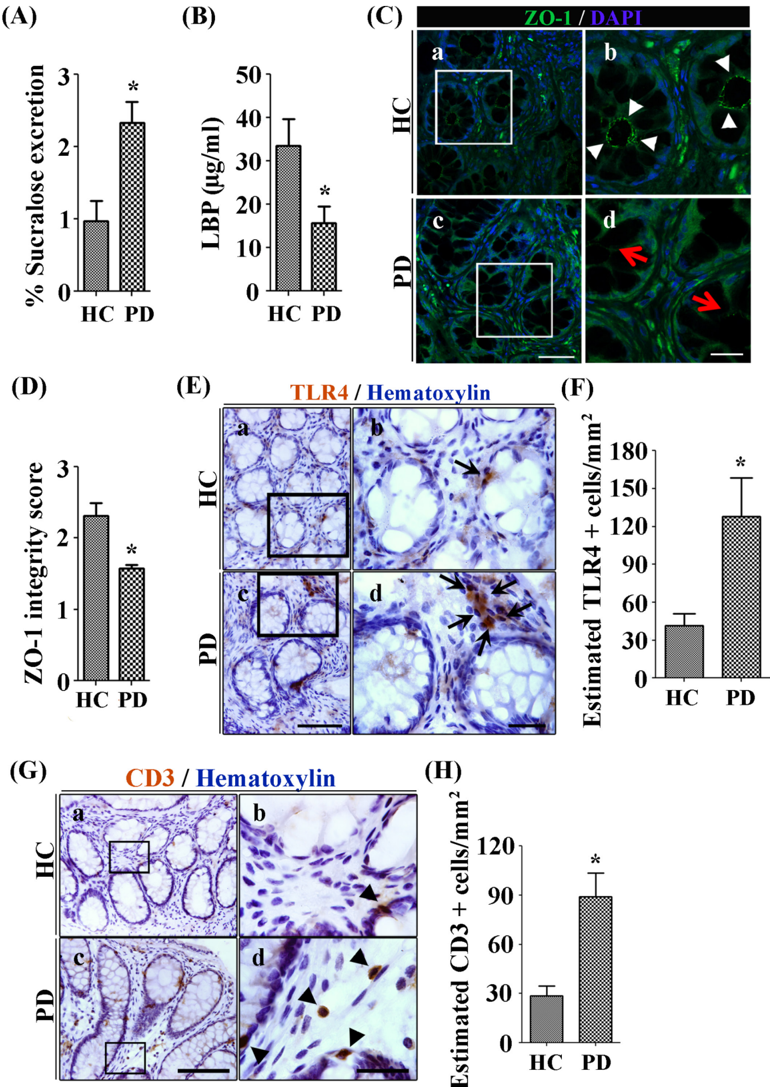
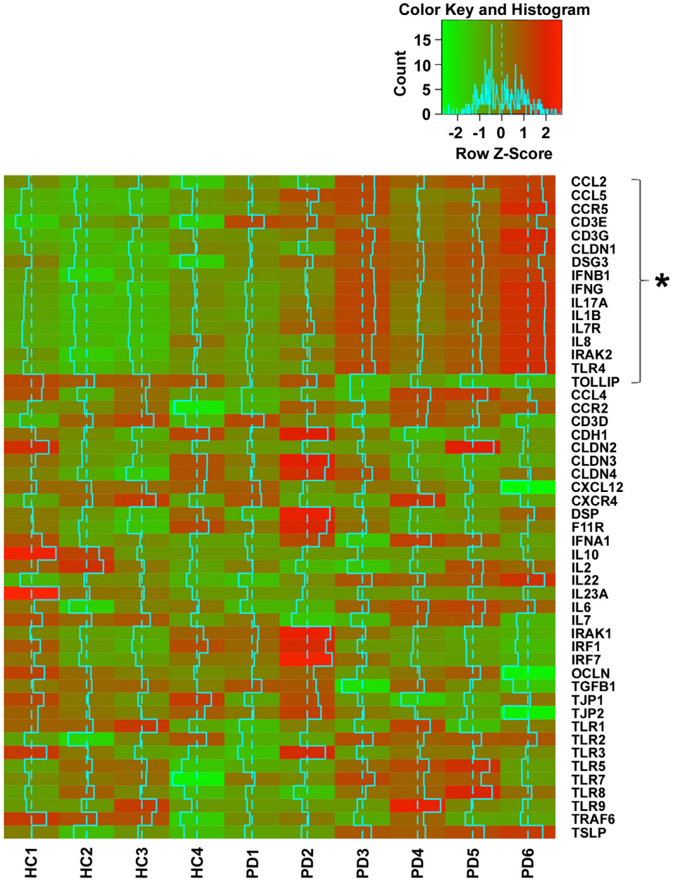
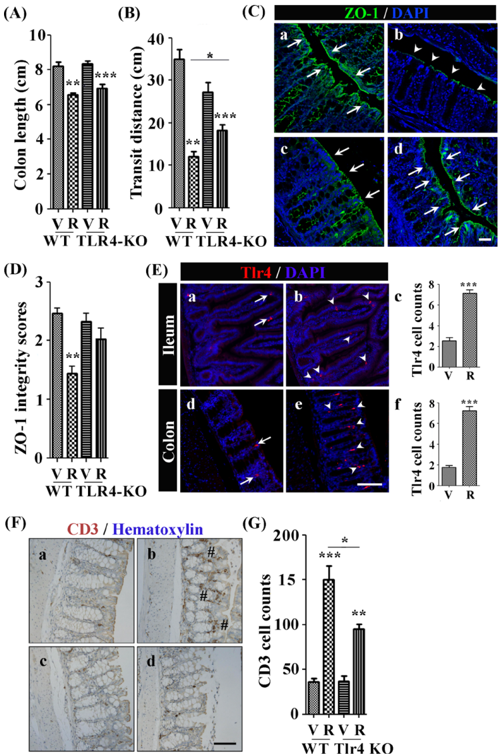
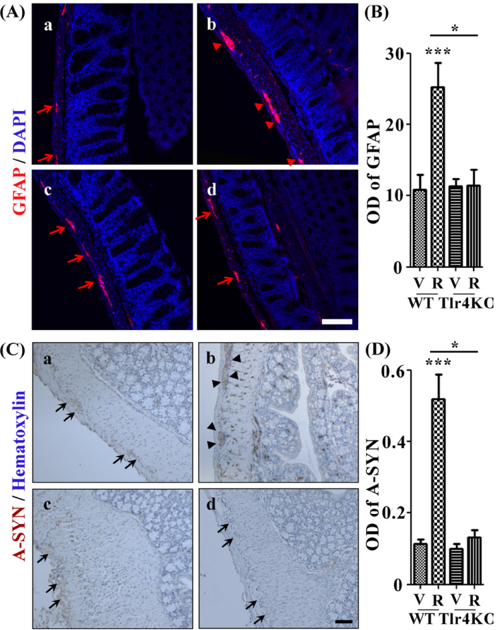
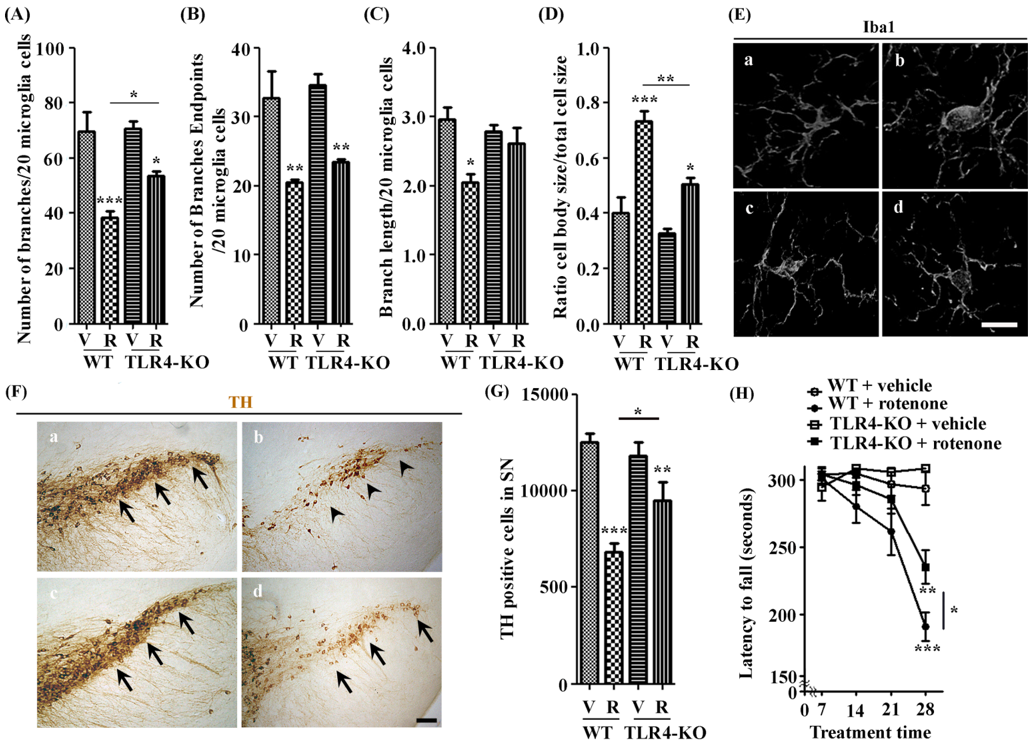
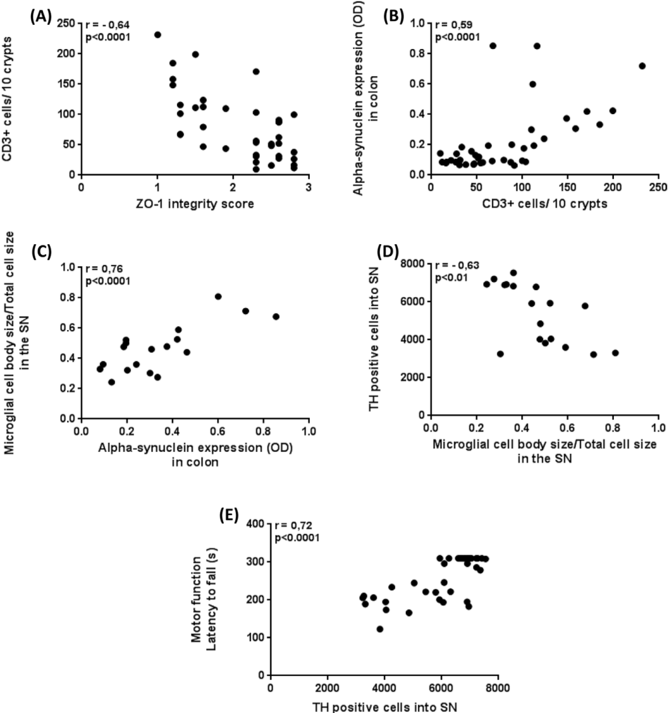
Objective: Recent evidence suggesting an important role of gut-derived inflammation in brain disorders has opened up new directions to explore the possible role of the gut-brain axis in neurodegenerative diseases. Given the prominence of dysbiosis and colonic dysfunction in patients with Parkinson’s disease (PD), we propose that toll-like receptor 4 (TLR4)-mediated intestinal dysfunction could contribute to intestinal and central inflammation in PD-related neurodegeneration. Design: To test this hypothesis we performed studies in both human tissue and a murine model of PD. Inflammation, immune activation and microbiota composition were measured in colonic samples from subjects with PD and healthy controls subjects and rotenone or vehicle-treated mice. To further assess the role of the TLR4 signalling in PD-induced neuroinflammation, we used TLR4-knockout (KO) mice in conjunction with oral rotenone administration to model PD. Results: Patients with PD have intestinal barrier disruption, enhanced markers of microbial translocation and higher pro-inflammatory gene profiles in the colonic biopsy samples compared with controls. In this regard, we found increased expression of the bacterial endotoxin-specific ligand TLR4, CD3+ T cells, cytokine expression in colonic biopsies, dysbiosis characterised by a decrease abundance of SCFA-producing colonic bacteria in subjects with PD. Rotenone treatment in TLR4-KO mice revealed less intestinal inflammation, intestinal and motor dysfunction, neuroinflammation and neurodegeneration, relative to rotenone-treated wild-type animals despite the presence of dysbiotic microbiota in TLR4-KO mice. Conclusion: Taken together, these studies suggest that TLR4-mediated inflammation plays an important role in intestinal and/or brain inflammation, which may be one of the key factors leading to neurodegeneration in PD.
Overview
The claims and statistics of this paper haven’t been checked yet.
Free: it reads the open-access text and checks the first 5 claims that cite a source we can check. Create a free account to check every claim.
Integrity signals
Registry
Cites
Statistics
Figures
Verification
Claims the paper makes
The claims and statistics of this paper haven’t been checked yet.
Free: it reads the open-access text and checks the first 5 claims that cite a source we can check. Create a free account to check every claim.
Claims other papers make about this one
Each is checked against this paper’s own text: does it say what the citing paper says it does?
The source backs part of the claim, not all of it — or backs it for a different population, condition or comparison.
In the citing paper
“These findings are in concordance with a substantial body of literature that consistently reports diminished SCFAs-producing species and SCFA levels in prodromal stage of PD and PD patients compared to healthy controls, which may be correlated with the clinical severity of PD.52,322–331”
From Microbiota–gut–brain axis and its therapeutic applications in neurodegenerative diseases (2024) · cites this paper as [326]
Experimental — accuracy not yet measuredThe source backs part of the claim, not all of it — or backs it for a different population, condition or comparison.
In the citing paper
“Gut microbiome alterations and intestinal barrier impairment have been observed in patients with MCI, AD, PD, and ALS patients.”
From Microbiota–gut–brain axis and its therapeutic applications in neurodegenerative diseases (2024) · cites this paper as [326]
Experimental — accuracy not yet measuredThe source backs part of the claim, not all of it — or backs it for a different population, condition or comparison.
In the citing paper
“Follow-up targeted assays revealed that these effects were mediated by suppressing neuroinflammation and reducing toll-like receptor 4 and tumor necrosis-α signaling [203].”
From The gut–brain axis in early Parkinson’s disease: from prodrome to prevention (2025) · cites this paper as [203]
Experimental — accuracy not yet measuredThe source backs part of the claim, not all of it — or backs it for a different population, condition or comparison.
In the citing paper
“Intestinal barrier dysfunction and increased intestinal permeability caused by inflammation in patients with Parkinson's disease provide conditions for the circulation of inflammatory factors and the exposure of the enteric nervous system to the microbiota and their harmful products.77”
From The role of gut dysbiosis in Parkinson’s disease: mechanistic insights and therapeutic options (2021) · cites this paper as [77]
Experimental — accuracy not yet measuredThe source backs part of the claim, not all of it — or backs it for a different population, condition or comparison.
In the citing paper
“The faecal microbiota of patients with Parkinson's disease shows a decrease in the production of SCFAs or their producing microbiota in most clinical studies.28,30,37,77,182”
From The role of gut dysbiosis in Parkinson’s disease: mechanistic insights and therapeutic options (2021) · cites this paper as [77]
Experimental — accuracy not yet measured
8 more claims about this paper
Create a free account to see every claim other papers make about this one.
Self-check
Percentages, sums and reported differences re-computed from the paper’s own numbers.
The self-check needs the paper’s full text.
Citations
Cites
Gut microbiota regulate motor deficits and neuroinflammation in a model of Parkinson's disease
Sampson, T. R., Debelius, J. W., Thron, T., Janssen, S., Shastri, G. G., Ilhan, Z. E., Challis, C., Schretter, C. E., Rocha, S., Gradinaru, V., et al. (2016) · Cell · doi:10.1016/j.cell.2016.11.018 · Cited by 3,622
Self-citationMechanisms underlying inflammation in neurodegeneration
Glass, C. K., Saijo, K., Winner, B., Marchetto, M. C., & Gage, F. H. (2010) · Cell · doi:10.1016/j.cell.2010.02.016 · Cited by 3,580
Host microbiota constantly control maturation and function of microglia in the CNS
Erny, D., Hrabě de Angelis, A. L., Jaitin, D., Wieghofer, P., Staszewski, O., David, E., Keren-Shaul, H., Mahlakoiv, T., Jakobshagen, K., Buch, T., et al. (2015) · Nature Neuroscience · doi:10.1038/nn.4030 · Cited by 3,569
Inflammasome-mediated dysbiosis regulates progression of NAFLD and obesity
Henao-Mejia, J., Elinav, E., Jin, C., Hao, L., Mehal, W. Z., Strowig, T., Thaiss, C. A., Kau, A. L., Eisenbarth, S. C., Jurczak, M. J., et al. (2012) · Nature · doi:10.1038/nature10809 · Cited by 2,435
Goetz, C. G., Poewe, W., Rascol, O., Sampaio, C., Stebbins, G. T., Counsell, C., Giladi, N., Holloway, R. G., Moore, C. G., Wenning, G. K., et al. (2004) · Movement Disorders · doi:10.1002/mds.20213 · Cited by 2,347
Neuroinflammation in Parkinson’s disease: A target for neuroprotection?
Hirsch, E. C., & Hunot, S. (2009) · The Lancet Neurology · doi:10.1016/s1474-4422(09)70062-6 · Cited by 1,984
Gut microbiota are related to Parkinson's disease and clinical phenotype
Scheperjans, F., Aho, V., Pereira, P. A. B., Koskinen, K., Paulin, L., Pekkonen, E., Haapaniemi, E., Kaakkola, S., Eerola‐Rautio, J., Pohja, M., et al. (2015) · Movement Disorders · doi:10.1002/mds.26069 · Cited by 1,968
How neuroinflammation contributes to neurodegeneration
Ransohoff, R. M. (2016) · Science · doi:10.1126/science.aag2590 · Cited by 1,967
The Role of Oxidative Stress in Parkinson's Disease
Dias, V., Junn, E., & Mouradian, M. M. (2013) · Journal of Parkinson’s Disease · doi:10.3233/jpd-130230 · Cited by 1,845
Variable expression of Parkinson's disease: A base‐line analysis of the DAT ATOP cohort
Jankovic, J., McDermott, M., Carter, J., Gauthier, S., Goetz, C., Golbe, L., Huber, S., Koller, W., Olanow, C., Shoulson, I., et al. (1990) · Neurology · doi:10.1212/wnl.40.10.1529 · Cited by 1,285
Colonic bacterial composition in Parkinson's disease
Keshavarzian, A., Green, S. J., Engen, P. A., Voigt, R. M., Naqib, A., Forsyth, C. B., Mutlu, E., & Shannon, K. M. (2015) · Movement Disorders · doi:10.1002/mds.26307 · Cited by 1,281
Self-citationUnger, M. M., Spiegel, J., Dillmann, K.-U., Grundmann, D., Philippeit, H., Bürmann, J., Faßbender, K., Schwiertz, A., & Schäfer, K.-H. (2016) · Parkinsonism & Related Disorders · doi:10.1016/j.parkreldis.2016.08.019 · Cited by 1,159
The microbiome-gut-brain axis: from bowel to behavior
Cryan, J. F., & O’Mahony, S. M. (2011) · Neurogastroenterology & Motility · doi:10.1111/j.1365-2982.2010.01664.x · Cited by 990
Forsyth, C. B., Shannon, K. M., Kordower, J. H., Voigt, R. M., Shaikh, M., Jaglin, J. A., Estes, J. D., Dodiya, H. B., & Keshavarzian, A. (2011) · PLoS ONE · doi:10.1371/journal.pone.0028032 · Cited by 974
Self-citationHill‐Burns, E. M., Debelius, J. W., Morton, J. T., Wissemann, W. T., Lewis, M. R., Wallen, Z. D., Peddada, S. D., Factor, S. A., Molho, E., Zabetian, C. P., et al. (2017) · Movement Disorders · doi:10.1002/mds.26942 · Cited by 874
Surface area of the digestive tract – revisited
Helander, H. F., & Fändriks, L. (2014) · Scandinavian Journal of Gastroenterology · doi:10.3109/00365521.2014.898326 · Cited by 860
Role of Oxidative Stress in Parkinson's Disease
Hwang, O. (2013) · Experimental Neurobiology · doi:10.5607/en.2013.22.1.11 · Cited by 835
Gut instincts: microbiota as a key regulator of brain development, ageing and neurodegeneration
Dinan, T. G., & Cryan, J. F. (2017) · The Journal of Physiology · doi:10.1113/jp273106 · Cited by 813
Maes, M. H. J., Kubera, M., & Leunis, J. (2008) · PubMed · Cited by 740
Neuroinflammation in Parkinson's disease
Hirsch, E. C., Vyas, S., & Hunot, S. (2012) · Parkinsonism & Related Disorders · doi:10.1016/s1353-8020(11)70065-7 · Cited by 657
Bedarf, J. R., Hildebrand, F., Coelho, L. P., Sunagawa, S., Bahram, M., Goeser, F., Bork, P., & Wüllner, U. (2017) · Genome Medicine · doi:10.1186/s13073-017-0428-y · Cited by 642
Adiposity, gut microbiota and faecal short chain fatty acids are linked in adult humans
Fernandes, J., Su, W., Rahat-Rozenbloom, S., Wolever, T. M. S., & Comelli, E. M. (2014) · Nutrition & Diabetes · doi:10.1038/nutd.2014.23 · Cited by 628
Colonic inflammation in Parkinson's disease
Devos, D., Lebouvier, T., Lardeux, B., Biraud, M., Rouaud, T., Pouclet, H., Coron, E., Bruley des Varannes, S., Naveilhan, P., Nguyen, J.-M., et al. (2013) · Neurobiology of Disease · doi:10.1016/j.nbd.2012.09.007 · Cited by 627
Neurogenic neuroinflammation: inflammatory CNS reactions in response to neuronal activity
Xanthos, D. N., & Sandkühler, J. (2014) · Nature Reviews Neuroscience · doi:10.1038/nrn3617 · Cited by 580
Peripheral cytokines profile in parkinson’s disease
Reale, M., Iarlori, C., Thomas, A., Gambi, D., Perfetti, B., Di Nicola, M., & Onofrj, M. (2009) · Brain, Behavior, and Immunity · doi:10.1016/j.bbi.2008.07.003 · Cited by 547
Mogi, M., Harada, M., Narabayashi, H., Inagaki, H., Minami, M., & Nagatsu, T. (1996) · Neuroscience Letters · doi:10.1016/0304-3940(96)12706-3 · Cited by 545
Invited Article: Nervous system pathology in sporadic Parkinson disease
Braak, H., & Del Tredici, K. (2008) · Neurology · doi:10.1212/01.wnl.0000312279.49272.9f · Cited by 538
Pan-Montojo, F., Anichtchik, O., Dening, Y., Knels, L., Pursche, S., Jung, R., Jackson, S., Gille, G., Spillantini, M. G., Reichmann, H., et al. (2010) · PLoS ONE · doi:10.1371/journal.pone.0008762 · Cited by 524
Intestinal dysbiosis and lowered serum lipopolysaccharide-binding protein in Parkinson's disease
Hasegawa, S., Goto, S., Tsuji, H., Okuno, T., Asahara, T., Nomoto, K., Shibata, A., Fujisawa, Y., Minato, T., Okamoto, A., et al. (2015) · PLOS ONE · doi:10.1371/journal.pone.0142164 · Cited by 523
The microbiome: a key regulator of stress and neuroinflammation
Rea, K., Dinan, T. G., & Cryan, J. F. (2016) · Neurobiology of Stress · doi:10.1016/j.ynstr.2016.03.001 · Cited by 508
Analysis of Gut Microbiota in Patients with Parkinson’s Disease
Petrov, V. A., Saltykova, I. V., Zhukova, I. A., Alifirova, V. M., Zhukova, N. G., Dorofeeva, Y. B., Tyakht, A. V., Kovarsky, B. A., Alekseev, D. G., Kostryukova, E. S., et al. (2017) · Bulletin of Experimental Biology and Medicine · doi:10.1007/s10517-017-3700-7 · Cited by 487
Is alpha-synuclein in the colon a biomarker for premotor Parkinson’s disease? Evidence from 3 cases
Shannon, K. M., Keshavarzian, A., Dodiya, H. B., Jakate, S., & Kordower, J. H. (2012) · Movement Disorders · doi:10.1002/mds.25020 · Cited by 464
Self-citationWurfel, M. M., Kunitake, S. T., Lichenstein, H., Kane, J. P., & Wright, S. D. (1994) · The Journal of experimental medicine · doi:10.1084/jem.180.3.1025 · Cited by 442
Loss of the Tight Junction Protein ZO-1 in Dextran Sulfate Sodium Induced Colitis
Poritz, L. S., Garver, K. I., Green, C., Fitzpatrick, L., Ruggiero, F., & Koltun, W. A. (2007) · Journal of Surgical Research · doi:10.1016/j.jss.2006.07.050 · Cited by 416
Pathological α‐synuclein in gastrointestinal tissues from prodromal Parkinson disease patients
Stokholm, M. G., Danielsen, E. H., Hamilton‐Dutoit, S. J., & Borghammer, P. (2016) · Annals of Neurology · doi:10.1002/ana.24648 · Cited by 415
Li, W., Wu, X., Hu, X., Wang, T., Liang, S., Duan, Y., Jin, F., & Qin, B. (2017) · Science China Life Sciences · doi:10.1007/s11427-016-9001-4 · Cited by 406
Lyte, M. (2013) · PLoS Pathogens · doi:10.1371/journal.ppat.1003726 · Cited by 399
Brain–gut–microbiota axis — mood, metabolism and behaviour
Dinan, T. G., & Cryan, J. F. (2017) · Nature Reviews Gastroenterology & Hepatology · doi:10.1038/nrgastro.2016.200 · Cited by 361
Hilton, D., Stephens, M., Kirk, L., Edwards, P., Potter, R., Zajicek, J., Broughton, E., Hagan, H., & Carroll, C. (2014) · Acta Neuropathologica · doi:10.1007/s00401-013-1214-6 · Cited by 345
Gut microbiota in Parkinson disease in a northern German cohort
Hopfner, F., Künstner, A., Müller, S. H., Künzel, S., Zeuner, K. E., Margraf, N. G., Deuschl, G., Baines, J. F., & Kuhlenbäumer, G. (2017) · Brain Research · doi:10.1016/j.brainres.2017.04.019 · Cited by 318
Brodacki, B., Staszewski, J., Toczyłowska, B., Kozłowska, E., Drela, N., Chalimoniuk, M., & Stępien, A. (2008) · Neuroscience Letters · doi:10.1016/j.neulet.2008.06.040 · Cited by 316
Small intestinal bacterial overgrowth in Parkinson's disease
Tan, A. H., Mahadeva, S., Thalha, A. M., Gibson, P. R., Kiew, C. K., Yeat, C. M., Ng, S. W., Ang, S. P., Chow, S. K., Tan, C. T., et al. (2014) · Parkinsonism & Related Disorders · doi:10.1016/j.parkreldis.2014.02.019 · Cited by 274
Chronic rotenone exposure reproduces Parkinson's disease gastrointestinal neuropathology
Drolet, R. E., Cannon, J. R., Montero, L., & Greenamyre, J. T. (2009) · Neurobiology of Disease · doi:10.1016/j.nbd.2009.06.017 · Cited by 257
Lipopolysaccharide (LPS) Signal Transduction and Clearance
Gegner, J. A., Ulevitch, R. J., & Tobias, P. S. (1995) · Journal of Biological Chemistry · doi:10.1074/jbc.270.10.5320 · Cited by 256
Balda, M. S., & Matter, K. (2008) · Journal of Cell Science · doi:10.1242/jcs.023887 · Cited by 235
Gutsmann, T., Müller, M., Carroll, S. F., MacKenzie, R. C., Wiese, A., & Seydel, U. (2001) · Infection and Immunity · doi:10.1128/iai.69.11.6942-6950.2001 · Cited by 229
Vascular Degeneration in Parkinson's Disease
Guan, J., Pavlovic, D., Dalkie, N., Waldvogel, H. J., O'Carroll, S. J., Green, C. R., & Nicholson, L. F. B. (2013) · Brain Pathology · doi:10.1111/j.1750-3639.2012.00628.x · Cited by 191
Innate Immune Receptors: Key Regulators of Metabolic Disease Progression
Jin, C., Henao-Mejia, J., & Flavell, R. A. (2013) · Cell Metabolism · doi:10.1016/j.cmet.2013.05.011 · Cited by 189
The role of inflammation in sporadic and familial Parkinson’s disease
Deleidi, M., & Gasser, T. (2013) · Cellular and Molecular Life Sciences · doi:10.1007/s00018-013-1352-y · Cited by 167
Enteric glial cells: New players in Parkinson's disease?
Clairembault, T., Leclair‐Visonneau, L., Neunlist, M., & Derkinderen, P. (2015) · Movement Disorders · doi:10.1002/mds.25979 · Cited by 117
Gut-brain and brain-gut axis in Parkinson’s disease models: effects of a uridine and fish oil diet
Perez-Pardo, P., Dodiya, H. B., Broersen, L. M., Douna, H., van Wijk, N., Lopes da Silva, S., Garssen, J., Keshavarzian, A., & Kraneveld, A. D. (2018) · Nutritional Neuroscience · doi:10.1080/1028415x.2017.1294555 · Cited by 111
Self-citationGut bacterial composition in a mouse model of Parkinson’s disease
Perez-Pardo, P., Dodiya, H. B., Engen, P. A., Naqib, A., Forsyth, C. B., Green, S. J., Garssen, J., Keshavarzian, A., & Kraneveld, A. D. (2018) · Beneficial Microbes · doi:10.3920/bm2017.0202 · Cited by 102
Self-citationThe Potential Role of Gut-Derived Inflammation in Multiple System Atrophy
Engen, P. A., Dodiya, H. B., Naqib, A., Forsyth, C. B., Green, S. J., Voigt, R. M., Kordower, J. H., Mutlu, E. A., Shannon, K. M., & Keshavarzian, A. (2017) · Journal of Parkinson’s Disease · doi:10.3233/jpd-160991 · Cited by 86
Self-citationGarcia‐Esparcia, P., Llorens, F., Carmona, M., & Ferrer, I. (2014) · Brain Pathology · doi:10.1111/bpa.12137 · Cited by 80
Luna, E., & Luk, K. C. (2015) · FEBS Letters · doi:10.1016/j.febslet.2015.10.023 · Cited by 67
Pal, G. D., Shaikh, M., Forsyth, C. B., Ouyang, B., Keshavarzian, A., & Shannon, K. M. (2015) · Frontiers in Neuroscience · doi:10.3389/fnins.2015.00306 · Cited by 57
Self-citationShaikh, M., Rajan, K., Forsyth, C. B., Voigt, R. M., & Keshavarzian, A. (2015) · Clinica Chimica Acta · doi:10.1016/j.cca.2014.12.040 · Cited by 52
Self-citationChen, Y., Yu, M., Liu, X., Qu, H., Chen, Q., Qian, W., Wei, D., Xu, W., Ma, B., & Wu, W. (2015) · PubMed Central · Cited by 36
HIV-associated mucosal gene expression: region-specific alterations
Voigt, R. M., Keshavarzian, A., Losurdo, J., Swanson, G. R., Siewe, B. T., Forsyth, C. B., French, A. L., Demarais, P., Engen, P. A., Raeisi, S., et al. (2015) · AIDS · doi:10.1097/qad.0000000000000569 · Cited by 14
Self-citation
Research works printed but not linked: 1
- 53. Petrov Va, Saltykova iV, Zhukova ia, et al. analysis of gut microbiota in patients with parkinson's disease. Bull Exp Biol Med 2017;162:734-7. on February 13, 2020 at Utrecht University Library. Protected by copyright. http://gut.bmj.com/ Gut: first published as 10.1136/gutjnl-2018-316844 on 15 December 2018. Downloaded from · DOI · Paper page
Cited by
Cryan, J. F., O'Riordan, K. J., Cowan, C. S. M., Sandhu, K. V., Bastiaanssen, T. F. S., Boehme, M., Codagnone, M. G., Cussotto, S., Fulling, C., Golubeva, A. V., et al. (2019) · Physiological Reviews · doi:10.1152/physrev.00018.2018 · Cited by 5,286
The gut microbiota–brain axis in behaviour and brain disorders
Morais, L. H., Schreiber, H. L., & Mazmanian, S. K. (2021) · Nature Reviews Microbiology · doi:10.1038/s41579-020-00460-0 · Cited by 2,149
Microbiota–gut–brain axis and its therapeutic applications in neurodegenerative diseases
Loh, J. S., Mak, W. Q., Tan, L. K. S., Ng, C. X., Chan, H. H., Yeow, S. H., Foo, J. B., Ong, Y. S., How, C. W., & Khaw, K. Y. (2024) · Signal Transduction and Targeted Therapy · doi:10.1038/s41392-024-01743-1 · Cited by 1,193
The microbiota-gut-brain axis: from motility to mood
Margolis, K. G., Cryan, J. F., & Mayer, E. A. (2021) · Gastroenterology · doi:10.1053/j.gastro.2020.10.066 · Cited by 999
The Role of Microbiota-Gut-Brain Axis in Neuropsychiatric and Neurological Disorders
Socała, K., Doboszewska, U., Szopa, A., Serefko, A., Włodarczyk, M., Zielińska, A., Poleszak, E., Fichna, J., & Wlaź, P. (2021) · Pharmacological Research · doi:10.1016/j.phrs.2021.105840 · Cited by 857
Metadata
- Authors
- Perez-Pardo, P., Dodiya, H. B., Engen, P. A., Forsyth, C. B., Huschens, A. M., Shaikh, M., Voigt, R. M., Naqib, A., Green, S. J., Kordower, J. H., Shannon, K. M., Garssen, J., Kraneveld, A. D., & Keshavarzian, A.
- Affiliations
- Division of Pharmacology, Utrecht Institute for Pharmaceutical Sciences, Faculty of Science, Utrecht University, Utrecht, The Netherlands
- Rush University Medical Center (US)
- Utrecht University (NL)
- University of Illinois Chicago (US)
- Rush University (US)
- ORCID
- Venue
- Gut
- Publisher
- BMJ
- Published
- 2018-12-15
- Volume
- 68
- Issue
- 5
- Pages
- 829-843
- ISSN
- 0017-5749 (ISSN-L)
- 1468-3288
- OpenAlex
- W2905177566
- Cited by
- 467
- References
- 59
- Citations by year
- 2026: 36 · 2025: 52 · 2024: 72 · 2023: 68 · 2022: 75 · 2021: 93 · 2020: 45 · 2019: 24
- FWCI
- 27.68
- Type
- journal article
- Language
- en
- Open access
- hybrid
- doi.org
- Licence
- cc-by-nc
- Locations
- Gut (publishedVersion, cc-by-nc)
- PubMed (publishedVersion)
- Utrecht University Repository (Utrecht University) (submittedVersion, other-oa)
- HighWire Press Open Archive (submittedVersion)
- Utrecht University Repository (Utrecht University) (submittedVersion, cc-by-nc)
- Topics
- Health Sciences › Medicine › Clinical Neurology › Parkinson's Disease Mechanisms and Treatments
- Life Sciences › Neuroscience › Neurology › Neuroinflammation and Neurodegeneration Mechanisms
- Life Sciences › Biochemistry, Genetics and Molecular Biology › Molecular Biology › Gut microbiota and health
- Keywords
- Parkinson's disease, TLR4, gut-brain axis, neuroinflammation, gut dysbiosis, intestinal barrier dysfunction, microbial translocation, short-chain fatty acids, rotenone, TLR4 knockout mice, colonic inflammation, motor impairment, neurodegeneration, gut microbiota
- MeSH terms
- Animals, Colon, Disease Models, Animal, Humans, Mice, Inbred C57BL, Parkinson Disease, Case-Control Studies, CD3 Complex, Mice, Knockout, Toll-Like Receptor 4, Mice, Dysbiosis
About these checks
Registry, retraction, Cites and statistics results are computed, not judged, with one exception: a printed reference that no index lists is read once by a model before it counts as a citation error. Claims are extracted by a model and kept only when their quote appears verbatim in the text; each cited source is then checked, with a model’s help, for whether it says what the claim relies on. Those verdicts can be wrong — read the claim’s quote and the cited source before relying on one.
Statistics and arithmetic are recomputed, not judged.
Confidence bands are shown only for fields calibrated on our annotated test set. None is calibrated yet, so no band is shown.
What counts as a claim ›How we measure confidence ›How we check this ›
Are you an author, or do you see a problem with this page? Request a review
Data sources
Bibliographic data: Semantic Scholar, OpenAlex, Crossref.
Contains information from the Semantic Scholar Academic Graph Datasets, made available under the ODC Attribution License (ODC-BY 1.0).
Semantic Scholar’s data is described in: Kinney, R., et al. (2023). The Semantic Scholar Open Data Platform. arXiv:2301.10140.
