

Novel therapeutic targets for cholestatic and fatty liver disease
Open accessThe DOI matches its Crossref record; 244 of the 254 references it cites were found in a registry or an index; 39 of the 166 sources its claims cite were checked for support.
Abstract
Cholestatic and non-alcoholic fatty liver disease (NAFLD) share several key pathophysiological mechanisms which can be targeted by novel therapeutic concepts that are currently developed for both areas. Nuclear receptors (NRs) are ligand-activated transcriptional regulators of key metabolic processes including hepatic lipid and glucose metabolism, energy expenditure and bile acid (BA) homoeostasis, as well as inflammation, fibrosis and cellular proliferation. Dysregulation of these processes contributes to the pathogenesis and progression of cholestatic as well as fatty liver disease, placing NRs at the forefront of novel therapeutic approaches. This includes BA and fatty acid activated NRs such as farnesoid-X receptor (FXR) and peroxisome proliferator-activated receptors, respectively, for which high affinity therapeutic ligands targeting specific or multiple isoforms have been developed. Moreover, novel liver-specific ligands for thyroid hormone receptor beta 1 complete the spectrum of currently available NR-targeted drugs. Apart from FXR ligands, BA signalling can be targeted by mimetics of FXR-activated fibroblast growth factor 19, modulation of their enterohepatic circulation through uptake inhibitors in hepatocytes and enterocytes, as well as novel BA derivatives undergoing cholehepatic shunting (instead of enterohepatic circulation). Other therapeutic approaches more directly target inflammation and/or fibrosis as critical events of disease progression. Combination strategies synergistically targeting metabolic disturbances, inflammation and fibrosis may be ultimately necessary for successful treatment of these complex and multifactorial disorders.
Overview
CoChat Summary
TL;DR
This review argues that cholestatic and non-alcoholic fatty liver disease share key pathophysiological mechanisms and that nuclear receptors and bile acid signalling are leading therapeutic targets. It summarizes phase 2/3 trial data for FXR, PPAR, FGF19/21, THR-β1, norUDCA, CCR2/5, and LOXL2-directed agents, concluding that combination strategies may ultimately be necessary.
Key findings
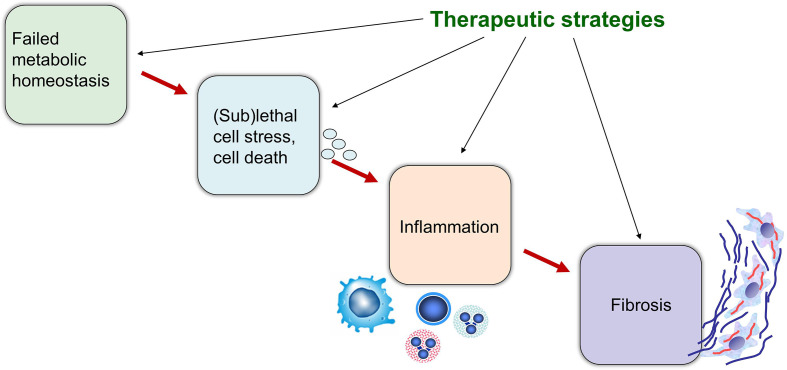
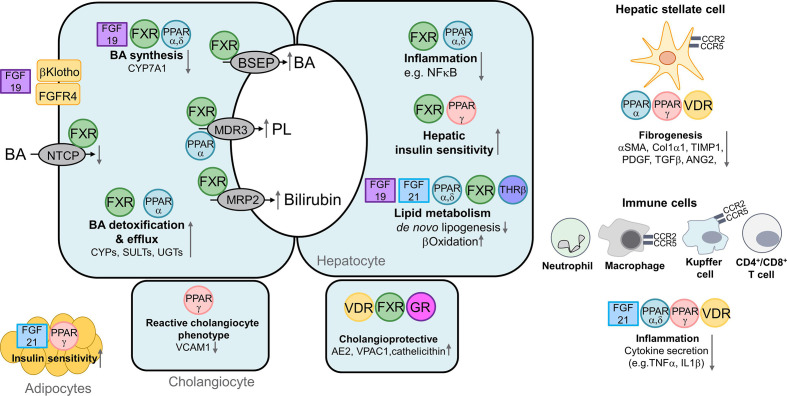
- Cholestasis and NAFLD/NASH converge on substrate overload, cell stress, inflammation, and fibrosis; nuclear receptors are broadly expressed in hepatocytes, cholangiocytes, hepatic stellate cells, and immune cells, making them attractive targets.
- FXR/BA-directed therapies show mixed results: in PBC, obeticholic acid improved biochemical markers and was conditionally approved as second-line therapy; in NASH, FLINT reported improved NAFLD activity score but NASH resolution of 22% vs 13% with placebo, while fibrosis improved in 35% vs 19%; REGENERATE interim analysis showed fibrosis improvement >1 stage in 23% vs 12% with placebo but no significant NASH improvement (12% vs 8%).
- PPAR and THR-β1 ligands also show signals: bezafibrate produced complete biochemical response in 31% of PBC patients with incomplete UDCA response vs 0% on placebo, with ALP normalisation in 67%; pioglitazone improved transaminases, steatosis, and inflammation but not fibrosis or NASH in PIVENS; resmetirom reduced hepatic fat and improved histological NAS in phase 2 NASH.
- Other approaches include norUDCA, which improved ALP in phase 2 PSC and reduced ALT in phase 2a NAFLD, while cenicriviroc showed no significant antifibrotic effect at 2 years and the AURORA phase 3 trial was terminated early for lack of efficacy; simtuzumab failed to improve fibrosis in NASH or PSC.
Methods
- Narrative review synthesizing mechanistic literature and clinical trial data across cholestatic liver diseases and NAFLD/NASH.
- Table 1 compiles key clinical trials of steroidal and non-steroidal FXR agonists, FGF19 mimetics, PPAR agonists, FGF21 mimetics, THR-β1 agonists, norUDCA, CCR2/CCR5 antagonists, and LOXL2 inhibitors.
- No systematic search, meta-analysis, or primary data collection is reported.
Limitations
- The paper states that long-term efficacy, tolerability, and safety of novel therapies still need evaluation, and that benefit on “hard” clinical endpoints remains to be demonstrated for OCA in PBC.
- The paper notes challenges such as high malignancy risk in PSC and the need for innovative trial designs such as basket trials.
- Evident from the text: this is a narrative review with selected trial coverage, including interim and ongoing study results, and no quantitative synthesis; later trials published after 2022 are not included.
Model-written summary. Check it against the paper before relying on it.
Integrity signals
Registry
Cites
Statistics
Figures
Verification
Claims the paper makes
24 Valid · 7 Not valid · 83 Not checked · 13 Own results and interpretations
At least one cited source doesn’t support this claim or points to a different paper, and none confirmed it — see the verdicts below.
In the paper
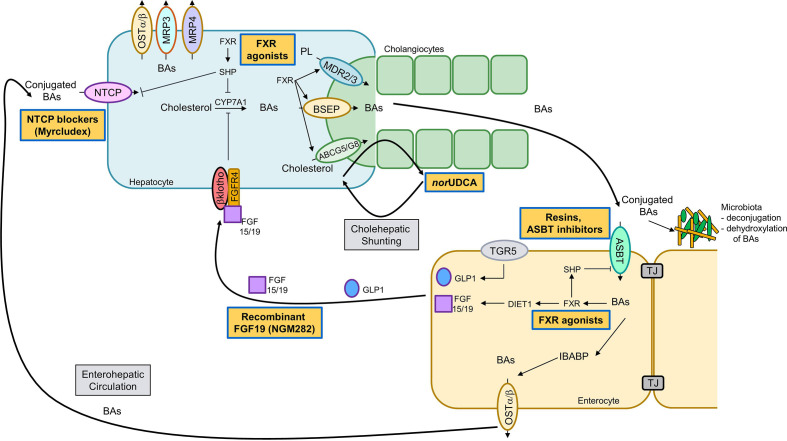
“However, small molecule inhibitors of NTCP can also prevent HBV infection without interrupting BA uptake.204”
§ Novel therapeutic targets for cholestatic and fatty liver disease > Enterohepatic bile acid circulation as therapeutic target
What the sources say
- Disputedcites [204] Kaneko M, Futamura Y, Tsukuda S, et al. Chemical array system, a platform to identify novel hepatitis B virus entry inhibitors targeting sodium taurocholate cotransporting polypeptide. Sci Rep 2018; 8: 2769. 10.1038/s41598-018-20987-w 29426822 PMC5807303 sourceExperimental — accuracy not yet measured
The Results section (“NPD8716 impaired the NTCP-dependent bile acid uptake”; page not available) says NPD8716 reduced NTCP-mediated bile acid uptake in a dose-dependent manner. The derivative analysis also reports that inhibition of HBV entry correlated with impairment of bile acid uptake. Thus, the inhibitors studied here do not support the claim that HBV infection was prevented without interrupting bile acid uptake. (LLM, conf=0.88)
Checked by a reasoning model — may be wrong.
plainstates a cause- Asserted: passes — The authors put it forward as true.
- Checkable: passes — It can be checked against evidence.
- Load-bearing: unclear — It is unclear whether the paper’s conclusions depend on it.
- Based: passes — The paper gives a reason why it holds.
- Disputed
The cited sources support only part of this claim — read each source’s verdict below.
In the paper
“Interestingly, BA toxicity as result of impaired hepatobiliary excretory function18 19 and functional (micro)cholestasis20 may also be involved in the pathogenesis of NASH.12”
§ Novel therapeutic targets for cholestatic and fatty liver disease > Shared pathogenetic principles as targets for therapeutic interventions
What the sources say
- Partly supportedcites [18] Pizarro M, Balasubramaniyan N, Solís N, et al. Bile secretory function in the obese Zucker rat: evidence of cholestasis and altered canalicular transport function. Gut 2004; 53: 1837– 43. 10.1136/gut.2003.037689 15542525 PMC1774316 sourceExperimental — accuracy not yet measured
Our copy supports the excretory/cholestatic half of the claim: the Abstract and Introduction report that obese Zucker rats exhibit impaired bile secretory function with functional and molecular alterations 'consistent with mild cholestasis' and decreased expression/function of critical canalicular transporters producing 'impaired excretory function of the liver', and that 'a defective hepatobiliary transport capacity may be a contributory factor in rendering the obese ZR more susceptible to liver injury'. However, the Introduction frames the injury mechanism generically — 'substances normally secreted into bile accumulate inside the cell promoting liver injury and leading to both necrosis and apoptosis' — without attributing it specifically to bile acid toxicity, and the term 'microcholestasis' does not appear. The claim's extension to the pathogenesis of NASH also goes beyond what this source states, which concerns susceptibility of a rodent NAFLD model to added insults (endotoxin, ischaemia/reperfusion) rather than steatohepatitis pathogenesis. (LLM, conf=0.72)
- Not checked yetcites [19] Geier A, Dietrich CG, Grote T, et al. Characterization of organic anion transporter regulation, glutathione metabolism and bile formation in the obese Zucker rat. J Hepatol 2005; 43: 1021– 30. 10.1016/j.jhep.2005.05.031 16139386 source
- Supportedcites [20] Segovia-Miranda F, Morales-Navarrete H, Kücken M, et al. Three-Dimensional spatially resolved geometrical and functional models of human liver tissue reveal new aspects of NAFLD progression. Nat Med 2019; 25: 1885– 93. 10.1038/s41591-019-0660-7 31792455 PMC6899159 source
The Discussion states exactly this chain: altered bile-canalicular microanatomy and the consequent pericentral micro-cholestasis 'may hamper BAs secretion into BC' (impaired hepatobiliary excretory function), bile accumulation 'due to its detergent-like properties, can cause liver damage', and BA accumulation 'could induce oxidative stress and trigger apoptosis', consistent with loss of pericentral hepatocytes in STEA and eNASH. The same Discussion section (and continuation) frames pericentral micro-cholestasis as 'a new piece in the NAFLD pathophysiology puzzle', while Results (Personalised model of bile flow...) and its Discussion supply the supporting prediction of elevated pericentral bile pressure with raised serum GGT and primary BAs in eNASH. The hedged wording of the claim ('may also be involved') matches the source's own hedging ('may hamper', 'could induce', 'suggests'). (LLM, conf=0.85)
hedgedstates a possible cause- Asserted: passes — The authors put it forward as true.
- Checkable: passes — It can be checked against evidence.
- Load-bearing: passes — The paper’s conclusions depend on it.
- Based: passes — The paper gives a reason why it holds.
- Partly supported
The sources with a verdict support this claim; the rest weren’t checked yet, have no full text we could read, or their verdicts aren’t rated yet.
In the paper
“while cholestasis may be considered an efflux problem resulting in accumulation of potentially cytotoxic and proinflammatory BAs and other cholephiles.13 14”
§ Novel therapeutic targets for cholestatic and fatty liver disease > Shared pathogenetic principles as targets for therapeutic interventions
What the sources say
- Not checked yetcites [13] Trauner M, Fuchs CD, Halilbasic E, et al. New therapeutic concepts in bile acid transport and signaling for management of cholestasis. Hepatology 2017; 65: 1393– 404. 10.1002/hep.28991 27997980 source
- Supportedcites [14] Jansen PLM, Ghallab A, Vartak N, et al. The ascending pathophysiology of cholestatic liver disease. Hepatology 2017; 65: 722– 38. 10.1002/hep.28965 27981592 source
Our copy treats cholestasis in exactly these terms: the TOXICITY OF BS section states that bile salts at accumulating concentrations 'may cause apoptosis, at 200 [µM] they activate proinflammatory genes, at 200-2,000 [µM] they induce necrosis' and refers to 'the inherent cytotoxicity of BS', and describes hepatocytes/cholangiocytes being 'exposed to toxic BS concentrations'. The ADAPTATION OF HEPATOCYTES section supplies the efflux framing, noting that canalicular Bsep/BSEP and Mrp2/MRP2 'helps to remove bile acids and other toxic agents from hepatocytes' (i.e. bile acids plus other transported substrates, the 'cholephiles' of the claim) and that cells which 'fail to exclude BS' accumulate them (Fig. 3C, 'accumulation in individual sporadic hepatocytes'). The wording 'efflux problem' and 'cholephiles' is the citing authors' shorthand, but the content — impaired biliary export with build-up of cytotoxic and proinflammatory bile acids and other transported agents — is what our copy states, with the same hedging level. (LLM, conf=0.82)
hedgedstates a possible cause- Asserted: passes — The authors put it forward as true.
- Checkable: passes — It can be checked against evidence.
- Load-bearing: passes — The paper’s conclusions depend on it.
- Based: passes — The paper gives a reason why it holds.
The cited sources support only part of this claim — read each source’s verdict below.
In the paper
“NASH may therefore be grossly viewed as an influx problem due to increased fatty acid load with consecutive lipotoxicity,11 12”
§ Novel therapeutic targets for cholestatic and fatty liver disease > Shared pathogenetic principles as targets for therapeutic interventions
What the sources say
- Supportedcites [11] Neuschwander-Tetri BA. Hepatic lipotoxicity and the pathogenesis of nonalcoholic steatohepatitis: the central role of nontriglyceride fatty acid metabolites. Hepatology 2010; 52: 774– 88. 10.1002/hep.23719 20683968 source
The “Factors Predisposing to Production of Lipotoxic Intermediates and NASH” section says that excessive fatty-acid delivery or synthesis contributes to NASH. It also explains that increased supply may be harmless if disposal pathways are robust, consistent with the claim’s qualified, broad framing. Page numbers are unavailable in our copy. (LLM, conf=0.90)
- Partly supportedcites [12] Arab JP, Karpen SJ, Dawson PA, et al. Bile acids and nonalcoholic fatty liver disease: molecular insights and therapeutic perspectives. Hepatology 2017; 65: 350– 62. 10.1002/hep.28709 27358174 PMC5191969 sourceExperimental — accuracy not yet measured
The section “Bile Acids and FXR: Regulation of Glucose and Lipid Metabolism” links fatty-acid metabolism to hepatic lipid accumulation, and “TGR5 Agonism and TGR5/FXR Dual Agonists” discusses reduced lipotoxicity in connection with NASH treatment. Neither passage characterizes NASH as primarily an influx problem caused by an increased fatty-acid load, so that part of the paraphrase is unsupported. (LLM, conf=0.78)
hedgedstates a possible cause- Asserted: passes — The authors put it forward as true.
- Checkable: passes — It can be checked against evidence.
- Load-bearing: passes — The paper’s conclusions depend on it.
- Based: passes — The paper gives a reason why it holds.
- Supported
Every source the paper cites for this claim was checked and supports it.
In the paper
“BA-induced cell stress may occur both at the level of hepatocytes (eg, via BA retention) and cholangiocytes (eg, via toxic bile composition and/or biliary stasis).5 14”
§ Novel therapeutic targets for cholestatic and fatty liver disease > Shared pathogenetic principles as targets for therapeutic interventions
What the sources say
- Supportedcites [5] Hirschfield GM, Heathcote EJ, Gershwin ME. Pathogenesis of cholestatic liver disease and therapeutic approaches. Gastroenterology 2010; 139: 1481– 96. 10.1053/j.gastro.2010.09.004 20849855 source
The source states bile-acid injury at both cell types: the Inherited Cholestatic Syndromes section describes 'decreased biliary bile salt secretion, decreased bile flow, and hepatic accumulation of bile acids' (i.e. hepatocyte retention) with bile 'especially toxic to the canalicular membrane', and loss of phosphatidylcholine protection exposing 'the bile duct epithelium from the detergent properties of bile acids' (i.e. cholangiocyte stress from toxic bile composition/stasis). The Abstract and Figure 1 legend frame cholestatic pathogenesis as 'the responses of cholangiocytes and hepatocytes to injury' with 'accumulation of bile and liver tissue damage'. The citing sentence is hedged ('may occur') and adds no mechanism beyond what the review reports, so no qualifier is overstated. (LLM, conf=0.85)
- Supportedcites [14] Jansen PLM, Ghallab A, Vartak N, et al. The ascending pathophysiology of cholestatic liver disease. Hepatology 2017; 65: 722– 38. 10.1002/hep.28965 27981592 source
The TOXICITY OF BS section states that after a breach of the bile-blood barrier 'the periductular stroma and the basolateral plasma membrane domains of hepatocytes and cholangiocytes are exposed to toxic BS concentrations,' adding toxic damage to immune-mediated injury — i.e. BA/BS-induced stress at both cell levels. The ADAPTATION OF HEPATOCYTES section supports the hepatocyte side with retention ('a small number of individual cells that fail to exclude BS... enrichment seems to occur through the apical membrane... associated with subsequent cell death... a bile infarct of the size of a single hepatocyte'), and the biliary-tree/intraluminal-pressure passages support cholangiocyte-level stress from stasis/pressure and BS reabsorption by cholangiocytes. The claim's hedge ('may') matches the paper's own tentative framing, so nothing attributed here exceeds the source. (LLM, conf=0.82)
hedgedstates a possible cause- Asserted: passes — The authors put it forward as true.
- Checkable: passes — It can be checked against evidence.
- Load-bearing: passes — The paper’s conclusions depend on it.
- Based: passes — The paper gives a reason why it holds.
- Supported
60 more claims · 11 with their cited sources checked
Create a free account to see all 127 claims and to verify the 127 references still open.
- It may state two separate claims as one. 56
- Probably not a substantial claim. 7
Claims other papers make about this one
Each is checked against this paper’s own text: does it say what the citing paper says it does?
In the citing paper
“Similarly, several drugs known to affect bile homeostasis also improve liver blood tests, 13,14 suggesting an involvement of these systems in PSC development.”
From EASL Clinical Practice Guidelines on sclerosing cholangitis (2022) · cites this paper as [14]
Self-check
Percentages, sums and reported differences re-computed from the paper’s own numbers.
Each contradiction between two passages listed here was confirmed by an independent check.
Rated minor: it would not touch a result — a value no result rests on, a p-value that stays on the same side of the significance level, or a conflict that is clerical, resolved elsewhere in the paper, or outside its own findings.
In the paper
§ Novel therapeutic targets for cholestatic and fatty liver disease > Nuclear receptor pathways as a new therapeutic frontier > Farnesoid X receptor
“In line with the beneficial effects of OCA in PBC, encouraging results were also observed in patients with PSC97 (table 1).”
§ Novel therapeutic targets for cholestatic and fatty liver disease > References
“97. Bowlus CL, Pockros PJ, Kremer AE, et al. Long-Term obeticholic acid therapy improves histological endpoints in patients with primary biliary cholangitis.”
Rated minor: it would not touch a result — a value no result rests on, a p-value that stays on the same side of the significance level, or a conflict that is clerical, resolved elsewhere in the paper, or outside its own findings.
In the paper
§ Novel therapeutic targets for cholestatic and fatty liver disease > Nuclear receptor pathways as a new therapeutic frontier
“ALP, alkaline phosphatase; ALT, alkaline phosphatase”
§ Novel therapeutic targets for cholestatic and fatty liver disease > Nuclear receptor pathways as a new therapeutic frontier > Farnesoid X receptor
“alanine amino transferase (ALT)”
Rated minor: it would not touch a result — a value no result rests on, a p-value that stays on the same side of the significance level, or a conflict that is clerical, resolved elsewhere in the paper, or outside its own findings.
In the paper
§ Novel therapeutic targets for cholestatic and fatty liver disease > Enterohepatic bile acid circulation as therapeutic target
“genetic absence of NTCP in mice and men results in increased serum levels of unconjugated BAs”
§ Novel therapeutic targets for cholestatic and fatty liver disease > References
“Sodium taurocholate cotransporting polypeptide (SLC10A1) deficiency: conjugated hypercholanemia without a clear clinical phenotype.”
Citations
Cites
Items 201–244 of 244
The Microbiome in Primary Sclerosing Cholangitis: Current Evidence and Potential Concepts
Hov, J., & Karlsen, T. (2017) · Seminars in Liver Disease · doi:10.1055/s-0037-1608801 · Cited by 65
Twenty-Year Comparative Analysis of Patients With Autoimmune Liver Diseases on Transplant Waitlists
Webb, G. J., Rana, A. A., Hodson, J. A., Akhtar, M. Z., Ferguson, J., Neuberger, J., Vierling, J. M., & Hirschfield, G. M. (2017) · Clinical Gastroenterology and Hepatology · doi:10.1016/j.cgh.2017.09.062 · Cited by 63
Saturated free fatty acids induce cholangiocyte lipoapoptosis
Natarajan, S. K., Ingham, S. A., Mohr, A. M., Wehrkamp, C. J., Ray, A., Roy, S., Cazanave, S. C., Phillippi, M. A., & Mott, J. L. (2014) · Hepatology · doi:10.1002/hep.27175 · Cited by 62
The Spectrum of Reactive Cholangiocytes in Primary Sclerosing Cholangitis
Guicciardi, M. E., Trussoni, C. E., LaRusso, N. F., & Gores, G. J. (2020) · Hepatology · doi:10.1002/hep.31067 · Cited by 62
Efficacy and Safety of Cenicriviroc in Patients With Primary Sclerosing Cholangitis: PERSEUS Study
Eksteen, B., Bowlus, C. L., Montaño‐Loza, A. J., Lefebvre, E. A., Fischer, L., Vig, P., Martins, E. B., Ahmad, J., Yimam, K. K., Pockros, P. J., et al. (2020) · Hepatology Communications · doi:10.1002/hep4.1619 · Cited by 61
Lemoinne, S., & Friedman, S. L. (2019) · Current Opinion in Pharmacology · doi:10.1016/j.coph.2019.09.006 · Cited by 60
Difficulty with diagnosis of malignant pancreatic neoplasms coexisting with chronic pancreatitis
Leung, T.-K. (2005) · World Journal of Gastroenterology · doi:10.3748/wjg.v11.i32.4931 · Cited by 59
Shoda, J., Inada, Y., Tsuji, A., Kusama, H., Ueda, T., Ikegami, T., Suzuki, H., Sugiyama, Y., Cohen, D. E., & Tanaka, N. (2004) · Journal of Lipid Research · doi:10.1194/jlr.m400132-jlr200 · Cited by 58
Halilbasic, E., Steinacher, D., & Trauner, M. (2017) · Digestive Diseases · doi:10.1159/000454904 · Cited by 55
Self-citationGadaleta, R. M., Scialpi, N., Peres, C., Cariello, M., Ko, B., Luo, J., Porru, E., Roda, A., Sabbà, C., & Moschetta, A. (2018) · Scientific Reports · doi:10.1038/s41598-018-35496-z · Cited by 54
Roth, J. D., Veidal, S. S., Fensholdt, L. K. D., Rigbolt, K. T. G., Papazyan, R., Nielsen, J. C., Feigh, M., Vrang, N., Young, M., Jelsing, J., et al. (2019) · Scientific Reports · doi:10.1038/s41598-019-45178-z · Cited by 53
The Role of Metabolic Lipases in the Pathogenesis and Management of Liver Disease
Tardelli, M., Bruschi, F. V., & Trauner, M. (2020) · Hepatology · doi:10.1002/hep.31250 · Cited by 53
Self-citationJohn, B. V., Schwartz, K., Levy, C., Dahman, B., Deng, Y., Martin, P., Taddei, T. H., & Kaplan, D. E. (2021) · Hepatology Communications · doi:10.1002/hep4.1720 · Cited by 51
Nobili, V., Alisi, A., Mosca, A., Della Corte, C., Veraldi, S., De Vito, R., De Stefanis, C., D'Oria, V., Jahnel, J., Zohrer, E., et al. (2018) · Liver International · doi:10.1111/liv.13531 · Cited by 51
Thyroid Dysfunction in Primary Biliary Cholangitis: A Comparative Study at Two European Centers
Floreani, A., Mangini, C., Reig, A., Franceschet, I., Cazzagon, N., Perini, L., Caballería, L., Cocchio, S., Baldo, V., & Parés, A. R. (2016) · The American Journal of Gastroenterology · doi:10.1038/ajg.2016.479 · Cited by 50
Lefere, S., Devisscher, L., & Tacke, F. (2020) · Expert Opinion on Investigational Drugs · doi:10.1080/13543784.2020.1718106 · Cited by 47
Traussnigg, S., Halilbasic, E., Hofer, H., Munda, P., Stojaković, T., Fauler, G., Kashofer, K., Krššák, M., Wolzt, M., & Trauner, M. (2020) · Wiener klinische Wochenschrift · doi:10.1007/s00508-020-01735-5 · Cited by 45
Self-citationYu, D., Cai, S., Mennone, A., Vig, P., & Boyer, J. L. (2018) · Liver International · doi:10.1111/liv.13698 · Cited by 44
Clinical Management of Primary Biliary Cholangitis—Strategies and Evolving Trends
Gao, L., Wang, L., Woo, E., He, X., Yang, G., Bowlus, C., Leung, P. S. C., & Gershwin, M. E. (2020) · Clinical Reviews in Allergy & Immunology · doi:10.1007/s12016-019-08772-7 · Cited by 39
A Frequent PNPLA3 Variant Is a Sex Specific Disease Modifier in PSC Patients with Bile Duct Stenosis
Friedrich, K., Rupp, C., Hov, J. R., Steinebrunner, N., Weiss, K.-H., Stiehl, A., Brune, M., Schaefer, P. K. Y., Schemmer, P., Sauer, P., et al. (2013) · PLoS ONE · doi:10.1371/journal.pone.0058734 · Cited by 39
Lysyl oxidase-like protein 2 (LOXL2) modulates barrier function in cholangiocytes in cholestasis
Pollheimer, M. J., Racedo, S., Mikels-Vigdal, A., Marshall, D., Bowlus, C., Lackner, C., Madl, T., Karlsen, T. H., Hov, J. R., Lyman, S. K., et al. (2018) · Journal of Hepatology · doi:10.1016/j.jhep.2018.04.009 · Cited by 38
Self-citationRosiglitazone attenuates suppression of RXRα-dependent gene expression in inflamed liver
Ghose, R., Mulder, J., von Furstenberg, R. J., Thevananther, S., Kuipers, F., & Karpen, S. J. (2006) · Journal of Hepatology · doi:10.1016/j.jhep.2006.09.008 · Cited by 36
Smets, L., Verbeek, J., Korf, H., van der Merwe, S., Nevens, F., et al. (2021) · Hepatology · doi:10.1002/hep.31613 · Cited by 34
Design and structural optimization of dual FXR/PPARδ activators
Schierle, S., Neumann, S., Heitel, P., Willems, S., Kaiser, A., Pollinger, J., & Merk, D. (2020) · Journal of Medicinal Chemistry · doi:10.1021/acs.jmedchem.0c00618 · Cited by 34
The Intestinal Microbiome in Nonalcoholic Fatty Liver Disease
Puri, P., & Sanyal, A. J. (2018) · Clinics in Liver Disease · doi:10.1016/j.cld.2017.08.009 · Cited by 33
Efficacy and safety of curcumin in primary sclerosing cholangitis: an open label pilot study
Eaton, J. E., Nelson, K. M., Gossard, A. A., Carey, E. J., Tabibian, J. H., Lindor, K. D., & LaRusso, N. F. (2019) · Scandinavian Journal of Gastroenterology · doi:10.1080/00365521.2019.1611917 · Cited by 32
Stratification of patients in NASH clinical trials: A pitfall for trial success
Ampuero, J., & Romero-Gomez, M. (2020) · JHEP Reports · doi:10.1016/j.jhepr.2020.100148 · Cited by 30
The new therapeutic frontier--nuclear receptors and the liver
Karpen, S. J., & Trauner, M. (2010) · Journal of Hepatology · doi:10.1016/j.jhep.2009.12.002 · Cited by 29
Self-citationSchramm, C., Hirschfield, G. M., Mason, A. L., Wedemeyer, H. H., Klickstein, L. B., Neelakantham, S., Koo, P., Sanni, J., Badman, M. K., & Jones, D. (2018) · Journal of Hepatology · doi:10.1016/s0168-8278(18)30426-4 · Cited by 28
Vuppalanchi, R., González-Huezo, M. S., Payan-Olivas, R., Muñoz-Espinosa, L. E., Shaikh, F., Cruz-Lopez, J. L. P., & Parmar, D. (2021) · Clinical and Translational Gastroenterology · doi:10.14309/ctg.0000000000000327 · Cited by 27
Primary Biliary Cirrhosis Beyond Ursodeoxycholic Acid
Corpechot, C. (2016) · Seminars in Liver Disease · doi:10.1055/s-0035-1571273 · Cited by 26
Kaneko, M., Futamura, Y., Tsukuda, S., Kondoh, Y., Sekine, T., Hirano, H., Fukano, K., Ohashi, H., Saso, W., Morishita, R., et al. (2018) · Scientific Reports · doi:10.1038/s41598-018-20987-w · Cited by 26
Wilde, A. B., Lieb, C., Leicht, E., Greverath, L. M., Steinhagen, L. M., de Chamorro, N. W., Petersen, J., Hofmann, W. P., Hinrichsen, H. M., Heyne, R., et al. (2021) · Journal of Clinical Medicine · doi:10.3390/jcm10051061 · Cited by 25
Hepatitis B virus receptors and molecular drug targets
Verrier, E. R., Colpitts, C. C., Sureau, C., & Baumert, T. F. (2016) · Hepatology International · doi:10.1007/s12072-016-9718-5 · Cited by 25
Gindin, Y., Chung, C., Jiang, Z., Zhou, J. Z., Xu, J., Billin, A. N., Myers, R. P., Goodman, Z., Landi, A., Houghton, M., et al. (2021) · Hepatology · doi:10.1002/hep.31488 · Cited by 23
Self-citationGautherot, J., Claudel, T., Cuperus, F. J. C., Fuchs, C. D., Falguières, T., & Trauner, M. (2018) · Journal of Lipid Research · doi:10.1194/jlr.m084145 · Cited by 23
Self-citationFabio, F., Marra, F., Raffaella, DeFranco, Robino, Erica, E., Novo, E., Eva, E., Efsen, Sabrina, S., et al. (2005) · Acta Scientiarum Naturalium Universitatis Sunyatseni · Cited by 23
Francque, S., Bédossa, P., Ratziu, V., Anstee, Q. M., Bugianesi, E., Sanyal, A. J., Loomba, R. S., Harrison, S. A., Balabanska, R., Mateva, L., et al. (2020) · Digital Access to Libraries · Cited by 22
Cadamuro, M., Girardi, N., Gores, G. J., Strazzabosco, M., & Fabris, L. (2020) · Frontiers in Medicine · doi:10.3389/fmed.2020.00115 · Cited by 19
Thyroid hormones and thyromimetics: a new approach to nonalcoholic steatohepatitis?
Sinha, R. A., Bruinstroop, E., Singh, B. K., & Yen, P. M. (2020) · Hepatology · doi:10.1002/hep.31204 · Cited by 17
Kruk, B., Liebe, R., Milkiewicz, M., Wunsch, E., Raszeja‐Wyszomirska, J., Lammert, F., Milkiewicz, P., & Krawczyk, M. J. (2018) · PLoS ONE · doi:10.1371/journal.pone.0202942 · Cited by 13
Variant adiponutrin confers genetic protection against cholestatic itch
Krawczyk, M. J., Milkiewicz, M., Marschall, H., Bartz, C., Grünhage, F., Wunsch, E., Milkiewicz, P., & Lammert, F. (2014) · Scientific Reports · doi:10.1038/srep06374 · Cited by 7
Okai, T., Mouri, H., Yamaguchi, Y., Nakanuma, Y., & Sawabu, N. (2002) · The American Journal of Gastroenterology · doi:10.1111/j.1572-0241.2002.05411.x · Cited by 3
Research works printed but not linked: 6
- Kowdley KV, Minuk GY, Pagadala MR. The nonsteroidal farnesoid X receptor (FXR) agonist Cilofexor improves liver biochemistry in patients with primary biliary cholangitis (pBC): a phase 2, randomized, placebo-controlled trial. Hepatology 2019; 70: 31a– 2.
- Alkhouri N, Herring R, Kabler H. Safety and efficacy of combination therapies including Semaglutide, Cilofexor, and Firsocostat in patients with NASH. Hepatology 2020; 72: 131A.
- Lucas KJ, Lopez P, Lawitz EJ. Safety and efficacy of tropifexor in patients with fibrotic nonalcoholic steatohepatitis: 48‐week results from part C of the phase 2 flight‐fxr study. Hepatology 2020; 72: 101A– 2.
- Harrison SA, Gunn NT, Khazanchi A. A 52-week multi-center double-blind randomized phase 2 study of Seladelpar, a potent and selective peroxisome proliferator-activated receptor delta (PPAR-delta) agonist, in patients with nonalcoholic steatohepatitis (NASH). Hepatology 2020; 72: 1043A– 4.31849085
- Harrison SA, Ratziu V, Bedossa P. RESOLVE-IT phase 3 of Elafibranor in NASH: final results of the week 72 interim surrogate efficacy analysis. Hepatology 2020; 72: LP23.
- Harrison SA, Ruane P, Freilich B. Efruxifermin (EFX) improved markers of fibrosis, liver injury andmetabolism in F4 NASH patients with compensated cirrhosis. J Hepatol 2021; 75: S204.
Cited by
Peiseler, M., Schwabe, R., Hampe, J., Kubes, P., Heikenwälder, M., & Tacke, F. (2022) · Journal of Hepatology · doi:10.1016/j.jhep.2022.06.012 · Cited by 564
EASL Clinical Practice Guidelines on sclerosing cholangitis
Chazouilleres, O., Beuers, U., Bergquist, A., Karlsen, T. H., Levy, C., Samyn, M., Schramm, C., & Trauner, M. (2022) · Journal of Hepatology · doi:10.1016/j.jhep.2022.05.011 · Cited by 419
Self-citationWhat defines a healthy gut microbiome?
Van Hul, M., Cani, P. D., Petitfils, C., De Vos, W. M., Tilg, H., & El-Omar, E. M. (2024) · Gut · doi:10.1136/gutjnl-2024-333378 · Cited by 369
“73 74 Besides BAs many other liver-derived factors such as antimicrobial peptides, gall- bladder-derived”
BackgroundCurrent treatment of non‐alcoholic fatty liver disease
Paternostro, R., & Trauner, M. (2022) · Journal of Internal Medicine · doi:10.1111/joim.13531 · Cited by 305
Self-citationBile acid metabolism and signalling in liver disease
Fuchs, C. D., Simbrunner, B., Baumgartner, M., Campbell, C., Reiberger, T., & Trauner, M. (2025) · Journal of Hepatology · doi:10.1016/j.jhep.2024.09.032 · Cited by 231
Self-citation
Metadata
- Authors
- Trauner, M., & Fuchs, C. D.
- Affiliations
- Medical University of Vienna (AT)
- Corresponding author
- Trauner, Michael
- Venue
- Gut
- Publisher
- BMJ
- Published
- 2021-10-06
- Volume
- 71
- Issue
- 1
- Pages
- 194-209
- ISSN
- 0017-5749 (ISSN-L)
- 1468-3288
- PMC
- PMC8666813
- OpenAlex
- W3204219369
- Cited by
- 204
- References
- 254
- Citations by year
- 2026: 38 · 2025: 42 · 2024: 44 · 2023: 48 · 2022: 32
- FWCI
- 4.74
- Type
- journal article
- Language
- en
- Open access
- hybrid
- doi.org
- Licence
- Locations
- Gut (publishedVersion, cc-by-nc)
- PubMed Central (publishedVersion, cc-by-nc)
- PubMed (publishedVersion)
- Funders
- Austrian Science Fund (F7310‐B21, I2755-B30)
- Topics
- Health Sciences › Medicine › Hepatology › Liver Disease Diagnosis and Treatment
- Health Sciences › Medicine › Oncology › Drug Transport and Resistance Mechanisms
- Health Sciences › Medicine › Hepatology › Liver Diseases and Immunity
- Keywords
- cholestatic liver disease, non-alcoholic fatty liver disease, nuclear receptors, farnesoid X receptor, peroxisome proliferator-activated receptors, thyroid hormone receptor beta 1, bile acid signaling, FGF19, enterohepatic circulation, liver fibrosis, liver inflammation, hepatic lipid metabolism
- MeSH terms
- Cholestasis, Gastrointestinal Agents, Humans, Receptors, Cytoplasmic and Nuclear, Molecular Targeted Therapy, Non-alcoholic Fatty Liver Disease
About these checks
Registry, retraction, Cites and statistics results are computed, not judged, with one exception: a printed reference that no index lists is read once by a model before it counts as a citation error. Claims are extracted by a model and kept only when their quote appears verbatim in the text; each cited source is then checked, with a model’s help, for whether it says what the claim relies on. Those verdicts can be wrong — read the claim’s quote and the cited source before relying on one.
The claim verdicts this report counts are experimental: their accuracy is not yet measured.
A language model drew the claims from the paper on 2026-10-06, under version 3 of the claim definition (model deepseek-v4.1-flash, prompt extract-v3).
A second model labelled each claim on 2026-10-06 (model jev-1.13-20260917, definition revision gold-guideline-v0.2).
Cited sources are checked with a language model’s help (gpt-6-sol and qwen3.8-omni-flash).
Statistics and arithmetic are recomputed, not judged.
Confidence bands are shown only for fields calibrated on our annotated test set. None is calibrated yet, so no band is shown.
What counts as a claim ›How we measure confidence ›How we check this ›
Are you an author, or do you see a problem with this page? Request a review
Data sources
Bibliographic data: Semantic Scholar, OpenAlex, Crossref.
Contains information from the Semantic Scholar Academic Graph Datasets, made available under the ODC Attribution License (ODC-BY 1.0).
Semantic Scholar’s data is described in: Kinney, R., et al. (2023). The Semantic Scholar Open Data Platform. arXiv:2301.10140.
