

Novel therapeutic targets for cholestatic and fatty liver disease
Open accessThe DOI matches its Crossref record; 244 of the 254 references it cites were found in a registry or an index; 39 of the 166 sources its claims cite were checked for support.
Abstract
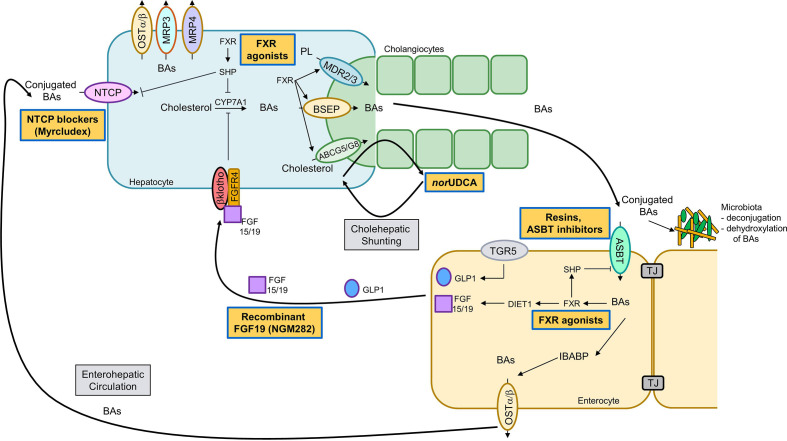
Cholestatic and non-alcoholic fatty liver disease (NAFLD) share several key pathophysiological mechanisms which can be targeted by novel therapeutic concepts that are currently developed for both areas. Nuclear receptors (NRs) are ligand-activated transcriptional regulators of key metabolic processes including hepatic lipid and glucose metabolism, energy expenditure and bile acid (BA) homoeostasis, as well as inflammation, fibrosis and cellular proliferation. Dysregulation of these processes contributes to the pathogenesis and progression of cholestatic as well as fatty liver disease, placing NRs at the forefront of novel therapeutic approaches. This includes BA and fatty acid activated NRs such as farnesoid-X receptor (FXR) and peroxisome proliferator-activated receptors, respectively, for which high affinity therapeutic ligands targeting specific or multiple isoforms have been developed. Moreover, novel liver-specific ligands for thyroid hormone receptor beta 1 complete the spectrum of currently available NR-targeted drugs. Apart from FXR ligands, BA signalling can be targeted by mimetics of FXR-activated fibroblast growth factor 19, modulation of their enterohepatic circulation through uptake inhibitors in hepatocytes and enterocytes, as well as novel BA derivatives undergoing cholehepatic shunting (instead of enterohepatic circulation). Other therapeutic approaches more directly target inflammation and/or fibrosis as critical events of disease progression. Combination strategies synergistically targeting metabolic disturbances, inflammation and fibrosis may be ultimately necessary for successful treatment of these complex and multifactorial disorders.
Overview
CoChat Summary
TL;DR
This review argues that cholestatic and non-alcoholic fatty liver disease share key pathophysiological mechanisms and that nuclear receptors and bile acid signalling are leading therapeutic targets. It summarizes phase 2/3 trial data for FXR, PPAR, FGF19/21, THR-β1, norUDCA, CCR2/5, and LOXL2-directed agents, concluding that combination strategies may ultimately be necessary.
Key findings
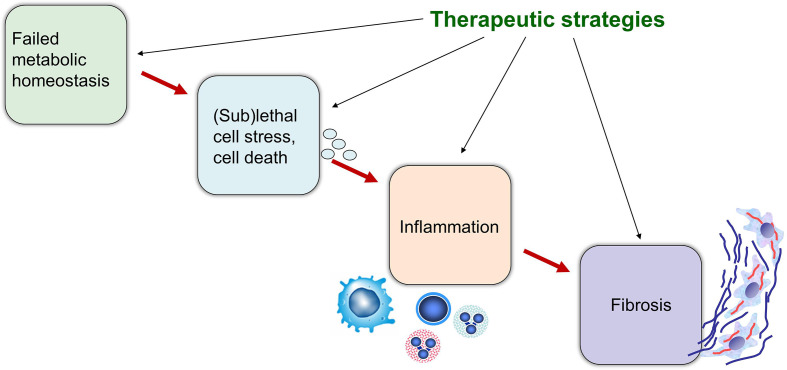
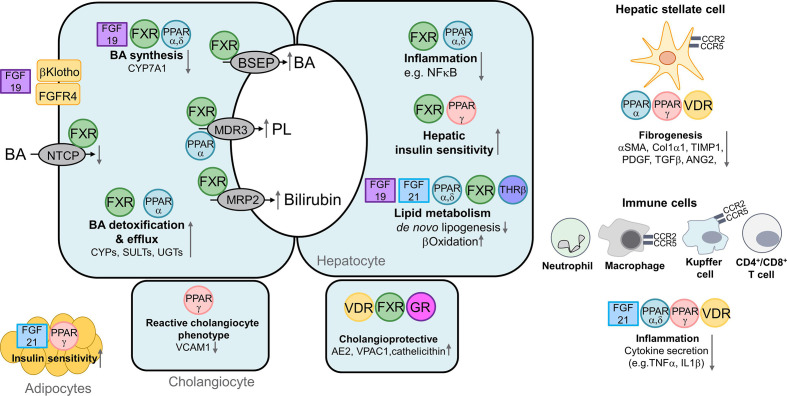
- Cholestasis and NAFLD/NASH converge on substrate overload, cell stress, inflammation, and fibrosis; nuclear receptors are broadly expressed in hepatocytes, cholangiocytes, hepatic stellate cells, and immune cells, making them attractive targets.
- FXR/BA-directed therapies show mixed results: in PBC, obeticholic acid improved biochemical markers and was conditionally approved as second-line therapy; in NASH, FLINT reported improved NAFLD activity score but NASH resolution of 22% vs 13% with placebo, while fibrosis improved in 35% vs 19%; REGENERATE interim analysis showed fibrosis improvement >1 stage in 23% vs 12% with placebo but no significant NASH improvement (12% vs 8%).
- PPAR and THR-β1 ligands also show signals: bezafibrate produced complete biochemical response in 31% of PBC patients with incomplete UDCA response vs 0% on placebo, with ALP normalisation in 67%; pioglitazone improved transaminases, steatosis, and inflammation but not fibrosis or NASH in PIVENS; resmetirom reduced hepatic fat and improved histological NAS in phase 2 NASH.
- Other approaches include norUDCA, which improved ALP in phase 2 PSC and reduced ALT in phase 2a NAFLD, while cenicriviroc showed no significant antifibrotic effect at 2 years and the AURORA phase 3 trial was terminated early for lack of efficacy; simtuzumab failed to improve fibrosis in NASH or PSC.
Methods
- Narrative review synthesizing mechanistic literature and clinical trial data across cholestatic liver diseases and NAFLD/NASH.
- Table 1 compiles key clinical trials of steroidal and non-steroidal FXR agonists, FGF19 mimetics, PPAR agonists, FGF21 mimetics, THR-β1 agonists, norUDCA, CCR2/CCR5 antagonists, and LOXL2 inhibitors.
- No systematic search, meta-analysis, or primary data collection is reported.
Limitations
- The paper states that long-term efficacy, tolerability, and safety of novel therapies still need evaluation, and that benefit on “hard” clinical endpoints remains to be demonstrated for OCA in PBC.
- The paper notes challenges such as high malignancy risk in PSC and the need for innovative trial designs such as basket trials.
- Evident from the text: this is a narrative review with selected trial coverage, including interim and ongoing study results, and no quantitative synthesis; later trials published after 2022 are not included.
Model-written summary. Check it against the paper before relying on it.
Integrity signals
Registry
Cites
Statistics
Figures
Verification
Claims the paper makes
24 Valid · 7 Not valid · 83 Not checked · 13 Own results and interpretations
At least one cited source doesn’t support this claim or points to a different paper, and none confirmed it — see the verdicts below.
In the paper
“However, small molecule inhibitors of NTCP can also prevent HBV infection without interrupting BA uptake.204”
§ Novel therapeutic targets for cholestatic and fatty liver disease > Enterohepatic bile acid circulation as therapeutic target
What the sources say
- Disputedcites [204] Kaneko M, Futamura Y, Tsukuda S, et al. Chemical array system, a platform to identify novel hepatitis B virus entry inhibitors targeting sodium taurocholate cotransporting polypeptide. Sci Rep 2018; 8: 2769. 10.1038/s41598-018-20987-w 29426822 PMC5807303 sourceExperimental — accuracy not yet measured
The Results section (“NPD8716 impaired the NTCP-dependent bile acid uptake”; page not available) says NPD8716 reduced NTCP-mediated bile acid uptake in a dose-dependent manner. The derivative analysis also reports that inhibition of HBV entry correlated with impairment of bile acid uptake. Thus, the inhibitors studied here do not support the claim that HBV infection was prevented without interrupting bile acid uptake. (LLM, conf=0.88)
Checked by a reasoning model — may be wrong.
plainstates a cause- Asserted: passes — The authors put it forward as true.
- Checkable: passes — It can be checked against evidence.
- Load-bearing: unclear — It is unclear whether the paper’s conclusions depend on it.
- Based: passes — The paper gives a reason why it holds.
- Disputed
The cited sources support only part of this claim — read each source’s verdict below.
In the paper
“Interestingly, BA toxicity as result of impaired hepatobiliary excretory function18 19 and functional (micro)cholestasis20 may also be involved in the pathogenesis of NASH.12”
§ Novel therapeutic targets for cholestatic and fatty liver disease > Shared pathogenetic principles as targets for therapeutic interventions
What the sources say
- Partly supportedcites [18] Pizarro M, Balasubramaniyan N, Solís N, et al. Bile secretory function in the obese Zucker rat: evidence of cholestasis and altered canalicular transport function. Gut 2004; 53: 1837– 43. 10.1136/gut.2003.037689 15542525 PMC1774316 sourceExperimental — accuracy not yet measured
Our copy supports the excretory/cholestatic half of the claim: the Abstract and Introduction report that obese Zucker rats exhibit impaired bile secretory function with functional and molecular alterations 'consistent with mild cholestasis' and decreased expression/function of critical canalicular transporters producing 'impaired excretory function of the liver', and that 'a defective hepatobiliary transport capacity may be a contributory factor in rendering the obese ZR more susceptible to liver injury'. However, the Introduction frames the injury mechanism generically — 'substances normally secreted into bile accumulate inside the cell promoting liver injury and leading to both necrosis and apoptosis' — without attributing it specifically to bile acid toxicity, and the term 'microcholestasis' does not appear. The claim's extension to the pathogenesis of NASH also goes beyond what this source states, which concerns susceptibility of a rodent NAFLD model to added insults (endotoxin, ischaemia/reperfusion) rather than steatohepatitis pathogenesis. (LLM, conf=0.72)
- Not checked yetcites [19] Geier A, Dietrich CG, Grote T, et al. Characterization of organic anion transporter regulation, glutathione metabolism and bile formation in the obese Zucker rat. J Hepatol 2005; 43: 1021– 30. 10.1016/j.jhep.2005.05.031 16139386 source
- Supportedcites [20] Segovia-Miranda F, Morales-Navarrete H, Kücken M, et al. Three-Dimensional spatially resolved geometrical and functional models of human liver tissue reveal new aspects of NAFLD progression. Nat Med 2019; 25: 1885– 93. 10.1038/s41591-019-0660-7 31792455 PMC6899159 source
The Discussion states exactly this chain: altered bile-canalicular microanatomy and the consequent pericentral micro-cholestasis 'may hamper BAs secretion into BC' (impaired hepatobiliary excretory function), bile accumulation 'due to its detergent-like properties, can cause liver damage', and BA accumulation 'could induce oxidative stress and trigger apoptosis', consistent with loss of pericentral hepatocytes in STEA and eNASH. The same Discussion section (and continuation) frames pericentral micro-cholestasis as 'a new piece in the NAFLD pathophysiology puzzle', while Results (Personalised model of bile flow...) and its Discussion supply the supporting prediction of elevated pericentral bile pressure with raised serum GGT and primary BAs in eNASH. The hedged wording of the claim ('may also be involved') matches the source's own hedging ('may hamper', 'could induce', 'suggests'). (LLM, conf=0.85)
hedgedstates a possible cause- Asserted: passes — The authors put it forward as true.
- Checkable: passes — It can be checked against evidence.
- Load-bearing: passes — The paper’s conclusions depend on it.
- Based: passes — The paper gives a reason why it holds.
- Partly supported
The sources with a verdict support this claim; the rest weren’t checked yet, have no full text we could read, or their verdicts aren’t rated yet.
In the paper
“while cholestasis may be considered an efflux problem resulting in accumulation of potentially cytotoxic and proinflammatory BAs and other cholephiles.13 14”
§ Novel therapeutic targets for cholestatic and fatty liver disease > Shared pathogenetic principles as targets for therapeutic interventions
What the sources say
- Not checked yetcites [13] Trauner M, Fuchs CD, Halilbasic E, et al. New therapeutic concepts in bile acid transport and signaling for management of cholestasis. Hepatology 2017; 65: 1393– 404. 10.1002/hep.28991 27997980 source
- Supportedcites [14] Jansen PLM, Ghallab A, Vartak N, et al. The ascending pathophysiology of cholestatic liver disease. Hepatology 2017; 65: 722– 38. 10.1002/hep.28965 27981592 source
Our copy treats cholestasis in exactly these terms: the TOXICITY OF BS section states that bile salts at accumulating concentrations 'may cause apoptosis, at 200 [µM] they activate proinflammatory genes, at 200-2,000 [µM] they induce necrosis' and refers to 'the inherent cytotoxicity of BS', and describes hepatocytes/cholangiocytes being 'exposed to toxic BS concentrations'. The ADAPTATION OF HEPATOCYTES section supplies the efflux framing, noting that canalicular Bsep/BSEP and Mrp2/MRP2 'helps to remove bile acids and other toxic agents from hepatocytes' (i.e. bile acids plus other transported substrates, the 'cholephiles' of the claim) and that cells which 'fail to exclude BS' accumulate them (Fig. 3C, 'accumulation in individual sporadic hepatocytes'). The wording 'efflux problem' and 'cholephiles' is the citing authors' shorthand, but the content — impaired biliary export with build-up of cytotoxic and proinflammatory bile acids and other transported agents — is what our copy states, with the same hedging level. (LLM, conf=0.82)
hedgedstates a possible cause- Asserted: passes — The authors put it forward as true.
- Checkable: passes — It can be checked against evidence.
- Load-bearing: passes — The paper’s conclusions depend on it.
- Based: passes — The paper gives a reason why it holds.
The cited sources support only part of this claim — read each source’s verdict below.
In the paper
“NASH may therefore be grossly viewed as an influx problem due to increased fatty acid load with consecutive lipotoxicity,11 12”
§ Novel therapeutic targets for cholestatic and fatty liver disease > Shared pathogenetic principles as targets for therapeutic interventions
What the sources say
- Supportedcites [11] Neuschwander-Tetri BA. Hepatic lipotoxicity and the pathogenesis of nonalcoholic steatohepatitis: the central role of nontriglyceride fatty acid metabolites. Hepatology 2010; 52: 774– 88. 10.1002/hep.23719 20683968 source
The “Factors Predisposing to Production of Lipotoxic Intermediates and NASH” section says that excessive fatty-acid delivery or synthesis contributes to NASH. It also explains that increased supply may be harmless if disposal pathways are robust, consistent with the claim’s qualified, broad framing. Page numbers are unavailable in our copy. (LLM, conf=0.90)
- Partly supportedcites [12] Arab JP, Karpen SJ, Dawson PA, et al. Bile acids and nonalcoholic fatty liver disease: molecular insights and therapeutic perspectives. Hepatology 2017; 65: 350– 62. 10.1002/hep.28709 27358174 PMC5191969 sourceExperimental — accuracy not yet measured
The section “Bile Acids and FXR: Regulation of Glucose and Lipid Metabolism” links fatty-acid metabolism to hepatic lipid accumulation, and “TGR5 Agonism and TGR5/FXR Dual Agonists” discusses reduced lipotoxicity in connection with NASH treatment. Neither passage characterizes NASH as primarily an influx problem caused by an increased fatty-acid load, so that part of the paraphrase is unsupported. (LLM, conf=0.78)
hedgedstates a possible cause- Asserted: passes — The authors put it forward as true.
- Checkable: passes — It can be checked against evidence.
- Load-bearing: passes — The paper’s conclusions depend on it.
- Based: passes — The paper gives a reason why it holds.
- Supported
Every source the paper cites for this claim was checked and supports it.
In the paper
“BA-induced cell stress may occur both at the level of hepatocytes (eg, via BA retention) and cholangiocytes (eg, via toxic bile composition and/or biliary stasis).5 14”
§ Novel therapeutic targets for cholestatic and fatty liver disease > Shared pathogenetic principles as targets for therapeutic interventions
What the sources say
- Supportedcites [5] Hirschfield GM, Heathcote EJ, Gershwin ME. Pathogenesis of cholestatic liver disease and therapeutic approaches. Gastroenterology 2010; 139: 1481– 96. 10.1053/j.gastro.2010.09.004 20849855 source
The source states bile-acid injury at both cell types: the Inherited Cholestatic Syndromes section describes 'decreased biliary bile salt secretion, decreased bile flow, and hepatic accumulation of bile acids' (i.e. hepatocyte retention) with bile 'especially toxic to the canalicular membrane', and loss of phosphatidylcholine protection exposing 'the bile duct epithelium from the detergent properties of bile acids' (i.e. cholangiocyte stress from toxic bile composition/stasis). The Abstract and Figure 1 legend frame cholestatic pathogenesis as 'the responses of cholangiocytes and hepatocytes to injury' with 'accumulation of bile and liver tissue damage'. The citing sentence is hedged ('may occur') and adds no mechanism beyond what the review reports, so no qualifier is overstated. (LLM, conf=0.85)
- Supportedcites [14] Jansen PLM, Ghallab A, Vartak N, et al. The ascending pathophysiology of cholestatic liver disease. Hepatology 2017; 65: 722– 38. 10.1002/hep.28965 27981592 source
The TOXICITY OF BS section states that after a breach of the bile-blood barrier 'the periductular stroma and the basolateral plasma membrane domains of hepatocytes and cholangiocytes are exposed to toxic BS concentrations,' adding toxic damage to immune-mediated injury — i.e. BA/BS-induced stress at both cell levels. The ADAPTATION OF HEPATOCYTES section supports the hepatocyte side with retention ('a small number of individual cells that fail to exclude BS... enrichment seems to occur through the apical membrane... associated with subsequent cell death... a bile infarct of the size of a single hepatocyte'), and the biliary-tree/intraluminal-pressure passages support cholangiocyte-level stress from stasis/pressure and BS reabsorption by cholangiocytes. The claim's hedge ('may') matches the paper's own tentative framing, so nothing attributed here exceeds the source. (LLM, conf=0.82)
hedgedstates a possible cause- Asserted: passes — The authors put it forward as true.
- Checkable: passes — It can be checked against evidence.
- Load-bearing: passes — The paper’s conclusions depend on it.
- Based: passes — The paper gives a reason why it holds.
- Supported
60 more claims · 11 with their cited sources checked
Create a free account to see all 127 claims and to verify the 127 references still open.
- It may state two separate claims as one. 56
- Probably not a substantial claim. 7
Claims other papers make about this one
Each is checked against this paper’s own text: does it say what the citing paper says it does?
In the citing paper
“Similarly, several drugs known to affect bile homeostasis also improve liver blood tests, 13,14 suggesting an involvement of these systems in PSC development.”
From EASL Clinical Practice Guidelines on sclerosing cholangitis (2022) · cites this paper as [14]
Self-check
Percentages, sums and reported differences re-computed from the paper’s own numbers.
Each contradiction between two passages listed here was confirmed by an independent check.
Rated minor: it would not touch a result — a value no result rests on, a p-value that stays on the same side of the significance level, or a conflict that is clerical, resolved elsewhere in the paper, or outside its own findings.
In the paper
§ Novel therapeutic targets for cholestatic and fatty liver disease > Nuclear receptor pathways as a new therapeutic frontier > Farnesoid X receptor
“In line with the beneficial effects of OCA in PBC, encouraging results were also observed in patients with PSC97 (table 1).”
§ Novel therapeutic targets for cholestatic and fatty liver disease > References
“97. Bowlus CL, Pockros PJ, Kremer AE, et al. Long-Term obeticholic acid therapy improves histological endpoints in patients with primary biliary cholangitis.”
Rated minor: it would not touch a result — a value no result rests on, a p-value that stays on the same side of the significance level, or a conflict that is clerical, resolved elsewhere in the paper, or outside its own findings.
In the paper
§ Novel therapeutic targets for cholestatic and fatty liver disease > Nuclear receptor pathways as a new therapeutic frontier
“ALP, alkaline phosphatase; ALT, alkaline phosphatase”
§ Novel therapeutic targets for cholestatic and fatty liver disease > Nuclear receptor pathways as a new therapeutic frontier > Farnesoid X receptor
“alanine amino transferase (ALT)”
Rated minor: it would not touch a result — a value no result rests on, a p-value that stays on the same side of the significance level, or a conflict that is clerical, resolved elsewhere in the paper, or outside its own findings.
In the paper
§ Novel therapeutic targets for cholestatic and fatty liver disease > Enterohepatic bile acid circulation as therapeutic target
“genetic absence of NTCP in mice and men results in increased serum levels of unconjugated BAs”
§ Novel therapeutic targets for cholestatic and fatty liver disease > References
“Sodium taurocholate cotransporting polypeptide (SLC10A1) deficiency: conjugated hypercholanemia without a clear clinical phenotype.”
Citations
Cites
Chalasani, N., Younossi, Z., Lavine, J. E., Charlton, M., Cusi, K., Rinella, M., Harrison, S. A., Brunt, E. M., & Sanyal, A. J. (2018) · Hepatology · doi:10.1002/hep.29367 · Cited by 7,239
EASL–EASD–EASO Clinical Practice Guidelines for the management of non-alcoholic fatty liver disease
(2016) · Journal of Hepatology · doi:10.1016/j.jhep.2015.11.004 · Cited by 4,836
Eslam, M., Newsome, P. N., Sarin, S. K., Anstee, Q. M., Targher, G., Romero-Gomez, M., Zelber-Sagi, S., Wai-Sun Wong, V., Dufour, J.-F., Schattenberg, J. M., et al. (2020) · Journal of Hepatology · doi:10.1016/j.jhep.2020.03.039 · Cited by 4,472
Mechanisms of NAFLD development and therapeutic strategies
Friedman, S. L., Neuschwander-Tetri, B. A., Rinella, M., & Sanyal, A. J. (2018) · Nature Medicine · doi:10.1038/s41591-018-0104-9 · Cited by 4,354
Genetic variation in PNPLA3 confers susceptibility to nonalcoholic fatty liver disease
Romeo, S., Kozlitina, J., Xing, C., Pertsemlidis, A., Cox, D., Pennacchio, L. A., Boerwinkle, E., Cohen, J. C., & Hobbs, H. H. (2008) · Nature Genetics · doi:10.1038/ng.257 · Cited by 3,416
Pioglitazone, Vitamin E, or Placebo for Nonalcoholic Steatohepatitis
Sanyal, A. J., Chalasani, N., Kowdley, K. V., McCullough, A., Diehl, A. M., Bass, N. M., Neuschwander-Tetri, B. A., Lavine, J. E., Tonascia, J., Unalp, A., et al. (2010) · New England Journal of Medicine · doi:10.1056/nejmoa0907929 · Cited by 3,327
Vrieze, A., Van Nood, E., Holleman, F., Salojärvi, J., Kootte, R. S., Bartelsman, J. F. W. M., Dallinga–Thie, G. M., Ackermans, M. T., Serlie, M. J., Oozeer, R., et al. (2012) · Gastroenterology · doi:10.1053/j.gastro.2012.06.031 · Cited by 2,913
Mechanisms of hepatic stellate cell activation
Tsuchida, T., & Friedman, S. L. (2017) · Nature Reviews Gastroenterology & Hepatology · doi:10.1038/nrgastro.2017.38 · Cited by 2,909
Bile salt biotransformations by human intestinal bacteria
Ridlon, J. M., Kang, D.-J., & Hylemon, P. B. (2006) · Journal of Lipid Research · doi:10.1194/jlr.r500013-jlr200 · Cited by 2,829
Identification of a nuclear receptor for bile acids
Makishima, M., Okamoto, A. Y., Repa, J. J., Tu, H., Learned, R. M., Luk, A., Hull, M. V., Lustig, K. D., Mangelsdorf, D. J., & Shan, B. (1999) · Science · doi:10.1126/science.284.5418.1362 · Cited by 2,714
Inflammation, metaflammation and immunometabolic disorders
Hotamisligil, G. S. (2017) · Nature · doi:10.1038/nature21363 · Cited by 2,570
Cholangiocarcinoma 2020: the next horizon in mechanisms and management
Banales, J. M., Marin, J. J. G., Lamarca, A., Rodrigues, P. M., Khan, S. A., Roberts, L. R., Cardinale, V., Carpino, G., Andersen, J. B., Braconi, C., et al. (2020) · Nature Reviews Gastroenterology & Hepatology · doi:10.1038/s41575-020-0310-z · Cited by 2,411
Bile Acids: Natural Ligands for an Orphan Nuclear Receptor
Parks, D. J., Blanchard, S. G., Bledsoe, R. K., Chandra, G., Consler, T. G., Kliewer, S. A., Stimmel, J. B., Willson, T. M., Zavacki, A. M., Moore, D. D., et al. (1999) · Science · doi:10.1126/science.284.5418.1365 · Cited by 2,274
Neuschwander-Tetri, B. A., Loomba, R., Sanyal, A. J., Lavine, J. E., Van Natta, M. L., Abdelmalek, M. F., Chalasani, N., Dasarathy, S., Diehl, A. M., Hameed, B., et al. (2015) · The Lancet · doi:10.1016/s0140-6736(14)61933-4 · Cited by 2,237
Bile acids induce energy expenditure by promoting intracellular thyroid hormone activation
Watanabe, M., Houten, S. M., Mataki, C., Christoffolete, M. A., Kim, B. W., Sato, H., Messaddeq, N., Harney, J. W., Ezaki, O., Kodama, T., et al. (2006) · Nature · doi:10.1038/nature04330 · Cited by 2,220
Obesity-induced gut microbial metabolite promotes liver cancer through senescence secretome
Yoshimoto, S., Loo, T. M., Atarashi, K., Kanda, H., Sato, S., Oyadomari, S., Iwakura, Y., Oshima, K., Morita, H., Hattori, M., et al. (2013) · Nature · doi:10.1038/nature12347 · Cited by 2,219
Armstrong, M. J., Gaunt, P., Aithal, G. P., Barton, D., Hull, D., Parker, R., Hazlehurst, J. M., Guo, K., Abouda, G., Aldersley, M. A., et al. (2016) · The Lancet · doi:10.1016/s0140-6736(15)00803-x · Cited by 2,203
A Placebo-controlled trial of subcutaneous semaglutide in nonalcoholic steatohepatitis
Newsome, P. N., Buchholtz, K., Cusi, K., Linder, M., Okanoue, T., Ratziu, V., Sanyal, A. J., Sejling, A.-S., & Harrison, S. A. (2021) · New England Journal of Medicine · doi:10.1056/nejmoa2028395 · Cited by 2,039
Fibroblast growth factor 15 functions as an enterohepatic signal to regulate bile acid homeostasis
Inagaki, T., Choi, M., Moschetta, A., Peng, L., Cummins, C. L., McDonald, J. G., Luo, G., Jones, S. A., Goodwin, B., Richardson, J. A., et al. (2005) · Cell Metabolism · doi:10.1016/j.cmet.2005.09.001 · Cited by 1,865
Global perspectives on nonalcoholic fatty liver disease and nonalcoholic steatohepatitis
Younossi, Z., Tacke, F., Arrese, M., Chander Sharma, B., Mostafa, I., Bugianesi, E., Wai‐Sun Wong, V., Yilmaz, Y., George, J., Fan, J., et al. (2019) · Hepatology · doi:10.1002/hep.30251 · Cited by 1,858
Yki-Järvinen, H. (2004) · New England Journal of Medicine · doi:10.1056/nejmra041001 · Cited by 1,830
Targeted Disruption of the Nuclear Receptor FXR/BAR Impairs Bile Acid and Lipid Homeostasis
Sinal, C. J., Tohkin, M., Miyata, M., Ward, J. M., Lambert, G., & Gonzalez, F. J. (2000) · Cell · doi:10.1016/s0092-8674(00)00062-3 · Cited by 1,819
Role of Bile Acids and Bile Acid Receptors in Metabolic Regulation
Lefebvre, P., Cariou, B., Lien, F., Kuipers, F., & Staels, B. (2009) · Physiological Reviews · doi:10.1152/physrev.00010.2008 · Cited by 1,678
Endogenous Bile Acids Are Ligands for the Nuclear Receptor FXR/BAR
Wang, H., Chen, J., Hollister, K., Sowers, L. C., & Forman, B. M. (1999) · Molecular Cell · doi:10.1016/s1097-2765(00)80348-2 · Cited by 1,636
Pawlak, M., Lefebvre, P., & Staels, B. (2015) · Journal of Hepatology · doi:10.1016/j.jhep.2014.10.039 · Cited by 1,578
Hirschfield, G. M., Beuers, U., Corpechot, C., Invernizzi, P., Jones, D., Marzioni, M., & Schramm, C. (2017) · Journal of Hepatology · doi:10.1016/j.jhep.2017.03.022 · Cited by 1,480
Younossi, Z. M., Ratziu, V., Loomba, R., Rinella, M., Anstee, Q. M., Goodman, Z., Bedossa, P., Geier, A., Beckebaum, S., Newsome, P. N., et al. (2019) · The Lancet · doi:10.1016/s0140-6736(19)33041-7 · Cited by 1,277
Homeostasis, Inflammation, and Disease Susceptibility
Kotas, M. E., & Medzhitov, R. (2015) · Cell · doi:10.1016/j.cell.2015.02.010 · Cited by 1,213
Liver fibrosis: Pathophysiology, pathogenetic targets and clinical issues
Parola, M., & Pinzani, M. (2019) · Molecular Aspects of Medicine · doi:10.1016/j.mam.2018.09.002 · Cited by 1,160
A Placebo-Controlled Trial of Obeticholic Acid in Primary Biliary Cholangitis
Nevens, F., Andreone, P., Mazzella, G., Strasser, S. I., Bowlus, C., Invernizzi, P., Drenth, J. P. H., Pockros, P. J., Regula, J., Beuers, U., et al. (2016) · New England Journal of Medicine · doi:10.1056/nejmoa1509840 · Cited by 1,131
Self-citationNeuschwander‐Tetri, B. A. (2010) · Hepatology · doi:10.1002/hep.23719 · Cited by 1,077
Ratziu, V., Harrison, S. A., Francque, S., Bedossa, P., Lehert, P., Serfaty, L., Romero-Gomez, M., Boursier, J., Abdelmalek, M., Caldwell, S., et al. (2016) · Gastroenterology · doi:10.1053/j.gastro.2016.01.038 · Cited by 1,035
Cusi, K., Orsak, B., Bril, F., Lomonaco, R., Hecht, J., Ortiz-Lopez, C., Tio, F., Hardies, J., Darland, C., Musi, N., et al. (2016) · Annals of Internal Medicine · doi:10.7326/m15-1774 · Cited by 1,024
The Continuing Importance of Bile Acids in Liver and Intestinal Disease
Hofmann, A. F. (1999) · Archives of Internal Medicine · doi:10.1001/archinte.159.22.2647 · Cited by 982
Interactions Between the Intestinal Microbiome and Liver Diseases
Schnabl, B., & Brenner, D. A. (2014) · Gastroenterology · doi:10.1053/j.gastro.2014.01.020 · Cited by 971
Chávez-Talavera, O., Tailleux, A., Lefebvre, P., & Staels, B. (2017) · Gastroenterology · doi:10.1053/j.gastro.2017.01.055 · Cited by 970
Mudaliar, S., Henry, R. R., Sanyal, A. J., Morrow, L., Marschall, H., Kipnes, M., Adorini, L., Sciacca, C. I., Clopton, P., Castelloe, E., et al. (2013) · Gastroenterology · doi:10.1053/j.gastro.2013.05.042 · Cited by 931
Lindor, K. D., Bowlus, C. L., Boyer, J., Levy, C., & Mayo, M. (2019) · Hepatology · doi:10.1002/hep.30145 · Cited by 913
Primary sclerosing cholangitis – a comprehensive review
Karlsen, T. H., Folseraas, T., Thorburn, D., & Vesterhus, M. (2017) · Journal of Hepatology · doi:10.1016/j.jhep.2017.07.022 · Cited by 868
Harrison, S. A., Bashir, M. R., Guy, C. D., Zhou, R., Moylan, C. A., Frias, J. P., Alkhouri, N., Bansal, M. B., Baum, S., Neuschwander-Tetri, B. A., et al. (2019) · The Lancet · doi:10.1016/s0140-6736(19)32517-6 · Cited by 802
Large-scale whole-genome sequencing of the Icelandic population
Gudbjartsson, D. F., Helgason, H., Gudjonsson, S. A., Zink, F., Oddson, A., Gylfason, A., Besenbacher, S., Magnusson, G., Halldorsson, B. V., Hjartarson, E., et al. (2015) · Nature Genetics · doi:10.1038/ng.3247 · Cited by 791
Pellicciari, R., Fiorucci, S., Camaioni, E., Clerici, C., Costantino, G., Maloney, P. R., Morelli, A., Parks, D. J., & Willson, T. M. (2002) · Journal of Medicinal Chemistry · doi:10.1021/jm025529g · Cited by 743
Intestinal FXR agonism promotes adipose tissue browning and reduces obesity and insulin resistance
Fang, S., Suh, J. M., Reilly, S. M., Yu, E., Osborn, O., Lackey, D., Yoshihara, E., Perino, A., Jacinto, S., Lukasheva, Y., et al. (2015) · Nature Medicine · doi:10.1038/nm.3760 · Cited by 738
Jiao, N., Baker, S. S., Chapa-Rodriguez, A., Liu, W., Nugent, C. A., Tsompana, M., Mastrandrea, L., Buck, M. J., Baker, R. D., Genco, R. J., et al. (2018) · Gut · doi:10.1136/gutjnl-2017-314307 · Cited by 737
Ursodeoxycholic acid for treatment of nonalcoholic steatohepatitis: results of a randomized trial
Lindor, K. D., Kowdley, K. V., Heathcote, J. E., Harrison, E. M., Jorgensen, R., Angulo, P., Lymp, J. F., Burgart, L., & Colin, P. (2004) · Hepatology · doi:10.1002/hep.20092 · Cited by 727
Molecular Pathogenesis of Cholestasis
Trauner, M., Meier, P. J., & Boyer, J. L. (1998) · New England Journal of Medicine · doi:10.1056/nejm199810223391707 · Cited by 706
Self-citationHepatic fibrosis: concept to treatment
Trautwein, C., Friedman, S. L., Schuppan, D., & Pinzani, M. (2015) · Journal of Hepatology · doi:10.1016/j.jhep.2015.02.039 · Cited by 677
Friedman, S. L., Ratziu, V., Harrison, S. A., Abdelmalek, M. F., Aithal, G. P., Caballeria, J., Francque, S., Farrell, G., Kowdley, K. V., Craxi, A., et al. (2018) · Hepatology · doi:10.1002/hep.29477 · Cited by 671
A Placebo-Controlled Trial of Bezafibrate in Primary Biliary Cholangitis
Corpechot, C., Chazouillères, O., Rousseau, A., Le Gruyer, A., Habersetzer, F., Mathurin, P., Goria, O., Potier, P., Minello, A., Silvain, C., et al. (2018) · New England Journal of Medicine · doi:10.1056/nejmoa1714519 · Cited by 642
Farnesoid X receptor antagonizes nuclear factor κB in hepatic inflammatory response
Wang, Y.-D., Chen, W.-D., Wang, M., Yu, D., Forman, B. M., & Huang, W. (2008) · Hepatology · doi:10.1002/hep.22519 · Cited by 639
Bile acids and nonalcoholic fatty liver disease: Molecular insights and therapeutic perspectives
Arab, J. P., Karpen, S. J., Dawson, P. A., Arrese, M., & Trauner, M. (2017) · Hepatology · doi:10.1002/hep.28709 · Cited by 634
Self-citationMolecular Pathogenesis of Cholestasis
Trauner, M., & Jansen, P. L. M. (2004) · Springer eBooks · doi:10.1007/978-1-4419-9034-1 · Cited by 610
Self-citationHirschfield, G. M., Mason, A., Luketic, V., Lindor, K., Gordon, S. C., Mayo, M., Kowdley, K. V., Vincent, C., Bodhenheimer, H. C., Parés, A., et al. (2015) · Gastroenterology · doi:10.1053/j.gastro.2014.12.005 · Cited by 576
Self-citationRecent insights into the pathogenesis of nonalcoholic fatty liver disease
Arab, J. P., Arrese, M., & Trauner, M. (2018) · Annual Review of Pathology Mechanisms of Disease · doi:10.1146/annurev-pathol-020117-043617 · Cited by 573
Self-citationLaurin, J., Lindor, K. D., Crippin, J. S., Gossard, A., Gores, G. J., Ludwig, J., Rakela, J., & McGill, D. B. (1996) · Hepatology · doi:10.1002/hep.510230624 · Cited by 566
Intestine-selective farnesoid X receptor inhibition improves obesity-related metabolic dysfunction
Jiang, C., Xie, C., Lv, Y., Li, J., Krausz, K. W., Shi, J., Brocker, C. N., Desai, D., Amin, S. G., Bisson, W. H., et al. (2015) · Nature Communications · doi:10.1038/ncomms10166 · Cited by 559
Sanyal, A., Charles, E. D., Neuschwander-Tetri, B. A., Loomba, R., Harrison, S. A., Abdelmalek, M. F., Lawitz, E. J., Halegoua-DeMarzio, D., Kundu, S., Noviello, S., et al. (2018) · The Lancet · doi:10.1016/s0140-6736(18)31785-9 · Cited by 550
Fatty Liver Disease Caused by High-Alcohol-Producing Klebsiella Pneumoniae
Yuan, J., Chen, C., Cui, J., Lu, J., Yan, C., Wei, X., Zhao, X., Li, N., Li, S., Xue, G., et al. (2019) · Cell Metabolism · doi:10.1016/j.cmet.2019.08.018 · Cited by 548
New paradigms in the treatment of hepatic cholestasis: from UDCA to FXR, PXR and beyond
Beuers, U., Trauner, M., Jansen, P., & Poupon, R. (2015) · Journal of Hepatology · doi:10.1016/j.jhep.2015.02.023 · Cited by 537
Self-citationThe Farnesoid X Receptor: A Molecular Link Between Bile Acid and Lipid and Glucose Metabolism
Claudel, T., Staels, B., & Kuipers, F. (2005) · Arteriosclerosis, Thrombosis, and Vascular Biology · doi:10.1161/01.atv.0000178994.21828.a7 · Cited by 504
Harrison, S. A., Wong, V. W.-S., Okanoue, T., Bzowej, N., Vuppalanchi, R., Younes, Z., Kohli, A., Sarin, S., Caldwell, S. H., Alkhouri, N., et al. (2020) · Journal of Hepatology · doi:10.1016/j.jhep.2020.02.027 · Cited by 497
Self-citationThe bile acid membrane receptor TGR5 as an emerging target in metabolism and inflammation
Pols, T. W. H., Noriega, L. G., Nomura, M., Auwerx, J., & Schoonjans, K. (2011) · Journal of Hepatology · doi:10.1016/j.jhep.2010.12.004 · Cited by 454
Thiazolidinediones and Advanced Liver Fibrosis in Nonalcoholic Steatohepatitis: A Meta-analysis
Musso, G., Cassader, M., Paschetta, E., & Gambino, R. (2017) · JAMA Internal Medicine · doi:10.1001/jamainternmed.2016.9607 · Cited by 449
Tang, R., Wei, Y., Li, Y., Chen, W., Chen, H., Wang, Q., Yang, F., Miao, Q., Xiao, X., Zhang, H., et al. (2018) · Gut · doi:10.1136/gutjnl-2016-313332 · Cited by 434
Nakamoto, N., Sasaki, N., Aoki, R., Miyamoto, K., Suda, W., Teratani, T., Suzuki, T., Koda, Y., Chu, P.-S., Taniki, N., et al. (2019) · Nature Microbiology · doi:10.1038/s41564-018-0333-1 · Cited by 425
Harrison, S. A., Rinella, M. E., Abdelmalek, M. F., Trotter, J. F., Paredes, A. H., Arnold, H. L., Kugelmas, M., Bashir, M. R., Jaros, M. J., Ling, L., et al. (2018) · The Lancet · doi:10.1016/s0140-6736(18)30474-4 · Cited by 425
Therapeutic potential of the endocrine fibroblast growth factors FGF19, FGF21 and FGF23
Degirolamo, C., Sabbà, C., & Moschetta, A. (2016) · Nature Reviews Drug Discovery · doi:10.1038/nrd.2015.9 · Cited by 424
Ursodeoxycholic acid ‘mechanisms of action and clinical use in hepatobiliary disorders’
Lazaridis, K. N., Gores, G. J., & Lindor, K. D. (2001) · Journal of Hepatology · doi:10.1016/s0168-8278(01)00092-7 · Cited by 411
Lysophosphatidic Acid Is a Potential Mediator of Cholestatic Pruritus
Kremer, A. E., Martens, J. J. W. W., Kulik, W., Ruëff, F., Kuiper, E. M. M., van Buuren, H. R., van Erpecum, K. J., Kondrackiene, J., Prieto, J., Rust, C., et al. (2010) · Gastroenterology · doi:10.1053/j.gastro.2010.05.009 · Cited by 410
Liu, Y., Binz, J., Numerick, M. J., Dennis, S., Luo, G., Desai, B., MacKenzie, K. I., Mansfield, T. A., Kliewer, S. A., Goodwin, B., et al. (2003) · Journal of Clinical Investigation · doi:10.1172/jci18945 · Cited by 398
Sanyal, A. J., Harrison, S. A., Ratziu, V., Abdelmalek, M. F., Diehl, A. M., Caldwell, S., Shiffman, M. L., Aguilar Schall, R., Jia, C., McColgan, B., et al. (2019) · Hepatology · doi:10.1002/hep.30664 · Cited by 390
Harrison, S. A., Abdelmalek, M. F., Caldwell, S., Shiffman, M. L., Diehl, A. M., Ghalib, R., Lawitz, E. J., Rockey, D. C., Schall, R. A., Jia, C., et al. (2018) · Gastroenterology · doi:10.1053/j.gastro.2018.07.006 · Cited by 384
Distinct but complementary contributions of PPAR isotypes to energy homeostasis
Dubois, V., Eeckhoute, J., Lefebvre, P., & Staels, B. (2017) · Journal of Clinical Investigation · doi:10.1172/jci88894 · Cited by 383
Gawrieh, S., Noureddin, M., Loo, N., Mohseni, R., Awasty, V., Cusi, K., Kowdley, K. V., Lai, M., Schiff, E., Parmar, D., et al. (2021) · Hepatology · doi:10.1002/hep.31843 · Cited by 379
Ratziu, V., Sanyal, A., Harrison, S. A., Wong, V. W., Francque, S., Goodman, Z., Aithal, G. P., Kowdley, K. V., Seyedkazemi, S., Fischer, L., et al. (2020) · Hepatology · doi:10.1002/hep.31108 · Cited by 378
An Intestinal Microbiota–Farnesoid X Receptor Axis Modulates Metabolic Disease
Gonzalez, F. J., Jiang, C., & Patterson, A. D. (2016) · Gastroenterology · doi:10.1053/j.gastro.2016.08.057 · Cited by 372
Harrison, S. A., Ruane, P. J., Freilich, B. L., Neff, G., Patil, R., Behling, C. A., Hu, C., Fong, E., de Temple, B., Tillman, E. J., et al. (2021) · Nature Medicine · doi:10.1038/s41591-021-01425-3 · Cited by 368
Dufour, J., Oneta, C. M., Gonvers, J., Bihl, F., Cerny, A., Cereda, J., Zala, J., Helbling, B., Steuerwald, M., & Zimmermann, A. (2006) · Clinical Gastroenterology and Hepatology · doi:10.1016/j.cgh.2006.09.025 · Cited by 358
Hartman, M. L., Sanyal, A. J., Loomba, R., Wilson, J. M., Nikooienejad, A., Bray, R., Karanikas, C. A., Duffin, K. L., Robins, D. A., & Haupt, A. (2020) · Diabetes Care · doi:10.2337/dc19-1892 · Cited by 351
Patel, K., Harrison, S. A., Elkhashab, M., Trotter, J. F., Herring, R., Rojter, S. E., Kayali, Z., Wong, V. W., Greenbloom, S., Jayakumar, S., et al. (2020) · Hepatology · doi:10.1002/hep.31205 · Cited by 347
A randomized controlled trial of high-dose ursodesoxycholic acid for nonalcoholic steatohepatitis
Ratziu, V., de Ledinghen, V., Oberti, F., Mathurin, P., Wartelle-Bladou, C., Renou, C., Sogni, P., Maynard, M., Larrey, D., Serfaty, L., et al. (2011) · Journal of Hepatology · doi:10.1016/j.jhep.2010.08.030 · Cited by 338
Nahra, R., Wang, T., Gadde, K. M., Oscarsson, J., Stumvoll, M., Jermutus, L., Hirshberg, B., & Ambery, P. (2021) · Diabetes Care · doi:10.2337/dc20-2151 · Cited by 323
Ghonem, N. S., Assis, D. N., & Boyer, J. L. (2015) · Hepatology · doi:10.1002/hep.27744 · Cited by 317
Leuschner, U. F. H., Lindenthal, B., Herrmann, G., Arnold, J. C., Rössle, M., Cordes, H., Zeuzem, S., Hein, J., & Berg, T. (2010) · Hepatology · doi:10.1002/hep.23727 · Cited by 317
Nonalcoholic steatohepatitis: the role of peroxisome proliferator-activated receptors
Francque, S., Szabo, G., Abdelmalek, M. F., Byrne, C. D., Cusi, K., Dufour, J.-F., Roden, M., Sacks, F., & Tacke, F. (2021) · Nature Reviews Gastroenterology & Hepatology · doi:10.1038/s41575-020-00366-5 · Cited by 316
Mueller, M., Thorell, A., Claudel, T., Jha, P., Koefeler, H., Lackner, C., Hoesel, B., Fauler, G., Stojakovic, T., Einarsson, C., et al. (2015) · Journal of Hepatology · doi:10.1016/j.jhep.2014.12.034 · Cited by 312
Self-citationFlippo, K. H., & Potthoff, M. J. (2021) · Nature Metabolism · doi:10.1038/s42255-021-00354-2 · Cited by 311
Safety issues and prospects for future generations of PPAR modulators
RUBENSTRUNK, A., HANF, R., HUM, D., FRUCHART, J., & STAELS, B. (2007) · Biochimica et Biophysica Acta (BBA) - Molecular and Cell Biology of Lipids · doi:10.1016/j.bbalip.2007.02.003 · Cited by 309
Rau, M., Schilling, A.-K., Meertens, J., Hering, I., Weiss, J., Jurowich, C., Kudlich, T., Hermanns, H. M., Bantel, H., Beyersdorf, N., et al. (2016) · The Journal of Immunology · doi:10.4049/jimmunol.1501175 · Cited by 302
The ascending pathophysiology of cholestatic liver disease
Jansen, P. L. M., Ghallab, A., Vartak, N., Reif, R., Schaap, F. G., Hampe, J., & Hengstler, J. G. (2017) · Hepatology · doi:10.1002/hep.28965 · Cited by 301
Mutations in the nuclear bile acid receptor FXR cause progressive familial intrahepatic cholestasis
Gomez-Ospina, N., Potter, C. J., Xiao, R., Manickam, K., Kim, M.-S., Kim, K. H., Shneider, B. L., Picarsic, J. L., Jacobson, T. A., Zhang, J., et al. (2016) · Nature Communications · doi:10.1038/ncomms10713 · Cited by 300
Fickert, P., Wagner, M., Marschall, H., Fuchsbichler, A., Zollner, G., Tsybrovskyy, O., Zatloukal, K., Liu, J., Waalkes, M. P., Cover, C., et al. (2006) · Gastroenterology · doi:10.1053/j.gastro.2005.10.018 · Cited by 300
Self-citationnorUrsodeoxycholic acid improves cholestasis in primary sclerosing cholangitis
Fickert, P., Hirschfield, G. M., Denk, G., Marschall, H.-U., Altorjay, I., Färkkilä, M., Schramm, C., Spengler, U., Chapman, R., Bergquist, A., et al. (2017) · Journal of Hepatology · doi:10.1016/j.jhep.2017.05.009 · Cited by 297
Self-citationLoomba, R., Noureddin, M., Kowdley, K. V., Kohli, A., Sheikh, A., Neff, G., Bhandari, B. R., Gunn, N., Caldwell, S. H., Goodman, Z., et al. (2021) · Hepatology · doi:10.1002/hep.31622 · Cited by 296
Pathogenesis of cholestatic liver disease and therapeutic approaches
Hirschfield, G. M., Heathcote, E. J., & Gershwin, M. E. (2010) · Gastroenterology · doi:10.1053/j.gastro.2010.09.004 · Cited by 287
Chen, W., Yang, A., Jia, J., Popov, Y. V., Schuppan, D., & You, H. (2020) · Hepatology · doi:10.1002/hep.31236 · Cited by 284
A randomized trial of obeticholic acid monotherapy in patients with primary biliary cholangitis
Kowdley, K. V., Luketic, V., Chapman, R., Hirschfield, G. M., Poupon, R., Schramm, C., Vincent, C., Rust, C., Parés, A., Mason, A., et al. (2018) · Hepatology · doi:10.1002/hep.29569 · Cited by 281
Harrison, S. A., Neff, G., Guy, C. D., Bashir, M. R., Paredes, A. H., Frias, J. P., Younes, Z., Trotter, J. F., Gunn, N. T., Moussa, S. E., et al. (2021) · Gastroenterology · doi:10.1053/j.gastro.2020.08.004 · Cited by 280
Macrophages in obesity and non-alcoholic fatty liver disease: crosstalk with metabolism
Lefere, S., & Tacke, F. (2019) · JHEP Reports · doi:10.1016/j.jhepr.2019.02.004 · Cited by 278
Adaptive changes in hepatobiliary transporter expression in primary biliary cirrhosis
Zollner, G., Fickert, P., Silbert, D., Fuchsbichler, A., Marschall, H.-U., Zatloukal, K., Denk, H., & Trauner, M. (2003) · Journal of Hepatology · doi:10.1016/s0168-8278(03)00096-5 · Cited by 275
Self-citationSinha, R. A., Bruinstroop, E., Singh, B. K., & Yen, P. M. (2019) · Thyroid · doi:10.1089/thy.2018.0664 · Cited by 271
Lipotoxic lethal and sublethal stress signaling in hepatocytes: relevance to NASH pathogenesis
Hirsova, P., Ibrabim, S. H., Gores, G. J., & Malhi, H. (2016) · Journal of Lipid Research · doi:10.1194/jlr.r066357 · Cited by 270
The PNPLA3 I148M variant modulates the fibrogenic phenotype of human hepatic stellate cells
Bruschi, F. V., Claudel, T., Tardelli, M., Caligiuri, A., Stulnig, T. M., Marra, F., & Trauner, M. (2017) · Hepatology · doi:10.1002/hep.29041 · Cited by 268
Self-citationHarrison, S. A., Rossi, S. J., Paredes, A. H., Trotter, J. F., Bashir, M. R., Guy, C. D., Banerjee, R., Jaros, M. J., Owers, S., Baxter, B. A., et al. (2020) · Hepatology · doi:10.1002/hep.30590 · Cited by 262
Trauner, M., Gulamhusein, A., Hameed, B., Caldwell, S., Shiffman, M. L., Landis, C., Eksteen, B., Agarwal, K., Muir, A., Rushbrook, S., et al. (2019) · Hepatology · doi:10.1002/hep.30509 · Cited by 261
Self-citationYoon, Y. B., Hagey, L. R., Hofmann, A. F., Gurantz, D., Michelotti, E. L., & Steinbagh, J. H. (1986) · Gastroenterology · doi:10.1016/0016-5085(86)90859-0 · Cited by 248
Tully, D. C., Rucker, P. V., Chianelli, D., Williams, J., Vidal, A., Alper, P. B., Mutnick, D., Bursulaya, B., Schmeits, J., Wu, X., et al. (2017) · Journal of Medicinal Chemistry · doi:10.1021/acs.jmedchem.7b00907 · Cited by 237
Allegretti, J. R., Kassam, Z., Carrellas, M., Mullish, B. H., Marchesi, J. R., Pechlivanis, A., Smith, M., Gerardin, Y., Timberlake, S., Pratt, D. S., et al. (2019) · American Journal of Gastroenterology · doi:10.14309/ajg.0000000000000115 · Cited by 234
New therapeutic concepts in bile acid transport and signaling for management of cholestasis
Trauner, M., Fuchs, C. D., Halilbasic, E., & Paumgartner, G. (2017) · Hepatology · doi:10.1002/hep.28991 · Cited by 227
Self-citationde Vries, E., Bolier, R., Goet, J., Parés, A., Verbeek, J., de Vree, M., Drenth, J., van Erpecum, K., van Nieuwkerk, K., van der Heide, F., et al. (2021) · Gastroenterology · doi:10.1053/j.gastro.2020.10.001 · Cited by 224
Tabibian, J. H., O'Hara, S. P., Trussoni, C. E., Tietz, P. S., Splinter, P. L., Mounajjed, T., Hagey, L. R., & LaRusso, N. F. (2016) · Hepatology · doi:10.1002/hep.27927 · Cited by 223
Liu, R., Li, X., Zhu, W., Wang, Y., Zhao, D., Wang, X., Gurley, E. C., Liang, G., Chen, W., Lai, G., et al. (2019) · Hepatology · doi:10.1002/hep.30662 · Cited by 221
Recent advances in the development of farnesoid X receptor agonists.
Ali, A. H., Carey, E. J., & Lindor, K. D. (2015) · PubMed · doi:10.3978/j.issn.2305-5839.2014.12.06 · Cited by 221
Vaz, F. M., Paulusma, C. C., Huidekoper, H., de Ru, M., Lim, C., Koster, J., Ho‐Mok, K., Bootsma, A. H., Groen, A. K., Schaap, F. G., et al. (2015) · Hepatology · doi:10.1002/hep.27240 · Cited by 217
Tillman, E. J., & Rolph, T. (2020) · Frontiers in Endocrinology · doi:10.3389/fendo.2020.601290 · Cited by 213
The Farnesoid X Receptor Controls Gene Expression in a Ligand- and Promoter-selective Fashion
Lew, J.-L., Zhao, A., Yu, J., Huang, L., de Pedro, N., Peláez, F., Wright, S. D., & Cui, J. (2004) · Journal of Biological Chemistry · doi:10.1074/jbc.m306422200 · Cited by 213
Rao, A., Kosters, A., Mells, J. E., Zhang, W., Setchell, K. D. R., Amanso, A. M., Wynn, G. M., Xu, T., Keller, B. T., Yin, H., et al. (2016) · Science Translational Medicine · doi:10.1126/scitranslmed.aaf4823 · Cited by 211
Lindén, D., Ahnmark, A., Pingitore, P., Ciociola, E., Ahlstedt, I., Andréasson, A.-C., Sasidharan, K., Madeyski-Bengtson, K., Zurek, M., Mancina, R. M., et al. (2019) · Molecular Metabolism · doi:10.1016/j.molmet.2019.01.013 · Cited by 211
Anti-obesity therapy: from rainbow pills to polyagonists
Müller, T. D., Clemmensen, C., Finan, B., DiMarchi, R. D., & Tschöp, M. H. (2018) · Pharmacological Reviews · doi:10.1124/pr.117.014803 · Cited by 199
Commensal microbiota is hepatoprotective and prevents liver fibrosis in mice
Mazagova, M., Wang, L., Anfora, A. T., Wissmueller, M., Lesley, S. A., Miyamoto, Y., Eckmann, L., Dhungana, S., Pathmasiri, W., Sumner, S., et al. (2015) · The FASEB Journal · doi:10.1096/fj.14-259515 · Cited by 199
Harrison, S. A., Bashir, M., Moussa, S. E., McCarty, K., Pablo Frias, J., Taub, R., & Alkhouri, N. (2021) · Hepatology Communications · doi:10.1002/hep4.1657 · Cited by 197
Muir, A. J., Levy, C., Janssen, H. L. A., Montano‐Loza, A. J., Shiffman, M. L., Caldwell, S., Luketic, V., Ding, D., Jia, C., McColgan, B. J., et al. (2019) · Hepatology · doi:10.1002/hep.30237 · Cited by 195
Combination therapy for non-alcoholic steatohepatitis: rationale, opportunities and challenges
Dufour, J.-F., Caussy, C., & Loomba, R. (2020) · Gut · doi:10.1136/gutjnl-2019-319104 · Cited by 193
Kowdley, K. V., Vuppalanchi, R., Levy, C., Floreani, A., Andreone, P., LaRusso, N. F., Shrestha, R., Trotter, J., Goldberg, D., Rushbrook, S., et al. (2020) · Journal of Hepatology · doi:10.1016/j.jhep.2020.02.033 · Cited by 192
Jones, D., Boudes, P. F., Swain, M. G., Bowlus, C. L., Galambos, M. R., Bacon, B. R., Doerffel, Y., Gitlin, N., Gordon, S. C., Odin, J. A., et al. (2017) · The Lancet Gastroenterology & Hepatology · doi:10.1016/s2468-1253(17)30246-7 · Cited by 191
Schattenberg, J. M., Pares, A., Kowdley, K. V., Heneghan, M. A., Caldwell, S., Pratt, D., Bonder, A., Hirschfield, G. M., Levy, C., Vierling, J., et al. (2021) · Journal of Hepatology · doi:10.1016/j.jhep.2021.01.013 · Cited by 191
Kim, D., Kim, W., Joo, S. K., Bae, J. M., Kim, J. H., & Ahmed, A. (2018) · Clinical Gastroenterology and Hepatology · doi:10.1016/j.cgh.2017.08.014 · Cited by 191
SA, H., ME, R., MF, A., JF, T., AH, P., HL, A., M, K., MR, B., MJ, J., L, L., et al. (2018) · Yearbook of Paediatric Endocrinology · doi:10.1530/ey.15.15.7 · Cited by 188
Hirschfield, G. M., Chazouillères, O., Drenth, J. P., Thorburn, D., Harrison, S. A., Landis, C. S., Mayo, M. J., Muir, A. J., Trotter, J. F., Leeming, D. J., et al. (2019) · Journal of Hepatology · doi:10.1016/j.jhep.2018.10.035 · Cited by 187
Baghdasaryan, A., Fuchs, C. D., Österreicher, C. H., Lemberger, U. J., Halilbasic, E., Påhlman, I., Graffner, H., Krones, E., Fickert, P., Wahlström, A., et al. (2016) · Journal of Hepatology · doi:10.1016/j.jhep.2015.10.024 · Cited by 187
Self-citationMacrophages contribute to the pathogenesis of sclerosing cholangitis in mice
Guicciardi, M. E., Trussoni, C. E., Krishnan, A., Bronk, S. F., Lorenzo Pisarello, M. J., O'Hara, S. P., Splinter, P. L., Gao, Y., Vig, P., Revzin, A., et al. (2018) · Journal of Hepatology · doi:10.1016/j.jhep.2018.05.018 · Cited by 183
Separating Tumorigenicity from Bile Acid Regulatory Activity for Endocrine Hormone FGF19
Zhou, M., Wang, X., Phung, V., Lindhout, D. A., Mondal, K., Hsu, J.-Y., Yang, H., Humphrey, M., Ding, X., Arora, T., et al. (2014) · Cancer Research · doi:10.1158/0008-5472.can-14-0208 · Cited by 183
Liu, Y., Colby, J. K., Zuo, X., Jaoude, J., Wei, D., & Shureiqi, I. (2018) · International Journal of Molecular Sciences · doi:10.3390/ijms19113339 · Cited by 182
Trauner, M., Nevens, F., Shiffman, M. L., Drenth, J. P. H., Bowlus, C. L., Vargas, V., Andreone, P., Hirschfield, G. M., Pencek, R., Malecha, E. S., et al. (2019) · The Lancet Gastroenterology & Hepatology · doi:10.1016/s2468-1253(19)30094-9 · Cited by 180
Self-citationTGR5 potentiates GLP-1 secretion in response to anionic exchange resins
Harach, T., Pols, T. W. H., Nomura, M., Maida, A., Watanabe, M., Auwerx, J., & Schoonjans, K. (2012) · Scientific Reports · doi:10.1038/srep00430 · Cited by 179
Williams, R., Alexander, G., Armstrong, I., Baker, A., Bhala, N., Camps-Walsh, G., Cramp, M. E., de Lusignan, S., Day, N., Dhawan, A., et al. (2018) · The Lancet · doi:10.1016/s0140-6736(17)32866-0 · Cited by 169
Boyer-Diaz, Z., Aristu-Zabalza, P., Andrés-Rozas, M., Robert, C., Ortega-Ribera, M., Fernández-Iglesias, A., Broqua, P., Junien, J.-L., Wettstein, G., Bosch, J., et al. (2021) · Journal of Hepatology · doi:10.1016/j.jhep.2020.11.045 · Cited by 168
A nontumorigenic variant of FGF19 treats cholestatic liver diseases
Luo, J., Ko, B., Elliott, M., Zhou, M., Lindhout, D. A., Phung, V., To, C., Learned, R. M., Tian, H., DePaoli, A. M., et al. (2014) · Science Translational Medicine · doi:10.1126/scitranslmed.3009098 · Cited by 167
Moustafa, T., Fickert, P., Magnes, C., Guelly, C., Thueringer, A., Frank, S., Kratky, D., Sattler, W., Reicher, H., Sinner, F., et al. (2012) · Gastroenterology · doi:10.1053/j.gastro.2011.09.051 · Cited by 163
Self-citationHalilbasic, E., Fiorotto, R., Fickert, P., Marschall, H., Moustafa, T., Spirli, C., Fuchsbichler, A., Gumhold, J., Silbert, D., Zatloukal, K., et al. (2009) · Hepatology · doi:10.1002/hep.22891 · Cited by 157
Self-citationFGF19–FGFR4 Signaling in Hepatocellular Carcinoma
Raja, A., Park, I., Haq, F., & Ahn, S.-M. (2019) · Cells · doi:10.3390/cells8060536 · Cited by 153
Friedman, E. S., Li, Y., Shen, T.-C. D., Jiang, J., Chau, L., Adorini, L., Babakhani, F., Edwards, J., Shapiro, D., Zhao, C., et al. (2018) · Gastroenterology · doi:10.1053/j.gastro.2018.08.022 · Cited by 149
Nuclear receptors as therapeutic targets in cholestatic liver diseases
Zollner, G., & Trauner, M. (2009) · British Journal of Pharmacology · doi:10.1111/j.1476-5381.2008.00030.x · Cited by 146
Self-citationYe, J.-M., Iglesias, M. A., Watson, D. G., Ellis, B., Wood, L., Jensen, P. B., Sørensen, R. V., Larsen, P. J., Cooney, G. J., Wassermann, K., et al. (2003) · American Journal of Physiology-Endocrinology and Metabolism · doi:10.1152/ajpendo.00299.2002 · Cited by 146
Miethke, A. G., Zhang, W., Simmons, J., Taylor, A. E., Shi, T., Shanmukhappa, S. K., Karns, R., White, S., Jegga, A. G., Lages, C. S., et al. (2016) · Hepatology · doi:10.1002/hep.27973 · Cited by 141
Slijepcevic, D., Kaufman, C., Wichers, C. G. K., Gilglioni, E. H., Lempp, F. A., Duijst, S., de Waart, D. R., Oude Elferink, R. P. J., Mier, W., Stieger, B., et al. (2015) · Hepatology · doi:10.1002/hep.27694 · Cited by 141
Meroni, M., Longo, M., & Dongiovanni, P. (2019) · Nutrients · doi:10.3390/nu11112642 · Cited by 140
Cheung, A. C., Lapointe‐Shaw, L., Kowgier, M., Meza‐Cardona, J., Hirschfield, G. M., Janssen, H. L. A., & Feld, J. J. (2016) · Alimentary Pharmacology & Therapeutics · doi:10.1111/apt.13465 · Cited by 139
Harrison, S. A., Bashir, M. R., Lee, K.-J., Shim-Lopez, J., Lee, J., Wagner, B., Smith, N. D., Chen, H. C., & Lawitz, E. J. (2021) · Journal of Hepatology · doi:10.1016/j.jhep.2021.01.047 · Cited by 130
Zhou, M., Learned, R. M., Rossi, S. J., DePaoli, A. M., Tian, H., & Ling, L. (2016) · Hepatology · doi:10.1002/hep.28257 · Cited by 128
Mayo, M. J., Wigg, A. J., Leggett, B. A., Arnold, H., Thompson, A. J., Weltman, M., Carey, E. J., Muir, A. J., Ling, L., Rossi, S. J., et al. (2018) · Hepatology Communications · doi:10.1002/hep4.1209 · Cited by 125
Reich, M., Spomer, L., Klindt, C., Fuchs, K., Stindt, J., Deutschmann, K., Höhne, J., Liaskou, E., Hov, J. R., Karlsen, T. H., et al. (2021) · Journal of Hepatology · doi:10.1016/j.jhep.2021.03.029 · Cited by 121
Self-citationFatty liver disease caused by High-Alcohol-Producing Klebsiella pneumoniae
Yuan, J., Chen, C., Cui, J., Lu, J., Yan, C., Wei, X., Zhao, X., Li, N., Li, S., Xue, G., et al. (2019) · Cell Metabolism · doi:10.1016/j.cmet.2019.11.006 · Cited by 118
Honda, A., Tanaka, A., Kaneko, T., Komori, A., Abe, M., Inao, M., Namisaki, T., Hashimoto, N., Kawata, K., Takahashi, A., et al. (2019) · Hepatology · doi:10.1002/hep.30552 · Cited by 117
Arenas, F., Hervias, I., Úriz, M., Joplin, R., Prieto, J., & Medina, J. F. (2008) · Journal of Clinical Investigation · doi:10.1172/jci33156 · Cited by 117
Reig, A., Sesé, P., & Parés, A. (2018) · American Journal of Gastroenterology · doi:10.1038/ajg.2017.287 · Cited by 115
Variants in ABCB4 (MDR3) across the spectrum of cholestatic liver diseases in adults
Stättermayer, A. F., Halilbasic, E., Wrba, F., Ferenci, P., & Trauner, M. (2020) · Journal of Hepatology · doi:10.1016/j.jhep.2020.04.036 · Cited by 113
Self-citationProbiotics in primary sclerosing cholangitis: a randomized placebo-controlled crossover pilot study
Vleggaar, F. P., Monkelbaan, J. F., & van Erpecum, K. J. (2008) · European Journal of Gastroenterology & Hepatology · doi:10.1097/meg.0b013e3282f5197e · Cited by 110
Segovia-Miranda, F., Morales-Navarrete, H., Kücken, M., Moser, V., Seifert, S., Repnik, U., Rost, F., Brosch, M., Hendricks, A., Hinz, S., et al. (2019) · Nature Medicine · doi:10.1038/s41591-019-0660-7 · Cited by 109
Hirschfield, G. M., Beuers, U., Kupcinskas, L., Ott, P., Bergquist, A., Färkkilä, M., Manns, M. P., Parés, A., Spengler, U., Stiess, M., et al. (2021) · Journal of Hepatology · doi:10.1016/j.jhep.2020.09.011 · Cited by 108
Bruinstroop, E., Dalan, R., Cao, Y., Bee, Y. M., Chandran, K., Cho, L. W., Soh, S. B., Teo, E. K., Toh, S.-A., Leow, M. K. S., et al. (2018) · The Journal of Clinical Endocrinology & Metabolism · doi:10.1210/jc.2018-00475 · Cited by 108
Role of TGR5 (GPBAR1) in Liver Disease
Häussinger, D., & Keitel, V. (2018) · Seminars in Liver Disease · doi:10.1055/s-0038-1669940 · Cited by 106
Bowlus, C. L., Pockros, P. J., Kremer, A. E., Parés, A., Forman, L. M., Drenth, J. P. H., Ryder, S. D., Terracciano, L., Jin, Y., Liberman, A., et al. (2020) · Clinical Gastroenterology and Hepatology · doi:10.1016/j.cgh.2019.09.050 · Cited by 105
The FIELD Study Investigators (2005) · Cardiovascular Diabetology · doi:10.1186/1475-2840-4-13 · Cited by 103
Silveira, M. G., Mendes, F. D., Diehl, N. N., Enders, F. T., & Lindor, K. D. (2009) · Liver International · doi:10.1111/j.1478-3231.2009.02003.x · Cited by 103
Bile Acid Alterations Are Associated With Insulin Resistance, but Not With NASH, in Obese Subjects
Legry, V., Francque, S., Haas, J. T., Verrijken, A., Caron, S., Chávez-Talavera, O., Vallez, E., Vonghia, L., Dirinck, E., Verhaegen, A., et al. (2017) · The Journal of Clinical Endocrinology & Metabolism · doi:10.1210/jc.2017-01397 · Cited by 101
Nuclear Receptor Modulation for the Treatment of Nonalcoholic Fatty Liver Disease
Fuchs, C., Traussnigg, S., & Trauner, M. (2016) · Seminars in Liver Disease · doi:10.1055/s-0036-1571296 · Cited by 100
Self-citationGrigorian, A. Y., Mardini, H. E., Corpechot, C., Poupon, R., & Levy, C. (2015) · Clinics and Research in Hepatology and Gastroenterology · doi:10.1016/j.clinre.2015.02.011 · Cited by 99
Karpen, S. J., Kelly, D. A., Mack, C. L., & Stein, P. (2020) · Hepatology International · doi:10.1007/s12072-020-10070-w · Cited by 97
Marzioni, M., Alpini, G., Saccomanno, S., Candelaresi, C., Venter, J., Rychlicki, C., Fava, G., Francis, H., Trozzi, L., Glaser, S., et al. (2007) · Gastroenterology · doi:10.1053/j.gastro.2007.04.007 · Cited by 96
Siddiqui, M. S., Idowu, M. O., Parmar, D., Borg, B. B., Denham, D., Loo, N. M., Lazas, D., Younes, Z., & Sanyal, A. J. (2021) · Clinical Gastroenterology and Hepatology · doi:10.1016/j.cgh.2020.10.051 · Cited by 96
Baghdasaryan, A., Claudel, T., Kosters, A., Gumhold, J., Silbert, D., Thüringer, A., Leski, K., Fickert, P., Karpen, S. J., & Trauner, M. (2010) · Gut · doi:10.1136/gut.2009.186528 · Cited by 96
Self-citationHepatocyte-specific NEMO deletion promotes NK/NKT cell– and TRAIL-dependent liver damage
Beraza, N., Malato, Y., Sander, L. E., Al-Masaoudi, M., Freimuth, J., Riethmacher, D., Gores, G. J., Roskams, T., Liedtke, C., & Trautwein, C. (2009) · Journal of Experimental Medicine · doi:10.1084/jem.20082152 · Cited by 94
Genetics of liver disease: From pathophysiology to clinical practice
Karlsen, T. H., Lammert, F., & Thompson, R. J. (2015) · Journal of Hepatology · doi:10.1016/j.jhep.2015.02.025 · Cited by 94
Layden, T. J., & Boyer, J. L. (1976) · Journal of Clinical Investigation · doi:10.1172/jci108342 · Cited by 94
Kunzmann, L. K., Schoknecht, T., Poch, T., Henze, L., Stein, S., Kriz, M., Grewe, I., Preti, M., Hartl, J., Pannicke, N., et al. (2020) · Hepatology · doi:10.1002/hep.31140 · Cited by 93
Donkers, J. M., Zehnder, B., van Westen, G. J. P., Kwakkenbos, M. J., IJzerman, A. P., Oude Elferink, R. P. J., Beuers, U., Urban, S., & van de Graaf, S. F. J. (2017) · Scientific Reports · doi:10.1038/s41598-017-15338-0 · Cited by 90
Harrity, T. W., Farrelly, D., Tieman, A., Chu, C., Kunselman, L., Gu, L., Ponticiello, R. P., Cap, M., Qu, F., Shao, C., et al. (2006) · Diabetes · doi:10.2337/diabetes.55.01.06.db05-0648 · Cited by 89
Traussnigg, S., Schattenberg, J. M., Demir, M., Wiegand, J., Geier, A., Teuber, G., Hofmann, W. P., Kremer, A. E., Spreda, F., Kluwe, J., et al. (2019) · The Lancet Gastroenterology & Hepatology · doi:10.1016/s2468-1253(19)30184-0 · Cited by 88
Self-citationThe Commensal Microbe V eillonella as a Marker for Response to an FGF19 Analog in NASH
Loomba, R., Ling, L., Dinh, D. M., DePaoli, A. M., Lieu, H. D., Harrison, S. A., & Sanyal, A. J. (2021) · Hepatology · doi:10.1002/hep.31523 · Cited by 88
Nuclear receptors as therapeutic targets in liver disease: are we there yet?
Rudraiah, S., Zhang, X., & Wang, L. (2016) · Annual Review of Pharmacology and Toxicology · doi:10.1146/annurev-pharmtox-010715-103209 · Cited by 87
Pizarro, M., Balasubramaniyan, N., Solís, N., Solar, A., Duarte, I., Miquel, J. F., Suchy, F. J., Trauner, M., Accatino, L., Ananthanarayanan, M., et al. (2004) · Gut · doi:10.1136/gut.2003.037689 · Cited by 87
Self-citationLoomba, R. S., Neutel, J., Mohseni, R., Bernard, D., Severance, R., Dao, M., Saini, S., Margaritescu, C., Homer, K., Tran, B. H., et al. (2019) · Journal of Hepatology · doi:10.1016/s0618-8278(19)30266-x · Cited by 85
Real-world experience with obeticholic acid in patients with primary biliary cholangitis
D’Amato, D., De Vincentis, A., Malinverno, F., Viganò, M., Alvaro, D., Pompili, M., Picciotto, A., Palitti, V. P., Russello, M., Storato, S., et al. (2021) · JHEP Reports · doi:10.1016/j.jhepr.2021.100248 · Cited by 85
Nonsteroidal FXR Ligands: Current Status and Clinical Applications
Gege, C., Hambruch, E., Hambruch, N., Kinzel, O., & Kremoser, C. (2019) · Handbook of Experimental Pharmacology · doi:10.1007/164_2019_232 · Cited by 83
Vesterhus, M., & Karlsen, T. H. (2020) · Journal of Gastroenterology · doi:10.1007/s00535-020-01681-z · Cited by 80
Newsome, P. N., Palmer, M., Freilich, B., Sheikh, M. Y., Sheikh, A., Sarles, H., Herring, R., Mantry, P., Kayali, Z., Hassanein, T., et al. (2020) · Journal of Hepatology · doi:10.1016/j.jhep.2020.03.024 · Cited by 80
Rinella, M. E., Trotter, J. F., Abdelmalek, M. F., Paredes, A. H., Connelly, M. A., Jaros, M. J., Ling, L., Rossi, S. J., DePaoli, A. M., & Harrison, S. A. (2019) · Journal of Hepatology · doi:10.1016/j.jhep.2018.11.032 · Cited by 79
Soret, P., Lam, L., Carrat, F., Smets, L., Berg, T., Carbone, M., Invernizzi, P., Leroy, V., Trivedi, P., Cazzagon, N., et al. (2021) · Alimentary Pharmacology & Therapeutics · doi:10.1111/apt.16336 · Cited by 78
Damman, J. L., Rodriguez, E. A., Ali, A. H., Buness, C. W., Cox, K. L., Carey, E. J., & Lindor, K. D. (2018) · Alimentary Pharmacology & Therapeutics · doi:10.1111/apt.14540 · Cited by 77
Fiorucci, S., Cipriani, S., Mencarelli, A., Baldelli, F., Bifulco, G., & Zampella, A. (2011) · Mini-Reviews in Medicinal Chemistry · doi:10.2174/138955711796355258 · Cited by 77
Fuchs, C. D., Paumgartner, G., Mlitz, V., Kunczer, V., Halilbasic, E., Leditznig, N., Wahlström, A., Ståhlman, M., Thüringer, A., Kashofer, K., et al. (2018) · Gut · doi:10.1136/gutjnl-2017-314553 · Cited by 76
Self-citationRatziu, V., Caldwell, S., & Neuschwander-Tetri, B. A. (2010) · Hepatology · doi:10.1002/hep.24042 · Cited by 76
Lemoinne, S., Pares, A., Reig, A., Ben Belkacem, K., Kemgang Fankem, A. D., Gaouar, F., Poupon, R., Housset, C., Corpechot, C., & Chazouillères, O. (2018) · Clinics and Research in Hepatology and Gastroenterology · doi:10.1016/j.clinre.2018.06.009 · Cited by 74
Exendin-4, a glucagon-like peptide 1 receptor agonist, protects cholangiocytes from apoptosis
Marzioni, M., Alpini, G., Saccomanno, S., Candelaresi, C., Venter, J., Rychlicki, C., Fava, G., Francis, H., Trozzi, L., & Benedetti, A. (2009) · Gut · doi:10.1136/gut.2008.150870 · Cited by 73
Slijepcevic, D., Roscam Abbing, R. L. P., Fuchs, C. D., Haazen, L. C. M., Beuers, U., Trauner, M., Oude Elferink, R. P. J., & van de Graaf, S. F. J. (2018) · Hepatology · doi:10.1002/hep.29888 · Cited by 73
Self-citationGoeppert, B. F., Folseraas, T., Roessler, S. K., Kloor, M., Volckmar, A., Endris, V., Buchhalter, I., Stenzinger, A., Grzyb, K., Grimsrud, M. M., et al. (2020) · Hepatology · doi:10.1002/hep.31110 · Cited by 71
Identical gene regulation patterns of T3 and selective thyroid hormone receptor modulator gC-1
Yuan, C., Lin, J. Z. H., Sieglaff, D. H., Ayers, S. D., DeNoto-Reynolds, F., Baxter, J. D., & Webb, P. (2012) · Endocrinology · doi:10.1210/en.2011-1325 · Cited by 70
Papazyan, R., Liu, X., Liu, J., Dong, B., Plummer, E. M., Lewis, R. D., Roth, J. D., & Young, M. A. (2018) · Journal of Lipid Research · doi:10.1194/jlr.m081935 · Cited by 67
Geier, A., Dietrich, C. G., Grote, T., Beuers, U., Prüfer, T., Fraunberger, P., Matern, S., Gartung, C., Gerbes, A. L., & Bilzer, M. (2005) · Journal of Hepatology · doi:10.1016/j.jhep.2005.05.031 · Cited by 66
Research works printed but not linked: 6
- Kowdley KV, Minuk GY, Pagadala MR. The nonsteroidal farnesoid X receptor (FXR) agonist Cilofexor improves liver biochemistry in patients with primary biliary cholangitis (pBC): a phase 2, randomized, placebo-controlled trial. Hepatology 2019; 70: 31a– 2.
- Alkhouri N, Herring R, Kabler H. Safety and efficacy of combination therapies including Semaglutide, Cilofexor, and Firsocostat in patients with NASH. Hepatology 2020; 72: 131A.
- Lucas KJ, Lopez P, Lawitz EJ. Safety and efficacy of tropifexor in patients with fibrotic nonalcoholic steatohepatitis: 48‐week results from part C of the phase 2 flight‐fxr study. Hepatology 2020; 72: 101A– 2.
- Harrison SA, Gunn NT, Khazanchi A. A 52-week multi-center double-blind randomized phase 2 study of Seladelpar, a potent and selective peroxisome proliferator-activated receptor delta (PPAR-delta) agonist, in patients with nonalcoholic steatohepatitis (NASH). Hepatology 2020; 72: 1043A– 4.31849085
- Harrison SA, Ratziu V, Bedossa P. RESOLVE-IT phase 3 of Elafibranor in NASH: final results of the week 72 interim surrogate efficacy analysis. Hepatology 2020; 72: LP23.
- Harrison SA, Ruane P, Freilich B. Efruxifermin (EFX) improved markers of fibrosis, liver injury andmetabolism in F4 NASH patients with compensated cirrhosis. J Hepatol 2021; 75: S204.
Cited by
Peiseler, M., Schwabe, R., Hampe, J., Kubes, P., Heikenwälder, M., & Tacke, F. (2022) · Journal of Hepatology · doi:10.1016/j.jhep.2022.06.012 · Cited by 564
EASL Clinical Practice Guidelines on sclerosing cholangitis
Chazouilleres, O., Beuers, U., Bergquist, A., Karlsen, T. H., Levy, C., Samyn, M., Schramm, C., & Trauner, M. (2022) · Journal of Hepatology · doi:10.1016/j.jhep.2022.05.011 · Cited by 419
Self-citationWhat defines a healthy gut microbiome?
Van Hul, M., Cani, P. D., Petitfils, C., De Vos, W. M., Tilg, H., & El-Omar, E. M. (2024) · Gut · doi:10.1136/gutjnl-2024-333378 · Cited by 369
“73 74 Besides BAs many other liver-derived factors such as antimicrobial peptides, gall- bladder-derived”
BackgroundCurrent treatment of non‐alcoholic fatty liver disease
Paternostro, R., & Trauner, M. (2022) · Journal of Internal Medicine · doi:10.1111/joim.13531 · Cited by 305
Self-citationBile acid metabolism and signalling in liver disease
Fuchs, C. D., Simbrunner, B., Baumgartner, M., Campbell, C., Reiberger, T., & Trauner, M. (2025) · Journal of Hepatology · doi:10.1016/j.jhep.2024.09.032 · Cited by 231
Self-citation
Metadata
- Authors
- Trauner, M., & Fuchs, C. D.
- Affiliations
- Medical University of Vienna (AT)
- Corresponding author
- Trauner, Michael
- Venue
- Gut
- Publisher
- BMJ
- Published
- 2021-10-06
- Volume
- 71
- Issue
- 1
- Pages
- 194-209
- ISSN
- 0017-5749 (ISSN-L)
- 1468-3288
- PMC
- PMC8666813
- OpenAlex
- W3204219369
- Cited by
- 204
- References
- 254
- Citations by year
- 2026: 38 · 2025: 42 · 2024: 44 · 2023: 48 · 2022: 32
- FWCI
- 4.74
- Type
- journal article
- Language
- en
- Open access
- hybrid
- doi.org
- Licence
- Locations
- Gut (publishedVersion, cc-by-nc)
- PubMed Central (publishedVersion, cc-by-nc)
- PubMed (publishedVersion)
- Funders
- Austrian Science Fund (F7310‐B21, I2755-B30)
- Topics
- Health Sciences › Medicine › Hepatology › Liver Disease Diagnosis and Treatment
- Health Sciences › Medicine › Oncology › Drug Transport and Resistance Mechanisms
- Health Sciences › Medicine › Hepatology › Liver Diseases and Immunity
- Keywords
- cholestatic liver disease, non-alcoholic fatty liver disease, nuclear receptors, farnesoid X receptor, peroxisome proliferator-activated receptors, thyroid hormone receptor beta 1, bile acid signaling, FGF19, enterohepatic circulation, liver fibrosis, liver inflammation, hepatic lipid metabolism
- MeSH terms
- Cholestasis, Gastrointestinal Agents, Humans, Receptors, Cytoplasmic and Nuclear, Molecular Targeted Therapy, Non-alcoholic Fatty Liver Disease
About these checks
Registry, retraction, Cites and statistics results are computed, not judged, with one exception: a printed reference that no index lists is read once by a model before it counts as a citation error. Claims are extracted by a model and kept only when their quote appears verbatim in the text; each cited source is then checked, with a model’s help, for whether it says what the claim relies on. Those verdicts can be wrong — read the claim’s quote and the cited source before relying on one.
The claim verdicts this report counts are experimental: their accuracy is not yet measured.
A language model drew the claims from the paper on 2026-10-06, under version 3 of the claim definition (model deepseek-v4.1-flash, prompt extract-v3).
A second model labelled each claim on 2026-10-06 (model jev-1.13-20260917, definition revision gold-guideline-v0.2).
Cited sources are checked with a language model’s help (gpt-6-sol and qwen3.8-omni-flash).
Statistics and arithmetic are recomputed, not judged.
Confidence bands are shown only for fields calibrated on our annotated test set. None is calibrated yet, so no band is shown.
What counts as a claim ›How we measure confidence ›How we check this ›
Are you an author, or do you see a problem with this page? Request a review
Data sources
Bibliographic data: Semantic Scholar, OpenAlex, Crossref.
Contains information from the Semantic Scholar Academic Graph Datasets, made available under the ODC Attribution License (ODC-BY 1.0).
Semantic Scholar’s data is described in: Kinney, R., et al. (2023). The Semantic Scholar Open Data Platform. arXiv:2301.10140.
