

Loneliness and social isolation as risk factors for coronary heart disease and stroke: systematic review and meta-analysis of longitudinal observational studies
Open accessThe DOI matches its Crossref record; 49 of the 51 references it cites were found in a registry or an index; 4 of the 25 sources its claims cite were checked for support.
Abstract
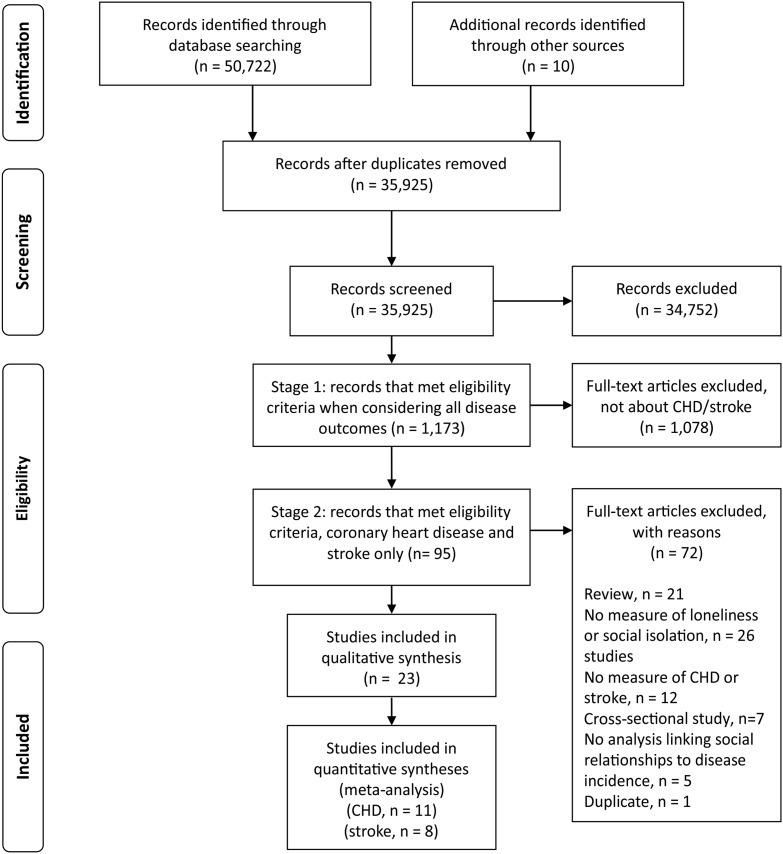
Background: The influence of social relationships on morbidity is widely accepted, but the size of the risk to cardiovascular health is unclear. Objective: We undertook a systematic review and meta-analysis to investigate the association between loneliness or social isolation and incident coronary heart disease (CHD) and stroke. Methods: Sixteen electronic databases were systematically searched for longitudinal studies set in high-income countries and published up until May 2015. Two independent reviewers screened studies for inclusion and extracted data. We assessed quality using a component approach and pooled data for analysis using random effects models. Results: Of the 35 925 records retrieved, 23 papers met inclusion criteria for the narrative review. They reported data from 16 longitudinal datasets, for a total of 4628 CHD and 3002 stroke events recorded over follow-up periods ranging from 3 to 21 years. Reports of 11 CHD studies and 8 stroke studies provided data suitable for meta-analysis. Poor social relationships were associated with a 29% increase in risk of incident CHD (pooled relative risk: 1.29, 95% CI 1.04 to 1.59) and a 32% increase in risk of stroke (pooled relative risk: 1.32, 95% CI 1.04 to 1.68). Subgroup analyses did not identify any differences by gender. Conclusions: Our findings suggest that deficiencies in social relationships are associated with an increased risk of developing CHD and stroke. Future studies are needed to investigate whether interventions targeting loneliness and social isolation can help to prevent two of the leading causes of death and disability in high-income countries. Study registration number: CRD42014010225.
Overview
CoChat Summary
TL;DR
This systematic review and meta-analysis of longitudinal observational studies found that poor social relationships were associated with a 29% higher risk of incident coronary heart disease and a 32% higher risk of stroke. The authors conclude that addressing loneliness and social isolation may be valuable in cardiovascular prevention, while noting causality cannot be inferred.
Key findings
- Across 23 papers from 16 longitudinal cohorts, including 181,006 participants, 4628 CHD events and 3002 stroke events were recorded over follow-up periods of 3–21 years.
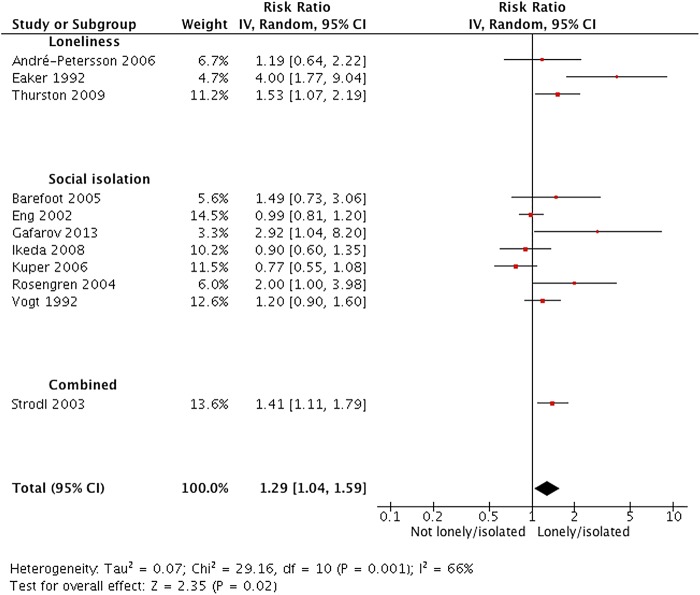
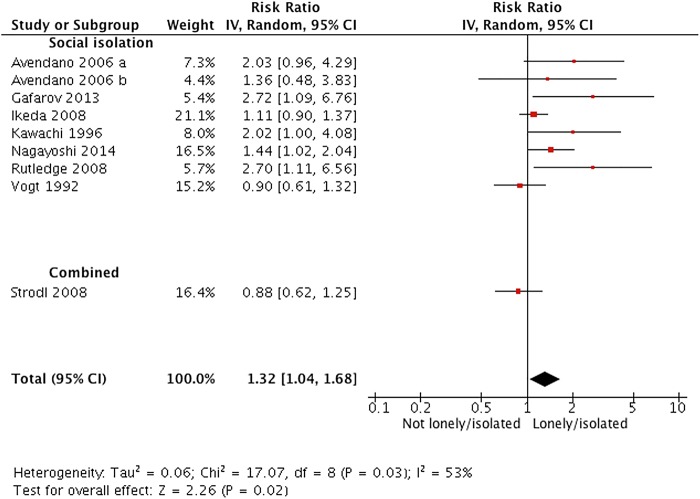
- Pooled relative risk for incident CHD comparing high versus low loneliness/social isolation was 1.29 (95% CI 1.04 to 1.59) across 11 studies; pooled relative risk for stroke was 1.32 (95% CI 1.04 to 1.68) across 8 stroke studies in the abstract (the results section describes nine independent stroke samples).
- Subgroup analyses found no differences by gender, and no evidence that loneliness versus social isolation was differentially associated with CHD incidence.
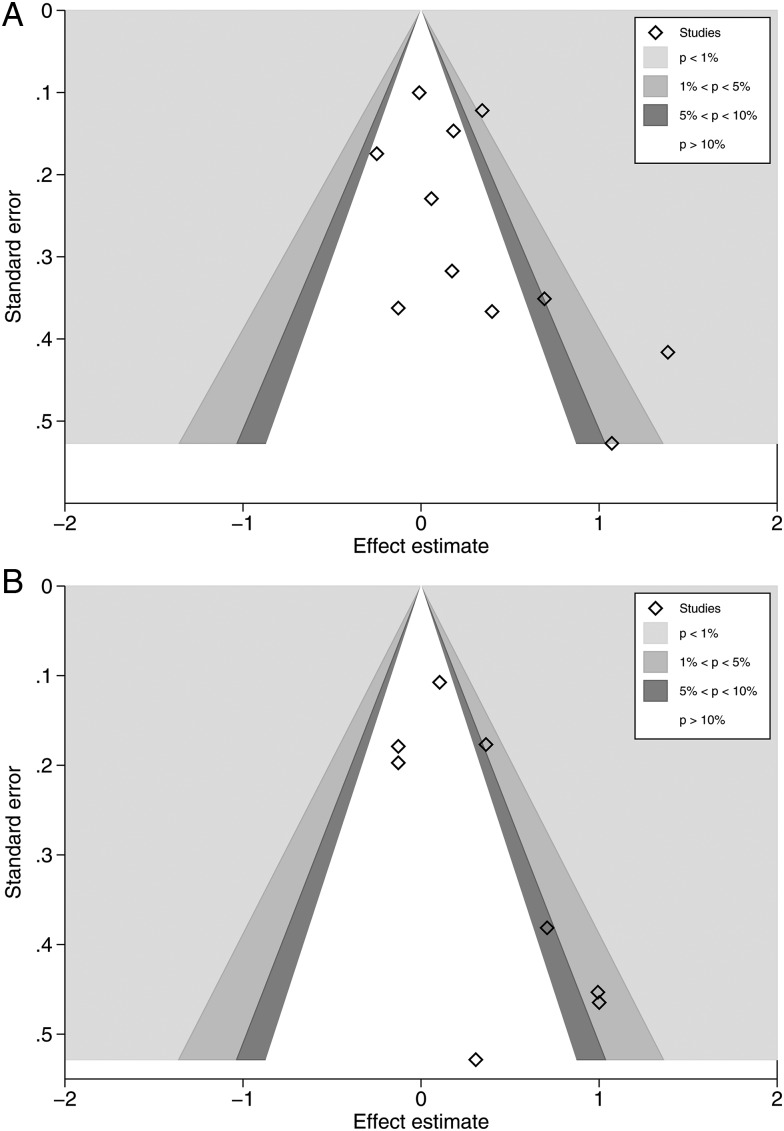
- Heterogeneity was present for CHD (I²=66%, p=0.001) and stroke (I²=53%, p=0.03); sensitivity analyses found no evidence that results differed by study validity, but funnel plots and fixed- versus random-effects comparisons suggested possible small-study effects/reporting bias.
Methods
- Systematic review and meta-analysis of longitudinal observational studies set in high-income countries, registered as CRD42014010225; 16 electronic databases were searched up to May 2015, supplemented by reference lists, Scopus citations, and topic experts.
- Of 35,925 records retrieved, 23 papers based on 16 cohorts met inclusion criteria; two independent reviewers screened studies and extracted data, with quality assessed using a component approach.
- Random-effects models pooled effect estimates transformed to natural logs; odds ratios were approximated to relative risks because incidence was <10% in the three studies reporting ORs; prespecified subgroup and sensitivity analyses were performed.
Limitations
- The paper states that causality cannot be inferred, unmeasured confounding and reverse causation due to subclinical disease cannot be excluded, and publication bias may lead to overestimation of the true effect; conversely, pooled effects could be conservative because many studies adjusted for factors likely on the causal pathway, such as depression or health-related behaviour.
- The paper states insufficient data to explore the relative effects of quantity versus quality of relationships or effect modifiers in depth; seven estimates came from populations of higher socioeconomic status and better health than the target population, so results may underestimate effects among disadvantaged groups; some data were collected from 1965, and later CHD prevention strategies may have modified the association.
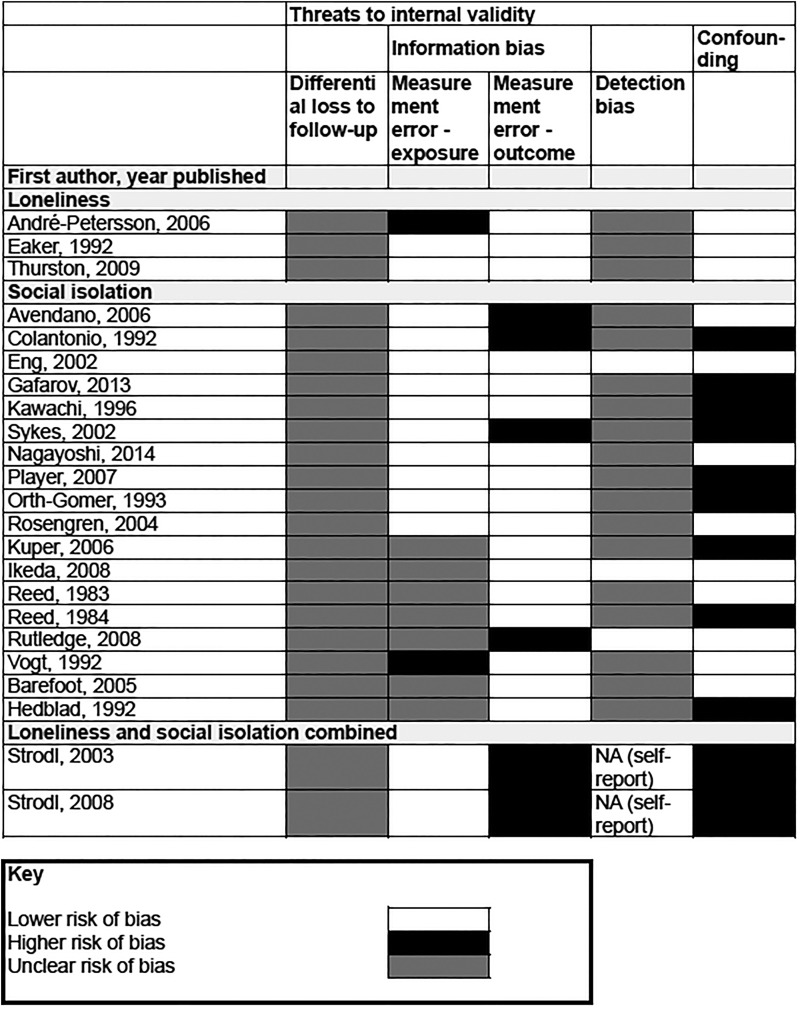
- Evident from the text: heterogeneity remained unexplained, information on reliability and validity of social relationship instruments was limited, and limited information on attrition and blinding meant risk of differential loss to follow-up and detection bias was unclear.
Model-written summary. Check it against the paper before relying on it.
Integrity signals
Registry
Cites
Statistics
Figures
Verification
Claims the paper makes
3 Valid · 0 Not valid · 17 Not checked · 47 Own results and interpretations
Every source the paper cites for this claim was checked and supports it.
In the paper
“Adults who have few social contacts (ie, who are socially isolated) or feel unhappy about their social relationships (ie, who are lonely) are at increased risk of premature mortality.1”
§ Loneliness and social isolation as risk factors for coronary heart disease and stroke: systematic review and meta-analysis of longitudinal observational studies > Introduction
What the sources say
- Supportedcites [1] Holt-Lunstad J, Smith TB, Baker M, et al Loneliness and social isolation as risk factors for mortality: a meta-analytic review. Perspect Psychol Sci 2015; 10: 227– 37. 10.1177/1745691614568352 25910392 source
The Introduction (p. 228) supplies exactly the two definitions the claim paraphrases: social isolation as an 'objective quantitative approach to establish a dearth of social contact and network size' (living alone, few social network ties, infrequent contact), and loneliness as 'the perception of social isolation... the dissatisfaction with the discrepancy between desired and actual social relationships.' The Discussion reports the mortality risk for adults across 70 prospective studies (26% for loneliness, 29% for social isolation, 32% for living alone after covariate adjustment), and the Conclusion states that 'individuals lacking social connections (both objective and subjective social isolation) are at risk for premature mortality.' Both the definitional glosses and the increased-risk assertion are therefore carried by our copy. (LLM, conf=0.92)
plainstates an association- Asserted: passes — The authors put it forward as true.
- Checkable: passes — It can be checked against evidence.
- Load-bearing: passes — The paper’s conclusions depend on it.
- Based: passes — The paper gives a reason why it holds.
- Supported
Every source the paper cites for this claim was checked and supports it.
In the paper
“The influence of social relationships on mortality is comparable with well-established risk factors, including physical activity and obesity.2”
§ Loneliness and social isolation as risk factors for coronary heart disease and stroke: systematic review and meta-analysis of longitudinal observational studies > Introduction
What the sources say
- Supportedcites [2] Holt-Lunstad J, Smith TB, Layton JB Social relationships and mortality risk: a meta-analytic review. PLoS Med 2010; 7: e1000316 10.1371/journal.pmed.1000316 20668659 PMC2910600 source
The Conclusion (Discussion) of Holt-Lunstad et al. (2010) states directly that the magnitude of the social-relationship effect on mortality (50% greater likelihood of survival across 308,849 individuals) is comparable with quitting smoking and exceeds many well-known risk factors, e.g., obesity and physical inactivity. The Discussion also states the magnitude 'may be considered quite large, rivaling that of well-established risk factors (Figure 6).' The citing sentence is, if anything, slightly weaker than the source ('comparable with' vs. 'exceeds'), which the rubric treats as supported. (LLM, conf=0.90)
plainstates an association- Asserted: passes — The authors put it forward as true.
- Checkable: passes — It can be checked against evidence.
- Load-bearing: passes — The paper’s conclusions depend on it.
- Based: passes — The paper gives a reason why it holds.
- Supported
The cited sources support only part of this claim — read each source’s verdict below.
In the paper
“We found an association between poor social relationships and incident CVD comparable in size to other recognised psychosocial risk factors, such as anxiety50 and job strain.51”
§ Loneliness and social isolation as risk factors for coronary heart disease and stroke: systematic review and meta-analysis of longitudinal observational studies > Discussion > Summary of findings and comparison with other work
What the sources say
- Supportedcites [50] Roest AM, Martens EJ, de Jonge P, et al Anxiety and risk of incident coronary heart disease: a meta-analysis. J Am Coll Cardiol 2010; 56: 38– 46. 10.1016/j.jacc.2010.03.034 20620715 source
Citation 50 is attached to anxiety, not job strain or the citing authors’ finding about social relationships. The Results report an association between anxiety and incident coronary heart disease (pooled hazard ratio 1.26), supporting anxiety as the risk-factor comparison used here. The source does not itself compare anxiety with poor social relationships. (LLM, conf=0.88)
- Partly supportedcites [51] Fransson EI, Nyberg ST, Heikkilä K, et al Job strain and the risk of stroke: an individual-participant data meta-analysis. Stroke 2015; 46: 557– 9. 10.1161/STROKEAHA.114.008019 25563644 sourceExperimental — accuracy not yet measured
The Results report a job-strain association with incident ischemic stroke (hazard ratio 1.24), providing a magnitude the citing authors could compare with their own finding. The paper does not establish job strain as a risk factor for CVD generally: its overall-stroke association was not statistically significant, and its Conclusion qualifies the ischemic-stroke finding as possible. (LLM, conf=0.82)
plainstates an association- Asserted: passes — The authors put it forward as true.
- Checkable: passes — It can be checked against evidence.
- Load-bearing: passes — The paper’s conclusions depend on it.
- Based: passes — The paper gives a reason why it holds.
- Supported
A result the paper reports from its own data — it cites no other source for it, so there is none to check. The quote shows it is in the paper.
In the paper
“Poor social relationships were associated with a 29% increase in risk of incident CHD (pooled relative risk: 1.29, 95% CI 1.04 to 1.59)”
- Also stated in: § Loneliness, social isolation and CHD · plain
“Across 11 studies (3794 events; one study did not report numbers) based on independent samples, the average relative risk of new CHD when comparing high versus low loneliness or social isolation was 1.29 (95% CI 1.04 to 1.59; see figure 3).”
- Also stated in: § Summary of findings and comparison with other work · plain
“Our review found that poor social relationships were associated with a 29% increase in risk of incident CHD and a 32% increase in risk of stroke.”
§ Loneliness and social isolation as risk factors for coronary heart disease and stroke: systematic review and meta-analysis of longitudinal observational studies > Abstract > Results
plainstates an association- Asserted: passes — The authors put it forward as true.
- Checkable: passes — It can be checked against evidence.
- Load-bearing: passes — The paper’s conclusions depend on it.
- Based: passes — The paper gives a reason why it holds.
- Also stated in: § Loneliness, social isolation and CHD · plain
A result the paper reports from its own data — it cites no other source for it, so there is none to check. The quote shows it is in the paper.
In the paper
“Subgroup analyses did not identify any differences by gender.”
§ Loneliness and social isolation as risk factors for coronary heart disease and stroke: systematic review and meta-analysis of longitudinal observational studies > Abstract > Results
plain- Asserted: passes — The authors put it forward as true.
- Checkable: passes — It can be checked against evidence.
- Load-bearing: unclear — It is unclear whether the paper’s conclusions depend on it.
- Based: passes — The paper gives a reason why it holds.
19 more claims
Create a free account to see all 67 claims and to verify the 21 references still open.
- It may state two separate claims as one. 22
- Probably not a substantial claim. 30
Claims other papers make about this one
Each is checked against this paper’s own text: does it say what the citing paper says it does?
The source backs part of the claim, not all of it — or backs it for a different population, condition or comparison.
In the citing paper
“the industrial revolution and modern era have ushered in changes in social interactions and sleep quality59,91 that can promote SCI149,150 and insulin resistance151, in turn increasing risk for obesity, type 2 diabetes, CVD and all-cause mortality150–154”
From Chronic inflammation in the etiology of disease across the life span (2019) · cites this paper as [152]
Experimental — accuracy not yet measuredThe source backs part of the claim, not all of it — or backs it for a different population, condition or comparison.
In the citing paper
“In a meta-analysis of longitudinal studies of social isolation and loneliness and cardiovascular outcomes, both social isolation and loneliness were found to significantly increase the risk for new CHD and stroke, with no evidence that one was more strongly related to disease incidence than the other [33].”
From Social isolation: an underappreciated determinant of physical health (2022) · cites this paper as [33]
Experimental — accuracy not yet measuredThe cited source says what the claim attributes to it.
In the citing paper
“There is also a growing body of evidence relating social isolation with nonfatal physical health outcomes, including increased risk for cardiovascular disease and stroke [33], pre-diabetes and type 2 diabetes [34], and poorer cognitive functioning [35].”
From Social isolation: an underappreciated determinant of physical health (2022) · cites this paper as [33]
The cited source says what the claim attributes to it.
In the citing paper
“Because lower circulating BDNF levels and small social networks have separately been associated with higher risk of incident stroke [3], [4], cognitive dysfunction [2], [5], [6], and the accumulation of Alzheimer's disease pathology [7], [8]”
From Associations between social relationship measures, serum brain-derived neurotrophic factor, and risk of stroke and dementia (2017) · cites this paper as [3]
The cited source says what the claim attributes to it.
In the citing paper
“Social isolation and loneliness have been studied extensively over the past four decades, with numerous studies showing that both have negative mental and physical health consequences [1–5].”
6 more claims about this paper
Create a free account to see every claim other papers make about this one.
Self-check
Percentages, sums and reported differences re-computed from the paper’s own numbers.
Each contradiction between two passages listed here was confirmed by an independent check.
Rated minor: it would not touch a result — a value no result rests on, a p-value that stays on the same side of the significance level, or a conflict that is clerical, resolved elsewhere in the paper, or outside its own findings.
In the paper
§ Loneliness and social isolation as risk factors for coronary heart disease and stroke: systematic review and meta-analysis of longitudinal observational studies > Results > Social isolation and stroke
“Across nine independent study samples (2577 events; one study did not report numbers), the average relative risk of stroke incidence was 1.32”
§ Loneliness and social isolation as risk factors for coronary heart disease and stroke: systematic review and meta-analysis of longitudinal observational studies > Results > Risk of bias across studies
“Stroke | 1.32 (1.04 to 1.68) (n=8)”
Rated minor: it would not touch a result — a value no result rests on, a p-value that stays on the same side of the significance level, or a conflict that is clerical, resolved elsewhere in the paper, or outside its own findings.
In the paper
“Four studies presented results from univariate analyses,31 34 35 41 with a further study adjusting for age only.26 The remaining eight reports did not control for socioeconomic status”
§ Loneliness and social isolation as risk factors for coronary heart disease and stroke: systematic review and meta-analysis of longitudinal observational studies > Results > Study validity
Reported 23 · recomputed 25
Citations
Cites
Social Relationships and Mortality Risk: A Meta-analytic Review
Holt-Lunstad, J., Smith, T. B., & Layton, J. B. (2010) · PLoS Medicine · doi:10.1371/journal.pmed.1000316 · Cited by 7,272
Loneliness and Social Isolation as Risk Factors for Mortality: A Meta-Analytic Review
Holt-Lunstad, J., Smith, T. B., Baker, M., Harris, T., & Stephenson, D. (2015) · Perspectives on Psychological Science · doi:10.1177/1745691614568352 · Cited by 6,043
Loneliness matters: a theoretical and empirical review of consequences and mechanisms
Hawkley, L. C., & Cacioppo, J. T. (2010) · Annals of Behavioral Medicine · doi:10.1007/s12160-010-9210-8 · Cited by 4,782
Zhang, J., & Yu, K. F. (1998) · JAMA · doi:10.1001/jama.280.19.1690 · Cited by 4,138
Systematic reviews: CRD's guidance for undertaking reviews in health care
Tacconelli, E. (2010) · The Lancet Infectious Diseases · doi:10.1016/s1473-3099(10)70065-7 · Cited by 3,245
Assessing social networks among elderly populations
Lubben, J. E. (1988) · Family & Community Health · doi:10.1097/00003727-198811000-00008 · Cited by 1,188
Loneliness, social isolation, and behavioral and biological health indicators in older adults.
Shankar, A., McMunn, A., Banks, J., & Steptoe, A. (2011) · Health Psychology · doi:10.1037/a0022826 · Cited by 1,100
Social Relationships and Health
Cohen, S., Gottlieb, B. H., & Underwood, L. G. (2000) · Social Support Measurement and Intervention · doi:10.1093/med:psych/9780195126709.003.0001 · Cited by 903
Stress and Cardiovascular Disease: An Update on Current Knowledge
Steptoe, A., & Kivimäki, M. (2013) · Annual Review of Public Health · doi:10.1146/annurev-publhealth-031912-114452 · Cited by 879 · cited 1×
“Subgroup analyses speci fi ed a priori showed no difference between the association of loneliness or social isolation with CHD incidence, and we found no evidence across studies of differences between men and women.”
Anxiety and Risk of Incident Coronary Heart Disease
Roest, A. M., Martens, E. J., de Jonge, P., & Denollet, J. (2010) · Journal of the American College of Cardiology · doi:10.1016/j.jacc.2010.03.034 · Cited by 865
Cited by
Items 501–600 of 1,002
Loneliness, social isolation and cardiovascular risk
Jackson, A. C., & Murphy, B. M. (2019) · British Journal of Cardiac Nursing · doi:10.12968/bjca.2019.0093 · Cited by 25
Maitland, D. W. M. (2020) · Journal of Contextual Behavioral Science · doi:10.1016/j.jcbs.2020.10.002 · Cited by 29
Zeytinoglu, M., Wroblewski, K., Vokes, T., Huisingh-Scheetz, M. J., Hawkley, L. C., & Huang, E. S. (2021) · Gerontology and Geriatric Medicine · doi:10.1177/2333721421989217 · Cited by 33
Honda, Y., Mok, Y., Mathews, L. M., Hof, J. V., Daumit, G. L., Kucharska‐Newton, A., Selvin, E., Mosley, T. H., Coresh, J., & Matsushita, K. (2021) · Atherosclerosis · doi:10.1016/j.atherosclerosis.2021.04.020 · Cited by 26
Poor social support and loneliness in chronic headache: Prevalence and effect modifiers
Westergaard, M. L., Lau, C. J., Allesøe, K., Andreasen, A. H., & Jensen, R. (2021) · Cephalalgia · doi:10.1177/03331024211020392 · Cited by 26
Poudel, P. G., Bauer, H. E., Srivastava, D. K., Krull, K. R., Hudson, M. M., Robison, L. L., Wang, Z., & Huang, I. (2021) · JCO Clinical Cancer Informatics · doi:10.1200/cci.21.00044 · Cited by 27
The role of social factors in the successful ageing – Systematic review
Takács, J., & Nyakas, C. J. (2021) · Developments in Health Sciences · doi:10.1556/2066.2021.00044 · Cited by 34
Melov, S. J., Galas, N., Swain, J., Alahakoon, T. I., Lee, V. W., Cheung, N. W., McGee, T., Pasupathy, D., & McNab, J. (2021) · Women and Birth · doi:10.1016/j.wombi.2021.10.011 · Cited by 24
Childhood Emotional Neglect and Cardiovascular Disease: A Narrative Review
Salzmann, S., Salzmann-Djufri, M., & Euteneuer, F. (2022) · Frontiers in Cardiovascular Medicine · doi:10.3389/fcvm.2022.815508 · Cited by 29
The harms of medicalisation: intersex, loneliness and abandonment
Jones, C. (2022) · Feminist Theory · doi:10.1177/14647001211062740 · Cited by 32
“Indeed, a range of quantitative empirical studies evidence how loneliness can affect health, including its potential impact upon blood pressure (Hawkley et al., 2010), and an increased risk of coronary heart disease and stroke (Valtorta et al., 2016).”
BackgroundWomen's interdependence after hysterectomy: a qualitative study based on Roy adaptation model
Goudarzi, F., Khadivzadeh, T., Ebadi, A., & Babazadeh, R. (2022) · BMC Women s Health · doi:10.1186/s12905-022-01615-2 · Cited by 24
Healthy Lifestyle Score and Incidence of Glaucoma: The Sun Project
Moreno‐Montañés, J., Gándara, E., Gutierrez, I., Moreno‐Galarraga, L., Ruiz‐Canela, M., Bes‐Rastrollo, M., Martínez‐González, M. Á., & Fernández‐Montero, A. (2022) · Nutrients · doi:10.3390/nu14040779 · Cited by 28
Guo, L., Wang, W., Shi, J., Zheng, X., Hua, Y., & Lu, C. (2023) · JMIR Public Health and Surveillance · doi:10.2196/45677 · Cited by 24
“A meta-analysis with 16 cohorts from Europe, North America, Australia, Japan, and Asian Russia showed that social isolation and loneliness are associated with approximately 30% higher risk of coronary heart disease and stroke, even after controlling for age, sex, and socioeconomic status [3].”
BackgroundNaturally Occurring Nonhuman Primate Models of Psychosocial Processes
Capitanio, J. P. (2017) · ILAR Journal · doi:10.1093/ilar/ilx012 · Cited by 24
Rifai, M. A., Greenland, P., Blaha, M. J., Michos, E. D., Nasir, K., Miedema, M. D., Yeboah, J., Sandfort, V., Wood, A. C., Shea, S., et al. (2017) · American Heart Journal · doi:10.1016/j.ahj.2017.10.026 · Cited by 25
Virtanen, M., Vahtera, J., Singh‐Manoux, A., Elovainio, M. J., Ferrie, J. E., & Kivimäki, M. (2018) · International Journal of Cardiology · doi:10.1016/j.ijcard.2018.07.005 · Cited by 40
Greene, M. L., Myers, J. J., Tan, J. Y., Blat, C., O’Hollaren, A., Quintanilla, F., Hsue, P. Y., Shiels, M., Hicks, M. L., Olson, B., et al. (2020) · Journal of the International Association of Providers of AIDS Care (JIAPAC) · doi:10.1177/2325958220935267 · Cited by 26
Tachikawa, H., Matsushima, M., Midorikawa, H., Aiba, M., Okubo, R., & Tabuchi, T. (2023) · BMJ Open · doi:10.1136/bmjopen-2022-063363 · Cited by 33
Kindermann, I., Köllner, V., Albus, C., Boer, J., Dannberg, G., Fritzsche, K., Gunold, H., Herrmann‐Lingen, C., Leithäuser, B., Meesmann, M., et al. (2024) · Die Kardiologie · doi:10.1007/s12181-024-00708-6 · Cited by 30
An ecological framework for population health and well-being
Pronk, N. P., Woodard, C., Zimmerman, F. J., & Arena, R. A. (2025) · Progress in Cardiovascular Diseases · doi:10.1016/j.pcad.2025.03.013 · Cited by 31
Putting the public (back) into public health: leadership, evidence and action
South, J., Connolly, A., Stansfield, J., Johnstone, P. W., Henderson, G., & Fenton, K. A. (2018) · Journal of Public Health · doi:10.1093/pubmed/fdy041 · Cited by 30
Social integration and loneliness among long-term care home residents: protocol for a scoping review
Bethell, J., Babineau, J., Iaboni, A., Green, R., Cuaresma-Canlas, R., Karunananthan, R., Schon, B., Schon, D., & McGilton, K. S. (2019) · BMJ Open · doi:10.1136/bmjopen-2019-033240 · Cited by 23
COVID-19 and the secret virtual assistants: the social weapons for a state of emergency
Sheerman, L., Marston, H. R., Musselwhite, C., & Morgan, D. (2020) · Emerald Open Research · doi:10.35241/emeraldopenres.13571.1 · Cited by 31
Steijvers, L. C., Brinkhues, S., Hoebe, C. J. P. A., van Tilburg, T. G., Claessen, V. P. J., Bouwmeester-Vincken, N., Hamers, F. J. M., Vranken, P., & Dukers–Muijrers, N. H. T. M. (2021) · PLoS ONE · doi:10.1371/journal.pone.0251862 · Cited by 27
Smith, T. O., Belderson, P., Dainty, J. R., Birt, L., Durrant, K., Chipping, J. R., Tsigarides, J., Yates, M. M., Naughton, F., Werry, S., et al. (2021) · BMJ Open · doi:10.1136/bmjopen-2021-048772 · Cited by 25
Agarwal, G., Pirrie, M., Gao, A., Angeles, R. N., & Marzanek, F. (2021) · CMAJ Open · doi:10.9778/cmajo.20200205 · Cited by 28
McDaniels, B. W., & Subramanian, I. (2022) · International review of neurobiology · doi:10.1016/bs.irn.2022.03.003 · Cited by 28
“…games, and outdoor recreation activities of walking, hiking, biking, and running, thus, promoting connection with others in the community and encouraging PwP to continue exercising (Mirelman et al., 2016; Razani, Radhakrishna, & Chan, 2020; Schenkman et al., 2018; van der Kolk et al., 2019).”
BackgroundTuck, N. L., Adams, K. S., Pressman, S. D., & Consedine, N. S. (2017) · Journal of Behavioral Medicine · doi:10.1007/s10865-017-9852-0 · Cited by 27
Rosman, L., Armbruster, T., Kyazimzade, S., Tugaoen, Z., Mazzella, A. J., Deyo, Z., Walker, J., Machineni, S., & Gehi, A. K. (2021) · Pacing and Clinical Electrophysiology · doi:10.1111/pace.14188 · Cited by 27
Psychosocial Risk Factors in Cardiac Rehabilitation: Time to Screen Beyond Anxiety and Depression
Mesa-Vieira, C., Grolimund, J., von Känel, R., Franco, O. H., & Saner, H. E. (2021) · Global Heart · doi:10.5334/gh.896 · Cited by 33
Wang, R., Qiu, C., Dintica, C. S., Shang, Y., Calderón Larrañaga, A., Wang, H., & Xu, W. (2021) · Alzheimer's & Dementia · doi:10.1002/alz.12203 · Cited by 23
Ezzatvar, Y., Caballero, Ó., Bastías, D. M. D., Sepulveda, R. A. Y., & García‐Hermoso, A. (2025) · Diabetes Research and Clinical Practice · doi:10.1016/j.diabres.2025.112124 · Cited by 29
Yaşlılıkta Sosyal İzolasyon ve Yalnızlık
Akbaş, E., Yiğitoğlu, G. T., & Köktaş, N. Ç. (2020) · Opus uluslararası toplum araştırmaları dergisi · doi:10.26466/opus.648658 · Cited by 43
Sex-Related Factors in Cardiovascular Complications Associated to COVID-19
Megiorni, F., Pontecorvi, P., Gerini, G., Anastasiadou, E., Marchese, C., & Ceccarelli, S. (2021) · Biomolecules · doi:10.3390/biom12010021 · Cited by 23
McDowell, C. P., Meyer, J. D., Russell, D. W., Brower, C. S., Lansing, J. E., & Herring, M. P. (2021) · Frontiers in Psychiatry · doi:10.3389/fpsyt.2021.738892 · Cited by 31
Chu, A., Y, L., Zhang, H., & Jiang, Y. L. (2023) · Journal of Aging and Physical Activity · doi:10.1123/japa.2022-0205 · Cited by 28
The mediating effect of stigma between self-perceived burden and loneliness in stroke patients
Fan, W., Ma, K. K., Yang, C. X., & Guo, Y. L. (2023) · Frontiers in Psychiatry · doi:10.3389/fpsyt.2023.1219805 · Cited by 29
“Loneliness increases the 5-year mortality rate of stroke patients by three times (39) and is associated with lower self-esteem (6), which is detrimental to the physical and mental health of patients.”
BackgroundExamining the Bidirectional Nature of Loneliness and Anxiety Among Older Adults in Daily Life
Bogart, K. V., Scott, S., Harrington, K., Felt, J. M., Sliwinski, M. J., & Graham‐Engeland, J. E. (2023) · The Journals of Gerontology Series B · doi:10.1093/geronb/gbad105 · Cited by 25
Loneliness: Adolescents’ perspectives on what causes it, and ways youth services can prevent it
Turner, S., Fulop, A., & Woodcock, K. A. (2024) · Children and Youth Services Review · doi:10.1016/j.childyouth.2024.107442 · Cited by 52
In-person interventions to reduce social isolation and loneliness: An evidence and gap map
Welch, V. A., Ghogomu, E. T., Dowling, S., Barbeau, V. I., Al‐Zubaidi, A. A. A., Beveridge, E., Bondok, M., Desai, P., Doyle, R., Huang, J. X., et al. (2024) · Campbell Systematic Reviews · doi:10.1002/cl2.1408 · Cited by 38
Sleep Disturbance Mediates the Association Between Loneliness and Health in Older Americans
Griffin, S. C., Mladen, S. N., Williams, A. B., Dautovich, N. D., Lageman, S. K., Dzierzewski, J. M., Perrin, P. B., & Rybarczyk, B. D. (2020) · International Journal of Behavioral Medicine · doi:10.1007/s12529-020-09897-2 · Cited by 24
The impact of generative artificial intelligence on socioeconomic inequalities and policy makingPreprint
Capraro, V., Lentsch, A., Acemoğlu, D., Akgün, S., Akhmedova, A., Bilancini, E., Bonnefon, J., Brañas‐Garza, P., Butera, L., Douglas, K. M., et al. (2023) · PsyArXiv (OSF Preprints) · doi:10.31234/osf.io/6fd2y · Cited by 48
Lampinen, J., Conradsson, M., Nyqvist, F., Olofsson, B., Gustafson, Y., Nilsson, I., & Littbrand, H. (2022) · European Journal of Ageing · doi:10.1007/s10433-022-00729-8 · Cited by 21
“Furthermore, we rated loneliness using a single self-reported question (Victor and Bond 2009) instead of an instrument such as the Jong Gierveld Scale (de Jong Gierveld and Kamphuis 1985) or the UCLA Loneliness Scale (Russell 1996).”
MethodSociodemographic Heterogeneity in the Associations of Social Isolation With Mortality
Nakagomi, A., Saito, M., Ojima, T., Ueno, T., Hanazato, M., & Kondo, K. (2024) · JAMA Network Open · doi:10.1001/jamanetworkopen.2024.13132 · Cited by 22
Moghayedi, A., Michell, K., Awuzie, B. O., & Adama, U. J. (2024) · Journal of Corporate Real Estate · doi:10.1108/jcre-09-2023-0041 · Cited by 30
Yu, Y., Huang, Q., Ren, Z., & Ou, Z. (2024) · Annals of Behavioral Medicine · doi:10.1093/abm/kaae049 · Cited by 207
The Association of Loneliness and Non-prescribed Opioid Use in Patients With Opioid Use Disorder
McDonagh, J., Williams, C. B., Oldfield, B. J., Cruz-Jose, D., & Olson, D. P. (2020) · Journal of Addiction Medicine · doi:10.1097/adm.0000000000000629 · Cited by 24
Risk factors for loneliness among older people in a Nordic regional context – a longitudinal study
Nyqvist, F., Näsman, M., Hemberg, J. A. V., & Nygård, M. (2021) · Ageing and Society · doi:10.1017/s0144686x21001707 · Cited by 32
Wister, A., Li, L., & Mitchell, B. A. (2021) · The International Journal of Aging and Human Development · doi:10.1177/00914150211040451 · Cited by 27
Henning, G., Segel‐Karpas, D., Bjälkebring, P., & Berg, A. I. (2021) · Aging & Mental Health · doi:10.1080/13607863.2021.2000937 · Cited by 27
Ryu, S. I., Park, Y., Kim, J., Huh, I., Chang, S. J., Jang, S., & Noh, E.-Y. (2022) · PLoS ONE · doi:10.1371/journal.pone.0270260 · Cited by 24
Dingle, G. A., Sharman, L. S., Hayes, S., Chua, D., Baker, J. R., Haslam, C., Jetten, J., Haslam, S. A., Cruwys, T., & McNamara, N. (2022) · BMC Public Health · doi:10.1186/s12889-022-13743-3 · Cited by 25
Fan, Y., Ho, M. R., & Shen, B. (2022) · Applied Psychology Health and Well-Being · doi:10.1111/aphw.12403 · Cited by 28
Xie, B., Zhang, Y., Han, M., Wang, M., Yu, Y., Chen, X., Wu, Y., Hashimoto, K., Yuan, S., Shang, Y., et al. (2023) · Journal of Cerebral Blood Flow & Metabolism · doi:10.1177/0271678x231167946 · Cited by 22
“Emerging evidence has indicated a compelling association between ISO and an increased risk of stroke.(9,10) Social deprivation contributes to accelerated disease progression and impaired recovery from stroke, which has been recapitulated by experimental models.”
BackgroundTrajectories of Early Adolescent Loneliness: Implications for Physical Health and Sleep
Eccles, A. M., Qualter, P., Panayiotou, M., Hurley, R., Boivin, M., & Tremblay, R. E. (2020) · Journal of Child and Family Studies · doi:10.1007/s10826-020-01804-3 · Cited by 32
Use of Digital Tools, Social Isolation, and Lockdown in People 80 Years and Older Living at Home
Gauthier, A., Lagarde, C., Mourey, F., & Manckoundia, P. (2022) · International Journal of Environmental Research and Public Health · doi:10.3390/ijerph19052908 · Cited by 20
“An insufficient social network is associated with a risk of heart disease and stroke through increased active smoking and physical inactivity [49].”
BackgroundAddressing Syndemic Health Disparities Among Latin Immigrants Using Peer Support
Page-Reeves, J., Shrum, S., Rohan-Minjares, F., Thiedeman, T., Perez, J., Murrietta, A., Cordova, C., & Ronquillo, F. (2019) · Journal of Racial and Ethnic Health Disparities · doi:10.1007/s40615-018-00535-y · Cited by 20
Costello, M. A., Pettit, C., Hellwig, A. F., Hunt, G. L., Bailey, N. A., & Allen, J. P. (2024) · Journal of Research on Adolescence · doi:10.1111/jora.12947 · Cited by 20
Gao, Q., Bone, J. K., Finn, S., & Fancourt, D. E. (2024) · Brain Behavior and Immunity · doi:10.1016/j.bbi.2024.03.045 · Cited by 23
Maltby, J., Day, L., Hall, S. S., & Chivers, S. (2017) · Assessment · doi:10.1177/1073191117738045 · Cited by 23
Cheng, J. T., & Kornienko, O. (2020) · Springer eBooks · doi:10.1007/978-3-030-35784-9_22 · Cited by 25
Social Preparedness in Response to Spatial Distancing Measures for Aged Care During COVID-19
Siette, J., Wuthrich, V. M., & Low, L. (2020) · Journal of the American Medical Directors Association · doi:10.1016/j.jamda.2020.04.015 · Cited by 20
Sharma, M., Batra, K., & Flatt, J. D. (2021) · Healthcare · doi:10.3390/healthcare9070838 · Cited by 23
Peer-delivered services and peer support reaching people with schizophrenia: A scoping review
Evans, M., Barker, H., Peddireddy, S. R., Zhang, A., Luu, S., Qian, Y., Tang, P. Y., & Fisher, E. B. (2021) · International Journal of Mental Health · doi:10.1080/00207411.2021.1975441 · Cited by 24
Horst, B., Sixsmith, A. J., Simeonov, D., & Mihailidis, A. (2021) · Frontiers in Public Health · doi:10.3389/fpubh.2021.749515 · Cited by 22
Kornej, J., Ko, D., Lin, H., Murabito, J. M., Benjamin, E. J., Trinquart, L., & Preis, S. R. (2022) · Scientific Reports · doi:10.1038/s41598-022-07850-9 · Cited by 23
Regnier‐Golanov, A., Gulinello, M. E., Hernandez, M. S., Golanov, E. V., & Britz, G. W. (2022) · Translational Stroke Research · doi:10.1007/s12975-022-00987-9 · Cited by 21
Vallée, A. (2023) · International Journal of Environmental Research and Public Health · doi:10.3390/ijerph20042869 · Cited by 26
“The results of the English Longitudinal Study of Ageing (ELSA) showed that loneliness was associated with heart disease and stroke incidence [3,45].”
BackgroundResultGlobal Trends in Social Prescribing: Web-Based Crawling Approach
Lee, H., Koh, S. B., Jo, H. S., Lee, T. H., Nam, H. K., Zhao, B., Lim, S., Lim, J. A., Lee, H. H., Hwang, Y. S., et al. (2023) · Journal of Medical Internet Research · doi:10.2196/46537 · Cited by 21
“Persistent social loneliness closely relates to adverse health outcomes such as coronary heart disease, stroke, depression, cognitive impairment, and Alzheimer disease, all of which pose a risk as great as obesity or smoking [2-4].”
Loneliness in older Chinese adults amid the COVID ‐19 pandemic: Prevalence and associated factors
Ruan, J., Xu, Y., & Zhong, B. (2023) · Asia-Pacific Psychiatry · doi:10.1111/appy.12543 · Cited by 23
“…loneliness, which have been linked to negative physical and mental health outcomes such as hypertension, heart failure, stroke, depression, and cognitive impairment, are a risk factor comparable to smoking (Liang et al., 2023; Valtorta et al., 2016; Zhong et al., 2017; Zhong, Chen, et al., 2016).”
BackgroundSocial Risk Factors That Increase Cardiovascular and Breast Cancer Risk
Obeidat, O., Charles, K., Akhter, N., & Tong, A. T. (2023) · Current Cardiology Reports · doi:10.1007/s11886-023-01957-9 · Cited by 25
“[92].”
Emerson, E., Stancliffe, R. J., Aitken, Z., Bailie, J., Bishop, G. M., Badland, H. M., Llewellyn, G. M., & Kavanagh, A. M. (2023) · BMC Public Health · doi:10.1186/s12889-023-17481-y · Cited by 27
“[2] Systematic reviews suggest that loneliness is associated with future mortality, [3] physical health, [4] and mental health [5].”
BackgroundPsychosocial and behavioral pathways of metabolic syndrome in cancer caregivers
Steel, J. L., Cheng, H., Pathak, R., Wang, Y., Miceli, J., Hecht, C. L., Haggerty, D., Peddada, S., Geller, D. A., Marsh, W., et al. (2019) · Psycho-Oncology · doi:10.1002/pon.5147 · Cited by 20
Otaki, N., Yokoro, M., Yano, M., Imamura, T., Akita, M., Tanino, N., & Fukuo, K. (2022) · BMC Geriatrics · doi:10.1186/s12877-022-03188-z · Cited by 22
Lee, H., Yong, S. Y., Choi, H., Yoon, G. Y., & Koh, S. B. (2024) · Frontiers in Aging Neuroscience · doi:10.3389/fnagi.2024.1389476 · Cited by 23
Engel, L., Lee, Y. Y., Le, L. K., Lal, A., & Mihalopoulos, C. (2021) · Mental Health & Prevention · doi:10.1016/j.mhp.2021.200212 · Cited by 18
Ipsen, C., & Repke, M. A. (2021) · Disability and health journal · doi:10.1016/j.dhjo.2021.101220 · Cited by 24
Saporta, N., Scheele, D., Lieberz, J., Nevat, M., Kanterman, A., Hurlemann, R., & Shamay‐Tsoory, S. (2022) · Cerebral Cortex · doi:10.1093/cercor/bhac073 · Cited by 23
Social isolation trajectories in midlife and later‐life: patterns and associations with health
Luo, M., & Li, L. (2022) · International Journal of Geriatric Psychiatry · doi:10.1002/gps.5715 · Cited by 23
Geva, N., Hermoni, N., & Levy-Tzedek, S. (2022) · Frontiers in Robotics and AI · doi:10.3389/frobt.2022.926185 · Cited by 19
“…may lead to high levels of stress (Geva et al., 2014; Beekman et al., 2016; Helpman et al., 2017), increased pain (Stein et al., 2007; Geva et al., 2014; Geva and Defrin, 2018; Bannon et al., 2021) and health problems (Grant et al., 2009; Valtorta et al., 2016; Williamson et al., 2018).”
BackgroundLoneliness and its correlates among Bangladeshi older adults during the COVID-19 pandemic
Mistry, S. K., Ali, A. M., Yadav, U. N., Huda, M. N., Ghimire, S., Saha, M., Sarwar, S., & Harris, M. (2022) · Scientific Reports · doi:10.1038/s41598-022-19376-1 · Cited by 26
Jezewski, E., Miller, A., Eusebio, M., & POTTER, J. F. (2022) · International Journal of Environmental Research and Public Health · doi:10.3390/ijerph192013349 · Cited by 18
“Limited transportation is also linked with social isolation, which is significantly associated with poorer health outcomes [30,32].”
BackgroundAn exploratory psychometric network analysis of loneliness scales in a sample of older adults
Thompson, A., & Pollet, T. V. (2023) · Current Psychology · doi:10.1007/s12144-023-04697-9 · Cited by 29
Ribeiro, F. S., Crivelli, L., & Leist, A. K. (2023) · The Lancet Healthy Longevity · doi:10.1016/s2666-7568(23)00052-1 · Cited by 27
Scatà, C., Carandina, A., Torre, A. D., Arosio, B., Bellocchi, C., Rodrigues, G. D., Furlan, L., Tobaldini, E., & Montano, N. (2023) · Life · doi:10.3390/life13061229 · Cited by 22
“In the literature, loneliness and social isolation have been correlated with increased total peripheral vascular resistance [15], the dysregulation of cardiovascular reactivity to stress [48], and an increased risk of developing hypertension [49], stroke, or coronary artery disease [50].”
BackgroundCannon, M. L., Bergman, L., & Finlay, J. (2023) · Journal of Aging and Environment · doi:10.1080/26892618.2023.2225179 · Cited by 22
“Community engagement can promote social support and diminish social isolation and loneliness, and therefore reduce risk for depression, cardiovascular disease, and all-cause mortality (Blazer, 2020; Cacioppo et al., 2010; Valtorta et al., 2016).”
Wang, L., Zhang, H., Yao, H., Gong, C., Zhong, J., Liu, D., & Liang, Z. (2023) · Clinical Cardiology · doi:10.1002/clc.24079 · Cited by 27
Zhang, Y., Li, X., Bi, Y., Kan, Y., Liu, H., Liu, L., Zou, Y., Zhang, N., Li, F., & Gong, W. (2023) · BMC Psychiatry · doi:10.1186/s12888-023-05122-y · Cited by 27
“In severely lonely people with T2DM, the risk of death may increase by 22–26% compared to that in the normal population [22].”
BackgroundLife events, social conditions and residential mobility among older adults
Gillespie, B. J., & Fokkema, T. (2023) · Population Space and Place · doi:10.1002/psp.2706 · Cited by 28
Heffernan, E., Habib, A., & Ferguson, M. (2019) · International Journal of Audiology · doi:10.1080/14992027.2018.1533257 · Cited by 25
Chin, B. N., & Cohen, S. (2020) · Psychosomatic Medicine · doi:10.1097/psy.0000000000000809 · Cited by 21
Segel‐Karpas, D., & Ermer, A. E. (2020) · The Journals of Gerontology Series B · doi:10.1093/geronb/gbaa170 · Cited by 23
Nicholson, B., Goodman, R., Day, J. W., Worth, A. J. J., Carpenter, B., Sandford, K., Morris, E. C., Burns, S. O., Ridout, D. A., Titman, P., et al. (2022) · Journal of Clinical Immunology · doi:10.1007/s10875-022-01286-6 · Cited by 22
“Research shows that social isolation is associated with an increased risk for early mortality [58], increased morbidity [59] and poorer mental health [60].”
BackgroundTimely Insights Into the Treatment of Social Disconnection in Lonely, Homebound Older Adults
Donovan, N. J. (2020) · American Journal of Geriatric Psychiatry · doi:10.1016/j.jagp.2020.04.002 · Cited by 23
López-Carral, H., Grechuta, K., & Verschure, P. F. M. J. (2020) · PLoS ONE · doi:10.1371/journal.pone.0237631 · Cited by 20
Modelling the Economic Impact of Reducing Loneliness in Community Dwelling Older People in England
McDaid, D., & Park, A. (2021) · International Journal of Environmental Research and Public Health · doi:10.3390/ijerph18041426 · Cited by 22
Løkken, B. I., Merom, D., Sund, E. R., Krokstad, S., & Rangul, V. (2021) · PLoS ONE · doi:10.1371/journal.pone.0248332 · Cited by 19
Carollo, A., Bizzego, A., Gabrieli, G., Wong, K. K., Raine, A., & Esposito, G. (2021) · Public Health in Practice · doi:10.1016/j.puhip.2021.100219 · Cited by 22
Dove, A. E., Guo, J., Calderón‐Larrañaga, A., Vetrano, D. L., Fratiglioni, L., & Xu, W. (2022) · Aging · doi:10.18632/aging.203956 · Cited by 23
Alharbi, K. K. S., Blakeman, T., van Marwijk, H., Reeves, D., & Tsang, J. Y. (2022) · BMJ Open · doi:10.1136/bmjopen-2021-054780 · Cited by 20
Metadata
- Authors
- Valtorta, N. K., Kanaan, M., Gilbody, S., Ronzi, S., & Hanratty, B.
- Affiliations
- University of York (GB)
- Department of Public Health and Society, Whelan Building, Brownlow Hill, Liverpool, UK
- Newcastle University (GB)
- Corresponding author
- Valtorta, Nicole K
- Venue
- Heart
- Publisher
- BMJ
- Published
- 2016-04-18
- Volume
- 102
- Issue
- 13
- Pages
- 1009-1016
- ISSN
- 1355-6037 (ISSN-L)
- 1468-201X
- PMC
- PMC4941172
- OpenAlex
- W2336497595
- Semantic Scholar
- 9a60e683be594b8cf850ee0a8302a554b6e1bd57
- Cited by
- 1,971
- References
- 51
- Citations by year
- 2026: 222 · 2025: 243 · 2024: 283 · 2023: 249 · 2022: 237 · 2021: 267 · 2020: 186 · 2019: 127 · 2018: 88 · 2017: 51 · 2016: 17
- FWCI
- 17.70
- Type
- journal article
- Language
- en
- Open access
- hybrid
- doi.org
- Licence
- cc-by
- Locations
- Heart (publishedVersion, cc-by)
- PubMed Central (publishedVersion, cc-by)
- PubMed (publishedVersion)
- White Rose Research Online (University of Leeds, The University of Sheffield, University of York) (submittedVersion, cc-by)
- HighWire Press Open Archive (submittedVersion)
- Newcastle University ePrints (Newcastle Univesity) (cc-by)
- Funders
- National Institute for Health and Care Research (DRF-2013-06-074)
- Research Trainees Coordinating Centre (DRF-2013-06-074)
- NIHR Academy
- Topics
- Social Sciences › Health › Health disparities and outcomes
- Health Sciences › Medicine › Cardiology and Cardiovascular Medicine › Cardiac Health and Mental Health
- Health Sciences › Medicine › Cardiology and Cardiovascular Medicine › Cardiovascular Health and Risk Factors
- Keywords
- loneliness, social isolation, coronary artery disease, stroke, cardiovascular risk factors, interpersonal relationships, social determinants of health, incident cardiovascular events
- MeSH terms
- Coronary Disease, Humans, Loneliness, Risk Factors, Social Isolation, Bias, Stroke, Observational Studies as Topic
About these checks
Registry, retraction, Cites and statistics results are computed, not judged, with one exception: a printed reference that no index lists is read once by a model before it counts as a citation error. Claims are extracted by a model and kept only when their quote appears verbatim in the text; each cited source is then checked, with a model’s help, for whether it says what the claim relies on. Those verdicts can be wrong — read the claim’s quote and the cited source before relying on one.
The claim verdicts this report counts are experimental: their accuracy is not yet measured.
A language model drew the claims from the paper on 2026-10-05, under version 3 of the claim definition (model deepseek-v4.1-flash, prompt extract-v3).
A second model labelled each claim on 2026-10-05 (model jev-1.13-20260917, definition revision gold-guideline-v0.2).
Cited sources are checked with a language model’s help (qwen3.8-omni-flash and gpt-6-sol).
Statistics and arithmetic are recomputed, not judged.
Confidence bands are shown only for fields calibrated on our annotated test set. None is calibrated yet, so no band is shown.
What counts as a claim ›How we measure confidence ›How we check this ›
Are you an author, or do you see a problem with this page? Request a review
Data sources
Bibliographic data: Semantic Scholar, OpenAlex, Crossref.
Contains information from the Semantic Scholar Academic Graph Datasets, made available under the ODC Attribution License (ODC-BY 1.0).
Semantic Scholar’s data is described in: Kinney, R., et al. (2023). The Semantic Scholar Open Data Platform. arXiv:2301.10140.
