

Loneliness and social isolation as risk factors for coronary heart disease and stroke: systematic review and meta-analysis of longitudinal observational studies
Open accessThe DOI matches its Crossref record; 49 of the 51 references it cites were found in a registry or an index; 4 of the 25 sources its claims cite were checked for support.
Abstract
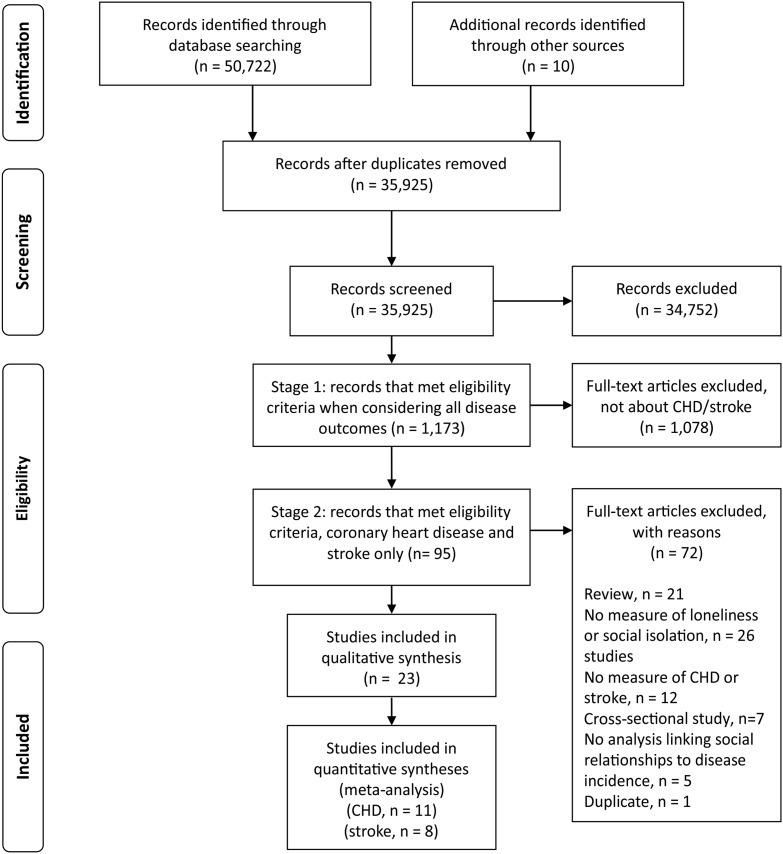
Background: The influence of social relationships on morbidity is widely accepted, but the size of the risk to cardiovascular health is unclear. Objective: We undertook a systematic review and meta-analysis to investigate the association between loneliness or social isolation and incident coronary heart disease (CHD) and stroke. Methods: Sixteen electronic databases were systematically searched for longitudinal studies set in high-income countries and published up until May 2015. Two independent reviewers screened studies for inclusion and extracted data. We assessed quality using a component approach and pooled data for analysis using random effects models. Results: Of the 35 925 records retrieved, 23 papers met inclusion criteria for the narrative review. They reported data from 16 longitudinal datasets, for a total of 4628 CHD and 3002 stroke events recorded over follow-up periods ranging from 3 to 21 years. Reports of 11 CHD studies and 8 stroke studies provided data suitable for meta-analysis. Poor social relationships were associated with a 29% increase in risk of incident CHD (pooled relative risk: 1.29, 95% CI 1.04 to 1.59) and a 32% increase in risk of stroke (pooled relative risk: 1.32, 95% CI 1.04 to 1.68). Subgroup analyses did not identify any differences by gender. Conclusions: Our findings suggest that deficiencies in social relationships are associated with an increased risk of developing CHD and stroke. Future studies are needed to investigate whether interventions targeting loneliness and social isolation can help to prevent two of the leading causes of death and disability in high-income countries. Study registration number: CRD42014010225.
Overview
CoChat Summary
TL;DR
This systematic review and meta-analysis of longitudinal observational studies found that poor social relationships were associated with a 29% higher risk of incident coronary heart disease and a 32% higher risk of stroke. The authors conclude that addressing loneliness and social isolation may be valuable in cardiovascular prevention, while noting causality cannot be inferred.
Key findings
- Across 23 papers from 16 longitudinal cohorts, including 181,006 participants, 4628 CHD events and 3002 stroke events were recorded over follow-up periods of 3–21 years.
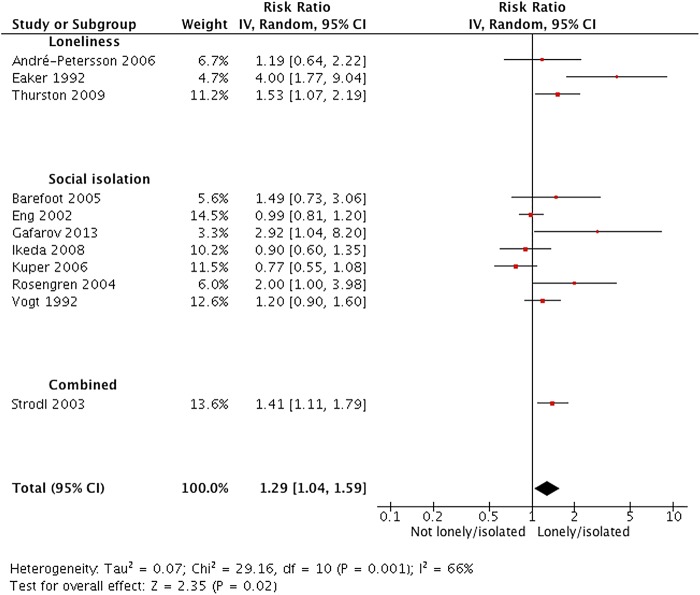
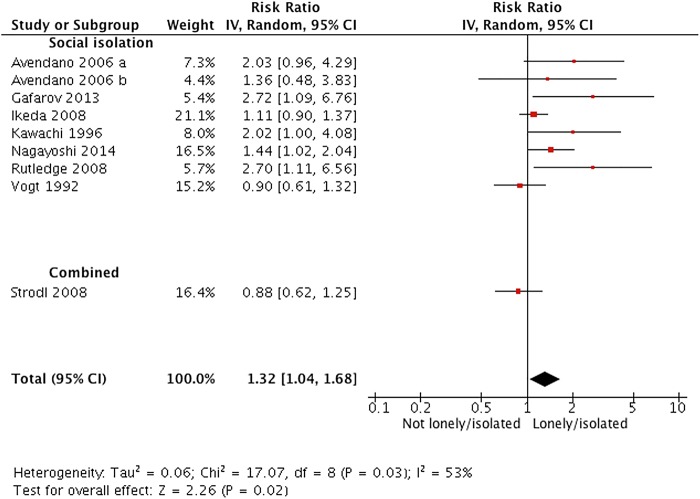
- Pooled relative risk for incident CHD comparing high versus low loneliness/social isolation was 1.29 (95% CI 1.04 to 1.59) across 11 studies; pooled relative risk for stroke was 1.32 (95% CI 1.04 to 1.68) across 8 stroke studies in the abstract (the results section describes nine independent stroke samples).
- Subgroup analyses found no differences by gender, and no evidence that loneliness versus social isolation was differentially associated with CHD incidence.
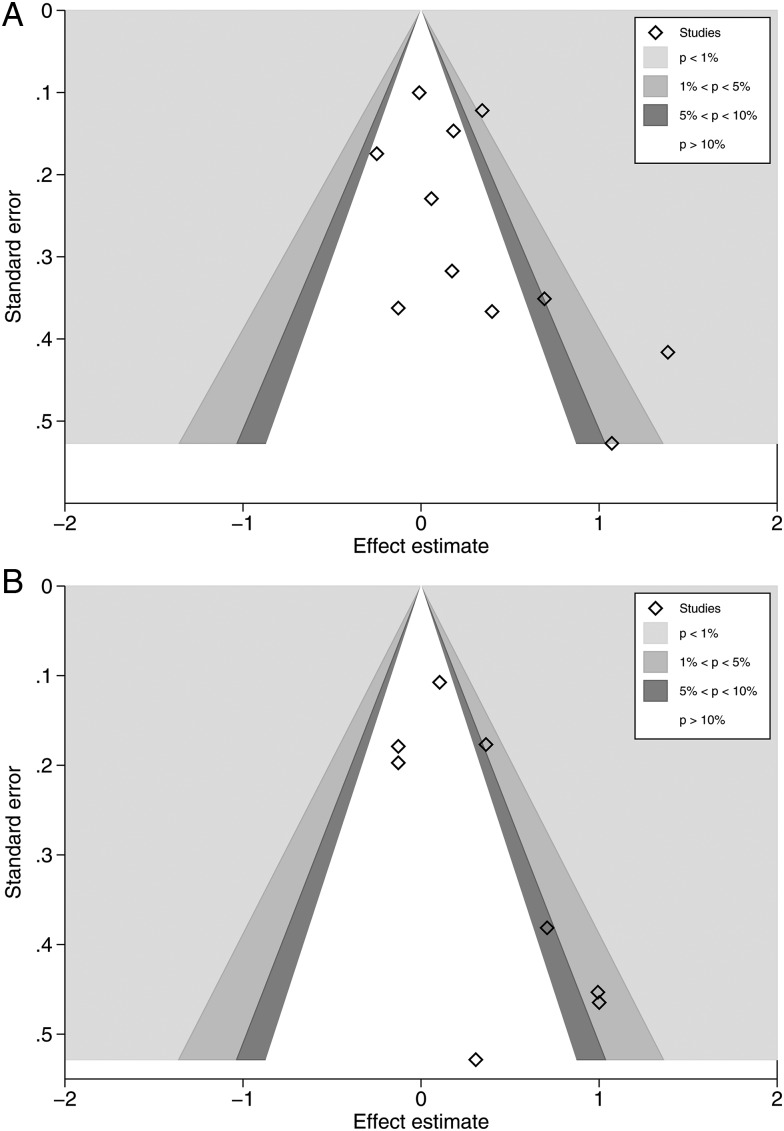
- Heterogeneity was present for CHD (I²=66%, p=0.001) and stroke (I²=53%, p=0.03); sensitivity analyses found no evidence that results differed by study validity, but funnel plots and fixed- versus random-effects comparisons suggested possible small-study effects/reporting bias.
Methods
- Systematic review and meta-analysis of longitudinal observational studies set in high-income countries, registered as CRD42014010225; 16 electronic databases were searched up to May 2015, supplemented by reference lists, Scopus citations, and topic experts.
- Of 35,925 records retrieved, 23 papers based on 16 cohorts met inclusion criteria; two independent reviewers screened studies and extracted data, with quality assessed using a component approach.
- Random-effects models pooled effect estimates transformed to natural logs; odds ratios were approximated to relative risks because incidence was <10% in the three studies reporting ORs; prespecified subgroup and sensitivity analyses were performed.
Limitations
- The paper states that causality cannot be inferred, unmeasured confounding and reverse causation due to subclinical disease cannot be excluded, and publication bias may lead to overestimation of the true effect; conversely, pooled effects could be conservative because many studies adjusted for factors likely on the causal pathway, such as depression or health-related behaviour.
- The paper states insufficient data to explore the relative effects of quantity versus quality of relationships or effect modifiers in depth; seven estimates came from populations of higher socioeconomic status and better health than the target population, so results may underestimate effects among disadvantaged groups; some data were collected from 1965, and later CHD prevention strategies may have modified the association.
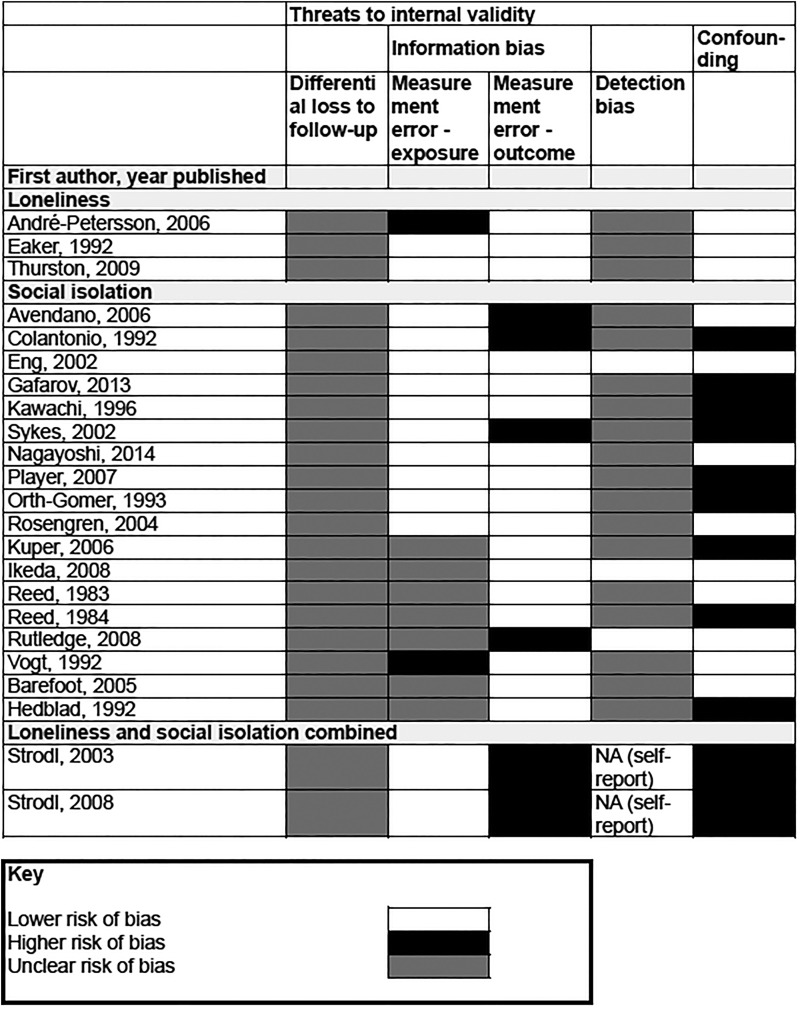
- Evident from the text: heterogeneity remained unexplained, information on reliability and validity of social relationship instruments was limited, and limited information on attrition and blinding meant risk of differential loss to follow-up and detection bias was unclear.
Model-written summary. Check it against the paper before relying on it.
Integrity signals
Registry
Cites
Statistics
Figures
Verification
Claims the paper makes
3 Valid · 0 Not valid · 17 Not checked · 47 Own results and interpretations
Every source the paper cites for this claim was checked and supports it.
In the paper
“Adults who have few social contacts (ie, who are socially isolated) or feel unhappy about their social relationships (ie, who are lonely) are at increased risk of premature mortality.1”
§ Loneliness and social isolation as risk factors for coronary heart disease and stroke: systematic review and meta-analysis of longitudinal observational studies > Introduction
What the sources say
- Supportedcites [1] Holt-Lunstad J, Smith TB, Baker M, et al Loneliness and social isolation as risk factors for mortality: a meta-analytic review. Perspect Psychol Sci 2015; 10: 227– 37. 10.1177/1745691614568352 25910392 source
The Introduction (p. 228) supplies exactly the two definitions the claim paraphrases: social isolation as an 'objective quantitative approach to establish a dearth of social contact and network size' (living alone, few social network ties, infrequent contact), and loneliness as 'the perception of social isolation... the dissatisfaction with the discrepancy between desired and actual social relationships.' The Discussion reports the mortality risk for adults across 70 prospective studies (26% for loneliness, 29% for social isolation, 32% for living alone after covariate adjustment), and the Conclusion states that 'individuals lacking social connections (both objective and subjective social isolation) are at risk for premature mortality.' Both the definitional glosses and the increased-risk assertion are therefore carried by our copy. (LLM, conf=0.92)
plainstates an association- Asserted: passes — The authors put it forward as true.
- Checkable: passes — It can be checked against evidence.
- Load-bearing: passes — The paper’s conclusions depend on it.
- Based: passes — The paper gives a reason why it holds.
- Supported
Every source the paper cites for this claim was checked and supports it.
In the paper
“The influence of social relationships on mortality is comparable with well-established risk factors, including physical activity and obesity.2”
§ Loneliness and social isolation as risk factors for coronary heart disease and stroke: systematic review and meta-analysis of longitudinal observational studies > Introduction
What the sources say
- Supportedcites [2] Holt-Lunstad J, Smith TB, Layton JB Social relationships and mortality risk: a meta-analytic review. PLoS Med 2010; 7: e1000316 10.1371/journal.pmed.1000316 20668659 PMC2910600 source
The Conclusion (Discussion) of Holt-Lunstad et al. (2010) states directly that the magnitude of the social-relationship effect on mortality (50% greater likelihood of survival across 308,849 individuals) is comparable with quitting smoking and exceeds many well-known risk factors, e.g., obesity and physical inactivity. The Discussion also states the magnitude 'may be considered quite large, rivaling that of well-established risk factors (Figure 6).' The citing sentence is, if anything, slightly weaker than the source ('comparable with' vs. 'exceeds'), which the rubric treats as supported. (LLM, conf=0.90)
plainstates an association- Asserted: passes — The authors put it forward as true.
- Checkable: passes — It can be checked against evidence.
- Load-bearing: passes — The paper’s conclusions depend on it.
- Based: passes — The paper gives a reason why it holds.
- Supported
The cited sources support only part of this claim — read each source’s verdict below.
In the paper
“We found an association between poor social relationships and incident CVD comparable in size to other recognised psychosocial risk factors, such as anxiety50 and job strain.51”
§ Loneliness and social isolation as risk factors for coronary heart disease and stroke: systematic review and meta-analysis of longitudinal observational studies > Discussion > Summary of findings and comparison with other work
What the sources say
- Supportedcites [50] Roest AM, Martens EJ, de Jonge P, et al Anxiety and risk of incident coronary heart disease: a meta-analysis. J Am Coll Cardiol 2010; 56: 38– 46. 10.1016/j.jacc.2010.03.034 20620715 source
Citation 50 is attached to anxiety, not job strain or the citing authors’ finding about social relationships. The Results report an association between anxiety and incident coronary heart disease (pooled hazard ratio 1.26), supporting anxiety as the risk-factor comparison used here. The source does not itself compare anxiety with poor social relationships. (LLM, conf=0.88)
- Partly supportedcites [51] Fransson EI, Nyberg ST, Heikkilä K, et al Job strain and the risk of stroke: an individual-participant data meta-analysis. Stroke 2015; 46: 557– 9. 10.1161/STROKEAHA.114.008019 25563644 sourceExperimental — accuracy not yet measured
The Results report a job-strain association with incident ischemic stroke (hazard ratio 1.24), providing a magnitude the citing authors could compare with their own finding. The paper does not establish job strain as a risk factor for CVD generally: its overall-stroke association was not statistically significant, and its Conclusion qualifies the ischemic-stroke finding as possible. (LLM, conf=0.82)
plainstates an association- Asserted: passes — The authors put it forward as true.
- Checkable: passes — It can be checked against evidence.
- Load-bearing: passes — The paper’s conclusions depend on it.
- Based: passes — The paper gives a reason why it holds.
- Supported
A result the paper reports from its own data — it cites no other source for it, so there is none to check. The quote shows it is in the paper.
In the paper
“Poor social relationships were associated with a 29% increase in risk of incident CHD (pooled relative risk: 1.29, 95% CI 1.04 to 1.59)”
- Also stated in: § Loneliness, social isolation and CHD · plain
“Across 11 studies (3794 events; one study did not report numbers) based on independent samples, the average relative risk of new CHD when comparing high versus low loneliness or social isolation was 1.29 (95% CI 1.04 to 1.59; see figure 3).”
- Also stated in: § Summary of findings and comparison with other work · plain
“Our review found that poor social relationships were associated with a 29% increase in risk of incident CHD and a 32% increase in risk of stroke.”
§ Loneliness and social isolation as risk factors for coronary heart disease and stroke: systematic review and meta-analysis of longitudinal observational studies > Abstract > Results
plainstates an association- Asserted: passes — The authors put it forward as true.
- Checkable: passes — It can be checked against evidence.
- Load-bearing: passes — The paper’s conclusions depend on it.
- Based: passes — The paper gives a reason why it holds.
- Also stated in: § Loneliness, social isolation and CHD · plain
A result the paper reports from its own data — it cites no other source for it, so there is none to check. The quote shows it is in the paper.
In the paper
“Subgroup analyses did not identify any differences by gender.”
§ Loneliness and social isolation as risk factors for coronary heart disease and stroke: systematic review and meta-analysis of longitudinal observational studies > Abstract > Results
plain- Asserted: passes — The authors put it forward as true.
- Checkable: passes — It can be checked against evidence.
- Load-bearing: unclear — It is unclear whether the paper’s conclusions depend on it.
- Based: passes — The paper gives a reason why it holds.
19 more claims
Create a free account to see all 67 claims and to verify the 21 references still open.
- It may state two separate claims as one. 22
- Probably not a substantial claim. 30
Claims other papers make about this one
Each is checked against this paper’s own text: does it say what the citing paper says it does?
The source backs part of the claim, not all of it — or backs it for a different population, condition or comparison.
In the citing paper
“the industrial revolution and modern era have ushered in changes in social interactions and sleep quality59,91 that can promote SCI149,150 and insulin resistance151, in turn increasing risk for obesity, type 2 diabetes, CVD and all-cause mortality150–154”
From Chronic inflammation in the etiology of disease across the life span (2019) · cites this paper as [152]
Experimental — accuracy not yet measuredThe source backs part of the claim, not all of it — or backs it for a different population, condition or comparison.
In the citing paper
“In a meta-analysis of longitudinal studies of social isolation and loneliness and cardiovascular outcomes, both social isolation and loneliness were found to significantly increase the risk for new CHD and stroke, with no evidence that one was more strongly related to disease incidence than the other [33].”
From Social isolation: an underappreciated determinant of physical health (2022) · cites this paper as [33]
Experimental — accuracy not yet measuredThe cited source says what the claim attributes to it.
In the citing paper
“There is also a growing body of evidence relating social isolation with nonfatal physical health outcomes, including increased risk for cardiovascular disease and stroke [33], pre-diabetes and type 2 diabetes [34], and poorer cognitive functioning [35].”
From Social isolation: an underappreciated determinant of physical health (2022) · cites this paper as [33]
The cited source says what the claim attributes to it.
In the citing paper
“Because lower circulating BDNF levels and small social networks have separately been associated with higher risk of incident stroke [3], [4], cognitive dysfunction [2], [5], [6], and the accumulation of Alzheimer's disease pathology [7], [8]”
From Associations between social relationship measures, serum brain-derived neurotrophic factor, and risk of stroke and dementia (2017) · cites this paper as [3]
The cited source says what the claim attributes to it.
In the citing paper
“Social isolation and loneliness have been studied extensively over the past four decades, with numerous studies showing that both have negative mental and physical health consequences [1–5].”
6 more claims about this paper
Create a free account to see every claim other papers make about this one.
Self-check
Percentages, sums and reported differences re-computed from the paper’s own numbers.
Each contradiction between two passages listed here was confirmed by an independent check.
Rated minor: it would not touch a result — a value no result rests on, a p-value that stays on the same side of the significance level, or a conflict that is clerical, resolved elsewhere in the paper, or outside its own findings.
In the paper
§ Loneliness and social isolation as risk factors for coronary heart disease and stroke: systematic review and meta-analysis of longitudinal observational studies > Results > Social isolation and stroke
“Across nine independent study samples (2577 events; one study did not report numbers), the average relative risk of stroke incidence was 1.32”
§ Loneliness and social isolation as risk factors for coronary heart disease and stroke: systematic review and meta-analysis of longitudinal observational studies > Results > Risk of bias across studies
“Stroke | 1.32 (1.04 to 1.68) (n=8)”
Rated minor: it would not touch a result — a value no result rests on, a p-value that stays on the same side of the significance level, or a conflict that is clerical, resolved elsewhere in the paper, or outside its own findings.
In the paper
“Four studies presented results from univariate analyses,31 34 35 41 with a further study adjusting for age only.26 The remaining eight reports did not control for socioeconomic status”
§ Loneliness and social isolation as risk factors for coronary heart disease and stroke: systematic review and meta-analysis of longitudinal observational studies > Results > Study validity
Reported 23 · recomputed 25
Citations
Cites
Social Relationships and Mortality Risk: A Meta-analytic Review
Holt-Lunstad, J., Smith, T. B., & Layton, J. B. (2010) · PLoS Medicine · doi:10.1371/journal.pmed.1000316 · Cited by 7,272
Loneliness and Social Isolation as Risk Factors for Mortality: A Meta-Analytic Review
Holt-Lunstad, J., Smith, T. B., Baker, M., Harris, T., & Stephenson, D. (2015) · Perspectives on Psychological Science · doi:10.1177/1745691614568352 · Cited by 6,043
Loneliness matters: a theoretical and empirical review of consequences and mechanisms
Hawkley, L. C., & Cacioppo, J. T. (2010) · Annals of Behavioral Medicine · doi:10.1007/s12160-010-9210-8 · Cited by 4,782
Zhang, J., & Yu, K. F. (1998) · JAMA · doi:10.1001/jama.280.19.1690 · Cited by 4,138
Systematic reviews: CRD's guidance for undertaking reviews in health care
Tacconelli, E. (2010) · The Lancet Infectious Diseases · doi:10.1016/s1473-3099(10)70065-7 · Cited by 3,245
Assessing social networks among elderly populations
Lubben, J. E. (1988) · Family & Community Health · doi:10.1097/00003727-198811000-00008 · Cited by 1,188
Loneliness, social isolation, and behavioral and biological health indicators in older adults.
Shankar, A., McMunn, A., Banks, J., & Steptoe, A. (2011) · Health Psychology · doi:10.1037/a0022826 · Cited by 1,100
Social Relationships and Health
Cohen, S., Gottlieb, B. H., & Underwood, L. G. (2000) · Social Support Measurement and Intervention · doi:10.1093/med:psych/9780195126709.003.0001 · Cited by 903
Stress and Cardiovascular Disease: An Update on Current Knowledge
Steptoe, A., & Kivimäki, M. (2013) · Annual Review of Public Health · doi:10.1146/annurev-publhealth-031912-114452 · Cited by 879 · cited 1×
“Subgroup analyses speci fi ed a priori showed no difference between the association of loneliness or social isolation with CHD incidence, and we found no evidence across studies of differences between men and women.”
Anxiety and Risk of Incident Coronary Heart Disease
Roest, A. M., Martens, E. J., de Jonge, P., & Denollet, J. (2010) · Journal of the American College of Cardiology · doi:10.1016/j.jacc.2010.03.034 · Cited by 865
Cited by
Items 701–800 of 1,002
Housing Unit Type and Perceived Social Isolation Among Senior Housing Community Residents
Carbone, J. T., Clift, J., Wyllie, T., & Smyth, A. (2021) · The Gerontologist · doi:10.1093/geront/gnab184 · Cited by 17
Winterton, A., Bettella, F., Beck, D., Gurholt, T. P., Steen, N. E., Rødevand, L. N., Westlye, L. T., Andreassen, O. A., & Quintana, D. S. (2022) · Psychoneuroendocrinology · doi:10.1016/j.psyneuen.2022.105875 · Cited by 15
Comparing phenotypic, genetic, and environmental associations between personality and loneliness
Freilich, C. D., Mann, F. D., South, S. C., & Krueger, R. F. (2022) · Journal of Research in Personality · doi:10.1016/j.jrp.2022.104314 · Cited by 14
Loneliness at the age of COVID-19
Lederman, Z. (2022) · Journal of Medical Ethics · doi:10.1136/jme-2022-108540 · Cited by 18
Ho, K. H. M., Hung, M. S. Y., Zhang, Y., Bai, X., Cheung, D. S. K., Chow, M. C. M., Lee, P. H., & Chien, W. T. (2023) · Archives of Gerontology and Geriatrics · doi:10.1016/j.archger.2023.104952 · Cited by 16
“Loneliness is associated with a number of adverse health outcomes in both physical (Hodgson et al., 2020; Leigh-Hunt et al., 2017; Lim et al., 2020; Valtorta et al., 2016) and mental aspects (Griffin et al., 2020; Lara et al., 2019).”
Kandola, A. A., Solmi, F., Ajnakina, O., Ingram, E., Iob, E., Lee, S., Steptoe, A., Wright, T., & Lewis, G. (2023) · Journal of Affective Disorders · doi:10.1016/j.jad.2023.04.072 · Cited by 17
Social isolation, health dynamics, and mortality: evidence across 21 European countries
Fawaz, Y., & Mira, P. (2023) · Journal of Population Economics · doi:10.1007/s00148-023-00956-y · Cited by 21
“Another recent meta-analysis Valtorta et al. (2016) found that social isolation increases the risk of heart disease by 29% and stroke by 32%.”
BackgroundBravata, D. M., Kim, J., Russell, D. W., Goldman, R., & Pace, E. M. (2023) · JMIR Formative Research · doi:10.2196/48864 · Cited by 21
Zheng, X., Zhang, K., & Ma, J. (2023) · The journal of nutrition health & aging · doi:10.1007/s12603-023-2037-3 · Cited by 22
“…3,002 stroke events over 3 to 21 years, findings indicated that poor social relationship was associated with a 29% increase in risk of incident CHD and a 32% increase in risk of stroke, and the significant association was independent of age, sex and other potential conventional risk factors (32).”
de Faria, R. R., de Siqueira, S. F., Haddad, F. A., da Silva, G. C., Spaggiari, C. V., & Filho, M. M. (2023) · Arquivos Brasileiros de Cardiologia · doi:10.36660/abc.20230408 · Cited by 40
Early-life circumstances and late life loneliness trajectories among Finnish older adults
Tiilikainen, E., Aartsen, M., & Kraav, S. (2024) · BMC Geriatrics · doi:10.1186/s12877-024-04967-6 · Cited by 16
“Among the many negative outcomes are a lower level of cognitive functioning and faster cognitive decline [2, 3], cardiovascular diseases [4], cancer incidence [5], increased use of social and health services [6, 7], and mortality [8].”
BackgroundSocial isolation and loneliness
Hussain, A., & Pandey, D. (2024) · International Journal of Advanced Psychiatric Nursing · doi:10.33545/26641348.2024.v6.i1b.154 · Cited by 14
Patient-Defined Visit Priorities in Primary Care: Psychosocial Versus Medically-Related Concerns
Santo, E. C., Vo, M., Uratsu, C. S., & Grant, R. W. (2019) · The Journal of the American Board of Family Medicine · doi:10.3122/jabfm.2019.04.180380 · Cited by 16
Kähkönen, O., Kankkunen, P., Saaranen, T. K., Miettinen, H., & Kyngäs, H. A. (2019) · Nursing Open · doi:10.1002/nop2.381 · Cited by 14
Parents’ attitudes towards a difficult situation resulting from the chronic disease of their child
Guz, E., Brodowicz-Król, M., Kulbaka, E., Bartoszuk-Popko, M., & Lutomski, P. (2020) · Annals of Agricultural and Environmental Medicine · doi:10.26444/aaem/119085 · Cited by 19
Examining transitions in loneliness for people without and with moderate and severe disabilities
Pagán, R. (2020) · Disability and Rehabilitation · doi:10.1080/09638288.2020.1842519 · Cited by 16
Barbieri, P. N. (2021) · Health & Social Care in the Community · doi:10.1111/hsc.13306 · Cited by 16
van Zutphen, E. M., Kok, A. A. L., Rijnhart, J. J. M., Rhebergen, D., Huisman, M. A., & Beekman, A. T. F. (2021) · Journal of Affective Disorders · doi:10.1016/j.jad.2021.03.081 · Cited by 18
de Koning, J. L., Richards, S. H., Wood, G., & Stathi, A. (2021) · International Journal of Environmental Research and Public Health · doi:10.3390/ijerph18083971 · Cited by 16
Islam, M. R., Sultana, S., Khan, A. H., Hossain, S., Sikder, M. T., Hasan, M. T., & Li, Z. (2021) · Heliyon · doi:10.1016/j.heliyon.2021.e07395 · Cited by 17
Bergeron, C. D., Boolani, A., Jansen, E. C., & Smith, M. L. (2021) · Frontiers in Public Health · doi:10.3389/fpubh.2021.674847 · Cited by 16
Lingelbach, K., Piechnik, D., Gado, S., Janssen, D., Eichler, M., Hentschel, L., Knopf, D., Schuler, M. K., Sernatinger, D., & Peißner, M. (2021) · Frontiers in Public Health · doi:10.3389/fpubh.2021.655083 · Cited by 15
Predictors of Social Isolation Among Community-dwelling Older Adults in Iran
Taghvaei, E., Motalebi, S. A., Mafi, M., & Soleimani, M. A. (2021) · Salmand · doi:10.32598/sija.16.2.1294.2 · Cited by 14
Pfetsch, J. S., Schultze‐Krumbholz, A., & Lietz, K. (2022) · Frontiers in Psychology · doi:10.3389/fpsyg.2021.787449 · Cited by 23
“…of offline bullying and victimization (e.g., Hein et al., 2015; Lam et al., 2015; Menéndez Santurio et al., 2020), satisfaction of basic needs in general and not testing belonging specifically (e.g., Varsamis et al., 2021), or—more extensively—in the workplace (e.g., Trépanier et al., 2013).”
BackgroundThe Biopsychosocial Model Advanced by Evolutionary Theory
Hunt, A., John‐Smith, P. S., & Abed, R. (2022) · Cambridge University Press eBooks · doi:10.1017/9781009030564.004 · Cited by 16
Qian, Z., Li, B., Liao, L., Liao, G., Chen, H., Han, J., Yu, T., Xu, X., Peng, J., & Cai, S. (2023) · Frontiers in Public Health · doi:10.3389/fpubh.2022.1067870 · Cited by 20
“, coronary heart disease and stroke (25).”
Ng, Q. X., Lee, D. Y. X., Yau, C. E., Lim, Y. L., Ng, C. X., & Liew, T. M. (2023) · Healthcare · doi:10.3390/healthcare11101485 · Cited by 19
“public health significance as multiple studies have found loneliness to be independently associated with increased all-cause mortality, even after controlling for age, sex, chronic diseases, alcohol use, smoking, self-rated health and functional status [4,5].”
BackgroundCombined effects of loneliness and inflammation on depression in people with HIV
Hussain, M., Watson, C. W., Morgan, E. E., Heaton, R. K., Letendre, S. L., Jeste, D. V., Moore, D. J., & Iudicello, J. E. (2023) · Journal of NeuroVirology · doi:10.1007/s13365-023-01145-z · Cited by 15
“Since D-dimer is associated with similar health-related outcomes as lone-liness such as cardiovascular disease (Leigh-Hunt et al. 2017; Valtorta et al. 2016), it is possible that coagulation activity may be another biological process related to loneliness.”
BackgroundOccupational therapy, loneliness and social isolation: a thematic review of the literature
Collins, T. L., Davys, D., Martin, R. E., Russell, R., & Kenney, C. (2020) · International Journal of Therapy and Rehabilitation · doi:10.12968/ijtr.2019.0044 · Cited by 17
Placebos as a Source of Agency: Evidence and Implications
Friesen, P. (2019) · Frontiers in Psychiatry · doi:10.3389/fpsyt.2019.00721 · Cited by 20
Leveraging diversity, equity and inclusion for promoting wellness in the radiology workplace
Ayyala, R. S., Artunduaga, M., Morin, C. E., & Coley, B. D. (2022) · Pediatric Radiology · doi:10.1007/s00247-022-05292-z · Cited by 16
“The lack of social connection and engagement caused by isolation heightens loneliness, which has been linked to detrimental physical and mental health effects [25].”
BackgroundOrganizing for Mars: A Task Management Perspective on Work within Spaceflight Multiteam Systems
Lungeanu, A., Mesmer‐Magnus, J., Niler, A. A., DeChurch, L. A., & Contractor, N. (2022) · Human Factors The Journal of the Human Factors and Ergonomics Society · doi:10.1177/00187208221129939 · Cited by 14
Factors Influencing Physician Assistant Student Attrition Rates
Kilstrom, J., Neary, S. L., Roman, C., Garrubba, C., LeLacheur, S., & Rhee, J. A. V. (2022) · The Journal of Physician Assistant Education · doi:10.1097/jpa.0000000000000468 · Cited by 13
COVID-19: Insights into long-term manifestations and lockdown impacts
Hilbold, E. A., Bär, C., & Thum, T. (2023) · Journal of sport and health science/Journal of Sport and Health Science · doi:10.1016/j.jshs.2023.02.006 · Cited by 19
Cannizzaro, E., Cirrincione, L., Malta, G., Fruscione, S., Mucci, N., Martines, F., & Plescia, F. (2023) · International Journal of Environmental Research and Public Health · doi:10.3390/ijerph20054613 · Cited by 14
Social Isolation and Loneliness in a Population Study of Cognitive Impairment: The MYHAT Study
Fang, F., Hughes, T. F., Weinstein, A. M., Dodge, H. H., Jacobsen, E. P., Chang, C. H., Snitz, B. E., & Ganguli, M. (2023) · Journal of Applied Gerontology · doi:10.1177/07334648231192053 · Cited by 15
“…loneliness trigger implicit hypervigilance and feelings of vulnerability to stressful situations, which have been linked to cardiovascular and cerebrovascular disease (Valtorta et al., 2016) that are known risk factors for cognitive impairment (Fratiglioni et al., 2004; Livingston et al., 2020).”
BackgroundHackett, R. A., Jackson, S. E., Corker, E., & Steptoe, A. (2023) · BMJ Open · doi:10.1136/bmjopen-2023-072043 · Cited by 15
Vasile, M., Aartsen, M., Precupețu, I., Tufă, L., Dumitrescu, D.-A., & Radogna, R. M. (2023) · Applied Research in Quality of Life · doi:10.1007/s11482-023-10239-z · Cited by 20
“Loneliness and SI are sometimes used interchangeably, which may be one of the reasons why we know little about the comparative associations of SI, loneliness, and MWB (Valtorta et al., 2016).”
The ‘loneliness’ epidemic: a new social determinant of health?
Ng, I. K. (2024) · Internal Medicine Journal · doi:10.1111/imj.16356 · Cited by 19
Mehra, A., Agarwal, A. K., Bashar, M., Avasthi, A., Chakravarty, R. K., & Grover, S. (2024) · Indian Journal of Psychological Medicine · doi:10.1177/02537176241231060 · Cited by 17
“17,18 In terms of the factors related to loneliness, data suggest that the elderly living alone tend to experience more loneliness because of inadequate family support, social support, or interaction.”
Rethinking peer influence and risk taking: A strengths-based approach to adolescence in a new era
Allen, J. P. (2024) · Development and Psychopathology · doi:10.1017/s0954579424000877 · Cited by 33
Historical roots of loneliness and its impact on second-generation immigrants’ health
Casabianca, E. J., & Kovačič, M. (2024) · Journal of Economic Behavior & Organization · doi:10.1016/j.jebo.2024.06.011 · Cited by 21
Loneliness, sleep and daily stress: Evidence of direct and indirect effects
O'Connor, D. B., & Rogerson, O. (2024) · Applied Psychology Health and Well-Being · doi:10.1111/aphw.12586 · Cited by 23
Rees, J., Liu, W., Canson, J., Crosby, L., Tinker, A., Probst, F., Ourselin, S., Antonelli, M., Molteni, E., Mexia, N., et al. (2024) · International Journal of Qualitative Studies on Health and Well-Being · doi:10.1080/17482631.2024.2398259 · Cited by 13
“…shown the relationship between loneliness and increased mortality (Holt-Lunstad et al., 2015; Shiovitz-Ezra & Ayalon, 2009) due to impacts on the cardiovascular system, health behaviour and mental health (Coyle & Dugan, 2012; Hodgson et al., 2020; Leigh-Hunt et al., 2017; Valtorta et al., 2016).”
BackgroundWu, X. A., Ke, K., Liu, H., Zhan, S. P., Wang, L., & He, J. (2025) · Frontiers in Psychiatry · doi:10.3389/fpsyt.2025.1499186 · Cited by 17
Risk factors for social isolation in post-hospitalized older adults
Nagarajan, D., Lee, D. A., Robins, L., & Haines, T. P. (2020) · Archives of Gerontology and Geriatrics · doi:10.1016/j.archger.2020.104036 · Cited by 16
Social relationships and survival in the older adult cohort
Soares, M. U., Facchini, L. A., Nedel, F. B., Wachs, L. S., Kessler, M., & Thumé, E. (2021) · Revista Latino-Americana de Enfermagem · doi:10.1590/1518-8345.3844.3395 · Cited by 17
Gruda, D., & Ojo, A. (2021) · Hawaii International Conference on System Sciences (HICSS) · doi:10.24251/hicss.2021.328 · Cited by 13
Lalande, K. M., Greenman, P. S., Bouchard, K., Johnson, S. M., & Tulloch, H. E. (2021) · Journal of Medical Internet Research · doi:10.2196/25502 · Cited by 13
Baiden, P., LaBrenz, C. A., & Findley, E. (2021) · Journal of Affective Disorders Reports · doi:10.1016/j.jadr.2021.100154 · Cited by 17
Social Connectivity During the COVID-19 Pandemic: Disparities among Medicare Beneficiaries
Jacobs, M., & Ellis, C. (2021) · Journal of Primary Care & Community Health · doi:10.1177/21501327211030135 · Cited by 14
Chiao, C., Lin, W., Chen, Y.-H., & Yi, C.-C. (2021) · BMC Geriatrics · doi:10.1186/s12877-021-02550-x · Cited by 15
Ji, K., Bai, Z., Zhao, Y., Sang, L., Wang, D., & Chen, R. (2022) · Health and Quality of Life Outcomes · doi:10.1186/s12955-022-01925-x · Cited by 13
“First, earlier studies found that stroke patients lacked communication with others and confronted a sense of loneliness from time to time [66, 67].”
ResultBarankevich, R., & Loebach, J. E. (2022) · Frontiers in Psychology · doi:10.3389/fpsyg.2022.879408 · Cited by 19
Panova, T., & Carbonell, X. (2022) · Studies in neuroscience, psychology and behavioral economics · doi:10.1007/978-3-031-04772-5_3 · Cited by 18
Brunzini, A., Caragiuli, M., Massera, C., & Mandolini, M. (2023) · Sensors · doi:10.3390/s23041836 · Cited by 15
“…quitting smoking, limiting alcohol consumption, and being aware of environmental hazards are essential for healthy ageing. lead to loss of confidence, social isolation, and solitude, which are associated with a higher risk of falling [17], developing cardiovascular diseases, and mortality [18].”
BackgroundHolmes, A., Xu, Y., Lee, J., Maniskas, M. E., Zhu, L., McCullough, L. D., & Venna, V. R. (2020) · International Journal of Molecular Sciences · doi:10.3390/ijms22010099 · Cited by 14
Living alone and mortality: more complicated than it seems
Abell, J. G., & Steptoe, A. (2019) · European Heart Journal - Quality of Care and Clinical Outcomes · doi:10.1093/ehjqcco/qcz014 · Cited by 13
The Impact of Generative Artificial Intelligence on Socioeconomic Inequalities and Policy MakingPreprint
Capraro, V., Lentsch, A., Acemoğlu, D., Akgün, S., Akhmedova, A., Bilancini, E., Bonnefon, J., Brañas‐Garza, P., Butera, L., Douglas, K. M., et al. (2024) · SSRN Electronic Journal · doi:10.2139/ssrn.4666103 · Cited by 18
From Headache to Heart Health: Investigating the Migraine–Cardiovascular Disease Connection
Tana, C., Onan, D., Messina, R., Waliszewska‐Prosół, M., García‐Azorín, D., Vega, L. L., Coco-Martín, M. B., Ornello, R., Raffaelli, B., Souza, M. N. P., et al. (2025) · Neurology and Therapy · doi:10.1007/s40120-025-00785-z · Cited by 15
Healthcare Professionals’ Perceptions of Loneliness amongst Older Adults: A Qualitative Study
Dobarrio‐Sanz, I., Ruiz‐González, C., Fernández‐Sola, C., Román, P., Granero‐Molina, J., & Hernández‐Padilla, J. M. (2021) · International Journal of Environmental Research and Public Health · doi:10.3390/ijerph182212071 · Cited by 15
Chiao, C., Kuo, P., Li, D., & Hu, S. C. (2022) · SSM - Population Health · doi:10.1016/j.ssmph.2022.101264 · Cited by 15
A Systematic Literature Review of Loneliness in Community Dwelling Older Adults
Perna, G. D., Radford, K., Barbery, G., & Fitzgerald, A. (2022) · Social Sciences · doi:10.3390/socsci12010021 · Cited by 19
The 100 Top-Cited Studies on Loneliness: A Bibliometric Analysis
Banerjee, A., Chawla, S. K., & Kohli, N. (2023) · Cureus · doi:10.7759/cureus.37246 · Cited by 24
“15 Loneliness and social isolation as risk factors for coronary heart disease and stroke: systematic review and meta-analysis of longitudinal observational studies [41] Valtorta et al.”
BackgroundRemote Communication and Loneliness During the COVID-19 Pandemic: Cross-Sectional Study
Arakawa, Y., Inoue, K., Nishioka, D., Nakagomi, A., Tabuchi, T., & Kondo, N. (2023) · Journal of Medical Internet Research · doi:10.2196/45338 · Cited by 19
“Loneliness has become a public health concern because it predicts negative health status, including depression [2], suicide attempts [3], cardiovascular disease [4], and mortality [5].”
Social interaction trajectories and all-cause mortality in older adults: the Otassha study
Kawai, H., Ejiri, M., Ito, K., Fujiwara, Y., Ihara, K., Hirano, H., Sasai, H., Kim, H., & Obuchi, S. P. (2023) · Frontiers in Public Health · doi:10.3389/fpubh.2023.1248462 · Cited by 16
The Effect of Social Isolation on 1-Year Outcomes After Surgical Repair of Low-Energy Hip Fracture
Mandl, L. A., Rajan, M., Lipschultz, R. A., Lian, S., Sheira, D., Frey, M. B., Shea, Y. M., & Lane, J. M. (2024) · Journal of Orthopaedic Trauma · doi:10.1097/bot.0000000000002772 · Cited by 19
“…that social isolation and loneliness are different constructs and that both are strongly associated with poor health outcomes such as mortality, cardiovascular disease, depression, and anxiety, 37,42 – 45 the results are mixed as to whether loneliness has effects independent of social isolation.”
BackgroundLi, Z., Ke, G. U. O., Yongqi, Y. A. N. G., Shuai, Y., Rui, F. A. N., Li, Y., Jiawei, D. U., Niu, J., & Yang, K. (2024) · European Journal of Physical and Rehabilitation Medicine · doi:10.23736/s1973-9087.23.08165-0 · Cited by 16
The health consequences of loneliness
Rokach, A., & Patel, K. (2024) · Environment and Social Psychology · doi:10.54517/esp.v9i6.2150 · Cited by 24
“Valtorta et al. [144] conducted a meta-analysis on 11 studies involving victims of cardiac events and stroke.”
BackgroundA Longitudinal Investigation of the Association Between Stroke and Loneliness
Willroth, E. C., Rule, P. D., Graham, E. K., Nicholas, M. L., Hattori, R., Thompson, T., & Connor, L. T. (2024) · The Journals of Gerontology Series B · doi:10.1093/geronb/gbae048 · Cited by 16
Melam, C., Dyson, J., & Thomson, K. (2025) · Health & Social Care in the Community · doi:10.1155/hsc/6613809 · Cited by 16
“While previous research [60] has established correlations between social isolation and increased risks of depression, coronary heart disease and stroke, the literature lacks clarity on the causal relationships between SP and measurable health outcomes.”
Lee, H., Chen, R., Okuzono, S. S., & Kubzansky, L. D. (2025) · International Journal of Epidemiology · doi:10.1093/ije/dyaf050 · Cited by 14
“While the recent systematic review [20] included eight studies not examined in the aforementioned review [11], all studies that examined loneliness and CVD incidence were conducted in Western countries, limiting the generalizability of their findings [21].”
The Web of Loneliness: A Netnographic Study of Narratives of Being Alone in an Online Context
Johansson, T., & Andreasson, J. (2017) · Social Sciences · doi:10.3390/socsci6030101 · Cited by 17
Habibović, M., Gavidia‐Bovadilla, G., Broers, E., Wetzels, M., Ayoola, I., Ribas, V. J., Piera-Jiménez, J., Widdershoven, J. W. M. G., & Denollet, J. (2020) · Health Psychology · doi:10.1037/hea0000823 · Cited by 16
Do Walking-Friendly Built Environments Influence Frailty and Long-Term Care Insurance Service Needs?
Mitsutake, S., Ishizaki, T., Yokoyama, Y., Nishi, M., Koohsari, M. J., Oka, K., Yano, S., Abe, T., & Kitamura, A. (2021) · Sustainability · doi:10.3390/su13105632 · Cited by 12
Harrison, A., Hall, M., Money, A., Mueller, J., Waterson, H., & Verma, A. (2021) · Journal of Aging Studies · doi:10.1016/j.jaging.2021.100936 · Cited by 15
Desafios de Inovação em Saúde: Repensar os Modelos de Cuidados
Lopes, M. J. (2021) · Imprensa Universidade de Évora eBooks · doi:10.24902/uevora.24 · Cited by 28
Psychosocial risk factors in cardiac practice
Pushkarev, G. S., & Мацкеплишвили, С. Т. (2021) · Patologiya krovoobrashcheniya i kardiokhirurgiya · doi:10.21688/1681-3472-2021-4-30-40 · Cited by 15
Young, L. M., Moylan, S., John, T., Turner, M., Opie, R., Hockey, M., Saunders, D., Bruscella, C., Jacka, F. N., Teychenne, M. J., et al. (2022) · BMC Psychiatry · doi:10.1186/s12888-022-03840-3 · Cited by 16
“The deleterious effects of loneliness on health is equivalent to that of smoking [24].”
Santini, Z. I., Nielsen, L., Hinrichsen, C., Tolstrup, J. S., Vinther, J. L., Koyanagi, A., Donovan, R. J., & Koushede, V. (2017) · Drug and Alcohol Dependence · doi:10.1016/j.drugalcdep.2017.08.033 · Cited by 16
Banerjee, A., Chokkalla, A. K., Shi, J. J., Lee, J., Venna, V. R., Vemuganti, R., & McCullough, L. D. (2020) · NeuroMolecular Medicine · doi:10.1007/s12017-020-08622-2 · Cited by 12
Can Physical Design Help Reduce Loneliness in the Elderly? A Theoretical Exploration
Nasrallah, E., & Pati, D. (2020) · HERD Health Environments Research & Design Journal · doi:10.1177/1937586720975208 · Cited by 15
Davitt, J. K., & Brown, J. L. (2022) · Innovation in Aging · doi:10.1093/geroni/igac024 · Cited by 13
Nagai, M., Ohira, T., Shirai, K., & Kondo, K. (2021) · BMJ Open · doi:10.1136/bmjopen-2020-039363 · Cited by 13
Wimmelmann, C. L., Andersen, N. K., Grønkjær, M. S., Hegelund, E. R., & Flensborg‐Madsen, T. (2021) · Scandinavian Cardiovascular Journal · doi:10.1080/14017431.2021.1872796 · Cited by 15
Honda, H., & Kita, T. (2021) · Health & Social Care in the Community · doi:10.1111/hsc.13610 · Cited by 12
Social Isolation and Incident Dementia in the Oldest-Old—A Competing Risk Analysis
Grothe, J., Röhr, S., Luppa, M., Pabst, A., Kleineidam, L., Heser, K., Fuchs, Â., Pentzek, M., Oey, A., Wiese, B., et al. (2022) · Frontiers in Psychiatry · doi:10.3389/fpsyt.2022.834438 · Cited by 12
Amygdala but not hippocampal damage associated with smaller social network size
Beadle, J. N., Heller, A. M., Rosenbaum, R. S., Davidson, P. S. R., Tranel, D., & Duff, M. C. (2022) · Neuropsychologia · doi:10.1016/j.neuropsychologia.2022.108311 · Cited by 10
Nemoto, Y., Nonaka, K., Kuraoka, M., Murayama, S., Tanaka, M., Matsunaga, H., Murayama, Y., Murayama, H., Kobayashi, E., Inaba, Y., et al. (2022) · BMC Public Health · doi:10.1186/s12889-022-14205-6 · Cited by 16
[Studying loneliness and social support networks among older people: a systematic review in Europe.]
Gallardo-Peralta, L. P., Sánchez-Moreno, E., Rodríguez, V. R., & Martín, M. G. (2023) · PubMed Central · Cited by 20
Howland, J., & Stone, A. (2023) · Frontiers in Public Health · doi:10.3389/fpubh.2023.1114792 · Cited by 11
Abreu, T. C., Mackenbach, J. D., Heuvelman, F., Schoonmade, L. J., & Beulens, J. W. J. (2023) · SSM - Population Health · doi:10.1016/j.ssmph.2023.101559 · Cited by 16
“Similarly, a meta-analysis showed that poor social relationships are associated with 29% increased risk of coronary heart disease and 32% increased risk of stroke (Valtorta et al., 2016).”
BackgroundВачиковна, П. Н., Ausheva, A. K., Saner, H. E., & Boytsov, S. A. (2023) · Kardiologiia · doi:10.18087/cardio.2023.12.n2564 · Cited by 11
Postpartum loneliness predicts future depressive symptoms: a nationwide Japanese longitudinal study
Chen, C., Mochizuki, Y., Okawa, S., Okubo, R., Nakagawa, S., & Tabuchi, T. (2024) · Archives of Women s Mental Health · doi:10.1007/s00737-024-01424-6 · Cited by 17
“Historically, such loneliness has been linked with various adverse health outcomes, including increased risks of cardiovascular diseases (Valtorta et al. 2016), compromised immune functions (Cole et al. 2015), and exacerbated mental health issues (Matthews et al. 2016).”
Saltzman, L. Y., & Hansel, T. C. (2024) · Frontiers in Psychology · doi:10.3389/fpsyg.2024.1245765 · Cited by 18
Loneliness, Living Alone, and Risk of Cardiovascular Disease Among Older Adults in China
Tan, S., Liu, D., Zhang, Y., Li, S., Zhang, K., Tang, Z., & Zuo, H. (2024) · The Journals of Gerontology Series A · doi:10.1093/gerona/glae079 · Cited by 12
Sobrepera, M. J., Nguyen, A., Gavin, E., & Johnson, M. J. (2024) · Robotica · doi:10.1017/s026357472400002x · Cited by 12
Kushibiki, N., Aiba, M., Midorikawa, H., Komura, K., Sugawara, D., Shiratori, Y., Kawakami, N., Ogawa, T., Yaguchi, C., & Tachikawa, H. (2024) · PLoS ONE · doi:10.1371/journal.pone.0300401 · Cited by 16
Baptista, C., Silva, A. R., de Lima, M. P., & Afonso, R. M. (2024) · Aging & Mental Health · doi:10.1080/13607863.2024.2374933 · Cited by 14
“Specifically, social isolation was associated with about 50% increased risk of dementia (NASEM, 2020), and poor social relationships were associated with a 29% increased risk of heart disease and a 32% increased risk of stroke (Valtorta et al., 2016).”
Preference for solitude paradox: The psychological influence of social isolation despite preference
Sakurai, R., Sakurai, M. H., Suzuki, H., & Fujiwara, Y. (2024) · Journal of Affective Disorders · doi:10.1016/j.jad.2024.08.020 · Cited by 15
Metadata
- Authors
- Valtorta, N. K., Kanaan, M., Gilbody, S., Ronzi, S., & Hanratty, B.
- Affiliations
- University of York (GB)
- Department of Public Health and Society, Whelan Building, Brownlow Hill, Liverpool, UK
- Newcastle University (GB)
- Corresponding author
- Valtorta, Nicole K
- Venue
- Heart
- Publisher
- BMJ
- Published
- 2016-04-18
- Volume
- 102
- Issue
- 13
- Pages
- 1009-1016
- ISSN
- 1355-6037 (ISSN-L)
- 1468-201X
- PMC
- PMC4941172
- OpenAlex
- W2336497595
- Semantic Scholar
- 9a60e683be594b8cf850ee0a8302a554b6e1bd57
- Cited by
- 1,971
- References
- 51
- Citations by year
- 2026: 222 · 2025: 243 · 2024: 283 · 2023: 249 · 2022: 237 · 2021: 267 · 2020: 186 · 2019: 127 · 2018: 88 · 2017: 51 · 2016: 17
- FWCI
- 17.70
- Type
- journal article
- Language
- en
- Open access
- hybrid
- doi.org
- Licence
- cc-by
- Locations
- Heart (publishedVersion, cc-by)
- PubMed Central (publishedVersion, cc-by)
- PubMed (publishedVersion)
- White Rose Research Online (University of Leeds, The University of Sheffield, University of York) (submittedVersion, cc-by)
- HighWire Press Open Archive (submittedVersion)
- Newcastle University ePrints (Newcastle Univesity) (cc-by)
- Funders
- National Institute for Health and Care Research (DRF-2013-06-074)
- Research Trainees Coordinating Centre (DRF-2013-06-074)
- NIHR Academy
- Topics
- Social Sciences › Health › Health disparities and outcomes
- Health Sciences › Medicine › Cardiology and Cardiovascular Medicine › Cardiac Health and Mental Health
- Health Sciences › Medicine › Cardiology and Cardiovascular Medicine › Cardiovascular Health and Risk Factors
- Keywords
- loneliness, social isolation, coronary artery disease, stroke, cardiovascular risk factors, interpersonal relationships, social determinants of health, incident cardiovascular events
- MeSH terms
- Coronary Disease, Humans, Loneliness, Risk Factors, Social Isolation, Bias, Stroke, Observational Studies as Topic
About these checks
Registry, retraction, Cites and statistics results are computed, not judged, with one exception: a printed reference that no index lists is read once by a model before it counts as a citation error. Claims are extracted by a model and kept only when their quote appears verbatim in the text; each cited source is then checked, with a model’s help, for whether it says what the claim relies on. Those verdicts can be wrong — read the claim’s quote and the cited source before relying on one.
The claim verdicts this report counts are experimental: their accuracy is not yet measured.
A language model drew the claims from the paper on 2026-10-05, under version 3 of the claim definition (model deepseek-v4.1-flash, prompt extract-v3).
A second model labelled each claim on 2026-10-05 (model jev-1.13-20260917, definition revision gold-guideline-v0.2).
Cited sources are checked with a language model’s help (qwen3.8-omni-flash and gpt-6-sol).
Statistics and arithmetic are recomputed, not judged.
Confidence bands are shown only for fields calibrated on our annotated test set. None is calibrated yet, so no band is shown.
What counts as a claim ›How we measure confidence ›How we check this ›
Are you an author, or do you see a problem with this page? Request a review
Data sources
Bibliographic data: Semantic Scholar, OpenAlex, Crossref.
Contains information from the Semantic Scholar Academic Graph Datasets, made available under the ODC Attribution License (ODC-BY 1.0).
Semantic Scholar’s data is described in: Kinney, R., et al. (2023). The Semantic Scholar Open Data Platform. arXiv:2301.10140.
