

Loneliness and social isolation as risk factors for coronary heart disease and stroke: systematic review and meta-analysis of longitudinal observational studies
Open accessThe DOI matches its Crossref record; 49 of the 51 references it cites were found in a registry or an index; 4 of the 25 sources its claims cite were checked for support.
Abstract
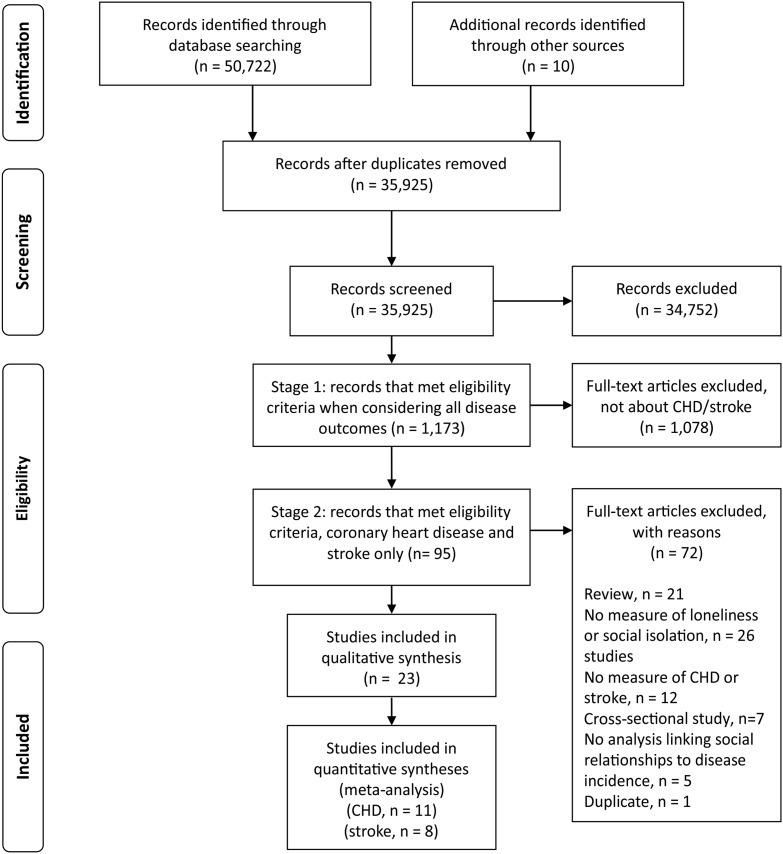
Background: The influence of social relationships on morbidity is widely accepted, but the size of the risk to cardiovascular health is unclear. Objective: We undertook a systematic review and meta-analysis to investigate the association between loneliness or social isolation and incident coronary heart disease (CHD) and stroke. Methods: Sixteen electronic databases were systematically searched for longitudinal studies set in high-income countries and published up until May 2015. Two independent reviewers screened studies for inclusion and extracted data. We assessed quality using a component approach and pooled data for analysis using random effects models. Results: Of the 35 925 records retrieved, 23 papers met inclusion criteria for the narrative review. They reported data from 16 longitudinal datasets, for a total of 4628 CHD and 3002 stroke events recorded over follow-up periods ranging from 3 to 21 years. Reports of 11 CHD studies and 8 stroke studies provided data suitable for meta-analysis. Poor social relationships were associated with a 29% increase in risk of incident CHD (pooled relative risk: 1.29, 95% CI 1.04 to 1.59) and a 32% increase in risk of stroke (pooled relative risk: 1.32, 95% CI 1.04 to 1.68). Subgroup analyses did not identify any differences by gender. Conclusions: Our findings suggest that deficiencies in social relationships are associated with an increased risk of developing CHD and stroke. Future studies are needed to investigate whether interventions targeting loneliness and social isolation can help to prevent two of the leading causes of death and disability in high-income countries. Study registration number: CRD42014010225.
Overview
CoChat Summary
TL;DR
This systematic review and meta-analysis of longitudinal observational studies found that poor social relationships were associated with a 29% higher risk of incident coronary heart disease and a 32% higher risk of stroke. The authors conclude that addressing loneliness and social isolation may be valuable in cardiovascular prevention, while noting causality cannot be inferred.
Key findings
- Across 23 papers from 16 longitudinal cohorts, including 181,006 participants, 4628 CHD events and 3002 stroke events were recorded over follow-up periods of 3–21 years.
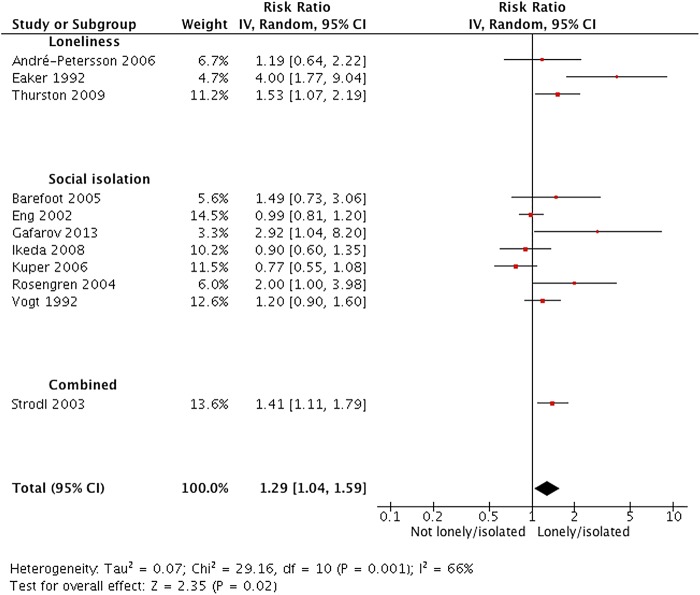
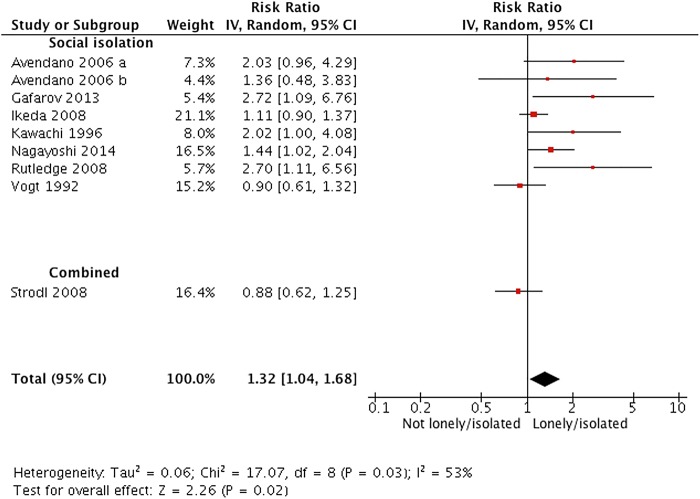
- Pooled relative risk for incident CHD comparing high versus low loneliness/social isolation was 1.29 (95% CI 1.04 to 1.59) across 11 studies; pooled relative risk for stroke was 1.32 (95% CI 1.04 to 1.68) across 8 stroke studies in the abstract (the results section describes nine independent stroke samples).
- Subgroup analyses found no differences by gender, and no evidence that loneliness versus social isolation was differentially associated with CHD incidence.
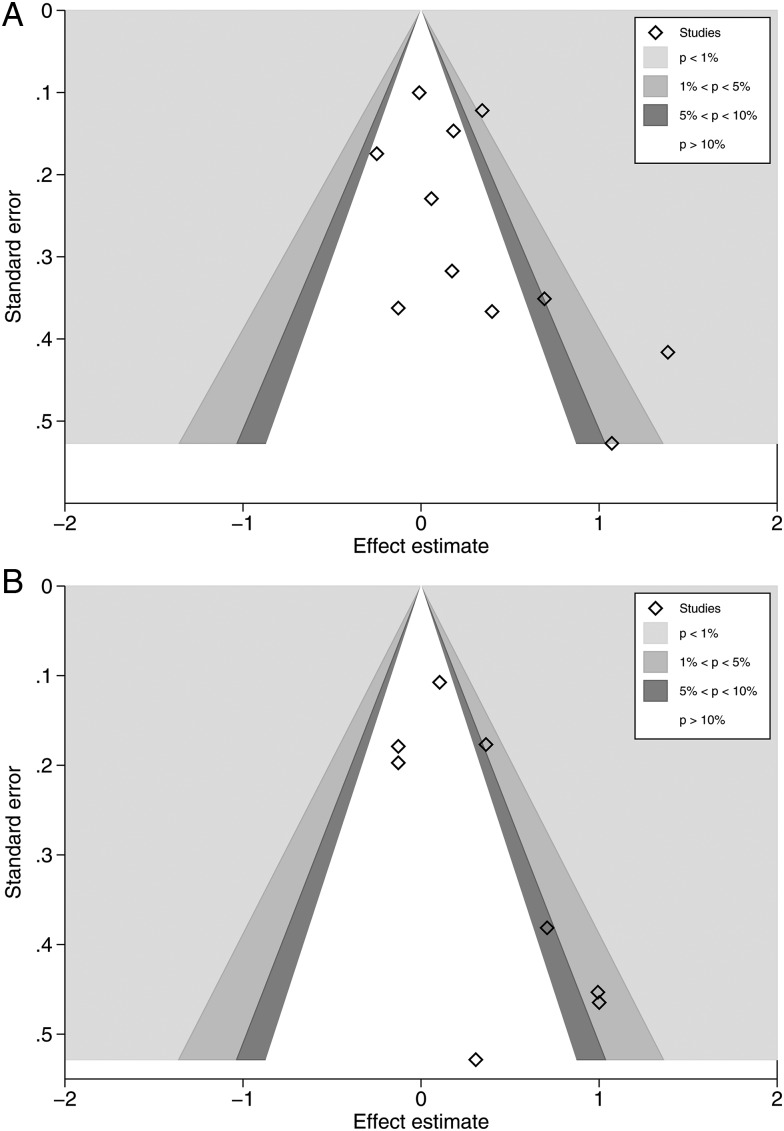
- Heterogeneity was present for CHD (I²=66%, p=0.001) and stroke (I²=53%, p=0.03); sensitivity analyses found no evidence that results differed by study validity, but funnel plots and fixed- versus random-effects comparisons suggested possible small-study effects/reporting bias.
Methods
- Systematic review and meta-analysis of longitudinal observational studies set in high-income countries, registered as CRD42014010225; 16 electronic databases were searched up to May 2015, supplemented by reference lists, Scopus citations, and topic experts.
- Of 35,925 records retrieved, 23 papers based on 16 cohorts met inclusion criteria; two independent reviewers screened studies and extracted data, with quality assessed using a component approach.
- Random-effects models pooled effect estimates transformed to natural logs; odds ratios were approximated to relative risks because incidence was <10% in the three studies reporting ORs; prespecified subgroup and sensitivity analyses were performed.
Limitations
- The paper states that causality cannot be inferred, unmeasured confounding and reverse causation due to subclinical disease cannot be excluded, and publication bias may lead to overestimation of the true effect; conversely, pooled effects could be conservative because many studies adjusted for factors likely on the causal pathway, such as depression or health-related behaviour.
- The paper states insufficient data to explore the relative effects of quantity versus quality of relationships or effect modifiers in depth; seven estimates came from populations of higher socioeconomic status and better health than the target population, so results may underestimate effects among disadvantaged groups; some data were collected from 1965, and later CHD prevention strategies may have modified the association.
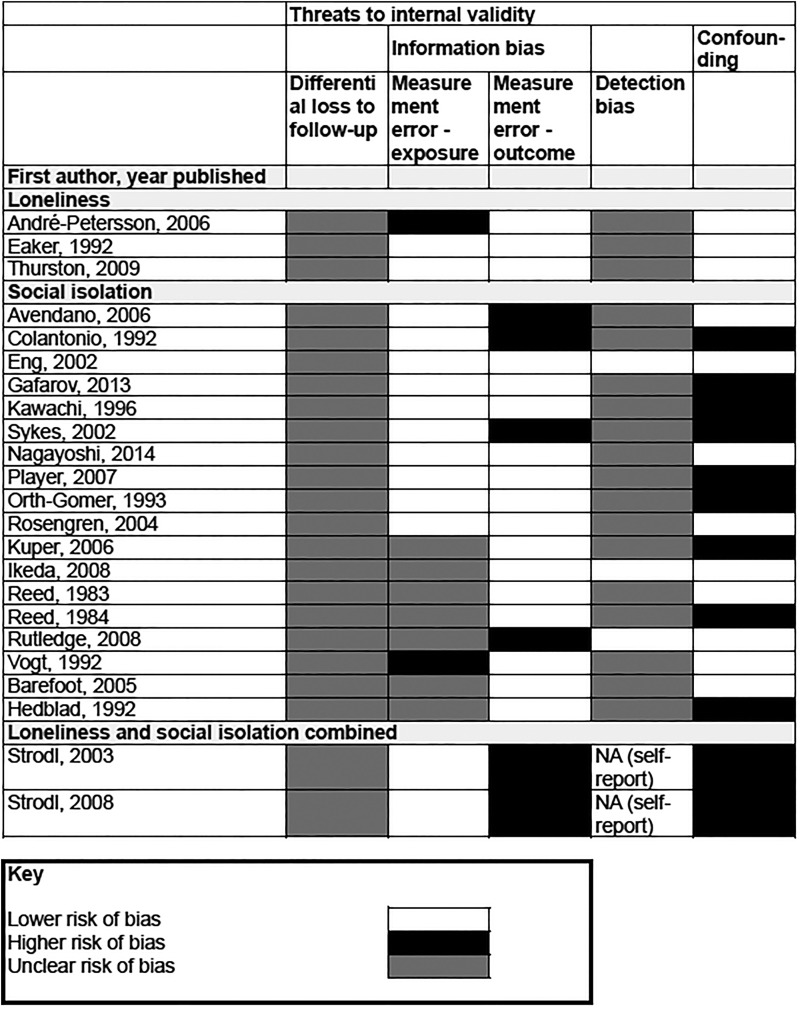
- Evident from the text: heterogeneity remained unexplained, information on reliability and validity of social relationship instruments was limited, and limited information on attrition and blinding meant risk of differential loss to follow-up and detection bias was unclear.
Model-written summary. Check it against the paper before relying on it.
Integrity signals
Registry
Cites
Statistics
Figures
Verification
Claims the paper makes
3 Valid · 0 Not valid · 17 Not checked · 47 Own results and interpretations
Every source the paper cites for this claim was checked and supports it.
In the paper
“Adults who have few social contacts (ie, who are socially isolated) or feel unhappy about their social relationships (ie, who are lonely) are at increased risk of premature mortality.1”
§ Loneliness and social isolation as risk factors for coronary heart disease and stroke: systematic review and meta-analysis of longitudinal observational studies > Introduction
What the sources say
- Supportedcites [1] Holt-Lunstad J, Smith TB, Baker M, et al Loneliness and social isolation as risk factors for mortality: a meta-analytic review. Perspect Psychol Sci 2015; 10: 227– 37. 10.1177/1745691614568352 25910392 source
The Introduction (p. 228) supplies exactly the two definitions the claim paraphrases: social isolation as an 'objective quantitative approach to establish a dearth of social contact and network size' (living alone, few social network ties, infrequent contact), and loneliness as 'the perception of social isolation... the dissatisfaction with the discrepancy between desired and actual social relationships.' The Discussion reports the mortality risk for adults across 70 prospective studies (26% for loneliness, 29% for social isolation, 32% for living alone after covariate adjustment), and the Conclusion states that 'individuals lacking social connections (both objective and subjective social isolation) are at risk for premature mortality.' Both the definitional glosses and the increased-risk assertion are therefore carried by our copy. (LLM, conf=0.92)
plainstates an association- Asserted: passes — The authors put it forward as true.
- Checkable: passes — It can be checked against evidence.
- Load-bearing: passes — The paper’s conclusions depend on it.
- Based: passes — The paper gives a reason why it holds.
- Supported
Every source the paper cites for this claim was checked and supports it.
In the paper
“The influence of social relationships on mortality is comparable with well-established risk factors, including physical activity and obesity.2”
§ Loneliness and social isolation as risk factors for coronary heart disease and stroke: systematic review and meta-analysis of longitudinal observational studies > Introduction
What the sources say
- Supportedcites [2] Holt-Lunstad J, Smith TB, Layton JB Social relationships and mortality risk: a meta-analytic review. PLoS Med 2010; 7: e1000316 10.1371/journal.pmed.1000316 20668659 PMC2910600 source
The Conclusion (Discussion) of Holt-Lunstad et al. (2010) states directly that the magnitude of the social-relationship effect on mortality (50% greater likelihood of survival across 308,849 individuals) is comparable with quitting smoking and exceeds many well-known risk factors, e.g., obesity and physical inactivity. The Discussion also states the magnitude 'may be considered quite large, rivaling that of well-established risk factors (Figure 6).' The citing sentence is, if anything, slightly weaker than the source ('comparable with' vs. 'exceeds'), which the rubric treats as supported. (LLM, conf=0.90)
plainstates an association- Asserted: passes — The authors put it forward as true.
- Checkable: passes — It can be checked against evidence.
- Load-bearing: passes — The paper’s conclusions depend on it.
- Based: passes — The paper gives a reason why it holds.
- Supported
The cited sources support only part of this claim — read each source’s verdict below.
In the paper
“We found an association between poor social relationships and incident CVD comparable in size to other recognised psychosocial risk factors, such as anxiety50 and job strain.51”
§ Loneliness and social isolation as risk factors for coronary heart disease and stroke: systematic review and meta-analysis of longitudinal observational studies > Discussion > Summary of findings and comparison with other work
What the sources say
- Supportedcites [50] Roest AM, Martens EJ, de Jonge P, et al Anxiety and risk of incident coronary heart disease: a meta-analysis. J Am Coll Cardiol 2010; 56: 38– 46. 10.1016/j.jacc.2010.03.034 20620715 source
Citation 50 is attached to anxiety, not job strain or the citing authors’ finding about social relationships. The Results report an association between anxiety and incident coronary heart disease (pooled hazard ratio 1.26), supporting anxiety as the risk-factor comparison used here. The source does not itself compare anxiety with poor social relationships. (LLM, conf=0.88)
- Partly supportedcites [51] Fransson EI, Nyberg ST, Heikkilä K, et al Job strain and the risk of stroke: an individual-participant data meta-analysis. Stroke 2015; 46: 557– 9. 10.1161/STROKEAHA.114.008019 25563644 sourceExperimental — accuracy not yet measured
The Results report a job-strain association with incident ischemic stroke (hazard ratio 1.24), providing a magnitude the citing authors could compare with their own finding. The paper does not establish job strain as a risk factor for CVD generally: its overall-stroke association was not statistically significant, and its Conclusion qualifies the ischemic-stroke finding as possible. (LLM, conf=0.82)
plainstates an association- Asserted: passes — The authors put it forward as true.
- Checkable: passes — It can be checked against evidence.
- Load-bearing: passes — The paper’s conclusions depend on it.
- Based: passes — The paper gives a reason why it holds.
- Supported
A result the paper reports from its own data — it cites no other source for it, so there is none to check. The quote shows it is in the paper.
In the paper
“Poor social relationships were associated with a 29% increase in risk of incident CHD (pooled relative risk: 1.29, 95% CI 1.04 to 1.59)”
- Also stated in: § Loneliness, social isolation and CHD · plain
“Across 11 studies (3794 events; one study did not report numbers) based on independent samples, the average relative risk of new CHD when comparing high versus low loneliness or social isolation was 1.29 (95% CI 1.04 to 1.59; see figure 3).”
- Also stated in: § Summary of findings and comparison with other work · plain
“Our review found that poor social relationships were associated with a 29% increase in risk of incident CHD and a 32% increase in risk of stroke.”
§ Loneliness and social isolation as risk factors for coronary heart disease and stroke: systematic review and meta-analysis of longitudinal observational studies > Abstract > Results
plainstates an association- Asserted: passes — The authors put it forward as true.
- Checkable: passes — It can be checked against evidence.
- Load-bearing: passes — The paper’s conclusions depend on it.
- Based: passes — The paper gives a reason why it holds.
- Also stated in: § Loneliness, social isolation and CHD · plain
A result the paper reports from its own data — it cites no other source for it, so there is none to check. The quote shows it is in the paper.
In the paper
“Subgroup analyses did not identify any differences by gender.”
§ Loneliness and social isolation as risk factors for coronary heart disease and stroke: systematic review and meta-analysis of longitudinal observational studies > Abstract > Results
plain- Asserted: passes — The authors put it forward as true.
- Checkable: passes — It can be checked against evidence.
- Load-bearing: unclear — It is unclear whether the paper’s conclusions depend on it.
- Based: passes — The paper gives a reason why it holds.
19 more claims
Create a free account to see all 67 claims and to verify the 21 references still open.
- It may state two separate claims as one. 22
- Probably not a substantial claim. 30
Claims other papers make about this one
Each is checked against this paper’s own text: does it say what the citing paper says it does?
The source backs part of the claim, not all of it — or backs it for a different population, condition or comparison.
In the citing paper
“the industrial revolution and modern era have ushered in changes in social interactions and sleep quality59,91 that can promote SCI149,150 and insulin resistance151, in turn increasing risk for obesity, type 2 diabetes, CVD and all-cause mortality150–154”
From Chronic inflammation in the etiology of disease across the life span (2019) · cites this paper as [152]
Experimental — accuracy not yet measuredThe source backs part of the claim, not all of it — or backs it for a different population, condition or comparison.
In the citing paper
“In a meta-analysis of longitudinal studies of social isolation and loneliness and cardiovascular outcomes, both social isolation and loneliness were found to significantly increase the risk for new CHD and stroke, with no evidence that one was more strongly related to disease incidence than the other [33].”
From Social isolation: an underappreciated determinant of physical health (2022) · cites this paper as [33]
Experimental — accuracy not yet measuredThe cited source says what the claim attributes to it.
In the citing paper
“There is also a growing body of evidence relating social isolation with nonfatal physical health outcomes, including increased risk for cardiovascular disease and stroke [33], pre-diabetes and type 2 diabetes [34], and poorer cognitive functioning [35].”
From Social isolation: an underappreciated determinant of physical health (2022) · cites this paper as [33]
The cited source says what the claim attributes to it.
In the citing paper
“Because lower circulating BDNF levels and small social networks have separately been associated with higher risk of incident stroke [3], [4], cognitive dysfunction [2], [5], [6], and the accumulation of Alzheimer's disease pathology [7], [8]”
From Associations between social relationship measures, serum brain-derived neurotrophic factor, and risk of stroke and dementia (2017) · cites this paper as [3]
The cited source says what the claim attributes to it.
In the citing paper
“Social isolation and loneliness have been studied extensively over the past four decades, with numerous studies showing that both have negative mental and physical health consequences [1–5].”
6 more claims about this paper
Create a free account to see every claim other papers make about this one.
Self-check
Percentages, sums and reported differences re-computed from the paper’s own numbers.
Each contradiction between two passages listed here was confirmed by an independent check.
Rated minor: it would not touch a result — a value no result rests on, a p-value that stays on the same side of the significance level, or a conflict that is clerical, resolved elsewhere in the paper, or outside its own findings.
In the paper
§ Loneliness and social isolation as risk factors for coronary heart disease and stroke: systematic review and meta-analysis of longitudinal observational studies > Results > Social isolation and stroke
“Across nine independent study samples (2577 events; one study did not report numbers), the average relative risk of stroke incidence was 1.32”
§ Loneliness and social isolation as risk factors for coronary heart disease and stroke: systematic review and meta-analysis of longitudinal observational studies > Results > Risk of bias across studies
“Stroke | 1.32 (1.04 to 1.68) (n=8)”
Rated minor: it would not touch a result — a value no result rests on, a p-value that stays on the same side of the significance level, or a conflict that is clerical, resolved elsewhere in the paper, or outside its own findings.
In the paper
“Four studies presented results from univariate analyses,31 34 35 41 with a further study adjusting for age only.26 The remaining eight reports did not control for socioeconomic status”
§ Loneliness and social isolation as risk factors for coronary heart disease and stroke: systematic review and meta-analysis of longitudinal observational studies > Results > Study validity
Reported 23 · recomputed 25
Citations
Cites
Social Relationships and Mortality Risk: A Meta-analytic Review
Holt-Lunstad, J., Smith, T. B., & Layton, J. B. (2010) · PLoS Medicine · doi:10.1371/journal.pmed.1000316 · Cited by 7,272
Loneliness and Social Isolation as Risk Factors for Mortality: A Meta-Analytic Review
Holt-Lunstad, J., Smith, T. B., Baker, M., Harris, T., & Stephenson, D. (2015) · Perspectives on Psychological Science · doi:10.1177/1745691614568352 · Cited by 6,043
Loneliness matters: a theoretical and empirical review of consequences and mechanisms
Hawkley, L. C., & Cacioppo, J. T. (2010) · Annals of Behavioral Medicine · doi:10.1007/s12160-010-9210-8 · Cited by 4,782
Zhang, J., & Yu, K. F. (1998) · JAMA · doi:10.1001/jama.280.19.1690 · Cited by 4,138
Systematic reviews: CRD's guidance for undertaking reviews in health care
Tacconelli, E. (2010) · The Lancet Infectious Diseases · doi:10.1016/s1473-3099(10)70065-7 · Cited by 3,245
Assessing social networks among elderly populations
Lubben, J. E. (1988) · Family & Community Health · doi:10.1097/00003727-198811000-00008 · Cited by 1,188
Loneliness, social isolation, and behavioral and biological health indicators in older adults.
Shankar, A., McMunn, A., Banks, J., & Steptoe, A. (2011) · Health Psychology · doi:10.1037/a0022826 · Cited by 1,100
Social Relationships and Health
Cohen, S., Gottlieb, B. H., & Underwood, L. G. (2000) · Social Support Measurement and Intervention · doi:10.1093/med:psych/9780195126709.003.0001 · Cited by 903
Stress and Cardiovascular Disease: An Update on Current Knowledge
Steptoe, A., & Kivimäki, M. (2013) · Annual Review of Public Health · doi:10.1146/annurev-publhealth-031912-114452 · Cited by 879 · cited 1×
“Subgroup analyses speci fi ed a priori showed no difference between the association of loneliness or social isolation with CHD incidence, and we found no evidence across studies of differences between men and women.”
Anxiety and Risk of Incident Coronary Heart Disease
Roest, A. M., Martens, E. J., de Jonge, P., & Denollet, J. (2010) · Journal of the American College of Cardiology · doi:10.1016/j.jacc.2010.03.034 · Cited by 865
Cited by
Items 601–700 of 1,002
Muntsant, A., & Giménez-Llort, L. (2022) · Frontiers in Aging Neuroscience · doi:10.3389/fnagi.2022.969381 · Cited by 17
“In fact, various meta-analyses have described that social isolation is associated with an increased risk of cardiovascular disease and stroke (Holt-Lunstad and Smith, 2016; Valtorta et al., 2016), and it is considered a risk factor for all-cause mortality (Holt-Lunstad et al.”
BackgroundGyasi, R. M., Abass, K., Segbefia, A. Y., Afriyie, K., Asamoah, E., Boampong, M. S., Adam, A. M., & Owusu‐Dabo, E. (2022) · Scientific Reports · doi:10.1038/s41598-022-26840-5 · Cited by 20
Psychosocial assessment and psychological interventions following a cardiac event
Thompson, D. R., & Pedersen, S. S. (2023) · Heart · doi:10.1136/heartjnl-2022-321607 · Cited by 22
Loh, M. K., Stickling, C. P., Schrank, S., Hanshaw, M., Ritger, A. C., Dilosa, N., Finlay, J., Ferrara, N. C., & Rosenkranz, J. A. (2023) · Psychopharmacology · doi:10.1007/s00213-023-06308-8 · Cited by 19
PROTOCOL: In-person interventions to reduce social isolation and loneliness: An evidence and gap map
Welch, V. A., Ghogomu, E. T., Dowling, S., Barbeau, V. I., Al-Zubaidi, A. A., Beveridge, E., Bondok, M., Desai, P., Doyle, R., Huang, J., et al. (2023) · Campbell Systematic Reviews · doi:10.1002/cl2.1340 · Cited by 30
Rippon, I., Victor, C. R., Martyr, A., Matthews, F. E., Quinn, C., Rusted, J. M., Jones, R. W., Collins, R., van Horik, J. O., Pentecost, C., et al. (2023) · Aging & Mental Health · doi:10.1080/13607863.2023.2286618 · Cited by 25
“…with a range of physical and mental health outcomes, including depression (Courtin & Knapp, 2017), reduced well-being and life satisfaction (Golden et al., 2009; Shankar et al., 2015), cardiovascular disease (Courtin & Knapp, 2017; Valtorta et al., 2016) and mortality (Holt-Lunstad et al., 2015).”
BackgroundTransitory or Chronic? Gendered Loneliness Trajectories over Widowhood and Separation in Older Age
Kapelle, N., & Monden, C. W. S. (2024) · Journal of Health and Social Behavior · doi:10.1177/00221465231223719 · Cited by 23
Long, E., Thomson, M., Milicev, J., Goodfellow, C., Letina, S., Bradley, S. M., & McCann, M. (2024) · Journal of Public Health · doi:10.1007/s10389-024-02236-9 · Cited by 25
“…relationships (Perl-man and Peplau 1981), and is associated with myriad negative outcomes, including poorer physical health (Shankar et al. 2011; Valtorta et al. 2016), greater use of health care services (Valtorta et al. 2018), poorer mental health (Beu-tel et al. 2017; Wang et al. 2018), and…”
Dahlberg, L., von Saenger, I., Naseer, M., Lennartsson, C., & Agahi, N. (2024) · Frontiers in Public Health · doi:10.3389/fpubh.2024.1444990 · Cited by 28
Cundiff, J. M., & Smith, T. W. (2017) · Social and Personality Psychology Compass · doi:10.1111/spc3.12310 · Cited by 24
The lonely brain: evidence from studying patients with penetrating brain injury
Cristofori, I., Pal, S., Zhong, W., Gordon, B., Krüeger, F., & Grafman, J. H. (2018) · Social Neuroscience · doi:10.1080/17470919.2018.1553798 · Cited by 22
Lee, Y. (2019) · IntechOpen eBooks · doi:10.5772/intechopen.85936 · Cited by 28
de Koning, J. L., Richards, S. H., & Stathi, A. (2019) · Journal of Aging and Physical Activity · doi:10.1123/japa.2019-0027 · Cited by 21
Cribbet, M. R., Smith, T. W., Uchino, B. N., Baucom, B., & Nealey-Moore, J. B. (2020) · Biological Psychology · doi:10.1016/j.biopsycho.2020.107847 · Cited by 25
Page‐Reeves, J., Murray-Krezan, C. M., Regino, L., Perez, J., Bleecker, M. J., Perez, D., Wagner, B., Tigert, S. L., Bearer, E. L., & Willging, C. E. (2021) · BMC Public Health · doi:10.1186/s12889-020-09867-z · Cited by 23
Burns, A., Leavey, G., & O’Sullivan, R. (2021) · Frontiers in Public Health · doi:10.3389/fpubh.2021.620264 · Cited by 17
Lee, H., & Singh, G. K. (2021) · Health Equity · doi:10.1089/heq.2021.0003 · Cited by 22
Bales, K. L., & Rogers, F. D. (2022) · Philosophical Transactions of the Royal Society B Biological Sciences · doi:10.1098/rstb.2021.0061 · Cited by 20
A Bold Goal: More Healthy Days Through Improved Community Health
Cordier, T., Song, Y., Cambon, J., HAUGH, G., Steffen, M. W., Hardy, P., Staehly, M., Hagan, A. S., Gopal, V., Tye, P. D., et al. (2017) · Population Health Management · doi:10.1089/pop.2017.0142 · Cited by 18
The personal and community impact of a Scottish Men's Shed
Foster, E. J., Muñoz, S., & Leslie, S. J. (2018) · Health & Social Care in the Community · doi:10.1111/hsc.12560 · Cited by 24
Manwani, B., & McCullough, L. D. (2019) · Stroke · doi:10.1161/strokeaha.119.025955 · Cited by 18
Holt‐Lunstad, J., & Lefler, M. (2019) · Springer eBooks · doi:10.1007/978-3-319-69892-2_646-2 · Cited by 30
Ding, L., Dai, R., Qian, J., Zhang, H., Miao, J., Wang, J., Tan, X. W., & Li, Y. (2024) · BMC Public Health · doi:10.1186/s12889-024-19885-w · Cited by 26
“Longitudinal studies indicate that individuals exposed to social isolation and loneliness exhibit a higher prevalence of behavioral risk factors, including smoking, alcohol use, physical inactivity, and sleep insufficiency [37–39].”
BackgroundLoneliness, cerebrovascular and Alzheimer's disease pathology, and cognition
Lao, P. J., Young, C. B., Ezeh, C., Lacayo, B. E., Šeblová, D., Andrews, R. M., Gibbons, L. E., Kraal, A. Z., Turney, I. C., Deters, K., et al. (2024) · Alzheimer s & Dementia · doi:10.1002/alz.14196 · Cited by 18
Social Bonds Retain Oxytocin-Mediated Brain-Liver Axis to Retard Atherosclerosis
Ko, S., Anzai, A., Liu, X., Kinouchi, K., Yamanoi, K., Torimitsu, T., Ichihara, G., Kitakata, H., Shirakawa, K., Katsumata, Y., et al. (2024) · Circulation Research · doi:10.1161/circresaha.124.324638 · Cited by 21
Factors associated with social isolation in stroke patients: a systematic review and meta-analysis
Li, Y., Xu, H., Zhang, T., Lu, X., Xie, X., & Gao, J. (2024) · Journal of Stroke and Cerebrovascular Diseases · doi:10.1016/j.jstrokecerebrovasdis.2024.108201 · Cited by 21
Kim, E. S., Wilkinson, R., Holt‐Lunstad, J., & VanderWeele, T. J. (2025) · Journal of Adolescent Health · doi:10.1016/j.jadohealth.2024.12.011 · Cited by 21
Relationships of social isolation and loneliness with healthy aging among older adults
Miao, M.-Y., Fang, F., Lyu, J., Liu, Z.-Y., Wan, Z., Qin, L.-Q., Chen, G.-C., & Wang, H.-P. (2025) · BMC Geriatrics · doi:10.1186/s12877-025-05941-6 · Cited by 22
“Individuals who were socially isolated or feel lonely have been found to be at a higher risk for developing cardiovascular diseases [7], dementia [8], depression [9], and premature mortality [10], suggesting a crucial role of social connection in human lifespan and healthspan.”
Murayama, H., & Takase, M. (2025) · JMIR Aging · doi:10.2196/74422 · Cited by 32
“Meta-analyses associate loneliness with an increased risk of mortality [5,6], cardio-vascular and cerebrovascular diseases [6,7], mental disorders [6], and dementia [8].”
Haj-Mirzaian, A., Ramezanzadeh, K., Shariatzadeh, S., Tajik, M., Khalafi, F., Tafazolimoghadam, A., Radmard, M., Rahbar, A., Pirri, F., Kazemi, K., et al. (2021) · Scientific Reports · doi:10.1038/s41598-021-98276-2 · Cited by 19
Harrison, D., Rowland, S., Wood, G., Bakewell, L. L., Petridis, I., Long, K. S., Vasileiou, K., Barnett, J. C., Barreto, M., Wilson, M. L., et al. (2023) · ACM Transactions on Computer-Human Interaction · doi:10.1145/3534961 · Cited by 19
“But it is also increasingly related to poor physical health outcomes, such as high blood pressure [34], increased risk of stroke and heart disease [94], and increased mortality [39].”
BackgroundThe interactive effects of psychosocial stress and diet composition on health in primates
Shively, C. A., Frye, B. M., Negrey, J. D., Johnson, C. S. C., Sutphen, C. L., Molina, A. J. A., Yadav, H., Snyder‐Mackler, N., & Register, T. C. (2023) · Neuroscience & Biobehavioral Reviews · doi:10.1016/j.neubiorev.2023.105320 · Cited by 18
Loneliness and Health: An Umbrella Review
Rezaei, N., & Saghazadeh, A. (2022) · Heart and Mind · doi:10.4103/hm.hm_51_22 · Cited by 19
Organised loneliness and its discontents
Sagan, O. (2023) · Diversity & Inclusion Research · doi:10.1002/dvr2.12008 · Cited by 19
Lim, M. H., Hennessey, A., Qualter, P., Smith, B. J., Thurston, L., Eres, R., & Holt‐Lunstad, J. (2024) · Social Psychiatry and Psychiatric Epidemiology · doi:10.1007/s00127-024-02740-z · Cited by 29
“No intervention effects were observed for depression, quality of life, or positive affect (see supplementary data 5).”
Batra, R., Flatt, J. D., Pharr, J. R., Sharma, M., Khubchandani, J., Kanekar, A. S., Chirico, F., & Batra, K. (2024) · Healthcare · doi:10.3390/healthcare12212149 · Cited by 30
“The impact further translates to the increased burden of hospital readmissions, thereby increasing healthcare utilization and associated costs [32,34–36].”
BackgroundNilsson, I., LUBORSKY, M. R., Rosenberg, L., Sandberg, L., Boström, A., & Borell, L. (2018) · BMC Health Services Research · doi:10.1186/s12913-018-3616-6 · Cited by 20
Borderline personality disorder traits associate with midlife cardiometabolic risk.
Barber, T. A., Ringwald, W. R., Wright, A. G. C., & Manuck, S. B. (2019) · Personality Disorders Theory Research and Treatment · doi:10.1037/per0000373 · Cited by 26
Mitsutake, S., Koike, T., Ishizaki, T., Sakurai, R., Yasunaga, M., Nishi, M., Fukaya, T., Kobayashi, E., Suzuki, H., Nonaka, K., et al. (2020) · Archives of Gerontology and Geriatrics · doi:10.1016/j.archger.2020.104286 · Cited by 20
Effects of Social Support Network Size on Mortality Risk: Considerations by Diabetes Status
Loprinzi, P. D., & Ford, M. A. (2018) · Diabetes Spectrum · doi:10.2337/ds17-0056 · Cited by 22
Non-Traditional Cardiovascular Risk Factors: Tailored Assessment and Clinical Implications
Perone, F., Bernardi, M., Spadafora, L., Betti, M., Cacciatore, S., Saia, F., Fogacci, F., Jaiswal, V., Asher, E., Paneni, F., et al. (2025) · Journal of Cardiovascular Development and Disease · doi:10.3390/jcdd12050171 · Cited by 28
“In recent years, greater attention has been devoted to psychosocial factors, especially acute and chronic stressors such as childhood trauma, work stress, and social isolation, since they can promote atherosclerotic CVD development and progression independently of conventional risk factors [110].”
Engel, L., Rizal, M. F., Clifford, S., Faller, J., Lim, M. H., Le, L. K., Chatterton, M. L., & Mihalopoulos, C. (2025) · PharmacoEconomics · doi:10.1007/s40273-025-01516-w · Cited by 23
“Loneliness has been linked to health-related mortality and morbidity impacts, especially in terms of adverse mental health outcomes such as depression and non-communicable diseases (including cardiovascular diseases, stroke, and dementia) [2–5].”
Zhang, D., Wong, C. K. M., Sit, R. W. S., Sun, W. J., Zhong, B., Niu, L., Zou, D., Xu, Z., & Wong, S. Y. S. (2019) · Journal of Psychosomatic Research · doi:10.1016/j.jpsychores.2019.109863 · Cited by 19
DePaul, V. G., Parniak, S., Nguyen, P., Hand, C. L., Letts, L. J., McGrath, C., Richardson, J. A., Rudman, D. L., Bayoumi, I., Cooper, H., et al. (2022) · BMC Geriatrics · doi:10.1186/s12877-022-03045-z · Cited by 19
Social Isolation Stress Modulates Pregnancy Outcomes and the Inflammatory Profile of Rat Uterus
Lopes, N. A., Falkenberg, E. A., Wiley, C., Patel, V., Serrano-Lomelin, J. A., Fang, X., Weiler, A. M., McCreary, J. K., Metz, G. A. S., & Olson, D. M. (2022) · International Journal of Molecular Sciences · doi:10.3390/ijms23116169 · Cited by 18
“Perceived SIS is associated with an increased risk of coronary heart disease and stroke [21], cancer [22], psychiatric disorders [23–25], and early mortality [26,27].”
BackgroundDürst, A., Graf, C. E., Ruggiero, C., Zekry, D., Boccardi, V., Monney, L., Joss, I., Vuilloud, K., Vespignani, G., Bosshard, W., et al. (2022) · Aging Clinical and Experimental Research · doi:10.1007/s40520-022-02188-8 · Cited by 18
Hanna, J. R., McConnell, T., Harrison, C., Patynowska, K. A., Finucane, A., Hudson, B. F., Paradine, S., McCullagh, A., & Reid, J. (2022) · Palliative Medicine · doi:10.1177/02692163221122269 · Cited by 24
Mountain, R. V., Langlais, A. L., Hu, D. Z., Baron, R., Lary, C. W., & Motyl, K. J. (2023) · Bone · doi:10.1016/j.bone.2023.116762 · Cited by 21
“Both social isolation and loneliness are associated with increased risk for numerous mental and physiological health conditions, including depression [7], heart disease [8], and dementia [9,10].”
BackgroundPeak height velocity in young athletes: A longitudinal meta-analysis
Lima, A. B., Quinaud, R. T., Gonçalves, C. E., & Carvalho, H. M. (2023) · Journal of Sports Sciences · doi:10.1080/02640414.2023.2203484 · Cited by 23
“…of longitudinal studies in the field of sports research, even considering the relatively recent increase of studies that perform metaanalyses of longitudinal studies in the general scientific literature (Daskalopoulou et al., 2017; Luppino et al., 2010; Mannan et al., 2016; Valtorta et al., 2016).”
BackgroundGannot, R. N., & Peretz-Dayan, H. (2023) · Journal of Applied Gerontology · doi:10.1177/07334648231175429 · Cited by 22
How does loneliness “get under the skin” to become biologically embedded?
Freilich, C. D. (2023) · Biodemography and Social Biology · doi:10.1080/19485565.2023.2260742 · Cited by 20
“However, robust longitudinal associations between loneliness and future cardiovascular (Valtorta et al. 2016), cognitive (Kuiper et al. 2015), and metabolic (Shiovitz-Ezra and Parag 2019) health have been observed in meta-analyses, suggesting that accounting for reverse causation does not attenuate…”
BackgroundHolloway, J., Sayeed, O., & Jurivich, D. A. (2023) · International Journal of Environmental Research and Public Health · doi:10.3390/ijerph20237094 · Cited by 17
“This multifaceted issue can be attributed to a range of factors, including the diminishing prevalence of intergenerational living arrangements and increased social and geographic mobility [1].”
BackgroundSteijvers, L. C., Brinkhues, S., Suanet, B., Stijnen, M., Hoebe, C. J. P. A., & Dukers–Muijrers, N. H. T. M. (2023) · Heliyon · doi:10.1016/j.heliyon.2023.e23734 · Cited by 18
Williams, T. M., Lakhani, A., & Spelten, E. R. (2024) · BMC Public Health · doi:10.1186/s12889-024-17807-4 · Cited by 21
Guidelines for evaluating and reporting social isolation and loneliness interventions
Schoenmakers, E., Lasgaard, M., & Power, J. M. (2024) · Journal of Health Psychology · doi:10.1177/13591053241238127 · Cited by 19
“…risk factors for cognitive decline and dementia (Boss et al., 2015; Livingston et al., 2020), cardiovascular illness (Hodgson et al., 2020; Valtorta et al., 2016), adverse psychological outcomes such as suicide attempts and psychotic symptoms (Solmi et al., 2020) and early all-cause…”
von Känel, R. (2024) · Seminars in Thrombosis and Hemostasis · doi:10.1055/s-0044-1787660 · Cited by 22
Community intervention to increase neighborhood social network among Japanese older adults
Harada, K., Masumoto, K., Katagiri, K., Fukuzawa, A., Chogahara, M., Kondo, N., & Okada, S. (2017) · Geriatrics and gerontology international/Geriatrics & gerontology international · doi:10.1111/ggi.13208 · Cited by 21
Effectiveness of a social inclusion program in people with non-affective psychosis
Mazzi, F., Baccari, F., Mungai, F., Ciambellini, M., Brescancin, L., & Starace, F. (2018) · BMC Psychiatry · doi:10.1186/s12888-018-1728-5 · Cited by 19
In sickness and in health: relationship quality and cardiovascular risk and management
Tulloch, H. E., & Greenman, P. S. (2018) · Current Opinion in Cardiology · doi:10.1097/hco.0000000000000553 · Cited by 19
Band, R. J., Ewings, S. M., Cheetham‐Blake, T. J., Ellis, J., Breheny, K., Vassilev, I., Portillo, M. C., Yardley, L., Blickem, C., Kandiyali, R., et al. (2019) · BMJ Open · doi:10.1136/bmjopen-2018-028718 · Cited by 21
Kaiser, P., Allen, N. B., Delaney, J. A., Hirsch, C. H., Carnethon, M. R., Arnold, A. M., & Odden, M. C. (2020) · Annals of Epidemiology · doi:10.1016/j.annepidem.2019.12.013 · Cited by 19
Use of Social Media at Cardiovascular Congresses: Opportunities for Education and Dissemination
Mihailidou, A. S., McCall, D., Hiremath, S. S., Costello, B. T., Tunuguntla, A., & Mihailidis, H. (2020) · Current Cardiology Reviews · doi:10.2174/1573403x16666200206103328 · Cited by 16
Lewis, E. E., & Lemieux, V. (2020) · Journal of Occupational Science · doi:10.1080/14427591.2020.1843069 · Cited by 21
Hassen, H. Y., Bastiaens, H., Royen, K. V., & Abrams, S. (2020) · PLoS ONE · doi:10.1371/journal.pone.0243422 · Cited by 17
Temporal dynamics, patterns and correlates of single and multimorbidity in India, 1994–2018
Puri, P., Singh, S. K., & Pati, S. (2021) · Journal of Multimorbidity and Comorbidity · doi:10.1177/26335565211062756 · Cited by 16
Brutto, Ó. H. D., Mera, R. M., Recalde, B. Y., Rumbea, D. A., & Brutto, V. J. D. (2022) · Stroke · doi:10.1161/strokeaha.122.038561 · Cited by 17
I feel you: Mixed-methods study of social support of loneliness on twitter
Mejova, Y., & Lu, A. H. (2022) · Computers in Human Behavior · doi:10.1016/j.chb.2022.107389 · Cited by 22
Heart and mind: behavioural cardiology demystified for the clinician
Astin, F., Lucock, M., & Jennings, C. S. (2019) · Heart · doi:10.1136/heartjnl-2016-310750 · Cited by 15
Matthaeus, H., Godara, M., Silveira, S., Hecht, M., Voelkle, M., & Singer, T. (2024) · International Journal of Environmental Research and Public Health · doi:10.3390/ijerph21050570 · Cited by 15
“Research has shown that subjectively experienced loneliness is relevant for predicting objective outcomes, such as increased mortality [2], cardiovascular diseases [3], and cognitive functioning [4].”
BackgroundChiappini, S., Sampogna, G., Ventriglio, A., Menculini, G., Ricci, V., Pettorruso, M., Volpe, U., & Martinotti, G. (2025) · Frontiers in Psychiatry · doi:10.3389/fpsyt.2025.1613251 · Cited by 26
Oh, I. M., Cho, M. J., Hahm, B., Kim, B., Sohn, J. H., Suk, H. W., Jung, B. Y., Kim, H. J., Kim, H. A., Choi, K. B., et al. (2020) · BMC Geriatrics · doi:10.1186/s12877-020-1495-2 · Cited by 17
Burnier, M., Paccaud, F. M., & Bochud, M. (2020) · Nutrients · doi:10.3390/nu12113591 · Cited by 15
Arigo, D., Ainsworth, M. C., Pasko, K., Brown, M. M., & Travers, L. (2021) · Social Science & Medicine · doi:10.1016/j.socscimed.2021.113995 · Cited by 18
Dayson, C., Harris, C., & Woodward, A. (2021) · Perspectives in Public Health · doi:10.1177/17579139211017580 · Cited by 17
Zhang, L., Yang, Z., Li, X., Hua, Y., Fan, G., & He, F. (2023) · BMC Complementary Medicine and Therapies · doi:10.1186/s12906-023-04223-1 · Cited by 15
“The risk factors of CVD vary and include sex, smoking, alcohol intake, and deficiencies in social relationships [2].”
BackgroundKim, E. S., Chopik, W. J., Chen, Y., Wilkinson, R. G., & VanderWeele, T. J. (2023) · Epidemiology and Psychiatric Sciences · doi:10.1017/s204579602300077x · Cited by 17
“As illustrative examples, loneliness has been linked with a 50%, 29% and 26% elevated risk of developing Alzheimer’s disease, coronary heart disease and premature mortality, respectively (Holt-Lunstad, 2022; Valtorta et al. , 2016; Wilson et al. , 2007).”
BackgroundXiao, Z., Li, J., Luo, Y., Liu, Y., Zhang, G., Cheng, X., & Bai, Y. (2024) · iScience · doi:10.1016/j.isci.2024.109109 · Cited by 18
“29 Several studies revealed that loneliness, but not social isolation, was independently associated with CHDs onset, 30,31 but a systematic review and meta-analysis revealed an unfavorable correlation between social isolation and CHDs, 32 and in a cohort study from the US, social isolation was also independently assoc…”
BackgroundRajai, N., Medina‐Inojosa, J. R., Lewis, B. R., Sheffeh, M. A., Suárez, A. B., Nyman, M., Attia, Z. I., Lerman, L. O., Medina‐Inojosa, B. J., Friedman, P. A., et al. (2024) · JACC Advances · doi:10.1016/j.jacadv.2024.100890 · Cited by 16
Usama, S. M., Kothari, Y. L., Karthikeyan, A., Khan, S. A., Sarraf, M., & Nagaraja, V. (2024) · Current Cardiology Reports · doi:10.1007/s11886-024-02066-x · Cited by 20
“Another meta-analysis assessed the association between loneliness, SI, and the incidence of coronary artery disease and stroke [28].”
Loneliness is positively associated with populist radical right support
Peterson, D., Rooduijn, M., Hopp, F. R., Schumacher, G., & Bakker, B. N. (2025) · Social Science & Medicine · doi:10.1016/j.socscimed.2025.117676 · Cited by 28
Green, J., Buckner, S., Milton, S., Powell, K., Salway, S., & Moffatt, S. (2017) · Social Science & Medicine · doi:10.1016/j.socscimed.2017.06.015 · Cited by 28
Turcotte, P., Carrier, A., & Levasseur, M. (2019) · Canadian Journal of Occupational Therapy · doi:10.1177/0008417419832338 · Cited by 21
Loneliness as a Downstream Concern in a Pandemic (and Post-Pandemic) World
Malcom, D. R. (2020) · American Journal of Pharmaceutical Education · doi:10.5688/ajpe8456 · Cited by 21
Leisure Activities and Loneliness Among People with Disabilities
Pagán, R. (2021) · World sustainability series · doi:10.1007/978-3-030-59820-4_5 · Cited by 16
Older people’s news dependency and social connectedness
Fisher, C., Park, S., Lee, J. Y., Holland, K., & John, E. (2021) · Media International Australia · doi:10.1177/1329878x211006497 · Cited by 20
Stokes, J. E., & Barooah, A. (2021) · Journal of Aging and Health · doi:10.1177/08982643211006498 · Cited by 16
Carlsson, N., Alvariza, A., Bremer, A., Axelsson, L., & Årestedt, K. (2021) · OMEGA - Journal of Death and Dying · doi:10.1177/00302228211018115 · Cited by 21
Mikocka‐Walus, A. A., Skvarc, D., Acosta, M. B., Evertsz, F. B., Bernstein, C. N., Burisch, J. M., Ferreira, N. B., Gearry, R. B., Graff, L. A., Jedel, S., et al. (2021) · Journal of Clinical Psychology in Medical Settings · doi:10.1007/s10880-021-09818-9 · Cited by 16
Blakoe, M., Christensen, A. V., Palm, P., Højskov, I. E., Thrysoee, L., Thorup, C. B., Borregaard, B., Mols, R. E., Rasmussen, T. B., & Berg, S. K. (2021) · Journal of Clinical Nursing · doi:10.1111/jocn.16023 · Cited by 15
Vázquez, S., Ceballos-Rasgado, M., Posada-Velázquez, R., Hunot‐Alexander, C., Nava‐González, E. J., Ramírez‐Silva, C. I., Aguilar-López, D. K., Quiroz‐Olguín, G., López-Jara, B., Delgado-de-la-Cruz, C., et al. (2021) · Nutrients · doi:10.3390/nu13124256 · Cited by 20
Xie, Q., Manova, V., & Khoury, B. (2022) · Current Psychology · doi:10.1007/s12144-022-03549-2 · Cited by 23
“, 2021), as well as the risk of having heart disease, and a stroke (Valtorta et al., 2016).”
BackgroundKakinami, L., Serbin, L. A., Stack, D. M., Karmaker, S. C., Ledingham, J. E., & Schwartzman, A. E. (2017) · Preventive Medicine Reports · doi:10.1016/j.pmedr.2017.10.003 · Cited by 15
Madison, F. N., Kesner, A. J., Alward, B. A., & Ball, G. F. (2018) · Hippocampus · doi:10.1002/hipo.22952 · Cited by 18
Noncommunicable diseases in India
Ak, B. (2019) · Journal of Postgraduate Medicine · doi:10.4103/jpgm.jpgm_157_18 · Cited by 15
Kim, M., & Lee, Y. H. (2018) · PLoS ONE · doi:10.1371/journal.pone.0201717 · Cited by 18
Trajectories of loneliness in later life – Evidence from a 10-year English panel study
Gessa, G. D., Bordone, V., & Arpino, B. (2025) · Social Science & Medicine · doi:10.1016/j.socscimed.2025.117703 · Cited by 17
“Empirical evidence links loneliness to adverse health outcomes, such as cardiovascular diseases (Leigh-Hunt et al., 2017; Nicole et al., 2016), dementia and poorer cognitive function (Lara et al., 2019), as well as poorer wellbeing and mental health (Leigh-Hunt et al., 2017; Wang et al., 2018).”
Accelerated brain ageing during the COVID-19 pandemic
Mohammadi‐Nejad, A., Craig, M., Cox, E. F., Chen, X., Jenkins, G. R., Francis, S., Sotiropoulos, S. N., & Auer, D. P. (2025) · Nature Communications · doi:10.1038/s41467-025-61033-4 · Cited by 22
“We answer in detail each of their comments below.”
Warren, A. (2025) · Stress · doi:10.1080/10253890.2025.2594067 · Cited by 199
“…are also strongly affected by loneliness via physiological (e.g. immune dysregulation, hypertension), psychological (e.g. impaired coping methods and low self-esteem), and behavioral mechanisms (e.g. physical inactivity, smoking) (Valtorta et al., 2016), though impacts vary across population.”
Kervin, L. M., Teo, K., Churchill, R., Riadi, I., & Cosco, T. D. (2021) · BMJ Open · doi:10.1136/bmjopen-2020-043876 · Cited by 14
Seifert, N., Seddig, D., & Eckhard, J. (2021) · Aging & Mental Health · doi:10.1080/13607863.2021.1961125 · Cited by 17
Metadata
- Authors
- Valtorta, N. K., Kanaan, M., Gilbody, S., Ronzi, S., & Hanratty, B.
- Affiliations
- University of York (GB)
- Department of Public Health and Society, Whelan Building, Brownlow Hill, Liverpool, UK
- Newcastle University (GB)
- Corresponding author
- Valtorta, Nicole K
- Venue
- Heart
- Publisher
- BMJ
- Published
- 2016-04-18
- Volume
- 102
- Issue
- 13
- Pages
- 1009-1016
- ISSN
- 1355-6037 (ISSN-L)
- 1468-201X
- PMC
- PMC4941172
- OpenAlex
- W2336497595
- Semantic Scholar
- 9a60e683be594b8cf850ee0a8302a554b6e1bd57
- Cited by
- 1,971
- References
- 51
- Citations by year
- 2026: 222 · 2025: 243 · 2024: 283 · 2023: 249 · 2022: 237 · 2021: 267 · 2020: 186 · 2019: 127 · 2018: 88 · 2017: 51 · 2016: 17
- FWCI
- 17.70
- Type
- journal article
- Language
- en
- Open access
- hybrid
- doi.org
- Licence
- cc-by
- Locations
- Heart (publishedVersion, cc-by)
- PubMed Central (publishedVersion, cc-by)
- PubMed (publishedVersion)
- White Rose Research Online (University of Leeds, The University of Sheffield, University of York) (submittedVersion, cc-by)
- HighWire Press Open Archive (submittedVersion)
- Newcastle University ePrints (Newcastle Univesity) (cc-by)
- Funders
- National Institute for Health and Care Research (DRF-2013-06-074)
- Research Trainees Coordinating Centre (DRF-2013-06-074)
- NIHR Academy
- Topics
- Social Sciences › Health › Health disparities and outcomes
- Health Sciences › Medicine › Cardiology and Cardiovascular Medicine › Cardiac Health and Mental Health
- Health Sciences › Medicine › Cardiology and Cardiovascular Medicine › Cardiovascular Health and Risk Factors
- Keywords
- loneliness, social isolation, coronary artery disease, stroke, cardiovascular risk factors, interpersonal relationships, social determinants of health, incident cardiovascular events
- MeSH terms
- Coronary Disease, Humans, Loneliness, Risk Factors, Social Isolation, Bias, Stroke, Observational Studies as Topic
About these checks
Registry, retraction, Cites and statistics results are computed, not judged, with one exception: a printed reference that no index lists is read once by a model before it counts as a citation error. Claims are extracted by a model and kept only when their quote appears verbatim in the text; each cited source is then checked, with a model’s help, for whether it says what the claim relies on. Those verdicts can be wrong — read the claim’s quote and the cited source before relying on one.
The claim verdicts this report counts are experimental: their accuracy is not yet measured.
A language model drew the claims from the paper on 2026-10-05, under version 3 of the claim definition (model deepseek-v4.1-flash, prompt extract-v3).
A second model labelled each claim on 2026-10-05 (model jev-1.13-20260917, definition revision gold-guideline-v0.2).
Cited sources are checked with a language model’s help (qwen3.8-omni-flash and gpt-6-sol).
Statistics and arithmetic are recomputed, not judged.
Confidence bands are shown only for fields calibrated on our annotated test set. None is calibrated yet, so no band is shown.
What counts as a claim ›How we measure confidence ›How we check this ›
Are you an author, or do you see a problem with this page? Request a review
Data sources
Bibliographic data: Semantic Scholar, OpenAlex, Crossref.
Contains information from the Semantic Scholar Academic Graph Datasets, made available under the ODC Attribution License (ODC-BY 1.0).
Semantic Scholar’s data is described in: Kinney, R., et al. (2023). The Semantic Scholar Open Data Platform. arXiv:2301.10140.
