

Tumor-associated macrophages: potential therapeutic strategies and future prospects in cancer
Open accessThe DOI matches its Crossref record; 221 of the 221 references it cites were found in a registry or an index.
Abstract
Macrophages are the most important phagocytes in vivo. However, the tumor microenvironment can affect the function and polarization of macrophages and form tumor-associated macrophages (TAMs). Usually, the abundance of TAMs in tumors is closely associated with poor prognosis. Preclinical studies have identified important pathways regulating the infiltration and polarization of TAMs during tumor progression. Furthermore, potential therapeutic strategies targeting TAMs in tumors have been studied, including inhibition of macrophage recruitment to tumors, functional repolarization of TAMs toward an antitumor phenotype, and other therapeutic strategies that elicit macrophage-mediated extracellular phagocytosis and intracellular destruction of cancer cells. Therefore, with the increasing impact of tumor immunotherapy, new antitumor strategies to target TAMs are now being discussed.
Overview
The claims and statistics of this paper haven’t been checked yet.
Free: it reads the open-access text and checks the first 5 claims that cite a source we can check. Create a free account to check every claim.
Integrity signals
Registry
Cites
Statistics
Figures
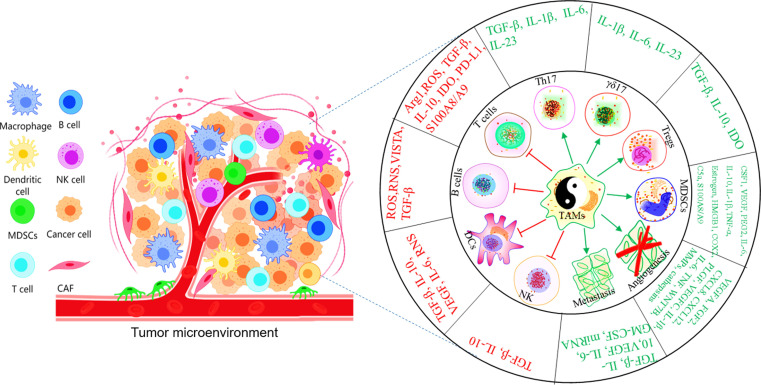
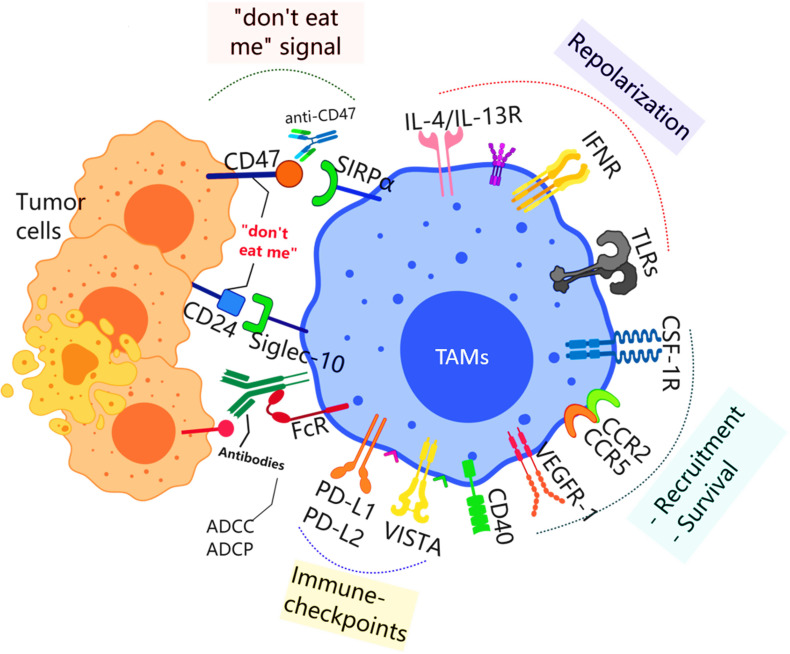
Verification
Claims the paper makes
The claims and statistics of this paper haven’t been checked yet.
Free: it reads the open-access text and checks the first 5 claims that cite a source we can check. Create a free account to check every claim.
Claims other papers make about this one
Each is checked against this paper’s own text: does it say what the citing paper says it does?
The source backs part of the claim, not all of it — or backs it for a different population, condition or comparison.
In the citing paper
“TAMs also secrete TGF-β, which recruits and activates Tregs that participate in immunosuppression [96].”
From Mechanisms and Strategies to Overcome Drug Resistance in Colorectal Cancer (2025) · cites this paper as [96]
Experimental — accuracy not yet measured
Self-check
Percentages, sums and reported differences re-computed from the paper’s own numbers.
The self-check needs the paper’s full text.
Citations
Cites
1 retracted
Lin, X., Wang, S., Sun, M., Zhang, C., Wei, C., Yang, C., Dou, R., Liu, Q., & Xiong, B. (2019) · Journal of Hematology & Oncology · doi:10.1186/s13045-019-0708-7 · Cited by 207
RetractedExploring the full spectrum of macrophage activation
Mosser, D. M., & Edwards, J. P. (2008) · Nature Reviews Immunology · doi:10.1038/nri2448 · Cited by 9,144
Mosmann, T. R., & Coffman, R. L. (1989) · Annual Review of Immunology · doi:10.1146/annurev.iy.07.040189.001045 · Cited by 7,692
Macrophage activation and polarization: nomenclature and experimental guidelines
Murray, P. J., Allen, J. E., Biswas, S. K., Fisher, E. A., Gilroy, D. W., Goerdt, S., Gordon, S., Hamilton, J. A., Ivashkiv, L. B., Lawrence, T., et al. (2014) · Immunity · doi:10.1016/j.immuni.2014.06.008 · Cited by 6,337
Understanding the tumor immune microenvironment (TIME) for effective therapy
Binnewies, M., Roberts, E. W., Kersten, K., Chan, V., Fearon, D. F., Merad, M., Coussens, L. M., Gabrilovich, D. I., Ostrand-Rosenberg, S., Hedrick, C. C., et al. (2018) · Nature Medicine · doi:10.1038/s41591-018-0014-x · Cited by 6,145
Fate Mapping Analysis Reveals That Adult Microglia Derive from Primitive Macrophages
Ginhoux, F., Greter, M., Leboeuf, M., Nandi, S., See, P., Gokhan, S., Mehler, M. F., Conway, S. J., Ng, L. G., Stanley, E. R., et al. (2010) · Science · doi:10.1126/science.1194637 · Cited by 5,175
Alternative activation of macrophages: mechanism and functions
Gordon, S., & Martinez, F. O. (2010) · Immunity · doi:10.1016/j.immuni.2010.05.007 · Cited by 4,197
Tumor-Associated Macrophages: From Mechanisms to Therapy
Noy, R., & Pollard, J. W. (2014) · Immunity · doi:10.1016/j.immuni.2014.06.010 · Cited by 4,089
Tumour-associated macrophages as treatment targets in oncology
Mantovani, A., Marchesi, F., Malesci, A., Laghi, L., & Allavena, P. (2017) · Nature Reviews Clinical Oncology · doi:10.1038/nrclinonc.2016.217 · Cited by 4,033
Macrophage plasticity and interaction with lymphocyte subsets: cancer as a paradigm
Biswas, S. K., & Mantovani, A. (2010) · Nature Immunology · doi:10.1038/ni.1937 · Cited by 3,840
Research works printed but not linked: 1
- Metchnikoff E. Untersuchungen über die mesodermalen Phagocyten einiger Wirbeltiere. Biologisches centralblatt 1883; 3: 560– 5.
Cited by
Items 201–300 of 365
A MnO2-based tumor-seeking nanoplatform for enhanced chemoimmunotherapy against 4T1 breast cancer
Gong, T., Wang, X., Liu, Z., Li, P., Li, P., Guo, Y., Han, M., & Wang, X. (2025) · Materials Today Bio · doi:10.1016/j.mtbio.2025.102000 · Cited by 7
“The phenotype of TAMs can be reshaped, therefore, repolarizing TAMs from M2 to M1 is considered a promising therapeutic strategy for tumor treatment [43].”
Xiao, Y., Yu, X., Wang, Y., Song, G., Liu, M. R., Wang, D., & Wang, H. (2024) · Scientific Reports · doi:10.1038/s41598-024-53338-z · Cited by 6
Recent Advances in Nanoimmunotherapy by Modulating Tumor-Associated Macrophages for Cancer Therapy
Hao, J., Zhao, X., Wang, C., Cao, X., & Liu, Y. (2024) · Bioconjugate Chemistry · doi:10.1021/acs.bioconjchem.4c00242 · Cited by 10
Wu, X., Liu, B., Deng, S., Xiong, T., Dai, L. L., & Cheng, B. (2025) · BMC Oral Health · doi:10.1186/s12903-024-05279-2 · Cited by 5
“Usually, the abundance of macrophages [35] and Tregs [36] in tumors is closely associated with poor prognosis.”
Characterizing macrophage diversity in colorectal malignancies through single-cell genomics
Zhao, T., Luo, Y., Sun, Y., & Wei, Z. (2025) · Frontiers in Immunology · doi:10.3389/fimmu.2025.1526668 · Cited by 13
Unveiling the role of CXCL10 in pancreatic cancer progression: A novel prognostic indicator
Wu, X., Rong, L., Tang, R., Li, Q., Fei, W., Deng, X., & Miao, L. (2025) · Open Medicine · doi:10.1515/med-2024-1117 · Cited by 5
“Under the in fl uence of the complex tumor microenvironment, macrophages can be recruited to the tumor area to be polarized into the M1 state, inhibiting tumor growth or the M2 state and promoting tumor growth [14 – 16].”
Ma, D., Wang, Y., Shen, Q., Liu, X., Lu, W., Li, S., Yin, Q., Xia, L., Liu, G., Chen, Y., et al. (2025) · Frontiers in Immunology · doi:10.3389/fimmu.2025.1567035 · Cited by 5
“Tumor associated macrophages (TAMs), as a vital component of TME, act a pivotal role in tumor immunology and associate with immunotherapy response (7, 8).”
Shen, J., Sun, W., Liu, J., Li, J., Li, Y., & Gao, Y. (2023) · Frontiers in Oncology · doi:10.3389/fonc.2023.1130094 · Cited by 8
“And the abundance of TAM in tumors is closely associated with poor prognosis (37).”
BackgroundYao, M., Mao, X., Zhang, Z., Cui, F., Shao, S., & Mao, B. (2024) · Frontiers in Cell and Developmental Biology · doi:10.3389/fcell.2024.1289538 · Cited by 9
Cao, C., Hu, B., Wang, J., Li, W., Guo, L., Sheng, J., & Zhang, C. (2024) · International Immunopharmacology · doi:10.1016/j.intimp.2024.113182 · Cited by 6
Self-citationKos, M., Bojarski, K., Mertowska, P., Mertowski, S., Tomaka, P., Dziki, Ł. A., & Grywalska, E. (2024) · Cells · doi:10.3390/cells13201708 · Cited by 5
“In addition, these monocytes can undergo phenotypic changes, promoting the creation of an immuno-suppressive microenvironment that supports tumor development through the secretion of angiogenic factors such as VEGF [13,15,16].”
BackgroundChen, P., Cheng, L., Zhao, C., Tang, Z., Wang, H., Shi, J., Li, X., & Zhou, C. (2024) · International Immunopharmacology · doi:10.1016/j.intimp.2024.113588 · Cited by 6
Lan, C., Wei, Y., Wang, X., Zhou, X., Liao, X., Huang, H., Wei, Z., Li, T., Peng, T., & Zhu, G. (2023) · International Journal of General Medicine · doi:10.2147/ijgm.s431206 · Cited by 5
“associated macrophages (TAMs), contributing to tumor growth and progression, are the essential elements of tumor microenvironment.(48) RAD51AP1 was demonstrated to regulate colorectal cancer stem cell self-renewal and promote colorectal cancer growth and drug resistance.”
BackgroundXiao, Z., Li, J., Fan, S., Wang, Y., & Jin, Q. (2025) · Cytotechnology · doi:10.1007/s10616-025-00787-7 · Cited by 4
“In recent years, tumor-associated macrophages (TAMs) have attracted extensive attention owing to their involvement in multiple cancers, containing tumor cell proliferation, metastasis, chemo-resistance, and immunosuppression (Li et al. 2021).”
Zhang, Z. K., Li, D., He, S., Xu, W., Lv, Q., Wang, Y., Xu, J., Yu, Z., Liu, S., Ge, Y., et al. (2025) · Biology · doi:10.3390/biology14121751 · Cited by 4
Unleashing the power of peptides in prostate cancer immunotherapy: mechanism, facts and perspectives
Li, X., Yang, F., Wang, M., Huang, X., Zeng, X., Zhou, L., Peng, S., & Zhang, J. (2025) · Frontiers in Pharmacology · doi:10.3389/fphar.2025.1478331 · Cited by 6
“M1 TAMs display antitumorigenic characteristics, secreting cytokines like IL-12 to directly eliminate tumor cells and recruiting cytotoxic T cells for indirect antitumor effects (Li et al., 2021).”
Vanhie, J. J., Kim, W., Goode, C., Collao, N., Tate, A., & Lisio, M. D. (2025) · Journal of Applied Physiology · doi:10.1152/japplphysiol.00899.2024 · Cited by 4
Guan, X., & Han, L. (2025) · Frontiers in Oncology · doi:10.3389/fonc.2025.1590095 · Cited by 7
Shao, C., Qiao, S., Meng, Y., He, T., Cui, L., & He, J. (2025) · The FASEB Journal · doi:10.1096/fj.202500974r · Cited by 5
“In the immune components of TME, TAMs are highly abundant and play a pivotal role [2–5].”
Yao, R., Zhang, Y., Yu, W., Chen, X., Shi, H., Luo, R., Fang, C., Zhao, X., Zhu, X., Lai, Y., et al. (2025) · Journal of Ethnopharmacology · doi:10.1016/j.jep.2025.120846 · Cited by 4
Sharma, D., Bushnell, G. G., Kalman, A. P., Hutchens, C. M., & Burness, M. L. (2026) · Frontiers in Immunology · doi:10.3389/fimmu.2025.1727365 · Cited by 11
Rewiring tumor-associated macrophages in hepatocellular carcinoma
Han, X., & Jin, R. (2026) · Frontiers in Immunology · doi:10.3389/fimmu.2026.1775603 · Cited by 9
Harnessing the innate immune system by revolutionizing macrophage-mediated cancer immunotherapy
Reghu, G., Vemula, P. K., Bhat, S. G., & Narayanan, S. (2024) · Journal of Biosciences · doi:10.1007/s12038-024-00441-y · Cited by 8
“Immunotherapeutic strategies targeting NK cells and T cells have shown promise in the treatment of some, but not all, malignant metastases, but are not effective in treating solid tumours (Li et al. 2021).”
Wang, Z., Feng, C., Chen, G., & Cai, Q. (2025) · Naunyn-Schmiedeberg s Archives of Pharmacology · doi:10.1007/s00210-025-04219-3 · Cited by 5
“Traditional Chinese medicine has a long history and unique advantages in cancer treatment (Li et al. 2021b).”
Li, X., Cheng, Y., Ji, M., Liu, J., Zhao, Z., & Zhao, Q. (2025) · Cancer Immunology Immunotherapy · doi:10.1007/s00262-025-04083-3 · Cited by 5
“TAMs, which are among the most abundant immune cells in the TME, are known to secrete immunosuppressive molecules such as IL-10 and TGFβ, contributing to immune evasion, tissue remodeling, and therapy resistance [28, 29].”
Hirose, K., Otsu, H., Masuda, T., Saeki, H., Tobo, T., Hosoda, K., Matsumoto, C., Tatsumi, T., Ikehara, T., Ofuchi, T., et al. (2025) · Annals of Surgical Oncology · doi:10.1245/s10434-025-17710-1 · Cited by 4
“This duality enables them to suppress and promote tumors, 30,31 underlining their complex roles and the challenges in fully understanding their contributions to cancer progression.”
Xu, L., Mo, Y., Yu, B., & Fan, S. (2025) · Discover Oncology · doi:10.1007/s12672-025-03157-z · Cited by 5
“…based on immune responsiveness and metabolic profile, can be clarified into the following two types: classically activated macrophage (TAM1), possessing pro-inflammatory and anti-tumor properties [7]; and alternatively activated macrophage (TAM2), with anti-inflammatory and oncogenic functions [8].”
InfluentialAdvancement and Applications of Nanotherapy for Cancer Immune Microenvironment
He, J., Li, Q., Zhao, C., Zhou, J., Wu, J., Zhang, H., Zhao, Y., Zhang, H., Lei, T., Zhao, X., et al. (2023) · Current Medical Science · doi:10.1007/s11596-023-2763-0 · Cited by 5
Myeloid-Derived Suppressor Cells and Macrophage Polarization in Cancer Immunotherapy
Hosseini, M., Akbarzadeh, M. A., & Jadidi‐Niaragh, F. (2024) · Advances in medical diagnosis, treatment, and care (AMDTC) book series · doi:10.4018/979-8-3693-3976-3.ch005 · Cited by 4
Tang, Y., Shi, T., Shu, L., & Fang, T. (2024) · Frontiers in Oncology · doi:10.3389/fonc.2024.1450603 · Cited by 5
Pu, S.-Y., Wu, Y., Ke, C., Tang, W., Zhou, L.-F., & Chen, F. (2025) · Food and Agricultural Immunology · doi:10.1080/09540105.2025.2461792 · Cited by 3
“Macrophages undergo M1 polarisation from a diverse set of stimuli, including IFN-γ, GM-CSF, TLR4, and other TLR agonists (Li et al., 2021; Wang et al., 2014).”
Sialic acid-functionalized nanomaterials for targeted cancer therapy, diagnosis, and theranostics
Vatankhah, A., Moghaddam, S. H., Oroojalian, F., Kesharwani, P., & Sahebkar, A. (2025) · International Journal of Pharmaceutics · doi:10.1016/j.ijpharm.2025.125901 · Cited by 5
Han, C., Huang, C., & Fang, Y. (2025) · Discover Oncology · doi:10.1007/s12672-025-04244-x · Cited by 5
“Besides, neutralizing CSF1R or CSF1 can also increase the risk of metastasis via increased frequency of neutrophils associated with primary tumors and metastases [40].”
Immune Predictors of Radiotherapy Outcomes in Cervical Cancer
Wang, L., Zhu, J., Ding, Z., Xie, Z., Liu, X., Zhang, F., Liu, X., Zhang, Y., & Chen, H. (2026) · Advanced Science · doi:10.1002/advs.202509784 · Cited by 4
“…transition (EMT) [ 39 ], and suppresses CD8 + T cell cytotoxicity to accelerate hepatocarcinoma progression [ 40 ], Tumor-associated macrophages (TAMs) are pivotal components of the tumor microenvironment, typically exerting immunosuppressive functions to promote tumor progression [ 42, 43 ].”
Li, Z.-X., Zang, L., Li, Y.-Q., Zhang, M., Zhao, D.-M., Han, X.-Y., Zhao, J.-F., Ding, C., & Liu, W.-S. (2026) · Drug Design Development and Therapy · doi:10.2147/dddt.s601715 · Cited by 3
“92 TAMs can engulf substantial amounts of nanomaterial and transport nanocarriers into hypoxic tumor regions, thereby promoting drug accumulation at the target site.”
Sun, F., Lian, Y., Zhou, M., Luo, J., Hu, L., Wang, J., Sun, Z., & Yu, J. (2024) · Immunologic Research · doi:10.1007/s12026-024-09479-4 · Cited by 4
“Furthermore, under hypoxic conditions, TAMs can upregulate hypoxia-inducible transcription factors and activate specific gene expression that seem to favor angiogenesis, tumor growth, metastasis, and immunosuppression [34].”
Self-citationLi, S., Wang, M., Liu, B., Lv, Y., Man, J., Liang, M., & Qiao, H. (2024) · International Immunopharmacology · doi:10.1016/j.intimp.2024.112432 · Cited by 5
Sun, Z., Zhou, R., Liu, J., Zhao, Q., Sun, C., & Sun, Y. (2024) · Chemical Engineering Journal · doi:10.1016/j.cej.2024.154506 · Cited by 3
Crosstalk between thyroid CSCs and immune cells: basic principles and clinical implications
Li, X., Han, H., Yang, K., Li, S., Ma, L., Yang, Z. R., & Zhao, Y. (2024) · Frontiers in Immunology · doi:10.3389/fimmu.2024.1476427 · Cited by 3
From neglect to necessity: the role of innate immunity in cutaneous squamous cell carcinoma therapy
He, Y., Tian, T., Li, Y., Zeng, Y., Wang, X., Qian, L., Tian, T., Jiang, M., & Li, L. (2025) · Frontiers in Immunology · doi:10.3389/fimmu.2025.1570032 · Cited by 4
“They act as the initial defense against infections and tissue damage by engul fi ng pathogens and cell debris (18, 19).”
Tang, Q., Yang, Y., & Sun, J. (2025) · Human Cell · doi:10.1007/s13577-025-01246-3 · Cited by 3
“Most TAMs present M2 phenotype and promote the proliferation of tumor cells and tumor angiogenesis by producing growth factors, cytokines, and chemokines, including interleukin (IL)−10, transforming growth factor (TGF)-β, and vascular endothelial growth factor (VEGF) [9].”
Li, Q., Hasan, N., Zhao, F., Xue, Y., Zhu, S., Lv, Y., Jiang, L., YANG, K. Y., Li, W., Zhang, Y., et al. (2025) · Infectious Agents and Cancer · doi:10.1186/s13027-025-00667-x · Cited by 3
Si, C., Li, Y., Wang, Y., Gao, J., & Ma, X. (2025) · International Journal of Molecular Sciences · doi:10.3390/ijms26167890 · Cited by 3
“For example, macrophages are abundant in the tumor microenvironment and are categorized as M1 macrophages (inhibiting tumor growth) or M2 macrophages (promoting tumor growth) [99].”
Fernandes, B., Antunes, I. F., Prasad, K., Vazquez-Matias, D. A., de Mattos, E. P., Szymański, W., Jeckel, C. M. M., de Vries, E. F. J., & Elsinga, P. H. (2024) · Nuclear Medicine and Biology · doi:10.1016/j.nucmedbio.2024.108946 · Cited by 3
Wei, G., Wei, X., Fan, L.-Y., Zhou, W.-Z., Sun, M., & Zhu, C. (2024) · World Journal of Clinical Oncology · doi:10.5306/wjco.v15.i10.1280 · Cited by 3
Weng, M., & Zhu, X. (2025) · Anti-Cancer Drugs · doi:10.1097/cad.0000000000001713 · Cited by 2
“TAMs, transformed from macrophages by TME, encourage tumor development, invasion, and metastasis and contribute to resistance to immunocheckpoint inhibitors and chemotherapy [21 – 23].”
Yang, S.-Y., Li, S., Li, T., Ma, D.-J., Yu, J., Liu, Y., Yu, Y., Li, X., Zang, J., Yuan, Z., et al. (2025) · ACS Applied Nano Materials · doi:10.1021/acsanm.4c06867 · Cited by 2
Luo, T., Wu, Y., Chen, Z., Tai, Y., Zhang, F., Chen, W., Lei, K., & Zhou, Q. (2025) · Discover Oncology · doi:10.1007/s12672-025-02666-1 · Cited by 4
“Since Treg cells, CAFs, and macrophages are known to promote tumor cell growth and invasion [38–40], these results suggest that TNFSF4 could serve as a biomarker for predicting tumor progression and prognosis.”
Cyclophilin J Reprograms Tumor-associated Macrophages to Exert an Anti-tumor Effect in Liver Cancer
Wang, J., Yao, C., Zeng, Q., Peng, L., Zhang, S., Mao, Y., Fu, L., Chen, S., & Sheng, C. (2025) · International Journal of Biological Sciences · doi:10.7150/ijbs.113197 · Cited by 4
“Given that macrophages possess the ability to activate the immune system and exhibit immune-killing functions, their application of macrophages to anti-tumor therapy is one of the most promising cancer treatment methods [8, 9].”
Self-citationThe role of microtrauma in hair regrowth and regeneration in non-scarring alopecia
Tay, W. C., Cheng, S. W. N., LEE, J. S., Clavel, C., & Wang, E. (2025) · Italian Journal of Dermatology and Venereology · doi:10.23736/s2784-8671.25.08232-5 · Cited by 2
Wang, Z., Zhang, J., Chen, H., Zhang, X., Zhang, K., Zhang, F., Xie, Y., Ma, H., Pan, L., Zhang, Q., et al. (2025) · Frontiers in Immunology · doi:10.3389/fimmu.2025.1650726 · Cited by 2
Li, R., Hu, C., Ran, F., Bai, Y., Wu, H., Peng, W., He, Y., Wang, Q., & Li, J. (2025) · Tissue and Cell · doi:10.1016/j.tice.2025.103173 · Cited by 2
Wu, J., Fu, X., Gao, Y., Qin, S., Xiong, J., Qu, R., & Cai, Y. (2025) · Cancer Immunology Immunotherapy · doi:10.1007/s00262-025-04212-y · Cited by 2
“However, PsP lesions appear to have increased infiltration of immunosuppressive cells, such as Foxp3+ CD4+ Treg cells and CD68+ CD163+ M2-like macrophages [37, 38].”
Zhang, R., Meng, Z., Wu, X., Piao, Z., Jin, T., & Zhang, M. (2025) · Cellular Signalling · doi:10.1016/j.cellsig.2025.112287 · Cited by 5
Ji, Z., Wang, L., Bao, X., Dai, Y., Jiang, M., Ma, H., Li, N., & Yang, C. (2025) · Cancer Biology & Therapy · doi:10.1080/15384047.2025.2589658 · Cited by 3
Parsa, S., Sarkani, E. O., Chaleshtori, Z. M., Darash, S., Fotros, N., Iraj, K. M., Ehsani, F. Z., Naeini, Y. M., Yahyazadeh, S., Fatehpour, M., et al. (2026) · International Immunopharmacology · doi:10.1016/j.intimp.2026.116454 · Cited by 3
Qin, H., Lu, Q., Hu, B., Zhou, X., Lan, C., Lu, H., Gao, D., Qin, C., Peng, K., Wei, Y., et al. (2026) · npj Precision Oncology · doi:10.1038/s41698-026-01372-7 · Cited by 4
“In contrast, alternatively activated (M2)macrophagespromotetumorprogressionbyfacilitatingangiogenesis, tissueremodeling,andimmunosuppression 12,13 .”
Redox-responsive nanoparticles for enhanced mRNA delivery: a comprehensive review
Wang, Z., Chen, B., (24124354), Y. G., Wu, C., Shuai, Q., & Yan, Y. (2026) · Journal of Materials Chemistry B · doi:10.1039/d6tb00186f · Cited by 2
Liang, Z., Wang, R., Wang, Y., Wang, Q., Chen, Y., Zhang, Z., He, M. Y., Yang, J., Sun, L., Zhang, Q., et al. (2026) · ACS Nano · doi:10.1021/acsnano.5c11870 · Cited by 5
Role of innate immunity in the development of cancer immunotherapy immune-mediated adverse events
Sierra-Salazar, Á., Reyna-Juárez, Y., Alcalá‐Carmona, B., Quintana-Tenorio, R., Balderas-Miranda, J. T., Camacho-Pérez, J., & Torres-Ruiz, J. J. (2026) · Frontiers in Immunology · doi:10.3389/fimmu.2026.1774615 · Cited by 3
“Tissue-resident macrophages (TRMs), mostly derived from embryonic progenitors, rapidly respond to tissue damage or stress (20, 22 – 24 , 27).”
Zhang, Y., Chen, S., You, L., He, Z., Xu, P., & Huang, W. (2024) · Cytotechnology · doi:10.1007/s10616-024-00653-y · Cited by 2
“…microenvironment (Christofides et al. 2022), they are mostly M2-like, secrete a variety of cytokines to regulate the function of tumor cells, and are largely implicated in tumor development, invasion, and metastasis, immune evasion, and its angiogenesis (Cassetta and Pollard 2020; Li et al. 2021).”
Singh, S. S., Calvo, R., Kumari, A., Sable, R. V., Fang, Y., Tao, D., Hu, X., Castle, S. G., Nahar, S., Li, D., et al. (2024) · Molecular Cancer Therapeutics · doi:10.1158/1535-7163.mct-23-0790 · Cited by 3
Self-citationSong, X., Pan, Z., Zhang, Y., Yang, W., Zhang, T., Wang, H., Chen, Y., Yu, X., Ding, H., Li, R., et al. (2025) · Advanced Science · doi:10.1002/advs.202403851 · Cited by 2
Li, Z., Zhu, Z., Wang, P., Hou, C., Ren, L., Xu, D., Wang, X., Guo, F. Y., Meng, Q., Liang, W., et al. (2025) · PLoS ONE · doi:10.1371/journal.pone.0321756 · Cited by 2
Qiu, J., Sang, P., Zhou, F.-M., Zhang, X., Wang, W., Qian, Y.-C., Zhang, Y., Wang, L., Liu, L.-Z., Xue, Y., et al. (2025) · Cancer Letters · doi:10.1016/j.canlet.2025.218035 · Cited by 4
Bioinformatics driven in gene targeting platform for gold anticancer strategy delivery
Jiang, C., Wen, H., Chen, J., Han, N., Sun, X., Zhang, Y., Hu, Y., Shu, G., Yin, G., & Wang, M. (2025) · Materials Today Bio · doi:10.1016/j.mtbio.2025.102438 · Cited by 2
“Macrophages have also been shown to promote angiogenesis in tumors [74] and to have an important role in tumor immunity [75].”
Wang, J., Zhou, M., Chen, F., Liu, X., Gao, J., Wang, W., Wang, H., & Yu, H. (2021) · Journal of Biomedical Nanotechnology · doi:10.1166/jbn.2021.3134 · Cited by 2
Self-citationA novel biopolymer synergizes type I IFN and IL-1β production through STINGPreprint
Hoover, A. R., Liu, K., Lam, S. S. K., Wong, C. F., Medcalf, A. D., Sun, X.-H., Hode, T., Alleruzzo, L., Furrer, C. L., Valerio, T. I., et al. (2022) · bioRxiv (Cold Spring Harbor Laboratory) · doi:10.1101/2022.07.22.501157 · Cited by 2
“Since it is known that tumor associated macrophages (TAMs) are indicators of treatment resistance, tumor progression, and metastases(47-49), we assessed survival of mice bearing a syngeneic MMTV-PyMT tumor after intratumoral injection of GC (1%, 0.”
Şahin, A., & Öztürk, S. C. (2022) · Journal of Drug Delivery Science and Technology · doi:10.1016/j.jddst.2022.103829 · Cited by 1
Zhang, Z., Ren, X., Wang, Y., Liu, P., Lin, P., Jin, S., & Xu, C. (2024) · BMC Oral Health · doi:10.1186/s12903-024-04525-x · Cited by 1
“It has been demonstrated that TAMs within the tumor microenvironment promote tumor growth, angiogenesis, and metastasis by secreting pro-tumorigenic factors and suppressing antitumor immune responses across various cancer types [63].”
BackgroundThe role of RGS12 in tissue repair and human diseases
Jiang, M., Li, H., Zhang, Q., Xu, T., Huang, L., Zhang, J., Yu, H., & Zhang, J. (2024) · Genes & Diseases · doi:10.1016/j.gendis.2024.101480 · Cited by 3
“79 In patients with oral cancer, M1 macrophages, not M2 macrophages, are conducive to prognosis survival.”
Cron, K. R., Sivan, A., Aquino-Michaels, K., Ziblat, A., Higgs, E. F., Sweis, R. F., Tonea, R., Lee, S., & Gajewski, T. F. (2025) · Cancer Immunology Research · doi:10.1158/2326-6066.cir-23-0999 · Cited by 2
Su, M., Duan, H., Lei, Q., Tan, Z., Shi, Y., Liu, J., Xu, L., Li, Q., Li, J., & Luo, Z. (2025) · Journal of Neuro-Oncology · doi:10.1007/s11060-025-05214-7 · Cited by 1
Jenei, V., Zsuzsa, M., Stigelmayer, Á., Debreceni, Z., Bácsi, A., Mázló, A., & Koncz, G. (2025) · International Journal of Molecular Sciences · doi:10.3390/ijms26189202 · Cited by 1
“Macrophages have emerged as one of the most promising targets for therapeutic modulation of tumor immunity due to their high abundance in the TME, functional plasticity, and responsiveness to pharmacological intervention [5,13].”
Yan, W., Liu, X., Gao, B., Zhang, S., Ren, J., Lu, Y., Ai, L., Yan, J., & Wang, H. (2025) · Frontiers in Immunology · doi:10.3389/fimmu.2025.1644020 · Cited by 2
Liu, J., Chen, J., Chen, L., Wang, Y., Xin, J., Mou, L., & Chen, Z. (2025) · BMC Cancer · doi:10.1186/s12885-025-15457-2 · Cited by 1
Enhanced tumor immunotherapy by nanovesicles derived from engineered DC-like M1 macrophage
Jiang, L., Yan, Y., Xie, H., Xu, Z., Guo, X., Li, J., Liu, X., Wu, D., Zhu, Y., Shi, Y., et al. (2025) · Acta Pharmaceutica Sinica B · doi:10.1016/j.apsb.2025.12.029 · Cited by 2
“In addition, M1 macrophages mediate potent pro-inflammatory and anti-tumor effects through the inflammatory component ( e.g. , tumor necrosis factor-α (TNF-α ), interleukin-6 (IL-6), and inducible nitric oxide synthase) 13,14 .”
Self-citationWu, J., Zhang, X., Xu, W., & Shen, X. (2026) · Biochemical Genetics · doi:10.1007/s10528-025-11309-7 · Cited by 1
“Undiffer - entiated macrophages are stimulated by specific factors to polarize them into two primary subtypes, designated as M1 and M2 (Li et al. 2021).”
Wu, H., Tian, H.-D., Zhao, L., Liu, D., Lin, B., & Wu, X. (2026) · Molecular Cancer · doi:10.1186/s12943-025-02551-z · Cited by 2
Immunomodulatory effects of biodegradable Mg–Cu–Zn alloy in esophageal cancer
Chen, L., Liao, S., Wu, X., Lai, K., Lu, Y., Wang, X., Zheng, X., Zhang, Y., Chen, H., Wang, Q., et al. (2026) · Bioactive Materials · doi:10.1016/j.bioactmat.2026.02.046 · Cited by 2
“The infiltration of M2 TAMs is linked to poor prognosis, making them a significant therapeutic target in cancer treatment [25].”
Targeting EZH2 in Cancer: From Molecular Mechanisms to Clinical Translation
Zhong, X., Li, J., Pan, M., Ke, X., & Cui, H. (2026) · MedComm – Oncology · doi:10.1002/mog2.70070 · Cited by 4
Li, Y., Chen, Y., Wang, L., Yuan, S., Wu, L., Sun, H., Wang, D., & Lv, H. (2026) · Human Mutation · doi:10.1155/humu/3125551 · Cited by 1
Head and neck squamous cell carcinoma: current and emerging therapeutic strategies
Ahuja, P., Kadian, L. K., Goyal, S., & Yadav, R. (2026) · Clinical & Translational Oncology · doi:10.1007/s12094-026-04385-7 · Cited by 1
Wu, C., Huang, L., Xu, J., Liu, G., & Shen, Y. (2026) · Biochemical and Biophysical Research Communications · doi:10.1016/j.bbrc.2026.154090 · Cited by 1
Dysregulated Lipid Metabolism in Hepatocellular Carcinoma: Mechanisms and Therapeutic Strategies
Yi, Y., Liu, X., Zhang, X., Li, Y., & Zhao, H. (2026) · MedComm – Oncology · doi:10.1002/mog2.70081 · Cited by 1
Chen, C., Zhang, X., Tao, Q., & Lan, Y. (2026) · Biochimica et Biophysica Acta (BBA) - Molecular Cell Research · doi:10.1016/j.bbamcr.2026.120218 · Cited by 1
Role of macrophages in tumor development
Karim, M. R., Hossain, D., Uddin, A. M., & Rume, F. I. (2022) · Elsevier eBooks · doi:10.1016/b978-0-12-822368-0.00007-4 · Cited by 3
CCL2–CCR2 Signaling Axis in Cancer
Mir, M. A., Jan, U., & Ishfaq, I. (2023) · Springer eBooks · doi:10.1007/978-981-99-4657-0_9 · Cited by 1
The role of UPK1B in gastric cancer: multi-omics analysis and experimental validation
Zhu, H., Jiang, W. G., Zhang, Q., & Yu, C. (2025) · Discover Oncology · doi:10.1007/s12672-025-02263-2 · Cited by 2
“Macrophages can differentiate into various subtypes in response to environmental signals, with M1 macrophages being key players in pro-inflammatory and anti-tumor responses [40].”
ВЛИЯНИЕ НОРМ ПОСЕВА НА ПРОДУКТИВНОСТЬ ЯЧМЕНЯ В КУРСКОЙ ОБЛАСТИ
Пигорев, И. Я., & И., К. Е. (2005) · Фундаментальные исследования (Fundamental Research) · Cited by 1
Lautner, S. J. S. (2022) · Publication Server of Goethe University Frankfurt am Main (Goethe University Frankfurt) · doi:10.21248/gups.67756
Wang, N., Wu, J., Wang, T., Luo, D., He, J., Wang, S., Chang, X., Fan, J., & Nie, X. (2022) · Research Square · doi:10.21203/rs.3.rs-2249123/v1
Analysis of immunotherapeutic response-related signatures in esophageal squamous-cell carcinoma
Zheng, B., Li, J., Zhang, M., Zhang, P., Deng, W., & Pu, Y. (2023) · Frontiers in Immunology · doi:10.3389/fimmu.2023.1117658 · Cited by 2
“TAMs display remarkable plasticity and are regulated by their local microenvironment (32).”
BackgroundSurface Modification of Macrophages with Nucleic Acid Aptamers
Iwasaki, Y., & Xiaodie, H. U. (2023) · Oleoscience · doi:10.5650/oleoscience.23.241
Eslami, M., Jalilian, F. A., Najafi, R., Mahdavinezhad, A., & Amini, R. (2023) · Evidence-based Complementary and Alternative Medicine · doi:10.1155/2023/5993866
Luo, T., Wu, Y., Chen, Z., Tai, Y., Zhang, F., Chen, W., Lei, K., & Zhou, Q. (2023) · Research Square · doi:10.21203/rs.3.rs-3174654/v1
Sun, Q., Bai, M., Peng, C., Tao, C., Jiang, F., & Liu, T. (2023) · Research Square · doi:10.21203/rs.3.rs-3557338/v1
Galectin-3 depletion tames pro-tumoural microglia and restrains cancer cells growthPreprint
Cruz-Hernández, L., Montero, M. T. S., Rivera-Ramos, A., García‐Revilla, J., Talaverón, R., Mulero-Acevedo, M., Venero, J. L., & Soto, M. S. (2023) · bioRxiv (Cold Spring Harbor Laboratory) · doi:10.1101/2023.11.13.563707
“However, in Gal3KO microglia, the addition of Gal-3 had an opposing behaviour, downregulating the expression of iNOS and upregulating CD80.”
MethodInfluentialGao, S., Ding, S., & Tang, Z. (2024) · Molecular and Clinical Oncology · doi:10.3892/mco.2024.2722
Zhou, Y., Zheng, X., Ye, P., & Yang, H. (2024) · Research Square · doi:10.21203/rs.3.rs-4196758/v1
Metadata
- Authors
- Li, C., Xu, X., Wei, S., Jiang, P., Xue, L., & Wang, J.
- Affiliations
- Peking University Third Hospital (CN)
- Corresponding author
- Li, Chunxiao
- Jiang, Ping
- Xue, Lixiang
- Wang, Junjie
- Venue
- Journal for ImmunoTherapy of Cancer
- Publisher
- BMJ
- Published
- 2021-01
- Volume
- 9
- Issue
- 1
- Pages
- e001341
- ISSN
- 2051-1426 (ISSN-L)
- PMC
- PMC8728363
- OpenAlex
- W3124610114
- Cited by
- 360
- References
- 221
- Citations by year
- 2026: 59 · 2025: 111 · 2024: 90 · 2023: 60 · 2022: 33 · 2021: 6
- FWCI
- 4.98
- Type
- journal article
- Language
- en
- Open access
- gold
- doi.org
- Licence
- Locations
- Journal for ImmunoTherapy of Cancer (publishedVersion, cc-by-nc)
- PubMed Central (publishedVersion, cc-by-nc)
- PubMed (publishedVersion)
- DOAJ (DOAJ: Directory of Open Access Journals) (submittedVersion, cc-by-sa)
- Funders
- National Natural Science Foundation of China (81803051)
- China Postdoctoral Science Foundation (2017M620545, 2018T110015)
- Natural Science Foundation of Beijing Municipality (7192220)
- Topics
- Life Sciences › Immunology and Microbiology › Immunology › Immune cells in cancer
- Life Sciences › Immunology and Microbiology › Immunology › Phagocytosis and Immune Regulation
- Health Sciences › Medicine › Oncology › Cancer Immunotherapy and Biomarkers
- Keywords
- tumor-associated macrophages, macrophage polarization, tumor microenvironment, TAM infiltration, TAM-targeted therapy, TAM repolarization, phagocytosis, cancer immunotherapy, prognosis
- MeSH terms
- Tumor-Associated Macrophages, Antineoplastic Agents, Humans, Neoplasms, Phagocytosis, Prognosis, Cell Polarity, Tumor Microenvironment
About these checks
Registry, retraction, Cites and statistics results are computed, not judged, with one exception: a printed reference that no index lists is read once by a model before it counts as a citation error. Claims are extracted by a model and kept only when their quote appears verbatim in the text; each cited source is then checked, with a model’s help, for whether it says what the claim relies on. Those verdicts can be wrong — read the claim’s quote and the cited source before relying on one.
Statistics and arithmetic are recomputed, not judged.
Confidence bands are shown only for fields calibrated on our annotated test set. None is calibrated yet, so no band is shown.
What counts as a claim ›How we measure confidence ›How we check this ›
Are you an author, or do you see a problem with this page? Request a review
Data sources
Bibliographic data: Semantic Scholar, OpenAlex, Crossref.
Contains information from the Semantic Scholar Academic Graph Datasets, made available under the ODC Attribution License (ODC-BY 1.0).
Semantic Scholar’s data is described in: Kinney, R., et al. (2023). The Semantic Scholar Open Data Platform. arXiv:2301.10140.
