

Chronic Stress and Glucocorticoids: From Neuronal Plasticity to Neurodegeneration
Open accessThe DOI matches its Crossref record; 176 of the 178 references it cites were found in a registry or an index.
Abstract
Stress and stress hormones, glucocorticoids (GCs), exert widespread actions in central nervous system, ranging from the regulation of gene transcription, cellular signaling, modulation of synaptic structure, and transmission and glial function to behavior. Their actions are mediated by glucocorticoid and mineralocorticoid receptors which are nuclear receptors/transcription factors. While GCs primarily act to maintain homeostasis by inducing physiological and behavioral adaptation, prolonged exposure to stress and elevated GC levels may result in neuro- and psychopathology. There is now ample evidence for cause-effect relationships between prolonged stress, elevated GC levels, and cognitive and mood disorders while the evidence for a link between chronic stress/GC and neurodegenerative disorders such as Alzheimer’s (AD) and Parkinson’s (PD) diseases is growing. This brief review considers some of the cellular mechanisms through which stress and GC may contribute to the pathogenesis of AD and PD.
Overview
The claims and statistics of this paper haven’t been checked yet.
Free: it reads the open-access text and checks the first 5 claims that cite a source we can check. Create a free account to check every claim.
Integrity signals
Registry
Cites
Statistics
Figures
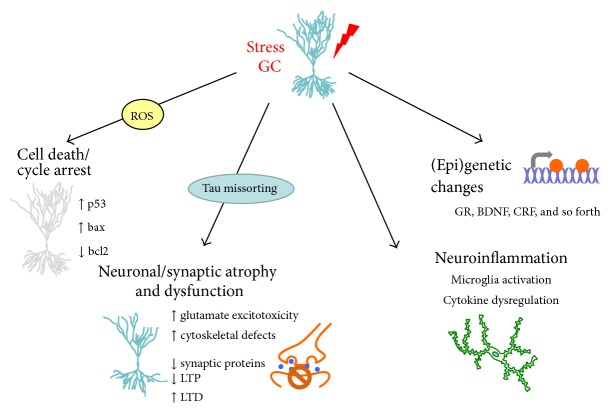
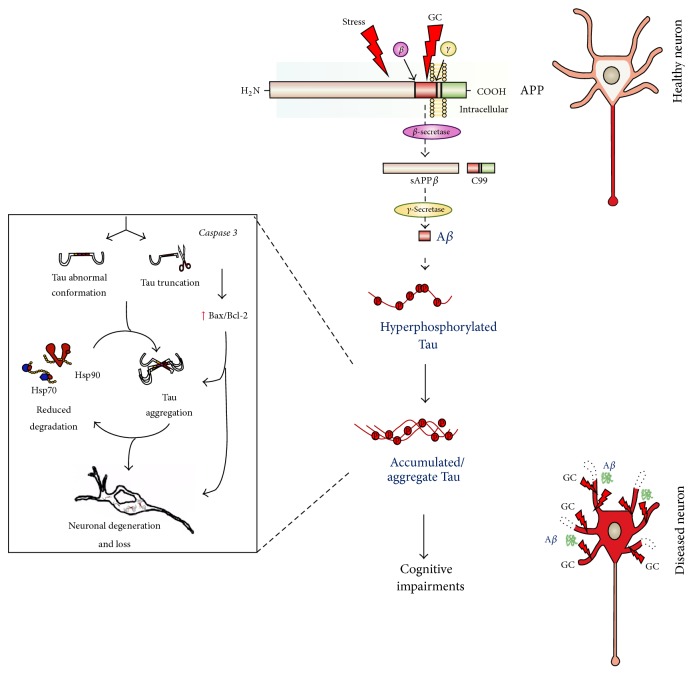
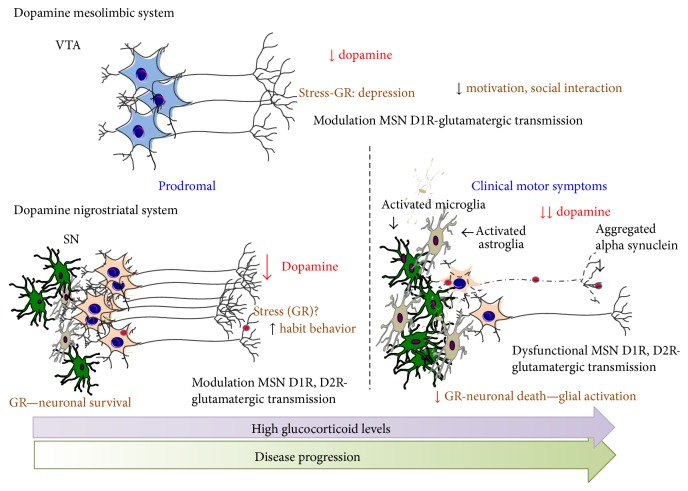
Verification
Claims the paper makes
The claims and statistics of this paper haven’t been checked yet.
Free: it reads the open-access text and checks the first 5 claims that cite a source we can check. Create a free account to check every claim.
Claims other papers make about this one
Each is checked against this paper’s own text: does it say what the citing paper says it does?
The source backs part of the claim, not all of it — or backs it for a different population, condition or comparison.
In the citing paper
“One study found that in mice models of AD, heightened stress and glucocorticoid production aided in the production of beta-amyloid, a key feature of AD, and worsening cognitive and memory deficits [79].”
From The Role of Cortisol in Chronic Stress, Neurodegenerative Diseases, and Psychological Disorders (2023) · cites this paper as [79]
Experimental — accuracy not yet measuredThe source backs part of the claim, not all of it — or backs it for a different population, condition or comparison.
In the citing paper
“In mice research, the administration of glucocorticoid receptor antagonists resulted in improved cognition and reduced AD pathologies, supporting findings that glucocorticoid signaling influences and likely plays a contributing role in the development and progression of AD pathologies.”
From The Role of Cortisol in Chronic Stress, Neurodegenerative Diseases, and Psychological Disorders (2023) · cites this paper as [79]
Experimental — accuracy not yet measuredThe source backs part of the claim, not all of it — or backs it for a different population, condition or comparison.
In the citing paper
“Through an interplay of inflammation due to immune response and subsequent cytokine release and a lack of downregulation normally executed by GCs, neuroinflammation persists, leading to the atrophy of neurons in critical brain areas, such as the hippocampus [79,98].”
From The Role of Cortisol in Chronic Stress, Neurodegenerative Diseases, and Psychological Disorders (2023) · cites this paper as [79]
Experimental — accuracy not yet measuredThe cited source says what the claim attributes to it.
In the citing paper
“supporting findings that glucocorticoid signaling influences and likely plays a contributing role in the development and progression of AD pathologies.”
From The Role of Cortisol in Chronic Stress, Neurodegenerative Diseases, and Psychological Disorders (2023) · cites this paper as [79]
Self-check
Percentages, sums and reported differences re-computed from the paper’s own numbers.
The self-check needs the paper’s full text.
Citations
Cites
Staging of brain pathology related to sporadic Parkinson’s disease
Braak, H., Tredici, K. D., Rüb, U., de Vos, R. A. I., Jansen Steur, E. N. H., & Braak, E. (2003) · Neurobiology of Aging · doi:10.1016/s0197-4580(02)00065-9 · Cited by 10,777 · cited 1×
“[121] as a principle pathological marker to monitor the progression and severity of PD.”
BackgroundAmyloid oligomers exacerbate tau pathology in a mouse model of tauopathy
Selenica, M.-L. B., Brownlow, M., Jimenez, J. P., Lee, D. C., Pena, G., Dickey, C. A., Gordon, M. N., & Morgan, D. (2013) · Neurodegenerative Diseases · doi:10.1159/000337230 · Cited by 10,359
Molecular Mechanisms of Depression: Perspectives on New Treatment Strategies
Lang, U. E., & Borgwardt, S. (2013) · Cellular Physiology and Biochemistry · doi:10.1159/000350094 · Cited by 8,475
From inflammation to sickness and depression: when the immune system subjugates the brain
Dantzer, R., O'Connor, J. C., Freund, G. G., Johnson, R. W., & Kelley, K. W. (2008) · Nature Reviews Neuroscience · doi:10.1038/nrn2297 · Cited by 7,395
Epigenetic programming by maternal behavior
Weaver, I. C. G., Cervoni, N., Champagne, F. A., D'Alessio, A. C., Sharma, S., Seckl, J. R., Dymov, S., Szyf, M., & Meaney, M. J. (2004) · Nature Neuroscience · doi:10.1038/nn1276 · Cited by 6,177 · cited 1×
“The first evidence of epigenetic programing in the brain by early life adversity showed that poor maternal care in rats leads to methylation of exon 1 7 in the GR promoter, being accompanied by aberrant behaviors and altered HPA axis responses during adulthood [32, 33].”
BackgroundPhysiology and neurobiology of stress and adaptation: central role of the brain
McEwen, B. S. (2007) · Physiological Reviews · doi:10.1152/physrev.00041.2006 · Cited by 5,429 · cited 5×
“of well-being or disruption of organism homeostasis [1].”
BackgroundInfluentialStress and the brain: from adaptation to disease
de Kloet, E. R., Joëls, M., & Holsboer, F. (2005) · Nature Reviews Neuroscience · doi:10.1038/nrn1683 · Cited by 4,621
Epigenetic regulation of the glucocorticoid receptor in human brain associates with childhood abuse
McGowan, P. O., Sasaki, A., D'Alessio, A. C., Dymov, S., Labonté, B., Szyf, M., Turecki, G., & Meaney, M. J. (2009) · Nature Neuroscience · doi:10.1038/nn.2270 · Cited by 3,531 · cited 1×
“Subsequently, similar mechanisms were reported in humans who had experienced childhood adversity [34] and in infants born to depressed mothers [35].”
BackgroundBrain corticosteroid receptor balance in health and disease
de Kloet, E. R., Vreugdenhil, E., Oitzl, M. S., & Joëls, M. (1998) · Endocrine Reviews · doi:10.1210/edrv.19.3.0331 · Cited by 2,614
Brain corticosteroid receptor balance in health and disease
de Kloet, E. R. (1998) · Endocrine Reviews · doi:10.1210/er.19.3.269 · Cited by 2,614
Cited by
Neuroinflammation pathways: a general review
Shabab, T., Khanabdali, R., Moghadamtousi, S. Z., Kadir, H. A., & Mohan, G. (2017) · International Journal of Neuroscience · doi:10.1080/00207454.2016.1212854 · Cited by 632
“Moreover, anti-inflammatory agents improve the cognitive functions of AD patients [30,50].”
BackgroundDelirium pathophysiology: An updated hypothesis of the etiology of acute brain failure
Maldonado, J. R. (2018) · International Journal of Geriatric Psychiatry · doi:10.1002/gps.4823 · Cited by 617
“Glucocorticoids exert widespread actions in the CNS, ranging from the regulation of gene transcription, cellular signaling, modulation of synaptic structure, and transmission and glial function to behavior.(9) The neuroendocrine hypothesis proposes that, over time, repeated or prolonged high GC levels impair the abili…”
BackgroundThe Role of Cortisol in Chronic Stress, Neurodegenerative Diseases, and Psychological Disorders
Knezevic, E., Nenic, K., Milanovic, V., & Knezevic, N. N. (2023) · Cells · doi:10.3390/cells12232726 · Cited by 564
“Through an interplay of inflammation due to immune response and subsequent cytokine release and a lack of downregulation normally executed by GCs, neuroinflammation persists, leading to the atrophy of neurons in critical brain areas, such as the hippocampus [79,98].”
BackgroundInfluentialBisht, K., Sharma, K., & Tremblay, M.-È. (2018) · Neurobiology of Stress · doi:10.1016/j.ynstr.2018.05.003 · Cited by 360
Microglia, Lifestyle Stress, and Neurodegeneration
Madore, C., Yin, Z., Leibowitz, J., & Butovsky, O. (2020) · Immunity · doi:10.1016/j.immuni.2019.12.003 · Cited by 311
“The dysregulated glucocorticoid rhythm in aging subjects is associated with chronic stress, which contributes to neurodegeneration (Vyas et al., 2016).”
BackgroundTreatment strategies for autoimmune encephalitis
Shin, Y.-W., Lee, S.-T., Park, K.-I., Jung, K.-H., Jung, K.-Y., Lee, S. K., & Chu, K. (2018) · Therapeutic Advances in Neurological Disorders · doi:10.1177/1756285617722347 · Cited by 266
The Corticotropin-Releasing Factor Family: Physiology of the Stress Response
Deussing, J. M., & Chen, A. (2018) · Physiological Reviews · doi:10.1152/physrev.00042.2017 · Cited by 260
Microglia Gone Rogue: Impacts on Psychiatric Disorders across the Lifespan
Tay, T. L., Béchade, C., D’Andrea, I., St-Pierre, M.-K., Henry, M. S., Roumier, A., & Tremblay, M.-E. (2018) · Frontiers in Molecular Neuroscience · doi:10.3389/fnmol.2017.00421 · Cited by 216
“Chronic psychological stress was proposed to confer an increased susceptibility risk to late onset PD (reviewed in Hou et al., 2014; Vyas et al., 2016).”
BackgroundActions of Brain-Derived Neurotrophic Factor and Glucocorticoid Stress in Neurogenesis
Numakawa, T., Odaka, H., & Adachi, N. (2017) · International Journal of Molecular Sciences · doi:10.3390/ijms18112312 · Cited by 173
“Furthermore, dysregulation of the HPA axis and increased GCs in patients with Parkinson’s disease (PD) have been reported and GCs stress may contribute to the progression of the neurodegenerative process in PD [85,92].”
BackgroundThe Role of Glucocorticoids in Inflammatory Diseases
Reichardt, S. D., Amouret, A., Muzzi, C., Vettorazzi, S., Tuckermann, J. P., Lühder, F., & Reichardt, H. M. (2021) · Cells · doi:10.3390/cells10112921 · Cited by 169
Molecular mechanisms of neuroplasticity: An expanding universe
Gulyaeva, N. V. (2017) · Biochemistry (Moscow) · doi:10.1134/s0006297917030014 · Cited by 166
“This structure is also vulnerable to the effects of stress hormones, which have been reported to be increased in depressed patients, particularly those with severe depression [42, 43].”
BackgroundLiao, J.-F., Cheng, Y.-F., You, S.-T., Kuo, W.-C., Huang, C.-W., Chiou, J.-J., Hsu, C.-C., Hsieh-Li, H.-M., Wang, S., & Tsai, Y.-C. (2020) · Brain, Behavior, and Immunity · doi:10.1016/j.bbi.2020.07.036 · Cited by 159
Lecours, C., Bordeleau, M., Cantin, L., Parent, M., Paolo, T. D., & Tremblay, M.-È. (2018) · Frontiers in Cellular Neuroscience · doi:10.3389/fncel.2018.00282 · Cited by 144
Shinjyo, N., Waddell, G., & Green, J. (2020) · Journal of Evidence-Based Integrative Medicine · doi:10.1177/2515690x20967323 · Cited by 137
Association of Stress-Related Disorders With Subsequent Neurodegenerative Diseases
Song, H., Sieurin, J., Wirdefeldt, K., Pedersen, N. L., Almqvist, C., Larsson, H., Valdimarsdóttir, U. A., & Fang, F. (2020) · JAMA Neurology · doi:10.1001/jamaneurol.2020.0117 · Cited by 118
Bentley, T. G. K., D’Andrea-Penna, G., Rakic, M., Arce, N., LaFaille, M., Berman, R., Cooley, K., & Sprimont, P. (2023) · Brain Sciences · doi:10.3390/brainsci13121612 · Cited by 229
Endolysosomal degradation of Tau and its role in glucocorticoid-driven hippocampal malfunction
Vaz‐Silva, J., Gomes, P., Jin, Q., Zhu, M., Zhuravleva, V., Quintremil, S., Meira, T., Silva, J., Dioli, C., Soares‐Cunha, C., et al. (2018) · The EMBO Journal · doi:10.15252/embj.201899084 · Cited by 104
“…suggest that stressful life events and high GC levels are risk factors for AD (Johansson et al , 2010; Machado et al , 2014); and animal studies demonstrate that prolonged exposure to environmental stress and/or elevated GC levels trigger Tau accumulation (Lopes et al , 2016b,c; Vyas et al , 2016).”
InfluentialSelf-citationGlucocorticoid impairs mitochondrial quality control in neurons
Choi, G. E., & Han, H. J. (2021) · Neurobiology of Disease · doi:10.1016/j.nbd.2021.105301 · Cited by 95
“such as excessive fission, increases the ratio of Bcl-2-associated X protein to Bcl-2 and triggers tau aggregation, leading to AD progression [129].”
Sex Differences in Stress Response: Classical Mechanisms and Beyond
Hodes, G. E., Bangasser, D. A., Sotiropoulos, I., Kokras, N., & Dalla, C. (2023) · Current Neuropharmacology · doi:10.2174/1570159x22666231005090134 · Cited by 113
“For instance, chronic stress may advance the age of onset of the familial form of AD, while cortisol levels in AD patients correlate with their memory deficits [110-112].”
BackgroundSelf-citationIs AD a Stress-Related Disorder? Focus on the HPA Axis and Its Promising Therapeutic Targets
Canet, G., Hernandez, C., Zussy, C., Chevallier, N., Desrumaux, C., & Givalois, L. (2019) · Frontiers in Aging Neuroscience · doi:10.3389/fnagi.2019.00269 · Cited by 88
Gulyaeva, N. V. (2019) · Biochemistry (Moscow) · doi:10.1134/s0006297919110087 · Cited by 83
Picard, K., St-Pierre, M.-K., Vecchiarelli, H. A., Bordeleau, M., & Tremblay, M.-È. (2021) · Neurochemistry International · doi:10.1016/j.neuint.2021.104987 · Cited by 77
Effect of stress on human biology: Epigenetics, adaptation, inheritance, and social significance
Denhardt, D. T. (2018) · Journal of Cellular Physiology · doi:10.1002/jcp.25837 · Cited by 76
“Vyas et al. (2016) review the ample evidence accumulated since for a link between prolonged early life stress, elevated GC levels, and neurodegenerative disorders such as Alzheimer’s andParkinson’s.”
BackgroundMartín‐Montañez, E., Millón, C., Boraldi, F., García-Guirado, F., Pedraza, C., Lara, E., Santín, L. J., Pavía, J., & Garcia‐Fernandez, M. I. (2017) · Redox Biology · doi:10.1016/j.redox.2017.05.012 · Cited by 79
“Oxidative damage and/or high concentration of corticoids induce decreases in SYP, along with structural remodelling of neurons with synaptic loss [36].”
BackgroundMelchiorri, D., Merlo, S., Micallef, B., Borg, J.-J., & Dráfi, F. (2023) · Frontiers in Pharmacology · doi:10.3389/fphar.2023.1196413 · Cited by 70
Tabbaa, M., Lei, K., Liu, Y., & Wang, Z. (2017) · Neuroscience · doi:10.1016/j.neuroscience.2016.12.011 · Cited by 70
“…underlying mechanisms and functional significance of such effects are still unknown, these interesting data should not be ignored especially given the roles of GR and CRHR in stress responses and stress coping (McEwen, 2007; Bosch et al., 2009, 2016; Farrell and O’Keane, 2016; Vyas et al., 2016).”
BackgroundPeña‐Bautista, C., Casas-Fernández, E., Vento, M., Baquero, M., & Cháfer‐Pericás, C. (2020) · Clinica Chimica Acta · doi:10.1016/j.cca.2020.01.019 · Cited by 82
Cohodes, E. M., Kribakaran, S., Odriozola, P., Bakirci, S., McCauley, S., Hodges, H. R., Sisk, L. M., Zacharek, S. J., & Gee, D. G. (2021) · Developmental Psychobiology · doi:10.1002/dev.22158 · Cited by 68
“…often involves the threat of forcible separation of children and caregivers (Lutheran Immigration and Refugee Service [LIRS] & The Women’s Refugee Commission, 2014) or actual separation in detention centers (Waddoups et al., 2019), typically for at least 72 hours at a time (Linton et al., 2017).”
BackgroundProwse, N. A., & Hayley, S. P. (2021) · Neuroscience & Biobehavioral Reviews · doi:10.1016/j.neubiorev.2021.09.018 · Cited by 78
Modeling neurodegenerative disorders in zebrafish
Bashirzade, A. A., Zabegalov, K. N., Volgin, A. D., Belova, A. S., Demin, K. A., de Abreu, M. S., Babchenko, V. Y., Bashirzade, K. A., Yenkoyan, K. B., Tikhonova, M. A., et al. (2022) · Neuroscience & Biobehavioral Reviews · doi:10.1016/j.neubiorev.2022.104679 · Cited by 76
Mechanisms of brain glucocorticoid resistance in stress-induced psychopathologies
Merkulov, V. M., Merkulova, T. I., & Bondar, N. P. (2017) · Biochemistry (Moscow) · doi:10.1134/s0006297917030142 · Cited by 65
Sic, A., Cvetkovic, K., Manchanda, E., & Knezevic, N. N. (2024) · Diseases · doi:10.3390/diseases12090220 · Cited by 65
“Prolonged exposure to high cortisol levels is associated with neuronal atrophy, particularly in the hippocampus, which is crucial for learning and memory [115].”
BackgroundTauopathy and neurodegeneration: A role for stress
Sierra-Fonseca, J. A., & Gosselink, K. L. (2018) · Neurobiology of Stress · doi:10.1016/j.ynstr.2018.08.009 · Cited by 73
“Displacement of tau from its normal axonal location, coupled with hyperphosphorylation, could then lead to cytoskeletal instability and axonal damage; its missorting into other subcellular locations could contribute to AD pathogenesis (Sotiropoulos and Sousa, 2016; Lopes et al., 2016; Vyas et al., 2016).”
BackgroundSoares, N. M., Pereira, G. M., Altmann, V., de Almeida, R. M. M., & Rieder, C. R. D. M. (2018) · Journal of Neural Transmission · doi:10.1007/s00702-018-1947-4 · Cited by 71
Dioli, C., Patrício, P., Sousa, N., Kokras, N., Dalla, C., Guerreiro, S. R., Santos-Silva, M. A., Rego, A. C., Pinto, L., Ferreiro, E. B., et al. (2019) · Translational Psychiatry · doi:10.1038/s41398-019-0477-7 · Cited by 67
Self-citationParul, P., Mishra, A., Singh, S., Singh, S., Tiwari, V., Chaturvedi, S., Wahajuddin, M., Palit, G., & Shukla, S. (2021) · Brain Research Bulletin · doi:10.1016/j.brainresbull.2021.04.017 · Cited by 69
Cognitive dysfunction is a risk factor for overeating and obesity.
Gunstad, J., Sanborn, V. E., & Hawkins, M. A. W. (2020) · American Psychologist · doi:10.1037/amp0000585 · Cited by 58
Role of Glia in the Regulation of Sleep in Health and Disease
Garofalo, S., Picard, K., Limatola, C., Nadjar, A., Pascual, O., & Tremblay, M. (2020) · Comprehensive physiology · doi:10.1002/cphy.c190022 · Cited by 66
Long-term effects of glucocorticoid excess on the brain
Dekkers, A. J., Amaya, J. M., van der Meulen, M., Biermasz, N. R., Meijer, O. C., & Pereira, A. M. (2022) · Journal of Neuroendocrinology · doi:10.1111/jne.13142 · Cited by 56
Mental health issues in survivors of sex trafficking
Levine, J. A. (2017) · Cogent Medicine · doi:10.1080/2331205x.2017.1278841 · Cited by 88
“Substantial stress is directly associated with neuroplasticity-associated changes in brain structure and function (McEwen, Gray, & Nasca, 2015; Vyas et al., 2016; Wilson, Grillo, Fadel, & Reagan, 2015).”
BackgroundBrain Under Stress and Alzheimer’s Disease
Mravec, B., Horváthová, Ľ., & Padová, A. (2017) · Cellular and Molecular Neurobiology · doi:10.1007/s10571-017-0521-1 · Cited by 62
Brain Beta-Catenin Signalling During Stress and Depression
Teo, C. H., Soga, T., & Parhar, I. S. (2018) · Neurosignals · doi:10.1159/000487764 · Cited by 53
Recent advances with 5‐HT3 modulators for neuropsychiatric and gastrointestinal disorders
Jůza, R., Vlček, P., Mezeiová, E., Musílek, K., Soukup, O., & Korábečný, J. (2020) · Medicinal Research Reviews · doi:10.1002/med.21666 · Cited by 61
Thomas, N., Gurvich, C., Hudaib, A., Gavrilidis, E., & Kulkarni, J. (2018) · Psychoneuroendocrinology · doi:10.1016/j.psyneuen.2018.12.009 · Cited by 62
Glucocorticoid-driven mitochondrial damage stimulates Tau pathology
Du, F., Yu, Q., Swerdlow, R. H., & Waites, C. L. (2023) · Brain · doi:10.1093/brain/awad127 · Cited by 53
Fee, C., Prévot, T. D., Misquitta, K. A., Banasr, M., & Sibille, E. L. (2020) · Neuroscience · doi:10.1016/j.neuroscience.2020.05.034 · Cited by 54
Glucocorticoid receptor signaling in the brain and its involvement in cognitive function
Su, C., Huang, T., Zhang, M., Zhang, Y., Zeng, Y., & Chen, X. Y. (2024) · Neural Regeneration Research · doi:10.4103/nrr.nrr-d-24-00355 · Cited by 57
Stress and Alzheimer’s disease: A senescence link?
Lyons, C. E., & Bartolomucci, A. (2020) · Neuroscience & Biobehavioral Reviews · doi:10.1016/j.neubiorev.2020.05.010 · Cited by 57
“However, AD patients frequently exhibit elevated cortisol levels (salivary, plasma, cerebrospinal fluid) compared with cognitively normal individuals (Vyas et al., 2016) and higher cortisol levels are associated with accelerated progression and increased severity of dementia (Csernansky et al.”
BackgroundEffects of Chronic Stress on Cognition in Male SAMP8 Mice
Wang, J., Yuan, J., Pang, J., Ma, J., Han, B., Geng, Y., Shen, L., Wang, H., Ma, Q., Wang, Y., et al. (2016) · Cellular Physiology and Biochemistry · doi:10.1159/000447816 · Cited by 47
Zhang, H., Zhijun, Y., Yushan, Y., Liping, C., Yiying, Z., Difan, Z., Choi, T. C., & Wei, C. (2020) · Psychopharmacology · doi:10.1007/s00213-020-05503-1 · Cited by 46
Agasse, F., Mendez-David, I., Christaller, W., Carpentier, R., Braz, B. Y., David, D. J., Saudou, F., & Humbert, S. (2020) · Cell Reports · doi:10.1016/j.celrep.2020.107865 · Cited by 43
Stress and the Etiopathogenesis of Alzheimer’s Disease and Depression
Sotiropoulos, I., Silva, J. M., Gomes, P., Sousa, N., & Almeida, O. F. X. (2019) · Advances in experimental medicine and biology · doi:10.1007/978-981-32-9358-8_20 · Cited by 44
Self-citationEarly-Life Environment Influence on Late-Onset Alzheimer’s Disease
Gauvrit, T., Benderradji, H., Buée, L., Blum, D., & Vieau, D. (2022) · Frontiers in Cell and Developmental Biology · doi:10.3389/fcell.2022.834661 · Cited by 51
“These observations are in agreement with the elevated glucocorticoid levels in adulthood found associated with a higher risk of developing AD, by altering glial function, Tau and amyloid lesions, and synaptic plasticity (Vyas et al., 2016).”
By what molecular mechanisms do social determinants impact cardiometabolic risk?
Baumer, Y., Pita, M. A., Baez, A. S., Ortiz-Whittingham, L. R., Cintron, M., Rose, R., Gray, V. C., Baah, F. O., & Powell‐Wiley, T. M. (2023) · Clinical Science · doi:10.1042/cs20220304 · Cited by 45
“While various mechanisms leading to glucocorticoid receptor dysfunction have been described [137], it is important to understand the connection between GCR and health outcomes in the context of PSES related to SDoH.”
Dyer, A. H., Murphy, C., LAWLOR, B. A., Kennelly, S., & for the NILVAD Study Group (2020) · Aging & Mental Health · doi:10.1080/13607863.2020.1745146 · Cited by 49
Moses, T. E. H., Gray, E., Mischel, N., & Greenwald, M. K. (2023) · Neurobiology of Stress · doi:10.1016/j.ynstr.2023.100515 · Cited by 47
Dadkhah, M., Baziar, M., & Rezaei, N. (2023) · Cytokine · doi:10.1016/j.cyto.2023.156477 · Cited by 44
Unno, K., Sumiyoshi, A., Konishi, T., Hayashi, M., Taguchi, K., Muguruma, Y., Inoue, K., Iguchi, K., Nonaka, H., Kawashima, R., et al. (2020) · Nutrients · doi:10.3390/nu12010174 · Cited by 39
Glucocorticoid programming of neuroimmune function
Walker, D. J., & Spencer, K. A. (2018) · General and Comparative Endocrinology · doi:10.1016/j.ygcen.2017.07.016 · Cited by 38
“…ubiquitously expressed throughout the CNS with high levels of expression in neurons and microglia (Sorrells et al., 2009), while MR expression is confined to a few regions, such as the hippocampus, amygdala and neurons within the PVN of the hypothalamus (Reul and de Kloet, 1985; Vyas et al., 2016).”
BackgroundWu‐Chung, E. L., Leal, S. L., Denny, B. T., Cheng, S. L., & Fagundes, C. P. (2021) · Neuroscience & Biobehavioral Reviews · doi:10.1016/j.neubiorev.2021.12.010 · Cited by 55
The multiple roles of chronic stress and glucocorticoids in Alzheimer's disease pathogenesis
Burke, M. R., Sotiropoulos, I., & Waites, C. L. (2024) · Trends in Neurosciences · doi:10.1016/j.tins.2024.08.015 · Cited by 46
Self-citationMa, R., Zhou, G., Qu, M., Yi, J., Tang, Y., Yang, X., Nie, Y., & Gu, H. (2019) · CNS Neuroscience & Therapeutics · doi:10.1111/cns.13212 · Cited by 40
Nicola, A. F. D., Meyer, M., Guennoun, R., Schumacher, M., Hunt, H., Belanoff, J. K., de Kloet, E. R., & Deniselle, M. C. G. (2020) · International Journal of Molecular Sciences · doi:10.3390/ijms21062137 · Cited by 42
Wassouf, Z., & Schulze-Hentrich, J. M. (2019) · Journal of Neurochemistry · doi:10.1111/jnc.14787 · Cited by 39
“…elevated stress hormones on the brain comprise altering a wide range of neuronal (and nonneuronal) functions and structures (McEwen et al., 2015; Vyas et al., 2016) through mechanisms that involve transcriptomic and epigenetic modulations, among others (Meaney and Szyf, 2005; Gray et al., 2014;…”
BackgroundInfluentialChronic Stress A Potential Suspect Zero of Atherosclerosis: A Systematic Review
Meng, L., Zhang, Y.-M., Luo, Y., Gong, T., & Liu, D. (2021) · Frontiers in Cardiovascular Medicine · doi:10.3389/fcvm.2021.738654 · Cited by 46
Recent Progress of Chronic Stress in the Development of Atherosclerosis
Gao, S., Wang, X., Meng, L., Zhang, Y.-M., Luo, Y., Gong, T., Liu, D.-P., Chen, Z., & Li, Y. (2022) · Oxidative Medicine and Cellular Longevity · doi:10.1155/2022/4121173 · Cited by 47
Lutfy, K., & Shankar, G. S. (2019) · Progress in molecular biology and translational science · doi:10.1016/bs.pmbts.2019.06.009 · Cited by 39
Lecours, C., St-Pierre, M.-K., Picard, K., Bordeleau, M., Bourque, M., Awogbindin, I. O., Benadjal, A., Ibanez, F. G., Gagnon, D., Cantin, L., et al. (2020) · Brain, Behavior, and Immunity · doi:10.1016/j.bbi.2020.07.044 · Cited by 36
“PD is thought to result from an interplay between genetic variations and various risk factors such as aging, chronic stress, brain trauma, and infection (Tansey and Goldberg, 2010; Schapira and Jenner, 2011; Vyas et al., 2016; Niraula et al., 2017).”
The penalty of stress ‐ Epichaperomes negatively reshaping the brain in neurodegenerative disorders
Ginsberg, S. D., Joshi, S., Sharma, S., Guzman, G., Wang, T., Arancio, O., & Chiosis, G. (2021) · Journal of Neurochemistry · doi:10.1111/jnc.15525 · Cited by 41
“Several aspects of this complexity has been covered in informative reviews over the past two decades (de Kloet et al., 2005; Mattson & Magnus, 2006; McEwen et al., 2015; Saxena & Caroni, 2011; Sousa & Almeida, 2012; Vyas et al., 2016).”
BackgroundThe Role of Cortisol and Dehydroepiandrosterone in Obesity, Pain, and Aging
Erceg, N., Mićić, M., Forouzan, E., & Knežević, N. N. (2025) · Diseases · doi:10.3390/diseases13020042 · Cited by 50
“Comparing the patients with AD and healthy subjects (HSs), researchers found that patients with AD had significantly higher cortisol levels (in plasma, saliva, urine, and CSF) than HSs and it correlated negatively with memory performance [103,104,106,113,114].”
From Stress to Synapse: The Neuronal Atrophy Pathway to Mood Dysregulation
Krasner, H., Ong, C. V., Hewitt, P., & Vida, T. A. (2025) · International Journal of Molecular Sciences · doi:10.3390/ijms26073219 · Cited by 42
“For example, chronic stress and elevated glucocorticoid levels not only impact neuronal integrity but can also influence the expression of inflammatory cytokines and disrupt mitochondrial function—two other mechanisms discussed that contribute to neuronal atrophy [232,233].”
Zebrafish: A New Promise to Study the Impact of Metabolic Disorders on the Brain
Ghaddar, B., & Diotel, N. (2022) · International Journal of Molecular Sciences · doi:10.3390/ijms23105372 · Cited by 42
Damage-Fitness Model: the missing piece in integrative stress models
Wada, H. (2019) · Stress · doi:10.1080/10253890.2019.1614556 · Cited by 34
Palamarchuk, I. S., & Vaillancourt, T. (2022) · Frontiers in Integrative Neuroscience · doi:10.3389/fnint.2022.782154 · Cited by 46
“…(in exposure to threat) and frontoparietal regions (in children exposure to deprivation; Kim et al., 2019; McLaughlin et al., 2019), as well altered white matter tracts (Kim et al., 2019), that increase the risk of developing PTSD (Yehuda, 2009) and neurodegeneration (Vyas et al., 2016).”
BackgroundAssociations between social network components and cognitive domains in older adults.
Meister, L. M., & Zahodne, L. B. (2022) · Psychology and Aging · doi:10.1037/pag0000672 · Cited by 41
Hippocampal Neurogenesis Is Enhanced in Adult Tau Deficient Mice
Criado‐Marrero, M., Sabbagh, J. J., Jones, M. R., Chaput, D., Dickey, C. A., & Blair, L. J. (2020) · Cells · doi:10.3390/cells9010210 · Cited by 34
“In addition to the behavioral and physiological response, Mapt−/−mice are protected from negative stress-induced effects in neurons [51,52].”
BackgroundTsuchiyagaito, A., Smith, J., El-Sabbagh, N. S., Zotev, V. S., Misaki, M., Zoubi, O. A., Teague, T. K., Paulus, M. P., Bodurka, J., & Savitz, J. B. (2021) · NeuroImage Clinical · doi:10.1016/j.nicl.2021.102559 · Cited by 31
“The hippocampus and amygdala are also particularly vulnerable to degenerative changes caused by chronic stress (Vyas et al., 2016).”
BackgroundZhu, X., Dong, J., Xia, Z., Zhang, A., Chao, J., & Yao, H. (2017) · Neurochemistry International · doi:10.1016/j.neuint.2017.09.002 · Cited by 33
“There is abundant evidence that chronic stress triggers the development and progression of neurodegeneration (Carroll et al., 2011; Sugama et al., 2016; Vyas et al., 2016).”
Tsuchimine, S., Matsuno, H., O’Hashi, K., Chiba, S., Yoshimura, A., Kunugi, H., & Sohya, K. (2020) · Biochemical and Biophysical Research Communications · doi:10.1016/j.bbrc.2020.02.073 · Cited by 35
In vitro modeling of the neurobiological effects of glucocorticoids: A review
Bassil, K. C., Krontira, A. C., Leroy, T., Escoto, A. I. H., Snijders, C., Pernia, C. D., Pasterkamp, R. J., de Nijs, L., van den Hove, D., Kenis, G., et al. (2023) · Neurobiology of Stress · doi:10.1016/j.ynstr.2023.100530 · Cited by 44
Kokras, N., Sotiropoulos, I., Besinis, D., Tzouveka, E. L., Almeida, O. F. X., Sousa, N., & Dalla, C. (2018) · European Neuropsychopharmacology · doi:10.1016/j.euroneuro.2018.11.1107 · Cited by 33
Self-citationHe, S.-C., Wu, S., Wang, C., Du, X.-D., Yin, G., Jia, Q., Zhang, Y., Wang, L., Soares, J. C., & Zhang, X. Y. (2018) · Journal of Affective Disorders · doi:10.1016/j.jad.2018.04.089 · Cited by 28
Gulej, R., Patai, R., Ungvari, A., Kállai, A., Tarantini, S., Yabluchanskiy, A., Huffman, D. M., Conboy, M. J., Conboy, I. M., Kivimäki, M., et al. (2025) · GeroScience · doi:10.1007/s11357-025-01657-y · Cited by 32
Allopregnanolone: Regenerative therapeutic to restore neurological health
Hernandez, G. D., & Brinton, R. D. (2022) · Neurobiology of Stress · doi:10.1016/j.ynstr.2022.100502 · Cited by 28
“Chronic stress has been proposed as a driver of altered brain structure and function, including the pathogenesis of neurodegenerative diseases and a driver of disease progression (Heneka et al., 2015; Herrera et al., 2015; Hiller, Quinn, & Schmidt, 2017; Holmes, 2013; Justice, 2018; Madore, Yin, Leibowitz, & Butovsky,…”
BackgroundNavigating Alzheimer’s Disease via Chronic Stress: The Role of Glucocorticoids
Sharma, V., & Singh, T. G. (2019) · Current Drug Targets · doi:10.2174/1389450120666191017114735 · Cited by 27
Cezar, G. B., Carmona, I. M., Baptista‐de‐Souza, D., Nunes‐de‐Souza, R. L., & Canto‐de‐Souza, A. (2020) · Neuropharmacology · doi:10.1016/j.neuropharm.2020.108413 · Cited by 28
Seemiller, L. R., Flores-Cuadra, J. A., Griffith, K. R., Smith, G. C., & Crowley, N. A. (2024) · Neurobiology of Stress · doi:10.1016/j.ynstr.2024.100605 · Cited by 28
“There is growing evidence linking prolonged exposure to stress and glucocorticoid signaling to neurodegeneration and cognitive decline (Vyas et al., 2016).”
BackgroundZhao, X., Li, R., Jin, H., Jin, H., Wang, Y., Zhang, W., Wang, H., & Chen, W. (2018) · PLoS ONE · doi:10.1371/journal.pone.0192083 · Cited by 30
Past to Future: What Animal Models Have Taught Us About Alzheimer’s Disease
Martini, A. C., Forner, S., Trujillo‐Estrada, L., Baglietto‐Vargas, D., & LaFerla, F. M. (2018) · Journal of Alzheimer s Disease · doi:10.3233/jad-179917 · Cited by 29
Putative neural consequences of captivity for elephants and cetaceans
Jacobs, B., Rally, H., Doyle, C., O’Brien, L., Tennison, M., & Marino, L. (2022) · Reviews in the Neurosciences · doi:10.1515/revneuro-2021-0100 · Cited by 25
“Three corticolimbic brain structures—the prefrontal cortex, the hippocampus, and the amygdala (Figure 3)—are particularly affected by these stress responses (Chattarji et al. 2015; McEwen et al. 2016; Vyas et al. 2016), in part because they express a high density of corticosteroid (e.”
BackgroundInfluentialPrabha, S., Choudhury, A., Islam, A., Thakur, S. C., & Hassan, M. I. (2025) · Ageing Research Reviews · doi:10.1016/j.arr.2025.102680 · Cited by 27
Blossom, V., Gokul, M., Kumar, N. A., Kini, R. D., Nayak, S., & Bhagyalakshmi, K. (2020) · Veterinary World · doi:10.14202/vetworld.2020.1870-1874 · Cited by 28
“Depression and anxiety were the most prevailing psychiatric disorder in the present society [12].”
BackgroundRab35 and glucocorticoids regulate APP and BACE1 trafficking to modulate Aβ production
Zhuravleva, V., Vaz‐Silva, J., Zhu, M. J., Gomes, P., Silva, J. M., Sousa, N., Sotiropoulos, I., & Waites, C. L. (2021) · Cell Death and Disease · doi:10.1038/s41419-021-04433-w · Cited by 26
“Combined with our earlier study showing the critical role of Rab35 in Tau degradation [10], these findings suggest that Rab35 may be the molecular link through which chronic stress via GCs trigger both major AD pathomechanisms: Aβ overproduction and Tau accumulation [4, 5, 9, 41].”
BackgroundSelf-citationDaneshafrooz, N., Cham, M. B., Majidi, M., & Panahi, B. (2022) · Scientific Reports · doi:10.1038/s41598-022-24306-2 · Cited by 27
Dong, H., Keegan, J., Hong, E. S., Gallardo, C., Montalvo‐Ortiz, J. L., Wang, B., Rice, K. C., & Csernansky, J. G. (2018) · Psychoneuroendocrinology · doi:10.1016/j.psyneuen.2018.02.013 · Cited by 28
Chen, L., Shi, R., She, X., Chaochao, G., Li, C., Zhang, L., & Li, R. (2020) · Fundamental and Clinical Pharmacology · doi:10.1111/fcp.12576 · Cited by 25
RetractedHair glucocorticoid levels in Parkinson’s disease
van den Heuvel, L. L., du Plessis, S., Stalder, T., Acker, D., Kirschbaum, C., Carr, J., & Seedat, S. (2020) · Psychoneuroendocrinology · doi:10.1016/j.psyneuen.2020.104704 · Cited by 23
Sarejloo, S., Shojaei, N., Lucke-Wold, B. P., Zelmanovich, R., & Khanzadeh, S. (2023) · BMC Anesthesiology · doi:10.1186/s12871-023-01997-2 · Cited by 29
Sillivan, S. E., Jones, M., Jamieson, S., Rumbaugh, G., & Miller, C. A. (2019) · PLoS ONE · doi:10.1371/journal.pone.0209846 · Cited by 24
Zhou, Q., Suzuki, A., Iinuma, M., Wang, K., Kubo, K., & Azuma, K. (2020) · International Journal of Molecular Sciences · doi:10.3390/ijms21165627 · Cited by 25
Metadata
- Authors
- Vyas, S., Rodrigues, A. J., Silva, J. M., Tronche, F., Almeida, O. F. X., Sousa, N., & Sotiropoulos, I.
- Affiliations
- Centre National de la Recherche Scientifique (FR)
- University of Minho (PT)
- Laboratory of Gene Regulation and Adaptive Behaviors, Department of Neuroscience Paris Seine, INSERM U1130, CNRS UMR 8246, Université Pierre et Marie Curie, Paris Cedex 05, France
- Max Planck Institute of Psychiatry (DE)
- Corresponding author
- Vyas, Sheela
- Sotiropoulos, Ioannis
- ORCID
- Venue
- Neural Plasticity
- Publisher
- Wiley
- Published
- 2016
- Volume
- 2016
- Pages
- 1-15
- ISSN
- 1687-5443 (ISSN-L)
- 2090-5904
- PMC
- PMC4806285
- OpenAlex
- W2300528976
- Semantic Scholar
- 99b9bd510118f9046bb460b580c03984bde62dcd
- Cited by
- 297
- References
- 176
- Citations by year
- 2026: 22 · 2025: 30 · 2024: 37 · 2023: 27 · 2022: 31 · 2021: 36 · 2020: 38 · 2019: 26 · 2018: 29 · 2017: 13 · 2016: 8
- FWCI
- 2.60
- Type
- journal article
- Language
- en
- Open access
- gold
- doi.org
- Locations
- Neural Plasticity (publishedVersion, cc-by)
- Europe PMC (PubMed Central) (publishedVersion, cc-by)
- PubMed Central (publishedVersion, cc-by)
- PubMed (publishedVersion)
- HAL (submittedVersion, cc-by)
- DOAJ (DOAJ: Directory of Open Access Journals) (submittedVersion, cc-by-sa)
- Max Planck Digital Library (submittedVersion, other-oa)
- MPG.PuRe (Max Planck Society) (submittedVersion, other-oa)
- Portuguese National Funding Agency for Science, Research and Technology (RCAAP Project by FCT) (submittedVersion, other-oa)
- Funders
- Fundação para a Ciência e a Tecnologia (PTDC/SAU-NMC/113934/2009, 13853, 13-BSV1-0013-02, DEQ20140329552)
- European Regional Development Fund (PTDC/SAU-NMC/113934/2009, 13853, 13-BSV1-0013-02, DEQ20140329552)
- Agence Nationale de la Recherche (PTDC/SAU-NMC/113934/2009, 13853, 13-BSV1-0013-02, DEQ20140329552)
- Fondation pour la Recherche Médicale (PTDC/SAU-NMC/113934/2009, 13853, 13-BSV1-0013-02, DEQ20140329552)
- Topics
- Life Sciences › Neuroscience › Behavioral Neuroscience › Stress Responses and Cortisol
- Life Sciences › Neuroscience › Cellular and Molecular Neuroscience › Neuroscience and Neuropharmacology Research
- Life Sciences › Neuroscience › Neurology › Neuroinflammation and Neurodegeneration Mechanisms
- Keywords
- chronic stress, glucocorticoids, glucocorticoid receptor, mineralocorticoid receptor, neuroplasticity, neurodegeneration, Alzheimer's disease, Parkinson's disease, stress hormones, cognitive disorders, mood disorders, gene transcription, synaptic transmission, glial function
- MeSH terms
- Alzheimer Disease, Animals, Brain, Glucocorticoids, Humans, Inflammation, Neuronal Plasticity, Parkinson Disease, Risk Factors, Stress, Psychological
About these checks
Registry, retraction, Cites and statistics results are computed, not judged, with one exception: a printed reference that no index lists is read once by a model before it counts as a citation error. Claims are extracted by a model and kept only when their quote appears verbatim in the text; each cited source is then checked, with a model’s help, for whether it says what the claim relies on. Those verdicts can be wrong — read the claim’s quote and the cited source before relying on one.
Statistics and arithmetic are recomputed, not judged.
Confidence bands are shown only for fields calibrated on our annotated test set. None is calibrated yet, so no band is shown.
What counts as a claim ›How we measure confidence ›How we check this ›
Are you an author, or do you see a problem with this page? Request a review
Data sources
Bibliographic data: Semantic Scholar, OpenAlex, Crossref.
Contains information from the Semantic Scholar Academic Graph Datasets, made available under the ODC Attribution License (ODC-BY 1.0).
Semantic Scholar’s data is described in: Kinney, R., et al. (2023). The Semantic Scholar Open Data Platform. arXiv:2301.10140.
