

Deep Learning for Computer Vision: A Brief Review
Open accessThe DOI matches its Crossref record; 91 of the 93 references it cites were found in a registry or an index, and 2 are not checked yet.
Abstract
Over the last years deep learning methods have been shown to outperform previous state-of-the-art machine learning techniques in several fields, with computer vision being one of the most prominent cases. This review paper provides a brief overview of some of the most significant deep learning schemes used in computer vision problems, that is, Convolutional Neural Networks, Deep Boltzmann Machines and Deep Belief Networks, and Stacked Denoising Autoencoders. A brief account of their history, structure, advantages, and limitations is given, followed by a description of their applications in various computer vision tasks, such as object detection, face recognition, action and activity recognition, and human pose estimation. Finally, a brief overview is given of future directions in designing deep learning schemes for computer vision problems and the challenges involved therein.
Overview
The claims and statistics of this paper haven’t been checked yet.
Free: it reads the open-access text and checks the first 5 claims that cite a source we can check. Create a free account to check every claim.
Integrity signals
Registry
Cites
Statistics
Figures
Verification
Claims the paper makes
The claims and statistics of this paper haven’t been checked yet.
Free: it reads the open-access text and checks the first 5 claims that cite a source we can check. Create a free account to check every claim.
Claims other papers make about this one
Each is checked against this paper’s own text: does it say what the citing paper says it does?
The cited source says what the claim attributes to it.
In the citing paper
“Additionally, HAR with image/video processing has been extensively studied in the computer vision community [79,80], and the methodologies commonly used differ significantly from techniques used for IMUs, EEG, PPG, etc.”
From Deep Learning in Human Activity Recognition with Wearable Sensors: A Review on Advances (2022) · cites this paper as [79]
Self-check
Percentages, sums and reported differences re-computed from the paper’s own numbers.
The self-check needs the paper’s full text.
Citations
Cites
Hochreiter, S., & Schmidhuber, J. (1997) · Neural Computation · doi:10.1162/neco.1997.9.8.1735 · Cited by 102,318 · cited 4×
“In [95], the authors propose a multimodal multistream deep learning framework to tackle the egocentric activity recognition problem, using both the video and sensor data and employing a dual CNNs and Long Short-Term Memory architecture.”
BackgroundInfluentialFaster R-CNN: Towards Real-Time Object Detection with Region Proposal Networks
Ren, S., He, K., Girshick, R., & Sun, J. (2017) · IEEE Transactions on Pattern Analysis and Machine Intelligence · doi:10.1109/tpami.2016.2577031 · Cited by 73,472
Faster R-CNN: Towards Real-Time Object Detection with Region Proposal Networks
Ren, S., He, K., Girshick, R., & Sun, J. (2015) · arXiv · doi:10.48550/arxiv.1506.01497 · Cited by 70,812
Gradient-based learning applied to document recognition
Lecun, Y., Bottou, L., Bengio, Y., & Haffner, P. (1998) · Proceedings of the IEEE · doi:10.1109/5.726791 · Cited by 58,805 · cited 2×
“In an attempt to compare these models (for a summary see Table 2), we can say that CNNs have generally performed better than DBNs in current literature on benchmark computer vision datasets such as MNIST.”
MethodGoing deeper with convolutions
Szegedy, C., Liu, W., Jia, Y., Sermanet, P., Reed, S., Anguelov, D., Erhan, D., Vanhoucke, V., & Rabinovich, A. (2015) · 2015 IEEE Conference on Computer Vision and Pattern Recognition (CVPR) · doi:10.1109/cvpr.2015.7298594 · Cited by 48,562
Fully convolutional networks for semantic segmentation
Long, J., Shelhamer, E., & Darrell, T. (2015) · 2015 IEEE Conference on Computer Vision and Pattern Recognition (CVPR) · doi:10.1109/cvpr.2015.7298965 · Cited by 38,834
Rich Feature Hierarchies for Accurate Object Detection and Semantic Segmentation
Girshick, R., Donahue, J., Darrell, T., & Malik, J. (2014) · 2014 IEEE Conference on Computer Vision and Pattern Recognition · doi:10.1109/cvpr.2014.81 · Cited by 32,684
Girshick, R. (2015) · 2015 IEEE International Conference on Computer Vision (ICCV) · doi:10.1109/iccv.2015.169 · Cited by 28,105
Reducing the dimensionality of data with neural networks
Hinton, G. E., & Salakhutdinov, R. R. (2006) · Science · doi:10.1126/science.1127647 · Cited by 20,928
A logical calculus of the ideas immanent in nervous activity
McCulloch, W. S., & Pitts, W. (1943) · The Bulletin of Mathematical Biophysics · doi:10.1007/bf02478259 · Cited by 18,566
Research works printed but not linked: 21
- LeCun Y. Boser B. Denker J. Touretzky D. Handwritten digit recognition with a back-propagation network Advances in Neural Information Processing Systems 2 (NIPS∗89) 1990 Denver, CO, USA
- Frederic B. Lamblin P. Pascanu R. Theano: new features and speed improvements Deep Learning and Unsupervised Feature Learning NIPS 2012 Workshop 2012 http://deeplearning.net/software/theano/
- Chen X. Yuille A. L. Articulated pose estimation by a graphical model with image dependent pairwise relations Proceedings of the NIPS 2014
- Boureau Y. L. Ponce J. LeCun Y. A theoretical analysis of feature pooling in visual recognition Proceedings of the ICML 2010
- Krizhevsky A. Sutskever I. Hinton G. E. Imagenet classification with deep convolutional neural networks Proceedings of the 26th Annual Conference on Neural Information Processing Systems (NIPS '12) December 2012 Lake Tahoe, Nev, USA 1097 1105 2-s2.0-84876231242
- Smolensky P. Information processing in dynamical systems: Foundations of harmony theory In Parallel Distributed Processing: Explorations in the Microstructure of Cognition 1986 1 Cambridge, MA, USA MIT Press 194 281
- Hinton G. E. Sejnowski T. J. Learning and Relearning in Boltzmann Machines 1986 1 Cambridge, MA MIT Press p. 4.2
- Carreira-Perpinan M. A. Hinton G. E. On contrastive divergence learning Proceedings of the tenth international workshop on artificial intelligence and statistics., NP: Society for Artificial Intelligence and Statistics 2005 33 40
- Hinton G. A practical guide to training restricted Boltzmann machines Momentum 2010 9 p. 926
- Salakhutdinov R. Larochelle H. Efficient learning of deep Boltzmann machines Proceedings of the AISTATS 2010
- Salakhutdinov R. Hinton G. An efficient learning procedure for deep Boltzmann machines Neural Computation 2012 24 8 1967 2006 MR2978160 10.1162/NECO_a_00311 Zbl1247.68223 2-s2.0-84874125782 22509963 · DOI · Paper page
- Salakhutdinov R. Hinton G. A better way to pretrain Deep Boltzmann Machines Proceedings of the 26th Annual Conference on Neural Information Processing Systems 2012, NIPS 2012 December 2012 usa 2447 2455 2-s2.0-84877755914
- Goodfellow I. Mirza M. Courville A. Multi-prediction deep Boltzmann machines Proceedings of the NIPS 2013
- Vincent P. Larochelle H. Bengio Y. Manzagol P.-A. Cohen W. W. McCallum A. Roweis S. T. Extracting and composing robust features with denoising autoencoders in Proceedings of the Twenty-fifth International Conference on Machine Learning (ICML'08) 2008 ACM 1096 1103
- Gallinari P. LeCun Y. Thiria S. Fogelman-Soulie F. Memoires associatives distribuees Proceedings of the in Proceedings of COGNITIVA 87 1987 Paris, La Villette
- Bengio Y. Lamblin P. Popovici D. Larochelle H. Sch B. Platt J. and. Hoffman T. Schölkopf B. Greedy layer-wise training of deep networks Advances in Neural Information Processing Systems (NIPS06) 2007 19 MIT Press 153 160
- Hosang J. Benenson R. Schiele B. How good are detection proposals, really? Proceedings of the 25th British Machine Vision Conference, BMVC 2014 September 2014 gbr 2-s2.0-84919779754
- Nair V. Hinton G. E. 3D object recognition with deep belief nets Proceedings of the NIPS 2009
- Kitsikidis A. Dimitropoulos K. Douka S. Grammalidis N. Dance analysis using multiple kinect sensors Proceedings of the 9th International Conference on Computer Vision Theory and Applications, VISAPP 2014 January 2014 prt 789 795 2-s2.0-84906896563
- Jain A. Tompson J. Andriluka M. Learning human pose estimation features with convolutional networks Proceedings of the ICLR 2014
- Tompson J. J. Jain A. LeCun Y. Joint training of a convolutional network and a graphical model for human pose estimation Proceedings of the NIPS 2014
Cited by
Items 201–300 of 1,008
A Few-Shot U-Net Deep Learning Model for COVID-19 Infected Area Segmentation in CT Images
Voulodimos, A. S., Protopapadakis, E. E., Katsamenis, I., Doulamis, A. D., & Doulamis, N. D. (2021) · Sensors · doi:10.3390/s21062215 · Cited by 115
“Deep learning approaches over various types of images are common for identification, detection, or segmentation in medical imaging [19] and biomedical applications in general [20].”
BackgroundSelf-citationKumar, A., & Harsha, S. P. (2024) · International Journal of Transportation Science and Technology · doi:10.1016/j.ijtst.2024.06.006 · Cited by 154
goFOODTM: An Artificial Intelligence System for Dietary Assessment
Lu, Y., Stathopoulou, T., Vasiloglou, M. F., Pinault, L. F., Kiley, C., Spanakis, E. K., & Mougiakakou, S. (2020) · Sensors · doi:10.3390/s20154283 · Cited by 107
An overview of deep learning in big data, image, and signal processing in the modern digital age
França, R. P., Monteiro, A. C. B., Arthur, R., & Iano, Y. (2021) · Elsevier eBooks · doi:10.1016/b978-0-12-822226-3.00003-9 · Cited by 146
Powerformer: A temporal-based transformer model for wind power forecasting
Mo, S., Wang, H., Li, B., Xue, Z. Y., Fan, S., & Liu, X. (2023) · Energy Reports · doi:10.1016/j.egyr.2023.12.030 · Cited by 122
Wu, A., Zhu, J., & Ren, T. (2019) · Computers & Electrical Engineering · doi:10.1016/j.compeleceng.2019.106454 · Cited by 118
Sun, X., Yin, D., Qin, F., Yu, H., Lu, W., Yao, F., He, Q., Huang, X., Yan, Z., Wang, P., et al. (2023) · Nature Communications · doi:10.1038/s41467-023-37136-1 · Cited by 120
Draelos, R. L., Dov, D., Mazurowski, M. A., Lo, J. Y.-C., Henao, R., Rubin, G. D., & Carin, L. (2020) · Medical Image Analysis · doi:10.1016/j.media.2020.101857 · Cited by 165
Tekouabou, S. C. K., Diop, E. B., Azmi, R., Jaligot, R., & Chenal, J. (2021) · Journal of King Saud University - Computer and Information Sciences · doi:10.1016/j.jksuci.2021.08.007 · Cited by 127
Chamseddine, E., Mansouri, N., Soui, M., & Abed, M. (2022) · Applied Soft Computing · doi:10.1016/j.asoc.2022.109588 · Cited by 122
“Transfer learning includes a variety of pre-trained models that are built on large CNNs [74].”
Sarker, I. H. (2023) · Security and Privacy · doi:10.1002/spy2.295 · Cited by 141
Alom, M. Z., Sidike, P., Hasan, M., Taha, T. M., & Asari, V. K. (2018) · Computational Intelligence and Neuroscience · doi:10.1155/2018/6747098 · Cited by 127
“Deep neural network (DNN) is an active area in the field of machine learning and computer vision [28] and it generally contains three popular architectures: Deep Belief Net (DBN) [29], Stacked Autoencoder (SAE) [30], and CNN. Due to the composition of many layers, DNN methods are more capable for…”
MethodHossain, M. A., Noor, R. M., Yau, K.-L. A., Azzuhri, S. R., Z'aba, M. R., & Ahmedy, I. (2020) · IEEE Access · doi:10.1109/access.2020.2989870 · Cited by 104
Wang, Y., Zheng, P., Peng, T., Yang, H., & Zou, J. T. (2020) · Science China Technological Sciences · doi:10.1007/s11431-020-1581-2 · Cited by 122
“Deep learning techniques have shown more potential to deal with complex problems as they can automatically extract the important features in multiple levels, as performed by the human brain [101].”
BackgroundRemote Insects Trap Monitoring System Using Deep Learning Framework and IoT
Ramalingam, B., Mohan, R. E., Pookkuttath, S., Gómez, B. F., Borusu, C. S. C. S., Teng, T. W., & Tamilselvam, Y. K. (2020) · Sensors · doi:10.3390/s20185280 · Cited by 119
“Machine Learning (ML) and Deep Learning(DL) based object detection and decision-making are widely applied in various field [17–19], including insect control [20,21].”
BackgroundProtopapadakis, E. E., Doulamis, A. D., Doulamis, N. D., & Maltezos, E. (2021) · Remote Sensing · doi:10.3390/rs13030371 · Cited by 111
“Among the most popular deep models adopted are the Convolutional Neural Networks (CNN) [8,9] which give excellent performance in remote sensing imagery data for classification purposes.”
BackgroundInfluentialSelf-citationClassification of Date Fruits into Genetic Varieties Using Image Analysis
Köklü, M., Kursun, R., Taşpınar, Y. S., & Çınar, İ. (2021) · Mathematical Problems in Engineering · doi:10.1155/2021/4793293 · Cited by 122
Metamaterials: From fundamental physics to intelligent design
Chen, J., Hu, S., Zhu, S. N., & Li, T. (2022) · Interdisciplinary materials · doi:10.1002/idm2.12049 · Cited by 136
Advancing medical imaging with language models: featuring a spotlight on ChatGPT
Hu, M., Qian, J. Y., Pan, S., Li, Y., Qiu, R. L. J., & Yang, X. (2024) · Physics in Medicine and Biology · doi:10.1088/1361-6560/ad387d · Cited by 120
Early-Exit Deep Neural Network - A Comprehensive Survey
Haseena Rahmath, P., Srivastava, V., Chaurasia, K., Pacheco, R. G., & Couto, R. S. (2024) · ACM Computing Surveys · doi:10.1145/3698767 · Cited by 162
“They have been extensively applied across various domains, including natural language processing ( NLP ) [ 63 , 67 , 88 ], computer vision ( CV ) [ 43 , 65 , 116 , 129 ], and wireless networking [ 56 , 109 ].”
Gaussian Process Regression Tuned by Bayesian Optimization for Seawater Intrusion Prediction
Kopsiaftis, G., Protopapadakis, E. E., Voulodimos, A. S., Doulamis, N. D., & Mantoglou, A. (2019) · Computational Intelligence and Neuroscience · doi:10.1155/2019/2859429 · Cited by 119
Self-citationAyan, E., Karabulut, B., & Ünver, H. M. (2021) · Arabian Journal for Science and Engineering · doi:10.1007/s13369-021-06127-z · Cited by 127
“2 million images and 1,000 classes [43].”
Motor Imagery EEG Decoding Method Based on a Discriminative Feature Learning Strategy
Yang, L., Song, Y., Ma, K., & Xie, L. (2021) · IEEE Transactions on Neural Systems and Rehabilitation Engineering · doi:10.1109/tnsre.2021.3051958 · Cited by 113
“In recent years, deep learning has gained extensive attention because of its excellent performance in the field of computer vision and natural language processing [22], [23].”
BackgroundMethodBroad-UNet: Multi-scale feature learning for nowcasting tasks
Fernández, J. G., & Mehrkanoon, S. (2021) · Neural Networks · doi:10.1016/j.neunet.2021.08.036 · Cited by 125
“Convolutional Neural Networks (CNNs) are the most popular algorithms used in computer vision [19], achieving the state-of-the-art in various tasks [20, 19, 21].”
BackgroundCrop breeding for a changing climate: integrating phenomics and genomics with bioinformatics
Marsh, J. I., Hu, H., Gill, M., Batley, J., & Edwards, D. (2021) · Theoretical and Applied Genetics · doi:10.1007/s00122-021-03820-3 · Cited by 119
In Silico Methods for Identification of Potential Active Sites of Therapeutic Targets
Liao, J., Wang, Q., Wu, F., & Huang, Z. (2022) · Molecules · doi:10.3390/molecules27207103 · Cited by 115
Li, X., Liu, D., Pu, Y., & Zhong, Y. (2023) · Foods · doi:10.3390/foods12152976 · Cited by 108
“…intelligent packaging materials, artificial Although some progress has been made in intelligent packaging materials, artificial intelligence algorithms, sensors and signal acquisition, there are still some shortcomings in practical applications, mainly in the following areas. intelligence…”
BackgroundMethods for Small Area Population Forecasts: State-of-the-Art and Research Needs
Wilson, T., Grossman, I., Alexander, M. J., Rees, P., & Temple, J. (2021) · Population Research and Policy Review · doi:10.1007/s11113-021-09671-6 · Cited by 122
Sun, S., Wang, T., & Chu, F. (2022) · Renewable and Sustainable Energy Reviews · doi:10.1016/j.rser.2022.112326 · Cited by 117
Decoding and mapping task states of the human brain via deep learning
Wang, X., Liang, X., Jiang, Z., Nguchu, B. A., Zhou, Y., Wang, Y., Wang, H., Li, Y., Zhu, Y., Wu, F., et al. (2019) · Human Brain Mapping · doi:10.1002/hbm.24891 · Cited by 114
Żuraw, A., & Aeffner, F. (2021) · Veterinary Pathology · doi:10.1177/03009858211040484 · Cited by 120
“127,128 The models in deep learning aim at resembling neuronal connections in the human brain and are called artificial neural networks (ANNs).”
BackgroundDeep CNN-based damage classification of milled rice grains using a high-magnification image dataset
Bhupendra, Moses, K., Miglani, A., & Kankar, P. K. (2022) · Computers and Electronics in Agriculture · doi:10.1016/j.compag.2022.106811 · Cited by 114
Yang, Y., Yang, R., Pan, L., Ma, J., Zhu, Y., Diao, T., & Zhang, L. (2020) · Computers in Industry · doi:10.1016/j.compind.2020.103306 · Cited by 110
Hierarchical User Intent Graph Network for Multimedia Recommendation
Wei, Y., Wang, X., He, X., Nie, L., Rui, Y., & Chua, T. (2021) · IEEE Transactions on Multimedia · doi:10.1109/tmm.2021.3088307 · Cited by 118
“One major reason is that these deep-learning-based feature extractors are tailored for computer vision [4]–[6] and natural language processing [7], [8], rather than the personalized recommendation.”
BackgroundMalware Detection Based on Deep Learning of Behavior Graphs
Xiao, F., Lin, Z., Sun, Y., & Ma, Y. (2019) · Mathematical Problems in Engineering · doi:10.1155/2019/8195395 · Cited by 104
Zou, Y. L., Zhang, L., Liu, C., Wang, B., Hu, Y. J., & Chen, Q. (2021) · Optics and Lasers in Engineering · doi:10.1016/j.optlaseng.2021.106717 · Cited by 109
Skeletal Fracture Detection with Deep Learning: A Comprehensive Review
Su, Z., Adam, A., Nasrudin, M. F., Ayob, M. B., & Punganan, G. (2023) · Diagnostics · doi:10.3390/diagnostics13203245 · Cited by 121
“These detectors must be based on the backbone to perform feature extraction, such as AlexNet, VGG-16, GoogleNet, etc. [67].”
MethodMachine learning in business process management: A systematic literature review
Weinzierl, S., Zilker, S., Dunzer, S., & Matzner, M. (2024) · Expert Systems with Applications · doi:10.1016/j.eswa.2024.124181 · Cited by 124
Zhang, Y., Li, M., Han, S., Ren, Q., & Jonathan Jingsheng, S. H. I. (2019) · Sensors · doi:10.3390/s19183914 · Cited by 108
“Deep learning [11–16] has been increasingly prevalent in image analysis due to the ability of automatic feature extraction.”
BackgroundTran, A.-T., Luong, T. D., Karnjana, J., & Huynh, V. (2020) · Neurocomputing · doi:10.1016/j.neucom.2020.10.014 · Cited by 117
An analysis of generative adversarial networks and variants for image synthesis on MNIST dataset
Cheng, K., Tahir, R., Eric, L. K., & Li, M. (2020) · Multimedia Tools and Applications · doi:10.1007/s11042-019-08600-2 · Cited by 111
“Deep Belief Networks (DBNs) and Deep Boltzmann Machines (DBMs) [65].”
BackgroundGenerative Adversarial Network Technologies and Applications in Computer Vision
Jin, L., Tan, F., & Jiang, S. (2020) · Computational Intelligence and Neuroscience · doi:10.1155/2020/1459107 · Cited by 118
“In recent years, computer vision has been greatly promoted by the development of deep learning schemes, which have made great progress in the field of data processing [20, 21], accordingly promoting the rapid development and application of computer vision in many fields.”
BackgroundMarkoulidakis, I., & Markoulidakis, G. (2024) · Technologies · doi:10.3390/technologies12070113 · Cited by 114
Budrionis, A., Plikynas, D., Daniušis, P., & Indriulionis, A. (2020) · Assistive Technology · doi:10.1080/10400435.2020.1743381 · Cited by 117
“In most cases, neural networks are known to achieve better and more robust results compared to approaches that rely on the aforementioned engineering-based feature extractors (LeCun et al., 2015; Schmidhuber, 2015; Voulodimos et al., 2018).”
MethodResultAutomatic Inspection of Photovoltaic Power Plants Using Aerial Infrared Thermography: A Review
de Oliveira, A. K. V., Aghaei, M., & Rüther, R. (2022) · Energies · doi:10.3390/en15062055 · Cited by 100
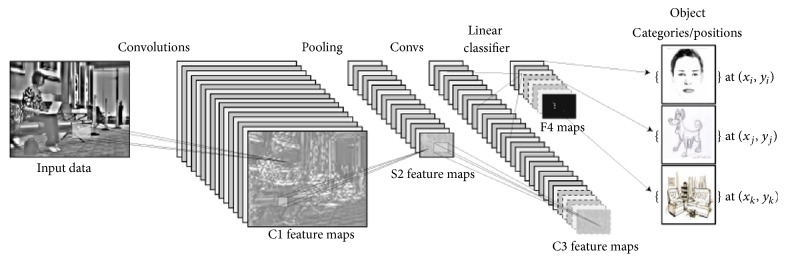
“Example architecture of a CNN for an object detection task [36].”
MethodZolfaghari, M., & Golabi, M. R. (2021) · Renewable Energy · doi:10.1016/j.renene.2021.02.017 · Cited by 99
EEG-Based Emotion Recognition With Emotion Localization via Hierarchical Self-Attention
Zhang, Y., Liu, H., Zhang, D., Chen, X., Qin, T., & Zheng, Q. (2022) · IEEE Transactions on Affective Computing · doi:10.1109/taffc.2022.3145623 · Cited by 104
“In contrast, deep learning techniques recently show their superiority in many fields, e.g., Artificial Intelligence [19], [20], Natural Language Processing [21], [22], and Computer Vision [23], [24] [6].”
BackgroundDeep learning in photoacoustic imaging: a review
Deng, H., Qiao, H., Dai, Q., & Ma, C. (2021) · Journal of Biomedical Optics · doi:10.1117/1.jbo.26.4.040901 · Cited by 110
Land-Use Mapping for High-Spatial Resolution Remote Sensing Image Via Deep Learning: A Review
Zang, N., Cao, Y., Wang, Y., Huang, B., Zhang, L., & Mathiopoulos, P. T. (2021) · IEEE Journal of Selected Topics in Applied Earth Observations and Remote Sensing · doi:10.1109/jstars.2021.3078631 · Cited by 102
“UnlikeRBM,oneobviousadvantageoftheautoencoder istoallownearlyanylayerstobeparameterized[57].”
Kong, J., Yang, C., Wang, J., Wang, X., Zuo, M., Jin, X., & Lin, S. (2021) · Computational Intelligence and Neuroscience · doi:10.1155/2021/1194565 · Cited by 98
Self-Supervision-Augmented Deep Autoencoder for Unsupervised Visual Anomaly Detection
Huang, C., Yang, Z., Wen, J., Xu, Y., Jiang, Q., Yang, J., & Wang, Y. (2021) · IEEE Transactions on Cybernetics · doi:10.1109/tcyb.2021.3127716 · Cited by 115
“With the advances of deep learning [12], deep generative models [13]–[15] have demonstrated promising performances in unsupervised VAD.”
BackgroundConvolutional Neural Networks based classifications of soil images
Lanjewar, M. G., & Gurav, O. (2022) · Multimedia Tools and Applications · doi:10.1007/s11042-022-12200-y · Cited by 98
“This layer is also referred to as a sub-sampling since a size decrease causes concomitant information loss [4].”
BackgroundZhu, X., Li, Y., & Gu, N. (2023) · Nano Biomedicine and Engineering · doi:10.26599/nbe.2023.9290035 · Cited by 104
Ruiz-Parrado, V., Linares, I., Sánchez, Á., & Vélez, J. F. (2019) · Neurocomputing · doi:10.1016/j.neucom.2019.09.041 · Cited by 97
Xie, J., Huang, J., Zeng, C., Jiang, S., & Podlich, N. (2020) · Geosciences · doi:10.3390/geosciences10110425 · Cited by 107
“Deep neural networks have been driving significant advancements in real-world computer vision applications over the last decade [106].”
BackgroundImplementation of Transfer Learning Using VGG16 on Fruit Ripeness Detection
Pardede, J., Sitohang, B., Akbar, S., & Khodra, M. L. (2021) · International Journal of Intelligent Systems and Applications · doi:10.5815/ijisa.2021.02.04 · Cited by 114
“Three main issues have to consider in conducting transfer learning [36], namely: (1) What to transfer; (2) How to transfer, (3) When to transfer.”
BackgroundEmotion fusion for mental illness detection from social media: A survey
Zhang, T., Yang, K., Ji, S., & Ananiadou, S. (2022) · Information Fusion · doi:10.1016/j.inffus.2022.11.031 · Cited by 113
“In recent years, deep learning has gained enormous popularity in many fields, including computer vision [116], NLP [117] and speech recognition [118].”
BackgroundArtificial intelligence in safety-critical systems: a systematic review
Wang, Y., & Chung, S. H. (2022) · Industrial Management & Data Systems · doi:10.1108/imds-07-2021-0419 · Cited by 96
Akbar, S., Khan, S. A., Ali, F., Hayat, M., Qasim, M., & Gul, S. (2020) · Chemometrics and Intelligent Laboratory Systems · doi:10.1016/j.chemolab.2020.104103 · Cited by 96
Diffraction-in-action: Designerly Explorations of Agential Realism Through Lived Data
Sanches, P., Howell, N., Tsaknaki, V., Jenkins, T., & Helms, K. (2022) · CHI Conference on Human Factors in Computing Systems · doi:10.1145/3491102.3502029 · Cited by 113
“These transformations can be more predictable and explainable than the typical machine learning models whose inner workings can be difcult to assess [112].”
BackgroundA survey for trust-aware recommender systems: A deep learning perspective
Dong, M., Yuan, F., Yao, L., Wang, X., Xu, X., & Zhu, L. (2022) · Knowledge-Based Systems · doi:10.1016/j.knosys.2022.108954 · Cited by 100
ELECTRIcity: An Efficient Transformer for Non-Intrusive Load Monitoring
Sykiotis, S., Kaselimi, M., Doulamis, A. D., & Doulamis, N. D. (2022) · Sensors · doi:10.3390/s22082926 · Cited by 107
“Related Work Deep learning has achieved great success in domains such as computer vision and natural language processing (NLP) [5].”
BackgroundSelf-citationDong, Z. X., Li, W., Niu, B., & Wu, C. (2022) · Decision Support Systems · doi:10.1016/j.dss.2022.113911 · Cited by 95
A Review of Digital Twin Applications in Civil and Infrastructure Emergency Management
Cheng, R., Hou, L., & Xu, S. (2023) · Buildings · doi:10.3390/buildings13051143 · Cited by 94
Zhu, Y., Newbrook, D. W., Dai, P. C., de Groot, C. H., & Huang, R. (2021) · Applied Energy · doi:10.1016/j.apenergy.2021.117800 · Cited by 97
“It has received great attention world-wide for its efficiency in analysing a vast number of datasets and its revolutionary impact to the field of computer vision [37,38] and speech recognition [39].”
BackgroundImpacts of Artificial Intelligence on Public Administration: A Systematic Literature Review
Reis, J., Santo, P. E., & Melao, N. (2019) · 2019 14th Iberian Conference on Information Systems and Technologies (CISTI) · doi:10.23919/cisti.2019.8760893 · Cited by 93
“Examples of these are: neural networks – the process through which machines learn from observational data, figuring out its own solutions [12]; deep learning – a technique that allows computational models of multiple processing layers to learn and represent data with multiple levels of abstraction mimicking how the br…”
BackgroundMobile-based Deep Learning Models for Banana Disease Detection
Sanga, S., Machuve, D. Z., & Jomanga, K. E. (2020) · Engineering Technology & Applied Science Research · doi:10.48084/etasr.3452 · Cited by 113
“Deep Convolutional Neural Networks (CNNs) have been used in many fields such as computer vision, speech recognition, face recognition, and natural language processing [1].”
BackgroundMethodQuantum machine learning with differential privacy
Watkins, W. M., Chen, S. Y.-C., & Yoo, S. (2023) · Scientific Reports · doi:10.1038/s41598-022-24082-z · Cited by 121
“Equation (3) approximates the gradient from the whole training set 1 N ∑”
BackgroundImproved YOLO Based Detection Algorithm for Floating Debris in Waterway
Lin, F., Hou, T., Jin, Q., & You, A. (2021) · Entropy · doi:10.3390/e23091111 · Cited by 93
“The prediction value is filtered according to the threshold value, and the final detection result is selected and marked on the image.”
BackgroundBroadband acoustic absorbing metamaterial via deep learning approach
Liu, L., Xie, L., Huang, W., Zhang, X. J., Lu, M., & Chen, Y. (2022) · Applied Physics Letters · doi:10.1063/5.0097696 · Cited by 93
Olive-Fruit Variety Classification by Means of Image Processing and Convolutional Neural Networks
Ponce, J. M., Aquino, A., & Andújar, J. M. (2019) · IEEE Access · doi:10.1109/access.2019.2947160 · Cited by 97
Convolutional Neural Network-Based Methods for Eye Gaze Estimation: A Survey
Akinyelu, A. A., & Blignaut, P. J. (2020) · IEEE Access · doi:10.1109/access.2020.3013540 · Cited by 97
“The introduction of deep learning in 1943 [88] has mean-ingfully improved many applications in the computer vision domain [89].”
BackgroundGeometric deep learning for online prediction of cascading failures in power grids
Varbella, A., Gjorgiev, B., & Sansavini, G. (2023) · Reliability Engineering & System Safety · doi:10.1016/j.ress.2023.109341 · Cited by 106
Hybrid quantum-classical-quantum convolutional neural networks
Long, C., Huang, M., Ye, X., Futamura, Y., & Sakurai, T. (2025) · Scientific Reports · doi:10.1038/s41598-025-13417-1 · Cited by 122
“Convolutional neural networks (CNNs) are a widely adopted deep learning architecture, primarily used in computer vision tasks such as image classification 41 .”
Advances in Computer Vision: Proceedings of the 2019 Computer Vision Conference (CVC), Volume 1
O’Mahony, N., Campbell, S., Carvalho, A., Harapanahalli, S., Velasco-Hernandez, G., Krpálková, L., Riordan, D., & Walsh, J. (2019) · Advances in intelligent systems and computing · doi:10.1007/978-3-030-17795-9 · Cited by 104
“eep Learning workflow. Figure from [8]. The development of CNNs has had a tremendous influence in the field of CV in recent years and is responsible for a big jump in the ability to recognize objects [9]. This burst in progress has been enabled by an increase in computing power, as well as an increase in the amount of…”
BackgroundKatsamenis, I., Protopapadakis, E. E., Doulamis, A. D., Doulamis, N. D., & Voulodimos, A. S. (2020) · Lecture notes in computer science · doi:10.1007/978-3-030-64556-4_13 · Cited by 110
Self-citationReal-time isolated hand sign language recognition using deep networks and SVD
Rastgoo, R., Kiani, K., & Escalera, S. (2021) · Journal of Ambient Intelligence and Humanized Computing · doi:10.1007/s12652-021-02920-8 · Cited by 91
“With major advancements in computer vision due to the advent of Deep Learning in recent years, researchers developed different applications to handle different vision tasks (Li et al. 2020; Mustafa 2020; Voulodimos et al. 2018; Zhang et al. 2018a, b; Majidi et al. 2020).”
MethodGuo, Y., Xu, Y., & Li, S. (2020) · Automation in Construction · doi:10.1016/j.autcon.2020.103124 · Cited by 96
Deep Learning for Non-Invasive Diagnosis of Nutrient Deficiencies in Sugar Beet Using RGB Images
Yi, J., Krusenbaum, L., Unger, P., Hüging, H., Seidel, S. J., Schaaf, G., & Gall, J. (2020) · Sensors · doi:10.3390/s20205893 · Cited by 90
Multi-modal wound classification using wound image and location by deep neural network
Anisuzzaman, D., Patel, Y., Rostami, B., Niezgoda, J., Gopalakrishnan, S., & Yu, Z. (2022) · Scientific Reports · doi:10.1038/s41598-022-21813-0 · Cited by 90
“In the general field of image processing and study, some widely used DL algorithms are Convolutional Neural Networks (CNN), Deep Belief Networks (DBN), Deep Boltzmann Machines (DBM), and Stacked (Denoising) Autoencoders [7].”
MethodInfluentialPiTLiD: Identification of Plant Disease From Leaf Images Based on Convolutional Neural Network
Liu, K., & Zhang, X. (2022) · IEEE Transactions on Computational Biology and Bioinformatics · doi:10.1109/tcbb.2022.3195291 · Cited by 90
“1 [49], [50].”
Neural architecture search: A contemporary literature review for computer vision applications
Poyser, M., & Breckon, T. P. (2023) · Pattern Recognition · doi:10.1016/j.patcog.2023.110052 · Cited by 106
“Recent acceleration within the deep learning domain [1] naturally follows the increased availability of public datasets that stems from the emergence of big data.”
BackgroundPardede, H. F., Suryawati, E., Sustika, R., & Zilvan, V. (2018) · International Conference on Computer, Control, Informatics and its Applications · doi:10.1109/ic3ina.2018.8629518 · Cited by 88
“Deep learning is currently the dominant technology of object recognition [9].”
BackgroundSadr, H., Pedram, M. M., & Teshnehlab, M. (2020) · IEEE Access · doi:10.1109/access.2020.2992063 · Cited by 94
“Accordingly, these methods have made a dramatic improvement and impressive advancement in different fields, such as computer vision [5], speech recognition [6], and natu-ral language processing [7].”
MethodAI applications in renal pathology
Huo, Y., Deng, R., Liu, Q., Fogo, A. B., & Yang, H. (2021) · Kidney International · doi:10.1016/j.kint.2021.01.015 · Cited by 103
Lee, D., Kim, S.-Y., Jeong, S., & Lee, J. (2021) · Diagnostics · doi:10.3390/diagnostics11020233 · Cited by 98
“Deep convolutional neural networks (DCNNs) are a branch of deep learning methods that use a cascade of multiple layers of nonlinear transformation to generate high-level abstraction, thereby increasing its versatility for identifying representative patterns or features [10,11].”
BackgroundDetecting SARS-CoV-2 From Chest X-Ray Using Artificial Intelligence
Ahsan, M. M., Ahad, M. T., Soma, F. A., Paul, S., Chowdhury, A., Luna, S. A., Yazdan, M. M. S., Rahman, A., Siddique, Z., & Huebner, P. (2021) · IEEE Access · doi:10.1109/access.2021.3061621 · Cited by 99
Xu, D., Xu, X., Forde, M. C., & Caballero, A. (2023) · Construction and Building Materials · doi:10.1016/j.conbuildmat.2023.132596 · Cited by 100
Göçeri, E. (2019) · International Conference on Image Processing Theory, Tools and Applications (IPTA) · doi:10.1109/ipta.2019.8936083 · Cited by 95
Review of vision-based occupant information sensing systems for occupant-centric control
Choi, H., Um, C. Y., Kang, K., Kim, H., & Kim, T. (2021) · Building and Environment · doi:10.1016/j.buildenv.2021.108064 · Cited by 97
Multi-Channel Recurrent Convolutional Neural Networks for Energy Disaggregation
Kaselimi, M., Protopapadakis, E. E., Voulodimos, A. S., Doulamis, N. D., & Doulamis, A. D. (2019) · IEEE Access · doi:10.1109/access.2019.2923742 · Cited by 86
“CNNs traditionally attain very good results in a variety of pattern recognition problems ( [7], [8]), and they are popular for a wide variety of other applications as well.”
BackgroundSelf-citationDe Silva, D., Sierla, S., Alahakoon, D., Osipov, E., Yu, X., & Vyatkin, V. (2020) · IEEE Industrial Electronics Magazine · doi:10.1109/mie.2019.2952165 · Cited by 80
Karimpouli, S., Tahmasebi, P., & Ramandi, H. L. (2020) · International Journal of Coal Geology · doi:10.1016/j.coal.2020.103552 · Cited by 86
The Future of Endoscopic Navigation: A Review of Advanced Endoscopic Vision Technology
Fu, Z., Jin, Z., Zhang, C., He, Z., Zha, Z., Hu, C., Gan, T., Yan, Q., Wang, P., & Ye, X. (2021) · IEEE Access · doi:10.1109/access.2021.3065104 · Cited by 97
“Recently, the development of deep learning has led to great strides in a variety of CV problems, such as object detection, motion tracking, and semantic segmentation [10].”
BackgroundQDNN: deep neural networks with quantum layers
Zhao, C., & Gao, X.-S. (2021) · Quantum Machine Intelligence · doi:10.1007/s42484-021-00046-w · Cited by 99
“In recent years, DNNs (LeCun et al. 2015) became the most important and powerful method in machine learning, which were widely applied in computer vision (Voulodimos et al. 2018), natural language processing (Socher et al. 2012), and many other fields.”
MethodExamining Attention Mechanisms in Deep Learning Models for Sentiment Analysis
Kardakis, S., Perikos, I., Grivokostopoulou, F., & Hatzilygeroudis, I. (2021) · Applied Sciences · doi:10.3390/app11093883 · Cited by 100
Nor, A. K. M., Pedapati, S. R., Muhammad, M. B., & Leiva, V. (2021) · Sensors · doi:10.3390/s21238020 · Cited by 101
“These abilities and specialized tools make AI so appealing in technically infused domains such as computer vision [13], healthcare [6], image processing [7], and reliability engineering [11].”
BackgroundAdversarially Approximated Autoencoder for Image Generation and Manipulation
Xu, W., Keshmiri, S., & Wang, G. (2019) · IEEE Transactions on Multimedia · doi:10.1109/tmm.2019.2898777 · Cited by 90
“deep generative modes, which can be classified into three categories [54].”
BackgroundMachine learning applications on neuroimaging for diagnosis and prognosis of epilepsy: A review
Yuan, J., Ran, X., Liu, K., Chen, Y., Yao, Y., Wu, H., & Liu, Q. (2021) · Journal of Neuroscience Methods · doi:10.1016/j.jneumeth.2021.109441 · Cited by 97
Meta-seg: A survey of meta-learning for image segmentation
Luo, S., Li, Y., Gao, P., Wang, Y., & Serikawa, S. (2022) · Pattern Recognition · doi:10.1016/j.patcog.2022.108586 · Cited by 98
Metadata
- Authors
- Voulodimos, A., Doulamis, N., Doulamis, A., & Protopapadakis, E.
- Affiliations
- National Technical University of Athens (GR)
- Corresponding author
- Voulodimos, Athanasios
- Venue
- Computational Intelligence and Neuroscience
- Publisher
- Wiley
- Published
- 2018
- Volume
- 2018
- Pages
- 1-13
- ISSN
- 1687-5265 (ISSN-L)
- 1687-5273
- PMC
- PMC5816885
- OpenAlex
- W2794284562
- Cited by
- 3,403
- References
- 56
- Citations by year
- 2026: 202 · 2025: 447 · 2024: 586 · 2023: 541 · 2022: 570 · 2021: 496 · 2020: 375 · 2019: 153 · 2018: 32
- FWCI
- 30.98
- Type
- journal article
- Language
- en
- Open access
- hybrid
- doi.org
- Locations
- Computational Intelligence and Neuroscience (publishedVersion, cc-by)
- Europe PMC (PubMed Central) (publishedVersion, cc-by)
- PubMed Central (publishedVersion, cc-by)
- PubMed (publishedVersion)
- Funders
- State Scholarships Foundation
- European Social Fund
- Greek national funds
- Topics
- Physical Sciences › Computer Science › Computer Vision and Pattern Recognition › Advanced Neural Network Applications
- Physical Sciences › Computer Science › Computer Vision and Pattern Recognition › Advanced Image and Video Retrieval Techniques
- Physical Sciences › Computer Science › Artificial Intelligence › Domain Adaptation and Few-Shot Learning
- Keywords
- deep learning, computer vision, convolutional neural networks, deep Boltzmann machine, deep belief network, stacked denoising autoencoder, object detection, face recognition, human action recognition, activity recognition, human pose estimation
- MeSH terms
- Machine Learning, Algorithms, Humans, Neural Networks, Computer
About these checks
Registry, retraction, Cites and statistics results are computed, not judged, with one exception: a printed reference that no index lists is read once by a model before it counts as a citation error. Claims are extracted by a model and kept only when their quote appears verbatim in the text; each cited source is then checked, with a model’s help, for whether it says what the claim relies on. Those verdicts can be wrong — read the claim’s quote and the cited source before relying on one.
Statistics and arithmetic are recomputed, not judged.
Confidence bands are shown only for fields calibrated on our annotated test set. None is calibrated yet, so no band is shown.
What counts as a claim ›How we measure confidence ›How we check this ›
Are you an author, or do you see a problem with this page? Request a review
Data sources
Bibliographic data: Semantic Scholar, OpenAlex, Crossref.
Contains information from the Semantic Scholar Academic Graph Datasets, made available under the ODC Attribution License (ODC-BY 1.0).
Semantic Scholar’s data is described in: Kinney, R., et al. (2023). The Semantic Scholar Open Data Platform. arXiv:2301.10140.
