

Deep Learning for Computer Vision: A Brief Review
Open accessThe DOI matches its Crossref record; 91 of the 93 references it cites were found in a registry or an index, and 2 are not checked yet.
Abstract
Over the last years deep learning methods have been shown to outperform previous state-of-the-art machine learning techniques in several fields, with computer vision being one of the most prominent cases. This review paper provides a brief overview of some of the most significant deep learning schemes used in computer vision problems, that is, Convolutional Neural Networks, Deep Boltzmann Machines and Deep Belief Networks, and Stacked Denoising Autoencoders. A brief account of their history, structure, advantages, and limitations is given, followed by a description of their applications in various computer vision tasks, such as object detection, face recognition, action and activity recognition, and human pose estimation. Finally, a brief overview is given of future directions in designing deep learning schemes for computer vision problems and the challenges involved therein.
Overview
The claims and statistics of this paper haven’t been checked yet.
Free: it reads the open-access text and checks the first 5 claims that cite a source we can check. Create a free account to check every claim.
Integrity signals
Registry
Cites
Statistics
Figures
Verification
Claims the paper makes
The claims and statistics of this paper haven’t been checked yet.
Free: it reads the open-access text and checks the first 5 claims that cite a source we can check. Create a free account to check every claim.
Claims other papers make about this one
Each is checked against this paper’s own text: does it say what the citing paper says it does?
The cited source says what the claim attributes to it.
In the citing paper
“Additionally, HAR with image/video processing has been extensively studied in the computer vision community [79,80], and the methodologies commonly used differ significantly from techniques used for IMUs, EEG, PPG, etc.”
From Deep Learning in Human Activity Recognition with Wearable Sensors: A Review on Advances (2022) · cites this paper as [79]
Self-check
Percentages, sums and reported differences re-computed from the paper’s own numbers.
The self-check needs the paper’s full text.
Citations
Cites
Hochreiter, S., & Schmidhuber, J. (1997) · Neural Computation · doi:10.1162/neco.1997.9.8.1735 · Cited by 102,318 · cited 4×
“In [95], the authors propose a multimodal multistream deep learning framework to tackle the egocentric activity recognition problem, using both the video and sensor data and employing a dual CNNs and Long Short-Term Memory architecture.”
BackgroundInfluentialFaster R-CNN: Towards Real-Time Object Detection with Region Proposal Networks
Ren, S., He, K., Girshick, R., & Sun, J. (2017) · IEEE Transactions on Pattern Analysis and Machine Intelligence · doi:10.1109/tpami.2016.2577031 · Cited by 73,472
Faster R-CNN: Towards Real-Time Object Detection with Region Proposal Networks
Ren, S., He, K., Girshick, R., & Sun, J. (2015) · arXiv · doi:10.48550/arxiv.1506.01497 · Cited by 70,812
Gradient-based learning applied to document recognition
Lecun, Y., Bottou, L., Bengio, Y., & Haffner, P. (1998) · Proceedings of the IEEE · doi:10.1109/5.726791 · Cited by 58,805 · cited 2×
“In an attempt to compare these models (for a summary see Table 2), we can say that CNNs have generally performed better than DBNs in current literature on benchmark computer vision datasets such as MNIST.”
MethodGoing deeper with convolutions
Szegedy, C., Liu, W., Jia, Y., Sermanet, P., Reed, S., Anguelov, D., Erhan, D., Vanhoucke, V., & Rabinovich, A. (2015) · 2015 IEEE Conference on Computer Vision and Pattern Recognition (CVPR) · doi:10.1109/cvpr.2015.7298594 · Cited by 48,562
Fully convolutional networks for semantic segmentation
Long, J., Shelhamer, E., & Darrell, T. (2015) · 2015 IEEE Conference on Computer Vision and Pattern Recognition (CVPR) · doi:10.1109/cvpr.2015.7298965 · Cited by 38,834
Rich Feature Hierarchies for Accurate Object Detection and Semantic Segmentation
Girshick, R., Donahue, J., Darrell, T., & Malik, J. (2014) · 2014 IEEE Conference on Computer Vision and Pattern Recognition · doi:10.1109/cvpr.2014.81 · Cited by 32,684
Girshick, R. (2015) · 2015 IEEE International Conference on Computer Vision (ICCV) · doi:10.1109/iccv.2015.169 · Cited by 28,105
Reducing the dimensionality of data with neural networks
Hinton, G. E., & Salakhutdinov, R. R. (2006) · Science · doi:10.1126/science.1127647 · Cited by 20,928
A logical calculus of the ideas immanent in nervous activity
McCulloch, W. S., & Pitts, W. (1943) · The Bulletin of Mathematical Biophysics · doi:10.1007/bf02478259 · Cited by 18,566
Research works printed but not linked: 21
- LeCun Y. Boser B. Denker J. Touretzky D. Handwritten digit recognition with a back-propagation network Advances in Neural Information Processing Systems 2 (NIPS∗89) 1990 Denver, CO, USA
- Frederic B. Lamblin P. Pascanu R. Theano: new features and speed improvements Deep Learning and Unsupervised Feature Learning NIPS 2012 Workshop 2012 http://deeplearning.net/software/theano/
- Chen X. Yuille A. L. Articulated pose estimation by a graphical model with image dependent pairwise relations Proceedings of the NIPS 2014
- Boureau Y. L. Ponce J. LeCun Y. A theoretical analysis of feature pooling in visual recognition Proceedings of the ICML 2010
- Krizhevsky A. Sutskever I. Hinton G. E. Imagenet classification with deep convolutional neural networks Proceedings of the 26th Annual Conference on Neural Information Processing Systems (NIPS '12) December 2012 Lake Tahoe, Nev, USA 1097 1105 2-s2.0-84876231242
- Smolensky P. Information processing in dynamical systems: Foundations of harmony theory In Parallel Distributed Processing: Explorations in the Microstructure of Cognition 1986 1 Cambridge, MA, USA MIT Press 194 281
- Hinton G. E. Sejnowski T. J. Learning and Relearning in Boltzmann Machines 1986 1 Cambridge, MA MIT Press p. 4.2
- Carreira-Perpinan M. A. Hinton G. E. On contrastive divergence learning Proceedings of the tenth international workshop on artificial intelligence and statistics., NP: Society for Artificial Intelligence and Statistics 2005 33 40
- Hinton G. A practical guide to training restricted Boltzmann machines Momentum 2010 9 p. 926
- Salakhutdinov R. Larochelle H. Efficient learning of deep Boltzmann machines Proceedings of the AISTATS 2010
- Salakhutdinov R. Hinton G. An efficient learning procedure for deep Boltzmann machines Neural Computation 2012 24 8 1967 2006 MR2978160 10.1162/NECO_a_00311 Zbl1247.68223 2-s2.0-84874125782 22509963 · DOI · Paper page
- Salakhutdinov R. Hinton G. A better way to pretrain Deep Boltzmann Machines Proceedings of the 26th Annual Conference on Neural Information Processing Systems 2012, NIPS 2012 December 2012 usa 2447 2455 2-s2.0-84877755914
- Goodfellow I. Mirza M. Courville A. Multi-prediction deep Boltzmann machines Proceedings of the NIPS 2013
- Vincent P. Larochelle H. Bengio Y. Manzagol P.-A. Cohen W. W. McCallum A. Roweis S. T. Extracting and composing robust features with denoising autoencoders in Proceedings of the Twenty-fifth International Conference on Machine Learning (ICML'08) 2008 ACM 1096 1103
- Gallinari P. LeCun Y. Thiria S. Fogelman-Soulie F. Memoires associatives distribuees Proceedings of the in Proceedings of COGNITIVA 87 1987 Paris, La Villette
- Bengio Y. Lamblin P. Popovici D. Larochelle H. Sch B. Platt J. and. Hoffman T. Schölkopf B. Greedy layer-wise training of deep networks Advances in Neural Information Processing Systems (NIPS06) 2007 19 MIT Press 153 160
- Hosang J. Benenson R. Schiele B. How good are detection proposals, really? Proceedings of the 25th British Machine Vision Conference, BMVC 2014 September 2014 gbr 2-s2.0-84919779754
- Nair V. Hinton G. E. 3D object recognition with deep belief nets Proceedings of the NIPS 2009
- Kitsikidis A. Dimitropoulos K. Douka S. Grammalidis N. Dance analysis using multiple kinect sensors Proceedings of the 9th International Conference on Computer Vision Theory and Applications, VISAPP 2014 January 2014 prt 789 795 2-s2.0-84906896563
- Jain A. Tompson J. Andriluka M. Learning human pose estimation features with convolutional networks Proceedings of the ICLR 2014
- Tompson J. J. Jain A. LeCun Y. Joint training of a convolutional network and a graphical model for human pose estimation Proceedings of the NIPS 2014
Cited by
Items 401–500 of 1,008
Akinsemoyin, A., Awolusi, I., Chakraborty, D., Al-Bayati, A. J., & Akanmu, A. A. (2023) · Sensors · doi:10.3390/s23156690 · Cited by 73
“First, the characteristics of a photograph are extracted, and then to create a convolutional feature map, the network uses the CNN method to process the whole image with many convolutional layers and max-pooling layers [9].”
MethodIntegrated image and location analysis for wound classification: a deep learning approach
Patel, Y., Shah, T., Dhar, M. K., Zhang, T., Niezgoda, J., Gopalakrishnan, S., & Yu, Z. (2024) · Scientific Reports · doi:10.1038/s41598-024-56626-w · Cited by 74
“The results revealed that the ResNet50 model achieved the highest accuracy rates, reaching 99.49% for ischemia and 84.76% for infection detection.”
BackgroundResultInfluentialBlister Defect Detection Based on Convolutional Neural Network for Polymer Lithium-Ion Battery
Ma, L., Xie, W., & Zhang, Y. A. (2019) · Applied Sciences · doi:10.3390/app9061085 · Cited by 65
Statistical complexity of quantum circuits
Bu, K., Koh, D. E., Li, L., Luo, Q., & Zhang, Y. (2022) · Physical Review A · doi:10.1103/physreva.105.062431 · Cited by 82
A systematic review and Meta-data analysis on the applications of Deep Learning in Electrocardiogram
Nehemiah, M., Gital, A. Y., Aljojo, N., Chiroma, H., Adewole, K. S., Mojeed, H. A., Faruk, N., Abdulkarim, A., Emmanuel, I., Folawiyo, Y. Y., et al. (2022) · Journal of Ambient Intelligence and Humanized Computing · doi:10.1007/s12652-022-03868-z · Cited by 70
“Followed by RNN-based models with 2 papers, then RBM-based models and hybrid models had single paper each.”
BackgroundMethodInfluentialLiu, Y., Yao, X., Gu, Z., Zhou, Z., Liu, X., Chen, X., & Wei, S. (2022) · Remote Sensing · doi:10.3390/rs14143362 · Cited by 64
Application of artificial intelligence to the public health education
Wang, X., He, X., Wei, J., Liu, J., Li, Y., & Liu, X. (2023) · Frontiers in Public Health · doi:10.3389/fpubh.2022.1087174 · Cited by 73
“However, computer vision enables computers and systems to take action or make recommendations after obtaining meaningful information from digital images, videos, and other visual inputs, enabling computers to see, observe and understand (48).”
Thakur, S., Raissi, M., & Ardekani, A. M. (2024) · Journal of Non-Newtonian Fluid Mechanics · doi:10.1016/j.jnnfm.2024.105265 · Cited by 75
“Equations 10, 11, 12, and 13 are special cases of Eq.”
BackgroundTransformers in biosignal analysis: A review
Anwar, A., Khalifa, Y., Coyle, J. L., & Sejdić, E. (2024) · Information Fusion · doi:10.1016/j.inffus.2024.102697 · Cited by 81
Gao, N., Wang, M., Liang, X., & Pan, G. (2025) · Results in Engineering · doi:10.1016/j.rineng.2025.104163 · Cited by 64
Learning to Classify Structures in ALS-Derived Visualizations of Ancient Maya Settlements with CNN
Somrak, M., Džeroski, S., & Kokalj, Ž. (2020) · Remote Sensing · doi:10.3390/rs12142215 · Cited by 59
Real-Time Underwater Onboard Vision Sensing System for Robotic Gripping
Wang, Y., Tang, C., Cai, M., Yin, J., Wang, S., Cheng, L., Wang, R., & Tan, M. H. (2020) · IEEE Transactions on Instrumentation and Measurement · doi:10.1109/tim.2020.3028400 · Cited by 74
“ing schemes used in computer vision problems has been previously provided [27].”
MethodQuantumFed: A Federated Learning Framework for Collaborative Quantum Training
Xia, Q., & Li, Q. (2021) · Globecom · doi:10.1109/globecom46510.2021.9685012 · Cited by 84
“In the meantime, deep neural network [14] has been found efficient in many practical tasks such as computer vision [10], [13], [15], [21], natural language processing [4], [5], [7], [20], etc.”
MethodMachine Learning for Physical Layer in 5G and beyond Wireless Networks: A Survey
Tanveer, J., Haider, A., Ali, R., & Kim, A. (2021) · Electronics · doi:10.3390/electronics11010121 · Cited by 70
Interpretation and Classification of Arrhythmia Using Deep Convolutional Network
Singh, P., & Sharma, A. (2022) · IEEE Transactions on Instrumentation and Measurement · doi:10.1109/tim.2022.3204316 · Cited by 79
“Recent achievements by deep neural networks (DNNs) in computer vision [5], image classification [6], speech recogni-63 tion, and natural language processing [7] have been impres-64 sive, as these networks are expected to have a significant impact on the field of health care and clinical practice.”
BackgroundLin, S., Xiu, Y., Kong, J., Yang, C., & Zhao, C. (2023) · Agriculture · doi:10.3390/agriculture13030567 · Cited by 76
Self-Supervised Feature Learning Based on Spectral Masking for Hyperspectral Image Classification
Liu, W., Liu, K., Sun, W., Yang, G., Ren, K., Meng, X., & Peng, J. (2023) · IEEE Transactions on Geoscience and Remote Sensing · doi:10.1109/tgrs.2023.3310489 · Cited by 72
“recognition [15], computer vision [16], and natural language”
BackgroundPorto, A., & Voje, K. L. (2020) · Methods in Ecology and Evolution · doi:10.1111/2041-210x.13373 · Cited by 66
ResNet15: Weather Recognition on Traffic Road with Deep Convolutional Neural Network
Xia, J., Xuan, D., Tan, L., & Xing, L. (2020) · Advances in Meteorology · doi:10.1155/2020/6972826 · Cited by 77
“Therefore, the methods of weather recognition based on image processing and machine vision have gradually developed [7].”
MethodText Analysis for Psychology: Methods, Principles, and PracticesPreprint
Kennedy, B., Ashokkumar, A., Boyd, R. L., & Dehghani, M. (2021) · PsyArXiv (OSF Preprints) · doi:10.31234/osf.io/h2b8t · Cited by 71
An Environmental Intrusion Detection Technology Based on WiFi
Zhu, X., Xu, H., Zhao, Z., Wang, X., Wei, X., Zhang, Y., & Zuo, J. (2021) · Wireless Personal Communications · doi:10.1007/s11277-021-08288-4 · Cited by 84
“The traditional intrusion detection technology has many limitations: the computer vision detection method [1, 2] uses the image collected by the computer camera, carries out feature extraction and detection through the neural network, which has high detection accuracy.”
MethodFernández, J., Chiachío, M., Chiachío, J., Muñoz, R., & Herrera, F. (2021) · Engineering Applications of Artificial Intelligence · doi:10.1016/j.engappai.2021.104511 · Cited by 67
Classification of Plant Leaves Using New Compact Convolutional Neural Network Models
Wagle, S. A., Harikrishnan, R., Ali, S. H. M., & Faseehuddin, M. (2021) · Plants · doi:10.3390/plants11010024 · Cited by 62
“Deep learning is a subset of machine learning that consists of a set of algorithms for modeling high-level data abstractions using a deep graph with multiple processing layers that include linear and non-linear transformations [15].”
BackgroundQureshi, R., Zou, B., Alam, T., Wu, J., Lee, V. H. F., & Yan, H. (2023) · IEEE/ACM Transactions on Computational Biology and Bioinformatics · doi:10.1109/tcbb.2022.3141697 · Cited by 60
“Deep learning has shown remarkable results in solving many challenging problems of computer vision, natural language processing, financial model analysis, and bioinformatics [116], [117].”
BackgroundWagaa, N., Kallel, H., & Mellouli, N. (2023) · Engineering Applications of Artificial Intelligence · doi:10.1016/j.engappai.2023.106301 · Cited by 67
Briechle, S., Krzystek, P., & Vosselman, G. (2021) · International Journal of Applied Earth Observation and Geoinformation · doi:10.1016/j.jag.2020.102292 · Cited by 84
“In recent years, utilizing high-performing deep learning (DL) methods as classification tools has garnered a large amount of interest, outperforming standard ML approaches in various tasks (Voulodimos et al., 2018).”
BackgroundMultimodal super-resolution reconstruction of infrared and visible images via deep learning
Wang, B., Zou, Y. L., Zhang, L., Li, Y., Chen, Q., & Zuo, C. (2022) · Optics and Lasers in Engineering · doi:10.1016/j.optlaseng.2022.107078 · Cited by 66
Multi-Modal Song Mood Detection with Deep Learning
Pyrovolakis, K., Tzouveli, P. K., & Stamou, G. B. (2022) · Sensors · doi:10.3390/s22031065 · Cited by 73
“So our goal from the beginning of this paper was the utilization of both features in the development of a multi-modal deep learning system [41,42].”
BackgroundA few-shot U-Net deep learning model for lung cancer lesion segmentation via PET/CT imaging
Protonotarios, N. Ε., Katsamenis, I., Sykiotis, S., Δικαίος, Ν., Kastis, G. A., Chatziioannou, S. N., Metaxas, M. G., Doulamis, N. D., & Doulamis, A. D. (2022) · Biomedical Physics & Engineering Express · doi:10.1088/2057-1976/ac53bd · Cited by 66
Self-citationZhu, J., Li, H., Rao, Z., & Ji, H. (2022) · Food Control · doi:10.1016/j.foodcont.2022.109291 · Cited by 61
Bulk‐Switching Memristor‐Based Compute‐In‐Memory Module for Deep Neural Network Training
Wu, Y., Wang, Q., Wang, Z., Wang, X., Ayyagari, B., Krishnan, S. A., Chudzik, M. P., & Lu, W. D. (2023) · Advanced Materials · doi:10.1002/adma.202305465 · Cited by 67
SealNet: A fully-automated pack-ice seal detection pipeline for sub-meter satellite imagery
Gonçalves, B. C., Spitzbart, B. D., & Lynch, H. J. (2019) · Remote Sensing of Environment · doi:10.1016/j.rse.2019.111617 · Cited by 61
Advances in Chromatin and Chromosome Research: Perspectives from Multiple Fields
Agbleke, A. A., Amitai, A., Buenrostro, J. D., Chakrabarti, A., Chu, L., Hansen, A. S., Koenig, K. M., Labade, A. S., Liu, S., Nozaki, T., et al. (2020) · Molecular Cell · doi:10.1016/j.molcel.2020.07.003 · Cited by 66
“Moreover, CNNs have started to replace almost all image processing algorithms in computer vision (Voulodimos et al., 2018) and will soon be commonplace in fluorescent imaging.”
BackgroundMethodKraus, M. A., & Drass, M. (2020) · Glass Structures & Engineering · doi:10.1007/s40940-020-00132-8 · Cited by 69
“2.3, further details on CNNs especially within the field of computer vision are not described here in detail with reference to (LeCun et al. 2015; Voulodimos et al. 2018).”
BackgroundInfluentialKhan, S., Khan, M. A., Alhaisoni, M. M., Tariq, U., Yong, H.-S., Armghan, A., & Alenezi, F. S. (2021) · Sensors · doi:10.3390/s21237941 · Cited by 64
“Deep learning makes learning and data representation at multiple levels by mimicking the human brain processing [17] to create models.”
BackgroundA deep learning-based method for deviation status detection in intelligent conveyor belt system
Zhang, M., Jiang, K. Y., Cao, Y., Li, M., Hao, N., & Zhang, Y. (2022) · Journal of Cleaner Production · doi:10.1016/j.jclepro.2022.132575 · Cited by 60
Singhal, A., Kumari, N., Ghosh, P., Singh, Y., Garg, S., Shah, M. P., Jha, P. K., & Chauhan, D. K. (2022) · Environmental Technology & Innovation · doi:10.1016/j.eti.2022.102805 · Cited by 69
The Classification of Cultural Heritage Buildings in Athens Using Deep Learning Techniques
Siountri, K., & Anagnostopoulos, C. (2023) · Heritage · doi:10.3390/heritage6040195 · Cited by 60
Ebrahimy, H., Wang, Y., & Zhang, Z. (2023) · ISPRS Journal of Photogrammetry and Remote Sensing · doi:10.1016/j.isprsjprs.2023.05.015 · Cited by 62
A Comprehensive Survey on Self-Supervised Learning for Recommendation
Ren, X., Wei, W., Xia, L., & Huang, C. (2025) · ACM Computing Surveys · doi:10.1145/3746280 · Cited by 80
“Over the past years, deep neural networks have demonstrated outstanding performance with supervised learning in various fields, including computer vision [134], natural language processing [21], and recommender systems [216].”
Yuan, R., Zhang, J., He, L., & Zuo, J. (2021) · Ultramicroscopy · doi:10.1016/j.ultramic.2021.113256 · Cited by 59
“In computer vision, deep learning has been used to solve difficult problems, such as classification, segmentation and detection [14].”
MethodColour and Texture Descriptors for Visual Recognition: A Historical Overview
Bianconi, F., Fernández, A., Smeraldi, F., & Pascoletti, G. (2021) · Journal of Imaging · doi:10.3390/jimaging7110245 · Cited by 64
“The basic building blocks of a convolutional neural network are the convolutional, pooling and fully-connected layers [26,104].”
BackgroundBarukab, O., Ali, F., Alghamdi, W., Bassam, Y., & Khan, S. A. (2022) · Expert Systems with Applications · doi:10.1016/j.eswa.2022.116729 · Cited by 61
Mapping retrogressive thaw slumps using deep neural networks
Yang, Y., Rogers, B. M., Fiske, G. J., Watts, J. D., Potter, S., Windholz, T., Mullen, A., Nitze, I., & Natali, S. M. (2023) · Remote Sensing of Environment · doi:10.1016/j.rse.2023.113495 · Cited by 61
“Deep learning (DL) has proven to be extremely powerful in computer vision domains such as medical imaging, autopilot and facial recognition (Voulodimos et al., 2018).”
Wang, J., Jiang, L., Yu, H., Feng, Z., Castaño-Rosa, R., & Cao, S. (2023) · Renewable and Sustainable Energy Reviews · doi:10.1016/j.rser.2023.114165 · Cited by 64
Deep learning in industrial machinery: A critical review of bearing fault classification methods
Rehman, A. U., Jiao, W., Jiang, Y., Wei, J., Sohaib, M., Sun, J., Shiju, E., Rehman, K. U., & Chi, Y. (2025) · Applied Soft Computing · doi:10.1016/j.asoc.2025.112785 · Cited by 69
A Survey of Image Synthesis Methods for Visual Machine Learning
Tsirikoglou, A., Eilertsen, G., & Unger, J. (2020) · Computer Graphics Forum · doi:10.1111/cgf.14047 · Cited by 70
“Many areas of computer science are now considering DL as an integral part for advancing the state of the art, from recommender systems [ZYST19] and medical diagnosis [LKB*17], to natural language processing [YHPC18] and computer vision [VDDP18, SSM*16].”
BackgroundPanoptic Segmentation Meets Remote Sensing
de Carvalho, O. L. F., Júnior, O. A. D. C., Silva, C. R., de Albuquerque, A. O., Santana, N. C., Borges, D. L., Gomes, R. A. T., & Guimarães, R. F. (2022) · Remote Sensing · doi:10.3390/rs14040965 · Cited by 66
“Nevertheless, there are three main approaches for image segmentation (Hoeser et al., 2020; Ma et al., 2019; Voulodimos et al., 2018; Yuan et al., 2021): (1) semantic segmentation (Figure 1B); (2) instance segmentation (Figure 1C); and (3) panoptic segmentation (Figure 1D).”
MethodMa, X., Zhang, K., Wang, J., Yao, C., Yang, Y., Sun, H. X., & Yao, J. P. (2021) · SPE Journal · doi:10.2118/208604-pa · Cited by 65
Transformer-based map-matching model with limited labeled data using transfer-learning approach
Jin, Z., Kim, J., Yeo, H., & Choi, S. (2022) · Transportation Research Part C Emerging Technologies · doi:10.1016/j.trc.2022.103668 · Cited by 62
Barua, P. D., Vicnesh, J., Lih, O. S., Palmer, E. E., Yamakawa, T., Kobayashi, M., & Acharya, U. R. (2022) · Cognitive Neurodynamics · doi:10.1007/s11571-022-09904-0 · Cited by 68
Image reconstruction from photoacoustic projections
Tian, C., Shen, K., Dong, W., Gao, F., Wang, K., Li, J., Liu, S., Feng, T., Liu, C., Li, C., et al. (2024) · Photonics Insights · doi:10.3788/pi.2024.r06 · Cited by 62
Convolutional Neural Network for Copy-Move Forgery Detection
Abdalla, Y., Iqbal, M. T., & Shehata, M. (2019) · Symmetry · doi:10.3390/sym11101280 · Cited by 65
“The absolute value of the FMT coe ffi cient will then give scale invariance because any changes made to the image scale will increase the (2) 16 Here, the Zernike radial function shows the same radial function as PCT.”
MethodDeep learning in sport video analysis: a review
Rangasamy, K., As’ari, M. A., Rahmad, N. A., Ghazali, N. F., & Ismail, S. (2020) · TELKOMNIKA (Telecommunication Computing Electronics and Control) · doi:10.12928/telkomnika.v18i4.14730 · Cited by 70
Zhang, J., Dai, L., & Cheng, F. (2020) · Food Analytical Methods · doi:10.1007/s12161-020-01871-8 · Cited by 58
“Nowadays, deep learning has gained attentions from different fields such as pattern recognition and speech recognition, especially in computer vision (Voulodimos et al. 2018).”
BackgroundMammographic image classification with deep fusion learning
Yu, X., Pang, W., Xu, Q. Y., & Liang, M. (2020) · Scientific Reports · doi:10.1038/s41598-020-71431-x · Cited by 57
“Recently, due to the excellent performance of deep learning models in the field of computer vision 8–12 , more and more researchers have begun to study deep learning-based models.”
BackgroundHuman detection techniques for real time surveillance: a comprehensive survey
Ansari, M. A., & Singh, D. K. (2020) · Multimedia Tools and Applications · doi:10.1007/s11042-020-10103-4 · Cited by 62
“In contrast, deep learning is a subfield of machine learning that is based on Artificial Neural Networks(ANN) [37, 89, 126, 156, 167].”
BackgroundDeep learning‐based quantification of arbuscular mycorrhizal fungi in plant roots
Evangelisti, É., Turner, C., McDowell, A., Shenhav, L., Yunusov, T. S., Gavrin, A., Servanté, E. K., Quan, C., & Schornack, S. (2021) · New Phytologist · doi:10.1111/nph.17697 · Cited by 59
Development of framework by combining CNN with KNN to detect Alzheimer’s disease using MRI images
Lanjewar, M. G., Parab, J. S., & Shaikh, A. Y. (2022) · Multimedia Tools and Applications · doi:10.1007/s11042-022-13935-4 · Cited by 60
“CNN can improve efficiency and has proven significant effectiveness in AD detection and does not require manual feature extraction because it extracts the features automatically [64].”
BackgroundAlharbi, H. A., Alharbi, K. K. S., & Hassan, C. A. U. (2023) · Sustainability · doi:10.3390/su152215695 · Cited by 61
“These methods enhance the systems’ ability to accurately detect falls while minimizing false alarms [28,29].”
MethodEkundayo, O., & Ezugwu, A. E.-S. (2025) · Applied Soft Computing · doi:10.1016/j.asoc.2025.113378 · Cited by 62
Mixture of experts (MoE): A big data perspective
Gan, W., Ning, Z., Qi, Z., & Yu, P. S. (2025) · Information Fusion · doi:10.1016/j.inffus.2025.103664 · Cited by 70
Pedestrian Trajectory Prediction in Extremely Crowded Scenarios
Shi, X., Shao, X., Guo, Z., Wu, G., Zhang, H., & Shibasaki, R. (2019) · Sensors · doi:10.3390/s19051223 · Cited by 62
Convolutional Neural Network for Multipath Detection in GNSS Receivers
Munin, E., Blais, A., & Couellan, N. P. (2020) · International Conference on Artificial Intelligence and Data Analytics for Air Transportation (AIDA-AT) · doi:10.1109/aida-at48540.2020.9049188 · Cited by 57
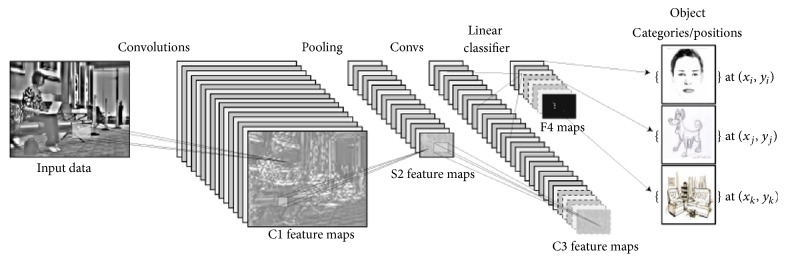
“Figure 3: CNN structure and main elements example [32]”
BackgroundDeep learning in breast radiology: current progress and future directions
Ou, W. C., Polat, D. S., & Doğan, B. E. (2021) · European Radiology · doi:10.1007/s00330-020-07640-9 · Cited by 62
“However, historically, training deep ANNs was considered impractical due to limited availability of data and high computational costs [13, 14].”
BackgroundHou, G., Xu, S., Zhou, N., Yang, L., & Fu, Q. (2020) · Computational Intelligence and Neuroscience · doi:10.1155/2020/9601389 · Cited by 63
“CNN was first proposed by LeCun for image processing, and the network has three characteristics, i.e., local receptive fields, tied weights, and spatial subsampling [29].”
MethodMethane Concentration Prediction Method Based on Deep Learning and Classical Time Series Analysis
Meng, X., Chang, H., & Wang, X. (2022) · Energies · doi:10.3390/en15062262 · Cited by 58
Argentiero, A., Muscogiuri, G., Rabbat, M., Martini, C., Soldato, N., Basile, P., Baggiano, A., Mushtaq, S., Fusini, L., Mancini, M. E., et al. (2022) · Journal of Clinical Medicine · doi:10.3390/jcm11102866 · Cited by 63
End‐to‐End Semantic Leaf Segmentation Framework for Plants Disease Classification
Khan, K., Khan, R. U., Albattah, W., & Qamar, A. M. (2022) · Complexity · doi:10.1155/2022/1168700 · Cited by 56
“*e performance of the visual recognition tasks is improved with the introduction of DL-based methods [28–33].”
RamanNet: a generalized neural network architecture for Raman spectrum analysis
Ibtehaz, N., Chowdhury, M. E. H., Khandakar, A. A., Kiranyaz, S., Rahman, M. S., & Zughaier, S. M. (2023) · Neural Computing and Applications · doi:10.1007/s00521-023-08700-z · Cited by 79
“Deep learning is achieving state-of-the-art results in multiple domains including natural language processing [38], computer vision [34], healthcare [39], education [37], psychology [36] etc.”
BackgroundArtificial Intelligence-Enabled Mode-Locked Fiber Laser: A Review
Ma, Q., & Yu, H. (2023) · Nanomanufacturing and Metrology · doi:10.1007/s41871-023-00216-3 · Cited by 56
“…demonstrated its superiority in various fields, such as autonomous driving [37], natural language processing [38], medical diagnosis [39], computer vision [40], intelligent manufacturing [41], computational imaging [42], spectral informatics [43], ultrafast photonics [44], and fiber lasers [45].”
BackgroundProgrammable One-Pot Synthesis of Oligosaccharides
Cheng, C.-W., Wu, C., Hsu, W., & Wong, C. (2019) · Biochemistry · doi:10.1021/acs.biochem.9b00613 · Cited by 57
FLOP-Reduction Through Memory Allocations Within CNN for Hyperspectral Image Classification
Paoletti, M. E., Haut, J. M., Tao, X., Plaza, J., & Plaza, A. (2020) · IEEE Transactions on Geoscience and Remote Sensing · doi:10.1109/tgrs.2020.3024730 · Cited by 58
“Machine learning approaches have reached a high level of specialization in data analysis and pattern recognition [1], being successfully applied to a wide range of activities, including speech recognition [2]–[4], text analysis [5], [6], data mining [7], [8] or image processing [9], [10], and computer vision [11], [12…”
BackgroundYin, X., Ma, T., Bouferguène, A., & Al‐Hussein, M. (2021) · Automation in Construction · doi:10.1016/j.autcon.2021.103622 · Cited by 55
“[38], to improve the working productivity or level of automation.”
BackgroundUse of deep learning in soccer videos analysis: survey
Akan, S., & Varlı, S. (2022) · Multimedia Systems · doi:10.1007/s00530-022-01027-0 · Cited by 65
“Event detection An event detection method based on 3D-CNN and LSTM network is proposed in [65].”
BackgroundMethodHuman Fall Detection Using 3D Multi-Stream Convolutional Neural Networks with Fusion
Alanazi, T., & Muhammad, G. (2022) · Diagnostics · doi:10.3390/diagnostics12123060 · Cited by 61
“The field of computer vision deals with the way a computer can comprehend information extracted from videos or digital images [11].”
BackgroundCheng, L., Wang, L., Feng, R., & Yan, J. (2021) · IEEE Journal of Selected Topics in Applied Earth Observations and Remote Sensing · doi:10.1109/jstars.2021.3086139 · Cited by 57
“The main advantage of deep learning methods is their powerful capacity to automatically learn high-level features from large volumes of data, which is an essential step in linking different data patterns at feature level [17].”
BackgroundTowards Efficient Training for Neural Network QuantizationPreprint
Jin, Q., Yang, L., & Liao, Z. (2019) · arXiv (Cornell University) · doi:10.48550/arxiv.1912.10207 · Cited by 60
“Deep neural networks have gained rapid progress in tasks including computer vision, natural language processing and speech recognition [39, 47, 29], which have been applied to real world systems such as robotics and self-driving cars [21, 17].”
BackgroundDeep learning in systems medicine
Wang, H., Pujos‐Guillot, E., Comte, B., de Miranda, J. L., Spiwok, V., Chorbev, I., Castiglione, F., Tieri, P., Watterson, S., McAllister, R., et al. (2020) · Briefings in Bioinformatics · doi:10.1093/bib/bbaa237 · Cited by 58
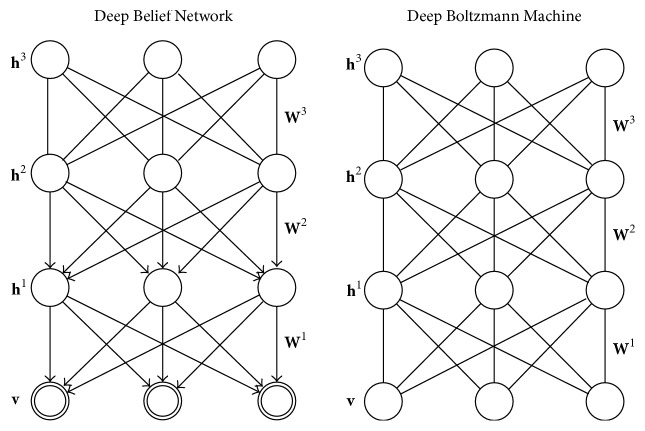
“However, it has been highlighted that DBNs do not take the spatial structure of an image into account, which may significantly affect their performance in some applications [85].”
BackgroundToward Modeling Psychomotor Performance in Karate Combats Using Computer Vision Pose Estimation
Echeverría, J., & Santos, O. C. (2021) · Sensors · doi:10.3390/s21248378 · Cited by 57
Deep Recurrent Neural Networks for Ionospheric Variations Estimation Using GNSS Measurements
Kaselimi, M., Voulodimos, A. S., Doulamis, N. D., Doulamis, A. D., & Delikaraoglou, D. (2021) · IEEE Transactions on Geoscience and Remote Sensing · doi:10.1109/tgrs.2021.3090856 · Cited by 54
“The main operational unit of a CNN architecture is the convolutional kernels, units able to model with high-efficiency spatial signal properties under complex nonlinear relationships [26].”
BackgroundMethodInfluentialSelf-citationDriving Maneuvers Prediction Based Autonomous Driving Control by Deep Monte Carlo Tree Search
Chen, J., Zhang, C., Luo, J., Xie, J., & Wan, Y. (2020) · IEEE Transactions on Vehicular Technology · doi:10.1109/tvt.2020.2991584 · Cited by 63
“the advancement of computer vision [17], [18], deep learning becomes a promising solution for the design of vision-only based autonomous driving systems [19], addressing some drawbacks”
BackgroundEnerGAN++: A Generative Adversarial Gated Recurrent Network for Robust Energy Disaggregation
Kaselimi, M., Doulamis, N. D., Voulodimos, A. S., Doulamis, A. D., & Protopapadakis, E. E. (2020) · IEEE Open Journal of Signal Processing · doi:10.1109/ojsp.2020.3045829 · Cited by 62
“Although Convolutional Neural Networks (CNN) are traditionally developed for two-dimensional imagery data ([12]), one-dimensional CNN can be used to model the temporal character of sequential time-series data.”
BackgroundMethodSelf-citationRobust stacking ensemble model for darknet traffic classification under adversarial settings
Mohanty, H., Roudsari, A. H., & Lashkari, A. H. (2022) · Computers & Security · doi:10.1016/j.cose.2022.102830 · Cited by 55
Surrogate modeling of melt pool temperature field using deep learning
Hemmasian, A., Ogoke, F., Akbari, P., Malen, J. A., Beuth, J., & Farimani, A. B. (2023) · Additive Manufacturing Letters · doi:10.1016/j.addlet.2023.100123 · Cited by 53
“Deep neural networks have shown success in many challenging areas like computer vision [7, 9] and speech recognition [10, 11, 12, 13].”
A Survey on Data-Driven Runoff Forecasting Models Based on Neural Networks
Sheng, Z., Wen, S., Feng, Z.-K., Gong, J., Shi, K., Guo, Z., Yang, Y., & Huang, T. (2023) · IEEE Transactions on Emerging Topics in Computational Intelligence · doi:10.1109/tetci.2023.3259434 · Cited by 55
“Thanks to its strong nonlinear fitting ability, neural networks are applied in various fields including time series forecasting, such as computer vision (CV) [27] [28], natural language processing (NLP) [29] [30], recommendation systems [31], etc.”
BackgroundLi, B., Wang, H., Zhang, X., Ren, J., Liu, L., Sun, H., & Zheng, N. (2021) · IEEE Transactions on Circuits and Systems I Regular Papers · doi:10.1109/tcsi.2021.3078541 · Cited by 56
Deductive Reinforcement Learning for Visual Autonomous Urban Driving Navigation
Huang, C., Zhang, R., Ouyang, M., Wei, P., Lin, J., Su, J., & Lin, L. (2021) · IEEE Transactions on Neural Networks and Learning Systems · doi:10.1109/tnnls.2021.3109284 · Cited by 57
Artificial intelligence in multiparametric magnetic resonance imaging: A review
Li, C., Li, W., Liu, C., Zheng, H., Cai, J., & Wang, S. (2022) · Medical Physics · doi:10.1002/mp.15936 · Cited by 57
EPE-NAS: Efficient Performance Estimation Without Training for Neural Architecture Search
Lopes, V., Alirezazadeh, S., & Alexandre, L. A. (2021) · Lecture notes in computer science · doi:10.1007/978-3-030-86383-8_44 · Cited by 75
“In the past years, deep learning algorithms have been extensively researched, and efficiently applied to various tasks with excellent results [1], [2], especially those related to computer vision [3].”
Using deep convolutional neural networks to forecast spatial patterns of Amazonian deforestation
Ball, J., Petrova, K., Coomes, D. A., & Flaxman, S. R. (2022) · Methods in Ecology and Evolution · doi:10.1111/2041-210x.13953 · Cited by 64
A Comprehensive Survey of EEG Preprocessing Methods for Cognitive Load Assessment
Kyriaki, K., Koukopoulos, D. K., & Fidas, C. A. (2024) · IEEE Access · doi:10.1109/access.2024.3360328 · Cited by 52
“It incorporates convolutional layers that perform convolutions to identify patterns, pooling layers for faster parameterization, and fully-connected layers with full connections to the previous layer for high-level reasoning [71].”
BackgroundBayr, U., & Puschmann, O. (2019) · Ecological Informatics · doi:10.1016/j.ecoinf.2019.01.012 · Cited by 54
Xiang, Y., Huang, P. C., Zhao, Y., Zhao, M., Gao, B., Wu, H., Qian, H., Liu, X., & Kang, J. (2019) · IEEE Transactions on Electron Devices · doi:10.1109/ted.2019.2931135 · Cited by 56
Coupled deep learning coded aperture design for compressive image classification
Bacca, J., Galvis, L. V., & Argüello, H. (2019) · Optics Express · doi:10.1364/oe.381479 · Cited by 52
Kilimci, Z. H., & Duvar, R. (2020) · IEEE Access · doi:10.1109/access.2020.3029860 · Cited by 57
Nguyen, H., Ly, K. L., Tran, T., Wang, Y., & Wang, Z. (2021) · Results in Optics · doi:10.1016/j.rio.2021.100104 · Cited by 52
A study on generic object detection with emphasis on future research directions
Arulprakash, E., & Aruldoss, M. (2021) · Journal of King Saud University - Computer and Information Sciences · doi:10.1016/j.jksuci.2021.08.001 · Cited by 60
“Finally, the appearance of compelling frameworks such as Teano (Bastien et al., 2012) and Tensorflow (TensorFlow, n.d.) that allowed faster coding (Voulodimos et al., 2018).”
Robot-assisted, source-camera-coupled multi-view broadband imagers for ubiquitous sensing platform
Li, K., Yuasa, R., Utaki, R., Sun, M., Tokumoto, Y., Suzuki, D., & Kawano, Y. (2021) · Nature Communications · doi:10.1038/s41467-021-23089-w · Cited by 51
Khokher, M. R., Little, L. R., Tuck, G. N., Smith, D., Qiao, M., Devine, C., O’Neill, H. L., Pogonoski, J. J., Arangio, R., & Wang, D. (2021) · Canadian Journal of Fisheries and Aquatic Sciences · doi:10.1139/cjfas-2020-0446 · Cited by 52
Metadata
- Authors
- Voulodimos, A., Doulamis, N., Doulamis, A., & Protopapadakis, E.
- Affiliations
- National Technical University of Athens (GR)
- Corresponding author
- Voulodimos, Athanasios
- Venue
- Computational Intelligence and Neuroscience
- Publisher
- Wiley
- Published
- 2018
- Volume
- 2018
- Pages
- 1-13
- ISSN
- 1687-5265 (ISSN-L)
- 1687-5273
- PMC
- PMC5816885
- OpenAlex
- W2794284562
- Cited by
- 3,403
- References
- 56
- Citations by year
- 2026: 202 · 2025: 447 · 2024: 586 · 2023: 541 · 2022: 570 · 2021: 496 · 2020: 375 · 2019: 153 · 2018: 32
- FWCI
- 30.98
- Type
- journal article
- Language
- en
- Open access
- hybrid
- doi.org
- Locations
- Computational Intelligence and Neuroscience (publishedVersion, cc-by)
- Europe PMC (PubMed Central) (publishedVersion, cc-by)
- PubMed Central (publishedVersion, cc-by)
- PubMed (publishedVersion)
- Funders
- State Scholarships Foundation
- European Social Fund
- Greek national funds
- Topics
- Physical Sciences › Computer Science › Computer Vision and Pattern Recognition › Advanced Neural Network Applications
- Physical Sciences › Computer Science › Computer Vision and Pattern Recognition › Advanced Image and Video Retrieval Techniques
- Physical Sciences › Computer Science › Artificial Intelligence › Domain Adaptation and Few-Shot Learning
- Keywords
- deep learning, computer vision, convolutional neural networks, deep Boltzmann machine, deep belief network, stacked denoising autoencoder, object detection, face recognition, human action recognition, activity recognition, human pose estimation
- MeSH terms
- Machine Learning, Algorithms, Humans, Neural Networks, Computer
About these checks
Registry, retraction, Cites and statistics results are computed, not judged, with one exception: a printed reference that no index lists is read once by a model before it counts as a citation error. Claims are extracted by a model and kept only when their quote appears verbatim in the text; each cited source is then checked, with a model’s help, for whether it says what the claim relies on. Those verdicts can be wrong — read the claim’s quote and the cited source before relying on one.
Statistics and arithmetic are recomputed, not judged.
Confidence bands are shown only for fields calibrated on our annotated test set. None is calibrated yet, so no band is shown.
What counts as a claim ›How we measure confidence ›How we check this ›
Are you an author, or do you see a problem with this page? Request a review
Data sources
Bibliographic data: Semantic Scholar, OpenAlex, Crossref.
Contains information from the Semantic Scholar Academic Graph Datasets, made available under the ODC Attribution License (ODC-BY 1.0).
Semantic Scholar’s data is described in: Kinney, R., et al. (2023). The Semantic Scholar Open Data Platform. arXiv:2301.10140.
