

Deep Learning for Computer Vision: A Brief Review
Open accessThe DOI matches its Crossref record; 91 of the 93 references it cites were found in a registry or an index, and 2 are not checked yet.
Abstract
Over the last years deep learning methods have been shown to outperform previous state-of-the-art machine learning techniques in several fields, with computer vision being one of the most prominent cases. This review paper provides a brief overview of some of the most significant deep learning schemes used in computer vision problems, that is, Convolutional Neural Networks, Deep Boltzmann Machines and Deep Belief Networks, and Stacked Denoising Autoencoders. A brief account of their history, structure, advantages, and limitations is given, followed by a description of their applications in various computer vision tasks, such as object detection, face recognition, action and activity recognition, and human pose estimation. Finally, a brief overview is given of future directions in designing deep learning schemes for computer vision problems and the challenges involved therein.
Overview
The claims and statistics of this paper haven’t been checked yet.
Free: it reads the open-access text and checks the first 5 claims that cite a source we can check. Create a free account to check every claim.
Integrity signals
Registry
Cites
Statistics
Figures
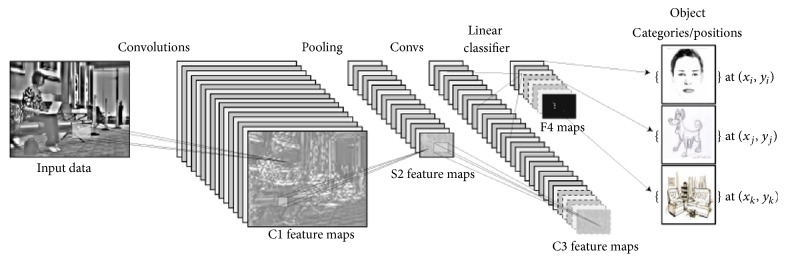
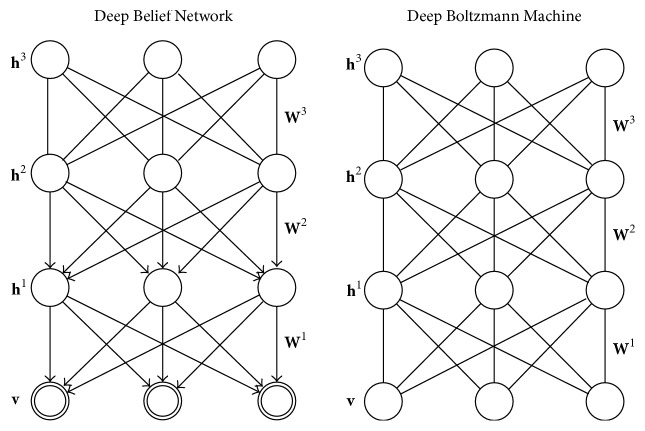
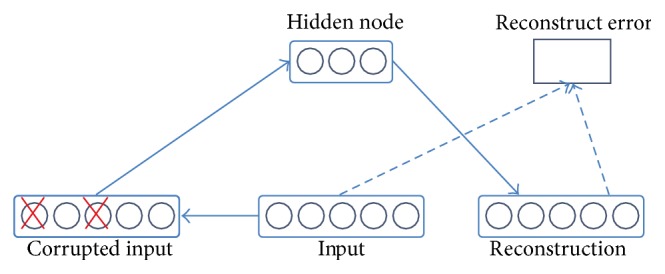
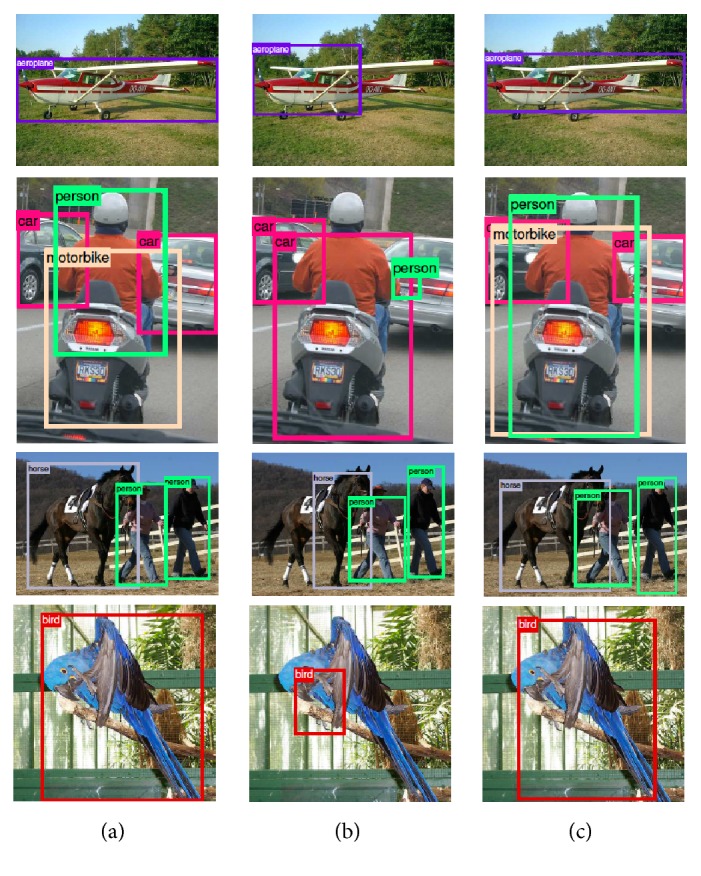
Verification
Claims the paper makes
The claims and statistics of this paper haven’t been checked yet.
Free: it reads the open-access text and checks the first 5 claims that cite a source we can check. Create a free account to check every claim.
Claims other papers make about this one
Each is checked against this paper’s own text: does it say what the citing paper says it does?
The cited source says what the claim attributes to it.
In the citing paper
“Additionally, HAR with image/video processing has been extensively studied in the computer vision community [79,80], and the methodologies commonly used differ significantly from techniques used for IMUs, EEG, PPG, etc.”
From Deep Learning in Human Activity Recognition with Wearable Sensors: A Review on Advances (2022) · cites this paper as [79]
Self-check
Percentages, sums and reported differences re-computed from the paper’s own numbers.
The self-check needs the paper’s full text.
Citations
Cites
Hochreiter, S., & Schmidhuber, J. (1997) · Neural Computation · doi:10.1162/neco.1997.9.8.1735 · Cited by 102,318 · cited 4×
“In [95], the authors propose a multimodal multistream deep learning framework to tackle the egocentric activity recognition problem, using both the video and sensor data and employing a dual CNNs and Long Short-Term Memory architecture.”
BackgroundInfluentialFaster R-CNN: Towards Real-Time Object Detection with Region Proposal Networks
Ren, S., He, K., Girshick, R., & Sun, J. (2017) · IEEE Transactions on Pattern Analysis and Machine Intelligence · doi:10.1109/tpami.2016.2577031 · Cited by 73,472
Faster R-CNN: Towards Real-Time Object Detection with Region Proposal Networks
Ren, S., He, K., Girshick, R., & Sun, J. (2015) · arXiv · doi:10.48550/arxiv.1506.01497 · Cited by 70,812
Gradient-based learning applied to document recognition
Lecun, Y., Bottou, L., Bengio, Y., & Haffner, P. (1998) · Proceedings of the IEEE · doi:10.1109/5.726791 · Cited by 58,805 · cited 2×
“In an attempt to compare these models (for a summary see Table 2), we can say that CNNs have generally performed better than DBNs in current literature on benchmark computer vision datasets such as MNIST.”
MethodGoing deeper with convolutions
Szegedy, C., Liu, W., Jia, Y., Sermanet, P., Reed, S., Anguelov, D., Erhan, D., Vanhoucke, V., & Rabinovich, A. (2015) · 2015 IEEE Conference on Computer Vision and Pattern Recognition (CVPR) · doi:10.1109/cvpr.2015.7298594 · Cited by 48,562
Fully convolutional networks for semantic segmentation
Long, J., Shelhamer, E., & Darrell, T. (2015) · 2015 IEEE Conference on Computer Vision and Pattern Recognition (CVPR) · doi:10.1109/cvpr.2015.7298965 · Cited by 38,834
Rich Feature Hierarchies for Accurate Object Detection and Semantic Segmentation
Girshick, R., Donahue, J., Darrell, T., & Malik, J. (2014) · 2014 IEEE Conference on Computer Vision and Pattern Recognition · doi:10.1109/cvpr.2014.81 · Cited by 32,684
Girshick, R. (2015) · 2015 IEEE International Conference on Computer Vision (ICCV) · doi:10.1109/iccv.2015.169 · Cited by 28,105
Reducing the dimensionality of data with neural networks
Hinton, G. E., & Salakhutdinov, R. R. (2006) · Science · doi:10.1126/science.1127647 · Cited by 20,928
A logical calculus of the ideas immanent in nervous activity
McCulloch, W. S., & Pitts, W. (1943) · The Bulletin of Mathematical Biophysics · doi:10.1007/bf02478259 · Cited by 18,566
Research works printed but not linked: 21
- LeCun Y. Boser B. Denker J. Touretzky D. Handwritten digit recognition with a back-propagation network Advances in Neural Information Processing Systems 2 (NIPS∗89) 1990 Denver, CO, USA
- Frederic B. Lamblin P. Pascanu R. Theano: new features and speed improvements Deep Learning and Unsupervised Feature Learning NIPS 2012 Workshop 2012 http://deeplearning.net/software/theano/
- Chen X. Yuille A. L. Articulated pose estimation by a graphical model with image dependent pairwise relations Proceedings of the NIPS 2014
- Boureau Y. L. Ponce J. LeCun Y. A theoretical analysis of feature pooling in visual recognition Proceedings of the ICML 2010
- Krizhevsky A. Sutskever I. Hinton G. E. Imagenet classification with deep convolutional neural networks Proceedings of the 26th Annual Conference on Neural Information Processing Systems (NIPS '12) December 2012 Lake Tahoe, Nev, USA 1097 1105 2-s2.0-84876231242
- Smolensky P. Information processing in dynamical systems: Foundations of harmony theory In Parallel Distributed Processing: Explorations in the Microstructure of Cognition 1986 1 Cambridge, MA, USA MIT Press 194 281
- Hinton G. E. Sejnowski T. J. Learning and Relearning in Boltzmann Machines 1986 1 Cambridge, MA MIT Press p. 4.2
- Carreira-Perpinan M. A. Hinton G. E. On contrastive divergence learning Proceedings of the tenth international workshop on artificial intelligence and statistics., NP: Society for Artificial Intelligence and Statistics 2005 33 40
- Hinton G. A practical guide to training restricted Boltzmann machines Momentum 2010 9 p. 926
- Salakhutdinov R. Larochelle H. Efficient learning of deep Boltzmann machines Proceedings of the AISTATS 2010
- Salakhutdinov R. Hinton G. An efficient learning procedure for deep Boltzmann machines Neural Computation 2012 24 8 1967 2006 MR2978160 10.1162/NECO_a_00311 Zbl1247.68223 2-s2.0-84874125782 22509963 · DOI · Paper page
- Salakhutdinov R. Hinton G. A better way to pretrain Deep Boltzmann Machines Proceedings of the 26th Annual Conference on Neural Information Processing Systems 2012, NIPS 2012 December 2012 usa 2447 2455 2-s2.0-84877755914
- Goodfellow I. Mirza M. Courville A. Multi-prediction deep Boltzmann machines Proceedings of the NIPS 2013
- Vincent P. Larochelle H. Bengio Y. Manzagol P.-A. Cohen W. W. McCallum A. Roweis S. T. Extracting and composing robust features with denoising autoencoders in Proceedings of the Twenty-fifth International Conference on Machine Learning (ICML'08) 2008 ACM 1096 1103
- Gallinari P. LeCun Y. Thiria S. Fogelman-Soulie F. Memoires associatives distribuees Proceedings of the in Proceedings of COGNITIVA 87 1987 Paris, La Villette
- Bengio Y. Lamblin P. Popovici D. Larochelle H. Sch B. Platt J. and. Hoffman T. Schölkopf B. Greedy layer-wise training of deep networks Advances in Neural Information Processing Systems (NIPS06) 2007 19 MIT Press 153 160
- Hosang J. Benenson R. Schiele B. How good are detection proposals, really? Proceedings of the 25th British Machine Vision Conference, BMVC 2014 September 2014 gbr 2-s2.0-84919779754
- Nair V. Hinton G. E. 3D object recognition with deep belief nets Proceedings of the NIPS 2009
- Kitsikidis A. Dimitropoulos K. Douka S. Grammalidis N. Dance analysis using multiple kinect sensors Proceedings of the 9th International Conference on Computer Vision Theory and Applications, VISAPP 2014 January 2014 prt 789 795 2-s2.0-84906896563
- Jain A. Tompson J. Andriluka M. Learning human pose estimation features with convolutional networks Proceedings of the ICLR 2014
- Tompson J. J. Jain A. LeCun Y. Joint training of a convolutional network and a graphical model for human pose estimation Proceedings of the NIPS 2014
Cited by
Items 1,001–1,008 of 1,008
Learning to Continuously Optimize Wireless Resource in Episodically Dynamic Environment
Sun, H., Pu, W., Zhu, M., Fu, X., Chang, T.-H., & Hong, M. (2021) · ICASSP 2021 - 2021 IEEE International Conference on Acoustics, Speech and Signal Processing (ICASSP) · doi:10.1109/icassp39728.2021.9413503 · Cited by 21
“Deep learning has been successful in many applications such as computer vision [2], natural language processing [3], and recommender systems [4]; see [5] for an overview.”
BackgroundSakai, M., Sakurai, A., Lu, S., Olano, J., Albrecht, C. M., Hamann, H. F., & Freitag, M. (2024) · Proceedings of the National Academy of Sciences · doi:10.1073/pnas.2407652121 · Cited by 18
“The success of deep learning has not only transformed language models (28) but also computer vision (29, 30), making it practical to automatically detect buildings, vehicles, or land - cover types in remotely sensed images.”
Rapid, Reference-Free human genotype imputation with denoising autoencoders
Dias, R., Evans, D., Chen, S.-F., Chen, K.-Y., Loguercio, S., Chan, L., & Torkamani, A. (2022) · eLife · doi:10.7554/elife.75600 · Cited by 16
“…order to achieve a desired goal like dimensionality reduction or compression, and de-noising or de-masking (Abouzid et al., 2019; Liu et al., 2020; Voulodimos et al., 2018), stochastic noise or masking is used to modify or remove data inputs, training the autoencoder to reconstruct the original…”
BackgroundRapid, Reference-Free Human Genotype Imputation with Denoising Autoencoders
Dias, R., Evans, D., Chen, S.-F., Chen, K.-Y., Chan, L., & Torkamani, A. (2021) · doi:10.1101/2021.12.01.470739 · Cited by 16
The PAU Survey: background light estimation with deep learning techniques
Cabayol-Garcia, L., Eriksen, M., Alarcón, A., Amara, A., Carretero, J., Casas, R., Castander, F. J., Fernández, E., García-Bellido, J., Gaztanaga, E., et al. (2020) · Monthly Notices of the Royal Astronomical Society · doi:10.1093/mnras/stz3274 · Cited by 10
AdaGuiDE: An adaptive and guided differential evolution for continuous optimization problems
Li, Z., & Tam, V. (2024) · Applied Intelligence · doi:10.1007/s10489-024-05675-9 · Cited by 8
Raindrop-Aware GAN: Unsupervised Learning for Raindrop-Contaminated Coastal Video Enhancement
Kim, J., Huh, D., Kim, T., Kim, J., Yoo, J., & Shim, J.-S. (2020) · Remote Sensing · doi:10.3390/rs12203461 · Cited by 4
“In recent years, deep learning has greatly benefited computer vision problems such as object detection, motion tracking, action recognition, and semantic segmentation [9].”
BackgroundPVGAN: a generative adversarial network for object simplification in prosthetic vision
Elnabawy, R. H., Abdennadher, S., Hellwich, O., & Eldawlatly, S. (2022) · Journal of Neural Engineering · doi:10.1088/1741-2552/ac8acf · Cited by 3
“Deep learning is a promising tool for learning in neural networks which not only enables better image illustration, but also provides better object recognition [18].”
Metadata
- Authors
- Voulodimos, A., Doulamis, N., Doulamis, A., & Protopapadakis, E.
- Affiliations
- National Technical University of Athens (GR)
- Corresponding author
- Voulodimos, Athanasios
- Venue
- Computational Intelligence and Neuroscience
- Publisher
- Wiley
- Published
- 2018
- Volume
- 2018
- Pages
- 1-13
- ISSN
- 1687-5265 (ISSN-L)
- 1687-5273
- PMC
- PMC5816885
- OpenAlex
- W2794284562
- Cited by
- 3,403
- References
- 56
- Citations by year
- 2026: 202 · 2025: 447 · 2024: 586 · 2023: 541 · 2022: 570 · 2021: 496 · 2020: 375 · 2019: 153 · 2018: 32
- FWCI
- 30.98
- Type
- journal article
- Language
- en
- Open access
- hybrid
- doi.org
- Locations
- Computational Intelligence and Neuroscience (publishedVersion, cc-by)
- Europe PMC (PubMed Central) (publishedVersion, cc-by)
- PubMed Central (publishedVersion, cc-by)
- PubMed (publishedVersion)
- Funders
- State Scholarships Foundation
- European Social Fund
- Greek national funds
- Topics
- Physical Sciences › Computer Science › Computer Vision and Pattern Recognition › Advanced Neural Network Applications
- Physical Sciences › Computer Science › Computer Vision and Pattern Recognition › Advanced Image and Video Retrieval Techniques
- Physical Sciences › Computer Science › Artificial Intelligence › Domain Adaptation and Few-Shot Learning
- Keywords
- deep learning, computer vision, convolutional neural networks, deep Boltzmann machine, deep belief network, stacked denoising autoencoder, object detection, face recognition, human action recognition, activity recognition, human pose estimation
- MeSH terms
- Machine Learning, Algorithms, Humans, Neural Networks, Computer
About these checks
Registry, retraction, Cites and statistics results are computed, not judged, with one exception: a printed reference that no index lists is read once by a model before it counts as a citation error. Claims are extracted by a model and kept only when their quote appears verbatim in the text; each cited source is then checked, with a model’s help, for whether it says what the claim relies on. Those verdicts can be wrong — read the claim’s quote and the cited source before relying on one.
Statistics and arithmetic are recomputed, not judged.
Confidence bands are shown only for fields calibrated on our annotated test set. None is calibrated yet, so no band is shown.
What counts as a claim ›How we measure confidence ›How we check this ›
Are you an author, or do you see a problem with this page? Request a review
Data sources
Bibliographic data: Semantic Scholar, OpenAlex, Crossref.
Contains information from the Semantic Scholar Academic Graph Datasets, made available under the ODC Attribution License (ODC-BY 1.0).
Semantic Scholar’s data is described in: Kinney, R., et al. (2023). The Semantic Scholar Open Data Platform. arXiv:2301.10140.
