

Deep Learning for Computer Vision: A Brief Review
Open accessThe DOI matches its Crossref record; 91 of the 93 references it cites were found in a registry or an index, and 2 are not checked yet.
Abstract
Over the last years deep learning methods have been shown to outperform previous state-of-the-art machine learning techniques in several fields, with computer vision being one of the most prominent cases. This review paper provides a brief overview of some of the most significant deep learning schemes used in computer vision problems, that is, Convolutional Neural Networks, Deep Boltzmann Machines and Deep Belief Networks, and Stacked Denoising Autoencoders. A brief account of their history, structure, advantages, and limitations is given, followed by a description of their applications in various computer vision tasks, such as object detection, face recognition, action and activity recognition, and human pose estimation. Finally, a brief overview is given of future directions in designing deep learning schemes for computer vision problems and the challenges involved therein.
Overview
The claims and statistics of this paper haven’t been checked yet.
Free: it reads the open-access text and checks the first 5 claims that cite a source we can check. Create a free account to check every claim.
Integrity signals
Registry
Cites
Statistics
Figures
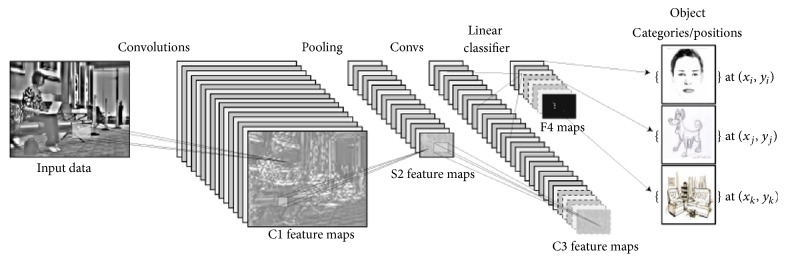
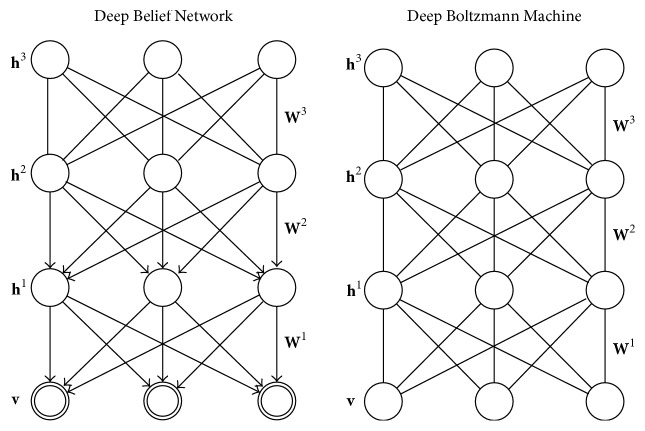
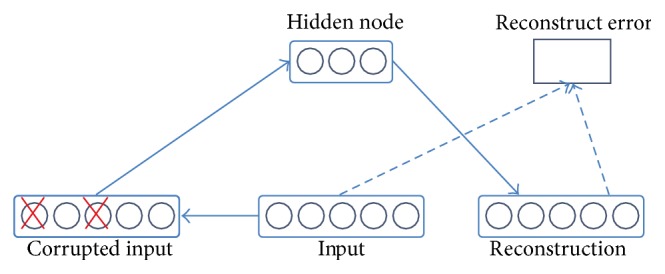
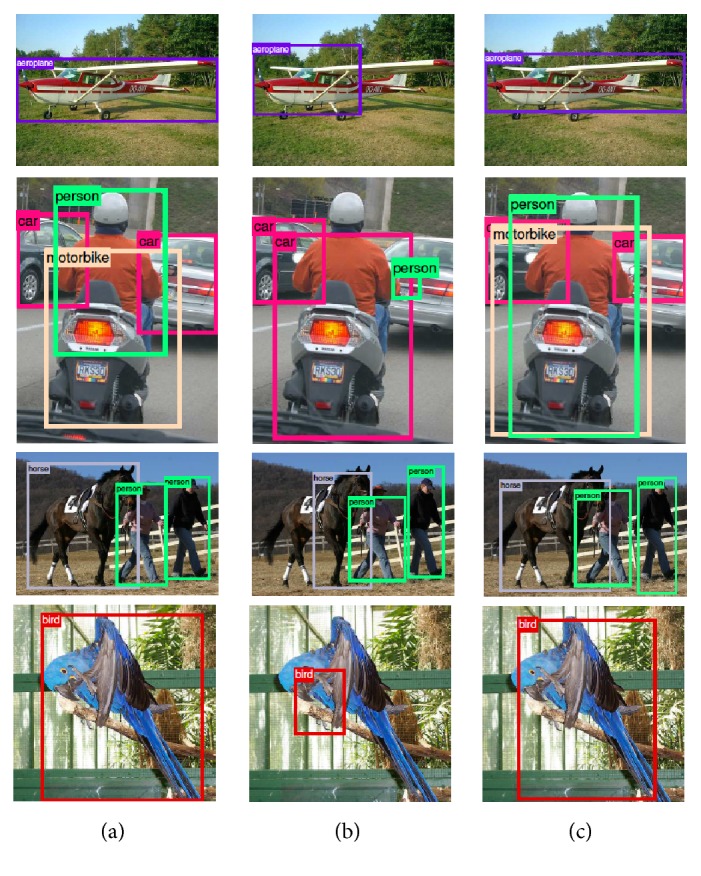
Verification
Claims the paper makes
The claims and statistics of this paper haven’t been checked yet.
Free: it reads the open-access text and checks the first 5 claims that cite a source we can check. Create a free account to check every claim.
Claims other papers make about this one
Each is checked against this paper’s own text: does it say what the citing paper says it does?
The cited source says what the claim attributes to it.
In the citing paper
“Additionally, HAR with image/video processing has been extensively studied in the computer vision community [79,80], and the methodologies commonly used differ significantly from techniques used for IMUs, EEG, PPG, etc.”
From Deep Learning in Human Activity Recognition with Wearable Sensors: A Review on Advances (2022) · cites this paper as [79]
Self-check
Percentages, sums and reported differences re-computed from the paper’s own numbers.
The self-check needs the paper’s full text.
Citations
Cites
Hochreiter, S., & Schmidhuber, J. (1997) · Neural Computation · doi:10.1162/neco.1997.9.8.1735 · Cited by 102,318 · cited 4×
“In [95], the authors propose a multimodal multistream deep learning framework to tackle the egocentric activity recognition problem, using both the video and sensor data and employing a dual CNNs and Long Short-Term Memory architecture.”
BackgroundInfluentialFaster R-CNN: Towards Real-Time Object Detection with Region Proposal Networks
Ren, S., He, K., Girshick, R., & Sun, J. (2017) · IEEE Transactions on Pattern Analysis and Machine Intelligence · doi:10.1109/tpami.2016.2577031 · Cited by 73,472
Faster R-CNN: Towards Real-Time Object Detection with Region Proposal Networks
Ren, S., He, K., Girshick, R., & Sun, J. (2015) · arXiv · doi:10.48550/arxiv.1506.01497 · Cited by 70,812
Gradient-based learning applied to document recognition
Lecun, Y., Bottou, L., Bengio, Y., & Haffner, P. (1998) · Proceedings of the IEEE · doi:10.1109/5.726791 · Cited by 58,805 · cited 2×
“In an attempt to compare these models (for a summary see Table 2), we can say that CNNs have generally performed better than DBNs in current literature on benchmark computer vision datasets such as MNIST.”
MethodGoing deeper with convolutions
Szegedy, C., Liu, W., Jia, Y., Sermanet, P., Reed, S., Anguelov, D., Erhan, D., Vanhoucke, V., & Rabinovich, A. (2015) · 2015 IEEE Conference on Computer Vision and Pattern Recognition (CVPR) · doi:10.1109/cvpr.2015.7298594 · Cited by 48,562
Fully convolutional networks for semantic segmentation
Long, J., Shelhamer, E., & Darrell, T. (2015) · 2015 IEEE Conference on Computer Vision and Pattern Recognition (CVPR) · doi:10.1109/cvpr.2015.7298965 · Cited by 38,834
Rich Feature Hierarchies for Accurate Object Detection and Semantic Segmentation
Girshick, R., Donahue, J., Darrell, T., & Malik, J. (2014) · 2014 IEEE Conference on Computer Vision and Pattern Recognition · doi:10.1109/cvpr.2014.81 · Cited by 32,684
Girshick, R. (2015) · 2015 IEEE International Conference on Computer Vision (ICCV) · doi:10.1109/iccv.2015.169 · Cited by 28,105
Reducing the dimensionality of data with neural networks
Hinton, G. E., & Salakhutdinov, R. R. (2006) · Science · doi:10.1126/science.1127647 · Cited by 20,928
A logical calculus of the ideas immanent in nervous activity
McCulloch, W. S., & Pitts, W. (1943) · The Bulletin of Mathematical Biophysics · doi:10.1007/bf02478259 · Cited by 18,566
Research works printed but not linked: 21
- LeCun Y. Boser B. Denker J. Touretzky D. Handwritten digit recognition with a back-propagation network Advances in Neural Information Processing Systems 2 (NIPS∗89) 1990 Denver, CO, USA
- Frederic B. Lamblin P. Pascanu R. Theano: new features and speed improvements Deep Learning and Unsupervised Feature Learning NIPS 2012 Workshop 2012 http://deeplearning.net/software/theano/
- Chen X. Yuille A. L. Articulated pose estimation by a graphical model with image dependent pairwise relations Proceedings of the NIPS 2014
- Boureau Y. L. Ponce J. LeCun Y. A theoretical analysis of feature pooling in visual recognition Proceedings of the ICML 2010
- Krizhevsky A. Sutskever I. Hinton G. E. Imagenet classification with deep convolutional neural networks Proceedings of the 26th Annual Conference on Neural Information Processing Systems (NIPS '12) December 2012 Lake Tahoe, Nev, USA 1097 1105 2-s2.0-84876231242
- Smolensky P. Information processing in dynamical systems: Foundations of harmony theory In Parallel Distributed Processing: Explorations in the Microstructure of Cognition 1986 1 Cambridge, MA, USA MIT Press 194 281
- Hinton G. E. Sejnowski T. J. Learning and Relearning in Boltzmann Machines 1986 1 Cambridge, MA MIT Press p. 4.2
- Carreira-Perpinan M. A. Hinton G. E. On contrastive divergence learning Proceedings of the tenth international workshop on artificial intelligence and statistics., NP: Society for Artificial Intelligence and Statistics 2005 33 40
- Hinton G. A practical guide to training restricted Boltzmann machines Momentum 2010 9 p. 926
- Salakhutdinov R. Larochelle H. Efficient learning of deep Boltzmann machines Proceedings of the AISTATS 2010
- Salakhutdinov R. Hinton G. An efficient learning procedure for deep Boltzmann machines Neural Computation 2012 24 8 1967 2006 MR2978160 10.1162/NECO_a_00311 Zbl1247.68223 2-s2.0-84874125782 22509963 · DOI · Paper page
- Salakhutdinov R. Hinton G. A better way to pretrain Deep Boltzmann Machines Proceedings of the 26th Annual Conference on Neural Information Processing Systems 2012, NIPS 2012 December 2012 usa 2447 2455 2-s2.0-84877755914
- Goodfellow I. Mirza M. Courville A. Multi-prediction deep Boltzmann machines Proceedings of the NIPS 2013
- Vincent P. Larochelle H. Bengio Y. Manzagol P.-A. Cohen W. W. McCallum A. Roweis S. T. Extracting and composing robust features with denoising autoencoders in Proceedings of the Twenty-fifth International Conference on Machine Learning (ICML'08) 2008 ACM 1096 1103
- Gallinari P. LeCun Y. Thiria S. Fogelman-Soulie F. Memoires associatives distribuees Proceedings of the in Proceedings of COGNITIVA 87 1987 Paris, La Villette
- Bengio Y. Lamblin P. Popovici D. Larochelle H. Sch B. Platt J. and. Hoffman T. Schölkopf B. Greedy layer-wise training of deep networks Advances in Neural Information Processing Systems (NIPS06) 2007 19 MIT Press 153 160
- Hosang J. Benenson R. Schiele B. How good are detection proposals, really? Proceedings of the 25th British Machine Vision Conference, BMVC 2014 September 2014 gbr 2-s2.0-84919779754
- Nair V. Hinton G. E. 3D object recognition with deep belief nets Proceedings of the NIPS 2009
- Kitsikidis A. Dimitropoulos K. Douka S. Grammalidis N. Dance analysis using multiple kinect sensors Proceedings of the 9th International Conference on Computer Vision Theory and Applications, VISAPP 2014 January 2014 prt 789 795 2-s2.0-84906896563
- Jain A. Tompson J. Andriluka M. Learning human pose estimation features with convolutional networks Proceedings of the ICLR 2014
- Tompson J. J. Jain A. LeCun Y. Joint training of a convolutional network and a graphical model for human pose estimation Proceedings of the NIPS 2014
Cited by
Items 301–400 of 1,008
A Review on Plant Disease Detection Using Hyperspectral Imaging
Rayhana, R., Ma, Z., Liu, Z., Xiao, G. G., Ruan, Y., & Sangha, J. S. (2023) · IEEE Transactions on AgriFood Electronics · doi:10.1109/tafe.2023.3329849 · Cited by 85
A survey on hybrid human-artificial intelligence for autonomous driving
Ning, H., Yin, R., Ullah, A., & Shi, F. (2022) · IEEE Transactions on Intelligent Transportation Systems · doi:10.1109/tits.2021.3074695 · Cited by 84
“For example, Computer Vision (CV) allows AVs to get more environmental information than humans [5]–[9].”
BackgroundSmart Strawberry Farming Using Edge Computing and IoT
da Cruz, M. R., Mafra, S. B., Teixeira, E., & de Figueiredo, F. A. P. (2022) · Sensors · doi:10.3390/s22155866 · Cited by 85
“Deep learning allows computational models to learn and represent data, mimicking how the brain per-ceives and understands information [20].”
BackgroundAirfoil GAN: encoding and synthesizing airfoils for aerodynamic shape optimization
Wang, Y., Shimada, K., & Farimani, A. B. (2023) · Journal of Computational Design and Engineering · doi:10.1093/jcde/qwad046 · Cited by 112
“Introduction Recent years have witnessed the success of deep learning [1] in many fields like computer vision [2], natural language process [3] and robotics [4] [5].”
BackgroundLi, W., Bazant, M. Z., & Zhu, J. (2023) · Computer Methods in Applied Mechanics and Engineering · doi:10.1016/j.cma.2023.116299 · Cited by 108
Facial Recognition System for People with and without Face Mask in Times of the COVID-19 Pandemic
Talahua, J. S., Buele, J., Calvopiña, P., & Aldás, J. V. (2021) · Sustainability · doi:10.3390/su13126900 · Cited by 83
Deep learning for detecting building façade elements from images considering prior knowledge
Zhang, G., Pan, Y., & Zhang, L. (2021) · Automation in Construction · doi:10.1016/j.autcon.2021.104016 · Cited by 83
Development of early fire detection model for buildings using computer vision-based CCTV
Ahn, Y., Choi, H., & Kim, B. S. (2022) · Journal of Building Engineering · doi:10.1016/j.jobe.2022.105647 · Cited by 83
Recent Advances on Deep Learning for Sign Language Recognition
Zhang, Y., & Jiang, X. (2024) · Computer Modeling in Engineering & Sciences · doi:10.32604/cmes.2023.045731 · Cited by 106
SO-YOLOv8: A novel deep learning-based approach for small object detection with YOLO beyond COCO
Iqra, & Giri, K. J. (2025) · Expert Systems with Applications · doi:10.1016/j.eswa.2025.127447 · Cited by 107
He, Y., Zeng, H., Fan, Y., Ji, S., & Wu, J. (2019) · Mobile Information Systems · doi:10.1155/2019/4570808 · Cited by 82
“For most CV tasks, the detection algorithm based on deep learning performs better than traditional detection techniques [11].”
MethodQuantum recurrent neural networks for sequential learning
Li, Y., Wang, Z., Han, R., Shi, S., Li, J., Shang, R., Zheng, H., Zhong, G., & Gu, Y. (2023) · Neural Networks · doi:10.1016/j.neunet.2023.07.003 · Cited by 112
DAUnet: A U-shaped network combining deep supervision and attention for brain tumor segmentation
Feng, Y., Cao, Y., An, D., Liu, P., Liao, X., & Yu, B. (2023) · Knowledge-Based Systems · doi:10.1016/j.knosys.2023.111348 · Cited by 87
Ullah, M. S., Khan, M. A., Masood, A., Mzoughi, O., Saidani, O., & Alturki, N. M. (2024) · Frontiers in Oncology · doi:10.3389/fonc.2024.1335740 · Cited by 95
FILM: Following Instructions in Language with Modular Methods
Min, S. Y., Chaplot, D. S., Ravikumar, P., Bisk, Y., & Salakhutdinov, R. (2021) · arXiv · doi:10.48550/arxiv.2110.07342 · Cited by 81
Sequential vessel segmentation via deep channel attention network
Hao, D., Ding, S. Z., Qiu, L., Lv, Y., Fei, B., Zhu, Y., & Qin, B. (2020) · Neural Networks · doi:10.1016/j.neunet.2020.05.005 · Cited by 90
“Consequently, deep learning methods can earn a top rank in many computer vision fields including segmentation, detection, classification and so on [45, 46].”
MethodZhang, J., Yang, Y., Feng, X., Xu, H., Chen, J., & He, Y. (2020) · Frontiers in Plant Science · doi:10.3389/fpls.2020.00821 · Cited by 81
“The CNN algorithm essentially implements the input-to-output mapping by extracting features and reducing dimensions of the data (Gu et al., 2015; Voulodimos et al., 2018).”
MethodInvestigation of transfer learning for image classification and impact on training sample size
Zhu, W., Braun, B., Chiang, L. H., & Romagnoli, J. A. (2021) · Chemometrics and Intelligent Laboratory Systems · doi:10.1016/j.chemolab.2021.104269 · Cited by 83
Artificial Intelligence and the Medical Physicist: Welcome to the Machine
Avanzo, M., Trianni, A., Botta, F., Talamonti, C., Stasi, M., & Iori, M. (2021) · Applied Sciences · doi:10.3390/app11041691 · Cited by 95
“Other applications that could become a focus of AI in the near future are computer vision [72], dealing with object detection and feature recognition in digital images, and virtual assistants [73], employing speech recognition in neuroradiology [74], radiology, and beyond.”
BackgroundFRED-Net: Fully residual encoder–decoder network for accurate iris segmentation
Arsalan, M., Kim, D. S., Lee, M. B., Owais, M., & Park, K. R. (2019) · Expert Systems with Applications · doi:10.1016/j.eswa.2019.01.010 · Cited by 83
Orientation-Aware Vehicle Detection in Aerial Images via an Anchor-Free Object Detection Approach
Shi, F., Zhang, T., & Zhang, T. (2020) · IEEE Transactions on Geoscience and Remote Sensing · doi:10.1109/tgrs.2020.3011418 · Cited by 83
“In recent years, deep learning technologies, especially convolutional neural network (CNN), have made great achievement in object detection [7], [8] (e.g., region-based CNN (R-CNN) [11], faster-R-CNN [16], single-shot multibox detector (SSD) [20]).”
BackgroundSemantics-Aware Spatial-Temporal Binaries for Cross-Modal Video Retrieval
Qi, M., Qin, J., Yang, Y., Wang, Y., & Luo, J. (2021) · IEEE Transactions on Image Processing · doi:10.1109/tip.2020.3048680 · Cited by 107
“More recently, with the rapid development of deep learning [63], [64], massive deep learning based hashing methods [19], [23], [65]–[70] have been introduced.”
BackgroundChen, D., Li, X., & Li, S. (2021) · IEEE Transactions on Neural Networks and Learning Systems · doi:10.1109/tnnls.2021.3105384 · Cited by 94
“In recent years, deep learning has exhibited good performance in computer vision [3], nat-ural language processing [4], manipulator control [5], and biomedicine [6]–[8].”
BackgroundApplications of deep learning in electron microscopy
Treder, K. P., Huang, C., Kim, J. S., & Kirkland, A. I. (2022) · Microscopy · doi:10.1093/jmicro/dfab043 · Cited by 89
“Deep learning was originally developed within machine learning and computer vision and has led to significant progress in a variety of computer vision problems [4].”
Edge-preserving image denoising using a deep convolutional neural network
Shahdoosti, H. R., & Rahemi, Z. (2019) · Signal Processing · doi:10.1016/j.sigpro.2019.01.017 · Cited by 80
A Physics-Based Neural-Network Way to Perform Seismic Full Waveform Inversion
Ren, Y., Xu, X., Yang, S., Nie, L., & Chen, Y. (2020) · IEEE Access · doi:10.1109/access.2020.2997921 · Cited by 83
“In recent years, the successful applications of deep learning in various fields like computer vision ( e.g. [ 10]–[12]) and natural language processing ( e.g. [ 13]–[15]), have attracted attention from scholars in exploration geophysics community.”
BackgroundAssadzadeh, A., Arashpour, M., Brilakis, I., Ngo, T., & Konstantinou, E. (2021) · Automation in Construction · doi:10.1016/j.autcon.2021.104089 · Cited by 79
“One of the most prominent contributing factors to the substantial performance improvement of deep learning is the availability of large, accurately labelled, and diverse datasets [33].”
BackgroundTowards artificial intelligence at scale in the chemical industry
Chiang, L. H., Braun, B., Wang, Z., & Castillo, I. (2022) · AIChE Journal · doi:10.1002/aic.17644 · Cited by 91
A systematic review of object detection from images using deep learning
Kaur, J., & Singh, W. (2023) · Multimedia Tools and Applications · doi:10.1007/s11042-023-15981-y · Cited by 89
Pfeffer, M. A., Ling, S. H., & Wong, J. K. W. (2024) · Computers in Biology and Medicine · doi:10.1016/j.compbiomed.2024.108705 · Cited by 91
Representation Learning for Tabular Data: A Comprehensive Survey
Jiang, J., Liu, S.-Y., Cai, H.-R., Zhou, Q.-L., & Ye, H.-J. (2026) · IEEE Transactions on Pattern Analysis and Machine Intelligence · doi:10.1109/tpami.2026.3657217 · Cited by 118
“Machinelearningmethodsfortabulardatahaveevolved significantlyovertheyears[13],[14],[15].”
Qi, X., de Almeida, G. A. M., & Maldonado, S. (2024) · Journal of Hydrology · doi:10.1016/j.jhydrol.2024.131263 · Cited by 78
Jena, B., Nayak, G. K., & Saxena, S. (2021) · Concurrency and Computation Practice and Experience · doi:10.1002/cpe.6767 · Cited by 85
Deep learning‐based bolt loosening detection for wind turbine towers
Yang, X., Gao, Y., Fang, C., Zheng, Y., & We, W. (2022) · Structural Control and Health Monitoring · doi:10.1002/stc.2943 · Cited by 80
“…has shown great potential for application in image classification tasks and is gradually replacing traditional machine learning in the area of CV. 25,26 At this stage, deep learning-based methods for bolt loosening detection can be divided into two categories according to different indicators of…”
BackgroundOnan, A. (2023) · Expert Systems with Applications · doi:10.1016/j.eswa.2023.120908 · Cited by 82
Design of deep ensemble classifier with fuzzy decision method for biomedical image classification
Das, A., Mohapatra, S. K., & Mohanty, M. N. (2021) · Applied Soft Computing · doi:10.1016/j.asoc.2021.108178 · Cited by 80
Li, H., Wu, P., Zeng, N., Liu, Y., & Alsaadi, F. E. (2022) · International Journal of Systems Science · doi:10.1080/00207721.2022.2083262 · Cited by 77
“Benefit from the rapid development of computer vision (CV), especially in the fields of object detection and semantic segmentation (Voulodimos et al., 2018), employing CV methods for image processing in POCT systems has become a new trend.”
BackgroundXiong, W., Long, X., Bordas, S., & Jiang, C. (2024) · Computer Methods in Applied Mechanics and Engineering · doi:10.1016/j.cma.2024.117681 · Cited by 77
Computer-Aided Early Melanoma Brain-Tumor Detection Using Deep-Learning Approach
Asad, R., Rehman, S. U., Imran, A., Li, J., Almuhaimeed, A., & Alzahrani, A. (2023) · Biomedicines · doi:10.3390/biomedicines11010184 · Cited by 92
“[14] Convolutional neural network (CNN) MRI brain imageries 96.”
BackgroundMethodWildARe-YOLO: A lightweight and efficient wild animal recognition model
Bakana, S. R., Zhang, Y., & Twala, B. (2024) · Ecological Informatics · doi:10.1016/j.ecoinf.2024.102541 · Cited by 83
Li, H., Xue, T., Zhang, A., Luo, X., Kong, L., & Huang, G. (2024) · Heliyon · doi:10.1016/j.heliyon.2024.e40037 · Cited by 97
The heat source layout optimization using deep learning surrogate modeling
Chen, X., Chen, X., Zhou, W., Zhang, J., & Yao, W. (2020) · Structural and Multidisciplinary Optimization · doi:10.1007/s00158-020-02659-4 · Cited by 75
“In the past two decades, machine learning has witnessed huge progress in various fields like computer vision (Voulodimos et al. 2018) and natural language processing (Young et al. 2018), especially due to the representative deep learning technique based on artificial neural network (NN).”
BackgroundWei, S., Tien, P. W., Chow, T. W., Wu, Y., & Calautit, J. K. (2022) · Journal of Building Engineering · doi:10.1016/j.jobe.2022.104715 · Cited by 75
Onyeaka, H. N., Akinsemolu, A. A., Miri, T., Nnaji, N. D., Duan, K., Pang, G., Tamasiga, P., Khalid, S., Al-Sharify, Z. T., & Ugwa, C. (2025) · Journal of Agriculture and Food Research · doi:10.1016/j.jafr.2025.101895 · Cited by 93
Bakalos, N., Voulodimos, A., Doulamis, N., Doulamis, A., Ostfeld, A., Salomons, E., Caubet, J., Jimenez, V., & Li, P. (2019) · IEEE Signal Processing Magazine · doi:10.1109/msp.2018.2885359 · Cited by 69
“Detailed surveys about video-based abnormal activity recognition have been published [12], [13].”
BackgroundSelf-citationCNN-Based Target Recognition and Identification for Infrared Imaging in Defense Systems
d’Acremont, A., Fablet, R., Baussard, A., & Quin, G. (2019) · Sensors · doi:10.3390/s19092040 · Cited by 81
“This class of artificial neural networks provides excellent results in various domains [20].”
BackgroundAutomated rip current detection with region based convolutional neural networks
de Silva, A., Mori, I., Dusek, G., Davis, J., & Pang, A. (2021) · Coastal Engineering · doi:10.1016/j.coastaleng.2021.103859 · Cited by 82
Mumuni, A., & Mumuni, F. (2021) · SN Computer Science · doi:10.1007/s42979-021-00735-0 · Cited by 81
“Presently, convolutional neural networks (CNNs) outperform other deep learning methods in most machine vision applications [8].”
BackgroundA data-centric review of deep transfer learning with applications to text data
Bashath, S., Perera, N., Tripathi, S., Manjang, K., Dehmer, M., & Emmert‐Streib, F. (2021) · Information Sciences · doi:10.1016/j.ins.2021.11.061 · Cited by 86
“Please send us an updated proof to check after you made the corrections (we do not know how to add a comment)**Deep learning models consist of multiple layers which help the model to learn a representation or embedding of the data with multiple levels of abstraction [60,48,123].”
BackgroundArtificial intelligence in thyroid ultrasound
Cao, C.-L., Li, Q., Jin, T., Shi, L., Li, W., Ya, X., Cheng, J., Du, T., Li, J., & Cui, X. (2023) · Frontiers in Oncology · doi:10.3389/fonc.2023.1060702 · Cited by 86
Yan, X., Lin, J., Wang, S., Zhang, Z., Liu, P., Sun, S., Yao, J., & Zhang, K. (2024) · Advances in Water Resources · doi:10.1016/j.advwatres.2024.104731 · Cited by 87
Predicting 30-day hospital readmissions using artificial neural networks with medical code embedding
Liu, W., Singh, K., Ryan, A. M., Sukul, D., Mahmoudi, E., Waljee, A. K., Stansbury, C. M., Zhu, J., & Nallamothu, B. K. (2020) · PLoS ONE · doi:10.1371/journal.pone.0221606 · Cited by 79
Eslamlou, A. D., & Huang, S. (2022) · Buildings · doi:10.3390/buildings12122067 · Cited by 83
Machine learning for predicting fatigue properties of additively manufactured materials
Yi, M., Xue, M., Peihong, C. O. N. G., Song, Y., ZHANG, H., Lingfeng, W. A. N. G., Liucheng, Z. H. O. U., Li, Y., & Guo, W. (2023) · Chinese Journal of Aeronautics · doi:10.1016/j.cja.2023.11.001 · Cited by 78
“ML makes it possible to learn from the data automatically and make decisions or predictions without being explicitly programmed [15–17].”
BackgroundLiSHT: Non-parametric Linearly Scaled Hyperbolic Tangent Activation Function for Neural Networks
Roy, S. K., Manna, S., Dubey, S. R., & Chaudhuri, B. B. (2023) · Communications in computer and information science · doi:10.1007/978-3-031-31407-0_35 · Cited by 84
Kaselimi, M., Voulodimos, A. S., Doulamis, N. D., Doulamis, A. D., & Delikaraoglou, D. (2020) · Remote Sensing · doi:10.3390/rs12091354 · Cited by 80
“LSTMs learn long term correlations in a sequence [8], they can model complex sequences with various features, as it is shown in [8], they can model complex sequences with various features, as it is shown in [26], where solar radio flux at 10.”
BackgroundSelf-citationWang, Y., Liu, H., Guo, M., Shen, X., Han, B., & Zhou, Y. (2021) · Fuel · doi:10.1016/j.fuel.2021.120216 · Cited by 72
Khan, M. A., Kadry, S., Parwekar, P., Damaševičius, R., Mehmood, A., Khan, J. A., & Naqvi, S. R. (2021) · Complex & Intelligent Systems · doi:10.1007/s40747-020-00244-2 · Cited by 76
“Deep learning shows a huge interest in computer vision research due to improved classification performance [52].”
BackgroundDeep Learning with Neuroimaging and Genomics in Alzheimer’s Disease
Lin, E., Lin, C., & Lane, H. (2021) · International Journal of Molecular Sciences · doi:10.3390/ijms22157911 · Cited by 77
“Remarkably, deep learning models have become state of the art in the fields of computer vision and natural language processing where enormous accomplishments have been achieved [17,18]. catch up with the emerging direction [6].”
BackgroundFace Mask Assistant: Detection of Face Mask Service Stage Based on Mobile Phone
Chen, Y., Hu, M., Hua, C., Zhai, G., Zhang, J., Li, Q., & Yang, S. X. (2021) · IEEE Sensors Journal · doi:10.1109/jsen.2021.3061178 · Cited by 79
“Meanwhile, deep learning has been shown to perform well in computer vision field [53], [54].”
BackgroundWind turbine blade surface inspection based on deep learning and UAV-taken images
Xu, D., Wen, C., & Liu, J. (2019) · Journal of Renewable and Sustainable Energy · doi:10.1063/1.5113532 · Cited by 71
Gong, H., Deng, X., Liu, J., & Huang, J. (2021) · Automation in Construction · doi:10.1016/j.autcon.2021.104009 · Cited by 74
“Fairness for unobserved characteristics: insights from technological impacts on queer communities”.
Tomasev, N., McKee, K. R., Kay, J., & Mohamed, S. (2021) · Proceedings of the 2021 AAAI/ACM Conference on AI, Ethics, and Society · doi:10.1145/3461702.3462540 · Cited by 70
“ogy [159] could be employed by malicious actors to rapidly identify individuals sharing their pictures online, whether publicly or in direct messages.”
BackgroundRecognition of High-Risk Scenarios in Building Construction Based on Image Semantics
Zhang, M., Zhu, M., & Zhao, X. (2020) · Journal of Computing in Civil Engineering · doi:10.1061/(asce)cp.1943-5487.0000900 · Cited by 70
Sharma, A., & Pramanik, M. (2020) · Biomedical Optics Express · doi:10.1364/boe.411257 · Cited by 71
Wang, Y., Shi, X., Cheng, K., Zhang, J., & Chang, Q. (2022) · Urban forestry & urban greening · doi:10.1016/j.ufug.2022.127713 · Cited by 72
Akshatha, K. R., Karunakar, A. K., Shenoy, B. S., Phani Pavan, K., Dhareshwar, C. V., & Johnson, D. G. (2022) · ISPRS Journal of Photogrammetry and Remote Sensing · doi:10.1016/j.isprsjprs.2022.11.008 · Cited by 81
An, Y., Du, H., Ma, S., Niu, Y., Liu, D., Wang, J., Du, Y., Childs, C. J., Walsh, J. J., & Dong, R. (2023) · Earth-Science Reviews · doi:10.1016/j.earscirev.2023.104509 · Cited by 84
From Machine Learning to Patient Outcomes: A Comprehensive Review of AI in Pancreatic Cancer
Tripathi, S., Tabari, A., Mansur, A., Dabbara, H., Bridge, C. P., & Daye, D. (2024) · Diagnostics · doi:10.3390/diagnostics14020174 · Cited by 76
“image analysis and processing to derive significant insights from medical images, including but not limited to computed tomography (CT) scans, magnetic resonance imaging (MRI), or histopathological slides [14,64–66].”
MethodBriechle, S., Krzystek, P., & Vosselman, G. (2020) · ISPRS annals of the photogrammetry, remote sensing and spatial information sciences · doi:10.5194/isprs-annals-v-2-2020-203-2020 · Cited by 80
“Various authors have demonstrated that standard machine learning (ML) concepts using, for example, SVM or RF, can be outperformed by DL-based methods (Voulodimos et al., 2018; Liu et al., 2018).”
BackgroundKhishe, M., Caraffini, F., & Kühn, S. (2021) · Mathematics · doi:10.3390/math9091002 · Cited by 71
“As noted, CNNs have become the de-facto standard in image processing [47] and have been used successfully for X-ray analysis [4,11,16,17].”
MethodA lightweight deep learning model for cattle face recognition
Li, Z., Lei, X., & Liu, S. (2022) · Computers and Electronics in Agriculture · doi:10.1016/j.compag.2022.106848 · Cited by 69
Multimodal Machine Learning Guides Low Carbon Aeration Strategies in Urban Wastewater Treatment
Wang, H., Wang, Y., Wang, X., Yin, W.-X., Yu, T., Xue, C.-H., & Wang, A. (2024) · Engineering · doi:10.1016/j.eng.2023.11.020 · Cited by 70
How Deep Neural Networks Learn Compositional Data: The Random Hierarchy Model
Cagnetta, F., Petrini, L., Tomasini, U. M., Favero, A., & Wyart, M. (2024) · Physical Review X · doi:10.1103/physrevx.14.031001 · Cited by 116
“Deep learning methods exhibit superhuman performances in areas ranging from image recognition [1] to Go-playing [2].”
BackgroundA deep learning method to more accurately recall known lysine acetylation sites
Wu, M., Yang, Y., Wang, H., & Xu, Y. (2019) · BMC Bioinformatics · doi:10.1186/s12859-019-2632-9 · Cited by 72
3D Neuron Reconstruction in Tangled Neuronal Image With Deep Networks
Li, Q., & Shen, L. (2019) · IEEE Transactions on Medical Imaging · doi:10.1109/tmi.2019.2926568 · Cited by 76
“Because of its ability to learn hierarchy of features, deep network [18] has been widely applied into many fields including computer vision [19], natural language processing [20], speech recognition [21], et al, and achieves high performances on these tasks.”
BackgroundTransforming Digital Marketing with Generative AI
Islam, T., Miron, A., Nandy, M., Choudrie, J., Liu, X., & Li, Y. (2024) · Computers · doi:10.3390/computers13070168 · Cited by 68
“One key issue is that the output from these models may not be the true resemblance of the users, leading to inaccurate or misleading results [100].”
BackgroundNguyen‐Vo, T., Nguyen, L., Do, N., Le, P. H., Nguyen, T.-N., Nguyen, B. P., & Le, L. (2020) · ACS Omega · doi:10.1021/acsomega.0c03866 · Cited by 70
“The e ff ectiveness of DL has been far con fi rmed with great achievements in face/ voice/pattern recognition, 39 − 41 natural language processing (NLP), 42 bioinformatics, 43 and drug discovery.”
Liu, Y.-X., Liu, X., Cen, C., Li, X., Liu, J., Ming, Z., Yu, S., Tang, X., Zhou, L., Yu, J., et al. (2021) · Hepatobiliary & pancreatic diseases international · doi:10.1016/j.hbpd.2021.08.004 · Cited by 68
Computer Vision-based Robotic Arm for Object Color, Shape, and Size Detection
Abdullah-Al-Noman, M., Eva, A. N., Yeahyea, T. B., & Khan, R. (2022) · Journal of Robotics and Control (JRC) · doi:10.18196/jrc.v3i2.13906 · Cited by 68
“Computer vision is a recent advancement in the field of artificial intelligence (AI) field, and it is extensively utilized in industrial automation, detection, object identification, automated technology, and robotics [21, 22].”
BackgroundLiu, Y., Yan, Z., Tian, Y., Wu, A., & Li, Y. (2022) · Engineering Applications of Artificial Intelligence · doi:10.1016/j.engappai.2022.105373 · Cited by 75
A literature survey of MR-based brain tumor segmentation with missing modalities
Zhou, T., Ruan, S., & Hu, H. (2022) · Computerized Medical Imaging and Graphics · doi:10.1016/j.compmedimag.2022.102167 · Cited by 77
A Survey on Yogic Posture Recognition
Rajendran, A. K., & Sethuraman, S. C. (2023) · IEEE Access · doi:10.1109/access.2023.3240769 · Cited by 84
“It is revealed that maximum pooling could further lead to faster convergence, excellent feature invariant selection, & improved generalization [186].”
BackgroundAutomatic detection of COVID-19 from chest radiographs using deep learning
Pandit, M. K., Banday, S. A., Naaz, R., & Chishti, M. A. (2020) · Radiography · doi:10.1016/j.radi.2020.10.018 · Cited by 67
Lu, Z., Zhang, X., He, H., Wang, J., & Song, J. (2022) · IEEE Transactions on Wireless Communications · doi:10.1109/twc.2022.3141653 · Cited by 76
A method of detecting apple leaf diseases based on improved convolutional neural network
Di, J., & Li, Q. (2022) · PLoS ONE · doi:10.1371/journal.pone.0262629 · Cited by 67
“After Krizhevsky, Sutskever [13] proposed the AlexNet structure at the ImageNet Large-scale Visual Recognition Challenge (ILSVRC) in 2012, target detection based on deep learning has gradually become mainstream [14].”
BackgroundKabakuş, A. T. (2022) · Expert Systems with Applications · doi:10.1016/j.eswa.2022.117833 · Cited by 67
Chen, Y., Zhou, T., Wu, J., Qiao, H., Lin, X., Fang, L., & Dai, Q. (2023) · Science Advances · doi:10.1126/sciadv.adf8437 · Cited by 74
“Because of the prevailing development of intelligent society, the transmission of images becomes a fundamental demand in various fields in daily life ( 1 – 3 ).”
BackgroundWheat Disease Classification Using Continual Learning
Alharbi, A., Khan, M. U. G., & Tayyaba, B. (2023) · IEEE Access · doi:10.1109/access.2023.3304358 · Cited by 71
Λαμπρόπουλος, Γ., & Evangelidis, G. (2025) · Applied Sciences · doi:10.3390/app15020971 · Cited by 74
“Machine learning and deep learning play a vital role in the realization of learning analytics and educational data mining [145–147].”
A Survey on Deep Learning-Based Person Re-Identification Systems
Almasawa, M. O., Elrefaei, L. A., & Moria, K. M. (2019) · IEEE Access · doi:10.1109/access.2019.2957336 · Cited by 72
Monitoring sugar crystallization with deep neural networks
Zhang, J., Meng, Y., Wu, J., Qin, J., Wang, H., Yao, T., & Yu, S. (2020) · Journal of Food Engineering · doi:10.1016/j.jfoodeng.2020.109965 · Cited by 66
Structure‐aware 3D reconstruction for cable‐stayed bridges: A learning‐based method
Hu, F., Zhao, J. K., Huang, Y., & Li, H. (2020) · Computer-Aided Civil and Infrastructure Engineering · doi:10.1111/mice.12568 · Cited by 74
Deep Learning-Based Bird’s Nest Detection on Transmission Lines Using UAV Imagery
Li, J., Yan, D., Luan, K., Li, Z., & Liang, H. (2020) · Applied Sciences · doi:10.3390/app10186147 · Cited by 69
“In the field of machine learning, deep learning has caused an unprecedented and tremendous impact [10].”
BackgroundAdversarial Example Detection Using Latent Neighborhood Graph
Abusnaina, A., Wu, Y., Arora, S. S., Wang, Y., Wang, F., Yang, H., & Mohaisen, A. (2021) · IEEE/CVF International Conference on Computer Vision (ICCV) · doi:10.1109/iccv48922.2021.00759 · Cited by 97
“Deep learning techniques are being widely used in various domains including computer vision [6, 13, 10, 24], natural language processing [12, 43], and speech recognition [16, 37].”
BackgroundFusionNet: A Convolution–Transformer Fusion Network for Hyperspectral Image Classification
Yang, L., Yang, Y., Yang, J., Zhao, N., Wu, L., Wang, L., & Wang, T. (2022) · Remote Sensing · doi:10.3390/rs14164066 · Cited by 67
Deep learning approaches and interventions for futuristic engineering in agriculture
Chakraborty, S. K., Chandel, N. S., Jat, D., Tiwari, M. K., Rajwade, Y. A., & Subeesh, A. (2022) · Neural Computing and Applications · doi:10.1007/s00521-022-07744-x · Cited by 73
“The deep learning architectures applied to the agricultural engineering domain have been mainly based on Artificial Neural Networks (ANN), Convolutional Neural Networks (CNN), Recurrent Neural Networks (RNN) and Auto Encoders (AE) [48, 49].”
MethodIn vivo bioprinting: Broadening the therapeutic horizon for tissue injuries
Zhao, W., Hu, C., & Xu, T. (2023) · Bioactive Materials · doi:10.1016/j.bioactmat.2023.01.018 · Cited by 76
“Given this availability of stereo visual systems [166], various algorithms for camera calibration [167], feature detection [168], and real-time tracking [169,170] can be transferred from the laboratory to the medical-imaging domain.”
MethodConvolutional neural network for efficient estimation of regional brain strains
Wu, S., Zhao, W., Ghazi, K., & Ji, S. (2019) · Scientific Reports · doi:10.1038/s41598-019-53551-1 · Cited by 74
“CNN is a class of deep learning neural network that has been extensively used in medical imaging and computer vision 30,31 .”
BackgroundYeo, M., Tahayori, B., Kok, H. K., Maingard, J., Kutaiba, N., Russell, J., Thijs, V., Jhamb, A., Chandra, R. V., Brooks, M., et al. (2021) · Journal of NeuroInterventional Surgery · doi:10.1136/neurintsurg-2020-017099 · Cited by 65
Metadata
- Authors
- Voulodimos, A., Doulamis, N., Doulamis, A., & Protopapadakis, E.
- Affiliations
- National Technical University of Athens (GR)
- Corresponding author
- Voulodimos, Athanasios
- Venue
- Computational Intelligence and Neuroscience
- Publisher
- Wiley
- Published
- 2018
- Volume
- 2018
- Pages
- 1-13
- ISSN
- 1687-5265 (ISSN-L)
- 1687-5273
- PMC
- PMC5816885
- OpenAlex
- W2794284562
- Cited by
- 3,403
- References
- 56
- Citations by year
- 2026: 202 · 2025: 447 · 2024: 586 · 2023: 541 · 2022: 570 · 2021: 496 · 2020: 375 · 2019: 153 · 2018: 32
- FWCI
- 30.98
- Type
- journal article
- Language
- en
- Open access
- hybrid
- doi.org
- Locations
- Computational Intelligence and Neuroscience (publishedVersion, cc-by)
- Europe PMC (PubMed Central) (publishedVersion, cc-by)
- PubMed Central (publishedVersion, cc-by)
- PubMed (publishedVersion)
- Funders
- State Scholarships Foundation
- European Social Fund
- Greek national funds
- Topics
- Physical Sciences › Computer Science › Computer Vision and Pattern Recognition › Advanced Neural Network Applications
- Physical Sciences › Computer Science › Computer Vision and Pattern Recognition › Advanced Image and Video Retrieval Techniques
- Physical Sciences › Computer Science › Artificial Intelligence › Domain Adaptation and Few-Shot Learning
- Keywords
- deep learning, computer vision, convolutional neural networks, deep Boltzmann machine, deep belief network, stacked denoising autoencoder, object detection, face recognition, human action recognition, activity recognition, human pose estimation
- MeSH terms
- Machine Learning, Algorithms, Humans, Neural Networks, Computer
About these checks
Registry, retraction, Cites and statistics results are computed, not judged, with one exception: a printed reference that no index lists is read once by a model before it counts as a citation error. Claims are extracted by a model and kept only when their quote appears verbatim in the text; each cited source is then checked, with a model’s help, for whether it says what the claim relies on. Those verdicts can be wrong — read the claim’s quote and the cited source before relying on one.
Statistics and arithmetic are recomputed, not judged.
Confidence bands are shown only for fields calibrated on our annotated test set. None is calibrated yet, so no band is shown.
What counts as a claim ›How we measure confidence ›How we check this ›
Are you an author, or do you see a problem with this page? Request a review
Data sources
Bibliographic data: Semantic Scholar, OpenAlex, Crossref.
Contains information from the Semantic Scholar Academic Graph Datasets, made available under the ODC Attribution License (ODC-BY 1.0).
Semantic Scholar’s data is described in: Kinney, R., et al. (2023). The Semantic Scholar Open Data Platform. arXiv:2301.10140.
