

Conversational Therapy through Semi-Immersive Virtual Reality Environments for Language Recovery and Psychological Well-Being in Post Stroke Aphasia
Open accessThe DOI matches its Crossref record; 74 of the 74 references it cites were found in a registry or an index; 25 of the 84 sources its claims cite were checked for support.
Abstract
Aphasia is a highly disabling acquired language disorder generally caused by a left-lateralized brain damage. Even if traditional therapies have been shown to induce an adequate clinical improvement, a large percentage of patients are left with some degree of language impairments. Therefore, new approaches to common speech therapies are urgently needed in order to maximize the recovery from aphasia. The recent application of virtual reality (VR) to aphasia rehabilitation has already evidenced its usefulness in promoting a more pragmatically oriented treatment than conventional therapies (CT). In the present study, thirty-six chronic persons with aphasia (PWA) were randomly assigned to two groups. The VR group underwent conversational therapy during VR everyday life setting observation, while the control group was trained in a conventional setting without VR support. All patients were extensively tested through a neuropsychological battery which included not only measures for language skills and communication efficacy but also self-esteem and quality of life questionnairies. All patients were trained through a conversational approach by a speech therapist twice a week for six months (total 48 sessions). After the treatment, no significant differences among groups were found in the different measures. However, the amount of improvement in the different areas was distributed over far more cognitive and psychological aspects in the VR group than in the control group. Indeed, the within-group comparisons showed a significant enhancement in different language tasks (i.e., oral comprehension, repetition, and written language) only in the VR group. Significant gains, after the treatment, were also found, in the VR group, in different psychological dimensions (i.e., self-esteem and emotional and mood state). Given the importance of these aspects for aphasia recovery, we believe that our results add to previous evidence which points to the ecological validity and feasibility of VR treatment for language recovery and psychosocial well-being.
Overview
CoChat Summary
TL;DR
In 36 chronic nonfluent persons with post-stroke aphasia, six months of conversational therapy improved language and psychosocial outcomes whether delivered with semi-immersive VR or in a conventional setting. Between-group comparisons showed no significant differences, but within-group gains were spread across more language, communication, and psychological domains in the VR group.
Key findings
- Mixed ANOVAs found main effects of time on AAT subtests (token test, repetition, written language, naming, comprehension) but no group effect and no time×group interaction, indicating both groups improved equally.
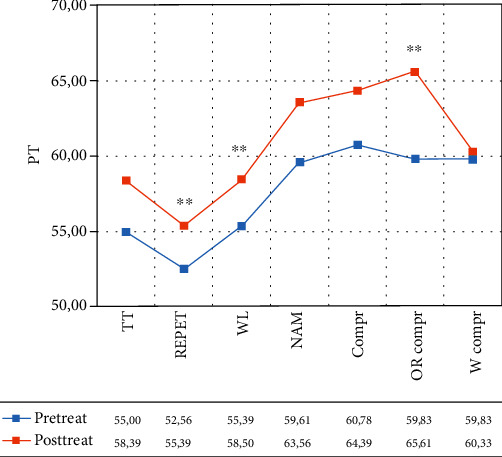
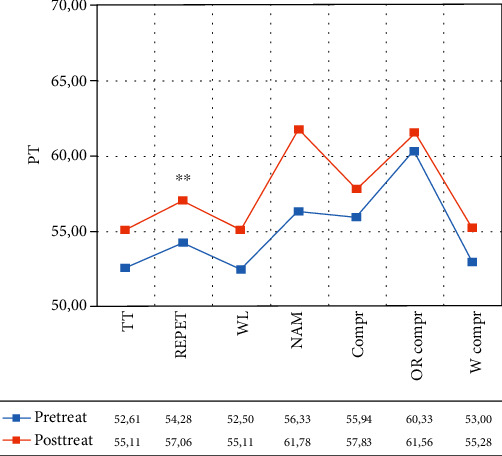
- Within-group AAT improvements in the VR group were significant for repetition (52.56→55.39), written language (55.39→58.50), and oral comprehension (59.83→65.61); the control group improved significantly only in repetition (54.28→57.06).
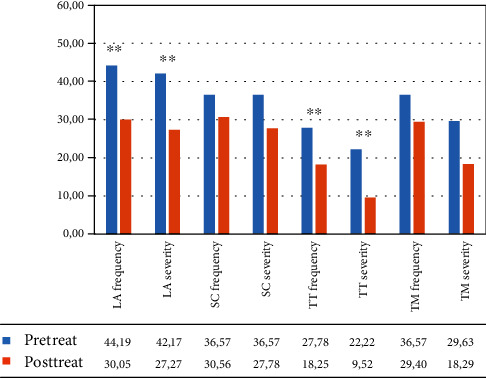
- On the C.A.P.P.A. patient perspective, the VR group improved significantly in language ability and turn taking, while the control group improved only in topic-management frequency; caregiver perspective showed broader significant gains in the VR group (language ability, self-correction, turn taking) than in controls (language ability severity, self-correction frequency).
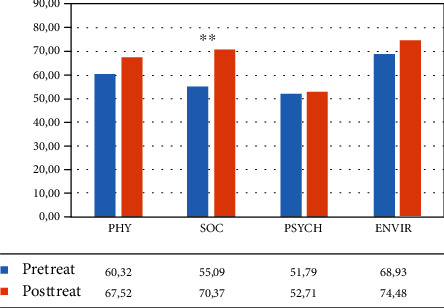
- Psychological measures: VASES self-esteem improved significantly only in the VR group (37.00→42.50); WHOQoL improved in the VR group for physical, psychological, and environmental areas, while controls improved only in the social area (55.09→70.37).
Methods
- Randomized controlled trial: 36 chronic nonfluent PWA after single left-hemisphere stroke (>6 months) were assigned to conversational therapy with semi-immersive VR (n=18) or conventional conversational therapy without VR (n=18); treatment was 2 hours twice weekly for 24 weeks (48 sessions), delivered in groups of three.
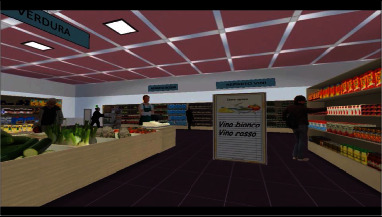
- VR used NeuroVR 2.0 projected on a 50-inch screen with everyday scenarios (e.g., supermarket, restaurant, station); both groups received conversational therapy plus cognitive exercises, with assessments by a blinded neuropsychologist before and after training.
- Outcomes included the Aachen Aphasia Test (primary), C.A.P.P.A., Visual Analogue Self-Esteem Scale, and WHOQoL; analyses used mixed ANOVA (time×group) and within-group ANOVA, with significance set at α=0.008 and partial η² reported.
Limitations
- The paper states that 18 participants per group is still a small sample, though larger than previous studies, and calls for further research with other clinical populations, larger samples, and more comparative studies.
- The paper reports a baseline imbalance: the VR group was significantly less chronic than the control group (time post stroke mean 36.33 vs. 49.17, p=0.001), which may confound interpretation.
- Evident from the text: despite broader within-group gains in the VR group, no between-group differences or time×group interactions were found, so superiority of VR over conventional conversational therapy was not demonstrated.
Model-written summary. Check it against the paper before relying on it.
Integrity signals
Registry
Cites
Statistics
Figures
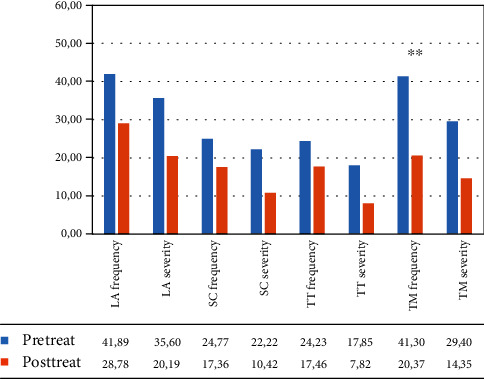
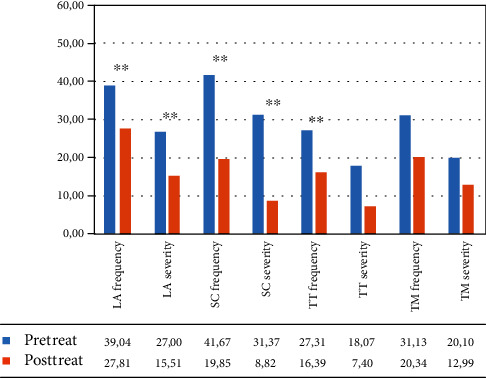
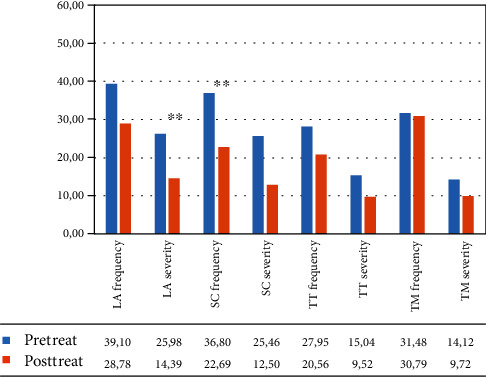
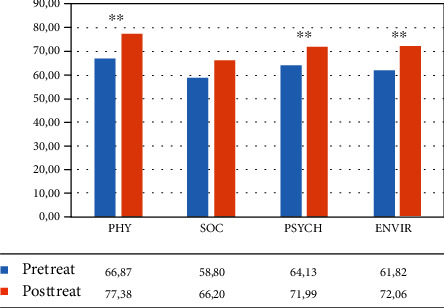
Verification
Claims the paper makes
11 Valid · 2 Not valid · 13 Not checked · 79 Own results and interpretations
Some cited sources support this claim and some don’t — read each source’s verdict below.
In the paper
“Additionally, iPad-based aphasia rehabilitation treatments have been investigated but, as for computer therapies, most of the findings investigated the impact only on language functions [25–28].”
§ Conversational Therapy through Semi-Immersive Virtual Reality Environments for Language Recovery and Psychological Well-Being in Post Stroke Aphasia > 1. Introduction
What the sources say
- Disputedcites [25] Des Roches C. A. Balachandran I. Ascenso E. M. Tripodis Y. Kiran S. Effectiveness of an impairment-based individualized rehabilitation program using an iPad-based software platform Frontiers in Human Neuroscience 2015 8 p. 1015 10.3389/fnhum.2014.01015 2-s2.0-84933678152 PMC4283612 25601831 sourceExperimental — accuracy not yet measured
This paper does investigate an iPad-based aphasia treatment, but it does not investigate language functions only. The Introduction and Results > Standardized tests report that the study examined cognitive as well as language outcomes. This paper alone cannot establish what most other studies investigated. (LLM, conf=0.88)
Checked by a reasoning model — may be wrong.
- Partly supportedcites [26] Steele R. D. Baird A. McCall D. Haynes L. Combining teletherapy and on-line language exercises in the treatment of chronic aphasia: an outcome study International Journal of Telerehabilitation 2015 6 2 3 20 10.5195/IJT.2014.6157 25945225 PMC4353001 sourceExperimental — accuracy not yet measured
The Discussion describes web-based aphasia exercises accessible through an app on a portable tablet, supporting the treatment context. But the Methods (Assessment Instruments; page unavailable) says the study assessed functional communication and communicative confidence as well as language impairment. This paper therefore does not support the claim that outcomes were investigated only for language functions, or establish that most iPad-based studies did so. (LLM, conf=0.88)
- Not checked — no full text of the sourcecites [27] Stark B. C. Warburton E. A. Improved language in chronic aphasia after self-delivered iPad speech therapy Neuropsychological Rehabilitation 2018 28 5 818 831 10.1080/09602011.2016.1146150 2-s2.0-84961208796 26926872 source
- Supportedcites [28] Kurland J. Wilkins A. R. Stokes P. iPractice: piloting the effectiveness of a tablet-based home practice program in aphasia treatment Seminars in Speech and Language 2014 35 1 51 63 10.1055/s-0033-1362991 2-s2.0-84892909543 24449465 PMC3931518 source
The Results report naming as the primary outcome, alongside other language measures. The Discussion says that data on functional outcomes and social participation were beyond the scope of this paper. Thus, this study supports its place among the cited examples of iPad-treatment findings focused on language functions; it does not independently establish the claim about most studies. (LLM, conf=0.88)
plain- Asserted: passes — The authors put it forward as true.
- Checkable: passes — It can be checked against evidence.
- Load-bearing: passes — The paper’s conclusions depend on it.
- Based: passes — The paper gives a reason why it holds.
- Disputed
The cited sources support only part of this claim — read each source’s verdict below.
In the paper
“More importantly, none of the cited studies has investigated the impact of VR technology on the patient's psychological well-being [but see 49].”
§ Conversational Therapy through Semi-Immersive Virtual Reality Environments for Language Recovery and Psychological Well-Being in Post Stroke Aphasia > 1. Introduction
What the sources say
- Partly supportedcites [49] Palmer R. Dimairo M. Cooper C. Self-managed, computerised speech and language therapy for patients with chronic aphasia post-stroke compared with usual care or attention control (Big CACTUS): a multicentre, single-blinded, randomised controlled trial The Lancet Neurology 2019 18 9 821 833 10.1016/S1474-4422(19)30192-9 2-s2.0-85071281904 31397288 PMC6700375 sourceExperimental — accuracy not yet measured
The citation’s “but see” placement presents Big CACTUS as an exception. Its Methods > Outcomes section measures patients’ quality of life, and the Results report anxiety, so it does investigate aspects of well-being. But Methods > Procedures describes computer-based word-finding exercises, not VR technology; it cannot support the VR-specific exception. No page number is available in our copy. (LLM, conf=0.87)
plain- Asserted: passes — The authors put it forward as true.
- Checkable: passes — It can be checked against evidence.
- Load-bearing: passes — The paper’s conclusions depend on it.
- Based: unclear — It is unclear why the paper says it holds.
- Partly supported
The sources with a verdict support this claim; the rest weren’t checked yet, have no full text we could read, or their verdicts aren’t rated yet.
In the paper
“Thus, these results replicate other findings indicating that even in chronic aphasia, language improvements can be achieved through intensive therapy [60, 61] which makes use of a pragmatic approach, such as conversational therapy [12–16].”
§ Conversational Therapy through Semi-Immersive Virtual Reality Environments for Language Recovery and Psychological Well-Being in Post Stroke Aphasia > 4. Discussion
What the sources say
- Supportedcites [60] Meinzer M. Djunda D. Barthel G. Elbert T. Rockstroh B. Intensive language training enhances brain plasticity in chronic aphasia 2005 BMC Biology 10.1186/1741-7007-2-20 2-s2.0-12844251059 PMC515310 15331014 source
The Results (Language functions) report significant improvements after intensive language training in patients with chronic aphasia. The Discussion also states that substantial functional improvements were achieved in chronic aphasic states. The separate citations [12–16], not this source’s citation, accompany the conversational-therapy example. (LLM, conf=0.93)
- Supportedcites [61] Stahl B. Mohr B. Büscher V. Dreyer F. R. Lucchese G. Pulvermüller F. Efficacy of intensive aphasia therapy in patients with chronic stroke: a randomised controlled trial Journal of Neurology, Neurosurgery & Psychiatry 2018 89 6 586 592 10.1136/jnnp-2017-315962 2-s2.0-85055237363 29273692 PMC6031278 source
The Results report significant language gains after intensive therapy in 30 people with chronic post-stroke aphasia, with no gains during the waiting period. The conversational-therapy example is attached to different citations in the citing sentence, so it is not a claim attributed to this paper. (LLM, conf=0.93)
- Supportedcites [12] Walker T. Thomson J. Watt I. Displays and claims of understanding in conversation by people with aphasia Aphasiology 2015 30 6 750 764 10.1080/02687038.2015.1119797 2-s2.0-84949213569 source
The Background (page unavailable) describes therapeutic conversations with people with aphasia and reports improvements in conversational ability after conversation-based therapies. This supports the conversational-therapy example for which this source is cited; the sentence cites other sources for intensive therapy. (LLM, conf=0.86)
- Not checked — no full text of the sourcecites [13] Savage M. C. Donovan N. J. Comparing linguistic complexity and efficiency in conversations from stimulation and conversation therapy in aphasia International Journal of Language & Communication Disorders 2017 52 1 21 29 10.1111/1460-6984.12252 2-s2.0-84978782557 27296243 source
- Not checked — no full text of the sourcecites [14] Marangolo P. Fiori V. Caltagirone C. Marini A. How conversational therapy influences language recovery in chronic non-fluent aphasia Neuropsychological Rehabilitation 2013 23 5 715 731 10.1080/09602011.2013.804847 2-s2.0-84884905432 23734669 source
- Not checked — no full text of the sourcecites [15] Marangolo P. Pisano F. Conversational therapy in aphasia: from behavioral intervention to neuromodulation Seminars in Speech and Language 2020 41 1 61 70 10.1055/s-0039-3399500 31869849 source
- Not checked — no full text of the sourcecites [16] Wilkinson R. Intervening with conversation analysis in speech and language therapy: improving aphasic conversation Research on Language and Social Interaction 2014 47 3 219 238 10.1080/08351813.2014.925659 2-s2.0-84905678962 source
hedgedstates a causen = 18- Asserted: passes — The authors put it forward as true.
- Checkable: passes — It can be checked against evidence.
- Load-bearing: unclear — It is unclear whether the paper’s conclusions depend on it.
- Based: passes — The paper gives a reason why it holds.
- Supported
The cited sources support only part of this claim — read each source’s verdict below.
In the paper
“Most of the existing studies with VR-based cognitive rehabilitation focused on specific language domains [25–28], such as word retrieval [18, 19, 43, 44, 46–48], sentence building [20, 21], and language comprehension [22].”
§ Conversational Therapy through Semi-Immersive Virtual Reality Environments for Language Recovery and Psychological Well-Being in Post Stroke Aphasia > 4. Discussion
What the sources say
- Partly supportedcites [25] Des Roches C. A. Balachandran I. Ascenso E. M. Tripodis Y. Kiran S. Effectiveness of an impairment-based individualized rehabilitation program using an iPad-based software platform Frontiers in Human Neuroscience 2015 8 p. 1015 10.3389/fnhum.2014.01015 2-s2.0-84933678152 PMC4283612 25601831 sourceExperimental — accuracy not yet measured
The Materials and methods > Stimuli section describes naming therapy, including picture naming, so this paper supports its use as an example of technology-based rehabilitation targeting word retrieval. It describes an iPad-based platform, not virtual reality, and does not establish that most existing VR studies focused on specific language domains. The citation appears in the word-retrieval group, not the groups for sentence building or comprehension. (LLM, conf=0.84)
- Partly supportedcites [26] Steele R. D. Baird A. McCall D. Haynes L. Combining teletherapy and on-line language exercises in the treatment of chronic aphasia: an outcome study International Journal of Telerehabilitation 2015 6 2 3 20 10.5195/IJT.2014.6157 25945225 PMC4353001 sourceExperimental — accuracy not yet measured
The Methods section (Independent On-line Therapy; page not supplied) describes TalkPath exercises in listening, speaking, reading, and writing, supporting the language-domain aspect. But the paper describes web- and iPad-based exercises combined with teletherapy, not VR-based rehabilitation, and does not establish that most existing studies focused on those domains. (LLM, conf=0.85)
- Not checked — no full text of the sourcecites [27] Stark B. C. Warburton E. A. Improved language in chronic aphasia after self-delivered iPad speech therapy Neuropsychological Rehabilitation 2018 28 5 818 831 10.1080/09602011.2016.1146150 2-s2.0-84961208796 26926872 source
- Partly supportedcites [28] Kurland J. Wilkins A. R. Stokes P. iPractice: piloting the effectiveness of a tablet-based home practice program in aphasia treatment Seminars in Speech and Language 2014 35 1 51 63 10.1055/s-0033-1362991 2-s2.0-84892909543 24449465 PMC3931518 sourceExperimental — accuracy not yet measured
The Abstract (Method; page unavailable) describes an iPad home-practice program targeting word retrieval, so this paper supports the word-retrieval example. It does not describe a VR-based intervention or establish that most VR rehabilitation studies focus on specific language domains; the sentence cites other works for sentence building and comprehension. (LLM, conf=0.87)
- Not checked — no full text of the sourcecites [18] Doesborgh S. van de Sandt‐Koenderman M. Dippel D. van Harskamp F. Koudstaal P. Visch‐Brink E. Cues on request: the efficacy of Multicue, a computer program for wordfinding therapy Aphasiology 2010 18 3 213 222 10.1080/02687030344000580 2-s2.0-2342526540 source
- Not checked — no full text of the sourcecites [19] Palmer R. Enderby P. Cooper C. Computer therapy compared with usual care for people with long-standing aphasia poststroke: a pilot randomized controlled trial Stroke 2012 43 7 1904 1911 10.1161/STROKEAHA.112.650671 2-s2.0-84863316744 22733794 source
- Partly supportedcites [43] Cherney L. R. Kaye R. C. van Vuuren S. Acquisition and maintenance of scripts in aphasia: a comparison of two cuing conditions American Journal of Speech-Language Pathology 2014 23 2 S343 S360 10.1044/2014_ajslp-13-0097 2-s2.0-84901392362 24686911 PMC4105211 sourceExperimental — accuracy not yet measured
The Method (Treatment Intervention; page unavailable) describes computer-based conversational script training for aphasia using a digital therapist, so this paper is an example of rehabilitation focused on a specific language task. It does not characterize the intervention as VR-based or establish that most existing VR-based studies focused on specific language domains. (LLM, conf=0.82)
- Partly supportedcites [44] Cherney L. van Vuuren S. Telerehabilitation, virtual therapists, and acquired neurologic speech and language disorders Seminars in Speech and Language 2012 33 3 243 257 10.1055/s-0032-1320044 2-s2.0-84864406473 22851346 PMC3691350 sourceExperimental — accuracy not yet measured
The Treatment section describes remotely delivered word-retrieval therapy and says telerehabilitation treatment studies have largely addressed aphasia. It does not establish that most VR-based cognitive rehabilitation studies focused on specific language domains; the cited word-retrieval example used home computer software rather than a VR environment. No page number is available in our copy. (LLM, conf=0.83)
- Not checked — no full text of the sourcecites [46] Kurland J. Liu A. Stokes P. Effects of a Tablet-Based Home Practice Program With Telepractice on Treatment Outcomes in Chronic Aphasia Journal of Speech, Language, and Hearing Research 2018 61 5 1140 1156 10.1044/2018_JSLHR-L-17-0277 2-s2.0-85047270161 29710115 PMC6195077 source
- Not checked — no full text of the sourcecites [47] Marshall J. Devane N. Edmonds L. Delivering word retrieval therapies for people with aphasia in a virtual communication environment Aphasiology 2017 32 9 1054 1074 10.1080/02687038.2018.1488237 2-s2.0-85049081752 source
plain- Asserted: passes — The authors put it forward as true.
- Checkable: passes — It can be checked against evidence.
- Load-bearing: passes — The paper’s conclusions depend on it.
- Based: passes — The paper gives a reason why it holds.
- Partly supported
The sources with a verdict support this claim; the rest weren’t checked yet, have no full text we could read, or their verdicts aren’t rated yet.
In the paper
“The impact of VR for language recovery is in line with recent proposals from the embodied theory which considers language as represented in a multimodal dimension in which word semantics are also made of sensorimotor properties [62–68].”
§ Conversational Therapy through Semi-Immersive Virtual Reality Environments for Language Recovery and Psychological Well-Being in Post Stroke Aphasia > 4. Discussion
What the sources say
- Not checked — no full text of the sourcecites [62] Barsalou L. W. Simmons W. K. Barbey A. K. Wilson C. D. Grounding conceptual knowledge in modality-specific systems Trends in Cognitive Sciences 2003 7 2 84 91 10.1016/S1364-6613(02)00029-3 2-s2.0-0037312096 12584027 source
- Supportedcites [63] Boulenger V. Hauk O. Pulvermüller F. Grasping ideas with the motor system: semantic somatotopy in idiom comprehension Cerebral Cortex 2009 19 8 1905 1914 10.1093/cercor/bhn217 2-s2.0-67651099070 19068489 PMC2705699 source
The Discussion states that the findings support theories viewing abstract semantics as grounded in action-perception systems. Its account of motor-cortex involvement in both idiomatic and literal sentence processing supports the embodied-language proposition for which this paper is cited. (LLM, conf=0.91)
- Supportedcites [64] Gallese V. Lakoff G. The brain's concepts: the role of the sensory-motor system in conceptual knowledge Cognitive Neuropsychology 2005 22 3-4 455 479 10.1080/02643290442000310 2-s2.0-17744380235 21038261 source
The Introduction describes language as inherently multimodal, linking sight, hearing, touch, and motor action. It also proposes that a concept’s meaning draws on imagining, performing, and perceiving an action. The citation supports the embodied-theory premise; the sentence does not attribute the VR recovery finding itself to this paper. (LLM, conf=0.91)
- Not checked — no full text of the sourcecites [65] Buccino G. Lui F. Canessa N. Neural circuits involved in the recognition of actions performed by nonconspecifics: an fMRI study Journal of Cognitive Neuroscience 2004 16 1 114 126 10.1162/089892904322755601 2-s2.0-1642503303 15006041 source
- Not checked — no full text of the sourcecites [66] Buccino G. Binkofski F. Fink G. R. Action observation activates premotor and parietal areas in a somatotopic manner: an fMRI study European Journal of Neuroscience 2001 13 2 400 404 11168545 source
- Supportedcites [67] Marangolo P. Cipollari S. Fiori V. Razzano C. Caltagirone C. Walking but not barking improves verb recovery: implications for action observation treatment in aphasia rehabilitation PLoS ONE 2012 7 6, article e38610 10.1371/journal.pone.0038610 2-s2.0-84862234801 PMC3374821 22719906 source
The Introduction describes an embodied-cognition account in which words are represented multimodally, including sensory-motor features. The Discussion likewise says that action observation may activate a word’s sensory-motor representation and facilitate retrieval. The sentence’s reference to VR is the citing authors’ framing; the theoretical point attributed to this source is supported. (LLM, conf=0.90)
- Not checked — no full text of the sourcecites [68] Marangolo P. Bonifazi S. Tomaiuolo F. Improving language without words: first evidence from aphasia Neuropsychologia 2010 48 13 3824 3833 10.1016/j.neuropsychologia.2010.09.025 2-s2.0-78149413422 20887740 source
plainstates an association- Asserted: passes — The authors put it forward as true.
- Checkable: passes — It can be checked against evidence.
- Load-bearing: passes — The paper’s conclusions depend on it.
- Based: passes — The paper gives a reason why it holds.
60 more claims
Create a free account to see all 105 claims and to verify the 1 reference still open.
- Probably not a substantial claim. 18
- It may state two separate claims as one. 28
- The quote only partly states this claim. 1
Claims other papers make about this one
Each is checked against this paper’s own text: does it say what the citing paper says it does?
The cited source doesn’t support the claim as written.
In the citing paper
“Giachero et al. (2020) found that language comprehension improved only in the VR group despite equivalent SLT dose across groups (AAT auditory comprehension: 38.1 to 46.4; p = 0.004)”
From Exploring the Effectiveness of Technology‐Based Interventions in Aphasia Rehabilitation: A Systematic Review (2026) · cites this paper as Giachero et al. 2020
Checked by a reasoning model — may be wrong.
Experimental — accuracy not yet measuredThe cited source says what the claim attributes to it.
In the citing paper
“When the effectiveness data are considered alongside dosage patterns, a similar trend to naming emerges; approximately 68.4% of language production studies met the recommended minimum of 20‐h, and these higher‐dose studies were generally those reporting clearer or more generalisable gains (e.g., Cherney et al. 2021; Giachero et al. 2020).”
From Exploring the Effectiveness of Technology‐Based Interventions in Aphasia Rehabilitation: A Systematic Review (2026) · cites this paper as Giachero et al. 2020
In the citing paper
“The emerging use of virtual reality, with immersive or semi-immersive environments that simulate real-life contexts, enhances the ecological validity of language rehabilitation [ 87 , 88 ].”
From Computer- and Smart-Tablet-Based Self-Administered Treatments in Chronic Post-Stroke Aphasia: A Systematic Review (2025) · cites this paper as [88]
Statistics that don’t add up
Each reported p-value recomputed from its test statistic and degrees of freedom, each partial η² from its F, and each ratio, mean difference or B printed with a p checked against its own confidence interval.
Rated minor: it would not touch a result — a value no result rests on, a p-value that stays on the same side of the significance level, or a conflict that is clerical, resolved elsewhere in the paper, or outside its own findings.
In the paper
“F(1, 12) = 15.073, p = 0.003”
§ Conversational Therapy through Semi-Immersive Virtual Reality Environments for Language Recovery and Psychological Well-Being in Post Stroke Aphasia > 3. Results > 3.1. Outcome Measures
Reported p = .003 · recomputed p = .002
Rated minor: it would not touch a result — a value no result rests on, a p-value that stays on the same side of the significance level, or a conflict that is clerical, resolved elsewhere in the paper, or outside its own findings.
In the paper
“F(1, 34) = 18.257, p < 0.001, partial η2 = 0.356”
§ Conversational Therapy through Semi-Immersive Virtual Reality Environments for Language Recovery and Psychological Well-Being in Post Stroke Aphasia > 3. Results > 3.1. Outcome Measures
Reported ηp² = .356 · recomputed ηp² = .34937
Rated minor: it would not touch a result — a value no result rests on, a p-value that stays on the same side of the significance level, or a conflict that is clerical, resolved elsewhere in the paper, or outside its own findings.
In the paper
“F(1, 34) = 30.033, p < 0.001, partial η2 = 0.476”
§ Conversational Therapy through Semi-Immersive Virtual Reality Environments for Language Recovery and Psychological Well-Being in Post Stroke Aphasia > 3. Results > 3.1. Outcome Measures
Reported ηp² = .476 · recomputed ηp² = .46902
Rated minor: it would not touch a result — a value no result rests on, a p-value that stays on the same side of the significance level, or a conflict that is clerical, resolved elsewhere in the paper, or outside its own findings.
In the paper
“F(1, 12) = 19.031, p = 0.001, partial η2 = 0.634”
§ Conversational Therapy through Semi-Immersive Virtual Reality Environments for Language Recovery and Psychological Well-Being in Post Stroke Aphasia > 3. Results > 3.1. Outcome Measures
Reported ηp² = .634 · recomputed ηp² = .61329
Rated minor: it would not touch a result — a value no result rests on, a p-value that stays on the same side of the significance level, or a conflict that is clerical, resolved elsewhere in the paper, or outside its own findings.
In the paper
“F(1, 34) = 31.314, p < 0.001, partial η2 = 0.487”
§ Conversational Therapy through Semi-Immersive Virtual Reality Environments for Language Recovery and Psychological Well-Being in Post Stroke Aphasia > 3. Results > 3.1. Outcome Measures
Reported ηp² = .487 · recomputed ηp² = .47944
5 more findings
Create a free account to see every finding of this check.
Statistics recomputed
Every reported test result, recomputed from its test statistic and degrees of freedom. A result shows as not adding up only once an independent check has confirmed it.
- Doesn’t add upF(1, 12) = 15.073reported p = .003 · recomputed p = .002
“F(1, 12) = 15.073, p = .003”
- ConsistentF(1, 34) = 12.386reported p = .001 · recomputed p = .001
“F(1, 34) = 12.386, p = .001”
- ConsistentF(1, 34) = 27.092reported p < .001 · recomputed p < .001
“F(1, 34) = 27.092, p < .001”
- ConsistentF(1, 34) = 18.417reported p < .001 · recomputed p < .001
“F(1, 34) = 18.417, p < .001”
- ConsistentF(1, 34) = 9.177reported p = .005 · recomputed p = .005
“F(1, 34) = 9.177, p = .005”
36 more recomputed tests
Create a free account to see every test the Stats check recomputed.
Self-check
Percentages, sums and reported differences re-computed from the paper’s own numbers.
Each contradiction between two passages listed here was confirmed by an independent check.
Rated major: it would touch a result — a value a result rests on, reported and recomputed p-values on opposite sides of the significance level, two passages that conflict with no sign which is right, or a cited work retracted before this paper was published.
In the paper
“In the VR group, the within-group ANOVA showed a significant effect of time in repetition (F(1, 12) = 15.211”
§ Conversational Therapy through Semi-Immersive Virtual Reality Environments for Language Recovery and Psychological Well-Being in Post Stroke Aphasia > 3. Results > 3.1. Outcome Measures
Reported 12 · recomputed 17
Rated minor: it would not touch a result — a value no result rests on, a p-value that stays on the same side of the significance level, or a conflict that is clerical, resolved elsewhere in the paper, or outside its own findings.
In the paper
“The six-month training consisted of two-hour therapy sessions twice a week for twenty-four weeks (total = 48 hours of therapy).”
§ Conversational Therapy through Semi-Immersive Virtual Reality Environments for Language Recovery and Psychological Well-Being in Post Stroke Aphasia > 2. Materials and Methods > 2.6. Conversational Training with VR
Reported 48 · recomputed 96
Rated minor: it would not touch a result — a value no result rests on, a p-value that stays on the same side of the significance level, or a conflict that is clerical, resolved elsewhere in the paper, or outside its own findings.
In the paper
§ Conversational Therapy through Semi-Immersive Virtual Reality Environments for Language Recovery and Psychological Well-Being in Post Stroke Aphasia > 1. Introduction
“More importantly, none of the cited studies has investigated the impact of VR technology on the patient's psychological well-being [but see 49].”
§ Conversational Therapy through Semi-Immersive Virtual Reality Environments for Language Recovery and Psychological Well-Being in Post Stroke Aphasia > 1. Introduction
“Results showed that the experimental group improved in all investigated tasks except in writing, while the control group improved only in comprehension, depression, and quality of life.”
Rated minor: it would not touch a result — a value no result rests on, a p-value that stays on the same side of the significance level, or a conflict that is clerical, resolved elsewhere in the paper, or outside its own findings.
In the paper
§ Conversational Therapy through Semi-Immersive Virtual Reality Environments for Language Recovery and Psychological Well-Being in Post Stroke Aphasia > 5. Conclusion
“although all patients were in the chronic phase (>36 months)”
§ Conversational Therapy through Semi-Immersive Virtual Reality Environments for Language Recovery and Psychological Well-Being in Post Stroke Aphasia > 3. Results
“the time post stroke of the VR group (mean = 36.33, DS: 9.86)”
Citations
Cites
Development of the World Health Organization WHOQOL-BREF Quality of Life Assessment
THE WHOQOL GROUP (1998) · Psychological Medicine · doi:10.1017/s0033291798006667 · Cited by 7,933
The Brain's concepts: the role of the Sensory-motor system in conceptual knowledge
Gallese †, V., & Lakoff, G. (2005) · Cognitive Neuropsychology · doi:10.1080/02643290442000310 · Cited by 2,726
Action observation activates premotor and parietal areas in a somatotopic manner: an fMRI study
Buccino, G., Binkofski, F., Fink, G. R., Fadiga, L., Fogassi, L., Gallese, V., Seitz, R. J., Zilles, K., Rizzolatti, G., & Freund, H. ‐. (2001) · European Journal of Neuroscience · doi:10.1111/j.1460-9568.2001.01385.x · Cited by 2,488
Grounding conceptual knowledge in modality-specific systems
Barsalou, L. W., Kyle Simmons, W., Barbey, A. K., & Wilson, C. D. (2003) · Trends in Cognitive Sciences · doi:10.1016/s1364-6613(02)00029-3 · Cited by 1,256
Speech and language therapy for aphasia following stroke
Brady, M. C., Kelly, H., Godwin, J., Enderby, P., & Campbell, P. (2016) · Cochrane Database of Systematic Reviews · doi:10.1002/14651858.cd000425.pub4 · Cited by 1,159
Subjective measures of well-being.
Campbell, A. (1976) · American Psychologist · doi:10.1037/0003-066x.31.2.117 · Cited by 1,078
Neural Circuits Involved in the Recognition of Actions Performed by Nonconspecifics: An fMRI Study
Buccino, G., Lui, F., Canessa, N., Patteri, I., Lagravinese, G., Benuzzi, F., Porro, C. A., & Rizzolatti, G. (2004) · Journal of Cognitive Neuroscience · doi:10.1162/089892904322755601 · Cited by 762
Grasping Ideas with the Motor System: Semantic Somatotopy in Idiom Comprehension
Boulenger, V., Hauk, O., & Pulvermuller, F. (2009) · Cerebral Cortex · doi:10.1093/cercor/bhn217 · Cited by 573
Hilari, K., Byng, S., Lamping, D. L., & Smith, S. C. (2003) · Stroke · doi:10.1161/01.str.0000081987.46660.ed · Cited by 509
State-of-the-art of virtual reality technologies for children on the autism spectrum
Parsons, S., & Cobb, S. (2011) · European Journal of Special Needs Education · doi:10.1080/08856257.2011.593831 · Cited by 395 · cited 1×
“Virtual reality applications have been also explored on different communication disorders such a speaking phobias [38], stuttering [39], and autism [40, 41].”
Background
Research works printed but not linked: 6
- Millen L. Edlin-White R. Cobb S. The development of educational collaborative virtual environments for children with autism UK. The 5th Cambridge workshop on universal access and assistive technology 2010 Cambridge
- Stark J. Pons C. Csaba D. Integrating face to face language therapy with virtual reality applications for persons with aphasia Proceedings of the International Conference on Virtual Reality 2013 Philadelphia
- Woudstra M. Al Mahmud A. Martens J. B. A snapshot diary to support conversational storytelling for persons with aphasia Proceedings of the 13th International Conference on Human Computer Interaction with Mobile Devices and Services 2011 Stockholm
- Whitworth A. Perkins L. Lesser R. Conversation analysis profile for people with aphasia (CAPPA) 1997 Wiley-Blackwell Press
- Spinnler H. Tognoni G. Standardizzazione e taratura italiana di test neuropsicologici 1987 Masson Italia Periodici Press
- Brown J. D. Marshall M. A. Kernis M. The three faces of self-esteem Self-esteem: Issues and Answers 2006 New York, NY Psychology Press 4 9
Cited by
Virtual Reality for the Rehabilitation of Acquired Cognitive Disorders: A Narrative Review
Catania, V., Rundo, F., Panerai, S., & Ferri, R. (2023) · Bioengineering · doi:10.3390/bioengineering11010035 · Cited by 109
“Giachero et al. [89] conducted a study in which thirty-six people with chronic aphasia (PWA) were randomly assigned to two groups.”
Virtual reality for stroke rehabilitation
Laver, K., Lange, B. S., George, S., Deutsch, J. E., Saposnik, G., Chapman, M., & Crotty, M. (2025) · Cochrane Database of Systematic Reviews · doi:10.1002/14651858.cd008349.pub5 · Cited by 167
The use of virtual reality in the rehabilitation of aphasia: a systematic review
Devane, N., Behn, N., Marshall, J., Ramachandran, A., Wilson, S., & Hilari, K. (2023) · Disability and Rehabilitation · doi:10.1080/09638288.2022.2138573 · Cited by 43
“Only studies rated as fair quality or above are included in this section ( n ¼ 7) and are highlighted in grey in Table 8 [46,48,51,53,55,72,73].”
BackgroundInfluentialAdjunctive Approaches to Aphasia Rehabilitation: A Review on Efficacy and Safety
Picano, C., Quadrini, A., Pisano, F., & Marangolo, P. (2021) · Brain Sciences · doi:10.3390/brainsci11010041 · Cited by 47
“Secondly, interventions would occur in virtual everyday contexts, thus enhancing the ecological validity of the treatment protocols [12,119].”
BackgroundInfluentialSelf-citationWong, K. P., Lai, C. Y. Y., & Qin, J. (2023) · Journal of Affective Disorders · doi:10.1016/j.jad.2023.04.043 · Cited by 42
Maresca, G., Corallo, F., Cola, M. C. D., Formica, C., Giliberto, S., Rao, G., Crupi, M. F., Quartarone, A., & Pidalà, A. (2024) · Brain Sciences · doi:10.3390/brainsci14070655 · Cited by 41
Gamified devices for stroke rehabilitation: A systematic review
Sánchez-Gil, J. J., Sáez, A., López-Luque, R., Ochoa-Sepúlveda, J. J., & Cañete, E. (2024) · Computer Methods and Programs in Biomedicine · doi:10.1016/j.cmpb.2024.108476 · Cited by 45
Effects of virtual reality in post-stroke aphasia: a systematic review and meta-analysis
Cao, Y., Huang, X., Zhang, B., Kranz, G. S., Zhang, D., Li, X., & Chang, J. (2021) · Neurological Sciences · doi:10.1007/s10072-021-05202-5 · Cited by 38
Bryant, L., Sedlarevic, N., Stubbs, P. W., Bailey, B., Nguyen, V. A., Bluff, A., Barnett, D., Estela, M., Hayes, C., Jacobs, C., et al. (2022) · Disability and Rehabilitation Assistive Technology · doi:10.1080/17483107.2022.2063423 · Cited by 36
“This finding was congruent with prior research that identified simulated environments depicting real-world activities as a key opportunity for assessment [15,34] and intervention [14,21,35,36] for adults with communication disability.”
BackgroundResultUsing an Implementation Framework to Survey Outcome Measurement and Treatment Practices in Aphasia
Tierney‐Hendricks, C., Schliep, M. E., & Rohter, S. V. (2021) · American Journal of Speech-Language Pathology · doi:10.1044/2021_ajslp-21-00101 · Cited by 25
A Survey of Technologies Facilitating Home and Community-Based Stroke Rehabilitation
Sun, X., Ding, J., Dong, Y., Ma, X., Wang, R., Jin, K., Zhang, H., & Zhang, Y. (2022) · International Journal of Human-Computer Interaction · doi:10.1080/10447318.2022.2050545 · Cited by 26
“…example, Carragher et al. (2018) experimented storytelling interventions with EVA Park that obtained a more ideal speech improvement result, while Giachero et al. (2020) used semi-immersive VR and proved the feasibility of VR treatment for speech therapy as well as its positive effects on…”
BackgroundCappadona, I., Ielo, A., Fauci, M. L., Tresoldi, M., Settimo, C., Cola, M. C. D., Muratore, R., Domenico, C. D., Cara, M. D., Corallo, F., et al. (2023) · Children · doi:10.3390/children10081336 · Cited by 28
“These elements allow for a longer duration of speech intervention and greater adherence to treatment [60].”
du Plessis, J., & Jordaan, J. (2024) · Heliyon · doi:10.1016/j.heliyon.2024.e24831 · Cited by 28
“The hospital environment can be challenging for individuals to flourish in, making it crucial to address eudaimonic well-being [5,7,8].”
BackgroundInfluentialGiachero, A., Quadrini, A., Pisano, F., Calati, M., Rugiero, C., Ferrero, L., Pia, L., & Marangolo, P. (2021) · Brain Sciences · doi:10.3390/brainsci11060766 · Cited by 16
“Conversely, semiimmersive VR, due to the lack of HDMs, does not guarantee a full immersion but favors the interaction among participants, promoting group therapies [61].”
BackgroundSelf-citationVaezipour, A., Aldridge, D., Koenig, S. T., Burns, C. L., Baghaei, N., Theodoros, D., & Russell, T. G. (2023) · JMIR Rehabilitation and Assistive Technologies · doi:10.2196/46959 · Cited by 19
“Advancements in the capabilities and affordability of virtual reality (VR) technologies have contributed to the growing interest in the application of VR within health contexts [1-4].”
BackgroundResultInfluentialTowards intelligent extended reality in stroke rehabilitation
Das, A., Day, T. W., Kulkarni, V. V., Buchanan, A., Cottrell, K., John, N. W., & Chatterjee, K. (2022) · Elsevier eBooks · doi:10.1016/b978-0-323-90037-9.00006-0 · Cited by 16
Franco, J., Glize, B., & Laganaro, M. (2025) · Neuropsychologia · doi:10.1016/j.neuropsychologia.2025.109069 · Cited by 12
“In fact, they have only replicated clinical settings with familiar therapies delivered in VR (Cherney et al., 2021; Giachero et al., 2020; Thompson et al., 2010) and most of the software involve limited pre-programmed tasks with static images, without developing the multimodal and integrative…”
Bhargava, Y., & Baths, V. (2024) · JMIR XR and spatial computing. · doi:10.2196/59197 · Cited by 8
“In addition to cognitive assessment, VR games are used for rehabilitation of executive functioning [27,28], memory impairment control [29-31], language improvement [32,33], and motor rehabilitation [34].”
Ericson, C., Latysheva, A., Poirier, S.-È., & Fossard, M. (2025) · Brain Sciences · doi:10.3390/brainsci15020122 · Cited by 7
“The emerging use of virtual reality, with immersive or semi-immersive environments that simulate real-life contexts, enhances the ecological validity of language rehabilitation [87,88].”
Fernández-González, D., Rodríguez‐Costa, I., Sanz-Esteban, I., & Estrada-Barranco, C. (2022) · Rehabilitación · doi:10.1016/j.rh.2022.06.003 · Cited by 7
Delivering Script Therapy for people with aphasia in EVA Park: Two single case treatment studies
Marshall, J., Devane, N., Berraondo, J., Talbot, R., Temponera, P., Clegg, K., & Wilson, S. (2023) · Advances in Communication and Swallowing · doi:10.3233/acs-220014 · Cited by 7
Richards, L. G., Ifejika, N. L., Stein, J., Bahouth, M. N., Saylor, M. A., Barrett, A. M., Chen, P., Deutsch, A. F., Dusenbury, W., Ellis, C., et al. (2026) · Stroke · doi:10.1161/str.0000000000000536 · Cited by 15
Gamification in Stroke Rehabilitation
Marques, A. J., Caldas, H. M. M., Barbosa, M. C., Soares, L., Ribeiro, M. I. D., & Simões-Silva, V. (2021) · Advances in psychology, mental health, and behavioral studies (APMHBS) book series · doi:10.4018/978-1-7998-8634-1.ch009 · Cited by 4
VR for Vocational and Ecological Rehabilitation of Patients With Cognitive Impairment: A Survey
Hummel, E., Cogné, M., Lange, M., Lécuyer, A., Joly, F., & Gouranton, V. (2023) · IEEE Transactions on Neural Systems and Rehabilitation Engineering · doi:10.1109/tnsre.2023.3324131 · Cited by 6
“The other studies recreate ecological situations, without a specific professional angle, to train the user cognition in an everyday situation [29], [31], [32], [33], [34], [35], [38], [51], [52], [53], [55], [56].”
BackgroundInfluentialStark, B. C. (2025) · Perspectives of the ASHA Special Interest Groups · doi:10.1044/2025_persp-25-00035 · Cited by 5
Devane, N., Marshall, J., Wilson, S., & Hilari, K. (2025) · Disability and Rehabilitation · doi:10.1080/09638288.2025.2470401 · Cited by 7
“There is now a large body of evidence for positive psychology interventions, with six meta-analyses published over the last 10 years (see [43] for a summary).”
Virtual reality technology in personalized rehabilitation of patients with acute ischemic stroke
Tynterova, A. M., Shusharina, N. N., Barantsevich, E. R., et al. (2024) · The European Physical Journal Special Topics · doi:10.1140/epjs/s11734-023-01079-x · Cited by 3
“Linguistic component integrated into multisensory stimulation of VR rehabilitation programs (word search, understanding instructions, verbal communication) is a useful tool in restoring speech skills and semantic processing of information [26].”
Ecological validity of neuropsychological interventions: A systematic review
Pinto, J. O., Pontes, D., Peixoto, B., Dores, A. R., & Barbosa, F. (2024) · Applied Neuropsychology Adult · doi:10.1080/23279095.2024.2328694 · Cited by 8
“…the treatment, virtual reality-based interventions were applied in twelve studies (Câmara et al., 2023; Dehn et al., 2018; Faria et al., 2016, 2020; Giachero et al., 2020; Grewe et al., 2013, 2014; Jacoby et al., 2013; Keegan et al., 2022; Lo Priore et al., 2003; Lorentz et al., 2023; Park, 2022).”
InfluentialShenoy, R., Intiaz, C., Tiwari, S., & Krishnan, G. (2024) · Technology and Disability · doi:10.3233/tad-230008 · Cited by 5
“The potential of non-immersive VR has been high-lighted in recent studies such as increased therapy dosage, optimized sensory stimulation, and overall improvement in functional communication and psychosocial aspects as well as enhanced ecological validity of aphasia treatment [12,24,25,26,27].”
Repetto, C., Scerrati, E., Amighetti, G., & Cancer, A. (2026) · Aphasiology · doi:10.1080/02687038.2026.2627314 · Cited by 2
YAŞA, İ. C., & Malkoç, G. (2023) · The Annals of Clinical and Analytical Medicine · doi:10.4328/acam.21975 · Cited by 2
Kurul, R., Benli, E. T., Ozkan, T., Yaşar, M. F., & Aydin Turkoğlu, S. (2026) · Clinical Rehabilitation · doi:10.1177/02692155261445265 · Cited by 2
Kodani, Y., Nagami, S., Yokozeki, A., Fukunaga, S., Nakamura, K., & Nakamura, H. (2025) · PLOS ONE · doi:10.1371/journal.pone.0319805 · Cited by 1
“[40,42,62] received a rating of “High,” including both synchronous and asynchronous Tele-SLT training interventions.”
InfluentialTynterova, A. M. (2024) · Physical and rehabilitation medicine medical rehabilitation · doi:10.36425/rehab627186 · Cited by 2
VR-Based Rehabilitation in a Virtual Home: A Perspective on Cognitive and Motor Recovery
Perrucci, T., Celino, M., D’Errico, G., Pellegrino, G., Barba, M. C., & Paolis, L. T. D. (2025) · Lecture notes in computer science · doi:10.1007/978-3-031-97778-7_34 · Cited by 2
Low- and high-tech AAC approaches in severe acquired brain injury: an exploratory pilot study
Luca, R. D., Gangemi, A., Fabio, R. A., Rifici, C., Sergi, G., Cuffaro, D., Piccione, M., Bonanno, M., Maggio, M. G., Cardile, D., et al. (2026) · Disability and Rehabilitation Assistive Technology · doi:10.1080/17483107.2026.2632735 · Cited by 1
Online Community Support for Stroke Survivors and Caregivers: Scoping Review
Handayani, P. W., Imanuddin, K. A., Sutanto, J., Erlina, E., Davies, S. G., Mawuntu, A. H. P., Jusuf, M. I., & Warren, N. (2026) · Journal of Medical Internet Research · doi:10.2196/71190 · Cited by 3
“…phone [85], web-based system [3,51, 110] Video-guidedexercise app [48], mHealth [94] Onlineforum [8] Online forum [8] VR/AR [54,61,74,75], mHealth [53,55,71,72,94-96], sensors or wearable technology [73,94,95], telehealth [76,97], video-guided exercise app [74], online forum [8],…”
Alhejji, B., Cunningham, S., Dorney, S., & Palmer, R. (2026) · International Journal of Language & Communication Disorders · doi:10.1111/1460-6984.70322 · Cited by 1
“Similarly, Giachero et al. ( 2020 ) found that language comprehension improved only in the VR group despite equivalent SLT dose across groups (AAT auditory comprehension: 38.1 to 46.4; p = 0.004), while Vaitheeshwari et al. ( 2026 ) demonstrated that a combined VR and AI system outperformed…”
InfluentialMedidas de Calidad de Vida en Personas con Afasia. Revisión Sistemática
Garrido, D., Niño, A. L., & Carballo, G. (2022) · Revista de Investigación en Logopedia · doi:10.5209/rlog.79102 · Cited by 1
Treating Post-Stroke Aphasia: Psychological Wellness Approaches
Jaiswal, A. K. A. S. H., Shukla, A., Chhasatia, A. H., Sharma, S., Kapoor, P., & Chouhan, D. S. (2024) · Salud Ciencia y Tecnología · doi:10.56294/saludcyt2024.928 · Cited by 1
THE EFFECT OF HYPERBARIC OXYGEN THERAPY IN THE MANAGEMENT OF APHASIC PATIENTS
Sanad, K., Rifaie, N. A. A., Demerdash, A. E., & Elfiky, Y. H. (2022) · Ain Shams Medical Journal · doi:10.21608/asmj.2022.252417
Advances in Neuropsychology and Speech and Language Pathology in Patients with Stroke
Gobbo, M., & Marini, A. (2024) · Springer eBooks · doi:10.1007/978-3-031-63604-2_4
Tynterova, A. M., Barantsevich, E. R., & Shusharina, N. N. (2024) · Physical and rehabilitation medicine medical rehabilitation · doi:10.36425/rehab633828
XR Technology for Higher Brain Dysfunction
Wada, N. (2024) · リハビリテーション医学 : 日本リハビリテーション医学会誌 · doi:10.2490/jjrmc.61.807
Rehabilitation Technologies in ENT Disorders
Karakılıç, G. D., & Ünlü, Z. (2025) · Springer eBooks · doi:10.1007/978-3-032-06268-0_8
Vaitheeshwari, R., Kao, C.-C., Wu, R.-X., Chen, C., Tsai, P., Shih-Ching, Y., & Wu, E. H. (2026) · IEEE Transactions on Neural Systems and Rehabilitation Engineering · doi:10.1109/tnsre.2025.3650378 · Cited by 2
“The authors in [22] examined head-mounted immersive VR for lexical–semantic (re)learning in post-stroke aphasia, while Giachero et al. [23] reported conversational therapy benefits using a semi-immersive VR environment.”
Rehabilitation Technologies in ENT Disorders
Karakılıç, G. D., & Ünlü, Z. (2025) · Springer eBooks · doi:10.1007/978-3-031-90347-2_8-1
Sharma, S., Jebahi, F., Bloss, J., & Rothermich, K. (2026) · Aphasiology · doi:10.1080/02687038.2026.2632691 · Cited by 1
Advancing Speech Therapy with AI: Global Perspectives and Healthcare Implications
Anantapur, R., Etagi, R. S., Addanki, S., Singh, I., Agarwal, P. R., & Reddy, N. N. (2025) · doi:10.1145/3783862.3783902 · Cited by 2
Wong, W. W. S., Li, D. S. P., Fong, K. N. K., Ng, P. H. F., & Kwok, H. T. K. (2026) · PLoS ONE · doi:10.1371/journal.pone.0350390 · Cited by 1
“However, only three of the studies [16–18] adopted a functional approach to treatment, and outcomes for functional communication were reported in Marshall et al. [16] and Grechuta et al. [17].”
Hildebrandt, H., Turgut, N., & Holland-Letz, M. (2026) · Elsevier eBooks · doi:10.1016/b978-0-443-45450-9.00009-6
Metadata
- Authors
- Giachero, A., Calati, M., Pia, L., La Vista, L., Molo, M., Rugiero, C., Fornaro, C., & Marangolo, P.
- Affiliations
- Fondazione Carlo Molo (IT)
- University of Turin (IT)
- Aphasia Experimental Laboratory-Fondazione Carlo Molo Onlus, Turin, Italy
- Fondazione Santa Lucia (IT)
- Corresponding author
- Marangolo, P.
- ORCID
- Venue
- Behavioural Neurology
- Publisher
- Wiley
- Published
- 2020-08-06
- Volume
- 2020
- Pages
- 1-15
- ISSN
- 0953-4180 (ISSN-L)
- 1875-8584
- PMC
- PMC7428879
- OpenAlex
- W3047470447
- Semantic Scholar
- 9f70bc9da031a36e9c38250ff380d5b3adb17ec6
- Cited by
- 58
- References
- 74
- Citations by year
- 2026: 12 · 2025: 11 · 2024: 16 · 2023: 7 · 2022: 7 · 2021: 5
- FWCI
- 4.53
- Type
- journal article
- Language
- en
- Open access
- gold
- doi.org
- Locations
- Behavioural Neurology (publishedVersion, cc-by)
- PubMed Central (publishedVersion, cc-by)
- PubMed (publishedVersion)
- Institutional Research Information System University of Turin (University of Turin) (submittedVersion, other-oa)
- DOAJ (DOAJ: Directory of Open Access Journals) (submittedVersion, cc-by-sa)
- Topics
- Health Sciences › Medicine › Rehabilitation › Stroke Rehabilitation and Recovery
- Life Sciences › Neuroscience › Cognitive Neuroscience › Neurobiology of Language and Bilingualism
- Health Sciences › Health Professions › Occupational Therapy › Assistive Technology in Communication and Mobility
- Keywords
- aphasia, stroke, virtual reality, semi-immersive virtual reality, language recovery, aphasia rehabilitation, self-esteem, quality of life, mood states, ecological validity, speech therapy, oral comprehension, written language
- MeSH terms
- Stroke Rehabilitation, Virtual Reality, Aphasia, Communication, Humans, Quality of Life, Stroke
About these checks
Registry, retraction, Cites and statistics results are computed, not judged, with one exception: a printed reference that no index lists is read once by a model before it counts as a citation error. Claims are extracted by a model and kept only when their quote appears verbatim in the text; each cited source is then checked, with a model’s help, for whether it says what the claim relies on. Those verdicts can be wrong — read the claim’s quote and the cited source before relying on one.
The claim verdicts this report counts are experimental: their accuracy is not yet measured.
A language model drew the claims from the paper on 2026-10-10, under version 3 of the claim definition (model deepseek-v4.1-flash, prompt extract-v3).
A second model labelled each claim on 2026-10-10 (model jev-1.13-20260917, definition revision gold-guideline-v0.2).
Cited sources are checked with a language model’s help (gpt-6-sol).
Statistics and arithmetic are recomputed, not judged.
Confidence bands are shown only for fields calibrated on our annotated test set. None is calibrated yet, so no band is shown.
What counts as a claim ›How we measure confidence ›How we check this ›
Are you an author, or do you see a problem with this page? Request a review
Data sources
Bibliographic data: Semantic Scholar, OpenAlex, Crossref.
Contains information from the Semantic Scholar Academic Graph Datasets, made available under the ODC Attribution License (ODC-BY 1.0).
Semantic Scholar’s data is described in: Kinney, R., et al. (2023). The Semantic Scholar Open Data Platform. arXiv:2301.10140.
