

Hepatitis B–Induced IL8 Promotes Hepatocellular Carcinoma Venous Metastasis and Intrahepatic Treg Accumulation
Open accessPublished version of a preprint
The DOI matches its Crossref record; 56 of the 59 references it cites were found in a registry or an index.
Abstract
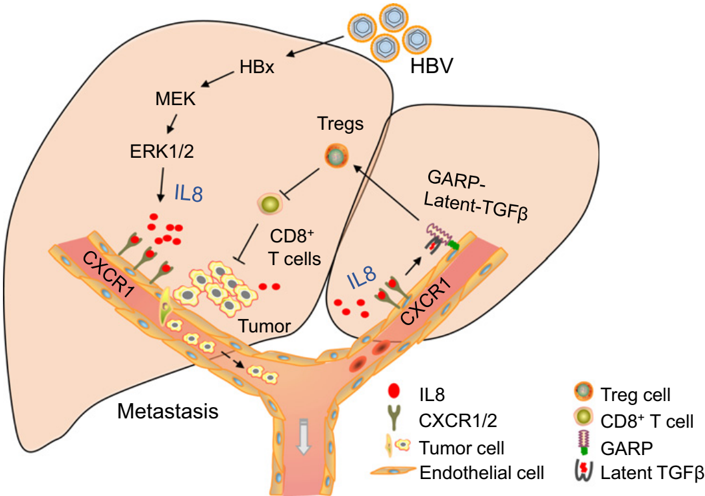
Hepatitis B–associated hepatocellular carcinoma (HCC) is often accompanied by severe vascular invasion and portal vein tumor thrombus, leading to a poor prognosis. However, the underlying mechanism of this disease remains obscure. In this study, we demonstrate that the hepatitis B virus (HBV)–encoded gene HBx induces high IL8 production through MEK–ERK signal activation, leading to enhanced endothelial permeability to facilitate tumor vascular invasion. In a vascular metastatic model using a tail vein injection in a transgenic mouse with selective expression of human CXCR1 in the endothelium, activation of the IL8–CXCR1 cascade by overexpression of IL8 in tumor cells dramatically enhanced liver metastasis. Mechanistically, IL8 selectively induced GARP-latent-TGFβ in liver sinusoidal endothelial cells and subsequently provoked preferential regulatory T-cell polarization to suppress antitumor immunity. Collectively, these findings reveal a hepatitis B–associated IL8–CXCR1 signaling axis that mediates vascular invasion and local microenvironmental immune escape of HCC to induce intrahepatic metastasis, which may serve as potential therapeutic targets for HBV-associated HCC. Significance: This study identifies a hepatitis B–induced IL8/CXCR1/TGFβ signaling cascade that suppresses antitumor immunity and enhances metastasis in hepatocellular carcinoma, providing new potential targets for therapeutic intervention.
Overview
The claims and statistics of this paper haven’t been checked yet.
Free: it reads the open-access text and checks the first 5 claims that cite a source we can check. Create a free account to check every claim.
Integrity signals
Registry
Cites
Statistics
Figures

Verification
Claims the paper makes
The claims and statistics of this paper haven’t been checked yet.
Free: it reads the open-access text and checks the first 5 claims that cite a source we can check. Create a free account to check every claim.
Claims other papers make about this one
Each is checked against this paper’s own text: does it say what the citing paper says it does?
The cited source says what the claim attributes to it.
In the citing paper
“The IL-8/CXCR1 axis also induces glycoprotein-A repetitions predominant (GARP)-latent-TGFβ in liver sinusoidal endothelial cells to subsequently provoke preferential regulatory T-cell polarization to suppress antitumor immunity [328].”
From Inflammation and immunity in liver homeostasis and disease: a nexus of hepatocytes, nonparenchymal cells and immune cells (2025) · doi:10.1038/s41423-025-01313-7 · cites this paper as [328]
In the citing paper
“Additionally, LSECs participate in vascular invasion and local microenvironmental immune escape in HCC [328].”
From Inflammation and immunity in liver homeostasis and disease: a nexus of hepatocytes, nonparenchymal cells and immune cells (2025) · doi:10.1038/s41423-025-01313-7 · cites this paper as [328]
In the citing paper
“In this context, HBV-associated tumor cells release high amounts of interleukin 8 (IL-8), which binds to endothelial CXCR1, leading to increased LSEC permeability to facilitate tumor invasion.”
From Inflammation and immunity in liver homeostasis and disease: a nexus of hepatocytes, nonparenchymal cells and immune cells (2025) · doi:10.1038/s41423-025-01313-7 · cites this paper as [328]
Self-check
Percentages, sums and reported differences re-computed from the paper’s own numbers.
The self-check needs the paper’s full text.
Citations
Cites
Bray, F., Ferlay, J., Soerjomataram, I., Siegel, R. L., Torre, L. A., & Jemal, A. (2018) · CA: A Cancer Journal for Clinicians · doi:10.3322/caac.21492 · Cited by 84,109
Cancer statistics in China, 2015
Chen, W., Zheng, R., Baade, P. D., Zhang, S., Zeng, H., Bray, F., Jemal, A., Yu, X. Q., & He, J. (2016) · CA: A Cancer Journal for Clinicians · doi:10.3322/caac.21338 · Cited by 17,038
Siegel, R. L., Miller, K. D., & Jemal, A. (2018) · CA: A Cancer Journal for Clinicians · doi:10.3322/caac.21442 · Cited by 16,579
GEPIA: a web server for cancer and normal gene expression profiling and interactive analyses
Tang, Z., Li, C., Kang, B., Gao, G., Li, C., & Zhang, Z. (2017) · Nucleic Acids Research · doi:10.1093/nar/gkx247 · Cited by 9,849
Self-citationForner, A., Reig, M., & Bruix, J. (2018) · The Lancet · doi:10.1016/s0140-6736(18)30010-2 · Cited by 5,531
AASLD guidelines for the treatment of hepatocellular carcinoma
Heimbach, J. K., Kulik, L. M., Finn, R. S., Sirlin, C. B., Abecassis, M. M., Roberts, L. R., Zhu, A. X., Murad, M. H., & Marrero, J. A. (2018) · Hepatology · doi:10.1002/hep.29086 · Cited by 4,070
ONCOMINE: A Cancer Microarray Database and Integrated Data-Mining Platform
Rhodes, D. R., Yu, J., Shanker, K., Deshpande, N., Varambally, R., Ghosh, D., Barrette, T., Pander, A., & Chinnaiyan, A. M. (2004) · Neoplasia · doi:10.1016/s1476-5586(04)80047-2 · Cited by 3,612
Chemokines in the cancer microenvironment and their relevance in cancer immunotherapy
Nagarsheth, N., Wicha, M. S., & Zou, W. (2017) · Nature Reviews Immunology · doi:10.1038/nri.2017.49 · Cited by 2,206 · cited 1×
“Therefore, inhibition of IL8 signaling pathway may be an important therapeutic intervention to target the tumor microenvironment (18).”
BackgroundYan, H., Zhong, G., Xu, G., He, W., Jing, Z., Gao, Z., Huang, Y., Qi, Y., Peng, B., Wang, H., et al. (2012) · eLife · doi:10.7554/elife.00049 · Cited by 2,115 · cited 4×
“The authors thank Dr. Ailong Huang (ChongQing Medical University), Dr. Wenhui Li (National Institute of Biological Sciences), and Dr. Xiyun Yan (IBP, CAS) for HepAD38, HepG2-NTCP, HepG2.”
MethodInfluentialSelf-citationEvidence-Based Diagnosis, Staging, and Treatment of Patients With Hepatocellular Carcinoma
Bruix, J., Reig, M., & Sherman, M. (2016) · Gastroenterology · doi:10.1053/j.gastro.2015.12.041 · Cited by 1,694
The Liver as an Immunological Organ
Racanelli, V., & Rehermann, B. (2006) · Hepatology · doi:10.1002/hep.21060 · Cited by 1,377
Sells, M. A., Chen, M. L., & Acs, G. (1987) · Proceedings of the National Academy of Sciences · doi:10.1073/pnas.84.4.1005 · Cited by 1,117
Epidemiology and surveillance for hepatocellular carcinoma: New trends
Singal, A. G., Lampertico, P., & Nahon, P. (2020) · Journal of Hepatology · doi:10.1016/j.jhep.2019.08.025 · Cited by 1,102 · cited 1×
“Hepatitis B virus (HBV) infection is a major etiologic factor leading to HCC incidence (10) accounting for over 50% of HCCs worldwide (11).”
BackgroundMechanisms of HBV-induced hepatocellular carcinoma
Levrero, M., & Zucman-Rossi, J. (2016) · Journal of Hepatology · doi:10.1016/j.jhep.2016.02.021 · Cited by 1,052 · cited 2×
“Hepatitis B virus (HBV) infection is a major etiologic factor leading to HCC incidence (10) accounting for over 50% of HCCs worldwide (11).”
BackgroundGranzyme B and Perforin Are Important for Regulatory T Cell-Mediated Suppression of Tumor Clearance
Cao, X., Cai, S. F., Fehniger, T. A., Song, J., Collins, L. I., Piwnica-Worms, D. R., & Ley, T. J. (2007) · Immunity · doi:10.1016/j.immuni.2007.08.014 · Cited by 1,035 · cited 1×
“The main function of Treg cells is to promote immune tolerance by inhibiting the activation and proliferation of effector T cells and inducing effector T cells apoptosis (52).”
BackgroundFu, J., Xu, D., Liu, Z., Shi, M., Zhao, P., Fu, B., Zhang, Z., Yang, H., Zhang, H., Zhou, C., et al. (2007) · Gastroenterology · doi:10.1053/j.gastro.2007.03.102 · Cited by 897 · cited 1×
“In patients with HCC, increased Treg prevalence was associated with CD8þ T-cell impairment and poor survival (53).”
BackgroundSelf-citationAntigen-presenting cell function in the tolerogenic liver environment
Thomson, A. W., & Knolle, P. A. (2010) · Nature Reviews Immunology · doi:10.1038/nri2858 · Cited by 805 · cited 1×
“IL8–CXCR1 induces liver sinusoidal endothelial GARP-latentTGFb to enhance Treg accumulation A group of specialized vascular endothelial cells, called LSECs, which play an important role in mediating immune tolerance, are the most abundant nonparenchymal cells in the liver (42, 43).”
BackgroundRole of the CXCL8-CXCR1/2 Axis in Cancer and Inflammatory Diseases
Ha, H., Debnath, B., & Neamati, N. (2017) · Theranostics · doi:10.7150/thno.15625 · Cited by 789
Disruption of CXCR2-Mediated MDSC Tumor Trafficking Enhances Anti-PD1 Efficacy
Highfill, S. L., Cui, Y., Giles, A. J., Smith, J. P., Zhang, H., Morse, E., Kaplan, R. N., & Mackall, C. L. (2014) · Science Translational Medicine · doi:10.1126/scitranslmed.3007974 · Cited by 767 · cited 1×
“In addition, decreasing the expression of IL8 has been shown to be beneficial for immune checkpoint blockade therapy, such as anti-PD-L1 and anti-CTLA-4 (19, 20), and the combination of CXCR2-blocking antibody or CXCR2 antagonist with anti-PD-L1 antibody showed more effective tumor growth inhibition (56).”
BackgroundThe CXCL8-CXCR1/2 pathways in cancer
Liu, Q., Li, A., Tian, Y., Wu, J. D., Liu, Y., Li, T., Chen, Y., Han, X., & Wu, K. (2016) · Cytokine & Growth Factor Reviews · doi:10.1016/j.cytogfr.2016.08.002 · Cited by 662 · cited 1×
“IL8 secreted by tumor cells not only affects itself, but also influences the tumor microenvironment (17).”
BackgroundLadner, S. K., Otto, M. J., Barker, C. S., Zaifert, K., Wang, G. H., Guo, J. T., Seeger, C., & King, R. W. (1997) · Antimicrobial Agents and Chemotherapy · doi:10.1128/aac.41.8.1715 · Cited by 640 · cited 1×
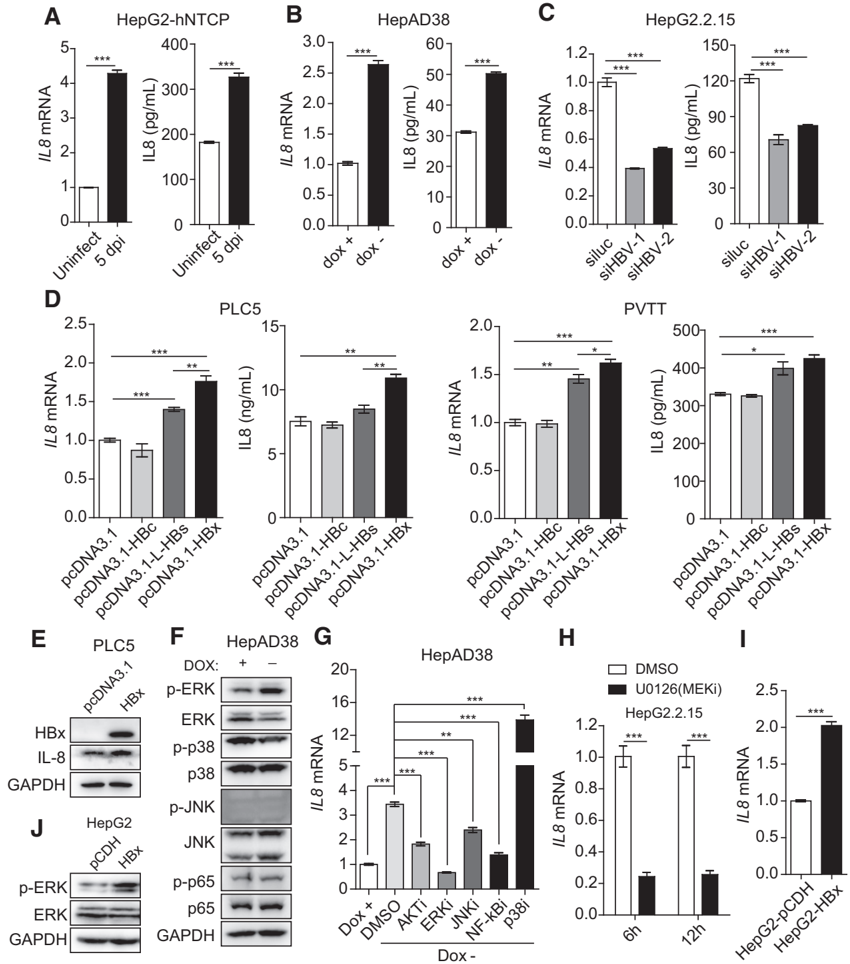
“Next, we examined the effect of HBV on IL8 expression in the HBV-induced expression model (35).”
BackgroundMatrix metalloproteinases and their multiple roles in neurodegenerative diseases
Rosenberg, G. A. (2009) · The Lancet Neurology · doi:10.1016/s1474-4422(09)70016-x · Cited by 594 · cited 1×
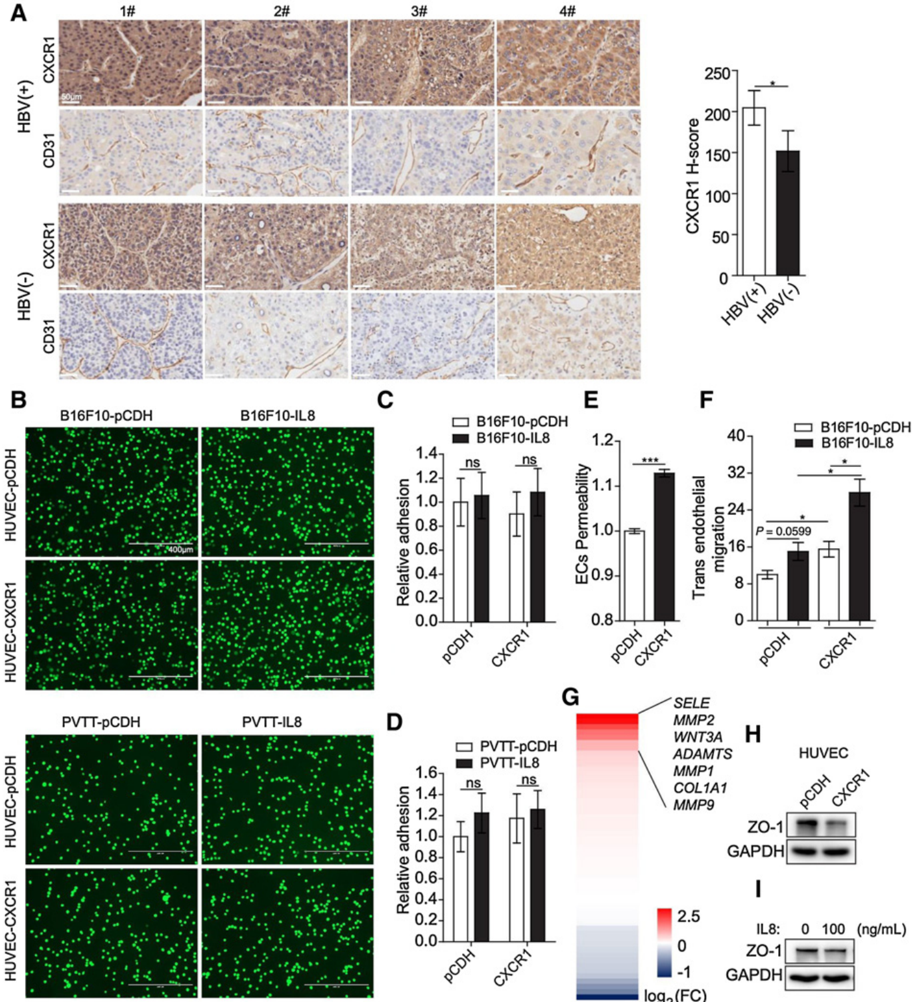
“Of particular interest were MMP2, ADAMTS13, MMP1, and MMP9, which are metalloproteinases that have been shown to play a significant role in increasing cell permeability (40, 41).”
BackgroundAdvances in molecular classification and precision oncology in hepatocellular carcinoma
Rebouissou, S., & Nault, J.-C. (2020) · Journal of Hepatology · doi:10.1016/j.jhep.2019.08.017 · Cited by 575 · cited 1×
“Sorafenib is the first-line chemotherapy drug recommended for the treatment of patients with advanced HCC; however, the median survival of patients treated with sorafenib improved by less than 3 months (7).”
BackgroundImmunological landscape and immunotherapy of hepatocellular carcinoma
Prieto, J., Melero, I., & Sangro, B. (2015) · Nature Reviews Gastroenterology & Hepatology · doi:10.1038/nrgastro.2015.173 · Cited by 566 · cited 10×
“Currently, targeting the tumor microenvironment seems promising for the treatment of HCC (8, 9).”
BackgroundInfluentialSchalper, K. A., Carleton, M., Zhou, M., Chen, T., Feng, Y., Huang, S.-P., Walsh, A. M., Baxi, V., Pandya, D., Baradet, T., et al. (2020) · Nature Medicine · doi:10.1038/s41591-020-0856-x · Cited by 548 · cited 2×
“In addition, decreasing the expression of IL8 has been shown to be beneficial for immune checkpoint blockade therapy, such as anti-PD-L1 and anti-CTLA-4 (19, 20), and the combination of CXCR2-blocking antibody or CXCR2 antagonist with anti-PD-L1 antibody showed more effective tumor growth inhibition (56).”
BackgroundYang, P., Li, Q.-J., Feng, Y., Zhang, Y., Markowitz, G. J., Ning, S., Deng, Y., Zhao, J., Jiang, S., Yuan, Y., et al. (2012) · Cancer Cell · doi:10.1016/j.ccr.2012.07.023 · Cited by 536 · cited 2×
“PVTT cells have been described previously (29).”
BackgroundSelf-citationChen, Y., Ramjiawan, R. R., Reiberger, T., Ng, M. R., Hato, T., Huang, Y., Ochiai, H., Kitahara, S., Unan, E. C., Reddy, T. P., et al. (2015) · Hepatology · doi:10.1002/hep.27665 · Cited by 451
High systemic and tumor-associated IL-8 correlates with reduced clinical benefit of PD-L1 blockade
Yuen, K. C., Liu, L.-F., Gupta, V., Madireddi, S., Keerthivasan, S., Li, C., Rishipathak, D., Williams, P., Kadel, E. E., Koeppen, H., et al. (2020) · Nature Medicine · doi:10.1038/s41591-020-0860-1 · Cited by 429 · cited 2×
“In addition, decreasing the expression of IL8 has been shown to be beneficial for immune checkpoint blockade therapy, such as anti-PD-L1 and anti-CTLA-4 (19, 20), and the combination of CXCR2-blocking antibody or CXCR2 antagonist with anti-PD-L1 antibody showed more effective tumor growth inhibition (56).”
BackgroundInterleukin-8 in cancer pathogenesis, treatment and follow-up
Alfaro, C., Sanmamed, M. F., Rodríguez-Ruiz, M. E., Teijeira, Á., Oñate, C., González, Á., Ponz, M., Schalper, K. A., Pérez-Gracia, J. L., & Melero, I. (2017) · Cancer Treatment Reviews · doi:10.1016/j.ctrv.2017.08.004 · Cited by 372 · cited 1×
“Multiple clinical trials have begun targeting IL8 and CXCR1 for the treatment of cancer (55).”
Factors controlling permeability of the blood–brain barrier
Almutairi, M. M. A., Gong, C., Xu, Y. G., Chang, Y., & Shi, H. (2016) · Cellular and Molecular Life Sciences · doi:10.1007/s00018-015-2050-8 · Cited by 306 · cited 1×
“Of particular interest were MMP2, ADAMTS13, MMP1, and MMP9, which are metalloproteinases that have been shown to play a significant role in increasing cell permeability (40, 41).”
BackgroundSanmamed, M. F., Carranza-Rua, O., Alfaro, C., Oñate, C., Martín-Algarra, S., Perez, G., Landazuri, S. F., Gonzalez, Á., Gross, S., Rodriguez, I., et al. (2014) · Clinical Cancer Research · doi:10.1158/1078-0432.ccr-13-3203 · Cited by 256
Tang, K. H., Ma, S., Lee, T. K., Chan, Y. P., Kwan, P. S., Tong, C. M., Ng, I. O., Man, K., To, K.-F., Lai, P. B., et al. (2012) · Hepatology · doi:10.1002/hep.24739 · Cited by 251 · cited 1×
“IL8 has been shown to assist HCC development by regulating angiogenesis and self-renewal of liver tumor-initiating cells (48, 49).”
BackgroundTGF-β-dependent induction of CD4+CD25+Foxp3+ Tregs by liver sinusoidal endothelial cells
Carambia, A., Freund, B., Schwinge, D., Heine, M., Laschtowitz, A., Huber, S., Wraith, D. C., Korn, T., Schramm, C., Lohse, A. W., et al. (2014) · Journal of Hepatology · doi:10.1016/j.jhep.2014.04.027 · Cited by 241
FU, X.-T., DAI, Z., SONG, K., ZHANG, Z.-J., ZHOU, Z.-J., ZHOU, S.-L., ZHAO, Y.-M., XIAO, Y.-S., SUN, Q.-M., DING, Z.-B., et al. (2015) · International Journal of Oncology · doi:10.3892/ijo.2014.2761 · Cited by 230 · cited 1×
“IL8 also induced EMT through JAK2/STAT3/Snail signaling pathway, promoting HCC metastasis (50).”
BackgroundSelf-citationMahé, Y., Mukaida, N., Kuno, K., Akiyama, M., Ikeda, N., Matsushima, K., & Murakami, S. (1991) · Journal of Biological Chemistry · doi:10.1016/s0021-9258(18)92765-1 · Cited by 224 · cited 2×
“S2D), consistent with previous studies (21, 36, 37), which was confirmed by qRT-PCRandELISAusing additional twoHCCcell lines (PLC5 and PVTT; Fig.”
BackgroundResultMurine CXCR1 Is a Functional Receptor for GCP-2/CXCL6 and Interleukin-8/CXCL8
Fan, X., Patera, A. C., Pong-Kennedy, A., Deno, G., Gonsiorek, W., Manfra, D. J., Vassileva, G., Zeng, M., Jackson, C., Sullivan, L., et al. (2007) · Journal of Biological Chemistry · doi:10.1074/jbc.m607705200 · Cited by 204 · cited 2×
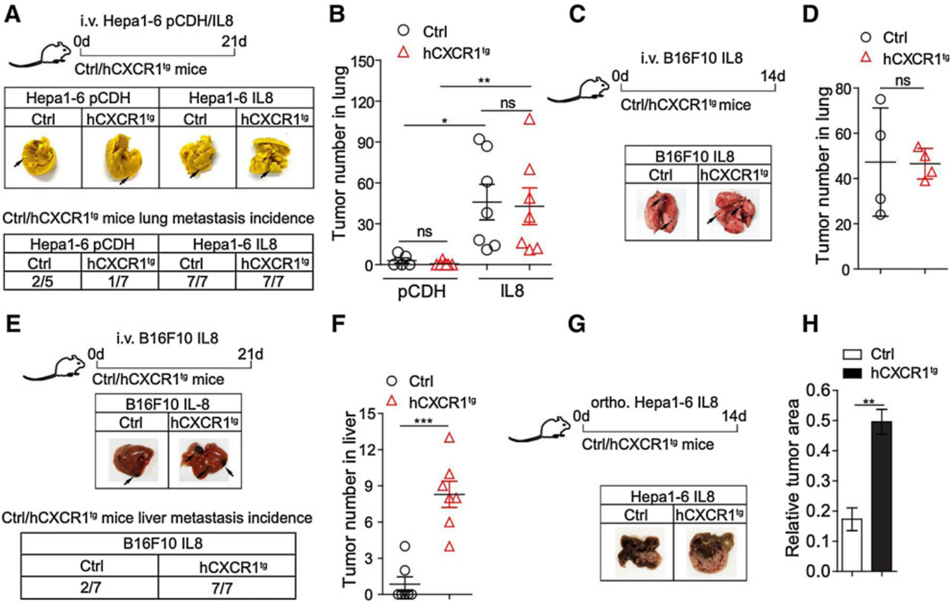
“These results may be due to differences in the tissue-specific microenvironments of the lung and liver; for example, mouse CXCR1, highly expressed in the lung, can response to human IL8 although the binding is weak (28), probably affecting lung metastasis.”
BackgroundMethodXia, L., Huang, W., Tian, D., Zhu, H., Zhang, Y., Hu, H., Fan, D., Nie, Y., & Wu, K. (2012) · Journal of Hepatology · doi:10.1016/j.jhep.2012.04.020 · Cited by 171 · cited 15×
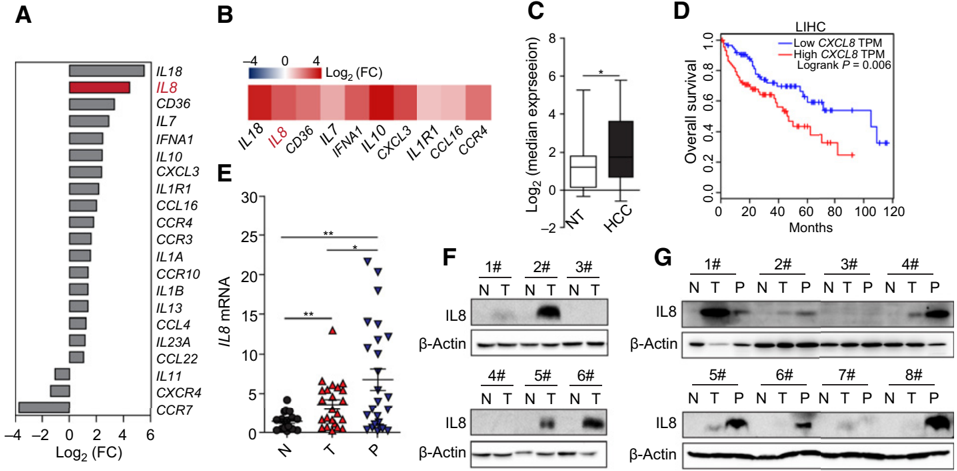
“We analyzed the expression of IL8 using qPCR from 25 intrahepatic metastases tissues classified as portal vein tumor thrombus (PVTT), 23 primary tumor tissues, and 18 adjacent nontumor tissues in patients with HBV-associated HCC.”
BackgroundInfluentialSun, F., Wang, J., Sun, Q., Li, F., Gao, H., Xu, L., Zhang, J., Sun, X., Tian, Y., Zhao, Q., et al. (2019) · Journal of Experimental & Clinical Cancer Research · doi:10.1186/s13046-019-1455-x · Cited by 154 · cited 1×
“In addition, IL8 promotes the upregulation of integrin b3 (26), enhances tumor-associated macrophage (TAM) infiltration and M2 polarization to promote EMT (27), which impact HCC invasion.”
BackgroundXiao, P., Long, X., Zhang, L., Ye, Y., Guo, J., Liu, P., Zhang, R., Ning, J., Yu, W., Wei, F., et al. (2018) · OncoImmunology · doi:10.1080/2162402x.2018.1440166 · Cited by 153
Yu, H., Huang, X., Ma, Y., Gao, M., Wang, O., Gao, T., Shen, Y., & Liu, X. (2013) · International Journal of Biological Sciences · doi:10.7150/ijbs.6996 · Cited by 149 · cited 1×
“Further experiments showed that IL8–CXCR1 can reduce cell tight junctions, consistent with previous study (51), consequently increasing the trans-endothelial capacity of tumor cells.”
ResultHuang, W., Chen, Z., Zhang, L., Tian, D., Wang, D. W., Fan, D., Wu, K., & Xia, L. (2015) · Gastroenterology · doi:10.1053/j.gastro.2015.05.058 · Cited by 143 · cited 1×
“Huang and colleagues have demonstrated that IL8 promotes FOXC1 expression, which, in turn, activates the expression of CXCR1 and CCL2, and promotes HCC metastasis (25).”
BackgroundBirkenkamp, K. U., Tuyt, L., Lummen, C., Wierenga, A. T. J., Kruijer, W., & Vellenga, E. (2000) · British Journal of Pharmacology · doi:10.1038/sj.bjp.0703534 · Cited by 138 · cited 2×
“Interestingly, inhibition of p38 upregulated the expression of IL8, which may be attributed to the activation of ERK and NF-kB pathways by the p38-specific inhibitor SB203580 (46, 47).”
BackgroundThe hepatitis B virus-associated tumor microenvironment in hepatocellular carcinoma
Yang, P., Markowitz, G. J., & Wang, X. (2014) · National Science Review · doi:10.1093/nsr/nwu038 · Cited by 119 · cited 17×
“HBV infection remodels the tumor microenvironment and affects tumor metastasis (12).”
BackgroundInfluentialSelf-citationLoss of RACK1 Promotes Metastasis of Gastric Cancer by Inducing a miR-302c/IL8 Signaling Loop
Ling, C., Min, L., Wang, X. J., Zhao, J., Chen, H., Qin, J., Chen, W., Shen, Z., Tang, Z., Gan, Q., et al. (2015) · Cancer Research · doi:10.1158/0008-5472.can-14-3690 · Cited by 97
GP96 is a GARP chaperone and controls regulatory T cell functions
Zhang, Y., Wu, B. X., Metelli, A., Thaxton, J. E., Hong, F., Rachidi, S., Ansa-Addo, E., Sun, S., Vasu, C., Yang, Y., et al. (2015) · Journal of Clinical Investigation · doi:10.1172/jci79014 · Cited by 95 · cited 1×
“Previous studies reported that GP96, as a chaperone protein, interacts with GARP to increase its stability (54).”
BackgroundNFAT1 Directly Regulates IL8 and MMP3 to Promote Melanoma Tumor Growth and Metastasis
Shoshan, E., Braeuer, R. R., Kamiya, T., Mobley, A. K., Huang, L. F., Vasquez, M. E., Velázquez-Torres, G., Chakravarti, N., Ivan, C., Prieto, V. G., et al. (2016) · Cancer Research · doi:10.1158/0008-5472.can-15-2511 · Cited by 86
Yu, Y. Q., Gong, R., Mu, Y., Chen, Y., Zhu, C., Sun, Z., Chen, M., Liu, Y., Zhu, Y., & Wu, J. (2011) · The Journal of Immunology · doi:10.4049/jimmunol.1100998 · Cited by 77 · cited 1×
“Previous studies have reported that IL8 is upregulated in HBVinfected patients, and the transcription factors AP1, C/EBP, and NF-kB are concurrently necessary for maximum IL8 induction (21, 45).”
BackgroundHenklová, P., Vrzal, R., Papoušková, B., Bednář, P., Jančová, P., Anzenbacherová, E., Ulrichová, J., Maurel, P., Pávek, P., & Dvořák, Z. (2008) · European Journal of Pharmacology · doi:10.1016/j.ejphar.2008.07.007 · Cited by 69 · cited 2×
“Interestingly, inhibition of p38 upregulated the expression of IL8, which may be attributed to the activation of ERK and NF-kB pathways by the p38-specific inhibitor SB203580 (46, 47).”
BackgroundPollicino, T., Bellinghieri, L., Restuccia, A., Raffa, G., Musolino, C., Alibrandi, A., Teti, D. V., & Raimondo, G. (2013) · Virology · doi:10.1016/j.virol.2013.06.028 · Cited by 63 · cited 17×
“In addition, HBx has been shown to be recruited to the IL8 promoter to influence the IL8 expression (21); this induction depends on the activation of the NF-kB signaling pathway (36, 37).”
BackgroundResultInfluentialLuo, M. X. M., Wong, S. H., Chan, M. T. V., Yu, L., Yu, S. S. B., Wu, F., Xiao, Z., Wang, X., Zhang, L., Cheng, A. S. L., et al. (2015) · Journal of Cellular Physiology · doi:10.1002/jcp.24967 · Cited by 61 · cited 2×
“S2D), consistent with previous studies (21, 36, 37), which was confirmed by qRT-PCRandELISAusing additional twoHCCcell lines (PLC5 and PVTT; Fig.”
BackgroundResultMarkowitz, G. J., Yang, P., Fu, J., Michelotti, G. A., Chen, R., Sui, J., Yang, B., Qin, W., Zhang, Z., Wang, F., et al. (2016) · Cancer Research · doi:10.1158/0008-5472.can-15-1548 · Cited by 61 · cited 1×
“Our previous study has demonstrated that IL18 exerts an inflammation-dependent tumor-suppressive effect in HCC by promoting the differentiation, survival and activity of tumor-infiltrating T cells (32).”
BackgroundSelf-citationHao, S., Fan, P., Chen, S., Tu, C., & Wan, C. (2016) · Journal of Gastrointestinal Surgery · doi:10.1007/s11605-016-3311-z · Cited by 52 · cited 1×
“High levels of HBV DNA play an important role in promoting the intrahepatic metastasis and multicenter occurrence in patients with HCC after surgery (13).”
BackgroundChoi, S. H., Kwon, O., Park, J. Y., Kim, D. Y., Ahn, S. H., Kim, S. U., Ro, S. W., Kim, K. S., Park, J. H., Kim, S., et al. (2013) · Liver International · doi:10.1111/liv.12375 · Cited by 38 · cited 1×
“IL8 has been shown to assist HCC development by regulating angiogenesis and self-renewal of liver tumor-initiating cells (48, 49).”
BackgroundTsuge, M., Hiraga, N., Zhang, Y., Yamashita, M., Sato, O., Oka, N., Shiraishi, K., Izaki, Y., Makokha, G. N., Uchida, T., et al. (2018) · Virology · doi:10.1016/j.virol.2018.08.020 · Cited by 33 · cited 1×
“Consistent with previous reports (38), both Large-HBs andHBx could upregulate the expression of IL8, while HBx induced IL8 expression was more significant (Fig.”
ResultKim, S. S., Cho, H. J., Won, J. H., Bae, J. I., Kang, D. R., Lee, J.-D., Shin, S. J., Lee, K. M., Yoo, B. M., Kim, J. K., et al. (2015) · Cytokine · doi:10.1016/j.cyto.2015.07.001 · Cited by 25 · cited 14×
“We analyzed the expression of IL8 using qPCR from 25 intrahepatic metastases tissues classified as portal vein tumor thrombus (PVTT), 23 primary tumor tissues, and 18 adjacent nontumor tissues in patients with HBV-associated HCC.”
BackgroundInfluentialPeng, S., Chen, Y., Gong, Y., Li, Z., Xie, R., Lin, Y., Zou, B., Li, J., & Zeng, L. (2019) · Cytokine · doi:10.1016/j.cyto.2019.03.012 · Cited by 25 · cited 1×
“is related to distant metastasis occurrence or intrahepatic invasion in HCC (24).”
Background
Cited by
Xin, X., Cheng, X., Zeng, F., Xu, Q., & Hou, L. (2024) · International Journal of Biological Sciences · doi:10.7150/ijbs.89568 · Cited by 122
“Zhang et al. showed that the gene HBx encoded by HBV was involved in angiogenesis and immune escape of the HCC tumor microenvironment through the IL8/CXCR1/TGF-β signaling axis, thus inducing liver metastasis[64].”
Background(2025) · doi:10.1038/s41423-025-01313-7 · Cited by 97
“Additionally, LSECs participate in vascular invasion and local microenviron-mental immune escape in HCC [328].”
Cytokines and Chemokines in HBV Infection
Zhong, S., Zhang, T., Tang, L., & Li, Y. (2021) · Frontiers in Molecular Biosciences · doi:10.3389/fmolb.2021.805625 · Cited by 99
The role of IL-8 in cancer development and its impact on immunotherapy resistance
Meier, C., & Brieger, A. (2025) · European Journal of Cancer · doi:10.1016/j.ejca.2025.115267 · Cited by 84
Wang, X., Liu, C., Chen, J., Chen, L., Ren, X., Hou, M., Cui, X., Jiang, Y., Liu, E., Zong, Y., et al. (2022) · Cell Discovery · doi:10.1038/s41421-022-00445-8 · Cited by 79
Self-citation
Metadata
- Authors
- Zhang, C., Gao, Y., Du, C., Markowitz, G. J., Fu, J., Zhang, Z., Liu, C., Qin, W., Wang, H., Wang, F., & Yang, P.
- Affiliations
- University of Science and Technology of China (CN)
- Chinese Academy of Sciences (CN)
- Weill Cornell Medicine (US)
- Second Military Medical University (CN)
- Corresponding author
- Wang, Fan
- Yang, Pengyuan
- ORCID
- Venue
- Cancer Research
- Published
- 2021-03-02
- Volume
- 81
- Issue
- 9
- Pages
- 2386-2398
- ISSN
- 0008-5472 (ISSN-L)
- 1538-7445
- OpenAlex
- W3135090205
- Semantic Scholar
- ba7297514572e4fd44e4737b6cdf8b5810b649cf
- Cited by
- 72
- References
- 59
- Citations by year
- 2026: 4 · 2025: 14 · 2024: 17 · 2023: 20 · 2022: 14 · 2021: 3
- FWCI
- 4.92
- Type
- journal article
- Language
- en
- Open access
- hybrid
- doi.org
- Licence
- cc-by
- Locations
- Cancer Research (publishedVersion, cc-by)
- PubMed (publishedVersion)
- Funders
- Strategic Priority Research Program (XDB29040102, XDB37030206)
- National Natural Science Foundation of China (81672464, 81988101, 81872231, 82073411)
- NCI (KL2-TR-002385)
- Topics
- Health Sciences › Medicine › Oncology › Chemokine receptors and signaling
- Health Sciences › Medicine › Hepatology › Hepatocellular Carcinoma Treatment and Prognosis
- Health Sciences › Medicine › Hepatology › Liver physiology and pathology
- Keywords
- interleukin-8, CXCR1, HBx, MEK/ERK signaling, liver metastasis, intrahepatic metastasis, regulatory T cells, TGF-beta, liver sinusoidal endothelial cells, endothelial permeability, tumor vascular invasion, immune evasion
- MeSH terms
- Animals, Disease Models, Animal, Hepatitis B, Hepatitis B virus, Carcinoma, Hepatocellular, Humans, Liver, Liver Neoplasms, Mice, Inbred C57BL, Mice, Transgenic, Recombinant Proteins, Transfection, Trans-Activators, Interleukin-8, MAP Kinase Signaling System, Receptors, Interleukin-8A, T-Lymphocytes, Regulatory, Mice, Viral Regulatory and Accessory Proteins, Hep G2 Cells, HEK293 Cells, Human Umbilical Vein Endothelial Cells
About these checks
Registry, retraction, Cites and statistics results are computed, not judged, with one exception: a printed reference that no index lists is read once by a model before it counts as a citation error. Claims are extracted by a model and kept only when their quote appears verbatim in the text; each cited source is then checked, with a model’s help, for whether it says what the claim relies on. Those verdicts can be wrong — read the claim’s quote and the cited source before relying on one.
Statistics and arithmetic are recomputed, not judged.
Confidence bands are shown only for fields calibrated on our annotated test set. None is calibrated yet, so no band is shown.
What counts as a claim ›How we measure confidence ›How we check this ›
Are you an author, or do you see a problem with this page? Request a review
Data sources
Bibliographic data: Semantic Scholar, OpenAlex, Crossref.
Contains information from the Semantic Scholar Academic Graph Datasets, made available under the ODC Attribution License (ODC-BY 1.0).
Semantic Scholar’s data is described in: Kinney, R., et al. (2023). The Semantic Scholar Open Data Platform. arXiv:2301.10140.
