

The DOI matches its Crossref record; 51 of the 52 references it cites were found in a registry or an index; none of the 33 sources its claims cite is checked for support yet.
The Gut Microbiome Contributes to a Substantial Proportion of the Variation in Blood Lipids
Open accessAbstract
Rationale: Evidence suggests that the gut microbiome is involved in the development of cardiovascular disease, with the host–microbe interaction regulating immune and metabolic pathways. However, there was no firm evidence for associations between microbiota and metabolic risk factors for cardiovascular disease from large-scale studies in humans. In particular, there was no strong evidence for association between cardiovascular disease and aberrant blood lipid levels. Objectives: To identify intestinal bacteria taxa, whose proportions correlate with body mass index and lipid levels, and to determine whether lipid variance can be explained by microbiota relative to age, sex, and host genetics. Methods and Results: We studied 893 subjects from the LifeLines-DEEP population cohort. After correcting for age and sex, we identified 34 bacterial taxa associated with body mass index and blood lipids; most are novel associations. Cross-validation analysis revealed that microbiota explain 4.5% of the variance in body mass index, 6% in triglycerides, and 4% in high-density lipoproteins, independent of age, sex, and genetic risk factors. A novel risk model, including the gut microbiome explained ≤25.9% of high-density lipoprotein variance, significantly outperforming the risk model without microbiome. Strikingly, the microbiome had little effect on low-density lipoproteins or total cholesterol. Conclusions: Our studies suggest that the gut microbiome may play an important role in the variation in body mass index and blood lipid levels, independent of age, sex, and host genetics. Our findings support the potential of therapies altering the gut microbiome to control body mass, triglycerides, and high-density lipoproteins.
Overview
AI snapshot
Written from the paper’s full text.
TL;DR
In 893 Dutch LifeLines-DEEP participants, gut microbiome composition was associated with BMI, triglycerides, and HDL cholesterol, and explained a significant portion of their variation beyond age, sex, and host genetics. The authors estimate the microbiome explains up to 6% of lipid variation, with little effect on LDL or total cholesterol.
Key findings
- After adjustment for age and sex, 148 OTUs were associated with traits at FDR=0.05: 66 with BMI, 114 with triglycerides, and 34 with HDL; no OTUs were significantly associated with LDL or total cholesterol. At the taxonomic level, 34 unique taxonomies yielded 50 significant associations: 22 with BMI, 23 with triglycerides, 4 with HDL, and 1 with LDL.
- Microbial richness averaged 238 OTUs per individual (range 44–355) and was negatively correlated with BMI (P=3.8×10⁻⁴) and triglycerides (P=1.37×10⁻⁴), and positively correlated with HDL (P=8.3×10⁻⁴), but not with LDL or total cholesterol.
- At P=1×10⁻⁵, microbiome-associated OTUs explained 2.74% of BMI variation, 3.83% of triglycerides, 2.46% of HDL, 0.01% of LDL, and 0.01% of total cholesterol; with less-stringent thresholds, explained variation increased to 4.57% for BMI, 6.0% for triglycerides, 4.0% for HDL, 1.5% for LDL, and 0.7% for total cholesterol.
- Age, sex, genetics, and microbiome together explained 11.3% of BMI, 17.1% of triglycerides, and 25.9% of HDL variation, with the microbiome contributing significantly to BMI (P=4.1×10⁻³), triglycerides (P=4.5×10⁻⁴), and HDL (P=2.7×10⁻³). No significant association was found between the microbiome and genetic risk scores at FDR=0.05.
Methods
- Cross-sectional analysis of 893 LifeLines-DEEP subjects (380 men, 513 women) with lipid measurements, genotype data, and gut microbiome data after excluding antibiotic, microbiome-modifying, or lipid-lowering medication users and applying rarefaction to 15,000 reads.
- Fecal microbiome profiling used 16S rRNA gene V4 sequencing; OTU picking used QIIME/UCLUST with GreenGenes 13.5; analysis was confined to 645 OTUs present at ≥0.05% of reads in ≥1% of the population.
- Associations were tested with a two-part model for binary presence/absence and quantitative abundance, with 1000× permutations to control FDR at 0.05; variance explained was estimated by 100× cross-validation, and genetic risk scores were computed from 155 lipid-associated and 96 BMI-associated SNPs.
Limitations
- The paper states that the genetic risk score was limited to 157 established lipid-associated SNPs and 97 BMI-associated SNPs, which explain only a small proportion of heritability, so undiscovered SNPs may have been missed.
- The paper states that 16S rRNA gene sequencing has limited ability to identify species and strains and provides little information on bacterial genes and functions.
- The paper states that diet was not addressed, and it calls for validation in independent cohorts and functional studies to establish causality; the cross-sectional observational design also cannot prove causation.
Model-written summary. Check it against the paper before relying on it.
Integrity signals
Registry
Cites
Statistics
Figures
Verification
Claims the paper makes
28 Own result · 22 Not checked yet · 13 Own method · 11 Own interpretation · 1 No basis given
A result the paper reports from its own data — it cites no other source for it, so there is none to check. The quote shows it is in the paper.
In the paper
“We did not detect any significant association at OTU level for LDL or TC.”
§ The Gut Microbiome Contributes to a Substantial Proportion of the Variation in Blood Lipids > Results > Association of Bacteria With Lipid Metabolites
plain- Asserted: passes — The authors put it forward as true.
- Checkable: passes — It can be checked against evidence.
- Load-bearing: unclear — It is unclear whether the paper’s conclusions depend on it.
- Based: passes — The paper gives a reason why it holds.
In the paper
“We also identified a correlation of decreased bacterial diversity with increased BMI, which is in line with previous observations.40”
§ The Gut Microbiome Contributes to a Substantial Proportion of the Variation in Blood Lipids > Discussion
What the sources say
- Not checked yetcites [40] Le Chatelier E Nielsen T Qin J MetaHIT consortium Richness of human gut microbiome correlates with metabolic markers. Nature 2013 500 541 546 doi: 10.1038/nature12506 23985870 source
plaincorrelational- Asserted: passes — The authors put it forward as true.
- Checkable: passes — It can be checked against evidence.
- Load-bearing: unclear — It is unclear whether the paper’s conclusions depend on it.
- Based: passes — The paper gives a reason why it holds.
A result the paper reports from its own data — it cites no other source for it, so there is none to check. The quote shows it is in the paper.
In the paper
“We established associations for 34 taxonomies with BMI and blood lipid levels”
§ The Gut Microbiome Contributes to a Substantial Proportion of the Variation in Blood Lipids > Discussion
plaincorrelationaln = 893- Asserted: passes — The authors put it forward as true.
- Checkable: passes — It can be checked against evidence.
- Load-bearing: passes — The paper’s conclusions depend on it.
- Based: passes — The paper gives a reason why it holds.
A result the paper reports from its own data — it cites no other source for it, so there is none to check. The quote shows it is in the paper.
In the paper
“we have been able to estimate that the microbiome could explain 4.57% to 6% of the variation in BMI, triglyceride and HDL, respectively.”
§ The Gut Microbiome Contributes to a Substantial Proportion of the Variation in Blood Lipids > Discussion
hedgedcorrelational- Asserted: passes — The authors put it forward as true.
- Checkable: passes — It can be checked against evidence.
- Load-bearing: passes — The paper’s conclusions depend on it.
- Based: passes — The paper gives a reason why it holds.
In the paper
“An increased abundance of genus Akkermansia (N34) has been associated with a decrease in BMI (P=0.0005).37”
§ The Gut Microbiome Contributes to a Substantial Proportion of the Variation in Blood Lipids > Results > Association of Bacteria With Lipid Metabolites
What the sources say
- Not checked yetcites [37] Everard A Belzer C Geurts L Ouwerkerk JP Druart C Bindels LB Guiot Y Derrien M Muccioli GG Delzenne NM de Vos WM Cani PD Cross-talk between Akkermansia muciniphila and intestinal epithelium controls diet-induced obesity. Proc Natl Acad Sci U S A 2013 110 9066 9071 doi: 10.1073/pnas.1219451110 23671105 PMC3670398 source
plaincorrelational- Asserted: passes — The authors put it forward as true.
- Checkable: passes — It can be checked against evidence.
- Load-bearing: unclear — It is unclear whether the paper’s conclusions depend on it.
- Based: passes — The paper gives a reason why it holds.
A result the paper reports from its own data — it cites no other source for it, so there is none to check. The quote shows it is in the paper.
In the paper
“However, we did not observe any significant association between the microbiome and the genetic risk at FDR=0.05.”
§ The Gut Microbiome Contributes to a Substantial Proportion of the Variation in Blood Lipids > Results > Microbiota Contribute Significantly to Lipid Variation, Independently of Age, Sex, and Genetics
plain- Asserted: passes — The authors put it forward as true.
- Checkable: passes — It can be checked against evidence.
- Load-bearing: passes — The paper’s conclusions depend on it.
- Based: passes — The paper gives a reason why it holds.
A result the paper reports from its own data — it cites no other source for it, so there is none to check. The quote shows it is in the paper.
In the paper
“We did not observe significant correlations between microbial richness and LDL or TC levels (Online Table I).”
§ The Gut Microbiome Contributes to a Substantial Proportion of the Variation in Blood Lipids > Results > Microbial Diversity in the LifeLines-DEEP Cohort
plainn = 893- Asserted: passes — The authors put it forward as true.
- Checkable: passes — It can be checked against evidence.
- Load-bearing: unclear — It is unclear whether the paper’s conclusions depend on it.
- Based: passes — The paper gives a reason why it holds.
In the paper
“we confirmed that lower abundances of families Christensenellaceae, Rikenellaceae, class Mollicutes, genus Dehalobacterium, and kingdom Archaea were associated with a high BMI.”
§ The Gut Microbiome Contributes to a Substantial Proportion of the Variation in Blood Lipids > Discussion
What the sources say
- Not checked yetcites [38] Goodrich JK Waters JL Poole AC Sutter JL Koren O Blekhman R Beaumont M Van Treuren W Knight R Bell JT Spector TD Clark AG Ley RE Human genetics shape the gut microbiome. Cell 2014 159 789 799 doi: 10.1016/j.cell.2014.09.053 25417156 PMC4255478 source
plaincorrelational- Asserted: passes — The authors put it forward as true.
- Checkable: passes — It can be checked against evidence.
- Load-bearing: unclear — It is unclear whether the paper’s conclusions depend on it.
- Based: passes — The paper gives a reason why it holds.
The paper states this without a source or data behind it here, so there is nothing to check it against. The quote shows it is in the paper.
In the paper
“Another pathway enriched in several associated bacteria is short chain fatty acid metabolism.”
§ The Gut Microbiome Contributes to a Substantial Proportion of the Variation in Blood Lipids > Discussion
plaincorrelational- Asserted: passes — The authors put it forward as true.
- Checkable: passes — It can be checked against evidence.
- Load-bearing: unclear — It is unclear whether the paper’s conclusions depend on it.
- Based: passes — The paper gives a reason why it holds.
A result the paper reports from its own data — it cites no other source for it, so there is none to check. The quote shows it is in the paper.
In the paper
“but that it has little effect on LDL or TC levels.”
§ The Gut Microbiome Contributes to a Substantial Proportion of the Variation in Blood Lipids > Discussion
plain- Asserted: passes — The authors put it forward as true.
- Checkable: passes — It can be checked against evidence.
- Load-bearing: passes — The paper’s conclusions depend on it.
- Based: passes — The paper gives a reason why it holds.
- It may state two separate claims as one. 38
- Probably not a substantial claim. 27
A result the paper reports from its own data — it cites no other source for it, so there is none to check. The quote shows it is in the paper.
In the paper
“When we included BMI as a risk factor, the total explained variation in lipids increased to 25% in triglycerides, 37.4% in HDL, 22.3% in LDL, and 22.3% in TC (Online Figure IV).”
§ The Gut Microbiome Contributes to a Substantial Proportion of the Variation in Blood Lipids > Results > Microbiota Contribute Significantly to Lipid Variation, Independently of Age, Sex, and Genetics
plaincorrelational- Asserted: passes — The authors put it forward as true.
- Checkable: passes — It can be checked against evidence.
- Load-bearing: passes — The paper’s conclusions depend on it.
- Based: passes — The paper gives a reason why it holds.
It may state two separate claims as one.
None of the sources cited for this claim have been checked yet.
In the paper
“In particular, order Bacteroidales (phylum Bacteroidetes) and family Clostridiaceae (phylum Firmicutes) are both negatively correlated with BMI and triglycerides and known to be involved in bile acid metabolism.41”
§ The Gut Microbiome Contributes to a Substantial Proportion of the Variation in Blood Lipids > Discussion
plaincorrelational- Asserted: passes — The authors put it forward as true.
- Checkable: passes — It can be checked against evidence.
- Load-bearing: unclear — It is unclear whether the paper’s conclusions depend on it.
- Based: passes — The paper gives a reason why it holds.
It may state two separate claims as one.
In the paper
“We also confirmed the association of both the family Christensenellaceae (phylum Firmicutes; N18) and the phylum Tenericutes (mainly represented by order RF-39; N33) with low BMI (P=9.8×10⁻⁷ and P=0.0002, respectively), as reported in the TwinsUK cohort.38”
§ The Gut Microbiome Contributes to a Substantial Proportion of the Variation in Blood Lipids > Results > Association of Bacteria With Lipid Metabolites
What the sources say
- Not checked yetcites [38] Goodrich JK Waters JL Poole AC Sutter JL Koren O Blekhman R Beaumont M Van Treuren W Knight R Bell JT Spector TD Clark AG Ley RE Human genetics shape the gut microbiome. Cell 2014 159 789 799 doi: 10.1016/j.cell.2014.09.053 25417156 PMC4255478 source
plaincorrelational- Asserted: passes — The authors put it forward as true.
- Checkable: passes — It can be checked against evidence.
- Load-bearing: unclear — It is unclear whether the paper’s conclusions depend on it.
- Based: passes — The paper gives a reason why it holds.
It may state two separate claims as one.
A result the paper reports from its own data — it cites no other source for it, so there is none to check. The quote shows it is in the paper.
In the paper
“In addition, we identified a novel and strong association of these particular bacteria with lower levels of triglyceride (P=2.1×10⁻⁵ and P=2.7×10⁻⁷, respectively) and higher levels of HDL (P=0.0047 and P=0.0006, respectively).”
§ The Gut Microbiome Contributes to a Substantial Proportion of the Variation in Blood Lipids > Results > Association of Bacteria With Lipid Metabolites
boostedcorrelational- Asserted: passes — The authors put it forward as true.
- Checkable: passes — It can be checked against evidence.
- Load-bearing: passes — The paper’s conclusions depend on it.
- Based: passes — The paper gives a reason why it holds.
It may state two separate claims as one.
A result the paper reports from its own data — it cites no other source for it, so there is none to check. The quote shows it is in the paper.
In the paper
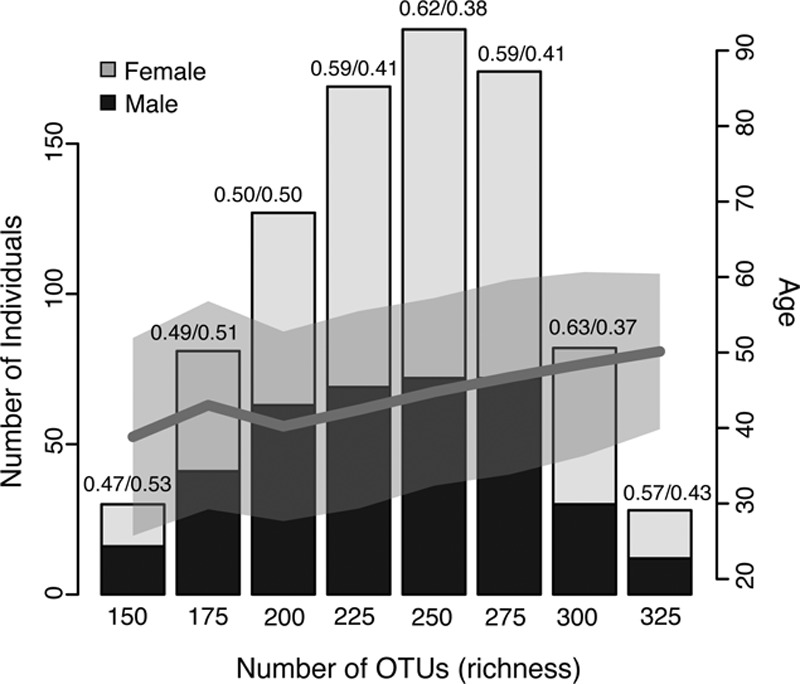
“When individuals were grouped into different bins based on their richness, we observed that age and the proportion of women were higher in the richer OTU groups (Figure 1).”
§ The Gut Microbiome Contributes to a Substantial Proportion of the Variation in Blood Lipids > Results > Microbial Diversity in the LifeLines-DEEP Cohort
plaincorrelationaln = 893- Asserted: passes — The authors put it forward as true.
- Checkable: passes — It can be checked against evidence.
- Load-bearing: unclear — It is unclear whether the paper’s conclusions depend on it.
- Based: passes — The paper gives a reason why it holds.
It may state two separate claims as one.
A result the paper reports from its own data — it cites no other source for it, so there is none to check. The quote shows it is in the paper.
In the paper
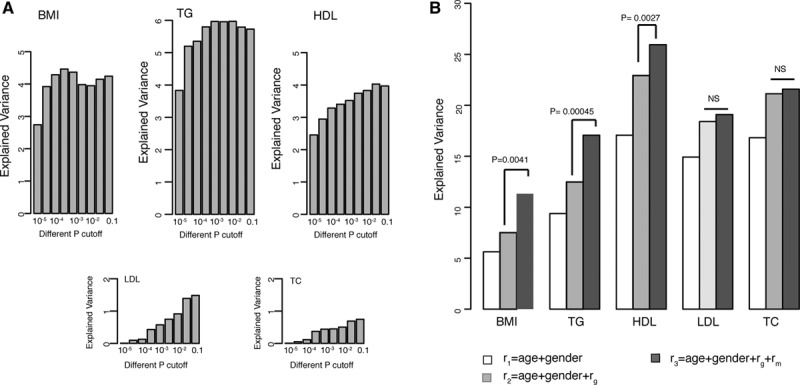
“with the microbiome making a significant contribution to the explained variation in BMI (P=4.1×10⁻³), triglycerides (P=4.5×10⁻⁴), and HDL (P=2.7×10⁻³; Figure 3B).”
§ The Gut Microbiome Contributes to a Substantial Proportion of the Variation in Blood Lipids > Results > Microbiota Contribute Significantly to Lipid Variation, Independently of Age, Sex, and Genetics
plaincorrelational- Asserted: passes — The authors put it forward as true.
- Checkable: passes — It can be checked against evidence.
- Load-bearing: passes — The paper’s conclusions depend on it.
- Based: passes — The paper gives a reason why it holds.
It may state two separate claims as one.
A result the paper reports from its own data — it cites no other source for it, so there is none to check. The quote shows it is in the paper.
In the paper
“Of the 148 associated OTUs, 12 were shared by all 3 traits (BMI, triglyceride, and HDL), 29 OTUs were shared by BMI and triglycerides, and 4 by BMI and HDL, whereas 21, 64, and 9 OTUs were specifically associated with BMI, triglyceride, and HDL, respectively (Online Figure II).”
§ The Gut Microbiome Contributes to a Substantial Proportion of the Variation in Blood Lipids > Results > Association of Bacteria With Lipid Metabolites
plaincorrelational- Asserted: passes — The authors put it forward as true.
- Checkable: passes — It can be checked against evidence.
- Load-bearing: unclear — It is unclear whether the paper’s conclusions depend on it.
- Based: passes — The paper gives a reason why it holds.
It may state two separate claims as one.
A result the paper reports from its own data — it cites no other source for it, so there is none to check. The quote shows it is in the paper.
In the paper
“After correcting for age and sex, OTU richness was negatively correlated with BMI (P=3.8×10⁻⁴) and triglycerides (P=1.37×10⁻⁴), but positively correlated with HDL (P=8.3×10⁻⁴).”
§ The Gut Microbiome Contributes to a Substantial Proportion of the Variation in Blood Lipids > Results > Microbial Diversity in the LifeLines-DEEP Cohort
plaincorrelationaln = 893- Asserted: passes — The authors put it forward as true.
- Checkable: passes — It can be checked against evidence.
- Load-bearing: passes — The paper’s conclusions depend on it.
- Based: passes — The paper gives a reason why it holds.
It may state two separate claims as one.
A result the paper reports from its own data — it cites no other source for it, so there is none to check. The quote shows it is in the paper.
In the paper
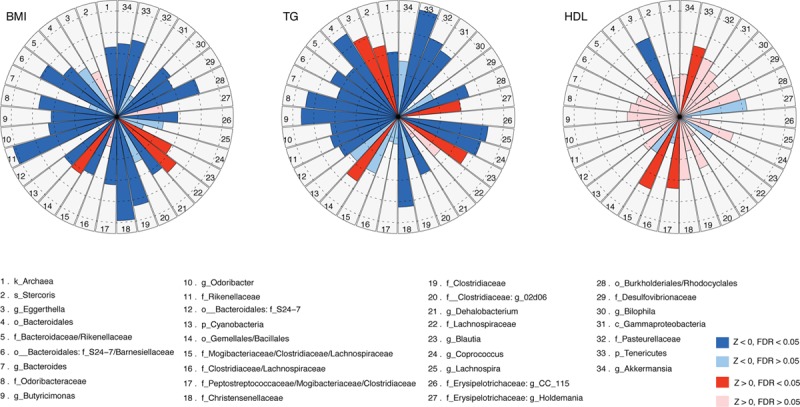
“At the taxonomic level, we identified 50 significant associations for 34 unique taxonomies at FDR=0.05: 22 were associated with BMI, 23 with triglycerides, 4 with HDL, and 1 with LDL (Figure 2; Online Table V).”
§ The Gut Microbiome Contributes to a Substantial Proportion of the Variation in Blood Lipids > Results > Association of Bacteria With Lipid Metabolites
plaincorrelational- Asserted: passes — The authors put it forward as true.
- Checkable: passes — It can be checked against evidence.
- Load-bearing: passes — The paper’s conclusions depend on it.
- Based: passes — The paper gives a reason why it holds.
It may state two separate claims as one.
A result the paper reports from its own data — it cites no other source for it, so there is none to check. The quote shows it is in the paper.
In the paper
“the family Clostridiaceae/Lachnospiracease (N16 in Figure 2) was specially associated with LDL (P=9.1×10⁻⁵; Online Table V) and not detected for BMI nor other lipids.”
§ The Gut Microbiome Contributes to a Substantial Proportion of the Variation in Blood Lipids > Results > Association of Bacteria With Lipid Metabolites
plaincorrelational- Asserted: passes — The authors put it forward as true.
- Checkable: passes — It can be checked against evidence.
- Load-bearing: unclear — It is unclear whether the paper’s conclusions depend on it.
- Based: passes — The paper gives a reason why it holds.
It may state two separate claims as one.
A result the paper reports from its own data — it cites no other source for it, so there is none to check. The quote shows it is in the paper.
In the paper
“We observed that the gut microbiome makes a significant contribution, beyond that of clinical risk factors and genetics, to the individual variance seen in BMI and to the blood levels of triglycerides and HDL”
§ The Gut Microbiome Contributes to a Substantial Proportion of the Variation in Blood Lipids > Discussion
plaincorrelational- Asserted: passes — The authors put it forward as true.
- Checkable: passes — It can be checked against evidence.
- Load-bearing: passes — The paper’s conclusions depend on it.
- Based: passes — The paper gives a reason why it holds.
It may state two separate claims as one.
A result the paper reports from its own data — it cites no other source for it, so there is none to check. The quote shows it is in the paper.
In the paper
“The microbiome made a lesser, but still significant, contribution to triglycerides (P=4×10⁻³) and HDL (P=0.026).”
§ The Gut Microbiome Contributes to a Substantial Proportion of the Variation in Blood Lipids > Results > Microbiota Contribute Significantly to Lipid Variation, Independently of Age, Sex, and Genetics
plaincorrelational- Asserted: passes — The authors put it forward as true.
- Checkable: passes — It can be checked against evidence.
- Load-bearing: passes — The paper’s conclusions depend on it.
- Based: passes — The paper gives a reason why it holds.
It may state two separate claims as one.
A result the paper reports from its own data — it cites no other source for it, so there is none to check. The quote shows it is in the paper.
In the paper
“such as genus Eggerthella (N3) with increased triglyceride (P=4.1×10⁻⁵) and decreased HDL (P=6.3×10⁻⁵), and family Pasteurellaceae (N32) with decreased triglyceride (P=6.2×10⁻⁵).”
§ The Gut Microbiome Contributes to a Substantial Proportion of the Variation in Blood Lipids > Results > Association of Bacteria With Lipid Metabolites
plaincorrelational- Asserted: passes — The authors put it forward as true.
- Checkable: passes — It can be checked against evidence.
- Load-bearing: unclear — It is unclear whether the paper’s conclusions depend on it.
- Based: passes — The paper gives a reason why it holds.
It may state two separate claims as one.
A result the paper reports from its own data — it cites no other source for it, so there is none to check. The quote shows it is in the paper.
In the paper
“When the association significance decreased and the risk model included more (but less-significant) OTUs, the explained variation increased to 4.57% in BMI, 6.0% in triglycerides, 4.0% in HDL, but was only 1.5% in LDL and 0.7% in TC (Figure 3A).”
§ The Gut Microbiome Contributes to a Substantial Proportion of the Variation in Blood Lipids > Results > Variance of Blood Lipid Explained by Microbiota Composition
plaincorrelational- Asserted: passes — The authors put it forward as true.
- Checkable: passes — It can be checked against evidence.
- Load-bearing: passes — The paper’s conclusions depend on it.
- Based: passes — The paper gives a reason why it holds.
It may state two separate claims as one.
A result the paper reports from its own data — it cites no other source for it, so there is none to check. The quote shows it is in the paper.
In the paper
“The cohort had on average 238 OTUs per individual, ranging from 44 to 355.”
§ The Gut Microbiome Contributes to a Substantial Proportion of the Variation in Blood Lipids > Results > Microbial Diversity in the LifeLines-DEEP Cohort
plainn = 893- Asserted: passes — The authors put it forward as true.
- Checkable: passes — It can be checked against evidence.
- Load-bearing: fails — The paper’s conclusions may not depend on it.
- Based: passes — The paper gives a reason why it holds.
Probably not a substantial claim. The paper’s conclusions may not depend on it. It may state two separate claims as one.
A result the paper reports from its own data — it cites no other source for it, so there is none to check. The quote shows it is in the paper.
In the paper
“we computed the microbial diversity (Shannon’s diversity index) and observed similar significant correlations for age and sex (Online Table I).”
§ The Gut Microbiome Contributes to a Substantial Proportion of the Variation in Blood Lipids > Results > Microbial Diversity in the LifeLines-DEEP Cohort
plaincorrelationaln = 893- Asserted: passes — The authors put it forward as true.
- Checkable: passes — It can be checked against evidence.
- Load-bearing: fails — The paper’s conclusions may not depend on it.
- Based: passes — The paper gives a reason why it holds.
Probably not a substantial claim. The paper’s conclusions may not depend on it.
A result the paper reports from its own data — it cites no other source for it, so there is none to check. The quote shows it is in the paper.
In the paper
“Our study shows that this genus is strongly associated with decreased triglyceride (P=4.7×10⁻⁶) and nominally associated with BMI and HDL in humans.”
§ The Gut Microbiome Contributes to a Substantial Proportion of the Variation in Blood Lipids > Results > Association of Bacteria With Lipid Metabolites
boostedcorrelational- Asserted: passes — The authors put it forward as true.
- Checkable: passes — It can be checked against evidence.
- Load-bearing: unclear — It is unclear whether the paper’s conclusions depend on it.
- Based: passes — The paper gives a reason why it holds.
It may state two separate claims as one.
A result the paper reports from its own data — it cites no other source for it, so there is none to check. The quote shows it is in the paper.
In the paper
“Although most of the associated taxonomies were shared across lipid metabolites and BMI, several microbes were predominantly linked to lipids rather than BMI.”
§ The Gut Microbiome Contributes to a Substantial Proportion of the Variation in Blood Lipids > Results > Association of Bacteria With Lipid Metabolites
plaincorrelational- Asserted: passes — The authors put it forward as true.
- Checkable: passes — It can be checked against evidence.
- Load-bearing: unclear — It is unclear whether the paper’s conclusions depend on it.
- Based: passes — The paper gives a reason why it holds.
It may state two separate claims as one.
A result the paper reports from its own data — it cites no other source for it, so there is none to check. The quote shows it is in the paper.
In the paper
“the family Pasteurellaceae (N32; Proteobacteria), genus Coprococcus (N24; Firmicutes), and genus Collinsella species Stercoris (N2) showed strong association with triglyceride levels (P=6.2×10⁻⁵, P=4.6×10⁻⁵, and P=0.0006, respectively), a nominal significance to other lipids, and no association with BMI (P>0.1).”
§ The Gut Microbiome Contributes to a Substantial Proportion of the Variation in Blood Lipids > Results > Association of Bacteria With Lipid Metabolites
boostedcorrelational- Asserted: passes — The authors put it forward as true.
- Checkable: passes — It can be checked against evidence.
- Load-bearing: unclear — It is unclear whether the paper’s conclusions depend on it.
- Based: passes — The paper gives a reason why it holds.
It may state two separate claims as one.
A result the paper reports from its own data — it cites no other source for it, so there is none to check. The quote shows it is in the paper.
In the paper
“After adjusting for age and sex, we identified 148 associated OTUs at FDR=0.05: 66 OTUs were associated with BMI, 114 with triglycerides, and 34 with HDL (Online Tables II–IV).”
§ The Gut Microbiome Contributes to a Substantial Proportion of the Variation in Blood Lipids > Results > Association of Bacteria With Lipid Metabolites
plaincorrelational- Asserted: passes — The authors put it forward as true.
- Checkable: passes — It can be checked against evidence.
- Load-bearing: passes — The paper’s conclusions depend on it.
- Based: passes — The paper gives a reason why it holds.
It may state two separate claims as one.
In the paper
“Of 22 independent taxa associated with BMI by our study, 16 were also accessed in the TwinsUK study: 11 (68.8%) showed significant association with BMI (P<0.05) with the same direction of effect as we found (Online Table V).”
§ The Gut Microbiome Contributes to a Substantial Proportion of the Variation in Blood Lipids > Discussion
What the sources say
- Not checked yetcites [38] Goodrich JK Waters JL Poole AC Sutter JL Koren O Blekhman R Beaumont M Van Treuren W Knight R Bell JT Spector TD Clark AG Ley RE Human genetics shape the gut microbiome. Cell 2014 159 789 799 doi: 10.1016/j.cell.2014.09.053 25417156 PMC4255478 source
plaincorrelational- Asserted: passes — The authors put it forward as true.
- Checkable: passes — It can be checked against evidence.
- Load-bearing: unclear — It is unclear whether the paper’s conclusions depend on it.
- Based: passes — The paper gives a reason why it holds.
It may state two separate claims as one.
A result the paper reports from its own data — it cites no other source for it, so there is none to check. The quote shows it is in the paper.
In the paper
“The Spearman correlation showed that the richness was significantly higher in women (P=0.0055) and increased with age (P=5.87×10⁻¹²; Online Table I).”
§ The Gut Microbiome Contributes to a Substantial Proportion of the Variation in Blood Lipids > Results > Microbial Diversity in the LifeLines-DEEP Cohort
plaincorrelationaln = 893- Asserted: passes — The authors put it forward as true.
- Checkable: passes — It can be checked against evidence.
- Load-bearing: unclear — It is unclear whether the paper’s conclusions depend on it.
- Based: passes — The paper gives a reason why it holds.
It may state two separate claims as one.
A result the paper reports from its own data — it cites no other source for it, so there is none to check. The quote shows it is in the paper.
In the paper
“We found that 18 associations (36%) were detected by binary analysis (presence/absence); 4 associations (8%) were detected by the quantitative model; and 28 associations (56%) were detected by the meta-analysis of binary and quantitative analyses (Online Table V).”
§ The Gut Microbiome Contributes to a Substantial Proportion of the Variation in Blood Lipids > Results > Association of Bacteria With Lipid Metabolites
plain- Asserted: passes — The authors put it forward as true.
- Checkable: passes — It can be checked against evidence.
- Load-bearing: unclear — It is unclear whether the paper’s conclusions depend on it.
- Based: passes — The paper gives a reason why it holds.
It may state two separate claims as one.
A result the paper reports from its own data — it cites no other source for it, so there is none to check. The quote shows it is in the paper.
In the paper
“Our analysis unambiguously showed that age, sex, genetics, and the gut microbiome collectively explained 11.3% of the variation in BMI, 17.1% in triglycerides, and 25.9% in HDL cholesterol”
§ The Gut Microbiome Contributes to a Substantial Proportion of the Variation in Blood Lipids > Results > Microbiota Contribute Significantly to Lipid Variation, Independently of Age, Sex, and Genetics
boostedcorrelational- Asserted: passes — The authors put it forward as true.
- Checkable: passes — It can be checked against evidence.
- Load-bearing: passes — The paper’s conclusions depend on it.
- Based: passes — The paper gives a reason why it holds.
It may state two separate claims as one.
A result the paper reports from its own data — it cites no other source for it, so there is none to check. The quote shows it is in the paper.
In the paper
“The OTUs identified at P=1×10⁻⁵ level in the discovery set explained 2.74% variation in BMI in the validation set, 3.83% in triglycerides, 2.46% in HDL, 0.01% variation in LDL, and 0.01% in TC.”
§ The Gut Microbiome Contributes to a Substantial Proportion of the Variation in Blood Lipids > Results > Variance of Blood Lipid Explained by Microbiota Composition
plaincorrelational- Asserted: passes — The authors put it forward as true.
- Checkable: passes — It can be checked against evidence.
- Load-bearing: passes — The paper’s conclusions depend on it.
- Based: passes — The paper gives a reason why it holds.
It may state two separate claims as one.
None of the sources cited for this claim have been checked yet.
In the paper
“In our cohort, these SNPs collectively explained 2.1% variation in BMI (P=1.66×10⁻⁵), 3.4% in triglycerides (P=3.22×10⁻⁸), 7.5% in HDL (P<2.2×10⁻¹⁶), 4.6% in LDL (P=8.0×10⁻¹¹), and 5.6% in TC (P=7.7×10⁻¹³), after correcting for age and sex.”
§ The Gut Microbiome Contributes to a Substantial Proportion of the Variation in Blood Lipids > Results > Microbiota Contribute Significantly to Lipid Variation, Independently of Age, Sex, and Genetics
What the sources say
- Not checked yetcites [33] Global Lipids Genetics Consortium Discovery and refinement of loci associated with lipid levels. Nat Genet 2013 45 1274 1283 24097068 PMC3838666 source
- Not checked yetcites [34] Locke AE Kahali B Berndt SI LifeLines Cohort Study; ADIPOGen Consortium; AGEN-BMI Working Group; CARDIOGRAMplusC4D Consortium; CKDGen Consortium; GLGC; ICBP; MAGIC Investigators; MuTHER Consortium; MIGen Consortium; PAGE Consortium; ReproGen Consortium; GENIE Consortium; International Endogene Consortium Genetic studies of body mass index yield new insights for obesity biology. Nature 2015 518 197 206 doi: 10.1038/nature14177 25673413 PMC4382211 source
plaincorrelational- Asserted: passes — The authors put it forward as true.
- Checkable: passes — It can be checked against evidence.
- Load-bearing: passes — The paper’s conclusions depend on it.
- Based: passes — The paper gives a reason why it holds.
It may state two separate claims as one.
None of the sources cited for this claim have been checked yet.
In the paper
“Gut microbiota comprise thousands of microbial species that are involved in host metabolism by regulating energy extraction, activation of the immune system, drug metabolism, and other processes.”
§ The Gut Microbiome Contributes to a Substantial Proportion of the Variation in Blood Lipids > Abstract
What the sources say
- Not checked yetcites [3] Huttenhower C Gevers D Knight R Structure, function and diversity of the healthy human microbiome. Nature 2012 486 207 214 22699609 PMC3564958 source
- Not checked yetcites [4] Qin J Li R Raes J MetaHIT Consortium A human gut microbial gene catalogue established by metagenomic sequencing. Nature 2010 464 59 65 doi: 10.1038/nature08821 20203603 PMC3779803 source
plaindirect- Asserted: passes — The authors put it forward as true.
- Checkable: passes — It can be checked against evidence.
- Load-bearing: fails — The paper’s conclusions may not depend on it.
- Based: passes — The paper gives a reason why it holds.
Probably not a substantial claim. The paper’s conclusions may not depend on it. It may state two separate claims as one.
None of the sources cited for this claim have been checked yet.
In the paper
“Association of bacterial composition with many diseases has been observed, including immune, inflammatory, and metabolic phenotypes.”
§ The Gut Microbiome Contributes to a Substantial Proportion of the Variation in Blood Lipids > Abstract
What the sources say
- Not checked yetcites [5] Henao-Mejia J Elinav E Jin C Hao L Mehal WZ Strowig T Thaiss CA Kau AL Eisenbarth SC Jurczak MJ Camporez JP Shulman GI Gordon JI Hoffman HM Flavell RA Inflammasome-mediated dysbiosis regulates progression of NAFLD and obesity. Nature 2012 482 179 185 doi: 10.1038/nature10809 22297845 PMC3276682 source
- Not checked yetcites [6] Karlsson FH Tremaroli V Nookaew I Bergström G Behre CJ Fagerberg B Nielsen J Bäckhed F Gut metagenome in European women with normal, impaired and diabetic glucose control. Nature 2013 498 99 103 doi: 10.1038/nature12198 23719380 source
- Not checked yetcites [7] Kau AL Ahern PP Griffin NW Goodman AL Gordon JI Human nutrition, the gut microbiome and the immune system. Nature 2011 474 327 336 doi: 10.1038/nature10213 21677749 PMC3298082 source
plaincorrelational- Asserted: passes — The authors put it forward as true.
- Checkable: passes — It can be checked against evidence.
- Load-bearing: fails — The paper’s conclusions may not depend on it.
- Based: passes — The paper gives a reason why it holds.
Probably not a substantial claim. The paper’s conclusions may not depend on it.
In the paper
“dysbiosis in the gut has been shown to induce increased permeability of the intestine, leading to increased systemic levels of bacterial products causing low-grade chronic inflammation.”
§ The Gut Microbiome Contributes to a Substantial Proportion of the Variation in Blood Lipids > Abstract
What the sources say
- Not checked yetcites [10] Frazier TH DiBaise JK McClain CJ Gut microbiota, intestinal permeability, obesity-induced inflammation, and liver injury. JPEN J Parenter Enteral Nutr 2011 35 14S 20S doi: 10.1177/0148607111413772 21807932 source
boosteddirect- Asserted: passes — The authors put it forward as true.
- Checkable: passes — It can be checked against evidence.
- Load-bearing: unclear — It is unclear whether the paper’s conclusions depend on it.
- Based: passes — The paper gives a reason why it holds.
It may state two separate claims as one.
What the paper did — it cites no source for this, so there is none to check. The quote shows it is in the paper.
In the paper
“we filtered on the OTU abundance and confined our analysis to 645 OTUs, each of which comprised ≥0.05% of reads and was present in at least 1% of the population.”
§ The Gut Microbiome Contributes to a Substantial Proportion of the Variation in Blood Lipids > Methods > Quality Control
plainn = 893- Asserted: passes — The authors put it forward as true.
- Checkable: passes — It can be checked against evidence.
- Load-bearing: passes — The paper’s conclusions depend on it.
- Based: passes — The paper gives a reason why it holds.
Probably not a substantial claim.
A conclusion the paper draws from its own results — it cites no other source for it, so there is none to check. The quote shows it is in the paper.
In the paper
“This observation provides insight into the microbiome’s role in regulating metabolic processes during the development of CVD.”
§ The Gut Microbiome Contributes to a Substantial Proportion of the Variation in Blood Lipids > Discussion
plainconditional- Asserted: passes — The authors put it forward as true.
- Checkable: fails — It may be too vague to check against evidence.
- Load-bearing: passes — The paper’s conclusions depend on it.
- Based: passes — The paper gives a reason why it holds.
Probably not a substantial claim. It may be too vague to check against evidence.
A conclusion the paper draws from its own results — it cites no other source for it, so there is none to check. The quote shows it is in the paper.
In the paper
“Our results highlight the potential of therapies that alter the gut microbiome to control body mass, triglycerides, and HDL in CVD prevention.”
§ The Gut Microbiome Contributes to a Substantial Proportion of the Variation in Blood Lipids > Discussion
hedgedconditional- Asserted: passes — The authors put it forward as true.
- Checkable: passes — It can be checked against evidence.
- Load-bearing: passes — The paper’s conclusions depend on it.
- Based: passes — The paper gives a reason why it holds.
Probably not a substantial claim.
- Rests on an assumption: An individual's microbiota composition can be modified by prebiotics, probiotics, and fecal transplantation.
In the paper
“We therefore adopted a novel, 2-part model that was developed to account for both binary (detected/undetected) and quantitative features.32”
§ The Gut Microbiome Contributes to a Substantial Proportion of the Variation in Blood Lipids > Methods > Statistical Analysis
What the sources say
- Not checked yetcites [32] Keurentjes JJ Fu J de Vos CH Lommen A Hall RD Bino RJ van der Plas LH Jansen RC Vreugdenhil D Koornneef M The genetics of plant metabolism. Nat Genet 2006 38 842 849 doi: 10.1038/ng1815 16751770 source
plain- Asserted: passes — The authors put it forward as true.
- Checkable: passes — It can be checked against evidence.
- Load-bearing: passes — The paper’s conclusions depend on it.
- Based: passes — The paper gives a reason why it holds.
Probably not a substantial claim.
None of the sources cited for this claim have been checked yet.
In the paper
“altering the gut microbiome in humans and mice has shown improvement in metabolic syndrome.”
§ The Gut Microbiome Contributes to a Substantial Proportion of the Variation in Blood Lipids > Abstract
What the sources say
- Not checked yetcites [13] Turnbaugh PJ Ley RE Mahowald MA Magrini V Mardis ER Gordon JI An obesity-associated gut microbiome with increased capacity for energy harvest. Nature 2006 444 1027 1031 doi: 10.1038/nature05414 17183312 source
- Not checked yetcites [14] Ridaura VK Faith JJ Rey FE Gut microbiota from twins discordant for obesity modulate metabolism in mice. Science 2013 341 1241214 doi: 10.1126/science.1241214 24009397 PMC3829625 source
- Not checked yetcites [15] Vrieze A Van Nood E Holleman F Transfer of intestinal microbiota from lean donors increases insulin sensitivity in individuals with metabolic syndrome. Gastroenterology 2012 143 913 916.e7 doi: 10.1053/j.gastro.2012.06.031 22728514 source
plaindirect- Asserted: passes — The authors put it forward as true.
- Checkable: passes — It can be checked against evidence.
- Load-bearing: fails — The paper’s conclusions may not depend on it.
- Based: passes — The paper gives a reason why it holds.
Probably not a substantial claim. The paper’s conclusions may not depend on it.
In the paper
“Bile acid activity of commensal bacteria is involved in a complex interplay with host hepatic enzymes, and together they promote digestion and absorption of dietary lipids.42”
§ The Gut Microbiome Contributes to a Substantial Proportion of the Variation in Blood Lipids > Discussion
What the sources say
- Not checked yetcites [42] Ridlon JM Kang DJ Hylemon PB Bile salt biotransformations by human intestinal bacteria. J Lipid Res 2006 47 241 259 doi: 10.1194/jlr.R500013-JLR200 16299351 source
plaindirect- Asserted: passes — The authors put it forward as true.
- Checkable: passes — It can be checked against evidence.
- Load-bearing: fails — The paper’s conclusions may not depend on it.
- Based: passes — The paper gives a reason why it holds.
Probably not a substantial claim. The paper’s conclusions may not depend on it. It may state two separate claims as one.
What the paper did — it cites no source for this, so there is none to check. The quote shows it is in the paper.
In the paper
“We removed ethnic outliers and genetically related participants from our study.”
§ The Gut Microbiome Contributes to a Substantial Proportion of the Variation in Blood Lipids > Methods > Genotype Information
plain- Asserted: passes — The authors put it forward as true.
- Checkable: passes — It can be checked against evidence.
- Load-bearing: fails — The paper’s conclusions may not depend on it.
- Based: passes — The paper gives a reason why it holds.
Probably not a substantial claim. The paper’s conclusions may not depend on it. It may state two separate claims as one.
None of the sources cited for this claim have been checked yet.
In the paper
“They can also influence the efficiency of energy harvest from ingested food12,13 and play a crucial role in the metabolic processes and development of obesity.”
§ The Gut Microbiome Contributes to a Substantial Proportion of the Variation in Blood Lipids > Abstract
What the sources say
- Not checked yetcites [12] Bäckhed F Ding H Wang T Hooper LV Koh GY Nagy A Semenkovich CF Gordon JI The gut microbiota as an environmental factor that regulates fat storage. Proc Natl Acad Sci U S A 2004 101 15718 15723 doi: 10.1073/pnas.0407076101 15505215 PMC524219 source
- Not checked yetcites [13] Turnbaugh PJ Ley RE Mahowald MA Magrini V Mardis ER Gordon JI An obesity-associated gut microbiome with increased capacity for energy harvest. Nature 2006 444 1027 1031 doi: 10.1038/nature05414 17183312 source
plaindirect- Asserted: passes — The authors put it forward as true.
- Checkable: passes — It can be checked against evidence.
- Load-bearing: fails — The paper’s conclusions may not depend on it.
- Based: passes — The paper gives a reason why it holds.
Probably not a substantial claim. The paper’s conclusions may not depend on it. It may state two separate claims as one.
What the paper did — it cites no source for this, so there is none to check. The quote shows it is in the paper.
In the paper
“We rarefied the library size to 15 000 read-depth using the rarefy function in R package vegan (version 2.3-0).”
§ The Gut Microbiome Contributes to a Substantial Proportion of the Variation in Blood Lipids > Methods > Quality Control
plainn = 893- Asserted: passes — The authors put it forward as true.
- Checkable: passes — It can be checked against evidence.
- Load-bearing: passes — The paper’s conclusions depend on it.
- Based: passes — The paper gives a reason why it holds.
Probably not a substantial claim.
What the paper did — it cites no source for this, so there is none to check. The quote shows it is in the paper.
In the paper
“We excluded 99 samples from participants who were taking antibiotic or other potential microbiome-modifying drugs or who were on lipid-lowering medication.”
§ The Gut Microbiome Contributes to a Substantial Proportion of the Variation in Blood Lipids > Methods > Quality Control
plainn = 99- Asserted: passes — The authors put it forward as true.
- Checkable: passes — It can be checked against evidence.
- Load-bearing: passes — The paper’s conclusions depend on it.
- Based: passes — The paper gives a reason why it holds.
Probably not a substantial claim.
None of the sources cited for this claim have been checked yet.
In the paper
“Interestingly, several small-scale studies reported lowered cholesterol on using probiotics with bile salt hydrolytic activity.43,44”
§ The Gut Microbiome Contributes to a Substantial Proportion of the Variation in Blood Lipids > Discussion
What the sources say
- Not checked yetcites [43] Hepner G Fried R St Jeor S Fusetti L Morin R Hypocholesterolemic effect of yogurt and milk. Am J Clin Nutr 1979 32 19 24 581636 source
- Not checked yetcites [44] Hlivak P Odraska J Ferencik M Ebringer L Jahnova E Mikes Z One-year application of probiotic strain Enterococcus faecium M-74 decreases serum cholesterol levels. Bratisl Lek Listy 2005 106 67 72 16026136
plaindirect- Asserted: passes — The authors put it forward as true.
- Checkable: passes — It can be checked against evidence.
- Load-bearing: fails — The paper’s conclusions may not depend on it.
- Based: passes — The paper gives a reason why it holds.
Probably not a substantial claim. The paper’s conclusions may not depend on it.
What the paper did — it cites no source for this, so there is none to check. The quote shows it is in the paper.
In the paper
“we rerarefied the OTU library 100× and repeated the whole analysis. This approach yielded similar results, thereby confirming the robustness of our estimation”
§ The Gut Microbiome Contributes to a Substantial Proportion of the Variation in Blood Lipids > Results > Variance of Blood Lipid Explained by Microbiota Composition
plain- Asserted: passes — The authors put it forward as true.
- Checkable: passes — It can be checked against evidence.
- Load-bearing: unclear — It is unclear whether the paper’s conclusions depend on it.
- Based: passes — The paper gives a reason why it holds.
It may state two separate claims as one.
What the paper did — it cites no source for this, so there is none to check. The quote shows it is in the paper.
In the paper
“we performed a 100× cross validation. Each time we split the data randomly into an 80% discovery set and a 20% validation set.”
§ The Gut Microbiome Contributes to a Substantial Proportion of the Variation in Blood Lipids > Methods > Estimating the Variance Explained by the Gut Microbiome
plain- Asserted: passes — The authors put it forward as true.
- Checkable: passes — It can be checked against evidence.
- Load-bearing: passes — The paper’s conclusions depend on it.
- Based: passes — The paper gives a reason why it holds.
Probably not a substantial claim. It may state two separate claims as one.
What the paper did — it cites no source for this, so there is none to check. The quote shows it is in the paper.
In the paper
“After adjusting for age and sex, we identified 148 associated OTUs at FDR=0.05”
§ The Gut Microbiome Contributes to a Substantial Proportion of the Variation in Blood Lipids > Results > Association of Bacteria With Lipid Metabolites
plain- Asserted: passes — The authors put it forward as true.
- Checkable: passes — It can be checked against evidence.
- Load-bearing: passes — The paper’s conclusions depend on it.
- Based: passes — The paper gives a reason why it holds.
Probably not a substantial claim.
In the paper
“The microbiota play an important role in choline diet–induced trimethylamine N-oxide production, which has been implicated in CVD.”
§ The Gut Microbiome Contributes to a Substantial Proportion of the Variation in Blood Lipids > Abstract
What the sources say
- Not checked yetcites [8] Tang WH Wang Z Levison BS Koeth RA Britt EB Fu X Wu Y Hazen SL Intestinal microbial metabolism of phosphatidylcholine and cardiovascular risk. N Engl J Med 2013 368 1575 1584 doi: 10.1056/NEJMoa1109400 23614584 PMC3701945 source
plaindirect- Asserted: passes — The authors put it forward as true.
- Checkable: passes — It can be checked against evidence.
- Load-bearing: fails — The paper’s conclusions may not depend on it.
- Based: passes — The paper gives a reason why it holds.
Probably not a substantial claim. The paper’s conclusions may not depend on it.
What the paper did — it cites no source for this, so there is none to check. The quote shows it is in the paper.
In the paper
“we therefore performed 1000× permutation tests to control the false discovery rate (FDR).”
- Also stated in: § Statistical Analysis · plain
“We controlled the FDR at 0.05.”
§ The Gut Microbiome Contributes to a Substantial Proportion of the Variation in Blood Lipids > Methods > Statistical Analysis
plain- Asserted: passes — The authors put it forward as true.
- Checkable: passes — It can be checked against evidence.
- Load-bearing: passes — The paper’s conclusions depend on it.
- Based: passes — The paper gives a reason why it holds.
Probably not a substantial claim.
- Also stated in: § Statistical Analysis · plain
A conclusion the paper draws from its own results — it cites no other source for it, so there is none to check. The quote shows it is in the paper.
In the paper
“However, many of the taxonomies we identified are novel findings.”
§ The Gut Microbiome Contributes to a Substantial Proportion of the Variation in Blood Lipids > Discussion
plain- Asserted: passes — The authors put it forward as true.
- Checkable: passes — It can be checked against evidence.
- Load-bearing: fails — The paper’s conclusions may not depend on it.
- Based: passes — The paper gives a reason why it holds.
Probably not a substantial claim. The paper’s conclusions may not depend on it.
A conclusion the paper draws from its own results — it cites no other source for it, so there is none to check. The quote shows it is in the paper.
In the paper
“Our study supports the potential of microbiota-modifying intervention to correct lipid disbalance and thereby help prevent CVD.”
§ The Gut Microbiome Contributes to a Substantial Proportion of the Variation in Blood Lipids > Discussion
hedgedconditional- Asserted: passes — The authors put it forward as true.
- Checkable: passes — It can be checked against evidence.
- Load-bearing: passes — The paper’s conclusions depend on it.
- Based: passes — The paper gives a reason why it holds.
Probably not a substantial claim. It may state two separate claims as one.
- Rests on an assumption: An individual's microbiota composition can be modified by prebiotics, probiotics, and fecal transplantation.
In the paper
“Both orders Bacteroidales and Clostridiales, identified in our study, are involved in short chain fatty acid metabolism.41”
§ The Gut Microbiome Contributes to a Substantial Proportion of the Variation in Blood Lipids > Discussion
What the sources say
- Not checked yetcites [41] Caspi R Altman T Billington R The MetaCyc database of metabolic pathways and enzymes and the BioCyc collection of Pathway/Genome Databases. Nucleic Acids Res 2014 42 D459 D471 doi: 10.1093/nar/gkt1103 24225315 PMC3964957 source
plaincorrelational- Asserted: passes — The authors put it forward as true.
- Checkable: passes — It can be checked against evidence.
- Load-bearing: unclear — It is unclear whether the paper’s conclusions depend on it.
- Based: passes — The paper gives a reason why it holds.
It may state two separate claims as one.
In the paper
“Studies have shown that diet can alter the gut microbiome.48”
§ The Gut Microbiome Contributes to a Substantial Proportion of the Variation in Blood Lipids > Discussion
What the sources say
- Not checked yetcites [48] David LA Maurice CF Carmody RN Gootenberg DB Button JE Wolfe BE Ling AV Devlin AS Varma Y Fischbach MA Biddinger SB Dutton RJ Turnbaugh PJ Diet rapidly and reproducibly alters the human gut microbiome. Nature 2014 505 559 563 doi: 10.1038/nature12820 24336217 PMC3957428 source
plaindirect- Asserted: passes — The authors put it forward as true.
- Checkable: passes — It can be checked against evidence.
- Load-bearing: fails — The paper’s conclusions may not depend on it.
- Based: passes — The paper gives a reason why it holds.
Probably not a substantial claim. The paper’s conclusions may not depend on it.
None of the sources cited for this claim have been checked yet.
In the paper
“Short chain fatty acids are produced by microbiota from dietary fibers, effect host body energy homeostasis, and are protective against metabolic syndrome, type 2 diabetes mellitus, and atherosclerosis.15,45–47”
§ The Gut Microbiome Contributes to a Substantial Proportion of the Variation in Blood Lipids > Discussion
What the sources say
- Not checked yetcites [15] Vrieze A Van Nood E Holleman F Transfer of intestinal microbiota from lean donors increases insulin sensitivity in individuals with metabolic syndrome. Gastroenterology 2012 143 913 916.e7 doi: 10.1053/j.gastro.2012.06.031 22728514 source
- Not checked yetcites [45] Karlsson FH Fåk F Nookaew I Tremaroli V Fagerberg B Petranovic D Bäckhed F Nielsen J Symptomatic atherosclerosis is associated with an altered gut metagenome. Nat Commun 2012 3 1245 doi: 10.1038/ncomms2266 23212374 PMC3538954 source
- Not checked yetcites [46] Qin J Li Y Cai Z A metagenome-wide association study of gut microbiota in type 2 diabetes. Nature 2012 490 55 60 doi: 10.1038/nature11450 23023125 source
- Not checked yetcites [47] Kimura I Ozawa K Inoue D Imamura T Kimura K Maeda T Terasawa K Kashihara D Hirano K Tani T Takahashi T Miyauchi S Shioi G Inoue H Tsujimoto G The gut microbiota suppresses insulin-mediated fat accumulation via the short-chain fatty acid receptor GPR43. Nat Commun 2013 4 1829 doi: 10.1038/ncomms2852 23652017 PMC3674247 source
plaindirect- Asserted: passes — The authors put it forward as true.
- Checkable: passes — It can be checked against evidence.
- Load-bearing: fails — The paper’s conclusions may not depend on it.
- Based: passes — The paper gives a reason why it holds.
Probably not a substantial claim. The paper’s conclusions may not depend on it. It may state two separate claims as one.
What the paper did — it cites no source for this, so there is none to check. The quote shows it is in the paper.
In the paper
“Moreover, we adopted a novel and powerful 2-part model to account for both the binary and quantitative features of microbial data.”
§ The Gut Microbiome Contributes to a Substantial Proportion of the Variation in Blood Lipids > Discussion
plain- Asserted: passes — The authors put it forward as true.
- Checkable: passes — It can be checked against evidence.
- Load-bearing: passes — The paper’s conclusions depend on it.
- Based: passes — The paper gives a reason why it holds.
Probably not a substantial claim.
In the paper
“In particular, order Bacteroidales (phylum Bacteroidetes) and family Clostridiaceae (phylum Firmicutes) are both negatively correlated with BMI and triglycerides and known to be involved in bile acid metabolism.41”
§ The Gut Microbiome Contributes to a Substantial Proportion of the Variation in Blood Lipids > Discussion
What the sources say
- Not checked yetcites [41] Caspi R Altman T Billington R The MetaCyc database of metabolic pathways and enzymes and the BioCyc collection of Pathway/Genome Databases. Nucleic Acids Res 2014 42 D459 D471 doi: 10.1093/nar/gkt1103 24225315 PMC3964957 source
boostedcorrelational- Asserted: passes — The authors put it forward as true.
- Checkable: passes — It can be checked against evidence.
- Load-bearing: unclear — It is unclear whether the paper’s conclusions depend on it.
- Based: passes — The paper gives a reason why it holds.
It may state two separate claims as one.
What the paper did — it cites no source for this, so there is none to check. The quote shows it is in the paper.
In the paper
“The gut microbiomes in our study were profiled by 16s ribosomal RNA gene sequencing. This technology can identify microbial taxonomies and composition, but has limitations in identifying genetically specific species and strains. Furthermore, 16s ribosomal RNA gene sequencing provides little information on bacterial genes and their functions.”
§ The Gut Microbiome Contributes to a Substantial Proportion of the Variation in Blood Lipids > Discussion
plain- Asserted: passes — The authors put it forward as true.
- Checkable: passes — It can be checked against evidence.
- Load-bearing: fails — The paper’s conclusions may not depend on it.
- Based: passes — The paper gives a reason why it holds.
Probably not a substantial claim. The paper’s conclusions may not depend on it. It may state two separate claims as one.
What the paper did — it cites no source for this, so there is none to check. The quote shows it is in the paper.
In the paper
“We also had detailed medication information per individual and could exclude those taking lipid-lowering or antibiotic medication.”
§ The Gut Microbiome Contributes to a Substantial Proportion of the Variation in Blood Lipids > Discussion
plain- Asserted: passes — The authors put it forward as true.
- Checkable: passes — It can be checked against evidence.
- Load-bearing: passes — The paper’s conclusions depend on it.
- Based: passes — The paper gives a reason why it holds.
Probably not a substantial claim.
What the paper did — it cites no source for this, so there is none to check. The quote shows it is in the paper.
In the paper
“Our study has not addressed how much of the association we observed between gut microbiome and blood lipids might be explained by diet.”
§ The Gut Microbiome Contributes to a Substantial Proportion of the Variation in Blood Lipids > Discussion
plain- Asserted: passes — The authors put it forward as true.
- Checkable: passes — It can be checked against evidence.
- Load-bearing: fails — The paper’s conclusions may not depend on it.
- Based: passes — The paper gives a reason why it holds.
Probably not a substantial claim. The paper’s conclusions may not depend on it.
None of the sources cited for this claim have been checked yet.
In the paper
“It should be noted, however, that the genetic risk score was limited to our established 157 lipid-associated SNPs33 and 97 BMI-associated SNPs,34 which together only explain a small proportion of the heritability of lipid levels. We might have missed the effect of other, not yet discovered SNPs.”
§ The Gut Microbiome Contributes to a Substantial Proportion of the Variation in Blood Lipids > Discussion
What the sources say
- Not checked yetcites [33] Global Lipids Genetics Consortium Discovery and refinement of loci associated with lipid levels. Nat Genet 2013 45 1274 1283 24097068 PMC3838666 source
- Not checked yetcites [34] Locke AE Kahali B Berndt SI LifeLines Cohort Study; ADIPOGen Consortium; AGEN-BMI Working Group; CARDIOGRAMplusC4D Consortium; CKDGen Consortium; GLGC; ICBP; MAGIC Investigators; MuTHER Consortium; MIGen Consortium; PAGE Consortium; ReproGen Consortium; GENIE Consortium; International Endogene Consortium Genetic studies of body mass index yield new insights for obesity biology. Nature 2015 518 197 206 doi: 10.1038/nature14177 25673413 PMC4382211 source
hedged- Asserted: passes — The authors put it forward as true.
- Checkable: passes — It can be checked against evidence.
- Load-bearing: unclear — It is unclear whether the paper’s conclusions depend on it.
- Based: passes — The paper gives a reason why it holds.
It may state two separate claims as one.
The paper relies on this without support.
Gut microbiota are linked with lipid metabolism through their role in bile acid metabolism.
“Gut microbiota have also been linked with lipid metabolism through their role in bile acid metabolism.”
The paper relies on this without support.
Evidence for a causal relationship between the gut microbiome and the development of CVD has not been firmly established for lack of large-scale human studies.
“However, the evidence for a causal relationship between the gut microbiome and the development of CVD has not been firmly established for lack of large-scale human studies.”
The paper relies on this without support.
Atherosclerosis, a lipid-driven disease, is the main underlying cause of CVD.
“Atherosclerosis, a lipid-driven disease, is the main underlying cause of CVD.”
The paper relies on this without support.
To date, no studies of sufficient size have been done to assess the association between lipids and microbiota.
“However, to date, no studies of sufficient size have been done to assess the association between lipids and microbiota.”
The paper relies on this without support.
No large-scale studies have been performed in humans linking the gut microbiome to blood lipids.
“Although animal studies have shown that microbiota can influence lipid metabolism,39 no large-scale studies have been performed in humans thus far.”
The paper relies on this without support.
This study is the largest association study linking the gut microbiome to blood lipids in humans to date.
“First, to our knowledge, it is the largest association study linking the gut microbiome to blood lipids in humans to date.”
The paper relies on this without support.
Blood lipids and BMI are highly correlated with each other.
“Because blood lipids and BMI are highly correlated with each other and many associated bacteria were shared, we investigated whether the observed effect of the gut microbiome on lipids might just be the confounded effect of BMI.”
The paper relies on this without support.
An individual's microbiota composition can be modified by prebiotics, probiotics, and fecal transplantation.
“In contrast to genetics, sex, and age (all fixed characteristics), an individual’s microbiota composition can be modified by diet, prebiotics and probiotics, and fecal transplantation.”
Claims other papers make about this one
Each is checked against this paper’s own text: does it say what the citing paper says it does?
The cited source says what the claim attributes to it.
In the citing paper
“In a recent study by Fu et al. [37], it has been shown that gut microbiota composition has little effect on LDL or TC levels. However, it makes a significant contribution to the individual variance seen in BMI and to the blood levels of triglycerides and HDL.”
From Intestinal Microbiota Is Influenced by Gender and Body Mass Index (2016) · cites this paper as [37]
In the citing paper
“A two part model for association analysis between BMI and lipids with either OTUs or taxonomic (at the genus level) units adjusting for age and gender was performed as described by Fu et al. [37].”
From Intestinal Microbiota Is Influenced by Gender and Body Mass Index (2016) · cites this paper as [37]
Self-check
Percentages, sums and reported differences re-computed from the paper’s own numbers.
Each contradiction between two passages listed here was confirmed by an independent check.
Rated minor: it would not touch a result — a value no result rests on, a p-value that stays on the same side of the significance level, or a conflict that is clerical, resolved elsewhere in the paper, or outside its own findings.
In the paper
§ The Gut Microbiome Contributes to a Substantial Proportion of the Variation in Blood Lipids > Discussion
“the microbiome could explain 4.57% to 6% of the variation in BMI, triglyceride and HDL, respectively.”
§ The Gut Microbiome Contributes to a Substantial Proportion of the Variation in Blood Lipids > Results > Variance of Blood Lipid Explained by Microbiota Composition
“the explained variation increased to 4.57% in BMI, 6.0% in triglycerides, 4.0% in HDL”
Rated minor: it would not touch a result — a value no result rests on, a p-value that stays on the same side of the significance level, or a conflict that is clerical, resolved elsewhere in the paper, or outside its own findings.
In the paper
“At the taxonomic level, 32 of 136 (9.5%) taxonomies were detected in >90% of samples”
§ The Gut Microbiome Contributes to a Substantial Proportion of the Variation in Blood Lipids > Methods > Statistical Analysis
Reported 9.5 · recomputed 23.529412
Citations
Cites
Search and clustering orders of magnitude faster than BLAST
Edgar, R. C. (2010) · Bioinformatics · doi:10.1093/bioinformatics/btq461 · Cited by 21,098
An obesity-associated gut microbiome with increased capacity for energy harvest
Turnbaugh, P. J., Ley, R. E., Mahowald, M. A., Magrini, V., Mardis, E. R., & Gordon, J. I. (2006) · Nature · doi:10.1038/nature05414 · Cited by 12,444
Structure, function and diversity of the healthy human microbiome
The Human Microbiome Project Consortium (2012) · Nature · doi:10.1038/nature11234 · Cited by 11,726
A human gut microbial gene catalogue established by metagenomic sequencing
MetaHIT Consortium, Qin, J., Li, R., Raes, J., Arumugam, M., Burgdorf, K. S., Manichanh, C., Nielsen, T., Pons, N., Levenez, F., et al. (2010) · Nature · doi:10.1038/nature08821 · Cited by 11,624
Greengenes, a Chimera-Checked 16S rRNA Gene Database and Workbench Compatible with ARB
DeSantis, T. Z., Hugenholtz, P., Larsen, N., Rojas, M., Brodie, E. L., Keller, K., Huber, T., Dalevi, D., Hu, P., & Andersen, G. L. (2006) · Applied and Environmental Microbiology · doi:10.1128/aem.03006-05 · Cited by 10,891
Diet rapidly and reproducibly alters the human gut microbiome
David, L. A., Maurice, C. F., Carmody, R. N., Gootenberg, D. B., Button, J. E., Wolfe, B. E., Ling, A. V., Devlin, A. S., Varma, Y., Fischbach, M. A., et al. (2014) · Nature · doi:10.1038/nature12820 · Cited by 10,100
A metagenome-wide association study of gut microbiota in type 2 diabetes
Qin, J., Li, Y., Cai, Z., Li, S., Zhu, J., Zhang, F., Liang, S., Zhang, W., Guan, Y., Shen, D., et al. (2012) · Nature · doi:10.1038/nature11450 · Cited by 6,762
The gut microbiota as an environmental factor that regulates fat storage
Bäckhed, F., Ding, H., Wang, T., Hooper, L. V., Koh, G. Y., Nagy, A., Semenkovich, C. F., & Gordon, J. I. (2004) · Proceedings of the National Academy of Sciences · doi:10.1073/pnas.0407076101 · Cited by 6,245
Richness of human gut microbiome correlates with metabolic markers
Le Chatelier, E., Nielsen, T., Qin, J., Prifti, E., Hildebrand, F., Falony, G., Almeida, M., Arumugam, M., Batto, J.-M., Kennedy, S., et al. (2013) · Nature · doi:10.1038/nature12506 · Cited by 4,662
Genetic studies of body mass index yield new insights for obesity biology
Study, T. L. C., Locke, A. E., The ADIPOGen Consortium, The AGEN-BMI Working Group, The CARDIOGRAMplusC4D Consortium, The CKDGen Consortium, The, G. L. G. C., The, I. C. B. P., The MAGIC Investigators, The MuTHER Consortium, et al. (2015) · Nature · doi:10.1038/nature14177 · Cited by 4,534
Self-citation
Cited by
Sorted by citations
Items 101–200 of 734
The Gut Microbiome as Therapeutic Target in Central Nervous System Diseases: Implications for Stroke
Winek, K., Dirnagl, U., & Meisel, A. (2016) · Neurotherapeutics · doi:10.1007/s13311-016-0475-x · Cited by 108
Role of dietary edible mushrooms in the modulation of gut microbiota
Li, M., Yu, L., Zhao, J., Zhang, H., Chen, W., Zhai, Q., & Tian, F. (2021) · Journal of Functional Foods · doi:10.1016/j.jff.2021.104538 · Cited by 114
Linking Gut Microbiome and Lipid Metabolism: Moving beyond Associations
Lamichhane, S., Sen, P., Alves, M. A., Ribeiro, H. C., Raunioniemi, P., Hyötyläinen, T., & Orešič, M. (2021) · Metabolites · doi:10.3390/metabo11010055 · Cited by 101
Marahatha, R., Basnet, S., Bhattarai, B. R., Budhathoki, P., Aryal, B., Adhikari, B., Lamichhane, G., Poudel, D. K., & Parajuli, N. (2021) · BMC Complementary Medicine and Therapies · doi:10.1186/s12906-020-03162-5 · Cited by 106
Eid, H. M., Wright, M. L., Kumar, N. V. A., Qawasmeh, A., Hassan, S. T. S., Mocan, A., Nabavi, S. M., Rastrelli, L., Atanasov, A. G., & Haddad, P. S. (2017) · Frontiers in Pharmacology · doi:10.3389/fphar.2017.00387 · Cited by 110
López-Contreras, B. E., Morán‐Ramos, S., Villarruel‐Vazquez, R., Kauffer, L. R. M., Villamil‐Ramírez, H., León‐Mimila, P., Vega‐Badillo, J., Sánchez‐Muñoz, F., Llanos‐Moreno, L. E., Canizalez‐Román, A., et al. (2017) · Pediatric Obesity · doi:10.1111/ijpo.12262 · Cited by 105
Exploration of walnut components and their association with health effects
Ni, Z., Zhang, Y., Chen, S., Thakur, K., Wang, S., Zhang, J., Shang, Y., & Wei, Z. (2021) · Critical Reviews in Food Science and Nutrition · doi:10.1080/10408398.2021.1881439 · Cited by 109
Cholesterol-to-Coprostanol Conversion by the Gut Microbiota: What We Know, Suspect, and Ignore
Juste, C., & Gérard, P. (2021) · Microorganisms · doi:10.3390/microorganisms9091881 · Cited by 112
Vitamin B12 and gut-brain homeostasis in the pathophysiology of ischemic stroke
Roth, W., & Mohamadzadeh, M. (2021) · EBioMedicine · doi:10.1016/j.ebiom.2021.103676 · Cited by 102
Li, T., Tong, A.-J., Liu, Y.-Y., Huang, Z., Wan, X., Pan, Y., Jia, R., Liu, B., Chen, X., & Zhao, C. (2019) · Food and Chemical Toxicology · doi:10.1016/j.fct.2019.06.005 · Cited by 97
Millman, J. F., Okamoto, S., Teruya, T., Uema, T., Ikematsu, S., Shimabukuro, M., & Masuzaki, H. (2020) · Nutrition Reviews · doi:10.1093/nutrit/nuaa148 · Cited by 108
Unraveling the Gut Microbiota: Implications for Precision Nutrition and Personalized Medicine
Abeltino, A., Hatem, D., Serantoni, C., Riente, A., Giulio, M. M. D., Spirito, M. D., Maio, F. D., & Maulucci, G. (2024) · Nutrients · doi:10.3390/nu16223806 · Cited by 121
Natural killer T cells in atherosclerosis
Getz, G. S., & Reardon, C. A. (2017) · Nature Reviews Cardiology · doi:10.1038/nrcardio.2017.2 · Cited by 100
Ishizaka, A., Koga, M., Mizutani, T., Parbie, P. K., Prawisuda, D., Yusa, N., Sedohara, A., Kikuchi, T., Ikeuchi, K., Adachi, E., et al. (2021) · Microbiology Spectrum · doi:10.1128/spectrum.00708-21 · Cited by 94
Zacarías, M. F., Collado, M. C., Gómez-Gallego, C., Flinck, H., Aittoniemi, J., Isolauri, E., & Salminen, S. (2018) · PLoS ONE · doi:10.1371/journal.pone.0200305 · Cited by 102
Potential effect of probiotics in the treatment of breast cancer
Mendoza, L. (2019) · Oncology Reviews · doi:10.4081/oncol.2019.422 · Cited by 94
A review of healthy role of dietary fiber in modulating chronic diseases
Li, M., & Ma, S. (2024) · Food Research International · doi:10.1016/j.foodres.2024.114682 · Cited by 105
Gut microbiome and lipid metabolism
Wang, Z., Koonen, D. P. Y., Hofker, M. H., & Fu, J. (2016) · Current Opinion in Lipidology · doi:10.1097/mol.0000000000000308 · Cited by 95
Self-citationMetabolic Aspects of Anthracycline Cardiotoxicity
Russo, M., Sala, A. D., Tocchetti, C. G., Porporato, P. E., & Ghigo, A. (2021) · Current Treatment Options in Oncology · doi:10.1007/s11864-020-00812-1 · Cited by 95
Environment dominates over host genetics in shaping human gut microbiota
Rothschild, D., Weissbrod, O., Barkan, E., Kurilshikov, A., Korem, T., Zeevi, D., Costea, P. I., Godneva, A., Kalka, I. N., & Bar, N. (2018) · Yearbook of pediatric endocrinology · doi:10.1530/ey.15.14.5 · Cited by 90
Lai, K. P., Ng, A. H.-M., Wan, H. T., Wong, A. Y.-M., Leung, C. C. T., Li, R., & Wong, C. K. C. (2018) · Frontiers in Microbiology · doi:10.3389/fmicb.2018.02552 · Cited by 94
Mohammadkhah, A. I., Simpson, E. B., Patterson, S. G., & Ferguson, J. F. (2018) · Children · doi:10.3390/children5120160 · Cited by 90
Kappel, B. A., Angelis, L. D., Heiser, M., Ballanti, M., Stoehr, R., Goettsch, C., Mavilio, M., Artati, A., Paoluzi, O. A., Adamski, J., et al. (2020) · Molecular Metabolism · doi:10.1016/j.molmet.2020.100976 · Cited by 92
Walker, R. L., Vlamakis, H. C., Lee, J. W. J., Besse, L. A., Xanthakis, V., Vasan, R. S., Shaw, S. Y., & Xavier, R. J. (2021) · Genome Medicine · doi:10.1186/s13073-021-01007-5 · Cited by 81
Self-citation“Photobiomics”: Can Light, Including Photobiomodulation, Alter the Microbiome?
Liebert, A. D., Bicknell, B. T., Johnstone, D. M., Gordon, L. C., Kiat, H., & Hamblin, M. R. (2019) · Photobiomodulation Photomedicine and Laser Surgery · doi:10.1089/photob.2019.4628 · Cited by 88
Wang, Q., Dai, H., Hou, T., Hou, Y., Wang, T., Lin, H., Zhao, Z., Li, M., Zheng, R., Wang, S., et al. (2023) · Journal of Stroke · doi:10.5853/jos.2023.00381 · Cited by 85
Morán‐Ramos, S., López-Contreras, B. E., Villarruel‐Vazquez, R., Ocampo‐Medina, E., Kauffer, L. R. M., Martínez-Medina, J. N., Villamil‐Ramírez, H., León‐Mimila, P., Del-Rio-Navarro, B. E., Ibarra‐González, I., et al. (2020) · Gut Microbes · doi:10.1080/19490976.2020.1712985 · Cited by 83
MicroRNA miR145 Regulates TGFBR2 Expression and Matrix Synthesis in Vascular Smooth Muscle Cells
Zhao, N., Koenig, S. N., Trask, A. J., Lin, C.-H., Hans, C. P., Garg, V., & Lilly, B. (2014) · Circulation Research · doi:10.1161/circresaha.115.303970 · Cited by 87
Gut Microbiota in Obesity and Metabolic Abnormalities: A Matter of Composition or Functionality?
Morán‐Ramos, S., López-Contreras, B. E., & Canizales‐Quinteros, S. (2017) · Archives of Medical Research · doi:10.1016/j.arcmed.2017.11.003 · Cited by 91
Fang, S., Xiong, X., Su, Y., Huang, L., & Chen, C. (2017) · BMC Microbiology · doi:10.1186/s12866-017-1055-x · Cited by 80
Quantifying technical confounders in microbiome studies
Bartolomaeus, T. U. P., Birkner, T., Bartolomaeus, H., Löber, U., Avery, E. G., Mähler, A., Weber, D., Kochlik, B., Balogh, A., Wilck, N., et al. (2020) · Cardiovascular Research · doi:10.1093/cvr/cvaa128 · Cited by 70
Farràs, M., Martínez-Gili, L., Portune, K. J., Arranz, S., Frost, G. S., Tondo, M., & Blanco‐Vaca, F. (2020) · Nutrients · doi:10.3390/nu12082200 · Cited by 87
Gut Microbiota and Cardiovascular Uremic Toxicities
Velasquez, M. T., Centron, P., Barrows, I. R., Dwivedi, R. S., & Raj, D. S. (2018) · Toxins · doi:10.3390/toxins10070287 · Cited by 84
Human Gut Microbiome Response Induced by Fermented Dairy Product Intake in Healthy Volunteers
Игоревна, В. О., Klimenko, N. S., Berezhnaya, Y., Tyakht, A., Nesterova, P., Popenko, A., & Alexeev, D. G. (2019) · Nutrients · doi:10.3390/nu11030547 · Cited by 85
Hu, Y., Huang, Y., Tang, T., Zhong, L., Chu, W., Dai, Z., Chen, K., & Hu, Y. (2020) · Aquaculture Reports · doi:10.1016/j.aqrep.2020.100345 · Cited by 83
Mokkala, K., Houttu, N., Cansev, T., & Laitinen, K. (2019) · Clinical Nutrition · doi:10.1016/j.clnu.2019.05.003 · Cited by 82
Gut Microbiota: The Missing Link Between Helicobacter pylori Infection and Metabolic Disorders?
Martín‐Núñez, G. M., Cornejo-Pareja, I. M., Clemente‐Postigo, M., & Tinahones, F. J. (2021) · Frontiers in Endocrinology · doi:10.3389/fendo.2021.639856 · Cited by 86
Oral Microbiota: Microbial Biomarkers of Metabolic Syndrome Independent of Host Genetic Factors
Si, J., Lee, C., & Ko, G. (2017) · Frontiers in Cellular and Infection Microbiology · doi:10.3389/fcimb.2017.00516 · Cited by 80
Gut Microbiota-Associated Activation of TLR5 Induces Apolipoprotein A1 Production in the Liver
Yiu, J. H. C., Chan, K.-S., Cheung, J., Li, J., Liu, Y., Wang, Y., Fung, W. W. L., Cai, J., Cheung, S. W. M., Dorweiler, B., et al. (2020) · Circulation Research · doi:10.1161/circresaha.120.317362 · Cited by 67
Gut microbiota is associated with metabolic health in children with obesity
Alcazar, M., Escribano, J., Ferré, N., Closa-Monasterolo, R., Selma‐Royo, M., Feliu, A., Castillejo, G., Luque, V., Closa-Monasterolo, R., Escribano, J., et al. (2022) · Clinical Nutrition · doi:10.1016/j.clnu.2022.06.007 · Cited by 84
Yu, D., Nguyen, S. M., Yang, Y., Xu, W., Cai, H., Wu, J., Cai, Q., Long, J., Zheng, W., & Shu, X. (2020) · American Journal of Clinical Nutrition · doi:10.1093/ajcn/nqaa350 · Cited by 77
Alderete, T. L., Jones, R. B., Shaffer, J. P., Holzhausen, E. A., Patterson, W. B., Kazemian, E., Chatzi, L., Knight, R. D., Plows, J. F., Berger, P. K., et al. (2021) · Gut Microbes · doi:10.1080/19490976.2021.1961203 · Cited by 68
Gut Microbiome: Profound Implications for Diet and Disease
Hills, R. D., Pontefract, B., Mishcon, H. R., Black, C. A., Sutton, S. C., & Theberge, C. R. (2022) · Kompass Nutrition & Dietetics · doi:10.1159/000523712 · Cited by 79
Gut Microbiota and Coronary Artery Disease
Yamashita, T., Emoto, T., Sasaki, N., & Hirata, K. (2016) · International Heart Journal · doi:10.1536/ihj.16-414 · Cited by 73
Probiotic Ingestion, Obesity, and Metabolic-Related Disorders: Results from NHANES, 1999–2014
Lau, E., Neves, J. S., Ferreira‐Magalhães, M., Carvalho, D. M., & Freitas, P. (2019) · Nutrients · doi:10.3390/nu11071482 · Cited by 71
Gut Microbiota Associations with Metabolic Health and Obesity Status in Older Adults
Zhong, X., Harrington, J. M., Millar, S., Perry, I. J., O’Toole, P. W., & Phillips, C. M. (2020) · Nutrients · doi:10.3390/nu12082364 · Cited by 76
Jiang, H., Fang, S., Yang, H., & Chen, C. (2021) · Journal of Animal Science · doi:10.1093/jas/skab045 · Cited by 63
Lee, H., An, J., Kim, J., Choi, D., Song, Y., Lee, C., Kong, H., Kim, S. B., & Kim, K. (2022) · Frontiers in Microbiology · doi:10.3389/fmicb.2022.858192 · Cited by 78
Hussain, A., Yadav, M., Bose, S., Wang, J., Lim, D., Song, Y.-K., Ko, S., & Kim, H. (2016) · PLoS ONE · doi:10.1371/journal.pone.0165483 · Cited by 73
Xu, N., Kan, P., Yao, X., Yang, P., Wang, J., Xiang, L., & Zhu, Y. T. (2018) · The Journal of Microbiology · doi:10.1007/s12275-018-8327-5 · Cited by 71
Wang, L., Wang, R., Wei, G.-Y., Zhang, R., Zhu, Y., Wang, Z., Wang, S., & Du, G. (2020) · Pharmacological Research · doi:10.1016/j.phrs.2020.105232 · Cited by 64
The Role of the Gut Microbiota in Coronary Heart Disease
Liu, H., Zhuang, J., Tang, P., Li, J., Xiong, X., & Deng, H. (2020) · Current Atherosclerosis Reports · doi:10.1007/s11883-020-00892-2 · Cited by 76
Shang, Q., Liu, S., Liu, H., Mahfuz, S. U., & Piao, X. (2021) · Journal of Animal Science and Biotechnology/Journal of animal science and biotechnology · doi:10.1186/s40104-021-00573-3 · Cited by 72
Yang, Y., Shi, Y., Wiklund, P., Tan, X., Wu, N., Zhang, X., Tikkanen, O., Zhang, C., Munukka, E., & Cheng, S. (2017) · Nutrients · doi:10.3390/nu9080792 · Cited by 72
He, M., Fang, S., Huang, X., Zhao, Y., Ke, S., Yang, H., Li, Z., Gao, J., Chen, C., & Huang, L. (2016) · Frontiers in Microbiology · doi:10.3389/fmicb.2016.02108 · Cited by 68
Kong, A., Zhang, C., Cao, Y., Cao, Q., Liu, F., Yang, Y., Tong, Z., Rehman, M. U., Wang, X., & Huang, S. (2020) · Ecotoxicology and Environmental Safety · doi:10.1016/j.ecoenv.2020.111400 · Cited by 67
Dong, S., jiao, J., Jia, S., Li, G., Zhang, W., Yang, K., Wang, Z., Liu, C., Li, D., & Wang, X. (2021) · Frontiers in Cellular and Infection Microbiology · doi:10.3389/fcimb.2021.634981 · Cited by 73
López-Montoya, P., Cerqueda‐García, D., Rodríguez-Flores, M., López-Contreras, B. E., Villamil‐Ramírez, H., Morán‐Ramos, S., Molina‐Cruz, S., Rivera‐Paredez, B., Antuna-Puente, B., Velázquez‐Cruz, R., et al. (2022) · Nutrients · doi:10.3390/nu14173545 · Cited by 55
de la Cuesta‐Zuluaga, J., Corrales-Agudelo, V., Carmona, J. A., Abad, J. M., & Escobar, J. S. (2017) · International Journal of Obesity · doi:10.1038/ijo.2017.281 · Cited by 67
Gut bacterial microbiome composition and statin intake—A systematic review
Dias, A. M., Cordeiro, G., Estevinho, M. M., Veiga, R., Figueira, L., Reina‐Couto, M., & Magro, F. (2020) · Pharmacology Research & Perspectives · doi:10.1002/prp2.601 · Cited by 71
Ratajczak, W., Mizerski, A., Rył, A., Słojewski, M., Sipak‐Szmigiel, O., Piasecka, M., & Laszczyńska, M. (2021) · Aging · doi:10.18632/aging.202968 · Cited by 70
He, Z., Liu, R., Wang, M., Wang, Q., Zheng, J., Ding, J., Wen, J., Fahey, A. G., & Zhao, G. (2023) · Microbiome · doi:10.1186/s40168-023-01627-6 · Cited by 79
Dhillon, J., Li, Z., & Ortiz, R. M. (2019) · Current Developments in Nutrition · doi:10.1093/cdn/nzz079 · Cited by 69
Vázquez‐Moreno, M. A., Pérez‐Herrera, A., Locia‐Morales, D., Dizzell, S. E., Meyre, D., Stearns, J. C., & Cruz, M. (2020) · Pediatric Obesity · doi:10.1111/ijpo.12748 · Cited by 64
Dai, H., Hou, T., Wang, Q., Hou, Y., Wang, T., Zheng, J., Lin, H., Zhao, Z., Li, M., Wang, S., et al. (2023) · European Journal of Preventive Cardiology · doi:10.1093/eurjpc/zwad171 · Cited by 65
Bile acids at the cross-roads of gut microbiome–host cardiometabolic interactions
Ryan, P. M., Stanton, C., & Caplice, N. M. (2017) · Diabetology & Metabolic Syndrome · doi:10.1186/s13098-017-0299-9 · Cited by 70
Jackson, M. A., Bonder, M. J., Kuncheva, Z., Zierer, J., Fu, J., Kurilshikov, A., Wijmenga, C., Zhernakova, A., Bell, J. T., Spector, T. D., et al. (2018) · PeerJ · doi:10.7717/peerj.4303 · Cited by 66
Self-citationXiao, C., Wang, J., Su, C., Miao, Z., Tang, J., Ouyang, Y., Yan, Y., Jiang, Z., Fu, Y., Shuai, M., et al. (2022) · American Journal of Clinical Nutrition · doi:10.1093/ajcn/nqac178 · Cited by 67
Biddle, A. S., Tomb, J.-F., & Fan, Z. (2018) · Frontiers in Veterinary Science · doi:10.3389/fvets.2018.00225 · Cited by 69
The emerging role of gut microbial metabolism on cardiovascular disease
Kasahara, K., & Rey, F. E. (2019) · Current Opinion in Microbiology · doi:10.1016/j.mib.2019.09.007 · Cited by 59
Li, X. O., Li, Z., He, Y., Li, P., Zhou, H., & Zeng, N. (2020) · PeerJ · doi:10.7717/peerj.9591 · Cited by 61
Tousoulis, D., Guzik, T. J., Padró, T., Duncker, D. J., Luca, G. D., Eringa, E. C., Vavlukis, M., Antonopoulos, A. S., Katsimichas, T., Cenko, E., et al. (2022) · Cardiovascular Research · doi:10.1093/cvr/cvac057 · Cited by 67
Wang, W., Zhang, Y., Zhang, X., Li, C., Yuan, L., Zhang, D., Zhao, Y., Li, X., Cheng, J., Lin, C., et al. (2023) · Microbiome · doi:10.1186/s40168-023-01642-7 · Cited by 73
Ritu, W., Enqi, W., Zheng, S., Wang, J., Ling, Y., & Wang, Y. (2018) · Cancer Prevention Research · doi:10.1158/1940-6207.capr-18-0233 · Cited by 57
From obesity through gut microbiota to cardiovascular diseases: a dangerous journey
Marzullo, P., Renzo, L. D., Pugliese, G., Siena, M. D., Barrea, L., Muscogiuri, G., Colao, A., & Savastano, S. (2020) · International Journal of Obesity Supplements · doi:10.1038/s41367-020-0017-1 · Cited by 64
Chattopadhyay, I., Gundamaraju, R., Jha, N. K., Gupta, P. K., Dey, A., Mandal, C. C., & Ford, B. M. (2022) · Disease Markers · doi:10.1155/2022/2941248 · Cited by 67
Hu, R., Guo, W., Huang, Z., Li, L., Liu, B., & Lv, X. (2018) · Journal of Functional Foods · doi:10.1016/j.jff.2018.05.020 · Cited by 64
Study on urine metabolic profiling and pathogenesis of hyperlipidemia
Liu, Y., Zhu, L., Song, Y., Liu, Y., Zhao, H., Liu, Y. S., Zhang, T., Yuan, Y., Cai, X., Wang, S., et al. (2019) · Clinica Chimica Acta · doi:10.1016/j.cca.2019.05.001 · Cited by 56
Chi, L., Lai, Y., Tu, P., Liu, C., Xue, J., Ru, H., & Lü, K. (2019) · Environmental Health Perspectives · doi:10.1289/ehp4415 · Cited by 64
Shuai, M., Zuo, L.-S.-Y., Miao, Z., Gou, W., Xu, F., Jiang, Z., Ling, C.-W., Fu, Y., Xiong, F., Chen, Y.-M., et al. (2021) · eBioMedicine · doi:10.1016/j.ebiom.2021.103284 · Cited by 61
Microbiome and metabolome in inflammatory bowel disease
Upadhyay, K. G., Desai, D., Ashavaid, T. F., & Dherai, A. J. (2022) · Journal of Gastroenterology and Hepatology · doi:10.1111/jgh.16043 · Cited by 61
Gut Microbiota Diversity across Ethnicities in the United StatesPreprint
Brooks, A., Priya, S., Blekhman, R., et al. (2018) · bioRxiv (Cold Spring Harbor Laboratory) · doi:10.1101/342915 · Cited by 62
Dietary Influences on Gut Microbiota with a Focus on Metabolic Syndrome
Thomas, M. S., Blesso, C. N., Calle, M. C., Chun, O. K., Puglisi, M. J., & Fernández, M. L. (2022) · Metabolic Syndrome and Related Disorders · doi:10.1089/met.2021.0131 · Cited by 66
Pan, Y., Zeng, F., Guo, W., Li, T., Jia, R., Huang, Z., Lv, X., Zhang, J., & Liu, B. (2018) · Food & Function · doi:10.1039/c8fo01116h · Cited by 63
Rosuvastatin alters the genetic composition of the human gut microbiome
Kummen, M., Solberg, O. G., Storm-Larsen, C., Holm, K., Ragnarsson, A., Trøseid, M., Vestad, B., Skårdal, R., Yndestad, A., Ueland, T., et al. (2020) · Scientific Reports · doi:10.1038/s41598-020-62261-y · Cited by 58
Sequence meets function—microbiota and cardiovascular disease
Kim, M., Huda, M. N., & Bennett, B. J. (2021) · Cardiovascular Research · doi:10.1093/cvr/cvab030 · Cited by 62
Gut microbiome and metabolites, the future direction of diagnosis and treatment of atherosclerosis?
Cao, H., Zhu, Y., Hu, G., Zhang, Q., & Zheng, L. (2022) · Pharmacological Research · doi:10.1016/j.phrs.2022.106586 · Cited by 64
Contribution of Gut Bacteria to Lipid Levels
Allayee, H., & Hazen, S. L. (2015) · Circulation Research · doi:10.1161/circresaha.115.307409 · Cited by 57
Lakshmanan, A. P., Zaidan, S. A., Bangarusamy, D. K., Al-Shamari, S. D., Elhag, W., & Terranegra, A. (2022) · Frontiers in Nutrition · doi:10.3389/fnut.2022.849005 · Cited by 56
Hua, P., Yu, Z., Xiong, Y. C., Liu, B., & Zhao, L. (2018) · International Journal of Molecular Sciences · doi:10.3390/ijms19124023 · Cited by 61
Ji, W., Zhu, Y. T., Kan, P., Cai, Y., Wang, Z., Wu, Z., & Yang, P. (2017) · Molecular Medicine Reports · doi:10.3892/mmr.2017.7227 · Cited by 59
Gut microbiome and its meta-omics perspectives: profound implications for cardiovascular diseases
Xu, J., & Yang, Y. (2021) · Gut Microbes · doi:10.1080/19490976.2021.1936379 · Cited by 61
Blood metabolite profiles linking dietary patterns with health—Toward precision nutrition
Noerman, S., & Landberg, R. (2022) · Journal of Internal Medicine · doi:10.1111/joim.13596 · Cited by 59
Cross-Talk Between Gut Microbiota and Adipose Tissues in Obesity and Related Metabolic Diseases
Wu, D., Wang, H., Xie, L., & Hu, F. (2022) · Frontiers in Endocrinology · doi:10.3389/fendo.2022.908868 · Cited by 62
Public health relevance of drug–nutrition interactions
Péter, S., Navis, G. J., de Borst, M. H., von Schacky, C., van Orten-Luiten, A. C. B., Zhernakova, A., Witkamp, R. F., Janse, A., Weber, P., Bakker, S. J. L., et al. (2017) · European Journal of Nutrition · doi:10.1007/s00394-017-1510-3 · Cited by 68
Self-citationFeng, X., Uchida, Y., Koch, L. G., Britton, S. L., Hu, J., Lutrin, D., & Maze, M. (2017) · Frontiers in Immunology · doi:10.3389/fimmu.2017.01768 · Cited by 57
Gut Microbiota of Chinese Obese Children and Adolescents With and Without Insulin Resistance
Yuan, X., Chen, R., Zhang, Y., Lin, X., Yang, X., & McCormick, K. L. (2021) · Frontiers in Endocrinology · doi:10.3389/fendo.2021.636272 · Cited by 54
Johnston, J. N., Campbell, D., Caruncho, H. J., Henter, I. D., Ballard, E. D., & Zarate, C. A. (2021) · The International Journal of Neuropsychopharmacology · doi:10.1093/ijnp/pyab083 · Cited by 59
Gut microbiota is a potential goalkeeper of dyslipidemia
Lei, L., Zhao, N., Zhang, L., Chen, J., Liu, X., & Piao, S. (2022) · Frontiers in Endocrinology · doi:10.3389/fendo.2022.950826 · Cited by 62
Studying microbial functionality within the gut ecosystem by systems biology
Hornung, B., dos Santos, V. A. P. M., Smidt, H., & Schaap, P. J. (2018) · Genes & Nutrition · doi:10.1186/s12263-018-0594-6 · Cited by 60
Metadata
- Authors
- Fu, J., Bonder, M. J., Cenit, M. C., Tigchelaar, E. F., Maatman, A., Dekens, J. A. M., Brandsma, E., Marczynska, J., Imhann, F., Weersma, R. K., Franke, L., Poon, T. W., Xavier, R. J., Gevers, D., Hofker, M. H., Wijmenga, C., & Zhernakova, A.
- Affiliations
- Broad Institute (US)
- From the Department of Pediatrics (J.F., E.B., M.H.H.), Department of Genetics (J.F., M.J.B., M.C.C., E.F.T., A.M., J.A.M.D., J.M., L.F., C.W., A.Z.), and Department of Gastroenterology and Hepatology (F.I., R.K.W.), University of Groningen, University Medical Center Groningen, Groningen, The Netherlands; Top Institute Food and Nutrition, Wageningen, The Netherlands (E.F.T., J.A.M.D., A.Z.); Department of Immunology, Faculty of Biochemistry, Biophysics and Biotechnology, Jagiellonian University,...
- Corresponding author
- Hofker, Marten H.
- Wijmenga, Cisca
- Zhernakova, Alexandra
- ORCID
- Venue
- Circulation Research
- Published
- 2015-10-09
- Volume
- 117
- Issue
- 9
- Pages
- 817-824
- ISSN
- 0009-7330 (ISSN-L)
- 1524-4571
- PMC
- PMC4596485
- OpenAlex
- W1918132278
- Semantic Scholar
- 9c012329acd98bf9278665f78bb7541a27215c8f
- Cited by
- 748
- References
- 52
- Citations by year
- 2026: 30 · 2025: 62 · 2024: 83 · 2023: 83 · 2022: 83 · 2021: 109 · 2020: 90 · 2019: 63 · 2018: 62 · 2017: 46 · 2016: 34 · 2015: 1
- FWCI
- 20.69
- Type
- journal article
- Language
- en
- Open access
- hybrid
- doi.org
- Licence
- cc-by-nc-nd
- Locations
- Circulation Research (publishedVersion, cc-by-nc-nd)
- Europe PMC (PubMed Central) (publishedVersion, cc-by-nc-nd)
- PubMed Central (publishedVersion, cc-by-nc-nd)
- PubMed (publishedVersion)
- Homo Politicus (Academy of Humanities and Economics in Lodz) (submittedVersion, cc-by-nc-nd)
- Digital Access to Scholarship at Harvard (DASH) (Harvard University) (submittedVersion, cc-by)
- University of Groningen research database (University of Groningen / Centre for Information Technology) (submittedVersion, cc-by-nc-nd)
- Funders
- Fundación Alfonso Martín Escudero
- European Commission (259867)
- Rijksuniversiteit Groningen
- ZonMw (016.136.308, 917.14.374)
- Nederlandse Organisatie voor Wetenschappelijk Onderzoek (FP7 2007-2013, ZonMW-VIDI 016.136.308, 864.13.013, 917.14.374, 016.136.308, ZonMW-VIDI 917.14.374)
- National Institute of Diabetes and Digestive and Kidney Diseases (P30DK043351)
- Topics
- Life Sciences › Biochemistry, Genetics and Molecular Biology › Molecular Biology › Gut microbiota and health
- Health Sciences › Dentistry › Periodontics › Oral microbiology and periodontitis research
- Life Sciences › Biochemistry, Genetics and Molecular Biology › Genetics › Nutrition, Genetics, and Disease
- Keywords
- gut microbiota, serum lipids, body mass index, triglycerides, high-density lipoprotein, low-density lipoprotein, total cholesterol, cardiovascular risk, host-microbe interactions, metabolic risk factors
- MeSH terms
- Gastrointestinal Microbiome, Adolescent, Adult, Aged, Aged, 80 and over, Algorithms, Bacteria, Cardiovascular Diseases, Cholesterol, Female, Humans, Lipids, Cholesterol, HDL, Cholesterol, LDL, Male, Middle Aged, Risk Factors, RNA, Ribosomal, 16S, Triglycerides, Cohort Studies, Body Mass Index, Risk Assessment, Polymorphism, Single Nucleotide, Host-Pathogen Interactions, Young Adult
About these checks
Registry, retraction, Cites and statistics results are computed, not judged, with one exception: a printed reference that no index lists is read once by a model before it counts as a citation error. Claims are extracted by a model and kept only when their quote appears verbatim in the text; each cited source is then checked, with a model’s help, for whether it says what the claim relies on. Those verdicts can be wrong — read the claim’s quote and the cited source before relying on one.
A language model drew the claims from the paper on 2026-10-07, under version 3 of the claim definition (model deepseek-v4.1-flash, prompt extract-v3).
A second model labelled each claim on 2026-10-07 (model jev-1.13-20260917, definition revision gold-guideline-v0.2).
Statistics and arithmetic are recomputed, not judged.
Confidence bands are shown only for fields calibrated on our annotated test set. None is calibrated yet, so no band is shown.
What counts as a claim ›How we measure confidence ›How we check this ›
Are you an author, or do you see a problem with this page? Request a review
