

Lack of effect of ketamine on cortical glutamate and glutamine in healthy volunteers: a proton magnetic resonance spectroscopy study
Open accessThe DOI matches its Crossref record; 21 of the 21 references it cites were found in a registry or an index.
Abstract
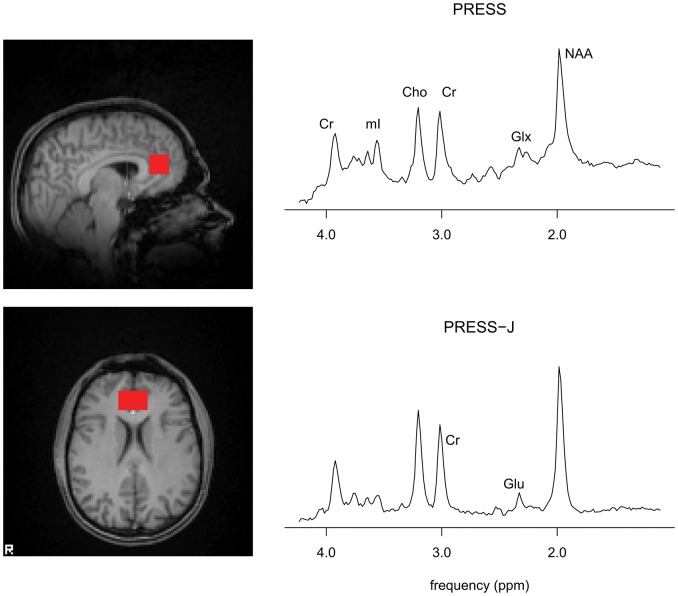
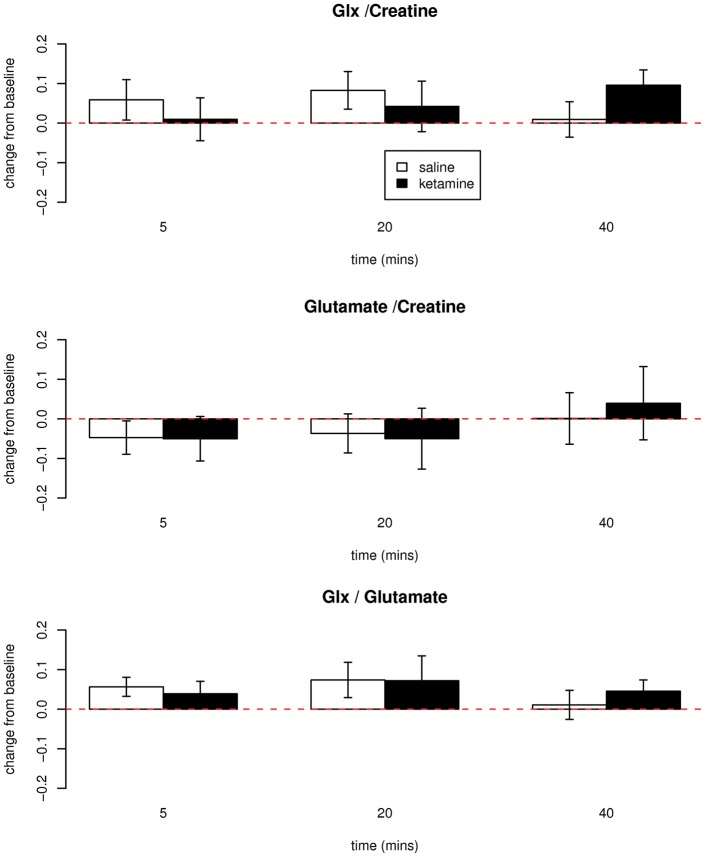
Ketamine is a N-methyl-D-aspartic acid (NMDA) antagonist that has been associated with temporary clinical improvement in patients with depression. Studies using magnetic resonance spectroscopy (MRS) have shown that major depression is associated with decreased levels of glutamate and glutamine (Glx) in the anterior cingulate cortex, which normalize with clinical recovery. The present study aimed to test whether a ketamine infusion would increase cortical Glx levels in healthy volunteers. Healthy volunteers received an intravenous infusion of ketamine (0.5 mg kg −1 , n = 8) or saline ( n = 9) over 40 minutes. MRS measurements were obtained at baseline, during, and at the end of the infusion. The infusion of ketamine had significant effects on mental state but there was no effect of ketamine on the levels of Glx ( F 3,39 = 1.70, p = 0.18) or glutamate ( F 3,39 = 48, p = 0.70). This study suggests that the gradual infusion of low-dose ketamine in antidepressant doses not cause changes in cortical glutamate or glutamine in healthy volunteers that are visible by proton MRS.
Overview
The claims and statistics of this paper haven’t been checked yet.
Free: it reads the open-access text and checks the first 5 claims that cite a source we can check. Create a free account to check every claim.
Integrity signals
Registry
Cites
Statistics
Figures
Verification
Claims the paper makes
The claims and statistics of this paper haven’t been checked yet.
Free: it reads the open-access text and checks the first 5 claims that cite a source we can check. Create a free account to check every claim.
Self-check
Percentages, sums and reported differences re-computed from the paper’s own numbers.
The self-check needs the paper’s full text.
Citations
Cites
Zhang, Y., Brady, M., & Smith, S. (2001) · IEEE Transactions on Medical Imaging · doi:10.1109/42.906424 · Cited by 6,982 · cited 1×
“FMRIB’s Automated Segmentation Tool (FAST) (Zhang et al., 2001) was employed to segment the structural brain images into grey matter, white matter, and CSF, to allow estimation of voxel composition.”
Antidepressant effects of ketamine in depressed patients
Berman, R. M., Cappiello, A., Anand, A., Oren, D. A., Heninger, G. R., Charney, D. S., & Krystal, J. H. (2000) · Biological Psychiatry · doi:10.1016/s0006-3223(99)00230-9 · Cited by 3,856 · cited 2×
“Ketamine is a N-methyl-D-aspartic acid (NMDA) antagonist and clinically used anaesthetic that has been employed in subanaesthetic doses to bring about temporary clinical improvement in patients with treatment-resistant depression (Berman et al., 2000; Zarate et al., 2006).”
A randomized trial of an N-methyl-D-aspartate antagonist in treatment-resistant major depression.
Zarate, C. A., Singh, J. B., Carlson, P. J., Brutsche, N. E., Ameli, R., Luckenbaugh, D. A., Charney, D. S., & Manji, H. K. (2006) · Archives of General Psychiatry · doi:10.1001/archpsyc.63.8.856 · Cited by 3,766 · cited 4×
“Ketamine treatment of depression may have effects after completion of the infusion when clinical benefits can be observed (Zarate et al., 2006).”
InfluentialKrystal, J. H. (1994) · Archives of General Psychiatry · doi:10.1001/archpsyc.1994.03950030035004 · Cited by 3,330 · cited 2×
“The extent of these subjective changes was similar to that reported in other ketamine studies in healthy volunteers (Krystal et al., 1994) and also in depressed patients receiving ketamine for its antidepressant effect (Diazgranados et al.”
The SPQ: A Scale for the Assessment of Schizotypal Personality Based on DSM-III-R Criteria
Raine, A. (1991) · Schizophrenia Bulletin · doi:10.1093/schbul/17.4.555 · Cited by 2,164 · cited 2×
“Baseline personality ratings were measured using the Eysenck Personality Questionnaire (EPQ), Schizotypal Personality Questionnaire (SPQ) (Raine 1991), and Oxford–Liverpool Inventory of Feelings and Experiences (OLIFE) (Mason et al., 2006) in case such factors were associated with response to ketamine.”
MethodMoghaddam, B., Adams, B., Verma, A., & Daly, D. (1997) · The Journal of Neuroscience · doi:10.1523/jneurosci.17-08-02921.1997 · Cited by 1,793 · cited 3×
“In preclinical studies, low-dose ketamine increases glutamate outflow in the prefrontal cortex (Moghaddam et al., 1997).”
InfluentialAutomatic quantitation of localized in vivo1H spectra with LCModel
Provencher, S. W. (2001) · NMR in Biomedicine · doi:10.1002/nbm.698 · Cited by 1,634 · cited 2×
“PRESS data were analysed with LCModel software (Provencher, 2001), using the non-water suppressed data for eddy current correction and water referencing, calculating metabolite concentrations for Glx, myo-inositol, choline and N-acetylaspartate relative to creatine in conventional fashion using metabolite basis spectr…”
Improved Method for Accurate and Efficient Quantification of MRS Data with Use of Prior Knowledge
Vanhamme, L., van den Boogaart, A., & Van Huffel, S. (1997) · Journal of Magnetic Resonance · doi:10.1006/jmre.1997.1244 · Cited by 1,627 · cited 2×
“Measurements from the PRESS-J spectra were performed using AMARES (Advanced method for accurate, robust and efficient spectral fitting) (Vanhamme et al., 1997).”
Homayoun, H., & Moghaddam, B. (2007) · The Journal of Neuroscience · doi:10.1523/jneurosci.2213-07.2007 · Cited by 1,231 · cited 2×
“This is thought to reflect a loss of inhibitory tone from GABAergic interneurons on cortical pyramidal neurons, since NMDA receptors preferentially drive the interneurons in awake cortex (Homayoun et al., 2007).”
BackgroundDiazgranados, N., Ibrahim, L., Brutsche, N. E., Newberg, A., Kronstein, P., Khalife, S., Kammerer, W. A., Quezado, Z., Luckenbaugh, D. A., Salvadore, G., et al. (2010) · Archives of General Psychiatry · doi:10.1001/archgenpsychiatry.2010.90 · Cited by 963 · cited 1×
“The extent of these subjective changes was similar to that reported in other ketamine studies in healthy volunteers (Krystal et al., 1994) and also in depressed patients receiving ketamine for its antidepressant effect (Diazgranados et al., 2010).”
Result
Research works printed but not linked: 1
- First MB Spitzer RL Gibbon M Williams JBW (1997) Structured Clinical Interview for DSM-IV Axis I disorders – Clinician Version (SCID-CV). Washington, DC: American Psychiatric Press
Cited by
Lener, M. S., Niciu, M. J., Ballard, E. D., Park, M., Park, L. T., Nugent, A. C., & Zarate, C. A. (2017) · Biological Psychiatry · doi:10.1016/j.biopsych.2016.05.005 · Cited by 468
“, 2012 (88) Healthy subjects N 5 17 (11 men, 6 women) (1)H-MRS, 3T MRI, 30 3 20 3 20 mm voxel placed in the ACC and mPFC; quantification of Glx, Glu, Gln; images acquired before, during, and after infusion Double-blind, placebo-controlled, single infusion; IV ketamine 0.”
InfluentialAbdallah, C. G., Sanacora, G., Duman, R. S., & Krystal, J. H. (2015) · Annual Review of Medicine · doi:10.1146/annurev-med-053013-062946 · Cited by 422
“1H-MRS studies in healthy subjects reported a transient increase in glutamate or glutamine levels in the PFC (91, 92), although not a consistent one (93).”
BackgroundKetamine for Depression: Where Do We Go from Here?
aan het Rot, M., Zarate, C. A., Charney, D. S., & Mathew, S. J. (2012) · Biological Psychiatry · doi:10.1016/j.biopsych.2012.05.003 · Cited by 418
“In healthy volunteers, ketamine does not appear to affect brain glutamate levels even during IV infusion (55).”
BackgroundCortical GABAergic Dysfunction in Stress and Depression: New Insights for Therapeutic Interventions
Fogaça, M. V., & Duman, R. S. (2019) · Frontiers in Cellular Neuroscience · doi:10.3389/fncel.2019.00087 · Cited by 396
Randomized Controlled Crossover Trial of Ketamine in Obsessive-Compulsive Disorder: Proof-of-Concept
Rodriguez, C. I., Kegeles, L. S., Levinson, A., Feng, T., Marcus, S. M., Vermes, D., Flood, P., & Simpson, H. B. (2013) · Neuropsychopharmacology · doi:10.1038/npp.2013.150 · Cited by 386
“MRS of the effects of ketamine in the prefrontal cortex and other brain regions have been assessed (Rowland et al , 2005; Stone et al , 2012; Taylor et al , 2012; Valentine et al , 2011) and in some cases (but not all) a ketamine-induced increase in glutamatergic compounds has been reported.”
Ketamine has distinct electrophysiological and behavioral effects in depressed and healthy subjects
Nugent, A. C., Ballard, E. D., Gould, T. D., Park, L. T., Moaddel, R., Brutsche, N. E., & Zarate, C. A. (2019) · Molecular Psychiatry · doi:10.1038/s41380-018-0028-2 · Cited by 250
“increase in HAM-D17 scores in eight subjects [63].”
BackgroundThe effects of ketamine on prefrontal glutamate neurotransmission in healthy and depressed subjects
Abdallah, C. G., De Feyter, H. M., Averill, L. A., Jiang, L., Averill, C. L., Chowdhury, G. M. I., Purohit, P., de Graaf, R. A., Esterlis, I., Juchem, C., et al. (2018) · Neuropsychopharmacology · doi:10.1038/s41386-018-0136-3 · Cited by 229
Resting state networks in major depressive disorder
Dutta, A., McKie, S., & Deakin, J. F. W. (2014) · Psychiatry Research: Neuroimaging · doi:10.1016/j.pscychresns.2014.10.003 · Cited by 218
“, 2005), although this may be depend on the rate of infusion (Taylor et al., 2012).”
BackgroundImaging glutamate in schizophrenia: review of findings and implications for drug discovery
Poels, E. M. P., Kegeles, L. S., Kantrowitz, J. T., Slifstein, M., Javitt, D. C., Lieberman, J. A., Abi-Dargham, A., & Girgis, R. R. (2014) · Molecular Psychiatry · doi:10.1038/mp.2013.136 · Cited by 205
Cornwell, B. R., Salvadore, G., Furey, M., Marquardt, C. A., Brutsche, N. E., Grillon, C., & Zarate, C. A. (2012) · Biological Psychiatry · doi:10.1016/j.biopsych.2012.03.029 · Cited by 200
Glutamate and its receptors in the pathophysiology and treatment of major depressive disorder
Niciu, M. J., Ionescu, D. F., Richards, E. M., & Zarate, C. A. (2014) · Journal of Neural Transmission · doi:10.1007/s00702-013-1130-x · Cited by 155
“In a healthy volunteer study, subanesthetic-dose ketamine caused no acute changes in Glx or glutamate (Taylor et al. 2012); however, that study used a 3-T magnet, and many authors believe that reliably measuring glutamate at this magnetic strength by (1)H-MRS is not possible (Yuksel and Ongur 2010).”
Magnetic Resonance Spectroscopy as a tool to study the role of GABA in motor-cortical plasticity
Stagg, C. J. (2013) · NeuroImage · doi:10.1016/j.neuroimage.2013.01.009 · Cited by 180
“This view is supported by the lack of change in glutamate levels observedduring the application of ketamine, anNMDA-receptor antagonist (Taylor et al., 2012).”
BackgroundKetamine as a Novel Antidepressant: From Synapse to Behavior
Murrough, J. W. (2012) · Clinical Pharmacology & Therapeutics · doi:10.1038/clpt.2011.244 · Cited by 172
Niciu, M. J., Henter, I. D., Luckenbaugh, D. A., Zarate, C. A., & Charney, D. S. (2014) · Annual Review of Pharmacology and Toxicology · doi:10.1146/annurev-pharmtox-011613-135950 · Cited by 161
“In a healthy volunteer study, subanesthetic-dose ketamine caused no acute changes in Glx or glutamate (104); however, that study used a 3tesla magnet, and many authors believe that reliably measuring glutamate at this magnetic strength by 1H-MRS is not possible (97).”
BackgroundMilak, M. S., Proper, C. J., Mulhern, S. T., Parter, A. L., Kegeles, L. S., Ogden, R. T., Mao, X., Rodriguez, C. I., Oquendo, M. A., Suckow, R. F., et al. (2016) · Molecular Psychiatry · doi:10.1038/mp.2015.83 · Cited by 144
Höflich, A., Hahn, A., Küblböck, M., Kranz, G. S., Vanicek, T., Windischberger, C., Saria, A., Kasper, S., Winkler, D., & Lanzenberger, R. (2015) · International Journal of Neuropsychopharmacology · doi:10.1093/ijnp/pyv040 · Cited by 125
Chowdhury, G. M. I., Behar, K. L., Cho, W., Thomas, M. A., Rothman, D. L., & Sanacora, G. (2012) · Biological Psychiatry · doi:10.1016/j.biopsych.2011.11.006 · Cited by 125
Salvadore, G., van der Veen, J. W., Zhang, Y., Marenco, S., Machado-Vieira, R., Baumann, J., Ibrahim, L. A., Luckenbaugh, D. A., Shen, J., Drevets, W. C., et al. (2012) · International Journal of Neuropsychopharmacology · doi:10.1017/s1461145711001593 · Cited by 107
“Another recent study found that ketamine had no significant effect on cortical concentrations of glutamate and Glx in healthy volunteers (Taylor et al. 2011).”
BackgroundJauhar, S., McCutcheon, R., Borgan, F., Veronese, M., Nour, M., Pepper, F., Rogdaki, M., Stone, J., Egerton, A., Turkheimer, F., et al. (2018) · The Lancet Psychiatry · doi:10.1016/s2215-0366(18)30268-2 · Cited by 114
Abdallah, C. G., Averill, C. L., Salas, R., Averill, L. A., Baldwin, P. R., Krystal, J. H., Mathew, S. J., & Mathalon, D. H. (2017) · Biological Psychiatry: Cognitive Neuroscience and Neuroimaging · doi:10.1016/j.bpsc.2017.04.006 · Cited by 111
“In humans, proton magnetic resonance spectroscopy (1H MRS) has been used to provide indirect evidence of the ability of ketamine to stimulate glutamate (25, 26), although one study failed to support this conclusion (27).”
BackgroundKraguljac, N. V., Frölich, M. A., Tran, S., White, D. M., Nichols, N., Barton-McArdle, A., Reid, M. A., Bolding, M. S., & Lahti, A. C. (2017) · Molecular Psychiatry · doi:10.1038/mp.2016.122 · Cited by 101
Javitt, D. C., Carter, C. S., Krystal, J. H., Kantrowitz, J. T., Girgis, R. R., Kegeles, L. S., Ragland, J. D., Maddock, R. J., Lesh, T. A., Tanase, C., et al. (2018) · JAMA Psychiatry · doi:10.1001/jamapsychiatry.2017.3572 · Cited by 100
The anterior cingulate cortex as a key locus of ketamine’s antidepressant action
Alexander, L., Jelen, L. A., Mehta, M. A., & Young, A. H. (2021) · Neuroscience & Biobehavioral Reviews · doi:10.1016/j.neubiorev.2021.05.003 · Cited by 78
“Using MRS, Taylor and colleagues found no effect of acute intravenous ketamine on levels of glutamate within pgACC/24,32 of healthy volunteers (Taylor et al., 2012), although this study used a between-subjects design prone to confounding effects of inter-individual variability in glutamate responses.”
Ketamine-Associated Brain Changes: A Review of the Neuroimaging Literature
Ionescu, D. F., Felicione, J. M., Gosai, A., Cusin, C., Shin, P., Shapero, B. G., & Deckersbach, T. (2018) · Harvard Review of Psychiatry · doi:10.1097/hrp.0000000000000179 · Cited by 91
“One study found increased glutamate levels in the ACC 35minutes postinfusion, but another found no change.(12,13) Multiple studies attempted to find a correlation between antidepressant response and glutamate/GABA levels before, during, and after infusion, but no correlations were found.”
Hashimoto, K., Bruno, D., Nierenberg, J., Marmar, C. R., Zetterberg, H., Blennow, K., & Pomara, N. (2016) · Translational Psychiatry · doi:10.1038/tp.2016.8 · Cited by 90
The actin-binding protein EPS8 binds VE-cadherin and modulates YAP localization and signaling
Giampietro, C., Disanza, A., Bravi, L., Barrios‐Rodiles, M., Corada, M., Frittoli, E., Savorani, C., Lampugnani, M. G., Boggetti, B., Niessen, C. M., et al. (2015) · The Journal of Cell Biology · doi:10.1083/jcb.201501089 · Cited by 88
“, 2000; Di Fiore and Scita, 2002), or by interacting with the clathrin-mediated endocytosis machinery (Taylor et al., 2012; Auciello et al., 2013).”
BackgroundKetamine as a Fast Acting Antidepressant: Current Knowledge and Open Questions
Salvadore, G., & Singh, J. B. (2013) · CNS Neuroscience & Therapeutics · doi:10.1111/cns.12103 · Cited by 81
“In the only study in healthy subjects which investigated an infusion protocol consistent with how ketamine is administered in depressed patients (i.e., 0.5 mg/kg over 40 min), no changes in either Glx or glutamate was detected during and after ketamine infusion in the ACC [50].”
BackgroundInfluentialKetamine, magnesium and major depression – From pharmacology to pathophysiology and back
Murck, H. (2013) · Journal of Psychiatric Research · doi:10.1016/j.jpsychires.2013.02.015 · Cited by 83
Li, M., Demenescu, L. R., Čolić, L., Metzger, C. D., Heinze, H., Steiner, J., Speck, O., Fejtová, A., Salvadore, G., & Walter, M. (2016) · Neuropsychopharmacology · doi:10.1038/npp.2016.184 · Cited by 74
Rodriguez, C. I., Kegeles, L. S., Levinson, A., Ogden, R. T., Mao, X., Milak, M. S., Vermes, D., Xie, S., Hunter, L., Flood, P., et al. (2015) · Psychiatry Research: Neuroimaging · doi:10.1016/j.pscychresns.2015.06.001 · Cited by 59
“, 2012) but not all (Valentine et al., 2011; Taylor et al., 2012) documenting increases in glutamatergic compounds in response to ketamine.”
BackgroundResultOnaolapo, A. Y., Ayeni, O. J., Ogundeji, M. O., Ajao, A. A., Onaolapo, O. J., & Owolabi, R. A. (2018) · Journal of Chemical Neuroanatomy · doi:10.1016/j.jchemneu.2018.12.002 · Cited by 65
Default mode network connectivity change corresponds to ketamine’s delayed glutamatergic effects
Li, M., Woelfer, M., Čolić, L., Safron, A., Chang, C., Heinze, H., Speck, O., Mayberg, H. S., Biswal, B. B., Salvadore, G., et al. (2018) · European Archives of Psychiatry and Clinical Neuroscience · doi:10.1007/s00406-018-0942-y · Cited by 61
7T 1H-MRS in major depressive disorder: a Ketamine Treatment Study
Evans, J. W., Lally, N., An, L., Li, N., Nugent, A. C., Banerjee, D., Snider, S. L., Shen, J., Roiser, J. P., & Zarate, C. A. (2018) · Neuropsychopharmacology · doi:10.1038/s41386-018-0057-1 · Cited by 58
Could glutamate spectroscopy differentiate bipolar depression from unipolar?
Taylor, M. J. (2014) · Journal of Affective Disorders · doi:10.1016/j.jad.2014.05.019 · Cited by 55
“It has proven challenging to demonstrate an direct effect of common medications such as the SSRIs on this measure (Taylor et al., 2010), and even for more novel glutamatergic agents such as ketamine, results are mixed (Stone et al., 2012; Taylor et al., 2011).”
BackgroundSelf-citationKetamine-dependent neuronal activation in healthy volunteers
Höflich, A. S., Hahn, A., Küblböck, M., Kranz, G. S., Vanicek, T., Ganger, S., Spies, M., Windischberger, C., Kasper, S. F., Winkler, D., et al. (2016) · Brain Structure and Function · doi:10.1007/s00429-016-1291-0 · Cited by 50
Silberbauer, L., Spurny‐Dworak, B., Handschuh, P. A., Klöbl, M., Bednařík, P., Reiter, B., Ritter, V., Trost, P., Konadu, M. E., Windpassinger, M., et al. (2020) · Frontiers in Psychiatry · doi:10.3389/fpsyt.2020.549903 · Cited by 52
Nugent, A. C., Robinson, S. E., Coppola, R., & Zarate, C. A. (2016) · Psychiatry Research: Neuroimaging · doi:10.1016/j.pscychresns.2016.06.006 · Cited by 42
“…is thought to result in an acute glutamate “surge”, due to reduced inhibition of GABAergic interneurons (Duman et al., 2012); this is supported by most (Rowland et al., 2005; Stone et al., 2012), but not all (Taylor et al., 2012), MRS studies examining acute changes in glutamatergic transmission.”
Kompus, K., Westerhausen, R., Craven, A. R., Kreegipuu, K., Põldver, N., Passow, S., Specht, K., Hugdahl, K., & Näätänen, R. (2015) · Psychophysiology · doi:10.1111/psyp.12445 · Cited by 38
Glutamate, N-acetyl aspartate and psychotic symptoms in chronic ketamine users
Stone, J. M., Pepper, F., Fam, J., Furby, H., Hughes, E., Morgan, C. J. A., & Howes, O. D. (2013) · Psychopharmacology · doi:10.1007/s00213-013-3354-8 · Cited by 38
“…reported increased anterior cingulate glutamate (Stone et al. 2012), and one reported no change in anterior cingulate glutamate + glutamine levels (Taylor et al. 2011), although the latter study was potentially underpowered, utilising a between-subject analysis with a sample size of 9 subjects…”
The utility of PET imaging in depression
Singh, S. B., Tiwari, A., Katta, M. R., Kafle, R., Ayubcha, C., Patel, K. H., Bhattarai, Y., Werner, T. J., Alavi, A. A., & Revheim, M.-E. R. (2024) · Frontiers in Psychiatry · doi:10.3389/fpsyt.2024.1322118 · Cited by 37
The potential of 1H-MRS in CNS drug development
Egerton, A. (2019) · Psychopharmacology · doi:10.1007/s00213-019-05344-7 · Cited by 36
“…model of NMDA hypofunction in schizophrenia (Bojesen et al. 2018; Javitt et al. 2018; Kraguljac et al. 2017; Rowland et al. 2005; Stone et al. 2012), or in relation to its antidepressant effects (Evans et al. 2018; Li et al. 2017; Milak et al. 2016; Taylor et al. 2012; Valentine et al. 2011).”
BackgroundBojesen, K. B., Andersen, K. A., Rasmussen, S. N., Baandrup, L., Madsen, L. M., Glenthoj, B. Y., Rostrup, E., & Broberg, B. V. (2018) · Frontiers in Psychiatry · doi:10.3389/fpsyt.2018.00022 · Cited by 33
“In addition, racemic ketamine mainly increases extracellular cortical glutamate at low doses in rats (31), and it is notable that the two 1H-MRS studies that found increased levels of glutamate (33) or gln (32) used a lower dose of racemic ketamine than in the present study and the other study where glutamate was unaf…”
BackgroundMethodResultInfluentialWise, T., Taylor, M. J., Herane-Vives, A., Gammazza, A. M., Cappello, F., Lythgoe, D. J., Williams, S., Young, A. H., Cleare, A. J., & Arnone, D. (2018) · Journal of Affective Disorders · doi:10.1016/j.jad.2018.02.059 · Cited by 28
“Most studies have used voxels placed in the perigenual anterior cingulate cortex, an area less affected by ketamine administration (Taylor et al., 2012).”
BackgroundSelf-citationBorgan, F., Jauhar, S., McCutcheon, R. A., Pepper, F., Rogdaki, M., Lythgoe, D. J., & Howes, O. D. (2019) · Scientific Reports · doi:10.1038/s41598-019-45018-0 · Cited by 25
Boucherie, D. E., Reneman, L., Ruhé, H. G., & Schrantee, A. (2023) · NeuroImage Clinical · doi:10.1016/j.nicl.2023.103517 · Cited by 24
Weigand, A., Gärtner, M., Scheidegger, M., Wyss, P. O., Henning, A., Seifritz, E., Stippl, A., Herrera-Meléndez, A. L., Bajbouj, M., Aust, S., et al. (2022) · The International Journal of Neuropsychopharmacology · doi:10.1093/ijnp/pyac049 · Cited by 23
“However, there are also investigations that found no effect significant changes in Glu concentration 1 hour postketamine infusion in healthy volunteers (Taylor et al., 2012), or 3 and 48 hours later in MDD patients (Valentine et al.”
BackgroundKetamine and Zinc: Treatment of Anorexia Nervosa Via Dual NMDA Receptor Modulation
Mitchell, J., Hermens, D. F., Bennett, M. R., Can, A., & Lagopoulos, J. (2023) · CNS Drugs · doi:10.1007/s40263-022-00984-4 · Cited by 23
Singh, B., Port, J. D., Voort, J. L. V., Coombes, B. J., Geske, J. R., Lanza, I. R., Morgan, R. J., & Frye, M. A. (2021) · Psychiatry Research · doi:10.1016/j.psychres.2021.113953 · Cited by 19
Borgan, F., Veronese, M., Marques, T. R., Lythgoe, D. J., & Howes, O. D. (2020) · European Archives of Psychiatry and Clinical Neuroscience · doi:10.1007/s00406-020-01191-2 · Cited by 17
Frizzo, M. E. (2019) · Current Therapeutic Research · doi:10.1016/j.curtheres.2019.100566 · Cited by 16
Gonzalez, S., Vasavada, M. M., Njau, S. N., Sahib, A. K., Espinoza, R. T., Narr, K. L., & Leaver, A. M. (2020) · Neurology Psychiatry and Brain Research · doi:10.1016/j.npbr.2020.08.006 · Cited by 14
Gärtner, M., Weigand, A., Scheidegger, M., Lehmann, M., Wyss, P. O., Wunder, A., Henning, A., & Grimm, S. (2022) · European Archives of Psychiatry and Clinical Neuroscience · doi:10.1007/s00406-021-01377-2 · Cited by 15
“Nevertheless, other investigations found no significant changes in Glu measurements 1 h post-ketamine infusion in healthy volunteers [33], or three and 48 h later in depressed subjects [34]; variations in voxel location, timing of the scan, imaging parameters, and sample size may explain these discrepant findings.”
ResultBednařík, P., Spurny‐Dworak, B., Silberbauer, L., Svátková, A., Handschuh, P. A., Reiter, B., Konadu, M. E., Stimpfl, T., Spies, M., Bogner, W., et al. (2021) · Frontiers in Neuroscience · doi:10.3389/fnins.2021.609485 · Cited by 12
Sekar, S., Grandjean, J., Garnell, J. F., Willems, R., Duytschaever, H., Seramani, S., Huang, S., Donck, L. V., & Bhakoo, K. K. (2018) · Neuropharmacology · doi:10.1016/j.neuropharm.2018.11.021 · Cited by 11
“, 2018), or no effect on either metabolites in humans (Taylor et al., 2012).”
Clinical neuroimaging markers of response to treatment in mood disorders
Porcu, M., Balestrieri, A., Siotto, P., Lucatelli, P., Anzidei, M., Suri, J. S., Zaccagna, F., Argiolas, G. M., & Saba, L. (2016) · Neuroscience Letters · doi:10.1016/j.neulet.2016.10.013 · Cited by 9
“[109] found that before, during and after the intravenous infusion of ketamine at 0.”
Scherbaum, U. B. N. (2014) · Journal of Alcoholism and Drug Dependence · doi:10.4172/2329-6488.1000198 · Cited by 6
“In healthy volunteers, sub-anesthetic ketamine was inconsistently associated with a glutamate surge in the prefrontal cortex [77-79], and in patients with major depression a glutamate sink was documented there, which normalized with clinical recovery [79].”
BackgroundGlutamate Pharmacological Models Relevant to Schizophrenia and Psychosis
Rafter, M. D., Fone, K. C. F., & Moran, P. M. (2015) · Handbook of behavioral neuroscience · doi:10.1016/b978-0-12-800981-9.00010-9 · Cited by 5
Broeders, T. A. A., Bhogal, A. A., Morsinkhof, L. M., Schoonheim, M. M., Röder, C. H., Edens, M., Klomp, D. W. J., Wijnen, J. P., & Vinkers, C. H. (2022) · Journal of Psychopharmacology · doi:10.1177/02698811221077199 · Cited by 4
“, 2013), the key enzyme to convert glutamine to glutamate, although these findings were not corroborated by all studies (Bojesen et al., 2018; Taylor et al., 2012).”
ResultThe Acute and Chronic Effects of Ketamine as Revealed by Noninvasive Brain Imaging
Li, M., & Walter, M. (2016) · Elsevier eBooks · doi:10.1016/b978-0-12-800212-4.00064-9 · Cited by 3
Njau, S. N., Zavaliangos‐Petropulu, A., Joshi, S. H., Brooks, J. O., O'Neill, J., Roger, W. P., Norris, V., Espinoza, R. T., & Narr, K. L. (2025) · Journal of Neuroscience Research · doi:10.1002/jnr.70102 · Cited by 2
“For example, a meta-analysis of cross-sectional data in patients with depression and non-depressed controls revealed significantly lower levels of GABA and Glx in the ACC and mPFC in patients with MDD compared to controls (Godfrey et al. 2018; Moriguchi et al. 2019).”
InfluentialActivation of the TrkB Neurotrophin Receptor by Antidepressant Drugs
Antila, H. (2016) · Helda - University of Helsinki Institutional Repository · Cited by 1
Striatal GABA in action control
Quetscher, C. (2017) · Dokumentenrepositorium der RUB (Ruhr University Bochum)
Stoby, K. S. (2020) · YorkSpace (York University)
Möhler, H. (2019) · Faculty Opinions – Post-Publication Peer Review of the Biomedical Literature · doi:10.3410/f.730351907.793560277
Marker, A., Keller, J. M., Labaschin, A., Moshe, S., Ahmed, A.-B., Craciunas, S. C., & Cirstea, C. M. (2024) · IEEE International Conference on Bioinformatics and Biomedicine (BIBM) · doi:10.1109/bibm62325.2024.10821800
“…the other glutamate pools, may be too small to identify a significant difference in synaptic functions, and c) changes in synaptic strength may occur via changes in receptor sensitivity and/or density which do not directly involve changes in Glx levels and these changes are invisible to MRS [41].”
Analgesia with Ketamine and Its Metabolites: Mechanisms and Effects
Boucherie, D. E., Schrantee, A., Hollmann, M. W., & Brinkman, D. J. (2025) · Neuromethods · doi:10.1007/978-1-0716-4603-8_10 · Cited by 1
Li, M., Şen, Z. D., Danyeli, L. V., Javaheripour, N., & Walter, M. (2025) · Neuromethods · doi:10.1007/978-1-0716-4603-8_14
Understanding degeneration and the capacity for reorganisation in the adult human visual cortex
Sheldon, A. A. (2022) · Oxford University Research Archive (ORA) (University of Oxford) · doi:10.5287/ora-w46dpn6nj
Njau, S. N. (2024) · eScholarship (California Digital Library)
Gubser, L. P., Trippel, A., Zoelch, N., Engeli, E., & Herdener, M. (2026) · Brain Research Bulletin · doi:10.1016/j.brainresbull.2026.111842
Bojesen, K. B., Andersen, K. A., Rasmussen, S. N., Baandrup, L., Madsen, L. M., Glenthøj, B. Y., Rostrup, E., & Broberg, B. V. (2018) · doi:10.3389/fpsyt.2018.00022.s003
Metadata
- Authors
- Taylor, M. J., Tiangga, E. R., Mhuircheartaigh, R. N., & Cowen, P. J.
- Affiliations
- University of Oxford (GB)
- Centre for Functional Resonance Imaging of the Brain (FMRIB), University of Oxford, Oxford, UK
- Corresponding author
- Taylor, Matthew J
- Venue
- Journal of Psychopharmacology
- Publisher
- SAGE Publications
- Published
- 2011-05-26
- Volume
- 26
- Issue
- 5
- Pages
- 733-737
- ISSN
- 0269-8811 (ISSN-L)
- 1461-7285
- PMC
- PMC3546630
- OpenAlex
- W2153495871
- Cited by
- 66
- References
- 21
- Citations by year
- 2026: 1 · 2025: 3 · 2024: 2 · 2023: 2 · 2022: 3 · 2021: 3 · 2020: 3 · 2019: 5 · 2018: 10 · 2017: 2 · 2016: 9 · 2015: 6 · 2014: 5 · 2013: 7 · 2012: 2
- FWCI
- 3.98
- Type
- journal article
- Language
- en
- Open access
- hybrid
- doi.org
- Licence
- cc-by-nc
- journals.sagepub.com/page/policies/text-and-data-mining-license (tdm)
- Locations
- Journal of Psychopharmacology (publishedVersion, cc-by-nc)
- Europe PMC (PubMed Central) (publishedVersion, cc-by)
- PubMed Central (publishedVersion, cc-by)
- PubMed (publishedVersion)
- Research Portal (King's College London) (submittedVersion, other-oa)
- Funders
- National Institute for Health and Care Research
- Medical Research Council
- Topics
- Health Sciences › Medicine › Pharmacology (medical) › Treatment of Major Depression
- Health Sciences › Medicine › Psychiatry and Mental health › Electroconvulsive Therapy Studies
- Health Sciences › Medicine › Radiology, Nuclear Medicine and Imaging › Advanced MRI Techniques and Applications
- Keywords
- ketamine, glutamate, glutamine, NMDA receptor antagonists, depression, anterior cingulate cortex, low-dose ketamine infusion, healthy volunteers
- MeSH terms
- Adult, Cerebral Cortex, Major Depressive Disorder, Female, Glutamine, Humans, Ketamine, Magnetic Resonance Imaging, Male, Magnetic Resonance Spectroscopy, Protons, Glutamic Acid, Young Adult
About these checks
Registry, retraction, Cites and statistics results are computed, not judged, with one exception: a printed reference that no index lists is read once by a model before it counts as a citation error. Claims are extracted by a model and kept only when their quote appears verbatim in the text; each cited source is then checked, with a model’s help, for whether it says what the claim relies on. Those verdicts can be wrong — read the claim’s quote and the cited source before relying on one.
Statistics and arithmetic are recomputed, not judged.
Confidence bands are shown only for fields calibrated on our annotated test set. None is calibrated yet, so no band is shown.
What counts as a claim ›How we measure confidence ›How we check this ›
Are you an author, or do you see a problem with this page? Request a review
Data sources
Bibliographic data: Semantic Scholar, OpenAlex, Crossref.
Contains information from the Semantic Scholar Academic Graph Datasets, made available under the ODC Attribution License (ODC-BY 1.0).
Semantic Scholar’s data is described in: Kinney, R., et al. (2023). The Semantic Scholar Open Data Platform. arXiv:2301.10140.
