

Psilocybin produces substantial and sustained decreases in depression and anxiety in patients with life-threatening cancer: A randomized double-blind trial
Open accessThe DOI matches its Crossref record; 54 of the 54 references it cites were found in a registry or an index.
Abstract
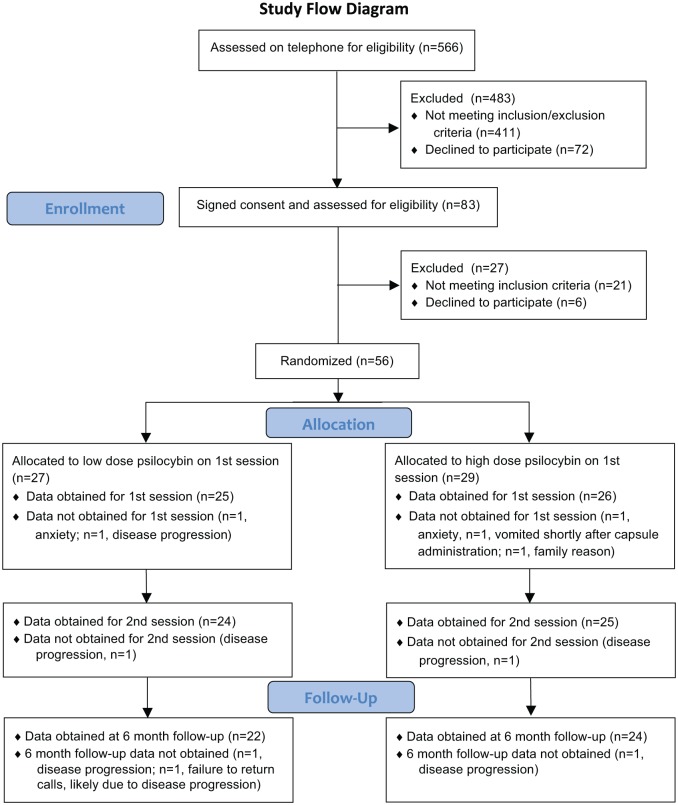
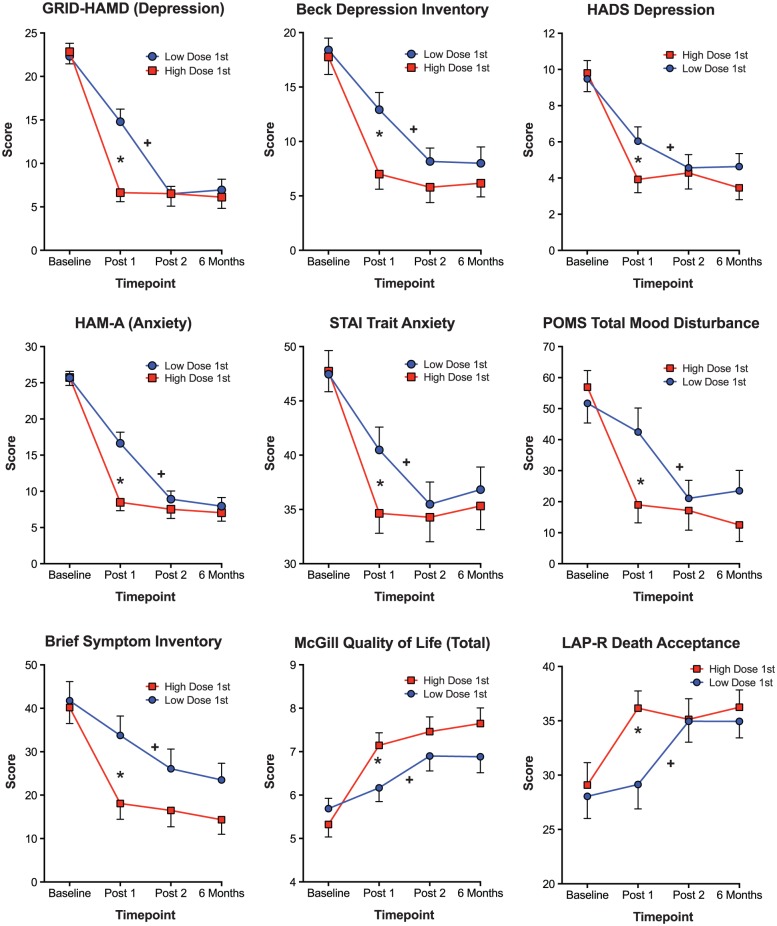
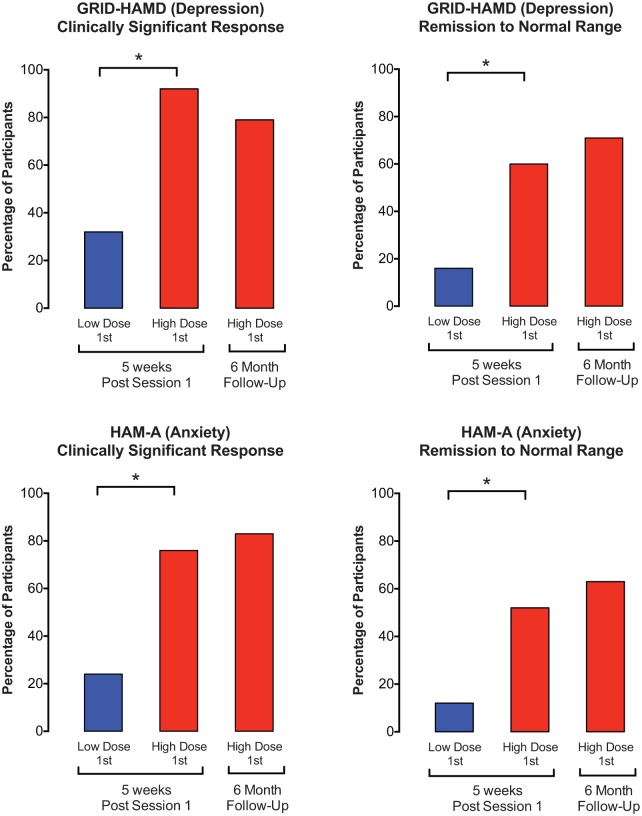
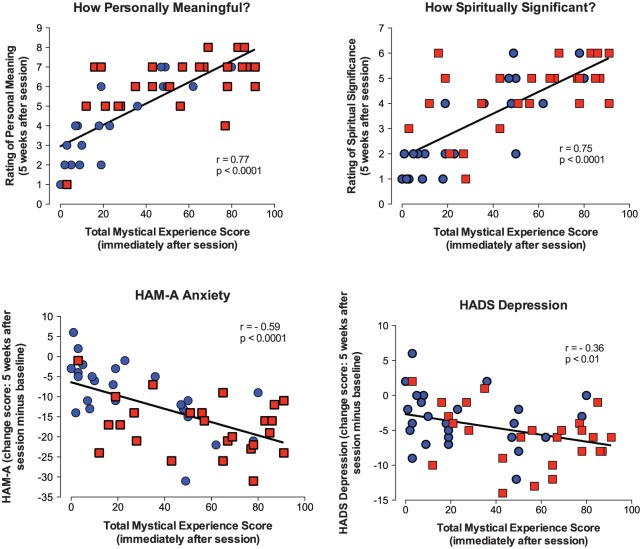
Cancer patients often develop chronic, clinically significant symptoms of depression and anxiety. Previous studies suggest that psilocybin may decrease depression and anxiety in cancer patients. The effects of psilocybin were studied in 51 cancer patients with life-threatening diagnoses and symptoms of depression and/or anxiety. This randomized, double-blind, cross-over trial investigated the effects of a very low (placebo-like) dose (1 or 3 mg/70 kg) vs. a high dose (22 or 30 mg/70 kg) of psilocybin administered in counterbalanced sequence with 5 weeks between sessions and a 6-month follow-up. Instructions to participants and staff minimized expectancy effects. Participants, staff, and community observers rated participant moods, attitudes, and behaviors throughout the study. High-dose psilocybin produced large decreases in clinician- and self-rated measures of depressed mood and anxiety, along with increases in quality of life, life meaning, and optimism, and decreases in death anxiety. At 6-month follow-up, these changes were sustained, with about 80% of participants continuing to show clinically significant decreases in depressed mood and anxiety. Participants attributed improvements in attitudes about life/self, mood, relationships, and spirituality to the high-dose experience, with >80% endorsing moderately or greater increased well-being/life satisfaction. Community observer ratings showed corresponding changes. Mystical-type psilocybin experience on session day mediated the effect of psilocybin dose on therapeutic outcomes. Trial Registration ClinicalTrials.gov identifier: NCT00465595
Overview
The claims and statistics of this paper haven’t been checked yet.
Free: it reads the open-access text and checks the first 5 claims that cite a source we can check. Create a free account to check every claim.
Integrity signals
Registry
Cites
Statistics
Figures
Verification
Claims the paper makes
The claims and statistics of this paper haven’t been checked yet.
Free: it reads the open-access text and checks the first 5 claims that cite a source we can check. Create a free account to check every claim.
Claims other papers make about this one
Each is checked against this paper’s own text: does it say what the citing paper says it does?
The cited source doesn’t support the claim as written.
In the citing paper
“In this study, groups of healthy participants were randomized into three groups, (1) low-dose psilocybin with standard support for spiritual practice (SS); (2) high-dose psilocybin with SS, and (3) high-dose psilocybin with High Support (HS) for spiritual practice.”
From Mindfulness meditation and psychedelics: potential synergies and commonalities (2023) · cites this paper as [6]
Checked by a reasoning model — may be wrong.
Experimental — accuracy not yet measuredThe source backs part of the claim, not all of it — or backs it for a different population, condition or comparison.
In the citing paper
“Griffiths et al. (2016)(n = 51) reported significantly larger response (92% versus 32%) and remission (60% versus 1%) on depression and anxiety (76% vs. 24%; 52% vs. 12%, respectively) in the high-dose group compared to active placebo after 5 weeks.”
From Psychedelics for the treatment of depression, anxiety, and existential distress in patients with a terminal illness: a systematic review (2022) · cites this paper as Griffiths et al., 2016
Experimental — accuracy not yet measuredThe source backs part of the claim, not all of it — or backs it for a different population, condition or comparison.
In the citing paper
“Most of this research has been carried out with the Revised Mystical Experience Questionnaire 30 (MEQ30), where a high score correlates with and has been suggested as a predictor of long-term positive therapeutic outcomes in various clinical and naturalistic studies of psychedelics.”
From Assessment of the acute subjective psychedelic experience: A review of patient-reported outcome measures in clinical research on classical psychedelics (2024) · cites this paper as Griffiths et al., 2016
Experimental — accuracy not yet measuredThe source backs part of the claim, not all of it — or backs it for a different population, condition or comparison.
In the citing paper
“Not only do they produce sustained therapeutic effects following a single administration, they also appear to have broad therapeutic potential”
From Psychedelics and Other Psychoplastogens for Treating Mental Illness. (2021) · cites this paper as [40]
Experimental — accuracy not yet measured
52 more claims about this paper
Create a free account to see every claim other papers make about this one.
Self-check
Percentages, sums and reported differences re-computed from the paper’s own numbers.
The self-check needs the paper’s full text.
Citations
Cites
The Hospital Anxiety and Depression Scale
Zigmond, A. S., & Snaith, R. P. (1983) · Acta Psychiatrica Scandinavica · doi:10.1111/j.1600-0447.1983.tb09716.x · Cited by 47,139
(2013) · Cited by 44,563
(1970) · Cited by 24,983
Depression and quality of life in older persons: A review
Sivertsen, H., Bjørkløf, G. H., Engedal, K., Selbæk, G., & Helvik, A.-S. (2015) · Dementia and Geriatric Cognitive Disorders · doi:10.1159/000437299 · Cited by 14,152
Optimism, coping, and health: Assessment and implications of generalized outcome expectancies.
Scheier, M. F., & Carver, C. S. (1985) · Health Psychology · doi:10.1037/0278-6133.4.3.219 · Cited by 6,690 · cited 2×
“…existence (existential subscale) during life-threatening illness (Cohen et al., 1995); LOT-R, self-rated optimism measure associated with illness (Scheier and Carver, 1985); LAP-R Death Acceptance, selfrated scale assessing absence of anxiety about death (Reker, 1992); Death Transcendence Scale,…”
BackgroundMethodMcNair, D. M. (1992) · Medical Entomology and Zoology · Cited by 2,692
Mitchell, A. J., Chan, M., Bhatti, H., Halton, M., Grassi, L., Johansen, C., & Meader, N. (2011) · The Lancet Oncology · doi:10.1016/s1470-2045(11)70002-x · Cited by 2,449 · cited 1×
“Cancer patients often develop a chronic, clinically significant syndrome of psychosocial distress having depressed mood, anxiety, and reduced quality of life as core features, with up to 40% of cancer patients meeting criteria for a mood disorder (Holland et al., 2013; Mitchell et al., 2011).”
BackgroundNichols, D. E. (2016) · Pharmacological Reviews · doi:10.1124/pr.115.011478 · Cited by 1,762 · cited 2×
“The classic hallucinogens, which include psilocybin (psilocin) and (+)-lysergic acid diethylamide (LSD), are a structurally diverse group of compounds that are 5-HT2A receptor agonists and produce a unique profile of changes in thoughts, perceptions, and emotions (Halberstadt, 2015; Nichols, 2016).”
BackgroundPeterman, A. H., Fitchett, G., Brady, M. J., Hernandez, L., & Cella, D. (2002) · Annals of Behavioral Medicine · doi:10.1207/s15324796abm2401_06 · Cited by 1,751 · cited 2×
“Three measures of spirituality were assessed at three time-points: Baseline, 5 weeks after session 2, and at the 6-month follow-up: FACIT-Sp, a self-rated measure of the spiritual dimension of quality of life in chronic illness (Peterman et al., 2002) assessed on how the participant felt “on average”; Spiritual-Religi…”
MethodGriffiths, R. R., Richards, W. A., McCann, U., & Jesse, R. (2006) · Psychopharmacology · doi:10.1007/s00213-006-0457-5 · Cited by 1,684 · cited 18×
“The structured interview (Community Observer Questionnaire) consisted of asking the rater to rate the participant’s behavior and attitudes using a 10-point scale (from 1 = not at all, to 10 = extremely) on 13 items reflecting healthy psychosocial functioning: inner peace; patience; good-natured humor/playfulness; ment…”
BackgroundMethodResultInfluentialSelf-citationCarhart-Harris, R. L., Bolstridge, M., Rucker, J., Day, C. M. J., Erritzoe, D., Kaelen, M., Bloomfield, M., Rickard, J. A., Forbes, B., Feilding, A., et al. (2016) · The Lancet Psychiatry · doi:10.1016/s2215-0366(16)30065-7 · Cited by 1,540 · cited 1×
“Also relevant, a recent open-label pilot study in 12 patients with treatment-resistant depression showed marked reductions in depressive symptoms 1 week and 3 months after administration of 10 and 25 mg of psilocybin in two sessions separated by 7 days (Carhart-Harris et al., 2016).”
BackgroundThe Psychology of Religion: An Empirical Approach
Donahue, M. J., Hood, R. W., Spilka, B., Hunsberger, B., & Gorsuch, R. (1998) · Journal for the Scientific Study of Religion · doi:10.2307/1388044 · Cited by 1,339
Carhart-Harris, R. L., Leech, R., Hellyer, P. J., Shanahan, M., Feilding, A., Tagliazucchi, E., Chialvo, D. R., & Nutt, D. (2014) · Frontiers in Human Neuroscience · doi:10.3389/fnhum.2014.00020 · Cited by 1,252 · cited 2×
“As a 5-HT2A agonist, the psilocybin metabolite psilocin directly and indirectly affects various brain cortical and subcortical areas and alters brain network dynamics (Carhart-Harris et al., 2012, 2014; Vollenweider and Kometer, 2010).”
BackgroundPilot Study of Psilocybin Treatment for Anxiety in Patients With Advanced-Stage Cancer
Grob, C. S., Danforth, A. L., Chopra, G. S., Hagerty, M., McKay, C. R., Halberstadt, A. L., & Greer, G. R. (2011) · Archives of General Psychiatry · doi:10.1001/archgenpsychiatry.2010.116 · Cited by 1,206 · cited 4×
“The results substantially extend the findings of a recent double-blind pilot study with a lower dose of psilocybin (14 mg/70 kg) in cancer patients that showed non-significant trends for benefits of psilocybin compared with placebo (niacin) on measures of depression and anxiety, with some significant decreases relativ…”
BackgroundResultInfluentialHuman hallucinogen research: guidelines for safety
Johnson, M., Richards, W., & Griffiths, R. (2008) · Journal of Psychopharmacology · doi:10.1177/0269881108093587 · Cited by 1,203 · cited 4×
“A more detailed description of the study room and procedures followed on session days is provided elsewhere (Griffiths et al., 2006; Johnson et al., 2008).”
BackgroundInfluentialSelf-citationNeural correlates of the psychedelic state as determined by fMRI studies with psilocybin
Carhart-Harris, R. L., Erritzoe, D., Williams, T., Stone, J. M., Reed, L. J., Colasanti, A., Tyacke, R. J., Leech, R., Malizia, A. L., Murphy, K., et al. (2012) · Proceedings of the National Academy of Sciences · doi:10.1073/pnas.1119598109 · Cited by 1,172 · cited 2×
“As a 5-HT2A agonist, the psilocybin metabolite psilocin directly and indirectly affects various brain cortical and subcortical areas and alters brain network dynamics (Carhart-Harris et al., 2012, 2014; Vollenweider and Kometer, 2010).”
BackgroundDepression and cancer mortality: a meta-analysis
Pinquart, M., & Duberstein, P. R. (2010) · Psychological Medicine · doi:10.1017/s0033291709992285 · Cited by 1,083 · cited 1×
“Depression is an independent risk factor of early death in cancer patients (Arrieta et al., 2013; Pinquart and Duberstein, 2010).”
BackgroundThe Psychology of Religion: An Empirical Approach
Hall, C. M., Spilka, B., Hood, R. W., & Gorsuch, R. L. (1986) · Journal for the Scientific Study of Religion · doi:10.2307/1386305 · Cited by 943
Psilocybin occasioned mystical-type experiences: immediate and persisting dose-related effects
Griffiths, R. R., Johnson, M. W., Richards, W. A., Richards, B. D., McCann, U., & Jesse, R. (2011) · Psychopharmacology · doi:10.1007/s00213-011-2358-5 · Cited by 932 · cited 12×
“The structured interview (Community Observer Questionnaire) consisted of asking the rater to rate the participant’s behavior and attitudes using a 10-point scale (from 1 = not at all, to 10 = extremely) on 13 items reflecting healthy psychosocial functioning: inner peace; patience; good-natured humor/playfulness; ment…”
BackgroundResultInfluentialSelf-citationFaller, H., Schuler, M., Richard, M., Heckl, U., Weis, J., & Küffner, R. (2013) · Journal of Clinical Oncology · doi:10.1200/jco.2011.40.8922 · Cited by 912 · cited 2×
“…approaches have shown only small to medium effects in treating emotional distress and quality of life, with low quality of reporting in many trials (Faller et al., 2013), there are several promising interventions utilizing existential orientations to psychotherapy (Breitbart et al., 2015; Spiegel,…”
BackgroundPargament, K. I., Koenig, H. G., Tarakeshwar, N., & Hahn, J. (2004) · Journal of Health Psychology · doi:10.1177/1359105304045366 · Cited by 912 · cited 2×
“, 2002) assessed on how the participant felt “on average”; Spiritual-Religious Outcome Scale, a threeitem measure used to assess spiritual and religious changes during illness (Pargament et al., 2004); and Faith Maturity Scale, a 12-item scale assessing the degree to which a person’s priorities and perspectives align…”
BackgroundGriffiths, R., Richards, W., Johnson, M., McCann, U., & Jesse, R. (2008) · Journal of Psychopharmacology · doi:10.1177/0269881108094300 · Cited by 905 · cited 2×
“Also relevant, a recent open-label pilot study in 12 patients with treatment-resistant depression showed marked reductions in depressive symptoms 1 week and 3 months after administration of 10 and 25 mg of psilocybin in two sessions separated by 7 days (Carhart-Harris et al., 2016).”
BackgroundResultSelf-citationGasser, P., Holstein, D., Michel, Y., Doblin, R., Yazar-Klosinski, B., Passie, T., & Brenneisen, R. (2014) · Journal of Nervous & Mental Disease · doi:10.1097/nmd.0000000000000113 · Cited by 750 · cited 3×
“Two recent double-blind, placebo-controlled studies with the classic hallucinogens psilocybin (Grob et al., 2011) and LSD (Gasser et al., 2014) examined effects in 12 patients with life-threatening illness, including cancer.”
BackgroundCohen, S. R., Mount, B. M., Strobel, M. G., & Bui, F. (1995) · Palliative Medicine · doi:10.1177/026921639500900306 · Cited by 738 · cited 2×
“, 1992); BSI, self-rated psychiatric symptoms (Derogatis, 1992); MQOL, self-rated measure of overall quality of life (total score) and meaningful existence (existential subscale) during life-threatening illness (Cohen et al., 1995); LOT-R, self-rated optimism measure associated with illness (Scheier and Carver, 1985);…”
BackgroundMethodThe neurobiology of psychedelic drugs: implications for the treatment of mood disorders
Vollenweider, F. X., & Kometer, M. (2010) · Nature Reviews Neuroscience · doi:10.1038/nrn2884 · Cited by 723 · cited 2×
“As a 5-HT2A agonist, the psilocybin metabolite psilocin directly and indirectly affects various brain cortical and subcortical areas and alters brain network dynamics (Carhart-Harris et al., 2012, 2014; Vollenweider and Kometer, 2010).”
BackgroundValidation of the revised Mystical Experience Questionnaire in experimental sessions with psilocybin
Barrett, F. S., Johnson, M. W., & Griffiths, R. R. (2015) · Journal of Psychopharmacology · doi:10.1177/0269881115609019 · Cited by 637 · cited 1×
“Thirty items on the SOCQ comprise the Mystical Experience Questionnaire (MEQ30), which was shown sensitive to mystical-type subjective effects of psilocybin in laboratory studies as well as survey studies of recreational use of psilocybin mushrooms (Barrett et al., 2015; MacLean et al., 2012).”
BackgroundSelf-citationThe Standardized Psychometric Assessment of Altered States of Consciousness (ASCs) in Humans
Dittrich, A. (1998) · Pharmacopsychiatry · doi:10.1055/s-2007-979351 · Cited by 577 · cited 2×
“…completed four questionnaires: Hallucinogen Rating Scale (HRS) (Strassman et al., 1994); 5-Dimension Altered States of Consciousness (5D-ASC) (Dittrich, 1998); Mysticism Scale (Experience-specific 9-point scale) (Hood et al., 2001, 2009); and the States of Consciousness Questionnaire (SOCQ)…”
BackgroundMethodBreitbart, W., Rosenfeld, B., Pessin, H., Applebaum, A., Kulikowski, J., & Lichtenthal, W. G. (2015) · Journal of Clinical Oncology · doi:10.1200/jco.2014.57.2198 · Cited by 563 · cited 2×
“…have shown only small to medium effects in treating emotional distress and quality of life, with low quality of reporting in many trials (Faller et al., 2013), there are several promising interventions utilizing existential orientations to psychotherapy (Breitbart et al., 2015; Spiegel, 2015).”
BackgroundStuderus, E., Kometer, M., Hasler, F., & Vollenweider, F. X. (2011) · Journal of Psychopharmacology · doi:10.1177/0269881110382466 · Cited by 532 · cited 1×
“Recent resumption of clinical research with these compounds has established conditions for safe administration (Johnson et al., 2008; Studerus et al., 2011).”
BackgroundShear, M. K., Vander Bilt, J., Rucci, P., Endicott, J., Lydiard, B., Otto, M. W., Pollack, M. H., Chandler, L., Williams, J., Ali, A., et al. (2001) · Depression and Anxiety · doi:10.1002/da.1033 · Cited by 483 · cited 1×
“The two primary therapeutic outcome measures were the widely used clinician-rated measures of depression, GRIDHAM-D-17 (ISCDD, 2003) and anxiety, HAM-A assessed with the SIGH-A (Shear et al., 2001).”
MethodShear, M. K., Vander Bilt, J., Rucci, P., Endicott, J., Lydiard, B., Otto, M. W., Pollack, M. H., Chandler, L., Williams, J., Ali, A., et al. (2001) · Depression and Anxiety · doi:10.1002/da.1033.abs · Cited by 483
Psilocybin-Occasioned mystical experiences in the treatment of tobacco addiction.
Garcia-Romeu, A., Griffiths, R., & Johnson, M. (2015) · Current Drug Abuse Reviews · doi:10.2174/1874473708666150107121331 · Cited by 476 · cited 2×
“The significant association of mystical-type experience (MEQ30) during Session 1 with most of the enduring changes in therapeutic outcome measures 5 weeks later (Figure 5) is consistent with previous findings showing that such experiences on session days predict long-term positive changes in attitudes, mood, behavior,…”
ResultSelf-citationStrassman, R. J. (1994) · Archives of General Psychiatry · doi:10.1001/archpsyc.1994.03950020022002 · Cited by 453 · cited 5×
“To determine if the two different psilocybin doses differed in the low-dose condition, t-tests were used to compare participants who received 3 mg/70 kg (n = 12) with those who received 1 mg/70 kg (n = 38) on participant ratings of peak intensity of effect (HRS intensity item completed 7 h after administration) and pe…”
MethodInfluentialHolland, J. C., Andersen, B., Breitbart, W. S., Buchmann, L. O., Compas, B., Deshields, T. L., Dudley, M. M., Fleishman, S., Fulcher, C. D., Greenberg, D. B., et al. (2013) · Journal of the National Comprehensive Cancer Network · doi:10.6004/jnccn.2013.0027 · Cited by 423
MacLean, K. A., Leoutsakos, J. S., Johnson, M. W., & Griffiths, R. R. (2012) · Journal for the Scientific Study of Religion · doi:10.1111/j.1468-5906.2012.01685.x · Cited by 405 · cited 1×
“Thirty items on the SOCQ comprise the Mystical Experience Questionnaire (MEQ30), which was shown sensitive to mystical-type subjective effects of psilocybin in laboratory studies as well as survey studies of recreational use of psilocybin mushrooms (Barrett et al., 2015; MacLean et al., 2012).”
BackgroundSelf-citationDerogatis, L. R. (1993) · Medical Entomology and Zoology · Cited by 375
Depression and degree of acceptance of adjuvant cytotoxic drugs
Colleoni, M., Mandala, M., Peruzzotti, G., Robertson, C., Bredart, A., & Goldhirsch, A. (2000) · The Lancet · doi:10.1016/s0140-6736(00)02821-x · Cited by 351 · cited 2×
“In cancer patients, depression and anxiety have been associated with decreased treatment adherence (Arrieta et al., 2013; Colleoni et al., 2000), prolonged hospitalization (Prieto et al., 2002), decreased quality of life (Arrieta et al., 2013; Skarstein et al., 2000), and increased suicidality…”
BackgroundArrieta, Ó., Angulo, L. P., Núñez-Valencia, C., Dorantes-Gallareta, Y., Macedo, E. O., Martínez-López, D., Alvarado, S., Corona-Cruz, J.-F., & Oñate-Ocaña, L. F. (2013) · Annals of Surgical Oncology · doi:10.1245/s10434-012-2793-5 · Cited by 346 · cited 5×
“, 2002), decreased quality of life (Arrieta et al., 2013; Skarstein et al., 2000), and increased suicidality (Shim and Park, 2012).”
BackgroundInfluentialPrieto, J. M., Blanch, J., Atala, J., Carreras, E., Rovira, M., Cirera, E., & Gastó, C. (2002) · Journal of Clinical Oncology · doi:10.1200/jco.2002.07.101 · Cited by 330 · cited 2×
“, 2000), prolonged hospitalization (Prieto et al., 2002), decreased quality of life (Arrieta et al.”
BackgroundRecent advances in the neuropsychopharmacology of serotonergic hallucinogens
Halberstadt, A. L. (2015) · Behavioural Brain Research · doi:10.1016/j.bbr.2014.07.016 · Cited by 312 · cited 1×
“The classic hallucinogens, which include psilocybin (psilocin) and (+)-lysergic acid diethylamide (LSD), are a structurally diverse group of compounds that are 5-HT2A receptor agonists and produce a unique profile of changes in thoughts, perceptions, and emotions (Halberstadt, 2015; Nichols, 2016).”
BackgroundSkarstein, J., Aass, N., Fosså, S. D., Skovlund, E., & Dahl, A. A. (2000) · Journal of Psychosomatic Research · doi:10.1016/s0022-3999(00)00080-5 · Cited by 301 · cited 2×
“, 2002), decreased quality of life (Arrieta et al., 2013; Skarstein et al., 2000), and increased suicidality (Shim and Park, 2012).”
BackgroundIdentifying HAM‐A cutoffs for mild, moderate, and severe generalized anxiety disorder
Matza, L. S., Morlock, R., Sexton, C., Malley, K., & Feltner, D. (2010) · International Journal of Methods in Psychiatric Research · doi:10.1002/mpr.323 · Cited by 269 · cited 8×
“Point estimates and bias-corrected 95% confidence intervals for the indirect effects of the mediation analysis were: meaningfulness (1.43 [0.72–2.44]), spiritual significance (1.19 [0.59– 2.10]), life satisfaction (0.60 [0.218–1.19]), HADS Anxiety (−1.50 [−3.50 to −0.33]), HADS Depression (−1.11 [−2.79 to −0.02]), HAD…”
MethodInfluentialHood, Jr., Ghorbani, N., Watson, P. J., Ghramaleki, A. F., Bing, M. N., Davison, H. K., Morris, R. J., & Williamson, W. P. (2001) · Journal for the Scientific Study of Religion · doi:10.1111/0021-8294.00085 · Cited by 225
LSD-Assisted Psychotherapy in Patients with Terminal Cancer
Grof, S., Goodman, L. E., Richards, W. A., & Kurland, A. A. (2017) · International Pharmacopsychiatry · doi:10.1159/000467984 · Cited by 209 · cited 2×
“Several unblinded studies in the 1960s and 70s suggested that such compounds might be effective in treating psychological distress in cancer patients (Grof et al., 1973; Kast, 1967; Richards et al., 1977); however, these studies did not include the comparison conditions that would be expected of modern psychopharmacol…”
BackgroundSelf-citationAntidepressants for the treatment of depression in people with cancer
Ostuzzi, G., Matcham, F., Dauchy, S., Barbui, C., & Hotopf, M. (2015) · Cochrane Database of Systematic Reviews · doi:10.1002/14651858.cd011006.pub2 · Cited by 183
Psilocybin dose-dependently causes delayed, transient headaches in healthy volunteers
Johnson, M. W., Andrew Sewell, R., & Griffiths, R. R. (2012) · Drug and Alcohol Dependence · doi:10.1016/j.drugalcdep.2011.10.029 · Cited by 127 · cited 1×
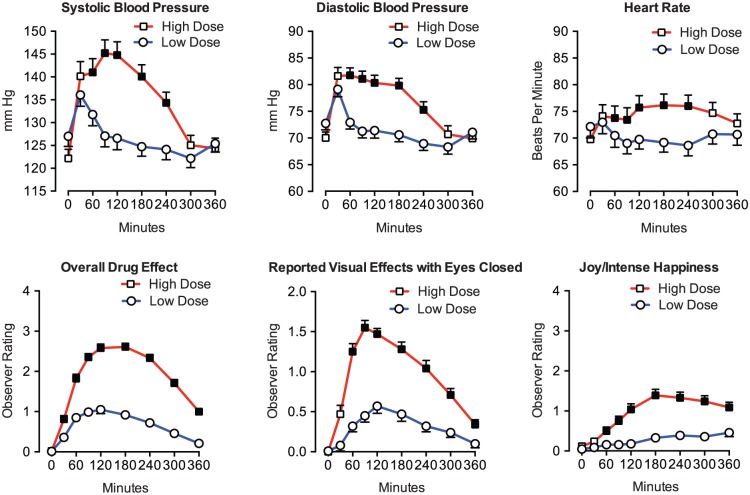
“The time-course, magnitude, and qualitative features of the high dose of psilocybin on session days were consistent with those observed in previous studies in healthy volunteers (Griffiths et al., 2006, 2011; Johnson et al., 2012).”
ResultSelf-citationPsilocybin, psychological distress, and suicidality
Hendricks, P. S., Johnson, M. W., & Griffiths, R. R. (2015) · Journal of Psychopharmacology · doi:10.1177/0269881115598338 · Cited by 106 · cited 1×
“The observed decreases in psychological distress and anxiety about death may relate to recent epidemiological findings that lifetime psilocybin use was associated with significantly reduced odds of past month psychological distress and suicidality (Hendricks et al., 2015).”
BackgroundSelf-citationGrassi, L., Caruso, R., Hammelef, K., Nanni, M. G., & Riba, M. (2014) · International Review of Psychiatry · doi:10.3109/09540261.2013.842542 · Cited by 101 · cited 2×
“Antidepressants and, less frequently, benzodiazepines are used to treat depressed mood and anxiety in cancer patients, although evidence suggesting efficacy is limited and conflicting, and benzodiazepines are generally only recommended for short-term use because of side effects and withdrawal (Grassi et al., 2014; Ost…”
BackgroundAttenuation of anticipation: A therapeutic use of lysergic acid diethylamide
Kast, E. (1967) · The Psychiatric Quarterly · doi:10.1007/bf01575629 · Cited by 94 · cited 2×
“Several unblinded studies in the 1960s and 70s suggested that such compounds might be effective in treating psychological distress in cancer patients (Grof et al., 1973; Kast, 1967; Richards et al., 1977); however, these studies did not include the comparison conditions that would be expected of modern psychopharmacol…”
BackgroundThe Peak Experience Variable in DPT-Assisted Psychotherapy with Cancer Patients
Richards, W. A., Rhead, J. C., Dileo, F. B., Yensen, R., & Kurland, A. A. (1977) · Journal of Psychedelic Drugs · doi:10.1080/02791072.1977.10472020 · Cited by 94 · cited 2×
“Several unblinded studies in the 1960s and 70s suggested that such compounds might be effective in treating psychological distress in cancer patients (Grof et al., 1973; Kast, 1967; Richards et al., 1977); however, these studies did not include the comparison conditions that would be expected of modern psychopharmacol…”
BackgroundSelf-citationTreatment of depression in adults with cancer: a systematic review of randomized controlled trials
Walker, J., Sawhney, A., Hansen, C. H., Ahmed, S., Martin, P., Symeonides, S., Murray, G., & Sharpe, M. (2014) · Psychological Medicine · doi:10.1017/s0033291713001372 · Cited by 67 · cited 2×
“Antidepressants and, less frequently, benzodiazepines are used to treat depressed mood and anxiety in cancer patients, although evidence suggesting efficacy is limited and conflicting, and benzodiazepines are generally only recommended for short-term use because of side effects and withdrawal (Grassi et al., 2014; Ost…”
BackgroundSuicidality and its Associated Factors in Cancer Patients: Results of a Multi-Center Study in Korea
Shim, E.-J., & Park, J.-H. (2012) · The International Journal of Psychiatry in Medicine · doi:10.2190/pm.43.4.g · Cited by 48 · cited 2×
“, 2000), and increased suicidality (Shim and Park, 2012).”
BackgroundGao, K., Wu, R., Kemp, D. E., Chen, J., Karberg, E., Conroy, C., Chan, P., Ren, M., Serrano, M. B., Ganocy, S. J., et al. (2014) · The Journal of Clinical Psychiatry · doi:10.4088/jcp.13m08847 · Cited by 29
Existential Psychotherapy for Patients With Advanced Cancer: Facing the Future and the Past
Spiegel, D. (2015) · Journal of Clinical Oncology · doi:10.1200/jco.2015.62.2365 · Cited by 13 · cited 2×
“…have shown only small to medium effects in treating emotional distress and quality of life, with low quality of reporting in many trials (Faller et al., 2013), there are several promising interventions utilizing existential orientations to psychotherapy (Breitbart et al., 2015; Spiegel, 2015).”
Background
Research works printed but not linked: 7
- Beck AT Steer RA (1987) BDI Beck Depression Inventory Manual. San Antonio, San Diego, Orlando, New York, Chicago, Toronto: The Psychological Corporation Harcourt Brace Jovanovich, Inc.
- Benson PL Donahue MJ Erickson JA (1993) The Faith Maturity Scale: Conceptualization, measurement, and empirical validation. Res Soc Sci Stud Religion 5: 1– 26.
- ISCDD (2003) GRID-HAMD-17 Structured Interview Guide. San Diego, CA: International Society for CNS Drug Development.
- McIntosh DN (1999) Purpose in Life Test (Crumbaugh & Maholick, 1964). In: Hill PC Hood RW (eds) Measures of Religiosity. Birmingham, AL: Religious Education Press, pp. 503– 508.
- Metzner R Litwin G Weil G (1965) The relation of expectation and mood to psilocybin reactions: A questionnaire study. Psychedelic Rev 5: 3– 39.
- Reker GT (1992) The Life Attitude Profile-Revised (LAP-R). Peterborough, ON: Student Psychologists Press.
- VandeCreek L (1999) The Death Transcendence Scale (Hood & Morris, 1983). In: Hill PC Hood RW (eds) Measures of Religiosity. Birmingham, AL: Religious Education Press, pp. 442– 445.
Cited by
Trial of Psilocybin versus Escitalopram for Depression
Carhart-Harris, R., Giribaldi, B., Watts, R., Baker-Jones, M., Murphy-Beiner, A., Murphy, R., Martell, J., Blemings, A., Erritzoe, D., & Nutt, D. J. (2021) · New England Journal of Medicine · doi:10.1056/nejmoa2032994 · Cited by 1,391
Effects of Psilocybin-Assisted Therapy on Major Depressive Disorder: A Randomized Clinical Trial
Davis, A. K., Barrett, F. S., May, D. G., Cosimano, M. P., Sepeda, N. D., Johnson, M. W., Finan, P. H., & Griffiths, R. R. (2021) · JAMA Psychiatry · doi:10.1001/jamapsychiatry.2020.3285 · Cited by 1,301
Self-citationREBUS and the anarchic brain: Toward a unified model of the brain action of psychedelics
Carhart-Harris, R. L., & Friston, K. J. (2019) · Pharmacological Reviews · doi:10.1124/pr.118.017160 · Cited by 1,180
Single-Dose Psilocybin for a Treatment-Resistant Episode of Major Depression
Goodwin, G. M., Aaronson, S. T., Alvarez, O., Arden, P. C., Baker, A., Bennett, J. C., Bird, C., Blom, R. E., Brennan, C., Brusch, D., et al. (2022) · New England Journal of Medicine · doi:10.1056/nejmoa2206443 · Cited by 1,167
“Any severe adverse event 7 (9) 5 (7) 1 (1)”
BackgroundPsilocybin with psychological support for treatment-resistant depression: six-month follow-up
Carhart-Harris, R. L., Bolstridge, M., Day, C. M. J., Rucker, J., Watts, R., Erritzoe, D. E., Kaelen, M., Giribaldi, B., Bloomfield, M., Pilling, S., et al. (2018) · Psychopharmacology · doi:10.1007/s00213-017-4771-x · Cited by 970
“Recent studies (Griffiths et al. 2016; Ross et al. 2016; Carhart-Harris et al. 2016), including the present one, help demonstrate the feasibility of treating patients with major depressive disorder with psilocybin plus psychological support.”
BackgroundResultInfluential
Metadata
- Authors
- Griffiths, R. R., Johnson, M. W., Carducci, M. A., Umbricht, A., Richards, W. A., Richards, B. D., Cosimano, M. P., & Klinedinst, M. A.
- Affiliations
- Johns Hopkins University (US)
- Corresponding author
- Griffiths, Roland R
- Venue
- Journal of Psychopharmacology
- Publisher
- SAGE Publications
- Published
- 2016-11-30
- Volume
- 30
- Issue
- 12
- Pages
- 1181-1197
- ISSN
- 0269-8811 (ISSN-L)
- 1461-7285
- PMC
- PMC5367557
- OpenAlex
- W2558412547
- Cited by
- 2,201
- References
- 53
- Citations by year
- 2026: 278 · 2025: 325 · 2024: 335 · 2023: 315 · 2022: 310 · 2021: 229 · 2020: 187 · 2019: 73 · 2018: 77 · 2017: 54 · 2016: 14
- FWCI
- 97.18
- Type
- journal article
- Language
- en
- Open access
- hybrid
- doi.org
- Licence
- cc-by
- journals.sagepub.com/page/policies/text-and-data-mining-license (tdm)
- Locations
- Journal of Psychopharmacology (publishedVersion, cc-by)
- PubMed Central (publishedVersion, cc-by)
- PubMed (publishedVersion)
- Funders
- National Institutes of Health
- National Institute on Drug Abuse (R01DA003889)
- Topics
- Social Sciences › Psychology › Clinical Psychology › Psychedelics and Drug Studies
- Social Sciences › Health › Religion, Spirituality, and Psychology
- Health Sciences › Medicine › Oncology › Cancer survivorship and care
- Keywords
- psilocybin, depression, anxiety, cancer patients, psychedelic therapy, dose-response relationship, mystical experience, fear of death, quality of life, meaning of life, optimism, well-being, sustained treatment effects
- MeSH terms
- Anxiety, Attitude, Depression, Double-Blind Method, Female, Follow-Up Studies, Hallucinogens, Humans, Male, Middle Aged, Neoplasms, Psilocybin, Quality of Life, Surveys and Questionnaires, Cross-Over Studies
About these checks
Registry, retraction, Cites and statistics results are computed, not judged, with one exception: a printed reference that no index lists is read once by a model before it counts as a citation error. Claims are extracted by a model and kept only when their quote appears verbatim in the text; each cited source is then checked, with a model’s help, for whether it says what the claim relies on. Those verdicts can be wrong — read the claim’s quote and the cited source before relying on one.
Statistics and arithmetic are recomputed, not judged.
Confidence bands are shown only for fields calibrated on our annotated test set. None is calibrated yet, so no band is shown.
What counts as a claim ›How we measure confidence ›How we check this ›
Are you an author, or do you see a problem with this page? Request a review
Data sources
Bibliographic data: Semantic Scholar, OpenAlex, Crossref.
Contains information from the Semantic Scholar Academic Graph Datasets, made available under the ODC Attribution License (ODC-BY 1.0).
Semantic Scholar’s data is described in: Kinney, R., et al. (2023). The Semantic Scholar Open Data Platform. arXiv:2301.10140.
