

Psilocybin produces substantial and sustained decreases in depression and anxiety in patients with life-threatening cancer: A randomized double-blind trial
Open accessThe DOI matches its Crossref record; 54 of the 54 references it cites were found in a registry or an index.
Abstract
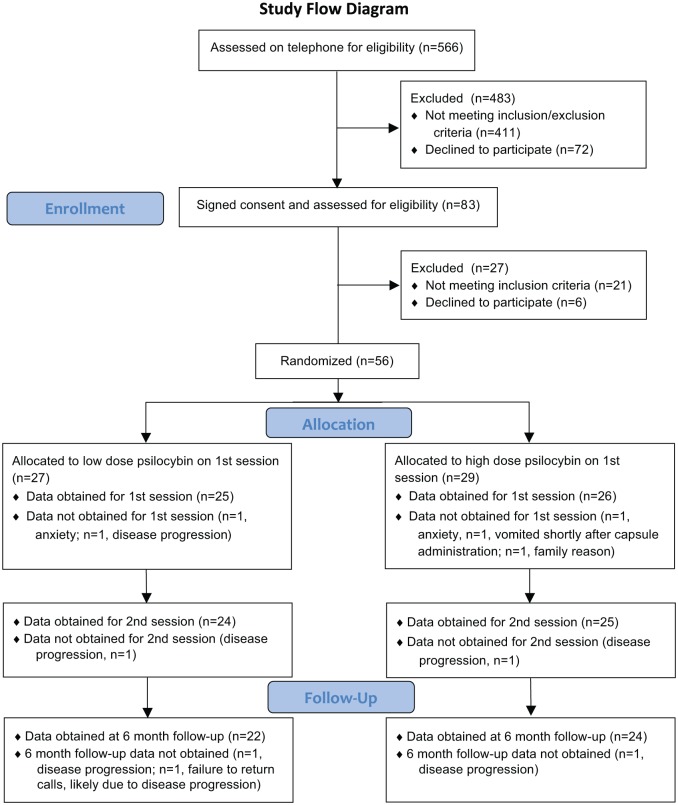
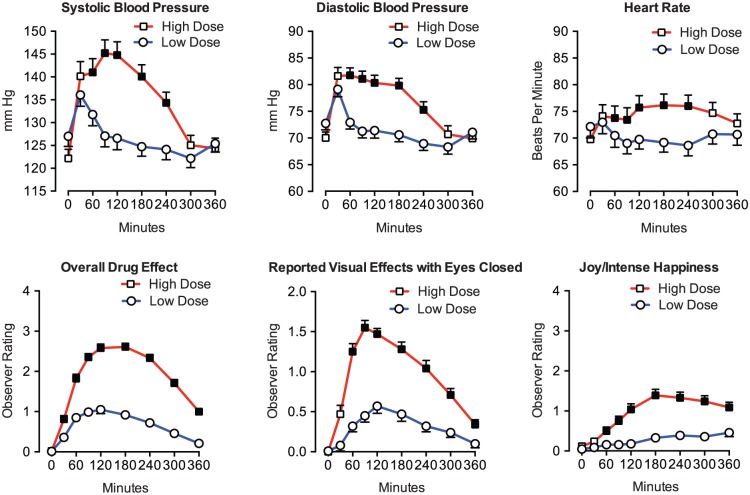
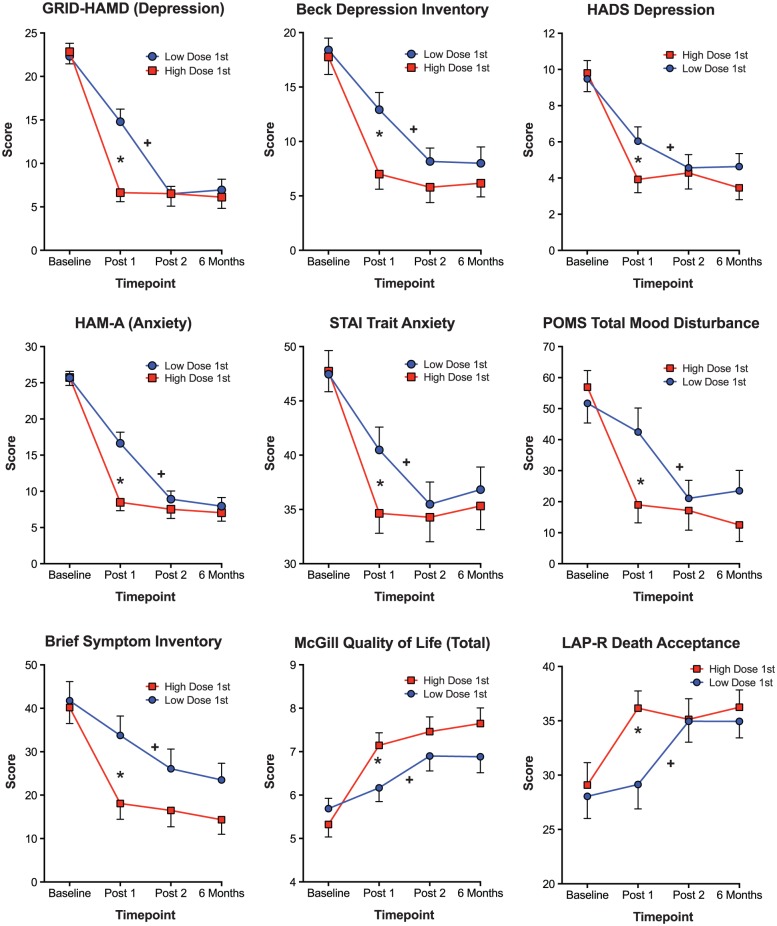
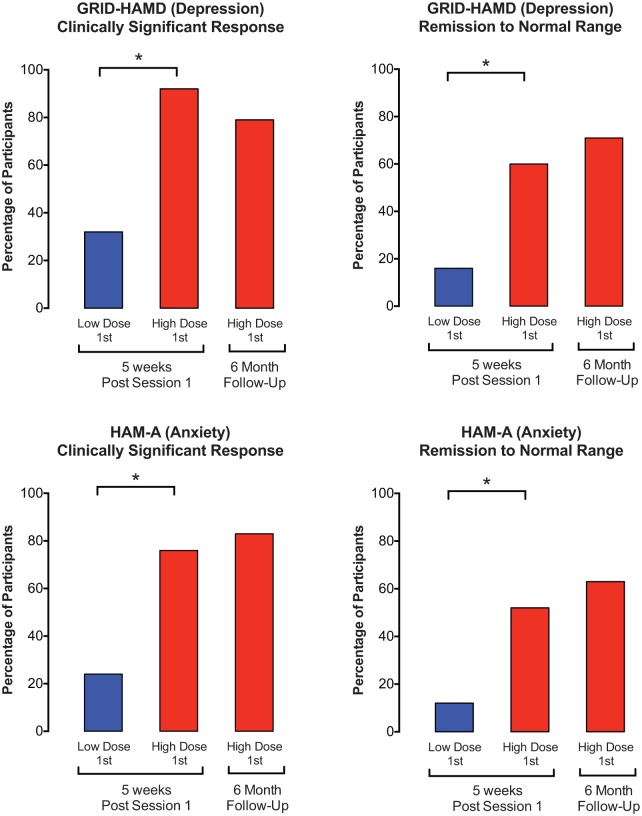
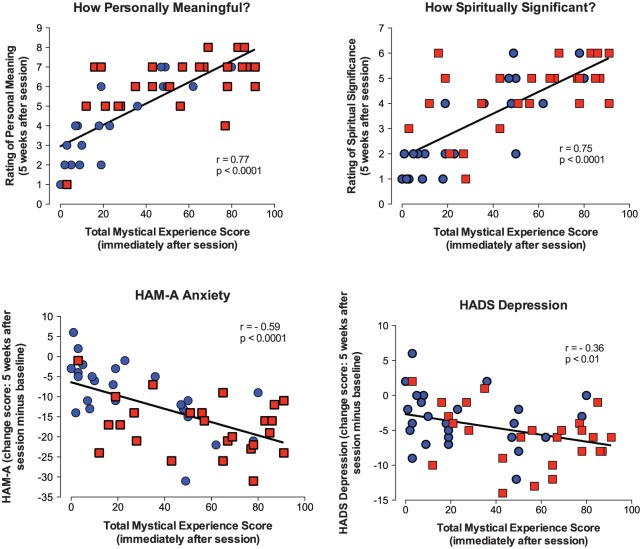
Cancer patients often develop chronic, clinically significant symptoms of depression and anxiety. Previous studies suggest that psilocybin may decrease depression and anxiety in cancer patients. The effects of psilocybin were studied in 51 cancer patients with life-threatening diagnoses and symptoms of depression and/or anxiety. This randomized, double-blind, cross-over trial investigated the effects of a very low (placebo-like) dose (1 or 3 mg/70 kg) vs. a high dose (22 or 30 mg/70 kg) of psilocybin administered in counterbalanced sequence with 5 weeks between sessions and a 6-month follow-up. Instructions to participants and staff minimized expectancy effects. Participants, staff, and community observers rated participant moods, attitudes, and behaviors throughout the study. High-dose psilocybin produced large decreases in clinician- and self-rated measures of depressed mood and anxiety, along with increases in quality of life, life meaning, and optimism, and decreases in death anxiety. At 6-month follow-up, these changes were sustained, with about 80% of participants continuing to show clinically significant decreases in depressed mood and anxiety. Participants attributed improvements in attitudes about life/self, mood, relationships, and spirituality to the high-dose experience, with >80% endorsing moderately or greater increased well-being/life satisfaction. Community observer ratings showed corresponding changes. Mystical-type psilocybin experience on session day mediated the effect of psilocybin dose on therapeutic outcomes. Trial Registration ClinicalTrials.gov identifier: NCT00465595
Overview
The claims and statistics of this paper haven’t been checked yet.
Free: it reads the open-access text and checks the first 5 claims that cite a source we can check. Create a free account to check every claim.
Integrity signals
Registry
Cites
Statistics
Figures
Verification
Claims the paper makes
The claims and statistics of this paper haven’t been checked yet.
Free: it reads the open-access text and checks the first 5 claims that cite a source we can check. Create a free account to check every claim.
Claims other papers make about this one
Each is checked against this paper’s own text: does it say what the citing paper says it does?
The cited source doesn’t support the claim as written.
In the citing paper
“In this study, groups of healthy participants were randomized into three groups, (1) low-dose psilocybin with standard support for spiritual practice (SS); (2) high-dose psilocybin with SS, and (3) high-dose psilocybin with High Support (HS) for spiritual practice.”
From Mindfulness meditation and psychedelics: potential synergies and commonalities (2023) · cites this paper as [6]
Checked by a reasoning model — may be wrong.
Experimental — accuracy not yet measuredThe source backs part of the claim, not all of it — or backs it for a different population, condition or comparison.
In the citing paper
“Griffiths et al. (2016)(n = 51) reported significantly larger response (92% versus 32%) and remission (60% versus 1%) on depression and anxiety (76% vs. 24%; 52% vs. 12%, respectively) in the high-dose group compared to active placebo after 5 weeks.”
From Psychedelics for the treatment of depression, anxiety, and existential distress in patients with a terminal illness: a systematic review (2022) · cites this paper as Griffiths et al., 2016
Experimental — accuracy not yet measuredThe source backs part of the claim, not all of it — or backs it for a different population, condition or comparison.
In the citing paper
“Most of this research has been carried out with the Revised Mystical Experience Questionnaire 30 (MEQ30), where a high score correlates with and has been suggested as a predictor of long-term positive therapeutic outcomes in various clinical and naturalistic studies of psychedelics.”
From Assessment of the acute subjective psychedelic experience: A review of patient-reported outcome measures in clinical research on classical psychedelics (2024) · cites this paper as Griffiths et al., 2016
Experimental — accuracy not yet measuredThe source backs part of the claim, not all of it — or backs it for a different population, condition or comparison.
In the citing paper
“Not only do they produce sustained therapeutic effects following a single administration, they also appear to have broad therapeutic potential”
From Psychedelics and Other Psychoplastogens for Treating Mental Illness. (2021) · cites this paper as [40]
Experimental — accuracy not yet measured
52 more claims about this paper
Create a free account to see every claim other papers make about this one.
Self-check
Percentages, sums and reported differences re-computed from the paper’s own numbers.
The self-check needs the paper’s full text.
Citations
Cites
The Hospital Anxiety and Depression Scale
Zigmond, A. S., & Snaith, R. P. (1983) · Acta Psychiatrica Scandinavica · doi:10.1111/j.1600-0447.1983.tb09716.x · Cited by 47,139
(2013) · Cited by 44,563
(1970) · Cited by 24,983
Depression and quality of life in older persons: A review
Sivertsen, H., Bjørkløf, G. H., Engedal, K., Selbæk, G., & Helvik, A.-S. (2015) · Dementia and Geriatric Cognitive Disorders · doi:10.1159/000437299 · Cited by 14,152
Optimism, coping, and health: Assessment and implications of generalized outcome expectancies.
Scheier, M. F., & Carver, C. S. (1985) · Health Psychology · doi:10.1037/0278-6133.4.3.219 · Cited by 6,690 · cited 2×
“…existence (existential subscale) during life-threatening illness (Cohen et al., 1995); LOT-R, self-rated optimism measure associated with illness (Scheier and Carver, 1985); LAP-R Death Acceptance, selfrated scale assessing absence of anxiety about death (Reker, 1992); Death Transcendence Scale,…”
BackgroundMethodMcNair, D. M. (1992) · Medical Entomology and Zoology · Cited by 2,692
Mitchell, A. J., Chan, M., Bhatti, H., Halton, M., Grassi, L., Johansen, C., & Meader, N. (2011) · The Lancet Oncology · doi:10.1016/s1470-2045(11)70002-x · Cited by 2,449 · cited 1×
“Cancer patients often develop a chronic, clinically significant syndrome of psychosocial distress having depressed mood, anxiety, and reduced quality of life as core features, with up to 40% of cancer patients meeting criteria for a mood disorder (Holland et al., 2013; Mitchell et al., 2011).”
BackgroundNichols, D. E. (2016) · Pharmacological Reviews · doi:10.1124/pr.115.011478 · Cited by 1,762 · cited 2×
“The classic hallucinogens, which include psilocybin (psilocin) and (+)-lysergic acid diethylamide (LSD), are a structurally diverse group of compounds that are 5-HT2A receptor agonists and produce a unique profile of changes in thoughts, perceptions, and emotions (Halberstadt, 2015; Nichols, 2016).”
BackgroundPeterman, A. H., Fitchett, G., Brady, M. J., Hernandez, L., & Cella, D. (2002) · Annals of Behavioral Medicine · doi:10.1207/s15324796abm2401_06 · Cited by 1,751 · cited 2×
“Three measures of spirituality were assessed at three time-points: Baseline, 5 weeks after session 2, and at the 6-month follow-up: FACIT-Sp, a self-rated measure of the spiritual dimension of quality of life in chronic illness (Peterman et al., 2002) assessed on how the participant felt “on average”; Spiritual-Religi…”
MethodGriffiths, R. R., Richards, W. A., McCann, U., & Jesse, R. (2006) · Psychopharmacology · doi:10.1007/s00213-006-0457-5 · Cited by 1,684 · cited 18×
“The structured interview (Community Observer Questionnaire) consisted of asking the rater to rate the participant’s behavior and attitudes using a 10-point scale (from 1 = not at all, to 10 = extremely) on 13 items reflecting healthy psychosocial functioning: inner peace; patience; good-natured humor/playfulness; ment…”
BackgroundMethodResultInfluentialSelf-citation
Research works printed but not linked: 7
- Beck AT Steer RA (1987) BDI Beck Depression Inventory Manual. San Antonio, San Diego, Orlando, New York, Chicago, Toronto: The Psychological Corporation Harcourt Brace Jovanovich, Inc.
- Benson PL Donahue MJ Erickson JA (1993) The Faith Maturity Scale: Conceptualization, measurement, and empirical validation. Res Soc Sci Stud Religion 5: 1– 26.
- ISCDD (2003) GRID-HAMD-17 Structured Interview Guide. San Diego, CA: International Society for CNS Drug Development.
- McIntosh DN (1999) Purpose in Life Test (Crumbaugh & Maholick, 1964). In: Hill PC Hood RW (eds) Measures of Religiosity. Birmingham, AL: Religious Education Press, pp. 503– 508.
- Metzner R Litwin G Weil G (1965) The relation of expectation and mood to psilocybin reactions: A questionnaire study. Psychedelic Rev 5: 3– 39.
- Reker GT (1992) The Life Attitude Profile-Revised (LAP-R). Peterborough, ON: Student Psychologists Press.
- VandeCreek L (1999) The Death Transcendence Scale (Hood & Morris, 1983). In: Hill PC Hood RW (eds) Measures of Religiosity. Birmingham, AL: Religious Education Press, pp. 442– 445.
Cited by
Trial of Psilocybin versus Escitalopram for Depression
Carhart-Harris, R., Giribaldi, B., Watts, R., Baker-Jones, M., Murphy-Beiner, A., Murphy, R., Martell, J., Blemings, A., Erritzoe, D., & Nutt, D. J. (2021) · New England Journal of Medicine · doi:10.1056/nejmoa2032994 · Cited by 1,391
Effects of Psilocybin-Assisted Therapy on Major Depressive Disorder: A Randomized Clinical Trial
Davis, A. K., Barrett, F. S., May, D. G., Cosimano, M. P., Sepeda, N. D., Johnson, M. W., Finan, P. H., & Griffiths, R. R. (2021) · JAMA Psychiatry · doi:10.1001/jamapsychiatry.2020.3285 · Cited by 1,301
Self-citationREBUS and the anarchic brain: Toward a unified model of the brain action of psychedelics
Carhart-Harris, R. L., & Friston, K. J. (2019) · Pharmacological Reviews · doi:10.1124/pr.118.017160 · Cited by 1,180
Single-Dose Psilocybin for a Treatment-Resistant Episode of Major Depression
Goodwin, G. M., Aaronson, S. T., Alvarez, O., Arden, P. C., Baker, A., Bennett, J. C., Bird, C., Blom, R. E., Brennan, C., Brusch, D., et al. (2022) · New England Journal of Medicine · doi:10.1056/nejmoa2206443 · Cited by 1,167
“Any severe adverse event 7 (9) 5 (7) 1 (1)”
BackgroundPsilocybin with psychological support for treatment-resistant depression: six-month follow-up
Carhart-Harris, R. L., Bolstridge, M., Day, C. M. J., Rucker, J., Watts, R., Erritzoe, D. E., Kaelen, M., Giribaldi, B., Bloomfield, M., Pilling, S., et al. (2018) · Psychopharmacology · doi:10.1007/s00213-017-4771-x · Cited by 970
“Recent studies (Griffiths et al. 2016; Ross et al. 2016; Carhart-Harris et al. 2016), including the present one, help demonstrate the feasibility of treating patients with major depressive disorder with psilocybin plus psychological support.”
BackgroundResultInfluentialPalhano-Fontes, F., Barreto, D., Onias, H., Andrade, K. C., Novaes, M. M., Pessoa, J. A., Mota-Rolim, S. A., Osório, F. L., Sanches, R., dos Santos, R. G., et al. (2019) · Psychological Medicine · doi:10.1017/s0033291718001356 · Cited by 852
Roseman, L., Nutt, D. J., & Carhart-Harris, R. L. (2018) · Frontiers in Pharmacology · doi:10.3389/fphar.2017.00974 · Cited by 808
“…the MEQ and M scale have been found to be predictive of long-term positive therapeutic outcomes in trials of psilocybin for cancerrelated distress (Griffiths et al., 2016; Ross et al., 2016), tobacco smoking (Garcia-Romeu et al., 2014; Johnson et al., 2016) and alcohol dependence (Bogenschutz et…”
BackgroundResultInfluentialSerotonin and brain function: a tale of two receptors
Carhart-Harris, R., & Nutt, D. (2017) · Journal of Psychopharmacology · doi:10.1177/0269881117725915 · Cited by 739
“…intense psychedelic experiences predict positive long-term outcomes – particularly if they contain phenomena consistent with so-called ‘mystical’ (Stace, 1961) or ‘peak’ (Maslow, 1970) experiences (Bogenschutz et al., 2015; Griffiths et al., 2008, 2016; Johnson et al., 2016; Ross et al., 2016).”
BackgroundInfluentialBogenschutz, M. P., Ross, S., Bhatt, S., Baron, T., Forcehimes, A. A., Laska, E., Mennenga, S. E., O’Donnell, K., Owens, L. T., Podrebarac, S., et al. (2022) · JAMA Psychiatry · doi:10.1001/jamapsychiatry.2022.2096 · Cited by 711
The Therapeutic Potential of Psychedelic Drugs: Past, Present, and Future
Carhart-Harris, R. L., & Goodwin, G. M. (2017) · Neuropsychopharmacology · doi:10.1038/npp.2017.84 · Cited by 706
“…clinical development of psychedelics, RLC-H sees it as a potentially exploitable component—especially as it has been shown to be predictive of long-term clinical outcomes (eg, in Johnson et al, 2014; Bogenschutz et al, 2015; Griffiths et al, 2016; Ross et al, 2016; Carhart-Harris et al, 2016a,b).”
BackgroundInfluentialPsychedelics and the essential importance of context
Carhart-Harris, R. L., Roseman, L., Haijen, E., Erritzoe, D., Watts, R., Branchi, I., & Kaelen, M. (2018) · Journal of Psychopharmacology · doi:10.1177/0269881118754710 · Cited by 657
“Indirect support for this may be found in the not inconsiderable (before-versus-after treatment) effects sizes observed in control conditions in recent double-blind randomised control trials of psilocybin for end-of-life distress, for example (Griffiths et al., 2016).”
BackgroundMethodInfluentialPsychedelics and Psychedelic-Assisted Psychotherapy
Reiff, C. M., Richman, E. E., Nemeroff, C. B., Carpenter, L. L., Widge, A. S., Rodriguez, C. I., Kalin, N. H., McDonald, W. M., & and the Work Group on Biomarkers and Novel Treatments, A. D. O. T. A. P. A. C. O. R. (2020) · American Journal of Psychiatry · doi:10.1176/appi.ajp.2019.19010035 · Cited by 649
Psilocybin induces rapid and persistent growth of dendritic spines in frontal cortex in vivo
Shao, L.-X., Liao, C., Gregg, I., Davoudian, P. A., Savalia, N. K., Delagarza, K., & Kwan, A. C. (2021) · Neuron · doi:10.1016/j.neuron.2021.06.008 · Cited by 626
Psychedelic drugs: neurobiology and potential for treatment of psychiatric disorders
Vollenweider, F. X., & Preller, K. H. (2020) · Nature Reviews Neuroscience · doi:10.1038/s41583-020-0367-2 · Cited by 570
Watts, R., Day, C., Krzanowski, J., Nutt, D., & Carhart-Harris, R. (2017) · Journal of Humanistic Psychology · doi:10.1177/0022167817709585 · Cited by 589
“…formal, quantitative analyses of the utility of psilocybin (Carhart-Harris, Bolstridge, et al., 2016; Carhart-Harris, 2017; Gasser et al., 2014; Griffiths et al., 2016; Ross et al., 2016) and should help inform and enrich understanding of this novel treatment and its mechanisms of action,…”
InfluentialPsilocybin for treatment-resistant depression: fMRI-measured brain mechanisms
Carhart-Harris, R. L., Roseman, L., Bolstridge, M., Demetriou, L., Pannekoek, J. N., Wall, M. B., Tanner, M., Kaelen, M., McGonigle, J., Murphy, K., et al. (2017) · Scientific Reports · doi:10.1038/s41598-017-13282-7 · Cited by 587
The subjective effects of psychedelics are necessary for their enduring therapeutic effects
Yaden, D. B., & Griffiths, R. R. (2021) · ACS Pharmacology & Translational Science · doi:10.1021/acsptsci.0c00194 · Cited by 541
Self-citationSingle-Dose Psilocybin Treatment for Major Depressive Disorder: A Randomized Clinical Trial
Raison, C. L., Sanacora, G., Woolley, J., Heinzerling, K., Dunlop, B. W., Brown, R. T., Kakar, R., Hassman, M., Trivedi, R. P., Robison, R., et al. (2023) · JAMA · doi:10.1001/jama.2023.14530 · Cited by 545
Self-citationJohnson, M. W., Hendricks, P. S., Barrett, F. S., & Griffiths, R. R. (2019) · Pharmacology & Therapeutics · doi:10.1016/j.pharmthera.2018.11.010 · Cited by 506
Self-citationGriffiths, R. R., Johnson, M. W., Richards, W. A., Richards, B. D., Jesse, R., MacLean, K. A., Barrett, F. S., Cosimano, M. P., & Klinedinst, M. A. (2018) · Journal of Psychopharmacology · doi:10.1177/0269881117731279 · Cited by 520
“Prior research suggests an important role of psilocybin-occasioned mystical experience in the observed enduring positive changes in psychological well-being, prosocial disposition, and spiritual worldview (Garcia-Romeu et al., 2014; Griffiths et al., 2008, 2016; Ross et al., 2016).”
BackgroundMethodResultInfluentialSelf-citationMadsen, M. K., Fisher, P. M., Burmester, D., Dyssegaard, A., Stenbæk, D. S., Kristiansen, S., Johansen, S. S., Lehel, S., Linnet, K., Svarer, C., et al. (2019) · Neuropsychopharmacology · doi:10.1038/s41386-019-0324-9 · Cited by 517
Structure of a Hallucinogen-Activated Gq-Coupled 5-HT2A Serotonin Receptor
Kim, K., Che, T., Panova, O., DiBerto, J. F., Lyu, J., Krumm, B. E., Wacker, D., Robertson, M. J., Seven, A. B., Nichols, D. E., et al. (2020) · Cell · doi:10.1016/j.cell.2020.08.024 · Cited by 481
“Remarkably, psi-locybin’s effects appear to be both rapid and enduring (Carhart-Harris et al., 2018; Ross et al., 2016; Griffiths et al., 2016).”
Gukasyan, N., Davis, A. K., Barrett, F. S., Cosimano, M. P., Sepeda, N. D., Johnson, M. W., & Griffiths, R. R. (2022) · Journal of Psychopharmacology · doi:10.1177/02698811211073759 · Cited by 425
“…measures and subsequent positive effects in healthy and patient samples (Bogenschutz et al., 2015; Davis et al., 2020; Garcia-Romeu et al., 2014; Griffiths et al., 2008, 2016, 2018), the following measures were examined: the Mystical Experience Questionnaire (MEQ30) (Barrett et al., 2015) and…”
BackgroundMethodSelf-citationPredicting responses to psychedelics: a prospective study
Haijen, E. C. H. M., Kaelen, M., Roseman, L., Timmermann, C., Kettner, H., Russ, S., Nutt, D., Daws, R. E., Hampshire, A. D. G., Lorenz, R., et al. (2018) · Frontiers in Pharmacology · doi:10.3389/fphar.2018.00897 · Cited by 417
Psychedelics, meditation, and self-consciousness
Millière, R., Carhart-Harris, R. L., Roseman, L., Trautwein, F.-M., & Berkovich-Ohana, A. (2018) · Frontiers in Psychology · doi:10.3389/fpsyg.2018.01475 · Cited by 390
Emotional breakthrough and psychedelics: Validation of the Emotional Breakthrough Inventory
Roseman, L., Haijen, E., Idialu-Ikato, K., Kaelen, M., Watts, R., & Carhart-Harris, R. (2019) · Journal of Psychopharmacology · doi:10.1177/0269881119855974 · Cited by 413
“…in determining long-term responses to psychedelics (Bogenschutz et al., 2015; Dakwar et al., 2014; Erritzoe et al., 2018; GarciaRomeu et al., 2014; Griffiths et al., 2016; Johnson et al., 2016; Klavetter and Mogar, 1967; Kurland et al., 1972; MacLean et al., 2011; O’Reilly and Funk, 1964; Pahnke…”
BackgroundPreller, K. H., Burt, J. B., Ji, J. L., Schleifer, C. H., Adkinson, B. D., Stämpfli, P., Seifritz, E., Repovs, G., Krystal, J. H., Murray, J. D., et al. (2018) · eLife · doi:10.7554/elife.35082 · Cited by 390
“However, renewed interest in the potentially beneficial clinical effects of psychedelics (Carhart-Harris et al., 2016a; Gasser et al., 2014; Griffiths et al., 2016) warrants a better understanding of their underlying neuropharmacology.”
BackgroundDavis, A. K., Barrett, F. S., & Griffiths, R. R. (2020) · Journal of Contextual Behavioral Science · doi:10.1016/j.jcbs.2019.11.004 · Cited by 375
“Consistent with prior studies (Griffiths et al., 2016; Ross et al., 2016; Davis et al, 2019), in the present study mystical experiences were associated with decreases in depression and anxiety.”
BackgroundResultSelf-citationEmotions and brain function are altered up to one month after a single high dose of psilocybin.
Barrett, F. S., Doss, M. K., Sepeda, N. D., Pekar, J. J., & Griffiths, R. R. (2020) · Scientific Reports · doi:10.1038/s41598-020-59282-y · Cited by 375
Self-citationPsychedelics as Medicines: An Emerging New Paradigm
Nichols, D., Johnson, M., & Nichols, C. (2017) · Clinical Pharmacology & Therapeutics · doi:10.1002/cpt.557 · Cited by 370
Self-citationBarrett, F. S., Bradstreet, M. P., Leoutsakos, J.-M. S., Johnson, M. W., & Griffiths, R. R. (2016) · Journal of Psychopharmacology · doi:10.1177/0269881116678781 · Cited by 366
“…research on psychedelics has revived their investigation as therapeutic agents (Bogenschutz et al., 2015; Carhart-Harris et al., 2012, 2016a; Griffiths et al., 2016; Grob et al., 2011; Johnson et al., 2014; Ross et al., 2016) and tools to understand psychosis (Schmid et al., 2015;…”
Self-citationAgin-Liebes, G. I., Malone, T., Yalch, M. M., Mennenga, S. E., Ponté, K. L., Guss, J., Bossis, A. P., Grigsby, J., Fischer, S., & Ross, S. (2020) · Journal of Psychopharmacology · doi:10.1177/0269881119897615 · Cited by 360
“Four recently published crossover randomized controlled trials (RCTs) administered psilocybin (Griffiths et al., 2016; Grob et al., 2011; Ross et al., 2016) and LSD (Gasser et al., 2014; 2015) with psychological support to participants with cancer diagnoses or life-threatening illnesses (N=104) and…”
BackgroundPsychedelics reopen the social reward learning critical period
Nardou, R., Sawyer, E., Song, Y. J., Wilkinson, M., Padovan-Hernandez, Y., de Deus, J. L., Wright, N., Lama, C., Faltin, S., Goff, L. A., et al. (2023) · Nature · doi:10.1038/s41586-023-06204-3 · Cited by 358
Doss, M. K., Považan, M., Rosenberg, M. D., Sepeda, N. D., Davis, A. K., Finan, P. H., Smith, G. S., Pekar, J. J., Barker, P. B., Griffiths, R. R., et al. (2021) · Translational Psychiatry · doi:10.1038/s41398-021-01706-y · Cited by 356
“Although a lack of correlation between improvements in cognitive flexibility and improvements in depression might suggest that cognitive flexibility is not mechanistically related to antidepressant effects of psychedelic therapy, the GRID-HAMD assesses different features of current depression (e.g., affect and appetit…”
BackgroundMethodInfluentialSelf-citationJohnson, M. W., Griffiths, R. R., Hendricks, P. S., & Henningfield, J. E. (2018) · Neuropharmacology · doi:10.1016/j.neuropharm.2018.05.012 · Cited by 354
“This study, like others discussed in Factor 6 (Griffiths et al., 2016; Ross et al., 2016) also documented reports of acute elevations in fear and anxiety in some patients that are predictive of low abuse potential as well as a subsequently emerging sense of contentment that is not associated with a strong motivation t…”
InfluentialSelf-citationAndersen, K. A. A., Carhart‐Harris, R., Nutt, D. J., & Erritzoe, D. (2021) · Acta Psychiatrica Scandinavica · doi:10.1111/acps.13249 · Cited by 347
Psychiatry & the psychedelic drugs. Past, present & future
Rucker, J. J. H., Iliff, J., & Nutt, D. J. (2018) · Neuropharmacology · doi:10.1016/j.neuropharm.2017.12.040 · Cited by 343
The subjective effects of psychedelics may not be necessary for their enduring therapeutic effects
Olson, D. E. (2021) · ACS Pharmacology & Translational Science · doi:10.1021/acsptsci.0c00192 · Cited by 329
Blinding and expectancy confounds in psychedelic randomized controlled trials
Muthukumaraswamy, S. D., Forsyth, A., & Lumley, T. (2021) · Expert Review of Clinical Pharmacology · doi:10.1080/17512433.2021.1933434 · Cited by 324
Holze, F., Gasser, P., Müller, F., Dolder, P. C., & Liechti, M. E. (2023) · Biological Psychiatry · doi:10.1016/j.biopsych.2022.08.025 · Cited by 318
“Two randomized, placebo-controlled trials in patients with life-threatening cancer reported significant reductions in anxiety and depression up to 5 and 6 weeks after a single dose of psilocybin (11,12).”
BackgroundResultInfluentialBelser, A. B., Agin-Liebes, G., Swift, T. C., Terrana, S., Devenot, N., Friedman, H. L., Guss, J., Bossis, A., & Ross, S. (2017) · Journal of Humanistic Psychology · doi:10.1177/0022167817706884 · Cited by 311
Carlson, L. E., Ismaila, N., Addington, E. L., Asher, G. N., Atreya, C., Balneaves, L. G., Bradt, J., Fuller-Shavel, N., Goodman, J., Hoffman, C. J., et al. (2023) · Journal of Clinical Oncology · doi:10.1200/jco.23.00857 · Cited by 309
Towards an understanding of psychedelic-induced neuroplasticity
Calder, A. E., & Hasler, G. (2023) · Neuropsychopharmacology · doi:10.1038/s41386-022-01389-z · Cited by 313
Structure-based discovery of nonhallucinogenic psychedelic analogs
Cao, D., Yu, J., Wang, H., Luo, Z., Liu, X., He, L., Qi, J., Fan, L., Tang, L., Chen, Z., et al. (2022) · Science · doi:10.1126/science.abl8615 · Cited by 312
Psychedelics, mystical experience, and therapeutic efficacy: a systematic review
Ko, K., Knight, G., Rucker, J. J., & Cleare, A. J. (2022) · Frontiers in Psychiatry · doi:10.3389/fpsyt.2022.917199 · Cited by 306
The neural basis of psychedelic action
Kwan, A. C., Olson, D. E., Preller, K. H., & Roth, B. L. (2022) · Nature Neuroscience · doi:10.1038/s41593-022-01177-4 · Cited by 302
Potential Therapeutic Effects of Psilocybin
Johnson, M. W., & Griffiths, R. R. (2017) · Neurotherapeutics · doi:10.1007/s13311-017-0542-y · Cited by 296
“Although the original era of classic psychedelic research focused on end-of-life cancer-related distress [9–21], some of the promising recent studies discussed above included some participants who did not have a terminal diagnosis [39, 40], and other recent research has included some participants with a life-threateni…”
BackgroundInfluentialSelf-citationSelf unbound: ego dissolution in psychedelic experience
Letheby, C., & Gerrans, P. (2017) · Neuroscience of Consciousness · doi:10.1093/nc/nix016 · Cited by 293
“cacy of carefully controlled psychedelic administration (Griffiths et al. 2016; Ross et al. 2016; dos Santos et al. 2016a).”
BackgroundAnderson, B. T., Danforth, A., Daroff, P. R., Stauffer, C., Ekman, E., Agin-Liebes, G., Trope, A., Boden, M. T., Dilley, P. J., Mitchell, J., et al. (2020) · EClinicalMedicine · doi:10.1016/j.eclinm.2020.100538 · Cited by 284
“A dose of 0¢3mg/kg had been shown to be safe in patients with cancer, [12,13] and a dose-response study in healthy volunteers suggested that optimum psilocybin dosing for eliciting a well-tolerated yet transcendent experience may be between 0¢29mg/kg and 0¢43mg/kg [32].”
BackgroundPsychedelic therapy for smoking cessation: qualitative analysis of participant accounts
Noorani, T., Garcia-Romeu, A., Swift, T. C., Griffiths, R. R., & Johnson, M. W. (2018) · Journal of Psychopharmacology · doi:10.1177/0269881118780612 · Cited by 285
Self-citationHalberstadt, A. L., Chatha, M., Klein, A. K., Wallach, J., & Brandt, S. D. (2020) · Neuropharmacology · doi:10.1016/j.neuropharm.2019.107933 · Cited by 278
“…have explored the potential therapeutic effects of serotonergic hallucinogens, with trials focusing on anxiety and depression (Grob et al., 2011; Griffiths et al., 2016; Ross et al., 2016), substance abuse (Johnson et al. 2014, 2016; Bogenschutz et al., 2015), and obsessive-compulsive disorder…”
Psilocybin desynchronizes the human brain
Siegel, J. S., Subramanian, S., Perry, D., Kay, B. P., Gordon, E. M., Laumann, T. O., Reneau, T. R., Metcalf, N. V., Chacko, R. V., Gratton, C., et al. (2024) · Nature · doi:10.1038/s41586-024-07624-5 · Cited by 269
Classic Hallucinogens and Mystical Experiences: Phenomenology and Neural Correlates
Barrett, F. S., & Griffiths, R. R. (2017) · Current Topics in Behavioral Neurosciences · doi:10.1007/7854_2017_474 · Cited by 273
“Relevant to the present review, drug-occasioned mystical experiences have been suggested as a mediating mechanism underlying possible therapeutic effects (Richards et al. 1977; Garcia-Romeu et al. 2015; Griffiths et al. 2016; Ross et al. 2016).”
InfluentialSelf-citationThe hidden therapist: evidence for a central role of music in psychedelic therapy
Kaelen, M., Giribaldi, B., Raine, J., Evans, L., Timmerman, C., Rodriguez, N., Roseman, L., Feilding, A., Nutt, D., & Carhart-Harris, R. (2018) · Psychopharmacology · doi:10.1007/s00213-017-4820-5 · Cited by 267
“Modern studies have confirmed that psilocybin can reliably facilitate mystical experiences (Griffiths et al. 2011, 2016), and these experiences have been associated with sustained positive changes in behaviour and personality (MacLean et al. 2011) and with positive therapy outcomes (Garcia-Romeu et…”
BackgroundInfluentialPsychedelics as anti-inflammatory agents
Flanagan, T. W., & Nichols, C. D. (2018) · International Review of Psychiatry · doi:10.1080/09540261.2018.1481827 · Cited by 267
Effects of psilocybin therapy on personality structure
Erritzoe, D., Roseman, L., Nour, M. M., MacLean, K., Kaelen, M., Nutt, D. J., & Carhart‐Harris, R. L. (2018) · Acta Psychiatrica Scandinavica · doi:10.1111/acps.12904 · Cited by 267
“Psychopharmacology 2016;233 (18):3395–3403.”
BackgroundBarnes, N. M., Ahern, G. P., Becamel, C., Bockaert, J., Camilleri, M., Chaumont-Dubel, S., Claeysen, S., Cunningham, K. A., Fone, K. C., Gershon, M., et al. (2021) · Pharmacological Reviews · doi:10.1124/pr.118.015552 · Cited by 263
Reviewing the Potential of Psychedelics for the Treatment of PTSD
Krediet, E., Bostoen, T., Breeksema, J., van Schagen, A., Passie, T., & Vermetten, E. (2020) · International Journal of Neuropsychopharmacology · doi:10.1093/ijnp/pyaa018 · Cited by 260
Mason, N. L., Kuypers, K. P. C., Müller, F., Reckweg, J., Tse, D. H. Y., Toennes, S. W., Hutten, N. R. P. W., Jansen, J. F. A., Stiers, P., Feilding, A., et al. (2020) · Neuropsychopharmacology · doi:10.1038/s41386-020-0718-8 · Cited by 258
“A paradoxical effect of serotonergic psychedelics is that acutely they have been found to increase feelings of anxiety [6, 78], whereas clinical trials with psychedelic drugs suggest long-term anxiety relief in patients [11, 12, 14].”
BackgroundLong-term effects of psychedelic drugs: A systematic review
Aday, J. S., Mitzkovitz, C. M., Bloesch, E. K., Davoli, C. C., & Davis, A. K. (2020) · Neuroscience & Biobehavioral Reviews · doi:10.1016/j.neubiorev.2020.03.017 · Cited by 257
Classical psychedelics for the treatment of depression and anxiety: A systematic review
Muttoni, S., Ardissino, M., & John, C. (2019) · Journal of Affective Disorders · doi:10.1016/j.jad.2019.07.076 · Cited by 256
Therapeutic alliance and rapport modulate responses to psilocybin assisted therapy for depression
Murphy, R., Kettner, H., Zeifman, R., Giribaldi, B., Kartner, L., Martell, J., Read, T., Murphy-Beiner, A., Baker-Jones, M., Nutt, D., et al. (2022) · Frontiers in Pharmacology · doi:10.3389/fphar.2021.788155 · Cited by 250
“, 2021), including distress associated with a lifethreatening illness (Grob et al., 2011; Griffiths et al., 2016; Ross et al., 2016; Anderson et al., 2020), substance misuse (Krebs and Johansen, 2012; Johnson et al.”
BackgroundInfluentialDistinct acute effects of LSD, MDMA, and d-amphetamine in healthy subjects
Holze, F., Vizeli, P., Müller, F., Ley, L., Duerig, R., Varghese, N., Eckert, A., Borgwardt, S., & Liechti, M. E. (2020) · Neuropsychopharmacology · doi:10.1038/s41386-019-0569-3 · Cited by 247
Psychedelic-Assisted Psychotherapy: A Paradigm Shift in Psychiatric Research and Development
Schenberg, E. E. (2018) · Frontiers in Pharmacology · doi:10.3389/fphar.2018.00733 · Cited by 240
“gov as ongoing, but both have already been published (Griffiths et al., 2016; Ross et al., 2016).”
BackgroundHolze, F., Vizeli, P., Ley, L., Müller, F., Dolder, P., Stocker, M., Duthaler, U., Varghese, N., Eckert, A., Borgwardt, S., et al. (2021) · Neuropsychopharmacology · doi:10.1038/s41386-020-00883-6 · Cited by 245
The Therapeutic Potential of Psilocybin
Lowe, H., Toyang, N., Steele, B., Valentine, H., Grant, J., Ali, A., Ngwa, W., & Gordon, L. (2021) · Molecules · doi:10.3390/molecules26102948 · Cited by 242
Sartori, S. B., & Singewald, N. (2019) · Pharmacology & Therapeutics · doi:10.1016/j.pharmthera.2019.107402 · Cited by 236
Modern clinical research on LSD
Liechti, M. E. (2017) · Neuropsychopharmacology · doi:10.1038/npp.2017.86 · Cited by 236
“Recent trials investigated psilocybin in patients with alcohol and nicotine use disorder Neuropsychopharmacology (Bogenschutz et al, 2015; Johnson et al, 2014), major depression, and anxiety (Carhart-Harris et al, 2016a; Griffiths et al, 2016; Grob et al, 2011; Ross et al, 2016).”
BackgroundInfluentialIncreased amygdala responses to emotional faces after psilocybin for treatment-resistant depression
Roseman, L., Demetriou, L., Wall, M. B., Nutt, D. J., & Carhart-Harris, R. L. (2018) · Neuropharmacology · doi:10.1016/j.neuropharm.2017.12.041 · Cited by 230
“, 2015), end of life anxiety (Gasser et al., 2014a; Griffiths et al., 2016; Grob et al., 2011; Ross et al., 2016), obsessive compulsive disorder (Moreno et al.”
A systematic study of microdosing psychedelics
Polito, V., & Stevenson, R. J. (2019) · PLoS ONE · doi:10.1371/journal.pone.0211023 · Cited by 235
Central 5-HT receptors and their function; present and future
Sharp, T., & Barnes, N. M. (2020) · Neuropharmacology · doi:10.1016/j.neuropharm.2020.108155 · Cited by 231
Long-lasting subjective effects of LSD in normal subjects.
Schmid, Y., & Liechti, M. E. (2018) · Psychopharmacology · doi:10.1007/s00213-017-4733-3 · Cited by 232
“…using doses up to 0.43 mg/kg p.o., including reports of positive long-term effects in a total of 129 healthy subjects (Griffiths et al. 2006, 2008, 2011, 2017; MacLean et al. 2011) and a total of 105 patients (Bogenschutz et al. 2015; Griffiths et al. 2016; Johnson et al. 2016; Ross et al. 2016).”
InfluentialPsychedelics in Psychiatry: Neuroplastic, Immunomodulatory, and Neurotransmitter Mechanisms
Inserra, A., De Gregorio, D., & Gobbi, G. (2021) · Pharmacological Reviews · doi:10.1124/pharmrev.120.000056 · Cited by 232
Aday, J. S., Heifets, B. D., Pratscher, S. D., Bradley, E., Rosen, R., & Woolley, J. D. (2022) · Psychopharmacology · doi:10.1007/s00213-022-06123-7 · Cited by 237
The experimental effects of psilocybin on symptoms of anxiety and depression: A meta-analysis
Goldberg, S. B., Pace, B. T., Nicholas, C. R., Raison, C. L., & Hutson, P. R. (2020) · Psychiatry Research · doi:10.1016/j.psychres.2020.112749 · Cited by 229
“Research on the potential therapeutic benefits of psilocybin have focused on treating anxiety (Griffiths et al., 2016; Grob et al., 2011), depression (Carhart-Harris et al.”
Backgrounddos Santos, R. G., Bouso, J. C., Alcázar-Córcoles, M. Á., & Hallak, J. E. C. (2018) · Expert Review of Clinical Pharmacology · doi:10.1080/17512433.2018.1511424 · Cited by 227
Holze, F., Ley, L., Müller, F., Becker, A. M., Straumann, I., Vizeli, P., Kuehne, S. S., Roder, M. A., Duthaler, U., Kolaczynska, K. E., et al. (2022) · Neuropsychopharmacology · doi:10.1038/s41386-022-01297-2 · Cited by 226
Psychedelics, personality and political perspectives.
Nour, M. M., Evans, L., & Carhart-Harris, R. L. (2017) · Journal of Psychoactive Drugs · doi:10.1080/02791072.2017.1312643 · Cited by 226
Developing Guidelines and Competencies for the Training of Psychedelic Therapists
Phelps, J. (2017) · Journal of Humanistic Psychology · doi:10.1177/0022167817711304 · Cited by 225
“Griffiths et al. (2016) reported results on a very low dose psilocybin session versus a high-dose psilocybin session for 51 participants with life-threatening cancer.”
BackgroundCessation and reduction in alcohol consumption and misuse after psychedelic use
Garcia-Romeu, A., Davis, A. K., Erowid, F., Erowid, E., Griffiths, R. R., & Johnson, M. W. (2019) · Journal of Psychopharmacology · doi:10.1177/0269881119845793 · Cited by 225
“…depression (Carhart-Harris et al., 2016, 2017; dos Santos et al., 2016; Palhano-Fontes et al., 2019), as well as patients with symptoms of anxiety or depression associated with life-threatening illness (Gasser et al., 2014; Griffiths et al., 2016; Grob et al., 2011; Ross et al., 2016).”
BackgroundSelf-citationBreeksema, J. J., Niemeijer, A. R., Krediet, E., Vermetten, E., & Schoevers, R. A. (2020) · CNS Drugs · doi:10.1007/s40263-020-00748-y · Cited by 224
“Both early [108–110] and present-day psychedelic studies [13, 14, 51, 111, 112] have found significant relations between mystical experiences and therapeutic outcomes.”
Backgroundde la Fuente Revenga, M., Zhu, B., Guevara, C. A., Naler, L. B., Saunders, J. M., Zhou, Z., Toneatti, R., Sierra, S., Wolstenholme, J. T., Beardsley, P. M., et al. (2021) · Cell Reports · doi:10.1016/j.celrep.2021.109836 · Cited by 224
“As an example, people with cancer demonstrated rapid increases in positive affect after psilocybin administration, with 60%–85% showing long-term improvements in anxiety and depression measures at a 6.5-month follow-up (Griffiths et al., 2016).”
InfluentialThe Current Status of Psychedelics in Psychiatry
Nutt, D., & Carhart-Harris, R. (2021) · JAMA Psychiatry · doi:10.1001/jamapsychiatry.2020.2171 · Cited by 223
Pharmacological, neural, and psychological mechanisms underlying psychedelics: A critical review
van Elk, M., & Yaden, D. B. (2022) · Neuroscience & Biobehavioral Reviews · doi:10.1016/j.neubiorev.2022.104793 · Cited by 221
“Indeed, these experiences are often rated in the same top-five life events, as the birth of a child or the loss of a loved one (Griffiths et al., 2016; Griffiths et al., 2006).”
BackgroundInfluentialDMT Models the Near-Death Experience
Timmermann, C., Roseman, L., Williams, L., Erritzoe, D., Martial, C., Cassol, H., Laureys, S., Nutt, D., & Carhart-Harris, R. (2018) · Frontiers in Psychology · doi:10.3389/fpsyg.2018.01424 · Cited by 220
“For example, reduced death anxiety (Grob et al., 2011; Gasser et al., 2015; Griffiths et al., 2016; Ross et al., 2016), pro-ecological behavior (Forstmann and Sagioglou, 2017; Nour et al.”
BackgroundKettner, H., Rosas, F. E., Timmermann, C., Kärtner, L., Carhart-Harris, R. L., & Roseman, L. (2021) · Frontiers in Pharmacology · doi:10.3389/fphar.2021.623985 · Cited by 221
Kuypers, K. P., Ng, L., Erritzoe, D., Knudsen, G. M., Nichols, C. D., Nichols, D. E., Pani, L., Soula, A., & Nutt, D. (2019) · Journal of Psychopharmacology · doi:10.1177/0269881119857204 · Cited by 215
A Meta-Analysis of Placebo-Controlled Trials of Psychedelic-Assisted Therapy
Luoma, J. B., Chwyl, C., Bathje, G. J., Davis, A. K., & Lancelotta, R. (2020) · Journal of Psychoactive Drugs · doi:10.1080/02791072.2020.1769878 · Cited by 212
“In cases where multiple outcomes were designated as primary (Gasser et al. 2014; Griffiths et al. 2016), effect sizes were calculated for each variable and then averaged to create a single effect size for each study (Borenstein Hedges Higgins and Rothstein 2009).”
MethodMertens, L. J., Wall, M. B., Roseman, L., Demetriou, L., Nutt, D. J., & Carhart-Harris, R. L. (2020) · Journal of Psychopharmacology · doi:10.1177/0269881119895520 · Cited by 208
“The changes in post-acute amygdala reactivity in depressed patients (Roseman et al., 2018) and acute amygdala reactivity under psilocybin (Grimm et al., 2018) are particularly striking, as amygdala involvement, and particularly its hypersensitivity to negative stimuli, has long been thought to be a…”
BackgroundResultRaval, N. R., Johansen, A., Donovan, L. L., Ros, N. F., Ozenne, B., Hansen, H. D., & Knudsen, G. M. (2021) · International Journal of Molecular Sciences · doi:10.3390/ijms22020835 · Cited by 200
“We investigate brain effects one day after psilocybin administration because the days following a psychedelic experience may provide a therapeutic window to treat mood disorders [6,7].”
InfluentialRaval, N. R., Johansen, A., Donovan, L. L., Ros, N. F., Ozenne, B., Hansen, H. D., & Knudsen, G. M. (2020) · doi:10.20944/preprints202011.0742.v1 · Cited by 200
Models of psychedelic drug action: modulation of cortical-subcortical circuits
Doss, M. K., Madden, M. B., Gaddis, A., Nebel, M. B., Griffiths, R. R., Mathur, B. N., & Barrett, F. S. (2022) · Brain · doi:10.1093/brain/awab406 · Cited by 199
Self-citationUthaug, M. V., Lancelotta, R., van Oorsouw, K., Kuypers, K. P. C., Mason, N., Rak, J., Šuláková, A., Jurok, R., Maryška, M., Kuchař, M., et al. (2019) · Psychopharmacology · doi:10.1007/s00213-019-05236-w · Cited by 197
Learning to Let Go: A Cognitive-Behavioral Model of How Psychedelic Therapy Promotes Acceptance
Wolff, M., Evens, R., Mertens, L. J., Koslowski, M., Betzler, F., Gründer, G., & Jungaberle, H. (2020) · Frontiers in Psychiatry · doi:10.3389/fpsyt.2020.00005 · Cited by 194
“Blissful ego-dissolution and related phenomena such as “oceanic boundlessness” and “mystical-type experiences” have been shown to predict not only long-term increases in well-being (80, 85) and trait openness in non-clinical samples (59, 60, 89) but also positive clinical outcomes (5, 7, 11, 46).”
BackgroundThe promises and perils of psychedelic pharmacology for psychiatry
McClure-Begley, T. D., & Roth, B. L. (2022) · Nature Reviews Drug Discovery · doi:10.1038/s41573-022-00421-7 · Cited by 194
Swift, T. C., Belser, A. B., Agin-Liebes, G., Devenot, N., Terrana, S., Friedman, H. L., Guss, J., Bossis, A. P., & Ross, S. (2017) · Journal of Humanistic Psychology · doi:10.1177/0022167817715966 · Cited by 195
“, anxiety and depression), in which both trials demonstrated that the psilocybin-induced mystical experience partially mediated the clinical benefit of sustained anxiolytic and antidepressant effects (Griffiths et al., 2016; Ross et al., 2016).”
BackgroundMethodResultInfluentialMust Psilocybin Always “Assist Psychotherapy”?
Goodwin, G. M., Malievskaia, E., Fonzo, G. A., & Nemeroff, C. B. (2024) · American Journal of Psychiatry · doi:10.1176/appi.ajp.20221043 · Cited by 189
Garcia-Romeu, A., & Richards, W. A. (2018) · International Review of Psychiatry · doi:10.1080/09540261.2018.1486289 · Cited by 189
“…receiving moderate-to-high doses of psychedelics such as psilocybin, LSD, and ayahuasca in a supportive environment (Bogenschutz et al., 2015; Griffiths et al., 2006, 2011, 2016, 2018; Johnson et al., 2014; Liechti, Dolder & Schmid, 2017; Lyvers & Meester, 2012; PalhanoFontes et al., 2018;…”
BackgroundMethodInfluentialSelf-citationPharmacokinetics of Escalating Doses of Oral Psilocybin in Healthy Adults
Brown, R. T., Nicholas, C. R., Cozzi, N. V., Gassman, M. C., Cooper, K. M., Muller, D., Thomas, C. D., Hetzel, S. J., Henriquez, K. M., Ribaudo, A. S., et al. (2017) · Clinical Pharmacokinetics · doi:10.1007/s40262-017-0540-6 · Cited by 188
“Concurrent placebo-controlled, phase II clinical trials at New York and Johns Hopkins Universities found clinically significant improvement in anxiety and depression in patients with incurable disease even 6 months after a single oral dose of psilcocybin [3, 4].”
Barrett, F. S., Krimmel, S. R., Griffiths, R. R., Seminowicz, D. A., & Mathur, B. N. (2020) · NeuroImage · doi:10.1016/j.neuroimage.2020.116980 · Cited by 188
“…kg) and lower than those doses (e.g. 25 mg/70 kg) evaluated for clinical efficacy in the context of mood disorders (Carhart-Harris et al., 2016a; Griffiths et al., 2016; Ross et al., 2016) and substance use disorders (Bogenschutz et al., 2015; Johnson et al., 2014), a 10 mg/70 kg dose has been…”
Self-citation
Metadata
- Authors
- Griffiths, R. R., Johnson, M. W., Carducci, M. A., Umbricht, A., Richards, W. A., Richards, B. D., Cosimano, M. P., & Klinedinst, M. A.
- Affiliations
- Johns Hopkins University (US)
- Corresponding author
- Griffiths, Roland R
- Venue
- Journal of Psychopharmacology
- Publisher
- SAGE Publications
- Published
- 2016-11-30
- Volume
- 30
- Issue
- 12
- Pages
- 1181-1197
- ISSN
- 0269-8811 (ISSN-L)
- 1461-7285
- PMC
- PMC5367557
- OpenAlex
- W2558412547
- Cited by
- 2,201
- References
- 53
- Citations by year
- 2026: 278 · 2025: 325 · 2024: 335 · 2023: 315 · 2022: 310 · 2021: 229 · 2020: 187 · 2019: 73 · 2018: 77 · 2017: 54 · 2016: 14
- FWCI
- 97.18
- Type
- journal article
- Language
- en
- Open access
- hybrid
- doi.org
- Licence
- cc-by
- journals.sagepub.com/page/policies/text-and-data-mining-license (tdm)
- Locations
- Journal of Psychopharmacology (publishedVersion, cc-by)
- PubMed Central (publishedVersion, cc-by)
- PubMed (publishedVersion)
- Funders
- National Institutes of Health
- National Institute on Drug Abuse (R01DA003889)
- Topics
- Social Sciences › Psychology › Clinical Psychology › Psychedelics and Drug Studies
- Social Sciences › Health › Religion, Spirituality, and Psychology
- Health Sciences › Medicine › Oncology › Cancer survivorship and care
- Keywords
- psilocybin, depression, anxiety, cancer patients, psychedelic therapy, dose-response relationship, mystical experience, fear of death, quality of life, meaning of life, optimism, well-being, sustained treatment effects
- MeSH terms
- Anxiety, Attitude, Depression, Double-Blind Method, Female, Follow-Up Studies, Hallucinogens, Humans, Male, Middle Aged, Neoplasms, Psilocybin, Quality of Life, Surveys and Questionnaires, Cross-Over Studies
About these checks
Registry, retraction, Cites and statistics results are computed, not judged, with one exception: a printed reference that no index lists is read once by a model before it counts as a citation error. Claims are extracted by a model and kept only when their quote appears verbatim in the text; each cited source is then checked, with a model’s help, for whether it says what the claim relies on. Those verdicts can be wrong — read the claim’s quote and the cited source before relying on one.
Statistics and arithmetic are recomputed, not judged.
Confidence bands are shown only for fields calibrated on our annotated test set. None is calibrated yet, so no band is shown.
What counts as a claim ›How we measure confidence ›How we check this ›
Are you an author, or do you see a problem with this page? Request a review
Data sources
Bibliographic data: Semantic Scholar, OpenAlex, Crossref.
Contains information from the Semantic Scholar Academic Graph Datasets, made available under the ODC Attribution License (ODC-BY 1.0).
Semantic Scholar’s data is described in: Kinney, R., et al. (2023). The Semantic Scholar Open Data Platform. arXiv:2301.10140.
