

The DOI matches its Crossref record; 541 of the 541 references it cites were found in a registry or an index.
Serotonin and brain function: a tale of two receptors
Open accessAbstract
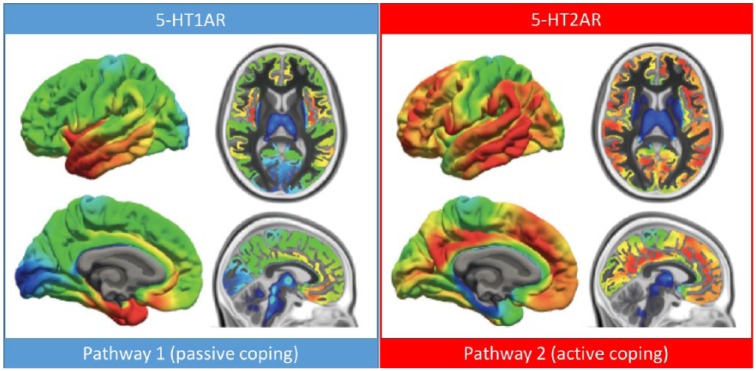
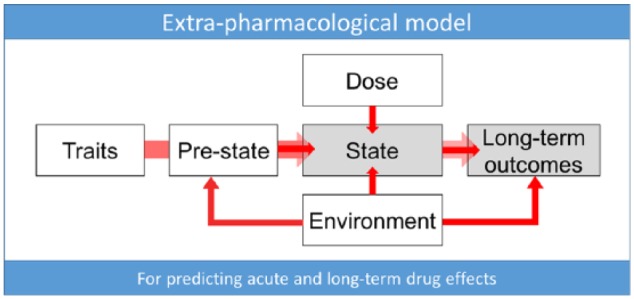
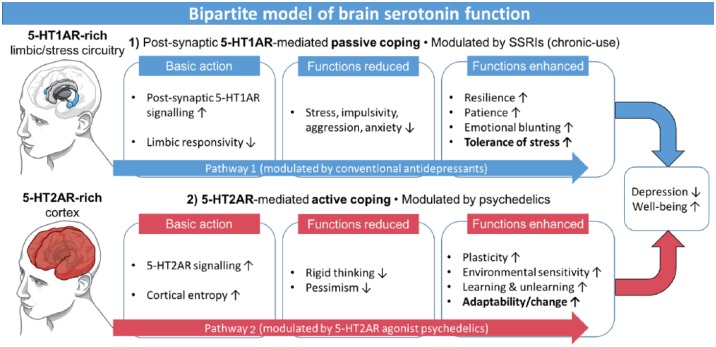
Previous attempts to identify a unified theory of brain serotonin function have largely failed to achieve consensus. In this present synthesis, we integrate previous perspectives with new and older data to create a novel bipartite model centred on the view that serotonin neurotransmission enhances two distinct adaptive responses to adversity, mediated in large part by its two most prevalent and researched brain receptors: the 5-HT1A and 5-HT2A receptors. We propose that passive coping (i.e. tolerating a source of stress) is mediated by postsynaptic 5-HT1AR signalling and characterised by stress moderation. Conversely, we argue that active coping (i.e. actively addressing a source of stress) is mediated by 5-HT2AR signalling and characterised by enhanced plasticity (defined as capacity for change). We propose that 5-HT1AR-mediated stress moderation may be the brain’s default response to adversity but that an improved ability to change one’s situation and/or relationship to it via 5-HT2AR-mediated plasticity may also be important – and increasingly so as the level of adversity reaches a critical point. We propose that the 5-HT1AR pathway is enhanced by conventional 5-HT reuptake blocking antidepressants such as the selective serotonin reuptake inhibitors (SSRIs), whereas the 5-HT2AR pathway is enhanced by 5-HT2AR-agonist psychedelics. This bipartite model purports to explain how different drugs (SSRIs and psychedelics) that modulate the serotonergic system in different ways, can achieve complementary adaptive and potentially therapeutic outcomes.
Overview
The claims and statistics of this paper haven’t been checked yet.
Run the check — free, no account needed. It reads the open-access text and checks the sources it cites.
Integrity signals
Registry
Cites
Statistics
Figures
Verification
Claims the paper makes
The claims and statistics of this paper haven’t been checked yet.
Run the check — free, no account needed. It reads the open-access text and checks the sources it cites.
Claims other papers make about this one
Each is checked against this paper’s own text: does it say what the citing paper says it does?
The source backs part of the claim, not all of it — or backs it for a different population, condition or comparison.
In the citing paper
“exploratory analyses using PET receptor atlases revealed a positive correlation between cortical 5-HT2A receptor distribution and abnormal MMN source activity in PD-VH, consistent with the known role of serotonin in cortical disinhibition53 and psychosis42,43”
From Deviations in effective connectivity explain different hallucination subtypes in Parkinson's disease psychosis (2026) · cites this paper as [53]
Experimental — accuracy not yet measuredThe source backs part of the claim, not all of it — or backs it for a different population, condition or comparison.
In the citing paper
“MDMA’s influence on the salience network also facilitates a shift toward positive emotional experiences, reinforcing affective learning and emotional regulation (93, 94).”
From Psychoanalytically informed MDMA-assisted therapy for pathological narcissism: a novel theoretical approach (2025) · cites this paper as [94]
Experimental — accuracy not yet measuredIn the citing paper
“5-HT signalling is known to modulate the communication between key constituents of fear and anxiety circuitries (Babaev, Piletti Chatain, & Krueger-Burg, 2018;Carhart-Harris & Nutt, 2017).”
From Novel pharmacological targets in drug development for the treatment of anxiety and anxiety-related disorders (2019) · cites this paper as Carhart-Harris & Nutt, 2017
Self-check
Percentages, sums and reported differences re-computed from the paper’s own numbers.
The self-check needs the paper’s full text.
Citations
Cites
Items 401–541 of 541
Erritzøe, D., Holst, K. K., Frøkjær, V. G., Licht, C. L., Kalbitzer, J., Nielsen, F. Å., Svarer, C., Madsen, J., & Knudsen, G. M. (2010) · Journal of Neuroscience · doi:10.1523/jneurosci.2852-09.2010 · Cited by 59
Neuroscience: Waiting for Serotonin
Ranade, S., Pi, H.-J., & Kepecs, Á. (2014) · Current Biology · doi:10.1016/j.cub.2014.07.024 · Cited by 59
Asphyxia-activated corticocardiac signaling accelerates onset of cardiac arrest
Li, D., Mabrouk, O. S., Liu, T., Tian, F., Xu, G., Rengifo, S., Choi, S. J., Mathur, A., Crooks, C. P., Kennedy, R. T., et al. (2015) · Proceedings of the National Academy of Sciences · doi:10.1073/pnas.1423936112 · Cited by 59
Repeated ECS differentially affects rat brain 5-HT1A and 5-HT2A receptor expression
Burnet, P. W. J., Mead, A., Eastwood, S. L., Lacey, K., Harrison, P. J., & Sharp, T. (1995) · Neuroreport · doi:10.1097/00001756-199504190-00019 · Cited by 58
Forcada Calvo, A. (1960) · PubMed · Cited by 58
Zhang, X., Zhang, Q., Li, W., Nie, D., Chen, W., Xu, C., Yi, X., Shi, J., Tian, M., Qin, J., et al. (2013) · Journal of Neuroscience Research · doi:10.1002/jnr.23304 · Cited by 57
Role of 5-HT2A receptor antagonists in the treatment of insomnia
Vanover, K. E., & Davis (2010) · Nature and Science of Sleep · doi:10.2147/nss.s6849 · Cited by 57
Future Directions for Serotonin and Antidepressants
Artigas, F. (2013) · ACS Chemical Neuroscience · doi:10.1021/cn3001125 · Cited by 57
Placebo, Prozac and PLoS: significant lessons for psychopharmacology
Horder, J., Matthews, P., & WALDMANN, R. J. (2010) · Journal of Psychopharmacology · doi:10.1177/0269881110372544 · Cited by 57
Butler, T., Schofield, P. W., Greenberg, D. M., Allnutt, S., Indig, D., Carr, V., D'Este, C., Mitchell, P., Knight, L., & Ellis, A. (2010) · Australian and New Zealand journal of psychiatry (Print) · doi:10.3109/00048674.2010.525216 · Cited by 57
The role of serotonin in depression and anxiety
Deakin, J. F. W. (1998) · European Psychiatry · doi:10.1016/s0924-9338(98)80015-1 · Cited by 56
HTR2A is Associated with SSRI Response in Major Depressive Disorder in a Japanese Cohort
Kishi, T., Yoshimura, R., Kitajima, T., Okochi, T., Okumura, T., Tsunoka, T., Yamanouchi, Y., Kinoshita, Y., Kawashima, K., Naitoh, H., et al. (2009) · NeuroMolecular Medicine · doi:10.1007/s12017-009-8105-y · Cited by 56
5-HT2A/2C receptor blockade regulates progenitor cell proliferation in the adult rat hippocampus
Jha, S., Rajendran, R., Fernandes, K. A., & Vaidya, V. A. (2008) · Neuroscience Letters · doi:10.1016/j.neulet.2008.06.028 · Cited by 56
ARBATSKY, Y. G. (2019) · Current Neuropharmacology · doi:10.2174/cn-1570159x-603 · Cited by 56
Turton, S., Nutt, D., & Carhart-Harris, R. L. (2015) · Current Drug Abuse Reviews · doi:10.2174/1874473708666150107120930 · Cited by 55
Self-citationPostnatal development of serotonin 1B, 2 A and 2C receptors in brainstem motoneurons
Volgin, D. V., Fay, R. A., & Kubin, L. K. (2003) · European Journal of Neuroscience · doi:10.1046/j.1460-9568.2003.02545.x · Cited by 54
Investigation of serotonin-1A receptor function in the human psychopharmacology of MDMA
Hasler, F., Studerus, E., Lindner, K., Ludewig, S., & Vollenweider, F. X. (2008) · Journal of Psychopharmacology · doi:10.1177/0269881108094650 · Cited by 54
Marangell, L. B., Johnson, C. R., Kertz, B. L., Zboyan, H. A., & Martinez, J. M. (2002) · The Journal of Clinical Psychiatry · doi:10.4088/jcp.v63n0503 · Cited by 54
Hunt, G. E., McGregor, I. S., Cornish, J. L., & Callaghan, P. D. (2011) · Brain Research Bulletin · doi:10.1016/j.brainresbull.2011.06.011 · Cited by 54
Experienced Drug Users Assess the Relative Harms and Benefits of Drugs: A Web-Based Survey
Carhart-Harris, R. L., & Nutt, D. (2013) · Journal of Psychoactive Drugs · doi:10.1080/02791072.2013.825034 · Cited by 54
Self-citationBland, S. T., Twining, C. M., Watkins, L. R., & Maier, S. F. (2003) · Synapse · doi:10.1002/syn.10229 · Cited by 53
Butler, M. O., Morinobu, S., & Duman, R. S. (1993) · Journal of Neurochemistry · doi:10.1111/j.1471-4159.1993.tb13618.x · Cited by 53
Evaluation of Phentermine and Fenfluramine, Alone and in Combination, in Normal, Healthy Volunteers
Brauer, L. H. (1996) · Neuropsychopharmacology · doi:10.1016/0893-133x(95)00113-r · Cited by 53
Cherek, D. R., & Lane, S. D. (2001) · Psychopharmacology · doi:10.1007/s002130100812 · Cited by 53
Imoto, Y., Kira, T., Sukeno, M., Nishitani, N., Nagayasu, K., Nakagawa, T., Kaneko, S., Kobayashi, K., & Segi-Nishida, E. (2015) · Molecular Brain · doi:10.1186/s13041-015-0120-3 · Cited by 53
A theory of anxiety: the role of the limbic system.
Ja, G. (1983) · PubMed · Cited by 52
Lebe, M., Hasenbring, M. I., Schmieder, K., Jetschke, K., HARDERS, A. G., Epplen, J. T., Hoffjan, S., & Kötting, J. (2012) · Pain · doi:10.1016/j.pain.2012.11.017 · Cited by 52
Popovic, D., Vieta, E., Fornaro, M., & Perugi, G. (2015) · Journal of Affective Disorders · doi:10.1016/j.jad.2014.11.008 · Cited by 51
Petit, A., Quesseveur, G., Gressier, F., Colle, R., David, D. J. P., Gardier, A. M., Ferreri, F., Lépine, J., Falissard, B., Verstuyft, C., et al. (2014) · Progress in Neuro-Psychopharmacology and Biological Psychiatry · doi:10.1016/j.pnpbp.2014.04.013 · Cited by 50
Anderson, I. M., Parry‐Billings, M., Newsholme, E. A., Poortmans, J.-R., & Cowen, P. J. (1990) · Journal of Affective Disorders · doi:10.1016/0165-0327(90)90143-v · Cited by 50
History, Rationale and Potential of Human Experimental Hallucinogenic Drug Research in Psychiatry
Gouzoulis‐Mayfrank, E., Hermle, L., Thelen, B., & Sass, H. (1998) · Pharmacopsychiatry · doi:10.1055/s-2007-979348 · Cited by 50
Varieties of Near-Death Experience
Greyson, B. (1993) · Psychiatry · doi:10.1080/00332747.1993.11024660 · Cited by 49
Biochemical aspects of depression.
Coppen, A. J. (1969) · PubMed · Cited by 49
Gaddum, J. H. (1957) · Annals of the New York Academy of Sciences · doi:10.1111/j.1749-6632.1957.tb40754.x · Cited by 49
[Serotonergic neurons and behavior].
Soubrié, P. (1986) · PubMed · Cited by 49
Serotonin in the Ventral Hippocampus Modulates Anxiety-Like Behavior during Amphetamine Withdrawal
Tu, W., Cook, A., Scholl, J., Mears, M., Watt, M., Renner, K., & Forster, G. (2014) · Neuroscience · doi:10.1016/j.neuroscience.2014.09.019 · Cited by 48
Strome, E. M., Clark, C. M., Zis, A. P., & Doudet, D. J. (2005) · Biological Psychiatry · doi:10.1016/j.biopsych.2005.01.025 · Cited by 47
Effects of serotonin 5-HT 2A/2C antagonists on associative learning in the rabbit
Welsh, S. E., Romano, A. G., & Harvey, J. A. (1998) · Psychopharmacology · doi:10.1007/s002130050605 · Cited by 47
Jennings, K. A., Sheward, W. J., Harmar, A. J., & Sharp, T. (2008) · Neuropharmacology · doi:10.1016/j.neuropharm.2007.12.001 · Cited by 47
Barth, M., Kriston, L., Klostermann, S., Barbui, C., Cipriani, A., & Linde, K. (2016) · The British Journal of Psychiatry · doi:10.1192/bjp.bp.114.150136 · Cited by 47
Neuroimaging and Electroconvulsive Therapy
Bolwig, T. G. (2014) · Journal of Ect · doi:10.1097/yct.0000000000000140 · Cited by 47
Corchs, F., Nutt, D., Hood, S. D., & Bernik, M. (2009) · Biological Psychiatry · doi:10.1016/j.biopsych.2009.01.031 · Cited by 46
Self-citation5-HT2A Receptor Activation Leads to Increased BDNF mRNA Expression in C6 Glioma Cells
Meller, R., Babity, J. M., & Grahame‐Smith, D. G. (2002) · NeuroMolecular Medicine · doi:10.1385/nmm:1:3:197 · Cited by 46
Griffiths, R. R., & Grob, C. S. (2010) · Scientific American · doi:10.1038/scientificamerican1210-76 · Cited by 46
Quesseveur, G., Repérant, C., David, D. J. P., Gardier, A. M., Sánchez, C., & Guiard, B. P. (2013) · Experimental Brain Research · doi:10.1007/s00221-013-3434-3 · Cited by 45
Effect of d -fenfluramine on human experimental anxiety
Hetem, L. A. B., de Souza, C. J., Guimarães, F. S., Zuardi, A. W., & Graeff, F. G. (1996) · Psychopharmacology · doi:10.1007/s002130050086 · Cited by 45
Anxiety but not arousal increases 5‐hydroxytryptamine release in the rat ventral hippocampus in vivo
Rex, A., Voigt, J., & Fink, H. (2005) · European Journal of Neuroscience · doi:10.1111/j.1460-9568.2005.04251.x · Cited by 44
Romano, A. G., Quinn, J. L., Li, L., Dave, K. D., Schindler, E. A. D., Aloyo, V. J., & Harvey, J. A. (2010) · Psychopharmacology · doi:10.1007/s00213-010-2004-7 · Cited by 44
Jørgensen, L. M., Weikop, P., Villadsen, J., Visnapuu, T., Ettrup, A., Hansen, H. D., Baandrup, A. O., Andersen, F. L., Bjarkam, C. R., Thomsen, C., et al. (2017) · Journal of Cerebral Blood Flow & Metabolism · doi:10.1177/0271678x16629483 · Cited by 44
Kamboj, S. K., Kilford, E. J., Minchin, S., Moss, A., Lawn, W., Das, R. K., Falconer, C. J., Gilbert, P., Curran, H. V., & Freeman, T. P. (2015) · Journal of Psychopharmacology · doi:10.1177/0269881115587143 · Cited by 43
Therapeutic Potential of 5-HT2C Receptor Antagonists in the Treatment of Anxiety Disorders
Wood, M. D. (2003) · CNS & Neurological Disorders - Drug Targets · doi:10.2174/1568007033482698 · Cited by 42
Salo, J., Jokela, M. M., Lehtimäki, T. J., & Keltikangas‐Järvinen, L. (2011) · Genes Brain & Behavior · doi:10.1111/j.1601-183x.2011.00708.x · Cited by 42
Two weeks of pretreatment with escitalopram facilitates extinction learning in healthy individuals
Bui, E., Orr, S. P., Jacoby, R. J., Keshaviah, A., LeBlanc, N. J., Milad, M. R., Pollack, M. H., & Simon, N. M. (2013) · Human Psychopharmacology Clinical and Experimental · doi:10.1002/hup.2330 · Cited by 42
MDMA as a Probe and Treatment for Social Behaviors
Heifets, B. D., & Malenka, R. C. (2016) · Cell · doi:10.1016/j.cell.2016.06.045 · Cited by 42
Presynaptic 5-HT1A is Related to 5-HTT Receptor Density in the Human Brain
Bose, S. K., Mehta, M. A., Selvaraj, S., Howes, O. D., Hinz, R., Rabiner, E. A., Grasby, P. M., Turkheimer, F., & Murthy, V. (2011) · Neuropsychopharmacology · doi:10.1038/npp.2011.113 · Cited by 41
Carhart-Harris, R. L., Brugger, S. P., Nutt, D., & Stone, J. M. (2013) · Journal of Psychopharmacology · doi:10.1177/0269881113494107 · Cited by 41
Self-citationHarvey, J. A., Quinn, J. L., Liu, R., Aloyo, V. J., & Romano, A. G. (2004) · Psychopharmacology · doi:10.1007/s00213-003-1687-4 · Cited by 41
Niitsu, Y., Hatnada, S., Hamaguchi, K., Mikuni, M., & Okado, N. (1995) · Neuroscience Letters · doi:10.1016/0304-3940(95)11805-7 · Cited by 41
Frankel, P. S., & Cunningham, K. A. (2002) · Brain Research · doi:10.1016/s0006-8993(02)03548-5 · Cited by 41
Serotonin's many meanings elude simple theories
Dayan, P., & Huys, Q. J. M. (2015) · eLife · doi:10.7554/elife.07390 · Cited by 41
Zhang, G., Cinalli, D., Cohen, S. J., Knapp, K. D., Rios, L. M., Martínez-Hernández, J., Luján, R., & Stackman, R. W. (2016) · Neuropharmacology · doi:10.1016/j.neuropharm.2016.04.033 · Cited by 41 · cited 1×
“…in certain aspects of cognition and learning (Gimpl et al., 1979; Harvey, 1996, 2003; Harvey et al., 2004, 2012; King et al., 1974; Romano et al., 2006, 2010; Welsh et al., 1998; Zhang and Stackman, 2015; Zhang et al., 2016) as well as an unlearning or ‘extinction’ learning (Zhang et al., 2013).”
BackgroundBOWIE AND DICK TEST FOR AUTOCLAVES
Morris, C. A., & Everall, P. H. (1975) · The Lancet · doi:10.1016/s0140-6736(75)91727-4 · Cited by 41
Bressa, G. M., Marini, S., & Gregori, S. (1987) · PubMed · Cited by 41
Qesseveur, G., Petit, A., Nguyen, H. T., Dahan, L., Colle, R., Rotenberg, S., Seif, I., Robert, P., David, D. J. P., Guilloux, J., et al. (2016) · Neuropharmacology · doi:10.1016/j.neuropharm.2015.12.022 · Cited by 40
Plasma L-Tryptophan Depletion and Aggression
Dougherty, D. M., Moeller, F., Bjork, J. M., & Marsh, D. M. (1999) · Advances in experimental medicine and biology · doi:10.1007/978-1-4615-4709-9_7 · Cited by 39
Strauss, C. V. D. A., Vicente, M. A., & Zangrossi, H. (2013) · Behavioural Brain Research · doi:10.1016/j.bbr.2013.03.005 · Cited by 39
Meyer, J. H., Kapur, S., Wilson, A. A., et al. (1996) · Neuroscience Letters · doi:10.1016/0304-3940(96)12479-4 · Cited by 38
da Cunha-Bang, S., Stenbæk, D. S., Holst, K. K., Licht, C. L., Jensen, P. S., Frøkjær, V. G., Mortensen, E. L., & Knudsen, G. M. (2012) · Psychiatry Research Neuroimaging · doi:10.1016/j.pscychresns.2012.09.007 · Cited by 38
KING, A. R., Martin, I. L., & MELVILLE, K. A. (1974) · British Journal of Pharmacology · doi:10.1111/j.1476-5381.1974.tb08611.x · Cited by 38
Dong, J., de Montigny, C., & Blier, P. U. (1998) · Journal of Pharmacology and Experimental Therapeutics · doi:10.1016/s0022-3565(24)37717-1 · Cited by 38
Gimpl, M. P., Gormezano, I., & Harvey, J. A. (1979) · Journal of Pharmacology and Experimental Therapeutics · doi:10.1016/s0022-3565(25)31571-5 · Cited by 38
Entropy Demystified - The Second Law Reduced to Plain Common Sense
Ben-Naim, A. Y. (2007) · WORLD SCIENTIFIC eBooks · doi:10.1142/9789812770691 · Cited by 37
Expression of 5-HT receptors and the 5-HT transporter in rat brain after electroconvulsive shock
Burnet, P. W. J., Sharp, T., LeCorre, S., et al. (1999) · Neuroscience Letters · doi:10.1016/s0304-3940(99)00857-5 · Cited by 37
The role of cortical serotonin in anxiety and locomotor activity in Wistar rats.
Pum, M. E., Huston, J. P., & Müller, C. P. (2009) · Behavioral Neuroscience · doi:10.1037/a0014478 · Cited by 37
Activation of postsynaptic 5-HT1A receptors improve stress adaptation
Zhou, J., Cao, X., Mar, A. C., Ding, Y.-Q., Wang, X., Li, Q., & Li, L. (2014) · Psychopharmacology · doi:10.1007/s00213-013-3350-z · Cited by 36 · cited 1×
“…and although there are some contradictory findings (File et al., 1996), this effect appears to be mediated by postsynaptic 5-HT1AR signalling (Celada et al., 2013a; Gross et al., 2002; Piszczek et al., 2015; Stefanski et al., 1993; Tauscher et al., 2001; Tu et al., 2014; Zhou et al., 2008, 2014).”
BackgroundTada, K., Kasamo, K., Suzuki, T., et al. (2004) · Hippocampus · doi:10.1002/hipo.10178 · Cited by 36
Matos, F. F., Rollema, H., & Basbaum, A. I. (1990) · Brain Research · doi:10.1016/0006-8993(90)90192-e · Cited by 36
Efficacy of escitalopram in the treatment of social anxiety disorder: A meta-analysis versus placebo
Baldwin, D. S., Asakura, S., Koyama, T., Hayano, T., Hagino, A., Reines, E., & Larsen, K. (2016) · European Neuropsychopharmacology · doi:10.1016/j.euroneuro.2016.02.013 · Cited by 36
A Comparison of the Subsecond Dynamics of Neurotransmission of Dopamine and Serotonin
Jennings, K. A. (2013) · ACS Chemical Neuroscience · doi:10.1021/cn4000605 · Cited by 35
Friston, K. J., Grasby, P. M., Frith, C., Bench, C. J., Dolan, R. J., Cowen, P. J., Liddle, P. F., & Frackowiak, R. S. J. (2007) · Novartis Foundation symposium · doi:10.1002/9780470514184.ch5 · Cited by 34
Mineur, Y. S., Einstein, E. B., Bentham, M. P., Wigestrand, M. B., Blakeman, S., Newbold, S. A., & Picciotto, M. R. (2014) · Neuropsychopharmacology · doi:10.1038/npp.2014.269 · Cited by 34
Romano, A. G., Quinn, J. L., Liu, R., Dave, K. D., Schwab, D., Alexander, G. M., Aloyo, V. J., & Harvey, J. A. (2005) · Psychopharmacology · doi:10.1007/s00213-005-0245-7 · Cited by 34
Involvement of brain serotonin 5-HT1A receptors in genetic predisposition to aggressive behavior
Popova, N. K., Naumenko, V. S., & Plyusnina, I. Z. (2007) · Neuroscience and Behavioral Physiology · doi:10.1007/s11055-007-0062-z · Cited by 33
Żółkowska, D., Baumann, M. H., & Rothman, R. B. (2007) · Journal of Pharmacology and Experimental Therapeutics · doi:10.1124/jpet.107.132654 · Cited by 33
Effects of ecstasy on cooperative behaviour and perception of trustworthiness: A naturalistic study
Stewart, L. H., Ferguson, B., Morgan, C. J. A., Swaboda, N., Jones, L., Fenton, R., Wall, M. B., & Curran, H. V. (2014) · Journal of Psychopharmacology · doi:10.1177/0269881114544775 · Cited by 32
Reduced brain resting-state network specificity in infants compared with adults
Wylie, K. P., Rojas, D. C., Ross, R. G., Hunter, S. K., Maharajh, K., Cornier, M., & Tregellas, J. R. (2014) · Neuropsychiatric Disease and Treatment · doi:10.2147/ndt.s63773 · Cited by 32
Janiger, O., & de Ríos, M. D. (1989) · Journal of Psychoactive Drugs · doi:10.1080/02791072.1989.10472150 · Cited by 30
Serenics, serotonin and aggression.
Olivier, B., & Mos, J. (1990) · PubMed · Cited by 30
Fiocco, A. J. (2007) · Frontiers in Behavioral Neuroscience · doi:10.3389/neuro.08.003.2007 · Cited by 28
Katagiri, H., Kagaya, A., Nakae, S., Morinobu, S., & Yamawaki, S. (2001) · Progress in Neuro-Psychopharmacology and Biological Psychiatry · doi:10.1016/s0278-5846(01)00179-8 · Cited by 27
Cognitive Enhancers (Nootropics). Part 1: Drugs interacting with Receptors. Update 2014
Froestl, W., Muhs, A., & Pfeifer, A. (2014) · Journal of Alzheimer s Disease · doi:10.3233/jad-140228 · Cited by 26
Modulation of anxiety by cortical serotonin 1A receptors
Piszczek, Ł., Piszczek, A., Kuczmanska, J., Audero, E., & Gross, C. T. (2015) · Frontiers in Behavioral Neuroscience · doi:10.3389/fnbeh.2015.00048 · Cited by 26
Acute and long-term effects of a single dose of MDMA on aggression in Dark Agouti rats
Kirilly, E., Benkő, A., Ferrington, L., Andó, R. D., Kelly, P. A. T., & Bagdy, G. (2005) · The International Journal of Neuropsychopharmacology · doi:10.1017/s146114570500581x · Cited by 26
Harvey, M. L., Swallows, C. L., & Cooper, M. A. (2012) · Behavioral Neuroscience · doi:10.1037/a0029047 · Cited by 25
The mechanism, efficacy, and tolerability profile of agomelatine
MacIsaac, S. E., Carvalho, A. F., Cha, D. S., Mansur, R. B., & McIntyre, R. S. (2013) · Expert Opinion on Pharmacotherapy · doi:10.1517/14656566.2014.862233 · Cited by 25
Dressler, W. W., Balieiro, M. C., de Araújo, L. F., Silva, W. A., & dos Santos, J. E. (2016) · Social Science & Medicine · doi:10.1016/j.socscimed.2016.05.033 · Cited by 25
Ivgy-May, N., Roth, T. G., Ruwe, F., & Walsh, J. K. (2015) · Sleep Medicine · doi:10.1016/j.sleep.2015.03.005 · Cited by 24
Accentuation of the psychological effects of LSD-25 in normal subjects treated with reserpine
Resnick, O., Krus, D. M., & Raskin, M. (1965) · Life Sciences · doi:10.1016/0024-3205(65)90022-6 · Cited by 24
Serotonin: a possible mediator of behavioral suppression induced by anxiety.
Cd, W., Bd, B., & Stein, L. (1970) · PubMed · Cited by 24
Lechner, R. F. (1962) · New Scholasticism · doi:10.5840/newscholas19623648 · Cited by 24
Enhanced serotonin response in the hippocampus of G??z protein knock-out mice
Oleskevich, S., Leck, K.-J., Matthaei, K. I., & Hendry, I. A. (2005) · Neuroreport · doi:10.1097/00001756-200506210-00009 · Cited by 22
Dean, B., Tawadros, N., Seo, M. S., Jeon, W. J., Everall, I., Scarr, E., & Gibbons, A. S. (2014) · The International Journal of Neuropsychopharmacology · doi:10.1017/s1461145713001648 · Cited by 22
Limbic mechanisms of anxiolytics acting on 5-HT receptors.
Płaźnik, A., Kostowski, W., & Stefański, R. (1995) · PubMed · Cited by 22
Optimising PET approaches to measuring 5‐ HT release in human brain
Tyacke, R. J., & Nutt, D. (2015) · Synapse · doi:10.1002/syn.21835 · Cited by 21
Self-citationBen-Naim, A. Y. (2007) · WORLD SCIENTIFIC eBooks · doi:10.1142/6261 · Cited by 21
Jiang, Y., Changyong, C., Ge, H., Guan, S., Lian, Y., & Liu, J. (2016) · Sleep Medicine · doi:10.1016/j.sleep.2015.12.007 · Cited by 20
Pitts, E. G., Minerva, A. R., Chandler, E. B., Kohn, J. N., Logun, M. T., Sulima, A., Rice, K. C., & Howell, L. L. (2017) · Neuropsychopharmacology · doi:10.1038/npp.2017.80 · Cited by 20
Romano, A. G., Hood, H. M., & Harvey, J. A. (2000) · Pharmacology Biochemistry and Behavior · doi:10.1016/s0091-3057(00)00298-7 · Cited by 19
Effects of Acute Tryptophan Depletion on Three Different Types of Behavioral Impulsivity
Dougherty, D. M., Richard, D. M., James, L. M., & Mathias, C. W. (2010) · International Journal of Tryptophan Research · doi:10.4137/ijtr.s4317 · Cited by 19
Family a GPCR heteromers in animal models
González‐Maeso, J. (2014) · Frontiers in Pharmacology · doi:10.3389/fphar.2014.00226 · Cited by 19
Alboni, S., van Dijk, R. M., Poggini, S., Milior, G., Perrotta, M., Drenth, T., Brunello, N., Wolfer, D. P., Limatola, C., Amrein, I., et al. (2015) · Molecular Psychiatry · doi:10.1038/mp.2015.191 · Cited by 19
[Psychedelic experiences at the onset of productive episodes of endogenous psychoses].
Gouzoulis, E., Hermle, L., & Sass, H. (1994) · PubMed · Cited by 18
Assessment of Personality and Absorption for Mediated Environments in a College Sample
Parsons, T. D., Barnett, M. D., & Melugin, P. R. (2015) · Cyberpsychology Behavior and Social Networking · doi:10.1089/cyber.2015.0336 · Cited by 17
Functional Selectivity in GPCR Heterocomplexes
González‐Maeso, J., & Sealfon, S. C. (2012) · Mini-Reviews in Medicinal Chemistry · doi:10.2174/138955712800959152 · Cited by 16
Some current problems related to the mode of action of antidepressant drugs
Carlsson, A. (1981) · Acta Psychiatrica Scandinavica · doi:10.1111/j.1600-0447.1981.tb00709.x · Cited by 16
Yoshinaga, N., Niitsu, T., Hanaoka, H., Sato, Y., Oshima, F., Matsuki, S., Kobori, O., Nakazato, M., Nakagawa, A., Iyo, M., et al. (2013) · BMJ Open · doi:10.1136/bmjopen-2012-002242 · Cited by 16
Müller, C. P., & Homberg, J. R. (2014) · Behavioural Brain Research · doi:10.1016/j.bbr.2014.10.008 · Cited by 16
Iaria, G., Fox, C. J., Scheel, M., Stowe, R., & Barton, J. J. S. (2009) · Neurocase · doi:10.1080/13554790903329141 · Cited by 15
Moorman, J. M., Smith, A. D., Smith, S. E., & Leslie, R. A. (1996) · Neuropharmacology · doi:10.1016/0028-3908(95)00167-0 · Cited by 15
Beheydt, L. L., Schrijvers, D. L., Docx, L., Bouckaert, F., Hulstijn, W., & Sabbe, B. (2015) · Journal of Affective Disorders · doi:10.1016/j.jad.2015.08.041 · Cited by 15
Lerner, A. G., & Lev‐Ran, S. (2015) · PubMed · Cited by 15
Preclinical pharmacology of B-20991, a 5-HT1A receptor agonist with anxiolytic activity
Beneytez, M. E., López-Rodríguez, M. L., Rosado, M. L., et al. (1998) · European Journal of Pharmacology · doi:10.1016/s0014-2999(97)01583-5 · Cited by 14
Serotonin: Waiting but Not Rewarding
McDannald, M. A. (2015) · Current Biology · doi:10.1016/j.cub.2014.12.019 · Cited by 13
(2017) · Lexikon des gesamten Buchwesens Online · doi:10.1163/9789004337862_lgbo_com_030791 · Cited by 13
Effect ofd-fenfluramine on human experimental anxiety
Hetem, L. A. B., de Souza, C. J., Zuardi, A. W., Guimarães, F. S., & Graeff, E. G. (1996) · Psychopharmacology · doi:10.1007/bf02806003 · Cited by 13
Pare, C. M. B. (1965) · The Lancet · doi:10.1016/s0140-6736(65)91251-1 · Cited by 11
Psychotomimetic Effects of Drugs — A Common Pathway to Schizophrenia?
Gerber, D. J., & Tonegawa, S. (2004) · New England Journal of Medicine · doi:10.1056/nejmcibr033201 · Cited by 10
Behavioral response to emotional stress in rabbits: role of serotonin and serotonin2A receptors
Aloyo, V. J., & Dave, K. D. (2007) · Behavioural Pharmacology · doi:10.1097/fbp.0b013e3282effc0d · Cited by 10
Stini, W. A. (1975) · Medical Entomology and Zoology · Cited by 9
Morley, S. (1983) · Journal of Psychosomatic Research · doi:10.1016/0022-3999(83)90115-0 · Cited by 8
Knorr, U., Vinberg, M., Gade, A., Winkel, P., Gluud, C. N., Wetterslev, J., Gether, U., & Kessing, L. V. (2011) · Therapeutic Advances in Psychopharmacology · doi:10.1177/2045125311422591 · Cited by 8
Curran, H. V., D’Souza, D. C., Robbins, T. W., et al. (2009) · Psychopharmacology · doi:10.1007/s00213-009-1663-8 · Cited by 8
The evolutionary mind : trialogues at the edge of the unthinkable
Sheldrake, R., McKenna, T. K., & Abraham, R. (1998) · Medical Entomology and Zoology · Cited by 6
Watanabe, N., Omori, I. M., Nakagawa, A., Cipriani, A., Barbui, C., McGuire, H., Churchill, R. C., Furukawa, T. A., & Multiple Meta-Analyses of New Generation Antidepressants (MANGA) Study Group (2008) · The Journal of Clinical Psychiatry · doi:10.4088/jcp.v69n0908 · Cited by 5
Greyson, B. (2008) · PubMed · Cited by 5
Zhou, J., Li, L., Cao, X., Zhang, X., Li, W., & Li, Z.-X. (2008) · PubMed · Cited by 4
Preller, K. H., Herdener, M., Pokorny, T., et al. (2016) · European Neuropsychopharmacology · doi:10.1016/s0924-977x(16)31200-7 · Cited by 4
Gomez‐Mancilla, B., Jacquemont, S., Curie, A., et al. (2011) · INRIA a CCSD electronic archive server · Cited by 1
Ra, S., & Hopkin, I. (1964) · PubMed · Cited by 1
Research works printed but not linked: 48
- Anisman H, 2008, Journal of Psychiatry & Neuroscience: JPN, 33, 131
- Atasoy SR R, 2017, In preparation
- Bradbury S, 2013, Addict Biol
- Bremner JD, 1984, J Clin Psychiatry, 45, 414
- Bressa GM, 1987, Int J Clin Pharmacol Res, 7, 111
- Brown GL, 1990, J Clin Psychiatry, 31
- Busch AK, 1950, Dis Nerv Syst, 11, 241
- Carhart-Harris RL, 2016, Psychol Med, 1
- Celada P, 2004, J Psychiatry Neurosci: JPN, 29, 252
- Cohen JY, 2015, Elife, 4
- Coppen AJ, 1969, Int Psychiatry Clin, 6, 53
- Dayan P, 2015, Elife, 4
- Friston KJ, 1991, Ciba Found Symp, 163, 76
- Gaddum JH, 1953, J Physiol, 121
- Gouzoulis E, 1994, Der Nervenarzt, 65, 198
- Gray JA, 1983, Encephale, 9, 161B
- Gregoire C, 2016, The Huffinton Post
- Grof S, 1975, Realms of Human Unconscious: Observations from LSD Research
- Harvey JA, 1975, Fed Proc, 34, 1796
- Hess SM, 1961, Arch Int Pharmacodyn Ther, 134, 89
- Johnson MW, 2016, Am J Drug Alcohol Abuse, 1
- Jorgensen LM, 2016, J Cereb Blood Flow Metab
- Knorr UB, 2012, Dan Med J, 59, B4426
- Lerner GA, 2015, Isr J Psychiatry Relat Sci, 52, 67
- Lord L, 2017, In preparation
- Lucki I, 1991, J Clin Psychiatry, 24
- Meana JJ, 2013, Bas Clin Pharmacol Toxicol, 113, 6
- Nour MM, 2017, J Psychoactive Drugs
- Olivier B, 1990, Prog Clin Biol Res, 361, 203
- Ott U, 2006, Hypnosis and Consciousness States: The Cognitive Neuroscience Perspective, 257
- Pare CM, 1965, Lancet, 1, 923
- Plaznik A, 1994, Pol J Pharmacol, 46, 473
- Preller KH, 2016, ECNP abstract, 003
- Roseman L, 2017, Psychopharmacology
- Russ SL, 2017, Theory, Res Practice, 4, 38
- Sandison RA, 1964, Nurs Times, 60, 529
- Schwartenbeck P, 2014, Cereb Cortex
- Sessa B, 2016, Neurosci Lett
- 10.1002/1098-2396(20001215)38:4<460::AID-SYN11>3.0.CO;2-D · DOI
- Soubrie P, 1986, J Pharmacol, 17, 107
- Strassman R, 2000, DMT: The Spirit Molecul : A Doctor’s Revolutionary Research into the Biology of Near-death and Mystical Experiences
- Waldman A, 2017, A Really Good Day: How Microdosing made a Mega Difference in my Mood, My Marriage, and My Life
- Watts R, 2017, J Humanist Psychol, 1
- Weber ET, 2010, Front Neurosci, 4
- Wise CD, 1970, Dis Nerv Syst, 31, 34
- Yoshinaga N, 2013, BMJ Open, 3
- Zhou JS, 2008, Zhong Nan Da Xue Xue Bao Yi Xue Ban, 33, 305
- Zis AP, 1992, Neuropsychopharmacology, 7, 189
Cited by
Sorted by citations
REBUS and the anarchic brain: Toward a unified model of the brain action of psychedelics
Carhart-Harris, R. L., & Friston, K. J. (2019) · Pharmacological Reviews · doi:10.1124/pr.118.017160 · Cited by 1,180
Psilocybin with psychological support for treatment-resistant depression: six-month follow-up
Carhart-Harris, R. L., Bolstridge, M., Day, C. M. J., Rucker, J., Watts, R., Erritzoe, D. E., Kaelen, M., Giribaldi, B., Bloomfield, M., Pilling, S., et al. (2018) · Psychopharmacology · doi:10.1007/s00213-017-4771-x · Cited by 970
Self-citationRoseman, L., Nutt, D. J., & Carhart-Harris, R. L. (2018) · Frontiers in Pharmacology · doi:10.3389/fphar.2017.00974 · Cited by 808
Self-citationPsychedelics and the essential importance of context
Carhart-Harris, R. L., Roseman, L., Haijen, E., Erritzoe, D., Watts, R., Branchi, I., & Kaelen, M. (2018) · Journal of Psychopharmacology · doi:10.1177/0269881118754710 · Cited by 657
Self-citationThe entropic brain - revisited
Carhart-Harris, R. L. (2018) · Neuropharmacology · doi:10.1016/j.neuropharm.2018.03.010 · Cited by 522
Self-citation
Metadata
- Authors
- Carhart-Harris, R., & Nutt, D.
- Affiliations
- Psychedelic Research Group, Neuropsychopharmacology Unit, Centre for Psychiatry, Division of Brain Sciences, Department of Medicine, Imperial College London, London, UK
- Venue
- Journal of Psychopharmacology
- Publisher
- SAGE Publications
- Published
- 2017-08-31
- Volume
- 31
- Issue
- 9
- Pages
- 1091-1120
- ISSN
- 0269-8811 (ISSN-L)
- 1461-7285
- PMC
- PMC5606297
- OpenAlex
- W2753654430
- Cited by
- 739
- References
- 541
- Citations by year
- 2026: 80 · 2025: 99 · 2024: 131 · 2023: 85 · 2022: 79 · 2021: 98 · 2020: 81 · 2019: 45 · 2018: 36 · 2017: 4
- FWCI
- 5.63
- Type
- journal article
- Language
- en
- Open access
- hybrid
- doi.org
- Locations
- Journal of Psychopharmacology (publishedVersion, cc-by)
- Europe PMC (PubMed Central) (publishedVersion, cc-by)
- PubMed Central (publishedVersion, cc-by)
- PubMed (publishedVersion)
- eScholarship (California Digital Library) (submittedVersion, cc-by)
- Spiral (Imperial College London) (submittedVersion, other-oa)
- Funders
- Medical Research Council (MR/J00460X/1)
- Topics
- Life Sciences › Neuroscience › Cellular and Molecular Neuroscience › Neurotransmitter Receptor Influence on Behavior
- Social Sciences › Psychology › Clinical Psychology › Psychedelics and Drug Studies
- Health Sciences › Medicine › Pharmacology (medical) › Treatment of Major Depression
- Keywords
- serotonin, 5-HT1A receptor, 5-HT2A receptor, serotonergic neurotransmission, stress coping, passive coping, active coping, neuroplasticity, adversity, selective serotonin reuptake inhibitors, psychedelics, 5-HT2A receptor agonists, antidepressants, serotonergic system
- MeSH terms
- Animals, Antidepressive Agents, Brain, Hallucinogens, Humans, Synaptic Transmission, Serotonin, Selective Serotonin Reuptake Inhibitors, Receptor, Serotonin, 5-HT1A, Receptor, Serotonin, 5-HT2A
About these checks
Registry, retraction, Cites and statistics results are computed, not judged, with one exception: a printed reference that no index lists is read once by a model before it counts as a citation error. Claims are extracted by a model and kept only when their quote appears verbatim in the text; each cited source is then checked, with a model’s help, for whether it says what the claim relies on. Those verdicts can be wrong — read the claim’s quote and the cited source before relying on one.
Statistics and arithmetic are recomputed, not judged.
Confidence bands are shown only for fields calibrated on our annotated test set. None is calibrated yet, so no band is shown.
What counts as a claim ›How we measure confidence ›How we check this ›
Are you an author, or do you see a problem with this page? Request a review
