

The DOI matches its Crossref record; 541 of the 541 references it cites were found in a registry or an index.
Serotonin and brain function: a tale of two receptors
Open accessAbstract
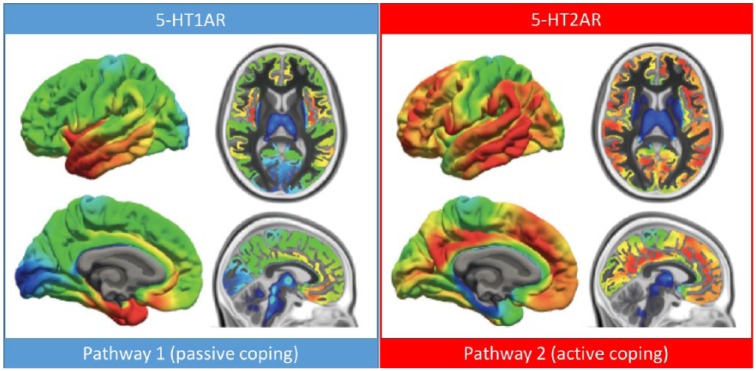
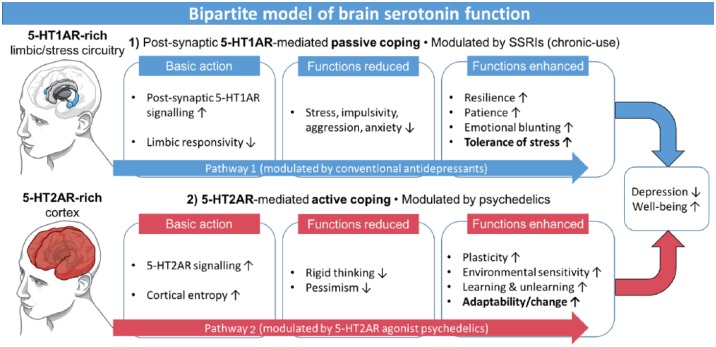
Previous attempts to identify a unified theory of brain serotonin function have largely failed to achieve consensus. In this present synthesis, we integrate previous perspectives with new and older data to create a novel bipartite model centred on the view that serotonin neurotransmission enhances two distinct adaptive responses to adversity, mediated in large part by its two most prevalent and researched brain receptors: the 5-HT1A and 5-HT2A receptors. We propose that passive coping (i.e. tolerating a source of stress) is mediated by postsynaptic 5-HT1AR signalling and characterised by stress moderation. Conversely, we argue that active coping (i.e. actively addressing a source of stress) is mediated by 5-HT2AR signalling and characterised by enhanced plasticity (defined as capacity for change). We propose that 5-HT1AR-mediated stress moderation may be the brain’s default response to adversity but that an improved ability to change one’s situation and/or relationship to it via 5-HT2AR-mediated plasticity may also be important – and increasingly so as the level of adversity reaches a critical point. We propose that the 5-HT1AR pathway is enhanced by conventional 5-HT reuptake blocking antidepressants such as the selective serotonin reuptake inhibitors (SSRIs), whereas the 5-HT2AR pathway is enhanced by 5-HT2AR-agonist psychedelics. This bipartite model purports to explain how different drugs (SSRIs and psychedelics) that modulate the serotonergic system in different ways, can achieve complementary adaptive and potentially therapeutic outcomes.
Overview
The claims and statistics of this paper haven’t been checked yet.
Run the check — free, no account needed. It reads the open-access text and checks the sources it cites.
Integrity signals
Registry
Cites
Statistics
Figures
Verification
Claims the paper makes
The claims and statistics of this paper haven’t been checked yet.
Run the check — free, no account needed. It reads the open-access text and checks the sources it cites.
Claims other papers make about this one
Each is checked against this paper’s own text: does it say what the citing paper says it does?
The source backs part of the claim, not all of it — or backs it for a different population, condition or comparison.
In the citing paper
“exploratory analyses using PET receptor atlases revealed a positive correlation between cortical 5-HT2A receptor distribution and abnormal MMN source activity in PD-VH, consistent with the known role of serotonin in cortical disinhibition53 and psychosis42,43”
From Deviations in effective connectivity explain different hallucination subtypes in Parkinson's disease psychosis (2026) · cites this paper as [53]
Experimental — accuracy not yet measuredThe source backs part of the claim, not all of it — or backs it for a different population, condition or comparison.
In the citing paper
“MDMA’s influence on the salience network also facilitates a shift toward positive emotional experiences, reinforcing affective learning and emotional regulation (93, 94).”
From Psychoanalytically informed MDMA-assisted therapy for pathological narcissism: a novel theoretical approach (2025) · cites this paper as [94]
Experimental — accuracy not yet measuredIn the citing paper
“5-HT signalling is known to modulate the communication between key constituents of fear and anxiety circuitries (Babaev, Piletti Chatain, & Krueger-Burg, 2018;Carhart-Harris & Nutt, 2017).”
From Novel pharmacological targets in drug development for the treatment of anxiety and anxiety-related disorders (2019) · cites this paper as Carhart-Harris & Nutt, 2017
Self-check
Percentages, sums and reported differences re-computed from the paper’s own numbers.
The self-check needs the paper’s full text.
Citations
Cites
Items 201–400 of 541
Distressing Near-Death Experiences
Greyson, B., & Bush, N. E. (1992) · Psychiatry · doi:10.1080/00332747.1992.11024583 · Cited by 217
Bhagwagar, Z., Hinz, R., Taylor, M. J., Fancy, S., Cowen, P. J., & Grasby, P. M. (2006) · American Journal of Psychiatry · doi:10.1176/ajp.2006.163.9.1580 · Cited by 214
Puglisi‐Allegra, S., & Andolina, D. (2014) · Behavioural Brain Research · doi:10.1016/j.bbr.2014.07.052 · Cited by 213
Reversal of hippocampal neuronal maturation by serotonergic antidepressants
Kobayashi, K., Ikeda, Y., Sakai, A., Yamasaki, N., Haneda, E., Miyakawa, T., & Suzuki, H. (2010) · Proceedings of the National Academy of Sciences · doi:10.1073/pnas.0912690107 · Cited by 212
Hieronymus, F., Emilsson, J. F., Nilsson, S., & Eriksson, E. (2015) · Molecular Psychiatry · doi:10.1038/mp.2015.53 · Cited by 212
Fletcher, P. J., Tampakeras, M., Sinyard, J., & Higgins, G. A. (2007) · Psychopharmacology · doi:10.1007/s00213-007-0891-z · Cited by 211
Hjorth, S., & Sharp, T. (1991) · Life Sciences · doi:10.1016/0024-3205(91)90216-x · Cited by 211
Alboni, S., van Dijk, R. M., Poggini, S., Milior, G., Perrotta, M., Drenth, T., Brunello, N., Wolfer, D. P., Limatola, C., Amrein, I., et al. (2017) · Molecular Psychiatry · doi:10.1038/mp.2015.142 · Cited by 207
Effects of MDMA on sociability and neural response to social threat and social reward
Bedi, G., Phan, K. L., Angstadt, M., & de Wit, H. (2009) · Psychopharmacology · doi:10.1007/s00213-009-1635-z · Cited by 206
Weber (2010) · Frontiers in Neuroscience · doi:10.3389/fnins.2010.00036 · Cited by 205
Role of the Serotonin 5-HT2AReceptor in LearningPreprint
Harvey, J. A. (2003) · Learning & Memory · doi:10.1101/lm.60803 · Cited by 201
Ayahuasca enhances creative divergent thinking while decreasing conventional convergent thinking
Kuypers, K. P. C., Riba, J., de la Fuente Revenga, M., Barker, S., Theunissen, E. L., & Ramaekers, J. G. (2016) · Psychopharmacology · doi:10.1007/s00213-016-4377-8 · Cited by 201
5-HT1A receptors on mature dentate gyrus granule cells are critical for the antidepressant response
Samuels, B. A., Anacker, C., Hu, A., Levinstein, M. R., Pickenhagen, A., Tsetsenis, T., Madroñal, N., Donaldson, Z. R., Drew, L. J., Dranovsky, A., et al. (2015) · Nature Neuroscience · doi:10.1038/nn.4116 · Cited by 200
Aghajanian, G. K., & Marek, G. (1999) · Neuropsychopharmacology · doi:10.1038/sj.npp.1395318 · Cited by 199
5-HT1 receptor knock out — behavioral consequences
Ramboz, S., Saudou, F., Amara, D. A., Belzung, C., Ségu, L., Misslin, R., Buhot, M.-C., & Hen, R. (1995) · Behavioural Brain Research · doi:10.1016/0166-4328(96)00119-2 · Cited by 197
Heeringen, C. V., Audenaert, K., Laere, K. V., Dumont, F., Slegers, G., Mertens, J. J. R., & Dierckx, R. A. (2003) · Journal of Affective Disorders · doi:10.1016/s0165-0327(01)00482-7 · Cited by 197
The Serotonergic System and Anxiety
Gordon, J. A., & Hen, R. (2004) · NeuroMolecular Medicine · doi:10.1385/nmm:5:1:027 · Cited by 195
Gouzoulis-Mayfrank, E., Heekeren, K., Neukirch, A., Stoll, M., Stock, C., Obradovic, M., & Kovar, K. (2005) · Pharmacopsychiatry · doi:10.1055/s-2005-916185 · Cited by 194
Important messages in the ‘post’: recent discoveries in 5-HT neurone feedback control
Sharp, T., Boothman, L. J., Raley, J., & Quérée, P. (2007) · Trends in Pharmacological Sciences · doi:10.1016/j.tips.2007.10.009 · Cited by 193
Bouckaert, F., Sienaert, P. A., Obbels, J., Dols, A., Vandenbulcke, M., Stek, M. L., & Bolwig, T. G. (2014) · Journal of Ect · doi:10.1097/yct.0000000000000129 · Cited by 192
Arnone, D., McKie, S., Elliott, R., Thomas, E. J., Downey, D., Juhasz, G., Williams, S. R., Deakin, J. F. W., & Anderson, I. M. (2012) · American Journal of Psychiatry · doi:10.1176/appi.ajp.2012.11121774 · Cited by 192 · cited 22×
“5-HT availability (e.g. through chronic selective serotonin reuptake inhibitors (SSRIs)) but postsynaptic 5-HT1ARs do not (Lanfumey and Hamon, 2000), although they do appear to downregulate in response to stress (Berton et al., 1998; Lopez et al., 1999) – and perhaps relatedly, to electroconvulsive shock (Burnet et al…”
BackgroundInfluentialCorrespondence between 5-HT2 receptors and serotonergic axons in rat neocortex
Blue, M. E., Yagaloff, K. A., Mamounas, L. A., Hartig, P. R., & Molliver, M. E. (1988) · Brain Research · doi:10.1016/0006-8993(88)90172-2 · Cited by 191
Carhart-Harris, R. L., Murphy, K., Leech, R., Erritzøe, D., Wall, M. B., Ferguson, B., Williams, L. T. J., Roseman, L., Brugger, S. P., Meer, I. D., et al. (2014) · Biological Psychiatry · doi:10.1016/j.biopsych.2013.12.015 · Cited by 187
Self-citationCarli, M., Baviera, M., Invernizzi, R. W., & Balducci, C. (2005) · Neuropsychopharmacology · doi:10.1038/sj.npp.1300893 · Cited by 185
Béïque, J.-C., Campbell, B., Perring, P., Hamblin, M. W., Walker, P. D., Mladenovic-Lucas, L., & Andrade, R. (2004) · Journal of Neuroscience · doi:10.1523/jneurosci.5113-03.2004 · Cited by 184
Selective Activation of Postsynaptic 5-HT1A Receptors Induces Rapid Antidepressant Response
Blier, P. U. (1997) · Neuropsychopharmacology · doi:10.1016/s0893-133x(96)00242-4 · Cited by 184
Rueter, L. E., & Jacobs, B. L. (1996) · Brain Research · doi:10.1016/s0006-8993(96)00809-8 · Cited by 183
"Psychedelic" Experiences in Acute Psychoses
Bowers, M. B. (1966) · Archives of General Psychiatry · doi:10.1001/archpsyc.1966.01730150016003 · Cited by 183
Mirkovic, B., Laurent‐Levinson, C., Podlipski, M.-A., Frébourg, T., Cohen, D., & Gérardin, P. (2016) · Frontiers in Psychiatry · doi:10.3389/fpsyt.2016.00158 · Cited by 183
Serotonin receptors in depression: from A to B
Nautiyal, K. M., & Hen, R. (2017) · F1000Research · doi:10.12688/f1000research.9736.1 · Cited by 181
LSD enhances the emotional response to music
Kaelen, M., Barrett, F. S., Roseman, L., Lorenz, R., Family, N., Bolstridge, M., Curran, H. V., Feilding, A., Nutt, D., & Carhart-Harris, R. L. (2015) · Psychopharmacology · doi:10.1007/s00213-015-4014-y · Cited by 179
Self-citation5-HT1A receptor knockout mouse as a genetic model of anxiety
Tóth, M. (2003) · European Journal of Pharmacology · doi:10.1016/s0014-2999(03)01280-9 · Cited by 177
Social Impulsivity Inversely Associated with CSF 5-HIAA and Fluoxetine Exposure in Vervet Monkeys
Fairbanks, L., Melega, W., Jorgensen, M., Kaplan, J., & Mcguire, M. (2001) · Neuropsychopharmacology · doi:10.1016/s0893-133x(00)00211-6 · Cited by 174
Valle, M., Maqueda, A. E., Rabella, M., Rodríguez-Pujadas, A., Antonijoan, R. M., Romero, S., Alonso, J. F., Mañanas, M. À., Barker, S., Friedlander, P., et al. (2016) · European Neuropsychopharmacology · doi:10.1016/j.euroneuro.2016.03.012 · Cited by 173
Effects of serotonin 2A/1A receptor stimulation on social exclusion processing
Preller, K. H., Pokorny, T., Hock, A., Kraehenmann, R., Stämpfli, P., Seifritz, E., Scheidegger, M., & Vollenweider, F. X. (2016) · Proceedings of the National Academy of Sciences · doi:10.1073/pnas.1524187113 · Cited by 169
Serotonergic regulation of neuronal excitability in the prefrontal cortex
Andrade, R. (2011) · Neuropharmacology · doi:10.1016/j.neuropharm.2011.01.015 · Cited by 167
Serotonin and decision making processes
Homberg, J. R. (2012) · Neuroscience & Biobehavioral Reviews · doi:10.1016/j.neubiorev.2011.06.001 · Cited by 167
Zhang, G., Ásgeirsdóttir, H. N., Cohen, S. J., Munchow, A. H., Barrera, M. P., & Stackman, R. W. (2012) · Neuropharmacology · doi:10.1016/j.neuropharm.2012.06.007 · Cited by 167
Dunlop (2016) · doi:10.1038/npp.2015.293 · Cited by 166
Thase, M. E., Mahableshwarkar, A. R., Dragheim, M., Loft, H., & Vieta, E. (2016) · European Neuropsychopharmacology · doi:10.1016/j.euroneuro.2016.03.007 · Cited by 165
Gamma, A. (2000) · Neuropsychopharmacology · doi:10.1016/s0893-133x(00)00130-5 · Cited by 162
The role of serotonin in the regulation of patience and impulsivity
Miyazaki, K., Miyazaki, K. W., & Doya, K. (2012) · Molecular Neurobiology · doi:10.1007/s12035-012-8232-6 · Cited by 162
Bonson, K. R. (1996) · Neuropsychopharmacology · doi:10.1016/0893-133x(95)00145-4 · Cited by 159
Amat, J., Matus-Amat, P., Watkins, L. R., & Maier, S. F. (1998) · Brain Research · doi:10.1016/s0006-8993(98)00368-0 · Cited by 158
Branchi, I. (2011) · Psychoneuroendocrinology · doi:10.1016/j.psyneuen.2010.08.011 · Cited by 156
Bland, S. T., Hargrave, D., Pepin, J. L., Amat, J., Watkins, L. R., & Maier, S. F. (2003) · Neuropsychopharmacology · doi:10.1038/sj.npp.1300206 · Cited by 155
Differential effects of MDMA and methylphenidate on social cognition
Schmid, Y., Hysek, C. M., Simmler, L. D., Crockett, M. J., Quednow, B. B., & Liechti, M. E. (2014) · Journal of Psychopharmacology · doi:10.1177/0269881114542454 · Cited by 155
Antagonism between lysergic acid diethylamide and 5-hydroxytryptamine.
Jh, G. (1953) · PubMed · Cited by 155
5‐HT radioligands for human brain imaging with PET and SPECT
Paterson, L. M., Kornum, B. R., Nutt, D., Pike, V. W., & Knudsen, G. M. (2011) · Medicinal Research Reviews · doi:10.1002/med.20245 · Cited by 154
Self-citationWood, J. T., Kim, Y., & Moghaddam, B. (2012) · Journal of Neuroscience · doi:10.1523/jneurosci.6377-11.2012 · Cited by 152
Serotonin and Brain: Evolution, Neuroplasticity, and Homeostasis
Azmitia, E. C. (2006) · International review of neurobiology · doi:10.1016/s0074-7742(06)77002-7 · Cited by 150
A Farewell to Entropy - Statistical Thermodynamics Based on Information
Ben-Naim, A. Y. (2008) · WORLD SCIENTIFIC eBooks · doi:10.1142/9789812790736 · Cited by 149
Effects of conditioned fear stress on 5-HT release in the rat prefrontal cortex
Yoshioka, M., Matsumoto, M., Togashi, H., & Saito, H. (1995) · Pharmacology Biochemistry and Behavior · doi:10.1016/0091-3057(95)00045-x · Cited by 149
Shelton, R. C., Sanders‐Bush, E., Manier, D. H., & Lewis, D. A. (2008) · Neuroscience · doi:10.1016/j.neuroscience.2008.11.036 · Cited by 148
Berton, O., Aguerre, S., Sarrieau, A., Mormède, P., & Chaouloff, F. (1997) · Neuroscience · doi:10.1016/s0306-4522(97)00282-0 · Cited by 147
Yatham, L. N., Liddle, P. F., Dennie, J., Shiah, I., Adam, M. J., Lane, C. J., Lam, R. W. M., & Ruth, T. J. (1999) · Archives of General Psychiatry · doi:10.1001/archpsyc.56.8.705 · Cited by 147
Schreiber, R., & Vry, J. D. (1993) · Progress in Neuro-Psychopharmacology and Biological Psychiatry · doi:10.1016/0278-5846(93)90034-p · Cited by 146
Kohn, B., & Hofmann, A. (1981) · The Antioch Review · doi:10.2307/4638477 · Cited by 146
Measuring Endogenous 5-HT Release by Emission Tomography: Promises and Pitfalls
Paterson, L. M., Tyacke, R. J., Nutt, D., & Knudsen, G. M. (2010) · Journal of Cerebral Blood Flow & Metabolism · doi:10.1038/jcbfm.2010.104 · Cited by 145
Self-citationMDMA enhances “mind reading” of positive emotions and impairs “mind reading” of negative emotions
Hysek, C. M., Domes, G., & Liechti, M. E. (2012) · Psychopharmacology · doi:10.1007/s00213-012-2645-9 · Cited by 144
Liechti, M. E., & Vollenweider, F. X. (2000) · Journal of Psychopharmacology · doi:10.1177/026988110001400313 · Cited by 144
Psychedelic Agents in Creative Problem-Solving: A Pilot Study
Harman, W. W., McKim, R. H., Mogar, R. E., Fadiman, J., & Stolaroff, M. J. (1966) · Psychological Reports · doi:10.2466/pr0.1966.19.1.211 · Cited by 144
Anisman, H., Du, L., Palkovits, M., Faludi, G., Kovács, G. G., Szontagh-Kisházi, P., Merali, Z., & Poulter, M. O. (2008) · Journal of Psychiatry and Neuroscience · doi:10.1139/jpn.0815 · Cited by 143
Barker, S. A., McIlhenny, E. H., & Strassman, R. (2012) · Drug Testing and Analysis · doi:10.1002/dta.422 · Cited by 142 · cited 3×
“It has been speculated that elevated levels of the endogenous 5-HT2AR agonist psychedelic DMT (Barker et al., 2012) may account for spontaneously occurring psychedelic-like states such as occur in near-death experiences (Strassman, 2000) but to our knowledge, empirical evidence for this theory has yet to published.”
BackgroundBayesian inferences about the self (and others): a review.
Moutoussis, M., Fearon, P., El-Deredy, W., Dolan, R. J., & Friston, K. J. (2014) · Consciousness and Cognition · doi:10.1016/j.concog.2014.01.009 · Cited by 141
Greater loss of 5-HT(2A) receptors in midlife than in late life.
Sheline, Y., Mintun, M., Moerlein, S., & Snyder, A. (2002) · American Journal of Psychiatry · doi:10.1176/appi.ajp.159.3.430 · Cited by 141
Viol, A., Palhano-Fontes, F., Onias, H., de Araújo, D. B., & Viswanathan, G. M. (2017) · Scientific Reports · doi:10.1038/s41598-017-06854-0 · Cited by 141
Kankaanpää, A., Meririnne, E., Lillsunde, P. M., & Seppαlä, T. (1998) · Pharmacology Biochemistry and Behavior · doi:10.1016/s0091-3057(97)00527-3 · Cited by 140
Mirtazapine Augmentation in the Treatment of Refractory Depression
Carpenter, L. L., Jocic, Z., Hall, J. M., Rasmussen, S. A., & Price, L. H. (1999) · The Journal of Clinical Psychiatry · doi:10.4088/jcp.v60n0110 · Cited by 136
Ben-Naim, A. Y. (2008) · WORLD SCIENTIFIC eBooks · doi:10.1142/6469 · Cited by 136
Ramaekers, J. G., & Kuypers, K. P. C. (2005) · Neuropsychopharmacology · doi:10.1038/sj.npp.1300894 · Cited by 135
Baumann, M. H., Clark, R. D., & Rothman, R. B. (2008) · Pharmacology Biochemistry and Behavior · doi:10.1016/j.pbb.2008.02.018 · Cited by 135
Sijbesma, H., Schipper, J., de Kloet, E. R., Mos, J., van Aken, H. H. M., & Olivier, B. (1991) · Pharmacology Biochemistry and Behavior · doi:10.1016/0091-3057(91)90305-l · Cited by 135
Eisner, B. (1997) · Journal of Psychoactive Drugs · doi:10.1080/02791072.1997.10400190 · Cited by 135
Presynaptic serotonin 2A receptors modulate thalamocortical plasticity and associative learning
Barre, A., Berthoux, C., De Bundel, D., Valjent, E., Bockaert, J., Marin, P., & Bécamel, C. (2016) · Proceedings of the National Academy of Sciences · doi:10.1073/pnas.1525586113 · Cited by 135
LSD modulates music-induced imagery via changes in parahippocampal connectivity
Kaelen, M., Roseman, L., Kahan, J., Santos-Ribeiro, A., Orbán, C., Lorenz, R., Barrett, F. S., Bolstridge, M., Williams, T., Williams, L., et al. (2016) · European Neuropsychopharmacology · doi:10.1016/j.euroneuro.2016.03.018 · Cited by 135
Self-citationRiba, J., Anderer, P., Jané, F., Saletu, B., & Barbanoj, M. J. (2004) · Neuropsychobiology · doi:10.1159/000077946 · Cited by 134
Hysek, C. M., Simmler, L. D., Schillinger, N., Meyer, N., Schmid, Y., Donzelli, M., Grouzmann, E., & Liechti, M. E. (2013) · The International Journal of Neuropsychopharmacology · doi:10.1017/s1461145713001132 · Cited by 134
Tauscher, J. T., Bagby, R. M., Javanmard, M., Christensen, B. K., Kasper, S. F., & Kapur, S. (2001) · American Journal of Psychiatry · doi:10.1176/appi.ajp.158.8.1326 · Cited by 134
THE UPTAKE AND BINDING OF CIRCULATING SEROTONIN AND THE EFFECT OF DRUGS
Axelrod, J., & Inscoe, J. K. (1963) · Journal of Pharmacology and Experimental Therapeutics · doi:10.1016/s0022-3565(25)26593-4 · Cited by 134
Jolas, T., Schreiber, R., Laporte, A., et al. (1995) · Journal of Pharmacology and Experimental Therapeutics · doi:10.1016/s0022-3565(25)24515-3 · Cited by 128
Classical hallucinogens as antidepressants? A review of pharmacodynamics and putative clinical roles
Baumeister, D., Barnes, G. L., Giaroli, G., & Tracy, D. K. (2014) · Therapeutic Advances in Psychopharmacology · doi:10.1177/2045125314527985 · Cited by 127
Winkelman, M. (2015) · Current Drug Abuse Reviews · doi:10.2174/1874473708666150107120011 · Cited by 126
Serotonergic modulation of social interactions in isolated male mice
Olivier, B., Mos, J., van der Heyden, J., & Hartog, J. (1989) · Psychopharmacology · doi:10.1007/bf00442239 · Cited by 126
Harvey, B. H., Naciti, C., Brand, L., & Stein, D. J. (2003) · Brain Research · doi:10.1016/s0006-8993(03)03033-6 · Cited by 125
Çavuş, I., & Duman, R. S. (2003) · Biological Psychiatry · doi:10.1016/s0006-3223(03)00236-1 · Cited by 124
Holloway, T. D., Moreno, J. L., Umali, A., Rayannavar, V., Hodes, G. E., Russo, S. J., & González‐Maeso, J. (2013) · Journal of Neuroscience · doi:10.1523/jneurosci.2331-12.2013 · Cited by 124
Effects of Acute MDMA Intoxication on Mood and Impulsivity: Role of the 5-HT2 and 5-HT1 Receptors
van Wel, J. H. P., Kuypers, K. P. C., Theunissen, E. L., Bosker, W. M., Bakker, K., & Ramaekers, J. G. (2012) · PLoS ONE · doi:10.1371/journal.pone.0040187 · Cited by 122
Mosienko, V., Beis, D. M., Pasqualetti, M., Waider, J., Matthes, S., Qadri, F., Bäder, M., & Alenina, N. V. (2014) · Behavioural Brain Research · doi:10.1016/j.bbr.2014.06.005 · Cited by 120
Central 5-HT1A receptors: regional distribution and functional characteristics
Lanfumey, L., & Hamon, M. (2000) · Nuclear Medicine and Biology · doi:10.1016/s0969-8051(00)00107-4 · Cited by 119
Long Lasting Effects of LSD on Normals
McGlothlin, W. H. (1967) · Archives of General Psychiatry · doi:10.1001/archpsyc.1967.01730290009002 · Cited by 119
Selective 5HT2A and 5HT6 Receptor Antagonists Promote Sleep in Rats
Morairty, S. R., Hedley, L. R., Flores, J., Martin, R. S., & Kilduff, T. S. (2008) · SLEEP · doi:10.1093/sleep/31.1.34 · Cited by 118
Wilkie, M. J. V., Smith, G. C., Day, R. K., Matthews, K., Smıth, D. J., Blackwood, D., Reid, I., & Wolf, C. R. (2008) · The Pharmacogenomics Journal · doi:10.1038/sj.tpj.6500491 · Cited by 117
Grønli, J., Fiske, E., Murison, R. C. C., Bjorvatn, B., Sørensen, E., Ursin, R., & Portas, C. M. (2007) · Behavioural Brain Research · doi:10.1016/j.bbr.2007.03.018 · Cited by 116
Pokorny, T., Preller, K., Kraehenmann, R., & Vollenweider, F. (2016) · European Neuropsychopharmacology · doi:10.1016/j.euroneuro.2016.01.005 · Cited by 116
Neuroimaging in anxiety disorders
Engel, K., Bandelow, B., Gruber, O., & Wedekind, D. (2008) · Journal of Neural Transmission · doi:10.1007/s00702-008-0077-9 · Cited by 115
Attar-Levy, D., Martinot, J., Blin, J., Dao-Castellana, M. H., Crouzel, C., Mazoyer, B. M., Poirier, M. F., Bourdel, M., Aymard, N., Syrota, A., et al. (1999) · Biological Psychiatry · doi:10.1016/s0006-3223(98)00007-9 · Cited by 115
Is it time to revisit the role of psychedelic drugs in enhancing human creativity?
Sessa, B. (2008) · Journal of Psychopharmacology · doi:10.1177/0269881108091597 · Cited by 115
5HT2A Receptor Binding is Increased in Borderline Personality Disorder
Soloff, P. H., Price, J. C., MELTZER, C. C., Fabio, A., Frank, G., & Kaye, W. H. (2007) · Biological Psychiatry · doi:10.1016/j.biopsych.2006.10.022 · Cited by 114
Psilocybin, psychological distress, and suicidality
Hendricks, P. S., Johnson, M. W., & Griffiths, R. R. (2015) · Journal of Psychopharmacology · doi:10.1177/0269881115598338 · Cited by 114
L.S.D. 25 as an aid in psychotherapy; preliminary report of a new drug.
Busch, A., & Johnson, W. (1950) · PubMed · Cited by 114
Shelton, R. C., & Papakostas, G. I. (2008) · Acta Psychiatrica Scandinavica · doi:10.1111/j.1600-0447.2007.01130.x · Cited by 113
de Almeida, J., & Mengod, G. (2007) · Journal of Neurochemistry · doi:10.1111/j.1471-4159.2007.04768.x · Cited by 111
The neurodevelopmental effects of serotonin: A behavioural perspective
Kepser, L.-J., & Homberg, J. R. (2014) · Behavioural Brain Research · doi:10.1016/j.bbr.2014.05.022 · Cited by 109
Maternal deprivation regulates serotonin 1A and 2A receptors in the infant rat
Vázquez, D. M., López, J. F., Hoers, H. V., Watson, S. J., & Levine, S. D. (2000) · Brain Research · doi:10.1016/s0006-8993(99)02307-0 · Cited by 108
Carhart-Harris, R. L., Wall, M. B., Erritzoe, D., Kaelen, M., Ferguson, B., De Meer, I., Tanner, M., Bloomfield, M., Williams, T. M., Bolstridge, M., et al. (2014) · The International Journal of Neuropsychopharmacology · doi:10.1017/s1461145713001405 · Cited by 108
Self-citationEffects of serotonergic agents on isolation-induced aggression
White, S. M., Kucharik, R. F., & Moyer, J. A. (1991) · Pharmacology Biochemistry and Behavior · doi:10.1016/0091-3057(91)90155-u · Cited by 107
Hajós, M. (2003) · Neuropharmacology · doi:10.1016/s0028-3908(03)00139-4 · Cited by 107
Suppression of Serotonin Neuron Firing Increases Aggression in Mice
Audero, E., Mlinar, B., Baccini, G., Skachokova, Z. K., Corradetti, R., & Gross, C. T. (2013) · Journal of Neuroscience · doi:10.1523/jneurosci.2067-12.2013 · Cited by 107
Serotonin 2A Receptor Agonist Binding in the Human Brain with [ 11 C]Cimbi-36
Ettrup, A., da Cunha-Bang, S., McMahon, B., Lehel, S., Dyssegaard, A., Skibsted, A. P., Jørgensen, L. M., Hansen, M. A., Baandrup, A. O., Bache, S., et al. (2014) · Journal of Cerebral Blood Flow & Metabolism · doi:10.1038/jcbfm.2014.68 · Cited by 105
Rosell, D. R., Thompson, J. L., Slifstein, M., Xu, X., Frankle, W. G., New, A. S., Goodman, M. S., Weinstein, S. R., Laruelle, M. A., Abi‐Dargham, A., et al. (2010) · Biological Psychiatry · doi:10.1016/j.biopsych.2010.03.013 · Cited by 105
Kraehenmann, R., Schmidt, A., Friston, K., Preller, K. H., Seifritz, E., & Vollenweider, F. X. (2016) · NeuroImage: Clinical · doi:10.1016/j.nicl.2015.08.009 · Cited by 104
Effects of sertraline on autonomic and cognitive functions in healthy volunteers
Siepmann, M., Grossmann, J., M�ck-Weymann, M., & Kirch, W. (2003) · Psychopharmacology · doi:10.1007/s00213-003-1448-4 · Cited by 104
Pharmacology and Toxicology of N-Benzylphenethylamine (“NBOMe”) Hallucinogens
Halberstadt, A. L. (2017) · Current topics in behavioral neurosciences · doi:10.1007/7854_2016_64 · Cited by 104
Vázquez, P. M., Cortés, R., & Artigas, F. (2008) · Cerebral Cortex · doi:10.1093/cercor/bhn204 · Cited by 102
The Neurochemistry of Human Aggression
Yanowitch, R. N., & Coccaro, E. F. (2011) · Advances in genetics · doi:10.1016/b978-0-12-380858-5.00005-8 · Cited by 100
Developments in the field of antidepressants, where do we go now?
Artigas, F. (2013) · European Neuropsychopharmacology · doi:10.1016/j.euroneuro.2013.04.013 · Cited by 100
Glennon, R. A., Seggel, M. R., Soine, W. H., Herrick‐Davis, K., Lyon, R. A., & Titeler, M. (1988) · Journal of Medicinal Chemistry · doi:10.1021/jm00396a003 · Cited by 100
The discovery of antidepressants: A winding path
Pletscher, A. (1991) · Cellular and Molecular Life Sciences · doi:10.1007/bf02041242 · Cited by 99
The evidence-based pharmacotherapy of social anxiety disorder
Blanco, C., Bragdon, L. B., Schneier, F. R., & Liebowitz, M. R. (2013) · International Journal of Neuropsychopharmacology · doi:10.1017/s1461145712000119 · Cited by 99 · cited 2×
“, 2014), whereas chronically administered SSRIs have been found to reduce anxiety (Blanco et al., 2013).”
BackgroundSerotonergic Mechanisms as Targets for Existing and Novel Antipsychotics
Meltzer, H. Y. (2012) · Handbook of experimental pharmacology · doi:10.1007/978-3-642-25761-2_4 · Cited by 97
Sánchez, C., & Hyttel, J. (1994) · European Journal of Pharmacology · doi:10.1016/0014-2999(94)00470-6 · Cited by 97
Sessa, B. (2017) · Neuroscience Letters · doi:10.1016/j.neulet.2016.07.004 · Cited by 97
Benekareddy, M., Goodfellow, N. M., Lambe, E. K., & Vaidya, V. A. (2010) · Journal of Neuroscience · doi:10.1523/jneurosci.3245-10.2010 · Cited by 96
SEROTONIN 5-HT2C RECEPTOR AGONISTS: POTENTIAL FOR THE TREATMENT OF OBESITY
Miller, K. J. (2005) · Molecular Interventions · doi:10.1124/mi.5.5.8 · Cited by 95
Ott, U., Reuter, M., Hennig, J., & Vaitl, D. (2005) · American Journal of Medical Genetics Part B Neuropsychiatric Genetics · doi:10.1002/ajmg.b.30197 · Cited by 95
Jokela, M. M., Keltikangas‐Järvinen, L., Mika Kivimaki, B., Puttonen, S., Elovainio, M. J., Rontu, R., & Lehtimäki, T. J. (2007) · Archives of General Psychiatry · doi:10.1001/archpsyc.64.3.356 · Cited by 95
Antkiewicz‐Michaluk, L., Wąsik, A., Możdżeń, E., Romańska, I., & Michaluk, J. (2014) · Neurotoxicity Research · doi:10.1007/s12640-013-9454-8 · Cited by 95
Cognitive Enhancers (Nootropics). Part 1: Drugs Interacting with Receptors
Froestl, W., Muhs, A., & Pfeifer, A. (2012) · Journal of Alzheimer s Disease · doi:10.3233/jad-2012-121186 · Cited by 94
Evolution and development of the mammalian cerebral cortex
Molnár, Z., Kaas, J. H., de Carlos, J. A., Hevner, R. F., Lein, E., & Němec, P. (2014) · Brain Behavior and Evolution · doi:10.1159/000357753 · Cited by 93
Cahir, M., Ardis, T. C., Reynolds, G. P., & Cooper, S. J. (2006) · Psychopharmacology · doi:10.1007/s00213-006-0635-5 · Cited by 93
Gross‐Isseroff, R., Salama, D., Israeli, M., & Biegon, A. R. (1990) · Brain Research · doi:10.1016/0006-8993(90)90081-l · Cited by 92
Psychological Aspects of the Lsd Treatment of the Neuroses
Sandison, R. A. (1954) · Journal of Mental Science · doi:10.1192/bjp.100.419.508 · Cited by 92
Effect of electroconvulsive therapy on brain 5-HT2receptors in major depression
Yatham, L. N., Liddle, P. F., Lam, R. W. M., Zis, A. P., Stoessl, A. J., Sossi, V., Adam, M. J., & Ruth, T. J. (2010) · The British Journal of Psychiatry · doi:10.1192/bjp.bp.109.069567 · Cited by 92
HYPERTENSION TREATED WITH RAUWOLFIA SERPENTINA (WHOLE ROOT) AND WITH RESERPINE
Achor, R. W. P. (1955) · JAMA · doi:10.1001/jama.1955.02960260011004 · Cited by 91
Riga, M. S., Sánchez, C., Celada, P., & Artigas, F. (2016) · Neuropharmacology · doi:10.1016/j.neuropharm.2016.04.023 · Cited by 91
Brain serotonin 2A receptor binding: Relations to body mass index, tobacco and alcohol use
Erritzøe, D., Frøkjær, V. G., Haugbøl, S., Marner, L., Svarer, C., Holst, K. K., Baaré, W. F. C., Rasmussen, P. M., Madsen, J., Paulson, O. B., et al. (2009) · NeuroImage · doi:10.1016/j.neuroimage.2009.01.050 · Cited by 90
Therapeutic Potential of 5-HT6Receptor Agonists
Karila, D., Fréret, T., Bouët, V., Boulouard, M., Dallemagne, P., & Rochais, C. (2015) · Journal of Medicinal Chemistry · doi:10.1021/acs.jmedchem.5b00179 · Cited by 90
Anastasio, N. C., Stutz, S. J., Fink, L. H. L., Swinford-Jackson, S. E., Sears, R. M., Dileone, R., Rice, K. C., Moeller, F. G., & Cunningham, K. A. (2015) · ACS Chemical Neuroscience · doi:10.1021/acschemneuro.5b00094 · Cited by 90
Functional Selectivity and Antidepressant Activity of Serotonin 1A Receptor Ligands
Chilmończyk, Z., Bojarski, A. J., Pilc, A., & Sylte, I. (2015) · International Journal of Molecular Sciences · doi:10.3390/ijms160818474 · Cited by 89
Boothman, L. J., Allers, K. A., Rasmussen, K., & Sharp, T. (2003) · British Journal of Pharmacology · doi:10.1038/sj.bjp.0705328 · Cited by 89
Some Serotoninlike Activities of Lysergic Acid Diethylamide
Shaw, E., & Woolley, D. W. (1956) · Science · doi:10.1126/science.124.3212.121 · Cited by 89
Stefański, R., lejko, W. P. X., Bidziński, A., Kostowski, W., & Płaźnik, A. (1993) · Neuropharmacology · doi:10.1016/0028-3908(93)90062-8 · Cited by 88
A Window into the Intoxicated Mind? Speech as an Index of Psychoactive Drug Effects
Bedi, G., Cecchi, G., Slezak, D. F., Carrillo, F., Sigman, M., & de Wit, H. (2014) · Neuropsychopharmacology · doi:10.1038/npp.2014.80 · Cited by 88
Stressful life events, 5-HTT genotype and risk of depression
Zammit, S., & Owen, M. J. (2006) · The British Journal of Psychiatry · doi:10.1192/bjp.bp.105.020644 · Cited by 87
Frecska, E., Móré, C. E., Vargha, A., & Luna, L. E. (2012) · Journal of Psychoactive Drugs · doi:10.1080/02791072.2012.703099 · Cited by 87
Karg, K., Burmeister, M., Shedden, K., & Sen, S. (2011) · Archives of General Psychiatry · doi:10.1001/archgenpsychiatry.2010.189 · Cited by 87
Behavioral correlates of serotonin depletion
Harvey, J. A., Schlosberg, A. J., & Yunger, L. M. (1975) · Springer eBooks · doi:10.1007/978-1-4684-2634-2_8 · Cited by 86
Gopnik, A. (2010) · Scientific American · doi:10.1038/scientificamerican0710-76 · Cited by 86
Serotonin 1A receptor messenger RNA regulation in the hippocampus after acute stress
López, J. F., Liberzon, I., Vázquez, D. M., Young, E. A., & Watson, S. J. (1999) · Biological Psychiatry · doi:10.1016/s0006-3223(98)00224-8 · Cited by 86
Fujino, K., Yoshitake, T., Inoue, O., Ibii, N., Kehr, J., Ishida, J., Nohta, H., & Yamaguchi, M. (2002) · Neuroscience Letters · doi:10.1016/s0304-3940(02)00029-0 · Cited by 86
Serotonin Receptors in Neurobiology
(2007) · CRC Press eBooks · doi:10.1201/9781420005752 · Cited by 85
MDMA decreases the effects of simulated social rejection
Frye, C. G., Wardle, M. C., Norman, G. J., & de Wit, H. (2014) · Pharmacology Biochemistry and Behavior · doi:10.1016/j.pbb.2013.11.030 · Cited by 85
Li, X., Inoue, T., Abekawa, T., Weng, S.-M., Nakagawa, S., Izumi, T., & Koyama, T. (2006) · European Journal of Pharmacology · doi:10.1016/j.ejphar.2005.12.008 · Cited by 84
Behavioral effects and brain amine content in rats.
Sm, H., & Doepfner, W. (1961) · PubMed · Cited by 84
Lambe, E. K., Fillman, S. G., Webster, M. J., & Weickert, C. S. (2011) · PLoS ONE · doi:10.1371/journal.pone.0022799 · Cited by 83
Jansson, A., Tinner, B., Bancila, M., Vergé, D., Steinbusch, H. W. M., Agnati, L. F., & Fuxé, K. (2001) · Journal of Chemical Neuroanatomy · doi:10.1016/s0891-0618(01)00133-8 · Cited by 83
Sleight, A. J., Stam, N. J., Mutel, V., et al. (1996) · Biochemical Pharmacology · doi:10.1016/0006-2952(95)02122-1 · Cited by 83
Serotonin 2A receptor antagonists for treatment of schizophrenia
Ebdrup, B. H., Rasmussen, H., Arnt, J., & Glenthoj, B. Y. (2011) · Expert Opinion on Investigational Drugs · doi:10.1517/13543784.2011.601738 · Cited by 83
L‐Tryptophan and prolactin release: Evidence for interaction between 5‐HT1 and 5‐HT2 receptors
Charig, E. M., Anderson, I. M., Sen, J. M. R., et al. (1986) · Human Psychopharmacology Clinical and Experimental · doi:10.1002/hup.470010206 · Cited by 82
Zhang, Z. (2003) · Journal of Neuroscience · doi:10.1523/jneurosci.23-08-03373.2003 · Cited by 81
Serotonergic regulation of associative learning
Harvey, J. A. (1995) · Behavioural Brain Research · doi:10.1016/0166-4328(96)00068-x · Cited by 81
Buckholtz, N. S., Zhou, D.-F., Freedman, D. X., & Potter, W. Z. (1990) · PubMed · Cited by 80
The effects of chronic ritanserin treatment on sleep and the neuroendocrine response to l-tryptophan
Idzikowski, C., Cowen, P. J., Nutt, D., & Mills, F. J. (1987) · Psychopharmacology · doi:10.1007/bf00207228 · Cited by 79
Self-citationIsbell, H., Miner, E. J., & Logan, C. R. (1959) · Psychopharmacology · doi:10.1007/bf00408108 · Cited by 78
Creativity, primordial cognition, and personality
Martindale, C. (2007) · Personality and Individual Differences · doi:10.1016/j.paid.2007.05.014 · Cited by 77
Adell, A., Carceller, A., & Artigas, F. (1991) · Journal of Neurochemistry · doi:10.1111/j.1471-4159.1991.tb08208.x · Cited by 76
Bonson, K. R., & Murphy, D. L. (1995) · Behavioural Brain Research · doi:10.1016/0166-4328(96)00102-7 · Cited by 76
Riga, M. S., Sòria, G., Tudela, R., Artigas, F., & Celada, P. (2014) · The International Journal of Neuropsychopharmacology · doi:10.1017/s1461145714000261 · Cited by 76
Effect of Some Psychoactive Drugs Used as ‘Legal Highs’ on Brain Neurotransmitters
Gołembiowska, K., Jurczak, A., Kamińska, K., Noworyta, K., & Górska, A. M. (2015) · Neurotoxicity Research · doi:10.1007/s12640-015-9569-1 · Cited by 75
Ferrés‐Coy, A., Santana, N., Castañé, A., Cortés, R., Carmona, M. C., Tóth, M., Montefeltro, A., Artigas, F., & Bortolozzi, A. A. (2012) · Psychopharmacology · doi:10.1007/s00213-012-2795-9 · Cited by 75
Buchborn, T., Schröder, H., Höllt, V., & Grecksch, G. (2014) · Journal of Psychopharmacology · doi:10.1177/0269881114531666 · Cited by 75
Modulation of DOI-induced increases in cortical BDNF expression by group II mGlu receptors
Gewirtz, J. C., Chen, A. C. H., Terwilliger, R. Z., Duman, R. C., & Marek, G. J. (2002) · Pharmacology Biochemistry and Behavior · doi:10.1016/s0091-3057(02)00844-4 · Cited by 74
Furr, A., Lapiz-Bluhm, M. D., & Morilak, D. A. (2012) · The International Journal of Neuropsychopharmacology · doi:10.1017/s1461145711001441 · Cited by 74
Behavioral studies of serotonin receptor agonists as antidepressant drugs.
Burrows, G. D., Norman, T. R., & Judd, F. K. (1991) · PubMed · Cited by 74
Huang, G., & Herbert, J. (2005) · Neuroscience · doi:10.1016/j.neuroscience.2005.05.056 · Cited by 73
Gur, E., Lerer, B., & Newman, M. E. (1999) · Journal of Pharmacology and Experimental Therapeutics · doi:10.1016/s0022-3565(24)37927-3 · Cited by 73
Ettrup, A., Svarer, C., McMahon, B., da Cunha-Bang, S., Lehel, S., Møller, K., Dyssegaard, A., Ganz, M., Beliveau, V., Jørgensen, L. M., et al. (2016) · NeuroImage · doi:10.1016/j.neuroimage.2016.02.001 · Cited by 72
Mulders, P. C. R., van Eijndhoven, P., Pluijmen, J., Schene, A. H., Tendolkar, I., & Beckmann, C. F. (2016) · Journal of Affective Disorders · doi:10.1016/j.jad.2016.06.059 · Cited by 72
Fluoxetine in depressed patients: a comparison with imipramine.
Bremner, J. D. (1984) · PubMed · Cited by 70
Muguruza, C., Miranda-Azpiazu, P., Dı́ez-Alarcia, R., Morentín, B., González‐Maeso, J., Callado, L. F., & Meana, J. J. (2014) · Neuropharmacology · doi:10.1016/j.neuropharm.2014.08.009 · Cited by 69
A Classification of LSD Complications
Cohen, S. (1966) · Psychosomatics · doi:10.1016/s0033-3182(66)72149-5 · Cited by 69
Zanoveli, J. M., Nogueira, R. L., & Zangrossi, H. (2005) · Behavioural Pharmacology · doi:10.1097/01.fbp.0000179280.05654.5a · Cited by 68
Pandey, D. K., Mahesh, R., kumar, A. A., Rao, V. S., Muralidharan, A., & Rajkumar, R. (2009) · Pharmacology Biochemistry and Behavior · doi:10.1016/j.pbb.2009.09.018 · Cited by 68
EFFECT OF IPRONIAZID ON SEROTONIN METABOLISM IN VIVO
Udenfriend, S., Weissbach, H., & Bogdanski, D. F. (1957) · Journal of Pharmacology and Experimental Therapeutics · doi:10.1016/s0022-3565(25)11858-2 · Cited by 68
Zis, A. P., Gg, N., Ee, B., et al. (1992) · PubMed · Cited by 68
Case series: toxicity from 25B-NBOMe – a cluster of N-bomb cases
Gee, P., Schep, L. J., Jensen, B. P., et al. (2015) · Clinical Toxicology · doi:10.3109/15563650.2015.1115056 · Cited by 67
Chiarotti, F., Viglione, A., Giuliani, A., & Branchi, I. (2017) · Translational Psychiatry · doi:10.1038/tp.2017.35 · Cited by 66
Van Apeldoorn, F. J., Van Hout, W. J. P. J., Mersch, P. P. A., Huisman, M., Slaap, B. R., Hale, W. W., Visser, S., Van Dyck, R., & Den Boer, J. A. (2008) · Acta Psychiatrica Scandinavica · doi:10.1111/j.1600-0447.2008.01157.x · Cited by 65
Antidepressant treatment and rodent aggressive behaviour
Mitchell, P. J. (2005) · European Journal of Pharmacology · doi:10.1016/j.ejphar.2005.09.029 · Cited by 64
Hale, M. W., Raison, C. L., & Lowry, C. A. (2012) · Pharmacology & Therapeutics · doi:10.1016/j.pharmthera.2012.09.005 · Cited by 64
Imaging the high-affinity state of the dopamine D2 receptor in vivo: Fact or fiction?
Skinbjerg, M., Sibley, D., Javitch, J., & Abi-Dargham, A. (2011) · Biochemical Pharmacology · doi:10.1016/j.bcp.2011.09.008 · Cited by 63
The origins of ‘5-HT and mechanisms of defence’ by Deakin and Graeff: A personal perspective
Deakin, J. F. W. (2013) · Journal of Psychopharmacology · doi:10.1177/0269881113503508 · Cited by 63
Koek, W., Patoiseau, J., Assié, M. B., Cosi, C., Kleven, M. S., Dupont-Passelaigue, E., Carilla-Durand, E., Palmier, C., Valentin, J., John, G. W., et al. (1998) · Journal of Pharmacology and Experimental Therapeutics · doi:10.1016/s0022-3565(24)37788-2 · Cited by 63
Atypical antipsychotics in the treatment of mood disorders
Jarema, M. (2006) · Current Opinion in Psychiatry · doi:10.1097/yco.0b013e328010e29b · Cited by 62
5-HT2A Inverse-Agonists for the Treatment of Insomnia
Teegarden, B. R., Shamma, H., & Xiong, Y. (2008) · Current Topics in Medicinal Chemistry · doi:10.2174/156802608784936700 · Cited by 61
Restructuring consciousness –the psychedelic state in light of integrated information theory
Gallimore, A. R. (2015) · Frontiers in Human Neuroscience · doi:10.3389/fnhum.2015.00346 · Cited by 60
Wolff, M. (2002) · Neuropsychopharmacology · doi:10.1016/s0893-133x(02)00307-x · Cited by 60
Acquisition of MDMA self‐administration: pharmacokinetic factors and MDMA ‐induced serotonin release
Bradbury, S., Bird, J., Colussi‐Mas, J., Mueller, M., Ricaurte, G. A., & Schenk, S. (2013) · Addiction Biology · doi:10.1111/adb.12069 · Cited by 59
Research works printed but not linked: 48
- Anisman H, 2008, Journal of Psychiatry & Neuroscience: JPN, 33, 131
- Atasoy SR R, 2017, In preparation
- Bradbury S, 2013, Addict Biol
- Bremner JD, 1984, J Clin Psychiatry, 45, 414
- Bressa GM, 1987, Int J Clin Pharmacol Res, 7, 111
- Brown GL, 1990, J Clin Psychiatry, 31
- Busch AK, 1950, Dis Nerv Syst, 11, 241
- Carhart-Harris RL, 2016, Psychol Med, 1
- Celada P, 2004, J Psychiatry Neurosci: JPN, 29, 252
- Cohen JY, 2015, Elife, 4
- Coppen AJ, 1969, Int Psychiatry Clin, 6, 53
- Dayan P, 2015, Elife, 4
- Friston KJ, 1991, Ciba Found Symp, 163, 76
- Gaddum JH, 1953, J Physiol, 121
- Gouzoulis E, 1994, Der Nervenarzt, 65, 198
- Gray JA, 1983, Encephale, 9, 161B
- Gregoire C, 2016, The Huffinton Post
- Grof S, 1975, Realms of Human Unconscious: Observations from LSD Research
- Harvey JA, 1975, Fed Proc, 34, 1796
- Hess SM, 1961, Arch Int Pharmacodyn Ther, 134, 89
- Johnson MW, 2016, Am J Drug Alcohol Abuse, 1
- Jorgensen LM, 2016, J Cereb Blood Flow Metab
- Knorr UB, 2012, Dan Med J, 59, B4426
- Lerner GA, 2015, Isr J Psychiatry Relat Sci, 52, 67
- Lord L, 2017, In preparation
- Lucki I, 1991, J Clin Psychiatry, 24
- Meana JJ, 2013, Bas Clin Pharmacol Toxicol, 113, 6
- Nour MM, 2017, J Psychoactive Drugs
- Olivier B, 1990, Prog Clin Biol Res, 361, 203
- Ott U, 2006, Hypnosis and Consciousness States: The Cognitive Neuroscience Perspective, 257
- Pare CM, 1965, Lancet, 1, 923
- Plaznik A, 1994, Pol J Pharmacol, 46, 473
- Preller KH, 2016, ECNP abstract, 003
- Roseman L, 2017, Psychopharmacology
- Russ SL, 2017, Theory, Res Practice, 4, 38
- Sandison RA, 1964, Nurs Times, 60, 529
- Schwartenbeck P, 2014, Cereb Cortex
- Sessa B, 2016, Neurosci Lett
- 10.1002/1098-2396(20001215)38:4<460::AID-SYN11>3.0.CO;2-D · DOI
- Soubrie P, 1986, J Pharmacol, 17, 107
- Strassman R, 2000, DMT: The Spirit Molecul : A Doctor’s Revolutionary Research into the Biology of Near-death and Mystical Experiences
- Waldman A, 2017, A Really Good Day: How Microdosing made a Mega Difference in my Mood, My Marriage, and My Life
- Watts R, 2017, J Humanist Psychol, 1
- Weber ET, 2010, Front Neurosci, 4
- Wise CD, 1970, Dis Nerv Syst, 31, 34
- Yoshinaga N, 2013, BMJ Open, 3
- Zhou JS, 2008, Zhong Nan Da Xue Xue Bao Yi Xue Ban, 33, 305
- Zis AP, 1992, Neuropsychopharmacology, 7, 189
Cited by
Sorted by citations
REBUS and the anarchic brain: Toward a unified model of the brain action of psychedelics
Carhart-Harris, R. L., & Friston, K. J. (2019) · Pharmacological Reviews · doi:10.1124/pr.118.017160 · Cited by 1,180
Psilocybin with psychological support for treatment-resistant depression: six-month follow-up
Carhart-Harris, R. L., Bolstridge, M., Day, C. M. J., Rucker, J., Watts, R., Erritzoe, D. E., Kaelen, M., Giribaldi, B., Bloomfield, M., Pilling, S., et al. (2018) · Psychopharmacology · doi:10.1007/s00213-017-4771-x · Cited by 970
Self-citationRoseman, L., Nutt, D. J., & Carhart-Harris, R. L. (2018) · Frontiers in Pharmacology · doi:10.3389/fphar.2017.00974 · Cited by 808
Self-citationPsychedelics and the essential importance of context
Carhart-Harris, R. L., Roseman, L., Haijen, E., Erritzoe, D., Watts, R., Branchi, I., & Kaelen, M. (2018) · Journal of Psychopharmacology · doi:10.1177/0269881118754710 · Cited by 657
Self-citationThe entropic brain - revisited
Carhart-Harris, R. L. (2018) · Neuropharmacology · doi:10.1016/j.neuropharm.2018.03.010 · Cited by 522
Self-citation
Metadata
- Authors
- Carhart-Harris, R., & Nutt, D.
- Affiliations
- Psychedelic Research Group, Neuropsychopharmacology Unit, Centre for Psychiatry, Division of Brain Sciences, Department of Medicine, Imperial College London, London, UK
- Venue
- Journal of Psychopharmacology
- Publisher
- SAGE Publications
- Published
- 2017-08-31
- Volume
- 31
- Issue
- 9
- Pages
- 1091-1120
- ISSN
- 0269-8811 (ISSN-L)
- 1461-7285
- PMC
- PMC5606297
- OpenAlex
- W2753654430
- Cited by
- 739
- References
- 541
- Citations by year
- 2026: 80 · 2025: 99 · 2024: 131 · 2023: 85 · 2022: 79 · 2021: 98 · 2020: 81 · 2019: 45 · 2018: 36 · 2017: 4
- FWCI
- 5.63
- Type
- journal article
- Language
- en
- Open access
- hybrid
- doi.org
- Locations
- Journal of Psychopharmacology (publishedVersion, cc-by)
- Europe PMC (PubMed Central) (publishedVersion, cc-by)
- PubMed Central (publishedVersion, cc-by)
- PubMed (publishedVersion)
- eScholarship (California Digital Library) (submittedVersion, cc-by)
- Spiral (Imperial College London) (submittedVersion, other-oa)
- Funders
- Medical Research Council (MR/J00460X/1)
- Topics
- Life Sciences › Neuroscience › Cellular and Molecular Neuroscience › Neurotransmitter Receptor Influence on Behavior
- Social Sciences › Psychology › Clinical Psychology › Psychedelics and Drug Studies
- Health Sciences › Medicine › Pharmacology (medical) › Treatment of Major Depression
- Keywords
- serotonin, 5-HT1A receptor, 5-HT2A receptor, serotonergic neurotransmission, stress coping, passive coping, active coping, neuroplasticity, adversity, selective serotonin reuptake inhibitors, psychedelics, 5-HT2A receptor agonists, antidepressants, serotonergic system
- MeSH terms
- Animals, Antidepressive Agents, Brain, Hallucinogens, Humans, Synaptic Transmission, Serotonin, Selective Serotonin Reuptake Inhibitors, Receptor, Serotonin, 5-HT1A, Receptor, Serotonin, 5-HT2A
About these checks
Registry, retraction, Cites and statistics results are computed, not judged, with one exception: a printed reference that no index lists is read once by a model before it counts as a citation error. Claims are extracted by a model and kept only when their quote appears verbatim in the text; each cited source is then checked, with a model’s help, for whether it says what the claim relies on. Those verdicts can be wrong — read the claim’s quote and the cited source before relying on one.
Statistics and arithmetic are recomputed, not judged.
Confidence bands are shown only for fields calibrated on our annotated test set. None is calibrated yet, so no band is shown.
What counts as a claim ›How we measure confidence ›How we check this ›
Are you an author, or do you see a problem with this page? Request a review
