

Long-Term Testosterone Therapy Improves Cardiometabolic Function and Reduces Risk of Cardiovascular Disease in Men with Hypogonadism: A Real-Life Observational Registry Study Setting Comparing Treated and Untreated (Control) Groups
Open accessThe DOI matches its Crossref record, with a small difference in title or year; 103 of the 104 references it cites were found in a registry or an index.
Abstract
Objectives: In the absence of large, prospective, placebo-controlled studies of longer duration, substantial evidence regarding the safety and risk of testosterone (T) therapy (TTh) with regard to cardiovascular (CV) outcomes can only be gleaned from observational studies. To date, there are limited studies comparing the effects of long-term TTh in men with hypogonadism who were treated or remained untreated with T, for obvious reasons. We have established a registry to assess the long-term effectiveness and safety of T in men in a urological setting. Here, we sought to compare the effects of T on a host of parameters considered to contribute to CV risk in treated and untreated men with hypogonadism (control group). Patients and Methods: Observational, prospective, cumulative registry study in 656 men (age: 60.7 ± 7.2 years) with total T levels ≤12.1 nmol/L and symptoms of hypogonadism. In the treatment group, men (n = 360) received parenteral T undecanoate (TU) 1000 mg/12 weeks following an initial 6-week interval for up to 10 years. Men (n = 296) who had opted against TTh served as controls. Median follow-up in both groups was 7 years. Measurements were taken at least twice a year, and 8-year data were analyzed. Mean changes over time between the 2 groups were compared by means of a mixed-effects model for repeated measures, with a random effect for intercept and fixed effects for time, group, and their interaction. To account for baseline differences between the 2 groups, changes were adjusted for age, weight, waist circumference, fasting glucose, blood pressure, and lipids. Results: There were 2 deaths in the T-treated group, none was related to CV events. There were 21 deaths in the untreated (control) group, 19 of which were related to CV events. The incidence of death in 10 patient-years was 0.1145 in the control group (95% confidence interval [CI]: 0.0746-0.1756; P < .000) and 0.0092 in the T-treated group (95% CI: 0.0023-0.0368; P < .000); the estimated difference between groups was 0.0804 (95% CI: 0.0189-0.3431; P < .001). The estimated reduction in mortality for the T-group was between 66% and 92%. There were also 30 nonfatal strokes and 26 nonfatal myocardial infarctions in the control group and none in the T-treated group. Conclusion: Long-term TU was well tolerated with excellent adherence suggesting a high level of patient satisfaction. Mortality related to CV disease was significantly reduced in the T-group.
Overview
The claims and statistics of this paper haven’t been checked yet.
Free: it reads the open-access text and checks the first 5 claims that cite a source we can check. Create a free account to check every claim.
Integrity signals
Registry
Cites
Statistics
Figures
Verification
Claims the paper makes
The claims and statistics of this paper haven’t been checked yet.
Free: it reads the open-access text and checks the first 5 claims that cite a source we can check. Create a free account to check every claim.
Claims other papers make about this one
Each is checked against this paper’s own text: does it say what the citing paper says it does?
The check wasn’t confident either way, so it gives no verdict — never disputed.
In the citing paper
“In preclinical or animal models, hyperglycemia can impact oocyte competence by known and unknown mechanisms.1558,1559”
From American Association of Clinical Endocrinology Clinical Practice Guideline: Developing a Diabetes Mellitus Comprehensive Care Plan-2022 Update. (2022) · cites this paper as [1558]
Experimental — accuracy not yet measured
Self-check
Percentages, sums and reported differences re-computed from the paper’s own numbers.
The self-check needs the paper’s full text.
Citations
Cites
Adverse Events Associated with Testosterone Administration
Basaria, S., Coviello, A. D., Travison, T. G., Storer, T. W., Farwell, W. R., Jette, A. M., Eder, R., Tennstedt, S., Ulloor, J., Zhang, A., et al. (2010) · New England Journal of Medicine · doi:10.1056/nejmoa1000485 · Cited by 1,494 · cited 16×
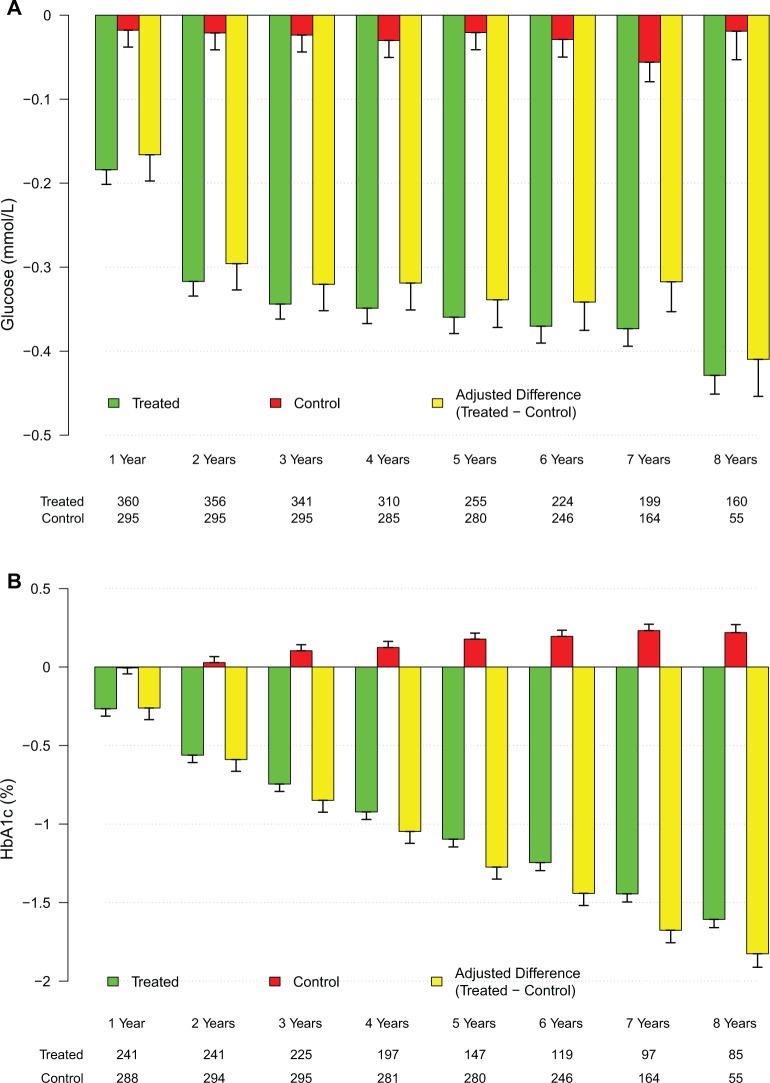
“As shown in Figure 1B, HbA1c levels were significantly reduced in the Tgroup, and the reduced values were maintained with TTh over the course of follow-up.”
BackgroundResultInfluentialGender differences in the regulation of blood pressure
Reckelhoff, J. F. (2001) · Hypertension · doi:10.1161/01.hyp.37.5.1199 · Cited by 1,268
Vigen, R. (2013) · JAMA · doi:10.1001/jama.2013.280386 · Cited by 1,003
Laaksonen, D. E., Niskanen, L., Punnonen, K., Nyyssönen, K., Tuomainen, T.-P., Valkonen, V.-P., Salonen, R., & Salonen, J. T. (2004) · Diabetes Care · doi:10.2337/diacare.27.5.1036 · Cited by 920 · cited 15×
“As shown in Figure 1B, HbA1c levels were significantly reduced in the Tgroup, and the reduced values were maintained with TTh over the course of follow-up.”
InfluentialEffects of Testosterone Treatment in Older Men
Snyder, P. J., Bhasin, S., Cunningham, G. R., Matsumoto, A. M., Stephens-Shields, A. J., Cauley, J. A., Gill, T. M., Barrett-Connor, E., Swerdloff, R. S., Wang, C., et al. (2016) · New England Journal of Medicine · doi:10.1056/nejmoa1506119 · Cited by 890
Low Serum Testosterone and Mortality in Older Men
Laughlin, G. A., Barrett-Connor, E., & Bergstrom, J. (2008) · The Journal of Clinical Endocrinology & Metabolism · doi:10.1210/jc.2007-1792 · Cited by 798 · cited 3×
“Importantly, TD in older men is associated with an increased risk of death.(76,77) A number of studies demonstrated that TTh improves CV risk factors including reducing fat mass, ameliorating obesity, reducing WC, reducing blood pressure, and improving glycemic control.”
BackgroundResultKapoor, D., Goodwin, E., Channer, K. S., & Jones, T. H. (2006) · European Journal of Endocrinology · doi:10.1530/eje.1.02166 · Cited by 791 · cited 16×
“As shown in Figure 1B, HbA1c levels were significantly reduced in the Tgroup, and the reduced values were maintained with TTh over the course of follow-up.”
ResultInfluentialSrikanthan, P., & Karlamangla, A. S. (2011) · The Journal of Clinical Endocrinology & Metabolism · doi:10.1210/jc.2011-0435 · Cited by 785
Gonadal Steroids and Body Composition, Strength, and Sexual Function in Men
Finkelstein, J. S., Lee, H., Burnett-Bowie, S.-A. M., Pallais, J. C., Yu, E. W., Borges, L. F., Jones, B. F., Barry, C. V., Wulczyn, K. E., Thomas, B. J., et al. (2013) · New England Journal of Medicine · doi:10.1056/nejmoa1206168 · Cited by 782
Khaw, K.-T., Dowsett, M., Folkerd, E., Bingham, S., Wareham, N., Luben, R., Welch, A., & Day, N. (2007) · Circulation · doi:10.1161/circulationaha.107.719005 · Cited by 743
Research works printed but not linked: 2
- Annemans L Aristides M Kubin M Real-Life Data: A Growing Need. The Official News & Technical Journal of The International Society for Pharmacoeconomics and Outcomes Research. https://www.ispor.org/news/articles/oct07/rld.asp. Accessed June 1, 2015.
- Nedogoda SV Barykina IN Salasyuk AS Smirnova VO Khripaeva VJ Effects of Testosterone Replacement Therapy on Cardio-Metabolic, Hormonal and Anthropometric Parameters in Obese Hypogonadal Men with Metabolic Syndrome. Obesity. 2015; 1(2): 1– 7.
Cited by
Items 101–138 of 138
Testosterone as a mediator of APOE4-linked sex differences in Alzheimer's disease
Shi, Z., Wu, L., Zhang, C., Zeng, X., Yao, G., He, X., Hu, J., Xie, T., & He, L. (2025) · International Immunopharmacology · doi:10.1016/j.intimp.2025.115588 · Cited by 4
Genchi, V. A., Zanni, E., Colzani, M., Lauriola, C., Cignarelli, A., Santi, D., & Greco, C. (2023) · Metabolism and Target Organ Damage · doi:10.20517/mtod.2023.06 · Cited by 4
Age-Related Testosterone Deficiency Merits Treatment
Traish, A. M. (2021) · Androgens Clinical Research and Therapeutics · doi:10.1089/andro.2020.0019 · Cited by 4
Self-citationTestosterone: A Review for Orthopaedic Surgeons
Arcand, M. A., Poulin, D., Testa, E. J., & Lemme, N. J. (2024) · JBJS Reviews · doi:10.2106/jbjs.rvw.24.00061 · Cited by 4
Mann, A., Strange, R. C., Hackett, G. I., König, C. S., & Ramachandran, S. (2024) · Exploration of Endocrine and Metabolic Diseases · doi:10.37349/eemd.2024.00010 · Cited by 4
Demidova, T. Y., Скуридина, Д. В., & Kasimova, A. M. (2022) · Meditsinskiy sovet = Medical Council · doi:10.21518/2079-701x-2022-16-10-34-39 · Cited by 4
Aydemir, H., Güney, İ., Duran, C., Gençer, V., Akbayrak, S., Kurku, H., Akgül, Y. S. S., Can, M., & Ecirli, Ş. (2020) · Clínica e Investigación en Arteriosclerosis · doi:10.1016/j.arteri.2020.01.002 · Cited by 4
Long-term testosterone replacement therapy reduces fatigue in men with hypogonadism
Ferreira, M., & Mendonça, J. A. (2022) · Drugs in Context · doi:10.7573/dic.2021-8-12 · Cited by 3
A cross-sectional study of testosterone deficiency and inflammatory markers in older men
Rotter, I., Ciosek, Ż., Syroka, A., & Rył, A. (2025) · Frontiers in Endocrinology · doi:10.3389/fendo.2025.1606949 · Cited by 3
Ghazy, R. M., Allam, M. M., Alshaikhi, S. A., Elrewany, E. M. A., Othman, L. M. A. B., Hussein, S., Assiri, H. A. H., El‐Zawawy, H. T., Alhamd, F. H., Alharbi, A. M. F., et al. (2025) · Journal of Men s Health · doi:10.22514/jomh.2025.103 · Cited by 3
Hipogonadismo associado à obesidade: efeitos do tratamento com citrato de clomifeno
Soares, A. H. (2018) · Digital Library of Theses and Dissertations (Universidade de São Paulo) · doi:10.11606/t.5.2018.tde-13062018-074535 · Cited by 2
Benefits and Risks of Testosterone Therapy in Men With Testosterone Deficiency
Traish, A. M., & Morgentaler, A. (2019) · Elsevier eBooks · doi:10.1016/b978-0-12-813197-8.00018-x · Cited by 2
Self-citationLin, Y., Gupta, S., Shi, L., Mauvais‐Jarvis, F., & Fonseca, V. A. (2025) · Journal of the Endocrine Society · doi:10.1210/jendso/bvaf074 · Cited by 2
Ramachandran, S., Livingston, M. A., Hackett, G. I., & Strange, R. C. (2019) · doi:10.5348/100007b01sr2019ed · Cited by 2
Recent testosterone drop-off and risk of cardiovascular events
Zhang, X., Zhao, H., Horney, J. A., Johnson, N. M., Saad, F., Haider, K. S., Haider, A., & Xu, X. (2020) · The Aging Male · doi:10.1080/13685538.2021.1896700 · Cited by 2
Self-citationHaider, K. S., Zitzmann, M., Ramachandran, P., König, C. S., Hackett, G. I., Haider, A., Saad, F., Desnerck, P., Strange, R. C., Mann, A., et al. (2024) · The Aging Male · doi:10.1080/13685538.2024.2357548 · Cited by 2
Self-citationThe anti-inflammatory effects of testosterone on atherosclerosis
Bateman, L. (2020) · Sheffield Hallam University · doi:10.7190/shu-thesis-00351 · Cited by 1
Abichandani, V. K., & Kalhan, A. (2023) · Chronicle of Diabetes Research and Practice · doi:10.4103/cdrp.cdrp_cdrp_20_22 · Cited by 1
The Effect of Testosterone on Liver Tissue and Lipid Profile in Female Rats
Abdulhussein, A. J., Kahtan, M., Mutlag, S. H., & Dawood, E. B. (2022) · Journal of Pharmaceutical Negative Results · doi:10.47750/pnr.2022.13.s03.002 · Cited by 1
Karampela, D. S., Giannopoulou, P. C., Νάτσος, Α., Margos, N. P., Zvintzou, E., & Kypreos, K. E. (2022) · Androgens Clinical Research and Therapeutics · doi:10.1089/andro.2022.0010 · Cited by 1
Mannelijk hypogonadisme, een update
Leliefeld, H. H. J., & Dohle, G. R. (2018) · Tijdschrift voor Urologie · doi:10.1007/s13629-018-0235-2 · Cited by 1
Testosterone and Cardiovascular Diseases: Causes or Consequences: The Lesson from the Last 5 Years
Corona, G., Rastrelli, G., Dicuio, M., Sforza, A., & Maggi, M. (2017) · Current Sexual Health Reports · doi:10.1007/s11930-017-0132-3 · Cited by 1
Niedriges Testosteron? Ausgleich hat Stoffwechseleffekte
red (2018) · Info Diabetologie · doi:10.1007/s15034-018-1294-4 · Cited by 1
Long-Term Effects of Testosterone Therapy in Men with Testosterone Deficiency
Saad, F., & Caliber, M. (2025) · Springer eBooks · doi:10.1007/978-3-031-89650-7_17
Self-citationSaad, F. (2022) · Springer eBooks · doi:10.1007/978-3-662-61417-4_9
Self-citationUnderstanding the Controversy Regarding Treatment of Age-Related Testosterone Deficiency
Morgentaler, A. (2021) · Androgens Clinical Research and Therapeutics · doi:10.1089/andro.2021.0006
Aversa, A., & Ilacqua, A. (2020) · Trends in andrology and sexual medicine · doi:10.1007/978-3-319-96376-1_16
González, C. R. (2026) · Research Square · doi:10.21203/rs.3.rs-9631066/v1
Wazir, N., Khan, S., & Ubaid, M. (2026) · Journal of Postgraduate Medical Institute · doi:10.54079/jpmi.40.2.3516
Déficit en testostérone. Quels bénéfices et risques et pour quels patients ?
Faix, A., Cuzin, B., Desvaux, P., Huyghe, É., Lejeune, H., Almond, T., & Burte, C. (2021) · Sexologies · doi:10.1016/j.sexol.2021.06.003
Monroe, M. N., Curylo, A. L., Amirkhosravi, F., Huitron, E. I. G., Ezeokeke, G. I., Ojediran, I. G., Wang, J. K., Cremer, S. E., & Grande-Allen, K. J. (2026) · Cardiovascular Engineering and Technology · doi:10.1007/s13239-026-00859-5
Aydemir, H., Güney, İ., Duran, C., Gençer, V., Akbayrak, S., Kurku, H., Akgül, Y. S. S., Can, M., & Ecirli, Ş. (2020) · Clínica e Investigación en Arteriosclerosis (English Edition) · doi:10.1016/j.artere.2020.07.003
Testosterone Prevention Role in Men’s Health: Diabetes Mellitus
of, T. 2. D. (. I. A. P. H. T. P. R. A. W., often, O. F. I. T. P. T. M. W. T. A. P., T2D, H. L. T. S. T. I. G. C. I., and, I. W. T. T. (. I. M. W. H., & T2D., P. P. P. T. (2025) · Journal of Diabetes and Treatment · doi:10.29011/2574-7568.010141
Gómez Rivas, J. (2017) · LA Referencia (Red Federada de Repositorios Institucionales de Publicaciones Científicas)
The roles of EPHs/EFNs in chromaffin cell biology
Shi, W. (2021) · doi:10.71781/29391
Testosterone and Prevention: Effects on Renal Function
Yassin, A., Alzubaidi, R. T., Kamkoum, H., Albudairat, A., Abdallah, H., Haroon, A., & Al-Ansari, A. (2025) · Journal of Urology and Renal Diseases · doi:10.29011/2575-7903.001427
Morey, A. F. (2019) · The Journal of Urology · doi:10.1097/01.ju.0000553317.33768.6b
Kronhaus, K. D., Nanda, S., Verlus, J. M., & Patel, C. (2025) · Evidence-Based Practice · doi:10.1097/ebp.0000000000002425
Metadata
- Authors
- Traish, A. M., Haider, A., Haider, K. S., Doros, G., & Saad, F.
- Affiliations
- Boston University (US)
- Private Urology Practice, Bremerhaven, Germany
- Gulf Medical University (AE)
- Corresponding author
- Traish, Abdulmaged M.
- Venue
- Journal of Cardiovascular Pharmacology and Therapeutics
- Publisher
- SAGE Publications
- Published
- 2017-02-09
- Volume
- 22
- Issue
- 5
- Pages
- 414-433
- ISSN
- 1074-2484 (ISSN-L)
- 1940-4034
- PMC
- PMC5555449
- OpenAlex
- W2586850193
- Cited by
- 130
- References
- 104
- Citations by year
- 2026: 3 · 2025: 7 · 2024: 8 · 2023: 10 · 2022: 13 · 2021: 18 · 2020: 23 · 2019: 16 · 2018: 21 · 2017: 11
- FWCI
- 15.34
- Type
- journal article
- Language
- en
- Open access
- hybrid
- doi.org
- Licence
- cc-by-nc
- journals.sagepub.com/page/policies/text-and-data-mining-license (tdm)
- Locations
- Journal of Cardiovascular Pharmacology and Therapeutics (publishedVersion, cc-by-nc)
- PubMed Central (publishedVersion, cc-by-nc)
- PubMed (publishedVersion)
- Topics
- Health Sciences › Medicine › Endocrinology, Diabetes and Metabolism › Hormonal and reproductive studies
- Health Sciences › Medicine › Endocrinology, Diabetes and Metabolism › Menopause: Health Impacts and Treatments
- Health Sciences › Medicine › Endocrinology, Diabetes and Metabolism › Thyroid Disorders and Treatments
- Keywords
- testosterone replacement therapy, hypogonadism, cardiovascular disease, cardiometabolic function, testosterone undecanoate, long-term treatment safety, cardiovascular mortality, cardiovascular risk factors, lipid profile, blood pressure, fasting blood glucose, mortality risk reduction, cardiovascular risk reduction, urology patients
- MeSH terms
- Aged, Cardiovascular Diseases, Glycated Hemoglobin, Humans, Hypogonadism, Lipids, Liver, Male, Middle Aged, Myocardial Infarction, Prospective Studies, Registries, Testosterone, Body Mass Index, Stroke
About these checks
Registry, retraction, Cites and statistics results are computed, not judged, with one exception: a printed reference that no index lists is read once by a model before it counts as a citation error. Claims are extracted by a model and kept only when their quote appears verbatim in the text; each cited source is then checked, with a model’s help, for whether it says what the claim relies on. Those verdicts can be wrong — read the claim’s quote and the cited source before relying on one.
Statistics and arithmetic are recomputed, not judged.
Confidence bands are shown only for fields calibrated on our annotated test set. None is calibrated yet, so no band is shown.
What counts as a claim ›How we measure confidence ›How we check this ›
Are you an author, or do you see a problem with this page? Request a review
Data sources
Bibliographic data: Semantic Scholar, OpenAlex, Crossref.
Contains information from the Semantic Scholar Academic Graph Datasets, made available under the ODC Attribution License (ODC-BY 1.0).
Semantic Scholar’s data is described in: Kinney, R., et al. (2023). The Semantic Scholar Open Data Platform. arXiv:2301.10140.
