

Performance of Music Elevates Pain Threshold and Positive Affect: Implications for the Evolutionary Function of Music
Open accessThe DOI matches its Crossref record; 66 of the 68 references it cites were found in a registry or an index.
Abstract
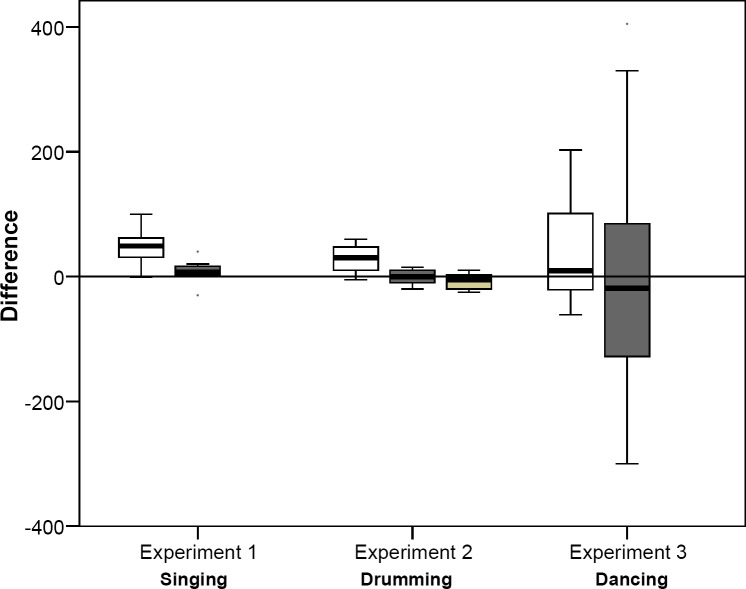
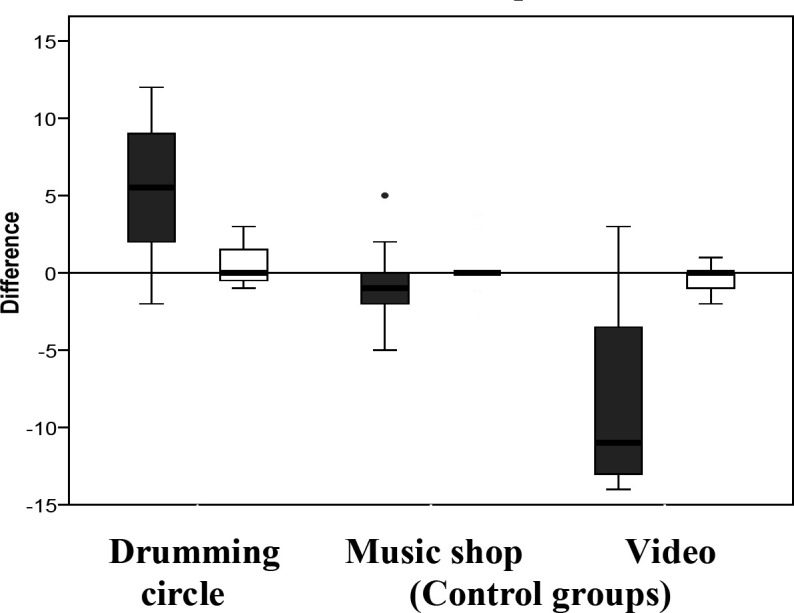
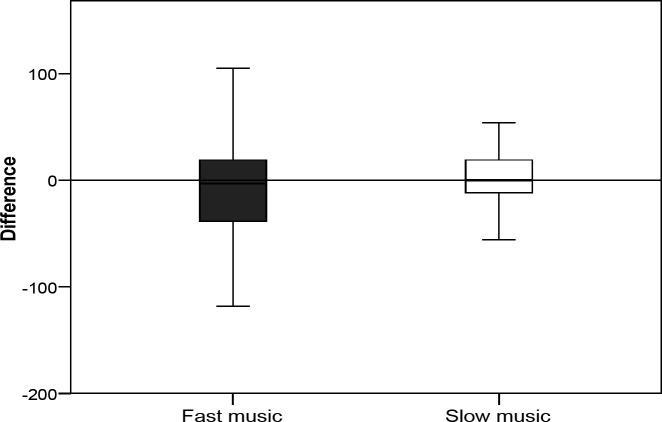
It is well known that music arouses emotional responses. In addition, it has long been thought to play an important role in creating a sense of community, especially in small scale societies. One mechanism by which it might do this is through the endorphin system, and there is evidence to support this claim. Using pain threshold as an assay for CNS endorphin release, we ask whether it is the auditory perception of music that triggers this effect or the active performance of music. We show that singing, dancing and drumming all trigger endorphin release (indexed by an increase in post-activity pain tolerance) in contexts where merely listening to music and low energy musical activities do not. We also confirm that music performance results in elevated positive (but not negative) affect. We conclude that it is the active performance of music that generates the endorphin high, not the music itself. We discuss the implications of this in the context of community bonding mechanisms that commonly involve dance and music-making.
Overview
The claims and statistics of this paper haven’t been checked yet.
Free: it reads the open-access text and checks the first 5 claims that cite a source we can check. Create a free account to check every claim.
Integrity signals
Registry
Cites
Statistics
Figures
Verification
Claims the paper makes
The claims and statistics of this paper haven’t been checked yet.
Free: it reads the open-access text and checks the first 5 claims that cite a source we can check. Create a free account to check every claim.
Claims other papers make about this one
Each is checked against this paper’s own text: does it say what the citing paper says it does?
The source backs part of the claim, not all of it — or backs it for a different population, condition or comparison.
In the citing paper
“Building on a growing body of the literature, we propose that group unity depends on behaviours that are synchronous and involve some muscular effort, which trigger the release of neuropeptides such as β-endorphin, yield enhanced positive affect, and in turn may enhance individuals’ willingness to cooperate [28,32,34,35,57].”
From The ice-breaker effect: Singing mediates fast social bonding (2015) · cites this paper as [28]
Experimental — accuracy not yet measuredThe source backs part of the claim, not all of it — or backs it for a different population, condition or comparison.
In the citing paper
“Support for this comes from the association between singing and the release of neuropeptides known to be associated with social bonding: oxytocin and β-endorphin [26–28].”
From The ice-breaker effect: Singing mediates fast social bonding (2015) · cites this paper as [28]
Experimental — accuracy not yet measuredThe source backs part of the claim, not all of it — or backs it for a different population, condition or comparison.
In the citing paper
“As a coordinated and often synchronous activity, for example, in terms of breath and heart rhythms, as well as timing and pitch [36], it is unsurprising that singing has also been linked with elevated β-endorphin levels [28].”
From The ice-breaker effect: Singing mediates fast social bonding (2015) · cites this paper as [28]
Experimental — accuracy not yet measuredThe source backs part of the claim, not all of it — or backs it for a different population, condition or comparison.
In the citing paper
“For instance, the repetitive and often strenuous actions that are involved in ritual-such as whirling, chanting, dancing, or prostrating-seem to produce anxiolytic effects by stimulating the endocannabinoid system (Dunbar, Kaskatis, MacDonald, & Barra, 2012;Xygalatas, 2008).”
From The Psychology of Rituals: An Integrative Review and Process-Based Framework (2018) · cites this paper as Dunbar, Kaskatis, MacDonald, & Barra, 2012
Experimental — accuracy not yet measuredThe cited source says what the claim attributes to it.
In the citing paper
“Pain thresholds are elevated following synchronized exertive activities such as rowing [19–21] and active musical performance in a group [22], suggesting that exertive group synchronous activities can activate the EOS, although it should be noted that endocannabinoids likely also contribute to exercise ‘highs’ [23].”
From Synchrony and exertion during dance independently raise pain threshold and encourage social bonding (2015) · cites this paper as [22]
2 more claims about this paper
Create a free account to see every claim other papers make about this one.
Self-check
Percentages, sums and reported differences re-computed from the paper’s own numbers.
The self-check needs the paper’s full text.
Citations
Cites
Flow: the psychology of optimal experience
(1990) · Choice Reviews Online · doi:10.5860/choice.28-0597 · Cited by 12,637
Flow: The Psychology of Optimal Experience
Buchanan, R., & Csikszentmihalyi, M. (1991) · Design Issues · doi:10.2307/1511458 · Cited by 9,394
The Ritual Process: Structure and Anti-Structure
Gilsenan, M., & Turner, V. W. (1976) · RAIN · doi:10.2307/3031914 · Cited by 6,725
The PANAS-X: Manual for the Positive and Negative Affect Schedule - Expanded Form
Watson, D., & Clark, L. A. (1994) · University of Iowa · doi:10.17077/48vt-m4t2 · Cited by 3,700
The Ritual Process. Structure and Anti-Structure
Welbourn, F. B., & Turner, V. W. (1971) · Journal of Religion in Africa · doi:10.2307/1594703 · Cited by 3,447
The Elementary Forms of Religious Life
Durkheim, E., & Swain, J. W. (1916) · The American Journal of Nursing · doi:10.2307/3405938 · Cited by 3,400
Blood, A. J., & Zatorre, R. J. (2001) · Proceedings of the National Academy of Sciences · doi:10.1073/pnas.191355898 · Cited by 2,814
Wiltermuth, S. S., & Heath, C. (2009) · Psychological Science · doi:10.1111/j.1467-9280.2008.02253.x · Cited by 1,717 · cited 1×
“Given the finding by Wiltermuth and Heath (2009) that synchrony enhances cooperation in economic games, this offers a plausible explanation for the role of human capacities like music that involve highly synchronised behaviour and trigger the release of endorphins in the evolution of the…”
BackgroundThe rewards of music listening: Response and physiological connectivity of the mesolimbic system
Menon, V., & Levitin, D. J. (2005) · NeuroImage · doi:10.1016/j.neuroimage.2005.05.053 · Cited by 1,067
An exploratory study of musical emotions and psychophysiology.
Krumhansl, C. L. (1997) · Canadian Journal of Experimental Psychology / Revue canadienne de psychologie expérimentale · doi:10.1037/1196-1961.51.4.336 · Cited by 1,017 · cited 1×
“Most of this interest has been focussed either on physiological responses to music (Krumhansl, 1997; Peretz and Coltheart, 2003; VanderArk and Ely, 1992, 1993; Wallin, 1991; Sevdalis and Keller, 2011) or on the role of synchrony (Janata and Grafton, 2003; Kirschner and Tomasello, 2009; Miles et…”
Background
Research works printed but not linked: 3
- Chiu P., and Kumar A. (2003). Music therapy: Loud noise or soothing notes. Music Therapy, 18, 204– 208.
- Sokal R.R., and Rohlf F.J. (1981). Biometry. San Francisco: Freeman.
- Spingte R., and Droh R. (1987). Effects of anxiolytic music on plasma levels of stress hormones in different medical specialties. In Pratt R.R. (Ed.), The fourth international symposium on music: Rehabilitation and human well-being (pp. 88– 101). Lanham, MD: University Press of America.
Cited by
Music and social bonding: “self-other†merging and neurohormonal mechanisms
Tarr, B., Launay, J., & Dunbar, R. I. M. (2014) · Frontiers in Psychology · doi:10.3389/fpsyg.2014.01096 · Cited by 548
Self-citationEffects of music interventions on stress-related outcomes: a systematic review and two meta-analyses
de Witte, M., Spruit, A., van Hooren, S., Moonen, X., & Stams, G.-J. (2020) · Health Psychology Review · doi:10.1080/17437199.2019.1627897 · Cited by 539
The ice-breaker effect: Singing mediates fast social bonding
Pearce, E., Launay, J., & Dunbar, R. I. M. (2015) · Royal Society Open Science · doi:10.1098/rsos.150221 · Cited by 507
Self-citationSynchrony and exertion during dance independently raise pain threshold and encourage social bonding
Tarr, B., Launay, J., Cohen, E., & Dunbar, R. (2015) · Biology Letters · doi:10.1098/rsbl.2015.0767 · Cited by 367
“Pain thresholds are elevated following synchronized exertive activities such as rowing [19–21] and active musical performance in a group [22], suggesting that exertive group synchronous activities can activate the EOS, although it should be noted that endocannabinoids likely also contribute to exercise ‘highs’ [23].”
BackgroundSelf-citationThe Psychology of Rituals: An Integrative Review and Process-Based Framework
Hobson, N. M., Schroeder, J., Risen, J. L., Xygalatas, D., & Inzlicht, M. (2018) · Personality and Social Psychology Review · doi:10.1177/1088868317734944 · Cited by 354
Silent disco: dancing in synchrony leads to elevated pain thresholds and social closeness
Tarr, B., Launay, J., & Dunbar, R. I. M. (2016) · Evolution and Human Behavior · doi:10.1016/j.evolhumbehav.2016.02.004 · Cited by 341
Self-citationSinging and social bonding: changes in connectivity and pain threshold as a function of group size
Weinstein, D., Launay, J., Pearce, E., Dunbar, R. I. M., & Stewart, L. (2016) · Evolution and Human Behavior · doi:10.1016/j.evolhumbehav.2015.10.002 · Cited by 275
Self-citationOrigins of music in credible signaling
Mehr, S. A., Krasnow, M. M., Bryant, G. A., & Hagen, E. H. (2021) · Behavioral and Brain Sciences · doi:10.1017/s0140525x20000345 · Cited by 252
Cross-cultural perspectives on music and musicality
Trehub, S. E., Becker, J., & Morley, I. (2015) · Philosophical Transactions of the Royal Society B: Biological Sciences · doi:10.1098/rstb.2014.0096 · Cited by 221
Synchrony as an Adaptive Mechanism for Large‐Scale Human Social Bonding
Launay, J., Tarr, B., & Dunbar, R. I. M. (2016) · Ethology · doi:10.1111/eth.12528 · Cited by 201
“…with legs at right angles: Dunbar et al. 2012a), an electrocutaneous simulator (Jamner & Leigh 1999), pressure produced using a blood pressure cuff (Cogan et al. 1987; Cohen & Ejsmond-Frey 2010; Dunbar et al. 2012a, b), and the amount of pain medication requested by patients (Zillmann et al. 1993).”
InfluentialSelf-citationEffects of Maternal Singing Style on Mother–Infant Arousal and Behavior
Cirelli, L. K., Jurewicz, Z. B., & Trehub, S. E. (2020) · Journal of Cognitive Neuroscience · doi:10.1162/jocn_a_01402 · Cited by 198
Rhythmic cognition in humans and animals: distinguishing meter and pulse perception
Fitch, W. T. (2013) · Frontiers in Systems Neuroscience · doi:10.3389/fnsys.2013.00068 · Cited by 176
Pongan, E., Tillmann, B., Leveque, Y., Trombert, B., Getenet, J. C., Auguste, N., Dauphinot, V., El Haouari, H., Navez, M., Dorey, J.-M., et al. (2017) · Journal of Alzheimer’s Disease · doi:10.3233/jad-170410 · Cited by 158
“Among MI, a singing intervention (SI) was chosen in our study: indeed, this practice can, through the body resonance, promote the increase of endorphin production [40], which is involved in the process of pain modulation and play a significant role in inhibiting pain perception [47].”
A Review of the Physiological Effects and Mechanisms of Singing
Kang, J., Scholp, A., & Jiang, J. J. (2018) · Journal of Voice · doi:10.1016/j.jvoice.2017.07.008 · Cited by 139
“Dunbar et al measured the pain tolerance duration of pressure from a 260-mmHg hematomanometer in 13 choral members and 9 prayer members during respective group activities.(67) The results demonstrated that singing triggered endorphin release (indexed by an increase in postactivity pain tolerance) in contexts where mer…”
Parent-offspring conflict and the evolution of infant-directed song
Mehr, S. A., & Krasnow, M. M. (2017) · Evolution and Human Behavior · doi:10.1016/j.evolhumbehav.2016.12.005 · Cited by 130
Tsai, H., Chen, Y. R., Chung, M. H., Liao, Y., Chi, M., Chang, C., & Chou, K. (2014) · Cancer Nursing · doi:10.1097/ncc.0000000000000116 · Cited by 127
Predicting who takes music lessons: parent and child characteristics
Corrigall, K. A., & Schellenberg, E. G. (2015) · Frontiers in Psychology · doi:10.3389/fpsyg.2015.00282 · Cited by 121
Sync to link: Endorphin-mediated synchrony effects on cooperation
Lang, M., Bahna, V., Shaver, J. H., Reddish, P., & Xygalatas, D. (2017) · Biological Psychology · doi:10.1016/j.biopsycho.2017.06.001 · Cited by 120
“It has long been speculated that such synchronous activities function to increase group cohesion (Durkheim, 1964; Marsh, Richardson, & Schmidt, 2009; McNeill, 1995), and experimental research has supported this conjecture: synchronous behaviour has been shown to facilitate rapport and interpersonal…”
Evolution and functions of human dance
Fink, B., Bläsing, B. E., Ravignani, A., & Shackelford, T. K. (2021) · Evolution and Human Behavior · doi:10.1016/j.evolhumbehav.2021.01.003 · Cited by 120
The Social Brain: Psychological Underpinnings and Implications for the Structure of Organizations
Dunbar, R. I. M. (2014) · Current Directions in Psychological Science · doi:10.1177/0963721413517118 · Cited by 116
Self-citationEffect of music therapy on anxiety levels on patient undergoing dental extractions
Lakshmanan, R., Packyanathan, J. S., & Jayashri, P. (2019) · Journal of Family Medicine and Primary Care · doi:10.4103/jfmpc.jfmpc_789_19 · Cited by 117
Vaikuttavaa? : taiteen hyvinvointivaikutusten tarkastelua
Laitinen, L. (2017) · Theseus (Ammattikorkeakoulujen) · Cited by 108
Joint attention, shared goals, and social bonding
Wolf, W., Launay, J., & Dunbar, R. I. M. (2016) · British Journal of Psychology · doi:10.1111/bjop.12144 · Cited by 105
Self-citationVicary, S., Sperling, M., von Zimmermann, J., Richardson, D. C., & Orgs, G. (2017) · PLOS ONE · doi:10.1371/journal.pone.0180101 · Cited by 102
Cross-cultural convergence of musical features
Trehub, S. E. (2015) · Proceedings of the National Academy of Sciences · doi:10.1073/pnas.1510724112 · Cited by 95
Pearce, E., Launay, J., van Duijn, M., Rotkirch, A., David-Barrett, T., & Dunbar, R. I. M. (2016) · Psychology of Music · doi:10.1177/0305735616636208 · Cited by 94
Self-citationUnraveling the mystery of music: Music as an evolved group process.
Loersch, C., & Arbuckle, N. L. (2013) · Journal of Personality and Social Psychology · doi:10.1037/a0033691 · Cited by 90
Dapschauskas, R., Göden, M. B., Sommer, C., & Kandel, A. W. (2022) · Journal of World Prehistory · doi:10.1007/s10963-022-09170-2 · Cited by 89
Music As a Sacred Cue? Effects of Religious Music on Moral Behavior
Lang, M., Mitkidis, P., Kundt, R., Nichols, A. D., Krajčíková, L., & Xygalatas, D. (2016) · Frontiers in Psychology · doi:10.3389/fpsyg.2016.00814 · Cited by 86
Links between the neurobiology of oxytocin and human musicality
Harvey, A. R. (2020) · Frontiers in Human Neuroscience · doi:10.3389/fnhum.2020.00350 · Cited by 85
The psychophysiology of music-based interventions and the experience of pain
Arnold, C. A., Bagg, M. K., & Harvey, A. R. (2024) · Frontiers in Psychology · doi:10.3389/fpsyg.2024.1361857 · Cited by 81
Music and sustainability: organizational cultures towards creative resilience – a review
Kagan, S., & Kirchberg, V. (2016) · Journal of Cleaner Production · doi:10.1016/j.jclepro.2016.05.044 · Cited by 82
How conversations around campfires came to be
Dunbar, R. I. M. (2014) · Proceedings of the National Academy of Sciences · doi:10.1073/pnas.1416382111 · Cited by 79
Self-citationDance for Chronic Pain Conditions: A Systematic Review
Hickman, B., Pourkazemi, F., Pebdani, R. N., Hiller, C. E., & Yan, A. F. (2022) · Pain Medicine · doi:10.1093/pm/pnac092 · Cited by 75
The Choreography of Group Affiliation
von Zimmermann, J., Vicary, S., Sperling, M., Orgs, G., & Richardson, D. C. (2018) · Topics in Cognitive Science · doi:10.1111/tops.12320 · Cited by 73
Rhythmic Chanting and Mystical States across Traditions
Perry, G., Polito, V., & Thompson, W. F. (2021) · Brain Sciences · doi:10.3390/brainsci11010101 · Cited by 71
Art therapy among palliative cancer patients: Aesthetic dimensions and impacts on symptoms
Lefèvre, C., Ledoux, M., & Filbet, M. (2015) · Palliative & Supportive Care · doi:10.1017/s1478951515001017 · Cited by 68
Musical feedback during exercise machine workout enhances mood
Fritz, T. H., Halfpaap, J., Grahl, S., Kirkland, A., & Villringer, A. (2013) · Frontiers in Psychology · doi:10.3389/fpsyg.2013.00921 · Cited by 68
Pearce, E., Launay, J., MacCarron, P., & Dunbar, R. I. M. (2017) · Psychology of Music · doi:10.1177/0305735616667543 · Cited by 67
Self-citationGrebosz‐Haring, K., & Thun‐Hohenstein, L. (2018) · Heliyon · doi:10.1016/j.heliyon.2018.e01014 · Cited by 67
Pain tolerance predicts human social network size
Johnson, K. V.-A., & Dunbar, R. I. M. (2016) · Scientific Reports · doi:10.1038/srep25267 · Cited by 65
Self-citationMaury, S., & Rickard, N. S. (2020) · Musicae Scientiae · doi:10.1177/1029864920932633 · Cited by 65
Lost in the Rhythm: Effects of Rhythm on Subsequent Interpersonal Coordination
Lang, M., Shaw, D. J., Reddish, P., Wallot, S., Mitkidis, P., & Xygalatas, D. (2016) · Cognitive Science · doi:10.1111/cogs.12302 · Cited by 65
Harrison, E. C., Horin, A. P., & Earhart, G. M. (2018) · Scientific Reports · doi:10.1038/s41598-018-33942-6 · Cited by 66
Skingley, A., Clift, S. M., Hurley, S., Price, S., & Stephens, L. (2017) · Perspectives in Public Health · doi:10.1177/1757913917740930 · Cited by 64
Precursors to the performing arts in infancy and early childhood
Trehub, S. E., & Cirelli, L. K. (2018) · Progress in brain research · doi:10.1016/bs.pbr.2018.03.008 · Cited by 63
Fiveash, A., Ferreri, L., Bouwer, F. L., Kösem, A., Moghimi, S., Ravignani, A., Keller, P. E., & Tillmann, B. (2023) · Neuroscience & Biobehavioral Reviews · doi:10.1016/j.neubiorev.2023.105153 · Cited by 62
Wish You Were Here: Mental and Physiological Effects of Remote Music Collaboration in Mixed Reality
Schlagowski, R., Nazarenko, D., Can, Y. S., Gupta, K., Mertes, S., Billinghurst, M., & André, E. (2023) · CHI Conference on Human Factors in Computing Systems · doi:10.1145/3544548.3581162 · Cited by 62
Dancing to Metallica and Dora: Case Study of a 19-Month-Old
Cirelli, L. K., & Trehub, S. E. (2019) · Frontiers in Psychology · doi:10.3389/fpsyg.2019.01073 · Cited by 60
Origins of music in credible signalingPreprint
Mehr, S. A., Krasnow, M. M., Bryant, G. A., & Hagen, E. H. (2020) · PsyArXiv (OSF Preprints) · doi:10.31234/osf.io/nrqb3 · Cited by 59
Music and the Meeting of Human Minds
Harvey, A. R. (2018) · Frontiers in Psychology · doi:10.3389/fpsyg.2018.00762 · Cited by 60
Madison, G., Holmquist, J., & Vestin, M. (2017) · Evolution and Human Behavior · doi:10.1016/j.evolhumbehav.2017.10.005 · Cited by 58
Musical Agency during Physical Exercise Decreases Pain
Fritz, T. H., Bowling, D. L., Contier, O., Grant, J. A., Schneider, L., Lederer, A., Höer, F., Busch, E., & Villringer, A. (2018) · Frontiers in Psychology · doi:10.3389/fpsyg.2017.02312 · Cited by 57
Plio-Pleistocene Foundations of Hominin Musicality: Coevolution of Cognition, Sociality, and Music
Killin, A. (2017) · Biological Theory · doi:10.1007/s13752-017-0274-6 · Cited by 57
Origin and evolution of human consciousness
Fabbro, F., Cantone, D., Feruglio, S., & Crescentini, C. (2019) · Progress in brain research · doi:10.1016/bs.pbr.2019.03.031 · Cited by 56
Kostilainen, K., Mikkola, K., Erkkilä, J., & Huotilainen, M. (2020) · Nordic Journal of Music Therapy · doi:10.1080/08098131.2020.1837210 · Cited by 52
Music for pain relief during bed bathing of mechanically ventilated patients: A pilot study
Jacq, G., Melot, K., Bezou, M., Foucault, L., Courau-Courtois, J., Cavelot, S., Lang, A., Bédos, J., Le-Boeuf, D., Boussard, J.-M., et al. (2018) · PLoS ONE · doi:10.1371/journal.pone.0207174 · Cited by 52
Richter, J., & Ostovar, R. (2016) · Frontiers in Human Neuroscience · doi:10.3389/fnhum.2016.00485 · Cited by 53
Nummenmaa, L., Putkinen, V., & Sams, M. E. (2021) · Current Opinion in Behavioral Sciences · doi:10.1016/j.cobeha.2021.03.026 · Cited by 54
The psychology of rituals: An integrative review and process-based frameworkPreprint
Hobson, N. M., Schroeder, J., Risen, J. L., Xygalatas, D., & Inzlicht, M. (2017) · PsyArXiv (OSF Preprints) · doi:10.31234/osf.io/98v3f · Cited by 49
Brain disorders and the biological role of music
Clark, C. N., Downey, L. E., & Warren, J. D. (2014) · Social Cognitive and Affective Neuroscience · doi:10.1093/scan/nsu079 · Cited by 49
‘Naltrexone Blocks Endorphins Released when Dancing in Synchrony’
Tarr, B., Launay, J., Benson, C., & Dunbar, R. I. M. (2017) · Adaptive Human Behavior and Physiology · doi:10.1007/s40750-017-0067-y · Cited by 48
“…measuring EOS activity (e.g. PET or spinal fluid extractions) are costly and invasive, so pain threshold is frequently used as an indirect measure of endorphin uptake (Cohen et al. 2010; Dunbar et al. 2012a; Pearce et al. 2015; Sullivan and Rickers 2013; Sullivan et al. 2011; Sullivan et al. 2014).”
Self-citationA framework for joint music making: Behavioral findings, neural processes, and computational models
Abalde, S. F., Rigby, A. M., Keller, P. E., & Novembre, G. (2024) · Neuroscience & Biobehavioral Reviews · doi:10.1016/j.neubiorev.2024.105816 · Cited by 46
Music and Language in Social Interaction: Synchrony, Antiphony, and Functional Origins
Oesch, N. (2019) · Frontiers in Psychology · doi:10.3389/fpsyg.2019.01514 · Cited by 44
Irons, J. Y., Sheffield, D., Ballington, F., & Stewart, D. (2019) · European Journal of Pain · doi:10.1002/ejp.1485 · Cited by 43
The Role of the Baldwin Effect in the Evolution of Human Musicality
Podlipniak, P. (2017) · Frontiers in Neuroscience · doi:10.3389/fnins.2017.00542 · Cited by 43
The Evolution of Gender Dimorphism in the Human Voice: The Role of Octave Equivalence
Bannan, N., Dunbar, R., & Bamford, J. S. (2024) · Current Anthropology · doi:10.1086/730147 · Cited by 42
Self-citationThe dawn of social bonds: what is the role of shared experiences in non-human animals?
Busia, L., & Griggio, M. (2020) · Biology Letters · doi:10.1098/rsbl.2020.0201 · Cited by 42
Group dancing as the evolutionary origin of rhythmic entrainment in humans
Brown, S. (2021) · New Ideas in Psychology · doi:10.1016/j.newideapsych.2021.100902 · Cited by 41
Changing positive and negative affects through music experiences: a study with university students
Blasco-Magraner, J. S., Bernabé-Valero, G., Marín-Liébana, P., & Botella-Nicolás, A. M. (2023) · BMC Psychology · doi:10.1186/s40359-023-01110-9 · Cited by 26
Fairclough, S. H., Stamp, K., Dobbins, C., & Poole, H. M. (2020) · International Journal of Human-Computer Studies · doi:10.1016/j.ijhcs.2020.102427 · Cited by 41
Antioch, I., Furuta, T., Uchikawa, R., Okumura, M., Otogoto, J.-I., Kondo, E., Sogawa, N., Ciobica, A. S., & Tomida, M. (2020) · Journal of Pain Research · doi:10.2147/jpr.s276274 · Cited by 40
The Synthesis of the Arts: From Ceremonial Ritual to “Total Work of Art”
Brown, S., & Dissanayake, E. (2018) · Frontiers in Sociology · doi:10.3389/fsoc.2018.00009 · Cited by 39
Moeller, J. (2014) · Common Library Network (Der Gemeinsame Bibliotheksverbund) · Cited by 40
Development of a music therapy micro-intervention for stress reduction
de Witte, M., Knapen, A., Stams, G. J. J. M., Moonen, X., & van Hooren, S. (2021) · The Arts in Psychotherapy · doi:10.1016/j.aip.2021.101872 · Cited by 39
Bungay, H., Hughes, S., Jacobs, C., & Zhang, J. (2020) · Arts & Health · doi:10.1080/17533015.2020.1725072 · Cited by 39
Carlyle, M., Broomby, R., Simpson, G., Hannon, R., Fawaz, L., Mollaahmetoğlu, Ö. M., Drain, J., Mostazir, M., & Morgan, C. J. A. (2021) · Addiction Biology · doi:10.1111/adb.13047 · Cited by 35
Yap, A. F., Kwan, Y. H., & Ang, S. B. (2016) · European Journal of Integrative Medicine · doi:10.1016/j.eujim.2016.11.011 · Cited by 35
Love songs and serenades: a theoretical review of music and romantic relationships
Bamford, J. S., Vigl, J., Hämäläinen, M., & Saarikallio, S. H. (2024) · Frontiers in Psychology · doi:10.3389/fpsyg.2024.1302548 · Cited by 37
Arts and cultural activity: A vital part of the health and care system
Cann, P. (2017) · Australian Journal on Ageing · doi:10.1111/ajag.12438 · Cited by 33
Music-induced emotion effects on decision-making
Palazzi, A., Fritzen, B. W., & Gauer, G. (2018) · Psychology of Music · doi:10.1177/0305735618779224 · Cited by 34
Harmat, L., de Manzano, Ö., & Ullén, F. (2021) · Springer eBooks · doi:10.1007/978-3-030-53468-4_14 · Cited by 35
Sharing the load: Contagion and tolerance of mood in social networks.
Block, P., & Heyes, S. B. (2022) · Emotion · doi:10.1037/emo0000952 · Cited by 32
Increased Wellbeing from Social Interaction in a Secular Congregation
Price, M. E., & Launay, J. (2018) · Secularism and Nonreligion · doi:10.5334/snr.102 · Cited by 31
Göritz, A. S., & Rennung, M. (2019) · Gruppe Interaktion Organisation Zeitschrift für Angewandte Organisationspsychologie (GIO) · doi:10.1007/s11612-019-00450-8 · Cited by 30
The effect of background liked music on acute pain perception and its neural correlates
Lu, X., Hou, X., Zhang, L., Li, H., Tu, Y., Shi, H., & Hu, L. (2023) · Human Brain Mapping · doi:10.1002/hbm.26293 · Cited by 29
Immediate Benefit of Art on Pain and Well-Being in Community-Dwelling Patients with Mild Alzheimer's
Pongan, É., Delphin‐Combe, F., Krolak‐Salmon, P., Lévêque, Y., Tillmann, B., Bachelet, R., Getenet, J., Auguste, N., Trombert, B., Dorey, J., et al. (2019) · American Journal of Alzheimer s Disease & Other Dementias® · doi:10.1177/1533317519859202 · Cited by 28
Routledge International Handbook of Music Psychology in Education and the Community
Gaunt, H. F., López‐Íñiguez, G., & Creech, A. (2021) · Routledge eBooks · doi:10.4324/9780429295362 · Cited by 28
Sensorimotor synchronization to music reduces pain
Werner, L. M., Skouras, S., Bechtold, L., Pallesen, S., & Koelsch, S. (2023) · PLoS ONE · doi:10.1371/journal.pone.0289302 · Cited by 28
Dissanayake, E. (2017) · Cambridge University Press eBooks · doi:10.1017/9781316534663.007 · Cited by 27
Endorphins, oxytocin, sexuality and romantic relationships: An understudied area
Khajehei, M., & Behroozpour, E. (2018) · World Journal of Obstetrics and Gynecology · doi:10.5317/wjog.v7.i2.17 · Cited by 26
Stubbs, R. M. (2017) · The Arts in Psychotherapy · doi:10.1016/j.aip.2017.10.001 · Cited by 26
Maury, S., Vella‐Brodrick, D., Davidson, J. W., & Rickard, N. S. (2022) · Music & Science · doi:10.1177/20592043221137759 · Cited by 26
Engaging in the good with technology: a framework for examining positive technology use
Villamil, A., & Heshmati, S. (2023) · Frontiers in Psychology · doi:10.3389/fpsyg.2023.1175740 · Cited by 26
Pleasurable music activates cerebral µ-opioid receptors: a combined PET-fMRI study
Putkinen, V., Seppälä, K., Harju, H., Hirvonen, J., Karlsson, H. K., & Nummenmaa, L. (2025) · European Journal of Nuclear Medicine and Molecular Imaging · doi:10.1007/s00259-025-07232-z · Cited by 24
The origins and function of musical performance
Dunbar, R. (2023) · Frontiers in Psychology · doi:10.3389/fpsyg.2023.1257390 · Cited by 26
Self-citation“They’re playing our song”: Couple-defining songs in intimate relationships
Harris, C. B., Baird, A., Harris, S. A., & Thompson, W. F. (2019) · Journal of Social and Personal Relationships · doi:10.1177/0265407519859440 · Cited by 26
Communities on the Edge of Civilization
Coward, F., & Dunbar, R. (2014) · Oxford University Press eBooks · doi:10.1093/acprof:osobl/9780199652594.003.0017 · Cited by 25
Self-citationPowers, J. M., Ioachim, G., & Stroman, P. W. (2022) · Frontiers in Pain Research · doi:10.3389/fpain.2022.878258 · Cited by 23
Edelman, L. L., & Harring, K. E. (2014) · Current Psychology · doi:10.1007/s12144-014-9273-y · Cited by 22
Metadata
- Authors
- Dunbar, R. I. M., Kaskatis, K., MacDonald, I., & Barra, V.
- Affiliations
- University of Oxford (GB)
- University of Liverpool (GB)
- Binghamton University (US)
- Corresponding author
- Dunbar, R.I.M.
- ORCID
- Dunbar, R.I.M.
- Venue
- Evolutionary Psychology
- Publisher
- SAGE Publications
- Published
- 2012-10-01
- Volume
- 10
- Issue
- 4
- Pages
- 688-702
- ISSN
- 1474-7049 (ISSN-L)
- PMC
- PMC10426978
- OpenAlex
- W2192147421
- Cited by
- 243
- References
- 68
- Citations by year
- 2026: 26 · 2025: 20 · 2024: 14 · 2023: 22 · 2022: 18 · 2021: 17 · 2020: 22 · 2019: 17 · 2018: 21 · 2017: 25 · 2016: 15 · 2015: 12 · 2014: 8 · 2013: 6
- FWCI
- 4.25
- Type
- journal article
- Language
- en
- Open access
- gold
- doi.org
- Licence
- Locations
- Evolutionary Psychology (publishedVersion, cc-by-nc)
- PubMed Central (publishedVersion, cc-by-nc)
- PubMed (publishedVersion)
- DOAJ (DOAJ: Directory of Open Access Journals) (submittedVersion, cc-by-sa)
- Topics
- Life Sciences › Neuroscience › Cognitive Neuroscience › Neuroscience and Music Perception
- Social Sciences › Psychology › Social Psychology › Music Therapy and Health
- Social Sciences › Arts and Humanities › Music › Diverse Music Education Insights
- Keywords
- music performance, pain threshold, endorphins, positive affect, singing, dance, drumming, music listening, community bonding, emotional response to music
- MeSH terms
- Adult, Affect, Auditory Perception, Dancing, Endorphins, Biological Evolution, Female, Humans, Male, Music, Pain Threshold, Young Adult, Singing
About these checks
Registry, retraction, Cites and statistics results are computed, not judged, with one exception: a printed reference that no index lists is read once by a model before it counts as a citation error. Claims are extracted by a model and kept only when their quote appears verbatim in the text; each cited source is then checked, with a model’s help, for whether it says what the claim relies on. Those verdicts can be wrong — read the claim’s quote and the cited source before relying on one.
Statistics and arithmetic are recomputed, not judged.
Confidence bands are shown only for fields calibrated on our annotated test set. None is calibrated yet, so no band is shown.
What counts as a claim ›How we measure confidence ›How we check this ›
Are you an author, or do you see a problem with this page? Request a review
Data sources
Bibliographic data: Semantic Scholar, OpenAlex, Crossref.
Contains information from the Semantic Scholar Academic Graph Datasets, made available under the ODC Attribution License (ODC-BY 1.0).
Semantic Scholar’s data is described in: Kinney, R., et al. (2023). The Semantic Scholar Open Data Platform. arXiv:2301.10140.
