

Education and Cognitive Functioning Across the Life Span
Open accessThe DOI matches its Crossref record; 261 of the 271 references it cites were found in a registry or an index, and 2 are not checked yet; none of the 238 sources its claims cite is checked for support yet.
Abstract
Cognitive abilities are important predictors of educational and occupational performance, socioeconomic attainment, health, and longevity. Declines in cognitive abilities are linked to impairments in older adults’ everyday functions, but people differ from one another in their rates of cognitive decline over the course of adulthood and old age. Hence, identifying factors that protect against compromised late-life cognition is of great societal interest. The number of years of formal education completed by individuals is positively correlated with their cognitive function throughout adulthood and predicts lower risk of dementia late in life. These observations have led to the propositions that prolonging education might (a) affect cognitive ability and (b) attenuate aging-associated declines in cognition. We evaluate these propositions by reviewing the literature on educational attainment and cognitive aging, including recent analyses of data harmonized across multiple longitudinal cohort studies and related meta-analyses. In line with the first proposition, the evidence indicates that educational attainment has positive effects on cognitive function. We also find evidence that cognitive abilities are associated with selection into longer durations of education and that there are common factors (e.g., parental socioeconomic resources) that affect both educational attainment and cognitive development. There is likely reciprocal interplay among these factors, and among cognitive abilities, during development. Education–cognitive ability associations are apparent across the entire adult life span and across the full range of education levels, including (to some degree) tertiary education. However, contrary to the second proposition, we find that associations between education and aging-associated cognitive declines are negligible and that a threshold model of dementia can account for the association between educational attainment and late-life dementia risk. We conclude that educational attainment exerts its influences on late-life cognitive function primarily by contributing to individual differences in cognitive skills that emerge in early adulthood but persist into older age. We also note that the widespread absence of educational influences on rates of cognitive decline puts constraints on theoretical notions of cognitive aging, such as the concepts of cognitive reserve and brain maintenance. Improving the conditions that shape development during the first decades of life carries great potential for improving cognitive ability in early adulthood and for reducing public-health burdens related to cognitive aging and dementia.
Checked 2026-10-05 · 2 references not checked yet
Overview
CoChat Summary
TL;DR
This review concludes that educational attainment is robustly associated with higher levels of cognitive function across adulthood and lower late-life dementia risk, but it has negligible associations with rates of aging-related cognitive decline. Education’s late-life cognitive benefits are best explained by higher peak cognitive ability in early adulthood that persists and delays threshold crossing, not by slowed decline.
Key findings
- Educational attainment is positively associated with adult cognitive-ability levels. Strenze’s meta-analysis (59 samples, total N = 84,828) found a sample-size-weighted average correlation corrected for measurement error of .56 (95% CI [0.53, 0.58]); Opdebeeck et al.’s older-adult meta-analysis (109 studies, total N = 111,684) found an average correlation of approximately .3 for general cognitive ability. Five additional years of education were associated with roughly 0.2 to 0.4 SD higher cognitive performance, or about 3 to 6 IQ points.
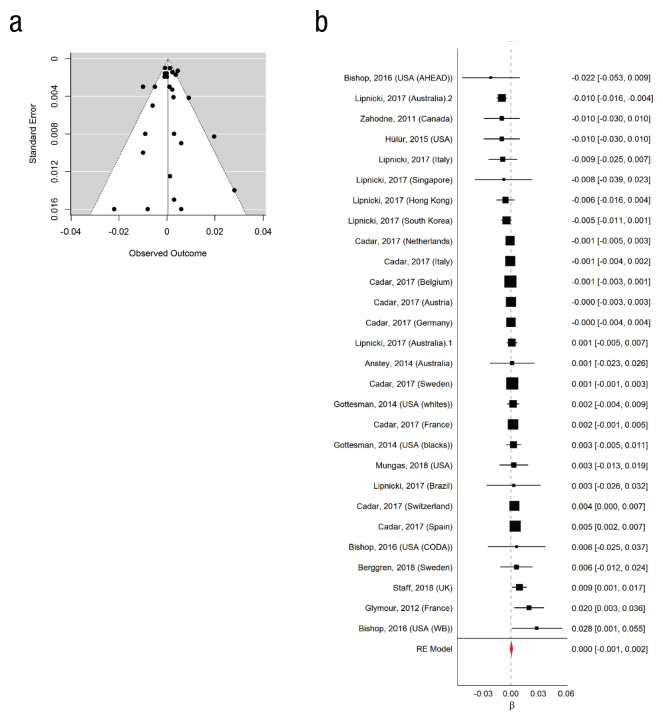
- Education–cognitive change associations are small and inconsistent. Seblova et al.’s meta-analysis reported point estimates of less than 0.001 SD per decade for episodic memory, 0.002 SD per decade for general intelligence, 0.002 SD per decade for processing speed, −0.004 SD per decade for verbal fluency, and less than −0.001 SD per decade for crystallized ability; none was statistically significant. A university degree versus high school diploma was estimated to yield only about 0.02 SD less decline over 20 years (upper 95% CI = 0.05 SD), compared with average episodic memory decline of about 0.4 to 0.5 SD per decade.
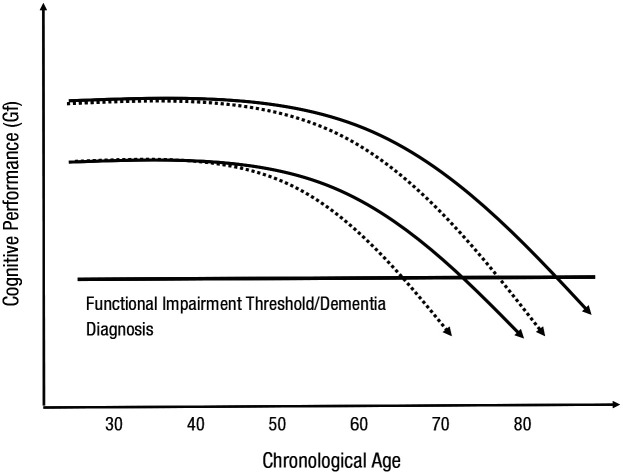
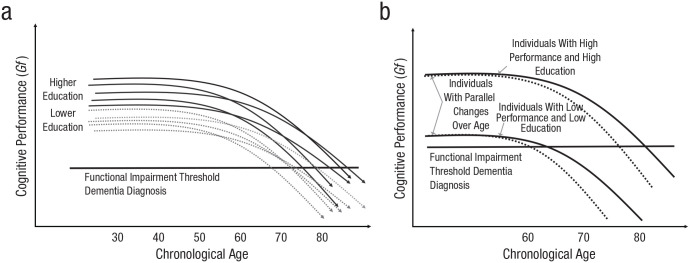
- Low educational attainment is associated with higher dementia risk. Meng and D’Arcy’s pooled analyses found a 2.6-fold increased risk for dementia in less educated versus more educated people in prevalence studies (95% CI [2.2, 3.1]) and a 1.9-fold increased risk in incidence studies (95% CI [1.5, 2.3]). The review argues a threshold model can account for this association without education affecting rates of cognitive decline.
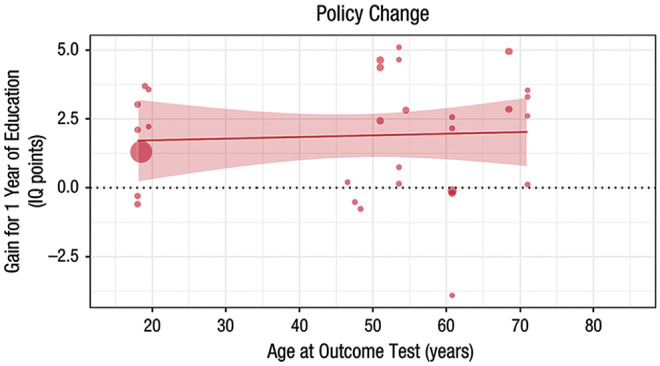
- Quasiexperimental evidence indicates education has causal effects on cognitive abilities. Ritchie and Tucker-Drob’s meta-analysis found policy-change designs yielded about 2 IQ points (0.14 SD) per year of education (95% CI [0.9, 3.1]), while school-age-cutoff designs yielded approximately 5 IQ points per year; effects appeared on fluid abilities as well as crystallized abilities.
Methods
- This is a narrative, non-systematic review synthesizing literature on educational attainment, cognitive aging, and dementia, including observational studies, harmonized longitudinal cohort analyses, and meta-analyses.
- Key evidence sources include Lipnicki et al.’s harmonized analysis of 14 longitudinal studies in 12 countries (42,170 individuals aged 54–105, 2–16 assessment waves), Seblova et al.’s meta-analysis of education and age-related cognitive change, and Ritchie and Tucker-Drob’s meta-analysis of quasiexperimental schooling effects.
- The main analysis is qualitative synthesis of effect sizes, longitudinal change models, and quasiexperimental designs; no new primary data are reported.
Limitations
- The paper states it is not a systematic review; educational attainment is indexed by qualification or years of education, which elides schooling quality, social context, and credential status, and research on those aspects is too sparse for mature conclusions.
- The paper states that cross-study heterogeneity in education–change associations remains unknown; dementia-progression studies are scarce, mixed, and subject to collider bias and ascertainment timing; effects of education after college and dose-response across all education levels remain unclear.
- Evident from the text: conclusions rely on observational and meta-analytic evidence with varying cognitive measures, reliability, ceiling effects (e.g., MMSE), and differing dementia diagnostic protocols, which limits causal and domain-specific inferences.
Model-written summary. Check it against the paper before relying on it.
Integrity signals
Registry
Cites
Statistics
Figures
Verification
Claims the paper makes
0 Valid · 2 Not valid · 150 Not checked · 143 Own results and interpretations
A result the paper reports from its own data — it cites no other source for it, so there is none to check. The quote shows it is in the paper.
In the paper
“we find that associations between education and aging-associated cognitive declines are negligible”
§ Education and Cognitive Functioning Across the Life Span > Abstract
plain- Asserted: passes — The authors put it forward as true.
- Checkable: passes — It can be checked against evidence.
- Load-bearing: passes — The paper’s conclusions depend on it.
- Based: passes — The paper gives a reason why it holds.
A result the paper states — it cites no source for it, so there is none to check. The quote shows it is in the paper.
In the paper
“We also find evidence that cognitive abilities are associated with selection into longer durations of education”
§ Education and Cognitive Functioning Across the Life Span > Abstract
plainstates an association- Asserted: passes — The authors put it forward as true.
- Checkable: passes — It can be checked against evidence.
- Load-bearing: passes — The paper’s conclusions depend on it.
- Based: passes — The paper gives a reason why it holds.
A result the paper states — it cites no source for it, so there is none to check. The quote shows it is in the paper.
In the paper
“there are common factors (e.g., parental socioeconomic resources) that affect both educational attainment and cognitive development”
§ Education and Cognitive Functioning Across the Life Span > Abstract
plainstates a cause- Asserted: passes — The authors put it forward as true.
- Checkable: passes — It can be checked against evidence.
- Load-bearing: passes — The paper’s conclusions depend on it.
- Based: passes — The paper gives a reason why it holds.
A result the paper states — it cites no source for it, so there is none to check. The quote shows it is in the paper.
In the paper
“Throughout adulthood, cognitive function in individuals with more years of schooling is, on average, better than cognitive function in those with fewer years of schooling.”
§ Education and Cognitive Functioning Across the Life Span > Evidence From Observational Studies > Summary of the evidence from observational studies in the broader context of cognitive aging and dementia
plainstates an association- Asserted: passes — The authors put it forward as true.
- Checkable: passes — It can be checked against evidence.
- Load-bearing: passes — The paper’s conclusions depend on it.
- Based: passes — The paper gives a reason why it holds.
None of the sources cited for this claim have been checked yet.
In the paper
“Two studies detected no statistically significant effect of education on cognitive change in the years before dementia diagnosis.”
§ Education and Cognitive Functioning Across the Life Span > Evidence From Observational Studies > Education and cognitive decline before and after dementia diagnosis
plain- Asserted: passes — The authors put it forward as true.
- Checkable: passes — It can be checked against evidence.
- Load-bearing: unclear — It is unclear whether the paper’s conclusions depend on it.
- Based: passes — The paper gives a reason why it holds.
186 more claims
Create a free account to see all 295 claims and to verify the 238 references still open.
- It may state two separate claims as one. 79
- Probably not a substantial claim. 31
- The quote only partly states this claim. 2
Claims other papers make about this one
Each is checked against this paper’s own text: does it say what the citing paper says it does?
The cited source says what the claim attributes to it.
In the citing paper
“overall cognitive capacities including crystallized and fluid composites, despite there being distinctions between them, have modest associations with each other, and can be summarized by a higher-order common factor (general intelligence) (Lovden, Fratiglioni, Glymour, Lindenberger, & Tucker-Drob, 2020; Lubinski, 2004; van der Maas et al., 2006).”
From Early-Initiated Childhood Reading for Pleasure: Associations with Better Cognitive Performance, Mental Well-being and Brain Structure in Young Adolescence (2024) · cites this paper as Lovden, Fratiglioni, Glymour, Lindenberger, & Tucker-Drob, 2020
The cited source says what the claim attributes to it.
In the citing paper
“Our results also suggested that early RfP showed a similar beneficial association with cognitive development as educational attainment (EA) at certain levels, since EA is positively associated with subsequent cognitive functions later-in-life (Lovden et al., 2020; Ritchie & Tucker-Drob, 2018)”
From Early-Initiated Childhood Reading for Pleasure: Associations with Better Cognitive Performance, Mental Well-being and Brain Structure in Young Adolescence (2024) · cites this paper as Lovden et al., 2020
In the citing paper
“However, educational attainment is a key driver of socioeconomic resources throughout life, such as occupation, economic outcomes, social status, and access to health care.24”
In the citing paper
“Thus, promoting continued education through early adulthood could confer benefits that contribute to lower ADRD risk directly (ie, cognitive or brain reserve, or both) and indirectly (ie, upward mobility).24”
Self-check
Percentages, sums and reported differences re-computed from the paper’s own numbers.
Each contradiction between two passages listed here was confirmed by an independent check.
Rated minor: it would not touch a result — a value no result rests on, a p-value that stays on the same side of the significance level, or a conflict that is clerical, resolved elsewhere in the paper, or outside its own findings.
In the paper
§ Education and Cognitive Functioning Across the Life Span > A Primer on Adult Cognitive Development
“Table: Table 4. Example of a Positive Association Between Educational Attainment and Cognitive Change: More Education Is Associated with Smaller Age-Related Increases in Cognitive Performance”
§ Education and Cognitive Functioning Across the Life Span > A Primer on Adult Cognitive Development
“A negative correlation between educational attainment and cognitive change can also indicate that greater educational attainment is associated with smaller increases in cognitive performance over time (e.g., in a measure of crystallized intelligence such as vocabulary). Table 4 gives an example of such a situation.”
Citations
Cites
Diagnostic and Statistical Manual of Mental Disorders
American Psychiatric Association (2013) · doi:10.1176/appi.books.9780890425596 · Cited by 116,369
Folstein, M. F., Folstein, S. E., & McHugh, P. R. (1975) · Journal of Psychiatric Research · doi:10.1016/0022-3956(75)90026-6 · Cited by 88,282
Hirono, N., Mori, E., Ikejiri, Y., Imamura, T., Shimomura, T., Hashimoto, M., Yamashita, H., & Ikeda, M. (1997) · Brain and nerve · Cited by 21,039
Kok, J. S., Berg, I. J., & Scherder, E. J. A. (2013) · Dementia and Geriatric Cognitive Disorders Extra · doi:10.1159/000353441 · Cited by 20,589
Older Adults' Reasons for Using Technology while Aging in Place
Peek, S. T. M., Luijkx, K. G., Rijnaard, M. D., Nieboer, M. E., van der Voort, C. S., Aarts, S., van Hoof, J., Vrijhoef, H. J. M., & Wouters, E. J. M. (2016) · Gerontology · doi:10.1159/000430949 · Cited by 19,690
Sensitivity and False Alarm Rate of a Fall Sensor in Long-Term Fall Detection in the Elderly
Kangas, M., Korpelainen, R., Vikman, I., Nyberg, L., & Jämsä, T. (2015) · Gerontology · doi:10.1159/000362720 · Cited by 18,909
NIA‐AA Research Framework: Toward a biological definition of Alzheimer's disease
Jack, C. R., Bennett, D. A., Blennow, K., Carrillo, M. C., Dunn, B., Haeberlein, S. B., Holtzman, D. M., Jagust, W., Jessen, F., Karlawish, J., et al. (2018) · Alzheimer's & Dementia · doi:10.1016/j.jalz.2018.02.018 · Cited by 10,537
"General Intelligence," Objectively Determined and Measured
Spearman, C. (1904) · The American Journal of Psychology · doi:10.2307/1412107 · Cited by 6,207 · cited 4×
“, 2006) is an example of an account of the positive correlations among different cognitive abilities (Spearman, 1904) that does not invoke a g factor.”
BackgroundMethodInfluentialSocioeconomic status and child development
Bradley, R. H., & Corwyn, R. F. (2002) · Annual Review of Psychology · doi:10.1146/annurev.psych.53.100901.135233 · Cited by 5,484 · cited 1×
“Individual differences in educational attainment are therefore likely to be associated with the broad constellations of environmental opportunities and advantages that come with higher parental socioeconomic status (Bradley & Corwyn, 2002; Strenze, 2007).”
BackgroundSchmidt, F. L., & Hunter, J. E. (1998) · Psychological Bulletin · doi:10.1037//0033-2909.124.2.262 · Cited by 4,180 · cited 1×
“Cognitive abilities, measured both in childhood and in adulthood, are important predictors of life achievements, health, and mortality (Batty, Deary, & Gottfredson, 2007; Gottfredson & Deary, 2004; Schmidt & Hunter, 1998; Strenze, 2007).”
Background
Research works printed but not linked: 2
- Bronfenbrenner U. McClelland P. Wethington E. Moen P. Ceci S. J. (1996). The state of Americans. New York, NY: Free Press.
- Plomin R. (1994). SAGE series on individual differences and development, Vol. 6. Genetics and experience: The interplay between nature and nurture. Thousand Oaks, CA: SAGE.
Cited by
Life course epidemiology and public health
Wagner, C., Carmeli, C., Jackisch, J., Kivimäki, M., van der Linden, B. W. A., Cullati, S., & Chiolero, A. (2024) · The Lancet Public Health · doi:10.1016/s2468-2667(24)00018-5 · Cited by 188
Wang, A.-Y., Hu, H.-Y., Ou, Y.-N., Wang, Z.-T., Ma, Y.-H., Tan, L., & Yu, J.-T. (2023) · The Journal of Prevention of Alzheimer's Disease · doi:10.14283/jpad.2022.81 · Cited by 176
“Lower education, as a key indicator of SES, has been demonstrated to be a risk factor in many previous reviews (65).”
Wilkins, C. H., Windon, C. C., Dilworth-Anderson, P., Romanoff, J., Gatsonis, C., Hanna, L., Apgar, C., Gareen, I. F., Hill, C. V., Hillner, B. E., et al. (2022) · JAMA Neurology · doi:10.1001/jamaneurol.2022.3157 · Cited by 142
Sleep disturbances and dementia risk: a multicenter study
Sindi, S., Kåreholt, I., Johansson, L., Skoog, J., Sjöberg, L., Wang, H., Johansson, B., Fratiglioni, L., Soininen, H., Solomon, A., et al. (2018) · Alzheimer's & Dementia · doi:10.1016/j.jalz.2018.05.012 · Cited by 144
Self-citationSingh, B., Bennett, H., Miatke, A., Dumuid, D., Curtis, R., Ferguson, T., Brinsley, J., Szeto, K., Petersen, J. M., Gough, C., et al. (2025) · British Journal of Sports Medicine · doi:10.1136/bjsports-2024-108589 · Cited by 157
Seyedsalehi, A., Warrier, V., Bethlehem, R. A. I., Perry, B. I., Burgess, S., & Murray, G. K. (2022) · Brain · doi:10.1093/brain/awac392 · Cited by 154
“an intercept effect of education across the lifespan rather than an effect on the slope/rate of change).(29,119,126)”
BackgroundKraft, P., & Kraft, B. (2021) · Neuroscience & Biobehavioral Reviews · doi:10.1016/j.neubiorev.2021.05.019 · Cited by 157
Identifying modifiable factors and their joint effect on dementia risk in the UK Biobank
Zhang, Y., Chen, S.-D., Deng, Y., You, J., He, X., Wu, X., Wu, B., Liu, Y., Zhang, Y.-R., Kuo, K., et al. (2023) · Nature Human Behaviour · doi:10.1038/s41562-023-01585-x · Cited by 117
Timing of lifespan influences on brain and cognition
Walhovd, K. B., Lövden, M., & Fjell, A. M. (2023) · Trends in Cognitive Sciences · doi:10.1016/j.tics.2023.07.001 · Cited by 112
Yuan, Y., Peng, C., Burr, J. A., & Lapane, K. L. (2023) · BMC Geriatrics · doi:10.1186/s12877-023-04554-1 · Cited by 131
“This was expected given that it has been established association between higher education attainment and better cognitive function in late life [62].”
BackgroundEducational attainment does not influence brain aging
Nyberg, L., Magnussen, F., Lundquist, A., Baaré, W., Bartrés-Faz, D., Bertram, L., Boraxbekk, C. J., Brandmaier, A. M., Drevon, C. A., Ebmeier, K., et al. (2021) · Proceedings of the National Academy of Sciences · doi:10.1073/pnas.2101644118 · Cited by 97
“A positive association between level of education and level of neurocognitive functioning has been reported in some past studies (5, 8, 12) (but see ref.”
Self-citationCognability: An Ecological Theory of neighborhoods and cognitive aging
Finlay, J., Esposito, M. H., Langa, K. M., Judd, S. E., & Clarke, P. J. (2022) · Social Science & Medicine · doi:10.1016/j.socscimed.2022.115220 · Cited by 113
Korous, K. M., Causadías, J. M., Bradley, R. H., Luthar, S. S., & Levy, R. (2020) · Psychological Reports · doi:10.1177/0033294120984127 · Cited by 123
Prevalence and Associated Risk Factors of Cognitive Frailty: A Systematic Review and Meta-Analysis
Zhang, T., Ren, Y., Shen, P., Jiang, S., Yang, Y., Wang, Y., Li, Z., & Yang, Y. (2022) · Frontiers in Aging Neuroscience · doi:10.3389/fnagi.2021.755926 · Cited by 98
Zhang, S., Wu, W., Xiao, Z., Wu, S., Zhao, Q., Ding, D., & Wang, L. (2023) · Cities · doi:10.1016/j.cities.2023.104312 · Cited by 104
Wang, Y., Ye, C., Kong, L., Zheng, J., Xu, M., Xu, Y., Li, M., Zhao, Z., Lu, J., Chen, Y., et al. (2022) · Hypertension · doi:10.1161/hypertensionaha.122.20286 · Cited by 94
“All MR analyses fulfilled 3 critical assumptions: (1) Genetic variants must be vigorously associated with the exposure in UVMR analyses and must be vigorously associated with at least one of the multiple exposures in MVMR analyses; (2) Genetic variants must not be associated with confounders of the associations betwee…”
BackgroundMethodWalhovd, K. B., Fjell, A. M., Wang, Y., Amlien, I. K., Mowinckel, A. M., Lindenberger, U., Düzel, S., Bartrés-Faz, D., Ebmeier, K. P., Drevon, C. A., et al. (2022) · Cerebral Cortex · doi:10.1093/cercor/bhab248 · Cited by 80
Self-citationA critical review of research on executive functions in sport and exercise
Furley, P., Schütz, L.-M., & Wood, G. (2023) · International Review of Sport and Exercise Psychology · doi:10.1080/1750984x.2023.2217437 · Cited by 96
“To the contrary, evidence shows that the prefrontal cortex develops rapidly during early infancy (Hodel, 2018) and that initial levels of prefrontal function are important for good cognitive functions across the life span (Lövdén et al., 2020).”
The effects of education on cognition in older age: Evidence from genotyped Siblings
Fletcher, J. M., Topping, M., Zheng, F., & Lu, Q. (2021) · Social Science & Medicine · doi:10.1016/j.socscimed.2021.114044 · Cited by 93
Xu, T., Ye, X., Lu, X., Lan, G., Xie, M., Huang, Z., Wang, T., Wu, J., Zhan, Z., & Xie, X. (2023) · Environment International · doi:10.1016/j.envint.2023.107803 · Cited by 79
Boyle, R. T., Knight, S. P., Looze, C. D., Carey, D., Scarlett, S., Stern, Y., Robertson, I. H., Kenny, R. A., & Whelan, R. (2021) · Alzheimer s Research & Therapy · doi:10.1186/s13195-021-00870-z · Cited by 81
Sortwell, A., Trimble, K., Ferraz, R., Geelan, D. R., Hine, G., Ramirez-Campillo, R., Carter-Thuiller, B., Gkintoni, E., & Xuan, Q. (2024) · Sustainability · doi:10.3390/su16177826 · Cited by 70
Sun, Y.-J., Sahakian, B. J., Langley, C., Yang, A., Jiang, Y., Kang, J., Zhao, X., Li, C., Cheng, W., & Feng, J. (2024) · Psychological Medicine · doi:10.1017/s0033291723001381 · Cited by 68
“Our results also suggested that early RfP showed a similar beneficial association with cognitive development as educational attainment (EA) at certain levels, since EA is positively associated with subsequent cognitive functions later-in-life (Lovden et al., 2020; Ritchie & Tucker-Drob, 2018).”
ResultCognitive aging and the life course: A new look at the Scaffolding theory
Reuter‐Lorenz, P. A., & Park, D. C. (2023) · Current Opinion in Psychology · doi:10.1016/j.copsyc.2023.101781 · Cited by 87
Video games and board games: Effects of playing practice on cognition
Martinez, L., Gimenes, M., & Lambert, E. G. (2023) · PLoS ONE · doi:10.1371/journal.pone.0283654 · Cited by 136
“These results are consistent with numerous studies showing that cognitive functions are affected by age [50] and education level [51].”
ResultThe promotion of active aging through older adult education in the context of population aging
Zhang, K., Kan, C., Luo, Y., Song, H., Tian, Z., Ding, W., Xu, L., Han, F., & Hou, N. (2022) · Frontiers in Public Health · doi:10.3389/fpubh.2022.998710 · Cited by 76
“There is a close link between an individual’s education level and their health (41, 42).”
BackgroundNoradrenaline in the aging brain: Promoting cognitive reserve or accelerating Alzheimer's disease?
Mather, M. (2021) · Seminars in Cell and Developmental Biology · doi:10.1016/j.semcdb.2021.05.013 · Cited by 62
“of the effects of education are due to those with higher education achieving a higher peak level of functioning [185].”
BackgroundAdolescent user behaviors on short video application, cognitive functioning and academic performance
Xu, Z., Gao, X., Wei, J., Liu, H., & Zhang, Y. (2023) · Computers & Education · doi:10.1016/j.compedu.2023.104865 · Cited by 92
Educational disparities in brain health and dementia across Latin America and the United States
Gonzalez‐Gomez, R., Legaz, A., Moguilner, S., Cruzat, J., Hernández, H., Baez, S., Cocchi, R., Coronel‐Olivero, C., Medel, V., Tagliazuchi, E., et al. (2024) · Alzheimer's & Dementia · doi:10.1002/alz.14085 · Cited by 55
“10 Education also fosters brain structure and function, shaping the gray matter volume 11,12 and connectivity 13,14 of the frontal, temporal, and occipitoparietal areas.”
Gut microbiome predicts cognitive function and depressive symptoms in late life
Kolobaric, A., Andreescu, C., Jašarević, E., Hong, C. H., Roh, H., Cheong, J. Y., Kim, Y., Shin, T. S., Kang, C. S., Kwon, C. O., et al. (2024) · Molecular Psychiatry · doi:10.1038/s41380-024-02551-3 · Cited by 71
“Higher MADRS (greater depression severity) was associated with higher anxiety symptoms, antidepressant use, and lower cognitive functioning across all models (Table 5, Fig.”
BackgroundExposing omitted moderators: Explaining why effect sizes differ in the social sciences
Krefeld-Schwalb, A., Sugerman, E. R., & Johnson, E. J. (2024) · Proceedings of the National Academy of Sciences · doi:10.1073/pnas.2306281121 · Cited by 74
“We again begin with simple measures, using one’s age and education as a proxy for Crystallized Intelligence since they have been shown to correlate (37).”
Trends in Dementia Prevalence, Incidence, and Mortality in the United States (2000–2016)
Farina, M. P., Zhang, Y. S., Kim, J. K., Hayward, M. D., & Crimmins, E. M. (2022) · Journal of Aging and Health · doi:10.1177/08982643211029716 · Cited by 54
“Education is thought to be a strong predictor of cognitive reserve and/or cognitive functioning (Lövdén et al., 2020; Stern, 2006, 2009).”
BackgroundDunås, T., Wåhlin, A., Nyberg, L. H., & Boraxbekk, C. (2021) · Cerebral Cortex · doi:10.1093/cercor/bhab019 · Cited by 51
“Based on recent analyses of the role of education in cognitive aging (Lövdén et al. 2020), we predicted relations for cross-sectional but not longitudinal estimates of the BAPG.”
BackgroundThe impact of education and occupation on cognitive impairment: a cross-sectional study in China
Zhong, T., Li, S., Liu, P., Wang, Y., & Chen, L. (2024) · Frontiers in Aging Neuroscience · doi:10.3389/fnagi.2024.1435626 · Cited by 73
“CR is thought to be facilitated by lifelong intellectual engagement, encompassing formal education, challenging occupations, and leisure activities (Stern, 2012; Lövdén et al., 2020).”
BackgroundHu, Y., Zhang, Y., Zhang, H., Gao, S., Wang, L., Wang, T., Han, Z., Sun, B., & Liu, G. (2022) · Molecular Psychiatry · doi:10.1038/s41380-022-01695-4 · Cited by 51
Marseglia, A., Darin‐Mattsson, A., Skoog, J., Rydén, L., Bodin, T. H., Kern, S., Sterner, T. R., Shang, Y., Zettergren, A., Westman, E., et al. (2021) · The Journals of Gerontology Series A · doi:10.1093/gerona/glab195 · Cited by 47
“Education represents a major source of cognitive stimulation during childhood and adolescence (44).”
Liu, Z., Fayyaz, S., Zhao, D., Yi, Z., Huang, J., Zhou, R.-R., Xie, J., Liu, P.-A., He, W. G., Zhang, S., et al. (2023) · Journal of Functional Foods · doi:10.1016/j.jff.2023.105476 · Cited by 54
Chakraborty, A., Hegde, S., Praharaj, S. K., Prabhu, K., Patole, C., Shetty, A. K., Mayya, S. S., Acharya, R. V., Hande, M., Prabhu, M. M., et al. (2021) · Frontiers in Endocrinology · doi:10.3389/fendo.2021.798652 · Cited by 54
“The idea of education levels influencing the cognitive decline in aging is a highly debated subject (27, 28).”
BackgroundLifestyle Enrichment in Later Life and Its Association With Dementia Risk
Wu, Z., Pandigama, D. H., Wrigglesworth, J., Owen, A. J., Woods, R. L., Chong, T. T. ‐., Orchard, S. G., Shah, R. C., Sheets, K. M., McNeil, J. J., et al. (2023) · JAMA Network Open · doi:10.1001/jamanetworkopen.2023.23690 · Cited by 55
Finlay, J., Esposito, M. H., Li, M., Kobayashi, L. C., Khan, A. M., Gomez-Lopez, I., Melendez, R. A., Colabianchi, N., Judd, S. E., & Clarke, P. J. (2021) · Journal of Aging and Health · doi:10.1177/08982643211008673 · Cited by 52
“The process by which adults maintain cognitive function as they age is heterogeneous and likely conditional on other social factors that confer power and privilege—such as gender, race, ethnicity, education, and income (Besser et al., 2019; Brewster et al., 2019; Lovden et al., 2020).”
BackgroundAlzola, P., Pardo, C. C., Bermejo‐Pareja, F., Sánchez‐Benavides, G., Peña‐Casanova, J., Puertas‐Martín, V., Fernández‐Calvo, B., & Contador, I. (2024) · Journal of Clinical Medicine · doi:10.3390/jcm13123442 · Cited by 66
“Cognitive decline is known to be associated with the aging process, but individuals may experience it at different rates [34,35].”
BackgroundCorley, J., Conte, F. P., Harris, S. E., Taylor, A. M., Redmond, P. H., Russ, T. C., Deary, I. J., & Cox, S. R. (2022) · Molecular Psychiatry · doi:10.1038/s41380-022-01900-4 · Cited by 47
“Early-life cognition is associated with a subsequent cascade of social, behavioural and clinical effects [80], such that children with higher cognitive ability tend to become brighter and healthier adults [28], thus being able to remove this confound is important to reduce the likelihood of the observed associations b…”
BackgroundBeyond “Use It or Lose It”: The Impact of Engagement on Cognitive Aging
Stine‐Morrow, E. A. L., & Manavbasi, I. E. (2022) · Annual Review of Developmental Psychology · doi:10.1146/annurev-devpsych-121020-030017 · Cited by 56
Cha, H., Farina, M. P., & Hayward, M. D. (2021) · SSM - Population Health · doi:10.1016/j.ssmph.2021.100921 · Cited by 51
Farina, F. R., Bridgeman, K., Gregory, S., Crivelli, L., Foote, I. F., Jutila, O.-E. I., Kucikova, L., Mariano, L. I., Nguyen, K.-H., Thayanandan, T., et al. (2024) · The Lancet Healthy Longevity · doi:10.1016/j.lanhl.2024.100665 · Cited by 45
“24 Thus, promoting continued education through early adulthood could confer benefits that contribute to lower ADRD risk directly (ie, cognitive or brain reserve, or both) and indirectly (ie, upward mobility).”
Sex/gender and socioeconomic differences in modifiable risk factors for dementia
Geraets, A. F. J., & Leist, A. K. (2023) · Scientific Reports · doi:10.1038/s41598-022-27368-4 · Cited by 43
Liu, W., Xing, S., Wei, F., Yao, Y., Zhang, H., Li, Y.-C., & Liu, Z. (2022) · Journal of the American Medical Directors Association · doi:10.1016/j.jamda.2022.10.001 · Cited by 46
The relationship between cognitive reserve and cognition in healthy adults: a systematic review
Panico, F., Sagliano, L., Magliacano, A., Santangelo, G., & Trojano, L. (2022) · Current Psychology · doi:10.1007/s12144-022-03523-y · Cited by 50
“…during the first decades of life-may contribute to individual differences in cognitive skills from adulthood to old age, and can provide long-lasting cognitive advantages, even delaying the age at which the threshold for cognitive impairments is reached (for a review see Lövdén et al., 2020).”
BackgroundHayward, M. D., Farina, M. P., Zhang, Y. S., Kim, J. K., & Crimmins, E. M. (2021) · The Journals of Gerontology: Series B · doi:10.1093/geronb/gbab015 · Cited by 42
Jiao, M., Liu, C., Liu, Y., Wang, Y., Gao, Q., & Ma, A. (2023) · Frontiers in Public Health · doi:10.3389/fpubh.2023.1137230 · Cited by 52
Pang, K., Liu, C., Tong, J., Ouyang, W., Hu, S., & Tang, Y. (2022) · Nutrients · doi:10.3390/nu14194198 · Cited by 39
“In addition to dietary intake, smoking status [70], education level [71], family income [72], race, and chronic conditions were proven to be associated with cognition decline.”
BackgroundWalsemann, K. M., Ureña, S., Farina, M. P., & Ailshire, J. (2022) · The Journals of Gerontology Series B · doi:10.1093/geronb/gbac026 · Cited by 41
National plans and awareness campaigns as priorities for achieving global brain health
Winter, S. F., Walsh, D., Catsman‐Berrevoets, C. E., Feigin, V. L., Destrebecq, F., Dickson, S. L., Leonardi, M., Hoemberg, V., Tassorelli, C., Ferretti, M. T., et al. (2024) · The Lancet Global Health · doi:10.1016/s2214-109x(23)00598-3 · Cited by 45
Human skill learning: expansion, exploration, selection, and refinement
Lövdén, M., Garzón, B., & Lindenberger, U. (2020) · Current Opinion in Behavioral Sciences · doi:10.1016/j.cobeha.2020.11.002 · Cited by 50
Self-citationAssociations of socioeconomic disparities with buccal DNA-methylation measures of biological aging
Raffington, L., Schwaba, T., Aikins, M., Richter, D., Wagner, G. G., Harden, K. P., Belsky, D. W., & Tucker–Drob, E. M. (2023) · Clinical Epigenetics · doi:10.1186/s13148-023-01489-7 · Cited by 30
“Individuals who are socioeconomically disadvantaged are at increased risk for aging-related diseases and exhibit lower average levels of cognitive function across the life course, (Gkiouleka et al., 2018; Lövdén et al., 2020, p. 202; Tucker-Drob, 2019).”
Self-citationFactors associated with the intrinsic capacity in older adults: A scoping review
Wei, X., Chen, Y., Qin, J., Yang, Y., Yang, T., Yan, F., Zhang, Z., Han, L., & Ma, Y. (2024) · Journal of Clinical Nursing · doi:10.1111/jocn.17017 · Cited by 35
Noradrenergic neuromodulation in ageing and disease
Krohn, F., Lancini, E., Ludwig, M., Leiman, M., Guruprasath, G., Haag, L., Panczyszyn, J., Düzel, E., Hämmerer, D., & Betts, M. J. (2023) · Neuroscience & Biobehavioral Reviews · doi:10.1016/j.neubiorev.2023.105311 · Cited by 42
Miller, S. A. (2022) · doi:10.1093/oso/9780197573174.001.0001 · Cited by 41
Xie, J., Fan, X., Yin, P., Gu, J., & Yang, C. (2022) · BMC Geriatrics · doi:10.1186/s12877-022-03181-6 · Cited by 34
Bloomberg, M., Dugravot, A., Sommerlad, A., Kivimäki, M., Singh-Manoux, A., & Sabia, S. (2023) · Age and Ageing · doi:10.1093/ageing/afad019 · Cited by 34
“Education is thought to confer a lifelong cognitive benefit because it improves cognitive function in early adult-hood, thus providing a buffer against cognitive impairment at older ages [15].”
Lv, X., Lu, Q., Deng, K., Yang, J., & Li, Y. (2023) · The American Journal of Gastroenterology · doi:10.14309/ajg.0000000000002563 · Cited by 42
“This phenomenon may contribute to the superior cognitive abilities observed in individuals with higher levels of education (27).”
BackgroundIncreased Brain Age Gap Estimate (BrainAGE) in Young Adults After Premature Birth
Hedderich, D. M., Menegaux, A., Schmitz‐Koep, B., Nuttall, R., Zimmermann, J., Schneider, S. C., Bäuml, J., Daamen, M., Boecker, H., Wilke, M., et al. (2021) · Frontiers in Aging Neuroscience · doi:10.3389/fnagi.2021.653365 · Cited by 38
Zhang, D., Zheng, W., & Li, K. (2024) · BMC Geriatrics · doi:10.1186/s12877-024-04975-6 · Cited by 58
“Previous studies have indicated that gender and education are risk factors affecting cognitive impairment in older people [44, 45].”
BackgroundGuo, S., & Zheng, X. (2023) · BMC Geriatrics · doi:10.1186/s12877-023-04166-9 · Cited by 40
“Previous evidence has suggested that education and occupation do not moderate cognitive decline [48–50].”
BackgroundMontemurro, S., Borek, D., Marinazzo, D., Zago, S., Masina, F., Napoli, E., Filippini, N., & Arcara, G. (2024) · Scientific Reports · doi:10.1038/s41598-024-66049-2 · Cited by 35
Zhang, Y. S., O’Shea, B. Q., Yu, X., Cho, T., Zhang, K. P., Kler, J. S., Langa, K. M., Weir, D. R., Gross, A. L., & Kobayashi, L. C. (2024) · The Journals of Gerontology Series B · doi:10.1093/geronb/gbae005 · Cited by 42
Ren, Z., Luo, Y., Zheng, X., & Liu, J. (2023) · General Psychiatry · doi:10.1136/gpsych-2023-101039 · Cited by 39
Wang, X., Bakulski, K. M., Paulson, H. L., Albin, R. L., & Park, S. K. (2023) · Scientific Reports · doi:10.1038/s41598-023-34648-0 · Cited by 45
Sugden, K., Moffitt, T. E., Arpawong, T. E., Arseneault, L., Belsky, D. W., Corcoran, D. L., Crimmins, E. M., Hannon, E. J., Houts, R., Mill, J. S., et al. (2023) · The Journals of Gerontology Series B · doi:10.1093/geronb/gbad056 · Cited by 34
Zhong, X., Yu, J., Jiang, F., Chen, H., Wang, Z., Jing, T., & Jiao, H. (2023) · Frontiers in Public Health · doi:10.3389/fpubh.2023.1143019 · Cited by 34
“Evidence that educational attainment and long-term education have a positive effect on cognitive function, especially in adulthood (50), provides a plausible explanation for the current finding that low educational attainment is a significant risk factor for early cognitive impairment in hypertension.”
BackgroundZhong, Q., Sun, W. C., Qin, Y., & Xu, H. (2023) · Nutrients · doi:10.3390/nu15010239 · Cited by 30
Hayes‐Larson, E., Mobley, T. M., Mungas, D., Seamans, M. J., Glymour, M. M., Gilsanz, P., DeCarli, C. S., Whitmer, R. A., & Mayeda, E. R. (2022) · Alzheimer s & Dementia · doi:10.1002/alz.12522 · Cited by 34
Self-citationSocial Determinants of Intrinsic Capacity: A National Cohort Study
Zhao, B., Liu, Z., Fu, Y., Zhang, H., Wu, J., Lai, C., Xue, E., Gao, Q., & Shao, J. (2023) · American Journal of Preventive Medicine · doi:10.1016/j.amepre.2023.10.008 · Cited by 36
Ourry, V., Binette, A. P., St‐Onge, F., Strikwerda‐Brown, C., Chagnot, A., Poirier, J., Breitner, J. C. S., Arenaza‐Urquijo, E. M., Rabin, J. S., Buckley, R. F., et al. (2023) · Biological Psychiatry · doi:10.1016/j.biopsych.2023.09.003 · Cited by 30
de Sousa, A. A., Dames, B. A. R., Graff, E. C., Mohamedelhassan, R., Vassilopoulos, T., & Charvet, C. J. (2023) · Communications Biology · doi:10.1038/s42003-023-05034-3 · Cited by 45
Lindseth, L. R. S., de Lange, A. G., van der Meer, D., Agartz, I., Westlye, L. T., Tamnes, C. K., & Barth, C. (2023) · Frontiers in Aging Neuroscience · doi:10.3389/fnagi.2022.1014605 · Cited by 38
de la Fuente, J., Grotzinger, A. D., Marioni, R. E., Nivard, M. G., & Tucker-Drob, E. M. (2022) · PLOS Genetics · doi:10.1371/journal.pgen.1010208 · Cited by 28
“Those presenting with Clinical AD may not constitute those individuals with the most severe forms of AD pathophysiology, but may be constitute a group whose cognitive impairments are more overt or detectable due to ancillary characteristics (such as those related to peak premorbid levels of cognitive functioning) that…”
BackgroundSelf-citationWang, Y., Jiang, Y., Wu, W., Xu, K., Zhao, Q., Tan, Z., Liang, X., Fan, M., Xiao, Z., Zheng, L., et al. (2022) · Alzheimer s & Dementia · doi:10.1002/alz.12679 · Cited by 32
Epigenetic biomarkers in aging and longevity: Current and future application
Izadi, M., Sadri, N., Abdi, A., Serajian, S., Jalalei, D., & Tahmasebi, S. (2024) · Life Sciences · doi:10.1016/j.lfs.2024.122842 · Cited by 37
Potts, C., Richardson, J., Bond, R., Price, R. K., Mulvenna, M. D., Zvolský, P., Harvey, M., Hughes, C., & Duffy, F. (2021) · European Journal of Ageing · doi:10.1007/s10433-021-00652-4 · Cited by 36
Dodds, L., Brayne, C., & Siette, J. (2024) · BMC Geriatrics · doi:10.1186/s12877-024-04794-9 · Cited by 45
“The protective effects of education attainment may only work below a threshold at which normative age-related impairments may surpass [73].”
BackgroundXu, X., Zhou, Y., Su, D., Dang, Y., & Zhang, X. (2023) · International Journal of Environmental Research and Public Health · doi:10.3390/ijerph20021256 · Cited by 36
“In addition, the cognitive level was the most important in the middle-aged and elderly groups, which indicates that if there exists a problem with the cognitive level in the life course, it will have a devastating effect on mental health and quality of life [42].”
BackgroundBrain aging differs with cognitive ability regardless of education
Walhovd, K. B., Nyberg, L. H., Lindenberger, U., Amlien, I. K., Sørensen, Ø., Wang, Y., Mowinckel, A. M., Kievit, R., Ebmeier, K. P., Bartrés‐Faz, D., et al. (2022) · Scientific Reports · doi:10.1038/s41598-022-17727-6 · Cited by 25
Self-citationListabarth, S., Groemer, M., Waldhoer, T., Vyssoki, B., Pruckner, N., Vyssoki, S., Glahn, A., König-Castillo, D. M., & König, D. (2022) · European Psychiatry · doi:10.1192/j.eurpsy.2022.2344 · Cited by 37
Luo, H., Hu, H., Zheng, Z., Sun, C., & Yu, K. (2024) · BMC Public Health · doi:10.1186/s12889-024-20197-2 · Cited by 38
“Numerous factors contribute to cognitive decline in older adults, including genetic susceptibility [11], education level [12], depression [13], and cardiovascular disease [14].”
BackgroundZioga, T., Ferentinos, A., Konsolaki, E., Nega, C., & Kourtesis, P. (2024) · Behavioral Sciences · doi:10.3390/bs14100874 · Cited by 41
Farina, M. P., Kim, J. K., Hayward, M. D., & Crimmins, E. M. (2022) · Brain Behavior & Immunity - Health · doi:10.1016/j.bbih.2022.100559 · Cited by 27
Gut Microbiota and Targeted Biomarkers Analysis in Patients With Cognitive Impairment
Lu, S., Yang, Y., Xu, Q., Wang, S., Yu, J. Z., Zhang, B., Wang, Z., Zhang, Y., Lu, W., & Hong, K. (2022) · Frontiers in Neurology · doi:10.3389/fneur.2022.834403 · Cited by 27
Subjective age and attitudes toward own aging across two decades of historical time.
Wahl, H., Drewelies, J., Düzel, S., Lachman, M. E., Smith, J., Eibich, P., Steinhagen‐Thiessen, E., Demuth, I., Lindenberger, U., Wagner, G. G., et al. (2022) · Psychology and Aging · doi:10.1037/pag0000649 · Cited by 32
“However, contrary to widely held assumptions, associations between education and rates of cognitive decline in adulthood and old age are negligible (Lövdén et al., 2020).”
ResultSelf-citationGerstorf, D., Ram, N., Drewelies, J., Duezel, S., Eibich, P., Steinhagen-Thiessen, E., Liebig, S., Goebel, J., Demuth, I., Villringer, A., et al. (2023) · Psychological Science · doi:10.1177/09567976221118541 · Cited by 26
“…in early life are maintained and carried forward into old age, and recent meta-analyses showing that differences in education have substantial effects on levels of cognitive functioning but null effects on rates of cognitive aging (Lövdén et al., 2020) or brain aging (Nyberg et al., 2021).”
BackgroundSelf-citationZhu, Y., Wang, F., Ning, P., Zhu, Y., Zhang, L., Li, K., Liu, B., Ren, H. J., Xu, Z., Pang, A., et al. (2024) · npj Parkinson s Disease · doi:10.1038/s41531-024-00828-6 · Cited by 33
Liu, Y., Xian, J., Wang, R., Ma, K., Li, F., Wang, F. L., Yang, X., Mu, N., Xu, K., Quan, Y. L., et al. (2022) · Frontiers in Psychiatry · doi:10.3389/fpsyt.2022.963419 · Cited by 33
“Total fatigue scores can range from 0 to 100 and are interpreted as no fatigue (0-20), minor fatigue (21-39), serious fatigue (40-59), severe fatigue (60-79) and extremely severe fatigue (80-100) (15).”
BackgroundJansen, M. G., Geerligs, L., Claassen, J. A. H. R., Overdorp, E. J., Brazil, I. A., Kessels, R. P. C., & Oosterman, J. M. (2021) · Frontiers in Human Neuroscience · doi:10.3389/fnhum.2021.723728 · Cited by 40
Status and Factors of Cognitive Function Among Older Adults in Urban China
Shen, L., Tang, X., Li, C., Qian, Z., Wang, J., & Liu, W. (2021) · Frontiers in Psychology · doi:10.3389/fpsyg.2021.728165 · Cited by 36
Fjell, A. M., Røgeberg, O. J., Sørensen, Ø., Amlien, I. K., Bartrés‐Faz, D., Brandmaier, A. M., Cattaneo, G., Düzel, S., Grydeland, H., Henson, R. N., et al. (2025) · Nature Medicine · doi:10.1038/s41591-025-03828-y · Cited by 55
“This is controversial, however, because even though education is associated with better cognitive function among older adults, it is not clear that more educated persons show less cognitive decline when measured longitudinally 21,22 .”
InfluentialSelf-citationYang, Z.-G., Sun, X., Han, X., Wang, X. “., & Wang, L. (2025) · BMC Geriatrics · doi:10.1186/s12877-024-05672-0 · Cited by 29
Wu, X., Tang, Y., He, Y., Wang, Q., Wang, Y., & Qin, X. (2024) · Frontiers in Public Health · doi:10.3389/fpubh.2024.1500172 · Cited by 35
Jin, Y., Lin, L., Xiong, M., Sun, S., & Wu, S. (2023) · Neurobiology of Aging · doi:10.1016/j.neurobiolaging.2023.04.003 · Cited by 27
Attenuated cognitive functioning decades after preeclampsia
Alers, R., Ghossein‐Doha, C., Canjels, L. P. W., Muijtjens, E. S. H., Brandt, Y., Kooi, M. E., Gerretsen, S. C., Jansen, J. F. A., Backes, W. H., Hurks, P. P. M., et al. (2023) · American Journal of Obstetrics and Gynecology · doi:10.1016/j.ajog.2023.02.020 · Cited by 29
Bliss, E. S., Biki, S. M., Wong, R. H. X., Howe, P. R. C., & Mills, D. E. (2023) · European Journal of Applied Physiology · doi:10.1007/s00421-023-05154-y · Cited by 25
Metadata
- Authors
- Lövdén, M., Fratiglioni, L., Glymour, M. M., Lindenberger, U., & Tucker-Drob, E. M.
- Affiliations
- Stockholm University (SE)
- University of California, San Francisco (US)
- Max Planck Institute for Human Development (DE)
- Department of Psychology and Population Research Center, University of Texas at Austin
- Corresponding author
- Lövdén, Martin
- Venue
- Psychological Science in the Public Interest
- Publisher
- SAGE Publications
- Published
- 2020-08
- Volume
- 21
- Issue
- 1
- Pages
- 6-41
- ISSN
- 1529-1006 (ISSN-L)
- 2160-0031
- PMC
- PMC7425377
- OpenAlex
- W3047728892
- Cited by
- 1,224
- References
- 271
- Citations by year
- 2026: 203 · 2025: 281 · 2024: 294 · 2023: 229 · 2022: 153 · 2021: 60 · 2020: 4
- FWCI
- 81.33
- Type
- journal article
- Language
- en
- Open access
- hybrid
- doi.org
- Licence
- cc-by
- creativecommons.org/licenses/by/4.0/ (unspecified)
- journals.sagepub.com/page/policies/text-and-data-mining-license (tdm)
- Locations
- Psychological Science in the Public Interest (publishedVersion, cc-by)
- PubMed Central (publishedVersion, cc-by)
- PubMed (publishedVersion)
- MPG.PuRe (Max Planck Society) (submittedVersion, other-oa)
- Funders
- Eunice Kennedy Shriver National Institute of Child Health and Human Development (R01HD083613, P2CHD042849)
- Topics
- Health Sciences › Medicine › Psychiatry and Mental health › Dementia and Cognitive Impairment Research
- Social Sciences › Psychology › Experimental and Cognitive Psychology › Cognitive Abilities and Testing
- Social Sciences › Psychology › Developmental and Educational Psychology › Aging and Gerontology Research
- Keywords
- educational attainment, cognitive aging, cognitive decline, late-life cognition, dementia risk, cognitive reserve, brain maintenance, individual differences in cognitive ability, cognitive development
- MeSH terms
- Cognitive Aging, Academic Success, Cognition, Dementia, Educational Status, Humans, Risk Factors, Cognitive Reserve, Cognitive Dysfunction
About these checks
Registry, retraction, Cites and statistics results are computed, not judged, with one exception: a printed reference that no index lists is read once by a model before it counts as a citation error. Claims are extracted by a model and kept only when their quote appears verbatim in the text; each cited source is then checked, with a model’s help, for whether it says what the claim relies on. Those verdicts can be wrong — read the claim’s quote and the cited source before relying on one.
A language model drew the claims from the paper on 2026-10-04, under version 3 of the claim definition (model deepseek-v4.1-flash, prompt extract-v3).
A second model labelled each claim on 2026-10-04 (model jev-1.13-20260917, definition revision gold-guideline-v0.2).
Statistics and arithmetic are recomputed, not judged.
Confidence bands are shown only for fields calibrated on our annotated test set. None is calibrated yet, so no band is shown.
What counts as a claim ›How we measure confidence ›How we check this ›
Are you an author, or do you see a problem with this page? Request a review
Data sources
Bibliographic data: Semantic Scholar, OpenAlex, Crossref.
Contains information from the Semantic Scholar Academic Graph Datasets, made available under the ODC Attribution License (ODC-BY 1.0).
Semantic Scholar’s data is described in: Kinney, R., et al. (2023). The Semantic Scholar Open Data Platform. arXiv:2301.10140.
