

Education and Cognitive Functioning Across the Life Span
Open accessThe DOI matches its Crossref record; 261 of the 271 references it cites were found in a registry or an index, and 2 are not checked yet; none of the 238 sources its claims cite is checked for support yet.
Abstract
Cognitive abilities are important predictors of educational and occupational performance, socioeconomic attainment, health, and longevity. Declines in cognitive abilities are linked to impairments in older adults’ everyday functions, but people differ from one another in their rates of cognitive decline over the course of adulthood and old age. Hence, identifying factors that protect against compromised late-life cognition is of great societal interest. The number of years of formal education completed by individuals is positively correlated with their cognitive function throughout adulthood and predicts lower risk of dementia late in life. These observations have led to the propositions that prolonging education might (a) affect cognitive ability and (b) attenuate aging-associated declines in cognition. We evaluate these propositions by reviewing the literature on educational attainment and cognitive aging, including recent analyses of data harmonized across multiple longitudinal cohort studies and related meta-analyses. In line with the first proposition, the evidence indicates that educational attainment has positive effects on cognitive function. We also find evidence that cognitive abilities are associated with selection into longer durations of education and that there are common factors (e.g., parental socioeconomic resources) that affect both educational attainment and cognitive development. There is likely reciprocal interplay among these factors, and among cognitive abilities, during development. Education–cognitive ability associations are apparent across the entire adult life span and across the full range of education levels, including (to some degree) tertiary education. However, contrary to the second proposition, we find that associations between education and aging-associated cognitive declines are negligible and that a threshold model of dementia can account for the association between educational attainment and late-life dementia risk. We conclude that educational attainment exerts its influences on late-life cognitive function primarily by contributing to individual differences in cognitive skills that emerge in early adulthood but persist into older age. We also note that the widespread absence of educational influences on rates of cognitive decline puts constraints on theoretical notions of cognitive aging, such as the concepts of cognitive reserve and brain maintenance. Improving the conditions that shape development during the first decades of life carries great potential for improving cognitive ability in early adulthood and for reducing public-health burdens related to cognitive aging and dementia.
Checked 2026-10-05 · 2 references not checked yet
Overview
CoChat Summary
TL;DR
This review concludes that educational attainment is robustly associated with higher levels of cognitive function across adulthood and lower late-life dementia risk, but it has negligible associations with rates of aging-related cognitive decline. Education’s late-life cognitive benefits are best explained by higher peak cognitive ability in early adulthood that persists and delays threshold crossing, not by slowed decline.
Key findings
- Educational attainment is positively associated with adult cognitive-ability levels. Strenze’s meta-analysis (59 samples, total N = 84,828) found a sample-size-weighted average correlation corrected for measurement error of .56 (95% CI [0.53, 0.58]); Opdebeeck et al.’s older-adult meta-analysis (109 studies, total N = 111,684) found an average correlation of approximately .3 for general cognitive ability. Five additional years of education were associated with roughly 0.2 to 0.4 SD higher cognitive performance, or about 3 to 6 IQ points.
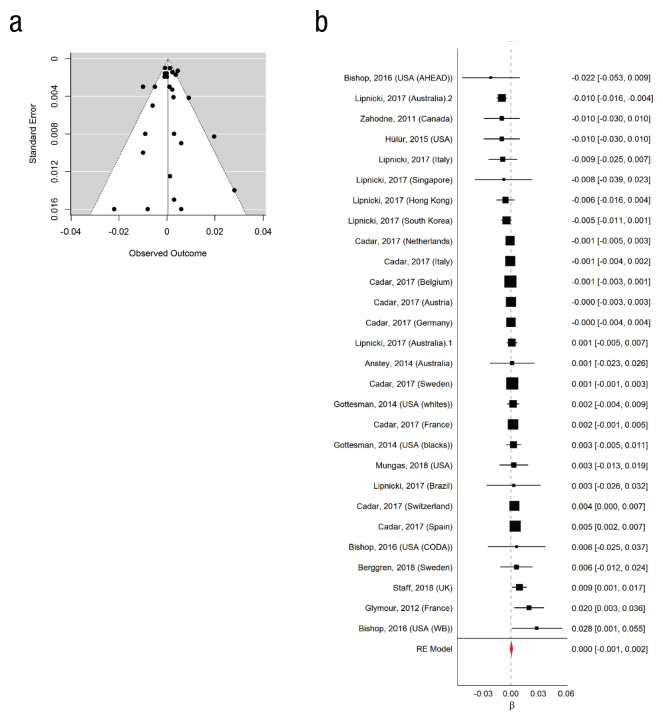
- Education–cognitive change associations are small and inconsistent. Seblova et al.’s meta-analysis reported point estimates of less than 0.001 SD per decade for episodic memory, 0.002 SD per decade for general intelligence, 0.002 SD per decade for processing speed, −0.004 SD per decade for verbal fluency, and less than −0.001 SD per decade for crystallized ability; none was statistically significant. A university degree versus high school diploma was estimated to yield only about 0.02 SD less decline over 20 years (upper 95% CI = 0.05 SD), compared with average episodic memory decline of about 0.4 to 0.5 SD per decade.
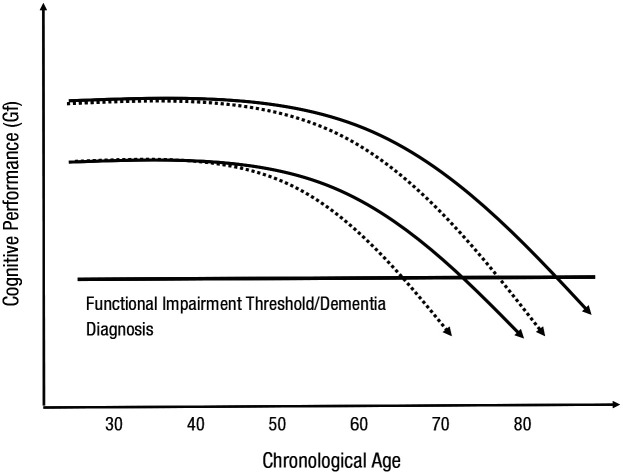
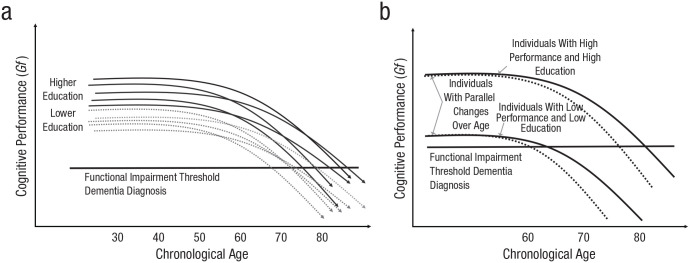
- Low educational attainment is associated with higher dementia risk. Meng and D’Arcy’s pooled analyses found a 2.6-fold increased risk for dementia in less educated versus more educated people in prevalence studies (95% CI [2.2, 3.1]) and a 1.9-fold increased risk in incidence studies (95% CI [1.5, 2.3]). The review argues a threshold model can account for this association without education affecting rates of cognitive decline.
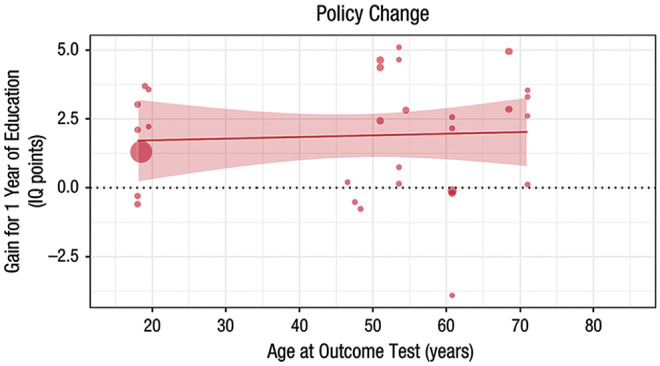
- Quasiexperimental evidence indicates education has causal effects on cognitive abilities. Ritchie and Tucker-Drob’s meta-analysis found policy-change designs yielded about 2 IQ points (0.14 SD) per year of education (95% CI [0.9, 3.1]), while school-age-cutoff designs yielded approximately 5 IQ points per year; effects appeared on fluid abilities as well as crystallized abilities.
Methods
- This is a narrative, non-systematic review synthesizing literature on educational attainment, cognitive aging, and dementia, including observational studies, harmonized longitudinal cohort analyses, and meta-analyses.
- Key evidence sources include Lipnicki et al.’s harmonized analysis of 14 longitudinal studies in 12 countries (42,170 individuals aged 54–105, 2–16 assessment waves), Seblova et al.’s meta-analysis of education and age-related cognitive change, and Ritchie and Tucker-Drob’s meta-analysis of quasiexperimental schooling effects.
- The main analysis is qualitative synthesis of effect sizes, longitudinal change models, and quasiexperimental designs; no new primary data are reported.
Limitations
- The paper states it is not a systematic review; educational attainment is indexed by qualification or years of education, which elides schooling quality, social context, and credential status, and research on those aspects is too sparse for mature conclusions.
- The paper states that cross-study heterogeneity in education–change associations remains unknown; dementia-progression studies are scarce, mixed, and subject to collider bias and ascertainment timing; effects of education after college and dose-response across all education levels remain unclear.
- Evident from the text: conclusions rely on observational and meta-analytic evidence with varying cognitive measures, reliability, ceiling effects (e.g., MMSE), and differing dementia diagnostic protocols, which limits causal and domain-specific inferences.
Model-written summary. Check it against the paper before relying on it.
Integrity signals
Registry
Cites
Statistics
Figures
Verification
Claims the paper makes
0 Valid · 2 Not valid · 150 Not checked · 143 Own results and interpretations
A result the paper reports from its own data — it cites no other source for it, so there is none to check. The quote shows it is in the paper.
In the paper
“we find that associations between education and aging-associated cognitive declines are negligible”
§ Education and Cognitive Functioning Across the Life Span > Abstract
plain- Asserted: passes — The authors put it forward as true.
- Checkable: passes — It can be checked against evidence.
- Load-bearing: passes — The paper’s conclusions depend on it.
- Based: passes — The paper gives a reason why it holds.
A result the paper states — it cites no source for it, so there is none to check. The quote shows it is in the paper.
In the paper
“We also find evidence that cognitive abilities are associated with selection into longer durations of education”
§ Education and Cognitive Functioning Across the Life Span > Abstract
plainstates an association- Asserted: passes — The authors put it forward as true.
- Checkable: passes — It can be checked against evidence.
- Load-bearing: passes — The paper’s conclusions depend on it.
- Based: passes — The paper gives a reason why it holds.
A result the paper states — it cites no source for it, so there is none to check. The quote shows it is in the paper.
In the paper
“there are common factors (e.g., parental socioeconomic resources) that affect both educational attainment and cognitive development”
§ Education and Cognitive Functioning Across the Life Span > Abstract
plainstates a cause- Asserted: passes — The authors put it forward as true.
- Checkable: passes — It can be checked against evidence.
- Load-bearing: passes — The paper’s conclusions depend on it.
- Based: passes — The paper gives a reason why it holds.
A result the paper states — it cites no source for it, so there is none to check. The quote shows it is in the paper.
In the paper
“Throughout adulthood, cognitive function in individuals with more years of schooling is, on average, better than cognitive function in those with fewer years of schooling.”
§ Education and Cognitive Functioning Across the Life Span > Evidence From Observational Studies > Summary of the evidence from observational studies in the broader context of cognitive aging and dementia
plainstates an association- Asserted: passes — The authors put it forward as true.
- Checkable: passes — It can be checked against evidence.
- Load-bearing: passes — The paper’s conclusions depend on it.
- Based: passes — The paper gives a reason why it holds.
None of the sources cited for this claim have been checked yet.
In the paper
“Two studies detected no statistically significant effect of education on cognitive change in the years before dementia diagnosis.”
§ Education and Cognitive Functioning Across the Life Span > Evidence From Observational Studies > Education and cognitive decline before and after dementia diagnosis
plain- Asserted: passes — The authors put it forward as true.
- Checkable: passes — It can be checked against evidence.
- Load-bearing: unclear — It is unclear whether the paper’s conclusions depend on it.
- Based: passes — The paper gives a reason why it holds.
186 more claims
Create a free account to see all 295 claims and to verify the 238 references still open.
- It may state two separate claims as one. 79
- Probably not a substantial claim. 31
- The quote only partly states this claim. 2
Claims other papers make about this one
Each is checked against this paper’s own text: does it say what the citing paper says it does?
The cited source says what the claim attributes to it.
In the citing paper
“overall cognitive capacities including crystallized and fluid composites, despite there being distinctions between them, have modest associations with each other, and can be summarized by a higher-order common factor (general intelligence) (Lovden, Fratiglioni, Glymour, Lindenberger, & Tucker-Drob, 2020; Lubinski, 2004; van der Maas et al., 2006).”
From Early-Initiated Childhood Reading for Pleasure: Associations with Better Cognitive Performance, Mental Well-being and Brain Structure in Young Adolescence (2024) · cites this paper as Lovden, Fratiglioni, Glymour, Lindenberger, & Tucker-Drob, 2020
The cited source says what the claim attributes to it.
In the citing paper
“Our results also suggested that early RfP showed a similar beneficial association with cognitive development as educational attainment (EA) at certain levels, since EA is positively associated with subsequent cognitive functions later-in-life (Lovden et al., 2020; Ritchie & Tucker-Drob, 2018)”
From Early-Initiated Childhood Reading for Pleasure: Associations with Better Cognitive Performance, Mental Well-being and Brain Structure in Young Adolescence (2024) · cites this paper as Lovden et al., 2020
In the citing paper
“However, educational attainment is a key driver of socioeconomic resources throughout life, such as occupation, economic outcomes, social status, and access to health care.24”
In the citing paper
“Thus, promoting continued education through early adulthood could confer benefits that contribute to lower ADRD risk directly (ie, cognitive or brain reserve, or both) and indirectly (ie, upward mobility).24”
Self-check
Percentages, sums and reported differences re-computed from the paper’s own numbers.
Each contradiction between two passages listed here was confirmed by an independent check.
Rated minor: it would not touch a result — a value no result rests on, a p-value that stays on the same side of the significance level, or a conflict that is clerical, resolved elsewhere in the paper, or outside its own findings.
In the paper
§ Education and Cognitive Functioning Across the Life Span > A Primer on Adult Cognitive Development
“Table: Table 4. Example of a Positive Association Between Educational Attainment and Cognitive Change: More Education Is Associated with Smaller Age-Related Increases in Cognitive Performance”
§ Education and Cognitive Functioning Across the Life Span > A Primer on Adult Cognitive Development
“A negative correlation between educational attainment and cognitive change can also indicate that greater educational attainment is associated with smaller increases in cognitive performance over time (e.g., in a measure of crystallized intelligence such as vocabulary). Table 4 gives an example of such a situation.”
Citations
Cites
Items 201–265 of 265
Glymour, M. M., Tzourio, C., & Dufouil, C. (2012) · American Journal of Epidemiology · doi:10.1093/aje/kwr509 · Cited by 83 · cited 1×
“However, studies that have attempted to address this issue have not reported substantially altered estimates (Foverskov et al., 2018; Glymour et al., 2012; Gottesman et al., 2014).”
BackgroundSelf-citationCohort Differences in Trajectories of Cognitive Aging
Finkel, D., Reynolds, C. A., McArdle, J. J., & Pedersen, N. L. (2007) · The Journals of Gerontology Series B: Psychological Sciences and Social Sciences · doi:10.1093/geronb/62.5.p286 · Cited by 83
Wang, X.-J., Xu, W., Li, J.-Q., Cao, X.-P., Tan, L., & Yu, J.-T. (2019) · Journal of Alzheimer's Disease · doi:10.3233/jad-180856 · Cited by 82
Mayeda, E. R., Tchetgen Tchetgen, E. J., Power, M. C., Weuve, J., Jacqmin-Gadda, H., Marden, J. R., Vittinghoff, E., Keiding, N., & Glymour, M. M. (2016) · American Journal of Epidemiology · doi:10.1093/aje/kwv451 · Cited by 82 · cited 1×
“Statistical analyses that are robust to violations of some assumptions regarding the random nature of selective dropout may, in some more extreme circumstances, fail to recover unbiased estimates of the association between educational attainment and longitudinal cognitive declines (Mayeda et al., 2018; Mayeda et al.,…”
BackgroundSelf-citationAssociation of socioeconomic status and cognitive functioning change among elderly Chinese people
Yang, L., Martikainen, P., Silventoinen, K., & Konttinen, H. M. (2016) · Age and Ageing · doi:10.1093/ageing/afw107 · Cited by 80
Hertzog, C., & Schaie, K. W. (1988) · Psychology and Aging · doi:10.1037//0882-7974.3.2.122 · Cited by 80 · cited 2×
“For example, between-persons differences in cognitive performance are remarkably stable throughout adult life (de Frias et al., 2007; Deary et al., 2013; Hertzog & Schaie, 1986, 1988; Tucker-Drob & Briley, 2014; Tucker-Drob et al., 2019).”
BackgroundCognitive Trajectory Changes Over 20 Years Before Dementia Diagnosis: A Large Cohort Study
Li, G., Larson, E. B., Shofer, J. B., Crane, P. K., Gibbons, L. E., McCormick, W. C., Bowen, J. D., & Thompson, M. L. (2017) · Journal of the American Geriatrics Society · doi:10.1111/jgs.15077 · Cited by 79
Cognitive performance across the life course of Bolivian forager-farmers with limited schooling.
Gurven, M., Fuerstenberg, E., Trumble, B., Stieglitz, J., Beheim, B., Davis, H., & Kaplan, H. (2017) · Developmental Psychology · doi:10.1037/dev0000175 · Cited by 79 · cited 1×
“Moreover, life-span cognitive data from societies with very low overall levels of education show the same qualitative patterns of changes observed in societies with higher average educational attainment (Gurven et al., 2017).”
BackgroundBarnes, L. L., Wilson, R. S., Hebert, L. E., Scherr, P. A., Evans, D. A., & Mendes de Leon, C. F. (2011) · The Journals of Gerontology Series B: Psychological Sciences and Social Sciences · doi:10.1093/geronb/gbr016 · Cited by 78
Preventing Alzheimer's Disease by Targeting Vascular Risk Factors: Hope and Gap
Qiu, C. (2012) · Journal of Alzheimer's Disease · doi:10.3233/jad-2012-120922 · Cited by 78 · cited 1×
“…with cardiometabolic risk factors such as diabetes, obesity, and hypertension and have also shown the relevance of aggregated cardiovascular risk factors including smoking, hypertension, diabetes, and hypercholesterolemia at middle age or several years before the onset of dementia (C. Qiu, 2012).”
BackgroundBrandmaier, A. M., von Oertzen, T., Ghisletta, P., Lindenberger, U., & Hertzog, C. K. (2018) · Frontiers in Psychology · doi:10.3389/fpsyg.2018.00294 · Cited by 78
Self-citationEducation, Wechsler's Full Scale IQ, and g
Colom, R., Abad, F. J., García, L. F., & Juan-Espinosa, M. (2002) · Intelligence · doi:10.1016/s0160-2896(02)00122-8 · Cited by 77
Yanez, N. D., Kronmal, R. A., & Shemanski, L. R. (1998) · Statistics in Medicine · doi:10.1002/(sici)1097-0258(19981130)17:22<2597::aid-sim940>3.0.co;2-g · Cited by 77
Rönnlund, M., & Nilsson, L. (2007) · Intelligence · doi:10.1016/j.intell.2007.05.002 · Cited by 75
Johansson, B., Hofer, S. M., Allaire, J. C., Maldonado-Molina, M. M., Piccinin, A. M., Berg, S., Pedersen, N. L., & McClearn, G. E. (2004) · Psychology and Aging · doi:10.1037/0882-7974.19.1.145 · Cited by 73 · cited 1×
“Potential biasing effects of mortality and selective dropout also merit consideration (e.g., Foverskov et al., 2018; Glymour, Tzourio, & Dufouil, 2012; Johansson et al., 2004; Mayeda, Filshtein, Tripodis, Glymour, & Gross, 2018).”
BackgroundRandom Changepoint Model for Joint Modeling of Cognitive Decline and Dementia
Jacqmin‐Gadda, H., Commenges, D., & Dartigues, J. (2006) · Biometrics · doi:10.1111/j.1541-0420.2005.00443.x · Cited by 71
Experience Producing Drive Theory: how genes drive experience and shape personality
Bouchard, T. (1997) · Acta Paediatrica · doi:10.1111/j.1651-2227.1997.tb18347.x · Cited by 71 · cited 1×
“…and motivations, and that those experiences may in turn affect those traits, thus both supporting cognitive development and increasing exposure to further environmental experiences relevant for cognitive development (Bouchard, 1997; R. B. Cattell, 1987; Hayes, 1962; Johnson, 2010; Sameroff, 1975).”
BackgroundPhenotype–environment correlations in longitudinal twin models
Beam, C. R., & Turkheimer, E. (2013) · Development and Psychopathology · doi:10.1017/s0954579412000867 · Cited by 68 · cited 3×
“…are partly genetically influenced, these transactional processes give rise to gene–environment correlations: the tendency for individuals’ genotypes to be correlated with their environmental experiences (Beam & Turkheimer, 2013; Plomin, DeFries, & Loehlin, 1977; Scarr & McCartney, 1983).”
BackgroundGenetic and environmental transactions underlying educational attainment
Johnson, W., Deary, I. J., & Iacono, W. G. (2009) · Intelligence · doi:10.1016/j.intell.2009.05.006 · Cited by 67
Murray, A. L., Johnson, W., McGue, M. K., & Iacono, W. G. (2014) · Personality and Individual Differences · doi:10.1016/j.paid.2014.06.014 · Cited by 66
Berggren, R., Nilsson, J., & Lövdén, M. (2018) · Frontiers in Psychology · doi:10.3389/fpsyg.2018.01138 · Cited by 65 · cited 1×
“, 2020) and recent studies including an adult life-span sample (participants were 35–80 years old) have shown no strong indication that effects of education on cognitive ability are larger at younger ages (Berggren et al., 2018).”
BackgroundSelf-citationCognitive decline and education in mild dementia
Unverzagt, F. W., Hui, S. L., Farlow, M. R., Hall, K. S., & Hendrie, H. C. (1998) · Neurology · doi:10.1212/wnl.50.1.181 · Cited by 63
Becker, R. (2014) · Educational Research · doi:10.1080/00131881.2014.898914 · Cited by 62 · cited 2×
“…a similar way, historical trends in gender equality have played a major role in transforming betweenpersons differences in education across cohorts (Becker, 2014; Branigan et al., 2013; Buchmann, DiPrete, & McDaniel, 2008; Fischbein, Lange, & Lichtenstein, 1997; Heath et al., 1985; Weber et al.,…”
BackgroundAn Individual Differences Perspective: Implications for Cognitive Research in Gerontology
Hertzog, C. (1985) · Research on Aging · doi:10.1177/0164027585007001002 · Cited by 58 · cited 2×
“The level of a cognitive ability for a given person at any point in adulthood can be both heuristically and mathematically described in terms of that individual’s level of cognitive ability in early adulthood and his or her change from that level during the ensuing period (Hertzog, 1985).”
BackgroundJutkowitz, E., MacLehose, R. F., Gaugler, J. E., Dowd, B., Kuntz, K. M., & Kane, R. L. (2017) · The Journals of Gerontology Series A: Biological Sciences and Medical Sciences · doi:10.1093/gerona/glw079 · Cited by 58
Mechanisms underlying resilience in ageing
Stern, Y., Chételat, G., Habeck, C. G., Arenaza‐Urquijo, E. M., Vemuri, P., Estanga, A., Bartrés‐Faz, D., Cantillon, M., Clouston, S., Elman, J. A., et al. (2019) · Nature reviews. Neuroscience · doi:10.1038/s41583-019-0138-0 · Cited by 58 · cited 1×
“Although there is currently no universally accepted definition of cognitive reserve (Cabeza et al., 2019; Stern et al., 2019), the concept centers around differences in how individuals’ processing of cognitive tasks shapes their susceptibility to the adverse effects of brain changes on cognitive…”
BackgroundKarlsson, P., Thorvaldsson, V., Skoog, I., Gudmundsson, P., & Johansson, B. (2015) · Psychology and Aging · doi:10.1037/a0038643 · Cited by 57 · cited 1×
“, accounting for changes in dementia incidence) and the evidence base is currently small, some studies have actually shown faster declines in later-born cohorts (Hulur, Infurna, Ram, & Gerstorf, 2013; Karlsson et al., 2015).”
ResultNilsson, J., & Lövdén, M. (2018) · Alzheimer's Research & Therapy · doi:10.1186/s13195-018-0365-z · Cited by 54 · cited 1×
“Although there is currently no measure of cognitive reserve with widely accepted construct validity ( Jones et al., 2011; Nilsson & Lövdén, 2018), the proposal that education may increase cognitive reserve seems to be based on the notion that education may transmit knowledge and cognitive skills…”
BackgroundSelf-citationYu, L., Boyle, P., Wilson, R. S., Segawa, E., Leurgans, S., De Jager, P. L., & Bennett, D. A. (2012) · Neuroepidemiology · doi:10.1159/000339365 · Cited by 53
Mayeda, E. R., Filshtein, T. J., Tripodis, Y., Glymour, M. M., & Gross, A. L. (2018) · International Journal of Epidemiology · doi:10.1093/ije/dyy124 · Cited by 53 · cited 1×
“Statistical analyses that are robust to violations of some assumptions regarding the random nature of selective dropout may, in some more extreme circumstances, fail to recover unbiased estimates of the association between educational attainment and longitudinal cognitive declines (Mayeda et al., 2018; Mayeda et al.,…”
BackgroundSelf-citationCadar, D., Robitaille, A., Clouston, S., Hofer, S. M., Piccinin, A. M., & Muniz-Terrera, G. (2017) · Neuroepidemiology · doi:10.1159/000452276 · Cited by 53
Kobayashi, L. C., Mateen, F. J., Montana, L. S., Wagner, R. G., Kahn, K., Tollman, S. M., & Berkman, L. F. (2018) · Neuroepidemiology · doi:10.1159/000493483 · Cited by 53
Köhncke, Y., Papenberg, G., Jonasson, L. S., Karalija, N., Wåhlin, A., Salami, A., Andersson, M., Axelsson, J., Nyberg, L. H., Riklund, K., et al. (2018) · NeuroImage · doi:10.1016/j.neuroimage.2018.07.036 · Cited by 52
Self-citationCourtin, E., Nafilyan, V., Glymour, M., Goldberg, M., Berr, C., Berkman, L. F., Zins, M., & Avendano, M. (2019) · Journal of Epidemiology and Community Health · doi:10.1136/jech-2018-211746 · Cited by 51
Self-citationRace and General Cognitive Ability: The Myth of Diminishing Returns to Education
Myerson, J., Rank, M., Raines, F., & Schnitzler, M. (1998) · Psychological Science · doi:10.1111/1467-9280.00026 · Cited by 48
Seblova, D., Fischer, M., Fors, S., Johnell, K., Karlsson, M., Nilsson, T., Svensson, A. C., Lövdén, M., & Lager, A. (2021) · American Journal of Epidemiology · doi:10.1093/aje/kwaa255 · Cited by 48
Self-citationFoverskov, E., Glymour, M. M., Mortensen, E. L., Holm, A., Lange, T., & Lund, R. (2018) · American Journal of Epidemiology · doi:10.1093/aje/kwy162 · Cited by 47
Self-citationLager, A., Seblova, D., Falkstedt, D., & Lövdén, M. (2016) · International Journal of Epidemiology · doi:10.1093/ije/dyw093 · Cited by 46
Self-citationBriley, D. A., Domiteaux, M., & Tucker–Drob, E. M. (2014) · Learning and Individual Differences · doi:10.1016/j.lindif.2014.03.010 · Cited by 46
Self-citationHülür, G., Infurna, F. J., Ram, N., & Gerstorf, D. (2013) · Psychology and Aging · doi:10.1037/a0029965 · Cited by 46
Clouston, S. A. P., Glymour, M. M., & Terrera, G. M. (2015) · Alzheimer's & Dementia: Diagnosis, Assessment & Disease Monitoring · doi:10.1016/j.dadm.2015.06.001 · Cited by 43
Self-citationGlymour, M. M., Brickman, A. M., Kivimaki, M., Mayeda, E. R., Chêne, G., Dufouil, C., & Manly, J. J. (2018) · European Journal of Epidemiology · doi:10.1007/s10654-018-0418-4 · Cited by 39 · cited 1×
“Researchers in the field are currently debating the role that these biomarkers should play in the diagnosis of neurodegenerative disorders, including Alzheimer’s disease (Glymour et al., 2018; Jack et al., 2018).”
BackgroundSelf-citationLi, C., Dowling, N. M., & Chappell, R. J. (2015) · Biometrics · doi:10.1111/biom.12313 · Cited by 38
Courtin, É., Nafilyan, V., Avendaño, M., Meneton, P., Berkman, L. F., Goldberg, M., Zins, M., & Dowd, J. B. (2018) · Social Science & Medicine · doi:10.1016/j.socscimed.2018.11.033 · Cited by 38
On the use of growth models to study normal cognitive aging
Ghisletta, P., Mason, F., von Oertzen, T., Hertzog, C. K., Nilsson, L., & Lindenberger, U. (2019) · International Journal of Behavioral Development · doi:10.1177/0165025419851576 · Cited by 37 · cited 2×
“…Lindenberger, Ghisletta, & von Oertzen, 2006), which is likely to reflect a combination of smaller variances in change and a small number of longitudinal waves covering relatively short time spans (Brandmaier, von Oertzen, Ghisletta, Lindenberger, & Hertzog, 2018; Ghisletta et al., 2019).”
BackgroundSelf-citationFamily Background Buys an Education in Minnesota but Not in Sweden
Johnson, W., Deary, I. J., Silventoinen, K., Tynelius, P., & Rasmussen, F. (2010) · Psychological Science · doi:10.1177/0956797610379233 · Cited by 35
Tommasi, M., Pezzuti, L., Colom, R., Abad, F. J., Saggino, A., & Orsini, A. (2015) · Intelligence · doi:10.1016/j.intell.2015.02.005 · Cited by 35 · cited 1×
“Studies addressing whether education mainly relates to narrower cognitive abilities and skills rather than to a g factor of cognitive abilities have generally supported this interpretation (Colom, Abad, Garcia, & Juan-Espinosa, 2002; Ritchie, Bates, & Deary, 2015; Tommasi et al., 2015).”
ResultUnderstanding the effects of education through the lens of biology
Sokolowski, H. M., & Ansari, D. (2018) · npj Science of Learning · doi:10.1038/s41539-018-0032-y · Cited by 35 · cited 1×
“The situation is different in later education, especially its quality and quantity is more heterogeneous across individuals, with ample opportunity for self-selection (Sokolowski & Ansari, 2018).”
BackgroundThe Learning Hippocampus: Education and Experience‐Dependent Plasticity
Wenger, E., & Lövdén, M. (2016) · Mind Brain and Education · doi:10.1111/mbe.12112 · Cited by 34 · cited 1×
“Education, compared with common alternative life circumstances—such as working or being unemployed—may, on average, place greater demands on abilities such as working memory, reasoning, and declarative memory (Baker et al., 2015; Blair, Gamson, Thorne, & Baker, 2005; Wenger & Lövdén, 2016).”
BackgroundSelf-citationAdult Intelligence: The Construct and the Criterion Problem
Ackerman, P. L. (2017) · Perspectives on Psychological Science · doi:10.1177/1745691617703437 · Cited by 33 · cited 1×
“Such measures may tap specific skills needed for an individual’s idiosyncratic life circumstances (e.g., occupational skills; Ackerman, 2017) but also skills such as rationality, scientific reasoning, and decision-making (Stanovich, West, & Toplak, 2016).”
BackgroundIs age kinder to the initially more able?: Yes, and no
Gow, A. J., Johnson, W., Mishra, G., Richards, M., Kuh, D., & Deary, I. J. (2012) · Intelligence · doi:10.1016/j.intell.2011.10.007 · Cited by 30
Small, B. J., Viitanen, M., Winblad, B., & Bäckman, L. (1997) · Journal of Clinical and Experimental Neuropsychology · doi:10.1080/01688639708403855 · Cited by 30
Extending and testing Tom Bouchard’s Experience Producing Drive Theory
Johnson, W. (2009) · Personality and Individual Differences · doi:10.1016/j.paid.2009.11.022 · Cited by 27 · cited 2×
“Moreover, the association between cognitive ability in childhood and later educational attainment is clear (Deary & Johnson, 2010; Ritchie, Bates, Der, Starr, & Deary, 2013).”
BackgroundDoes the direction and magnitude of cognitive change depend on initial level of ability?
Salthouse, T. A. (2012) · Intelligence · doi:10.1016/j.intell.2012.02.006 · Cited by 26 · cited 3×
“For example, level of cognitive performance has small and inconsistent associations with subsequent cognitive change (Gow et al., 2012; Salthouse, 2012b; Tucker-Drob et al., 2019).”
BackgroundDugravot, A., Guéguen, A., Kivimäki, M., Vahtera, J., Shipley, M. J., Marmot, M. G., & Singh‐Manoux, A. (2009) · Journal of Epidemiology & Community Health · doi:10.1136/jech.2008.081281 · Cited by 23
Thomas, R. G., Albert, M., Petersen, R. C., & Aisen, P. S. S. (2016) · Alzheimer s & Dementia · doi:10.1016/j.jalz.2016.01.002 · Cited by 19
Age, period, cohort and educational attainment: The importance of considering gender
Wilson, J. A., Zozula, C., & Gove, W. R. (2010) · Social Science Research · doi:10.1016/j.ssresearch.2010.09.011 · Cited by 19
Reply to ‘Mechanisms underlying resilience in ageing’
Cabeza, R. E. L., Albert, M., Belleville, S., et al. (2019) · Nature reviews. Neuroscience · doi:10.1038/s41583-019-0139-z · Cited by 19 · cited 1×
“Although there is currently no universally accepted definition of cognitive reserve (Cabeza et al., 2019; Stern et al., 2019), the concept centers around differences in how individuals’ processing of cognitive tasks shapes their susceptibility to the adverse effects of brain changes on cognitive…”
BackgroundContador, I., Bermejo‐Pareja, F., Pablos, D. L., Villarejo‐Galende, A., & Benito‐León, J. (2017) · Dementia & Neuropsychologia · doi:10.1590/1980-57642016dn11-030012 · Cited by 18
Rethinking Alzheimer’s disease: The role of age-related changes
Drachman, D. A. (2007) · Current Neurology and Neuroscience Reports · doi:10.1007/s11910-007-0040-4 · Cited by 9 · cited 1×
“Because advanced age is the strongest risk factor for dementia, dementia and senescence are closely related (Drachman, 2007; Morris, Clark, & Vissel, 2018; Whalley, Dick, & McNeill, 2006).”
BackgroundEducation, Occupational Class, and Cognitive Decline in Preclinical Dementia
Cadar, D., Piccinin, A. M., Hofer, S. M., Johansson, B. E. A., & Terrera, G. M. (2016) · GeroPsych · doi:10.1024/1662-9647/a000138 · Cited by 9
Quantitative Genetic Analyses of Gender Differences in Educational and Occupational Careers
Fischbein, S., Lange, A., & Lichtenstein, P. (1997) · Scandinavian Journal of Educational Research · doi:10.1080/0031383970410105 · Cited by 8
GENES, DRIVES, AND INTELLECT: Monograph Supplement 2-V10
Hayes, K. J. (1962) · Psychological Reports · doi:10.2466/pr0.10.2.299-342 · Cited by 4
Šeblová, D., Fischer, M., Fors, S., et al. (2019) · SSRN Electronic Journal · doi:10.2139/ssrn.3335066 · Cited by 1
Research works printed but not linked: 2
- Bronfenbrenner U. McClelland P. Wethington E. Moen P. Ceci S. J. (1996). The state of Americans. New York, NY: Free Press.
- Plomin R. (1994). SAGE series on individual differences and development, Vol. 6. Genetics and experience: The interplay between nature and nurture. Thousand Oaks, CA: SAGE.
Cited by
Life course epidemiology and public health
Wagner, C., Carmeli, C., Jackisch, J., Kivimäki, M., van der Linden, B. W. A., Cullati, S., & Chiolero, A. (2024) · The Lancet Public Health · doi:10.1016/s2468-2667(24)00018-5 · Cited by 188
Wang, A.-Y., Hu, H.-Y., Ou, Y.-N., Wang, Z.-T., Ma, Y.-H., Tan, L., & Yu, J.-T. (2023) · The Journal of Prevention of Alzheimer's Disease · doi:10.14283/jpad.2022.81 · Cited by 176
“Lower education, as a key indicator of SES, has been demonstrated to be a risk factor in many previous reviews (65).”
Wilkins, C. H., Windon, C. C., Dilworth-Anderson, P., Romanoff, J., Gatsonis, C., Hanna, L., Apgar, C., Gareen, I. F., Hill, C. V., Hillner, B. E., et al. (2022) · JAMA Neurology · doi:10.1001/jamaneurol.2022.3157 · Cited by 142
Sleep disturbances and dementia risk: a multicenter study
Sindi, S., Kåreholt, I., Johansson, L., Skoog, J., Sjöberg, L., Wang, H., Johansson, B., Fratiglioni, L., Soininen, H., Solomon, A., et al. (2018) · Alzheimer's & Dementia · doi:10.1016/j.jalz.2018.05.012 · Cited by 144
Self-citationSingh, B., Bennett, H., Miatke, A., Dumuid, D., Curtis, R., Ferguson, T., Brinsley, J., Szeto, K., Petersen, J. M., Gough, C., et al. (2025) · British Journal of Sports Medicine · doi:10.1136/bjsports-2024-108589 · Cited by 157
Metadata
- Authors
- Lövdén, M., Fratiglioni, L., Glymour, M. M., Lindenberger, U., & Tucker-Drob, E. M.
- Affiliations
- Stockholm University (SE)
- University of California, San Francisco (US)
- Max Planck Institute for Human Development (DE)
- Department of Psychology and Population Research Center, University of Texas at Austin
- Corresponding author
- Lövdén, Martin
- Venue
- Psychological Science in the Public Interest
- Publisher
- SAGE Publications
- Published
- 2020-08
- Volume
- 21
- Issue
- 1
- Pages
- 6-41
- ISSN
- 1529-1006 (ISSN-L)
- 2160-0031
- PMC
- PMC7425377
- OpenAlex
- W3047728892
- Cited by
- 1,224
- References
- 271
- Citations by year
- 2026: 203 · 2025: 281 · 2024: 294 · 2023: 229 · 2022: 153 · 2021: 60 · 2020: 4
- FWCI
- 81.33
- Type
- journal article
- Language
- en
- Open access
- hybrid
- doi.org
- Licence
- cc-by
- creativecommons.org/licenses/by/4.0/ (unspecified)
- journals.sagepub.com/page/policies/text-and-data-mining-license (tdm)
- Locations
- Psychological Science in the Public Interest (publishedVersion, cc-by)
- PubMed Central (publishedVersion, cc-by)
- PubMed (publishedVersion)
- MPG.PuRe (Max Planck Society) (submittedVersion, other-oa)
- Funders
- Eunice Kennedy Shriver National Institute of Child Health and Human Development (R01HD083613, P2CHD042849)
- Topics
- Health Sciences › Medicine › Psychiatry and Mental health › Dementia and Cognitive Impairment Research
- Social Sciences › Psychology › Experimental and Cognitive Psychology › Cognitive Abilities and Testing
- Social Sciences › Psychology › Developmental and Educational Psychology › Aging and Gerontology Research
- Keywords
- educational attainment, cognitive aging, cognitive decline, late-life cognition, dementia risk, cognitive reserve, brain maintenance, individual differences in cognitive ability, cognitive development
- MeSH terms
- Cognitive Aging, Academic Success, Cognition, Dementia, Educational Status, Humans, Risk Factors, Cognitive Reserve, Cognitive Dysfunction
About these checks
Registry, retraction, Cites and statistics results are computed, not judged, with one exception: a printed reference that no index lists is read once by a model before it counts as a citation error. Claims are extracted by a model and kept only when their quote appears verbatim in the text; each cited source is then checked, with a model’s help, for whether it says what the claim relies on. Those verdicts can be wrong — read the claim’s quote and the cited source before relying on one.
A language model drew the claims from the paper on 2026-10-04, under version 3 of the claim definition (model deepseek-v4.1-flash, prompt extract-v3).
A second model labelled each claim on 2026-10-04 (model jev-1.13-20260917, definition revision gold-guideline-v0.2).
Statistics and arithmetic are recomputed, not judged.
Confidence bands are shown only for fields calibrated on our annotated test set. None is calibrated yet, so no band is shown.
What counts as a claim ›How we measure confidence ›How we check this ›
Are you an author, or do you see a problem with this page? Request a review
Data sources
Bibliographic data: Semantic Scholar, OpenAlex, Crossref.
Contains information from the Semantic Scholar Academic Graph Datasets, made available under the ODC Attribution License (ODC-BY 1.0).
Semantic Scholar’s data is described in: Kinney, R., et al. (2023). The Semantic Scholar Open Data Platform. arXiv:2301.10140.
