

The DOI matches its Crossref record; 118 of the 119 references it cites were found in a registry or an index, and 1 are not checked yet.
Role of Oral Microbiome Signatures in Diagnosis and Prognosis of Oral Cancer
Open accessAbstract
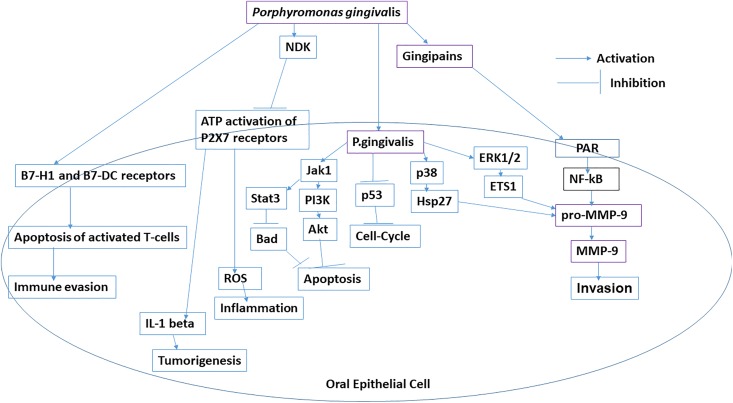
Despite advancement in cancer treatment, oral cancer has a poor prognosis and is often detected at late stage. To overcome these challenges, investigators should search for early diagnostic and prognostic biomarkers. More than 700 bacterial species reside in the oral cavity. The oral microbiome population varies by saliva and different habitats of oral cavity. Tobacco, alcohol, and betel nut, which are causative factors of oral cancer, may alter the oral microbiome composition. Both pathogenic and commensal strains of bacteria have significantly contributed to oral cancer. Numerous bacterial species in the oral cavity are involved in chronic inflammation that lead to development of oral carcinogenesis. Bacterial products and its metabolic by-products may induce permanent genetic alterations in epithelial cells of the host that drive proliferation and/or survival of epithelial cells. Porphyromonas gingivalis and Fusobacterium nucleatum induce production of inflammatory cytokines, cell proliferation, and inhibition of apoptosis, cellular invasion, and migration thorough host cell genomic alterations. Recent advancement in metagenomic technologies may be useful in identifying oral cancer–related microbiome, their genomes, virulence properties, and their interaction with host immunity. It is very important to address which bacterial species is responsible for driving oral carcinogenesis. Alteration in the oral commensal microbial communities have potential application as a diagnostic tool to predict oral squamous cell carcinoma. Clinicians should be aware that the protective properties of the resident microflora are beneficial to define treatment strategies. To develop highly precise and effective therapeutic approaches, identification of specific oral microbiomes may be required. In this review, we narrate the role of microbiome in the progression of oral cancer and its role as an early diagnostic and prognostic biomarker for oral cancer.
Overview
The claims and statistics of this paper haven’t been checked yet.
Run the check — free, no account needed. It reads the open-access text and checks the sources it cites.
Integrity signals
Registry
Cites
Statistics
Figures
Verification
Claims the paper makes
The claims and statistics of this paper haven’t been checked yet.
Run the check — free, no account needed. It reads the open-access text and checks the sources it cites.
Claims other papers make about this one
Each is checked against this paper’s own text: does it say what the citing paper says it does?
In the citing paper
“Additional changes throughout one's life, including to dietary habits, age, hygiene regimens, and behaviors (such as tobacco and alcohol use), also influence changes to the oral microbiome.132”
From The oral microbiome: Role of key organisms and complex networks in oral health and disease (2021) · cites this paper as [132]
Self-check
Percentages, sums and reported differences re-computed from the paper’s own numbers.
The self-check needs the paper’s full text.
Citations
Cites
Jemal, A., Bray, F., Ferlay, J., Ward, E., & Forman, D. (2011) · CA A Cancer Journal for Clinicians · doi:10.3322/caac.20107 · Cited by 55,044
Estimates of worldwide burden of cancer in 2008: GLOBOCAN 2008
Ferlay, J., Shin, H., Bray, F., Forman, D., Mathers, C. D., & Parkin, D. M. (2010) · International Journal of Cancer · doi:10.1002/ijc.25516 · Cited by 21,468 · cited 1×
“The majority of HNSCC are cancers of oral cavity (OC) and oropharynx.(1) Oral squamous cell carcinoma 1 Department of Life Sciences, Central University of Tamil Nadu, Thiruvarur, Tamil Nadu, India 2 Epidemiology and Genomics Research Program, Division of Cancer Control and Population Sciences, National Cancer Institut…”
BackgroundRor2 signaling regulates Golgi structure and transport through IFT20 for tumor invasiveness
Nishita, M., Park, S.-Y., Nishio, T., Kamizaki, K., Wang, Z., Tamada, K., Takumi, T., Hashimoto, R., Otani, H., Pazour, G. J., et al. (2017) · Scientific Reports · doi:10.1038/s41598-016-0028-x · Cited by 15,947
Flemming, H.-C., & Wingender, J. (2010) · Nature Reviews Microbiology · doi:10.1038/nrmicro2415 · Cited by 10,137 · cited 1×
“A typical biofilm is made up of mono- or polymicrobial cells, polysaccharide, proteins, nucleic acids, and lipids.(22) Oral biofilms are composed of 700 different microbial species; extracellular matrix that is composed of DNA, proteins, polysaccharides, and lipids; and salivary glycoproteins, GCF, albumin, and host c…”
BackgroundCommensal Bifidobacterium promotes antitumor immunity and facilitates anti–PD-L1 efficacy
Sivan, A., Corrales, L., Hubert, N., Williams, J. B., Aquino-Michaels, K., Earley, Z. M., Benyamin, F. W., Man Lei, Y., Jabri, B., Alegre, M.-L., et al. (2015) · Science · doi:10.1126/science.aac4255 · Cited by 3,888 · cited 1×
“Oral administration of Bifidobacterium enhances antitumor immunity and alters the efficacy of check-point inhibitors as an immunotherapeutic agent by changing the composition of intestinal microorganisms.(35) Bacteriocins of Streptococcus dentisani inhibit the growth of cariogenic bacterial species.”
BackgroundDewhirst, F. E., Chen, T., Izard, J., Paster, B. J., Tanner, A. C. R., Yu, W.-H., Lakshmanan, A., & Wade, W. G. (2010) · Journal of Bacteriology · doi:10.1128/jb.00542-10 · Cited by 3,352
Defining the normal bacterial flora of the oral cavity
Aas, J. A., Paster, B. J., Stokes, L. N., Olsen, I., & Dewhirst, F. E. (2005) · Journal of Clinical Microbiology · doi:10.1128/jcm.43.11.5721-5732.2005 · Cited by 3,092 · cited 1×
“Tongue, buccal mucosa, supragingival and subgingival surfaces of the teeth, soft and hard palates, and saliva of OC may represent different ecological niches or habitats.(13) The warm and moist environment and host-derived nutrients, such as saliva proteins, gingival crevicular fluid (GCF), and glycoproteins, favor th…”
BackgroundRubinstein, M. R., Wang, X., Liu, W., Hao, Y., Cai, G., & Han, Y. W. (2013) · Cell Host & Microbe · doi:10.1016/j.chom.2013.07.012 · Cited by 2,476 · cited 1×
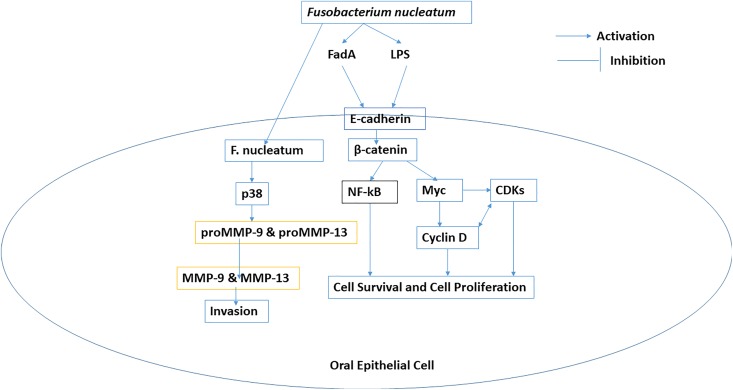
“FadA adhesion molecule of F nucleatum binds to E-cadherin and activates b-catenin signaling that regulates cell proliferation and inflammatory responses in oncogenesis (Figure 2).(94,104,105) Fusobacterium nucleatum synergistically with other bacteria fungi and viruses may induce proinflammatory microenvironment throu…”
BackgroundThe Oral Microbiota: Dynamic Communities and Host Interactions
Lamont, R. J., Koo, H., & Hajishengallis, G. (2018) · Nature Reviews Microbiology · doi:10.1038/s41579-018-0089-x · Cited by 2,217 · cited 5×
“Activated p65 subunit of NF-kB inhibits transcriptional activation of IL-8.(20)”
BackgroundMethodInfluentialOcclusal Caries: Biological Approach for Its Diagnosis and Management
Carvalho, J. C., Dige, I., Mačhiulskienė, V., Qvist, V., Bakhshandeh, A., Parolo, C. C. F., & Maltz, M. (2016) · Caries Research · doi:10.1159/000448662 · Cited by 2,159
Research works printed but not linked: 2
- Multhoff G, 2011, Front Immunol, 2, 98
- Scarantino C, 2006, J Support Oncol, 4, 252
Cited by
Sorted by citations
Items 401–405 of 405
Xie, Y., Xie, S., Shao, M., Zhuang, L., Pan, T., Mao, S., & Xie, H. (2026) · Frontiers in Microbiology · doi:10.3389/fmicb.2026.1901183
“Furthermore, F. nucleatum can suppress caspase activity and upregulate anti-apoptotic proteins such as Bcl-2, thereby inhibiting apoptosis in infected cells and promoting the proliferation of cancer cells (Chattopadhyay et al., 2019).”
Singh, P., Chandel, P. S., & Somvanshi, P. (2026) · Communications in computer and information science · doi:10.1007/978-3-032-30990-7_33
shouq, M. I., Saleem, H. G. M., Wang, Y., Sohail, M. L., Hussain, A., Zhang, H., & Zheng, H. (2026) · Journal of Oral Microbiology · doi:10.1080/20002297.2026.2721025
“Dysbiosis may expose the oral epithelium to microbial virulence factors and carcinogenic metabo lites, which can putatively driving aberrant genetic and epigenetic regulations, inhibiting apoptosis, promot ing dysplasia and neoplastic transformation [14,15].”
Taj, Z., Indu, M. P., Aiswarya Sudheer, C. K., Takri, C., & Chattopadhyay, I. (2026) · The Microbe · doi:10.1016/j.microb.2026.100795
Self-citationErira, H. A. T., Robayo, D. A. G., Gamboa, F., Galindo, A. I. C., Torres, A. M., Cid-Arregui, Á., López, E. E. M., Noguera, J., & Tobar-Tosse, F. (2026) · Gigabyte · doi:10.46471/gigabyte.189
Metadata
- Authors
- Chattopadhyay, I., Verma, M., & Panda, M.
- Affiliations
- Central University of Tamil Nadu (IN)
- National Institutes of Health (US)
- Corresponding author
- Chattopadhyay, Indranil
- Venue
- Technology in Cancer Research & Treatment
- Publisher
- SAGE Publications
- Published
- 2019-01-01
- Volume
- 18
- Pages
- 1533033819867354-1533033819867354
- ISSN
- 1533-0338 (ISSN-L)
- 1533-0346
- PMC
- PMC6676258
- OpenAlex
- W2965423269
- Cited by
- 407
- References
- 118
- Citations by year
- 2026: 32 · 2025: 72 · 2024: 76 · 2023: 68 · 2022: 72 · 2021: 63 · 2020: 24
- FWCI
- 5.63
- Type
- journal article
- Language
- en
- Open access
- gold
- doi.org
- Locations
- Technology in Cancer Research & Treatment (publishedVersion, cc-by-nc)
- Europe PMC (PubMed Central) (publishedVersion, cc-by-nc)
- PubMed Central (publishedVersion, cc-by-nc)
- PubMed (publishedVersion)
- Topics
- Health Sciences › Dentistry › Periodontics › Oral microbiology and periodontitis research
- Health Sciences › Dentistry › General Dentistry › Oral Health Pathology and Treatment
- Health Sciences › Medicine › Otorhinolaryngology › Head and Neck Cancer Studies
- Keywords
- oral microbiota, oral cancer, oral squamous cell carcinoma, tumor markers, early diagnosis, prognosis, Porphyromonas gingivalis, Fusobacterium nucleatum, oral carcinogenesis, chronic inflammation, alcohol and tobacco use, areca nut, commensal bacteria, metagenomics, host-microbe interactions
- MeSH terms
- Humans, Inflammation, Mouth Neoplasms, Prognosis, Saliva, Porphyromonas gingivalis, Fusobacterium nucleatum, Cell Proliferation, Carcinogenesis, Microbiota
About these checks
Registry, retraction, Cites and statistics results are computed, not judged, with one exception: a printed reference that no index lists is read once by a model before it counts as a citation error. Claims are extracted by a model and kept only when their quote appears verbatim in the text; each cited source is then checked, with a model’s help, for whether it says what the claim relies on. Those verdicts can be wrong — read the claim’s quote and the cited source before relying on one.
Statistics and arithmetic are recomputed, not judged.
Confidence bands are shown only for fields calibrated on our annotated test set. None is calibrated yet, so no band is shown.
What counts as a claim ›How we measure confidence ›How we check this ›
Are you an author, or do you see a problem with this page? Request a review
