

Consequences of maternal postpartum depression: A systematic review of maternal and infant outcomes
Open accessThe DOI matches its Crossref record; 182 of the 184 references it cites were found in a registry or an index; 125 of the 392 sources its claims cite were checked for support.
Abstract
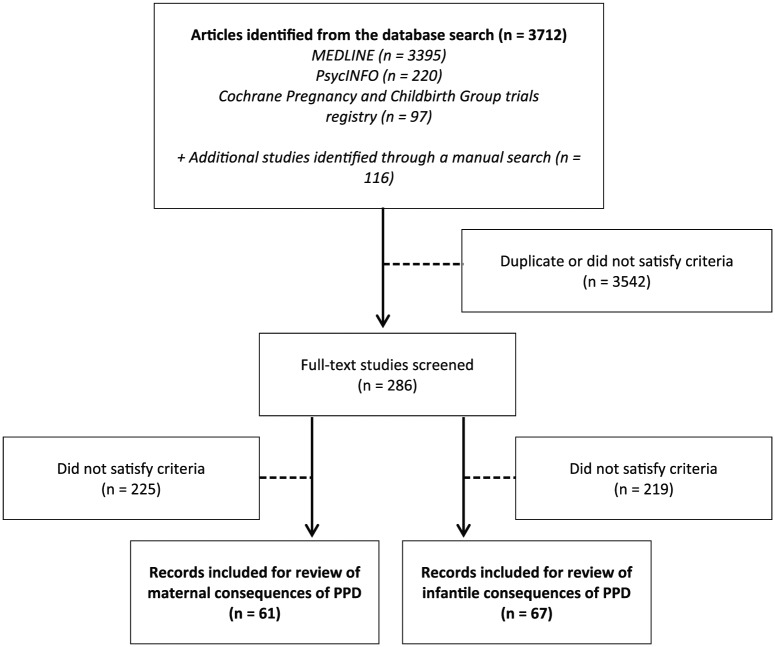
Introduction: The postpartum period represents the time of risk for the emergence of maternal postpartum depression. There are no systematic reviews of the overall maternal outcomes of maternal postpartum depression. The aim of this study was to evaluate both the infant and the maternal consequences of untreated maternal postpartum depression. Methods: We searched for studies published between 1 January 2005 and 17 August 2016, using the following databases: MEDLINE via Ovid, PsycINFO, and the Cochrane Pregnancy and Childbirth Group trials registry. Results: A total of 122 studies (out of 3712 references retrieved from bibliographic databases) were included in this systematic review. The results of the studies were synthetized into three categories: (a) the maternal consequences of postpartum depression, including physical health, psychological health, relationship, and risky behaviors; (b) the infant consequences of postpartum depression, including anthropometry, physical health, sleep, and motor, cognitive, language, emotional, social, and behavioral development; and (c) mother–child interactions, including bonding, breastfeeding, and the maternal role. Discussion: The results suggest that postpartum depression creates an environment that is not conducive to the personal development of mothers or the optimal development of a child. It therefore seems important to detect and treat depression during the postnatal period as early as possible to avoid harmful consequences.
Overview
CoChat Summary
TL;DR
This systematic review of 122 studies found that untreated maternal postpartum depression (PPD) is associated with negative maternal outcomes and adverse infant outcomes up to 3 years of age. The authors conclude that PPD creates an environment unfavorable to maternal personal development and optimal child development, supporting early detection and treatment.
Key findings
- The review included 122 eligible studies: 68 evaluated maternal consequences, 73 evaluated infant consequences, and 19 examined both. PPD prevalence across included studies ranged from 2.7% in Pakistani mothers at 18 months postpartum to 68.8% in Australian mothers at 4 months postpartum.
- Maternal PPD was linked to worse physical and psychological health, lower quality of life, relationship difficulties, and risky behaviors. For example, new-onset PPD was associated with more than double the risk of retaining at least 5 kg (OR = 2.54, 95% CI = 1.06, 6.09), and service women with PPD had higher odds of suicidality than service women without PPD (OR = 42.2, 95% CI = 28.8, 61.9).
- Infant consequences included anthropometric, health, sleep, motor, cognitive, language, emotional, social, and behavioral outcomes. Probable postnatal depression was associated with almost three times higher all-cause infant mortality up to 6 months (adjusted RR = 2.86, 95% CI = 1.58, 5.19) and almost two times higher mortality up to 12 months (adjusted RR = 1.88, 95% CI = 1.09, 3.24).
- Mother–child interactions were affected: 16 of 22 breastfeeding studies found significant negative effects of maternal depressive symptoms on breastfeeding and/or its parameters, and 11 studies showed a negative effect of maternal depression on mother-to-infant bonding.
Methods
- Systematic review following PRISMA to the extent possible; searched MEDLINE via Ovid, PsycINFO, and the Cochrane Pregnancy and Childbirth Group trials registry for studies published between 1 January 2005 and 17 August 2016, limited to human studies in English.
- Inclusion criteria were cohort, cross-sectional epidemiological, and qualitative individual studies; mothers of all ages with PPD; and health (physical or psychological) or social outcomes of PPD. Exclusion criteria were meta-analyses, systematic and nonsystematic reviews, randomized controlled trials, case studies, and studies including mothers who received treatment for PPD.
- From 3712 references retrieved, 122 studies were included. Outcomes were grouped into maternal consequences, infant consequences, and mother–child interactions, then thematically analyzed and synthesized narratively; adjusted results were used and discussed when available.
Limitations
- The authors state that study selection and data extraction were not performed using a double-blinded method, and no assessment of the studies’ methodological quality was performed.
- The authors state that the review compares heterogeneous studies using various designs (cohort vs cross-sectional) and tools to assess PPD, so potential confounding factors could be present.
- Evident from the text: PPD diagnosis and cut-off values varied widely across included studies (e.g., EPDS cut-offs of 8, 9, 10, 11, 12, 13, or 14), and the authors note that this heterogeneity makes outcomes difficult to compare.
Model-written summary. Check it against the paper before relying on it.
Integrity signals
Registry
Cites
Statistics
Figures
Verification
Claims the paper makes
103 Valid · 4 Not valid · 166 Not checked · 46 Own results and interpretations
Some cited sources support this claim and some don’t — read each source’s verdict below.
In the paper
“Two studies demonstrated that the triceps and subscapular skinfold thicknesses did not differ between infants of depressed and nondepressed mothers (one study was conducted in Belgium, Germany, Italy, Poland, and Spain;113 the other was from the United States112).”
§ Consequences of maternal postpartum depression: A systematic review of maternal and infant outcomes > Results > Infant consequences of PPD
What the sources say
- Supportedcites [113] Grote V Vik T von Kries R et al Maternal postnatal depression and child growth: a European cohort study. BMC Pediatr 2010; 10: 14. 20226021 PMC2850333 source
Table 2 (Results) reports triceps and subscapular skinfold measurements at 24 months for children of mothers with high and normal EPDS scores; the estimated differences have confidence intervals spanning zero. The Abstract’s Results state that the anthropometric indices did not differ between groups. (LLM, conf=0.94)
- Disputedcites [112] Ertel KA Koenen KC Rich-Edwards JW et al Antenatal and postpartum depressive symptoms are differentially associated with early childhood weight and adiposity. Paediatr Perinat Epidemiol 2010; 24(2): 179– 189. 20415775 PMC4106300 sourceExperimental — accuracy not yet measured
The Results report minimal difference in the combined skinfold measure (SS+TR) with antenatal depression, but higher SS+TR with postpartum depression (1.14 mm, 95% CI 0.11–2.18). Skinfolds were measured at age 3, not in infants. Thus the paper does not support the unqualified claim that skinfold thicknesses did not differ between the groups. (LLM, conf=0.86)
Checked by a reasoning model — may be wrong.
boosted- Asserted: passes — The authors put it forward as true.
- Checkable: passes — It can be checked against evidence.
- Load-bearing: unclear — It is unclear whether the paper’s conclusions depend on it.
- Based: passes — The paper gives a reason why it holds.
- Supported
At least one cited source doesn’t support this claim or points to a different paper, and none confirmed it — see the verdicts below.
In the paper
“The third study,94 conducted in Pakistan, showed that a child’s language development was affected by maternal PPD only when the father’s income was high.”
§ Consequences of maternal postpartum depression: A systematic review of maternal and infant outcomes > Results > Infant consequences of PPD
What the sources say
- Disputedcites [94] Ali NS Mahmud S Khan A et al Impact of postpartum anxiety and depression on child’s mental development from two peri-urban communities of Karachi, Pakistan: a quasi-experimental study. BMC Psychiatry 2013; 13: 274. 24148567 PMC3819469 sourceExperimental — accuracy not yet measured
The Results (Child language development, Table 4) report the opposite income pattern: children of depressed mothers had significantly higher odds of language delay when the father's income was below 3500 rupees/month. The Results also state that maternal depression had no significant impact on language development when his income was at least 3500 rupees/month. (LLM, conf=0.90)
Checked by a reasoning model — may be wrong.
plainstates a cause- Asserted: passes — The authors put it forward as true.
- Checkable: passes — It can be checked against evidence.
- Load-bearing: unclear — It is unclear whether the paper’s conclusions depend on it.
- Based: passes — The paper gives a reason why it holds.
- Disputed
Every source the paper cites for this claim was checked and supports it.
In the paper
“In multivariate logistic regression analyses, after adjustment for weight-related covariates, maternal sociodemographics, and parity, new-onset PPD was associated with more than double the risk of retaining at least 5 (OR = 2.54, 95% CI = 1.06, 6.09) kg.”
§ Consequences of maternal postpartum depression: A systematic review of maternal and infant outcomes > Results > Maternal consequences of PPD
What the sources say
- Supportedcites [67] Herring SJ Rich-Edwards JW Oken E et al Association of postpartum depression with weight retention 1 year after childbirth. Obesity 2008; 16(6): 1296– 1301. 18369338 PMC2761642 source
The Abstract reports that, after adjustment for weight-related covariates, maternal sociodemographics, and parity, new-onset postpartum depression was associated with retaining at least 5 kg at one year (OR 2.54, 95% CI 1.06–6.09). Table 2 in the discussion gives the same estimate for the fully adjusted model. (LLM, conf=0.95)
plainstates an association- Asserted: passes — The authors put it forward as true.
- Checkable: passes — It can be checked against evidence.
- Load-bearing: passes — The paper’s conclusions depend on it.
- Based: passes — The paper gives a reason why it holds.
- Supported
The cited sources support only part of this claim — read each source’s verdict below.
In the paper
“Other nonsystematic and systematic reviews have also explored specific maternal risks when mothers’ PPD is untreated, including more weight problems,18,19 alcohol and illicit drug use,20 social relationship problems,21 breastfeeding problems,22 or persistent depression23 compared with women who have received treatment.”
§ Consequences of maternal postpartum depression: A systematic review of maternal and infant outcomes > Introduction
What the sources say
- Partly supportedcites [18] Xiao RS Kroll-Desrosiers AR Goldberg RJ et al The impact of sleep, stress, and depression on postpartum weight retention: a systematic review. J Psychosom Res 2014; 77(5): 351– 358. 25306538 PMC4252881 sourceExperimental — accuracy not yet measured
The Results section (Postpartum depression; page unavailable) reports that some studies found an association between postpartum depression and weight retention, while others found no significant association. This supports the weight-problems portion linked to this citation, but the review does not compare untreated mothers with mothers who received treatment. The other listed risks are attached to other citations. (LLM, conf=0.87)
- Not checked — no full text of the sourcecites [19] Milgrom J Skouteris H Worotniuk T et al The association between ante- and postnatal depressive symptoms and obesity in both mother and child: a systematic review of the literature. Women’s Health Issues 2016; 22(3): e319– e328. 22341777 source
- Partly supportedcites [20] Chapman SLC Wu L-T. Postpartum substance use and depressive symptoms: a review. Women Health 2013; 53(5): 479– 503. 23879459 PMC3742364 sourceExperimental — accuracy not yet measured
Split into 2 atoms — 0 confirmed, 2 partially supported, 0 disputed, 0 misattributed, 0 unverifiable. Expand the claim to see per-atom verdicts.
- Partly supportedcites [21] Jones E Coast E. Social relationships and postpartum depression in South Asia: a systematic review. Int J Soc Psychiatry 2013; 59(7): 690– 700. 22851133 sourceExperimental — accuracy not yet measured
Split into 2 atoms — 0 confirmed, 2 partially supported, 0 disputed, 0 misattributed, 0 unverifiable. Expand the claim to see per-atom verdicts.
plainstates an association- Asserted: passes — The authors put it forward as true.
- Checkable: passes — It can be checked against evidence.
- Load-bearing: passes — The paper’s conclusions depend on it.
- Based: passes — The paper gives a reason why it holds.
- Partly supported
The cited sources support only part of this claim — read each source’s verdict below.
In the paper
“The two last studies evaluated postpartum weight retention (PPWR) and found that significantly more women with PPWR had higher scores on the PPD scale.35,67”
§ Consequences of maternal postpartum depression: A systematic review of maternal and infant outcomes > Results > Maternal consequences of PPD
What the sources say
- Not checked — no full text of the sourcecites [35] Biesmans K Franck E Ceulemans C et al Weight during the postpartum period: what can health care workers do. Matern Child Health J 2013; 17(6): 996– 1004. 22798141 source
- Partly supportedcites [67] Herring SJ Rich-Edwards JW Oken E et al Association of postpartum depression with weight retention 1 year after childbirth. Obesity 2008; 16(6): 1296– 1301. 18369338 PMC2761642 sourceExperimental — accuracy not yet measured
The Abstract and Discussion report a significant association between new-onset postpartum depression, defined by an EPDS score above 12, and retaining at least 5 kg one year after childbirth. They do not report that women with weight retention had higher EPDS scores overall; the significant finding is limited to new-onset postpartum depression, not antenatal depression or depression in both periods. The supplied copy gives no page numbers for these passages. (LLM, conf=0.86)
plainstates an association- Asserted: passes — The authors put it forward as true.
- Checkable: passes — It can be checked against evidence.
- Load-bearing: unclear — It is unclear whether the paper’s conclusions depend on it.
- Based: passes — The paper gives a reason why it holds.
214 more claims · 71 with their cited sources checked
Create a free account to see all 319 claims and to verify the 5 references still open.
- It may state two separate claims as one. 60
- Probably not a substantial claim. 42
- The quote only partly states this claim. 6
Claims other papers make about this one
Each is checked against this paper’s own text: does it say what the citing paper says it does?
The source backs part of the claim, not all of it — or backs it for a different population, condition or comparison.
In the citing paper
“Psychological distress among perinatal women correlates with increased maternal morbidity and mortality rates (Khalifa et al., 2016; Oates, 2003), poor infant health outcomes (Gelaye et al., 2016), and adverse early childhood developmental trajectories encompassing cognitive, emotional, and developmental delays (Slomian et al., 2019), making it a substantial public health concern.”
From Developing and validating the Sierra Leone perinatal psychological distress scale through an emic-etic approach (2025) · cites this paper as Slomian et al., 2019
Experimental — accuracy not yet measuredThe source backs part of the claim, not all of it — or backs it for a different population, condition or comparison.
In the citing paper
“This mental disorder has been shown to have negative effects on mothers' quality of life and their intimate relationships, birth outcomes, and breastfeeding likelihood, as well as long-term effects on children's cognitive and emotional development.”
From Perinatal Depression: Challenges and Opportunities (2021) · cites this paper as [25]
Experimental — accuracy not yet measuredThe cited source says what the claim attributes to it.
In the citing paper
“PPD may adversely impact mother-child bonding and contribute to adverse consequences for the infant, such as impaired cognitive, emotional, and motor development, or behavioral problems (Slomian et al., 2019).”
From PandaMom – Feasibility and acceptability of an internet- and mobile-based intervention to enhance peripartum mental well-being and to prevent postpartum depression (2024) · cites this paper as Slomian et al., 2019
The cited source says what the claim attributes to it.
In the citing paper
“Evidence shows that PPD is associated with overall poor maternal (O'Hara and McCabe, 2013; Gjerdingen and Yawn, 2007; Slomian et al., 2019) and infant health (Stein et al., 2014; Slomian et al., 2019; Hayes et al., 2013; Pawlby et al., 2009), even when the symptomatology is subclinical (Tronick and Reck, 2009; Weinberg et al., 2001).”
From App-based intervention for reducing depressive symptoms in postpartum women: Protocol for a feasibility randomized controlled trial (2023) · cites this paper as Slomian et al., 2019
The cited source says what the claim attributes to it.
In the citing paper
“PPD can have negative effects on maternal-infant bonding and interaction25; adaptation to the mothering role and confidence in providing infant care26; maternal quality of life and intimate relationships25; children's emotional, cognitive, and behavioral development27; and the father's mental health.28”
From Perinatal Depression: Challenges and Opportunities (2021) · cites this paper as [25]
1 more claim about this paper
Create a free account to see every claim other papers make about this one.
Statistics recomputed
Every reported test result, recomputed from its test statistic and degrees of freedom. A result shows as not adding up only once an independent check has confirmed it.
- Consistentχ²(2) = 6.47reported p < .05 · recomputed p = .039
“χ2(2) = 6.47, p < .05”
- Consistentχ²(1) = 5.44reported p < .025 · recomputed p = .020
“χ2(1) =5.44, p < .025”
- Consistentχ²(1) = 4.01reported p < .05 · recomputed p = .045
“χ2(1) = 4.01, p < .05”
Self-check
Percentages, sums and reported differences re-computed from the paper’s own numbers.
Each contradiction between two passages listed here was confirmed by an independent check.
Rated minor: it would not touch a result — a value no result rests on, a p-value that stays on the same side of the significance level, or a conflict that is clerical, resolved elsewhere in the paper, or outside its own findings.
In the paper
§ Consequences of maternal postpartum depression: A systematic review of maternal and infant outcomes > Results > Included studies
“The prevalence of PPD varied from 4.5% in a population of Canadian mothers at 6 weeks postpartum89 to 68.8% in a population of Australian mothers at 4 months postpartum.64”
§ Consequences of maternal postpartum depression: A systematic review of maternal and infant outcomes > Results > Maternal consequences of PPD
“Herring67 | USA Mean age: 33.0 ± 4.7 years Gender of newborns: not given | 850 | Cohort study 18 months Four groups: - None - Pregnancy only - Postpartum only - Pregnancy and postpartum | EPDS (Depressed = EPDS > 12) | 4%”
Rated minor: it would not touch a result — a value no result rests on, a p-value that stays on the same side of the significance level, or a conflict that is clerical, resolved elsewhere in the paper, or outside its own findings.
In the paper
§ Consequences of maternal postpartum depression: A systematic review of maternal and infant outcomes > Results > Infant consequences of PPD
“The third study,94 conducted in Pakistan, showed that a child’s language development was affected by maternal PPD only when the father’s income was high.”
§ Consequences of maternal postpartum depression: A systematic review of maternal and infant outcomes > Results > Infant consequences of PPD
“Among women whose husband’s income was ⩾3500 rupees/month, there was no significant impact of maternal depression on children’s language development. Children of depressed mothers whose husband’s income was <3500 rupees/month had more than a five-fold risk of delayed language development”
Rated minor: it would not touch a result — a value no result rests on, a p-value that stays on the same side of the significance level, or a conflict that is clerical, resolved elsewhere in the paper, or outside its own findings.
In the paper
§ Consequences of maternal postpartum depression: A systematic review of maternal and infant outcomes > Results > Included studies
“The majority of the studies were performed in the United States (28 of 68) and Europe (22 of 68), 10 studies were performed in Asia, and 8 studies were performed in Australia and New Zealand.”
§ Consequences of maternal postpartum depression: A systematic review of maternal and infant outcomes > Results > Maternal consequences of PPD
“Faisal-Cury38 | Brazil Mean age: 25 years Gender of newborns: not given | 644”
Rated minor: it would not touch a result — a value no result rests on, a p-value that stays on the same side of the significance level, or a conflict that is clerical, resolved elsewhere in the paper, or outside its own findings.
In the paper
§ Consequences of maternal postpartum depression: A systematic review of maternal and infant outcomes > Results > Included studies
“The number of participants ranged from 1593 to 22,118,28”
§ Consequences of maternal postpartum depression: A systematic review of maternal and infant outcomes > Results > Maternal consequences of PPD
“Do33 | USA Mean age: not given Gender of newborns: not given | 178,714 | Cohort study 6 years”
Rated minor: it would not touch a result — a value no result rests on, a p-value that stays on the same side of the significance level, or a conflict that is clerical, resolved elsewhere in the paper, or outside its own findings.
In the paper
§ Consequences of maternal postpartum depression: A systematic review of maternal and infant outcomes > Results > Mother–child interactions
“nondepressed mothers showed right-sided cradling, similar to nonstressed mothers.”
§ Consequences of maternal postpartum depression: A systematic review of maternal and infant outcomes > Results > Mother–child interactions
“The results indicated that 86% of mothers who were neither stressed nor depressed cradled to the left, and 14% cradled to the right.”
3 more findings
Create a free account to see every finding of this check.
Citations
Cites
Diagnostic and Statistical Manual of Mental Disorders
American Psychiatric Association (2013) · doi:10.1176/appi.books.9780890425596 · Cited by 116,369
Preferred Reporting Items for Systematic Reviews and Meta-Analyses: the PRISMA statement
Moher, D., Liberati, A., Tetzlaff, J., Altman, D. G., & for the PRISMA Group (2009) · BMJ · doi:10.1136/bmj.b2535 · Cited by 83,823
Preferred Reporting Items for Systematic Reviews and Meta-Analyses: The PRISMA Statement
Moher, D., Liberati, A., Tetzlaff, J., Altman, D. G., & The PRISMA Group (2009) · PLoS Medicine · doi:10.1371/journal.pmed.1000097 · Cited by 64,042
Wang, G., Ma, R., Qiao, G., Wada, K., Aizawa, Y., & Satoh, T. (2015) · Integrative Medicine International · doi:10.1159/000368408 · Cited by 18,657
Detection of Postnatal Depression: Development of the 10-item Edinburgh Postnatal Depression Scale
Cox, J. L., Holden, J. M., & Sagovsky, R. (1987) · British Journal of Psychiatry · doi:10.1192/bjp.150.6.782 · Cited by 14,183
Perinatal Depression: A Systematic Review of Prevalence and Incidence
Gavin, N. I., Gaynes, B. N., Lohr, K. N., Meltzer-Brody, S., Gartlehner, G., & Swinson, T. (2005) · Obstetrics & Gynecology · doi:10.1097/01.aog.0000183597.31630.db · Cited by 3,282
Offspring of Depressed Parents: 20 Years Later
Weissman, M. M., Wickramaratne, P., Nomura, Y., Warner, V., Pilowsky, D., & Verdeli, H. (2006) · American Journal of Psychiatry · doi:10.1176/ajp.2006.163.6.1001 · Cited by 1,059
Perinatal mental illness: Definition, description and aetiology
O'Hara, M. W., & Wisner, K. L. (2014) · Best Practice & Research Clinical Obstetrics & Gynaecology · doi:10.1016/j.bpobgyn.2013.09.002 · Cited by 986
Screening for depression during pregnancy with the edinburgh depression scale (EDDS)
Murray, D., & Cox, J. L. (1990) · Journal of Reproductive and Infant Psychology · doi:10.1080/02646839008403615 · Cited by 973
Magnitude and risk factors for postpartum symptoms: A literature review
Norhayati, M. N., Nik Hazlina, N. H., Asrenee, A. R., & Wan Emilin, W. M. A. (2015) · Journal of Affective Disorders · doi:10.1016/j.jad.2014.12.041 · Cited by 816
Research works printed but not linked: 4
- Friedman DD. 4-month infant vocal quality in mother-infant face-to-face interaction: 6-week maternal postpartum depressive symptomatology and infant gender. PhD Thesis, New York University, New York, 2005.
- Kalita KN. Developmental profile of infants born to mothers with postpartum depression and anxiety: a comparative study. J Indian Assoc Child Adolesc Ment Health 2009; 6(1): 3– 12.
- Razurel C. Comment l’éducation dispensée par les professionnels peut-elle influencer le sentiment de compétence parentale chez les mères primipares? Rouen: Université de Rouen, 2010.
- Williams TM Joy LA Travis L et al Transition to motherhood: a longitudinal study. Infant Ment Health J 1987; 8(3): 251– 265. · DOI · Paper page
Cited by
Items 701–800 of 1,517
Fonseca, A., Branquinho, M., & Canavarro, M. C. (2020) · Psychologica · doi:10.14195/1647-8606_63-2_6 · Cited by 5
“, 2014), the mother-child interaction (Field, 2010), and the infant’s cognitive and socioemotional development (Slomian et al., 2019).”
BackgroundSantos, D. F., Silva, R. D. P., Tavares, F. L., Primo, C. C., Maciel, P. M. A., de Souza, R. S., & Leite, F. M. C. (2021) · Epidemiologia e Serviços de Saúde · doi:10.1590/s1679-49742021000400002 · Cited by 107
Ái, N. T., Nguyen, D. K., Le, H. M., Nguyen, D. T., Meyrowitsch, D. W., Bygbjerg, I. C., Søndergaard, J., Nguyễn, H. T. T., Vinter, C. A., Linde, D. S., et al. (2024) · PLoS ONE · doi:10.1371/journal.pone.0314608 · Cited by 6
“Family subscale (r s ) -0. depression during pregnancy may lead to postpartum depression, which may have a range of consequences for both the mother and the child [39].”
Intervention for Reducing Maternal Mental Health Problems in The Golden Period: Systematic Review
Fatin, F. N., Fitriana, F., & Hardianto, G. (2022) · PLACENTUM Jurnal Ilmiah Kesehatan dan Aplikasinya · doi:10.20961/placentum.v10i3.65591 · Cited by 4
The Effectiveness of Auriculotherapy on Women's Sexual Function: A Randomized Controlled Trial
Abadi, M. R. A., Valiani, M., Kabir, K., Khalajinia, Z., & Yazdkhasti, M. (2022) · Iranian Journal of Psychiatry · doi:10.18502/ijps.v17i3.9726 · Cited by 7
“reduced vaginal and perineal pain, which can be independent from the effect of time (51, 52).”
BackgroundThe impact of maternal post‐partum depressive symptoms on child diet at 18 months
Opie, R., Zheng, M., Torres, S. J., & Campbell, K. J. (2021) · Maternal and Child Nutrition · doi:10.1111/mcn.13187 · Cited by 7
Ataş, N., & Kılıçaslan, F. (2023) · Psychiatry · doi:10.1080/00332747.2022.2161260 · Cited by 5
“For example, perinatal depression can develop into chronic and recurrent depression or cause mental disorders with potentially more serious consequences (e.g., psychosis) and suicide (Gressier et al., 2017; Slomian et al., 2019).”
BackgroundThe Prevalence and Risk Factors of Postpartum Depression among Mothers in Najran City, Saudi Arabia
Alshahrani, M. S., Alqarni, N. O., Aldughar, S. S., Asiri, S. T., & Alharbi, R. I. (2024) · Healthcare · doi:10.3390/healthcare12100986 · Cited by 8
Ahmed, S. R., Watt, F., Mahfoud, Z. R., Korayem, M., Buhmaid, S., Alberry, M., Ibrahim, I., & Tandon, S. D. (2023) · JMIR Research Protocols · doi:10.2196/11623 · Cited by 5
“Perinatal mental health (PMH) disorders are common and have significant impacts on women, their infants, families, and communities [1,2].”
Carona, C., Pereira, M., Araújo-Pedrosa, A., Monteiro, F., Canavarro, M. C., & Fonseca, A. (2023) · Behavior Therapy · doi:10.1016/j.beth.2023.11.001 · Cited by 6
Remembering Postpartum Depression in Later Life: An Interpretative Phenomenological Analysis
Ladd, W. (2021) · The Qualitative Report · doi:10.46743/2160-3715/2021.4741 · Cited by 5
Progresión posparto de los niveles de ansiedad y depresión en madres de recién nacidos prematuros
Giménez, Y., Fatjó, F., Mallorquí, A., Sanvicente, A., Figueras, F., & Arranz, Á. (2024) · Atención Primaria · doi:10.1016/j.aprim.2024.103085 · Cited by 6
Higashida, H., Gerasimenko, M., & Yamamoto, Y. (2022) · Comprehensive Psychoneuroendocrinology · doi:10.1016/j.cpnec.2022.100146 · Cited by 3
“However, other new mothers experience a more severe and prolonged form of depression [2], known as postpartum depression [4,5].”
BackgroundWalker, L. O., Murry, N., & Becker, H. (2025) · Journal of Obstetric, Gynecologic & Neonatal Nursing · doi:10.1016/j.jogn.2025.06.004 · Cited by 4
Castro, J. C., Gigase, F. A. J., Molenaar, N. M., Ibroçi, E., Pérez-Rodríguez, M. M., Lieb, W., Janevic, T. M., de Witte, L. D., Bergink, V., & Rommel, A. (2023) · Journal of Psychiatric Research · doi:10.1016/j.jpsychires.2023.12.020 · Cited by 3
Fonseca, A., Branquinho, M., Monteiro, F., Araújo-Pedrosa, A., Bjørndal, L. D., & Lupattelli, A. (2023) · BJPsych Open · doi:10.1192/bjo.2023.56 · Cited by 4
Ayhan, F., Akalın, A., Balsak, H., & Erden, A. (2024) · Sexual & Reproductive Healthcare · doi:10.1016/j.srhc.2024.100965 · Cited by 6
Dias, J., Kelty, E., Nicklas, J. M., Doucette, J. T., Levkoff, S. E., & Seely, E. W. (2025) · Maternal and Child Health Journal · doi:10.1007/s10995-025-04045-2 · Cited by 6
“The postpartum period is a critical period for mothers, which is often accompanied by increased risk of depression, one of the most common perinatal morbidities that has adverse consequences for maternal health, well-being and self-care (Slomian et al., 2019; Wang et al., 2021).”
Mee, N., Abera, M., & Kerac, M. (2024) · Children · doi:10.3390/children11020209 · Cited by 3
Российские инструменты городского планирования в перспективе социологического институционализма
Семенов, А. В., & Gileva, A. (2022) · Journal of Economic Sociology · doi:10.17323/1726-3247-2022-4-73-95 · Cited by 8
Gribbin, C., Achieng, F., K’Oloo, A., Barsosio, H. C., Kwobah, E., Kariuki, S., & Nabwera, H. (2023) · Women s Health · doi:10.1177/17455057231189547 · Cited by 6
Addressing the Long-term Effects of Maternal Depression Through Early Intervention
Harmon, S. L., Hersh, J., Wei, M. A., & Weisz, J. R. (2021) · Research on Child and Adolescent Psychopathology · doi:10.1007/s10802-020-00740-6 · Cited by 2
Saxton, D. L., & Archer, N. P. (2022) · Maternal and Child Health Journal · doi:10.1007/s10995-021-03304-2 · Cited by 3
Eskitzis, P., Michou, V., Arampatzi, C., Tsakiridis, I. G., & Papoutsis, D. (2025) · Diagnostics · doi:10.3390/diagnostics15091065 · Cited by 4
“Globally, post-partum depression affects approximately 10–15% of new mothers, with symptoms typically emerging within the first 4–6 weeks post-partum [8], though onset may occur up to a year after childbirth [9–11].”
Savitsky, B., Radomislensky, I., Frid, Z., Gitelson, N., Glasser, S., & Hendel, T. (2020) · Israel Journal of Health Policy Research · doi:10.1186/s13584-020-00407-z · Cited by 3
Hermita, M., Rohani, A., & Suhatril, R. J. (2025) · Islamic Guidance and Counseling Journal · doi:10.25217/0020258657000 · Cited by 8
Rousseau, S., Katz, D., Schussheim, A., & Frenkel, T. I. (2024) · Archives of Women s Mental Health · doi:10.1007/s00737-024-01475-9 · Cited by 4
Jeung, C., Attanasio, L. B., & Geissler, K. H. (2024) · Health Services Research · doi:10.1111/1475-6773.14420 · Cited by 7
Varambally, M., Layton, H., Jack, S. M., & Lieshout, R. J. V. (2023) · Journal of Psychiatric and Mental Health Nursing · doi:10.1111/jpm.13007 · Cited by 3
WIC Staff Views and Perceptions on the Relationship between Food Insecurity and Perinatal Depression
Tabb, K. M., Simonovich, S. D., Wozniak, J. D., Barton, J. M., Hsieh, W.-J., Klement, C., Ostrowski, M. E., Lakhani, N., Meline, B. S., & Huang, H. Y. (2022) · Healthcare · doi:10.3390/healthcare11010068 · Cited by 6
Chávez‐Tostado, M., Chávez-Tostado, K. V., Cervantes‐Guevara, G., Cervantes‐Cardona, G. A., Hernández-Corona, D. M., González-Heredia, T., Villar, M. M.-D., Corona-Meraz, F.-I., Guzmán-Ornelas, M.-O., Barbosa‐Camacho, F. J., et al. (2023) · Medicina · doi:10.3390/medicina59071330 · Cited by 5
“The symptoms of PPD are similar to those of major depressive disorders [17,18].”
BackgroundKim, O., Kim, B., Kim, S., Cho, E., Lee, H. Y., Cha, C., Bae, N., Kim, M., Lee, D. H., Chavarro, J. E., et al. (2023) · Occupational and Environmental Medicine · doi:10.1136/oemed-2022-108609 · Cited by 4
Perinatal Neuroendocrine Mechanisms in Postpartum Depression and Therapeutic Opportunities
Abey, N. O., Oweh, O. T., & Ebuehi, O. A. T. (2025) · SN Comprehensive Clinical Medicine · doi:10.1007/s42399-025-02023-x · Cited by 4
“A delicate imbalance in the neurochemical signalling of the maternal brain (which can be triggered by exposure or environment) during the phase of abrupt hormonal changes following childbirth can lead to postpartum depression [51].”
Branquinho, M., Canavarro, M. C., & Fonseca, A. (2023) · International Journal of Cognitive Therapy · doi:10.1007/s41811-023-00182-0 · Cited by 5
Depressão pós-parto e psicose puerperal: uma revisão de literatura
Izoton, R. G., Cattaneo, A., Leite, V. T., Castro, M. G. D. O., Linheiro, C. V., de Albuquerque, S. R. C., de Souza, L. S. C., Rodrigues, B. C., & Lopes, B. A. (2022) · Revista Eletrônica Acervo Saúde · doi:10.25248/reas.e11409.2022 · Cited by 8
Bakhteh, A., Salari, N., Jaberghaderi, N., & Khosrorad, T. (2023) · Iranian Journal of Nursing and Midwifery Research · doi:10.4103/ijnmr.ijnmr_269_21 · Cited by 3
Shaeri, S., Delavar, M. A., Bakouei, F., Azizi, A., & KarbalaeiZadeh, M. (2025) · Midwifery · doi:10.1016/j.midw.2025.104467 · Cited by 4
Diagnosis and Management of Perinatal Depression
Rossi, N. M., & Radney, L. (2022) · Nursing for Women s Health · doi:10.1016/j.nwh.2022.05.007 · Cited by 8
Sleep pattern gender differences and fragmentation in postpartum parents of twins
Damato, E. G., Burant, C. J., Brubaker, J., & Decker, M. J. (2021) · Sleep Science · doi:10.5935/1984-0063.20200101 · Cited by 4
“Maternal postpartum depression is also linked to less affectionate and lower emotional attunement with the infant 7 .”
BackgroundScott, J., Hauspurg, A. K., Davis, E. M., Bryan, S. D., & Catov, J. M. (2023) · The Journal of Cardiovascular Nursing · doi:10.1097/jcn.0000000000001038 · Cited by 3
Doula Care and Health Outcomes: A Systematic Review
Groves, P., Williams, H., Salter, C. L., Kosbie, A. S., Bowden, A., Martinez, R. G., Davis, J., Mendez, D. D., & Ragavan, M. I. (2026) · JAMA Network Open · doi:10.1001/jamanetworkopen.2026.8416 · Cited by 6
Davis, J. A., Ohan, J. L., Bear, N., Gibson, L. Y., Silva, D. T., Prescott, S. L., & Finlay‐jones, A. L. (2024) · BMC Pregnancy and Childbirth · doi:10.1186/s12884-024-07002-z · Cited by 5
The use of e-mental health tools in the perinatal context
Fonseca, A., Mancinelli, E., & Branquinho, M. (2024) · BJPsych Advances · doi:10.1192/bja.2024.23 · Cited by 4
Macias‐Konstantopoulos, W., Moss, R. A., & Willis, B. M. (2025) · Frontiers in Public Health · doi:10.3389/fpubh.2025.1656025 · Cited by 3
Arefadib, N., Cooklin, A., Nicholson, J. M., & Shafiei, T. (2022) · Sexual & Reproductive Healthcare · doi:10.1016/j.srhc.2022.100737 · Cited by 3
Modern approaches to the pharmacotherapy of postpartum depression
Овчинников, А. В., & Иродионовна, В. Т. (2020) · Meditsinskiy sovet = Medical Council · doi:10.21518/2079-701x-2020-11-70-81 · Cited by 4
Preliminary Validation of the Psychosocial Assessment Tool in the Neonatal Intensive Care Unit
Baughcum, A. E., Clark, O. E., Lassen, S. R., Fortney, C. A., Rausch, J. R., Dunnells, Z. D. O., Geller, P. A., Olsavsky, A. L., Patterson, C. A., & Gerhardt, C. A. (2022) · Journal of Pediatric Psychology · doi:10.1093/jpepsy/jsac081 · Cited by 7
Kerstis, B., Jönsson, P., Derwig, M., Nilsson, K. W., Hallström, I., & Lindeberg, S. I. (2025) · Child Care Health and Development · doi:10.1111/cch.70099 · Cited by 3
“…postnatal, depressive symptoms on the offspring are well-established, including impacts on the child's sensitivity to maternal signals, sleeping patterns, and motor, cognitive, language, emotional, social and behavioural development (Meaney 2018; Slomian et al. 2019; Rogers et al. 2020).”
Chu, T., Xiaoling, P., Wan, K., Li, M. H., Liu, T., Shi, X., Yao, W., Li, S., Zhou, Z., Yang, C., et al. (2026) · European Journal of Anaesthesiology · doi:10.1097/eja.0000000000002348 · Cited by 5
“1 Being a primipara is a well known risk factor for perinatal depression, and 70% of new mothers may experience transient mood swings within 10 postpartum days that may 7 8 essential to explore ways to reduce the incidence of PPD, especially in primiparae greater affinity with NMDA receptors.”
Multiple Sclerosis in Women: Impact of Different Life Stages on Treatment Decisions
McConville, K., & Bove, R. M. (2026) · CNS Drugs · doi:10.1007/s40263-025-01246-9 · Cited by 3
Miller, D. C., Chawla, D., Taber, K. J., Payne, J. L., & Tredici, A. L. D. (2025) · BMC Psychiatry · doi:10.1186/s12888-025-06977-z · Cited by 5
“If untreated, PPD can lead to significant deficits in infant cognitive and behavioral development, poor parent-to-child bonding, as well as negative impacts on child physical and mental health [7].”
Suri, P., Sahana, S. D., Yan, S. D., Murthy, S., & Johnston, J. S. (2025) · PLoS ONE · doi:10.1371/journal.pone.0327986 · Cited by 9
“The postpartum period is a critical time for the physical and mental recovery of the mother, as well as the optimal development of the newborn [1–3].”
Deng, C., Wang, X., Du, X., Yan, X. H., Yan, B., Li, Y., Luo, S., Jiao, F., Deng, R., & Huang, Y. C. (2026) · International Journal of Women s Health · doi:10.2147/ijwh.s600790 · Cited by 3
“,4–7 Additionally, PND can detrimentally affect infants’ growth and their cognitive and emotional development, 8,9 and even pose potential risks of maternal suicide or infanticide.”
Lui, J. H. L., Danko, C. M., Triece, T., Bennett, I. M., Marschall, D., Lorenzo, N. E., Stein, M. A., & Chronis-Tuscano, A. M. (2023) · BMC Pediatrics · doi:10.1186/s12887-023-04082-2 · Cited by 8
Addressing caregiver mental health in the neonatal ICU
Sadler, E. M., Okito, O., & Soghier, L. M. (2023) · Current Opinion in Pediatrics · doi:10.1097/mop.0000000000001242 · Cited by 7
Cao, Y., Fu, L., Zhang, X., Xia, L., & Zhou, R. (2024) · Neuropsychiatric Disease and Treatment · doi:10.2147/ndt.s451930 · Cited by 4
Scroggins, J. K., Reuter‐Rice, K., Brandon, D., & Yang, Q. (2024) · Nursing Research · doi:10.1097/nnr.0000000000000713 · Cited by 3
“…postpartum psychological symptoms, such as postpartum depression and anxiety, have been associated with postpartum suicidal ideation and long-term depression, which can lead to suicidal behaviors in women ’ s lives (Bodnar-Deren et al., 2016; Schreiber & Culpepper, 2023; Slomian et al., 2019).”
BackgroundDağ, İ., & Değer, V. B. (2025) · Obstetrics and gynecology. · doi:10.5772/intechopen.1009206 · Cited by 8
Context dependent cognitive development in Bhutanese children
Gredebäck, G., Dorji, N., Sen, U., Nyström, P., Hellberg, J., & Wangchuk (2023) · Scientific Reports · doi:10.1038/s41598-023-47254-x · Cited by 4
“We know from other contexts that vulnerability sometimes lead primary caregivers to focus their attention on the child, with more warmth and overprotection than what can be observed in caregivers that do not suffer from such hardships 66,67 .”
BackgroundCohen, M. J., Baucom, D. H., Weber, D. M., & Schiller, C. E. (2020) · Journal of Affective Disorders · doi:10.1016/j.jad.2020.10.072 · Cited by 3
Simon, N. A., Evans, J., Bispham, D., Williams, F., Jones, J., Roberts, N. P., & Waters, C. S. (2025) · Depression and Anxiety · doi:10.1155/da/3698331 · Cited by 6
The cortisol awakening response is blunted in healthy women early postpartum
Høgh, S., Lange, E. Ø., Høgsted, E. S., Larsen, K., Hegaard, H. K., Borgsted, C., & Frøkjær, V. G. (2024) · Psychoneuroendocrinology · doi:10.1016/j.psyneuen.2024.107048 · Cited by 5
Hypnobirthing Training for First-Time Mothers: Pain, Anxiety and Postpartum Wellbeing
Yaqoob, H., Ju, X., & Jamshaid, S. (2024) · Psychology Research and Behavior Management · doi:10.2147/prbm.s465361 · Cited by 13
“7 When postpartum depression is not well addressed, it may have negative effects on the mother’s health and her infant’s ability to sleep, feed, and behave normally.”
Ben-Harush, A., Schiff, M., Sulimani, N., & Pat‐Horenczyk, R. (2021) · Child & Youth Care Forum · doi:10.1007/s10566-021-09630-4 · Cited by 7
Nshimyumukiza, M., Niyonsenga, J., Kanazayire, C., Sebatukura, S. G., & Mutabaruka, J. (2024) · European Journal of Psychotraumatology · doi:10.1080/20008066.2024.2387521 · Cited by 5
“…(Bornstein & Putnick, 2012; Dahmen et al., 2013; Goossens et al., 2015; Hou, 2020; McPeak et al., 2015; Scherer et al., 2019), as well as long-term mental health issues such as anxiety and depression (Carlson et al., 2019; Kitzmann et al., 2003; Slomian et al., 2019; Uwitonze et al., 2020).”
BackgroundPrevalence of postpartum depression in the Russian Federation: a systematic review and meta-analysis
Федака, А. А., & Avxentyeva, M. V. (2025) · Medical Technologies Assessment and Choice · doi:10.17116/medtech20254702174 · Cited by 5
Can the Healthy Start Risk Screen Predict Perinatal Depressive Symptoms among High-Risk Women?
Wilson, R. E., Campos, A., Sandhu, M., Sniffen, S., Jones, R. K., Tackett, H., Berry, E., & Louis‐Jacques, A. F. (2022) · Children · doi:10.3390/children9020180 · Cited by 3
Shukri, N. H. M., Senjaya, O., Zainudin, Z., Mohamed, M., & Abdullah, F. I. S. (2022) · Cureus · doi:10.7759/cureus.29425 · Cited by 11
“Postpartum depression affects the health, relationships, and quality of life of mothers, which, in turn, results in a low-quality home environment and reduced maternal sensitivity in childcare, negatively affecting child development [1].”
BackgroundLelièvre, J., Hompes, T., & Schoenmakers, B. (2021) · BJGP Open · doi:10.3399/bjgpo.2021.0127 · Cited by 3
“PND not only affects the mother but also the child and the family context (9, 10).”
BackgroundCiolac, L., Nițu, D.-R., Bernad, E. S., Gluhovschi, A., Popa, D. I., Toc, T., Tudor, A., Maghiari, A. L., & Craina, M. L. (2025) · Healthcare · doi:10.3390/healthcare13080911 · Cited by 4
“Biological mothers are affected in terms of their physical and psychological health, social relationships, and overall quality of life; meanwhile, children may face long-term impacts on their emotional and cognitive development [7].”
Wetherell, S. (2026) · Annals of Psychophysiology · doi:10.29052/2412-3188.v9.i2.2022.67-75 · Cited by 5
Armer, J. S., Oh, W., Davis, M. T., Issa, M., Sexton, M. B., & Muzik, M. (2024) · Journal of Affective Disorders · doi:10.1016/j.jad.2024.06.010 · Cited by 5
Tharwat, D., Trousselard, M., Fromage, D., Belrose, C., Balès, M., Sutter-Dallay, A.-L., Ezto, M.-L., Hurstel, F., Harvey, T., Martin, S., et al. (2022) · International Journal of Environmental Research and Public Health · doi:10.3390/ijerph19031545 · Cited by 3
“Partner and family are also affected, thus PND appears to be a major public health problem [4].”
BackgroundTeychenne, M. J., Apostolopoulos, M., France‐Ratcliffe, M., Chua, E., Hall, S., Opie, R., Blunden, S. L., Duncan, M. J., Olander, E. K., & Koorts, H. (2023) · Health Promotion Journal of Australia · doi:10.1002/hpja.767 · Cited by 4
The identification and measurement of postpartum anxiety in England: A Delphi survey
Worrall, S., Harris, E. J., Silverio, S. A., & Fallon, V. (2023) · Journal of Psychiatric Research · doi:10.1016/j.jpsychires.2023.10.041 · Cited by 7
“Estimates suggest approximately 20% of women will experience a mental health problem during the first year postpartum (Public Health England, 2019), the consequences of which may include reduced maternal-infant bonding (McNamara et al., 2019), and insecure attachments (Slomian et al., 2019).”
BackgroundMupambireyi, Z., Simms, V. M., Mavhu, W. M., et al. (2025) · AIDS Care · doi:10.1080/09540121.2025.2473948 · Cited by 3
“Poor mental health has a negative effect on ART adherence and engagement in care, in addition to the well-described consequences for infant development (Mebrahtu et al., 2018; Parsons et al., 2012; Roberts et al., 2022; Slomian et al., 2019).”
Intergenerational transmission of mental health during the first 1,000 days of life
MacBeth, A. M., Morales, M. F., & Golds, L. (2026) · Nature Reviews Psychology · doi:10.1038/s44159-025-00521-2 · Cited by 9
“Indeed, the strength of these associations can be moderated by factors such as chronic maternal depression 74 (characterized by persisting depression symptoms), which has been associated with emotional and behavioural problems in children and low social competence 75,76 .”
Sudhinaraset, M., Woofter, R. C., Ebuehi, E.-P., Richards, M., Tobin, C. S. T., & Rao, R. (2025) · SSM - Qualitative Research in Health · doi:10.1016/j.ssmqr.2025.100610 · Cited by 5
Koeppel, C. J., Muecke, J., Barth, C., Attolini, S., Wildschut, J., Aust, S., Bajbouj, M., & Grimm, S. (2025) · Journal of Affective Disorders · doi:10.1016/j.jad.2025.120260 · Cited by 4
Becker, E., Atkinson, L. R., González, A., & Khoury, J. E. (2024) · Infant Mental Health Journal · doi:10.1002/imhj.22096 · Cited by 7
Trajectories and Correlates of Anger During the Perinatal Period
Ou, C. H. K., Sedov, I. D., Sanguino, H., Holtzman, S., & Tomfohr‐Madsen, L. M. (2022) · Journal of Obstetric, Gynecologic & Neonatal Nursing · doi:10.1016/j.jogn.2022.07.010 · Cited by 7
Loussert, L., Sentilhes, L., Froeliger, A., Seco, A., Bonnet, M., Tebeka, S., Deneux‐Tharaux, C., & the TRAAP study group (2025) · BJOG An International Journal of Obstetrics & Gynaecology · doi:10.1111/1471-0528.18289 · Cited by 4
“PPD alters mother–child interactions and is associated with increased rates of impaired neurobehavioural development and psychiatric disorders in the child [6–9].”
Treating postpartum depression with brexanolone
Burval, J., Kerns, R., & Reed, K. (2020) · Nursing · doi:10.1097/01.nurse.0000657072.85990.5a · Cited by 6
Weaver, A., Landry, C., Jacobson, M., Whitted, R., Zeaiter, H., Ross, D., Hall, S. V., Holzworth, J., Egbuogu, B., Smith, F. N., et al. (2023) · Social Work in Mental Health · doi:10.1080/15332985.2023.2214653 · Cited by 4
“This disparity is of particular concern given that PND has substantial negative consequences for birthers and their children (Brand & Brennan, 2009; Field, 2017; O’hara & McCabe, 2013; Slomian, Honvo, Emonts, Reginster, & Bruyère, 2019).”
The Role of Pediatricians in Recognizing Postpartum Depression and/or Psychosis
Watkins, K. B., Kandel, H., & Leval, R. (2023) · Current Pediatrics Reports · doi:10.1007/s40124-023-00304-4 · Cited by 4
“Strategies such as resting when possible and seeking support from a partner, family, and friends can help with in the management of baby blues [8].”
Pulido, C. M., Walson, I. S., Yang, A., Stika, C. S., Sit, D. K. Y., & Wisner, K. L. (2024) · Journal of Clinical Psychopharmacology · doi:10.1097/jcp.0000000000001928 · Cited by 3
Banihashemi, L., Zhang, Y., Hipwell, A. E., & Phillips, M. L. (2025) · Molecular Psychiatry · doi:10.1038/s41380-025-03197-5 · Cited by 9
“Developmental studies are consistent in documenting the adverse effects of caregiver (typically maternal) depression and anxiety in the fi rst postpartum year on infant ER [203, 204], and associations with offspring social, emotional and behavioral problems later in childhood [205, 206].”
Music and Parental Wellbeing: A Position Paper
Perkins, R., Sanfilippo, K. R. M., Graham, D., Durrant, M., Alway, P., Anstee, L., Corcoran, K., East, E., Ettenberger, M., Knight, J., et al. (2025) · Music & Science · doi:10.1177/20592043251351761 · Cited by 3
“Untreated maternal postpartum depression, for example, has been negatively associated with factors such as infant cognitive development, language development, and behavioral development (Slomian et al., 2019).”
Analysis of Factors Related to the Incidence of Postpartum Blues in Adolescent Mother
Gartika, N., & Fatmawati, A. (2024) · Open Access Macedonian Journal of Medical Sciences · doi:10.3889/oamjms.2024.8511 · Cited by 4
Postpartum depression and the role and position of cognitive behavioral therapy
Buhagiar, R., & Mamo, E. (2023) · Elsevier eBooks · doi:10.1016/b978-0-323-85726-0.00047-8 · Cited by 5
Hsu, F. C., Chen, H., Wang, K.-Y., Ling, W.-L., & Chen, N.-C. (2024) · Archives of Women s Mental Health · doi:10.1007/s00737-024-01521-6 · Cited by 4
Literature Review: The Influence of the Family Environment on Moral and Cognitive Development
Wang, Y. (2023) · Interdisciplinary Humanities and Communication Studies · doi:10.61173/b2ghgy07 · Cited by 3
Caldwell, J., Meredith, P. J., Whittingham, K., & Ziviani, J. M. (2022) · OBM Integrative and Complementary Medicine · doi:10.21926/obm.icm.2203028 · Cited by 3
Olhaberry, M., Leyton, F., Morán, J., León, M. J., Sieverson, C., Muzard, A., Honorato, C., Ensink, K., Malberg, N. T., Luyten, P., et al. (2021) · Research Square · doi:10.21203/rs.3.rs-458921/v1 · Cited by 2
Eradi, M., Abedi, P., Ansari, S., Dastoorpoor, M., Golfakhrabadi, F., & Fakhri, A. (2024) · Jundishapur Journal of Natural Pharmaceutical Products · doi:10.5812/jjnpp-146826 · Cited by 3
“Postpartum depression can negatively affect the physical and psychological health of the mother, her marital relationship, and increase risky behaviors such as suicide, which can endanger the lives of both the mother and her baby (5).”
BackgroundDepression screening in pregnancy and postpartum: Just do something?
Thombs, B. D., Rice, D. B., Markham, S., & Ziegelstein, R. C. (2023) · General Hospital Psychiatry · doi:10.1016/j.genhosppsych.2023.02.005 · Cited by 4
Home visiting for postpartum depression
Yu, M., Washburn, M., Bayhi, J. L., Xu, W., Carr, L. C., & Sampson, M. (2025) · Cochrane Database of Systematic Reviews · doi:10.1002/14651858.cd015984 · Cited by 2
Arteaga‐Troncoso, G., López‐Hurtado, M., Yescas-Buendía, G., de Haro-Cruz, M. D. J., Arteaga-Martínez, I. A., Villagrana-Zesati, J. R., & Guerra-Infante, F. M. (2024) · Pathogens · doi:10.3390/pathogens13100843 · Cited by 8
“Postpartum infections, in general, show a significant social burden because they increase episodes of maternal anxiety and risk of postpartum depression, conditions that interfere with the mother–baby bond and have a negative impact on breastfeeding [49,50].”
BackgroundPagani, L. S., Harandian, K., Necsa, B., & Harbec, M.-J. (2023) · International Journal of Environmental Research and Public Health · doi:10.3390/ijerph20237117 · Cited by 3
“Maternal sensitivity and responsiveness to infant cues forecast optimal growth and development in children [3].”
BackgroundInfluential
Metadata
- Authors
- Slomian, J., Honvo, G., Emonts, P., Reginster, J.-Y., & Bruyère, O.
- Affiliations
- University of Liège (BE)
- Centre Hospitalier Universitaire de Liège (BE)
- Corresponding author
- Slomian, Justine
- Venue
- Women's Health
- Publisher
- SAGE Publications
- Published
- 2019-01
- Volume
- 15
- Pages
- 1745506519844044-1745506519844044
- ISSN
- 1745-5057 (ISSN-L)
- 1745-5065
- PMC
- PMC6492376
- OpenAlex
- W2943494044
- Semantic Scholar
- ee946755bae03c5fb910a2191e2371c480ea04a3
- Cited by
- 1,496
- References
- 184
- Citations by year
- 2026: 183 · 2025: 275 · 2024: 320 · 2023: 272 · 2022: 219 · 2021: 152 · 2020: 64 · 2019: 10
- FWCI
- 18.19
- Type
- journal article
- Language
- en
- Update notices
- correction (2019-05-30)
- Open access
- gold
- doi.org
- Licence
- cc-by-nc
- journals.sagepub.com/page/policies/text-and-data-mining-license (tdm)
- Locations
- Women s Health (publishedVersion, cc-by-nc)
- Europe PMC (PubMed Central) (publishedVersion, cc-by-nc)
- PubMed Central (publishedVersion, cc-by-nc)
- PubMed (publishedVersion)
- DOAJ (DOAJ: Directory of Open Access Journals) (submittedVersion, cc-by-sa)
- ORBi (University of Liège) (submittedVersion)
- Topics
- Health Sciences › Medicine › Public Health, Environmental and Occupational Health › Maternal Mental Health During Pregnancy and Postpartum
- Health Sciences › Medicine › Pediatrics, Perinatology and Child Health › Maternal and Neonatal Healthcare
- Health Sciences › Medicine › Pediatrics, Perinatology and Child Health › Infant Health and Development
- Keywords
- postpartum depression, maternal outcomes, infant outcomes, mother-infant bonding, breastfeeding, maternal role, infant development, maternal physical health, maternal mental health, infant sleep
- MeSH terms
- Adult, Body Weights and Measures, Breast Feeding, Child Development, Cognition, Female, Health Status, Humans, Infant, Infant, Newborn, Language, Male, Mental Health, Mother-Child Relations, Quality of Life, Risk-Taking, Sleep, Women's Health, Depression, Postpartum
About these checks
Registry, retraction, Cites and statistics results are computed, not judged, with one exception: a printed reference that no index lists is read once by a model before it counts as a citation error. Claims are extracted by a model and kept only when their quote appears verbatim in the text; each cited source is then checked, with a model’s help, for whether it says what the claim relies on. Those verdicts can be wrong — read the claim’s quote and the cited source before relying on one.
The claim verdicts this report counts are experimental: their accuracy is not yet measured.
A language model drew the claims from the paper on 2026-10-05, under version 3 of the claim definition (model deepseek-v4.1-flash, prompt extract-v3).
A second model labelled each claim on 2026-10-05 (model jev-1.13-20260917, definition revision gold-guideline-v0.2).
Cited sources are checked with a language model’s help (gpt-6-sol).
Statistics and arithmetic are recomputed, not judged.
Confidence bands are shown only for fields calibrated on our annotated test set. None is calibrated yet, so no band is shown.
What counts as a claim ›How we measure confidence ›How we check this ›
Are you an author, or do you see a problem with this page? Request a review
Data sources
Bibliographic data: Semantic Scholar, OpenAlex, Crossref.
Contains information from the Semantic Scholar Academic Graph Datasets, made available under the ODC Attribution License (ODC-BY 1.0).
Semantic Scholar’s data is described in: Kinney, R., et al. (2023). The Semantic Scholar Open Data Platform. arXiv:2301.10140.
