

Consequences of maternal postpartum depression: A systematic review of maternal and infant outcomes
Open accessThe DOI matches its Crossref record; 182 of the 184 references it cites were found in a registry or an index; 125 of the 392 sources its claims cite were checked for support.
Abstract
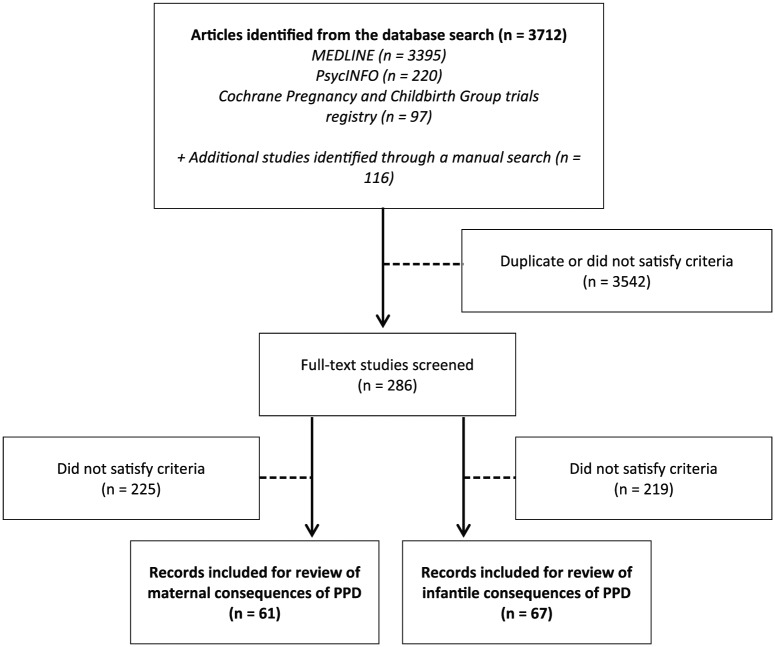
Introduction: The postpartum period represents the time of risk for the emergence of maternal postpartum depression. There are no systematic reviews of the overall maternal outcomes of maternal postpartum depression. The aim of this study was to evaluate both the infant and the maternal consequences of untreated maternal postpartum depression. Methods: We searched for studies published between 1 January 2005 and 17 August 2016, using the following databases: MEDLINE via Ovid, PsycINFO, and the Cochrane Pregnancy and Childbirth Group trials registry. Results: A total of 122 studies (out of 3712 references retrieved from bibliographic databases) were included in this systematic review. The results of the studies were synthetized into three categories: (a) the maternal consequences of postpartum depression, including physical health, psychological health, relationship, and risky behaviors; (b) the infant consequences of postpartum depression, including anthropometry, physical health, sleep, and motor, cognitive, language, emotional, social, and behavioral development; and (c) mother–child interactions, including bonding, breastfeeding, and the maternal role. Discussion: The results suggest that postpartum depression creates an environment that is not conducive to the personal development of mothers or the optimal development of a child. It therefore seems important to detect and treat depression during the postnatal period as early as possible to avoid harmful consequences.
Overview
CoChat Summary
TL;DR
This systematic review of 122 studies found that untreated maternal postpartum depression (PPD) is associated with negative maternal outcomes and adverse infant outcomes up to 3 years of age. The authors conclude that PPD creates an environment unfavorable to maternal personal development and optimal child development, supporting early detection and treatment.
Key findings
- The review included 122 eligible studies: 68 evaluated maternal consequences, 73 evaluated infant consequences, and 19 examined both. PPD prevalence across included studies ranged from 2.7% in Pakistani mothers at 18 months postpartum to 68.8% in Australian mothers at 4 months postpartum.
- Maternal PPD was linked to worse physical and psychological health, lower quality of life, relationship difficulties, and risky behaviors. For example, new-onset PPD was associated with more than double the risk of retaining at least 5 kg (OR = 2.54, 95% CI = 1.06, 6.09), and service women with PPD had higher odds of suicidality than service women without PPD (OR = 42.2, 95% CI = 28.8, 61.9).
- Infant consequences included anthropometric, health, sleep, motor, cognitive, language, emotional, social, and behavioral outcomes. Probable postnatal depression was associated with almost three times higher all-cause infant mortality up to 6 months (adjusted RR = 2.86, 95% CI = 1.58, 5.19) and almost two times higher mortality up to 12 months (adjusted RR = 1.88, 95% CI = 1.09, 3.24).
- Mother–child interactions were affected: 16 of 22 breastfeeding studies found significant negative effects of maternal depressive symptoms on breastfeeding and/or its parameters, and 11 studies showed a negative effect of maternal depression on mother-to-infant bonding.
Methods
- Systematic review following PRISMA to the extent possible; searched MEDLINE via Ovid, PsycINFO, and the Cochrane Pregnancy and Childbirth Group trials registry for studies published between 1 January 2005 and 17 August 2016, limited to human studies in English.
- Inclusion criteria were cohort, cross-sectional epidemiological, and qualitative individual studies; mothers of all ages with PPD; and health (physical or psychological) or social outcomes of PPD. Exclusion criteria were meta-analyses, systematic and nonsystematic reviews, randomized controlled trials, case studies, and studies including mothers who received treatment for PPD.
- From 3712 references retrieved, 122 studies were included. Outcomes were grouped into maternal consequences, infant consequences, and mother–child interactions, then thematically analyzed and synthesized narratively; adjusted results were used and discussed when available.
Limitations
- The authors state that study selection and data extraction were not performed using a double-blinded method, and no assessment of the studies’ methodological quality was performed.
- The authors state that the review compares heterogeneous studies using various designs (cohort vs cross-sectional) and tools to assess PPD, so potential confounding factors could be present.
- Evident from the text: PPD diagnosis and cut-off values varied widely across included studies (e.g., EPDS cut-offs of 8, 9, 10, 11, 12, 13, or 14), and the authors note that this heterogeneity makes outcomes difficult to compare.
Model-written summary. Check it against the paper before relying on it.
Integrity signals
Registry
Cites
Statistics
Figures
Verification
Claims the paper makes
103 Valid · 4 Not valid · 166 Not checked · 46 Own results and interpretations
Some cited sources support this claim and some don’t — read each source’s verdict below.
In the paper
“Two studies demonstrated that the triceps and subscapular skinfold thicknesses did not differ between infants of depressed and nondepressed mothers (one study was conducted in Belgium, Germany, Italy, Poland, and Spain;113 the other was from the United States112).”
§ Consequences of maternal postpartum depression: A systematic review of maternal and infant outcomes > Results > Infant consequences of PPD
What the sources say
- Supportedcites [113] Grote V Vik T von Kries R et al Maternal postnatal depression and child growth: a European cohort study. BMC Pediatr 2010; 10: 14. 20226021 PMC2850333 source
Table 2 (Results) reports triceps and subscapular skinfold measurements at 24 months for children of mothers with high and normal EPDS scores; the estimated differences have confidence intervals spanning zero. The Abstract’s Results state that the anthropometric indices did not differ between groups. (LLM, conf=0.94)
- Disputedcites [112] Ertel KA Koenen KC Rich-Edwards JW et al Antenatal and postpartum depressive symptoms are differentially associated with early childhood weight and adiposity. Paediatr Perinat Epidemiol 2010; 24(2): 179– 189. 20415775 PMC4106300 sourceExperimental — accuracy not yet measured
The Results report minimal difference in the combined skinfold measure (SS+TR) with antenatal depression, but higher SS+TR with postpartum depression (1.14 mm, 95% CI 0.11–2.18). Skinfolds were measured at age 3, not in infants. Thus the paper does not support the unqualified claim that skinfold thicknesses did not differ between the groups. (LLM, conf=0.86)
Checked by a reasoning model — may be wrong.
boosted- Asserted: passes — The authors put it forward as true.
- Checkable: passes — It can be checked against evidence.
- Load-bearing: unclear — It is unclear whether the paper’s conclusions depend on it.
- Based: passes — The paper gives a reason why it holds.
- Supported
At least one cited source doesn’t support this claim or points to a different paper, and none confirmed it — see the verdicts below.
In the paper
“The third study,94 conducted in Pakistan, showed that a child’s language development was affected by maternal PPD only when the father’s income was high.”
§ Consequences of maternal postpartum depression: A systematic review of maternal and infant outcomes > Results > Infant consequences of PPD
What the sources say
- Disputedcites [94] Ali NS Mahmud S Khan A et al Impact of postpartum anxiety and depression on child’s mental development from two peri-urban communities of Karachi, Pakistan: a quasi-experimental study. BMC Psychiatry 2013; 13: 274. 24148567 PMC3819469 sourceExperimental — accuracy not yet measured
The Results (Child language development, Table 4) report the opposite income pattern: children of depressed mothers had significantly higher odds of language delay when the father's income was below 3500 rupees/month. The Results also state that maternal depression had no significant impact on language development when his income was at least 3500 rupees/month. (LLM, conf=0.90)
Checked by a reasoning model — may be wrong.
plainstates a cause- Asserted: passes — The authors put it forward as true.
- Checkable: passes — It can be checked against evidence.
- Load-bearing: unclear — It is unclear whether the paper’s conclusions depend on it.
- Based: passes — The paper gives a reason why it holds.
- Disputed
Every source the paper cites for this claim was checked and supports it.
In the paper
“In multivariate logistic regression analyses, after adjustment for weight-related covariates, maternal sociodemographics, and parity, new-onset PPD was associated with more than double the risk of retaining at least 5 (OR = 2.54, 95% CI = 1.06, 6.09) kg.”
§ Consequences of maternal postpartum depression: A systematic review of maternal and infant outcomes > Results > Maternal consequences of PPD
What the sources say
- Supportedcites [67] Herring SJ Rich-Edwards JW Oken E et al Association of postpartum depression with weight retention 1 year after childbirth. Obesity 2008; 16(6): 1296– 1301. 18369338 PMC2761642 source
The Abstract reports that, after adjustment for weight-related covariates, maternal sociodemographics, and parity, new-onset postpartum depression was associated with retaining at least 5 kg at one year (OR 2.54, 95% CI 1.06–6.09). Table 2 in the discussion gives the same estimate for the fully adjusted model. (LLM, conf=0.95)
plainstates an association- Asserted: passes — The authors put it forward as true.
- Checkable: passes — It can be checked against evidence.
- Load-bearing: passes — The paper’s conclusions depend on it.
- Based: passes — The paper gives a reason why it holds.
- Supported
The cited sources support only part of this claim — read each source’s verdict below.
In the paper
“Other nonsystematic and systematic reviews have also explored specific maternal risks when mothers’ PPD is untreated, including more weight problems,18,19 alcohol and illicit drug use,20 social relationship problems,21 breastfeeding problems,22 or persistent depression23 compared with women who have received treatment.”
§ Consequences of maternal postpartum depression: A systematic review of maternal and infant outcomes > Introduction
What the sources say
- Partly supportedcites [18] Xiao RS Kroll-Desrosiers AR Goldberg RJ et al The impact of sleep, stress, and depression on postpartum weight retention: a systematic review. J Psychosom Res 2014; 77(5): 351– 358. 25306538 PMC4252881 sourceExperimental — accuracy not yet measured
The Results section (Postpartum depression; page unavailable) reports that some studies found an association between postpartum depression and weight retention, while others found no significant association. This supports the weight-problems portion linked to this citation, but the review does not compare untreated mothers with mothers who received treatment. The other listed risks are attached to other citations. (LLM, conf=0.87)
- Not checked — no full text of the sourcecites [19] Milgrom J Skouteris H Worotniuk T et al The association between ante- and postnatal depressive symptoms and obesity in both mother and child: a systematic review of the literature. Women’s Health Issues 2016; 22(3): e319– e328. 22341777 source
- Partly supportedcites [20] Chapman SLC Wu L-T. Postpartum substance use and depressive symptoms: a review. Women Health 2013; 53(5): 479– 503. 23879459 PMC3742364 sourceExperimental — accuracy not yet measured
Split into 2 atoms — 0 confirmed, 2 partially supported, 0 disputed, 0 misattributed, 0 unverifiable. Expand the claim to see per-atom verdicts.
- Partly supportedcites [21] Jones E Coast E. Social relationships and postpartum depression in South Asia: a systematic review. Int J Soc Psychiatry 2013; 59(7): 690– 700. 22851133 sourceExperimental — accuracy not yet measured
Split into 2 atoms — 0 confirmed, 2 partially supported, 0 disputed, 0 misattributed, 0 unverifiable. Expand the claim to see per-atom verdicts.
plainstates an association- Asserted: passes — The authors put it forward as true.
- Checkable: passes — It can be checked against evidence.
- Load-bearing: passes — The paper’s conclusions depend on it.
- Based: passes — The paper gives a reason why it holds.
- Partly supported
The cited sources support only part of this claim — read each source’s verdict below.
In the paper
“The two last studies evaluated postpartum weight retention (PPWR) and found that significantly more women with PPWR had higher scores on the PPD scale.35,67”
§ Consequences of maternal postpartum depression: A systematic review of maternal and infant outcomes > Results > Maternal consequences of PPD
What the sources say
- Not checked — no full text of the sourcecites [35] Biesmans K Franck E Ceulemans C et al Weight during the postpartum period: what can health care workers do. Matern Child Health J 2013; 17(6): 996– 1004. 22798141 source
- Partly supportedcites [67] Herring SJ Rich-Edwards JW Oken E et al Association of postpartum depression with weight retention 1 year after childbirth. Obesity 2008; 16(6): 1296– 1301. 18369338 PMC2761642 sourceExperimental — accuracy not yet measured
The Abstract and Discussion report a significant association between new-onset postpartum depression, defined by an EPDS score above 12, and retaining at least 5 kg one year after childbirth. They do not report that women with weight retention had higher EPDS scores overall; the significant finding is limited to new-onset postpartum depression, not antenatal depression or depression in both periods. The supplied copy gives no page numbers for these passages. (LLM, conf=0.86)
plainstates an association- Asserted: passes — The authors put it forward as true.
- Checkable: passes — It can be checked against evidence.
- Load-bearing: unclear — It is unclear whether the paper’s conclusions depend on it.
- Based: passes — The paper gives a reason why it holds.
214 more claims · 71 with their cited sources checked
Create a free account to see all 319 claims and to verify the 5 references still open.
- It may state two separate claims as one. 60
- Probably not a substantial claim. 42
- The quote only partly states this claim. 6
Claims other papers make about this one
Each is checked against this paper’s own text: does it say what the citing paper says it does?
The source backs part of the claim, not all of it — or backs it for a different population, condition or comparison.
In the citing paper
“Psychological distress among perinatal women correlates with increased maternal morbidity and mortality rates (Khalifa et al., 2016; Oates, 2003), poor infant health outcomes (Gelaye et al., 2016), and adverse early childhood developmental trajectories encompassing cognitive, emotional, and developmental delays (Slomian et al., 2019), making it a substantial public health concern.”
From Developing and validating the Sierra Leone perinatal psychological distress scale through an emic-etic approach (2025) · cites this paper as Slomian et al., 2019
Experimental — accuracy not yet measuredThe source backs part of the claim, not all of it — or backs it for a different population, condition or comparison.
In the citing paper
“This mental disorder has been shown to have negative effects on mothers' quality of life and their intimate relationships, birth outcomes, and breastfeeding likelihood, as well as long-term effects on children's cognitive and emotional development.”
From Perinatal Depression: Challenges and Opportunities (2021) · cites this paper as [25]
Experimental — accuracy not yet measuredThe cited source says what the claim attributes to it.
In the citing paper
“PPD may adversely impact mother-child bonding and contribute to adverse consequences for the infant, such as impaired cognitive, emotional, and motor development, or behavioral problems (Slomian et al., 2019).”
From PandaMom – Feasibility and acceptability of an internet- and mobile-based intervention to enhance peripartum mental well-being and to prevent postpartum depression (2024) · cites this paper as Slomian et al., 2019
The cited source says what the claim attributes to it.
In the citing paper
“Evidence shows that PPD is associated with overall poor maternal (O'Hara and McCabe, 2013; Gjerdingen and Yawn, 2007; Slomian et al., 2019) and infant health (Stein et al., 2014; Slomian et al., 2019; Hayes et al., 2013; Pawlby et al., 2009), even when the symptomatology is subclinical (Tronick and Reck, 2009; Weinberg et al., 2001).”
From App-based intervention for reducing depressive symptoms in postpartum women: Protocol for a feasibility randomized controlled trial (2023) · cites this paper as Slomian et al., 2019
The cited source says what the claim attributes to it.
In the citing paper
“PPD can have negative effects on maternal-infant bonding and interaction25; adaptation to the mothering role and confidence in providing infant care26; maternal quality of life and intimate relationships25; children's emotional, cognitive, and behavioral development27; and the father's mental health.28”
From Perinatal Depression: Challenges and Opportunities (2021) · cites this paper as [25]
1 more claim about this paper
Create a free account to see every claim other papers make about this one.
Statistics recomputed
Every reported test result, recomputed from its test statistic and degrees of freedom. A result shows as not adding up only once an independent check has confirmed it.
- Consistentχ²(2) = 6.47reported p < .05 · recomputed p = .039
“χ2(2) = 6.47, p < .05”
- Consistentχ²(1) = 5.44reported p < .025 · recomputed p = .020
“χ2(1) =5.44, p < .025”
- Consistentχ²(1) = 4.01reported p < .05 · recomputed p = .045
“χ2(1) = 4.01, p < .05”
Self-check
Percentages, sums and reported differences re-computed from the paper’s own numbers.
Each contradiction between two passages listed here was confirmed by an independent check.
Rated minor: it would not touch a result — a value no result rests on, a p-value that stays on the same side of the significance level, or a conflict that is clerical, resolved elsewhere in the paper, or outside its own findings.
In the paper
§ Consequences of maternal postpartum depression: A systematic review of maternal and infant outcomes > Results > Included studies
“The prevalence of PPD varied from 4.5% in a population of Canadian mothers at 6 weeks postpartum89 to 68.8% in a population of Australian mothers at 4 months postpartum.64”
§ Consequences of maternal postpartum depression: A systematic review of maternal and infant outcomes > Results > Maternal consequences of PPD
“Herring67 | USA Mean age: 33.0 ± 4.7 years Gender of newborns: not given | 850 | Cohort study 18 months Four groups: - None - Pregnancy only - Postpartum only - Pregnancy and postpartum | EPDS (Depressed = EPDS > 12) | 4%”
Rated minor: it would not touch a result — a value no result rests on, a p-value that stays on the same side of the significance level, or a conflict that is clerical, resolved elsewhere in the paper, or outside its own findings.
In the paper
§ Consequences of maternal postpartum depression: A systematic review of maternal and infant outcomes > Results > Infant consequences of PPD
“The third study,94 conducted in Pakistan, showed that a child’s language development was affected by maternal PPD only when the father’s income was high.”
§ Consequences of maternal postpartum depression: A systematic review of maternal and infant outcomes > Results > Infant consequences of PPD
“Among women whose husband’s income was ⩾3500 rupees/month, there was no significant impact of maternal depression on children’s language development. Children of depressed mothers whose husband’s income was <3500 rupees/month had more than a five-fold risk of delayed language development”
Rated minor: it would not touch a result — a value no result rests on, a p-value that stays on the same side of the significance level, or a conflict that is clerical, resolved elsewhere in the paper, or outside its own findings.
In the paper
§ Consequences of maternal postpartum depression: A systematic review of maternal and infant outcomes > Results > Included studies
“The majority of the studies were performed in the United States (28 of 68) and Europe (22 of 68), 10 studies were performed in Asia, and 8 studies were performed in Australia and New Zealand.”
§ Consequences of maternal postpartum depression: A systematic review of maternal and infant outcomes > Results > Maternal consequences of PPD
“Faisal-Cury38 | Brazil Mean age: 25 years Gender of newborns: not given | 644”
Rated minor: it would not touch a result — a value no result rests on, a p-value that stays on the same side of the significance level, or a conflict that is clerical, resolved elsewhere in the paper, or outside its own findings.
In the paper
§ Consequences of maternal postpartum depression: A systematic review of maternal and infant outcomes > Results > Included studies
“The number of participants ranged from 1593 to 22,118,28”
§ Consequences of maternal postpartum depression: A systematic review of maternal and infant outcomes > Results > Maternal consequences of PPD
“Do33 | USA Mean age: not given Gender of newborns: not given | 178,714 | Cohort study 6 years”
Rated minor: it would not touch a result — a value no result rests on, a p-value that stays on the same side of the significance level, or a conflict that is clerical, resolved elsewhere in the paper, or outside its own findings.
In the paper
§ Consequences of maternal postpartum depression: A systematic review of maternal and infant outcomes > Results > Mother–child interactions
“nondepressed mothers showed right-sided cradling, similar to nonstressed mothers.”
§ Consequences of maternal postpartum depression: A systematic review of maternal and infant outcomes > Results > Mother–child interactions
“The results indicated that 86% of mothers who were neither stressed nor depressed cradled to the left, and 14% cradled to the right.”
3 more findings
Create a free account to see every finding of this check.
Citations
Cites
Diagnostic and Statistical Manual of Mental Disorders
American Psychiatric Association (2013) · doi:10.1176/appi.books.9780890425596 · Cited by 116,369
Preferred Reporting Items for Systematic Reviews and Meta-Analyses: the PRISMA statement
Moher, D., Liberati, A., Tetzlaff, J., Altman, D. G., & for the PRISMA Group (2009) · BMJ · doi:10.1136/bmj.b2535 · Cited by 83,823
Preferred Reporting Items for Systematic Reviews and Meta-Analyses: The PRISMA Statement
Moher, D., Liberati, A., Tetzlaff, J., Altman, D. G., & The PRISMA Group (2009) · PLoS Medicine · doi:10.1371/journal.pmed.1000097 · Cited by 64,042
Wang, G., Ma, R., Qiao, G., Wada, K., Aizawa, Y., & Satoh, T. (2015) · Integrative Medicine International · doi:10.1159/000368408 · Cited by 18,657
Detection of Postnatal Depression: Development of the 10-item Edinburgh Postnatal Depression Scale
Cox, J. L., Holden, J. M., & Sagovsky, R. (1987) · British Journal of Psychiatry · doi:10.1192/bjp.150.6.782 · Cited by 14,183
Perinatal Depression: A Systematic Review of Prevalence and Incidence
Gavin, N. I., Gaynes, B. N., Lohr, K. N., Meltzer-Brody, S., Gartlehner, G., & Swinson, T. (2005) · Obstetrics & Gynecology · doi:10.1097/01.aog.0000183597.31630.db · Cited by 3,282
Offspring of Depressed Parents: 20 Years Later
Weissman, M. M., Wickramaratne, P., Nomura, Y., Warner, V., Pilowsky, D., & Verdeli, H. (2006) · American Journal of Psychiatry · doi:10.1176/ajp.2006.163.6.1001 · Cited by 1,059
Perinatal mental illness: Definition, description and aetiology
O'Hara, M. W., & Wisner, K. L. (2014) · Best Practice & Research Clinical Obstetrics & Gynaecology · doi:10.1016/j.bpobgyn.2013.09.002 · Cited by 986
Screening for depression during pregnancy with the edinburgh depression scale (EDDS)
Murray, D., & Cox, J. L. (1990) · Journal of Reproductive and Infant Psychology · doi:10.1080/02646839008403615 · Cited by 973
Magnitude and risk factors for postpartum symptoms: A literature review
Norhayati, M. N., Nik Hazlina, N. H., Asrenee, A. R., & Wan Emilin, W. M. A. (2015) · Journal of Affective Disorders · doi:10.1016/j.jad.2014.12.041 · Cited by 816
Research works printed but not linked: 4
- Friedman DD. 4-month infant vocal quality in mother-infant face-to-face interaction: 6-week maternal postpartum depressive symptomatology and infant gender. PhD Thesis, New York University, New York, 2005.
- Kalita KN. Developmental profile of infants born to mothers with postpartum depression and anxiety: a comparative study. J Indian Assoc Child Adolesc Ment Health 2009; 6(1): 3– 12.
- Razurel C. Comment l’éducation dispensée par les professionnels peut-elle influencer le sentiment de compétence parentale chez les mères primipares? Rouen: Université de Rouen, 2010.
- Williams TM Joy LA Travis L et al Transition to motherhood: a longitudinal study. Infant Ment Health J 1987; 8(3): 251– 265. · DOI · Paper page
Cited by
Items 1,101–1,200 of 1,517
Němcová, H., Blaskova, T., Hořáková, A., Kuklová, M., Hrdlickova, K., & Šebela, A. (2025) · Frontiers in Reproductive Health · doi:10.3389/frph.2025.1668831 · Cited by 1
Perinatal Depression Among U.S. Active Duty Service Women
Dodd, K., Ahmed, A. E., Witkop, C., Mancuso, J. D., & Borgia, L. (2026) · Military Medicine · doi:10.1093/milmed/usag195
Solorzano, C. S., Spinoni, M., Faraglia, S., & Grano, C. (2026) · Journal of Psychiatric Research · doi:10.1016/j.jpsychires.2026.02.054 · Cited by 1
Matsushima, M., & Horiguchi, H. (2020) · Research Square · doi:10.21203/rs.3.rs-67579/v2
Buszek, J., Medygrał, M., Czerniak, P., Dydoń-Pikor, M., Antoszewska, A., Bargieł, W., Baran, F., Bąk, D., Wajdowicz, H., & Warzocha, M. (2025) · Humanities & Social Sciences Reviews · doi:10.18510/hssr.2025.13242
“Women affected by PPD are more likely to withdraw socially, have difficulty functioning on a daily basis, and organize childcare (Slomian et al., 2019).”
InfluentialResearch Trends in Postpartum Depression in Korea: A Systematic Review
Lim, J., & Choi, E. (2025) · Journal of Korean Academy of Psychiatric and Mental Health Nursing · doi:10.12934/jkpmhn.2025.34.4.383
“Despite decades of research, substantial heterogeneity exists in how postpartum depressive symptoms have been defined and measured across studies [5,9].”
Tu, H., Forssman, L., Fransson, E., & Skalkidou, A. (2025) · JCPP Advances · doi:10.1002/jcv2.12299
“The results are in line with previous evidence suggesting that peripartum depression increases the risk of early maternal bonding difficulties (Slomian et al., 2019) and poor maternal ‐ infant interaction (Lam ‐ Cassettari & Kohlhoff, 2020), which in turn may contribute to lower levels of maternal…”
Muriago, G., Barbosa, S., Descarpentry, A., Benarous, X., Tafflet, M., Heude, B., & van der Waerden, J. E. B. (2026) · Archives of Women s Mental Health · doi:10.1007/s00737-026-01700-7
“Extensive research has documented the significant negative impact of maternal PPD on various aspects of child development, including cognitive, motor, language, and social-emotional outcomes (Slomian et al. 2019; Oyetunji and Chandra 2020).”
Patterns of Adverse Childhood Experiences and Postpartum Depressive Symptoms
Shin, S. H., Choi, C., Jiskrova, G. K., Tomlinson, C. A., Corso, C. B., & Kimbrough, T. N. (2025) · Journal of Child & Adolescent Trauma · doi:10.1007/s40653-025-00720-2 · Cited by 3
Palazzolo, G. G., Mwanda, S., & Nechuta, S. (2026) · Paediatric and Perinatal Epidemiology · doi:10.1111/ppe.70151
“Maternal depression can adversely impact infant health and is associated with maternal morbidity and mortality [15, 25].”
Seppänen, H., Talus, E., Sankilampi, U., Koivula, K., Luoma, I., & Pölkki, T. (2026) · Journal of Clinical Nursing · doi:10.1111/jocn.70417
“…care increase the mothers' risk of developing posttraumatic stress disorder (Sharp et al. 2021) or postpartum depression (Shovers et al. 2021), which can have adverse effects on mothers' mental health and interactions with the infant, spouse and other close family and friends (Slomian et al. 2019).”
Arakawa, Y., Inoue, K., Haseda, M., Nishioka, D., Kino, S., Nishi, D., Hashimoto, H., & Kondo, N. (2025) · Psychological Medicine · doi:10.1017/s0033291725102596
Selçuki, N. F. T., Karadeniz, O., CİNKARA, Ş. Y., Kyzy, A. S., Tektas, D., & Uzuner, P. F. (2026) · Research Square · doi:10.21203/rs.3.rs-9695586/v1
Pranal, M., Debost‐Legrand, A., de Chazeron, I., Gallot, D., Llorca, P., & Vendittelli, F. (2022) · Authorea · doi:10.22541/au.166356542.24575697/v1
Shafiei, T., McLachlan, H., Dennis, C., Nicholson, J. M., Nguyen, T., Shiell, A., Nguyen, C. D., Grimes, H. A., Bee, J., Adams, C., et al. (2024) · BMJ Open · doi:10.1136/bmjopen-2024-087477 · Cited by 2
Linking COVID‐19 Stressors to Early Communication Skills in Pandemic‐Born Children
Julien, C., Matte‐Gagné, C., Fitzpatrick, C., Lemieux, A., & Garon‐Carrier, G. (2026) · Infancy · doi:10.1111/infa.70125
“Mothers experiencing heightened levels of postpartum depression are more likely to report less satisfying parent‐child bonding, insecurity toward their child, lower perception of their competence, and more punitive behaviors (Slomian et al. 2019).”
Thompson, A. B., Schaefer, A. J., Julce, C., Zimmermann, M., Ramella, L., Rochani, D., Simas, T. A. M., Davis, W. N., Byatt, N., & Mackie, T. I. (2026) · Frontiers in Psychiatry · doi:10.3389/fpsyt.2026.1783084
Harrison, S., Alderdice, F. A., Fellmeth, G. L., & QUIGLEY, M. A. (2025) · NIHR Open Research · doi:10.3310/nihropenres.13835.1
“These outcomes can in turn impact the longer-term health and development of the child 16,17 .”
Zhang, Z., Liu, S., Yuan, Y., He, L., Zhao, L., & Ning, W. (2026) · Journal of obstetrics and gynaecology research · doi:10.1111/jog.70431
Daehn, D., Meyer, C., Böttche, M., Loew, V., Pawils, S., Rudolf, S., Wabiszczewicz, J., Will, A., & Renneberg, B. (2025) · Geburtshilfe und Frauenheilkunde · doi:10.1055/a-2553-7247 · Cited by 2
Gaupšienė, A., Pilypienė, I., Liepinaitienė, A., et al. (2024) · Health Sciences · doi:10.35988/sm-hs.2024.058
Yang, C.-Y., Chang, C. Y., Muo, C., Hsieh, V. C., Sung, F., & Chen, P. (2024) · Journal of Affective Disorders · doi:10.1016/j.jad.2024.11.018
Ding, C., Zhou, J., Zhu, Y., Xie, X., Ye, F., & Ying, S. (2026) · Journal of Pain Research · doi:10.2147/jpr.s600098
“54 Women with postpartum depression reported more pain-related complaints, more frequently required additional analgesics, and had poorly controlled postpartum pain.”
A ATUAÇÃO DO ASSISTENTE SOCIAL NA PROMOÇÃO DA SAÚDE DA MULHER
de Souza, A. B. D. S., de Alencar, B. G., & Simões, H. A. D. N. (2023) · Editora Inovar eBooks · doi:10.36926/editorainovar-978-65-5388-153-2_001
Antai, A. B., Ukoh, I. E., Sunday, B., Edet, E., & Johnny, M. (2023) · Nigerian Journal of Physiological Sciences · doi:10.54548/njps.v38i2.10
Rana, M. S., Asif, M., Hanif, A., Gilani, S. A., Ayaz, S., Habiba, U., & Ali, B. (2021) · RADS Journal of Pharmacy and Pharmaceutical Sciences · doi:10.37962/jpps.v8i3.471
“Early identification and intervention is crucial for eliminating the adverse effects on child development and ensuring safe motherhood [3, 6, 7].”
BackgroundRai, I., Bublitz, M. H., MacLean, J. V., Ayala, N. K., Sönmez, C. C., Pomerantz, M. A., & Sharp, M. (2026) · Journal of Clinical Psychology in Medical Settings · doi:10.1007/s10880-026-10135-2
“PMADs affect the child, family, and society at large (Luca et al., 2020; Slomian et al., 2019; Stewart & Vigod, 2016).”
Sintomas depressivos na gravidez: fatores associados e associação com aleitamento materno exclusivo
Nunes, M. S. Á., Ichisato, S. M. T., Silva, B. S. M., et al. (2024) · Acta Paulista de Enfermagem · doi:10.37689/acta-ape/2024ao00002774
Perceptions and Attitudes Regarding Postpartum Depression on Reddit: Inductive Content Analysis
Srivastava, A., Mawlawi, F., & Nelson, A. (2026) · Online Journal of Public Health Informatics · doi:10.2196/105765
Gausman, J., Luo, A., Othman, A., Bandoh, D. A., & Langer, A. (2026) · Elsevier eBooks · doi:10.1016/b978-0-443-45863-7.00010-x
The effect of Lactobacillus casei on postpartum depression: a randomized controlled trial
Abdollahpour, D., Rad, A. H., Nourizadeh, R., Hakimi, S., & Mehrabi, E. (2025) · BMC Psychiatry · doi:10.1186/s12888-025-07658-7
“This disorder disrupts maternal infant caregiving abilities, weakens the maternal-infant bond, and significantly influences the mother’s quality of life and daily functioning [4–10].”
DEPRESSÃO PÓS-PARTO: QUAIS OS IMPACTOS PARA A MÃE E O RN
Barroncas, R. D. A., & Lopes, G. D. S. (2023) · Revista Contemporânea · doi:10.56083/rcv3n12-289
Breaking the Cycle: Risk and Resilience in the Early Transmission of Psychopathology
Ulrich, S. M., Ghezih, S., Lux, U., & Löchner, J. (2026) · Kindheit und Entwicklung · doi:10.1026/0942-5403/a000522
Ngangue, P., Boiyenli, K., Bationo, N., Kiki, G. M., & Simon, D. J. (2025) · Sexuality & Culture · doi:10.1007/s12119-025-10486-2 · Cited by 1
“Postpartum depression among adolescent mothers is associated with impaired maternal-infant bonding, reduced caregiving capacity, and negative developmental outcomes for the child (Slomian et al., 2019 ).”
Zhang, L., Xia, Y., & Wang, W. Q. (2026) · BMC Pregnancy and Childbirth · doi:10.1186/s12884-026-09499-y
“PD can lead to various complications and negatively affect the physical health of women in later life, indicating a significant concern [49].”
Nwokedi, V. U., Enikuomehin, O. J., Dudzilah, G., Oforbuike, N. I., Odo, O. S., & Iji, I. D. (2026) · doi:10.69739/jmhp.v1i1.1580 · Cited by 1
Chang, C. Y., Liu, S. R., & Glynn, L. M. (2023) · Archives of Women s Mental Health · doi:10.1007/s00737-023-01374-5 · Cited by 1
“…2019), disrupted mother-child bonding (Kasamatsu et al. 2020; Edhborg et al. 2011), compromised infant and maternal health-related quality of life (Slomian et al. 2019; Darcy et al. 2011), poorer child cognitive outcomes (Urizar and Muñoz 2022; Piteo et al. 2012), insecure child attachment…”
InfluentialThe Long-term Prognosis of Postpartum Mental Disorders
Петрова, Н. Н., Davtian, S. E., Шубина, М. А., & Воробьева, Я. О. (2021) · Психиатрия психотерапия и клиническая психология · doi:10.34883/pi.2021.12.2.001
Qiao, J.-J., Zhang, J.-T., Zhang, Z., Wang, J.-P., & Liu, X. (2026) · Frontiers in Public Health · doi:10.3389/fpubh.2026.1876038
“Children of mothers with postpartum depression may be more likely to experience later cognitive, emotional, and behavioral difficulties (7).”
The good and bad girls doing gender in dirty work
Grandy, G., & Mavin, S. A. (2010) · Northumbria Research Link (Northumbria University)
Maternal depressive symptoms are not linked to infant rest–activity patterns at six months
da Silva, J. F., Silva, R. B. D. M., Lacerda, V., Martynhak, B. J., Linhares, M. B. M., Louzada, F. M., & CPAPI Group (2026) · Chronobiology International · doi:10.1080/07420528.2026.2693224
Inano, H., Matsumura, K., Tsuchida, A., Inadera, H., SHIMADA, K., Hasegawa, T., & The Japan Environment and Children's Study (JECS) Group (2026) · Archives of Women s Mental Health · doi:10.1007/s00737-026-01726-x
“Previous studies have primarily focused on the co-occurrence of postpartum depression and MIBD (Kerstis et al. 2016; Slomian et al. 2019; Taylor et al. 2005 ), but the present study demonstrates that nearly half of the mothers with MIBD had not experienced postnatal depression.”
Yang, M., Liu, H., Lin, S., Liu, L., Wang, Y., Qiu, X., Wei, L., Zhou, L., & Wang, X. (2026) · Frontiers in Psychiatry · doi:10.3389/fpsyt.2026.1881536
“PPD arises from a combination of hormonal fl uctuations, genetic predisposition, psychosocial stressors, and insuf fi cient social support (3, 4).”
Progress in perinatal mental health research
Deligiannidis, K. M., & Payne, J. L. (2024) · Acta Psychiatrica Scandinavica · doi:10.1111/acps.13746
Perceived health and postpartum depression among perinatal women: a cross-sectional study
Lee, H., Kang, H. S., Gagne, J. C. D., & Kim, C.-J. (2026) · BMC Pregnancy and Childbirth · doi:10.1186/s12884-026-08652-x · Cited by 1
“Specifically, postpartum depression (PPD) can have detrimental effects on mothers’ psychological health, quality of life, interactions with infants, and the development of children [11].”
Low, S. R., Bono, S. A., Azmi, Z., & Ismail, E. H. E. (2026) · Psychology Health & Medicine · doi:10.1080/13548506.2026.2622630 · Cited by 1
Antibiotic Exposure during Pregnancy and Risk of Prenatal Depression
Cui, S., Manohar, N., & Kruger, E. (2024) · Bulletin of pioneering researches of medical and clinical science · doi:10.51847/sbnfh5rd7z
Historical trauma as a contributor to postpartum depression among Indigenous mothers
Maxwell, D., & Munoz, R. T. (2026) · Frontiers in Psychiatry · doi:10.3389/fpsyt.2026.1638586
“Untreated PPD can lead to persistent depression in mothers, increasing their risk of future depressive episodes and potentially impacting their physical health (11).”
Zhang, Q., Wu, F., Zhu, M., & Sun, L. (2026) · Frontiers in Psychiatry · doi:10.3389/fpsyt.2026.1887667
Aranda, S., Bada-Navarro, A., Cormand, B., et al. (2026) · medRxiv · doi:10.64898/2026.02.18.26346535
Nasri, N. M., Gan, W. Y., & Shukri, N. H. M. (2024) · Journal of Reproductive and Infant Psychology · doi:10.1080/02646838.2024.2314187
“…is a major concern as disruptions in maternal psychological well-being were associated with reduced maternal self-efficacy, lower oxytocin level, engagement in an unhealthy lifestyle, reduced mother-infant bonding, low quality of mother’s life, and poor parenting practice (Slomian et al., 2019).”
Identifying risk factors associated with postpartum depression: a retrospective case-control study
Volz, R., Coenen, V. A., Baldermann, J. C., & Döbrössy, M. D. (2026) · BMC Pregnancy and Childbirth · doi:10.1186/s12884-026-09932-2
“…the use of both self-reported PPD and EPDS scores enabled the identification of undiagnosed cases, strengthening the validity of the case-control classification and addressing the well-documented issue of underdiagnosis in PPD research, as well as in routine perinatal care [1, 5, 10, 11].”
Psychometric Properties of the Peripartum Depression Predictors Scale
Üstün, G., & Kelleci, M. (2025) · Journal of Midwifery and Health Sciences · doi:10.62425/esbder.1627189 · Cited by 2
Heydari, S., & Bozorgi, Z. D. (2026) · Journal of Health Psychology · doi:10.1177/13591053261442607 · Cited by 1
Gelashvili, A., Blinov, D. V., & Солопова, А. Г. (2025) · Vrach · doi:10.29296/25877305-2025-11-01
Li, Z., Sun, M., & Huang, Z. (2025) · International Symposium on Artificial Intelligence for Medicine Sciences (ISAIMS) · doi:10.1145/3777577.3777661
“At the same time, infants face an increased risk of various physical health problems, along with slower growth rates and delayed physical development [3, 5].”
“Association between perinatal mood disorders of parents and child health outcomes”
Obikane, E., Yamana, H., Ono, S., Yasunaga, H., & Kawakami, N. (2024) · Archives of Women s Mental Health · doi:10.1007/s00737-024-01463-z
“…and psychological health outcomes of children, with manifestations such as low birth weight, prematurity, impaired infant growth, delayed language development, and increased emotional and behavioral problems (Gelaye et al. 2016; Letourneau et al. 2013; Slomian et al. 2019 ; Stein et al. 2014 ).”
InfluentialExamining the Role of the Workplace in Shaping Black Mothers' Postpartum Mental Health
Venter, C. S., Barcala‐Delgado, D. I., Perry‐Jenkins, M., Canty, L., & Iradukunda, F. (2026) · Stress and Health · doi:10.1002/smi.70168
Bozzini, A. B. (2022) · Digital Library of Theses and Dissertations (Universidade de São Paulo) · doi:10.11606/t.5.2022.tde-18042022-112948
Gueron‐Sela, N., Bilu, Y., Amit, G., Bar, V., & Sadaka, Y. (2026) · BMC Psychology · doi:10.1186/s40359-026-05041-z
“There is ample evidence that PPD is associated with adverse child outcomes in multiple domains [1, 3, 4].”
InfluentialCOVID-19 Pandemic and the Incidence of Postpartum Depression: a Retrospective Cohort Study
Rovit, E., Pickholz, E., Fox, K. S., & Fox, N. S. (2023) · Current Problems of Psychiatry · doi:10.12923/2353-8627/2023-0016
“While postpartum depression is associated with worse maternal physical and psychological health and diminished quality of life, it has also been shown to negatively impact infant behavior, cognitive growth, language development, sleep quality, and overall physical health [7].”
BackgroundWalker, L. O., & Murry, N. (2026) · Archives of Psychiatric Nursing · doi:10.1016/j.apnu.2026.152134
"Как за каменной стеной": вовлеченное отцовство в контексте возможностей материнской самореализации
Simonova, I. A., Shvetsova, A. V., & Krivoshchekova, M. S. (2023) · Socialʹnye i gumanitarnye znania · doi:10.18255/2412-6519-2023-1-102-113
Enhanced Postpartum Depression Prediction using a Hybrid Machine Learning Approach
Annapoorani, S., AShobanadevi, Anjelin, P., et al. (2026) · International Conference on Pervasive Computing and Social Networking (ICPCSN) · doi:10.1109/icpcsn68523.2026.11543918
“Although the causes are not well understood, it is important to identify it at an early stage and to offer comprehensive support in order to reduce its adverse impacts [2].”
Delivery Methods and Postpartum Depression: A Comparative Study
Abood, H. I., & Oleiwi, S. S. (2025) · Journal of Obstetrics Gynecology and Cancer Research · doi:10.24200/jogcr.10.8.626
Krishnamurti, T., Rodriguez, S., Cope, L., Lemon, L. S., Gopalan, P. R., Nikolajski, C., Simhan, H. N., & Williams, K. R. (2026) · JMIR Human Factors · doi:10.2196/81638
Lara, M. A., Navarrete, L., Medina, E., Ruíz, E., Tiburcio, M., & Patricia María del Carmen Fuentes, A. (2026) · Clínica y Salud · doi:10.5093/clh2026a10
Hoang, V. L., Nguyen, T. T. H., Tran, N. T., Nguyen, T. H. H., Bui, K. L., Anderson, D. J., Baird, K. M., Akbar, H. G., & Hoang, A. P. (2024) · JMIR Research Protocols · doi:10.2196/66060 · Cited by 1
Valverde, N., Legarra, L., Mollejo, E., & Gómez, M. L. N. (2025) · Journal of Reproductive and Infant Psychology · doi:10.1080/02646838.2025.2587663 · Cited by 2
Xiao, Y., Xie, P., Li, D., Zhao, T., & Nie, J. (2026) · Psychiatry Research · doi:10.1016/j.psychres.2026.117318
Mental Health Awareness and Access to Services in Postpartum Women
Rawal, S. V. (2025) · Journal of Pharmacy And Bioallied Sciences · doi:10.4103/jpbs.jpbs_1593_24
Lazarus, M., Franzolini, B., Eriksson, J. G., et al. (2025) · SSRN Electronic Journal · doi:10.2139/ssrn.5380267
Guiroy, I. M., Caicedo, B. I., Nouri, R., Kuhn, E. R., & Semple, R. J. (2024) · medRxiv · doi:10.1101/2024.10.03.24314851
Give the gift of sleep to moms with babies this Mother’s Day
Ou, C. H. K., & Hall, W. A. (2022) · doi:10.64628/aam.79ny7rqvx
Wainaina, C. W., Browne, J. L., Igonya, E. K., et al. (2025) · medRxiv · doi:10.1101/2025.01.15.25320322
“Our multivariate regression analysis found a strong link between maternal complications and depression (Dadi, Akalu et al., 2020; Slomian et al., 2019b).”
Reinelt, T., Samdan, G., Rothenfußer, S., Alvater, J. T., & Pauen, S. (2025) · Journal of Child and Family Studies · doi:10.1007/s10826-025-03155-3
“Although this may generally re fl ect an impaired ability of depressed mothers to emotionally relate to their offspring (Slomian et al., 2019), we found that infant-related strains drove critical comments toward the infant.”
Huang, M., Shi, D., Ni, J., Shi, Q., & Xu, R. (2026) · Frontiers in Psychiatry · doi:10.3389/fpsyt.2026.1867202
Gopalan, P. R., Spada, M. L., Shenai, N., Kratzer, I. M. F., Nichols, N., Kucherer, S., Chou, S., Hovis, E., Beck, S., & Glance, J. B. (2024) · FOCUS The Journal of Lifelong Learning in Psychiatry · doi:10.1176/appi.focus.20230021 · Cited by 1
Zorzini, G., Johann, A., Đukić, J., Gardini, E., & Ehlert, U. (2025) · Molecular Neurobiology · doi:10.1007/s12035-025-05556-3
“Perinatal depression is particularly concerning if left undetected and therefore untreated, as it is associated with far-reaching implications, not only for the woman but also for her offspring [14–16].”
Growth Faltering (Failure to Thrive)
Cherry, R. N. (2025) · Elsevier eBooks · doi:10.1016/b978-0-443-11760-2.00012-4
Socio-contextual vulnerability and postpartum depressive symptomatology: A latent class analysis
Serrador-Diez, C., Cuadrado, E. H., Romero, M., & Cebrián, R. P. (2026) · Journal of Affective Disorders · doi:10.1016/j.jad.2026.122472
Silletti, F., Lin, H., Ma, C., Mittal, L. P., Erdei, C., Roffman, J. L., Musso, P., & Liu, C. H. (2026) · Family Process · doi:10.1111/famp.70163
Iwata, H., Ishii, Y., Kosaka, M., Terasawa, E., Kakehashi, A., Kanazawa, Y., Maehara, K., Abe, S., Seki, M., Kimura, K., et al. (2026) · Journal of Affective Disorders Reports · doi:10.1016/j.jadr.2026.101139
Roland, A., Dressler, C. M., & Shreffler, K. M. (2024) · Frontiers in Psychology · doi:10.3389/fpsyg.2024.1275857 · Cited by 1
Evaluation of satisfaction on additional postpartum care – a comparative, multicentre study
Kedfors, K. S., Molin, M., & Lindh, I. (2025) · BMC Pregnancy and Childbirth · doi:10.1186/s12884-025-08061-6 · Cited by 1
“A previous systematic review suggested a need for early support on postpartum depression since presence of depression creates unfa-vourable conditions for both the parturient and the neonates [31].”
Johnson, R. M., Bellon-Harn, M. L., Bhandary, R. P., Shwetha, T. S., & John, S. (2025) · Reading Research Quarterly · doi:10.1002/rrq.70076 · Cited by 1
“This life adjustment can be especially challenging for mothers with preexisting mental health disorders, who must navigate the demands of managing their condition and parenting a child (Slomian et al. 2019).”
Ranjbar, M., Abdolalipour, S., Payne, E., Hassanzadeh, R., Maghalian, M., & Mirghafourvand, M. (2026) · Best Practice & Research Clinical Obstetrics & Gynaecology · doi:10.1016/j.bpobgyn.2026.102730 · Cited by 4
Ina, Bakit Naaga?: A Lived Experiences of Postpartum Mothers with Preterm Infant
Pascual, F. A. P., Navarro, A. J. B., Mendoza, J. J., et al. (2025) · Proceedings Series on Health & Medical Sciences · doi:10.30595/pshms.v6i.1408
Guedes, P. H. G., Figueiró-Filho, E. A., Hubick, E., Buse, J. D., Li, Y., Filho, M. A. D. A. C., Baetz, M., Karimzadeh, K., & Mendes‐Silva, A. P. (2026) · Research Square · doi:10.21203/rs.3.rs-11000702/v2
Qureshi, S. S., Mundhe, D. K., & Qureshi, K. F. (2026) · Preventive Medicine Research & Reviews · doi:10.4103/pmrr.pmrr_74_25
A INFLUÊNCIA DO CAFÉ NA SAÚDE DA MULHER
Oliveira, G. N., Fernandes, I. T. G., Cavalcante, T. A. P., Lara, L. R., Lopes, W. A. D., Sampaio, K. C., de Castro, M. D. V. M., Castro, G., Barroso, R. P. D. M., & Martins, G. M. A. (2023) · Editora Inovar eBooks · doi:10.36926/editorainovar-978-65-5388-153-2_003
Kıyak, S., & Batı, S. (2024) · Acibadem Universitesi Saglik Bilimleri Dergisi · doi:10.31067/acusaglik.1350177
Ambarsarie, R., Prima, I., & Sudjatmoko, A. (2024) · Mutiara Medika: Jurnal Kedokteran dan Kesehatan · doi:10.18196/mmjkk.v24i1.19830 · Cited by 3
Olavesen, E. S., Haga, S. M., Garthus‐Niegel, S., & Drozd, F. (2025) · BMC Family Practice · doi:10.1186/s12875-025-03074-8
Intersecting Pathways to Depression and Evolving Approaches to Pharmacotherapy
Ramos-Marcuse, F., & Kverno, K. S. (2026) · Journal of Psychosocial Nursing and Mental Health Services · doi:10.3928/02793695-20260806-02
Factors Associated With Maternal Overall Quality of Life Six Months PostpartumPreprint
Valla, L., Helseth, S., Småstuen, M. C., Misvær, N., & Andenæs, R. (2021) · Research Square · doi:10.21203/rs.3.rs-222632/v1
“A majority of studies emphasise the postpartum period as a particularly vulnerable time during which women are at increased risk of mental disorders (41-43), and that postpartum depression has negative consequences on maternal QoL (44).”
Background
Metadata
- Authors
- Slomian, J., Honvo, G., Emonts, P., Reginster, J.-Y., & Bruyère, O.
- Affiliations
- University of Liège (BE)
- Centre Hospitalier Universitaire de Liège (BE)
- Corresponding author
- Slomian, Justine
- Venue
- Women's Health
- Publisher
- SAGE Publications
- Published
- 2019-01
- Volume
- 15
- Pages
- 1745506519844044-1745506519844044
- ISSN
- 1745-5057 (ISSN-L)
- 1745-5065
- PMC
- PMC6492376
- OpenAlex
- W2943494044
- Semantic Scholar
- ee946755bae03c5fb910a2191e2371c480ea04a3
- Cited by
- 1,496
- References
- 184
- Citations by year
- 2026: 183 · 2025: 275 · 2024: 320 · 2023: 272 · 2022: 219 · 2021: 152 · 2020: 64 · 2019: 10
- FWCI
- 18.19
- Type
- journal article
- Language
- en
- Update notices
- correction (2019-05-30)
- Open access
- gold
- doi.org
- Licence
- cc-by-nc
- journals.sagepub.com/page/policies/text-and-data-mining-license (tdm)
- Locations
- Women s Health (publishedVersion, cc-by-nc)
- Europe PMC (PubMed Central) (publishedVersion, cc-by-nc)
- PubMed Central (publishedVersion, cc-by-nc)
- PubMed (publishedVersion)
- DOAJ (DOAJ: Directory of Open Access Journals) (submittedVersion, cc-by-sa)
- ORBi (University of Liège) (submittedVersion)
- Topics
- Health Sciences › Medicine › Public Health, Environmental and Occupational Health › Maternal Mental Health During Pregnancy and Postpartum
- Health Sciences › Medicine › Pediatrics, Perinatology and Child Health › Maternal and Neonatal Healthcare
- Health Sciences › Medicine › Pediatrics, Perinatology and Child Health › Infant Health and Development
- Keywords
- postpartum depression, maternal outcomes, infant outcomes, mother-infant bonding, breastfeeding, maternal role, infant development, maternal physical health, maternal mental health, infant sleep
- MeSH terms
- Adult, Body Weights and Measures, Breast Feeding, Child Development, Cognition, Female, Health Status, Humans, Infant, Infant, Newborn, Language, Male, Mental Health, Mother-Child Relations, Quality of Life, Risk-Taking, Sleep, Women's Health, Depression, Postpartum
About these checks
Registry, retraction, Cites and statistics results are computed, not judged, with one exception: a printed reference that no index lists is read once by a model before it counts as a citation error. Claims are extracted by a model and kept only when their quote appears verbatim in the text; each cited source is then checked, with a model’s help, for whether it says what the claim relies on. Those verdicts can be wrong — read the claim’s quote and the cited source before relying on one.
The claim verdicts this report counts are experimental: their accuracy is not yet measured.
A language model drew the claims from the paper on 2026-10-05, under version 3 of the claim definition (model deepseek-v4.1-flash, prompt extract-v3).
A second model labelled each claim on 2026-10-05 (model jev-1.13-20260917, definition revision gold-guideline-v0.2).
Cited sources are checked with a language model’s help (gpt-6-sol).
Statistics and arithmetic are recomputed, not judged.
Confidence bands are shown only for fields calibrated on our annotated test set. None is calibrated yet, so no band is shown.
What counts as a claim ›How we measure confidence ›How we check this ›
Are you an author, or do you see a problem with this page? Request a review
Data sources
Bibliographic data: Semantic Scholar, OpenAlex, Crossref.
Contains information from the Semantic Scholar Academic Graph Datasets, made available under the ODC Attribution License (ODC-BY 1.0).
Semantic Scholar’s data is described in: Kinney, R., et al. (2023). The Semantic Scholar Open Data Platform. arXiv:2301.10140.
