

Consequences of maternal postpartum depression: A systematic review of maternal and infant outcomes
Open accessThe DOI matches its Crossref record; 182 of the 184 references it cites were found in a registry or an index; 125 of the 392 sources its claims cite were checked for support.
Abstract
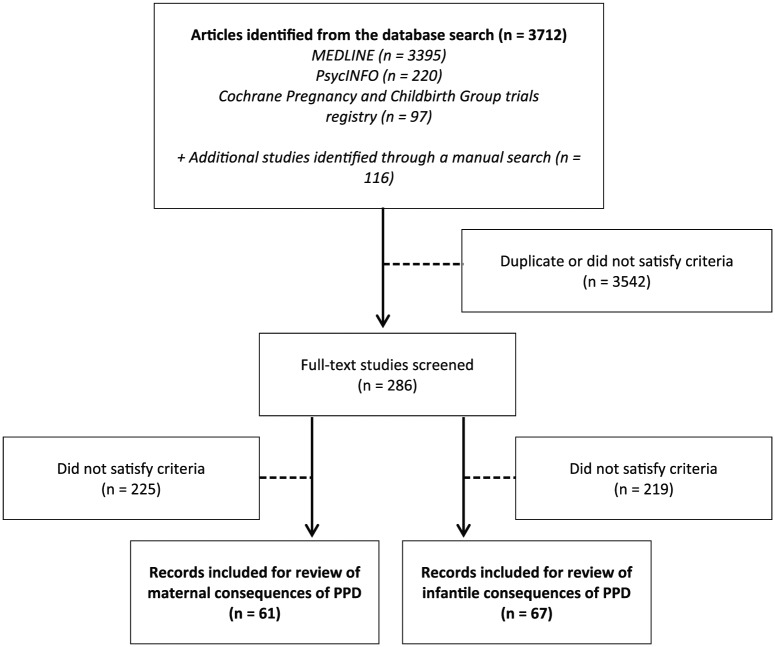
Introduction: The postpartum period represents the time of risk for the emergence of maternal postpartum depression. There are no systematic reviews of the overall maternal outcomes of maternal postpartum depression. The aim of this study was to evaluate both the infant and the maternal consequences of untreated maternal postpartum depression. Methods: We searched for studies published between 1 January 2005 and 17 August 2016, using the following databases: MEDLINE via Ovid, PsycINFO, and the Cochrane Pregnancy and Childbirth Group trials registry. Results: A total of 122 studies (out of 3712 references retrieved from bibliographic databases) were included in this systematic review. The results of the studies were synthetized into three categories: (a) the maternal consequences of postpartum depression, including physical health, psychological health, relationship, and risky behaviors; (b) the infant consequences of postpartum depression, including anthropometry, physical health, sleep, and motor, cognitive, language, emotional, social, and behavioral development; and (c) mother–child interactions, including bonding, breastfeeding, and the maternal role. Discussion: The results suggest that postpartum depression creates an environment that is not conducive to the personal development of mothers or the optimal development of a child. It therefore seems important to detect and treat depression during the postnatal period as early as possible to avoid harmful consequences.
Overview
CoChat Summary
TL;DR
This systematic review of 122 studies found that untreated maternal postpartum depression (PPD) is associated with negative maternal outcomes and adverse infant outcomes up to 3 years of age. The authors conclude that PPD creates an environment unfavorable to maternal personal development and optimal child development, supporting early detection and treatment.
Key findings
- The review included 122 eligible studies: 68 evaluated maternal consequences, 73 evaluated infant consequences, and 19 examined both. PPD prevalence across included studies ranged from 2.7% in Pakistani mothers at 18 months postpartum to 68.8% in Australian mothers at 4 months postpartum.
- Maternal PPD was linked to worse physical and psychological health, lower quality of life, relationship difficulties, and risky behaviors. For example, new-onset PPD was associated with more than double the risk of retaining at least 5 kg (OR = 2.54, 95% CI = 1.06, 6.09), and service women with PPD had higher odds of suicidality than service women without PPD (OR = 42.2, 95% CI = 28.8, 61.9).
- Infant consequences included anthropometric, health, sleep, motor, cognitive, language, emotional, social, and behavioral outcomes. Probable postnatal depression was associated with almost three times higher all-cause infant mortality up to 6 months (adjusted RR = 2.86, 95% CI = 1.58, 5.19) and almost two times higher mortality up to 12 months (adjusted RR = 1.88, 95% CI = 1.09, 3.24).
- Mother–child interactions were affected: 16 of 22 breastfeeding studies found significant negative effects of maternal depressive symptoms on breastfeeding and/or its parameters, and 11 studies showed a negative effect of maternal depression on mother-to-infant bonding.
Methods
- Systematic review following PRISMA to the extent possible; searched MEDLINE via Ovid, PsycINFO, and the Cochrane Pregnancy and Childbirth Group trials registry for studies published between 1 January 2005 and 17 August 2016, limited to human studies in English.
- Inclusion criteria were cohort, cross-sectional epidemiological, and qualitative individual studies; mothers of all ages with PPD; and health (physical or psychological) or social outcomes of PPD. Exclusion criteria were meta-analyses, systematic and nonsystematic reviews, randomized controlled trials, case studies, and studies including mothers who received treatment for PPD.
- From 3712 references retrieved, 122 studies were included. Outcomes were grouped into maternal consequences, infant consequences, and mother–child interactions, then thematically analyzed and synthesized narratively; adjusted results were used and discussed when available.
Limitations
- The authors state that study selection and data extraction were not performed using a double-blinded method, and no assessment of the studies’ methodological quality was performed.
- The authors state that the review compares heterogeneous studies using various designs (cohort vs cross-sectional) and tools to assess PPD, so potential confounding factors could be present.
- Evident from the text: PPD diagnosis and cut-off values varied widely across included studies (e.g., EPDS cut-offs of 8, 9, 10, 11, 12, 13, or 14), and the authors note that this heterogeneity makes outcomes difficult to compare.
Model-written summary. Check it against the paper before relying on it.
Integrity signals
Registry
Cites
Statistics
Figures
Verification
Claims the paper makes
103 Valid · 4 Not valid · 166 Not checked · 46 Own results and interpretations
Some cited sources support this claim and some don’t — read each source’s verdict below.
In the paper
“Two studies demonstrated that the triceps and subscapular skinfold thicknesses did not differ between infants of depressed and nondepressed mothers (one study was conducted in Belgium, Germany, Italy, Poland, and Spain;113 the other was from the United States112).”
§ Consequences of maternal postpartum depression: A systematic review of maternal and infant outcomes > Results > Infant consequences of PPD
What the sources say
- Supportedcites [113] Grote V Vik T von Kries R et al Maternal postnatal depression and child growth: a European cohort study. BMC Pediatr 2010; 10: 14. 20226021 PMC2850333 source
Table 2 (Results) reports triceps and subscapular skinfold measurements at 24 months for children of mothers with high and normal EPDS scores; the estimated differences have confidence intervals spanning zero. The Abstract’s Results state that the anthropometric indices did not differ between groups. (LLM, conf=0.94)
- Disputedcites [112] Ertel KA Koenen KC Rich-Edwards JW et al Antenatal and postpartum depressive symptoms are differentially associated with early childhood weight and adiposity. Paediatr Perinat Epidemiol 2010; 24(2): 179– 189. 20415775 PMC4106300 sourceExperimental — accuracy not yet measured
The Results report minimal difference in the combined skinfold measure (SS+TR) with antenatal depression, but higher SS+TR with postpartum depression (1.14 mm, 95% CI 0.11–2.18). Skinfolds were measured at age 3, not in infants. Thus the paper does not support the unqualified claim that skinfold thicknesses did not differ between the groups. (LLM, conf=0.86)
Checked by a reasoning model — may be wrong.
boosted- Asserted: passes — The authors put it forward as true.
- Checkable: passes — It can be checked against evidence.
- Load-bearing: unclear — It is unclear whether the paper’s conclusions depend on it.
- Based: passes — The paper gives a reason why it holds.
- Supported
At least one cited source doesn’t support this claim or points to a different paper, and none confirmed it — see the verdicts below.
In the paper
“The third study,94 conducted in Pakistan, showed that a child’s language development was affected by maternal PPD only when the father’s income was high.”
§ Consequences of maternal postpartum depression: A systematic review of maternal and infant outcomes > Results > Infant consequences of PPD
What the sources say
- Disputedcites [94] Ali NS Mahmud S Khan A et al Impact of postpartum anxiety and depression on child’s mental development from two peri-urban communities of Karachi, Pakistan: a quasi-experimental study. BMC Psychiatry 2013; 13: 274. 24148567 PMC3819469 sourceExperimental — accuracy not yet measured
The Results (Child language development, Table 4) report the opposite income pattern: children of depressed mothers had significantly higher odds of language delay when the father's income was below 3500 rupees/month. The Results also state that maternal depression had no significant impact on language development when his income was at least 3500 rupees/month. (LLM, conf=0.90)
Checked by a reasoning model — may be wrong.
plainstates a cause- Asserted: passes — The authors put it forward as true.
- Checkable: passes — It can be checked against evidence.
- Load-bearing: unclear — It is unclear whether the paper’s conclusions depend on it.
- Based: passes — The paper gives a reason why it holds.
- Disputed
Every source the paper cites for this claim was checked and supports it.
In the paper
“In multivariate logistic regression analyses, after adjustment for weight-related covariates, maternal sociodemographics, and parity, new-onset PPD was associated with more than double the risk of retaining at least 5 (OR = 2.54, 95% CI = 1.06, 6.09) kg.”
§ Consequences of maternal postpartum depression: A systematic review of maternal and infant outcomes > Results > Maternal consequences of PPD
What the sources say
- Supportedcites [67] Herring SJ Rich-Edwards JW Oken E et al Association of postpartum depression with weight retention 1 year after childbirth. Obesity 2008; 16(6): 1296– 1301. 18369338 PMC2761642 source
The Abstract reports that, after adjustment for weight-related covariates, maternal sociodemographics, and parity, new-onset postpartum depression was associated with retaining at least 5 kg at one year (OR 2.54, 95% CI 1.06–6.09). Table 2 in the discussion gives the same estimate for the fully adjusted model. (LLM, conf=0.95)
plainstates an association- Asserted: passes — The authors put it forward as true.
- Checkable: passes — It can be checked against evidence.
- Load-bearing: passes — The paper’s conclusions depend on it.
- Based: passes — The paper gives a reason why it holds.
- Supported
The cited sources support only part of this claim — read each source’s verdict below.
In the paper
“Other nonsystematic and systematic reviews have also explored specific maternal risks when mothers’ PPD is untreated, including more weight problems,18,19 alcohol and illicit drug use,20 social relationship problems,21 breastfeeding problems,22 or persistent depression23 compared with women who have received treatment.”
§ Consequences of maternal postpartum depression: A systematic review of maternal and infant outcomes > Introduction
What the sources say
- Partly supportedcites [18] Xiao RS Kroll-Desrosiers AR Goldberg RJ et al The impact of sleep, stress, and depression on postpartum weight retention: a systematic review. J Psychosom Res 2014; 77(5): 351– 358. 25306538 PMC4252881 sourceExperimental — accuracy not yet measured
The Results section (Postpartum depression; page unavailable) reports that some studies found an association between postpartum depression and weight retention, while others found no significant association. This supports the weight-problems portion linked to this citation, but the review does not compare untreated mothers with mothers who received treatment. The other listed risks are attached to other citations. (LLM, conf=0.87)
- Not checked — no full text of the sourcecites [19] Milgrom J Skouteris H Worotniuk T et al The association between ante- and postnatal depressive symptoms and obesity in both mother and child: a systematic review of the literature. Women’s Health Issues 2016; 22(3): e319– e328. 22341777 source
- Partly supportedcites [20] Chapman SLC Wu L-T. Postpartum substance use and depressive symptoms: a review. Women Health 2013; 53(5): 479– 503. 23879459 PMC3742364 sourceExperimental — accuracy not yet measured
Split into 2 atoms — 0 confirmed, 2 partially supported, 0 disputed, 0 misattributed, 0 unverifiable. Expand the claim to see per-atom verdicts.
- Partly supportedcites [21] Jones E Coast E. Social relationships and postpartum depression in South Asia: a systematic review. Int J Soc Psychiatry 2013; 59(7): 690– 700. 22851133 sourceExperimental — accuracy not yet measured
Split into 2 atoms — 0 confirmed, 2 partially supported, 0 disputed, 0 misattributed, 0 unverifiable. Expand the claim to see per-atom verdicts.
plainstates an association- Asserted: passes — The authors put it forward as true.
- Checkable: passes — It can be checked against evidence.
- Load-bearing: passes — The paper’s conclusions depend on it.
- Based: passes — The paper gives a reason why it holds.
- Partly supported
The cited sources support only part of this claim — read each source’s verdict below.
In the paper
“The two last studies evaluated postpartum weight retention (PPWR) and found that significantly more women with PPWR had higher scores on the PPD scale.35,67”
§ Consequences of maternal postpartum depression: A systematic review of maternal and infant outcomes > Results > Maternal consequences of PPD
What the sources say
- Not checked — no full text of the sourcecites [35] Biesmans K Franck E Ceulemans C et al Weight during the postpartum period: what can health care workers do. Matern Child Health J 2013; 17(6): 996– 1004. 22798141 source
- Partly supportedcites [67] Herring SJ Rich-Edwards JW Oken E et al Association of postpartum depression with weight retention 1 year after childbirth. Obesity 2008; 16(6): 1296– 1301. 18369338 PMC2761642 sourceExperimental — accuracy not yet measured
The Abstract and Discussion report a significant association between new-onset postpartum depression, defined by an EPDS score above 12, and retaining at least 5 kg one year after childbirth. They do not report that women with weight retention had higher EPDS scores overall; the significant finding is limited to new-onset postpartum depression, not antenatal depression or depression in both periods. The supplied copy gives no page numbers for these passages. (LLM, conf=0.86)
plainstates an association- Asserted: passes — The authors put it forward as true.
- Checkable: passes — It can be checked against evidence.
- Load-bearing: unclear — It is unclear whether the paper’s conclusions depend on it.
- Based: passes — The paper gives a reason why it holds.
214 more claims · 71 with their cited sources checked
Create a free account to see all 319 claims and to verify the 5 references still open.
- It may state two separate claims as one. 60
- Probably not a substantial claim. 42
- The quote only partly states this claim. 6
Claims other papers make about this one
Each is checked against this paper’s own text: does it say what the citing paper says it does?
The source backs part of the claim, not all of it — or backs it for a different population, condition or comparison.
In the citing paper
“Psychological distress among perinatal women correlates with increased maternal morbidity and mortality rates (Khalifa et al., 2016; Oates, 2003), poor infant health outcomes (Gelaye et al., 2016), and adverse early childhood developmental trajectories encompassing cognitive, emotional, and developmental delays (Slomian et al., 2019), making it a substantial public health concern.”
From Developing and validating the Sierra Leone perinatal psychological distress scale through an emic-etic approach (2025) · cites this paper as Slomian et al., 2019
Experimental — accuracy not yet measuredThe source backs part of the claim, not all of it — or backs it for a different population, condition or comparison.
In the citing paper
“This mental disorder has been shown to have negative effects on mothers' quality of life and their intimate relationships, birth outcomes, and breastfeeding likelihood, as well as long-term effects on children's cognitive and emotional development.”
From Perinatal Depression: Challenges and Opportunities (2021) · cites this paper as [25]
Experimental — accuracy not yet measuredThe cited source says what the claim attributes to it.
In the citing paper
“PPD may adversely impact mother-child bonding and contribute to adverse consequences for the infant, such as impaired cognitive, emotional, and motor development, or behavioral problems (Slomian et al., 2019).”
From PandaMom – Feasibility and acceptability of an internet- and mobile-based intervention to enhance peripartum mental well-being and to prevent postpartum depression (2024) · cites this paper as Slomian et al., 2019
The cited source says what the claim attributes to it.
In the citing paper
“Evidence shows that PPD is associated with overall poor maternal (O'Hara and McCabe, 2013; Gjerdingen and Yawn, 2007; Slomian et al., 2019) and infant health (Stein et al., 2014; Slomian et al., 2019; Hayes et al., 2013; Pawlby et al., 2009), even when the symptomatology is subclinical (Tronick and Reck, 2009; Weinberg et al., 2001).”
From App-based intervention for reducing depressive symptoms in postpartum women: Protocol for a feasibility randomized controlled trial (2023) · cites this paper as Slomian et al., 2019
The cited source says what the claim attributes to it.
In the citing paper
“PPD can have negative effects on maternal-infant bonding and interaction25; adaptation to the mothering role and confidence in providing infant care26; maternal quality of life and intimate relationships25; children's emotional, cognitive, and behavioral development27; and the father's mental health.28”
From Perinatal Depression: Challenges and Opportunities (2021) · cites this paper as [25]
1 more claim about this paper
Create a free account to see every claim other papers make about this one.
Statistics recomputed
Every reported test result, recomputed from its test statistic and degrees of freedom. A result shows as not adding up only once an independent check has confirmed it.
- Consistentχ²(2) = 6.47reported p < .05 · recomputed p = .039
“χ2(2) = 6.47, p < .05”
- Consistentχ²(1) = 5.44reported p < .025 · recomputed p = .020
“χ2(1) =5.44, p < .025”
- Consistentχ²(1) = 4.01reported p < .05 · recomputed p = .045
“χ2(1) = 4.01, p < .05”
Self-check
Percentages, sums and reported differences re-computed from the paper’s own numbers.
Each contradiction between two passages listed here was confirmed by an independent check.
Rated minor: it would not touch a result — a value no result rests on, a p-value that stays on the same side of the significance level, or a conflict that is clerical, resolved elsewhere in the paper, or outside its own findings.
In the paper
§ Consequences of maternal postpartum depression: A systematic review of maternal and infant outcomes > Results > Included studies
“The prevalence of PPD varied from 4.5% in a population of Canadian mothers at 6 weeks postpartum89 to 68.8% in a population of Australian mothers at 4 months postpartum.64”
§ Consequences of maternal postpartum depression: A systematic review of maternal and infant outcomes > Results > Maternal consequences of PPD
“Herring67 | USA Mean age: 33.0 ± 4.7 years Gender of newborns: not given | 850 | Cohort study 18 months Four groups: - None - Pregnancy only - Postpartum only - Pregnancy and postpartum | EPDS (Depressed = EPDS > 12) | 4%”
Rated minor: it would not touch a result — a value no result rests on, a p-value that stays on the same side of the significance level, or a conflict that is clerical, resolved elsewhere in the paper, or outside its own findings.
In the paper
§ Consequences of maternal postpartum depression: A systematic review of maternal and infant outcomes > Results > Infant consequences of PPD
“The third study,94 conducted in Pakistan, showed that a child’s language development was affected by maternal PPD only when the father’s income was high.”
§ Consequences of maternal postpartum depression: A systematic review of maternal and infant outcomes > Results > Infant consequences of PPD
“Among women whose husband’s income was ⩾3500 rupees/month, there was no significant impact of maternal depression on children’s language development. Children of depressed mothers whose husband’s income was <3500 rupees/month had more than a five-fold risk of delayed language development”
Rated minor: it would not touch a result — a value no result rests on, a p-value that stays on the same side of the significance level, or a conflict that is clerical, resolved elsewhere in the paper, or outside its own findings.
In the paper
§ Consequences of maternal postpartum depression: A systematic review of maternal and infant outcomes > Results > Included studies
“The majority of the studies were performed in the United States (28 of 68) and Europe (22 of 68), 10 studies were performed in Asia, and 8 studies were performed in Australia and New Zealand.”
§ Consequences of maternal postpartum depression: A systematic review of maternal and infant outcomes > Results > Maternal consequences of PPD
“Faisal-Cury38 | Brazil Mean age: 25 years Gender of newborns: not given | 644”
Rated minor: it would not touch a result — a value no result rests on, a p-value that stays on the same side of the significance level, or a conflict that is clerical, resolved elsewhere in the paper, or outside its own findings.
In the paper
§ Consequences of maternal postpartum depression: A systematic review of maternal and infant outcomes > Results > Included studies
“The number of participants ranged from 1593 to 22,118,28”
§ Consequences of maternal postpartum depression: A systematic review of maternal and infant outcomes > Results > Maternal consequences of PPD
“Do33 | USA Mean age: not given Gender of newborns: not given | 178,714 | Cohort study 6 years”
Rated minor: it would not touch a result — a value no result rests on, a p-value that stays on the same side of the significance level, or a conflict that is clerical, resolved elsewhere in the paper, or outside its own findings.
In the paper
§ Consequences of maternal postpartum depression: A systematic review of maternal and infant outcomes > Results > Mother–child interactions
“nondepressed mothers showed right-sided cradling, similar to nonstressed mothers.”
§ Consequences of maternal postpartum depression: A systematic review of maternal and infant outcomes > Results > Mother–child interactions
“The results indicated that 86% of mothers who were neither stressed nor depressed cradled to the left, and 14% cradled to the right.”
3 more findings
Create a free account to see every finding of this check.
Citations
Cites
Diagnostic and Statistical Manual of Mental Disorders
American Psychiatric Association (2013) · doi:10.1176/appi.books.9780890425596 · Cited by 116,369
Preferred Reporting Items for Systematic Reviews and Meta-Analyses: the PRISMA statement
Moher, D., Liberati, A., Tetzlaff, J., Altman, D. G., & for the PRISMA Group (2009) · BMJ · doi:10.1136/bmj.b2535 · Cited by 83,823
Preferred Reporting Items for Systematic Reviews and Meta-Analyses: The PRISMA Statement
Moher, D., Liberati, A., Tetzlaff, J., Altman, D. G., & The PRISMA Group (2009) · PLoS Medicine · doi:10.1371/journal.pmed.1000097 · Cited by 64,042
Wang, G., Ma, R., Qiao, G., Wada, K., Aizawa, Y., & Satoh, T. (2015) · Integrative Medicine International · doi:10.1159/000368408 · Cited by 18,657
Detection of Postnatal Depression: Development of the 10-item Edinburgh Postnatal Depression Scale
Cox, J. L., Holden, J. M., & Sagovsky, R. (1987) · British Journal of Psychiatry · doi:10.1192/bjp.150.6.782 · Cited by 14,183
Perinatal Depression: A Systematic Review of Prevalence and Incidence
Gavin, N. I., Gaynes, B. N., Lohr, K. N., Meltzer-Brody, S., Gartlehner, G., & Swinson, T. (2005) · Obstetrics & Gynecology · doi:10.1097/01.aog.0000183597.31630.db · Cited by 3,282
Offspring of Depressed Parents: 20 Years Later
Weissman, M. M., Wickramaratne, P., Nomura, Y., Warner, V., Pilowsky, D., & Verdeli, H. (2006) · American Journal of Psychiatry · doi:10.1176/ajp.2006.163.6.1001 · Cited by 1,059
Perinatal mental illness: Definition, description and aetiology
O'Hara, M. W., & Wisner, K. L. (2014) · Best Practice & Research Clinical Obstetrics & Gynaecology · doi:10.1016/j.bpobgyn.2013.09.002 · Cited by 986
Screening for depression during pregnancy with the edinburgh depression scale (EDDS)
Murray, D., & Cox, J. L. (1990) · Journal of Reproductive and Infant Psychology · doi:10.1080/02646839008403615 · Cited by 973
Magnitude and risk factors for postpartum symptoms: A literature review
Norhayati, M. N., Nik Hazlina, N. H., Asrenee, A. R., & Wan Emilin, W. M. A. (2015) · Journal of Affective Disorders · doi:10.1016/j.jad.2014.12.041 · Cited by 816
Research works printed but not linked: 4
- Friedman DD. 4-month infant vocal quality in mother-infant face-to-face interaction: 6-week maternal postpartum depressive symptomatology and infant gender. PhD Thesis, New York University, New York, 2005.
- Kalita KN. Developmental profile of infants born to mothers with postpartum depression and anxiety: a comparative study. J Indian Assoc Child Adolesc Ment Health 2009; 6(1): 3– 12.
- Razurel C. Comment l’éducation dispensée par les professionnels peut-elle influencer le sentiment de compétence parentale chez les mères primipares? Rouen: Université de Rouen, 2010.
- Williams TM Joy LA Travis L et al Transition to motherhood: a longitudinal study. Infant Ment Health J 1987; 8(3): 251– 265. · DOI · Paper page
Cited by
Items 801–900 of 1,517
Bonifacio, K. N., Cederna-Meko, C. L., Ellens, R. E. H., & El-Alam, N. T. (2023) · Journal of Clinical Psychology in Medical Settings · doi:10.1007/s10880-022-09934-0 · Cited by 3
“For the affected mother, studies suggest PPD can increase risk for unemployment (Miyake et al., 2011), difficulty returning to work (Miyake et al., 2011), engagement in high-risk behaviors such as substance use (Slomian et al., 2019), and recurrent PPD in subsequent pregnancies (APA, 1 3 2013).”
BackgroundAssessment of childbirth experience over time—A prospective cohort study
Hesselman, S., Sten, W., Skogsdal, Y., Wikman, A., & Viirman, F. (2025) · Acta Obstetricia Et Gynecologica Scandinavica · doi:10.1111/aogs.70010 · Cited by 2
“11 The prevalence of a negative childbirth experience has been re-ported to be 7%–12% in Sweden and up to 44% globally.”
Okeafor, I. N., Hair, N. L., Chen, B., & Hung, P. (2024) · Journal of Women s Health · doi:10.1089/jwh.2023.0908 · Cited by 2
Garcia, R. E., & Luna, J. T. P. (2024) · Philippine Journal of Obstetrics and Gynecology · doi:10.4103/pjog.pjog_17_24 · Cited by 2
Persistent Postpartum Depression During the COVID‐19 Pandemic and the Role of Social Supports
Steward, C. E., Claridge, A. M., Beeson, T., & Feeney, S. L. (2025) · Journal of Community Psychology · doi:10.1002/jcop.70018 · Cited by 2
Schafer, K. M., Daurio, A. M., & Joiner, T. E. (2025) · Family & Community Health · doi:10.1097/fch.0000000000000441 · Cited by 2
Maternal Perceptions and Feeding Practices Associated with Infant Nutritional Status
Villarreal, V. M. C., Cortés-Castell, E., Baeza, M. R., Martínez, N. H., Chávez, N. E. C., & Cárdenas, K. P. C. (2024) · Maternal and Child Health Journal · doi:10.1007/s10995-024-04016-z · Cited by 3
“While the recommended sleep duration for postpartum mothers is 7–8 h, longer sleep may indicate depressive symptoms which are known to disrupt both sleep patterns and maternal caregiving behaviors (Leerkes et al., 2022; Slomian et al., 2019).”
IMPLEMENTATION OF DIFFERENT CULTURES TO INFLUENCE POSTPARTUM DEPRESSION
Department of Midwifery Medicine Faculty, U. O. B., & Nurhidayah, S. (2023) · Journal of Psychiatry Psychology and Behavioral Research · doi:10.21776/ub.jppbr.2023.004.01.7 · Cited by 2
Mental Health of Postpartum Women During the COVID-19 Pandemic in Brazil
Segamarchi, P. R., Mateus, V., & Osório, A. (2023) · Psicologia - Teoria e Prática · doi:10.5935/1980-6906/eptpcp14807.en · Cited by 2
“…development, such as, for example, damage to the mother-infant interaction and difficulties in the social and emotional functioning of infants (Slomian et al., 2019), it is essential to examine the impact of the current pandemic context on maternal mental health, to provide adequate and…”
Maternal postpartum mental health negatively affects infants' health related quality of life
Subbiah, G. K., de Kroon, M. L. A., Boere‐Boonekamp, M. M., den Berg, A. I. V. D. Z.-V., Hartman, C. A., & Reijneveld, S. A. (2025) · Journal of Affective Disorders · doi:10.1016/j.jad.2025.01.027 · Cited by 3
Effects of an Early Home Visiting Program on Maternal Depression
McLaughlin, K., Fasano, R. M., & Dozier, M. (2025) · Administration and Policy in Mental Health and Mental Health Services Research · doi:10.1007/s10488-025-01440-3 · Cited by 4
“This finding is especially critical as the prevalence of maternal depression continues to rise, which can negatively impact children’s cognitive, socioemotional, and behavioral development (Haight et al., 2019; Mirhosseini et al., 2015; Slomian et al., 2019).”
Scroggins, J. K., Topaz, M., Min, S. H., & Barcelona, V. (2024) · Journal of Obstetric, Gynecologic & Neonatal Nursing · doi:10.1016/j.jogn.2024.07.004 · Cited by 2
Sweerts, S. J., Rousselin, S., Raffeneau, F., Xavier-David, C., Changeur, V., Apter, G., Romo, L., & Gicquel, L. (2022) · Frontiers in Psychiatry · doi:10.3389/fpsyt.2022.986796 · Cited by 4
“A recent systematic review highlighted the adverse effects of MPD on mothers (physical health, psychological health, worse quality of life, difficulties in social relationships, and risky behaviors such as substance abuse), on mother-child interactions (attachment difficulties, insecure attachments), and on infants (a…”
Bernard, J., Moules, N. J., Tough, S., Tryphonopoulos, P. D., & Letourneau, N. L. (2024) · Global Qualitative Nursing Research · doi:10.1177/23333936241245588 · Cited by 3
Shalayiding, S., Meng, W., Wang, X., et al. (2025) · BMC Psychology · doi:10.1186/s40359-025-03031-1 · Cited by 2
“Parenting stress has been shown to be closely related to parental mental health well-being and quality of life [32], and depression in pregnant women tends to decrease when they perceive that they are able to take care of their babies [32].”
He, J., Chen, H., Duan, K., Wushouer, S., Wang, X., Li, Y., & Qin, X. (2025) · Frontiers in Endocrinology · doi:10.3389/fendo.2025.1542327 · Cited by 4
El‐Den, S., Birkness, K., Pham, L., Murphy, A. L., Moles, R. J., O’Reilly, C. L., Raynes‐Greenow, C. H., Chen, T. F., Raduescu, C., Gardner, D. M., et al. (2024) · Research in Social and Administrative Pharmacy · doi:10.1016/j.sapharm.2024.06.012 · Cited by 3
Nombela, E., Duque, A., Salgado, G., & Chaves, C. (2026) · Clinical Psychology & Psychotherapy · doi:10.1002/cpp.70281 · Cited by 2
Psychological Journey and Coping Styles of Parents of Infants With Biliary Atresia
Zhang, C., Wu, Y., Bao, Y., et al. (2023) · Advances in Neonatal Care · doi:10.1097/anc.0000000000001093 · Cited by 2
Postnatal depression: Cognitive-behavioral conceptualization and prevention and treatment approaches
Fonseca, A. (2023) · Elsevier eBooks · doi:10.1016/b978-0-323-85757-4.00006-7 · Cited by 2
Association between maternity care practitioner type and postpartum depression screening
Bourdeau, A., Harley, K. G., & Nguyen, A.-M. N. (2023) · Birth · doi:10.1111/birt.12735 · Cited by 4
From Dyad to Triad in Early Childhood: Mentalization-Informed Interventions Developed in Chile
Olhaberry, M. (2024) · Journal of Infant Child and Adolescent Psychotherapy · doi:10.1080/15289168.2024.2314419 · Cited by 4
“Given the importance of the first year of life, postpartum maternal depression has been identified as a risk factor for the quality of the mother-child bond and infant socioemotional development (Slomian et al., 2019).”
BackgroundPostnatal Depression and Homelessness in Women Living in High-Income Countries: A Scoping Review
Kelly, L., Martin-Kerry, J., & Prady, S. L. (2023) · Psychological Studies · doi:10.1007/s12646-023-00736-4 · Cited by 2
Oppenheimer, H., Shadrin, A. A., Andersen, J. Ø., Schindler, L. S., Crestol, A., Andreassen, O. A., Westlye, L. T., de Lange, A. G., van der Meer, D., & Barth, C. (2025) · Biological Psychiatry · doi:10.1016/j.biopsych.2025.09.018 · Cited by 3
Grano, C., Zagaria, A., Spinoni, M., Solorzano, C. S., Cazzato, V., Kirk, E., & Preston, C. (2024) · Body Image · doi:10.1016/j.bodyim.2024.101847 · Cited by 6
Ayrout, R. A., Kookash, M. H., Ashabi, K. K. A., Safiah, M. H., & Latifeh, Y. (2023) · Research Square · doi:10.21203/rs.3.rs-3154302/v1 · Cited by 2
Kornfield, S. L., Johnson, R. L., Hantsoo, L. V., Kaminsky, R. B., Waller, R. E., Sammel, M. D., & Epperson, C. N. (2022) · Frontiers in Psychiatry · doi:10.3389/fpsyt.2022.882429 · Cited by 2
Kerna, N. A., Pruitt, K., Carsrud, N. D. V., Ngwu, D., Holets, H. M., Flores, J. V., & Anderson, J. (2024) · European Journal of Contemporary Education and E-Learning · doi:10.59324/ejceel.2024.2(1).17 · Cited by 2
Camacho, E. M., Shields, G., Eisner, E., Littlewood, E., Watson, K., Chew-Graham, C. A., McMillan, D., & Gilbody, S. M. (2025) · Journal of Affective Disorders · doi:10.1016/j.jad.2025.04.009 · Cited by 4
Wang, L., Shi, L., Wang, L., Wu, Y., Zhang, X., Chen, T., & Huo, C. (2022) · Computational and Mathematical Methods in Medicine · doi:10.1155/2022/8993144 · Cited by 3
“Postpartum depression (PPD) is one of the common negative emotions of puerperal women [1].”
BackgroundRetractedPsychometric properties of psychosocial dimensions associated with postpartum depression
Ghaedrahmati, M., Kazemi, A., Kheirabadi, G., Bahrami, M., & Ebrahimi, A. (2021) · Journal of obstetrics and gynaecology research · doi:10.1111/jog.14930 · Cited by 2
Chasson, M. (2024) · Journal of Reproductive and Infant Psychology · doi:10.1080/02646838.2024.2431144 · Cited by 3
“Moreover, an inverse relationship has been found between maternal role satisfaction and PDS, so that mothers who experience greater satisfaction with their maternal role tend to have lower PDS severity (Ngai et al., 2010; Slomian et al., 2019).”
Risk Factors influencing Post-Partum Depression Severity in Iraqi Women
Al-Imam, A., Haligowska, A., Motyka, M. A., Alabadi, M., Hameed, M., Al-Haideri, M., & Al-Hemiary, N. J. (2023) · AL-Kindy College Medical Journal · doi:10.47723/kcmj.v19i2.1050 · Cited by 3
Kinser, P. A., Moyer, S. W., Jones, H. A., Jallo, N., Popoola, A., Thacker, L. R., Russell, S., Olavesen, E. S., Sundrehagen, T., Hare, M. M., et al. (2025) · PLOS mental health. · doi:10.1371/journal.pmen.0000138 · Cited by 3
Gyokova, E. H., Hristova-Atanasova, E., & Iskrov, G. G. (2025) · Journal of Clinical Medicine · doi:10.3390/jcm14145158 · Cited by 5
Afroz, N., Kabir, E., & Alam, K. (2024) · Applied Psychology Health and Well-Being · doi:10.1111/aphw.12584 · Cited by 2
Toyama, N., Hokama, C., Takahara, M., & Toyama, Y. (2024) · Nursing Reports · doi:10.3390/nursrep14010039 · Cited by 2
“Maternal mental health problems have been found to influence children’s psychosocial and emotional development [1,2].”
BackgroundOğur, Y. S., Yazıcı, E., Yuvacı, H. U., Oğur, N. B., Köse, E., & Yazıcı, A. B. (2023) · Annals of Clinical Psychiatry · doi:10.12788/acp.0127 · Cited by 3
Separation in Unity: Dialogical Transformation of Maternal Bond
Uriko, K., & Bartels, I. (2022) · Integrative Psychological and Behavioral Science · doi:10.1007/s12124-022-09688-2 · Cited by 3
“Although bonding problems do not occur in all parents with mental health disorders, there is evidence that the motherinfant relationship can be negatively impacted by depression (Field, 2010; Slomian et al., 2019), anxiety (Glasheen et al.”
BackgroundMatsushima, M., & Horiguchi, H. (2020) · Research Square · doi:10.21203/rs.3.rs-67579/v1 · Cited by 2
Drage, J., Layton, H., Varambally, M., Jack, S. M., & Lieshout, R. J. V. (2025) · Midwifery · doi:10.1016/j.midw.2025.104319 · Cited by 2
Wilson, K. E., Martínez‐Camblor, P., Gifford, K. A., & Jankowski, M. K. (2024) · Journal of Pediatric Health Care · doi:10.1016/j.pedhc.2024.08.007 · Cited by 2
Long Term Effect of Mode of Delivery on Sexual Function: A cross-Sectional Study
Mahmoud, S. H. M., Megahed, A. E. M., & Khattab, K. A. O. (2021) · International Journal of Medical Arts · doi:10.21608/ijma.2021.55609.1234 · Cited by 2
“Postpartum depression usually affects maternal health and her infant or child's normal growth [7-8] and development [9] and paternal depression [10].”
BackgroundKurbatfinski, S., Ntanda, H. N., Mullin, J., Dewey, D., Leung, B. M. Y., & Letourneau, N. L. (2025) · Children · doi:10.3390/children12050535 · Cited by 1
“…children’s behavioural problems [142], our unexpected findings could indicate that mothers who experience subclinical symptoms may be less likely to be identified or seek help from support systems (e.g., family, friends, and providers) than mothers who experience high depressive symptoms [143].”
Barker, L. C., Fung, K., Zaheer, J., Brown, H. K., Bronskill, S. E., Kurdyak, P. A., & Vigod, S. N. (2023) · General Hospital Psychiatry · doi:10.1016/j.genhosppsych.2023.04.003 · Cited by 2
Gautier, K. N., Higley, S. L., Mendoza, J. M., & Morrison, K. E. (2024) · Stress · doi:10.1080/10253890.2024.2357330 · Cited by 4
Stratifying Risk for Postpartum Depression at Time of Hospital Discharge
(2024) · doi:10.1101/2024.05.27.24307973 · Cited by 16
“2,10 As >98% of women deliver in a hospital or health care facility, the delivery hospitalization represents an opportunity to identify individuals at high risk for postpartum depression and potentially target interventions, prevent, screen, and manage PPD. 11 Such interventions could be applied…”
BackgroundGünkaya, O. S., Yassa, Ö. Y., Tekin, A. B., Tekelioğlu, M., Ünlü, U. G., Arslan, O., Özköse, Z. G., Kalkan, Ü., & Tuğ, N. (2022) · Journal of Experimental and Clinical Medicine · doi:10.52142/omujecm.39.1.34 · Cited by 3
Health Insurance for Whom? The ‘Spill-up’ Effects of Children’s Health Insurance on MothersPreprint
Grossman, D. S., Tello‐Trillo, S., & Willage, B. (2022) · SSRN Electronic Journal · doi:10.2139/ssrn.4010516 · Cited by 3
Micalizzi, L., Howe, L. K., Battle, C. L., Metrik, J., & Gunn, R. L. (2025) · JMIR Research Protocols · doi:10.2196/71302 · Cited by 2
“Similarly, PPD remains one of the most prevalent complications of childbirth, with implications not only for maternal well-being but also for early caregiving and infant socioemotional development [5].”
Improving inpatient postpartum depression screening: results from a quality improvement initiative
Woofter, R. C., Hill, G., Wong, E., Bright, T. J., Bresee, C. J., Kilpatrick, S. J., & Accortt, E. E. (2025) · Archives of Women s Mental Health · doi:10.1007/s00737-025-01591-0 · Cited by 7
“Without treatment, PPD/PPA can result in adverse maternal and infant outcomes (Slomian et al. 2019; Accortt et al. 2024).”
Raouna, A., Girard, L., & MacBeth, A. M. (2024) · Journal of Affective Disorders · doi:10.1016/j.jad.2024.10.096 · Cited by 5
Postpartum Depression in a Context of Social Vulnerability in Morocco
Manoussi, A., Baali, A., Amor, H., & Ouzennou, N. (2023) · Psychiatric Annals · doi:10.3928/00485713-20230207-03 · Cited by 2
Iacob, E., Kausler, R., Williams, M., Simonsen, S. E., Smid, M. C., Weissinger, K., & Latendresse, G. (2024) · Contemporary Clinical Trials · doi:10.1016/j.cct.2024.107738 · Cited by 3
Meta analisis intervensi psikoterapi interpersonal untuk menurunkan depresi
Angelica, K., & Yudiarso, A. (2022) · Mediapsi · doi:10.21776/ub.mps.2022.008.02.827 · Cited by 3
Intimacy and Postpartum Depression: A Moderated Mediation Model
Bogdan, I., & Turliuc, M. N. (2022) · Journal of Child and Family Studies · doi:10.1007/s10826-022-02461-4 · Cited by 3
“It can produce not only severe consequences for mothers, but also less functional mother-child interactions and decreases in the child ’ s physical, cognitive, and emotional progress (for a meta-analysis, see Slomian et al., 2019).”
BackgroundEriso, M., Jifar, M. S., Tumiso, H., Bubamo, B. F., & Agide, F. D. (2024) · Research Square · doi:10.21203/rs.3.rs-4455359/v1 · Cited by 3
Kerker, B. D., Milian, J., Clark, M. R., Weiss, D., Lewis, K. D. C., & Willheim, E. (2024) · Journal of Child and Family Studies · doi:10.1007/s10826-023-02771-1 · Cited by 4
“The impact of postpartum depression on children and families can be far-reaching, and treating postpartum depression can improve both maternal and child health outcomes (Field, 2011; Slomian et al., 2019).”
Sun, Y., Liu, L., Bu, C., Jiang, M., & Zheng, X. (2026) · Frontiers in Psychiatry · doi:10.3389/fpsyt.2026.1802534 · Cited by 4
“Of greater concern, the impact of perinatal depression on offspring extends into childhood and adolescence, children exposed to maternal perinatal depression and anxiety exhibit a signi fi cantly higher risk of impairments in cognitive, emotional, and behavioral development (7, 8).”
Oğur, N. B., Çeken, C., Oğur, Y. S., & Yazıcı, E. (2025) · IEEE Access · doi:10.1109/access.2025.3617120 · Cited by 3
“For the mother, untreated depression and anxiety can lead to functional impairments, deterioration of physical health, strained interpersonal relationships, economic hard-ships, and substance use [11], [12].”
Donofry, S. D., Jouppi, R. J., Call, C. C., Kolko, R. P., & Levine, M. D. (2023) · medRxiv · doi:10.1101/2023.12.22.23300475 · Cited by 2
Perinatal depression screening by health cadres in Indonesia: EPDS or Whooley?
Surjaningrum, E. R., Riyanto, E. D., Yusof, J., & Mujahadah, H. (2024) · Journal of Public Mental Health · doi:10.1108/jpmh-03-2024-0035 · Cited by 6
Mahamid, S., Chasson, M., & Ben‐Ari, O. T. –. (2025) · Journal of Trauma & Dissociation · doi:10.1080/15299732.2025.2481481 · Cited by 2
“…Arabic; validation; postpartum period Early motherhood brings joy and fulfillment but also involves navigating a demanding period filled with responsibilities, as mothers meet their infants’ intricate needs, requiring continuous attentiveness (Slomian et al., 2019; Taubman - Ben-Ari, 2019).”
Nillni, Y. I., Schildroth, S., Yland, J. J., Brown, H. L., Wesselink, A. K., & Wise, L. A. (2025) · Journal of Affective Disorders · doi:10.1016/j.jad.2025.01.088 · Cited by 4
Disrespectful Maternity Care and Postpartum Depression at 2 Months: A Population‐Based Study
Jacques, M., Chantry, A. A., Tebeka, S., Evrard, A., Doncarli, A., Lelong, N., Ray, C. L., & the ENP2021 Study Group (2025) · BJOG An International Journal of Obstetrics & Gynaecology · doi:10.1111/1471-0528.70093 · Cited by 3
“Untreated maternal mental health disorders are also strongly implicated in the impairment of children's social and cognitive development [7].”
Álvarez, P., Bellosillo, B., Colom, F., Longarón, R., Barrera-Conde, M., Fernández‐Ibarrondo, L., Toll, A., Gines, J. M., de la Torre, R., Pérez, V., et al. (2023) · Molecular and Cellular Biochemistry · doi:10.1007/s11010-023-04807-y · Cited by 3
“First, depression is substantially more prevalent in women, who are diagnosed with depression twice as often as men [12].”
Association between person-centered care during pregnancy and perinatal depression in Ghana
Gopalakrishnan, L., Aborigo, R., Ayuure, C. A., & Afulani, P. A. (2025) · BMC Pregnancy and Childbirth · doi:10.1186/s12884-025-07966-6 · Cited by 3
Importance of the Microbiota in Early Life and Influence on Future Health
Collins, J. M., Cryan, J. F., & O’Mahony, S. M. (2024) · Elsevier eBooks · doi:10.1016/b978-0-323-99971-7.00017-5 · Cited by 3
Jayamanna, K., & Abeysena, C. (2025) · Reproductive Health · doi:10.1186/s12978-025-01999-y · Cited by 3
“Postpartum depression (PPD) is a psychological condition affecting mothers after delivery, giving distressing consequences to the mother and the newborn [1], which can ultimately lead to maternal deaths and infan-ticide [2].”
Alvarez-Amado, D. E., & Barragán-Pérez, E. (2022) · Revista Médica Clínica Las Condes · doi:10.1016/j.rmclc.2022.08.004 · Cited by 15
Zhang, Y.-Y., Cheng, X.-L., Liu, L., Li, L., & Diao, Y. (2025) · BMC Anesthesiology · doi:10.1186/s12871-025-03590-1 · Cited by 3
“PPD not only compromises maternal mental health but is also associated with impaired infant cognitive development, disrupted mother–infant bonding, and long-term familial burden [6, 7].”
Home Birth in the United States: An Evidence-Based Ethical Analysis
Anderson, P. M., Jesus, V. A. D., & Gross, M. S. (2024) · The Journal of Clinical Ethics · doi:10.1086/728147 · Cited by 2
Iacob, E., Kausler, R., Williams, M., Dorn, U. P., Simonsen, S. E., Smid, M. C., & Latendresse, G. (2025) · Journal of Midwifery & Women s Health · doi:10.1111/jmwh.13767 · Cited by 5
Jester, J. M., Stacks, A. M., Riggs, J. L., Brophy‐Herb, H. E., Muzik, M., & Rosenblum, K. L. (2025) · Frontiers in Psychology · doi:10.3389/fpsyg.2025.1597655 · Cited by 5
Oliveira, F. S. E., Mota, D. D. C. D. F., Guimarães, J. V., Cavalcante, Á. M. R. Z., & VIEIRA, F. V. M. (2023) · Issues in Mental Health Nursing · doi:10.1080/01612840.2023.2243332 · Cited by 4
“While Cox et al. (1987) validated a cutoff point of ≥ 13 for the Edinburgh Postnatal Depression Scale (EPDS), the literature shows a wide range of cutoff points, ranging from eight to 14 (Slomian et al., 2019).”
BackgroundInfluentialGibbs, J. M., & Aubuchon-Endsley, N. L. (2023) · Infant Behavior and Development · doi:10.1016/j.infbeh.2023.101889 · Cited by 2
Influence of the COVID ‐19 pandemic on prenatal and postpartum patient experiences and well‐being
Riggan, K. A., Weaver, A. L., Ashby, G. B., Huang, L., Long, M. E., Torbenson, V. E., Wick, M. J., Allyse, M. A., & Rivera-Chiauzzi, E. Y. (2023) · Birth · doi:10.1111/birt.12760 · Cited by 3
Chen, H., Lai, J. C., Wang, K., & Chien, L. (2022) · Archives of Psychiatric Nursing · doi:10.1016/j.apnu.2022.08.001 · Cited by 5
Exploring the Effect of Social Media on Post-Partum Depression
Ye, Z. (2023) · Lecture Notes in Education Psychology and Public Media · doi:10.54254/2753-7048/29/20231401 · Cited by 3
Prevalence of Maternal Depressive Symptoms in Canada during the COVID-19 Pandemic
Fan, H. S. L., Masina, S., Chooniedass, R., Buono, K. D., & Tarrant, M. (2025) · Journal of Obstetrics and Gynaecology Canada · doi:10.1016/j.jogc.2025.102940 · Cited by 3
Key Risk Factors Contributing to Postpartum Depression: Literature Review
Alfahal, M. S., & Alfahal, M. S. (2024) · International Journal of Innovative Research in Medical Science · doi:10.23958/ijirms/vol09-i11/2004 · Cited by 3
Anstee, L., Firth, J. R., Hobby, D., Sanfilippo, K. R. M., Miele, M., & Stewart, L. (2025) · Arts & Health · doi:10.1080/17533015.2025.2490628 · Cited by 3
Personality Traits and Social Support: Their Role in Postpartum Depression
Richa, S., Parveen, S., Abullais, S. S., Mahmood, S. E., AlSamghan, A. S., & Alshaikh, A. A. (2025) · Psychology Research and Behavior Management · doi:10.2147/prbm.s507701 · Cited by 2
“Additionally, in accordance with Kline’s (2016) guidelines for SEM, models of moderate complexity 26,27 should include at least 200 cases to ensure parameter stability and reliable estimation.”
Maternal Antibiotic Exposure and the Risk of Developing Antenatal Depressive Symptoms
Pouranayatihosseinabad, M., Taylor, M., Hawrelak, J. A., Peterson, G. M., Veal, F. C., Ling, T. R., Williams, M., Whatley, M., Ahdieh, K., & Mirkazemi, C. (2024) · Journal of Clinical Medicine · doi:10.3390/jcm13051434 · Cited by 3
“Experiencing ADSs is also one of the main risk factors for experiencing postpartum depressive symptoms [9], which can itself have a negative impact on gestational parent–infant bonding and infant development [10].”
BackgroundUnderstanding perinatal women’s preferences for mental health apps: A mixed methods study
Dinkel, D. M., Chaudhary, P., Kupzyk, K. A., Johnson, D. J., Culjat, C., Torous, J. B., & Emerson, M. R. (2025) · Mental Health & Prevention · doi:10.1016/j.mhp.2025.200420 · Cited by 2
Tryphonopoulos, P. D., McNeil, D. A., Oxford, M. L., Dennis, C., Novick, J., Deane, A. J., Wu, K., Kurbatfinski, S., Griggs, K., & Letourneau, N. L. (2025) · Behavioral Sciences · doi:10.3390/bs15030279 · Cited by 7
“…of PPD on Parent–Infant Relationships and Child Development PPD has profound consequences for both mothers and their infants, negatively impacting maternal–infant interaction quality and child development (Garner et al., 2012; Logsdon et al., 2006; Shonkoff et al., 2012; Slomian et al., 2019).”
Nelson, P. M., Scheiber, F. A., Laughlin, H. M., & Demir‐Lira, Ö. E. (2025) · Child Development · doi:10.1111/cdev.14187 · Cited by 3
Mokwena, K. E., & Makhozonke, N. (2024) · International Journal of Innovative Research and Scientific Studies · doi:10.53894/ijirss.v7i2.2644 · Cited by 3
Screening and treatment of depression – recommendations for Polish health professionals
Dominiak, M., Antosik-Wójcińska, A. Z., Baron, M., & Mierzejewski, P. (2021) · Menopause Review/Przegląd Menopauzalny · doi:10.5114/pm.2021.104207 · Cited by 2
“National Institute for Health and Clinical Excellence [25, 26] It recommends that patients in the high-risk group, especially patients with chronic somatic disease, be carefully monitored and screened using a set of 2 questions.”
BackgroundInfluentialKennelly, E., Ji, L., Beeghly, M., Regisci, E., Bhatia, T., Duffy, M., Menu, I., Trentacosta, C. J., & Thomason, M. E. (2025) · Developmental Cognitive Neuroscience · doi:10.1016/j.dcn.2025.101585 · Cited by 4
“Studying the fetal brain eliminates the effects of the postnatal environment on child brain development, such as ongoing maternal psychiatric symptomatology and the impact it has on the mother-child relationship (Slomian et al., 2019).”
McNestry, C., O'Reilly, S. L., Twomey, P. J., Crowley, R. K., Callanan, S., Kasemiire, A., Douglass, A., Delahunt, A., & McAuliffe, F. M. (2026) · BMJ Open · doi:10.1136/bmjopen-2024-097323 · Cited by 5
Lin, K., Pan, C.-L., & Lin, K. (2024) · Taiwanese Journal of Obstetrics and Gynecology · doi:10.1016/j.tjog.2024.05.021 · Cited by 6
Maternal Attention Deficit Hyperactivity Disorder and Perinatal Depression: A Systematic Review
Pierotti, N., & Jayakody, K. (2025) · Journal of Attention Disorders · doi:10.1177/10870547251383430 · Cited by 5
“Perinatal depression is also associated with disrupted attachment and adversely impacts the infant’s emotional, social, motor, cognitive and behavioural development (Slomian et al., 2019).”
DeCoste, K. L., Benoit, B., Dewart, G., & Johnson, S. T. (2024) · Midwifery · doi:10.1016/j.midw.2024.104145 · Cited by 5
Knowledge attitude and practice of pregnant women on postnatal depression in Henan Province China
Wang, Z., Zhang, Q., Nie, R., Zhou, L., Zhao, C., Cao, Y., & Cheng, X. (2025) · Scientific Reports · doi:10.1038/s41598-025-08274-x · Cited by 4
Camacho, E. M., Shields, G., Eisner, E., Littlewood, E., Watson, K., Chew-Graham, C. A., McMillan, D., Ali, S., & Gilbody, S. M. (2023) · Archives of Women s Mental Health · doi:10.1007/s00737-023-01377-2 · Cited by 5
“Improving the identification of antenatal depression is important because, for some women, untreated depression can lead to poor outcomes for mother and baby (Slomian et al. 2019).”
Subedi, A., Orbach‐Zinger, S., & den Berg, A. M. J. V. S.-V. (2025) · Obstetric Anesthesia Digest · doi:10.1007/s12630-025-03006-1 · Cited by 2
“22 Among the consequences of untreated maternal PPD are a diminished quality of life, heightened risk behaviours, and disruptions in social relationships.”
Teng, N. I. M. F., Yahya, N. F. S., Said, N. M., & Nuzrina, R. (2022) · Environment-Behaviour Proceedings Journal · doi:10.21834/ebpj.v7i20.3338 · Cited by 3
“While the effects of depression on mothers are relatively lethargy, such as sleep disturbances, fatigue, and disrupted emotion (Al Maghaireh et al., 2017; Thomas & Spieker, 2016), untreated cases may have an impact on infants' motor, cognitive, and social development (Slomian et al., 2019).”
Background
Metadata
- Authors
- Slomian, J., Honvo, G., Emonts, P., Reginster, J.-Y., & Bruyère, O.
- Affiliations
- University of Liège (BE)
- Centre Hospitalier Universitaire de Liège (BE)
- Corresponding author
- Slomian, Justine
- Venue
- Women's Health
- Publisher
- SAGE Publications
- Published
- 2019-01
- Volume
- 15
- Pages
- 1745506519844044-1745506519844044
- ISSN
- 1745-5057 (ISSN-L)
- 1745-5065
- PMC
- PMC6492376
- OpenAlex
- W2943494044
- Semantic Scholar
- ee946755bae03c5fb910a2191e2371c480ea04a3
- Cited by
- 1,496
- References
- 184
- Citations by year
- 2026: 183 · 2025: 275 · 2024: 320 · 2023: 272 · 2022: 219 · 2021: 152 · 2020: 64 · 2019: 10
- FWCI
- 18.19
- Type
- journal article
- Language
- en
- Update notices
- correction (2019-05-30)
- Open access
- gold
- doi.org
- Licence
- cc-by-nc
- journals.sagepub.com/page/policies/text-and-data-mining-license (tdm)
- Locations
- Women s Health (publishedVersion, cc-by-nc)
- Europe PMC (PubMed Central) (publishedVersion, cc-by-nc)
- PubMed Central (publishedVersion, cc-by-nc)
- PubMed (publishedVersion)
- DOAJ (DOAJ: Directory of Open Access Journals) (submittedVersion, cc-by-sa)
- ORBi (University of Liège) (submittedVersion)
- Topics
- Health Sciences › Medicine › Public Health, Environmental and Occupational Health › Maternal Mental Health During Pregnancy and Postpartum
- Health Sciences › Medicine › Pediatrics, Perinatology and Child Health › Maternal and Neonatal Healthcare
- Health Sciences › Medicine › Pediatrics, Perinatology and Child Health › Infant Health and Development
- Keywords
- postpartum depression, maternal outcomes, infant outcomes, mother-infant bonding, breastfeeding, maternal role, infant development, maternal physical health, maternal mental health, infant sleep
- MeSH terms
- Adult, Body Weights and Measures, Breast Feeding, Child Development, Cognition, Female, Health Status, Humans, Infant, Infant, Newborn, Language, Male, Mental Health, Mother-Child Relations, Quality of Life, Risk-Taking, Sleep, Women's Health, Depression, Postpartum
About these checks
Registry, retraction, Cites and statistics results are computed, not judged, with one exception: a printed reference that no index lists is read once by a model before it counts as a citation error. Claims are extracted by a model and kept only when their quote appears verbatim in the text; each cited source is then checked, with a model’s help, for whether it says what the claim relies on. Those verdicts can be wrong — read the claim’s quote and the cited source before relying on one.
The claim verdicts this report counts are experimental: their accuracy is not yet measured.
A language model drew the claims from the paper on 2026-10-05, under version 3 of the claim definition (model deepseek-v4.1-flash, prompt extract-v3).
A second model labelled each claim on 2026-10-05 (model jev-1.13-20260917, definition revision gold-guideline-v0.2).
Cited sources are checked with a language model’s help (gpt-6-sol).
Statistics and arithmetic are recomputed, not judged.
Confidence bands are shown only for fields calibrated on our annotated test set. None is calibrated yet, so no band is shown.
What counts as a claim ›How we measure confidence ›How we check this ›
Are you an author, or do you see a problem with this page? Request a review
Data sources
Bibliographic data: Semantic Scholar, OpenAlex, Crossref.
Contains information from the Semantic Scholar Academic Graph Datasets, made available under the ODC Attribution License (ODC-BY 1.0).
Semantic Scholar’s data is described in: Kinney, R., et al. (2023). The Semantic Scholar Open Data Platform. arXiv:2301.10140.
