

Work-related well-being
Open accessThe DOI matches its Crossref record; 65 of the 67 references it cites were found in a registry or an index, and 1 are not checked yet.
Abstract
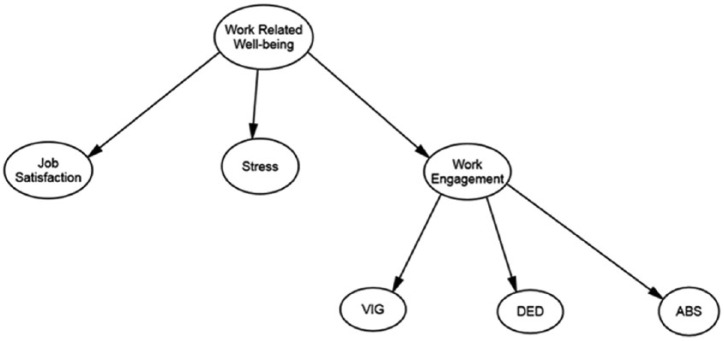
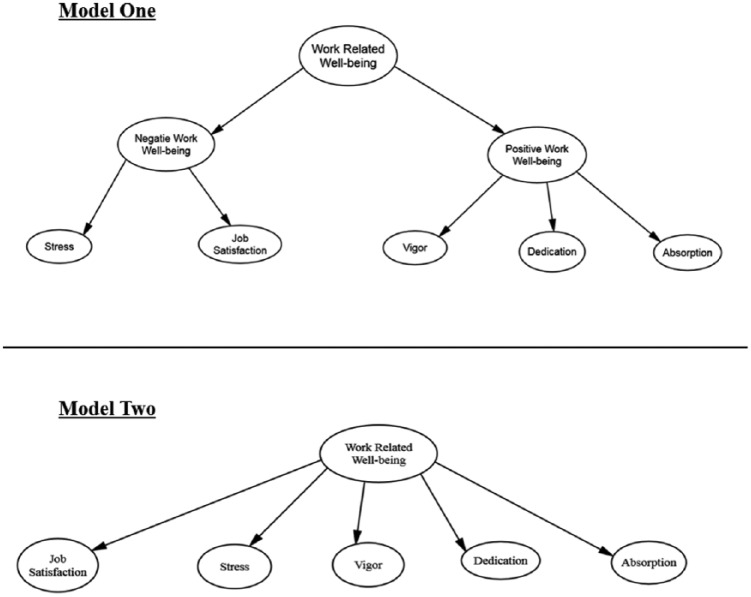
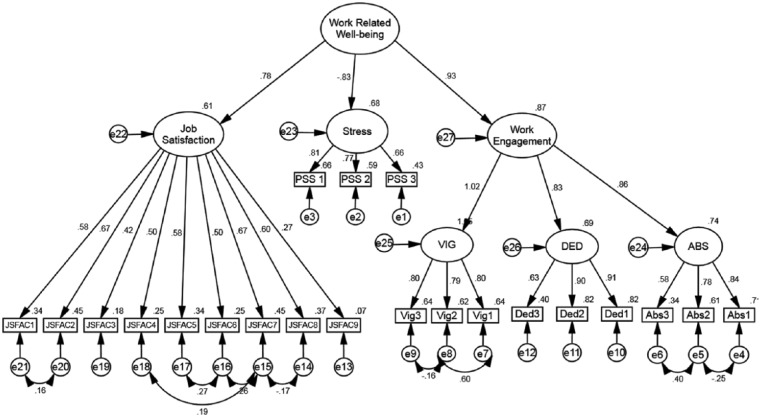
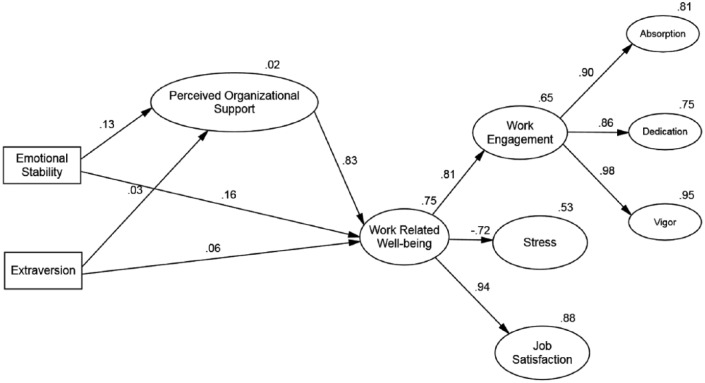
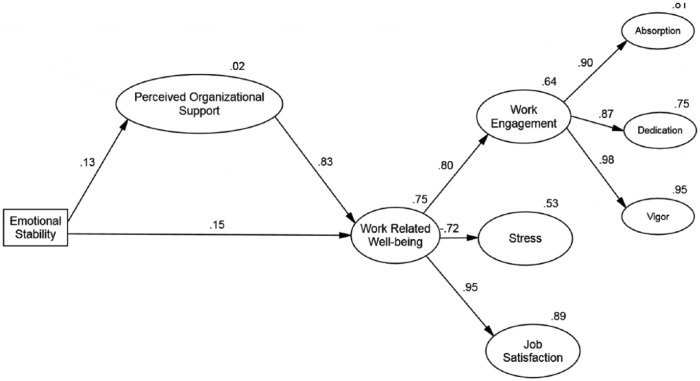
This study aimed to investigate the different dimensions of well-being (namely, work engagement, job satisfaction, and psychological stress) and possible predictors such as personality and perceived organizational support. A cross-sectional survey design was used, with a sample of 490 ambulance personnel in the United Kingdom. Significant correlations were found between the dimensions of job satisfaction, engagement, and stress. The results also supported a hierarchical model with job satisfaction, stress, and engagement loading onto one higher order factor of work well-being. Emotional stability and perceived organizational support were identified as significant predictors of well-being. The findings suggest the importance of measuring the work-related well-being of ambulance personnel holistically and present perceived organizational support as a possible area for interventions to improve well-being.
Overview
The claims and statistics of this paper haven’t been checked yet.
Free: it reads the open-access text and checks the first 5 claims that cite a source we can check. Create a free account to check every claim.
Integrity signals
Registry
Cites
Statistics
Figures
Verification
Claims the paper makes
The claims and statistics of this paper haven’t been checked yet.
Free: it reads the open-access text and checks the first 5 claims that cite a source we can check. Create a free account to check every claim.
Claims other papers make about this one
Each is checked against this paper’s own text: does it say what the citing paper says it does?
The source backs part of the claim, not all of it — or backs it for a different population, condition or comparison.
In the citing paper
“Soh et al. [50] indicated that work engagement is a cognitive state that comprises absorption, dedication, and vigor.”
From Latent Classes of Circadian Type and Presenteeism and Work-Related Flow Differences Among Clinical Nurses: A Cross-Sectional Study (2022) · cites this paper as [50]
Experimental — accuracy not yet measured
Self-check
Percentages, sums and reported differences re-computed from the paper’s own numbers.
The self-check needs the paper’s full text.
Citations
Cites
Hu, L., & Bentler, P. M. (1999) · Structural Equation Modeling A Multidisciplinary Journal · doi:10.1080/10705519909540118 · Cited by 108,788
Development and validation of brief measures of positive and negative affect: The PANAS scales.
Watson, D., Clark, L. A., & Tellegen, A. (1988) · Journal of Personality and Social Psychology · doi:10.1037/0022-3514.54.6.1063 · Cited by 32,433
Comparative fit indexes in structural models.
Bentler, P. M. (1990) · Psychological Bulletin · doi:10.1037/0033-2909.107.2.238 · Cited by 25,266
Subjective well-being: Three decades of progress.
Diener, E., Suh, E. M., Lucas, R. E., & Smith, H. L. (1999) · Psychological Bulletin · doi:10.1037/0033-2909.125.2.276 · Cited by 12,910
Power analysis and determination of sample size for covariance structure modeling.
MacCallum, R. C., Browne, M. W., & Sugawara, H. M. (1996) · Psychological Methods · doi:10.1037/1082-989x.1.2.130 · Cited by 10,418
Perceived organizational support.
Eisenberger, R., Huntington, R., Hutchison, S., & Sowa, D. (1986) · Journal of Applied Psychology · doi:10.1037/0021-9010.71.3.500 · Cited by 10,023
The measurement of engagement and burnout: a two sample confirmatory factor analytic approach.
Schaufeli, W. B., Salanova, M., González-romá, V., & Bakker, A. B. (2002) · Journal of Happiness Studies · doi:10.1023/a:1015630930326 · Cited by 10,014 · cited 2×
“The Utrecht Work Engagement Scale (UWES; Schaufeli et al., 2002) was used as a measure of work engagement.”
BackgroundMethodWell-being : the foundations of hedonic psychology
Kahneman, D. J., Diener, E. F., & Schwarz, N. (1999) · Cited by 8,305
Perceived organizational support: a review of the literature.
Rhoades, L., & Eisenberger, R. (2002) · Journal of Applied Psychology · doi:10.1037/0021-9010.87.4.698 · Cited by 7,592 · cited 3×
“…of shorter forms of the scale that include both facets of POS (caring for employee well-being and valuing employee contribution) has been validated and proved reliable due to the original scale being unidimensional in nature and having a high internal reliability (Rhoades and Eisenberger, 2002).”
BackgroundMethodA Reliability Coefficient for Maximum Likelihood Factor Analysis
Tucker, L. R., & Lewis, C. (1973) · Psychometrika · doi:10.1007/bf02291170 · Cited by 7,330
Sample size in factor analysis.
MacCallum, R. C., Widaman, K. F., Zhang, S., & Hong, S. (1999) · Psychological Methods · doi:10.1037/1082-989x.4.1.84 · Cited by 5,497
Job Satisfaction: Application, Assessment, Causes, and Consequences
Spector, P. (1997) · Sage eBooks · doi:10.4135/9781452231549 · Cited by 4,915
The job satisfaction–job performance relationship: A qualitative and quantitative review.
Judge, T. A., Thoresen, C. J., Bono, J. E., & Patton, G. K. (2001) · Psychological Bulletin · doi:10.1037/0033-2909.127.3.376 · Cited by 4,760
Perceived Organizational Support
(2017) · The SAGE Encyclopedia of Industrial and Organizational Psychology, 2nd edition · doi:10.4135/9781483386874.n398 · Cited by 4,398
Reciprocation of perceived organizational support.
Eisenberger, R., Armeli, S., Rexwinkel, B., Lynch, P. D., & Rhoades, L. (2001) · Journal of Applied Psychology · doi:10.1037/0021-9010.86.1.42 · Cited by 3,106
The happy personality: A meta-analysis of 137 personality traits and subjective well-being.
DeNeve, K. M., & Cooper, H. (1998) · Psychological Bulletin · doi:10.1037//0033-2909.124.2.197 · Cited by 3,042
New Zealand Journal of Psychology
Wilson, M. (2019) · New Zealand journal of psychology · Cited by 2,122
Job resources boost work engagement, particularly when job demands are high.
Bakker, A. B., Hakanen, J. J., Demerouti, E., & Xanthopoulou, D. (2007) · Journal of Educational Psychology · doi:10.1037/0022-0663.99.2.274 · Cited by 2,111
Refining the relationship between personality and subjective well-being.
Steel, P., Schmidt, J., & Shultz, J. (2008) · Psychological Bulletin · doi:10.1037/0033-2909.134.1.138 · Cited by 1,794
The Experience of Work-Related Stress across Occupations
Johnson, S., Cooper, C., Cartwright, S., Donald, I., Taylor, P., & Millet, C. (2005) · Journal of Managerial Psychology · doi:10.1108/02683940510579803 · Cited by 1,540
The measurement of well-being and other aspects of mental health.
Warr, P. (1990) · Journal of Occupational Psychology · doi:10.1111/j.2044-8325.1990.tb00521.x · Cited by 1,490 · cited 2×
“The aspects of well-being examined in this study include work engagement, job satisfaction, and job stress, while the predictors include perceived organizational support (POS) and personality.”
BackgroundType A Behavior and Your Heart
Friedman, M., & Rosenman, R. H. (1974) · Medical Entomology and Zoology · Cited by 1,277
Toward a consensual structure of mood
Watson, D., & Tellegen, A. (1985) · Psychological Bulletin · doi:10.1037//0033-2909.98.2.219 · Cited by 1,170 · cited 2×
“The aspects of well-being examined in this study include work engagement, job satisfaction, and job stress, while the predictors include perceived organizational support (POS) and personality.”
BackgroundMental health of hospital consultants: the effects of stress and satisfaction at work
Ramirez, A. J., Graham, J., Richards, M. A., Gregory, W. M., & Cull, A. (1996) · The Lancet · doi:10.1016/s0140-6736(96)90077-x · Cited by 951
Culture, personality, and subjective well-being: Integrating process models of life satisfaction.
Schimmack, U., Radhakrishnan, P., Oishi, S., Dzokoto, V. A. A., & Ahadi, S. A. (2002) · Journal of Personality and Social Psychology · doi:10.1037//0022-3514.82.4.582 · Cited by 742
Type a Behavior and Your Heart
Zohman, B. L. (1975) · Psychosomatics · doi:10.1016/s0033-3182(75)71235-5 · Cited by 717
Carr, J. Z., Schmidt, A. M., Ford, J. K., & DeShon, R. P. (2003) · Journal of Applied Psychology · doi:10.1037/0021-9010.88.4.605 · Cited by 642
Taking the Measure of Work: A Guide to Validated Scales for Organizational Research and Diagnosis
Fields, D. (2002) · Sage eBooks · doi:10.4135/9781452231143 · Cited by 561
Wright, T. A., Cropanzano, R., & Bonett, D. G. (2007) · Journal of Occupational Health Psychology · doi:10.1037/1076-8998.12.2.93 · Cited by 558
Cropanzano, R., & Wright, T. A. (2001) · Consulting psychology journal · doi:10.1037//1061-4087.53.3.182 · Cited by 525
Which comes first: Employee attitudes or organizational financial and market performance?
Schneider, B., Hanges, P. J., Smith, D. B., & Salvaggio, A. N. (2003) · Journal of Applied Psychology · doi:10.1037/0021-9010.88.5.836 · Cited by 516
A conceptual framework for the study of work and mental health
Warr, P. (1994) · Work & Stress · doi:10.1080/02678379408259982 · Cited by 513 · cited 2×
“adults, anxiety, beliefs, mental illness, worry 1University College London, UK 2BI Norwegian Business School, Norway Corresponding author: Adrian Furnham, Research Department of Clinical, Educational and Health Psychology, University College London, 26 Bedford Way, London WC1H 0AP, UK.”
BackgroundFox, M. L., Dwyer, D. J., & Ganster, D. C. (1993) · Academy of Management Journal · doi:10.2307/256524 · Cited by 478
The Role of Psychological Well-Being in Job Performance:
WRIGHT, T. A., & CROPANZANO, R. (2004) · Organizational Dynamics · doi:10.1016/j.orgdyn.2004.09.002 · Cited by 454
Beaton, D. E., Hogg-Johnson, S., & Bombardier, C. (1997) · Journal of Clinical Epidemiology · doi:10.1016/s0895-4356(96)00296-x · Cited by 406
The mechanisms of job stress and strain
Simpson, G. C. (1983) · Journal of Psychosomatic Research · doi:10.1016/0022-3999(83)90060-0 · Cited by 406
Acute and chronic job stressors among ambulance personnel: Predictors of health symptoms
van der Ploeg, E., & Kleber, R. J. (2003) · Occupational and Environmental Medicine · doi:10.1136/oem.60.suppl_1.i40 · Cited by 396
Measures of five aspects of affective well-being at work
Daniels, K. (2000) · Human Relations · doi:10.1177/a010564 · Cited by 389
Measuring the Big Five with single items using a bipolar response scale
Woods, S. A., & Hampson, S. E. (2005) · European Journal of Personality · doi:10.1002/per.542 · Cited by 355
Warr, P. B. (1978) · Medical Entomology and Zoology · Cited by 329
Stress in health professionals
Payne, R. L., & Firth‐Cozens, J. (1987) · Wiley eBooks · Cited by 321
Participation, Achievement, and Involvement on the Job.
Hall, R. H., & Patchen, M. (1971) · American Sociological Review · doi:10.2307/2093660 · Cited by 290
Beyond Negative Affectivity: Measuring Stress and Satisfaction in the Workplace
Watson, D., Pennebaker, J. W., & Folger, R. (1987) · Journal of Organizational Behavior Management · doi:10.1300/j075v08n02_09 · Cited by 273
Rothmann, S. (2008) · SA Journal of Industrial Psychology · doi:10.4102/sajip.v34i3.424 · Cited by 272
Health status in the ambulance services: a systematic review
Sterud, T., Ekeberg, Ø., & Hem, E. (2006) · BMC Health Services Research · doi:10.1186/1472-6963-6-82 · Cited by 271
Crockett, H. J., Borgatta, E. F., & Lambert, W. W. (1971) · Social Forces · doi:10.1093/sf/49.3.515 · Cited by 249
Handbook of Personality Theory and Research
Crockett, H. J., Borgatta, E. F., & Lambert, W. W. (1971) · Social Forces · doi:10.2307/3005768 · Cited by 248
A psychometric analysis of the Utrecht Work Engagement Scale in the South African police service
Storm, K., & Rothmann, S. (2003) · SA Journal of Industrial Psychology · doi:10.4102/sajip.v29i4.129 · Cited by 244
Van der Colff, J. J., & Rothmann, S. (2009) · SA Journal of Industrial Psychology · doi:10.4102/sajip.v35i1.423 · Cited by 236
Carrière, J., & Bourque, C. (2009) · Career Development International · doi:10.1108/13620430910933565 · Cited by 224
MARMAR, C. R., WEISS, D. S., METZLER, T. J., DELUCCHI, K. L., BEST, S. R., & WENTWORTH, K. A. (1999) · The Journal of Nervous & Mental Disease · doi:10.1097/00005053-199901000-00004 · Cited by 223
Levels of mental health problems among UK emergency ambulance workers
Bennett, P. (2004) · Emergency Medicine Journal · doi:10.1136/emj.2003.005645 · Cited by 217
Cicognani, E., Pietrantoni, L., Palestini, L., & Prati, G. (2009) · Social Indicators Research · doi:10.1007/s11205-009-9441-x · Cited by 184
Psychological Debriefing and Prevention of Post-Traumatic Stress: More Research is Needed
Bisson, J. I., & Deahl, M. P. (1994) · British Journal of Psychiatry · doi:10.1192/bjp.165.6.717 · Cited by 137
Occupational stress in health service workers in the UK
Rees, D., & Cooper, C. L. (1992) · Stress Medicine · doi:10.1002/smi.2460080205 · Cited by 124
The Importance and Place of Neuroticism in Predicting Burnout in Employment Service Case Managers
Goddard, R., Patton, W., & Creed, P. A. (2004) · Journal of Applied Social Psychology · doi:10.1111/j.1559-1816.2004.tb02548.x · Cited by 78
Rodgers, L. M. (1998) · Occupational Medicine · doi:10.1093/occmed/48.2.119 · Cited by 77
Brough, P. A. (2005) · Griffith Research Online · Cited by 75
Emergency work experience and reactions to traumatic incidents
Moran, C., & Britton, N. R. (1994) · Journal of Traumatic Stress · doi:10.1007/bf02103008 · Cited by 73
(1997) · Health Manpower Management · doi:10.1108/09552069710184418 · Cited by 62
Occupational stress in the ambulance service.
James, A. E., & Pl, W. (1991) · PubMed · Cited by 37
OCCUPATIONAL STRESS IN THE AMBULANCE SERVICE
James, A. E. C., & Wright, P. L. (1991) · Journal of Managerial Psychology · doi:10.1108/02683949110001727 · Cited by 31
The Safety and Health of Emergency Workers
Kowalski, K. M., & Vaught, C. C. (2001) · Journal of Contingencies and Crisis Management · doi:10.1111/1468-5973.00163 · Cited by 21
Thomas, K. W., & Tymon, W. G. (1995) · Anxiety Stress & Coping · doi:10.1080/10615809508249376 · Cited by 16
Impairing Injuries among Medical Personnel
Öhman, U., Bylund, P., & Björnstig, U. (2002) · Western Journal of Nursing Research · doi:10.1177/019394502762476988 · Cited by 14
Denpasar Declaration on Population and Development.
(1994) · PubMed · doi:10.1234/2013/999990 · Cited by 13
Research works printed but not linked: 3
- 14. Diener E Larsen RJ (1993) The experience of emotional well-being. In: Lewis M Haviland JM (eds) Handbook of Emotions. New York: Guilford Press, pp. 405– 415.
- 33. McShane SL (2004) Canadian Organizational Behavior (5th edn). Toronto, ON, Canada: McGraw-Hill Ryerson.
- 47. Spielberger CD Vagg PR (1994) Job Stress Survey (JSS). Odessa, FL: Physiological Assessment Resources.
Cited by
Does retirement trigger depressive symptoms? A systematic review and meta-analysis
Odone, A., Gianfredi, V., Vigezzi, G. P., Amerio, A., Ardito, C., d’Errico, A., Stückler, D., & Costa, G. (2021) · Epidemiology and Psychiatric Sciences · doi:10.1017/s2045796021000627 · Cited by 121
Han, Y., Chaudhury, T., & Sears, G. J. (2019) · Journal of Career Development · doi:10.1177/0894845319851875 · Cited by 77
Organizational Factors and Their Impact on Mental Health in Public Safety Organizations
Edgelow, M., Scholefield, E., McPherson, M., Legassick, K., & Novecosky, J. (2022) · International Journal of Environmental Research and Public Health · doi:10.3390/ijerph192113993 · Cited by 65
Thielmann, B., Schwarze, R., & Böckelmann, I. (2023) · International Journal of Environmental Research and Public Health · doi:10.3390/ijerph20054578 · Cited by 64
Rajashekar, S., & Jain, A. (2023) · Employee Responsibilities and Rights Journal · doi:10.1007/s10672-023-09440-x · Cited by 61
Metadata
- Authors
- Soh, M., Zarola, A., Palaiou, K., & Furnham, A.
- Affiliations
- University College London (GB)
- BI Norwegian Business School (NO)
- Corresponding author
- Furnham, Adrian
- ORCID
- Furnham, Adrian
- Venue
- Health Psychology Open
- Publisher
- SAGE Publications
- Published
- 2016-01
- Volume
- 3
- Issue
- 1
- Pages
- 2055102916628380-2055102916628380
- ISSN
- 2055-1029 (ISSN-L)
- PMC
- PMC5193259
- OpenAlex
- W2311279479
- Cited by
- 48
- References
- 67
- Citations by year
- 2026: 5 · 2025: 6 · 2024: 2 · 2023: 8 · 2022: 8 · 2021: 10 · 2020: 3 · 2019: 5 · 2018: 1
- FWCI
- 3.89
- Type
- journal article
- Language
- en
- Open access
- gold
- doi.org
- Licence
- cc-by-nc
- journals.sagepub.com/page/policies/text-and-data-mining-license (tdm)
- Locations
- Health Psychology Open (publishedVersion, cc-by-nc)
- PubMed Central (publishedVersion, cc-by-nc)
- PubMed (publishedVersion)
- DOAJ (DOAJ: Directory of Open Access Journals) (submittedVersion, cc-by-sa)
- Topics
- Social Sciences › Business, Management and Accounting › Organizational Behavior and Human Resource Management › Job Satisfaction and Organizational Behavior
- Social Sciences › Psychology › Social Psychology › Stress and Burnout Research
- Health Sciences › Medicine › Public Health, Environmental and Occupational Health › Workplace Health and Well-being
- Keywords
- work-related well-being, work engagement, job satisfaction, psychological stress, ambulance personnel, emergency medical services, perceived organizational support, emotional stability, personality
About these checks
Registry, retraction, Cites and statistics results are computed, not judged, with one exception: a printed reference that no index lists is read once by a model before it counts as a citation error. Claims are extracted by a model and kept only when their quote appears verbatim in the text; each cited source is then checked, with a model’s help, for whether it says what the claim relies on. Those verdicts can be wrong — read the claim’s quote and the cited source before relying on one.
Statistics and arithmetic are recomputed, not judged.
Confidence bands are shown only for fields calibrated on our annotated test set. None is calibrated yet, so no band is shown.
What counts as a claim ›How we measure confidence ›How we check this ›
Are you an author, or do you see a problem with this page? Request a review
Data sources
Bibliographic data: Semantic Scholar, OpenAlex, Crossref.
Contains information from the Semantic Scholar Academic Graph Datasets, made available under the ODC Attribution License (ODC-BY 1.0).
Semantic Scholar’s data is described in: Kinney, R., et al. (2023). The Semantic Scholar Open Data Platform. arXiv:2301.10140.
