

The Pupil Dilation Response to Auditory Stimuli: Current State of Knowledge
Open accessThe DOI matches its Crossref record; 176 of the 178 references it cites were found in a registry or an index, and 2 are not checked yet.
Abstract
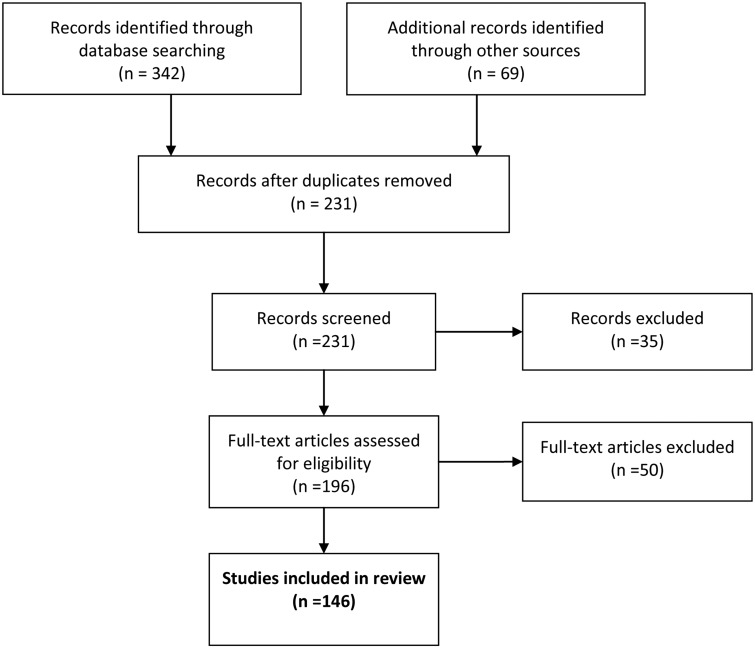
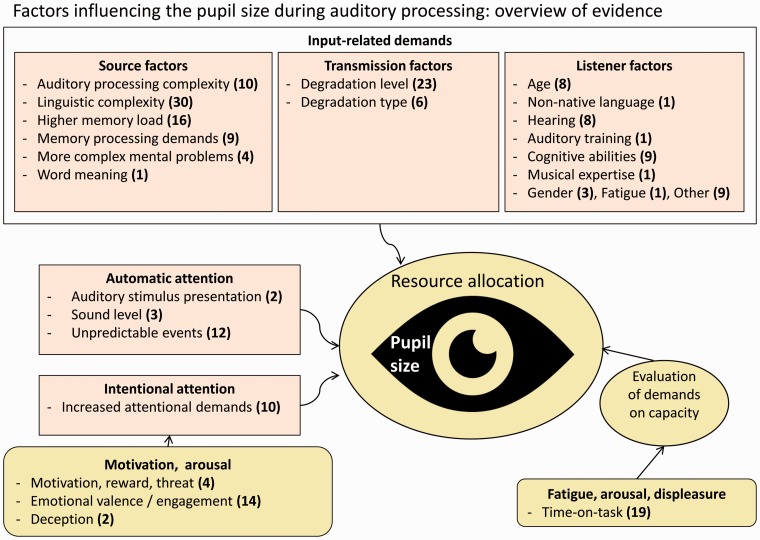
The measurement of cognitive resource allocation during listening, or listening effort, provides valuable insight in the factors influencing auditory processing. In recent years, many studies inside and outside the field of hearing science have measured the pupil response evoked by auditory stimuli. The aim of the current review was to provide an exhaustive overview of these studies. The 146 studies included in this review originated from multiple domains, including hearing science and linguistics, but the review also covers research into motivation, memory, and emotion. The present review provides a unique overview of these studies and is organized according to the components of the Framework for Understanding Effortful Listening. A summary table presents the sample characteristics, an outline of the study design, stimuli, the pupil parameters analyzed, and the main findings of each study. The results indicate that the pupil response is sensitive to various task manipulations as well as interindividual differences. Many of the findings have been replicated. Frequent interactions between the independent factors affecting the pupil response have been reported, which indicates complex processes underlying cognitive resource allocation. This complexity should be taken into account in future studies that should focus more on interindividual differences, also including older participants. This review facilitates the careful design of new studies by indicating the factors that should be controlled for. In conclusion, measuring the pupil dilation response to auditory stimuli has been demonstrated to be sensitive method applicable to numerous research questions. The sensitivity of the measure calls for carefully designed stimuli.
Overview
The claims and statistics of this paper haven’t been checked yet.
Free: it reads the open-access text and checks the first 5 claims that cite a source we can check. Create a free account to check every claim.
Integrity signals
Registry
Cites
Statistics
Figures
Verification
Claims the paper makes
The claims and statistics of this paper haven’t been checked yet.
Free: it reads the open-access text and checks the first 5 claims that cite a source we can check. Create a free account to check every claim.
Claims other papers make about this one
Each is checked against this paper’s own text: does it say what the citing paper says it does?
The source backs part of the claim, not all of it — or backs it for a different population, condition or comparison.
In the citing paper
“Generally speaking, listening effort increases with the magnitude of the obstacle such that more background noise (Van Engen & McLaughlin, 2018;Zekveld, Koelewijn, & Kramer, 2018) or poorer knowledge of the target language (Borghini & Hazan, 2018;Schmidtke et al., 2014) leads to greater listening effort”
From Listening effort and fatigue in native and non-native primary school children (2021) · cites this paper as Zekveld et al., 2018
Experimental — accuracy not yet measuredThe source backs part of the claim, not all of it — or backs it for a different population, condition or comparison.
In the citing paper
“They have shown that in more difficult acoustic scenarios, larger PPD and MPD are measures of increased listening effort [25].”
From An exploratory Study of EEG Alpha Oscillation and Pupil Dilation in Hearing-Aid Users During Effortful listening to Continuous Speech (2020) · cites this paper as [25]
Experimental — accuracy not yet measuredThe cited source says what the claim attributes to it.
In the citing paper
“In the context of hearing research, the taskevoked pupil response (TEPR) has widely been shown to be sensitive to the increased demands of listening in suboptimal acoustic conditions (see Zekveld et al., 2018 for a review), and is therefore, thought to reflect the effort required to achieve speech recognition under degraded listening conditions.”
From Effortful listening under the microscope: Examining relations between pupillometric and subjective markers of effort and tiredness from listening (2021) · cites this paper as Zekveld et al., 2018
The cited source says what the claim attributes to it.
In the citing paper
“Recently, pupillometry has been deemed as a valid tool to study language processing load and listening effort”
From Effects of acoustic and semantic cues on listening effort during native and non-native speech perception (2020) · cites this paper as Zekveld et al. (2018)
The check wasn’t confident either way, so it gives no verdict — never disputed.
In the citing paper
“However, studies to date report no association between TEPR and perceived effort.”
From Effortful listening under the microscope: Examining relations between pupillometric and subjective markers of effort and tiredness from listening (2021) · cites this paper as Zekveld et al., 2018
Experimental — accuracy not yet measured
7 more claims about this paper
Create a free account to see every claim other papers make about this one.
Self-check
Percentages, sums and reported differences re-computed from the paper’s own numbers.
The self-check needs the paper’s full text.
Citations
Cites
(2001) · doi:10.1017/cbo9780511546396 · Cited by 4,482
Aston-Jones, G., & Cohen, J. D. (2005) · Annual Review of Neuroscience · doi:10.1146/annurev.neuro.28.061604.135709 · Cited by 4,472 · cited 1×
“We refer to the task-evoked pupil response as the phasic change in pupil diameter (Aston-Jones & Cohen, 2005) in response to a momentary event such as an auditory stimulus presented in a listening task.”
MethodPupil Diameter and Load on Memory
Kahneman, D., & Beatty, J. (1966) · Science · doi:10.1126/science.154.3756.1583 · Cited by 1,617 · cited 7×
“The current review identified numerous studies that applied an auditory memory task, which may be partly based on the seminal work of Kahneman and Beatty (1966).”
BackgroundMethodInfluentialHearing Impairment and Cognitive Energy: The Framework for Understanding Effortful Listening (FUEL)
Pichora-Fuller, M. K., Kramer, S. E., Eckert, M. A., Edwards, B., Hornsby, B. W. Y., Humes, L. E., Lemke, U., Lunner, T., Matthen, M., Mackersie, C. L., et al. (2016) · Ear & Hearing · doi:10.1097/aud.0000000000000312 · Cited by 1,318 · cited 24×
“We grouped the results according to whether these were based on external (see Table 1) versus internal (individual) factors (Table 2) and furthermore used the FUEL categories to structure the results (Pichora-Fuller et al., 2016).”
BackgroundMethodResultInfluentialSelf-citationHandbook of Approach and Avoidance Motivation
(2013) · Psychology Press eBooks · doi:10.4324/9780203888148 · Cited by 1,302
Pupil Size in Relation to Mental Activity during Simple Problem-Solving
Hess, E. H., & Polt, J. M. (1964) · Science · doi:10.1126/science.143.3611.1190 · Cited by 1,169 · cited 1×
“Please note that some of the excluded articles included early studies that were rejected because of the lack of formal statistical tests (e.g., Berrien & Huntington, 1943; Bradshaw, 1969, 1970; Hess & Polt, 1964; Schaefer, Ferguson, Klein, & Rawson, 1968).”
BackgroundPupillometry: A Window to the Preconscious?
Laeng, B., Sirois, S., & Gredebäck, G. (2012) · Perspectives on Psychological Science · doi:10.1177/1745691611427305 · Cited by 921
Pupil size variation as an indication of affective processing
Partala, T., & Surakka, V. (2003) · International Journal of Human-Computer Studies · doi:10.1016/s1071-5819(03)00017-x · Cited by 836 · cited 3×
“Peavler (1974) was the first to demonstrate this effect when showing that the pupil size was smaller for a recall condition with 13-digit when compared with 9-digit strings.”
BackgroundPupil diameter covaries with BOLD activity in human locus coeruleus
Murphy, P. R., O'Connell, R. G., O'Sullivan, M., Robertson, I. H., & Balsters, J. H. (2014) · Human Brain Mapping · doi:10.1002/hbm.22466 · Cited by 819
Gilzenrat, M. S., Nieuwenhuis, S., Jepma, M., & Cohen, J. D. (2010) · Cognitive, Affective, & Behavioral Neuroscience · doi:10.3758/cabn.10.2.252 · Cited by 798
Research works printed but not linked: 3
- Bradley M. T. Janisse M. P. (1979) Pupil size and lie detection: The effect of certainty on detection. Psychology: A Journal of Human Behavior 16: 33– 39.
- Hopstaken J. F. van der Linden D. Bakker A. B. Kompier M. A. (2015) The window of my eyes: Task disengagement and mental fatigue covary with pupil dynamics. Biological Psychology 110: 100– 106. 26196899
- Kahneman D. (1973) Attention and effort vol. 1063, Englewood Cliffs, NJ: Prentice-Hall.
Cited by
Items 101–200 of 381
Autonomic Nervous System Correlates of Speech Categorization Revealed Through Pupillometry
Lewis, G. A., & Bidelman, G. M. (2020) · Frontiers in Neuroscience · doi:10.3389/fnins.2019.01418 · Cited by 14
Micula, A., Rönnberg, J., Książek, P., Nielsen, R. M., Wendt, D., Fiedler, L., & Ng, E. H. N. (2022) · Trends in Hearing · doi:10.1177/23312165221130581 · Cited by 14
Pupillometry as a measure for listening effort in children: a review
Gómez-Merino, N., Gheller, F., Spicciarelli, G., & Trevisi, P. (2020) · Hearing Balance and Communication · doi:10.1080/21695717.2020.1807256 · Cited by 13
Speech to noise ratio improvement induces nonlinear parietal phase synchrony in hearing aid users
Baboukani, P. S., Graversen, C., Alickovic, E., & Østergaard, J. (2022) · Frontiers in Neuroscience · doi:10.3389/fnins.2022.932959 · Cited by 13
Zekveld, A. A., van Scheepen, J. A. M., Versfeld, N. J., Kramer, S. E., & van Steenbergen, H. (2020) · Journal of Speech Language and Hearing Research · doi:10.1044/2020_jslhr-20-00107 · Cited by 13
Self-citationInvestigating effortful speech perception using fNIRS and pupillometry measures
Zhou, X., Burg, E. A., Kan, A., & Litovsky, R. Y. (2022) · Current Research in Neurobiology · doi:10.1016/j.crneur.2022.100052 · Cited by 13
Attention Mobilization as a Modulator of Listening Effort: Evidence From Pupillometry
Johns, M., Calloway, R. C., Karunathilake, I. M. D., Decruy, L. P., Anderson, S., Simon, J. Z., & Kuchinsky, S. E. (2024) · Trends in Hearing · doi:10.1177/23312165241245240 · Cited by 13
Sprachverstehen und kognitive Leistungen in akustisch schwierigen Situationen
Meister, H. (2019) · HNO · doi:10.1007/s00106-019-0727-2 · Cited by 13
The pupil dilation response as an indicator of visual cue uncertainty and auditory outcome surprise
Becker, J., Viertler, M., Korn, C. W., & Blank, H. (2024) · European Journal of Neuroscience · doi:10.1111/ejn.16306 · Cited by 13
Micula, A., Rönnberg, J., Zhang, Y., & Ng, E. H. N. (2022) · Frontiers in Neuroscience · doi:10.3389/fnins.2022.876807 · Cited by 12
Saksida, A., Ghiselli, S., Bembich, S., Scorpecci, A., Giannantonio, S., Resca, A., Marsella, P., & Orzan, E. (2021) · Audiology Research · doi:10.3390/audiolres12010001 · Cited by 12
Metacognition in the listening brain
Obleser, J. (2025) · Trends in Neurosciences · doi:10.1016/j.tins.2024.12.007 · Cited by 12
Salient omissions—pupil dilation in response to unexpected omissions of sound and touch
Dercksen, T., Widmann, A., & Wetzel, N. (2023) · Frontiers in Psychiatry · doi:10.3389/fpsyt.2023.1143931 · Cited by 12
Comparison of Pupil Dilation Responses to Unexpected Sounds in Monkeys and Humans
Selezneva, E., Brosch, M., Rathi, S., Vighneshvel, T., & Wetzel, N. (2021) · Frontiers in Psychology · doi:10.3389/fpsyg.2021.754604 · Cited by 12
Anisocoria After Direct Light Stimulus is Associated with Poor Outcomes Following Acute Brain Injury
Doyle, B. R., Aiyagari, V., Yokobori, S., Kuramatsu, J. B., Barnes, A., Puccio, A. M., Nairon, E. B., Marshall, J. L., & Olson, D. M. (2024) · Neurocritical Care · doi:10.1007/s12028-024-02030-1 · Cited by 12
Altered pupil responses to social and non-social stimuli in Shank3 mutant dogs
Ren, W., Huang, K., Li, Y., Qin, Y., Wang, L., Guo, K., Wei, P., & Zhang, Y. (2023) · Molecular Psychiatry · doi:10.1038/s41380-023-02277-8 · Cited by 11
Arousal States as a Key Source of Variability in Speech Perception and Learning
Schuerman, W. L., Chandrasekaran, B., & Leonard, M. K. (2022) · Languages · doi:10.3390/languages7010019 · Cited by 11
He, X., Raghavan, V., & Mesgarani, N. (2025) · Imaging Neuroscience · doi:10.1162/imag.a.126 · Cited by 11
On the relationship of arousal and attentional distraction by emotional novel sounds
Bonmassar, C., Scharf, F., Widmann, A., & Wetzel, N. (2023) · Cognition · doi:10.1016/j.cognition.2023.105470 · Cited by 11
Zhang, M., Palmer, C. V., Pratt, S. R., McNeil, M. R., & Siegle, G. J. (2022) · International Journal of Psychophysiology · doi:10.1016/j.ijpsycho.2022.07.011 · Cited by 10
Relaño-Iborra, H., Wendt, D., Neagu, M.-B., Kressner, A. A., Dau, T., & Bækgaard, P. (2022) · Trends in Hearing · doi:10.1177/23312165221134003 · Cited by 10
Adults with cochlear implants can use prosody to determine the clausal structure of spoken sentences
Amichetti, N. M., Neukam, J. D., Kinney, A. J., Capach, N. H., March, S. U., Svirsky, M. A., & Wingfield, A. (2021) · The Journal of the Acoustical Society of America · doi:10.1121/10.0008899 · Cited by 10
Farahani, M., Parsa, V., Herrmann, B., Kadem, M., Johnsrude, I. S., & Doyle, P. C. (2020) · Applied Sciences · doi:10.3390/app10175907 · Cited by 10
Schmidtke, J., Bsharat-Maalouf, D., Degani, T., & Karawani, H. (2024) · Language Cognition and Neuroscience · doi:10.1080/23273798.2024.2427832 · Cited by 10
Villard, S., Perrachione, T. K., Lim, S.-J., Alam, A., & Kidd, G. D. (2023) · The Journal of the Acoustical Society of America · doi:10.1121/10.0020539 · Cited by 10
Liu, X., & Chait, M. (2025) · Journal of Neuroscience · doi:10.1523/jneurosci.0978-25.2025 · Cited by 10
Andersson, K. E., Neher, T., & Christensen, J. H. (2023) · Frontiers in Audiology and Otology · doi:10.3389/fauot.2023.1275210 · Cited by 9
Pupil Responses of Adults With Traumatic Brain Injury During Processing of Speech in Noise
Koelewijn, T., van Haastrecht, J., & Kramer, S. E. (2018) · Trends in Hearing · doi:10.1177/2331216518811444 · Cited by 9
Self-citationPupil Size Sensitivity to Listening Demand Depends on Motivational State
Kraus, F., Obleser, J., & Herrmann, B. (2023) · eNeuro · doi:10.1523/eneuro.0288-23.2023 · Cited by 9
Silcox, J. W., Bennett, K., Copeland, A., Ferguson, S. H., & Payne, B. R. (2024) · Journal of Cognitive Neuroscience · doi:10.1162/jocn_a_02161 · Cited by 8
Through the Pupils’ Lens: Multilingual Effort in First and Second Language Listening
Bsharat-Maalouf, D., Schmidtke, J., Degani, T., & Karawani, H. (2024) · Ear and Hearing · doi:10.1097/aud.0000000000001602 · Cited by 9
Xu, S., Zhang, H., Fan, J., Jiang, X., Zhang, M., Guan, J., Ding, H., & Zhang, Y. (2024) · Journal of Speech Language and Hearing Research · doi:10.1044/2024_jslhr-23-00553 · Cited by 9
Stronks, H. C., Tops, A. L., Quach, K. W., Briaire, J. J., & Frijns, J. H. M. (2024) · Ear and Hearing · doi:10.1097/aud.0000000000001529 · Cited by 9
Bramhall, N. F., Buran, B. N., & McMillan, G. P. (2025) · Hearing Research · doi:10.1016/j.heares.2025.109263 · Cited by 9
Listening effort is not the same as speech intelligibility scorePreprint
Winn, M. B., & Teece, K. H. (2020) · PsyArXiv (OSF Preprints) · doi:10.31234/osf.io/vk65w · Cited by 9
Pupillary response to dynamic pitch alteration during speech perception in noise
Shen, J. (2021) · JASA Express Letters · doi:10.1121/10.0007056 · Cited by 9
Zhang, Y., Callejón-Leblic, M. A., Picazo-Reina, A. M., Blanco-Trejo, S., Patou, F., & Sánchez‐Gómez, S. (2023) · Frontiers in Neuroscience · doi:10.3389/fnins.2023.1307777 · Cited by 8
Versfeld, N. J., Lie, S., Kramer, S. E., & Zekveld, A. A. (2021) · The Journal of the Acoustical Society of America · doi:10.1121/10.0003952 · Cited by 8
Self-citationAuditory, Lexical, and Multitasking Demands Interactively Impact Listening Effort
Kuchinsky, S. E., Razeghi, N., & Pandža, N. B. (2023) · Journal of Speech Language and Hearing Research · doi:10.1044/2023_jslhr-22-00548 · Cited by 8
Książek, P., Zekveld, A. A., Fiedler, L., Kramer, S. E., & Wendt, D. (2023) · Trends in Hearing · doi:10.1177/23312165231153280 · Cited by 8
Self-citationPielage, H., Plain, B., Saunders, G. H., Versfeld, N. J., Lunner, T., Kramer, S. E., & Zekveld, A. A. (2023) · Ear and Hearing · doi:10.1097/aud.0000000000001361 · Cited by 8
Self-citationPupil Dilation as a Dependent Variable in Language Research
Schmidtke, J., & Tobin, S. J. (2024) · Springer eBooks · doi:10.1007/978-3-031-54896-3_7 · Cited by 8
Ornat, S. L., Καρούσου, Α., Gallego, C., Martín, L., & Camero, R. (2018) · Frontiers in Psychology · doi:10.3389/fpsyg.2018.02248 · Cited by 8
O’Leary, R. M., Amichetti, N. M., Brown, Z., Kinney, A. J., & Wingfield, A. (2023) · Experimental Aging Research · doi:10.1080/0361073x.2023.2286872 · Cited by 7
Hecht, G., Rotaru, K., Schulz, A., Towry, K. L., & Webb, A. (2025) · Management Accounting Research · doi:10.1016/j.mar.2025.100926 · Cited by 7
Scherger, A.-L., Urbanczik, G., Ludwigs, T., & Kizilirmak, J. M. (2021) · Frontiers in Psychology · doi:10.3389/fpsyg.2021.717379 · Cited by 7
Communication Under Sharply Degraded Auditory Input and the “2-Sentence” Problem
Svirsky, M. A., Neukam, J. D., Capach, N. H., Amichetti, N. M., Lavender, A., & Wingfield, A. (2024) · Ear and Hearing · doi:10.1097/aud.0000000000001500 · Cited by 7
The Influence of Hearing Loss on the Pupil Response to Degraded Speech
Zekveld, A. A., Pielage, H., Versfeld, N. J., & Kramer, S. E. (2023) · Journal of Speech Language and Hearing Research · doi:10.1044/2023_jslhr-23-00093 · Cited by 7
Self-citationEye movements of younger and older adults decrease during story listening in background noise
Herrmann, B., Scharf, F., & Widmann, A. (2025) · Hearing Research · doi:10.1016/j.heares.2025.109447 · Cited by 7
Pupil Dilation Reflects Perceptual Priorities During a Receptive Speech Task
Mechtenberg, H., Giorio, C., & Myers, E. B. (2023) · Ear and Hearing · doi:10.1097/aud.0000000000001438 · Cited by 7
Alexandersen, A., Csifcsák, G., Groot, J. M., & Mittner, M. (2021) · PsyArXiv (OSF Preprints) · doi:10.31234/osf.io/qfcm9 · Cited by 7
Emotional contagion to vocal smile revealed by combined pupil reactivity and motor resonance
Merchie, A., Ranty, Z., Aguillon-Hernandez, N., Aucouturier, J., Wardak, C., & Gomot, M. (2024) · Scientific Reports · doi:10.1038/s41598-024-74848-w · Cited by 7
Lyall, I. H., & Järvikivi, J. (2021) · Frontiers in Psychology · doi:10.3389/fpsyg.2021.699071 · Cited by 7
The effect of background speech on attentive sound processing: A pupil dilation study
Ríos‐López, P., Widmann, A., Bidet‐Caulet, A., & Wetzel, N. (2022) · International Journal of Psychophysiology · doi:10.1016/j.ijpsycho.2022.02.003 · Cited by 7
Pupillometry in auditory multistability
Grenzebach, J., Wegner, T. G. G., Einhäuser, W., & Bendixen, A. (2021) · PLoS ONE · doi:10.1371/journal.pone.0252370 · Cited by 7
Irissometry: Effects of Pupil Size on Iris Elasticity Measured With Video-Based Feature Tracking
Strauch, C., & Naber, M. (2022) · Investigative Ophthalmology & Visual Science · doi:10.1167/iovs.63.2.20 · Cited by 7
Pupillometry reveals differences in cognitive demands of listening to face mask-attenuated speech
Carraturo, S., McLaughlin, D. J., Peelle, J. E., & Engen, K. J. V. (2023) · The Journal of the Acoustical Society of America · doi:10.1121/10.0023953 · Cited by 6
Pupillometry Studies of Listening Effort: Implications for Clinical Audiology
Kuchinsky, S. E., & Milvae, K. D. (2024) · Springer eBooks · doi:10.1007/978-3-031-54896-3_8 · Cited by 6
Smith, M. L., & Winn, M. B. (2025) · Trends in Hearing · doi:10.1177/23312165251320789 · Cited by 6
Visual disgust constricts pupils in response to misophonic movies
Qiu, Y., Park, S., Oszczapinska, U., & Heller, L. M. (2025) · Frontiers in Psychology · doi:10.3389/fpsyg.2025.1569598 · Cited by 6
Shen, J., Fitzgerald, L. P., & Kulick, E. R. (2022) · Frontiers in Psychology · doi:10.3389/fpsyg.2022.959638 · Cited by 6
Impact of Single‐Side Deafness on Listening Effort: A Prospective Comparative Study
Su, W., Xia, Y., Xia, C., Zhang, Y., Zhang, Y., & Liu, Y. (2025) · Laryngoscope Investigative Otolaryngology · doi:10.1002/lio2.70185 · Cited by 6
Dialogue Enhancement and Listening Effort in Broadcast Audio: A Multimodal Evaluation
Torcoli, M., Robotham, T., & Habets, E. A. P. (2022) · International Conference on Quality of Multimedia Experience (QoMEX) · doi:10.1109/qomex55416.2022.9900884 · Cited by 6
Ambulatory autonomic nervous system activity in relation to hearing impairment
Huizinga, N. A., Keur‐Huizinga, L., van de Ven, S. R. B., van Dijk, W., Versfeld, N. J., Zekveld, A. A., Kramer, S. E., & de Geus, E. J. C. (2024) · Psychophysiology · doi:10.1111/psyp.14723 · Cited by 6
Self-citationSilcox, J. W., & Payne, B. R. (2025) · Brain and Language · doi:10.1016/j.bandl.2025.105580 · Cited by 6
Streamlining experiment design in cognitive hearing science using OpenSesame
Sulas, E., Hasan, P.-Y., Zhang, Y., & Patou, F. (2022) · Behavior Research Methods · doi:10.3758/s13428-022-01886-5 · Cited by 6
Sound-evoked pupil dilation quantifies misophonic symptoms
de Gee, J. W., Marmelstein, L. A., Schwarz-Roman, K., & Rouw, R. (2026) · PLoS ONE · doi:10.1371/journal.pone.0348278 · Cited by 6
Tonal Surprisal and Contextual Shifts Evoke Distinct Pupil Dilation During Dynamic Sound Sequences
van Haren, J., Schröder, J., de Lange, F. P., Kotz, S. A., & Martino, F. D. (2026) · European Journal of Neuroscience · doi:10.1111/ejn.70380 · Cited by 6
Zhang, Y., Johannesen, P. T., Molaee-Ardekani, B., Wijetillake, A., Chiea, R. A., Hasan, P.-Y., Segovia-Martínez, M., & Lopez‐Poveda, E. A. (2024) · Ear and Hearing · doi:10.1097/aud.0000000000001565 · Cited by 6
Widmann, A., Herrmann, B., & Scharf, F. (2024) · Journal of Neuroscience Methods · doi:10.1016/j.jneumeth.2024.110299 · Cited by 6
Scherger, A.-L. (2022) · Research Methods in Applied Linguistics · doi:10.1016/j.rmal.2022.100014 · Cited by 6
A Multimodal Investigation of Listening Effort in Single-Sided Deafness
Nguyen, D. L., Valentin, O., Lehmann, A., & Prévost, F. (2024) · American Journal of Audiology · doi:10.1044/2024_aja-24-00073 · Cited by 5
Plain, B., Pielage, H., Kramer, S. E., Richter, M. M., Saunders, G. H., Versfeld, N. J., Zekveld, A. A., & Bhuiyan, T. A. (2024) · Trends in Hearing · doi:10.1177/23312165241232551 · Cited by 5
Self-citationCody, P. A., Kumar, M., & Tzounopoulos, T. (2024) · Journal of Neuroscience · doi:10.1523/jneurosci.0939-23.2024 · Cited by 5
Christensen, J. H. (2020) · doi:10.17605/osf.io/rc37z · Cited by 5
McLaughlin, D. J., Zink, M. E., Gaunt, L., Spehar, B., Engen, K. J. V., Sommers, M. S., & Peelle, J. E. (2021) · PsyArXiv (OSF Preprints) · doi:10.31234/osf.io/6pa3g · Cited by 5
Beechey, T., & Naylor, G. (2025) · Trends in Hearing · doi:10.1177/23312165251317010 · Cited by 5
Andersson, K. E., Christensen, J. H., Skipper, R. P., & Neher, T. (2025) · Journal of Speech Language and Hearing Research · doi:10.1044/2025_jslhr-24-00847 · Cited by 5
How variability in language experience modulates multilingual listening effort
Bsharat-Maalouf, D., Degani, T., & Karawani, H. (2026) · Bilingualism: Language and Cognition · doi:10.1017/s1366728925100254 · Cited by 3
Arousal, interindividual differences and temporal binding a psychophysiological study
Render, A., Eisenbarth, H., Oxner, M., & Jansen, P. (2024) · Psychological Research · doi:10.1007/s00426-024-01976-3 · Cited by 5
Distortion of overlapping memories relates to arousal and anxiety
Morrow, E., & Clewett, D. (2024) · Cognitive Affective & Behavioral Neuroscience · doi:10.3758/s13415-024-01229-1 · Cited by 5
Human voices escape the auditory attentional blink: Evidence from detections and pupil responses
Akça, M., Bishop, L., Vuoskoski, J. K., & Laeng, B. (2022) · Brain and Cognition · doi:10.1016/j.bandc.2022.105928 · Cited by 5
Zekveld, A. A., Kramer, S. E., Heslenfeld, D. J., Versfeld, N. J., & Vriend, C. (2024) · Journal of Speech Language and Hearing Research · doi:10.1044/2024_jslhr-24-00017 · Cited by 4
Self-citationPupil Size Predicts Partner Choices in Online Dating
Pronk, T., Bogaers, R. I., Verheijen, M. S., & Sleegers, W. W. A. (2021) · Social Cognition · doi:10.1521/soco.2021.39.6.773 · Cited by 4
Radiology blues: Comparing occupational blue-light exposure to recommended safety standards
Wentzel, M., van Rensburg, J. J., & Terblans, J. J. (2023) · South African Journal of Radiology · doi:10.4102/sajr.v27i1.2522 · Cited by 4
Fleming, J. T., & Winn, M. B. (2025) · Ear and Hearing · doi:10.1097/aud.0000000000001683 · Cited by 4
Zhang, Y., Sares, A. G., Delage, A., Lehmann, A., & Deroche, M. L. D. (2024) · Scientific Reports · doi:10.1038/s41598-024-73320-z · Cited by 4
Listening Effort for Soft Speech in Quiet
Husstedt, H., Schmidt, J., Wiederschein, L., Wiedenbeck, R., Kemper, M., & Denk, F. (2025) · Trends in Hearing · doi:10.1177/23312165251370006 · Cited by 4
Abdel-Latif, K. H. A., Koelewijn, T., Başkent, D., & Meister, H. (2025) · Trends in Hearing · doi:10.1177/23312165241306091 · Cited by 4
Self-citationBao, W., Alain, C., Thaut, M. H., & Molnar, M. T. (2025) · Bilingualism Language and Cognition · doi:10.1017/s1366728925100795 · Cited by 4
Impressions on the current state of cognitive neuroscience in occupational measurement
Williams, H., & Lewis, J. E. (2020) · Progress in brain research · doi:10.1016/bs.pbr.2020.05.032 · Cited by 4
Interpersonal Pupillometry: The Pupil as an Indicator of Emotion and Its Utility as a Social Cue
Cash, D. K., Pazos, L. A., & Russell, T. D. (2024) · Springer eBooks · doi:10.1007/978-3-031-54896-3_11 · Cited by 4
Depression diagnosis through emotional induction and physiological signals: A systematic review
Liu, J., He, X., Sun, X. S., & Jo, D. (2025) · Neuroscience & Biobehavioral Reviews · doi:10.1016/j.neubiorev.2025.106243 · Cited by 4
Selezneva, E., & Wetzel, N. (2022) · Auditory Perception & Cognition · doi:10.1080/25742442.2022.2048592 · Cited by 4
Ziereis, A. C., & Schacht, A. (2023) · Psychophysiology · doi:10.1111/psyp.14380 · Cited by 4
Fawcett, C. A., & Kreutz, G. (2021) · Infancy · doi:10.1111/infa.12415 · Cited by 4
Beatty‐Martínez, A. L., & Dussias, P. E. (2026) · Research methods in applied linguistics · doi:10.1075/rmal.16.02bea · Cited by 4
Production and perception of reduced speech and the role of phonological-orthographic consistency
Mukai, Y. (2020) · ERA: Education and Research Archive (University of Alberta) · doi:10.7939/r3-x8xz-yr25 · Cited by 4
Neural correlation of speech envelope tracking for background noise in normal hearing
An, H., Lee, J., Suh, M., & Lim, Y. (2023) · Frontiers in Neuroscience · doi:10.3389/fnins.2023.1268591 · Cited by 4
Social bonding through processing fluency for interpersonal synchronisation
Bamford, J. (2022) · Oxford University Research Archive (ORA) (University of Oxford) · doi:10.5287/bodleian:kzypr9jqg · Cited by 4
Metadata
- Authors
- Zekveld, A. A., Koelewijn, T., & Kramer, S. E.
- Venue
- Trends in Hearing
- Publisher
- SAGE Publications
- Published
- 2018-01
- Volume
- 22
- Pages
- 2331216518777174-2331216518777174
- ISSN
- 2331-2165 (ISSN-L)
- PMC
- PMC6156203
- OpenAlex
- W2894332003
- Cited by
- 306
- References
- 176
- FWCI
- 14.25
- Type
- journal article
- Language
- en
- Open access
- gold
- Licence
- journals.sagepub.com/page/policies/text-and-data-mining-license (tdm)
- Funders
- FP7 People: Marie-Curie Actions (607373)
- Amsterdam Public Health research institute (IPB Revanche programme PupILL)
About these checks
Registry, retraction, Cites and statistics results are computed, not judged, with one exception: a printed reference that no index lists is read once by a model before it counts as a citation error. Claims are extracted by a model and kept only when their quote appears verbatim in the text; each cited source is then checked, with a model’s help, for whether it says what the claim relies on. Those verdicts can be wrong — read the claim’s quote and the cited source before relying on one.
Statistics and arithmetic are recomputed, not judged.
Confidence bands are shown only for fields calibrated on our annotated test set. None is calibrated yet, so no band is shown.
What counts as a claim ›How we measure confidence ›How we check this ›
Are you an author, or do you see a problem with this page? Request a review
Data sources
Bibliographic data: Semantic Scholar, OpenAlex, Crossref.
Contains information from the Semantic Scholar Academic Graph Datasets, made available under the ODC Attribution License (ODC-BY 1.0).
Semantic Scholar’s data is described in: Kinney, R., et al. (2023). The Semantic Scholar Open Data Platform. arXiv:2301.10140.
