

The Pupil Dilation Response to Auditory Stimuli: Current State of Knowledge
Open accessThe DOI matches its Crossref record; 176 of the 178 references it cites were found in a registry or an index, and 2 are not checked yet.
Abstract
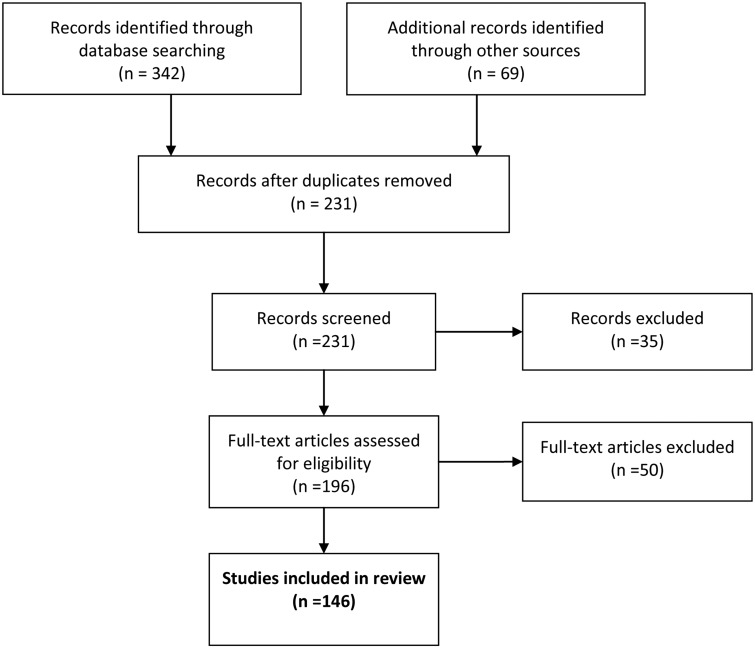
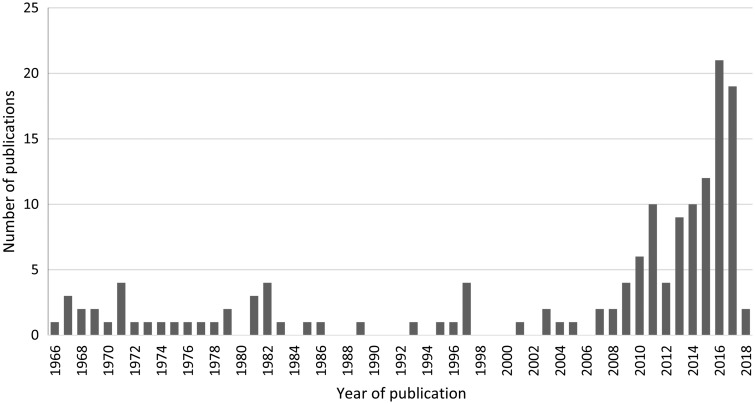
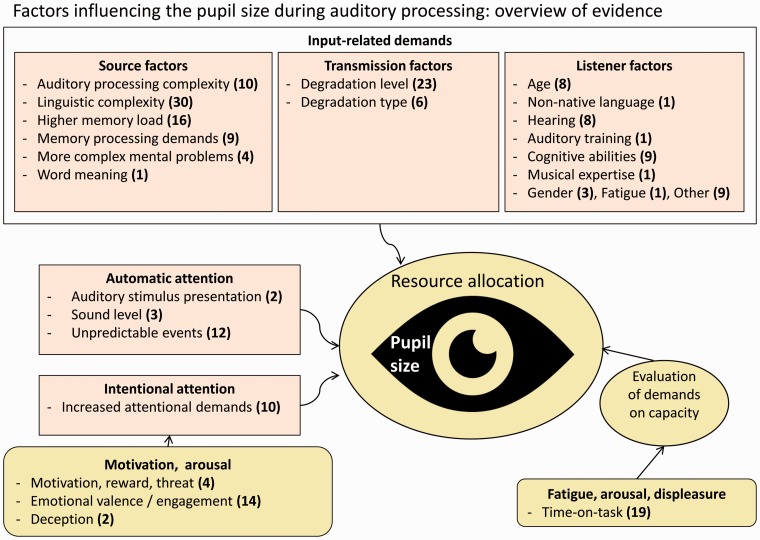
The measurement of cognitive resource allocation during listening, or listening effort, provides valuable insight in the factors influencing auditory processing. In recent years, many studies inside and outside the field of hearing science have measured the pupil response evoked by auditory stimuli. The aim of the current review was to provide an exhaustive overview of these studies. The 146 studies included in this review originated from multiple domains, including hearing science and linguistics, but the review also covers research into motivation, memory, and emotion. The present review provides a unique overview of these studies and is organized according to the components of the Framework for Understanding Effortful Listening. A summary table presents the sample characteristics, an outline of the study design, stimuli, the pupil parameters analyzed, and the main findings of each study. The results indicate that the pupil response is sensitive to various task manipulations as well as interindividual differences. Many of the findings have been replicated. Frequent interactions between the independent factors affecting the pupil response have been reported, which indicates complex processes underlying cognitive resource allocation. This complexity should be taken into account in future studies that should focus more on interindividual differences, also including older participants. This review facilitates the careful design of new studies by indicating the factors that should be controlled for. In conclusion, measuring the pupil dilation response to auditory stimuli has been demonstrated to be sensitive method applicable to numerous research questions. The sensitivity of the measure calls for carefully designed stimuli.
Overview
The claims and statistics of this paper haven’t been checked yet.
Free: it reads the open-access text and checks the first 5 claims that cite a source we can check. Create a free account to check every claim.
Integrity signals
Registry
Cites
Statistics
Figures
Verification
Claims the paper makes
The claims and statistics of this paper haven’t been checked yet.
Free: it reads the open-access text and checks the first 5 claims that cite a source we can check. Create a free account to check every claim.
Claims other papers make about this one
Each is checked against this paper’s own text: does it say what the citing paper says it does?
The source backs part of the claim, not all of it — or backs it for a different population, condition or comparison.
In the citing paper
“Generally speaking, listening effort increases with the magnitude of the obstacle such that more background noise (Van Engen & McLaughlin, 2018;Zekveld, Koelewijn, & Kramer, 2018) or poorer knowledge of the target language (Borghini & Hazan, 2018;Schmidtke et al., 2014) leads to greater listening effort”
From Listening effort and fatigue in native and non-native primary school children (2021) · cites this paper as Zekveld et al., 2018
Experimental — accuracy not yet measuredThe source backs part of the claim, not all of it — or backs it for a different population, condition or comparison.
In the citing paper
“They have shown that in more difficult acoustic scenarios, larger PPD and MPD are measures of increased listening effort [25].”
From An exploratory Study of EEG Alpha Oscillation and Pupil Dilation in Hearing-Aid Users During Effortful listening to Continuous Speech (2020) · cites this paper as [25]
Experimental — accuracy not yet measuredThe cited source says what the claim attributes to it.
In the citing paper
“In the context of hearing research, the taskevoked pupil response (TEPR) has widely been shown to be sensitive to the increased demands of listening in suboptimal acoustic conditions (see Zekveld et al., 2018 for a review), and is therefore, thought to reflect the effort required to achieve speech recognition under degraded listening conditions.”
From Effortful listening under the microscope: Examining relations between pupillometric and subjective markers of effort and tiredness from listening (2021) · cites this paper as Zekveld et al., 2018
The cited source says what the claim attributes to it.
In the citing paper
“Recently, pupillometry has been deemed as a valid tool to study language processing load and listening effort”
From Effects of acoustic and semantic cues on listening effort during native and non-native speech perception (2020) · cites this paper as Zekveld et al. (2018)
The check wasn’t confident either way, so it gives no verdict — never disputed.
In the citing paper
“However, studies to date report no association between TEPR and perceived effort.”
From Effortful listening under the microscope: Examining relations between pupillometric and subjective markers of effort and tiredness from listening (2021) · cites this paper as Zekveld et al., 2018
Experimental — accuracy not yet measured
7 more claims about this paper
Create a free account to see every claim other papers make about this one.
Self-check
Percentages, sums and reported differences re-computed from the paper’s own numbers.
The self-check needs the paper’s full text.
Citations
Cites
(2001) · doi:10.1017/cbo9780511546396 · Cited by 4,482
Aston-Jones, G., & Cohen, J. D. (2005) · Annual Review of Neuroscience · doi:10.1146/annurev.neuro.28.061604.135709 · Cited by 4,472
Pupil Diameter and Load on Memory
Kahneman, D., & Beatty, J. (1966) · Science · doi:10.1126/science.154.3756.1583 · Cited by 1,617 · cited 7×
“The current review identified numerous studies that applied an auditory memory task, which may be partly based on the seminal work of Kahneman and Beatty (1966).”
BackgroundMethodInfluentialHearing Impairment and Cognitive Energy: The Framework for Understanding Effortful Listening (FUEL)
Pichora-Fuller, M. K., Kramer, S. E., Eckert, M. A., Edwards, B., Hornsby, B. W. Y., Humes, L. E., Lemke, U., Lunner, T., Matthen, M., Mackersie, C. L., et al. (2016) · Ear & Hearing · doi:10.1097/aud.0000000000000312 · Cited by 1,318 · cited 24×
“We grouped the results according to whether these were based on external (see Table 1) versus internal (individual) factors (Table 2) and furthermore used the FUEL categories to structure the results (Pichora-Fuller et al., 2016).”
BackgroundMethodResultInfluentialSelf-citationHandbook of Approach and Avoidance Motivation
(2013) · Psychology Press eBooks · doi:10.4324/9780203888148 · Cited by 1,302
Pupil Size in Relation to Mental Activity during Simple Problem-Solving
Hess, E. H., & Polt, J. M. (1964) · Science · doi:10.1126/science.143.3611.1190 · Cited by 1,169 · cited 1×
“Please note that some of the excluded articles included early studies that were rejected because of the lack of formal statistical tests (e.g., Berrien & Huntington, 1943; Bradshaw, 1969, 1970; Hess & Polt, 1964; Schaefer, Ferguson, Klein, & Rawson, 1968).”
BackgroundPupillometry: A Window to the Preconscious?
Laeng, B., Sirois, S., & Gredebäck, G. (2012) · Perspectives on Psychological Science · doi:10.1177/1745691611427305 · Cited by 921
Pupil size variation as an indication of affective processing
Partala, T., & Surakka, V. (2003) · International Journal of Human-Computer Studies · doi:10.1016/s1071-5819(03)00017-x · Cited by 836 · cited 3×
“Peavler (1974) was the first to demonstrate this effect when showing that the pupil size was smaller for a recall condition with 13-digit when compared with 9-digit strings.”
BackgroundPupil diameter covaries with BOLD activity in human locus coeruleus
Murphy, P. R., O'Connell, R. G., O'Sullivan, M., Robertson, I. H., & Balsters, J. H. (2014) · Human Brain Mapping · doi:10.1002/hbm.22466 · Cited by 819
Gilzenrat, M. S., Nieuwenhuis, S., Jepma, M., & Cohen, J. D. (2010) · Cognitive, Affective, & Behavioral Neuroscience · doi:10.3758/cabn.10.2.252 · Cited by 798
Studies in second language acquisition
(1985) · Journal of Multilingual and Multicultural Development · doi:10.1080/01434632.1985.9994199 · Cited by 723
Beyond eye gaze: What else can eyetracking reveal about cognition and cognitive development?
Eckstein, M. K., Guerra-Carrillo, B., Miller Singley, A. T., & Bunge, S. A. (2017) · Developmental Cognitive Neuroscience · doi:10.1016/j.dcn.2016.11.001 · Cited by 686
Mental workload while driving: Effects on visual search, discrimination, and decision making.
Recarte, M. A., & Nunes, L. M. (2003) · Journal of Experimental Psychology: Applied · doi:10.1037/1076-898x.9.2.119 · Cited by 682
Peelle, J. E. (2018) · Ear & Hearing · doi:10.1097/aud.0000000000000494 · Cited by 672
Pupillometry and P3 index the locus coeruleus-noradrenergic arousal function in humans
Murphy, P. R., Robertson, I. H., Balsters, J. H., & O'connell, R. G. (2011) · Psychophysiology · doi:10.1111/j.1469-8986.2011.01226.x · Cited by 519
Pupil dilation signals surprise: evidence for noradrenaline’s role in decision making
Preuschoff, K. (2011) · Frontiers in Neuroscience · doi:10.3389/fnins.2011.00115 · Cited by 519
Sympathetic and parasympathetic innervation of pupillary dilation during sustained processing
Steinhauer, S. R., Siegle, G. J., Condray, R., & Pless, M. (2004) · International Journal of Psychophysiology · doi:10.1016/j.ijpsycho.2003.12.005 · Cited by 470
Pupillary responses index cognitive resource limitations
GRANHOLM, E., ASARNOW, R. F., SARKIN, A. J., & DYKES, K. L. (1996) · Psychophysiology · doi:10.1111/j.1469-8986.1996.tb01071.x · Cited by 462
Jepma, M., & Nieuwenhuis, S. (2011) · Journal of Cognitive Neuroscience · doi:10.1162/jocn.2010.21548 · Cited by 439
Pupil Response as an Indication of Effortful Listening: The Influence of Sentence Intelligibility
Zekveld, A. A., Kramer, S. E., & Festen, J. M. (2010) · Ear & Hearing · doi:10.1097/aud.0b013e3181d4f251 · Cited by 437
Self-citationZekveld, A. A., Kramer, S. E., & Festen, J. M. (2011) · Ear & Hearing · doi:10.1097/aud.0b013e31820512bb · Cited by 432
Self-citationPupillary Responses During Information Processing Vary with Scholastic Aptitude Test Scores
Ahern, S., & Beatty, J. (1979) · Science · doi:10.1126/science.472746 · Cited by 391
Pupillometry as a measure of cognitive effort in younger and older adults
Piquado, T., Isaacowitz, D., & Wingfield, A. (2010) · Psychophysiology · doi:10.1111/j.1469-8986.2009.00947.x · Cited by 390
Sirois, S., & Brisson, J. (2014) · WIREs Cognitive Science · doi:10.1002/wcs.1323 · Cited by 372
Estimating cognitive load using remote eye tracking in a driving simulator
Palinko, O., Kun, A. L., Shyrokov, A., & Heeman, P. (2010) · Proceedings of the 2010 Symposium on Eye-Tracking Research & Applications - ETRA '10 · doi:10.1145/1743666.1743701 · Cited by 371
Hyönä, J., Tommola, J., & Alaja, A.-M. (1995) · The Quarterly Journal of Experimental Psychology Section A · doi:10.1080/14640749508401407 · Cited by 371
Pupil dilation reflects perceptual selection and predicts subsequent stability in perceptual rivalry
Einhäuser, W., Stout, J., Koch, C., & Carter, O. (2008) · Proceedings of the National Academy of Sciences · doi:10.1073/pnas.0707727105 · Cited by 351 · cited 3×
“…processing, others assessed the pupil dilation response to auditory, visual, or audiovisual stimuli using similar test paradigms (e.g., D’Ascenzo et al., 2018; Einha¨user et al., 2008; Klingner et al., 2011; Lisi et al., 2015; Otero et al., 2011; Rosa et al., 2017; Taylor, 1981; Wang et al., 2017).”
BackgroundMethodPupillary dilation as a measure of attention: a quantitative system analysis
Hoeks, B., & Levelt, W. J. M. (1993) · Behavior Research Methods, Instruments, & Computers · doi:10.3758/bf03204445 · Cited by 342
The Pupil. Anatomy, Physiology and Clinical Applications.
DIAMOND, J. P. (2001) · British Journal of Ophthalmology · doi:10.1136/bjo.85.1.121e · Cited by 332
Pupillary, heart rate, and skin resistance changes during a mental task.
Kahneman, D., Tursky, B., Shapiro, D., & Crider, A. (1969) · Journal of Experimental Psychology · doi:10.1037/h0026952 · Cited by 302
Aviation, Space and Environmental Medicine
(1982) · Journal of Sound and Vibration · doi:10.1016/0022-460x(82)90311-x · Cited by 297
Three Decades of Research on Motivational Intensity Theory
Richter, M., Gendolla, G. H. E., & Wright, R. A. (2016) · Advances in Motivation Science · doi:10.1016/bs.adms.2016.02.001 · Cited by 286
The Impact of Auditory Spectral Resolution on Listening Effort Revealed by Pupil Dilation
Winn, M. B., Edwards, J. R., & Litovsky, R. Y. (2015) · Ear & Hearing · doi:10.1097/aud.0000000000000145 · Cited by 278
Klingner, J., Tversky, B., & Hanrahan, P. (2011) · Psychophysiology · doi:10.1111/j.1469-8986.2010.01069.x · Cited by 255 · cited 11×
“…processing, others assessed the pupil dilation response to auditory, visual, or audiovisual stimuli using similar test paradigms (e.g., D’Ascenzo et al., 2018; Einha¨user et al., 2008; Klingner et al., 2011; Lisi et al., 2015; Otero et al., 2011; Rosa et al., 2017; Taylor, 1981; Wang et al., 2017).”
BackgroundMethodInfluentialThe window of my eyes: Task disengagement and mental fatigue covary with pupil dynamics
Hopstaken, J. F., van der Linden, D., Bakker, A. B., & Kompier, M. A. J. (2015) · Biological Psychology · doi:10.1016/j.biopsycho.2015.06.013 · Cited by 247
Cognitive processing load across a wide range of listening conditions: Insights from pupillometry
Zekveld, A. A., & Kramer, S. E. (2014) · Psychophysiology · doi:10.1111/psyp.12151 · Cited by 242
Self-citationPupil Dilation Uncovers Extra Listening Effort in the Presence of a Single-Talker Masker
Koelewijn, T., Zekveld, A. A., Festen, J. M., & Kramer, S. E. (2012) · Ear & Hearing · doi:10.1097/aud.0b013e3182310019 · Cited by 227
Self-citationTask performance and eye activity: predicting behavior relating to cognitive workload.
Tsai, Y.-F. D., Viirre, E., Strychacz, C., Chase, B., & Jung, T. (2007) · PubMed · Cited by 218
Identifying cognitive state from eye metrics.
Marshall, S. P. (2007) · PubMed · Cited by 211
The Pupillary Response in Cognitive Psychophysiology and Schizophreniaa
STEINHAUER, S. R., & HAKEREM, G. (1992) · Annals of the New York Academy of Sciences · doi:10.1111/j.1749-6632.1992.tb22845.x · Cited by 206
Effect of stimulus uncertainty on the pupillary dilation response and the vertex evoked potential
Friedman, D., Hakerem, G., Sutton, S., & Fleiss, J. L. (1973) · Electroencephalography and Clinical Neurophysiology · doi:10.1016/0013-4694(73)90065-5 · Cited by 204
Kuchinsky, S. E., Ahlstrom, J. B., Vaden, K. I., Cute, S. L., Humes, L. E., Dubno, J. R., & Eckert, M. A. (2013) · Psychophysiology · doi:10.1111/j.1469-8986.2012.01477.x · Cited by 203
Pupillary response as a general measure of activation
Nunnally, J. C., Knott, P. D., Duchnowski, A. J., & Parker, R. K. (1967) · Perception & Psychophysics · doi:10.3758/bf03210310 · Cited by 203
Pupil Size, Information Overload, and Performance Differences
Peavler, W. S. (1974) · Psychophysiology · doi:10.1111/j.1469-8986.1974.tb01114.x · Cited by 202
Effects of Hearing Impairment and Hearing Aid Amplification on Listening Effort: A Systematic Review
Ohlenforst, B., Zekveld, A. A., Jansma, E. P., Wang, Y., Naylor, G., Lorens, A., Lunner, T., & Kramer, S. E. (2017) · Ear & Hearing · doi:10.1097/aud.0000000000000396 · Cited by 202
Self-citationBijleveld, E., Custers, R., & Aarts, H. (2009) · Psychological Science · doi:10.1111/j.1467-9280.2009.02443.x · Cited by 198
Memory strength and specificity revealed by pupillometry
Papesh, M. H., Goldinger, S. D., & Hout, M. C. (2011) · International Journal of Psychophysiology · doi:10.1016/j.ijpsycho.2011.10.002 · Cited by 191
A taxonomy of fatigue concepts and their relation to hearing loss.
Hornsby, B. W. Y., Naylor, G., & Bess, F. H. (2016) · Ear & Hearing · doi:10.1097/aud.0000000000000289 · Cited by 188 · cited 1×
“The motivation to perform the task will likely be reduced if the task demands are too high (Richter et al., 2016), when there is fatigue (Hornsby, Naylor, & Bess, 2016), or a combination of these factors.”
BackgroundOhlenforst, B., Zekveld, A. A., Lunner, T., Wendt, D., Naylor, G., Wang, Y., Versfeld, N. J., & Kramer, S. E. (2017) · Hearing Research · doi:10.1016/j.heares.2017.05.012 · Cited by 185
Self-citationCognitive and Ocular Factors Jointly Determine Pupil Responses under Equiluminance
Knapen, T., de Gee, J. W., Brascamp, J., Nuiten, S., Hoppenbrouwers, S., & Theeuwes, J. (2016) · PLOS ONE · doi:10.1371/journal.pone.0155574 · Cited by 182
Pupillometry reveals processing load during spoken language comprehension
Engelhardt, P. E., Ferreira, F., & Patsenko, E. G. (2010) · Quarterly Journal of Experimental Psychology · doi:10.1080/17470210903469864 · Cited by 180
Winn, M. B. (2016) · Trends in Hearing · doi:10.1177/2331216516669723 · Cited by 174
Resource allocation and fluid intelligence: Insights from pupillometry
van der Meer, E., Beyer, R., Horn, J., Foth, M., Bornemann, B., Ries, J., Kramer, J., Warmuth, E., Heekeren, H. R., & Wartenburger, I. (2010) · Psychophysiology · doi:10.1111/j.1469-8986.2009.00884.x · Cited by 173
Zekveld, A. A., Heslenfeld, D. J., Johnsrude, I. S., Versfeld, N. J., & Kramer, S. E. (2014) · NeuroImage · doi:10.1016/j.neuroimage.2014.06.069 · Cited by 171
Self-citationBilingual infants control their languages as they listen
Byers-Heinlein, K., Morin-Lessard, E., & Lew-Williams, C. (2017) · Proceedings of the National Academy of Sciences · doi:10.1073/pnas.1703220114 · Cited by 169
Phasic Not Tonic Pupillary Responses Vary With Auditory Vigilance Performance
Beatty, J. (1982) · Psychophysiology · doi:10.1111/j.1469-8986.1982.tb02540.x · Cited by 163
Perceptual Deficit during a Mental Task
Kahneman, D., Beatty, J., & Pollack, I. (1967) · Science · doi:10.1126/science.157.3785.218 · Cited by 162
Assessing Aspects of Auditory Handicap by Means of Pupil Dilatation
Kramer, S. E., Kapteyn, T. S., Festen, J. M., & Kuik, D. J. (1997) · International Journal of Audiology · doi:10.3109/00206099709071969 · Cited by 161
Self-citationPupillary responses in a pitch-discrimination task
Hahnemann, D., & Beatty, J. (1967) · Perception & Psychophysics · doi:10.3758/bf03210302 · Cited by 161
The pupil response reveals increased listening effort when it is difficult to focus attention
Koelewijn, T., de Kluiver, H., Shinn‐Cunningham, B. G., Zekveld, A. A., & Kramer, S. E. (2015) · Hearing Research · doi:10.1016/j.heares.2015.02.004 · Cited by 147
Self-citationInfant and adult pupil dilation in response to unexpected sounds
Wetzel, N., Buttelmann, D., Schieler, A., & Widmann, A. (2015) · Developmental Psychobiology · doi:10.1002/dev.21377 · Cited by 144
Music chills: The eye pupil as a mirror to music’s soul
Laeng, B., Eidet, L. M., Sulutvedt, U., & Panksepp, J. (2016) · Consciousness and Cognition · doi:10.1016/j.concog.2016.07.009 · Cited by 141
Development of attentional allocation in the dual task paradigm
Karatekin, C. (2004) · International Journal of Psychophysiology · doi:10.1016/j.ijpsycho.2003.12.002 · Cited by 135
Pupil size changes during recognition memory
Otero, S. C., Weekes, B. S., & Hutton, S. B. (2011) · Psychophysiology · doi:10.1111/j.1469-8986.2011.01217.x · Cited by 132
The pupillary response as an indicator of arousal and cognition
Stanners, R. F., Coulter, M., Sweet, A. W., & Murphy, P. (1979) · Motivation and Emotion · doi:10.1007/bf00994048 · Cited by 131
Bradley, M. T., & Janisse, M. P. (1981) · Psychophysiology · doi:10.1111/j.1469-8986.1981.tb03040.x · Cited by 129
Objective Assessment of Listening Effort: Coregistration of Pupillometry and EEG
Miles, K., McMahon, C., Boisvert, I., Ibrahim, R., de Lissa, P., Graham, P., & Lyxell, B. (2017) · Trends in Hearing · doi:10.1177/2331216517706396 · Cited by 128
Task-evoked pupillometry provides a window into the development of short-term memory capacity
Johnson, E. L., Singley, A. T. M., Peckham, A., Johnson, S. L., & Bunge, S. A. (2014) · Frontiers in Psychology · doi:10.3389/fpsyg.2014.00218 · Cited by 125
The Invariance Problem in Infancy: A Pupillometry Study
Hochmann, J., & Papeo, L. (2014) · Psychological Science · doi:10.1177/0956797614547918 · Cited by 118
Second language experience modulates word retrieval effort in bilinguals: evidence from pupillometry
Schmidtke, J. (2014) · Frontiers in Psychology · doi:10.3389/fpsyg.2014.00137 · Cited by 116
Hong, L., Walz, J. M., & Sajda, P. (2014) · PLoS ONE · doi:10.1371/journal.pone.0091321 · Cited by 115
Pupillary Responses to Words That Convey a Sense of Brightness or Darkness
Mathôt, S., Grainger, J., & Strijkers, K. (2017) · Psychological Science · doi:10.1177/0956797617702699 · Cited by 114
Correspondences among pupillary dilation response, subjective salience of sounds, and loudness
Liao, H., Kidani, S., Yoneya, M., Kashino, M., & Furukawa, S. (2015) · Psychonomic Bulletin & Review · doi:10.3758/s13423-015-0898-0 · Cited by 111
Impact of noise and noise reduction on processing effort: A pupillometry study.
Wendt, D., Hietkamp, R. K., & Lunner, T. (2017) · Ear & Hearing · doi:10.1097/aud.0000000000000454 · Cited by 108
Wang, Y., Zekveld, A. A., Naylor, G., Ohlenforst, B., Jansma, E. P., Lorens, A., Lunner, T., & Kramer, S. E. (2016) · PLoS ONE · doi:10.1371/journal.pone.0153566 · Cited by 107
Self-citationERP-pupil size correlations reveal how bilingualism enhances cognitive flexibility
Kuipers, J.-R., & Thierry, G. (2013) · Cortex · doi:10.1016/j.cortex.2013.01.012 · Cited by 106
The pupil response is sensitive to divided attention during speech processing
Koelewijn, T., Shinn‐Cunningham, B. G., Zekveld, A. A., & Kramer, S. E. (2014) · Hearing Research · doi:10.1016/j.heares.2014.03.010 · Cited by 106
Self-citationMeasuring the impact of subtitles on cognitive load: eye tracking and dynamic audiovisual texts
Kruger, J.-L., Hefer, E., & Matthew, G. (2013) · Proceedings of the 2013 Conference on Eye Tracking South Africa · doi:10.1145/2509315.2509331 · Cited by 106
Pupillometry in Infancy Research
Hepach, R., & Westermann, G. (2016) · Journal of Cognition and Development · doi:10.1080/15248372.2015.1135801 · Cited by 106
Differentiation of deception using pupillary responses as an index of cognitive processing
DIONISIO, D. P., GRANHOLM, E., HILLIX, W. A., & PERRINE, W. F. (2001) · Psychophysiology · doi:10.1017/s0048577201990717 · Cited by 103
Processing load induced by informational masking is related to linguistic abilities
Koelewijn, T., Zekveld, A. A., Festen, J. M., Rönnberg, J., & Kramer, S. E. (2012) · International Journal of Otolaryngology · doi:10.1155/2012/865731 · Cited by 103
Self-citationZekveld, A. A., Rudner, M., Kramer, S. E., Lyzenga, J., & Rönnberg, J. (2014) · Frontiers in Neuroscience · doi:10.3389/fnins.2014.00088 · Cited by 102
Self-citationWendt, D., Dau, T., & Hjortkjær, J. (2016) · Frontiers in Psychology · doi:10.3389/fpsyg.2016.00345 · Cited by 99
Relating Pupil Dilation and Metacognitive Confidence during Auditory Decision-Making
Lempert, K. M., Chen, Y. L., & Fleming, S. M. (2015) · PLOS ONE · doi:10.1371/journal.pone.0126588 · Cited by 96
Steel, M. M., Papsin, B. C., & Gordon, K. A. (2015) · PLoS ONE · doi:10.1371/journal.pone.0117611 · Cited by 94
The Eye is Listening: Music-Induced Arousal and Individual Differences Predict Pupillary Responses
Gingras, B., Marin, M. M., Puig‐Waldmueller, E., & Fitch, W. T. (2015) · Frontiers in Human Neuroscience · doi:10.3389/fnhum.2015.00619 · Cited by 93
A pupil size response model to assess fear learning
Korn, C. W., Staib, M., Tzovara, A., Castegnetti, G., & Bach, D. R. (2016) · Psychophysiology · doi:10.1111/psyp.12801 · Cited by 93
Multisensory integration in orienting behavior: Pupil size, microsaccades, and saccades
Wang, C., Blohm, G., Huang, J. C. H., Boehnke, S. E., & Munoz, D. P. (2017) · Biological Psychology · doi:10.1016/j.biopsycho.2017.07.024 · Cited by 93
Speech‐perception training for older adults with hearing loss impacts word recognition and effort
Kuchinsky, S. E., Ahlstrom, J. B., Cute, S. L., Humes, L. E., Dubno, J. R., & Eckert, M. A. (2014) · Psychophysiology · doi:10.1111/psyp.12242 · Cited by 91
The Frequency of Rapid Pupil Dilations as a Measure of Linguistic Processing Difficulty
Demberg, V., & Sayeed, A. (2016) · PLoS ONE · doi:10.1371/journal.pone.0146194 · Cited by 90
Horrey, W. J., Lesch, M. F., Garabet, A., Simmons, L. A., & Maikala, R. V. (2016) · Applied Ergonomics · doi:10.1016/j.apergo.2016.07.011 · Cited by 90
Wang, Y., Naylor, G., Kramer, S. E., Zekveld, A. A., Wendt, D., Ohlenforst, B., & Lunner, T. (2018) · Ear & Hearing · doi:10.1097/aud.0000000000000512 · Cited by 90
Self-citationPupillary responses and event‐related potentials as indices of the orienting reflex
Steiner, G. Z., & Barry, R. J. (2011) · Psychophysiology · doi:10.1111/j.1469-8986.2011.01271.x · Cited by 88
Measuring listening-related effort and fatigue in school-aged children using pupillometry
McGarrigle, R., Dawes, P., Stewart, A. J., Kuchinsky, S. E., & Munro, K. J. (2017) · Journal of Experimental Child Psychology · doi:10.1016/j.jecp.2017.04.006 · Cited by 86
Pupillary responses index overload of working memory resources in schizophrenia.
Granholm, E., Morris, S. K., Sarkin, A. J., & Asarnaow, R. F. (1997) · Journal of Abnormal Psychology · doi:10.1037//0021-843x.106.3.458 · Cited by 84
Pupillometry reveals changes in physiological arousal during a sustained listening task.
McGarrigle, R., Dawes, P., Stewart, A. J., Kuchinsky, S. E., & Munro, K. J. (2017) · Psychophysiology · doi:10.1111/psyp.12772 · Cited by 84
A solid frame for the window on cognition: Modeling event-related pupil responses
Korn, C. W., & Bach, D. R. (2016) · Journal of Vision · doi:10.1167/16.3.28 · Cited by 82
The Pupil and Stimulus Probability
Qiyuan, J., Richer, F., Wagoner, B. L., & Beatty, J. (1985) · Psychophysiology · doi:10.1111/j.1469-8986.1985.tb01645.x · Cited by 80
Pupillary Dilation as an Index of Task Demands
Cabestrero, R., Crespo, A., & Quirós, P. (2009) · Perceptual and Motor Skills · doi:10.2466/pms.109.3.664-678 · Cited by 78
Pupil dilation patterns spontaneously synchronize across individuals during shared attention.
Kang, O., & Wheatley, T. (2017) · Journal of Experimental Psychology: General · doi:10.1037/xge0000271 · Cited by 76 · cited 1×
“Kang and Wheatley (2017) assessed the synchrony in the pupil dilation of speakers and listeners watching or listening to a recording of these speakers.”
BackgroundVULNERABILITY TO SCHIZOPHRENIA: INFORMATION PROCESSING IN THE PUPIL AND EVENT-RELATED POTENTIAL
Steinhauer, S. R., & Zubin, J. (1982) · Elsevier eBooks · doi:10.1016/b978-0-08-027987-9.50042-1 · Cited by 76
Toward a taxonomic model of attention in effortful listening
Strauss, D. J., & Francis, A. L. (2017) · Cognitive, Affective, & Behavioral Neuroscience · doi:10.3758/s13415-017-0513-0 · Cited by 76
Pupils dilate for vocal or familiar music.
Weiss, M. W., Trehub, S. E., Schellenberg, E. G., & Habashi, P. (2016) · Journal of Experimental Psychology Human Perception & Performance · doi:10.1037/xhp0000226 · Cited by 74
Pupil dilation reveals top–down attentional load during spatial monitoring
Lisi, M., Bonato, M., & Zorzi, M. (2015) · Biological Psychology · doi:10.1016/j.biopsycho.2015.10.002 · Cited by 72
PUPILLOMETRY IN LINGUISTIC RESEARCH: AN INTRODUCTION AND REVIEW FOR SECOND LANGUAGE RESEARCHERS
Schmidtke, J. (2018) · Studies in Second Language Acquisition · doi:10.1017/s0272263117000195 · Cited by 72
Ayasse, N. D., Lash, A., & Wingfield, A. (2017) · Frontiers in Aging Neuroscience · doi:10.3389/fnagi.2016.00329 · Cited by 69
Bianchi, F., Santurette, S., Wendt, D., & Dau, T. (2015) · Journal of the Association for Research in Otolaryngology · doi:10.1007/s10162-015-0548-2 · Cited by 69
Monitoring Alpha Oscillations and Pupil Dilation across a Performance-Intensity Function
McMahon, C. M., Boisvert, I., de Lissa, P., Granger, L., Ibrahim, R., Lo, C. Y., Miles, K., & Graham, P. L. (2016) · Frontiers in Psychology · doi:10.3389/fpsyg.2016.00745 · Cited by 68
Listening to Limericks: A Pupillometry Investigation of Perceivers’ Expectancy
Scheepers, C., Mohr, S., Fischer, M. H., & Roberts, A. M. (2013) · PLoS ONE · doi:10.1371/journal.pone.0074986 · Cited by 67
Performance and Autonomic Responses During Motion Sickness
Dahlman, J., Sjörs, A., Lindström, J., Ledin, T., & Falkmer, T. (2009) · Human Factors The Journal of the Human Factors and Ergonomics Society · doi:10.1177/0018720809332848 · Cited by 67
The Timing and Effort of Lexical Access in Natural and Degraded Speech
Wagner, A. E., Toffanin, P., & Başkent, D. (2016) · Frontiers in Psychology · doi:10.3389/fpsyg.2016.00398 · Cited by 66
Pupillometry reveals increased pupil size during indirect request comprehension
Tromp, J., Hagoort, P., & Meyer, A. S. (2016) · Quarterly Journal of Experimental Psychology · doi:10.1080/17470218.2015.1065282 · Cited by 63
Eyes have ears: Indexing the orienting response to sound using pupillometry
Marois, A., Labonté, K., Parent, M., & Vachon, F. (2017) · International Journal of Psychophysiology · doi:10.1016/j.ijpsycho.2017.09.016 · Cited by 63
Evidence for Alternative Strategies of Sentence Retention
Wright, P., & Kahneman, D. J. (1971) · Quarterly Journal of Experimental Psychology · doi:10.1080/14640747108400240 · Cited by 62
Koelewijn, T., Zekveld, A. A., Festen, J. M., & Kramer, S. E. (2014) · The Journal of the Acoustical Society of America · doi:10.1121/1.4863198 · Cited by 60
Self-citationPupil dilation patterns reflect the contents of consciousness
Kang, O., & Wheatley, T. (2015) · Consciousness and Cognition · doi:10.1016/j.concog.2015.05.001 · Cited by 59
Machine Learning to Differentiate Between Positive and Negative Emotions Using Pupil Diameter
Babiker, A., Faye, I., Prehn, K., & Malik, A. S. (2015) · Frontiers in Psychology · doi:10.3389/fpsyg.2015.01921 · Cited by 59
Pupillometry shows the effort of auditory attention switching
McCloy, D., Lau, B. K., Larson, E., Pratt, K. A. I., & Lee, A. K. C. (2017) · The Journal of the Acoustical Society of America · doi:10.1121/1.4979340 · Cited by 58
Burley, D. T., Gray, N. S., & Snowden, R. J. (2017) · PLoS ONE · doi:10.1371/journal.pone.0167436 · Cited by 57
In the eye of the listener: Pupil dilation elucidates discourse processing
Zellin, M., Pannekamp, A., Toepel, U., & van der Meer, E. E. (2011) · International Journal of Psychophysiology · doi:10.1016/j.ijpsycho.2011.05.009 · Cited by 54
Plasticity of human auditory-evoked fields induced by shock conditioning and contingency reversal
Kluge, C., Bauer, M., Leff, A. P., Heinze, H., Dolan, R. J., & Driver, J. (2011) · Proceedings of the National Academy of Sciences · doi:10.1073/pnas.1016124108 · Cited by 52
Processing load during listening: The influence of task characteristics on the pupil response
Kramer, S. E., Lorens, A., Coninx, F., Zekveld, A. A., Piotrowska, A., & Skarzynski, H. (2013) · Language and Cognitive Processes · doi:10.1080/01690965.2011.642267 · Cited by 52
Self-citationEffects of Grouping on the Pupillary Response in a Short-Term Memory Task
Kahneman, D., Onuska, L., & Wolman, R. E. (1968) · Quarterly Journal of Experimental Psychology · doi:10.1080/14640746808400168 · Cited by 51
Effectiveness of pupil diameter in a probable‐lie comparison question test for deception
Webb, A. K., Honts, C. R., Kircher, J. C., Bernhardt, P. C., & Cook, A. E. (2009) · Legal and Criminological Psychology · doi:10.1348/135532508x398602 · Cited by 51
Pupillometry as a Glimpse into the Neurochemical Basis of Human Memory Encoding
Hoffing, R. C., & Seitz, A. R. (2015) · Journal of Cognitive Neuroscience · doi:10.1162/jocn_a_00749 · Cited by 51
Task-Related Vigilance During Word Recognition in Noise for Older Adults with Hearing Loss
Kuchinsky, S. E., Vaden, K. I., Ahlstrom, J. B., Cute, S. L., Humes, L. E., Dubno, J. R., & Eckert, M. A. (2015) · Experimental Aging Research · doi:10.1080/0361073x.2016.1108712 · Cited by 51
Kramer, S. E., Teunissen, C. E., & Zekveld, A. A. (2016) · Ear & Hearing · doi:10.1097/aud.0000000000000311 · Cited by 49
Self-citationPupillary response indexes the metrical hierarchy of unattended rhythmic violations
Damsma, A., & van Rijn, H. (2016) · Brain and Cognition · doi:10.1016/j.bandc.2016.10.004 · Cited by 49
An exploratory study of pupillary responses during deception.
Berrien, F. K., & Huntington, G. H. (1943) · Journal of Experimental Psychology · doi:10.1037/h0063488 · Cited by 48
Reliability of Oculometrics During a Mentally Demanding Task in Young and Old Adults
Marandi, R. Z., Madeleine, P., Omland, Ø., Vuillerme, N., & Samani, A. (2018) · IEEE Access · doi:10.1109/access.2018.2819211 · Cited by 48
Pupillometry registers toddlers’ sensitivity to degrees of mispronunciation
Tamási, K., McKean, C., Gafos, A. I., Fritzsche, T., & Höhle, B. (2016) · Journal of Experimental Child Psychology · doi:10.1016/j.jecp.2016.07.014 · Cited by 47
Changes of Pupil Size and Rehearsal Strategies in a Short-Term Memory Task
Kahneman, D., & Wright, P. (1971) · Quarterly Journal of Experimental Psychology · doi:10.1080/14640747108400239 · Cited by 46
Speech rate effects on the processing of conversational speech across the adult life span
Koch, X., & Janse, E. (2016) · The Journal of the Acoustical Society of America · doi:10.1121/1.4944032 · Cited by 46
Absolute pitch and pupillary response: Effects of timbre and key color
Schlemmer, K., Kulke, F., Kuchinke, L., & van der Meer, E. E. (2005) · Psychophysiology · doi:10.1111/j.1469-8986.2005.00306.x · Cited by 43
Testosterone and Pupillary Response to Auditory Sexual Stimuli
Dabbs, J. M. (1997) · Physiology & Behavior · doi:10.1016/s0031-9384(97)00268-0 · Cited by 43
EFFECTS OF A TASK‐RELEVANT RESPONSE ON PUPIL SIZE
Simpson, H. M. (1969) · Psychophysiology · doi:10.1111/j.1469-8986.1969.tb02890.x · Cited by 42
Pupillary Dilation as an Index of the Orienting Reflex
Stelmack, R. M., & Siddle, D. A. T. (1982) · Psychophysiology · doi:10.1111/j.1469-8986.1982.tb02529.x · Cited by 42
Kun, A. L., Palinko, O., Medenica, Ž., & Heeman, P. A. (2013) · Interspeech (USB) · doi:10.21437/interspeech.2013-595 · Cited by 41
Zekveld, A. A., Festen, J. Μ., & Kramer, S. E. (2013) · Journal of Speech Language and Hearing Research · doi:10.1044/1092-4388(2012/12-0058 · Cited by 41
Self-citationIndividual Hearing Loss: Characterization, Modelling, Compensation Strategies
Santurette, S., Dau, T., Christensen‐Dalsgaard, J., Tranebjærg, L., Andersen, T. D., & Poulsen, T. (2016) · Trends in Hearing · doi:10.1177/2331216516655890 · Cited by 41
Pupil responses to grammatical complexity of sentences
Schluroff, M. (1982) · Brain and Language · doi:10.1016/0093-934x(82)90010-4 · Cited by 38
Background light intensity and the pupillary response in a reaction time task
Bradshaw, J. L. (1969) · Psychonomic Science · doi:10.3758/bf03329118 · Cited by 38
N400 Amplitude Reduction Correlates with an Increase in Pupil Size
Kuipers, J. R., & Thierry, G. (2011) · Frontiers in Human Neuroscience · doi:10.3389/fnhum.2011.00061 · Cited by 37
Pupillary responses reflect ambiguity resolution in pronoun processing
Vogelzang, M., Hendriks, P., & van Rijn, H. (2016) · Language Cognition and Neuroscience · doi:10.1080/23273798.2016.1155718 · Cited by 37
Koelewijn, T., Versfeld, N. J., & Kramer, S. E. (2017) · Hearing Research · doi:10.1016/j.heares.2017.08.006 · Cited by 36
Self-citationPhysiological Evidence that Demand for Processing Capacity Varies with Intelligence
Ahern, S., & Beatty, J. (1981) · Springer eBooks · doi:10.1007/978-1-4684-1083-9_9 · Cited by 35
Pupillary responses during a short-term memory task: Cognitive processing, arousal, or both?
Johnson, D. A. (1971) · Journal of Experimental Psychology · doi:10.1037/h0031562 · Cited by 35
Jin, A. B., Steding, L. H., & Webb, A. K. (2015) · International Journal of Psychophysiology · doi:10.1016/j.ijpsycho.2015.04.014 · Cited by 34
Effects of schizophrenia and aging on pupillographic measures of working memory
Morris, S. K., Granholm, E. L., Sarkin, A. J., & Jeste, D. V. (1997) · Schizophrenia Research · doi:10.1016/s0920-9964(97)00065-0 · Cited by 33
Pupillary transient responses to within-task cognitive load variation
Wong, H. K., & Epps, J. (2016) · Computer Methods and Programs in Biomedicine · doi:10.1016/j.cmpb.2016.08.017 · Cited by 32
Dementias show differential physiological responses to salient sounds
Fletcher, P. D., Nicholas, J. M., Shakespeare, T. J., Downey, L. E., Golden, H. L., Agustus, J. L., Clark, C. N., Mummery, C. J., Schott, J. M., Crutch, S. J., et al. (2015) · Frontiers in Behavioral Neuroscience · doi:10.3389/fnbeh.2015.00073 · Cited by 31
Visual versus auditory Simon effect: A behavioural and physiological investigation
D’Ascenzo, S., Lugli, L., Baroni, G., Guidotti, R., Rubichi, S., Iani, C., & Nicoletti, R. (2018) · Quarterly Journal of Experimental Psychology · doi:10.1080/17470218.2017.1307429 · Cited by 31
Pupillary Changes during Encoding, Storage, and Retrieval of Information
Gardner, R. M., Beltramo, J. S., & Krinsky, R. (1975) · Perceptual and Motor Skills · doi:10.2466/pms.1975.41.3.951 · Cited by 30
Pupillary responses during mental activities
Schaefer, T., Ferguson, J. B., Klein, J. A., & Rawson, E. B. (1968) · Psychonomic Science · doi:10.3758/bf03331236 · Cited by 30
Affective and physiological correlates of the perception of unimodal and bimodal emotional stimuli
Rosa, P. J., Oliveira, J., Alghazzawi, D., Fardoun, H. M., & Gamito, P. S. (2017) · Psicothema · doi:10.7334/psicothema2016.272 · Cited by 30
A Novel Pupillometric Method for Indexing Word Difficulty in Individuals With and Without Aphasia
Chapman, L. R., & Hallowell, B. (2015) · Journal of Speech, Language, and Hearing Research · doi:10.1044/2015_jslhr-l-14-0287 · Cited by 29
Temporal alignment of pupillary response with stimulus events via deconvolution
McCloy, D., Larson, E. D., Lau, B. K., & Lee, A. K. C. (2016) · The Journal of the Acoustical Society of America · doi:10.1121/1.4943787 · Cited by 27
The use of pupillometry in the study of on-line verbal processing: Evidence for depths of processing
Ben-Nun, Y. (1986) · Brain and Language · doi:10.1016/0093-934x(86)90086-6 · Cited by 26
A physiological signature of sound meaning in dementia
Fletcher, P. D., Nicholas, J. M., Downey, L. E., Golden, H. L., Clark, C. N., Pires, C., Agustus, J. L., Mummery, C. J., Schott, J. M., Rohrer, J. D., et al. (2016) · Cortex · doi:10.1016/j.cortex.2016.01.007 · Cited by 25
Wang, Y., Zekveld, A. A., Wendt, D., Lunner, T., Naylor, G., & Kramer, S. E. (2018) · PLoS ONE · doi:10.1371/journal.pone.0197739 · Cited by 25
Self-citationNeuroticism and the pupillary response to a brief exposure to noise
Antikainen, J., & Niemi, P. (1983) · Biological Psychology · doi:10.1016/0301-0511(83)90013-3 · Cited by 25
Pupillometry: the Index of Cognitive Activity in a dual-task study
Demberg, V. (2013) · eScholarship (California Digital Library) · Cited by 22
Pupil dilation and its relationship to information processing during reading and listening.
Carver, R. P. (1971) · Journal of Applied Psychology · doi:10.1037/h0030664 · Cited by 21
Ledoux, K., Coderre, E. L., Bosley, L. V., Buz, E., Gangopadhyay, I., & Gordon, B. (2015) · Behavior Research Methods · doi:10.3758/s13428-015-0571-6 · Cited by 19
Fish, S. C., & Granholm, E. (2008) · Journal of Abnormal Psychology · doi:10.1037/0021-843x.117.2.355 · Cited by 19
Driver Distraction through Conversation Measured with Pupillometry
Dlugosch, C., Conti, L. S., & Bengler, K. J. (2013) · International Driving Symposium on Human Factors in Driver Assessment, Training and Vehicle Design (Driving Assessment Conference) · doi:10.17077/drivingassessment.1488 · Cited by 15
Pupil size and drag state in a reaction time task
Bradshaw, J. L. (1970) · Psychonomic Science · doi:10.3758/bf03335723 · Cited by 14
Pupil Size and Instructional Set in Recognition and Recall
Stanners, R. F., & Headley, D. B. (1972) · Psychophysiology · doi:10.1111/j.1469-8986.1972.tb01804.x · Cited by 13
Temporal characteristics of primary-secondary message interference in a dichotic listening task
Ambler, B. A., Fisicaro, S. A., & Proctor, R. W. (1976) · Memory & Cognition · doi:10.3758/bf03213238 · Cited by 11
Pupillary Responses in Recognizing Awareness in Persons with Profound Mental Retardation
Chaney, R. H., Givens, C. A., Aoki, M. F., & Gombiner, M. L. (1989) · Perceptual and Motor Skills · doi:10.2466/pms.1989.69.2.523 · Cited by 11
Pupillary activity while listening to verbal passages
White, G. L., & Maltzman, I. M. (1978) · Journal of Research in Personality · doi:10.1016/0092-6566(78)90062-4 · Cited by 11
Steel, M. M., Papsin, B. C., & Gordon, K. A. (2015) · PLoS ONE · doi:10.1371/journal.pone.0141945 · Cited by 11
Taylor, J. S. (1981) · Perceptual and Motor Skills · doi:10.2466/pms.1981.52.2.425 · Cited by 9
Effects of storage load and word frequency on pupillary responses during short-term memory
Elshtain, E. L., & Schaefer, T. (1968) · Psychonomic Science · doi:10.3758/bf03331240 · Cited by 9
Response of the foetal pupil to vibro-acoustic stimulation: A foetal attention test
y Cajal, C. L. R. (2011) · Early Human Development · doi:10.1016/j.earlhumdev.2010.12.007 · Cited by 8
Effects of intense continuous- and impact-type noise on pupil size and visual acuity.
Pd, J., Loeb, M., & Cohen, A. (1977) · PubMed · Cited by 6
Auditory-pupillary responses in patients with vestibular neuritis
Kitajima, N., Kobayashi, N., Otsuka, K., Ogawa, Y., Inagaki, T., Ichimura, A., & Suzuki, M. (2013) · Journal of Vestibular Research · doi:10.3233/ves-130497 · Cited by 6
Auditory-pupillary responses in deaf subjects
Kitajima, N., Otsuka, K., Ogawa, Y., Shimizu, S., Hayashi, M., Ichimura, A., & Suzuki, M. (2010) · Journal of Vestibular Research · doi:10.3233/ves-2010-0362 · Cited by 6
Research works printed but not linked: 3
- Bradley M. T. Janisse M. P. (1979) Pupil size and lie detection: The effect of certainty on detection. Psychology: A Journal of Human Behavior 16: 33– 39.
- Hopstaken J. F. van der Linden D. Bakker A. B. Kompier M. A. (2015) The window of my eyes: Task disengagement and mental fatigue covary with pupil dynamics. Biological Psychology 110: 100– 106. 26196899
- Kahneman D. (1973) Attention and effort vol. 1063, Englewood Cliffs, NJ: Prentice-Hall.
Cited by
Winn, M. B., Wendt, D., Koelewijn, T., & Kuchinsky, S. E. (2018) · Trends in Hearing · doi:10.1177/2331216518800869 · Cited by 339
Self-citationListening Effort Is Not the Same as Speech Intelligibility Score
Winn, M. B., & Teece, K. H. (2021) · Trends in Hearing · doi:10.1177/23312165211027688 · Cited by 178
GazeR: A Package for Processing Gaze Position and Pupil Size Data
Geller, J., Mirman, D., Mahr, T., & Winn, M. (2020) · Behavior Research Methods · doi:10.3758/s13428-020-01374-8 · Cited by 157
Pupil-linked arousal signals track the temporal organization of events in memory
Clewett, D., Gasser, C., & Davachi, L. (2020) · Nature Communications · doi:10.1038/s41467-020-17851-9 · Cited by 154
A model of listening engagement (MoLE)
Herrmann, B., & Johnsrude, I. S. (2020) · Hearing Research · doi:10.1016/j.heares.2020.108016 · Cited by 135
Metadata
- Authors
- Zekveld, A. A., Koelewijn, T., & Kramer, S. E.
- Venue
- Trends in Hearing
- Publisher
- SAGE Publications
- Published
- 2018-01
- Volume
- 22
- Pages
- 2331216518777174-2331216518777174
- ISSN
- 2331-2165 (ISSN-L)
- PMC
- PMC6156203
- OpenAlex
- W2894332003
- Cited by
- 306
- References
- 176
- FWCI
- 14.25
- Type
- journal article
- Language
- en
- Open access
- gold
- Licence
- journals.sagepub.com/page/policies/text-and-data-mining-license (tdm)
- Funders
- FP7 People: Marie-Curie Actions (607373)
- Amsterdam Public Health research institute (IPB Revanche programme PupILL)
About these checks
Registry, retraction, Cites and statistics results are computed, not judged, with one exception: a printed reference that no index lists is read once by a model before it counts as a citation error. Claims are extracted by a model and kept only when their quote appears verbatim in the text; each cited source is then checked, with a model’s help, for whether it says what the claim relies on. Those verdicts can be wrong — read the claim’s quote and the cited source before relying on one.
Statistics and arithmetic are recomputed, not judged.
Confidence bands are shown only for fields calibrated on our annotated test set. None is calibrated yet, so no band is shown.
What counts as a claim ›How we measure confidence ›How we check this ›
Are you an author, or do you see a problem with this page? Request a review
Data sources
Bibliographic data: Semantic Scholar, OpenAlex, Crossref.
Contains information from the Semantic Scholar Academic Graph Datasets, made available under the ODC Attribution License (ODC-BY 1.0).
Semantic Scholar’s data is described in: Kinney, R., et al. (2023). The Semantic Scholar Open Data Platform. arXiv:2301.10140.
