

The Pupil Dilation Response to Auditory Stimuli: Current State of Knowledge
Open accessThe DOI matches its Crossref record; 176 of the 178 references it cites were found in a registry or an index, and 2 are not checked yet.
Abstract
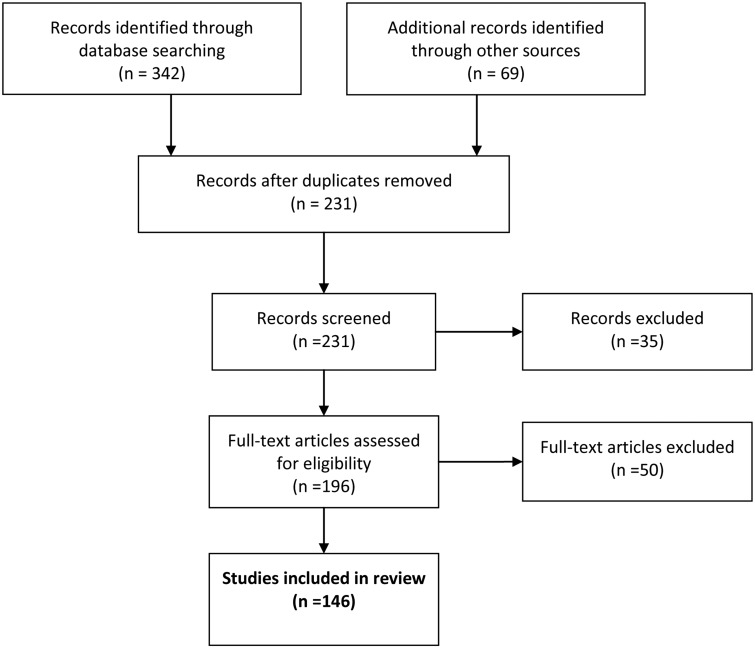
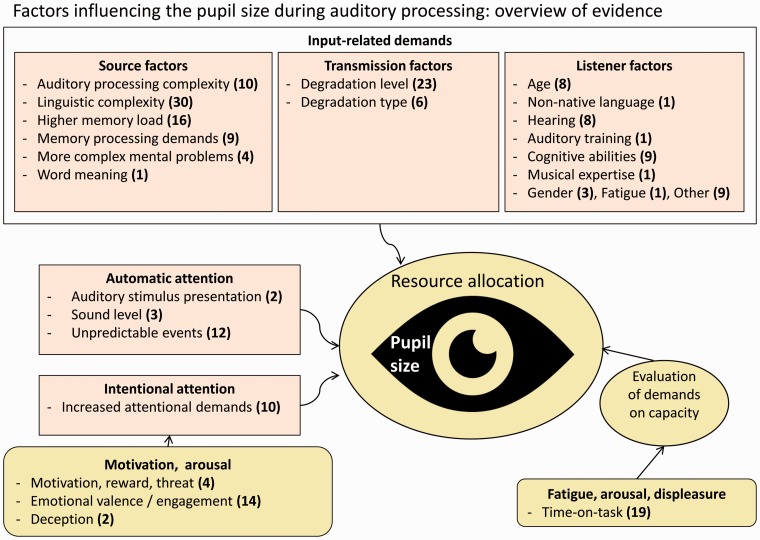
The measurement of cognitive resource allocation during listening, or listening effort, provides valuable insight in the factors influencing auditory processing. In recent years, many studies inside and outside the field of hearing science have measured the pupil response evoked by auditory stimuli. The aim of the current review was to provide an exhaustive overview of these studies. The 146 studies included in this review originated from multiple domains, including hearing science and linguistics, but the review also covers research into motivation, memory, and emotion. The present review provides a unique overview of these studies and is organized according to the components of the Framework for Understanding Effortful Listening. A summary table presents the sample characteristics, an outline of the study design, stimuli, the pupil parameters analyzed, and the main findings of each study. The results indicate that the pupil response is sensitive to various task manipulations as well as interindividual differences. Many of the findings have been replicated. Frequent interactions between the independent factors affecting the pupil response have been reported, which indicates complex processes underlying cognitive resource allocation. This complexity should be taken into account in future studies that should focus more on interindividual differences, also including older participants. This review facilitates the careful design of new studies by indicating the factors that should be controlled for. In conclusion, measuring the pupil dilation response to auditory stimuli has been demonstrated to be sensitive method applicable to numerous research questions. The sensitivity of the measure calls for carefully designed stimuli.
Overview
The claims and statistics of this paper haven’t been checked yet.
Free: it reads the open-access text and checks the first 5 claims that cite a source we can check. Create a free account to check every claim.
Integrity signals
Registry
Cites
Statistics
Figures
Verification
Claims the paper makes
The claims and statistics of this paper haven’t been checked yet.
Free: it reads the open-access text and checks the first 5 claims that cite a source we can check. Create a free account to check every claim.
Claims other papers make about this one
Each is checked against this paper’s own text: does it say what the citing paper says it does?
The source backs part of the claim, not all of it — or backs it for a different population, condition or comparison.
In the citing paper
“Generally speaking, listening effort increases with the magnitude of the obstacle such that more background noise (Van Engen & McLaughlin, 2018;Zekveld, Koelewijn, & Kramer, 2018) or poorer knowledge of the target language (Borghini & Hazan, 2018;Schmidtke et al., 2014) leads to greater listening effort”
From Listening effort and fatigue in native and non-native primary school children (2021) · cites this paper as Zekveld et al., 2018
Experimental — accuracy not yet measuredThe source backs part of the claim, not all of it — or backs it for a different population, condition or comparison.
In the citing paper
“They have shown that in more difficult acoustic scenarios, larger PPD and MPD are measures of increased listening effort [25].”
From An exploratory Study of EEG Alpha Oscillation and Pupil Dilation in Hearing-Aid Users During Effortful listening to Continuous Speech (2020) · cites this paper as [25]
Experimental — accuracy not yet measuredThe cited source says what the claim attributes to it.
In the citing paper
“In the context of hearing research, the taskevoked pupil response (TEPR) has widely been shown to be sensitive to the increased demands of listening in suboptimal acoustic conditions (see Zekveld et al., 2018 for a review), and is therefore, thought to reflect the effort required to achieve speech recognition under degraded listening conditions.”
From Effortful listening under the microscope: Examining relations between pupillometric and subjective markers of effort and tiredness from listening (2021) · cites this paper as Zekveld et al., 2018
The cited source says what the claim attributes to it.
In the citing paper
“Recently, pupillometry has been deemed as a valid tool to study language processing load and listening effort”
From Effects of acoustic and semantic cues on listening effort during native and non-native speech perception (2020) · cites this paper as Zekveld et al. (2018)
The check wasn’t confident either way, so it gives no verdict — never disputed.
In the citing paper
“However, studies to date report no association between TEPR and perceived effort.”
From Effortful listening under the microscope: Examining relations between pupillometric and subjective markers of effort and tiredness from listening (2021) · cites this paper as Zekveld et al., 2018
Experimental — accuracy not yet measured
7 more claims about this paper
Create a free account to see every claim other papers make about this one.
Self-check
Percentages, sums and reported differences re-computed from the paper’s own numbers.
The self-check needs the paper’s full text.
Citations
Cites
(2001) · doi:10.1017/cbo9780511546396 · Cited by 4,482
Aston-Jones, G., & Cohen, J. D. (2005) · Annual Review of Neuroscience · doi:10.1146/annurev.neuro.28.061604.135709 · Cited by 4,472 · cited 1×
“We refer to the task-evoked pupil response as the phasic change in pupil diameter (Aston-Jones & Cohen, 2005) in response to a momentary event such as an auditory stimulus presented in a listening task.”
MethodPupil Diameter and Load on Memory
Kahneman, D., & Beatty, J. (1966) · Science · doi:10.1126/science.154.3756.1583 · Cited by 1,617 · cited 7×
“The current review identified numerous studies that applied an auditory memory task, which may be partly based on the seminal work of Kahneman and Beatty (1966).”
BackgroundMethodInfluentialHearing Impairment and Cognitive Energy: The Framework for Understanding Effortful Listening (FUEL)
Pichora-Fuller, M. K., Kramer, S. E., Eckert, M. A., Edwards, B., Hornsby, B. W. Y., Humes, L. E., Lemke, U., Lunner, T., Matthen, M., Mackersie, C. L., et al. (2016) · Ear & Hearing · doi:10.1097/aud.0000000000000312 · Cited by 1,318 · cited 24×
“We grouped the results according to whether these were based on external (see Table 1) versus internal (individual) factors (Table 2) and furthermore used the FUEL categories to structure the results (Pichora-Fuller et al., 2016).”
BackgroundMethodResultInfluentialSelf-citationHandbook of Approach and Avoidance Motivation
(2013) · Psychology Press eBooks · doi:10.4324/9780203888148 · Cited by 1,302
Pupil Size in Relation to Mental Activity during Simple Problem-Solving
Hess, E. H., & Polt, J. M. (1964) · Science · doi:10.1126/science.143.3611.1190 · Cited by 1,169 · cited 1×
“Please note that some of the excluded articles included early studies that were rejected because of the lack of formal statistical tests (e.g., Berrien & Huntington, 1943; Bradshaw, 1969, 1970; Hess & Polt, 1964; Schaefer, Ferguson, Klein, & Rawson, 1968).”
BackgroundPupillometry: A Window to the Preconscious?
Laeng, B., Sirois, S., & Gredebäck, G. (2012) · Perspectives on Psychological Science · doi:10.1177/1745691611427305 · Cited by 921
Pupil size variation as an indication of affective processing
Partala, T., & Surakka, V. (2003) · International Journal of Human-Computer Studies · doi:10.1016/s1071-5819(03)00017-x · Cited by 836 · cited 3×
“Peavler (1974) was the first to demonstrate this effect when showing that the pupil size was smaller for a recall condition with 13-digit when compared with 9-digit strings.”
BackgroundPupil diameter covaries with BOLD activity in human locus coeruleus
Murphy, P. R., O'Connell, R. G., O'Sullivan, M., Robertson, I. H., & Balsters, J. H. (2014) · Human Brain Mapping · doi:10.1002/hbm.22466 · Cited by 819
Gilzenrat, M. S., Nieuwenhuis, S., Jepma, M., & Cohen, J. D. (2010) · Cognitive, Affective, & Behavioral Neuroscience · doi:10.3758/cabn.10.2.252 · Cited by 798
Research works printed but not linked: 3
- Bradley M. T. Janisse M. P. (1979) Pupil size and lie detection: The effect of certainty on detection. Psychology: A Journal of Human Behavior 16: 33– 39.
- Hopstaken J. F. van der Linden D. Bakker A. B. Kompier M. A. (2015) The window of my eyes: Task disengagement and mental fatigue covary with pupil dynamics. Biological Psychology 110: 100– 106. 26196899
- Kahneman D. (1973) Attention and effort vol. 1063, Englewood Cliffs, NJ: Prentice-Hall.
Cited by
Items 201–300 of 381
Learning effects in speech-in-noise tasks: Effect of masker modulation and masking release
Lie, S., Zekveld, A. A., Smits, C., Kramer, S. E., & Versfeld, N. J. (2024) · The Journal of the Acoustical Society of America · doi:10.1121/10.0026519 · Cited by 4
Self-citationSarker, P., Zaman, N., & Tavakkoli, A. (2022) · Lecture notes in computer science · doi:10.1007/978-3-031-20716-7_15 · Cited by 4
Mepham, A., Knight, S., McGarrigle, R., Rakusen, L. L., & Mattys, S. L. (2025) · Journal of Speech Language and Hearing Research · doi:10.1044/2025_jslhr-24-00658 · Cited by 3
Giuliani, N. P., Venkitakrishnan, S., & Wu, Y.-H. (2024) · International Journal of Audiology · doi:10.1080/14992027.2022.2150901 · Cited by 3
Micula, A., Christensen, J. H., Wendt, D., Innes-Brown, H., Johnsrude, I. S., Apps, M. A. J., Dau, T., & Flensborg‐Madsen, T. (2024) · BMJ Open · doi:10.1136/bmjopen-2023-082041 · Cited by 3
Using Pupillometry in Virtual Reality as a Tool for Speech-in-Noise Research
Pielage, H., Plain, B., van de Ven, S. R. B., Saunders, G. H., Versfeld, N. J., Kramer, S. E., & Zekveld, A. A. (2025) · Ear and Hearing · doi:10.1097/aud.0000000000001692 · Cited by 3
Self-citationCorcoran, A. W., Perera, R., Koroma, M., Kouider, S., Hohwy, J., & Andrillon, T. (2021) · bioRxiv (Cold Spring Harbor Laboratory) · doi:10.1101/2021.09.06.459160 · Cited by 3
Voice Familiarization Training Improves Speech Intelligibility and Reduces Listening Effort
Baxter, F., Smith, H. J., & Holmes, E. (2025) · Trends in Hearing · doi:10.1177/23312165251401318 · Cited by 3
Plain, B., Pielage, H., Zekveld, A. A., Richter, M. M., Bhuiyan, T. A., van de Ven, S. R. B., & Kramer, S. E. (2024) · Ear and Hearing · doi:10.1097/aud.0000000000001597 · Cited by 3
Self-citationPolo, E. M., Simeone, D., Mollura, M., Paglialonga, A., & Barbieri, R. (2024) · Journal of Neuroscience Methods · doi:10.1016/j.jneumeth.2024.110348 · Cited by 3
Actualizing Affordances of Audiobooks for Elective Readings in a University Course
Jahn, V. B., & Lombaerts, K. (2022) · International Journal of Mobile and Blended Learning · doi:10.4018/ijmbl.304457 · Cited by 3
Christensen, J. H., Saunders, G. H., Porsbo, M., & Pontoppidan, N. H. (2020) · bioRxiv (Cold Spring Harbor Laboratory) · doi:10.1101/2020.07.08.180869 · Cited by 3
Mobile eye-tracking glasses capture ocular and head markers of listening effort
Cui, M. E., Verno-Lavigne, E., Saxena, S., Fink, L., & Herrmann, B. (2025) · JASA Express Letters · doi:10.1121/10.0041807 · Cited by 3
Stronks, H. C., Jansen, P. L., van Deurzen, R., Briaire, J. J., & Frijns, J. H. M. (2025) · International Journal of Audiology · doi:10.1080/14992027.2024.2441335 · Cited by 3
Teubner-Rhodes, S. E., & Kuchinsky, S. E. (2020) · Wiley eBooks · doi:10.1002/9781119554189.ch1 · Cited by 3
Phonological discrimination and contrast detection in pupillometry
Chiossi, J. S. C., Patou, F., Ng, E. H. N., Faulkner, K. F., & Lyxell, B. (2023) · Frontiers in Psychology · doi:10.3389/fpsyg.2023.1232262 · Cited by 3
Continuous Evaluative and Pupil Dilation Response to Soundscapes
Graetzer, S., Landowska, A., Harris, L., Cox, T. J., & Davies, W. J. (2020) · University of Salford Institutional Repository (University of Salford) · doi:10.48465/fa.2020.0962 · Cited by 3
Suveg, L., Thakkar, T. D., Burg, E. A., Godar, S. P., Lee, D. J., & Litovsky, R. Y. (2025) · Ear and Hearing · doi:10.1097/aud.0000000000001611 · Cited by 3
Distinctions Between Central and Peripheral HearingPreprint
Yousef, A. (2019) · PsyArXiv (OSF Preprints) · doi:10.31234/osf.io/ps2mh · Cited by 3
Listening Effort Across Non-Native and Regional Accents: A Pupillometry Study
Barnard, M., Kunkel, S., Lamarque, R., & Chong, A. J. (2025) · Language and Speech · doi:10.1177/00238309251389573 · Cited by 2
Measuring Cognitive Load in a Clinical Setting: Medical Learning and Practice
Johannessen, E. (2019) · QSpace (Queen's University Library) · Cited by 2
Barrett, D., Souto, D., Pilling, M., & Baguley, D. (2022) · Ear and Hearing · doi:10.1097/aud.0000000000001214 · Cited by 2
Pupillometry in children: a good method for assessing listening effort
Gheller, F., Spicciarelli, G., Gómez‐Merino, N., & Trevisi, P. (2020) · Padua Research Archive (University of Padova) · doi:10.14658/pupj-ijap-2020-1-4 · Cited by 2
Zhang, Y., Lehmann, A., & Deroche, M. L. D. (2020) · bioRxiv (Cold Spring Harbor Laboratory) · doi:10.1101/2020.05.04.076588 · Cited by 2
Baldock, J., Kapadia, S., van Steenbrugge, W., & McCarley, J. S. (2024) · Journal of Speech Language and Hearing Research · doi:10.1044/2024_jslhr-23-00627 · Cited by 2
Quantifying the Effects of Motivation on Listening Effort: A Systematic Review and Meta-AnalysisPreprint
Carolan, P., Heinrich, A., Munro, K. J., & Millman, R. E. (2021) · OSF Preprints (OSF Preprints) · doi:10.31219/osf.io/nduq9 · Cited by 2
Probing sensitivity to statistical structure in rapid sound sequences using deviant detection tasks.
Milne, A. E., Chait, M., & Conway, C. M. (2026) · Journal of Experimental Psychology Learning Memory and Cognition · doi:10.1037/xlm0001492 · Cited by 2
Merchie, A., Ranty, Z., Aguillon-Hernandez, N., Aucouturier, J., Wardak, C., & Gomot, M. (2024) · PsyArXiv (OSF Preprints) · doi:10.31234/osf.io/5crey · Cited by 2
Defenderfer, J. (2022) · doi:10.21007/etd.cghs.2022.0594 · Cited by 2
Classification of Hearing Status Based on Pupil Measures During Sentence Perception
Lebiecka-Johansen, P., Zekveld, A. A., Wendt, D., Koelewijn, T., Muhammad, A. I., & Kramer, S. E. (2025) · Journal of Speech Language and Hearing Research · doi:10.1044/2024_jslhr-24-00005 · Cited by 2
Self-citationBaboukani, P. S., Aličković, E., Østergaard, J., & Eskelund, K. (2026) · European Journal of Neuroscience · doi:10.1111/ejn.70466 · Cited by 2
Brief training can reduce spatial hearing deficits when wearing hearing protection
Golob, E. J., Nelson, J. T., Piedra, E. T., Adams, J., Esquivel, C. R., Spear, S. A., & Mock, J. R. (2026) · Journal of Neurophysiology · doi:10.1152/jn.00107.2025 · Cited by 2
Global and Selective Effects of Auditory Attention on Arousal: Insights From Pupil Dilation
Grandjean, A., Hoyer, R. S., Anne, M., Caclin, A., Moulin, A. M., & Bidet‐Caulet, A. (2026) · Journal of Cognition · doi:10.5334/joc.474 · Cited by 2
Ershaid, H., McLaughlin, D. J., & Lallier, M. (2025) · Bilingualism Language and Cognition · doi:10.1017/s1366728925100539 · Cited by 2
Bussu, G., Portugal, A. M., Wilsson, L., Kleberg, J. L., & Falck‐Ytter, T. (2023) · Scientific Reports · doi:10.1038/s41598-023-49373-x · Cited by 2
Akçay, E., Aydın, Ö., Zagvozdkina, V., Aycan, Z., Çağlar, E., & Öztop, D. B. (2024) · Biological Psychology · doi:10.1016/j.biopsycho.2024.108874 · Cited by 2
Vibration- Acoustic Stimulation a New Approach for the Treatment of Hearing Loss
Bina, A. (2022) · Archives in Neurology & Neuroscience · doi:10.33552/ann.2022.12.000788 · Cited by 2
The Next Phase in Heritage Language Studies: Methodological Considerations and Advancements
Bayram, F., Kubota, M., & Soares, S. M. P. (2024) · Frontiers research topics · doi:10.3389/978-2-8325-4693-2 · Cited by 2
Fantozzi, M. P. T., Crivello, A., Rosa, D. L., Milazzo, M., Danti, S., Cicco, V. D., Orsini, P., Manzoni, D., Lazzerini, F., Canelli, R., et al. (2025) · Heliyon · doi:10.1016/j.heliyon.2025.e42666 · Cited by 2
Pupillometry Reveals Differences in Cognitive Demands of Listening to Face Mask-Attenuated SpeechPreprint
Carraturo, S., McLaughlin, D. J., Peelle, J. E., & Engen, K. J. V. (2023) · PsyArXiv (OSF Preprints) · doi:10.31234/osf.io/qy2ex_v1 · Cited by 1
Martohardjono, G., Johns, M., Franciotti, P., Castillo, D., Porru, I., & Lowry, C. (2023) · Frontiers in Psychology · doi:10.3389/fpsyg.2023.1180989 · Cited by 1
Shen, J., & DeDe, G. (2025) · Frontiers in Neuroscience · doi:10.3389/fnins.2025.1655467 · Cited by 1
Micula, A., Flensborg‐Madsen, T., & Christensen, J. H. (2026) · Hearing Research · doi:10.1016/j.heares.2026.109624 · Cited by 1
Zekveld, A. A., Visser, V. W., Kramer, S. E., Sangers, J., & Smits, C. (2026) · Journal of Speech Language and Hearing Research · doi:10.1044/2026_jslhr-25-00164 · Cited by 1
Self-citationObjective assessment of the "listening effort" in audiology
Ghiselli, S., & Cuda, D. (2021) · Otorhinolaryngology · doi:10.23736/s2724-6302.21.02373-2 · Cited by 1
Resolving competition in auditory cortex: effects of emotional content and misophonia sensitivity
Ahumada, L., Gilbert, F. E., Ward, R. T., Pouliot, J. J., Mears, R. P., & Keil, A. (2026) · Cerebral Cortex · doi:10.1093/cercor/bhag021 · Cited by 1
Nishida, K., Obuchi, C., Shiroma, M., Okamoto, H., & Noguchi, Y. (2024) · Auris Nasus Larynx · doi:10.1016/j.anl.2024.08.005 · Cited by 1
The time course of cognitive effort during disrupted speech
Burleson, A., & Souza, P. E. (2025) · Quarterly Journal of Experimental Psychology · doi:10.1177/17470218251316797 · Cited by 1
Iotzov, I., & Parra, L. C. (2025) · European Journal of Neuroscience · doi:10.1111/ejn.70009 · Cited by 1
Milvae, K. D., Kuchinsky, S. E., Nguyen, N., & Goupell, M. J. (2025) · The Journal of the Acoustical Society of America · doi:10.1121/10.0036440 · Cited by 1
Sarangi, L., Johnson, J. A., & Bidelman, G. M. (2025) · Audiology Research · doi:10.3390/audiolres15050122 · Cited by 1
Thakkar, T. D., Knoepker, J., Dennison, S. R., Roche, J. P., & Litovsky, R. Y. (2025) · Frontiers in Neuroscience · doi:10.3389/fnins.2025.1655826 · Cited by 1
de Ruijter, J. H. J., Zekveld, A. A., Stronks, H. C., Smits, C., Frijns, J. H. M., & Kramer, S. E. (2025) · Ear and Hearing · doi:10.1097/aud.0000000000001761 · Cited by 1
Self-citationFantozzi, M. P. T., Crivello, A., Rosa, D. L., Marconi, O., Milazzo, M., Manzoni, D., Fiacchini, G., & Bruschini, L. (2026) · Biomedical Signal Processing and Control · doi:10.1016/j.bspc.2026.110035 · Cited by 1
Brain-body dynamics are asymmetric and stable across cognitive states
Madsen, J., Silvan, A., Babadi, B., & Parra, L. C. (2026) · Imaging Neuroscience · doi:10.64898/2025.12.22.696055 · Cited by 1
Mixed evidence for the rhythmicity of auditory perceptual judgements in humans
Fabio, C., & Kayser, C. (2025) · eLife · doi:10.7554/elife.105734 · Cited by 1
Unexpected false feelings of familiarity about faces are associated with increased pupil dilationsPreprint
Ziman, K., & Manning, J. R. (2021) · bioRxiv (Cold Spring Harbor Laboratory) · doi:10.1101/2021.02.22.432360 · Cited by 1
Bina, A. (2021) · Archives in Neurology & Neuroscience · doi:10.33552/ann.2021.10.000728 · Cited by 1
The effect of background speech on attentive sound processing: A pupil dilation studyPreprint
Ríos‐López, P., Widmann, A., Bidet‐Caulet, A., & Wetzel, N. (2021) · PsyArXiv (OSF Preprints) · doi:10.31234/osf.io/c6mju · Cited by 1
Pupil- and gaze dynamics track emotion content in naturalistic speech
Alpay, S. Ş., Keitel, C., Timmerman, R. H., & Keitel, A. (2026) · Scientific Reports · doi:10.1038/s41598-026-57256-0 · Cited by 1
Real-world listening effort in adult cochlear implant users
Pérez, F. P. (2023) · Cited by 1
Noordanus, E., Mens, L. H. M., Chalupper, J., Balkenhol, T., van Wanrooij, M. M., & Opstal, A. J. V. (2026) · Trends in Hearing · doi:10.1177/23312165261436198 · Cited by 1
Boila, C. (2024) · publish.UP (University of Potsdam) · doi:10.25932/publishup-62972 · Cited by 1
Modality-general sensitivity of pupil responses to regularity violations
Başgöl, H., Raab, F., Dayan, P., & Franz, V. H. (2026) · Cognitive Affective & Behavioral Neuroscience · doi:10.3758/s13415-026-01423-3 · Cited by 1
Evaluating listening effort with electroencephalography in ecological situations
Ala, T. S. (2022) · Nottingham ePrints (University of Nottingham) · Cited by 1
Motivation and fatigue effects in pupillometric measures of listening effort
Alfandari Menase, D. (2022) · Nottingham ePrints (University of Nottingham) · Cited by 1
Schmälzle, R., Wu, J., Lim, S., & Bente, G. (2025) · Journal of Media Psychology Theories Methods and Applications · doi:10.1027/1864-1105/a000457 · Cited by 1
Linguistically diverse children's speech processing in noise
Carlie, J. (2024) · Lund University Publications (Lund University) · Cited by 1
Fišer, N. (2024) · Repository of the University of Ljubljana (University of Ljubljana) · Cited by 1
Linking Verbs to Syntax: Investigating Error-Based Learning using Pupillometry
Cognitive Science Society 2025, Becker, J., Kapatsinski, V. M., & Thothathiri, M. (2025) · eScholarship (California Digital Library) · doi:10.48448/em6y-6p76 · Cited by 1
The link between Brain and Hearing system
Bina, A. (2020) · Journal of Otolaryngology-ENT Research · doi:10.15406/joentr.2020.12.00467 · Cited by 1
Fidgeting Increases Pupil Diameter During Auditory Processing in Young Healthy Adults
Kataoka, S., Miyaguchi, H., Ishizuki, C., Fukuda, H., Yasunaga, M., & Kirimoto, H. (2026) · Brain Sciences · doi:10.3390/brainsci16020127
Dimitrijevic, A., & Paul, B. (2021) · OSF Preprints (OSF Preprints)
Listening effort in age-related hearing loss
Slade, K., & McGarrigle, R. (2025) · Elsevier eBooks · doi:10.1016/b978-0-443-29198-2.00008-4
Use of pupillometry in the assessment of listening effort : a methodological approach
Seropian, L. (2021) · theses.fr (ABES) · doi:10.70675/40b9e683z4f4bz4536zbb99z0f7a7a72d5ee
From Global to local Functional Connectivity: Application to Listening Effort
Baboukani, P. S. (2022) · VBN Forskningsportal (Aalborg Universitet) · doi:10.54337/aau527272197
Pupillometry to Assess Auditory Sensation in Guinea Pigs
Pernía, M., Kar, M., Montes-Lourido, P., & Sadagopan, S. (2023) · Journal of Visualized Experiments · doi:10.3791/64581
Estimation of neuronal tuning for word meaning from passively recorded naturalistic speechPreprint
Ismail, T., Chavez, A. G., Yan, X., Zhu, H., Franch, M. C., Belanger, J. L., Chamarthi, S., Kabotyanski, K. E., Katlowitz, K. A., Chericoni, A., et al. (2026) · bioRxiv (Cold Spring Harbor Laboratory) · doi:10.64898/2026.06.23.733980
Learning and Retrieval of Crossmodally Associated Valence in Face Perception
Ziereis, A. C. (2023) · eDiss (Georg-August-Universität Göttingen) · doi:10.53846/goediss-9841
When vision listens: auditory predictive processing in primary visual cortex of anesthetized rats
Sánchez, J. S., Lao-Rodríguez, A. B., Pérez‐González, D., & Malmierca, M. S. (2026) · Hearing Research · doi:10.1016/j.heares.2026.109743
Differentiating Bayesian model updating and model revision based on their prediction error dynamicsPreprint
Rutar, D., Colizoli, O., Selen, L. P. J., Spieß, L., Kwisthout, J., & Hunnius, S. (2022) · bioRxiv (Cold Spring Harbor Laboratory) · doi:10.1101/2022.06.15.496278
Alexandersen, A., Csifcsák, G., Groot, J. M., & Mittner, M. (2021) · PsyArXiv (OSF Preprints) · doi:10.31234/osf.io/qfcm9_v1
Ben-Baruch, Y. D., & Cohen, N. (2025) · Psychophysiology · doi:10.1111/psyp.70165
Silcox, J. W., & Payne, B. R. (2024) · OSF Preprints (OSF Preprints) · doi:10.31219/osf.io/6qxdh
D’Aquino, A., & Schack, T. (2026) · Frontiers in Human Neuroscience · doi:10.3389/fnhum.2026.1849674
Autonomic responses to trigger sounds persist despite attentional redirection in misophonia
Savard, M., Brooks, M., Coffey, E. B. J., & Deroche, M. L. D. (2026) · International Journal of Psychophysiology · doi:10.1016/j.ijpsycho.2026.113476
Lialiou, M., Harris, J., Ellison, T. M., Schumacher, P. B., & Grice, M. (2026) · Laboratory Phonology Journal of the Association for Laboratory Phonology · doi:10.16995/labphon.24022
Micula, A. (2021) · Studies from the Swedish Institute for Disability Research · doi:10.3384/9789179291389
Zeng, F. (2020) · Faculty Opinions – Post-Publication Peer Review of the Biomedical Literature · doi:10.3410/f.737244472.793575360
Auditory Short-Term Memory Evaluation in Noise in Musicians
Eser, B. N., & Şerbetçioğlu, M. B. (2022) · Journal of the American Academy of Audiology · doi:10.1055/a-1896-5129
Ahn, J., & Cho, Y. (2024) · Ear and Hearing · doi:10.1097/aud.0000000000001478
Cognitive Hearing Science: Clinical Implications in Audiology
Seeman, S. (2024) · Online Journal of Otolaryngology and Rhinology · doi:10.33552/ojor.2024.06.000647
Listening difficulty: From hearing to language
Kuchinsky, S. E., Phillips, I., & Bieber, R. E. (2024) · The Psychology of learning and motivation/The psychology of learning and motivation · doi:10.1016/bs.plm.2024.07.001
Prosocial reward relates to performance in difficult speech-on-speech listening conditionsPreprint
Oakeson, R. J., Rosen, S., Herbert, J., Roper, S., Zhang, H., & Scott, S. K. (2024) · bioRxiv (Cold Spring Harbor Laboratory) · doi:10.1101/2024.10.02.616312
Jakobsen, Y., Faulkner, K. F., Yper, L. N. V., & Schmidt, J. H. (2025) · Audiology Research · doi:10.3390/audiolres15010013
Bianchi, F., Jonsson, S., Christiansen, T., & Ng, E. H. N. (2025) · Trends in Hearing · doi:10.1177/23312165251367630
Subjective Versus Objective Measures of Listening Effort in Multilingual Individuals
Bsharat-Maalouf, D., Degani, T., & Karawani, H. (2025) · Journal of Speech Language and Hearing Research · doi:10.1044/2025_jslhr-25-00307
Keur‐Huizinga, L., Huizinga, N. A., Zekveld, A. A., Versfeld, N. J., de Geus, E. J. C., & Kramer, S. E. (2025) · Hearing Research · doi:10.1016/j.heares.2025.109523
Self-citationGastaldon, S., Gheller, F., Bonfiglio, N., Brotto, D., Bottari, D., Trevisi, P., Martini, A., Vespignani, F., & Peressotti, F. (2026) · bioRxiv (Cold Spring Harbor Laboratory) · doi:10.64898/2026.01.25.701504
Christensen, J. H., Zapata-Rodriguez, V., Santurette, S., & Ahrens, A. (2026) · Ear and Hearing · doi:10.1097/aud.0000000000001825
Metadata
- Authors
- Zekveld, A. A., Koelewijn, T., & Kramer, S. E.
- Venue
- Trends in Hearing
- Publisher
- SAGE Publications
- Published
- 2018-01
- Volume
- 22
- Pages
- 2331216518777174-2331216518777174
- ISSN
- 2331-2165 (ISSN-L)
- PMC
- PMC6156203
- OpenAlex
- W2894332003
- Cited by
- 306
- References
- 176
- FWCI
- 14.25
- Type
- journal article
- Language
- en
- Open access
- gold
- Licence
- journals.sagepub.com/page/policies/text-and-data-mining-license (tdm)
- Funders
- FP7 People: Marie-Curie Actions (607373)
- Amsterdam Public Health research institute (IPB Revanche programme PupILL)
About these checks
Registry, retraction, Cites and statistics results are computed, not judged, with one exception: a printed reference that no index lists is read once by a model before it counts as a citation error. Claims are extracted by a model and kept only when their quote appears verbatim in the text; each cited source is then checked, with a model’s help, for whether it says what the claim relies on. Those verdicts can be wrong — read the claim’s quote and the cited source before relying on one.
Statistics and arithmetic are recomputed, not judged.
Confidence bands are shown only for fields calibrated on our annotated test set. None is calibrated yet, so no band is shown.
What counts as a claim ›How we measure confidence ›How we check this ›
Are you an author, or do you see a problem with this page? Request a review
Data sources
Bibliographic data: Semantic Scholar, OpenAlex, Crossref.
Contains information from the Semantic Scholar Academic Graph Datasets, made available under the ODC Attribution License (ODC-BY 1.0).
Semantic Scholar’s data is described in: Kinney, R., et al. (2023). The Semantic Scholar Open Data Platform. arXiv:2301.10140.
