

The Pupil Dilation Response to Auditory Stimuli: Current State of Knowledge
Open accessThe DOI matches its Crossref record; 176 of the 178 references it cites were found in a registry or an index, and 2 are not checked yet.
Abstract
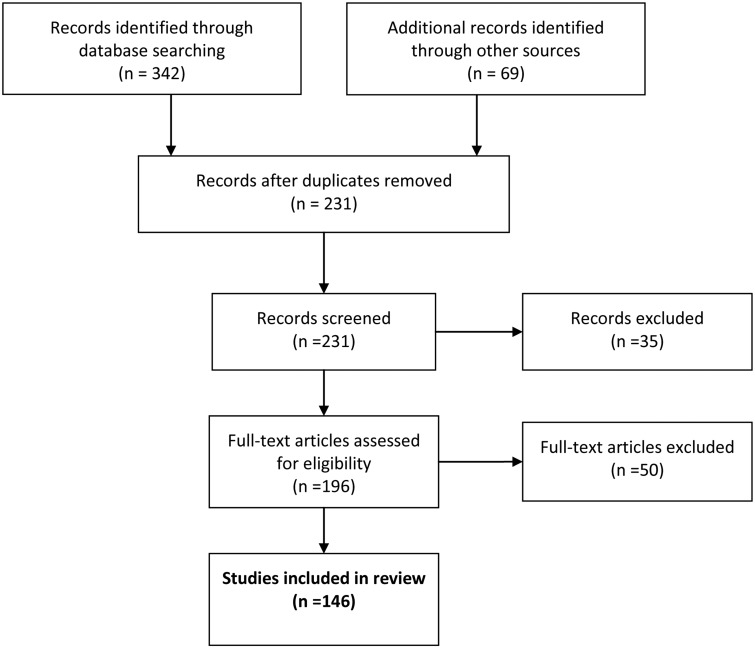
The measurement of cognitive resource allocation during listening, or listening effort, provides valuable insight in the factors influencing auditory processing. In recent years, many studies inside and outside the field of hearing science have measured the pupil response evoked by auditory stimuli. The aim of the current review was to provide an exhaustive overview of these studies. The 146 studies included in this review originated from multiple domains, including hearing science and linguistics, but the review also covers research into motivation, memory, and emotion. The present review provides a unique overview of these studies and is organized according to the components of the Framework for Understanding Effortful Listening. A summary table presents the sample characteristics, an outline of the study design, stimuli, the pupil parameters analyzed, and the main findings of each study. The results indicate that the pupil response is sensitive to various task manipulations as well as interindividual differences. Many of the findings have been replicated. Frequent interactions between the independent factors affecting the pupil response have been reported, which indicates complex processes underlying cognitive resource allocation. This complexity should be taken into account in future studies that should focus more on interindividual differences, also including older participants. This review facilitates the careful design of new studies by indicating the factors that should be controlled for. In conclusion, measuring the pupil dilation response to auditory stimuli has been demonstrated to be sensitive method applicable to numerous research questions. The sensitivity of the measure calls for carefully designed stimuli.
Overview
The claims and statistics of this paper haven’t been checked yet.
Free: it reads the open-access text and checks the first 5 claims that cite a source we can check. Create a free account to check every claim.
Integrity signals
Registry
Cites
Statistics
Figures
Verification
Claims the paper makes
The claims and statistics of this paper haven’t been checked yet.
Free: it reads the open-access text and checks the first 5 claims that cite a source we can check. Create a free account to check every claim.
Claims other papers make about this one
Each is checked against this paper’s own text: does it say what the citing paper says it does?
The source backs part of the claim, not all of it — or backs it for a different population, condition or comparison.
In the citing paper
“Generally speaking, listening effort increases with the magnitude of the obstacle such that more background noise (Van Engen & McLaughlin, 2018;Zekveld, Koelewijn, & Kramer, 2018) or poorer knowledge of the target language (Borghini & Hazan, 2018;Schmidtke et al., 2014) leads to greater listening effort”
From Listening effort and fatigue in native and non-native primary school children (2021) · cites this paper as Zekveld et al., 2018
Experimental — accuracy not yet measuredThe source backs part of the claim, not all of it — or backs it for a different population, condition or comparison.
In the citing paper
“They have shown that in more difficult acoustic scenarios, larger PPD and MPD are measures of increased listening effort [25].”
From An exploratory Study of EEG Alpha Oscillation and Pupil Dilation in Hearing-Aid Users During Effortful listening to Continuous Speech (2020) · cites this paper as [25]
Experimental — accuracy not yet measuredThe cited source says what the claim attributes to it.
In the citing paper
“In the context of hearing research, the taskevoked pupil response (TEPR) has widely been shown to be sensitive to the increased demands of listening in suboptimal acoustic conditions (see Zekveld et al., 2018 for a review), and is therefore, thought to reflect the effort required to achieve speech recognition under degraded listening conditions.”
From Effortful listening under the microscope: Examining relations between pupillometric and subjective markers of effort and tiredness from listening (2021) · cites this paper as Zekveld et al., 2018
The cited source says what the claim attributes to it.
In the citing paper
“Recently, pupillometry has been deemed as a valid tool to study language processing load and listening effort”
From Effects of acoustic and semantic cues on listening effort during native and non-native speech perception (2020) · cites this paper as Zekveld et al. (2018)
The check wasn’t confident either way, so it gives no verdict — never disputed.
In the citing paper
“However, studies to date report no association between TEPR and perceived effort.”
From Effortful listening under the microscope: Examining relations between pupillometric and subjective markers of effort and tiredness from listening (2021) · cites this paper as Zekveld et al., 2018
Experimental — accuracy not yet measured
7 more claims about this paper
Create a free account to see every claim other papers make about this one.
Self-check
Percentages, sums and reported differences re-computed from the paper’s own numbers.
The self-check needs the paper’s full text.
Citations
Cites
(2001) · doi:10.1017/cbo9780511546396 · Cited by 4,482
Aston-Jones, G., & Cohen, J. D. (2005) · Annual Review of Neuroscience · doi:10.1146/annurev.neuro.28.061604.135709 · Cited by 4,472 · cited 1×
“We refer to the task-evoked pupil response as the phasic change in pupil diameter (Aston-Jones & Cohen, 2005) in response to a momentary event such as an auditory stimulus presented in a listening task.”
MethodPupil Diameter and Load on Memory
Kahneman, D., & Beatty, J. (1966) · Science · doi:10.1126/science.154.3756.1583 · Cited by 1,617 · cited 7×
“The current review identified numerous studies that applied an auditory memory task, which may be partly based on the seminal work of Kahneman and Beatty (1966).”
BackgroundMethodInfluentialHearing Impairment and Cognitive Energy: The Framework for Understanding Effortful Listening (FUEL)
Pichora-Fuller, M. K., Kramer, S. E., Eckert, M. A., Edwards, B., Hornsby, B. W. Y., Humes, L. E., Lemke, U., Lunner, T., Matthen, M., Mackersie, C. L., et al. (2016) · Ear & Hearing · doi:10.1097/aud.0000000000000312 · Cited by 1,318 · cited 24×
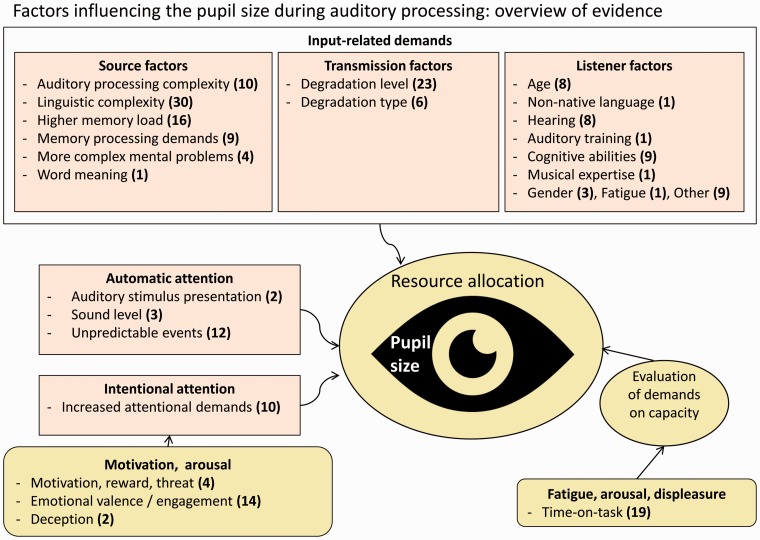
“We grouped the results according to whether these were based on external (see Table 1) versus internal (individual) factors (Table 2) and furthermore used the FUEL categories to structure the results (Pichora-Fuller et al., 2016).”
BackgroundMethodResultInfluentialSelf-citationHandbook of Approach and Avoidance Motivation
(2013) · Psychology Press eBooks · doi:10.4324/9780203888148 · Cited by 1,302
Pupil Size in Relation to Mental Activity during Simple Problem-Solving
Hess, E. H., & Polt, J. M. (1964) · Science · doi:10.1126/science.143.3611.1190 · Cited by 1,169 · cited 1×
“Please note that some of the excluded articles included early studies that were rejected because of the lack of formal statistical tests (e.g., Berrien & Huntington, 1943; Bradshaw, 1969, 1970; Hess & Polt, 1964; Schaefer, Ferguson, Klein, & Rawson, 1968).”
BackgroundPupillometry: A Window to the Preconscious?
Laeng, B., Sirois, S., & Gredebäck, G. (2012) · Perspectives on Psychological Science · doi:10.1177/1745691611427305 · Cited by 921
Pupil size variation as an indication of affective processing
Partala, T., & Surakka, V. (2003) · International Journal of Human-Computer Studies · doi:10.1016/s1071-5819(03)00017-x · Cited by 836 · cited 3×
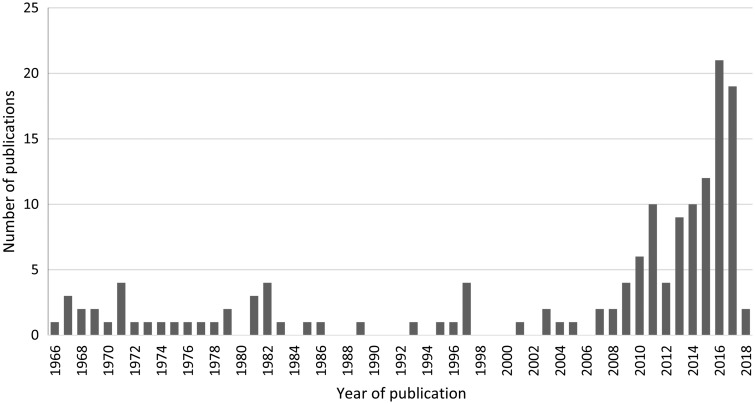
“Peavler (1974) was the first to demonstrate this effect when showing that the pupil size was smaller for a recall condition with 13-digit when compared with 9-digit strings.”
BackgroundPupil diameter covaries with BOLD activity in human locus coeruleus
Murphy, P. R., O'Connell, R. G., O'Sullivan, M., Robertson, I. H., & Balsters, J. H. (2014) · Human Brain Mapping · doi:10.1002/hbm.22466 · Cited by 819
Gilzenrat, M. S., Nieuwenhuis, S., Jepma, M., & Cohen, J. D. (2010) · Cognitive, Affective, & Behavioral Neuroscience · doi:10.3758/cabn.10.2.252 · Cited by 798
Research works printed but not linked: 3
- Bradley M. T. Janisse M. P. (1979) Pupil size and lie detection: The effect of certainty on detection. Psychology: A Journal of Human Behavior 16: 33– 39.
- Hopstaken J. F. van der Linden D. Bakker A. B. Kompier M. A. (2015) The window of my eyes: Task disengagement and mental fatigue covary with pupil dynamics. Biological Psychology 110: 100– 106. 26196899
- Kahneman D. (1973) Attention and effort vol. 1063, Englewood Cliffs, NJ: Prentice-Hall.
Cited by
Winn, M. B., Wendt, D., Koelewijn, T., & Kuchinsky, S. E. (2018) · Trends in Hearing · doi:10.1177/2331216518800869 · Cited by 339
Self-citationListening Effort Is Not the Same as Speech Intelligibility Score
Winn, M. B., & Teece, K. H. (2021) · Trends in Hearing · doi:10.1177/23312165211027688 · Cited by 178
GazeR: A Package for Processing Gaze Position and Pupil Size Data
Geller, J., Mirman, D., Mahr, T., & Winn, M. (2020) · Behavior Research Methods · doi:10.3758/s13428-020-01374-8 · Cited by 157
Pupil-linked arousal signals track the temporal organization of events in memory
Clewett, D., Gasser, C., & Davachi, L. (2020) · Nature Communications · doi:10.1038/s41467-020-17851-9 · Cited by 154
A model of listening engagement (MoLE)
Herrmann, B., & Johnsrude, I. S. (2020) · Hearing Research · doi:10.1016/j.heares.2020.108016 · Cited by 135
Parthasarathy, A., Hancock, K. E., Bennett, K. K., DeGruttola, V. G., & Polley, D. B. (2020) · eLife · doi:10.7554/elife.51419 · Cited by 119
Listening effort: Are we measuring cognition or affect, or both
Francis, A. L., & Love, J. (2020) · WIREs Cognitive Science · doi:10.1002/wcs.1514 · Cited by 113
The effect of reward on listening effort as reflected by the pupil dilation response
Koelewijn, T., Zekveld, A. A., Lunner, T., & Kramer, S. E. (2018) · Hearing Research · doi:10.1016/j.heares.2018.07.011 · Cited by 94
Self-citationFrom pre-processing to advanced dynamic modeling of pupil data
Fink, L., Simola, J., Tavano, A., Lange, E. B., Wallot, S., & Laeng, B. (2023) · Behavior Research Methods · doi:10.3758/s13428-023-02098-1 · Cited by 88
Pupil-Linked Arousal Responds to Unconscious Surprisal
Alamia, A., VanRullen, R., Pasqualotto, E., Mouraux, A., & Zénon, A. (2019) · Journal of Neuroscience · doi:10.1523/jneurosci.3010-18.2019 · Cited by 86
Seifi Ala, T., Graversen, C., Wendt, D., Alickovic, E., Whitmer, W. M., & Lunner, T. (2020) · PLOS ONE · doi:10.1371/journal.pone.0235782 · Cited by 80
Pupil Dilation Is Sensitive to Semantic Ambiguity and Acoustic Degradation
Kadem, M., Herrmann, B., Rodd, J. M., & Johnsrude, I. S. (2020) · Trends in Hearing · doi:10.1177/2331216520964068 · Cited by 77
Robert, B., Kimchi, E. Y., Watanabe, Y., Chakoma, T. L., Jing, M., Li, Y., & Polley, D. B. (2021) · eLife · doi:10.7554/elife.69514 · Cited by 68
Paul, B. T., Chen, J., Le, T., Lin, V., & Dimitrijevic, A. (2021) · PLoS ONE · doi:10.1371/journal.pone.0254162 · Cited by 65
Eyes have ears: Indexing the orienting response to sound using pupillometry
Marois, A., Labonté, K., Parent, M., & Vachon, F. (2017) · International Journal of Psychophysiology · doi:10.1016/j.ijpsycho.2017.09.016 · Cited by 63
A unified model of the task-evoked pupil response
Burlingham, C. S., Mirbagheri, S., & Heeger, D. J. (2022) · Science Advances · doi:10.1126/sciadv.abi9979 · Cited by 62
With an eye on uncertainty: Modelling pupillary responses to environmental volatility
Vincent, P., Parr, T., Benrimoh, D., & Friston, K. J. (2019) · PLOS Computational Biology · doi:10.1371/journal.pcbi.1007126 · Cited by 54
Objective evidence of temporal processing deficits in older adults
Anderson, S., & Karawani, H. (2020) · Hearing Research · doi:10.1016/j.heares.2020.108053 · Cited by 53
Dissociation of task engagement and arousal effects in auditory cortex and midbrain
Saderi, D., Schwartz, Z. P., Heller, C. R., Pennington, J. R., & David, S. V. (2021) · eLife · doi:10.7554/elife.60153 · Cited by 53
Winn, M. B., & Teece, K. H. (2022) · Journal of Speech Language and Hearing Research · doi:10.1044/2022_jslhr-21-00631 · Cited by 53
Anticipatory Baseline Pupil Diameter Is Sensitive to Differences in Hearing Thresholds
Ayasse, N. D., & Wingfield, A. (2020) · Frontiers in Psychology · doi:10.3389/fpsyg.2019.02947 · Cited by 50
Contadini-Wright, C., Magami, K., Mehta, N., & Chait, M. (2023) · Journal of Neuroscience · doi:10.1523/jneurosci.0242-23.2023 · Cited by 50
Decruy, L., Lesenfants, D., Vanthornhout, J., & Francart, T. (2020) · European Journal of Neuroscience · doi:10.1111/ejn.14753 · Cited by 49
Speech perception in noise: Masking and unmasking
Wang, X., & Xu, L. (2020) · Journal of Otology · doi:10.1016/j.joto.2020.12.001 · Cited by 48
Pupillometry as an objective measure of sustained attention in young and older listeners.
Zhao, S., Bury, G., Milne, A., & Chait, M. (2019) · Trends in Hearing · doi:10.1177/2331216519887815 · Cited by 47
Strand, J. F., Ray, L., Dillman-Hasso, N. H., Villanueva, J., & Brown, V. A. (2020) · Auditory Perception & Cognition · doi:10.1080/25742442.2021.1903293 · Cited by 47
The Principle of Least Effort and Comprehension of Spoken Sentences by Younger and Older Adults
Ayasse, N. D., Hodson, A. J., & Wingfield, A. (2021) · Frontiers in Psychology · doi:10.3389/fpsyg.2021.629464 · Cited by 47
Borghini, G., & Hazan, V. (2020) · The Journal of the Acoustical Society of America · doi:10.1121/10.0001126 · Cited by 44
McLaughlin, D. J., Zink, M. E., Gaunt, L., Spehar, B., Engen, K. J. V., Sommers, M. S., & Peelle, J. E. (2021) · Psychonomic Bulletin & Review · doi:10.3758/s13423-021-01991-0 · Cited by 44
McGarrigle, R., Rakusen, L., & Mattys, S. (2021) · Psychophysiology · doi:10.1111/psyp.13703 · Cited by 43
Christensen, J. H., Saunders, G. H., Porsbo, M., & Pontoppidan, N. H. (2021) · Royal Society Open Science · doi:10.1098/rsos.201345 · Cited by 43
Schwartz, Z. P., Buran, B. N., & David, S. V. (2019) · Journal of Neurophysiology · doi:10.1152/jn.00595.2019 · Cited by 42
EEG alpha and pupil diameter reflect endogenous auditory attention switching and listening effort
Haro, S., Rao, H. M., Quatieri, T. F., & Smalt, C. J. (2022) · European Journal of Neuroscience · doi:10.1111/ejn.15616 · Cited by 41
Neurostimulation and Pupillometry: New Directions for Learning and Research in Applied Linguistics
Pandža, N. B., Phillips, I., Karuzis, V. P., O’Rourke, P., & Kuchinsky, S. E. (2020) · Annual Review of Applied Linguistics · doi:10.1017/s0267190520000069 · Cited by 40
Listening effort and fatigue in native and non-native primary school children
Brännström, K. J., Rudner, M., Carlie, J., Sahlén, B., Gulz, A., Andersson, K., & Johansson, R. (2021) · Journal of Experimental Child Psychology · doi:10.1016/j.jecp.2021.105203 · Cited by 39
Zekveld, A. A., van Scheepen, J. A. M., Versfeld, N. J., Veerman, E. C. I., & Kramer, S. E. (2019) · Hearing Research · doi:10.1016/j.heares.2019.07.005 · Cited by 39
Self-citationHunter, C. R. (2020) · Ear and Hearing · doi:10.1097/aud.0000000000000856 · Cited by 37
Decision Making and Oddball Effects on Pupil Size: Evidence for a Sequential Process
Strauch, C., Koniakowsky, I. M., & Huckauf, A. (2020) · Journal of Cognition · doi:10.5334/joc.96 · Cited by 37
Alhanbali, S., Munro, K. J., Dawes, P., Carolan, P. J., & Millman, R. E. (2021) · International Journal of Audiology · doi:10.1080/14992027.2020.1853262 · Cited by 35
Zhang, Y., Lehmann, A., & Deroche, M. L. D. (2021) · PLoS ONE · doi:10.1371/journal.pone.0233251 · Cited by 33
Visentin, C., Valzolgher, C., Pellegatti, M., Potente, P., Pavani, F., & Prodi, N. (2021) · International Journal of Audiology · doi:10.1080/14992027.2021.1921290 · Cited by 33
Eye Movements Decrease during Effortful Speech Listening
Cui, M. E., & Herrmann, B. (2023) · Journal of Neuroscience · doi:10.1523/jneurosci.0240-23.2023 · Cited by 33
Beatty‐Martínez, A. L., Tamargo, R. E. G., & Dussias, P. E. (2021) · Scientific Reports · doi:10.1038/s41598-021-03008-1 · Cited by 31
Objective autonomic signatures of tinnitus and sound sensitivity disorders
Smith, S. S., Jahn, K. N., Sugai, J. A., Hancock, K. E., & Polley, D. B. (2025) · Science Translational Medicine · doi:10.1126/scitranslmed.adp1934 · Cited by 32
Physiological Influences of Music in Perception and Action
Wright, S., Bégel, V., & Palmėr, C. (2022) · Cambridge University Press eBooks · doi:10.1017/9781009043359 · Cited by 31
Quantifying the Effects of Motivation on Listening Effort: A Systematic Review and Meta-Analysis
Carolan, P. J., Heinrich, A., Munro, K. J., & Millman, R. E. (2022) · Trends in Hearing · doi:10.1177/23312165211059982 · Cited by 31
Silcox, J. W., & Payne, B. R. (2021) · Cortex · doi:10.1016/j.cortex.2021.06.007 · Cited by 30
Plain, B., Richter, M. M., Zekveld, A. A., Lunner, T., Bhuiyan, T. A., & Kramer, S. E. (2020) · Ear and Hearing · doi:10.1097/aud.0000000000000971 · Cited by 30
Self-citationLavandier, C., Regragui, M., Dedieu, R., Royer, C., & Can, A. (2022) · Acta Acustica · doi:10.1051/aacus/2021057 · Cited by 30
The Locus Coeruleus: Where Cognitive and Emotional Processing Meet the Eye
Huang, R., & Clewett, D. (2024) · Springer eBooks · doi:10.1007/978-3-031-54896-3_1 · Cited by 29
Investigating the Reliability of Pupillometry as a Measure of Individualized Listening Effort
Neagu, M.-B., Kressner, A. A., Relaño-Iborra, H., Bækgaard, P., Dau, T., & Wendt, D. (2023) · Trends in Hearing · doi:10.1177/23312165231153288 · Cited by 28
Bsharat-Maalouf, D., Degani, T., & Karawani, H. (2023) · Trends in Hearing · doi:10.1177/23312165231205107 · Cited by 27
Montes-Lourido, P., Kar, M., Kumbam, I., & Sadagopan, S. (2021) · Scientific Reports · doi:10.1038/s41598-021-82340-y · Cited by 27
Granovetter, M. C., Burlingham, C. S., Blauch, N. M., Minshew, N. J., Heeger, D. J., & Behrmann, M. (2020) · Journal of Neuroscience · doi:10.1523/jneurosci.2680-19.2020 · Cited by 26
Dingemanse, G., & Goedegebure, A. (2021) · Journal of Speech Language and Hearing Research · doi:10.1044/2021_jslhr-21-00230 · Cited by 26
The Presence of Another Individual Influences Listening Effort, But Not Performance
Pielage, H., Zekveld, A. A., Saunders, G. H., Versfeld, N. J., Lunner, T., & Kramer, S. E. (2021) · Ear and Hearing · doi:10.1097/aud.0000000000001046 · Cited by 26
Self-citationLanguage athletes: Dual-language code-switchers exhibit inhibitory control advantages
Gosselin, L., & Sabourin, L. (2023) · Frontiers in Psychology · doi:10.3389/fpsyg.2023.1150159 · Cited by 26
Bishop, L., Jensenius, A. R., & Laeng, B. (2021) · Frontiers in Psychology · doi:10.3389/fpsyg.2021.653021 · Cited by 26
Effects of Baby Schema and Mere Exposure on Explicit and Implicit Face Processing
Venturoso, L., Gabrieli, G., Truzzi, A., Azhari, A., Setoh, P., Bornstein, M. H., & Esposito, G. (2019) · Frontiers in Psychology · doi:10.3389/fpsyg.2019.02649 · Cited by 26
Książek, P., Zekveld, A. A., Wendt, D., Fiedler, L., Lunner, T., & Kramer, S. E. (2021) · Trends in Hearing · doi:10.1177/23312165211009351 · Cited by 25
Self-citationRasch Analysis of the Listening Effort Questionnaire—Cochlear Implant
Hughes, S., Watkins, A. J., Rapport, F., Boisvert, I., McMahon, C. M., & Hutchings, H. A. (2021) · Ear and Hearing · doi:10.1097/aud.0000000000001059 · Cited by 25
Pupil dilation reflects the authenticity of received nonverbal vocalizations
Cosme, G., Rosa, P. J., Lima, C. F., Tavares, V., Scott, S. K., Chen, S., Wilcockson, T. D. W., Crawford, T. J., & Prata, D. P. (2021) · Scientific Reports · doi:10.1038/s41598-021-83070-x · Cited by 25
Russo, F., Hoen, M., Karoui, C., Demarcy, T., Ardoint, M., Tuset, M., Seta, D. D., Sterkers, O., Lahlou, G., & Mosnier, I. (2020) · Frontiers in Neuroscience · doi:10.3389/fnins.2020.556675 · Cited by 24
Ershaid, H., Lizarazu, M., McLaughlin, D. J., Cooke, M. P., Simantiraki, O., Koutsogiannaki, M., & Lallier, M. (2023) · Cortex · doi:10.1016/j.cortex.2023.11.018 · Cited by 24
Shatzer, H., & Russo, F. (2023) · Seminars in Hearing · doi:10.1055/s-0043-1766105 · Cited by 23
Effects of linguistic context and noise type on speech comprehension
Fitzgerald, L. P., DeDe, G., & Shen, J. (2024) · Frontiers in Psychology · doi:10.3389/fpsyg.2024.1345619 · Cited by 22
Towards personalized and optimized fitting of cochlear implants
Opstal, A. J. V., & Noordanus, E. (2023) · Frontiers in Neuroscience · doi:10.3389/fnins.2023.1183126 · Cited by 22
Luminance effects on pupil dilation in speech-in-noise recognition
Zhang, Y., Malaval, F., Lehmann, A., & Deroche, M. L. D. (2022) · PLoS ONE · doi:10.1371/journal.pone.0278506 · Cited by 22
Pupillometry Reveals the Role of Arousal in a Postexercise Benefit to Executive Function
Ayala, N., & Heath, M. D. (2021) · Brain Sciences · doi:10.3390/brainsci11081048 · Cited by 21
Keur‐Huizinga, L., Kramer, S. E., de Geus, E. J. C., & Zekveld, A. A. (2024) · Ear and Hearing · doi:10.1097/aud.0000000000001508 · Cited by 21
Self-citationCorcoran, A. W., Perera, R., Koroma, M., Kouider, S., Hohwy, J., & Andrillon, T. (2022) · Cerebral Cortex · doi:10.1093/cercor/bhac094 · Cited by 21
Marois, A., Pozzi, A., & Vachon, F. (2020) · Auditory Perception & Cognition · doi:10.1080/25742442.2020.1820290 · Cited by 21
More than a feeling: Scalp EEG and eye signals in conscious tactile perception
Gusso, M. M., Christison-Lagay, K. L., Zuckerman, D., Chandrasekaran, G., Kronemer, S. I., Ding, J. Z., Freedman, N. C., Nohama, P., & Blumenfeld, H. (2022) · Consciousness and Cognition · doi:10.1016/j.concog.2022.103411 · Cited by 21
Aging, Hearing Loss, and Listening Effort: Imaging Studies of the Aging Listener
Kuchinsky, S. E., & Vaden, K. I. (2020) · Springer handbook of auditory research · doi:10.1007/978-3-030-49367-7_10 · Cited by 20
Kraus, F., Tune, S., Obleser, J., & Herrmann, B. (2023) · Journal of Neuroscience · doi:10.1523/jneurosci.2181-22.2023 · Cited by 20
Pupil Size and Eye Movements Differently Index Effort in Both Younger and Older Adults
Herrmann, B., & Ryan, J. D. (2024) · Journal of Cognitive Neuroscience · doi:10.1162/jocn_a_02172 · Cited by 20
Reconceptualizing cognitive listening
Mattys, S. L., O'Leary, R. M., McGarrigle, R. A., & Wingfield, A. (2026) · Trends in Cognitive Sciences · doi:10.1016/j.tics.2025.09.014 · Cited by 13
Plain, B., Pielage, H., Richter, M., Bhuiyan, T. A., Lunner, T., Kramer, S. E., & Zekveld, A. A. (2021) · Hearing Research · doi:10.1016/j.heares.2021.108334 · Cited by 19
Self-citationBurg, E. A., Thakkar, T. D., Fields, T. N., Misurelli, S. M., Kuchinsky, S. E., Roche, J. P., Lee, D. J., & Litovsky, R. Y. (2021) · Trends in Hearing · doi:10.1177/23312165211013256 · Cited by 19
Micula, A., Rönnberg, J., Fiedler, L., Wendt, D., Jørgensen, M. C., Larsen, D. K., & Ng, E. H. N. (2021) · Ear and Hearing · doi:10.1097/aud.0000000000001053 · Cited by 19
Listening Effort Among Adults With and Without Attention-Deficit/Hyperactivity Disorder
Taitelbaum‐Swead, R., Kozol, Z., & Fostick, L. (2019) · Journal of Speech Language and Hearing Research · doi:10.1044/2019_jslhr-h-19-0134 · Cited by 19
Alexandersen, A., Csifcsák, G., Groot, J. M., & Mittner, M. (2022) · Neuroimage Reports · doi:10.1016/j.ynirp.2022.100109 · Cited by 19
Aliakbaryhosseinabadi, S., Keidser, G., May, T., Dau, T., Wendt, D., & Rotger-Griful, S. (2023) · Journal of Speech Language and Hearing Research · doi:10.1044/2023_jslhr-23-00063 · Cited by 18
Rutar, D., Colizoli, O., Selen, L. P. J., Spieß, L., Kwisthout, J., & Hunnius, S. (2023) · PLoS ONE · doi:10.1371/journal.pone.0270619 · Cited by 18
Assessment methods for determining small changes in hearing performance over time
Brungart, D. S., Sherlock, L. P., Kuchinsky, S. E., Perry, T. T., Bieber, R. E., Grant, K. W., & Bernstein, J. G. W. (2022) · The Journal of the Acoustical Society of America · doi:10.1121/10.0011509 · Cited by 18
Listener’s personality traits predict changes in pupil size during auditory language comprehension
Lyall, I. H., & Järvikivi, J. (2021) · Scientific Reports · doi:10.1038/s41598-021-84886-3 · Cited by 18
Quantitative Infrared Pupillometry in Nonconvulsive Status Epilepticus
Godau, J., Bierwirth, C., Rösche, J., & Bösel, J. (2020) · Neurocritical Care · doi:10.1007/s12028-020-01149-1 · Cited by 18
Time Scales and Moments of Listening Effort Revealed in Pupillometry
Winn, M. B. (2023) · Seminars in Hearing · doi:10.1055/s-0043-1767741 · Cited by 17
Tapper, A., Gonzalez, D., Nouredanesh, M., & Niechwiej‐Szwedo, E. (2021) · Vision Research · doi:10.1016/j.visres.2021.03.011 · Cited by 17
O’Leary, R. M., Neukam, J. D., Hansen, T. A., Kinney, A. J., Capach, N. H., Svirsky, M. A., & Wingfield, A. (2023) · Trends in Hearing · doi:10.1177/23312165231203514 · Cited by 16
Time perception in film is modulated by sensory modality and arousal
Appelqvist-Dalton, M., Wilmott, J. P., He, M., & Simmons, A. M. (2022) · Attention Perception & Psychophysics · doi:10.3758/s13414-022-02464-9 · Cited by 16
Labonté, K., Marsh, J. E., & Vachon, F. (2021) · Auditory Perception & Cognition · doi:10.1080/25742442.2022.2033109 · Cited by 16
Speech recognition in noise task among children and young-adults: a pupillometry study
Trau-Margalit, A., Fostick, L., Harel-Arbeli, T., Gannot, R. N., & Taitelbaum‐Swead, R. (2023) · Frontiers in Psychology · doi:10.3389/fpsyg.2023.1188485 · Cited by 15
Adding noise is a confounded nuisance
Francis, A. L. (2022) · The Journal of the Acoustical Society of America · doi:10.1121/10.0013874 · Cited by 15
Note on the Dual-Task Paradigm and its Use to Measure Listening Effort
Kuchinsky, S. E., Gallun, F. J., & Lee, A. K. C. (2024) · Trends in Hearing · doi:10.1177/23312165241292215 · Cited by 14
Effects of hearing acuity on psychophysiological responses to effortful speech perception
Keur‐Huizinga, L., Huizinga, N. A., Zekveld, A. A., Versfeld, N. J., van de Ven, S. R. B., van Dijk, W. A. J., de Geus, E. J. C., & Kramer, S. E. (2024) · Hearing Research · doi:10.1016/j.heares.2024.109031 · Cited by 14
Self-citationA virtual reality study investigating the train illusion
Kooijman, L., Asadi, H., Mohamed, S. M. K., & Nahavandi, S. (2023) · Royal Society Open Science · doi:10.1098/rsos.221622 · Cited by 14
Cronin, S. L., Lipp, O. V., & Marinovic, W. (2023) · Biological Psychology · doi:10.1016/j.biopsycho.2023.108547 · Cited by 14
Song, J., Wang, Y.-W., An, X., Ma, S., Wang, D., Gan, T., Shi, H., Yang, Z., & Liu, H. (2022) · Applied Ergonomics · doi:10.1016/j.apergo.2022.103797 · Cited by 14
Milvae, K. D., Kuchinsky, S. E., Stakhovskaya, O. A., & Goupell, M. J. (2021) · The Journal of the Acoustical Society of America · doi:10.1121/10.0005653 · Cited by 14
Metadata
- Authors
- Zekveld, A. A., Koelewijn, T., & Kramer, S. E.
- Venue
- Trends in Hearing
- Publisher
- SAGE Publications
- Published
- 2018-01
- Volume
- 22
- Pages
- 2331216518777174-2331216518777174
- ISSN
- 2331-2165 (ISSN-L)
- PMC
- PMC6156203
- OpenAlex
- W2894332003
- Cited by
- 306
- References
- 176
- FWCI
- 14.25
- Type
- journal article
- Language
- en
- Open access
- gold
- Licence
- journals.sagepub.com/page/policies/text-and-data-mining-license (tdm)
- Funders
- FP7 People: Marie-Curie Actions (607373)
- Amsterdam Public Health research institute (IPB Revanche programme PupILL)
About these checks
Registry, retraction, Cites and statistics results are computed, not judged, with one exception: a printed reference that no index lists is read once by a model before it counts as a citation error. Claims are extracted by a model and kept only when their quote appears verbatim in the text; each cited source is then checked, with a model’s help, for whether it says what the claim relies on. Those verdicts can be wrong — read the claim’s quote and the cited source before relying on one.
Statistics and arithmetic are recomputed, not judged.
Confidence bands are shown only for fields calibrated on our annotated test set. None is calibrated yet, so no band is shown.
What counts as a claim ›How we measure confidence ›How we check this ›
Are you an author, or do you see a problem with this page? Request a review
Data sources
Bibliographic data: Semantic Scholar, OpenAlex, Crossref.
Contains information from the Semantic Scholar Academic Graph Datasets, made available under the ODC Attribution License (ODC-BY 1.0).
Semantic Scholar’s data is described in: Kinney, R., et al. (2023). The Semantic Scholar Open Data Platform. arXiv:2301.10140.
