

Neurobiological and Systemic Effects of Chronic Stress
Open accessThe DOI matches its Crossref record; 135 of the 135 references it cites were found in a registry or an index; 15 of the 99 sources its claims cite were checked for support.
Abstract
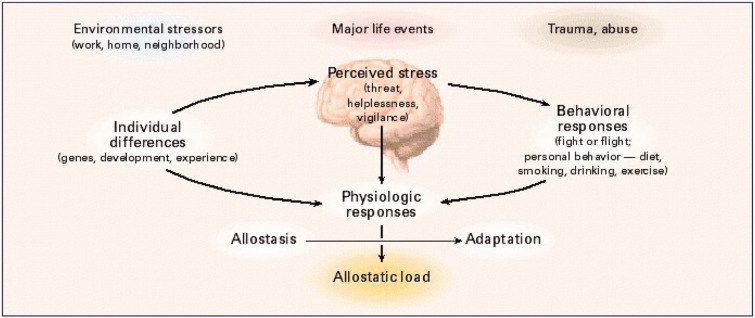
The brain is the central organ of stress and adaptation to stress because it perceives and determines what is threatening, as well as the behavioral and physiological responses to the stressor, which promote adaptation (“allostasis”) but also contribute to pathophysiology (“allostatic load/overload”) when overused and dysregulated. The adult as well as developing brain possesses a remarkable ability to show structural and functional plasticity in response to stressful and other experiences, including neuronal replacement, dendritic remodeling and synapse turnover. Stress can cause an imbalance of neural circuitry subserving cognition, decision making, anxiety and mood that can increase or decrease expression of those behaviors and behavioral states. This imbalance, in turn, affects systemic physiology via neuroendocrine, autonomic, immune and metabolic mediators. In the short term, these changes may be adaptive; but, if the threat passes and the behavioral state persists along with the changes in neural circuitry, such maladaptation requires intervention with a combination of pharmacological and behavioral therapies. There are important sex differences in how the brain responds to stressors. Moreover, adverse early life experience, interacting with alleles of certain genes, produces lasting effects on brain and body via epigenetic mechanisms. While prevention is key, the plasticity of the brain gives hope for therapies that utilize brain–body interactions. Policies of government and the private sector are important to promote health and increase “healthspan.”
Overview
CoChat Summary
## TL;DR
This review argues that chronic stress affects the brain and body through allostasis/allostatic load, with major roles for glucocorticoids, excitatory amino acids, and epigenetic mechanisms across the life course. It emphasizes that stress can produce both adaptive and damaging outcomes depending on timing, duration, brain region, and life experiences.
## Key findings
- The paper distinguishes good stress, tolerable stress, and toxic stress; toxic stress is described as bad things happening to an individual with limited support and impaired brain architecture, leading to greater allostatic overload.
- Chronic stress is linked to region-specific brain remodeling: hippocampal dendritic shrinkage and spine loss; basolateral amygdala dendritic expansion; medial amygdala spine loss and dendrite shrinkage; and medial prefrontal cortex dendritic debranching and shrinkage, while orbitofrontal cortex dendrites can expand.
- The review reports that acute stress can be protective, while chronic stress can be harmful: for example, acute stress can enhance immune responses, whereas chronic exposure over “several weeks” produces immune suppression.
- It highlights life-course and epigenetic effects, noting that identical twins diverge over the life course in patterns of CpG methylation, and that early-life care, adversity, SES, and sex differences shape later mental and physical health.
## Methods
- Narrative review of prior studies spanning animal models and human findings on stress, brain plasticity, behavior, metabolism, immunity, and epigenetics.
- Synthesizes evidence across multiple levels of analysis, including genes, molecules, cells, circuits, physiology, and behavior, framed around allostasis/allostatic load and the RDoC framework.
- Main approach is integrative literature review and conceptual synthesis, not a new empirical dataset or statistical analysis.
## Limitations
- The paper does not report a systematic search strategy, inclusion criteria, or formal quality appraisal; this is evident from the text, which presents a broad narrative review rather than a systematic review.
- Many claims are based on animal studies and selected human studies, so direct generalization to all human populations is not fully established in the paper itself.
- The text itself notes a conceptual limitation in the RDoC framework: it “does not fully recognize” continuous reciprocal interactions between hormonal, metabolic, immune activity, and brain circuitry.
Model-written summary. Check it against the paper before relying on it.
Integrity signals
Registry
Cites
Statistics
Figures
Verification
Claims the paper makes
13 Valid · 2 Not valid · 55 Not checked · 12 Own results and interpretations
At least one cited source doesn’t support this claim or points to a different paper, and none confirmed it — see the verdicts below.
In the paper
“Furthermore, estradiol treatment of ovariectomized (OVX) females increased spine density in mPFC neurons, irrespective of where they were projecting.”
What the sources say
- Disputedcites [104] matched to “Estrogen Promotes Stress Sensitivity in a Prefrontal Cortex-Amygdala Pathway” (2010) sourceExperimental — accuracy not yet measured
Our copy states the opposite of 'irrespective of where they were projecting': the Discussion says estrogen's restoration of mPFC spine loss 'was found to be the case only in BLA-projecting neurons,' and that although control estrogen-treated unlabeled neurons averaged 16% greater spine density than OVX + veh controls, 'this difference was not significant.' The Abstract likewise reports 'Estrogen also increased spine density on BLA-projecting neurons in unstressed animals,' and the Spine Density results give a significant effect of estrogen (31% increase, P < 0.05) only for BLA-projecting neurons, while unlabeled neurons showed a stress x estrogen interaction with no estrogen effect in OVX + E animals. It is stress, not estrogen, that raised spine density 'regardless of neuron set' in OVX + veh animals (Fig. 6 legend), which the citing sentence appears to conflate with the estrogen effect. (LLM, conf=0.88)
Checked by a reasoning model — may be wrong.
plainstates a cause- Asserted: passes — The authors put it forward as true.
- Checkable: passes — It can be checked against evidence.
- Load-bearing: unclear — It is unclear whether the paper’s conclusions depend on it.
- Based: passes — The paper gives a reason why it holds.
- Disputed
Every source the paper cites for this claim was checked and supports it.
In the paper
“The neural circuits in a healthy brain are remodeled by experiences to enable behavioral responses that are appropriate to what the individual is experiencing”
What the sources say
- Supportedcites [9] matched to “The Brain on Stress: Vulnerability and Plasticity of the Prefrontal Cortex over the Life Course” (2013) source
The Introduction states that 'Brain circuitry can be remodeled by experience' with 'functionally-relevant effects on dendritic arbor and spine/synapse number in many brain regions ... with effects not only on cognitive function but also on emotional regulation and other self-regulatory behaviors', and the Abstract likewise says neural circuitry 'can be changed by experiences, which influences behavior'. The 'Relevance to human vulnerabilities and potential for brain plasticity' section explicitly extends this to the non-diseased state: 'Yet healthy brains show plasticity and undergo experience-related alterations in prefrontal cortical structure and function.' Together these support the paraphrase that experience remodels circuitry in the healthy brain in ways that bear on the individual's behavioral (including goal-directed and self-regulatory) responses; the paper's framing is mostly stress-focused, but the claim's content is stated. (LLM, conf=0.85)
plainstates a cause- Asserted: passes — The authors put it forward as true.
- Checkable: passes — It can be checked against evidence.
- Load-bearing: unclear — It is unclear whether the paper’s conclusions depend on it.
- Based: passes — The paper gives a reason why it holds.
- Supported
The cited sources support only part of this claim — read each source’s verdict below.
In the paper
“During aging in the rat, treatment with riluzole, which is known to retard glutamate release and promote glutamate reuptake by astrocytes, retards aging in the hippocampus as measured by preservation of spatial memory and thin spines that are found in young hippocampal neurons.”
What the sources say
- Partly supportedcites [54] matched to “Glutamatergic regulation prevents hippocampal-dependent age-related cognitive decline through dendritic spine clustering” (2014) sourceExperimental — accuracy not yet measured
Our copy supports the mechanistic and behavioural parts: the introduction (p. 1) states riluzole 'decreases glutamate release and facilitates astrocytic glutamate uptake,' and the Results (p. 2) report that aged riluzole-treated rats 'did not show age-related cognitive decline over time in the Y-maze test, a hippocampal-dependent task,' recognizing spatial novelty 'similar to young-control rats.' The thin-spine part is not what the paper shows: the Results (p. 3, 'Memory Performance Correlated with the Density of Thin Spines on Apical Dendrites in CA1') report a 6.9% decrease in CA1 dendritic spines with treatment, no significant group difference for the thin spine subtype in apical dendrites [F(2,23)=0.7, P=0.48], and, on the comparison with young animals, that 'the increased spine clustering observed in riluzole-treated aged animals is somewhat different from the spine distribution observed in young animals' (with a significant young vs. aged-treated difference for thin, P=0.005, and mushroom, P=0.012, spines in apical dendrites). So the source supports protection of spatial memory and an increase in thin-spine clustering, but not preservation of a young-like thin-spine profile. (LLM, conf=0.80)
plainstates a cause- Asserted: passes — The authors put it forward as true.
- Checkable: passes — It can be checked against evidence.
- Load-bearing: unclear — It is unclear whether the paper’s conclusions depend on it.
- Based: passes — The paper gives a reason why it holds.
- Partly supported
Every source the paper cites for this claim was checked and supports it.
In the paper
“A stress-induced NMDA-dependent dendritic remodeling has been reported in mPFC neurons.”
What the sources say
- Supportedcites [47] matched to “NMDA Receptor Blockade Alters Stress-Induced Dendritic Remodeling in Medial Prefrontal Cortex” (2011) source
The Abstract and Discussion of Martin & Wellman (2011) state that CPP blockade of NMDA receptors during restraint stress prevented stress-induced dendritic retraction/atrophy in mPFC pyramidal neurons, concluding NMDA activation is crucial for this remodeling — exactly the NMDA-dependent stress-induced remodeling the claim attributes to them. The Discussion (Discussion section) adds the caveat that systemic CPP does not localize the site of NMDA action (mPFC vs. input structures), but the claim carries no such site qualifier, so nothing attributed is unsupported. Note the findings are in male rats, which the citing sentence leaves general. (LLM, conf=0.90)
plainstates a cause- Asserted: passes — The authors put it forward as true.
- Checkable: passes — It can be checked against evidence.
- Load-bearing: unclear — It is unclear whether the paper’s conclusions depend on it.
- Based: passes — The paper gives a reason why it holds.
- Supported
Every source the paper cites for this claim was checked and supports it.
In the paper
“Moreover, circadian changes in spine formation and removal are important for motor learning.”
What the sources say
- Supportedcites [38] matched to “Circadian glucocorticoid oscillations promote learning-dependent synapse formation and maintenance.” (2013) source
The Results sections of Liston et al. (2013) directly establish both halves of the claim in a rotarod motor-skill-learning model: 'Circadian peaks promote spine formation after learning' reports that training coinciding with the circadian glucocorticoid peak increased spine formation while trough training did not, and that new-spine persistence predicted day-7 motor performance (r = 0.86); 'Circadian glucocorticoid troughs stabilize new spines' reports that trough disruption reduced survival of new spines and impaired rotarod performance, and that learning-induced pruning of pre-existing spines was correlated with long-term retention (r = 0.83). The 'Distinct mechanisms for formation and pruning' section states that 'circadian oscillations in glucocorticoid activity are important for learning-related spine formation and pruning'. The Discussion appropriately hedges the role of elimination ('may contribute actively to learning'), but the coupling of circadian-driven formation and removal to motor learning outcome is stated as a result. (LLM, conf=0.90)
plainstates a cause- Asserted: passes — The authors put it forward as true.
- Checkable: passes — It can be checked against evidence.
- Load-bearing: unclear — It is unclear whether the paper’s conclusions depend on it.
- Based: passes — The paper gives a reason why it holds.
- Supported
17 more claims · 8 with their cited sources checked
Create a free account to see all 82 claims and to verify the 84 references still open.
- It may state two separate claims as one. 53
- Probably not a substantial claim. 10
Claims other papers make about this one
Each is checked against this paper’s own text: does it say what the citing paper says it does?
The source backs part of the claim, not all of it — or backs it for a different population, condition or comparison.
In the citing paper
“In a study of 205 children aged 9–15, those who were genetically predisposed to higher stress levels exhibited more depressive symptoms.”
From Comprehensive review of chronic stress pathways and the efficacy of behavioral stress reduction programs (BSRPs) in managing diseases. (2024) · cites this paper as [146]
Experimental — accuracy not yet measuredThe cited source says what the claim attributes to it.
In the citing paper
“Stress can disrupt the neural circuits that govern cognition, decision-making, anxiety, and mood, leading to alterations in behavior and emotional states.”
From Comprehensive review of chronic stress pathways and the efficacy of behavioral stress reduction programs (BSRPs) in managing diseases. (2024) · cites this paper as [146]
The cited source says what the claim attributes to it.
In the citing paper
“Stimuli are perceived by our minds as threatening.”
From Comprehensive review of chronic stress pathways and the efficacy of behavioral stress reduction programs (BSRPs) in managing diseases. (2024) · cites this paper as [146]
The cited source says what the claim attributes to it.
In the citing paper
“Chronic stress-induced neural alterations may necessitate intervention, combining pharmacological treatments and behavioral therapies to restore balance and promote recovery [145,146,147].”
From Comprehensive review of chronic stress pathways and the efficacy of behavioral stress reduction programs (BSRPs) in managing diseases. (2024) · cites this paper as [146]
The cited source says what the claim attributes to it.
In the citing paper
“This dual role facilitates adaptation, a process known as allostasis, but can also lead to pathological conditions when the system is overburdened, resulting in allostatic load or overload.”
From Comprehensive review of chronic stress pathways and the efficacy of behavioral stress reduction programs (BSRPs) in managing diseases. (2024) · cites this paper as [146]
9 more claims about this paper
Create a free account to see every claim other papers make about this one.
Citations
Cites
Eysenck, H. J. (1985) · Behaviour Research and Therapy · doi:10.1016/0005-7967(85)90087-7 · Cited by 31,975
Felitti, V. J., Anda, R. F., Nordenberg, D., Williamson, D. F., Spitz, A. M., Edwards, V., Koss, M. P., & Marks, J. S. (1998) · American Journal of Preventive Medicine · doi:10.1016/s0749-3797(98)00017-8 · Cited by 18,943 · cited 1×
“ACE have a disproportionately powerful effect on life long trajectories of health and disease,(68) and poverty contributes in its own way as well as creating circumstances for ACE,(114) which, however, occurs across all levels of socioeconomic status (SES).(77) In studies of ACE,(77) there are reports of increased inf…”
BackgroundChild abuse: Adolescent records vs. adult recall
Femina, D. D., Yeager, C. A., & Lewis, D. O. (1990) · Child Abuse & Neglect · doi:10.1016/0145-2134(90)90033-p · Cited by 8,820
Influence of life stress on depression: moderation by a polymorphism in the 5-HTT gene
Caspi, A., Sugden, K., Moffitt, T. E., Taylor, A., Craig, I. W., Harrington, H., McClay, J., Mill, J., Martin, J., Braithwaite, A., et al. (2003) · Science · doi:10.1126/science.1083968 · Cited by 8,120 · cited 1×
“For example, the short form of the serotonin transporter is associated with a number of conditions such as alcoholism, and individuals who have this allele are more vulnerable to respond to stressful experiences by developing depressive illness.(90,91) In childhood, individuals with an allele of the monoamine oxidase…”
BackgroundProtective and Damaging Effects of Stress Mediators
McEwen, B. S. (1998) · New England Journal of Medicine · doi:10.1056/nejm199801153380307 · Cited by 6,733 · cited 1×
“With permission from McEwen.(117) McEwen 7”
Self-citationPhysiology and neurobiology of stress and adaptation: central role of the brain
McEwen, B. S. (2007) · Physiological Reviews · doi:10.1152/physrev.00041.2006 · Cited by 5,429 · cited 1×
“The brain is, indeed, a major target of insulin as well as other metabolic hormones.(56) In middle-aged adults, insulin resistance is associated with disrupted memory and executive function, and corresponding metabolic decline in the mPFC, reductions in hippocampal volumes and aberrant intrinsic connectivity between t…”
BackgroundSelf-citationExercise training increases size of hippocampus and improves memory
Erickson, K. I., Voss, M. W., Prakash, R. S., Basak, C., Szabo, A., Chaddock, L., Kim, J. S., Heo, S., Alves, H., White, S. M., et al. (2011) · Proceedings of the National Academy of Sciences · doi:10.1073/pnas.1015950108 · Cited by 4,855 · cited 1×
“In contrast, normal brain aging involves potentially reversible loss of resilience, which, for example, can be counteracted by regular physical activity.(12) In order to appreciate this, we now consider the diverse role of adrenal steroids and excitatory amino acids working in concert with other mediators.”
BackgroundRole of genotype in the cycle of violence in maltreated children
Caspi, A., McClay, J., Moffitt, T. E., Mill, J., Martin, J., Craig, I. W., Taylor, A., & Poulton, R. (2002) · Science · doi:10.1126/science.1072290 · Cited by 4,842 · cited 1×
“In childhood, individuals with an allele of the monoamine oxidase A gene are more vulnerable to abuse in childhood and more likely themselves to become abusers and to show antisocial behaviors compared to individuals with another commonly occurring allele.(92) Nevertheless, in a positive, nurturing environment, as for…”
BackgroundMeaningful Differences in the Everyday Experience of Young American Children
Panagos, R. J. (1998) · Remedial and Special Education · doi:10.1177/074193259801900609 · Cited by 4,173
Epigenetic differences arise during the lifetime of monozygotic twins
Fraga, M. F., Ballestar, E., Paz, M. F., Ropero, S., Setien, F., Ballestar, M. L., Heine-Suñer, D., Cigudosa, J. C., Urioste, M., Benitez, J., et al. (2005) · Proceedings of the National Academy of Sciences · doi:10.1073/pnas.0500398102 · Cited by 3,602 · cited 1×
“For example, identical twins diverge over the life course in patterns of CpG methylation of their DNA reflecting the influence of ‘‘non-shared’’ experiences.(76) Early-life events related to maternal care in animals, as well as parental care in humans, play a powerful role in later mental and physical health, as demon…”
Background
Research works printed but not linked: 6
- Cameron HA, 1996, Receptor dynamics in neural development. Pharmacology and toxicology: basic and clinical aspects, 141
- Sapolsky RM, 1986, EndocrRev, 7, 284
- Allfrey VG, 1970, Fed Proc, 29, 1447
- Bangasser DA, 2010, Mol Psychiatry, 15, 877, 896–904
- McEwen BS, 2005, Cerebrum The Dana Forum on Brain Science, 7
- Waddington CH, 1942, Endeavoour, 1, 18
Cited by
Items 701–800 of 998
Stroe, S., Sirén, C. A., He, V. F., Burkhard, B., & Souitaris, V. (2026) · Academy of Management Journal · doi:10.5465/amj.2024.0826 · Cited by 3
A unifying theory of brain signaling and its possible role in acquired chronic disease
Pereira, G., Corbett, M., Vernon, S. D., Colburn, S., & Chanda, S. (2026) · Frontiers in Neuroscience · doi:10.3389/fnins.2026.1683413 · Cited by 1
Climate Change-Induced Stress and Neural Plasticity: Genetic and Epigenetic Mechanisms of Adaptation
Uddin, T., Zohora, F. T., Khanam, T., Akter, M., Himika, L. I., Aziz, A. T., Tabassum, F., Tushy, S. M. K., Aktar, S., Misha, M. M., et al. (2026) · OBM Genetics · doi:10.21926/obm.genet.2602337 · Cited by 3
Lipid dysregulation as a convergent pathway linking environmental exposures to stroke
Santerre, M., Shcherbik, N., & Sawaya, B. E. (2026) · Frontiers in Aging Neuroscience · doi:10.3389/fnagi.2026.1815998 · Cited by 2
Tananaeva, A., & Udell, M. A. R. (2026) · Biological reviews/Biological reviews of the Cambridge Philosophical Society · doi:10.1002/brv.70179 · Cited by 3
The Cognitive Cost of Brain Rot: Indirect Effects on Depression via Burnout, Stress, and Anxiety
Batmaz, H., Özsağır, C. B., & Şekkeli, H. A. (2026) · Psychological Reports · doi:10.1177/00332941261450856 · Cited by 2
Kamza, A., Luyten, P., Duras, J., Carone, N., Dzielińska, M., & Piotrowski, K. (2026) · Journal of Marriage and the Family · doi:10.1111/jomf.70080 · Cited by 3
Crouch, T. B., Chelimsky, G. G., Boylan, L. E., Maxwell, M., Westcott, G., Chase, S. O., Redman, T., Burch, J., Gharbo, R. S., Wells, M. J., et al. (2026) · Frontiers in Psychology · doi:10.3389/fpsyg.2026.1829434 · Cited by 2
A cortical insula–orbitofrontal circuit drives stress-induced dopamine system dysfunction
Yang, O. J., Elam, H. B., Boley, A. M., Perez, S. M., & Lodge, D. J. (2026) · Molecular Psychiatry · doi:10.1038/s41380-026-03791-1 · Cited by 1
A Biopsychosocial Framework to Examine Risk for Type 2 Diabetes in Asian Pacific Islander Immigrants
Connor, J., & Janusek, L. W. (2021) · Research and theory for nursing practice · doi:10.1891/rtnp-d-19-00132 · Cited by 1
Disruptive Behavior in the Postdisciplinary Society
Gaete, J., & Gaete, A. (2021) · Frontiers in Psychology · doi:10.3389/fpsyg.2021.740856 · Cited by 1
Trauma Disrupts Reinforcement Learning in Rats—A Novel Animal Model of Chronic Stress Exposure
Bielawski, T., Drapała, J., Krowicki, P., Stańczykiewicz, B., & Frydecka, D. (2022) · Frontiers in Behavioral Neuroscience · doi:10.3389/fnbeh.2022.903100 · Cited by 1
Cole, O., & King, A. A. (2022) · Blood · doi:10.1182/blood.2022017562 · Cited by 1
PLC, PTH and NF-κB increased during orthodontic bone remodeling in chronic stress rats
Li, X., Jiazhi, Y., Xiao-guang, L., & Gang, Z. (2022) · Stress · doi:10.1080/10253890.2022.2146998 · Cited by 2
Werdecker, L., & Esch, T. (2022) · Springer Reference Pflege, Therapie, Gesundheit · doi:10.1007/978-3-662-65219-0_33 · Cited by 2
Introduction: What Influences Health? And What Influences the Influences?
Braveman, P. (2023) · Oxford University Press eBooks · doi:10.1093/oso/9780190624118.003.0001 · Cited by 2
Douglas, K. M., Bell, C., Tanveer, S., Eggleston, K., Porter, R., & Boden, J. M. (2023) · BMJ Open · doi:10.1136/bmjopen-2023-072195 · Cited by 1
Hakim, A. N., Kusumawati, A., Sakti, Y. B. H., & Qoimatun, I. (2023) · Jurnal Kedokteran dan Kesehatan · doi:10.24853/jkk.19.2.173-186 · Cited by 7
O’Rourke, T., Humer, E. C., Plener, P. L., Pieh, C., & Probst, T. (2023) · Scientific Reports · doi:10.1038/s41598-023-48972-y · Cited by 2
Thondala, B., Pawar, H., & Panjwani, U. (2023) · Springer eBooks · doi:10.1007/978-981-99-7652-2_19 · Cited by 3
Universitāte, L., Bezborodovs, N., Bite, I., Grope, I., Helmane, I., Kronberga, Z., Laganovska, E., Nīmante, D., Raščevska, M., Tomele, G., et al. (2024) · LU Akadēmiskais apgāds eBooks · doi:10.22364/psnsk.1.24 · Cited by 4
Machine-Learning-Based Diagnosis of Mental Health Issues
Chopra, S., Agarwal, P., Ahmed, J., & Obaid, A. J. (2024) · Lecture notes in networks and systems · doi:10.1007/978-981-99-9489-2_37 · Cited by 2
Unlocking Workplace Brain Health to Fuel Prosperity and Healthy Longevity
O’Brien, K. (2024) · American Journal of Health Promotion · doi:10.1177/08901171241232042b · Cited by 1
Fauver, M., Clark, E. M., & Schwartz, C. E. (2024) · Frontiers in Integrative Neuroscience · doi:10.3389/fnint.2024.1365672 · Cited by 6
Recommendations for the Development of Video Games to Reduce Stress in Young People
Aldana, J., Trujillo, S., & Díaz, E. (2023) · International Conference on Information Systems and Software Technologies (ICI2ST) · doi:10.1109/ici2st62251.2023.00022 · Cited by 1
Harris, M. N., & Konkel, R. H. (2024) · American Journal of Criminal Justice · doi:10.1007/s12103-024-09772-w · Cited by 1
COVID-19 Traumatic Stress, Working Memory Deficits, and Mindfulness
Gabay, G., Cho, H., Rice, K. G., Ashby, J. S., & Kira, I. A. (2024) · Journal of Loss and Trauma · doi:10.1080/15325024.2024.2411683 · Cited by 1
Liebscher, M., White, S., Hass, S., Chocat, A., Mézenge, F., Landeau, B., Delarue, M., Hébert, O., Turpin, A., Marchant, N. L., et al. (2024) · Biological Psychiatry Global Open Science · doi:10.1016/j.bpsgos.2024.100431 · Cited by 2
Wang, Y., Chung, J. M., & Farb, N. A. S. (2025) · Frontiers in Education · doi:10.3389/feduc.2024.1472125 · Cited by 2
Dixon, S., Amin, D., & Varma, P. (2025) · Springer eBooks · doi:10.1007/978-3-030-68127-2_471-1 · Cited by 2
Knauft, K. M., Davis, K. M., Jiang, Y., Shields, G. S., Joseph, N. T., Slavich, G. M., & Zilioli, S. (2025) · Developmental Psychobiology · doi:10.1002/dev.70034 · Cited by 4
Molecular and metabolic effects of chronic stress on health, aging and carcinogenesis
Gerashchenko, G. V., & Tukalo, M. A. (2025) · Biopolymers and Cell · doi:10.7124/bc.000b0a · Cited by 1
Li, Z., Koo, S. J., Park, H. Y., Min, J. E., Park, J. T., Lee, E. M., & An, S. K. (2025) · Frontiers in Psychiatry · doi:10.3389/fpsyt.2025.1526791 · Cited by 2
Clemente‐Suárez, V. J., Escribano‐Colmena, G., Navarro-Jiménez, E., & Rey‐Mota, J. (2025) · Frontiers in Neuroscience · doi:10.3389/fnins.2025.1567062 · Cited by 1
Hubungan antara tingkat stres dan kualitas tidur pada mahasiswa keperawatan tingkat akhir
Nasrah, Kismiyati, K., Felle, Z. R., Apay, F., & Utami, T. F. C. T. (2024) · JURNAL KEPERAWATAN TROPIS PAPUA · doi:10.47539/jktp.v8i1.452 · Cited by 4
Corry, D. T., Sadler, A. G., Mengeling, M. A., Cook, B. L., Smith, J. L., Hamilton, A. B., Platt, J., & Torner, J. C. (2025) · Military Medicine · doi:10.1093/milmed/usaf391 · Cited by 1
Perceived stress and cognitive decline: the moderating role of emotion regulation
Jurgens, S. M., Howard, E., Einstein, D., Prieto, S., & Hayes, J. P. (2025) · Innovation in Aging · doi:10.1093/geroni/igaf099 · Cited by 7
The Compound Spectral Indices of Human Stress
Klouček, P., & von Gunten, A. (2018) · Applied Mathematics · doi:10.4236/am.2018.912090 · Cited by 1
On Mitigating the Cruelty of Natural Selection Through Humane Genome Editing
Edison, R., & Esvelt, K. M. (2020) · Advances in neuroethics · doi:10.1007/978-3-030-31011-0_7 · Cited by 2
Shyness, Adaptation, Human Contact
Schulkin, J. A. (2020) · Springer eBooks · doi:10.1007/978-3-030-38877-5_7 · Cited by 1
Achtsamkeit – Gewahrsein im gegenwärtigen Moment
Burch, C. (2021) · Springer eBooks · doi:10.1007/978-3-662-63513-1_8 · Cited by 1
Neurodoron® for Stress Impairments: A Prospective, Multicenter Non-Interventional Trial
Hellhammer, D. H., Schmidt, K., Semaca, C., & Hufnagel, R. (2022) · Evidence-based Complementary and Alternative Medicine · doi:10.1155/2022/2626645 · Cited by 1
Mindfulness Community Education for High School Students and Guidance and Counseling Teachers
Suryanto, Y. I., & Nugraha, L. N. (2022) · Journal of Innovation and Community Engagement · doi:10.28932/ice.v3i4.4785 · Cited by 4
Merlo, B. M. (2020) · DigitalCommons - CalPoly (California State Polytechnic University) · doi:10.15368/theses.2020.32 · Cited by 1
The influence of self-perceptions of aging on cognitive functioning in older adult dyads
Skoblow, H. (2021) · MOspace Institutional Repository (University of Missouri) · doi:10.32469/10355/85861 · Cited by 2
The development of depression among youth
Handley, E. D., Russotti, J. M., Ross, A. J., Walck, D., & Toth, S. L. (2022) · Elsevier eBooks · doi:10.1016/b978-0-12-818872-9.00069-8 · Cited by 2
Ethridge, P., Ali, N., Racine, S. E., Pruessner, J. C., & Weinberg, A. (2020) · PsyArXiv (OSF Preprints) · doi:10.31234/osf.io/2qkp5 · Cited by 1
McMillan, T., & Spaulding, K. (2022) · Wiley eBooks · doi:10.1002/9781119618515.ch8 · Cited by 5
Anderson, K., Rogu, P. J., Palumbo, T. B., & Miwa, J. M. (2023) · Research Square · doi:10.21203/rs.3.rs-2492514/v1 · Cited by 1
Effects of a Mindfulness Intervention on Nurse Burnout
Elanges, S. (2023) · Digital Commons - Andrews University (Andrews University) · doi:10.32597/dnp/16/ · Cited by 1
Marital dissolution and cognition: The mediating effect of β-amyloid neuropathologyPreprint
Chandra, A., Anjum, R., Waters, S., Proitsi, P., Smith, L. J., Marshall, C. R., & Initiative, T. A. D. N. (2024) · medRxiv · doi:10.1101/2024.05.15.24307413 · Cited by 1
Noonan, R. J. (2024) · Community Health Equity Research & Policy · doi:10.1177/2752535x241259241 · Cited by 2
Editorial for a New Section: Nutrition and Neuro Sciences
Perrone, L., & Grant, W. B. (2025) · Nutrients · doi:10.3390/nu17091399 · Cited by 1
Brain Multi-Omic Subtypes of Neuroticism reveal molecular signatures linked to Alzheimer’s DiseasePreprint
Zammit, A. R., Lopes, K. D. P., Batalha, C. M. P. F., Yu, L., Poole, V. N., Tasaki, S., Kapasi, A., Wang, Y., Jager, P. L. D., Menon, V., et al. (2025) · bioRxiv (Cold Spring Harbor Laboratory) · doi:10.1101/2025.05.19.654904 · Cited by 1
Mayer, B., Helm, S., Barnett, M. A., & Arora, M. (2021) · doi:10.64628/aai.ja5hh7krn · Cited by 1
Aubry, A. (2018) · CUNY Academic Works (City University of New York)
Dynamics of Stress Activation in Repeated Stress Conditions in Experiment
Bakhchina, A. V., Laukka, S. J., Parin, S. B., et al. (2019) · Современные технологии в медицине · doi:10.17691/stm2019.11.1.18
Premji, S., & Pana, G. S. (2019) · Springer eBooks · doi:10.1007/978-3-319-94352-7_4
IFMNT NIBLETS Nutrition Assessment Differential
Johnson, R., & Hand, L. (2020) · Springer eBooks · doi:10.1007/978-3-030-30730-1_9 · Cited by 1
Cooper, J. A., Nuutinen, M. R., Lawlor, V. M., DeVries, B. A. M., Barrick, E. M., Hossein, S., Cole, D. C., Leonard, C. V., Teer, A. P., Shields, G. S., et al. (2020) · bioRxiv (Cold Spring Harbor Laboratory) · doi:10.1101/2020.06.03.131946
Personalized functional gynecology: a new direction?
Pereira, D. H. M., Grieco, S. C., Trivellato, S. D. A., et al. (2020) · Revista da Associação Médica Brasileira · doi:10.1590/1806-9282.66.5.560
Training: Physical Fitness and Strengthening
Southwick, S. M., & Charney, D. S. (2018) · Cambridge University Press eBooks · doi:10.1017/9781108349246.009
MEND Psychosocial Family Systems Program for Pediatric Chronic Illness
Distelberg, B. J., & Tapanes, D. (2018) · Springer eBooks · doi:10.1007/978-3-319-15877-8_1094-1
A Divided Village: A Narrative Study Using a Theoretical Lens of Speculative Ontology
Bartlett, M. (2021) · Emerald Group Publishing Limited eBooks · doi:10.1108/978-1-80071-386-420211020
Filippova, Y. Y., Polyakova, E. A., & Burmistrova, A. L. (2021) · Современные проблемы науки и образования · doi:10.17513/spno.30680
Abuaish, S. (2019) · TSpace (University of Toronto) · Cited by 1
Gut Microbiota in Brain diseases
Salami, M. (2021) · Elsevier eBooks · doi:10.1016/b978-0-12-819265-8.00040-1
Moeite met rondkomen en vitaliteit in Zuid-Holland Zuid
de Jonge, E. A. L., Bras, H. S., & Mellaard, A. (2020) · TSG - Tijdschrift voor gezondheidswetenschappen · doi:10.1007/s12508-020-00255-x
Epidemiologic Linkages Between Childhood Trauma, Health, and Health Care
Quinn, M. (2021) · Springer eBooks · doi:10.1007/978-3-030-66296-7_11
Sels, J., Carroll, D., & Duffee, D. (2021) · medRxiv · doi:10.1101/2021.07.06.21260093
Kuprash, L., Sharabura, L., Panteleymonova, T., Hudarenko, S., Sykalo, N. V., & Bezrukov, V. V. (2021) · JOURNAL OF THE NATIONAL ACADEMY OF MEDICAL SCIENCES OF UKRAINE · doi:10.37621/jnamsu-2021-1-1
COVID-19, Telehealth and Access to Care
Lepkowsky, C. M. (2021) · IntechOpen eBooks · doi:10.5772/intechopen.99300
Nugent, B. M., Stiver, K. A., Han, J., Kindsvater, H. K., Marsh‐Rollo, S. E., Hofmann, H. A., & Alonzo, S. H. (2021) · bioRxiv (Cold Spring Harbor Laboratory) · doi:10.1101/2021.11.17.468986
作業場(34)こける心配なし トマトハウスの手作り高所作業車
高橋, 伸. (2000) · 現代農業
非線形発展方程式$\frac{du}{dt}\in - \partial\varphi^t(u)$(非線形問題の関数解析的研究)
高村, 幸. (1984) · 数理解析研究所講究録
Thaw, E. (2021) · Carleton University's Institutional Repository (MacOdrum Library, Carleton University) · doi:10.22215/etd/2021-14729
Die Stressreaktion und ihre Auswirkungen
Burch, C. (2021) · Springer eBooks · doi:10.1007/978-3-662-63513-1_1
Terry, P. (2021) · Faculty Opinions – Post-Publication Peer Review of the Biomedical Literature · doi:10.3410/f.740294590.793586564
The Cultural Stress Theory of Obesity
Murad, H., Jankićević, J., & Garabedian‐Ruffalo, S. M. (2021) · International Journal of Psychiatry Research · doi:10.33425/2641-4317.1084
Ping, Z. H. O. U., Hua, X. I. A. O., Li, Y., & Xinwen, D. O. N. G. (2022) · Acta Psychologica Sinica · doi:10.3724/sp.j.1041.2022.00604
Nitrite Supplementation Restores Aortic Health in Chronically Stressed Mice
Coblentz, T. (2021) · The Research Repository @ WVU (West Virginia University) · doi:10.33915/etd.8265
MEND Psychosocial Family Systems Program for Pediatric Chronic Illness
Distelberg, B. J., & Tapanes, D. (2019) · Springer eBooks · doi:10.1007/978-3-319-49425-8_1094
Jungmann, N., Wesdorp, P., & van Dam, A. (2020) · Bohn Stafleu van Loghum eBooks · doi:10.1007/978-90-368-2433-0_2
Koenig, H. G. (2018) · Elsevier eBooks · doi:10.1016/b978-0-12-811282-3.00007-0 · Cited by 1
Principles for humanistic responsiveness to children and adolescents coping with the pandemic
Luke, C. (2022) · The Journal of Humanistic Counseling · doi:10.1002/johc.12177
Milenkovic, J., & Jovanović, M. (2022) · Serbian Journal of Experimental and Clinical Research · doi:10.2478/sjecr-2021-0016
Telehealth Policy and Access to Care
Lepkowsky, C. M. (2022) · Medical Research Archives · doi:10.18103/mra.v10i5.2844 · Cited by 2
The Autonomic Nervous System and Big Five Personality
Suryanto, Y. I., Pramudita, E. A., & Nugraha, L. N. (2022) · BIO Web of Conferences · doi:10.1051/bioconf/20224903002
Stress and blood pressure: Could we be doing more?
Wells, J., & Louani, A. (2022) · InnovAiT Education and inspiration for general practice · doi:10.1177/17557380221110254
Mechanism of chronic stress to promote tumor development and the intervention.
Liu, Y., Zeng, Y., Li, Y., Ke, J., Pan, Y., Liu, X., Peng, Y., & Wu, F. (2022) · PubMed Central · doi:10.11817/j.issn.1672-7347.2022.210589 · Cited by 1
da Silva, A. E. B. (2020) · Digital Library of Theses and Dissertations (Universidade de São Paulo) · doi:10.11606/d.42.2020.tde-30092020-100538 · Cited by 1
Grossman, M. (2022) · Springer eBooks · doi:10.1007/978-3-031-06101-1_3
Grossman, M. (2022) · Springer eBooks · doi:10.1007/978-3-031-06101-1_6
Цейликман, В. Э., Tseilikman, O. B., Акулов, А., Shevelev, O. B., Khotskina, А. S., Концевая, Г., Мошкин, М., & Завьялов, Е. (2022) · Международная научно-практическая конференция «Актуальные проблемы науки и образования в условиях современных вызовов» · doi:10.33184/snfipa-2022-10-19.32
Grossman, M. (2022) · Springer eBooks · doi:10.1007/978-3-031-06101-1_16
Grossman, M. (2022) · Springer eBooks · doi:10.1007/978-3-031-06101-1_7
Estudio de caso: el estrés en los estudiantes de carreras de salud
Aquino, Z. M., Huayta, F. P., Utani, E. R., et al. (2023) · Ciencia Latina Revista Científica Multidisciplinar · doi:10.37811/cl_rcm.v6i6.4372
Intra- and inter-specific cortisol coregulation
Solman, C. L. (2023) · Cronfa (Swansea University) · doi:10.23889/suthesis.62704
Metadata
- Authors
- McEwen, B. S.
- Affiliations
- Rockefeller University (US)
- Corresponding author
- McEwen, Bruce S.
- ORCID
- McEwen, Bruce S.
- Venue
- Chronic Stress
- Publisher
- SAGE Publications
- Published
- 2017-02
- Volume
- 1
- ISSN
- 2470-5470 (ISSN-L)
- PMC
- PMC5573220
- OpenAlex
- W2607133520
- Cited by
- 1,059
- References
- 135
- Citations by year
- 2026: 193 · 2025: 175 · 2024: 141 · 2023: 126 · 2022: 107 · 2021: 118 · 2020: 107 · 2019: 52 · 2018: 33 · 2017: 5
- FWCI
- 29.49
- Type
- journal article
- Language
- en
- Open access
- gold
- doi.org
- Licence
- cc-by-nc
- journals.sagepub.com/page/policies/text-and-data-mining-license (tdm)
- Locations
- Chronic Stress (publishedVersion, cc-by-nc)
- Europe PMC (PubMed Central) (publishedVersion, cc-by-nc)
- PubMed Central (publishedVersion, cc-by-nc)
- PubMed (publishedVersion)
- DOAJ (DOAJ: Directory of Open Access Journals) (submittedVersion, cc-by-sa)
- Funders
- National Institute of Mental Health (P50MH058911, R01MH041256)
- Topics
- Life Sciences › Neuroscience › Behavioral Neuroscience › Stress Responses and Cortisol
- Life Sciences › Neuroscience › Cognitive Neuroscience › Memory and Neural Mechanisms
- Life Sciences › Neuroscience › Cellular and Molecular Neuroscience › Neuroscience and Neuropharmacology Research
- Keywords
- allostasis, neuroplasticity, dendritic remodeling, neural circuits, anxiety, mood, neuroendocrine system, autonomic nervous system, immune system, metabolic effects, sex differences, epigenetics, gene-environment interaction, brain-body interaction, healthspan, stress prevention
About these checks
Registry, retraction, Cites and statistics results are computed, not judged, with one exception: a printed reference that no index lists is read once by a model before it counts as a citation error. Claims are extracted by a model and kept only when their quote appears verbatim in the text; each cited source is then checked, with a model’s help, for whether it says what the claim relies on. Those verdicts can be wrong — read the claim’s quote and the cited source before relying on one.
The claim verdicts this report counts are experimental: their accuracy is not yet measured.
A language model drew the claims from the paper on 2026-10-11, under version 3 of the claim definition (model deepseek-v4.1-flash, prompt extract-v3).
A second model labelled each claim on 2026-10-11 (model jev-1.13-20260917, definition revision gold-guideline-v0.2).
Cited sources are checked with a language model’s help (qwen3.8-omni-flash).
Statistics and arithmetic are recomputed, not judged.
Confidence bands are shown only for fields calibrated on our annotated test set. None is calibrated yet, so no band is shown.
What counts as a claim ›How we measure confidence ›How we check this ›
Are you an author, or do you see a problem with this page? Request a review
Data sources
Bibliographic data: Semantic Scholar, OpenAlex, Crossref.
Contains information from the Semantic Scholar Academic Graph Datasets, made available under the ODC Attribution License (ODC-BY 1.0).
Semantic Scholar’s data is described in: Kinney, R., et al. (2023). The Semantic Scholar Open Data Platform. arXiv:2301.10140.
