

Mode of action of nintedanib in the treatment of idiopathic pulmonary fibrosis
Open accessThe DOI matches its Crossref record; 90 of the 90 references it cites were found in a registry or an index.
Abstract
Idiopathic pulmonary fibrosis (IPF) is a progressive and ultimately fatal disease characterised by fibrosis of the lung parenchyma and loss of lung function. Although the pathogenic pathways involved in IPF have not been fully elucidated, IPF is believed to be caused by repetitive alveolar epithelial cell injury and dysregulated repair, in which there is uncontrolled proliferation of lung fibroblasts and differentiation of fibroblasts into myofibroblasts, which excessively deposit extracellular matrix (ECM) proteins in the interstitial space. A number of profibrotic mediators including platelet-derived growth factor (PDGF), fibroblast growth factor (FGF) and transforming growth factor-β are believed to play important roles in the pathogenesis of IPF. Nintedanib is a potent small molecule inhibitor of the receptor tyrosine kinases PDGF receptor, FGF receptor and vascular endothelial growth factor receptor. Data from in vitro studies have shown that nintedanib interferes with processes active in fibrosis such as fibroblast proliferation, migration and differentiation, and the secretion of ECM. In addition, nintedanib has shown consistent anti-fibrotic and anti-inflammatory activity in animal models of lung fibrosis. These data provide a strong rationale for the clinical efficacy of nintedanib in patients with IPF, which has recently been demonstrated in phase III clinical trials.
Overview
The claims and statistics of this paper haven’t been checked yet.
Free: it reads the open-access text and checks the first 5 claims that cite a source we can check. Create a free account to check every claim.
Integrity signals
Registry
Cites
Statistics
Figures
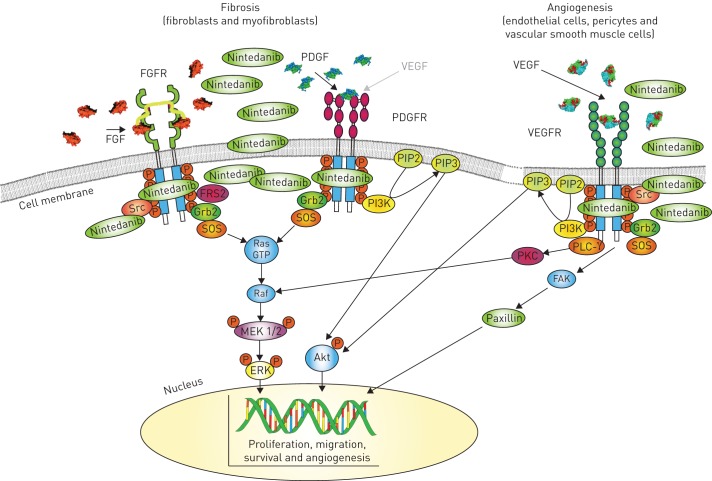
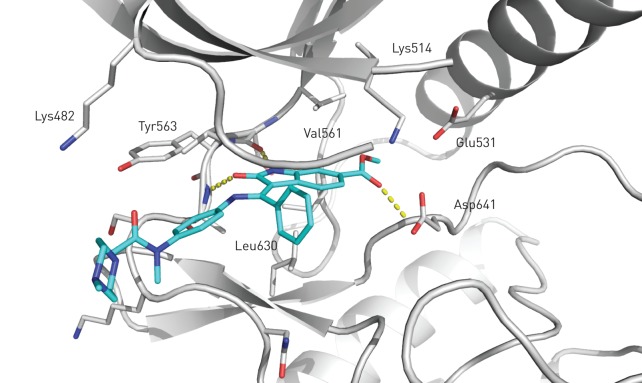
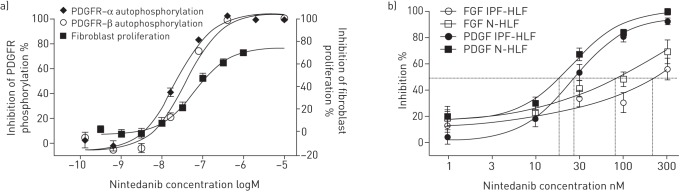
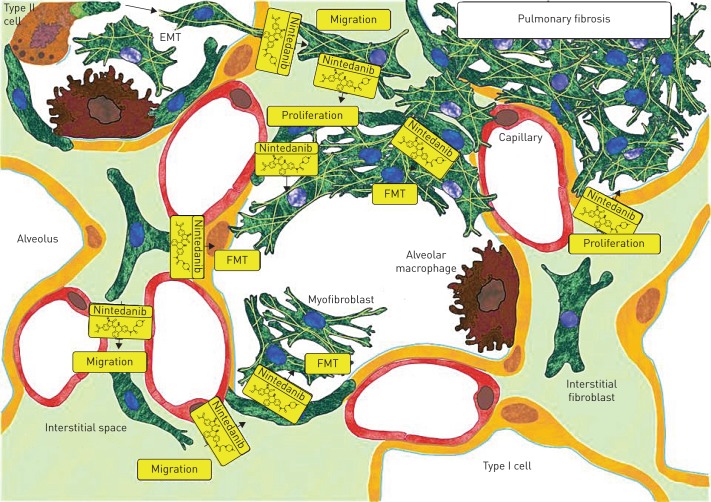
Verification
Claims the paper makes
The claims and statistics of this paper haven’t been checked yet.
Free: it reads the open-access text and checks the first 5 claims that cite a source we can check. Create a free account to check every claim.
Claims other papers make about this one
Each is checked against this paper’s own text: does it say what the citing paper says it does?
The source backs part of the claim, not all of it — or backs it for a different population, condition or comparison.
In the citing paper
“Nintedanib has inhibitory effects on platelet-derived growth factor receptors α/β (PDGFα/β), vascular endothelial growth factor (VEGF) receptors 1, 2 and 3, and fibroblast growth factor (FGF) receptor 1, 2, and 3, as well as potentiation of Src homology region 2 domain containing phosphatase 1 (SHP-1) [19,20].”
From Emerging pharmacological options in the treatment of idiopathic pulmonary fibrosis (IPF) (2024) · cites this paper as [19]
Experimental — accuracy not yet measuredThe source backs part of the claim, not all of it — or backs it for a different population, condition or comparison.
In the citing paper
“These observations indicate that the Pdgf pathway is crucial to disease pathogenesis.”
From Reference-based analysis of lung single-cell sequencing reveals a transitional profibrotic macrophage (2019) · cites this paper as [41]
Experimental — accuracy not yet measuredThe cited source says what the claim attributes to it.
In the citing paper
“In two phase 3 trials with patients suffering from interstitial lung disease, nintedanib profoundly lowered the decline in forced vital capacity (195, 198).”
From Unraveling SSc Pathophysiology; The Myofibroblast (2018) · cites this paper as [195]
The cited source says what the claim attributes to it.
In the citing paper
“The current standard-of-care (SOC) therapy regimen to treat IPF includes either nintedanib, a broadly acting inhibitor of receptor tyrosine kinases31, or pirfenidone, an inhibitor of TGFβ-mediated fibroblast-to-myofibroblast transition32.”
From A generative AI-discovered TNIK inhibitor for idiopathic pulmonary fibrosis: a randomized phase 2a trial (2025) · cites this paper as [31]
In the citing paper
“In vivo, nintedanib protects mice and rats against bleomycin-induced lung fibrosis (195, 196), and lowers the amount of lymphocytes and neutrophils but not macrophages in bronchoalveolar lavage liquid in this model.”
From Unraveling SSc Pathophysiology; The Myofibroblast (2018) · cites this paper as [195]
1 more claim about this paper
Create a free account to see every claim other papers make about this one.
Self-check
Percentages, sums and reported differences re-computed from the paper’s own numbers.
The self-check needs the paper’s full text.
Citations
Cites
The biology of VEGF and its receptors
Ferrara, N., Gerber, H.-P., & LeCouter, J. (2003) · Nature Medicine · doi:10.1038/nm0603-669 · Cited by 9,591
Raghu, G., Collard, H. R., Egan, J. J., Martinez, F. J., Behr, J., Brown, K. K., Colby, T. V., Cordier, J.-F., Flaherty, K. R., Lasky, J. A., et al. (2011) · American Journal of Respiratory and Critical Care Medicine · doi:10.1164/rccm.2009-040gl · Cited by 7,186
Efficacy and Safety of Nintedanib in Idiopathic Pulmonary Fibrosis
Richeldi, L., du Bois, R. M., Raghu, G., Azuma, A., Brown, K. K., Costabel, U., Cottin, V., Flaherty, K. R., Hansell, D. M., Inoue, Y., et al. (2014) · New England Journal of Medicine · doi:10.1056/nejmoa1402584 · Cited by 4,654
Self-citation(2002) · American Journal of Respiratory and Critical Care Medicine · doi:10.1164/ajrccm.165.2.ats01 · Cited by 4,196
A phase 3 trial of pirfenidone in patients with idiopathic pulmonary fibrosis.
King, T. E., Bradford, W. Z., Castro-Bernardini, S., Fagan, E. A., Glaspole, I., Glassberg, M. K., Gorina, E., Hopkins, P. M., Kardatzke, D., Lancaster, L., et al. (2014) · New England Journal of Medicine · doi:10.1056/nejmoa1402582 · Cited by 3,975
King, T. E., Pardo, A., & Selman, M. (2011) · The Lancet · doi:10.1016/s0140-6736(11)60052-4 · Cited by 2,194
Pirfenidone in patients with idiopathic pulmonary fibrosis (CAPACITY): two randomised trials
Noble, P. W., Albera, C., Bradford, W. Z., Costabel, U., Glassberg, M. K., Kardatzke, D., King, T. E., Lancaster, L., Sahn, S. A., Szwarcberg, J., et al. (2011) · The Lancet · doi:10.1016/s0140-6736(11)60405-4 · Cited by 2,154
Selman, M., King, T. E., & Pardo, A. (2001) · Annals of Internal Medicine · doi:10.7326/0003-4819-134-2-200101160-00015 · Cited by 1,786
Signal transduction by vascular endothelial growth factor receptors
Koch, S., Tugues, S., Li, X., Gualandi, L., & Claesson-Welsh, L. (2011) · Biochemical Journal · doi:10.1042/bj20110301 · Cited by 1,635
Idiopathic Pulmonary Fibrosis: Clinical Relevance of Pathologic Classification
KATZENSTEIN, A.-L. A., & MYERS, J. L. (1998) · American Journal of Respiratory and Critical Care Medicine · doi:10.1164/ajrccm.157.4.9707039 · Cited by 1,261
Cited by
Items 501–600 of 1,001
Nintedanib ameliorates animal model of dermatitis
Heo, M.-J., Lee, C., Choi, S. Y., Choi, Y. M., An, I., Bae, S., An, S., & Jung, J. H. (2020) · Scientific Reports · doi:10.1038/s41598-020-61424-1 · Cited by 13
Oxidative hypoxia drives TGF-β1–induced fibrosis under normoxia
Choi, J., Kim, Y., Abeysiriwardhana, H. N. I., Malla, A., Kim, J., Anandappa, J. M., Liang, Z., Seo, S.-Y., Liu, K., Rhee, S., et al. (2025) · Redox Biology · doi:10.1016/j.redox.2025.103947 · Cited by 14
“Unlike NIDB, which broadly inhibits receptor tyrosine kinases and interferes with normal vascular and epithelial repair [61], ACF-2 targets a more defined molecular pathway, potentially reducing systemic toxicity.”
Nakamura, H., Zhou, Y., Sakamoto, Y., Yamazaki, A., Kurumiya, E., Yamazaki, R., Hayashi, K., Kasuya, Y., Watanabe, K., Kasahara, J., et al. (2023) · Biomedicine & Pharmacotherapy · doi:10.1016/j.biopha.2023.114405 · Cited by 13
Cai, L., Wang, J., Xue, Y., Yu, S., Wang, C., Zhang, L., Zhang, X., Cheng, L., Ruan, W., Dong, F., et al. (2024) · Pediatric Research · doi:10.1038/s41390-024-03024-7 · Cited by 13
Yu, C., Xu, Q., Cao, X., Cheng, S., Zhang, Z., & Huang, J. (2024) · Chemical Engineering Journal · doi:10.1016/j.cej.2024.154850 · Cited by 14
The Role of MicroRNAs in Mesenchymal Stem Cell–Based Modulation of Pulmonary Fibrosis
Harrell, C. R., Volarević, A., Djonov, V., Arsenijević, A., & Volarević, V. (2024) · Cell Transplantation · doi:10.1177/09636897241281026 · Cited by 12
“To achieve this, immunomodula-tors such as corticosteroids and anti-fibrotic drugs with potential anti-inflammatory actions such as pirfenidone and nintedanib are usually prescribed 12–15 .”
BackgroundPharmacological Treatment of Interstitial Lung Diseases: A Novel Landscape for Inhaled Agents
D’Agnano, V., Perrotta, F., Fomez, R., Carrozzo, V. M., Schiattarella, A., Zamparelli, S. S., Pagliaro, R., Bianco, A., & Mariniello, D. F. (2024) · Pharmaceutics · doi:10.3390/pharmaceutics16111391 · Cited by 12
“Its approval as an antifibrotic treatment in both IPF and PF-ILDs relies on its capability to interfere with lung fibroblast proliferation and migration as well as myofibroblast transformation [49] (Figure 1).”
Aggarwal, R., Oddis, C. V., Sullivan, D. I., Moghadam‐Kia, S., Saygın, D., Kass, D. J., Koontz, D. C., Li, P., Conoscenti, C., Olson, A. L., et al. (2024) · BMC Pulmonary Medicine · doi:10.1186/s12890-024-03314-0 · Cited by 15
“Nintedanib is a tyrosine kinase inhibitor that inhibits processes fundamental to the progression of pulmonary fibrosis [17, 18].”
BackgroundWuyts, W. A., Bonella, F., Chaudhuri, N., Varone, F., Antin-Ozerkis, D. E., Song, J. W., Miede, C., Dumistracel, M., Coeck, C., & Cottin, V. (2025) · Lung · doi:10.1007/s00408-024-00778-z · Cited by 14
“Nintedanib is a tyrosine kinase inhibitor with anti-inflammatory and antifibrotic effects [9, 10].”
Semaphorin 3E–Plexin D1 Axis Drives Lung Fibrosis through ErbB2‐Mediated Fibroblast Activation
Deng, Z., Chen, J., Yang, R., Zhan, Y., Chen, S., Zhang, J., Fu, H., Gu, Y., Huang, Q., Wu, J., et al. (2025) · Advanced Science · doi:10.1002/advs.202415007 · Cited by 14
Marwick, J. A., Elliott, R. J. R., Longden, J., Makda, A., Hirani, N., Dhaliwal, K., Dawson, J. C., & Carragher, N. O. (2021) · SLAS DISCOVERY · doi:10.1177/24725552211019405 · Cited by 11
COVID-related fibrosis: insights into potential drug targets
Sgalla, G., Comes, A., Lerede, M., & Richeldi, L. (2021) · Expert Opinion on Investigational Drugs · doi:10.1080/13543784.2021.2010188 · Cited by 12
“Pirfenidone 267 mgx2 PO TID in the first week, then 267 mg x3 TID for 24 weeks Changes in percent predicted FVC and in HRCT Ongoing Nintedanib Intracellular inhibitor of PDGF, VEGF and FGF receptors NCT04338802 II Single-center, randomized, open label, placebo-controlled.”
BackgroundInfluentialA drug-responsive multicellular human spheroid model to recapitulate drug-induced pulmonary fibrosis
Saygılı, E., Devamoglu, U., Bağca, B. G., Göksel, Ö., Avcı, Ç. B., Göksel, T., & Yeşil-Çeliktaş, Ö. (2022) · Biomedical Materials · doi:10.1088/1748-605x/ac73cd · Cited by 11
“…matrix components such as collagen type I, the inhibitory effect of nintedanib on collagen secretion was previously confirmed with TGF-β -stimulated in vitro culture of primary human lung fibroblasts from patients with IPF [63] or intrat-racheal BLM and/or silica particle induced mice models [64].”
Liu, Y., Hou, Q., Wang, R., Liu, Y., & Cheng, Z. (2023) · Naunyn-Schmiedeberg s Archives of Pharmacology · doi:10.1007/s00210-023-02452-2 · Cited by 11
“B Representative Western blot images of COL1α1, COL3α1, Fn, and α-SMA in MRC5 under PDGF stimulation with/without FOXO4-DRI and the relative grey value of protein expression.”
BackgroundInfluentialManaging Idiopathic Pulmonary Fibrosis: Which Drug for Which Patient?
Hayton, C., & Chaudhuri, N. (2017) · Drugs & Aging · doi:10.1007/s40266-017-0488-0 · Cited by 15
“action is through inhibition of platelet-derived growth factor (PDGF), fibroblast growth factor (FGF), vascular endothelial growth factor (VEGF) and transforming growth factor (TGF)-b, leading to suppression of fibrosis [8].”
BackgroundAntoniou, K. M., Tsitoura, E., Vasarmidi, E., Symvoulakis, E. K., Aidinis, V., Tzilas, V., Τzouvelekis, Α., & Bouros, D. E. (2021) · Current Opinion in Pharmacology · doi:10.1016/j.coph.2020.12.007 · Cited by 12
Introduction to Chronic Respiratory Diseases: A Pressing Need for Novel Therapeutic Approaches
Chan, Y., Ng, S. W., Liew, H. S., Pua, L. J. W., Soon, L., Lim, J. S., Dua, K., & Chellappan, D. K. (2021) · Springer eBooks · doi:10.1007/978-981-33-6850-7_2 · Cited by 13
Advancements in preclinical human-relevant modeling of pulmonary vasculature on-chip
Vo, Q., & Benam, K. H. (2024) · European Journal of Pharmaceutical Sciences · doi:10.1016/j.ejps.2024.106709 · Cited by 11
“The authors found that the tested drug inhibits pulmonary vasculogenesis and angiogenesis in the context of IPF, confirming similar previously reported in vivo observations (Wollin et al., 2015).”
ResultDavila, J. G. F., Singh, A. K., Moore, D. W., Kim, J., Khan, J. A., Lemma, M., King, C. S., Nathan, S. D., Rodríguez, L. R., Grant, G. M., et al. (2024) · Molecular Biology of the Cell · doi:10.1091/mbc.e23-11-0428 · Cited by 13
“Currently, there are only two therapeutics with FDA approval to treat IPF: the antifibrotics Nintedanib and Pirfeni-done (Wollin et al. , 2015; Margaritopoulos et al. , 2016; Vancheri et al. , 2018).”
BackgroundRadioproteomics stratifies molecular response to antifibrotic treatment in pulmonary fibrosis
Lauer, D., Magnin, C., Kolly, L. R., Wang, H., Brunner, M., Chabria, M., Cereghetti, G. M., Gabryś, H. S., Tanadini‐Lang, S., Uldry, A., et al. (2024) · JCI Insight · doi:10.1172/jci.insight.181757 · Cited by 11
Ding, K. L., Smith, C., Seedorf, G., & Abman, S. H. (2024) · Pediatric Research · doi:10.1038/s41390-024-03562-0 · Cited by 14
Combined therapy with pirfenidone and nintedanib counteracts fibrotic silicosis in mice
Bai, L., Wang, J., Wang, X., Wang, J., Zeng, W., Pang, J., Zhang, T., Li, S., Song, M., Shi, Y., et al. (2024) · British Journal of Pharmacology · doi:10.1111/bph.17390 · Cited by 15
“BIBF is an orally-admnistered tyrosine kinase inhibitor primarily targeting fibroblast growth factor receptor-1 (FGFR-1), vascular endothelial growth factor receptor-2 (VEFGR2) and isoforms of the platelet-derived growth factor receptor, PDGFR α and PDGFR β (Wollin et al., 2015).”
The role of TRP channels in lung fibrosis: Mechanisms and therapeutic potential
Ratnasingham, M., Bradding, P., & Roach, K. (2024) · The International Journal of Biochemistry & Cell Biology · doi:10.1016/j.biocel.2024.106728 · Cited by 11
von Suesskind-Schwendi, M., Boxhammer, E., Hirt, S. W., Schreml, S., Schmid, Ç., Wollin, L., & Lehle, K. (2017) · Experimental Lung Research · doi:10.1080/01902148.2017.1354408 · Cited by 13
“[11] Nintedanib has been shown to exert antiinflammatory and antifibrotic activity in animal models of lung fibrosis.[12,15] In our study, nintedanib was used at a dose of 50 mg/kg once daily.”
BackgroundMethodSelf-citationKazi, T., Niibe, I., Nishikawa, A., & Matsuzaki, T. (2019) · FEBS Open Bio · doi:10.1002/2211-5463.12763 · Cited by 11
Bugatti, K., Andreucci, E., Monaco, N., Battistini, L., Peppicelli, S., Ruzzolini, J., Curti, C., Zanardi, F., Bianchini, F., & Sartori, A. M. (2022) · ACS Omega · doi:10.1021/acsomega.2c00535 · Cited by 11
Rieg, A. D., Suleiman, S., Anker, C., Bünting, N. A., Verjans, E., Spillner, J. W., Kalverkamp, S., von Stillfried, S. F., Braunschweig, T. A., Uhlig, S., et al. (2022) · Respiratory Research · doi:10.1186/s12931-022-02101-x · Cited by 12
Inoue, Y., Wells, A. U., Song, J. W., Xu, Z., Kitamura, H., Suda, T., Okamoto, M., Müller, H., Coeck, C., Rohr, K. B., et al. (2023) · Respirology · doi:10.1111/resp.14452 · Cited by 12
Self-citationMelanocortin therapies to resolve fibroblast-mediated diseases
Khodeneva, N., Sugimoto, M. A., Davan-Wetton, C. S. A., & Montero‐Melendez, T. (2023) · Frontiers in Immunology · doi:10.3389/fimmu.2022.1084394 · Cited by 12
“The other approved anti-fibrotic drug, nintedanib, is a non-specific tyrosine kinase inhibitor, which prevents the phosphorylation multiple targets involved in the development of fibrosis including plateletderived growth factor receptor (PDGFR), fibroblast growth factor receptor (FGFR), vascular endothelial growth fac…”
BackgroundDegenfeld‐Schonburg, L., Gamperl, S., Stefanzl, G., Schruef, A.-K., Sadovnik, I., Bauer, K., Smiljkovic, D., Eisenwort, G., Peter, B., Greiner, G., et al. (2023) · PubMed Central · Cited by 20
Nintedanib as an Antifibrotic in Post Covid Lung Fibrosis: Are we Really Overestimating?
Patil, S. V., Tandel, N., Bhangdiya, O., & Gondhali, G. (2023) · SAR Journal of Medicine · doi:10.36346/sarjm.2023.v04i02.001 · Cited by 12
Yenda, P., Katari, N. K., Satheesh, B., Gundla, R., Muchakayala, S. K., & Rekulapally, V. K. (2023) · Journal of Separation Science · doi:10.1002/jssc.202200770 · Cited by 10
Cao, X., Li, T., Tian, Y., Tian, Y., Gao, C., Zhang, D., & Song, Y. (2023) · Journal of Ophthalmology · doi:10.1155/2023/7355039 · Cited by 10
Fang, H., Zheng, H., Jiaqi, W., Dong, T., Yiyuanzi, Z., Qiwen, Y., Ying, L., Hongchun, Z., & Liu, L. (2023) · Frontiers in Pharmacology · doi:10.3389/fphar.2023.1258885 · Cited by 11
“Initial injury repairs and rebuilds the tissue under normal conditions, but in IPF impaired healing occurs and abnormal epithelial-mesenchymal interactions are induced (Fernandez and Eickelberg, 2012).”
BackgroundInfluentialPutri, K. S. S., Adhyatmika, A., Boorsma, C. E., Habibie, H., Ruigrok, M. J. R., Heukels, P., Timens, W., de Jager, M. H., Hinrichs, W. L. J., Olinga, P., et al. (2024) · Lung · doi:10.1007/s00408-024-00691-5 · Cited by 10
Novel Small-Molecule ROCK2 Inhibitor GNS-3595 Attenuates Pulmonary Fibrosis in Preclinical Studies
Hwang, S., Lee, W., Ravi, D., Devine, W. G., Yong, M., Diebold, R. B., Seung, S.-A., Ng, N. W., Lee, J., Gupta, A., et al. (2024) · American Journal of Respiratory Cell and Molecular Biology · doi:10.1165/rcmb.2023-0401oc · Cited by 11
Brownback, K. R., Pitts, L. R., & Abhyankar, S. (2018) · Bone Marrow Transplantation · doi:10.1038/s41409-018-0182-9 · Cited by 10
Lomanta, J. M. J., Quinto, M. L., Urquiza, S. C., & Santiaguel, J. M. (2022) · American Journal of Case Reports · doi:10.12659/ajcr.934830 · Cited by 10
“Nintedanib is a tyrosine kinase inhibitor shown to interfere with pathways leading to fibrosis, such as fibroblast proliferation, migration and differentiation, and secretion extracellular matrix in in vitro studies, and has shown anti-inflammatory and antifibrotic activity in animal models [40].”
BackgroundSalvi, S. S., Ghorpade, D., Dhoori, S., Dhar, R., Dumra, H. S., Chhajed, P. N., Bhattacharya, P., Rajan, S. K., Talwar, D., Christopher, D. J., et al. (2022) · Lung India · doi:10.4103/lungindia.lungindia_659_21 · Cited by 12
“This blocks profibrotic signaling and attenuates the proliferation, migration, and differentiation of fibroblasts as well as extracellular matrix component secretion.[65] Nintedanib has extremely low bioavailability at 4.”
BackgroundTargeting GPCRs to treat cardiac fibrosis
Zhang, H., Ren, L., & Shivnaraine, R. V. (2022) · Frontiers in Cardiovascular Medicine · doi:10.3389/fcvm.2022.1011176 · Cited by 14
“For example, one of the FDA-approved drugs for idiopathic lung fibrosis, nintedanib, simultaneously targets fibroblast growth factor receptors, platelet-derived growth factor receptors, and vascular endothelial growth factor receptors (81).”
BackgroundKoegelenberg, C. F. N., Ainslie, G., Dheda, K. U. J., Allwood, B., Wong, M., Lalloo, U., Abdool-Gaffar, M. S., Khalfey, H., & Irusen, E. M. (2016) · Journal of Thoracic Disease · doi:10.21037/jtd.2016.12.05 · Cited by 10
“Nintedanib is a potent intracellular multi-target tyrosine kinase inhibitor which binds & blocks the receptors of vascular endothelial growth factor, platelet-derived growth factor and fibroblast growth factor (18).”
The microRNA-429/DUSP4 axis regulates the sensitivity of colorectal cancer cells to nintedanib
Cheng, G., Li, Y., Liu, Z., & Song, X. (2021) · Molecular Medicine Reports · doi:10.3892/mmr.2021.11867 · Cited by 12
Huang, T., Kuo, C., Chen, C., Tseng, Y., Wu, C., & Lin, S. (2021) · BMC Pulmonary Medicine · doi:10.1186/s12890-021-01559-7 · Cited by 10
Wei, Y., Hou, J., Lü, P., Fu, L., Wang, X., Huang, Y. L., Chen, L., & Lv, C. (2022) · Sensors and Actuators B Chemical · doi:10.1016/j.snb.2022.132012 · Cited by 9
Kadam, A. H., & Schnitzer, J. E. (2024) · International Journal of Molecular Sciences · doi:10.3390/ijms252212300 · Cited by 12
Lee, J.-U., Chang, H. S., Jung, C. A., Kim, R. H., Park, C., & Park, J. (2020) · Canadian Respiratory Journal · doi:10.1155/2020/3406530 · Cited by 10
“Furthermore, phosphatidylinositol 4,5bisphosphate, which maintains the KCNJ2 channel in the open state [16, 24, 25], is involved in cellular proliferation and angiogenesis in IPF [26].”
BackgroundLi, X., Yu, C., Bao, H., Chen, Z., Liu, X., Huang, J., & Zhang, Z. (2022) · Nanomedicine Nanotechnology Biology and Medicine · doi:10.1016/j.nano.2022.102517 · Cited by 9
Recent advances in TGF-β signaling pathway in COVID-19 pathogenesis: A review
Majidpour, M., Azizi, S. G., Davodabadi, F., Akbar-Abad, M. S., Abdollahi, Z., Sargazi, S., & Shahriari, H. (2024) · Microbial Pathogenesis · doi:10.1016/j.micpath.2024.107236 · Cited by 12
Shadid, A., Rich, H. E., DeVaughn, H., Domozhirov, A. Y., Doursout, M., Mills, T., Eckel‐Mahan, K. L., Karmouty‐Quintana, H., Restrepo, M. I., & Shivshankar, P. (2024) · Frontiers in Cellular and Infection Microbiology · doi:10.3389/fcimb.2024.1479801 · Cited by 10
Takeda, T., Takeuchi, M., Saitoh, M., & Takeda, S. (2018) · The Tohoku Journal of Experimental Medicine · doi:10.1620/tjem.245.107 · Cited by 9
“Nintedanib has also been shown to inhibit PDGF receptor (PDGFR)-α and β (Cottin 2015; Wollin et al. 2015), an important target for the treatment of IPF.”
BackgroundInfluentialTakeda, T., Kunimatsu, Y., Tani, N., Hashimoto, I., Kurono, Y., & Hirose, K. (2020) · Journal of Clinical Medicine · doi:10.3390/jcm9030755 · Cited by 9
“Nintedanib is a multikinase inhibitor that blocks platelet-derived growth factors and downstream signals, such as phosphatidylinositol-4,5-bisphosphate 3-kinase [32], which are important for cell growth and survival.”
BackgroundCytokine Adsorption to Polymyxin B-Immobilized Fiber: An in vitro Study
Utsunomiya, T., Mimura‐Kimura, Y., Yamamoto, T., Aoe, K., Oishi, K., Kamei, H., Matsunaga, K., Yano, M., & Mimura, Y. (2020) · Blood Purification · doi:10.1159/000510290 · Cited by 9
Galectin-3 levels are elevated following nintedanib treatment
Shochet, G. E., Pomerantz, A., Shitrit, D., Bardenstein-Wald, B., Ask, K., Surber, M. W., Rabinowicz, N., Levy, Y. M., Benchetrit, S., Edelstein, E., et al. (2020) · Therapeutic Advances in Chronic Disease · doi:10.1177/2040622320968412 · Cited by 10
Interstitial lung disease in systemic sclerosis (systemic scleroderma)
Ananyeva, L. P., Tyurin, I. E., KONEVA, O. A., GARZANOVA, L., & Lila, A. M. (2021) · Modern Rheumatology Journal · doi:10.14412/1996-7012-2021-1s-1-62 · Cited by 9
Cottin, V., Bonniaud, P., Cadranel, J. L., Crestani, B., Jouneau, S., Marchand-Adam, S., Nunès, H., Wémeau-Stervinou, L., Bergot, E., Blanchard, É., et al. (2022) · Revue des Maladies Respiratoires · doi:10.1016/j.rmr.2022.01.014 · Cited by 14
Towards a Unified Approach in Autoimmune Fibrotic Signalling Pathways
Sisto, M., & Lisi, S. (2023) · International Journal of Molecular Sciences · doi:10.3390/ijms24109060 · Cited by 9
“Recent studies confirmed that the inhibition of FGF/FGFR signalling can reduce fibrosis in experimental animal models and the inhibition of FGF signalling is important in treating pulmonary fibrosis [63].”
BackgroundFerrigno, I., Verzellesi, L., Ottone, M., Bonacini, M., Rossi, A., Besutti, G., Bonelli, E., Colla, R., Facciolongo, N. C., Teopompi, E., et al. (2024) · Inflammation Research · doi:10.1007/s00011-024-01852-1 · Cited by 12
“PDGF is a pro-fibrotic mediator and its receptor is likely a therapeutic target for IPF [36, 37].”
Use of biologics to treat acute exacerbations and manage disease in asthma, COPD and IPF
Murray, L. A., Grainge, C., Wark, P. A. B., & Knight, D. A. (2016) · Pharmacology & Therapeutics · doi:10.1016/j.pharmthera.2016.11.003 · Cited by 12
Anti-fibrotic therapy and lung transplant outcomes in patients with idiopathic pulmonary fibrosis
Astor, T. L., Goldberg, H. J., Snyder, L. D., Courtwright, A., Hachem, R., Pena, T., Zaffiri, L., Criner, G. J., Budev, M. M., Thaniyavarn, T., et al. (2023) · Therapeutic Advances in Respiratory Disease · doi:10.1177/17534666231165912 · Cited by 8
Lyu, W., Wang, H., Ji, T., Liu, L., Chen, H., Fan, L., Zhong, G., Wan, N., Chen, S., Chen, J., et al. (2025) · Clinical and Translational Medicine · doi:10.1002/ctm2.70217 · Cited by 10
Nalawade, S., Narwade, M., Deshmukh, V., Nasir, N., Wahab, S., Kesharwani, P., & Gajbhiye, K. R. (2025) · Colloids and Surfaces B Biointerfaces · doi:10.1016/j.colsurfb.2025.114622 · Cited by 8
Kette, S., Reccardini, N., Salton, F., Confalonieri, P., Andrisano, A. G., Chianese, M. I., Nes, A. D., Maggisano, M., Galantino, A., Nicolosi, S., et al. (2025) · Pharmaceuticals · doi:10.3390/ph18030411 · Cited by 8
“Nintedanib is a receptor antagonist that interacts with several tyrosine kinases, including the receptors for vascular endothelial growth factor (VEGF), fibroblast growth factor (FGF), and platelet-derived growth factor (PDGF) [19,54].”
Meng, Y., Han, D. C., Xiang, J., Zhao, M., Li, Z., Sun, H., Yang, W., Peng, F., Zhang, Q., Wang, Y., et al. (2025) · Materials Today Bio · doi:10.1016/j.mtbio.2025.101901 · Cited by 12
“This nonspecific inhibition leads to systemic adverse events, such as nausea, vomiting, and bleeding [5].”
Zhu, X., Zhong, Z., Du, J., Zhang, J., Zhang, X., Cui, X., Guan, L., Hu, Y., Chen, C., Wang, H., et al. (2025) · Liver International · doi:10.1111/liv.70187 · Cited by 8
Tanneberger, A. E., Blomberg, R., Kary, A. D., Lu, A., Riches, D. W. H., & Magin, C. M. (2025) · Acta Biomaterialia · doi:10.1016/j.actbio.2025.08.010 · Cited by 11
Bassi, I., Jabali, A., Levin, L., Lambiase, G., Moshe, N., Farag, N., Tevet, Y., Perlmoter, G., Egozi, S., Leichner, G. S., et al. (2025) · The Journal of Experimental Medicine · doi:10.1084/jem.20240513 · Cited by 8
Radwan, A. S., Salim, M. M., Elkhoudary, M. M., Hadad, G. M., Shaldam, M. A., Belal, F. F., & Magdy, G. (2023) · Journal of Biomolecular Structure and Dynamics · doi:10.1080/07391102.2023.2202776 · Cited by 8
“It has been demonstrated that VEGF not only binds to the PDGFR on fibroblasts, but also stimulates angiogenesis via the VEGFR (Wollin et al., 2015).”
BackgroundShould we use nintedanib as early therapy in patients with SSc-ILD?
Zanatta, E., Moccaldi, B., Szűcs, G., & Spagnolo, P. (2023) · Autoimmunity Reviews · doi:10.1016/j.autrev.2023.103463 · Cited by 8
Lee, H., Jeong, O.-Y., Park, H. J., Lee, S., Bok, E., Kim, M., Suh, Y. S., Cheon, Y., Kim, H. O., Kim, S., et al. (2023) · Immune Network · doi:10.4110/in.2023.23.e45 · Cited by 9
“Additionally, therapeutic agents that directly inhibit primary fibrotic pathways, such as pirfenidone and nintedanib, have shown some improvement in treatment outcomes; however, their effectiveness remains restricted (11,14).”
BackgroundKetotifen directly modifies the fibrotic response of human skin fibroblasts
Leong, E. K., Bitar, H. A., Marshall, J. S., & Bezuhly, M. (2024) · Scientific Reports · doi:10.1038/s41598-024-57776-7 · Cited by 8
“Pirfenidone targets TGFβ1-induced signaling factors leading to attenuated collagen and αSMA protein 32 , while nintedanib inhibits receptor tyrosine kinases of crucial growth factor receptors in fibrotic conditions 33 .”
BackgroundPulmonary Fibrosis and Diabetes Mellitus: Two coins with the same face
Mendoza‐Marí, Y., Fraix, M. P., & Agrawal, D. K. (2024) · Archives of Internal Medicine Research · doi:10.26502/aimr.0165 · Cited by 16
“The inhibition of these growth factors signaling reduces the proliferation and migration of lung fibroblasts, their trans-differentiation into myofibroblasts and the deposition of ECM [145].”
BackgroundNguyen, Q.-C., Nguyen, H. A., Pham, T.-A. N., Tran, V. T.-H., Nguyen, T.-D., & Pham, D. (2024) · Journal of Ethnopharmacology · doi:10.1016/j.jep.2024.118226 · Cited by 10
Monomeric compounds from natural products for the treatment of pulmonary fibrosis: a review
Li, Z., Yang, Y., & Gao, F. (2024) · Inflammopharmacology · doi:10.1007/s10787-024-01485-0 · Cited by 8
“Though pirfenidone (Behr et al. 2021) and nintedanib (Wollin et al. 2015) have demonstrated some efficacy and received FDA approval for treating PF, their severe side effects and limited efficacy to reverse fibrosis pose significant clinical limitations.”
Reverse repurposing: Potential utility of cancer drugs in nonmalignant illnesses
Nikanjam, M., Wells, K., Kato, S., Adashek, J. J., Block, S., & Kurzrock, R. (2024) · Med · doi:10.1016/j.medj.2024.04.008 · Cited by 8
Wong, S. L., Gan, J. S., Rubis, G. D., Paudel, K. R., Yeung, S., Chellappan, D. K., Keng, P. S., & Dua, K. (2024) · Journal of Drug Delivery Science and Technology · doi:10.1016/j.jddst.2024.105942 · Cited by 9
“…is an intracellular tyrosine kinase inhibitor which inhibits signalling pathways associated with vascular endothelial growth factor receptor, fibroblast growth factor receptor 1 – 3, and platelet-derived growth factor receptor α and β by binding to adenosine triphosphate binding sites [6].”
BackgroundGocht, A., Spriewald, B. M., Distler, J. H. W., Ramsperger-Gleixner, M., Ensminger, S. M., Weyand, M., & Heim, C. (2018) · Transplantation Direct · doi:10.1097/txd.0000000000000804 · Cited by 10
Therapeutic potential of targeting kinase inhibition in patients with idiopathic pulmonary fibrosis
Kim, S., Lim, J. H., & Woo, C.-H. (2020) · Journal of Yeungnam Medical Science · doi:10.12701/yujm.2020.00458 · Cited by 8
“growth factor (VEGF) stimulates angiogenesis through VEGFR and also binds to PDGFR in fibroblasts, subsequently stimulating cellular proliferation [38].”
BackgroundCurrent Treatments in the Management of Idiopathic Pulmonary Fibrosis: Pirfenidone and Nintedanib
Hayton, C., & Chaudhuri, N. (2017) · Clinical Medicine Insights Therapeutics · doi:10.1177/1179559x17719126 · Cited by 10
Nintedanib for the treatment of systemic sclerosis-associated interstitial lung disease
Yamasaki, Y., & Kuwana, M. (2020) · Expert Review of Clinical Immunology · doi:10.1080/1744666x.2020.1777857 · Cited by 8
“Thus, nintedanib inhibits the FGF receptor, PDGF receptor, and VEGF receptor signaling cascade, mediating proliferation and migration of fibroblasts [42,43].”
BackgroundBiener, L., Kruse, J., Tuleta, I., Pizarro, C., Kreuter, M., Birring, S. S., Nickenig, G., & Skowasch, D. (2021) · PLoS ONE · doi:10.1371/journal.pone.0247197 · Cited by 8
“One is nintedanib, a tyrosine kinase inhibitor (TKI), that acts as an inhibitor of the PDGF-, FGF- and VEGF receptors [5].”
BackgroundInhibition of Hsp90 Counteracts the Established Experimental Dermal Fibrosis Induced by Bleomycin
Štorkánová, H., Štorkánová, L., Navrátilová, A., Bečvář, V., Hulejová, H., Oreská, S., Heřmánková, B., Špiritović, M., Bečvář, R., Pavelká, K., et al. (2021) · Biomedicines · doi:10.3390/biomedicines9060650 · Cited by 12
“Moreover, nintedanib has previously demonstrated efficacy in the regression of preestablished experimental dermal fibrosis induced by bleomycin [28], as well as in other preclinical models of tissue fibrosis [28,42,58], and was recently approved by Food and Drug Administration (FDA) for slowing the rate of decline in…”
BackgroundEpidemiology and Treatment of Systemic Sclerosis in Korea
Lee, S., & Moon, K. W. (2022) · Journal of Rheumatic Diseases · doi:10.4078/jrd.22.0029 · Cited by 9
“The results showed that the annual rate of FVC decline was lower with nintedanib than with the placebo, although no clinical benefit of nintedanib was observed for other manifestations of SSc. Pirfenidone, another antifibrotic agent, has also been approved for the treatment of IPF [101].”
BackgroundChang, W., Chen, C.-M., Sheu, C., Liao, S., Hsu, Y., Tsai, M., & Kuo, P. (2020) · Molecules · doi:10.3390/molecules25225458 · Cited by 10
Vascular Endothelial Growth Factor in Idiopathic Pulmonary Fibrosis. An Imbalancing Act
Atamas, S. P. (2017) · American Journal of Respiratory and Critical Care Medicine · doi:10.1164/rccm.201703-0605ed · Cited by 8
Koskela, J. T., Häppölä, P., Liu, A., FinnGen, Partanen, J., Genovese, G., Artomov, M., Myllymäki, M., Kanai, M., Zhou, W., et al. (2021) · medRxiv · doi:10.1101/2021.05.07.21255988 · Cited by 10
Chong, W. H., Agrawal, D., Tan, Z. Y., Venkateswaran, S., Tan, A. Y. Y., Tan, C. Y., Ling, N. C. A., & Tay, N. S. W. T. (2024) · Heart & Lung · doi:10.1016/j.hrtlng.2024.07.010 · Cited by 7
Identification of FGFR4 as a regulator of myofibroblast differentiation in pulmonary fibrosis
Ghanem, M., Justet, A., Jaillet, M., Vasarmidi, E., Boghanim, T., Hachem, M., Vadel, A., Joannes, A., Mordant, P., Balayev, A., et al. (2024) · American Journal of Physiology-Lung Cellular and Molecular Physiology · doi:10.1152/ajplung.00184.2023 · Cited by 9
Wang, T., Cui, Z., Ou, Y., Lou, S., Chen, H., Zhu, C., Zhou, L., & Zou, F. (2025) · Frontiers in Pharmacology · doi:10.3389/fphar.2025.1530697 · Cited by 17
Hsia, T.-L., Chiou, W.-C., Huang, H., Liu, H., Chen, J., Fu, P., & Huang, C. (2025) · Biomedicine & Pharmacotherapy · doi:10.1016/j.biopha.2025.118267 · Cited by 9
Kang, H. N., Kim, S., Lee, S. J., Lee, A., Lee, S.-Y., Go, Y., Yoo, J. H., Park, S., Choi, Y. J., & Hwang, Y. (2025) · Life Sciences · doi:10.1016/j.lfs.2025.123951 · Cited by 9
Hasan, M. R., Chae, Y., Lee, S. Y., & Kang, Y. M. (2025) · Scientific Reports · doi:10.1038/s41598-025-18370-7 · Cited by 10
“Nintedanib was chosen as the reference antifibrotic agent due to its well-characterized, broad-spectrum tyrosine kinase inhibition of PDGFRs, FGFRs, and VEGFRs—critical pathways in fibroblast activation and extracellular matrix deposition in pulmonary fibrosis 47,48 .”
Goda, M. N., Alqarni, L. S., Al-Namshah, K. S., Ibrahim, H., Ali, A. B. H., & El‐Wekil, M. M. (2025) · RSC Advances · doi:10.1039/d5ra07196h · Cited by 7
Avdeev, S. N., Ananyeva, L. P., Валерьевич, Ж. Е., Zonova, E. V., Клименко, А. А., KONEVA, O. A., Lila, A. M., Pershina, E. S., Стремоухов, А. А., Terpigorev, S. A., et al. (2020) · Modern Rheumatology Journal · doi:10.14412/1996-7012-2020-1-125-128 · Cited by 7
“Одним из наиболее изученных на данный момент является нинтеданиб – внутриклеточный ингибитор тирозинкиназ [9], одобренный для лечения идиопатического фиброза легких [10].”
Wang, M., Liu, A., Niu, Q., Feng, X., Zheng, Y., Chen, S.-J., Xu, H. M., Li, Q., Hou, G., Bi, X., et al. (2022) · Theranostics · doi:10.7150/thno.72269 · Cited by 8
“Blocking VEGF, PDGF and FGF signaling pathways displays anti-fibrotic effect by suppressing fibroblasts proliferation [38, 47, 48].”
BackgroundBijwadia, S. R., Raymond‐Pope, C. J., Basten, A. M., Lentz, M. E., Lillquist, T. J., Call, J. A., & Greising, S. M. (2023) · Physiological Reports · doi:10.14814/phy2.15756 · Cited by 7
“…tyrosine kinase inhibitor that binds vascular endothelial growth factor (VEGFR), platelet- derived growth factor (PDGFR), and fibroblast growth factor receptors (FGFR), is FDA- approved for reducing the progression of idiopathic pulmonary fibrosis (Rivera- Ortega et al., 2018; Wollin et al., 2015).”
BackgroundMethodInfluentialMajewski, S., Białas, A. J., Barczyk, A., Batura‐Gabryel, H., Buchczyk, M., Doboszyńska, A., Górska, K., Grabowska-Szkudlarz, L., Jagielska-Len, H., Jarzemska, A., et al. (2023) · Journal of Clinical Medicine · doi:10.3390/jcm12144635 · Cited by 9
“The mechanism of action of nintedanib in IPF is associated with the inhibition of profibrotic mediators including platelet-derived growth factor (PDGF) and fibroblast growth factor (FGF), as well as a vascular endothelial growth factor (VEGF), which as a result reduces fibroblast activity [31].”
BackgroundWang, H., Tsai, S., Lin, Y.-C., Hou, J.-U., & Chao, C.-H. (2024) · BMC Pulmonary Medicine · doi:10.1186/s12890-024-02947-5 · Cited by 9
“Nintedanib functions by binding to intracellular ATP pockets and inhibiting profibrotic signaling pathways, including platelet-derived growth factor, fibroblast growth factor, vascular endothelial growth factor, and transforming growth factor-beta (TGF-β) [10].”
BackgroundLung quantitative ultrasound to stage and monitor interstitial lung diseases
Cole, A. D., Roshankhah, R., Lye, T. H., Blackwell, J., Montgomery, S. A., Egan, T. M., Mamou, J., & Muller, M. M. (2024) · Scientific Reports · doi:10.1038/s41598-024-66390-6 · Cited by 10
“Nintedanib is an inhibitor of tyrosine kinase and is used in humans with idiopathic pulmonary fibrosis to delay progression of the disease 17 .”
BackgroundMethodPetersen, A. G., Korntner, S. H., Bousamaki, J., Oró, D., Manresa-Arraut, A., Pors, S. E., Salinas, C. G., Andersen, M. W., Madsen, M. R., Nie, Y., et al. (2024) · Physiological Reports · doi:10.14814/phy2.70077 · Cited by 7
“In contrast to progressive increases in PSR staining and maintained overexpression of Col3, levels of Col1a1 and α - SMA [marker for collagen-producing cells of myofibroblast lineage (Wollin et al., 2015)] declined after reaching a maximum on day 14 in BLEO IPF mice.”
BackgroundResultInfluentialZhang, K., Shi, P., Li, A., Zhou, J., & Chen, M. (2024) · Respiratory Research · doi:10.1186/s12931-024-03008-5 · Cited by 7
“Nintedanib is a potent inhibitor of FGF, PDGF, and VEGF receptors, and previous studies have found that nintedanib has inhibitory activity on downstream signaling in fibroblasts and myofibroblasts [10].”
Background
Metadata
- Authors
- Wollin, L., Wex, E., Pautsch, A., Schnapp, G., Hostettler, K. E., Stowasser, S., & Kolb, M.
- Affiliations
- Boehringer Ingelheim (Germany) (DE)
- University Hospital of Basel (CH)
- McMaster University (CA)
- Corresponding author
- Wollin, Lutz
- ORCID
- Venue
- European Respiratory Journal
- Publisher
- European Respiratory Society (ERS)
- Published
- 2015-03-05
- Volume
- 45
- Issue
- 5
- Pages
- 1434-1445
- ISSN
- 0903-1936 (ISSN-L)
- 1399-3003
- PMC
- PMC4416110
- OpenAlex
- W2120791222
- Cited by
- 1,005
- References
- 88
- Citations by year
- 2026: 90 · 2025: 118 · 2024: 103 · 2023: 133 · 2022: 123 · 2021: 111 · 2020: 82 · 2019: 78 · 2018: 60 · 2017: 56 · 2016: 37 · 2015: 14
- FWCI
- 9.87
- Type
- journal article
- Language
- en
- Open access
- hybrid
- doi.org
- Licence
- cc-by-nc
- Locations
- European Respiratory Journal (publishedVersion, cc-by-nc)
- Europe PMC (PubMed Central) (publishedVersion, cc-by-nc)
- PubMed Central (publishedVersion, cc-by-nc)
- PubMed (publishedVersion)
- Funders
- Boehringer Ingelheim
- Topics
- Health Sciences › Medicine › Pulmonary and Respiratory Medicine › Interstitial Lung Diseases and Idiopathic Pulmonary Fibrosis
- Health Sciences › Medicine › Pulmonary and Respiratory Medicine › Pulmonary Hypertension Research and Treatments
- Health Sciences › Medicine › Surgery › Transplantation: Methods and Outcomes
- Keywords
- nintedanib, idiopathic pulmonary fibrosis, mechanism of action, PDGF receptor inhibition, VEGF receptor inhibition, receptor tyrosine kinase inhibitors, fibroblast proliferation, myofibroblast differentiation, extracellular matrix deposition, alveolar epithelial cell injury, antifibrotic therapy, anti-inflammatory activity
- MeSH terms
- Animals, Bleomycin, Cell Differentiation, Clinical Trials as Topic, Enzyme Inhibitors, Extracellular Matrix, Fibroblast Growth Factors, Fibroblasts, Fibrosis, Humans, Indoles, Lung, Lung Diseases, Platelet-Derived Growth Factor, Silicon Dioxide, Transforming Growth Factor beta, Apoptosis, Cell Proliferation, Idiopathic Pulmonary Fibrosis
About these checks
Registry, retraction, Cites and statistics results are computed, not judged, with one exception: a printed reference that no index lists is read once by a model before it counts as a citation error. Claims are extracted by a model and kept only when their quote appears verbatim in the text; each cited source is then checked, with a model’s help, for whether it says what the claim relies on. Those verdicts can be wrong — read the claim’s quote and the cited source before relying on one.
Statistics and arithmetic are recomputed, not judged.
Confidence bands are shown only for fields calibrated on our annotated test set. None is calibrated yet, so no band is shown.
What counts as a claim ›How we measure confidence ›How we check this ›
Are you an author, or do you see a problem with this page? Request a review
Data sources
Bibliographic data: Semantic Scholar, OpenAlex, Crossref.
Contains information from the Semantic Scholar Academic Graph Datasets, made available under the ODC Attribution License (ODC-BY 1.0).
Semantic Scholar’s data is described in: Kinney, R., et al. (2023). The Semantic Scholar Open Data Platform. arXiv:2301.10140.
