

Mode of action of nintedanib in the treatment of idiopathic pulmonary fibrosis
Open accessThe DOI matches its Crossref record; 90 of the 90 references it cites were found in a registry or an index.
Abstract
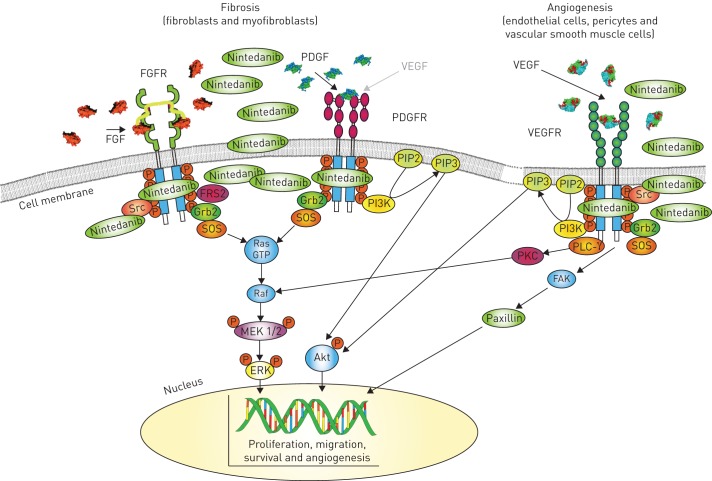
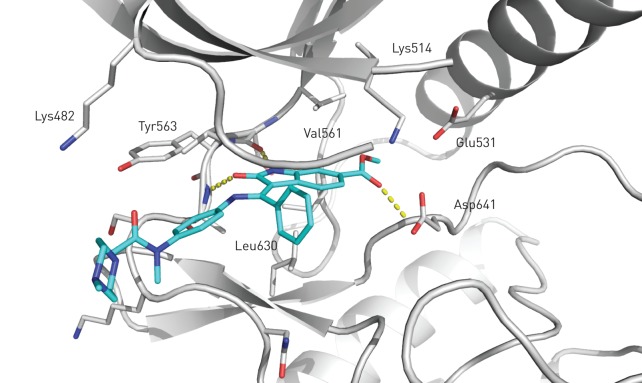
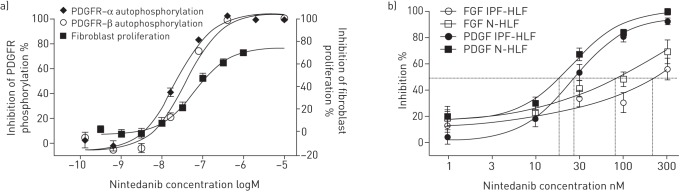
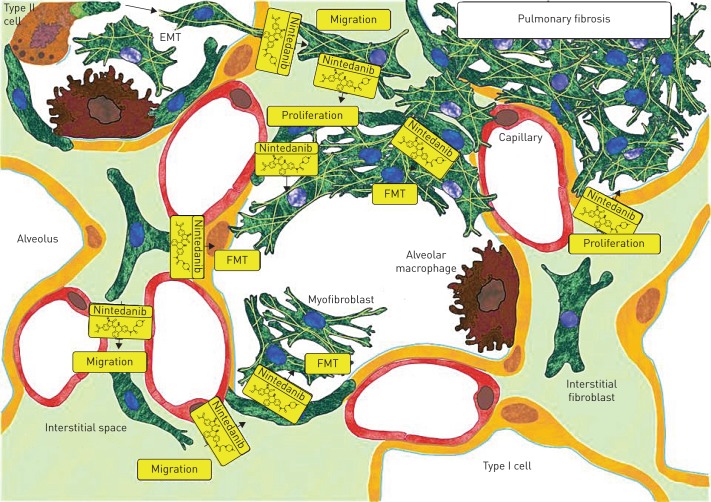
Idiopathic pulmonary fibrosis (IPF) is a progressive and ultimately fatal disease characterised by fibrosis of the lung parenchyma and loss of lung function. Although the pathogenic pathways involved in IPF have not been fully elucidated, IPF is believed to be caused by repetitive alveolar epithelial cell injury and dysregulated repair, in which there is uncontrolled proliferation of lung fibroblasts and differentiation of fibroblasts into myofibroblasts, which excessively deposit extracellular matrix (ECM) proteins in the interstitial space. A number of profibrotic mediators including platelet-derived growth factor (PDGF), fibroblast growth factor (FGF) and transforming growth factor-β are believed to play important roles in the pathogenesis of IPF. Nintedanib is a potent small molecule inhibitor of the receptor tyrosine kinases PDGF receptor, FGF receptor and vascular endothelial growth factor receptor. Data from in vitro studies have shown that nintedanib interferes with processes active in fibrosis such as fibroblast proliferation, migration and differentiation, and the secretion of ECM. In addition, nintedanib has shown consistent anti-fibrotic and anti-inflammatory activity in animal models of lung fibrosis. These data provide a strong rationale for the clinical efficacy of nintedanib in patients with IPF, which has recently been demonstrated in phase III clinical trials.
Overview
The claims and statistics of this paper haven’t been checked yet.
Free: it reads the open-access text and checks the first 5 claims that cite a source we can check. Create a free account to check every claim.
Integrity signals
Registry
Cites
Statistics
Figures
Verification
Claims the paper makes
The claims and statistics of this paper haven’t been checked yet.
Free: it reads the open-access text and checks the first 5 claims that cite a source we can check. Create a free account to check every claim.
Claims other papers make about this one
Each is checked against this paper’s own text: does it say what the citing paper says it does?
The source backs part of the claim, not all of it — or backs it for a different population, condition or comparison.
In the citing paper
“Nintedanib has inhibitory effects on platelet-derived growth factor receptors α/β (PDGFα/β), vascular endothelial growth factor (VEGF) receptors 1, 2 and 3, and fibroblast growth factor (FGF) receptor 1, 2, and 3, as well as potentiation of Src homology region 2 domain containing phosphatase 1 (SHP-1) [19,20].”
From Emerging pharmacological options in the treatment of idiopathic pulmonary fibrosis (IPF) (2024) · cites this paper as [19]
Experimental — accuracy not yet measuredThe source backs part of the claim, not all of it — or backs it for a different population, condition or comparison.
In the citing paper
“These observations indicate that the Pdgf pathway is crucial to disease pathogenesis.”
From Reference-based analysis of lung single-cell sequencing reveals a transitional profibrotic macrophage (2019) · cites this paper as [41]
Experimental — accuracy not yet measuredThe cited source says what the claim attributes to it.
In the citing paper
“In two phase 3 trials with patients suffering from interstitial lung disease, nintedanib profoundly lowered the decline in forced vital capacity (195, 198).”
From Unraveling SSc Pathophysiology; The Myofibroblast (2018) · cites this paper as [195]
The cited source says what the claim attributes to it.
In the citing paper
“The current standard-of-care (SOC) therapy regimen to treat IPF includes either nintedanib, a broadly acting inhibitor of receptor tyrosine kinases31, or pirfenidone, an inhibitor of TGFβ-mediated fibroblast-to-myofibroblast transition32.”
From A generative AI-discovered TNIK inhibitor for idiopathic pulmonary fibrosis: a randomized phase 2a trial (2025) · cites this paper as [31]
In the citing paper
“In vivo, nintedanib protects mice and rats against bleomycin-induced lung fibrosis (195, 196), and lowers the amount of lymphocytes and neutrophils but not macrophages in bronchoalveolar lavage liquid in this model.”
From Unraveling SSc Pathophysiology; The Myofibroblast (2018) · cites this paper as [195]
1 more claim about this paper
Create a free account to see every claim other papers make about this one.
Self-check
Percentages, sums and reported differences re-computed from the paper’s own numbers.
The self-check needs the paper’s full text.
Citations
Cites
The biology of VEGF and its receptors
Ferrara, N., Gerber, H.-P., & LeCouter, J. (2003) · Nature Medicine · doi:10.1038/nm0603-669 · Cited by 9,591
Raghu, G., Collard, H. R., Egan, J. J., Martinez, F. J., Behr, J., Brown, K. K., Colby, T. V., Cordier, J.-F., Flaherty, K. R., Lasky, J. A., et al. (2011) · American Journal of Respiratory and Critical Care Medicine · doi:10.1164/rccm.2009-040gl · Cited by 7,186
Efficacy and Safety of Nintedanib in Idiopathic Pulmonary Fibrosis
Richeldi, L., du Bois, R. M., Raghu, G., Azuma, A., Brown, K. K., Costabel, U., Cottin, V., Flaherty, K. R., Hansell, D. M., Inoue, Y., et al. (2014) · New England Journal of Medicine · doi:10.1056/nejmoa1402584 · Cited by 4,654
Self-citation(2002) · American Journal of Respiratory and Critical Care Medicine · doi:10.1164/ajrccm.165.2.ats01 · Cited by 4,196
A phase 3 trial of pirfenidone in patients with idiopathic pulmonary fibrosis.
King, T. E., Bradford, W. Z., Castro-Bernardini, S., Fagan, E. A., Glaspole, I., Glassberg, M. K., Gorina, E., Hopkins, P. M., Kardatzke, D., Lancaster, L., et al. (2014) · New England Journal of Medicine · doi:10.1056/nejmoa1402582 · Cited by 3,975
King, T. E., Pardo, A., & Selman, M. (2011) · The Lancet · doi:10.1016/s0140-6736(11)60052-4 · Cited by 2,194
Pirfenidone in patients with idiopathic pulmonary fibrosis (CAPACITY): two randomised trials
Noble, P. W., Albera, C., Bradford, W. Z., Costabel, U., Glassberg, M. K., Kardatzke, D., King, T. E., Lancaster, L., Sahn, S. A., Szwarcberg, J., et al. (2011) · The Lancet · doi:10.1016/s0140-6736(11)60405-4 · Cited by 2,154
Selman, M., King, T. E., & Pardo, A. (2001) · Annals of Internal Medicine · doi:10.7326/0003-4819-134-2-200101160-00015 · Cited by 1,786
Signal transduction by vascular endothelial growth factor receptors
Koch, S., Tugues, S., Li, X., Gualandi, L., & Claesson-Welsh, L. (2011) · Biochemical Journal · doi:10.1042/bj20110301 · Cited by 1,635
Idiopathic Pulmonary Fibrosis: Clinical Relevance of Pathologic Classification
KATZENSTEIN, A.-L. A., & MYERS, J. L. (1998) · American Journal of Respiratory and Critical Care Medicine · doi:10.1164/ajrccm.157.4.9707039 · Cited by 1,261
Cited by
Items 701–800 of 1,001
Lithium carbonate induces myofibroblast necroptosis to reverse pulmonary fibrosis
Wei, K., Tang, L., Zhang, X., Liu, S., Tong, S., Bian, Y., Ma, Y., Zhu, T., Xiao, J., Lin, Q., et al. (2025) · Immunity & Inflammation · doi:10.1007/s44466-025-00002-4 · Cited by 3
Beyond TGFβ1 - novel treatment strategies targeting lung fibrosis
Sim, C., Lamanna, E., Cirnigliaro, F., & Lam, M. (2021) · The International Journal of Biochemistry & Cell Biology · doi:10.1016/j.biocel.2021.106090 · Cited by 3
Corticosteroid Resistant Pulmonary Fibrosis: Pathophysiology and Management
Alghamdi, D., Kawy, H. S. A., & Damanhouri, Z. A. (2021) · Journal of Pharmaceutical Research International · doi:10.9734/jpri/2021/v33i47a33042 · Cited by 3
Talwar, D., Prajapat, D., & Talwar, D. (2021) · Lung India · doi:10.4103/lungindia.lungindia_393_21 · Cited by 3
“[3] Nintedanib is a potent small-molecule tyrosine kinase inhibitor of vascular endothelial growth factor receptor, fibroblast growth factor receptor, and platelet-derived growth factor receptor.[4] The efficacy and safety of nintedanib in IPF were assessed in one phase II trial (TOMORROW, n = 432) and two identical p…”
Tseng, C.-M., Chen, M.-Y., Kao, C.-Y., & Tao, C.-W. (2022) · Journal of the Chinese Medical Association · doi:10.1097/jcma.0000000000000719 · Cited by 5
Kim, K.-I., Hossain, R., Li, X., Lee, H. J., & Lee, H. J. (2023) · Biomolecules & Therapeutics · doi:10.4062/biomolther.2023.056 · Cited by 3
“487 ameliorating action on IPF including decreased mortality rate and risk of progression of the disease (Wollin et al., 2015; Canestaro et al., 2016; Richeldi et al., 2017).”
BackgroundMunker, D., Arnold, P., Leuschner, G., Irlbeck, M., Michel, S. G., Kauke, T., Meiser, B., Behr, J., Kneidinger, N., & Veit, T. (2023) · Journal of Clinical Medicine · doi:10.3390/jcm12154996 · Cited by 5
Ren, Y., Wang, J., Guo, W., Chen, J., Xu, L.-Z., Wu, Z.-W., & Wang, Y. (2024) · Toxicon · doi:10.1016/j.toxicon.2024.107822 · Cited by 3
Wan, Y., Li, W., Zhu, H., Ai, S., & Lin, W. (2025) · Journal of Materials Chemistry B · doi:10.1039/d5tb00183h · Cited by 3
Chronic Lung Pathologies That Require Repair and Regeneration
de Hilster, R. H. J., Li, M., Timens, W., Hylkema, M. N., & Burgess, J. K. (2019) · Springer eBooks · doi:10.1007/978-3-030-29403-8_1 · Cited by 4
Pharmacological Interventions for Pulmonary Involvement in Rheumatic Diseases
Kang, E. H., & Song, Y. W. (2021) · Pharmaceuticals · doi:10.3390/ph14030251 · Cited by 6
“Nintedanib is a competitive inhibitor of the nonreceptor and receptor tyrosine kinases that shows an antifibrotic effect [24].”
BackgroundAntifibrotic therapies for idiopathic pulmonary fibrosis
Akbar, I., Mann, J., Niewodowski, D., Mackintosh, J. A., Glaspole, I., & Barnes, H. (2021) · Cochrane Database of Systematic Reviews · doi:10.1002/14651858.cd015076 · Cited by 4
Potential therapeutic targets to prevent organ damage in chronic pulmonary sarcoidosis
Nienhuis, W., & Grutters, J. C. (2022) · Expert Opinion on Therapeutic Targets · doi:10.1080/14728222.2022.2022123 · Cited by 3
Questions and Answers on Smoking in Patients with Diffuse ILD. Use of PICO Methodology
Jimenez-Ruiz, C. A., Zabert, G. E., Buljubasich, D., de Granda‐Orive, J. I., Buendía-Roldán, I., Lühning, S., Portal, J. A. R., Caro, F. M., Albert, M. L., Miranda, J. A. R., et al. (2020) · Archivos de Bronconeumología · doi:10.1016/j.arbr.2020.05.001 · Cited by 3
Cottin, V., Crestani, B., Cadranel, J. L., Cordier, J. F., Marchand-Adam, S., Prévôt, G., Wallaert, B., Bergot, E., Camus, P., Dalphin, J., et al. (2017) · Revue des Maladies Respiratoires · doi:10.1016/j.rmr.2017.07.019 · Cited by 4
“[47] Wollin L, Wex E, Pautsch A, et al.”
BackgroundOutpatient Pharmacologic Management of Lung Transplant Candidates on the Waiting List
Sayah, D. M., & Pilewski, J. M. (2022) · Thoracic surgery clinics/Thorac. surg. clin. · doi:10.1016/j.thorsurg.2022.01.002 · Cited by 4
Cottin, V., & Valenzuela, C. (2016) · European Respiratory Society eBooks · doi:10.1183/2312508x.10006115 · Cited by 3
Siswanto, S., & Wardhani, B. W. K. (2022) · Pharmaceutical Sciences and Research · doi:10.7454/psr.v9i1.1243 · Cited by 6
“It disrupts proliferation, migration, and differentiation of fibroblast, at once suppressing the secretion of extracellular matrix components in lung fibrosis (Wollin et al., 2015).”
BackgroundSchnorrenberg, G. (2018) · Wiley eBooks · doi:10.1002/9783527808694.ch1 · Cited by 4
LTI-03 peptide demonstrates anti-fibrotic activity in ex vivo lung slices from patients with IPF
MacKenzie, B., Mahavadi, P., Pinho Jannini-Sa, Y. A., Creyns, B., Coelho, A. L., Espindola, M., Ruppert, C., Windsor, B., Aigner, C., Hogaboam, C. M., et al. (2025) · iScience · doi:10.1016/j.isci.2025.113437 · Cited by 2
“FGFR1-4, PDGFA/B, VEGFR1/3 are known targets of Nintedanib 20 and contain CBDs as shown in Table 1.”
Kokubu, H., Takeuchi, S., Tozawa, T., Hisada, S., Yamada, Y., Itoh, Y., & Kodera, M. (2023) · International Journal of Rheumatic Diseases · doi:10.1111/1756-185x.14611 · Cited by 2
Moore, Z., Huang, X., Lobaugh, S. M., Zhang, Z., Wong, P., Geyer, A. I., Pagano, A., Rudin, C. M., Jones, D. R., Gomez, D. R., et al. (2024) · Radiotherapy and Oncology · doi:10.1016/j.radonc.2024.110320 · Cited by 2
Wang, J., Zhu, F., Liu, Y., Luo, R., Fan, Z., Dai, W., Wei, S., & Lin, C. (2025) · Biochemistry and Cell Biology · doi:10.1139/bcb-2024-0221 · Cited by 6
Lu, F., Wang, G., Yang, X., Luo, J., Ma, H., Pan, L., Yao, Y., & Xie, K. (2025) · Pharmaceuticals · doi:10.3390/ph18060859 · Cited by 5
“From a therapeutic perspective, PPI network analyses revealed physical and/or functional connections between SPHK1 and several established IPF drug targets for IPF, including FGFR1 [34] and PDGFRB [35] (targets of Nintedanib), as well as IL-6 [36] and CCL2 [37] (targets modulated by pirfenidone).”
Miceli, V., Callari, A., Calzolari, E., Castelbuono, S., Claudia, C., Lanzarone, N., Martino, L., Conaldi, P. G., Pinzani, M., & Vitulo, P. (2025) · Scientific Reports · doi:10.1038/s41598-025-12952-1 · Cited by 3
“Nintedanib is a potent molecule that inhibits receptor tyrosine kinase activities, including TGF-β signaling and focal adhesion kinase proteins 48,49 , thereby counteracting the progression of fibrosis.”
Namas, R. A., Qassimi, S. A., Elarabi, M., Khan, S., Almarzooqi, A. M., Mubashir, A., Hafiz, W. A., & Chapman, J. (2025) · JCR Journal of Clinical Rheumatology · doi:10.1097/rhu.0000000000002281 · Cited by 2
Tsubouchi, K., Hirose, M., Takei, R., Fujisawa, T., Tobino, K., Ichiyasu, H., Izumi, S., Sakamoto, N., Asami‐Noyama, M., Nishiyama, O., et al. (2025) · ERJ Open Research · doi:10.1183/23120541.00697-2025 · Cited by 4
Huang, X., Zhang, Y., Yan, X., Huang, Q., Chen, M., Jiang, C., Wang, Z., Sun, D., Li, Y., Ding, J., et al. (2025) · Journal of Controlled Release · doi:10.1016/j.jconrel.2025.114427 · Cited by 3
Research Progress of Interstitial Lung Disease Based on Single‐Cell Sequencing Technology
Li, S., zhou, T., 张继英, Zhang, L., Li, B., Li, B., Dai, J., Yu, R., Li, Y., & Li, S. (2026) · Canadian Respiratory Journal · doi:10.1155/carj/8863968 · Cited by 2
Xia, T., Wang, X., Yang, Z., & Zhao, R. (2026) · iScience · doi:10.1016/j.isci.2026.115335 · Cited by 6
“…can reduce fibroblast contractility and actin stress fiber formation by inhibiting tyrosine kinase signaling pathways involving fibroblast growth factor (FGF), VEGF, and PDGF. 139,140 In an IPF-derived ECM culture model, normal fibroblasts differentiated toward a myofibro-blast-like phenotype.”
Liu, C., & Yuan, X. (2026) · Virology · doi:10.1016/j.virol.2026.110913 · Cited by 2
Sex-specific autosomal susceptibility loci in systemic sclerosis: a genome-wide association study
Rodriguez‐Martin, I., Kerick, M., Rangel‐Peláez, C., Rosa-Baez, C., Borrego‐Yaniz, G., Ortiz‐Fernández, L., del Castillo, A. G., Simeón‐Aznar, C. P., Callejas, J. L., Distler, O., et al. (2026) · The Lancet Rheumatology · doi:10.1016/s2665-9913(25)00376-5 · Cited by 4
Veith, C., Schneider, M. A., Maas, L. M., van der Vliet, A., van Schooten, F., Kreuter, M., Meister, M. A., Boots, A. W., & Kahn, N. C. (2023) · Antioxidants · doi:10.3390/antiox12020443 · Cited by 2
“The fact that nintedanib als inhibits non-receptor tyrosine kinases i cluding SFK [45] suggests that part of the working mechanism of this antifibroti drug might include SFK inhibition.”
BackgroundHistopathological evaluation of induced pulmonary fibrosis under the effect of montelukast
Mahdi, M. R., Abbas, W. A. K., & Jasim, G. A. (2023) · Al Mustansiriyah Journal of Pharmaceutical Sciences · doi:10.32947/ajps.v23i1.982 · Cited by 2
EMENGEN, E. B., Pirhan, D., Yazır, Y., Duruksu, G., Rençber, S. F., Ozturk, A., & Kılıç, K. C. (2025) · Experimental Eye Research · doi:10.1016/j.exer.2025.110285 · Cited by 2
Itano, J., Ishiga, M., Fujii, M., Takemoto, M., Hayashibara, N., Kimura, G., & Tanimoto, Y. (2025) · Internal Medicine · doi:10.2169/internalmedicine.4493-24 · Cited by 2
Idiopathic Inflammatory Myositis (IIM) Related Interstitial Lung Disease (ILD): Treatment Options
Alrehaili, G. A., Farah, W. H., Tzilas, V., & Baqir, M. (2025) · Current Pulmonology Reports · doi:10.1007/s13665-025-00383-2 · Cited by 2
Ramosetron as a Supportive Agent to Continue Nintedanib in Patients with Interstitial Lung Disease
Satonaga, Y., Kudoh, R., Hata, M., Shigenaga, T., & Komiya, K. (2025) · Internal Medicine · doi:10.2169/internalmedicine.5984-25 · Cited by 2
“Nintedanib exerts its pharmacological effects by inhibiting multiple tyrosine kinase receptors including platelet-derived growth factor (PDGF), fibroblast growth factor (FGF) and vascular endothelial growth factor (VEGF) receptors (8).”
Retrospektivna procjena učinka nintedaniba u mišjem modelu plućne fibroze
Anzulović, Ž., Ognjenović, A., Božić, F., Hrvačić, B., Glojnarić, I., Čužić, S., & Antolić, M. (2022) · Veterinarska stanica · doi:10.46419/vs.54.4.4 · Cited by 2
Saha, S., Majumdar, S., & Bhattacharyya, P. (2023) · Springer eBooks · doi:10.1007/978-981-99-3505-5_7 · Cited by 2
Nintedanib in chronic fibrosing interstitial lung diseases. A case series
Sevila, R. G., Arenas-Jiménez, J. J., Vela, P., Pérez, E. N., & García‐Manso, I. G. (2024) · Heliyon · doi:10.1016/j.heliyon.2024.e28403 · Cited by 3
“Nintedanib is a multitargeted tyrosine kinase inhibitor that acts on key pathways leading to pulmonary fibrosis and inhibits key fibrotic processes [3,8].”
BackgroundErol, A. Y. G., Dirol, H., & Koçancı, F. G. (2024) · Pharmacology Research & Perspectives · doi:10.1002/prp2.70018 · Cited by 2
“7,8 However, these therapies only modestly improve patient outcomes, highlighting the urgent need for alternative treatments.”
BackgroundGao, Z., Cao, S., Yuan, H., Wu, J. Z., & Zou, G. (2025) · International Immunopharmacology · doi:10.1016/j.intimp.2025.114337 · Cited by 2
Mucosal-associated invariant T-cells in pulmonary pathophysiology
Kamiki, J., Gorgulho, C. M., Lérias, J. R., & Maeurer, M. J. (2025) · Current Opinion in Pulmonary Medicine · doi:10.1097/mcp.0000000000001163 · Cited by 2
Smadja, D. M., Chocron, A. F., & Abreu, M. M. (2025) · TH Open · doi:10.1055/a-2599-4925 · Cited by 6
Carrera, L. G., & Walther, R. Á.-S. (2015) · Medicina Clínica · doi:10.1016/j.medcli.2015.06.002 · Cited by 2
Antifibrotic Therapy: Is There a Role in Myositis-Interstitial Lung Disease?
Soskis, A., & Hallowell, R. W. (2021) · Respiration · doi:10.1159/000515607 · Cited by 2
Drug Repositioning Applied to Cardiovascular Disease in Mucopolysaccharidosis
Silva, G. C. V., Steindorff, T., Schuh, R. S., Flores, N. C., & Matte, Ú. D. S. (2022) · Life · doi:10.3390/life12122085 · Cited by 2
“These small molecules have shown consistent antifibrotic, antiangiogenic, and anti-inflammatory activity in animal models (Wollin et al., 2015) [41].”
BackgroundFeshchenko, Y. I., Gavrysyuk, V. K., Горовенко, Н. Г., Dziublyk, O., Pertseva, T. O., Ostrovsky, M. M., Basanets, A. V., Bychenko, O. V., Dziublyk, Y. O., Konopkina, L., et al. (2023) · Ukrainian Pulmonology Journal · doi:10.31215/2306-4927-2023-31-1-5-33 · Cited by 4
Investigational drugs for the treatment of scleroderma: what’s new?
Colic, J., Campochiaro, C., Hughes, M., Matucci‐Cerinic, M., & Dagna, L. (2023) · Expert Opinion on Investigational Drugs · doi:10.1080/13543784.2023.2242762 · Cited by 2
“Nintedanib is a potent small molecule, multi-tyrosine kinase receptors inhibitor, that blocks fibroblast growth factor FGF receptor-1, VEGF receptor-2 and PDGF receptor-α and β [32].”
BackgroundCurrent and Future Therapies for Idiopathic Pulmonary Fibrosis
Spagnolo, P., Bonella, F., Vašáková, M., Kreuter, M., & Maher, T. M. (2015) · Pulmonary Therapy · doi:10.1007/s41030-015-0009-4 · Cited by 2
Pandey, A. (2017) · Journal of Medical Science And clinical Research · doi:10.18535/jmscr/v5i6.146 · Cited by 2
New abilities in therapy of idiopathic pulmonary fibrosis
Avdeev, S. N. (2017) · PULMONOLOGIYA · doi:10.18093/0869-0189-2017-27-4-502-514 · Cited by 3
Jimenez-Ruiz, C. A., Zabert, G. E., Buljubasich, D., de Granda‐Orive, J. I., Buendía-Roldán, I., Lühning, S., Rodríguez-Portal, J. A., Caro, F. M., Albert, M. L., Riesco-Miranda, J. A., et al. (2019) · Archivos de Bronconeumología · doi:10.1016/j.arbres.2019.09.022 · Cited by 2
Kafle, S., Magar, M. T., Patel, P., Poudel, A., & Cancarevic, I. (2021) · Cureus · doi:10.7759/cureus.16404 · Cited by 2
“Nintedanib, an intracellular tyrosine kinase inhibitor, has been shown to inhibit tyrosine phosphorylation of type 2 TGF-B receptor, decrease synthesis of ECM protein and a-SMA by down-regulating the messengerRNA expression [5,12,14].”
BackgroundKunadu, A. Q., Alqalyoobi, S., Frere, R. C., & Obi, O. N. (2021) · Respiratory Medicine Case Reports · doi:10.1016/j.rmcr.2021.101472 · Cited by 2
Discovery and Development of Nintedanib: A Novel Antiangiogenic and Antifibrotic Agent
Roth, G. J., Binder, R., Colbatzky, F., Dallinger, C., Schlenker‐Herceg, R., Hilberg, F., Wollin, L., Park, J., Pautsch, A., & Kaiser, R. (2016) · Wiley eBooks · doi:10.1002/9783527800315.ch11 · Cited by 2
Self-citationPrasse, A. (2019) · CHEST Journal · doi:10.1016/j.chest.2019.03.026 · Cited by 2
Adjunctive therapies in idiopathic pulmonary fibrosis—where do we stand?
Nokes, B. T., & Afshar, K. (2019) · Journal of Thoracic Disease · doi:10.21037/jtd.2018.11.131 · Cited by 2
“Nintedanib, a tyrosine kinase inhibitor, has been approved for the treatment of IPF (7-9).”
BackgroundIdiopathic pulmonary fibrosis: What has changed in the diagnosis and treatment from past to present?
Anar, C. M., Okutan, O., Şengül, A., Yazıcı, O., & Altınsoy, B. (2020) · Eurasian Journal of Pulmonology · doi:10.4103/ejop.ejop_45_19 · Cited by 1
Liubarets, T. F., & Sych, O. G. (2024) · Medical Science of Ukraine (MSU) · doi:10.32345/2664-4738.3.2024.13 · Cited by 1
Soccio, P., Longo, V., Mencar, C., Tondo, P., Murgolo, F., Scioscia, G., & Lacedonia, D. (2025) · Diagnostics · doi:10.3390/diagnostics15101257 · Cited by 1
“The Bayesian approach also offers the flexibility to incorporate new data over time, which is particularly relevant in evolving therapeutic landscapes where novel treatments—such as nintedanib or pirfenidone analogs, RNA therapeutics, or anti-miRNA agents—are under continuous development [61,62].”
Ma, H., Huang, Z., Jeet, S., Emerson, C., Bender, H. S., Ren, Q., & Ding, N. (2025) · iScience · doi:10.1016/j.isci.2025.112778 · Cited by 2
Ren, Q., Pan, Y., Tian, Z., Jiao, G., & Liu, X.-M. (2025) · Cell Biology International · doi:10.1002/cbin.70051 · Cited by 1
“The ECM has been identified as a target of oxidative stress in the lung and PF (Tang and Yu 2022; Wollin et al. 2015).”
The crucial role of alveolar fibroblasts in pulmonary fibrosis
Zhu, H., Hong, Z., Yi, M., Song, S., Lu, Q., Hong, Y., Zhang, X., Tan, L., Zhou, Y., & Zhang, H. (2025) · Journal of Translational Genetics and Genomics · doi:10.20517/jtgg.2025.58 · Cited by 1
Evaluation of TAM Receptor Targeting in Pathophysiology of Idiopathic Pulmonary Fibrosis
Vercellino, N., Ferreira, L. L., Zoppis, E., Tizio, A. D., Ahvaz, Z. S., Minisini, R., Gavelli, F., Sainaghi, P. P., Patrucco, F., & Bellan, M. (2025) · Medicina · doi:10.3390/medicina61101837 · Cited by 2
“It slows down the progression of IPF [16].”
Acetylshikonin alleviates pulmonary fibrosis through inhibition of the STAT3 signaling pathway
Qiu, M., Cheng, J., Sun, A., Zhou, Y., Ma, C., Ye, Y., Zhou, X. Y., Xu, Y., Hong, X., Zhao, C., et al. (2025) · International Immunopharmacology · doi:10.1016/j.intimp.2025.115811 · Cited by 1
Guo, R., Qi, Z., Qiu, P., Mizrak, D., & Yang, B. (2025) · Stem Cell Reviews and Reports · doi:10.1007/s12015-025-11030-3 · Cited by 1
“…by attenuating the pathological increase in stiffness associated with calcifica - tion progression Such agents, including antifibrotic drugs or Angiotensin receptor blockers, may still benefit valve func - tion by preserving tissue compliance and delaying functional deterioration [28,29].”
Young, O. N., Widdop, R. E., & Bourke, J. E. (2026) · Expert Opinion on Investigational Drugs · doi:10.1080/13543784.2026.2616755 · Cited by 1
“Nintedanib exerts anti-fibrotic effects against multiple growth factors via direct inhibition of their common downstream tyrosine kinase signaling [14].”
CXCR2 antagonism as a promising therapeutic approach for pulmonary fibrosis therapy
Melo, E. M., Resende, F., Ascenção, F. R., Queiroz‐Junior, C. M., Amatruda, M., Tomassetti, M., Brandolini, L., Bianchini, G., Aramini, A., Soriani, F. M., et al. (2026) · Biomedicine & Pharmacotherapy · doi:10.1016/j.biopha.2026.118998 · Cited by 1
Cooley, J. C., Penick, S. K., Wilson, J. A., Javkhlan, N., Foster, D. G., Edelman, B., Schott, C. A., Humphries, S. M., Lynch, D. A., Schwartz, D. A., et al. (2026) · American Journal of Respiratory Cell and Molecular Biology · doi:10.1093/ajrcmb/aanag045 · Cited by 1
Linderalactone attenuates pulmonary fibrosis by suppressing HIF-1α-associated ferroptotic stress
Qiu, M., Zhou, X., Sun, A., Chen, H., Xu, X., Zheng, L., Ye, Y., Xu, Y., Hong, X., Zheng, D., et al. (2026) · Journal of Ethnopharmacology · doi:10.1016/j.jep.2026.121537 · Cited by 1
The immunodynamics of pulmonary fibrosis
Xie, C. H., Ma, Y., Wang, Y., Gul, A., Tang, W., Luo, Q., Xu, W., Wei, Y., Dong, J., & Liu, W. (2026) · Cytokine & Growth Factor Reviews · doi:10.1016/j.cytogfr.2026.04.001 · Cited by 1
Enhancing anti-fibrotic therapy: nanomedicine approaches to overcome current limitations
Wu, L., Li, X., & Yang, L. (2026) · Materials Today Bio · doi:10.1016/j.mtbio.2026.103253 · Cited by 1
“This process suppresses the proliferation, migration, and transition of fibroblasts and myofibroblasts, delaying fibrotic progression [15].”
Zhang, S.-M., Huang, M.-Z., Wang, Y.-W., Wang, X.-F., Ding, Y., Li, J. Q., Zou, X.-M., & Ma, C. (2026) · Respiratory Medicine · doi:10.1016/j.rmed.2026.108946 · Cited by 2
Ceramide-Driven Mechanisms in Pulmonary Fibrosis
Li, Z., Li, Y., Mao, N., Gao, X., Xu, H., Cai, W., & Li, T. (2026) · Metabolites · doi:10.3390/metabo16060421 · Cited by 1
“Currently, two drugs, pirfenidone and nintedanib, are approved for IPF treat-ment [1,61].”
Mauer, J., Gräbner, C., Kuckhahn, A. V., Ramsperger-Gleixner, M., Weyand, M., & Heim, C. (2026) · Transplantation Direct · doi:10.1097/txd.0000000000001967 · Cited by 1
“9,10 It has already been approved under the trade name “Ofev” for the treat-ment of idiopathic pulmonary fibrosis, systemic sclerosis-associated interstitial lung disease, and other chronic fibrosing interstitial lung diseases with a progressive phenotype.”
Diagnosis and treatment of idiopathic pulmonary fibrosis: a narrative review
Yoo, J. (2026) · Journal of Korean Medical Association · doi:10.5124/jkma.26.0044 · Cited by 1
Yu, X., Xu, B., Sun, J., Wang, H., Guo, Y., & Ren, D. (2026) · Frontiers in Immunology · doi:10.3389/fimmu.2026.1913167 · Cited by 1
Alghulayqah, A. (2026) · Cureus · doi:10.7759/cureus.115529 · Cited by 1
“Nintedanib inhibits VEGFR (1-3), PDGFR ( α and β ), and FGFR (1-3) at clinically relevant concentrations [5,6].”
Ono, M., Kobayashi, S., Hanagama, M., Ishida, M., Sato, H., Okutomo, K., Shirai, Y., Takahashi, K., Yamada, M., Fujino, N., et al. (2024) · Medicine · doi:10.1097/md.0000000000038920 · Cited by 2
“[3,4] Compared with placebo, nintedanib treatment resulted in a reduced annual decline in forced vital capacity (FVC), which contributed to prolonging the time to the first acute exacerbation and a survival rate in patients with IPF.”
BackgroundAbeysiriwardhana, H. N. I., Choi, J., Malla, A., Lim, Y., Park, C., Nahm, S., & Cho, M. (2025) · Chemical Biology & Drug Design · doi:10.1111/cbdd.70163 · Cited by 1
“Pirfenidone inhibits collagen synthesis and fibroblast proliferation (Aimo et al. 2022), while Nintedanib, a tyrosine kinase inhibitor, targets growth factor receptors involved in fibrosis, including vascular endothelial, fibroblast, and platelet-derived growth factor receptors (Wollin et al. 2015).”
Sadek, M. A., ElBishbishy, R. M., Lotfy, R. M., Fayez, N., Sayed, G. A., El‐Shiekh, R. A., & Hal, D. M. (2025) · Chemistry & Biodiversity · doi:10.1002/cbdv.202500981 · Cited by 3
César, E. C., García, J. L., Gamonoso, M. B.-C., Ramirez, C. L., Jiménez-Rodríguez, B. M., Ortíz, A. D. R., Hidalgo, Z. P., Vázquez, D. F., Zamora, P. G., Vázquez, N. M., et al. (2025) · Medicina Clínica (English Edition) · doi:10.1016/j.medcle.2025.107169 · Cited by 1
Mocci, S., Littera, R., Deidda, S., Perra, A., Floris, M., & Giglio, S. (2025) · Clinical and Translational Science · doi:10.1111/cts.70371 · Cited by 1
Sethi, P. P., Gupta, A. K., Sudan, A., Baweja, A., Ranka, R., Khapre, M. P., Manna, S., Kant, R., & Pai, V. S. (2026) · Indian Journal of Rheumatology · doi:10.1177/09733698251403238 · Cited by 1
“7 The clinical utility of nintedanib has been demonstrated across several pivotal trials.”
Talmon, M., Mares, A., Balasubramanian, H. B., Mocchetti, C., Camillo, L., Balbo, P. E., Fresu, L. G., & Patrucco, F. (2026) · Biomolecules · doi:10.3390/biom16020319 · Cited by 2
“…the ATP-binding sites within the kinase domains of the Vascular Endothelial Growth Factor (VEGF), of the basic Fibroblast Growth Factor (bFGF) and of the Platelet-Derived Growth Factor (PDGF) receptors [13], thus inhibiting the PDGF-, VEGF-or bFGF-dependent proliferation of fibroblasts [14].”
Wang, Y., Wang, Y., Wu, R., Luo, H., Li, Y., Chen, X., Liu, K., Dong, Z., & Liu, H. (2026) · Genes & Diseases · doi:10.1016/j.gendis.2026.102096 · Cited by 1
Ikeo, S., Tani, Y., Sawayama, J., Nagata, S., Choi, H., Suzuki, T., Ito, S., Nagamoto, T., Yamamoto, Y., & Takeuchi, S. (2026) · Biomaterials · doi:10.1016/j.biomaterials.2026.124094 · Cited by 1
Lei, S., Li, J., Yang, T., Peng, Z., Xu, Y., Hui, Z., Yan, M., Feng, C., Liu, H., & Tang, W. (2026) · European Journal of Pharmacology · doi:10.1016/j.ejphar.2026.178707 · Cited by 2
Mansour, G. K., Hajjar, A. W., & Sukkarieh, H. H. (2026) · Frontiers in Medicine · doi:10.3389/fmed.2026.1748453 · Cited by 1
“It functions by competitively blocking the adenosine triphosphate binding pocket of multiple pro-fibrotic receptors, chiefly platelet-derived growth factor receptor, fibroblast growth factor receptor, and vascular endothelial growth factor receptor (13).”
The Role of Polyphenols in Respiratory and Gut Health: From the Perspective of Gut‐Lung Axis
Kang, J., Du, Y., Hou, Y., Hao, L., Chen, Z., Xie, H., Zhang, C., & Li, L. (2026) · Phytotherapy Research · doi:10.1002/ptr.70379 · Cited by 2
“They elevate levels of SCFAs like butyrate, which not only support colonocyte energy metabolism and gut barrier function but also circulate to the lungs where they modulate immune responses and reduce inflammation (Yao, Cai, et al. 2022; Wollin et al. 2015).”
C‐3 Substituted Isatins: Synthesis, Structural Diversity, and Pharmacological Significance
Akram, A. W., Gondal, H. Y., Ayub, M. W., Ijaz, S., Batool, F., Roheen, T., Nisar, M., & Cheema, Z. M. (2026) · Journal of Heterocyclic Chemistry · doi:10.1002/jhet.70207 · Cited by 1
Novara, M. E., Chirulli, M., Vitulo, P., Carollo, A., & Provenzani, A. (2026) · Biomedicines · doi:10.3390/biomedicines14061293 · Cited by 1
“Nintedanib is an oral tyrosine kinase inhibitor (TKI) that blocks several receptors, including the receptor kinases of PDGF, fibroblast growth factor (FGF), and vascular endothelial growth factor (VEGF) [44–46].”
Chang, C., Dong, J., Chen, Q., Zhang, Y., Zhou, F., Zhang, Y., Liu, X., & Chen, X. (2026) · European Journal of Medicinal Chemistry · doi:10.1016/j.ejmech.2026.119117 · Cited by 2
Komoike, Y., Hiyoshi, H., Yamashita, T., & Araki, S. (2026) · American Journal of Physiology-Gastrointestinal and Liver Physiology · doi:10.1152/ajpgi.00144.2026 · Cited by 1
Yue, B., Jing, S., Li, Q., Xie, G., Chen, J., Yan, T., Zhu, G., Huang, B., Zhao, J., Yang, X., et al. (2026) · International Journal of Biological Sciences · doi:10.7150/ijbs.134974 · Cited by 1
“Current first-line IPF therapies, pirfenidone and nintedanib, can slow disease progression but do not reverse established fibrosis and do not specifically target the immune programmes that may sustain fibroblast activation [46,47].”
Nintedanib in idiopathic pulmonary fibrosis: a guide to its use
Keating, G. M. (2015) · Drugs & Therapy Perspectives · doi:10.1007/s40267-015-0240-y · Cited by 1
“By competitively and reversibly inhibiting the adenosine triphosphate binding pocket of the receptor tyrosine kinases VEGFR, FGFR and PDGFR, nintedanib blocks the intracellular signalling needed for the proliferation, migration and transformation of fibroblasts [4, 6, 7].”
BackgroundEmerging Role of CXCR4 in Fibrosis
wang, X. A., Griffiths, K. R., & Foley, M. (2020) · Royal Society of Chemistry eBooks · doi:10.1039/9781788015783-00211 · Cited by 1
Lee, T.-H., Chen, H., Tsai, M., & Yang, C. (2022) · The Kaohsiung Journal of Medical Sciences · doi:10.1002/kjm2.12584 · Cited by 2
“Nintedanib, an antiangiogenic agent that inhibits PDGF receptor (PDGFR)α and β, FGF receptor (FGFR)1–3, VEGFR1–3, and transforming growth factor-beta (TGF-β), has been approved by the US Food and Drug Administration (FDA) for use as a standard agent in the treatment of idiopathic lung fibrosis.(2) The antiangiogenic a…”
Background
Metadata
- Authors
- Wollin, L., Wex, E., Pautsch, A., Schnapp, G., Hostettler, K. E., Stowasser, S., & Kolb, M.
- Affiliations
- Boehringer Ingelheim (Germany) (DE)
- University Hospital of Basel (CH)
- McMaster University (CA)
- Corresponding author
- Wollin, Lutz
- ORCID
- Venue
- European Respiratory Journal
- Publisher
- European Respiratory Society (ERS)
- Published
- 2015-03-05
- Volume
- 45
- Issue
- 5
- Pages
- 1434-1445
- ISSN
- 0903-1936 (ISSN-L)
- 1399-3003
- PMC
- PMC4416110
- OpenAlex
- W2120791222
- Cited by
- 1,005
- References
- 88
- Citations by year
- 2026: 90 · 2025: 118 · 2024: 103 · 2023: 133 · 2022: 123 · 2021: 111 · 2020: 82 · 2019: 78 · 2018: 60 · 2017: 56 · 2016: 37 · 2015: 14
- FWCI
- 9.87
- Type
- journal article
- Language
- en
- Open access
- hybrid
- doi.org
- Licence
- cc-by-nc
- Locations
- European Respiratory Journal (publishedVersion, cc-by-nc)
- Europe PMC (PubMed Central) (publishedVersion, cc-by-nc)
- PubMed Central (publishedVersion, cc-by-nc)
- PubMed (publishedVersion)
- Funders
- Boehringer Ingelheim
- Topics
- Health Sciences › Medicine › Pulmonary and Respiratory Medicine › Interstitial Lung Diseases and Idiopathic Pulmonary Fibrosis
- Health Sciences › Medicine › Pulmonary and Respiratory Medicine › Pulmonary Hypertension Research and Treatments
- Health Sciences › Medicine › Surgery › Transplantation: Methods and Outcomes
- Keywords
- nintedanib, idiopathic pulmonary fibrosis, mechanism of action, PDGF receptor inhibition, VEGF receptor inhibition, receptor tyrosine kinase inhibitors, fibroblast proliferation, myofibroblast differentiation, extracellular matrix deposition, alveolar epithelial cell injury, antifibrotic therapy, anti-inflammatory activity
- MeSH terms
- Animals, Bleomycin, Cell Differentiation, Clinical Trials as Topic, Enzyme Inhibitors, Extracellular Matrix, Fibroblast Growth Factors, Fibroblasts, Fibrosis, Humans, Indoles, Lung, Lung Diseases, Platelet-Derived Growth Factor, Silicon Dioxide, Transforming Growth Factor beta, Apoptosis, Cell Proliferation, Idiopathic Pulmonary Fibrosis
About these checks
Registry, retraction, Cites and statistics results are computed, not judged, with one exception: a printed reference that no index lists is read once by a model before it counts as a citation error. Claims are extracted by a model and kept only when their quote appears verbatim in the text; each cited source is then checked, with a model’s help, for whether it says what the claim relies on. Those verdicts can be wrong — read the claim’s quote and the cited source before relying on one.
Statistics and arithmetic are recomputed, not judged.
Confidence bands are shown only for fields calibrated on our annotated test set. None is calibrated yet, so no band is shown.
What counts as a claim ›How we measure confidence ›How we check this ›
Are you an author, or do you see a problem with this page? Request a review
Data sources
Bibliographic data: Semantic Scholar, OpenAlex, Crossref.
Contains information from the Semantic Scholar Academic Graph Datasets, made available under the ODC Attribution License (ODC-BY 1.0).
Semantic Scholar’s data is described in: Kinney, R., et al. (2023). The Semantic Scholar Open Data Platform. arXiv:2301.10140.
