

The DOI matches its Crossref record; 75 of the 76 references it cites were found in a registry or an index.
The transcriptional landscape of mouse beta cells compared to human beta cells reveals notable species differences in long non-coding RNA and protein-coding gene expression
Open accessAbstract
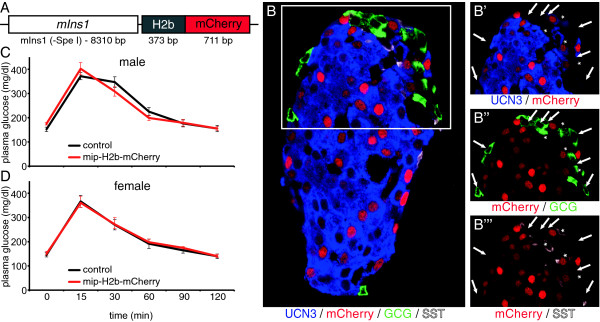
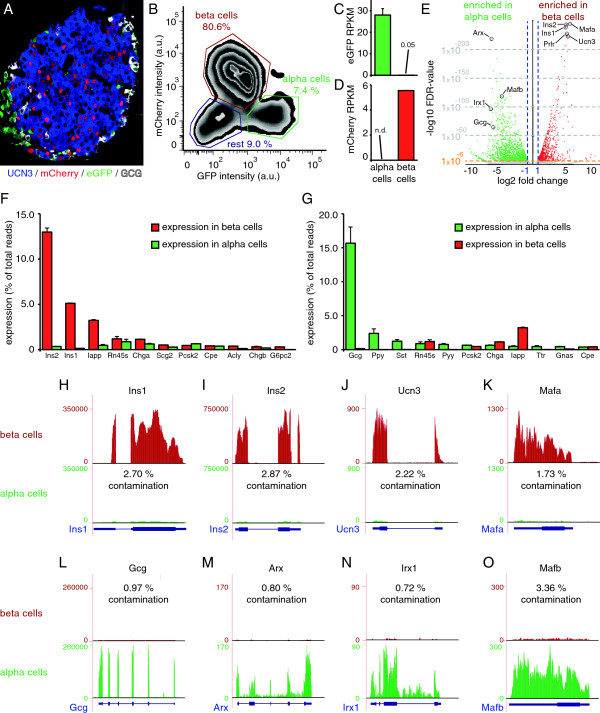
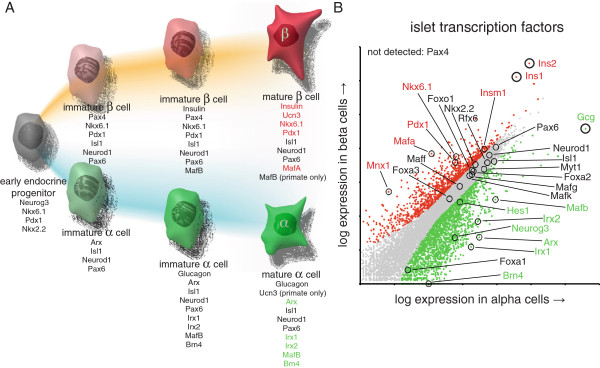
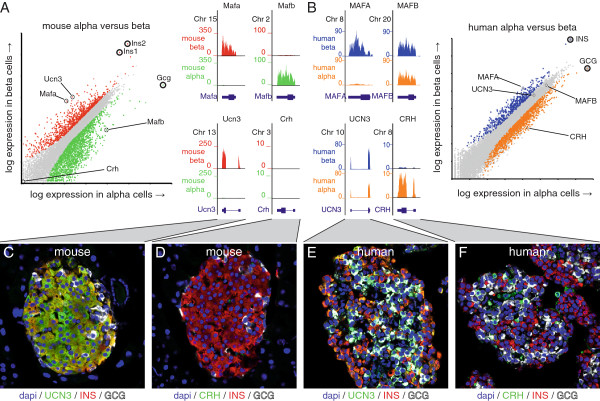
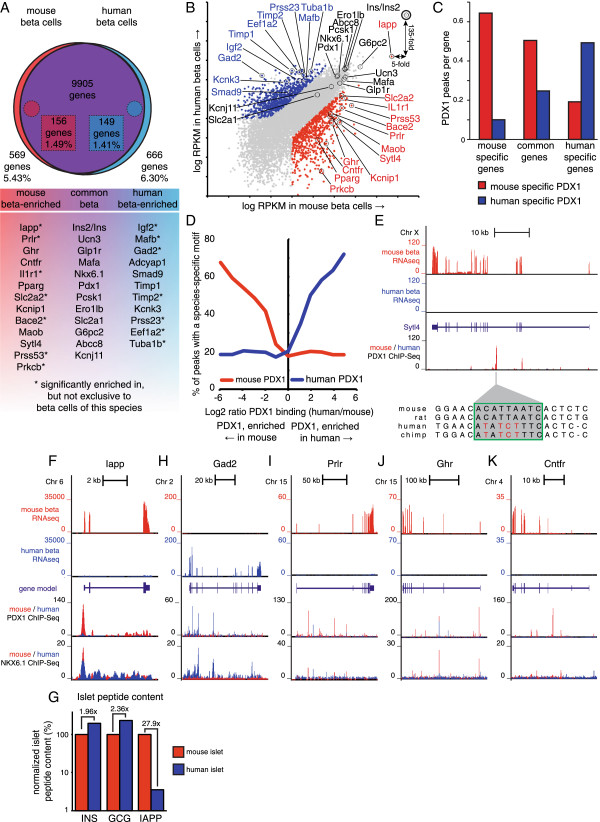
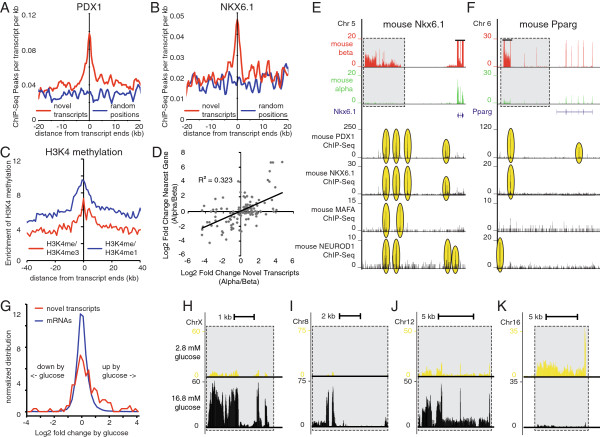
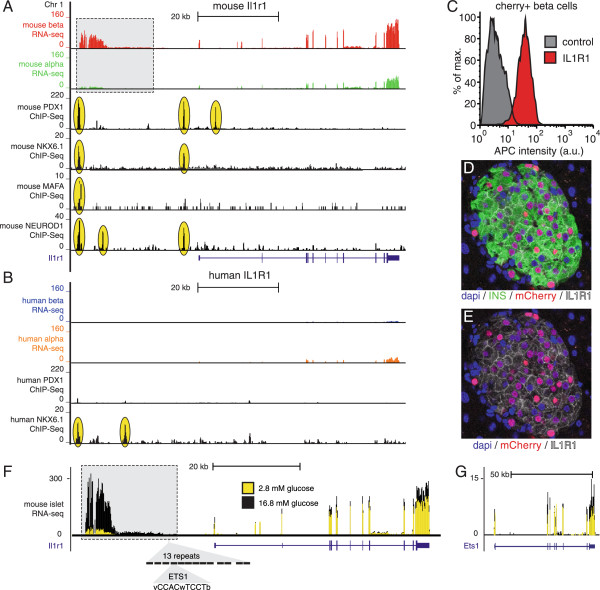
BACKGROUND: Insulin producing beta cell and glucagon producing alpha cells are colocalized in pancreatic islets in an arrangement that facilitates the coordinated release of the two principal hormones that regulate glucose homeostasis and prevent both hypoglycemia and diabetes. However, this intricate organization has also complicated the determination of the cellular source(s) of the expression of genes that are detected in the islet. This reflects a significant gap in our understanding of mouse islet physiology, which reduces the effectiveness by which mice model human islet disease. RESULTS: To overcome this challenge, we generated a bitransgenic reporter mouse that faithfully labels all beta and alpha cells in mouse islets to enable FACS-based purification and the generation of comprehensive transcriptomes of both populations. This facilitates systematic comparison across thousands of genes between the two major endocrine cell types of the islets of Langerhans whose principal hormones are of cardinal importance for glucose homeostasis. Our data leveraged against similar data for human beta cells reveal a core common beta cell transcriptome of 9900+ genes. Against the backdrop of overall similar beta cell transcriptomes, we describe marked differences in the repertoire of receptors and long non-coding RNAs between mouse and human beta cells. CONCLUSIONS: The comprehensive mouse alpha and beta cell transcriptomes complemented by the comparison of the global (dis)similarities between mouse and human beta cells represent invaluable resources to boost the accuracy by which rodent models offer guidance in finding cures for human diabetes.
Overview
The claims and statistics of this paper haven’t been checked yet.
Run the check — free, no account needed. It reads the open-access text and checks the sources it cites.
Integrity signals
Registry
Cites
Statistics
Figures
Verification
Claims the paper makes
The claims and statistics of this paper haven’t been checked yet.
Run the check — free, no account needed. It reads the open-access text and checks the sources it cites.
Claims other papers make about this one
Each is checked against this paper’s own text: does it say what the citing paper says it does?
The check wasn’t confident either way, so it gives no verdict — never disputed.
In the citing paper
“A tetrameric complex of two α- and two β-subunits, the Na-K ATPase of both mouse and human β-cells is predominantly composed of α1-, β1- and β3-subunits (56, 68).”
From Pancreatic β-Cell Electrical Activity and Insulin Secretion: Of Mice and Men (2018) · cites this paper as [56]
Experimental — accuracy not yet measuredThe check wasn’t confident either way, so it gives no verdict — never disputed.
In the citing paper
“However, Ryrs are only expressed at low levels in mouse β-cells (56).”
From Pancreatic β-Cell Electrical Activity and Insulin Secretion: Of Mice and Men (2018) · cites this paper as [56]
Experimental — accuracy not yet measuredThe check wasn’t confident either way, so it gives no verdict — never disputed.
In the citing paper
“Mouse β-cells express Slc1a5 (encoding the transporter ASCT20) (56), which mediates Na+-dependent uptake of glutamate into the β-cell (Appendix Figure 11A).”
From Pancreatic β-Cell Electrical Activity and Insulin Secretion: Of Mice and Men (2018) · cites this paper as [56]
Experimental — accuracy not yet measuredThe check wasn’t confident either way, so it gives no verdict — never disputed.
In the citing paper
“Interestingly, mouse β-cells express Epac2 at ≈10-fold higher levels than their human counterparts (56).”
From Pancreatic β-Cell Electrical Activity and Insulin Secretion: Of Mice and Men (2018) · cites this paper as [56]
Experimental — accuracy not yet measured
Self-check
Percentages, sums and reported differences re-computed from the paper’s own numbers.
The self-check needs the paper’s full text.
Citations
Cites
1 retracted
Baeyens, L., Lemper, M., Leuckx, G., Groef, S. D., Bonfanti, P., Stangé, G. M., Shemer, R., Nord, C., Scheel, D. W., Pan, F. C., et al. (2013) · Nature Biotechnology · doi:10.1038/nbt.2747 · Cited by 179
RetractedSTAR: ultrafast universal RNA-seq aligner
Dobin, A., Davis, C. A., Schlesinger, F., Drenkow, J., Zaleski, C., Jha, S., Batut, P., Chaisson, M., & Gingeras, T. R. (2013) · Bioinformatics · doi:10.1093/bioinformatics/bts635 · Cited by 51,709
BEDTools: a flexible suite of utilities for comparing genomic features
Quinlan, A. R., & Hall, I. M. (2010) · Bioinformatics · doi:10.1093/bioinformatics/btq033 · Cited by 27,437
Differential expression analysis for sequence count data
Anders, S., & Huber, W. (2010) · Genome Biology · doi:10.1186/gb-2010-11-10-r106 · Cited by 15,581
Trapnell, C., Williams, B. A., Pertea, G., Mortazavi, A., Kwan, G., van Baren, M. J., Salzberg, S. L., Wold, B. J., & Pachter, L. (2010) · Nature Biotechnology · doi:10.1038/nbt.1621 · Cited by 15,556
Huang, D. W., Sherman, B. T., & Lempicki, R. A. (2009) · Nucleic Acids Research · doi:10.1093/nar/gkn923 · Cited by 14,108
Mapping and quantifying mammalian transcriptomes by RNA-Seq
Mortazavi, A., Williams, B. A., McCue, K., Schaeffer, L., & Wold, B. (2008) · Nature Methods · doi:10.1038/nmeth.1226 · Cited by 13,696
Heinz, S., Benner, C., Spann, N., Bertolino, E., Lin, Y. C., Laslo, P., Cheng, J. X., Murre, C., Singh, H., & Glass, C. K. (2010) · Molecular Cell · doi:10.1016/j.molcel.2010.05.004 · Cited by 13,382
Self-citationLong non-coding RNAs: insights into functions
Mercer, T. R., Dinger, M. E., & Mattick, J. S. (2009) · Nature Reviews Genetics · doi:10.1038/nrg2521 · Cited by 5,654
Cabili, M. N., Trapnell, C., Goff, L. A., Koziol, M. J., Tazón‐Vega, B., Regev, A., & Rinn, J. L. (2011) · Genes & Development · doi:10.1101/gad.17446611 · Cited by 3,551
Cited by
Sorted by citations
Items 201–300 of 310
Long non-coding RNA-regulated pathways in pancreatic β cells: Their role in diabetes
González‐Moro, I., & Santín, I. (2021) · International review of cytology · doi:10.1016/bs.ircmb.2021.02.007 · Cited by 7
Restoration of Lepr in β cells of Lepr null mice does not prevent hyperinsulinemia and hyperglycemia
D'souza, A. M., & Kieffer, T. J. (2017) · Molecular Metabolism · doi:10.1016/j.molmet.2017.04.003 · Cited by 8
Tronko, M. D., & Kp, Z. (2019) · INTERNATIONAL JOURNAL OF ENDOCRINOLOGY (Ukraine) · doi:10.22141/2224-0721.15.6.2019.185403 · Cited by 7
Pourhosseinzadeh, M. S., Huang, J. L., Shin, D., Hart, R. G., Framroze, L. Y., Guillen, J. V., Sánchez, J. P. M., Tirado, R. V., Unanwa, K., & Huising, M. O. (2025) · Proceedings of the National Academy of Sciences · doi:10.1073/pnas.2504151122 · Cited by 9
Self-citationBridging pancreatic and hepatic development: overlapping genes and their role in diabetes
Ghanem, S. S., Al-Barazenji, T., Badi, R. M., & Abdelalim, E. M. (2025) · Cellular & Molecular Biology Letters · doi:10.1186/s11658-025-00790-y · Cited by 8
Pancreatic β‐cell turnover in health and disease
Alcibahy, Y., Darwish, R., Butler, A. E., & Moin, A. S. M. (2025) · Diabetes Obesity and Metabolism · doi:10.1111/dom.70191 · Cited by 5
Peng, H., Zhang, K., Miao, J., Yu, Y., Xu, S., Wu, T., Tao, C., Wang, Y., & Yang, S. (2023) · International Journal of Molecular Sciences · doi:10.3390/ijms24097701 · Cited by 6
LncRNA Malat1 regulates iPSC-derived β-cell differentiation by targeting the miR-15b-5p/Ihh axis
Wang, Y., Lin, X., Lv, J., Zhu, J., Fan, H., Sha, J., Xu, Z., Zhu, B., Guo, Q., Wang, Z., et al. (2023) · Cellular Signalling · doi:10.1016/j.cellsig.2023.110975 · Cited by 6
Nielsen, S. S., Christensen, G. L., Holst, J. J., & Billestrup, N. (2016) · Endocrinology · doi:10.1210/en.2016-1163 · Cited by 6
Godazgar, M., Zhang, Q., Chibalina, M. V., & Rorsman, P. (2018) · The Journal of Physiology · doi:10.1113/jp275587 · Cited by 6
Deletion of serine racemase reverses neuronal insulin signaling inhibition by amyloid‐β oligomers
Zhou, J., Zhang, Z., yang, Y., Liao, F., Zhou, P., Wang, Y., Zhang, H., Jiang, H., Alinejad, T., Shan, G., et al. (2022) · Journal of Neurochemistry · doi:10.1111/jnc.15664 · Cited by 5
Seedat, F., Kandžija, N., Ellis, M. J., Jiang, S., Sarbalina, A., Bancroft, J. M., Drydale, E., Hester, S., Fischer, R., Wade, A. N., et al. (2024) · Clinical Science · doi:10.1042/cs20241782 · Cited by 6
Lipid Dynamics in Pancreatic β-Cells: Linking Physiology to Diabetes Onset
Holendová, B., Stokičová, L., & Plecitá‐Hlavatá, L. (2024) · Antioxidants and Redox Signaling · doi:10.1089/ars.2024.0724 · Cited by 4
Yang, Y., Yamane, S., Harada, N., Ikeguchi, E., Yamamoto, K., Wada, N., Fauzi, M. I., Murakami, T., Yabe, D., Hayashi, Y., et al. (2025) · American Journal of Physiology-Gastrointestinal and Liver Physiology · doi:10.1152/ajpgi.00279.2024 · Cited by 4
GPRC5B preserves a mature β cell state in obesity by controlling MafA expression
Wang, T., Bonnavion, R., Piesker, J., Günther, S., & Wettschureck, N. (2025) · JCI Insight · doi:10.1172/jci.insight.194115 · Cited by 4
Batdorf, H. M., Lawes, L. D. L., Richardson, J. T., Burk, D. H., Dupuy, S. D., Karlstad, M. D., Noland, R. C., Burke, S. J., & Collier, J. J. (2023) · American Journal of Physiology-Endocrinology and Metabolism · doi:10.1152/ajpendo.00033.2023 · Cited by 4
Lv, J., Liu, Y., Cui, J., Fang, H., Wu, Y., Zhu, X., Guo, M., Li, C., Dou, J., Chen, Z., et al. (2022) · Frontiers in Endocrinology · doi:10.3389/fendo.2021.690555 · Cited by 4
Embryonic development of the endocrine pancreas
Andrei, S. R., & GANNON, M. A. (2019) · Elsevier eBooks · doi:10.1016/b978-0-12-814831-0.00012-9 · Cited by 4
Dai, H., Yu, Q., Lv, H. X., Jiang, L., Jiang, H., Shen, M., Chen, H., Chen, Y., Zheng, S., Fu, Q., et al. (2022) · Frontiers in Endocrinology · doi:10.3389/fendo.2022.898893 · Cited by 4
Insulin-secreting β cells require a post-genomic concept
Jiang, F., & Morahan, G. (2016) · World Journal of Diabetes · doi:10.4239/wjd.v7.i10.198 · Cited by 4
Strategies for optimization of hypoglycemia rat models
Zher, L. Y., Kong, E. Q. Z., Raymond, R. E., Jie, Y. Z., & Yap, C. G. (2025) · Animal Models and Experimental Medicine · doi:10.1002/ame2.70045 · Cited by 3
EndoC-βH3 pseudoislets are suitable for intraportal transplantation in diabetic mice
Zhou, M., Linn, T., & Petry, S. F. (2024) · Islets · doi:10.1080/19382014.2024.2406041 · Cited by 3
A Role for lncRNAs in Regulating Inflammatory and Autoimmune Responses Underlying Type 1 Diabetes
Brodnicki, T. C. (2022) · Advances in experimental medicine and biology · doi:10.1007/978-3-030-92034-0_6 · Cited by 3
Jang, S., Shin, S., Jeong, Y., & Lim, D. (2023) · Organoid · doi:10.51335/organoid.2023.3.e16 · Cited by 3
Ion Channels and Regulation of Insulin Secretion in Beta-Cells
Oluwamodupe, C., & Babalola, O. O. (2024) · Current Molecular Biology Reports · doi:10.1007/s40610-024-00162-z · Cited by 5
Koppes, E., Johnson, M. A., Moresco, J. J., Luppi, P., Lewis, D. W., Stolz, D. B., Diedrich, J. K., Yates, J. R., Wek, R. C., Watkins, S. C., et al. (2023) · PLoS Genetics · doi:10.1371/journal.pgen.1010710 · Cited by 3
Guay, C., Abdulkarim, B., Tan, J. Y., Dubuis, G., Rütti, S., Laybutt, D. R., Widmann, C., Regazzi, R., & Marques, A. C. (2020) · Scientific Reports · doi:10.1038/s41598-020-62969-x · Cited by 3
Huising, M. O. (2015) · Diabetologia · doi:10.1007/s00125-015-3567-y · Cited by 3
Self-citationComparative genomics: beyond the horizon of the next research grant
Schuit, F. C. (2015) · Diabetologia · doi:10.1007/s00125-015-3620-x · Cited by 3
Nair, A. K., Barkho, K., Ponnanna, K., Traurig, M. T., Sutherland, J. R., Anup, D., Bogardus, C., & Baier, L. J. (2025) · Diabetologia · doi:10.1007/s00125-025-06605-1 · Cited by 2
Hart, R. G., Lee, J. J., Zhai, K., Lee, S., Chauhan, R., Hosseini, A., Nguyen, A. D., & Huising, M. O. (2026) · Diabetologia · doi:10.1007/s00125-026-06769-4 · Cited by 2
Self-citationTCF7 is not essential for glucose homeostasis in mice
Kaur, K. D., Wong, C. K., Baggio, L. L., Beaudry, J. L., Fuchs, S., Panaro, B. L., Matthews, D., Cao, X., & Drucker, D. J. (2021) · Molecular Metabolism · doi:10.1016/j.molmet.2021.101213 · Cited by 2
Ng, N. H. J., Neo, C. W. Y., Ding, S. S. L., & Teo, A. K. K. (2021) · Vitamins and hormones · doi:10.1016/bs.vh.2021.02.011 · Cited by 2
A study on feminine sexuality.
Blanck-Cereijido, F. (1983) · PubMed · Cited by 2
Georgiadou, E., Muralidharan, C., Irizarry, M. M. M., CHABOSSEAU, P. L., Tomás, A., Wern, F. Y. S., Akalestou, E., Stylianides, T., Wretlind, A., Legido‐Quigley, C., et al. (2020) · bioRxiv (Cold Spring Harbor Laboratory) · doi:10.1101/2020.04.22.055384 · Cited by 2
Evaluating the impact of lipids in isolated islet research
Jentz, E. M., & Joseph, J. W. (2025) · Frontiers in Endocrinology · doi:10.3389/fendo.2025.1548596 · Cited by 1
Hossain, M. M., Roat, R., Christopherson, J., Free, C., Ansarullah, James, B. P., & Guo, Z. (2023) · Frontiers in Endocrinology · doi:10.3389/fendo.2023.1244688 · Cited by 1
Lim, E. X. H., Ong, G., Ang, D. A., & Teo, A. K. K. (2026) · Cell Death and Disease · doi:10.1038/s41419-026-08529-z · Cited by 1
Insights from Stem Cell and CRISPR-Based Therapies for Diabetes Mellitus: A Systematic Review
Khalil, A. M. (2026) · OBM Genetics · doi:10.21926/obm.genet.2601329 · Cited by 1
Genetic background modulates MafAS64F-mediated islet ageing in male mice
Loyd, Z., Lee, D., Maurer, M., Johnson, L., Liu, J.-H., Reynolds, G., Keller, M. P., Jean-Philippe, C., Magnuson, M. A., Stein, R., et al. (2026) · Diabetologia · doi:10.1007/s00125-026-06903-2 · Cited by 1
Imai, Y. (2021) · Journal of Clinical Investigation · doi:10.1172/jci154482 · Cited by 1
Elsayed, A. K., Aldous, N., Alajez, N. M., & Abdelalim, E. M. (2024) · Stem Cell Reviews and Reports · doi:10.1007/s12015-024-10752-0 · Cited by 1
Human embryonic stem cells (hESC) as a source of insulin-producing cells
Sackett, S. D., Tremmel, D. M., Feeney, A. K., Mitchell, S. A., & Odorico, J. S. (2019) · Elsevier eBooks · doi:10.1016/b978-0-12-814831-0.00027-0 · Cited by 1
Long Noncoding RNAs in Diabetes and β-Cell Regulation
Kaur, S., Frørup, C., Hirschberg, V., Mirza, A. H., de Melo, J. M. L., Yarani, R., Overgaard, A. J., Størling, J., & Pociot, F. (2020) · RNA technologies · doi:10.1007/978-3-030-44743-4_20 · Cited by 1
21st century excitatory amino acid research: A Q & A with Jeff Watkins and Dick Evans
Watkins, J. C., Evans, R. H., Bayés, À., Booker, S. A., Gibb, A. J., Mabb, A. M., Mayer, M. L., Mellor, J. R., Molnár, E., Niu, L., et al. (2021) · Neuropharmacology · doi:10.1016/j.neuropharm.2021.108743 · Cited by 2
Liu, S., Wipf, I. J., Joglekar, A., Freshly, A., Bovee, C. E., Kim, L., Richtsmeier, S., Peachee, S. J., Kopriva, S., Vikram, A., et al. (2024) · bioRxiv (Cold Spring Harbor Laboratory) · doi:10.1101/2024.11.17.624030 · Cited by 1
Chin, G. (2005) · Science · doi:10.1126/science.307.5712.1017a
Searching for the β-Cell Fountain of Youth
Jouvet, N., & Estall, J. L. (2016) · Endocrinology · doi:10.1210/en.2016-1561
Direct Reprogramming of Human Cell Lines in vitro Towards a β-Cell Phenotype
Ryan, N. (2018) · University of Minnesota Digital Conservancy (University of Minnesota)
Expression of insulin and GLP-1 receptors in interneurons of the cerebral cortex
Csajbók, É. (2019) · SZTE Repository of Dissertations (University of Szeged) · doi:10.14232/phd.10078
Dissecting Pancreatic β-cell Stress Using Whole Transcriptome Sequencing
Stancill, J. S. (2017)
Investigation of glutamate receptors in human pancreatic β-cells and their role in insulin secretion
Caygill, C. H. (2020) · UWE Research Repository (UWE Bristol)
Investigating the differentiation and functional maturation of stem cell-derived β cells
Velazco-Cruz, L. (2021) · Open Scholarship Institutional Repository (Washington University in St. Louis) · doi:10.7936/8q4b-x232
LncRNA MALAT1 Regulates iPSC-derived Β-cell Differentiation by Targeting the miR-15b-5p/Ihh AxisPreprint
Wang, Y., Lin, X., Lv, J., Zhu, J., Fan, H., Sha, J., Xu, Z., Zhu, B., Guo, Q., Wang, Z., et al. (2020) · Research Square · doi:10.21203/rs.3.rs-89983/v1
Type 2 Diabetes: Is it Time to Target β-cell Heterogeneity?
Balasubramanyam, M. (2023) · Exploratory Research and Hypothesis in Medicine · doi:10.14218/erhm.2023.00028
Tang, Y., Chen, Y.-G., Huang, H., Li, S., Zuo, H., Chen, J., Li, L., Mao, R.-B., Lin, Y.-C.-D., & Huang, H. (2023) · Figshare · doi:10.6084/m9.figshare.23543026
Tang, Y., Chen, Y.-G., Huang, H., Li, S., Zuo, H., Chen, J., Li, L., Mao, R.-B., Lin, Y.-C.-D., & Huang, H. (2023) · Figshare · doi:10.6084/m9.figshare.23543044
Tang, Y., Chen, Y.-G., Huang, H., Li, S., Zuo, H., Chen, J., Li, L., Mao, R.-B., Lin, Y.-C.-D., & Huang, H. (2023) · Figshare · doi:10.6084/m9.figshare.23543071
Tang, Y., Chen, Y.-G., Huang, H., Li, S., Zuo, H., Chen, J., Li, L., Mao, R.-B., Lin, Y.-C.-D., & Huang, H. (2023) · Figshare · doi:10.6084/m9.figshare.23543050
Tang, Y., Chen, Y.-G., Huang, H., Li, S., Zuo, H., Chen, J., Li, L., Mao, R.-B., Lin, Y.-C.-D., & Huang, H. (2023) · Figshare · doi:10.6084/m9.figshare.23543029
Tang, Y., Chen, Y.-G., Huang, H., Li, S., Zuo, H., Chen, J., Li, L., Mao, R.-B., Lin, Y.-C.-D., & Huang, H. (2023) · Figshare · doi:10.6084/m9.figshare.23543062
Tang, Y., Chen, Y.-G., Huang, H., Li, S., Zuo, H., Chen, J., Li, L., Mao, R.-B., Lin, Y.-C.-D., & Huang, H. (2023) · Figshare · doi:10.6084/m9.figshare.23543038
Tang, Y., Chen, Y.-G., Huang, H., Li, S., Zuo, H., Chen, J., Li, L., Mao, R.-B., Lin, Y.-C.-D., & Huang, H. (2023) · Figshare · doi:10.6084/m9.figshare.23543059
Tang, Y., Chen, Y.-G., Huang, H., Li, S., Zuo, H., Chen, J., Li, L., Mao, R.-B., Lin, Y.-C.-D., & Huang, H. (2023) · Figshare · doi:10.6084/m9.figshare.23543035
Tang, Y., Chen, Y.-G., Huang, H., Li, S., Zuo, H., Chen, J., Li, L., Mao, R.-B., Lin, Y.-C.-D., & Huang, H. (2023) · Figshare · doi:10.6084/m9.figshare.23543053
Tang, Y., Chen, Y.-G., Huang, H., Li, S., Zuo, H., Chen, J., Li, L., Mao, R.-B., Lin, Y.-C.-D., & Huang, H. (2023) · Figshare · doi:10.6084/m9.figshare.23543032
Tang, Y., Chen, Y.-G., Huang, H., Li, S., Zuo, H., Chen, J., Li, L., Mao, R.-B., Lin, Y.-C.-D., & Huang, H. (2023) · Figshare · doi:10.6084/m9.figshare.23543065
Tang, Y., Chen, Y.-G., Huang, H., Li, S., Zuo, H., Chen, J., Li, L., Mao, R.-B., Lin, Y.-C.-D., & Huang, H. (2023) · Figshare · doi:10.6084/m9.figshare.23543056
Tang, Y., Chen, Y.-G., Huang, H., Li, S., Zuo, H., Chen, J., Li, L., Mao, R.-B., Lin, Y.-C.-D., & Huang, H. (2023) · Figshare · doi:10.6084/m9.figshare.23543041
Transdifferentiation of pancreatic cells: therapeutic implications for pancreatic diseases
Wang, J.-J., Zhu, L., Li, D., & Zhang, Z. (2024) · Journal of Pancreatology · doi:10.1097/jp9.0000000000000197
Kursawe, R., Bandesh, K., Krishnan, S. N., Liu, K. S., Bhuiyan, R. M., & Stitzel, M. L. (2025) · Annual Review of Genetics · doi:10.1146/annurev-genet-020525-114513
Varghese, S. S., Peña, A. G. H.-D. L., Pandey, A., Anchondo, L. M., Wu, X., Bhattacharya, S., & Dhawan, S. (2025) · bioRxiv (Cold Spring Harbor Laboratory) · doi:10.1101/2025.11.10.687707
Mitochondrial movement in pancreatic alpha cells requires Miro2 and is regulated by glucose
Ekstrand, M. H., Nawaz, S., Clark, A., Hastoy, B., & Knudsen, J. G. (2025) · Journal of Biological Chemistry · doi:10.1016/j.jbc.2025.110984
Mawla, A. M., van der Meulen, T., & Huising, M. O. (2023) · Figshare · doi:10.6084/m9.figshare.22649537
Self-citationMawla, A. M., van der Meulen, T., & Huising, M. O. (2023) · Figshare · doi:10.6084/m9.figshare.22649504
Self-citationMawla, A. M., van der Meulen, T., & Huising, M. O. (2023) · Figshare · doi:10.6084/m9.figshare.22649543
Self-citationTang, Y., Chen, Y., Huang, H.-Y., Li, S.-F., Zuo, H., Chen, J., Liping, L. I., Mao, R.-B., Lin, Y.-C.-D., & Huang, H.-D. (2023) · Figshare · doi:10.6084/m9.figshare.23543011
Mawla, A. M., van der Meulen, T., & Huising, M. O. (2023) · Figshare · doi:10.6084/m9.figshare.22649501
Self-citationMawla, A. M., van der Meulen, T., & Huising, M. O. (2023) · Figshare · doi:10.6084/m9.figshare.22649534
Self-citationTang, Y., Chen, Y., Huang, H.-Y., Li, S.-F., Zuo, H., Chen, J., Liping, L. I., Mao, R.-B., Lin, Y.-C.-D., & Huang, H.-D. (2023) · Figshare · doi:10.6084/m9.figshare.23543014
Tang, Y., Chen, Y., Huang, H.-Y., Li, S.-F., Zuo, H., Chen, J., Liping, L. I., Mao, R.-B., Lin, Y.-C.-D., & Huang, H.-D. (2023) · Figshare · doi:10.6084/m9.figshare.23543002
Mawla, A. M., van der Meulen, T., & Huising, M. O. (2023) · Figshare · doi:10.6084/m9.figshare.22649498
Self-citationMawla, A. M., van der Meulen, T., & Huising, M. O. (2023) · Figshare · doi:10.6084/m9.figshare.22649540
Self-citationMawla, A. M., van der Meulen, T., & Huising, M. O. (2023) · Figshare · doi:10.6084/m9.figshare.22649492
Self-citationTang, Y., Chen, Y., Huang, H.-Y., Li, S.-F., Zuo, H., Chen, J., Liping, L. I., Mao, R.-B., Lin, Y.-C.-D., & Huang, H.-D. (2023) · Figshare · doi:10.6084/m9.figshare.23543023
Tang, Y., Chen, Y., Huang, H.-Y., Li, S.-F., Zuo, H., Chen, J., Liping, L. I., Mao, R.-B., Lin, Y.-C.-D., & Huang, H.-D. (2023) · Figshare · doi:10.6084/m9.figshare.23543008
Mawla, A. M., van der Meulen, T., & Huising, M. O. (2023) · Figshare · doi:10.6084/m9.figshare.22649531
Self-citationMawla, A. M., van der Meulen, T., & Huising, M. O. (2023) · Figshare · doi:10.6084/m9.figshare.22649513
Self-citationTang, Y., Chen, Y., Huang, H.-Y., Li, S.-F., Zuo, H., Chen, J., Liping, L. I., Mao, R.-B., Lin, Y.-C.-D., & Huang, H.-D. (2023) · Figshare · doi:10.6084/m9.figshare.23543017
Tang, Y., Chen, Y.-G., Huang, H.-Y., Li, S.-F., Zuo, H., Chen, J., Liping, L. I., Mao, R.-B., Lin, Y.-C.-D., & Huang, H.-D. (2023) · Figshare · doi:10.6084/m9.figshare.23542996
Tang, Y., Chen, Y., Huang, H.-Y., Li, S.-F., Zuo, H., Chen, J., Liping, L. I., Mao, R.-B., Lin, Y.-C.-D., & Huang, H.-D. (2023) · Figshare · doi:10.6084/m9.figshare.23542999
Mawla, A. M., van der Meulen, T., & Huising, M. O. (2023) · Figshare · doi:10.6084/m9.figshare.22649510
Self-citationMawla, A. M., van der Meulen, T., & Huising, M. O. (2023) · Figshare · doi:10.6084/m9.figshare.22649516
Self-citationTang, Y., Chen, Y., Huang, H.-Y., Li, S.-F., Zuo, H., Chen, J., Liping, L. I., Mao, R.-B., Lin, Y.-C.-D., & Huang, H.-D. (2023) · Figshare · doi:10.6084/m9.figshare.23542993
Tang, Y., Chen, Y., Huang, H.-Y., Li, S.-F., Zuo, H., Chen, J., Liping, L. I., Mao, R.-B., Lin, Y.-C.-D., & Huang, H.-D. (2023) · Figshare · doi:10.6084/m9.figshare.23543074
Mawla, A. M., van der Meulen, T., & Huising, M. O. (2023) · Figshare · doi:10.6084/m9.figshare.22649495
Self-citationTang, Y., Chen, Y., Huang, H.-Y., Li, S.-F., Zuo, H., Chen, J., Liping, L. I., Mao, R.-B., Lin, Y.-C.-D., & Huang, H.-D. (2023) · Figshare · doi:10.6084/m9.figshare.23543005
Metadata
- Authors
- Benner, C., van der Meulen, T., Cacéres, E., Tigyi, K., Donaldson, C. J., & Huising, M. O.
- Affiliations
- Salk Institute for Biological Studies (US)
- Corresponding author
- Huising, Mark O
- Venue
- BMC Genomics
- Published
- 2014-07-22
- Volume
- 15
- Issue
- 1
- Pages
- 620-620
- ISSN
- 1471-2164 (ISSN-L)
- PMC
- PMC4124169
- OpenAlex
- W2139458690
- Cited by
- 302
- References
- 76
- Citations by year
- 2026: 9 · 2025: 18 · 2024: 11 · 2023: 44 · 2022: 24 · 2021: 30 · 2020: 33 · 2019: 20 · 2018: 27 · 2017: 41 · 2016: 24 · 2015: 18 · 2014: 1
- FWCI
- 27.78
- Type
- journal article
- Language
- en
- Open access
- gold
- doi.org
- Licence
- cc-by
- Locations
- BMC Genomics (publishedVersion, cc-by)
- PubMed Central (publishedVersion, cc-by)
- PubMed (publishedVersion)
- eScholarship (California Digital Library) (submittedVersion)
- Funders
- Vanderbilt University
- National Institutes of Health (DK026741)
- National Institute of Diabetes and Digestive and Kidney Diseases (P01DK026741)
- Topics
- Health Sciences › Medicine › Endocrinology, Diabetes and Metabolism › Pancreatic function and diabetes
- Life Sciences › Biochemistry, Genetics and Molecular Biology › Genetics › Diabetes and associated disorders
- Life Sciences › Biochemistry, Genetics and Molecular Biology › Molecular Biology › Single-cell and spatial transcriptomics
- Keywords
- pancreatic beta cells, alpha cells, islet transcriptome, long non-coding RNA, species differences, human-mouse comparison, receptor repertoire, diabetes model, glucose homeostasis, insulin, glucagon
- MeSH terms
- Red Fluorescent Protein, Animals, Flow Cytometry, Glucagon, Humans, Luminescent Proteins, Receptors, Cell Surface, RNA, Transcription Factors, Gene Library, Sequence Analysis, RNA, Glucagon-Secreting Cells, Insulin-Secreting Cells, Mice, Transcriptome, RNA, Long Noncoding
About these checks
Registry, retraction, Cites and statistics results are computed, not judged, with one exception: a printed reference that no index lists is read once by a model before it counts as a citation error. Claims are extracted by a model and kept only when their quote appears verbatim in the text; each cited source is then checked, with a model’s help, for whether it says what the claim relies on. Those verdicts can be wrong — read the claim’s quote and the cited source before relying on one.
Statistics and arithmetic are recomputed, not judged.
Confidence bands are shown only for fields calibrated on our annotated test set. None is calibrated yet, so no band is shown.
What counts as a claim ›How we measure confidence ›How we check this ›
Are you an author, or do you see a problem with this page? Request a review
