

The DOI matches its Crossref record; 75 of the 76 references it cites were found in a registry or an index.
The transcriptional landscape of mouse beta cells compared to human beta cells reveals notable species differences in long non-coding RNA and protein-coding gene expression
Open accessAbstract
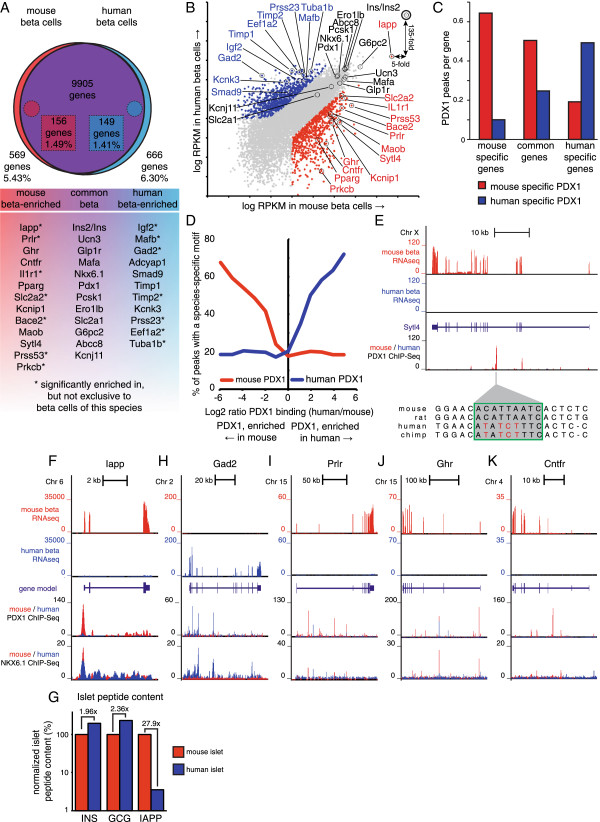
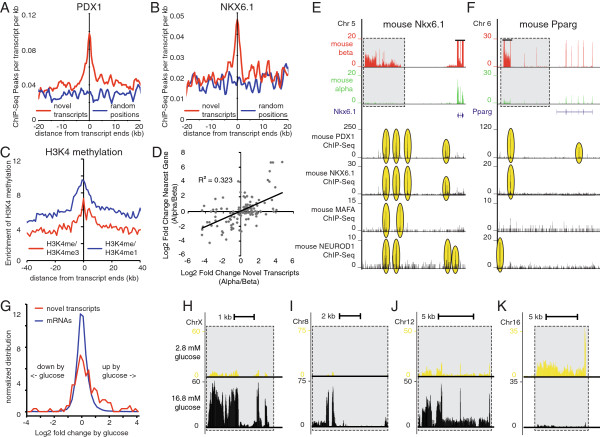
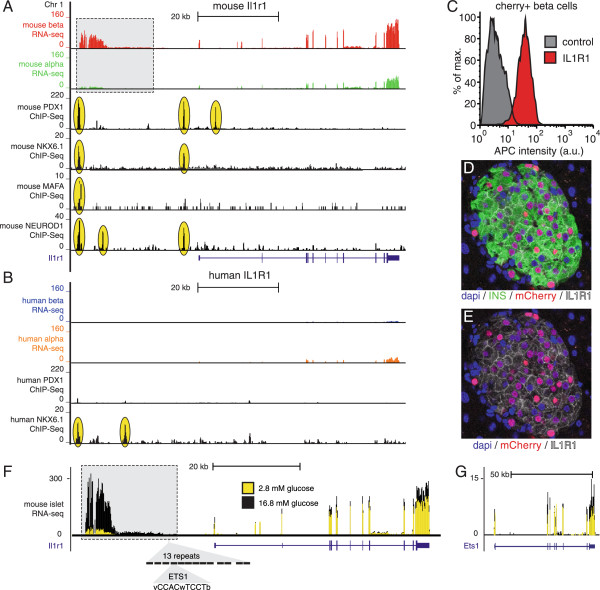
BACKGROUND: Insulin producing beta cell and glucagon producing alpha cells are colocalized in pancreatic islets in an arrangement that facilitates the coordinated release of the two principal hormones that regulate glucose homeostasis and prevent both hypoglycemia and diabetes. However, this intricate organization has also complicated the determination of the cellular source(s) of the expression of genes that are detected in the islet. This reflects a significant gap in our understanding of mouse islet physiology, which reduces the effectiveness by which mice model human islet disease. RESULTS: To overcome this challenge, we generated a bitransgenic reporter mouse that faithfully labels all beta and alpha cells in mouse islets to enable FACS-based purification and the generation of comprehensive transcriptomes of both populations. This facilitates systematic comparison across thousands of genes between the two major endocrine cell types of the islets of Langerhans whose principal hormones are of cardinal importance for glucose homeostasis. Our data leveraged against similar data for human beta cells reveal a core common beta cell transcriptome of 9900+ genes. Against the backdrop of overall similar beta cell transcriptomes, we describe marked differences in the repertoire of receptors and long non-coding RNAs between mouse and human beta cells. CONCLUSIONS: The comprehensive mouse alpha and beta cell transcriptomes complemented by the comparison of the global (dis)similarities between mouse and human beta cells represent invaluable resources to boost the accuracy by which rodent models offer guidance in finding cures for human diabetes.
Overview
The claims and statistics of this paper haven’t been checked yet.
Run the check — free, no account needed. It reads the open-access text and checks the sources it cites.
Integrity signals
Registry
Cites
Statistics
Figures
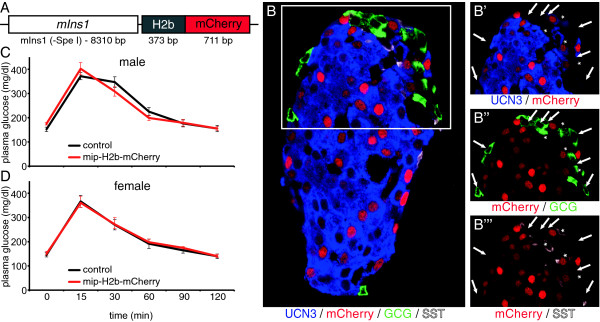
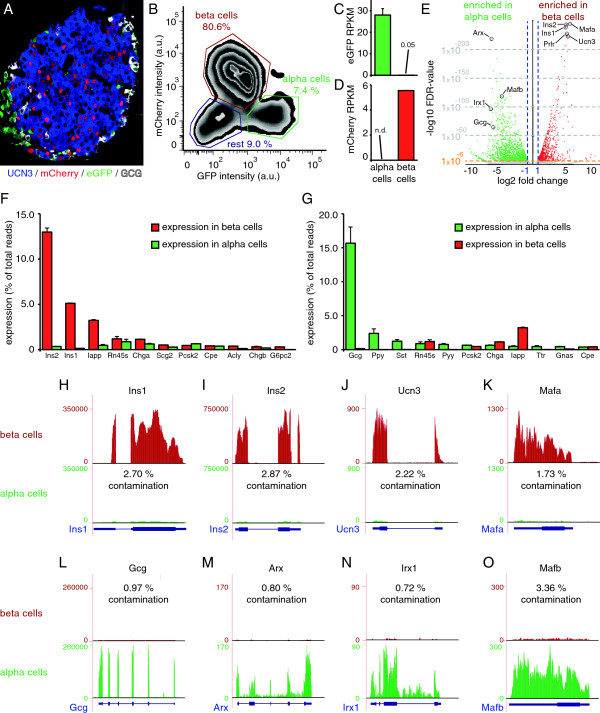
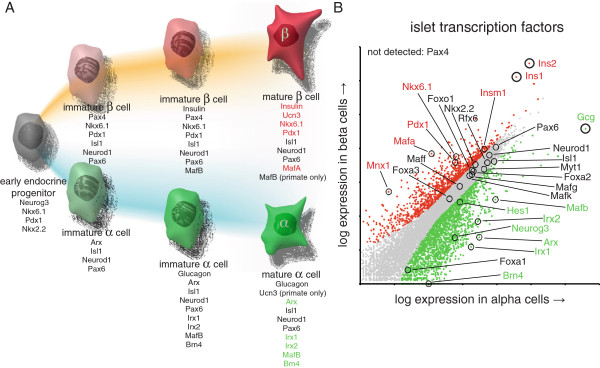
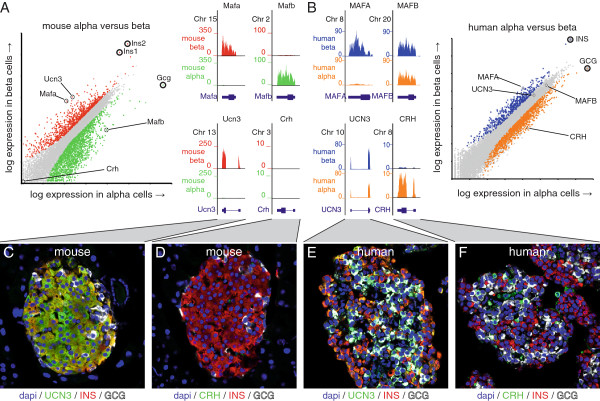
Verification
Claims the paper makes
The claims and statistics of this paper haven’t been checked yet.
Run the check — free, no account needed. It reads the open-access text and checks the sources it cites.
Claims other papers make about this one
Each is checked against this paper’s own text: does it say what the citing paper says it does?
The check wasn’t confident either way, so it gives no verdict — never disputed.
In the citing paper
“A tetrameric complex of two α- and two β-subunits, the Na-K ATPase of both mouse and human β-cells is predominantly composed of α1-, β1- and β3-subunits (56, 68).”
From Pancreatic β-Cell Electrical Activity and Insulin Secretion: Of Mice and Men (2018) · cites this paper as [56]
Experimental — accuracy not yet measuredThe check wasn’t confident either way, so it gives no verdict — never disputed.
In the citing paper
“However, Ryrs are only expressed at low levels in mouse β-cells (56).”
From Pancreatic β-Cell Electrical Activity and Insulin Secretion: Of Mice and Men (2018) · cites this paper as [56]
Experimental — accuracy not yet measuredThe check wasn’t confident either way, so it gives no verdict — never disputed.
In the citing paper
“Mouse β-cells express Slc1a5 (encoding the transporter ASCT20) (56), which mediates Na+-dependent uptake of glutamate into the β-cell (Appendix Figure 11A).”
From Pancreatic β-Cell Electrical Activity and Insulin Secretion: Of Mice and Men (2018) · cites this paper as [56]
Experimental — accuracy not yet measuredThe check wasn’t confident either way, so it gives no verdict — never disputed.
In the citing paper
“Interestingly, mouse β-cells express Epac2 at ≈10-fold higher levels than their human counterparts (56).”
From Pancreatic β-Cell Electrical Activity and Insulin Secretion: Of Mice and Men (2018) · cites this paper as [56]
Experimental — accuracy not yet measured
Self-check
Percentages, sums and reported differences re-computed from the paper’s own numbers.
The self-check needs the paper’s full text.
Citations
Cites
1 retracted
Baeyens, L., Lemper, M., Leuckx, G., Groef, S. D., Bonfanti, P., Stangé, G. M., Shemer, R., Nord, C., Scheel, D. W., Pan, F. C., et al. (2013) · Nature Biotechnology · doi:10.1038/nbt.2747 · Cited by 179
RetractedSTAR: ultrafast universal RNA-seq aligner
Dobin, A., Davis, C. A., Schlesinger, F., Drenkow, J., Zaleski, C., Jha, S., Batut, P., Chaisson, M., & Gingeras, T. R. (2013) · Bioinformatics · doi:10.1093/bioinformatics/bts635 · Cited by 51,709
BEDTools: a flexible suite of utilities for comparing genomic features
Quinlan, A. R., & Hall, I. M. (2010) · Bioinformatics · doi:10.1093/bioinformatics/btq033 · Cited by 27,437
Differential expression analysis for sequence count data
Anders, S., & Huber, W. (2010) · Genome Biology · doi:10.1186/gb-2010-11-10-r106 · Cited by 15,581
Trapnell, C., Williams, B. A., Pertea, G., Mortazavi, A., Kwan, G., van Baren, M. J., Salzberg, S. L., Wold, B. J., & Pachter, L. (2010) · Nature Biotechnology · doi:10.1038/nbt.1621 · Cited by 15,556
Huang, D. W., Sherman, B. T., & Lempicki, R. A. (2009) · Nucleic Acids Research · doi:10.1093/nar/gkn923 · Cited by 14,108
Mapping and quantifying mammalian transcriptomes by RNA-Seq
Mortazavi, A., Williams, B. A., McCue, K., Schaeffer, L., & Wold, B. (2008) · Nature Methods · doi:10.1038/nmeth.1226 · Cited by 13,696
Heinz, S., Benner, C., Spann, N., Bertolino, E., Lin, Y. C., Laslo, P., Cheng, J. X., Murre, C., Singh, H., & Glass, C. K. (2010) · Molecular Cell · doi:10.1016/j.molcel.2010.05.004 · Cited by 13,382
Self-citationLong non-coding RNAs: insights into functions
Mercer, T. R., Dinger, M. E., & Mattick, J. S. (2009) · Nature Reviews Genetics · doi:10.1038/nrg2521 · Cited by 5,654
Cabili, M. N., Trapnell, C., Goff, L. A., Koziol, M. J., Tazón‐Vega, B., Regev, A., & Rinn, J. L. (2011) · Genes & Development · doi:10.1101/gad.17446611 · Cited by 3,551
Cited by
Sorted by citations
Items 301–310 of 310
Kitamura, H., Okabe, J., Hayashi, H., & Iwasaki, T. (2026) · Biomedicines · doi:10.3390/biomedicines14040783
IRF5 and the metabolic adaptations of adipose tissue macrophages upon metabolic stress
Orliaguet, L. (2022) · theses.fr (ABES) · doi:10.70675/145b35eazd61az4b32zacc7z422afeae6061
Morini, M., Bergqvist, C., Asturiano, J. F., Dufour, S., & Larhammar, D. (2026) · Molecular Biology and Evolution · doi:10.1093/molbev/msag098
H3K9me3 as a gatekeeper of lineage-specific enhancers in embryonic progenitor cellsPreprint
Ito, K., Donahue, G., Katsuda, T., Kamimoto, K., & Zaret, K. S. (2026) · bioRxiv (Cold Spring Harbor Laboratory) · doi:10.64898/2026.05.03.722466
Kim, L., Liu, S., Peachee, S. J., Richtsmeier, S., Jun, C., Sagona, G., VIKRAM, A., Freshly, A., Haider, F., & Imai, Y. (2026) · Diabetes · doi:10.2337/db25-1156
Varghese, S. S., Peña, A. G. H.-D. L., Wang, L., Ruiz, V., Tixi, W., Pandey, A., Anchondo, L. M., Chiu, A., Wu, X., Georgia, S. K., et al. (2026) · Diabetes · doi:10.2337/db25-1027
Mitochondria–Endoplasmic Reticulum Crosstalk in Pancreatic β-Cell Stress: A Driver of Diabetes
Niinuma, S. A., Takemoto, A. S.-N., Khalil, W. J., Butler, A. E., & Moin, A. S. M. (2026) · Cells · doi:10.3390/cells15191733
Hybrid Insulin Peptides in Type 1 Diabetes: How They Form and Why They Matter
Douglas, K., & Delong, T. (2026) · Immunological Reviews · doi:10.1111/imr.70185
Metadata
- Authors
- Benner, C., van der Meulen, T., Cacéres, E., Tigyi, K., Donaldson, C. J., & Huising, M. O.
- Affiliations
- Salk Institute for Biological Studies (US)
- Corresponding author
- Huising, Mark O
- Venue
- BMC Genomics
- Published
- 2014-07-22
- Volume
- 15
- Issue
- 1
- Pages
- 620-620
- ISSN
- 1471-2164 (ISSN-L)
- PMC
- PMC4124169
- OpenAlex
- W2139458690
- Cited by
- 302
- References
- 76
- Citations by year
- 2026: 9 · 2025: 18 · 2024: 11 · 2023: 44 · 2022: 24 · 2021: 30 · 2020: 33 · 2019: 20 · 2018: 27 · 2017: 41 · 2016: 24 · 2015: 18 · 2014: 1
- FWCI
- 27.78
- Type
- journal article
- Language
- en
- Open access
- gold
- doi.org
- Licence
- cc-by
- Locations
- BMC Genomics (publishedVersion, cc-by)
- PubMed Central (publishedVersion, cc-by)
- PubMed (publishedVersion)
- eScholarship (California Digital Library) (submittedVersion)
- Funders
- Vanderbilt University
- National Institutes of Health (DK026741)
- National Institute of Diabetes and Digestive and Kidney Diseases (P01DK026741)
- Topics
- Health Sciences › Medicine › Endocrinology, Diabetes and Metabolism › Pancreatic function and diabetes
- Life Sciences › Biochemistry, Genetics and Molecular Biology › Genetics › Diabetes and associated disorders
- Life Sciences › Biochemistry, Genetics and Molecular Biology › Molecular Biology › Single-cell and spatial transcriptomics
- Keywords
- pancreatic beta cells, alpha cells, islet transcriptome, long non-coding RNA, species differences, human-mouse comparison, receptor repertoire, diabetes model, glucose homeostasis, insulin, glucagon
- MeSH terms
- Red Fluorescent Protein, Animals, Flow Cytometry, Glucagon, Humans, Luminescent Proteins, Receptors, Cell Surface, RNA, Transcription Factors, Gene Library, Sequence Analysis, RNA, Glucagon-Secreting Cells, Insulin-Secreting Cells, Mice, Transcriptome, RNA, Long Noncoding
About these checks
Registry, retraction, Cites and statistics results are computed, not judged, with one exception: a printed reference that no index lists is read once by a model before it counts as a citation error. Claims are extracted by a model and kept only when their quote appears verbatim in the text; each cited source is then checked, with a model’s help, for whether it says what the claim relies on. Those verdicts can be wrong — read the claim’s quote and the cited source before relying on one.
Statistics and arithmetic are recomputed, not judged.
Confidence bands are shown only for fields calibrated on our annotated test set. None is calibrated yet, so no band is shown.
What counts as a claim ›How we measure confidence ›How we check this ›
Are you an author, or do you see a problem with this page? Request a review
